New Station Openings In Early 2026
This post is for two reasons.
I needed an answer to my query.
I wanted to explore the competence of Google AI.
When I typed the title of this post into Google AI, I received this answer.
Several new railway stations in the UK are scheduled to open or begin passenger services in early 2026, primarily in the West Midlands, Northumberland, Devon, and Cambridgeshire.
- Darlaston (between Walsall and Wolverhampton)
- Willenhall (between Walsall and Wolverhampton)
- Kings Heath (Camp Hill line, Birmingham)
- Moseley Village (Camp Hill line, Birmingham)
- Pineapple Road (Camp Hill line, Birmingham)
- Bedlington
- Northumberland Park (interchange with Tyne and Wear Metro)
- Cambridge South (Cambridgeshire) – Expected to open in June 2026, connecting the biomedical campus to London, Birmingham, Stansted, and Gatwick airports.
- Okehampton Interchange (Devon) – This new park and ride station, part of the Devon Metro plan, is planned to open in spring 2026.
- Magna (Rotherham) – A new tram-train and park & ride stop is due to open in early 2026.
- Darlington Station redevelopment (County Durham) – Major redevelopment works are “on target” for completion in spring 2026.
It looks to me, that Google AI made a good fist of my question.
The New Station With Wildflowers And No Car Park
The title of this post, is the same as that of this article on the BBC.
This is the sub-heading.
A new railway station with solar panels and wildflowers on the roof and no car park has been hailed as an example of sustainable transport
These three paragraphs, explain the thinking behind the design.
Cambridge South station, on Francis Crick Avenue, at the city’s Biomedical Campus, is expected to be completed by early 2026.
Designer and architect Jan Kroes said the site, which sits next to a nature reserve, would “fit in within the green belt”.
Network Rail said the site would be next to a guided busway system and connect with local cycleways and footpaths.
Regularly, when I lived nearly twenty miles from Cambridge, I would drive to Whittlesford Parkway station, which has 348 parking spaces and take the train to London.
This Google Map shows the area to the South-East of Cambridge.
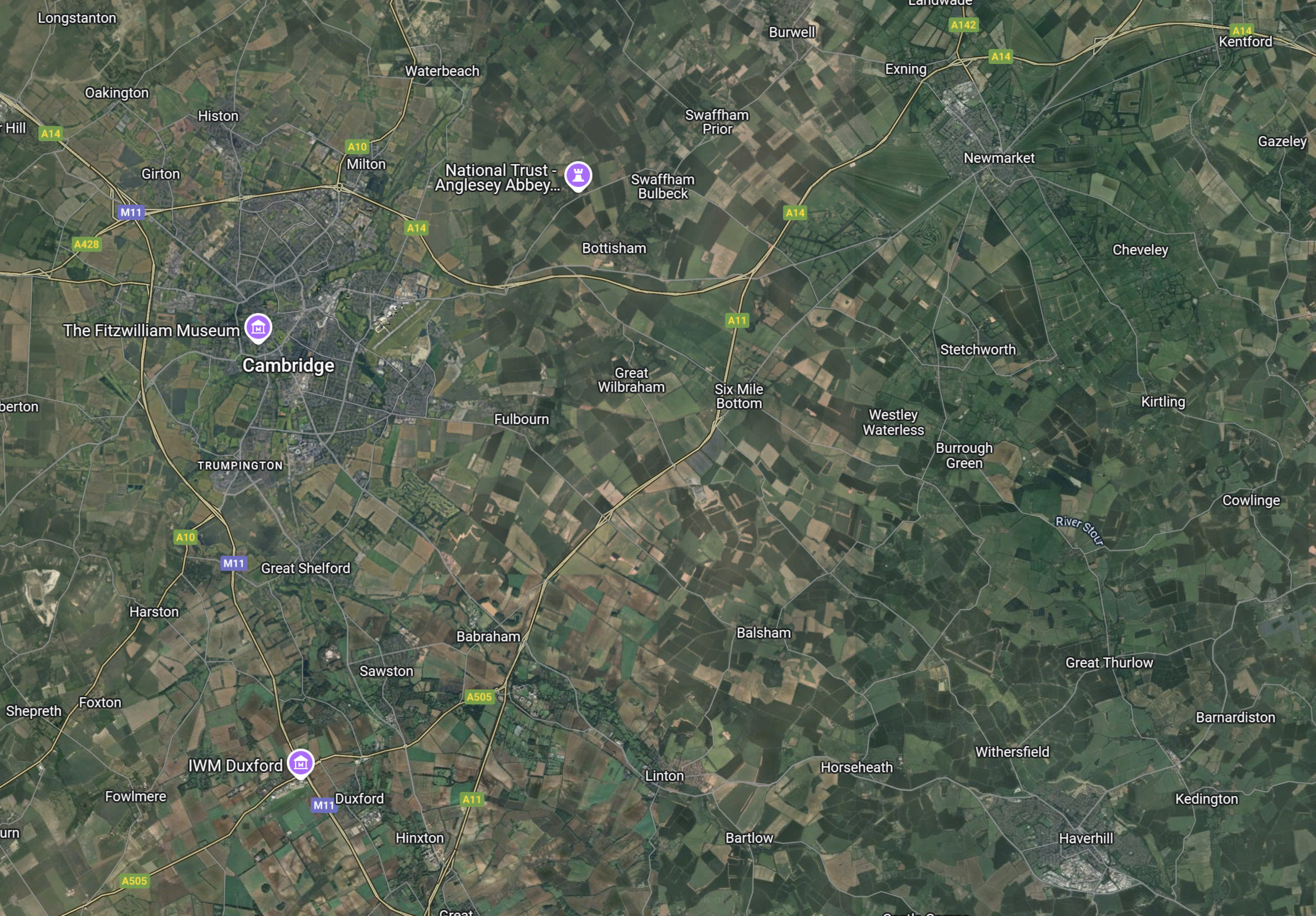
Note.
- Cambridge is towards the North-West corner of the map.
- Newmarket, which has a population of nearly 16,000, is towards the North-East corner of the map.
- Haverhill, which has a population of nearly 30,000, is towards the South-East corner of the map.
- Whittlesford Parkway station, is towards the South-West corner of the map close to the Imperial War Museum at Duxford
- I used to live at Great Thurlow between Newmarket and Haverhill.
The only railway stations on this map are Cambridge, Cambridge North, Dullingham, Newmarket, Shelford and Whittlesford Parkway.
As bus services are pretty thin on the ground, if you live to the bSouth-East of Cambridge, I can understand if there has been surprise, at the lack of parking at the new Cambridge South station.
- If you are travelling to London or Stansted Airport, you can still use Whittlesford Parkway, which has parking.
- But if when the East West Railway opens, you will need to use Cambridge or Cambridge South stations.
- Now that Cambridge North station is open, travelling to Norwich by train may be easier, unless there is not enough parking at Cambridge North station.
When I lived in the area, the most common excuse for not using the train, was the problems of parking at the stations.
I predict, that parking will be added to Cambridge South station.
Government Agrees To Fund £200m Cambridge South Station
The title of this post, is the same as that of this article on the BBC.
This is the sub-heading.
The government has agreed to fully fund a new £200m railway station.
These are a few points.
- Work has already started.
- The station is next to the city’s Biomedical Campus and Addenbrooke’s Hospital.
- Cambridge South station will be on the East West Railway.
It is expected to be open within two years.
I have a few thoughts.
Services At Cambridge South Station
In a typical hour, it seems the following trains go through the proposed site of Cambridge South station.
- 2 tph – Greater Anglia – Liverpool Street and Cambridge North via Tottenham Hale, Cheshunt, Broxbourne, Roydon (1tph), Harlow Town, Harlow Mill (1tph), Sawbridgeworth (1tph), Bishop’s Stortford, Stansted Mountfitchet (1tph), Elsenham (1tph), Newport (1tph), Audley End, Great Chesterford (1tph), Whittlesford Parkway, Shelford (1tph) and Cambridge.
- 1 tph – Greater Anglia -Norwich and Stansted Airport via Wymondham, Spooner Row (1tpd), Attleborough, Eccles Road (1tpd), Harling Road (1tpd), Thetford, Brandon, Shippea Hill (1tpd), Ely, Cambridge North, Cambridge, Whittlesford Parkway and Audley End
- 1 tph – Great Northern – King’s Cross and Ely via Cambridge, Cambridge North and Waterbeach.
- 1 tph – Great Northern – King’s Cross and King’s Lynn via Cambridge, Cambridge North, Waterbeach, Ely, Littleport, Downham Market and Watlington.
- 1 tph – Great Northern – King’s Cross and Cambridge via Finsbury Park, Alexandra Palace, Potters Bar, Hatfield, Welwyn Garden City, Welwyn North, Knebworth, Stevenage, Hitchin, Letchworth Garden City, Baldock, Royston, Meldreth, Shepreth and Foxton.
- 2 tph – Thameslink – Cambridge and Brighton via Royston, Ashwell & Morden, Baldock, Letchworth Garden City, Hitchin, Stevenage, Finsbury Park, St Pancras International, Farringdon, City Thameslink, London Blackfriars, London Bridge, East Croydon, Gatwick Airport, Three Bridges, Haywards Heath and Burgess Hill
- 1 tp2h – CrossCountry – Birmingham New Street and Stansted Airport via Coleshill Parkway, Nuneaton, Leicester, Melton Mowbray, Oakham, Stamford, Peterborough, March, Ely and Cambridge.
Note.
- tph is trains per hour.
- tp2h is trains per two hours.
This gives a base frequency through Cambridge South, Cambridge and Cambridge North of 8.5 tph.
Could some services be extended to Cambridge South or Stansted Airport?
- 1 tph – Greater Anglia – Ipswich and Cambridge via Needham Market, Stowmarket, Elmswell, Thurston, Bury St Edmunds, Kennett (1tp2h), Newmarket and Dullingham (1tp2h).
- 1 tp2h – CrossCountry – Birmingham New Street and Cambridge via Coleshill Parkway, Nuneaton, Leicester, Melton Mowbray, Oakham, Stamford, Peterborough, March and Ely.
These two trains would gives frequencies of.
- Cambridge South – 10 tph
- Cambridge – 10 tph
- Cambridge North – 9 tph
I have assumed these services would terminate at Cambridge South.
There could also be some new services.
1 tph – Greater Anglia – Wisbech and Cambridge via March, Ely and Waterbeach, Cambridge North and Cambridge.
1 tph – East West Railway – Oxford and Great Yarmouth via Oxford Parkway, Bicester Village, Winsford, Bletchley, Bedford, Tempsford, Cambourne, Cambridge, Cambridge North, Ely, Brandon, Thetford, Attleborough, Wymondham and Norwich.
1 tph – East West Railway – Oxford and Manningtree via Oxford Parkway, Bicester Village, Winsford, Bletchley, Bedford, Tempsford, Cambourne, Cambridge, Newmarket, Bury St. Edmunds, Stowmarket, Needham Market and Ipswich.
These three trains would gives frequencies of.
- Cambridge South – 13 tph
- Cambridge – 13 tph
- Cambridge North – 11 tph
I have assumed these services would terminate at Cambridge South.
The A14 Parkway Station
The A14 Parkway station is a proposal from the East West Railway.
- It would be just to the East of Chippenham junction and would be served by both Greater Anglia’s services between Ipswich and Cambridge and Ipswich and Peterborough.
- It would also be close to the major road junction, where the A11 and the A14 meet.
- It would be a Park-and-Ride station.
I believe it could be a major factor in cutting road mileage in East Anglia, as drivers going to Cambridge from Ipswich, Norwich, a large area of North-East East Anglia and North Essex could find that using the A14 Parkway station an easier and faster route. But the A14 Parkway would need a frequent service to the soon-to-be-three main Cambridge stations.
A Soham and Cambridge service could reverse at the A14 Parkway station or by careful timetabling, passengers would be able to change trains in a minute or two.
A Soham and Cambridge service, that terminated at Cambridge South, would give an extra train between Cambridge South and Newmarket and these frequencies at the three Cambridge stations.
- Cambridge South – 13 tph
- Cambridge – 14 tph
- Cambridge North – 12 tph
There would be a minimum interval of no more than five minutes between trains, if you wanted to hop between any of the three Cambridge stations.
Frequencies between Cambridge station and other main stations in the area would be as follows.
- A14 Parkway – 2 tph
- Attleborough – 2 tph
- Bishop’s Stortford – 2 tph
- Bletchley – 2 tph
- Bury St. Edmunds – 2 tph
- Ely – 6 tph
- Great Yarmouth – 1 tph
- Harlow Town – 2 tph
- Hitchin – 3 tph
- Ipswich – 2 tph
- King’s Lynn – 1 tph
- Letchworth Garden City – 3 tph
- Manningtree – 1 tph
- March – 1 tph
- Needham Market – 2 tph
- Newmarket – 2 tph
- Norwich – 2 tph
- Peterborough – 1 tph
- Royston – 3 tph
- Soham – 1 tph
- Stansted Airport – 2 tph
- Stevenage – 3 tph
- Stowmarket – 2 tph
- Thetford – 2 tph
- Wisbech – 1 tph
- Wymondham – 2 tph
Looking at this list, I think that the timetable needs reinforcing, to perhaps Colchester, Haverhill, March, Peterborough, Soham and Sudbury.
But these services will help.
- 1 tph – Greater Anglia – Ipswich and Peterborough via Stowmarket, Bury St Edmunds, Soham, Ely, Manea, March and Whittlesea.
- 1 tph – East Midlands Railway – Liverpool and Norwich via Liverpool South Parkway, Widnes, Warrington Central, Manchester Oxford Road, Manchester Piccadilly, Stockport, Sheffield, Chesterfield, Alfreton, Nottingham, Grantham, Peterborough, Ely and Thetford
But I can’t help feeling that the Stour Valley Railway needs to be reopened.
Could An Oxford And Cambridge Service Be Run Via The Lizzie Line?
This article on the BBC is entitled East-West Rail: Part Of £5bn Scheme ‘Appears To Be Unachievable’.
These are the first four paragraphs.
A £5bn rail project “appears to be unachievable” in parts, a government report said.
The East-West Rail scheme will create a link from Oxford to Cambridge, with services being introduced in stages.
Stage two, between Oxford and Bedford, and stage three, between Bedford and Cambridge, have “major issues”, the Infrastructure and Projects Authority said.
A spokesman for East-West Rail said the delivery programme was “under review”.
As someone, who used to live near Cambridge, I have seen the transport routes improve in East Anglia, but not the area’s connections to the rest of the country.
The article describes Stage 2 and 3 of the East West Railway like this.
Stage two involves predominantly upgrading existing infrastructure, between Bletchley and Bedford, to allow services between Oxford and Bedford.
Stage three involves building a new line, between Bedford and Cambridge, to extend the railway and facilitate services from Oxford to Cambridge.
So if the Government feel that the major issues and opposition should lead to cancellation of the scheme to the East of Bedford or even Bletchley, what are the problems and alternatives?
Freight
The Port of Felixstowe is the UK’s busiest container port and it handles 48% of Britain’s containerised trade.
Having lived as a teenager in Felixstowe and in Suffolk for probably half my life, there is only one certainty about the port in my mind. It will get bigger and will generate more rail and road traffic in East Anglia.
- The roads have improved greatly, since the 1960s, when I used to cycle between Ipswich and Felixstowe, along a two-lane single carriageway road.
- The renamed A14 has replaced the A45 and now connects the port to the M1 and the M6.
- Tens of long freight trains every day now connect Felixstowe with the rest of the country.
- The East West Railway will be a very useful link between Felixstowe and South Wales and the West of England.
- Global warming will mean the decarbonisation of heavy freight, with more traffic on an electrified railway.
Felixstowe’s connections to the North and Midlands may have improved greatly, but they will need to be improved a lot more.
The Port of Southampton is the UK’s second busiest container port.
- Most freight trains from Southampton go North via Basingstoke, Reading and Oxford.
- A plan some years ago was for an Electric Spine, that would have connected the Port of Southampton to the Northern cities.
- The Electric Spine would have envisaged electrification of the East West Railway to the West of Bedford and electrified connections with the West Coast Main Line and the Midland Main Line.
- The Midland Main Line is now planned to be fully electrified, under the the Integrated Rail Plan for the North and Midlands.
Southampton, like Felixstowe will be in need of improved transport connections.
In an ideal world, an electrified East West Railway, would improve freight connections between the UK’s two busiest container ports and major cities in the UK.
Problems With Freight
Could this be the major problem East of Bletchley, where the residents living along the route, don’t want to see large numbers of freight trains running close by?
In this document on the East-West Rail Consortium web site, this is said.
Note that doubling of Warren Hill Tunnel at Newmarket and
redoubling between Coldham Lane Junction and Chippenham Junction is included
in the infrastructure requirements. It is assumed that most freight would operate
via Newmarket, with a new north chord at Coldham Lane Junction, rather than
pursuing further doubling of the route via Soham.
Will the residents of Newmarket object to a double-track freight railway through the town? Freight trains and horses are not a good mix.
I do wonder, if freight trains hauled by noisy and unfriendly diesel locomotives are one of the reasons a full Oxford and Cambridge railway is losing its appeal and becoming a vote loser for the Government.
Cambridge Has An Accommodation And Commuting Problem
There is a shortage of accommodation in Cambridge for offices, laboratories, workshop and above all workers.
So it looks to the surrounding towns and cities to provide help.
London and Ely have good links, but the city needs better links to Bedford, Bury St. Edmunds, Haverhill, Ipswich, Norwich, Kings Lynn, Peterborough, Soham, Stansted Airport, Stevenage, Sudbury and Thetford.
Cambridge may be the place in the South East with the largest numbers of commuters from London.
Cambridge Needs A Decent Rail Network
In my view Cambridge needs at least the following services in trains per hour (tph)
- Colchester via Haverhill, Sudbury and Marks Tey – 2 tph
- Ipswich via Newmarket, A14 Parkway, Bury St. Edmunds, Stowmarket and Needham Market – 2 tph
- King’s Lynn via Cambridge North, Ely and Downham Market – 2 tph
- Oxford via Bedford, Milton Keynes/Bletchley and Bicester – 2 tph
- London King’s Cross via Cambridge South – 2 tph
- Norwich via Cambridge North, Ely, Thetford, Attleborough and Wymondham – 2 tph
- Peterborough via Cambridge North, Ely and March – 2 tph
- Stansted Airport via Cambridge South and Audley End – 2 tph
- Stevenage via Royston and Hitchin – 2 tph
- Wisbech via Cambridge North, Ely and March – 2 tph
Note.
- Some services already exist.
- Some of these services duplicate each other to give 4 tph or even 6 tph on certain routes.
- Some services could be back-to-back through Cambridge.
- A 14 Parkway station is a new station proposed by the East West Railway. I wrote about it in detail in Soham Station – 14th December 2021.
- Haverhill would be served by a rebuilt Stour Valley Railway.
- Wisbech would be served by restoring the railway to March.
To complete the network there would be a two tph service between Peterborough and Ipswich, which would go via March, Ely, Soham, A 14 Parkway, Bury St. Edmunds, Stowmarket and Needham Market.
Oxford Could Probably Argue that It Needs A Decent Rail Network Like Cambridge
Oxford would argue this and they have a point.
The East West Railway Is The Odd Line Out
Looking at the rail networks at Cambridge and Oxford, it appears, that with the exception of Cotswold services at Oxford and a few CrossCountry services, it appears that the East West Railway is a bit of an odd line out, as everything else is a local service.
The Effects Of Not Building The Bedford And Cambridge Section Of The East-West Railway
What will it mean, if the Bedford and Cambridge Section of The East-West Railway is not built?
- Cambourne will not get the promised station.
- Bedford and Cambridge journeys will be by bus, train via London or private car.
- Commuting into Cambridge from the West will be difficult.
- Milton Keynes and Cambridge journeys will be by bus, train via London or private car.
- Oxford and Cambridge journeys will be by bus, train via London or private car.
- Train journeys between Cambridge and much of the rest of the UK, will need to go via London.
It would appear that by not building the third section of the East West Railway, a lot of potential passengers will be denied a rail service.
Could Services Be Run Using Existing Infrastructure Through London?
The Elizabeth Line will eventually be able to handle a lot more services than it does at present.
Would Extending The Elizabeth Line To Oxford Be A Good Start?
Consider.
- Oxford has two services to London; Chiltern to Marylebone and Great Western Railway (GWR) to Paddington.
- The GWR service to Paddington stops only at Reading and Slough, has a frequency of two tph and takes under an hour.
- The fastest journey between Oxford and Liverpool Street using a fast GWR train and the Elizabeth Line takes one hour and 20 minutes.
- Only 10.6 miles of the route between Oxford and Paddington is without electrification.
- There is also a two tph stopping shuttle train between Oxford and Didcot Parkway stations and a two tph stopping train between Paddington and Didcot Parkway.
I feel that combining the two Didcot Parkway services and moving them to the Elizabeth Line would be an experiment worth trying.
This would give 2 tph direct to the following stations.
- Bond Street for the West End
- Canary Wharf for finance.
- Farringdon for Cambridge, Gatwick and Brighton.
- Hayes & Harlington for Heathrow.
- Liverpool Street for the City of London, Cambridge and Stansted
- Reading for Wales and the West.
Note.
- No-one would have a worse service than currently, but many passengers would avoid a change on their journey.
- Services could terminate at either Abbey Wood or Shenfield stations.
- Services could be an extension of the two tph to Reading or additional services.
- Between Didcot Parkway and Oxford is shown on OpenRailwayMap, as proposed for electrification.
- There may need to be some new platforms at Didcot Parkway station.
- I estimate that between Oxford and Liverpool Street would take one hour and fifty minutes.
It certainly looks, that it would be possible to replace the current GWR service between Oxford and Paddington, with an all-electric Elizabeth Line service.
The direct stopping service between Oxford and Liverpool Street would be thirty minutes slower, than the current fastest train.
The current fastest train between Liverpool Street and Cambridge takes 71 minutes, so with a change at Liverpool Street Oxford and Cambridge would probably be just over three hours.
Google Maps estimate a driving time of two hours between the two University Cities.
Could The Elizabeth Line Be Extended To Cambridge?
There is no train connection between the Elizabeth Line and the West Anglia Main Line at Liverpool Street station, although the walk for passengers is not that long.
In Extending The Elizabeth Line – Connecting West Anglia Main Line Services To The Central Tunnel, I describe how it could be possible to connect the West Anglia Main Line to the Elizabeth Line at Stratford station.
This connection would allow services from Cambridge, Harlow and Stansted to anywhere on the Elizabeth Line to the West of Stratford.
Oxford and Cambridge and Heathrow and Stansted would be distinct possibilities.
Could A High Speed Limited Stop Service Run Between Oxford And Cambridge?
In Extending The Elizabeth Line – High Speed Trains On The Elizabeth Line, I proposed running faster long-distance trains through the Central Tunnel of the Elizabeth Line.
- They would have to be dimensionally identical to the Class 345 trains to fit the platform edge doors.
- They would have a long-distance interiors.
- In the Central Tunnel, they would behave like 345 trains. with Paddington to Stratford taking 19 minutes.
- But on main lines like the Great Western Main Line, they could rattle along at 125 mph.
If the trains could keep up with Class 802 train performance between Oxford and Paddington and enter the Central Tunnel quickly, these times could be possible.
- Oxford and Paddington – 55 minutes
- Paddington and Stratford – 19 minutes
- Stratford and Tottenham Hale – 14 minutes
- Tottenham Hale and Cambridge – 65 minutes
Just over two-and-a-half hours, without a change of train, sounds fine to me.
What About The Trains From Great Malvern?
The fast services between Paddington and Oxford, run twice an hour, with the service formed of one hourly Paddington and Oxford service and another hourly Paddington and Great Malvern service.
- If Oxford gets electrified soon, this will mean that the Oxford and Paddington service would be all-electric.
- But the Great Malvern service would need to be able to handle 65.5 miles of line without electrification each way.
- The speed limits between Oxford and Great Malvern vary between 70 and 100 mph.
I’m certain that Stadler could design and build a train, with the following characteristics.
- Class 345 dimensions.
- 125 mph performance.
- Ninety miles range on battery power.
The trains would be charged between Paddington and Oxford and by a charger at Great Malvern.
Conclusion
Would an Oxford and Cambridge service through Central London be an alternative to the East-West Railway?
Perhaps not an alternative, but an addition?
Soham Station – 14th December 2021
I visited the new Soham station today.
I took four trains in total.
- The 11:12 from King’s Cross, which arrived at Ely at 12:23
- The 12:31 from Ely, which arrived at Soham at 12:39
- The 12:51 from Soham, which arrived at Ely at 12:59
- The 13:18 from Ely, which arrived at King’s Cross at 14:33
The outward journey took 87 minutes, with the return taking 102 minutes.
I took these pictures at Soham station.
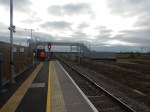
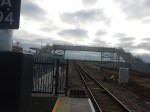
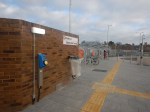
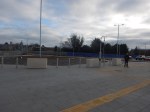
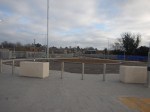
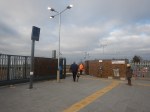
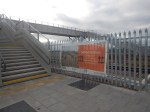
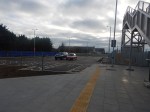
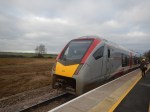
Note.
- The train is a three-car Class 755 train.
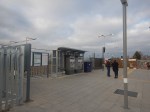
- There is only a single platform.
- There are dropped kerbs everywhere on the walking routes.
- There is plenty of car parking.
- There are disabled car parking spaces.
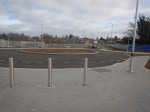
- There is a circular turning area in front of the station, which forms a high-capacity Kiss-and-Ride, with space for a couple of buses.
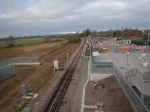
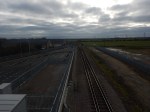
- The track towards Ely is single-track
- The track towards Bury St. Edmunds and Ipswich is double-track.
- The bridge is ready for a second platform, should it be needed and/or installed.
- The station is unmanned.
These are some further thoughts.
Is Soham The Ultimate Step-Free Station?
Consider
- Greater Anglia’s Class 755 trains are level with the platform, as they have gap fillers.
- Walking from the car parking to the train is step-free.
- There are lots of dropped kerbs and tactile pavements.
I suspect it is one of the few stations in the UK, where if you arrive on foot or by car or bus, that there is no step to the train.
This document on Network Rail says this about the footbridge.
A stepped footbridge across the railway to connect to an existing public right of way, designed for future installation of lifts if a second platform is constructed.
It looks like Network Rail have all eventualities covered.
The Station Has Adequate Parking
This picture from the gallery shows the parking to the South of the station.
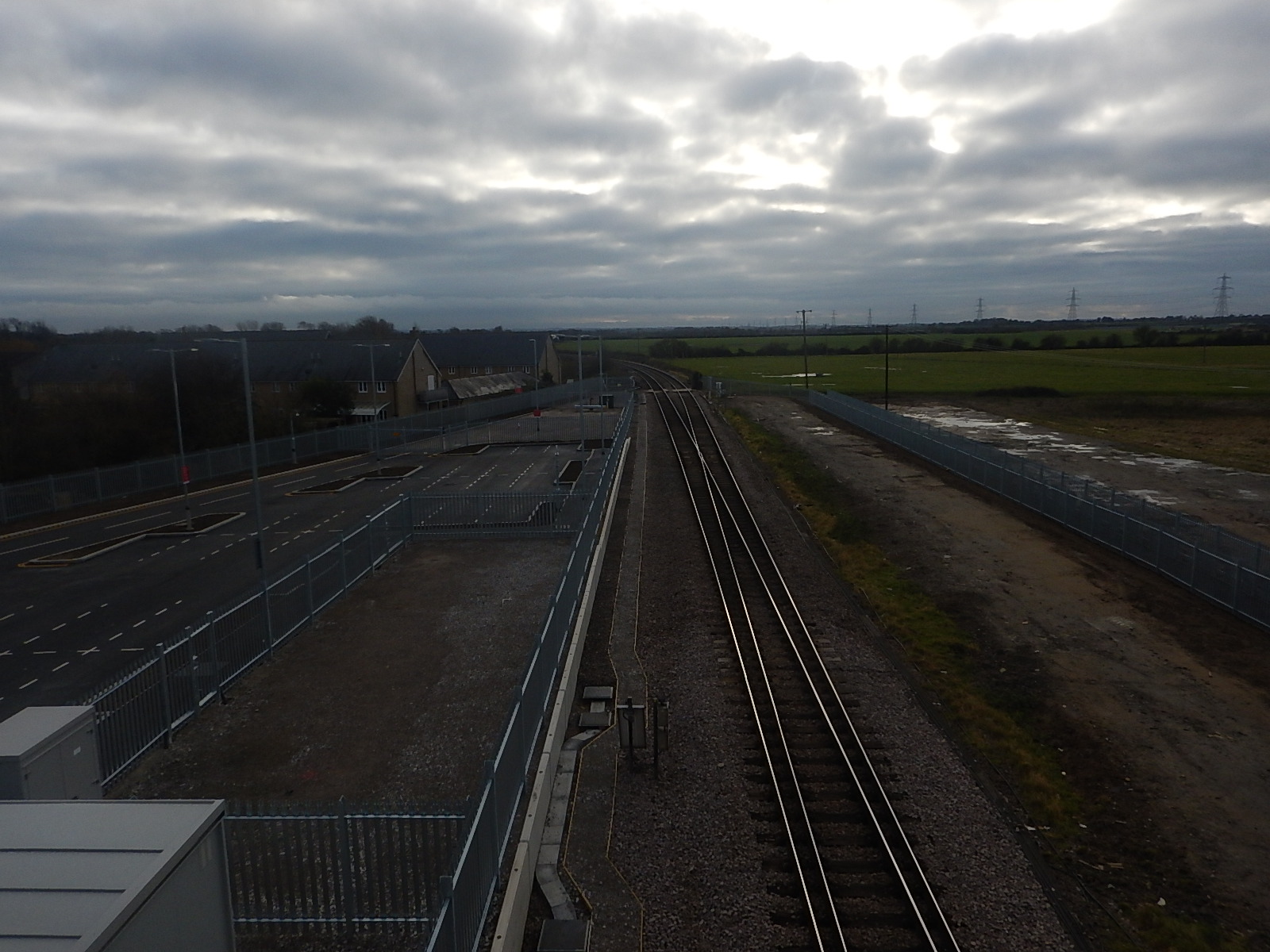
The Network Rail document says that the car park can accommodate 50 vehicles and has four spaces for blue badge holders.
But looking at this picture, there could be space for more parking.
The Station Is Well-Connected To The Road System
This Google Map shows the town of Soham.
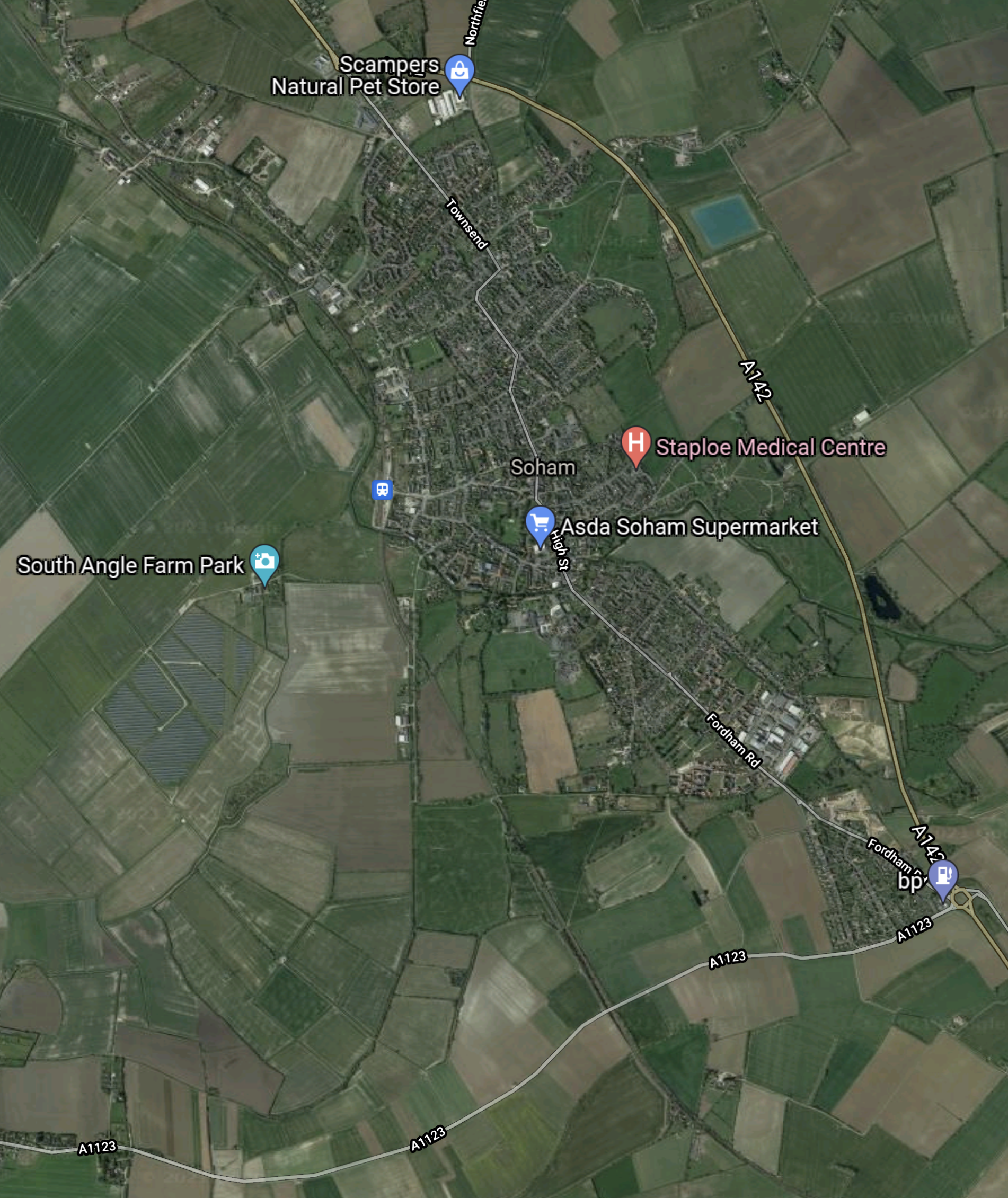
Note.
- Soham has a by-pass around the Eastern side of the town.
- The railway passes to the West side of the town.
- The station is marked by the small blue dot to the left of the word Soham in the middle.
- The old road goes through the centre of the town.
- Soham is a town of nearly eleven thousand people.
- I suspect the town is fairly flat and many will walk or cycle to the station.
Hopefully, the station will attract a lot of passengers.
Does The Station Need A Second Platform?
Network Rail have shown with the Borders Railway and the Avocet Line, that two trains per hour (tph) can be run reliably on a line with sections of single-track and some stations with only one platform.
One of the problems with a second platform at Soham, would be that lifts would be needed for many to cross the track.
It is not the cost that is the problem, but lifts do not have a hundred percent reliability.
Would installing lifts mean providing staff at the station?
I think, that unless the station attracts a lot of passengers, the second platform will never be built.
Would A Second Track Be Provided At Soham Station?
This is a different question, with possibly a different answer.
A large number of freight trains pass through Soham station each day and to increase their number Network Rail have proposed double-tracking the route between Soham and Ely.
As Soham and Ely are just over five miles apart, I wonder if Network Rail are thinking of putting a freight loop through Soham station, that continues to Ely.
These pictures show a long freight train waiting in the freight loop at Ely station before proceeding to Peterborough and the West.
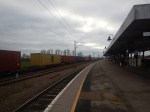
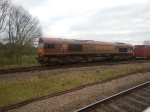
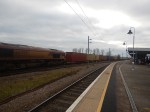
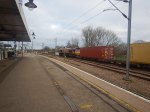
I think that this loop is bi-directional.
Could the new freight loop be built, so that the following happens?
- The freight loop starts to the South of Soham station.
- The freight loop connects to the freight loop at Ely station.
- All passenger trains use the current single-track.
- All freight trains use the freight loop.
- Both tracks would be bi-directional.
- Freight trains don’t pass through the current platform at Soham station.
It stood be noted that passenger and freight trains take less than ten minutes between Ely and Soham stations.
As both freight and passenger trains would have their own tracks, I suspect that a total of at least four passenger tph and four freight tph would be able to pass between Soham and Ely.
The A14 Parkway Station
I wrote this section originally in Soham Station Aims For December 2021 Opening, but it still applies.
The A14 Parkway station is a proposal from the East West Railway.
- It would be just to the East of Chippenham junction and would be served by both Greater Anglia’s services between Ipswich and Cambridge and Ipswich and Peterborough.
- It would also be close to the major road junction, where the A11 and the A14 meet.
- It would be a Park-and-Ride station.
I believe it could be a major factor in cutting road mileage in East Anglia, as drivers going to Cambridge from Ipswich, Norwich, a large area of North-East East Anglia and North Essex could find that using the A14 Parkway station an easier and faster route. But the A14 Parkway would need a frequent service to the soon-to-be-three main Cambridge stations.
A Soham and Cambridge service could reverse at the A14 Parkway station or by careful timetabling, passengers would be able to change trains in a minute or two.
A Cambridge And Soham Service
I do wonder, if Cambridge could benefit from a triangular metro.
The three points of the triangle would be A14 Parkway, Cambridge South and Ely stations.
The three legs would have the following stations.
- A14 Parkway and Cambridge South – Newmarket, Dullingham, Six Mile Bottom *, Fulbourne *, Cherry Hinton * and Cambridge
- Cambridge South and Ely – Cambridge, Cambridge North and Waterbeach
- Ely and A14 Parkway – Soham and Fordham *
Note.
- Stations marked with an asterisk (*) are possible new stations.
- The basic frequency would be one tph.
- Trains would reverse at A14 Parkway, Cambridge South and Ely stations.
The triangular nature of the service may mean that to avoid the driver constantly changing ends, that automation and video technology may allow driving from either end of the train.
These existing services would fit in with the triangular service.
- Norwich and Stansted Airport via Cambridge South, Cambridge, Cambridge North, Waterbeach and Ely.
- Ipswich and Peterborough via A14 Parkway, Soham and Ely
- Ipswich and Cambridge via A14 Parkway, Newmarket and Dullingham
- Wisbech and Cambridge via Cambridge North, Waterbeach and Ely.
- King’s Cross and King’s Lynn via Cambridge South, Cambridge, Cambridge North, Waterbeach and Ely.
- Birmingham and Stansted Airport via Cambridge South, Cambridge, Cambridge North, Waterbeach and Ely.
Note.
- All services would probably be one tph.
- Some services currently terminating at Cambridge, may be extended to Cambridge South.
- There will be other services from East West Railway.
The frequencies on the various legs would be as follows.
- A14 Parkway and Cambridge South – 2 tph plus one tph from East West Railway
- Cambridge South and Ely – 5 tph plus one tph from East West Railway
- Ely and A14 Parkway – 2 tph
The route between A14 Parkway and Cambridge would need to be improved, but this is planned by East West Railway.
Would It Be Possible To Commute From Soham To London?
My timings of around ninety minutes are probably well within the endurance of the average commuter.
Conclusion
Soham station is not your run-of-the-mill rural station.
The Cambridge Re-signalling, Relock and Recontrol Project
This project is Network Rail’s big signalling project in the Cambridge area and it is fully described in this document on the Network Rail web site.
The project is called the C3R Project for short and its scope is described in this Network Rail infographic.

Note.
- 125 miles of track are to be resignalled.
- Seventeen stations are likely to be resignalled.
- Eight level-crossings are to be upgraded.
Network Rail’s document splits the project into five sections.
- Cambridge Power Signal Box – This will be upgraded.
- Safety Interlocking Equipment – This will be upgraded with a computer-based system.
- Closure Of Three Signal Boxes – Control will be relocated to Cambridge Power Signal Box.
- Seven Level Crossing Upgrades – These will be upgraded to full barrier crossings.
- Land Acquisition – As necessary to complete the works.
Upon completion the project will have replaced around 690 signalling assets.
Network Rail also say that the outline design contract to Alstom and it is expected to be completed in the last quarter of 2021.
Network Rail also says this about completion.
Subject to obtaining the necessary consents and design approvals, the detailed design and delivery of the signalling upgrade could begin by end of 2021 and be complete around the end of 2024.
My experience of project management and the railways of East Anglia, says that subject to one caveat, that this is a reasonable timescale.
The Level Crossing Problem
The problem could be the level crossings, as local interests are very protective of their supposed right to cross unhindered.
I particularly remember the Little Cornard Derailment, because a solicitor, who regularly instructed my late wife, was seriously injured in the derailment.
This is the first paragraph of the Wikipedia entry.
The Little Cornard derailment occurred on 17 August 2010 when a passenger train collided with a road vehicle on a level crossing on the Gainsborough Line near Little Cornard, Suffolk, and partly derailed. The vehicle, a tanker lorry, had begun crossing over the track when the Class 156 train from Sudbury destined for Marks Tey struck it whilst travelling at a speed of approximately 40 miles per hour (64 km/h)
Note.
Although, my late wife had died in 2007, one of her barrister colleagues told me of the link.
East Anglia and other rural parts of the UK suffer regularly from this type of accident.
This Google Map shows a 3D visualization of the site of the derailment.
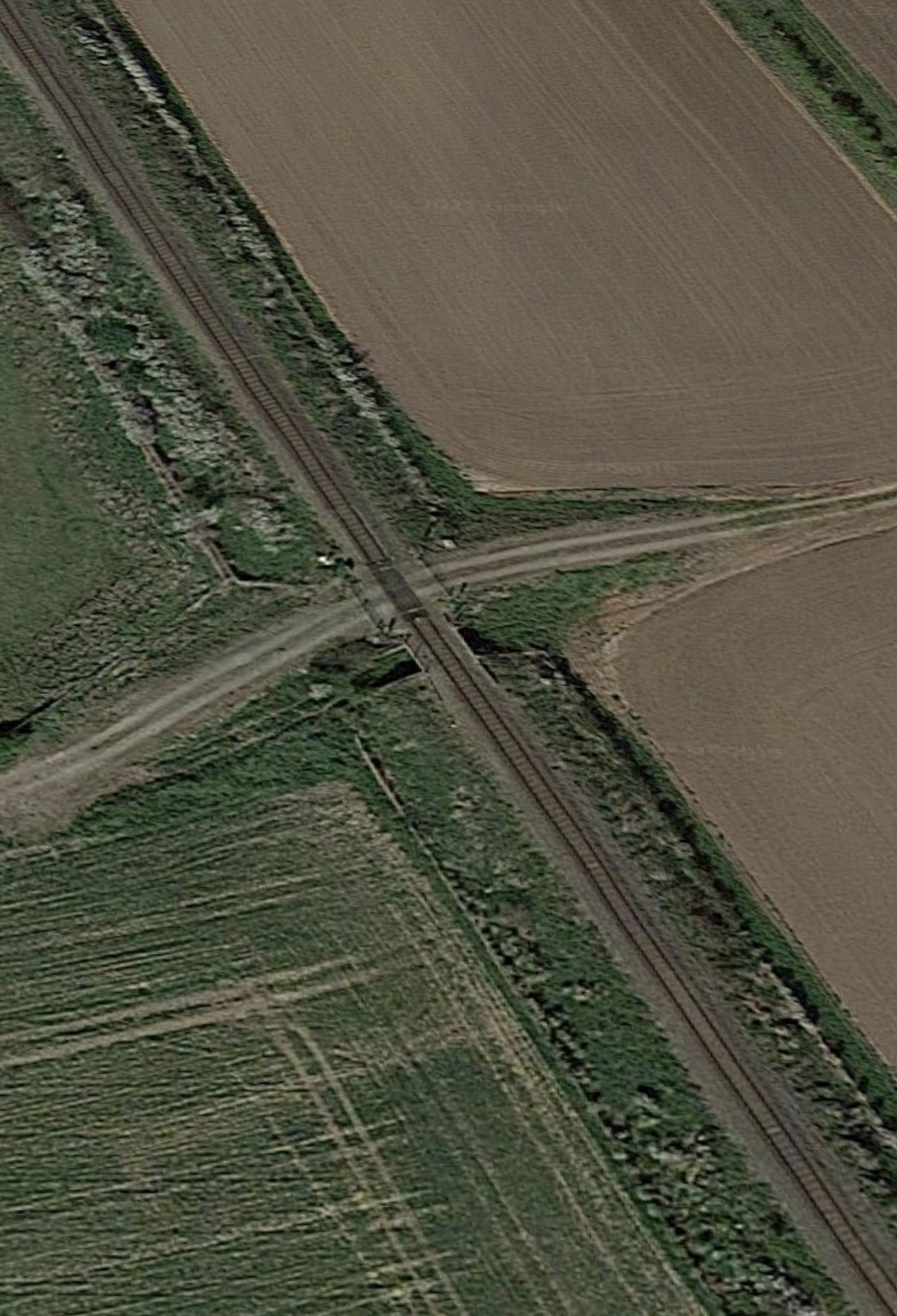
It appears to be rather remote.
I am totally appalled that there was such primitive safety equipment on this crossing.
- I have worked in seriously dangerous chemical plants, where Health and Safety rules forbade anyone entering the plant without full training.
- As a sixteen-year-old in 1963, I was designing and installing systems on industrial guillotines, so that workers didn’t lose their hands.
- A proportion of work, I did whilst working for ICI was about Health and Safety.
- I have travelled extensively in tour buses in Eastern Europe and seen some appealing driving at level crossings.
- According to a Hungarian friend, if you want to see bad driving at level crossings try Russia. He put it down to the local firewater.
This experience leeds me to believe that one of two things should be done with all level crossings on the railway.
- There should be a strong safety system on the crossing.
- The level crossing should be closed.
Will Network Rail be allowed by local interests to upgrade all the crossings they need?
The Level Crossings Network Rail Propose To Upgrade
These are the crossings Network Rail propose to upgrade.
Meldreth Road Level Crossing
This Google Map shows the Meldreth Road level crossing.
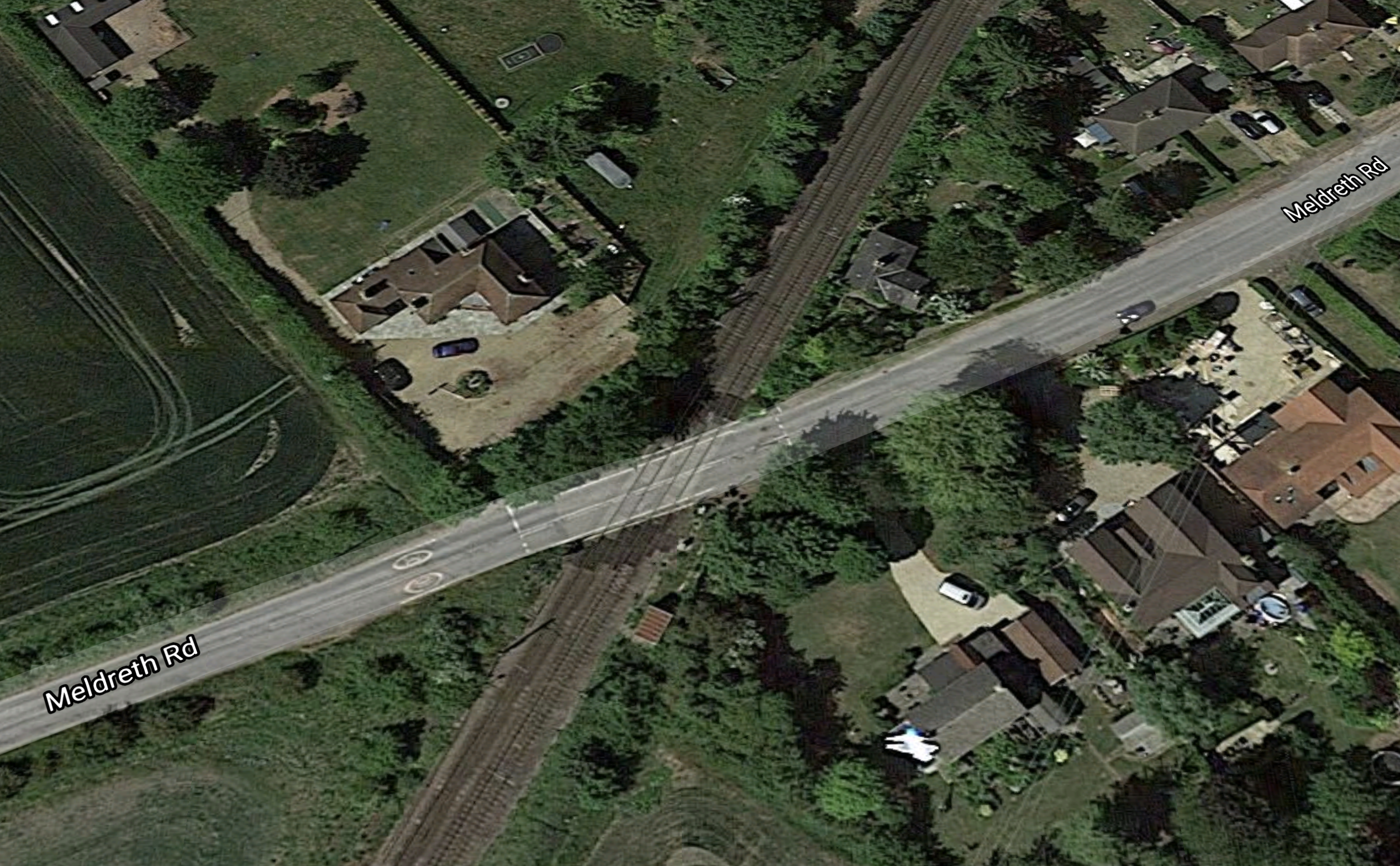
Note.
- Meldreth Road is the A10 between Cambridge and Royston.
- The double-track rail is the Cambridge Line between Cambridge and the East Coast Main Line.
- The line has a maximum speed of 90 mph.
- In every hour there are up to 10-12 passenger trains per hour (tph) through the level crossing.
- There are perhaps ten other trains per day, or less than one tph.
The ABC Railway Guide gives a line speed of 90 mph and adds these risk factors.
- Sun Glare
- Frequent Trains
It is very much a classic case of a busy railway crossing a busy road.
I also think that Network Rail has another problem here.
Pressure from train operators and passengers, could lead to more and faster trains through this level crossing.
In my view, the best solution to that problem would be to drop the railway into a cutting and put the road on a bridge over the top.
But this would be a very expensive and disruptive solution, which might mean that the road and/or railway were to be closed for several months.
The only other solution would be to run all trains between Royston and Cambridge under the control of digital signalling and Automatic Train Operation.
Trains would be timed so, that trains in opposite directions crossed on the level crossing, when the full barriers were down to stop traffic.
If this could be done, it could have various effects.
- This would halve the number of level crossing closures in every hour.
- The timekeeping might even impress drivers.
- It might even train drivers to expect two trains, so if one was a minute or so late, they might be more prepared to wait.
This technique would give whole new meaning to a double cross.
This page on the My Councillor web site, gives details of opposition to the project by Councillor Susan van der Ven.
Six Mile Bottom Level Crossing
This Google Map shows the Six Mile Bottom level crossing.
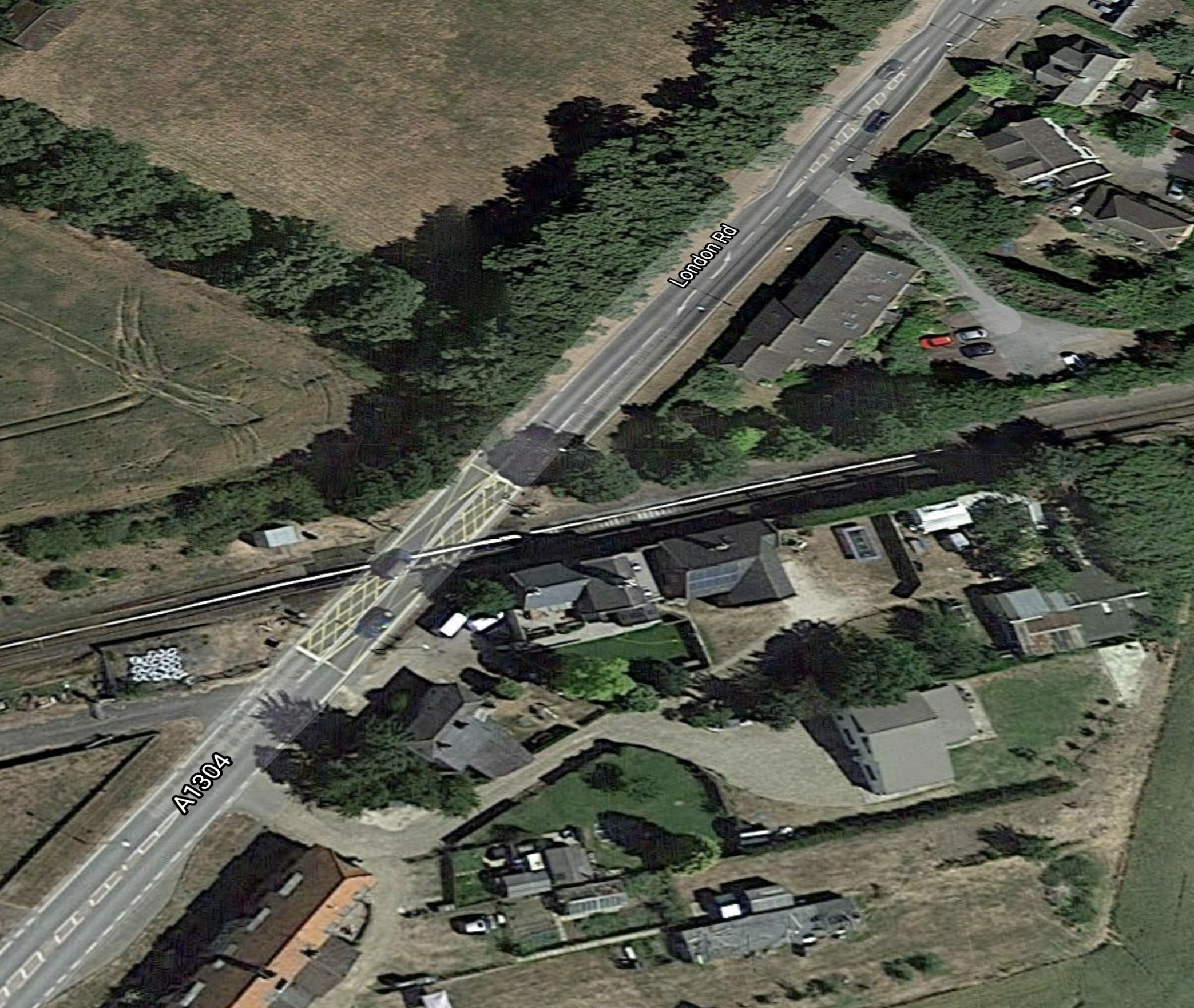
Note.
- The road is the A1304 which is the main link between Newmarket and the South.
- The road can get very busy, when there is a big race meeting.
- The rail track is only single track.
- The line has a maximum speed of up to 75 mph.
- In every hour there are no more than one passenger tph in both directions.
- There are some occasional freight trains over the crossing.
The ABC Railway Guide gives a line speed of 60 mph and adds these risk factors.
- Large Numbers Of Users
- Sun Glare
I used to drive across this level crossing regularly, when I lived in the area and the trouble is that it is on a straight road, that encourages high speed.
Legend has it, that this was one of public roads used by Vincent to test their high performance motorcycles.
In the time I lived near the crossing, I can remember a serious accident between a car and a train, at the crossing.
It would appear that a partial solution has been applied.
This video shows how much brighter LED lights have been fitted to the crossing.
Let’s hope this encourages drivers to slow down, when the crossing is closed.
How many other level crossings would be improved with bright LED lights like these?
Dullingham Level Crossing
This Google Map shows the Dullingham level crossing.
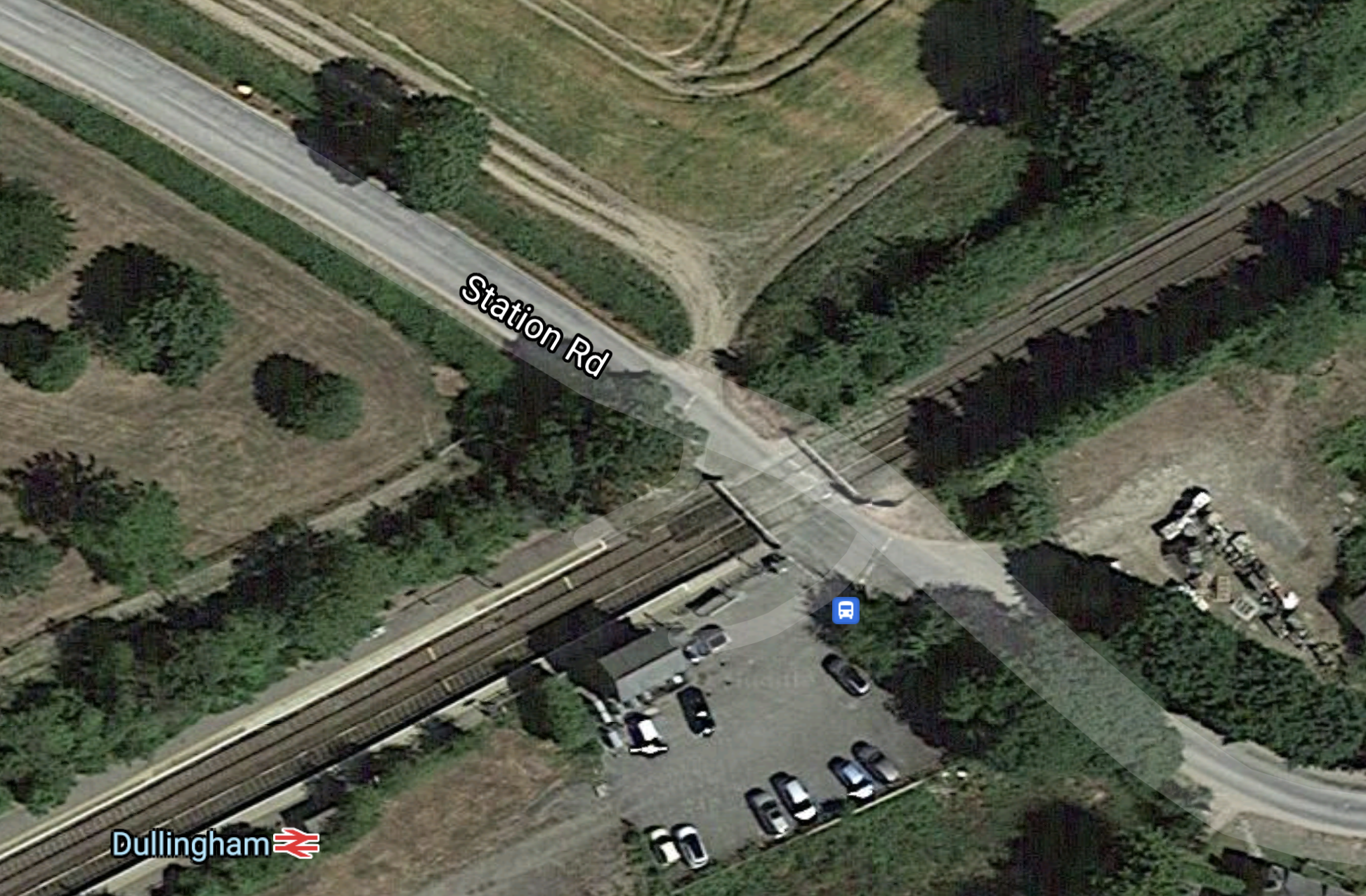
Note.
- The current barriers are operated manually by the signalman in Dullingham signal box.
- The road is a local road and the small amount of traffic could probably be easily handled by an automatic crossing with full barriers.
- The rail line is the same at that at Six Mile Bottom, but is double-track.
The ABC Railway Guide gives a line speed of 60 mph and adds these risk factors.
- Poor Visibility for Approaching Road Vehicles
- Crossing is Near a Station
- Crossing Approach
- Sun Glare
From my local experience, I suspect that an automatic crossing with full barriers might even cause less delay to road traffic.
Milton Fen Level Crossing
This Google Map shows the Milton Fen level crossing.
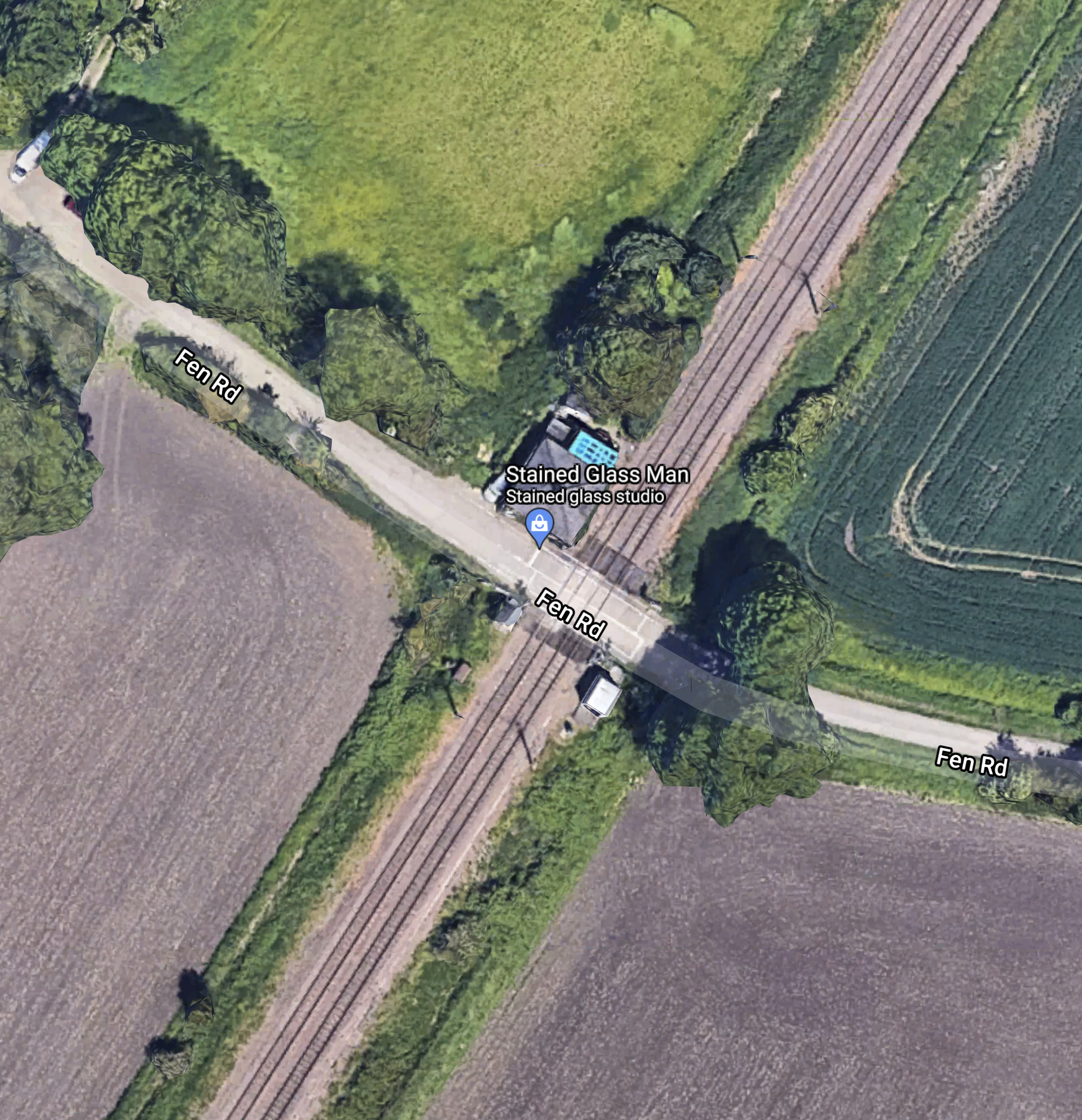
Note.
- The road is a local road and the small amount of traffic could probably be easily handled by an automatic crossing with full barriers.
- The railway is the Fen Line between Cambridge and Ely.
- It looks like there are three passenger tph and the occasional freight trains through this crossing.
- The line speed of the rail line is 75 mph.
The ABC Railway Guide gives a line speed of 75 mph and adds these risk factors.
- Sun Glare
- Frequent Trains
It should also be noted that I can find reports of serious accidents and deaths on this crossing.
It looks to me, that an automatic crossing with full barriers could work well on this level crossing.
Waterbeach Level Crossing
This Google Map shows the Waterbeach level crossing.
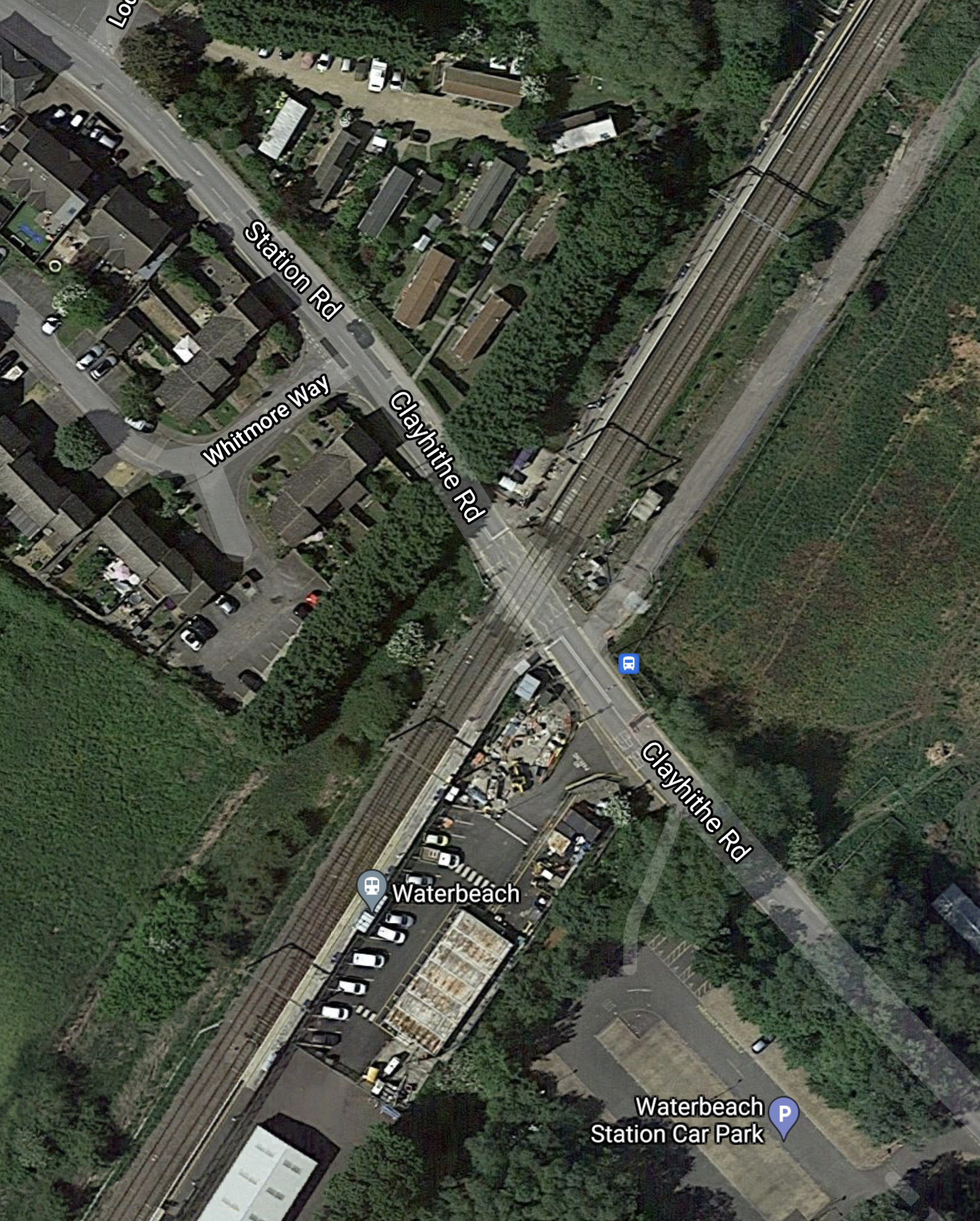
Note.
- The road is a local road, but could the traffic be easily handled by an automatic crossing with full barriers?
- The railway is the Fen Line between Cambridge and Ely.
- It looks like there are three passenger tph and the occasional freight trains through this crossing.
- The line speed of the rail line is 75 mph.
- Waterbeach station is split with one platform either side of the level crossing, which is used by passengers to cross the line.
The ABC Railway Guide gives a line speed of 75 mph and adds these risk factors.
- Poor Visibility for Approaching Road Vehicles
- Crossing is Near a Station
- Crossing Approach
- Large Numbers of Users
- Blocking Back
- Frequent Trains
It should also be noted that Network Rail rate this crossing as high risk.
There is probably a long-term solution for this level crossing
Under Future Plans in the Wikipedia entry for Waterbeach station, this is said.
Plans to develop a New Town of 8,000 to 9,000 homes on the former Waterbeach Barracks site have been outlined by South Cambridgeshire District Council. As part of the proposal, there are plans to relocate the station to a new site and extend the platforms to accommodate 12 car trains.
Surely, a well-designed transport network to serve all these houses would see the level crossing closed and a new station built at a convenient location.
Dimmocks Cote Level Crossing
This Google Map shows the Dimmocks Cote level crossing.

Note.
- The road is the A1123, so could the traffic be easily handled by an automatic crossing with full barriers?
- The railway is the Fen Line between Cambridge and Ely.
- It looks like there are three passenger tph and the occasional freight trains through this crossing.
- The line speed of the rail line is 75 mph.
The ABC Railway Guide gives a line speed of 75 mph and adds these risk factors.
- Infrequent Trains
- Deliberate Misuse or User Error
It should also be noted that Network Rail rate this crossing as high risk.
Croxton Level Crossing
This Google Map shows the Croxton level crossing.
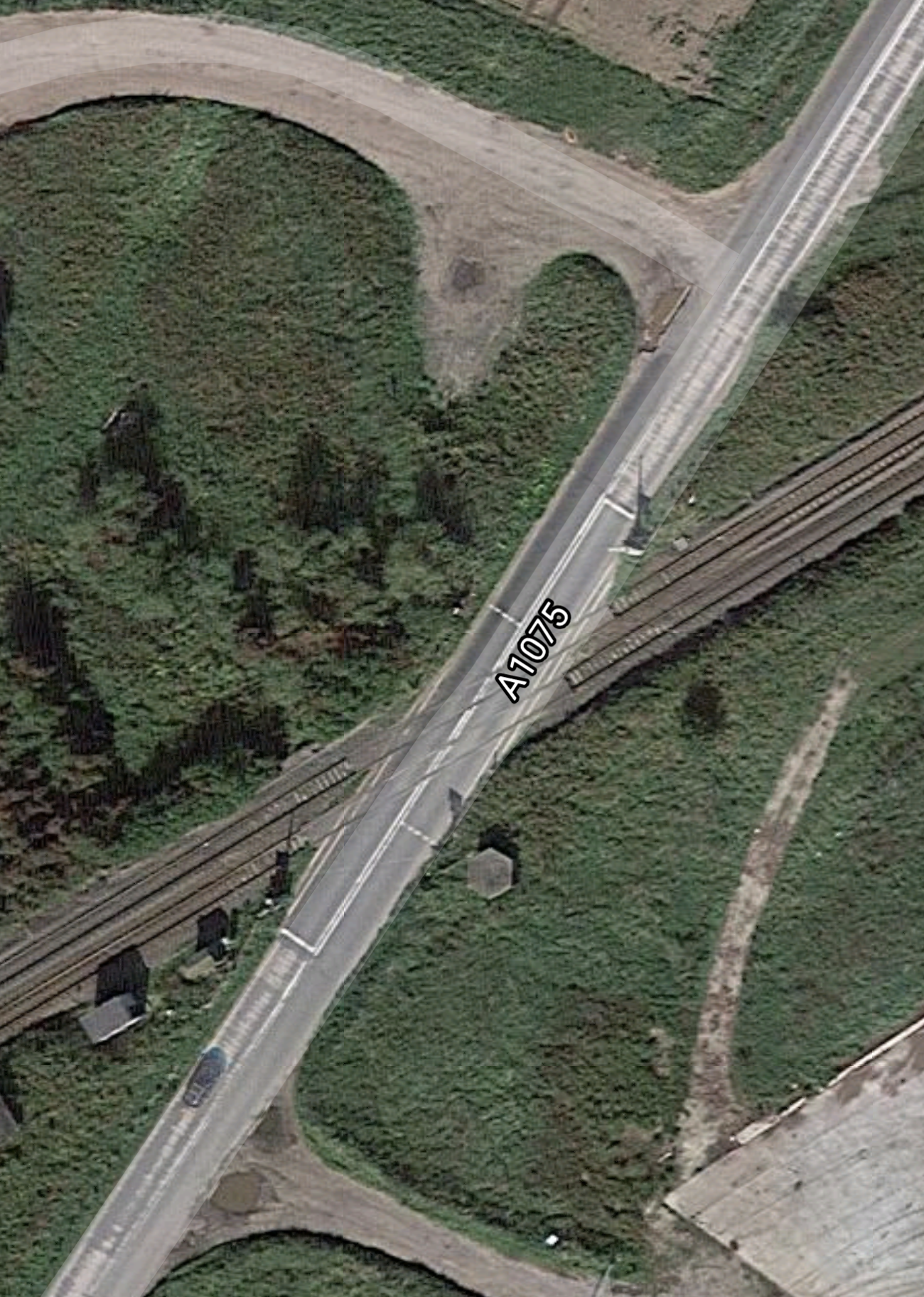
Note.
- The road is the A1075, so could the traffic be easily handled by an automatic crossing with full barriers?
- The railway is the Breckland Line between Norwich and Ely.
- It looks like there are two passenger tph and the occasional freight trains through this crossing.
- The line speed of the rail line is 75-90 mph.
It should also be noted that Network Rail rate this crossing as high risk.
The ABC Railway Guide gives the line speed as 40 mph and adds these risk factors.
- Poor Visibility for Approaching Road Vehicles
- Crossing Approach
- Large Numbers of Users
- Sun Glare
- Deliberate Misuse or User Error
This crossing sounds like it could be an accident waiting to happen.
Although, I would feel that installing similar lights to those at Six Mile Bottom could be a big help!
Summarising The Proposed Level Crossing Upgrades
I can split these by topic.
Full Barrier installation
It would appear that all barriers can probably be replaced with the latest full barrier technology.
Improved Lighting
The video from Six Mile Bottom was impressive and probably shows how fairly simple improvements can increase safety.
Local Opposition
On this brief summary of all the level crossings, that Network Rail propose to upgrade to automatic crossing with full barriers, it would appear that only the Meldreth Road crossing is seeing opposition from local interests. Although, I do have doubts, that the development of all those houses at Waterbeach will ever happen because of local opposition.
Major Construction Works
It would appear that only two upgrades could require major works.
Meldreth Road – But only if it was felt that a substantial solution was needed.
Waterbeach – If a new station were to be built to cater for future housing development.
The others would only need barrier replacement and other appropriate improvements.
I would also feel that most of the work could be carried out without major disruption to train services or road traffic.
Modern Digital Signalling With Automatic Train Operation
Modern digital signalling with in-cab displays and a measure of automatic train operation offers three main gains to train operators and passengers.
- More services can be squeezed safely into the existing network, without building controversial and expensive new lines.
- Trains can run at higher average speeds.
- Trains can run to timetable easier.
It should be noted that South of Doncaster the East Coast Main Line is being converted to this type of signalling and this will allow the Azumas and other trains to run at 140 mph, where the track allows, to speed up services between King’s Cross and the North.
Services Between King’s Cross and Cambridge
South of Hitchin, some services between King’s Cross and Cambridge share the lines with the expresses to and from the North.
For that reason the 100 mph Class 700 trains and the 110 mph Class 387 trains, would be out of their speed range like Morris Minors on the M1.
In 2018, I wrote Call For ETCS On King’s Lynn Route, based on an article in Rail Magazine, which called for 125 mph trains to Cambridge and King’s Lynn, so they wouldn’t slow the expresses.
It does appear to me that the digital signalling part of the C3R Project will enable 125 mph trains to run between King’s Cross and King’s Lynn via Cambridge.
- Oxford has 125 mph non-stop local trains to London, so why not Cambridge?
- A nine-car Class 800 train has a similar seating capacity to a twelve-car Class 700 train, but the seats are better and the train can travel at 125 mph.
- These trains would significantly reduce the fifty minute journey time between King’s Cross and Cambridge.
This would be a real Cambridge Express.
Developing Services Around Cambridge
Just as full digital signalling is helping London to expand its railways with Crossrail and Thameslink. I believe that the C3R Project will help to squeeze more trains through Cambridge.
In a few years time, I believe Cambridge will have a core route consisting of Cambridge North, Cambridge and Cambridge South stations with much expanded services to Bury St. Edmunds, Ely, Ipswich, Kings Lynn, London, Norwich, Peterborough, Stansted Airport, Stevenage and Wisbech.
Ten years ago, I was told by one of Cambridge’s eminent thinkers, that Cambridge needed the connectivity to bring in the people that the economy needs.
The pandemic has changed things, but not Cambridge’s desire to create more businesses expand.
A Connection To Peterborough
Peterborough is the other half of Cambridgeshire’s area and shares the Cambridgeshire & Peterborough Combined Authority with Cambridge.
Peterborough station is well connected to the North and Midlands.
- LNER’s connect the station to most stations on the East Coast Main Line.
- It has hourly services to Birmingham, Leicester, Liverpool, Manchester and Nottingham.
But the connection between Cambridge and Peterborough is not of the quality and frequency that the two cities need.
A Connection To Stevenage
Stevenage is an important manufacturing and technology centre, with a strong presence in aerospace.
Stevenage station is well connected to the North and South.
- LNER and other services connect the station to most stations South of Leeds and York on the East Coast Main Line.
- The new service from East Coast Trains will provide a direct service to Newcastle and Edinburgh with a frequency of seven trains per day (tpd).
- It has a direct suburban line to King’s Cross.
- It has a direct suburban line to Moorgate.
Stevenage seems to be acquiring more long distance services as time progresses.
But the connection between Cambridge and Stevenage is currently poor, at just two tph, which stop everywhere.
Improve the connection between Cambridge and Stevenage and have more calls of services to and from the North at Stevenage and Cambridge and \stevenage would benefit.
Currently, the fast Cambridge services take 27 minutes to do the 30.3 miles between Cambridge and Stevenage, which is an average speed of 67.3 mph.
A Connection To Wisbech
Progress seems to be being made on a service between Cambridge and Wisbech, which I wrote about in Hope For Wisbech Line Revival.
This was the conclusion of that post.
I very much feel that the Cambridgeshire & Peterborough Combined Authority and Network Rail can create a very useful branch line to Wisbech.
There is not much infrastructure to be built and upgraded.
-
- A new station will be built at Wisbech, which I feel is likely to be a Park-and-Ride on the A47.
- A bay platform will probably need to be reopened at March station.
- March station will need to be step-free.
- There may be a station and a passing loop at Coldham.
- Track and signalling will need to be replaced.
But the big project needed is the remodelling at Ely, which will have to be done to increase capacity, through the bottleneck.
Greater Anglia’s Class 755 trains would appear to be ideal for the branch and could operate on battery power.
This connection could be a very valuable connection.
It certainly looks like there are better plans to connect Wisbech to Cambridge, than there are to improve the connections between Cambridge and Peterborough and Stevenage.
Conclusion
The C3R Project will give the Cambridge compatible signalling with the East Coast Main Line and I feel increasingly Cambridge could be treated as a series of stations just off the East Coast Main Line and we might see some services develop, that seem strange to today’s travellers.
A simple example could be a Regional Metro running between Peterborough and Stevenage.
- It would call at March, Ely, Waterbeach, Cambridge North, Cambridge, Cambridge South, Royston and Hitchin.
- It would run at a frequency upwards of two tph.
- It could even connect to Lincoln.
Other North-South services through Cambridge like Thameslink and Norwich and Stansted would combine to give perhaps six tph through the three main Cambridge stations.
The C3R Project will open up lots of possibilities.
Beeching Reversal – Reopening Sawston Station
This is one of the Round 3 bids of Beeching Reversal projects that the Government and Network Rail are proposing to reverse some of the Beeching cuts.
Sawston is a village in South Cambridgeshire, which is shown in this Google Map.
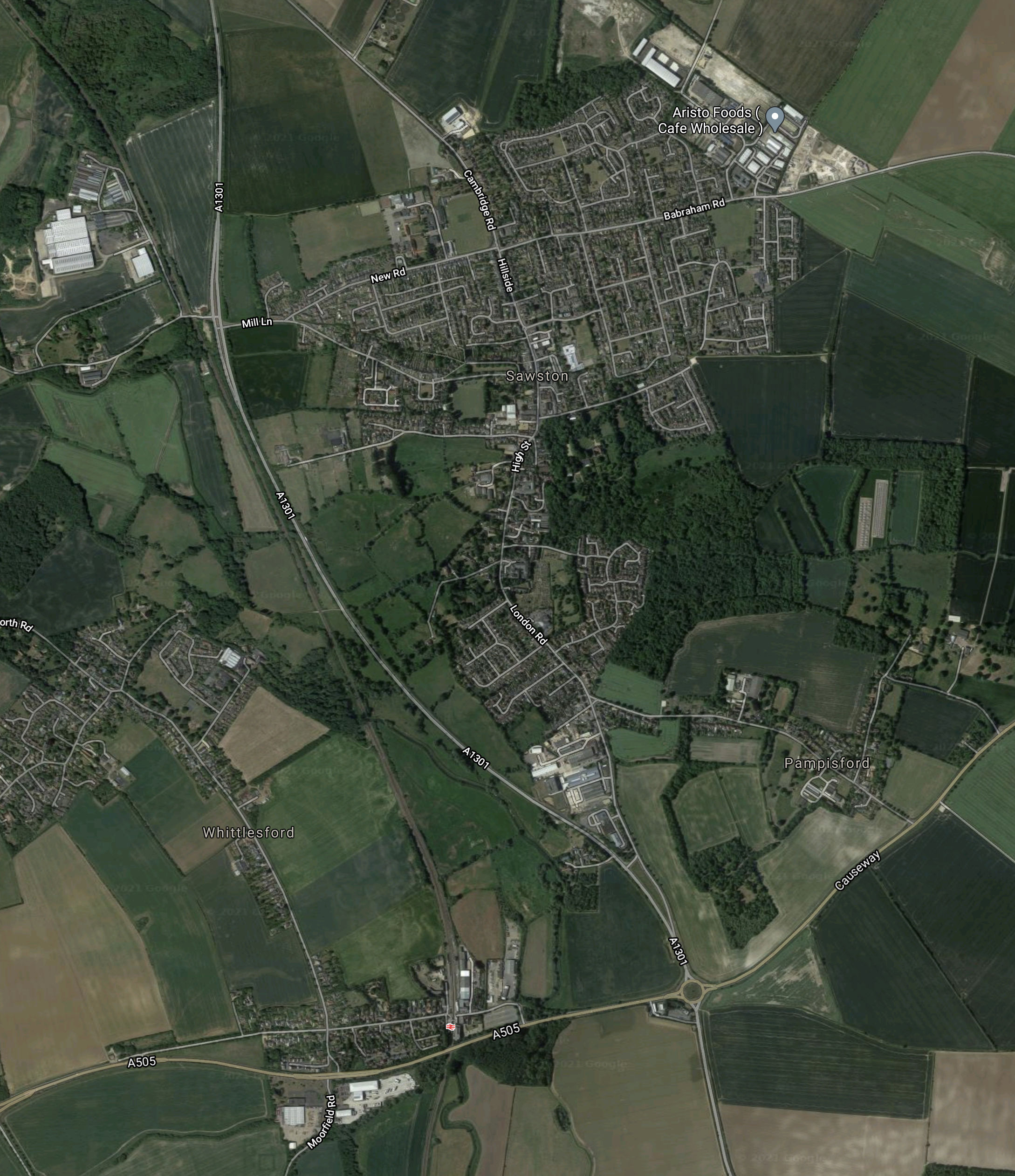
Note.
The West Anglia Main Line and the A1301 road both run North-South to the West of the village.
The railway calls at Whittlesford Parkway station at the bottom of the map.
The A505, which is a main route between West Suffolk and the M11 and the A1 (M) runs across the bottom of the map.
The new Sawston station is proposed to be in Mill Lane close to the old Spicers factory.
This second Google Map shows the area of the proposed station.
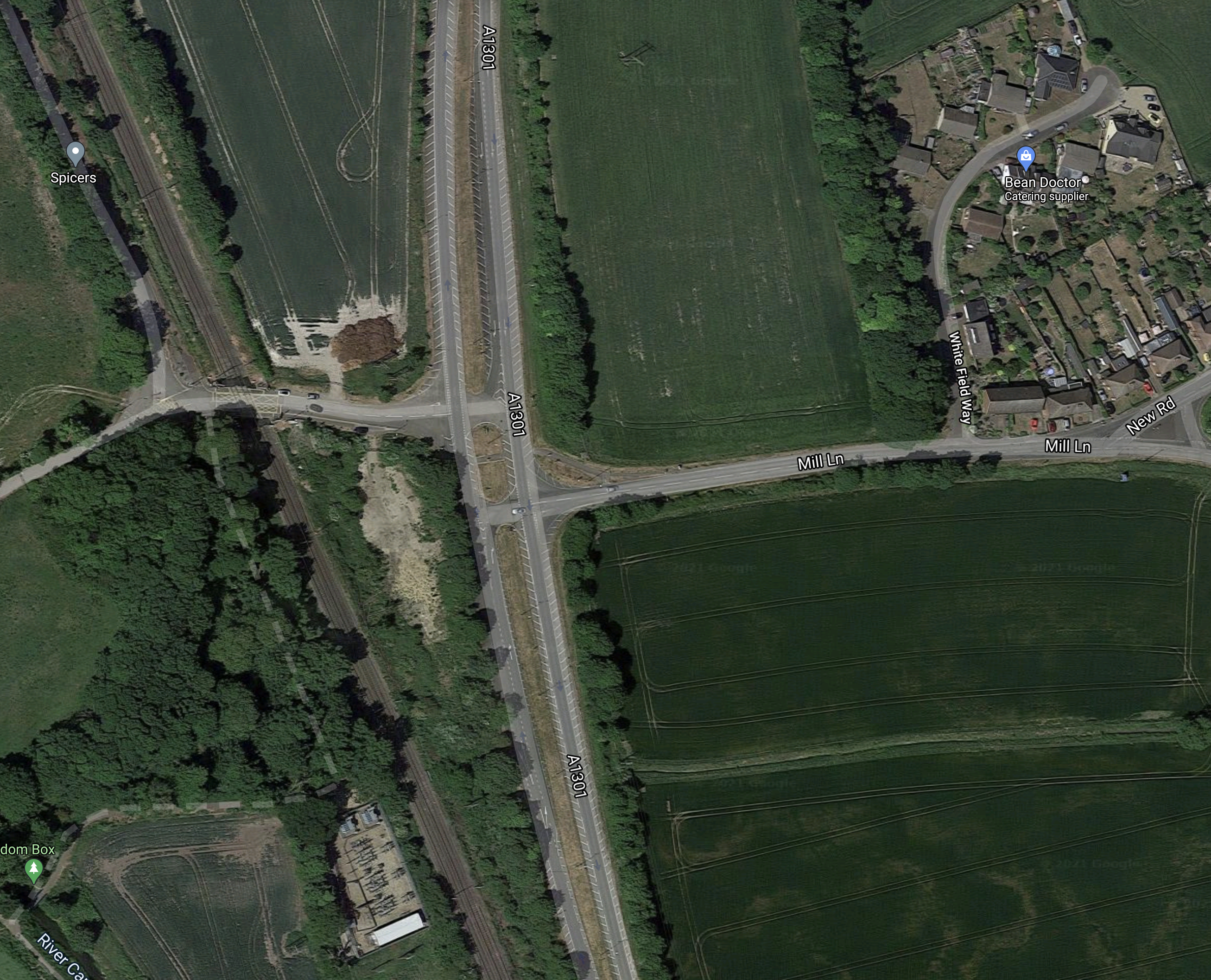
Note.
- There would appear to be space for a station.
- The site is not far from the Western edge of the village.
- There is already a comprehensive road junction, that would serve the station.
This third Google Map shows the area of the Whittlesford Parkway station.
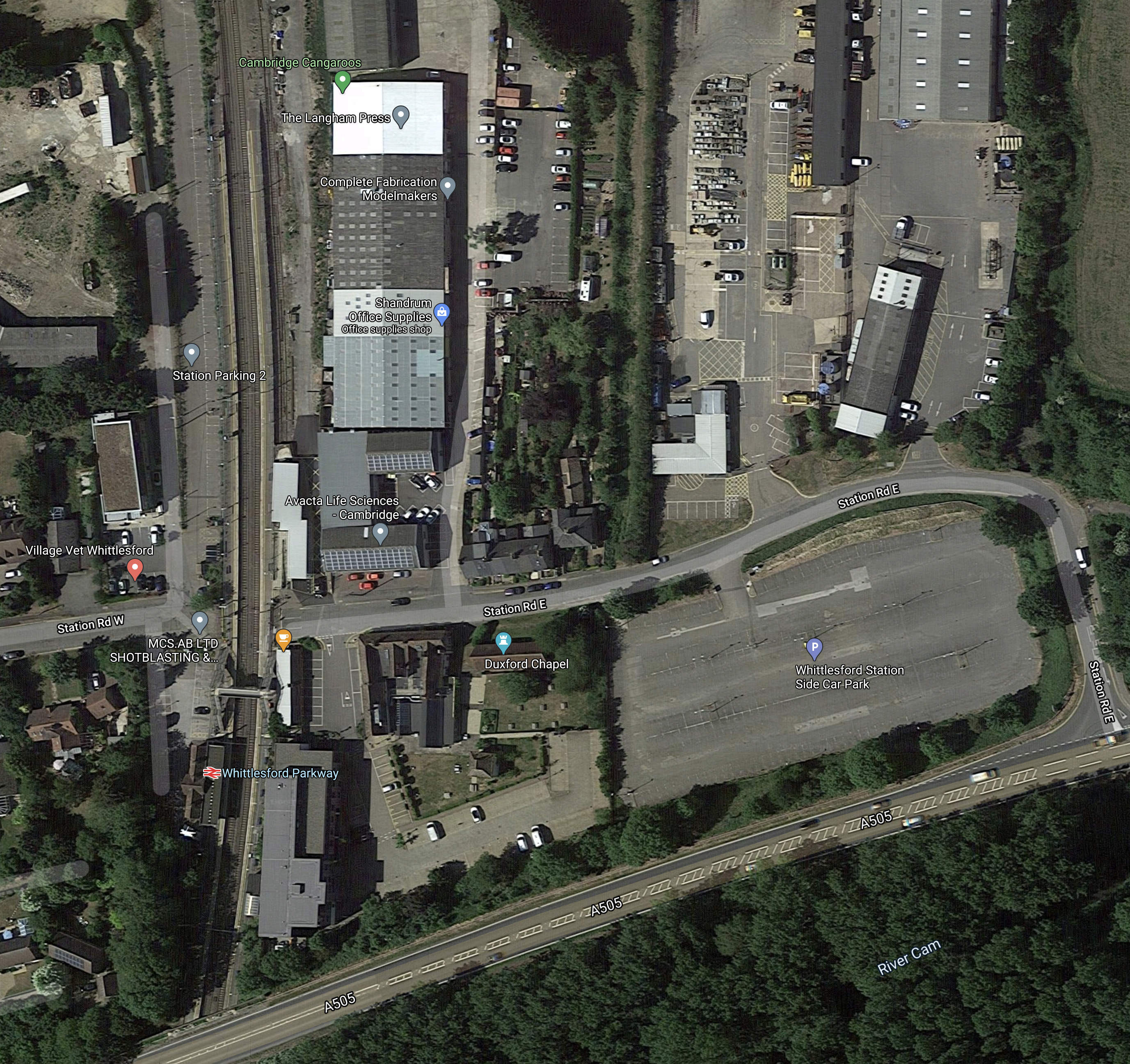
Note.
- The station running North-South towards the West of the map.
- The large car-park to the East of the station.
- The smaller car-park to the West of the station.
- The station has a Holiday Inn hotel.
I have used the station hundreds of times and I believe that it could be made into a first class transport hub for commuters and visitors to Cambridge.
- It has good road connections to North Hertfordshire, West Suffolk and North West Essex.
- It has large amounts of car parking, that ten years ago was rarely full.
- A step-free footbridge with lifts, needs to be added.
- There needs to be better bus connections to local villages.
- There needs to be a bus connection to the Imperial War Museum Duxford.
I don’t believe massive amounts of money would be needed to realise the full potential of this station.
Services through Whittlesford Station And The Proposed Site Of Sawston Station
Currently, the following services run through Whittlesford station in the Off Peak.
- Greater Anglia – 2 tph – Liverpool Street and Cambridge North
- Greater Anglia – 1 tph – Stansted Airport and Norwich
- CrossCountry – 3 tpd – Stansted Airport and Birmingham New Street
Note.
- tph is an abbreviation for trains per hour.
- tpd is an abbreviation for trains per day
- All Greater Anglia services call at Whittlesford Parkway, Cambridge and Cambridge North stations and will probably call at Cambridge South station, when it opens.
- The CrossCountry service only calls at Audley End station between Stansted Airport and Cambridge.
I believe that the minimum services should be as follows to provide an adequate service, after the opening of Cambridge South station.
- 4tph – Whittlesford Parkway and Cambridge North stopping at Cambridge South and Cambridge.
- 2 tph – Liverpool Street and Cambridge North stopping at Whittlesford Parkway, Cambridge South and Cambridge.
- 1 tph – Stansted Airport and Norwich stopping at Whittlesford Parkway, Cambridge South, Cambridge and Cambridge North.
- 1 tph – Stansted Airport and Birmingham New Street stopping at Whittlesford Parkway, Cambridge South, Cambridge and Cambridge North.
There could even be a Cambridgeshire Metro serving all stations between Stansted Airport and Ely.
- All services could be run by electric or bi-mode trains.
- Possible stops would be Elsenham, Newport, Audley End, Great Chesterford, Whittlesford Parkway, Shelford, Cambridge South, Cambridge, Cambridge North and Waterbeach.
- As they do now some fast services would skip smaller stations.
- More important stations like Audley End, Whittlesford Parkway, Cambridge South and Cambridge North would get a 4 tph service to Cambridge
- Other stations would get an appropriate service.
- I would also like to see two fast tph between Cambridge and King’s Lynn, Liverpool Street, Norwich, Peterborough and Stansted.
I think that such a timetable would be possible, if the performance of Greater Anglia’s new trains were to be used to the full.
Could An Extra Stop Be Added At The Proposed Site Sawston Station?
Each extra stop adds extra time to the timetable.
Consider.
- The faster Liverpool Street and Whittlesford Parkway takes sixty minutes with six stops.
- The slower Liverpool Street and Whittlesford Parkway takes seventy-four minutes with twelve stops.
- Greater Anglia’s trains through Whittlesford Parkway and the proposed Sawston station will probably be 100 mph Class 720 trains.
I think it would be reasonable to assume that every extra stop would add 120-150 seconds to the journey time.
As Cambridge South station will be added anyway, will passengers mind up to five minutes added to the timetable?
I doubt with the faster accelerating trains, that there would be a problem about an extra stop at Sawston, but the lengthening of journey times between Cambridge and London may be a problem.
A Possible Alternative Solution
Could there be a possible alternative solution based on improving facilities and services at Whittlesford Parkway station?
- The service at Whittlesford Parkway station would be increased to 4 tph to Cambridge North, with stops at Shelford, Cambridge South and Cambridge.
- The service at Whittlesford Parkway station would be increased to 2 tph to Stansted Airport, with stops at Audley End.
- A step-free bridge with lifts must be installed.
- An improved bus-service between Sawston and Whittlesford Parkway is needed.
- An improved bus-service between the Imperial War Museum Duxford and Whittlesford Parkway is needed.
- Both bus services could be back-to-back and probably should be run every fifteen minutes.
- As it serves a museum, why not run some heritage buses in the Summer?
- There should be good cycling provision between Whittlesford Parkway station and Sawston and other surrounding villages.
I very much feel, that improving Whittlesford Parkway station, may be a better value solution, than building a new station at Sawston!
Conclusion
Building a new station at Sawston may not be the best way to improve public transport in the area.
Beeching Reversal – Reopening Harston Station
This is one of the Round 3 bids of Beeching Reversal projects that the Government and Network Rail are proposing to reverse some of the Beeching cuts.
Harston is a Cambridgeshire village, which is shown in this Google Map.
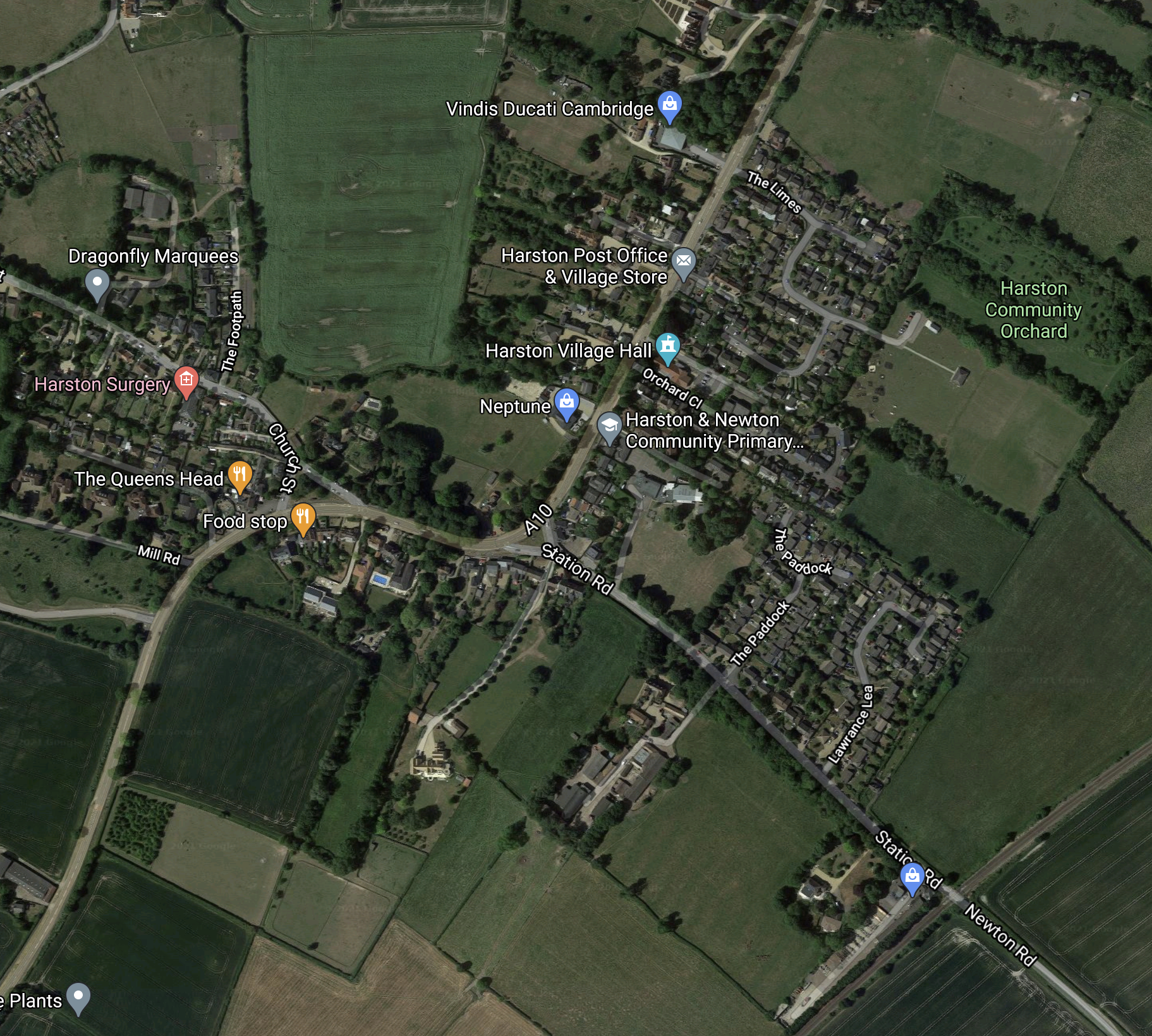
Note.
- The A10 winding its way North and South through the village.
- Cambridge is five miles to the North.
- The triangular road junction in the middle of the village with Station Road leading off to the South East.
- The Cambridge Line crosses the South-East corner of the map, at a right angle to Station Road.
This Google Map shows the former station site at an enlarged scale..
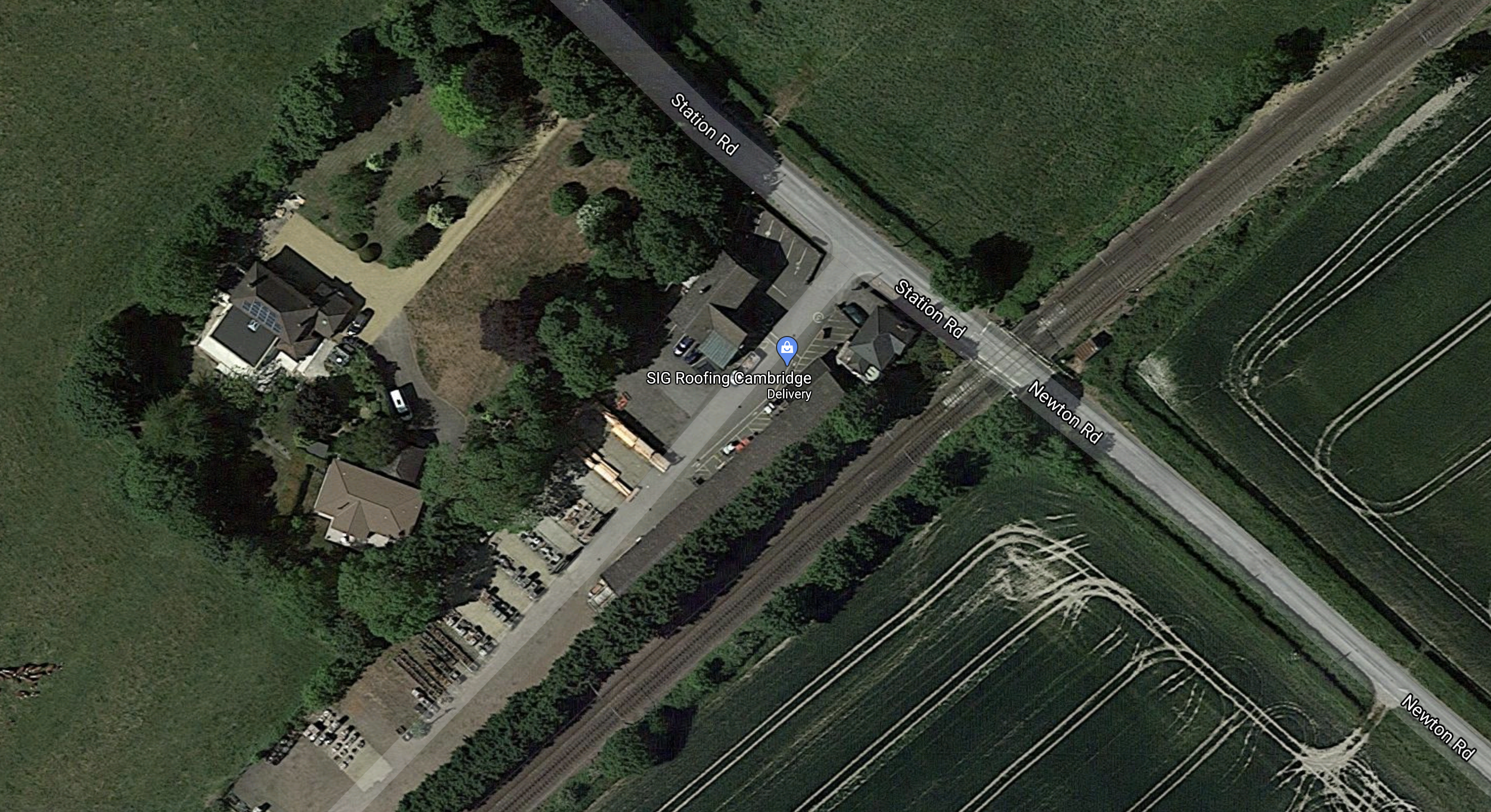
Note.
- There is plenty of space.
- There is a level crossing.
- The railway is double-track.
There’s even a Harston History page for the station, so if the architect’s decide to go retro, they can visit it for design inspiration.
My initial thoughts are that compared to some of the proposals for Beeching Reversal this one is practical and not over ambitious.
These are some of my thoughts.
Car Parking
Currently, there are the following stations between Cambridge and Hitchin.
Note.
Only Royston station has more than minimal parking provision.
The addition of Harston and Cambridge South stations will probably mean, that a lot of thought will be given to parking at all the stations between Cambridge and Hitchin.
Cambridge South like Cambridge North will probably have extensive parking to also serve Addenbrooke’s Hospital and Cambridge Bio-Medical Campus.
Whittlesford Parkway station on the line between Cambridge and Liverpool Street has very adequate parking provision.
I wouldn’t be surprised to see Harston station having a couple of hundred parking spaces.
East West Railway
In Looking At The East West Railway Between Bedford And Cambridge, I looked at the route of the East West Railway as it approaches Cambridge.
I very much doubt that this new railway will go through Harston station.
But Harston station will beef up the capacity on the Cambridge Line to bring more workers to one of the science and engineering capitals of the world.
Cambridgeshire Autonomous Metro
There are also plans for the Cambridgeshire Autonomous Metro.
This map shows the proposed layout of the Cambridgeshire Autonomous Metro.
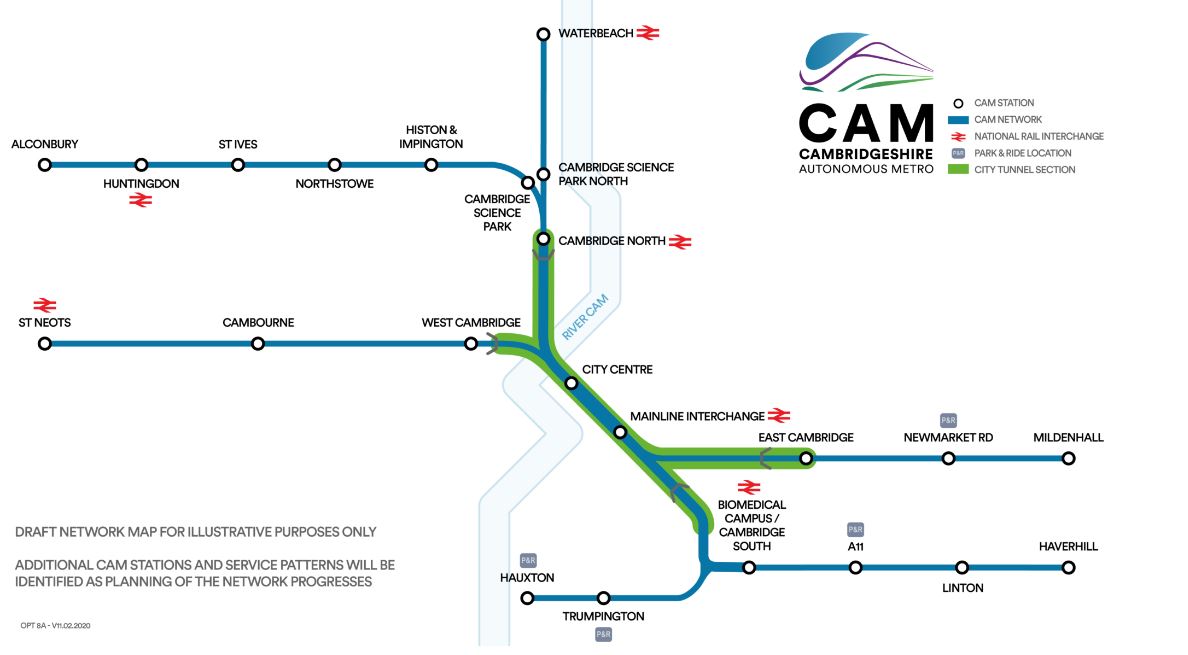
Note that the green section will be in tunnel.
I doubt that the Cambridgeshire Autonomous Metro will run to Harston, as it most likely will run on rubber-tyred wheels and probably wouldn’t mix well with heavy rail.
Train Service
Currently, the current trains run through the station in the Off Peak.
- Thameslink – 2 tph – Cambridge and Brighton
- Thameslink – 2 tph – Cambridge and King’s Cross
- Great Northern – 1 tph – King’s Cross and Ely
- Great Northern – 1 tph – King’s Cross and King’s Lynn
Note.
- tph is an abbreviation for trains per hour.
- All trains are fast services, except for the Cambridge and King’s Cross service, which stops at all stations.
- When Cambridge South station opens, I suspect nearly all services will stop at that station.
- The Great Northern services also stop at Cambridge North station.
- In Call For ETCS On King’s Lynn Route, I talked of the possibility of running 125 mph trains on Great Northern services between King’s Cross, Cambridge, Cambridge North, Ely and King’s Lynn.
I suspect that it will be likely only the Thameslink stopping train will call at Harston station, just as it is the only service that calls at Foxton, Shepreth and Meldreth stations.
- But is two tph enough for a Park-and-Ride station?
- Whittlesford Parkway station already has three tph to and from Cambridge.
- I suspect there will be a second Stansted and Cambridge service which mean Whittlesford Parkway station gets four tph to Cambridge,
I suspect Hartston station needs four tph to give a Turn-Up-And-Go service.
Barrington Quarry And Landfill
This Google map shows the location of the Barrington Quarry and Landfill, with respect to Harston.
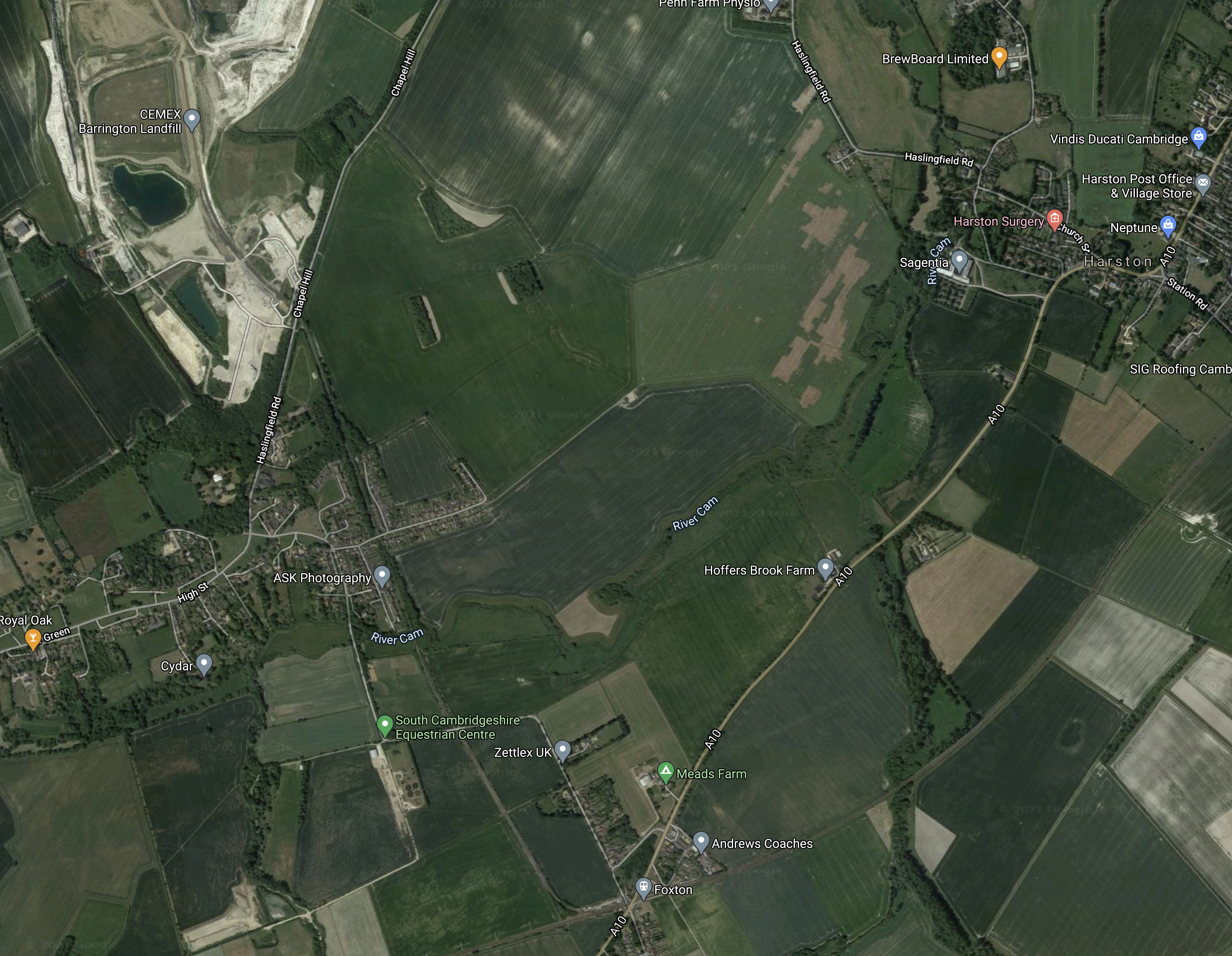
Note.
- Barrington Quarry and Landfill is in the North-West corner of the map.
- Harston is in the North-East corner of the map.
- The A10 road runs South-West from Harston to Foxton station, where there is a level crossing, where the Cambridge Line crosses the road.
- Foxton station has a freight-only line linking it to the quarry.
This second Google Map shows Foxton station in detail.
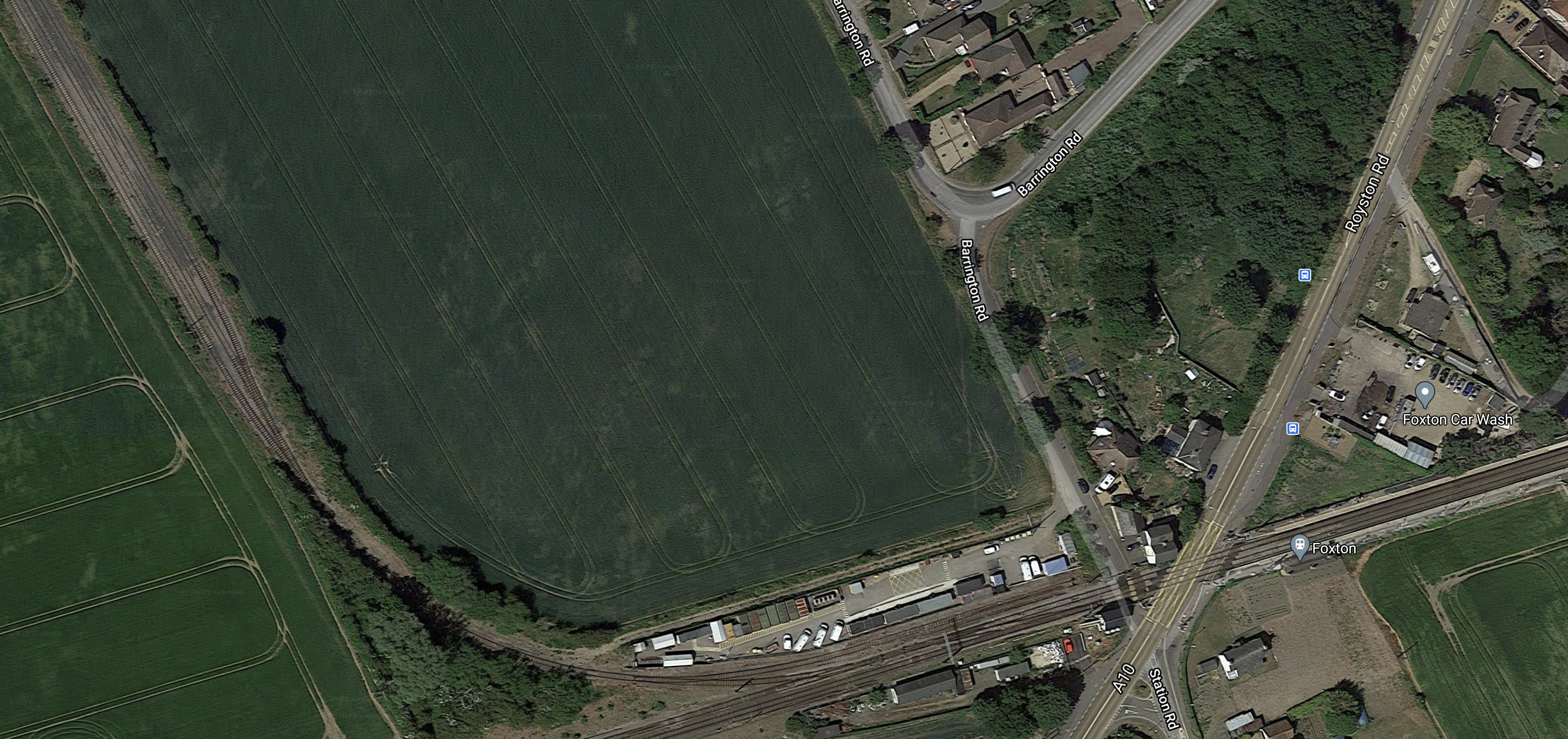
Note the rail line to Barrington curving away to the North West.
This document from CEMEX is entitled Barrington Quarry – Restoration Project.
It appears that the quarry will be restored and some of the land will be used for new homes.
As all the track is already in place, would it be possible to run a 2tph service between Barrington and Cambridge North station?
- It could call at Harston, Cambridge North and Cambridge stations.
- Harston station would get a four tph service.
- Cambridge gets more much-needed housing connected to the city.
It could also be run using battery-electric trains that would be charged using the electrification between Foxton and Cambridge North stations.
Conclusion
Taking everything together, it appears to me, that Harston station could improve the rail network to the South West of Cambridge.
Stevenage Station’s New Fifth Platform Opened A Year Early
The title of this post, is the same as that of this article on Rail Engineer.
This is the introductory paragraph.
A new £40 million platform and track at Stevenage station has been completed more than a year ahead of schedule.
Yesterday, it appears that the first scheduled train left Stevenage for Moorgate at 0502.
Will This Be Good For Travellers?
A few thoughts!
Stevenage Hospital
One of my old school friends lives in Cuffley. From that part of Hertfordshire, the hospital, patients use is in Stevenage. He can drive, but not everybody can!
LNER
Currently, LNER run an hourly service between Stevenage and Leeds, with an hourly service between Stevenage and Lincoln or York via Newark.
North From Enfield, Palmers Green, Southgate, Winchmore Hill and Wood Green
If you live in Enfield or the old London boroughs of Southgate or Wood Green, it could be easier to pick up trains for the North from Stevenage, rather than Kings Cross.
Not Bad For Me Too!
Even, where I live now, which is a mile or so East of Highbury & Islington station, if the timing is right, I can walk or get a bus for four stops to Essex Road station and get a train to Stevenage and then change for Leeds and the North.
East Coast Trains
East Coast Trains will be starting a fast, low-cost London Kings Cross and Edinburgh service, which will call at Stevenage.
Grand Central Trains
Grand Central Trains are currently shut down because of COVID-19, but will they call at Stevenage station, when they restart?
Hull Trains
Some Hull Trains services between London Kings Cross and Hull, call at Stevenage.
Hitachi’s Class 80x Trains
LNER, East Coast Trains and Hull Trains, all run versions of Hitachi’s Class 800 trains or similar.
These trains are built for performance and an extra stop at Stevenage station can probably be incorporated in the timetable without any penalty.
So will we see more trains stopping at Stevenage, if the train operators think it will be worthwhile?
Could Some Services From The North Terminate At Stevenage?
The Digswell Viaduct and the double-track section through Welwyn North station are the major bottleneck on the East Coast Main Line.
But a train returning North at Stevenage wouldn’t go over the viaduct.
Stevenage already has or could have excellent connections to the following.
- Cambridge, Stansted Airport and East Anglia
- Moorgate and the City of London and Crossrail.
- North East London
If keen pricing can encourage travellers to use Stevenage instead of Kings Cross, I can see operators wanting to run extra services, that could start at Stevenage.
I can also see Greater Anglia getting in on the act.
Could Greater Anglia’s Ipswich and Cambridge service be extended to Stevenage via the planned Cambridge South and Royston stations?
Could the service be timed to offer cross-platform interchange with their Norwich and Stansted Airport, at Cambridge South station?
Four important extra services would be created with a step-free interchange.
- Ipswich and Stansted Airport – 106 minutes – Step-free walk across at Cambridge South station
- Ipswich and Stevenage – 115 minutes – New direct service
- Norwich and Stansted Airport – 107 minutes – Existing service
- Norwich and Stevenage – 116 minutes – Step-free walk across at Cambridge South station.
A large number East Anglian rail journeys would be simpler.
Car Parking
Will there be enough car parking at Stevenage station?
I suppose, it would be possible to build a Stevenage Parkway station between Stevenage and Watton-at-Stone stations.
This Google Map shows the area.
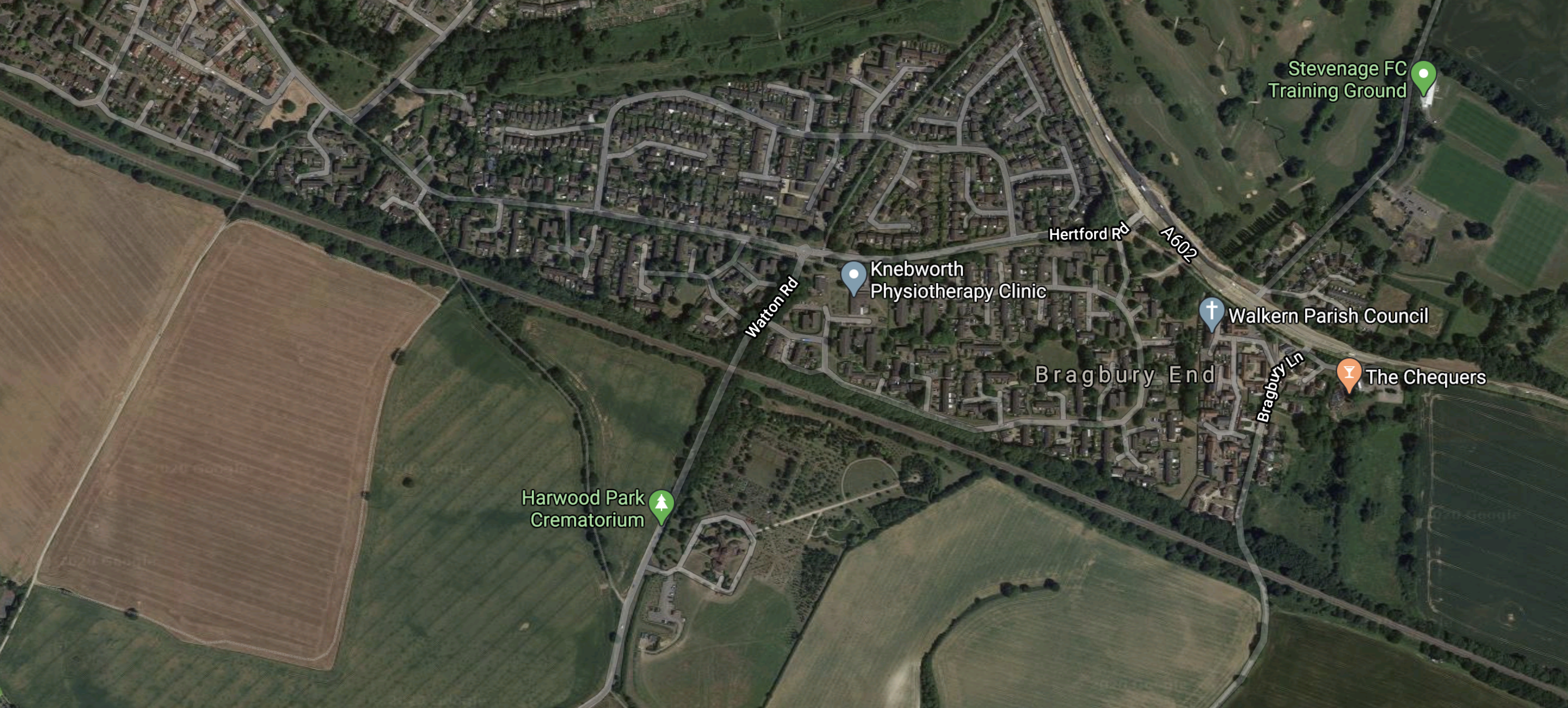
Note, that the railway seems to mark the development limit for the town.
The high performance of the Class 717 trains, would probably mean, that there would be no lengthened journey times.
Conclusion
This project appears to have been well-thought through!
Potential Site For New Cambridge South Station Named
The title of this post, is the same as that of this article on Rail News.
The article says this about the site of the proposed Cambridge South station.
There had been three options for the station site and the preferred choice, which is the furthest north and nearest the guided busway, will offer improved connections with other railway routes as well as the busway. Although the detailed plans for East West Rail between Bedford and Cambridge have not yet been confirmed, it is possible that EWR trains will call at Cambridge South.
This Google Map shows the area.
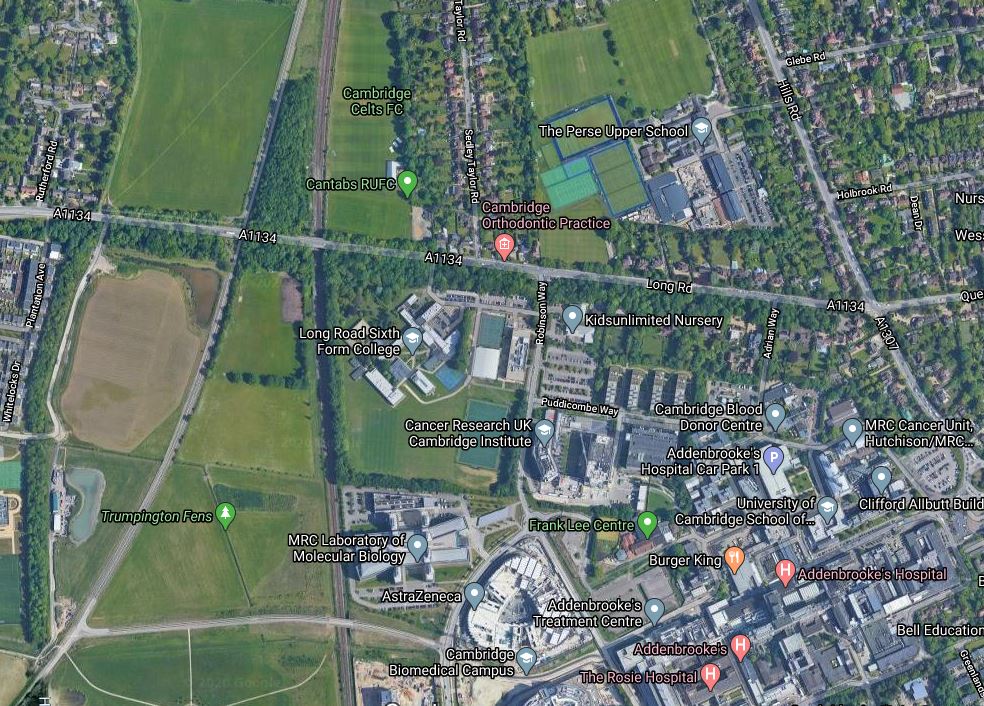
Note.
- Addenbrooke’s and Papworth Hospitals and the Cambridge Biomedical Campus in the South-East corner of the map.
- Long Road going East-West across the map.
- The West Anglia Main Line going North-South, at the Western edge of the Cambridge Biomedical Campus. Cambridge station is to the North and Shelford station is to the South.
- Running diagonally away from the railway towards the South-West corner of the map, is the Cambridge Busway. which connects the Trumpington Park and Ride to Cambridge station and the City Centre.
It would appear there would be plenty of space to put a station with enough capacity for this important medical complex.
Train Services
Trains passing through that area include in trains per hour (tph)
- CrossCountry – 1 tph – Birmingham New Street and Stansted Airport via Cambridge
- Freater Anglia – 2 tph – London Liverpool Street and Cambridge North via Cambridge
- Greater Anglia – 1 tph – Norwich and Stansted Airport via Cambridge and Cambridge North
- Great Northern – 1 tph – London King’s Cross and Ely via Cambridge and Cambridge North
- Great Northern – 1 tph – London King’s Cross and Kings Lynn via Cambridge and Cambridge North
- Thameslink – 2 tph – Brighton and Cambridge
- Thameslink – 2 tph – London King’s Cross and Cambridge
That all adds up to 10 tph to Cambridge and 5 to Cambridge North.
When you add in future services on East West Rail, and do a bit of reorganisation, there could be twelve tph through the three Cambridge stations.
 The Anonymous Widower