Centrica Energy And Whitecap Enter Long-Term Natural Gas Supply Agreement
The title of this post, is the same as that of this news item from Centrica.
This is the sub-heading.
Centrica Energy is pleased to announce signing of a long-term natural gas purchase agreement with Whitecap Resources Inc., a leading Canadian producer dedicated to the responsible development of oil and gas resources across the Western Canadian Sedimentary Basin.
These first three paragraphs add more detail to the story.
Starting in April 2028, Whitecap will deliver 50,000 MMBtu of natural gas per day to Centrica Energy for a period of ten years – equivalent to roughly five LNG cargoes each year. The supply will be priced against the Title Transfer Facility (TTF), the benchmark for European gas markets.
This agreement advances Centrica’s strategy of managing market price exposure across its LNG portfolio by linking feed gas costs to European price signals. For Whitecap, the agreement provides access to international LNG-linked pricing, supporting the company’s natural gas price diversification strategy.
“Entering into this innovative agreement with Whitecap underlines our focus on building a balanced LNG portfolio through strategic partnerships across the globe allowing us to deliver reliable energy solutions to global markets” said Chris O’Shea, Group Chief Executive at Centrica.
I have some thoughts.
This Is The Seventh Deal Of This Type By Centrica In A Few Months
Note.
- All are marked with a tag of Natural Gas Trading.
- None of the deals appear to be in the Middle East.
- All appear to be fairly long term deals, with three stretching until 2037.
Hopefully, with luck we’ll have enough gas for the next few years.
Grain LNG Terminal Is Very Flexible
Consider.
- It is Europe’s largest LNG Terminal
- It can import, export and store gas.
- It has plenty of space for expansion, which could include new technologies.
- Centrica have said bunkering facilities will be added, which will be able to handle the latest low-carbon fuels.
I can certainly see, why Centrica acquired the terminal.
Do British And German Offshore Wind Farm Generate Maximum Power At Different Times
In National Grid, TenneT Germany Launch GriffinLink, A First Of A Find Project To Maximise Offshore Wind, I discussed GriffinLink, which will be an offshore link between British and German offshore wind farms.
Somebody has asked me if wind farms are in phase with each other, as obviously this would effect how they perform and are are controlled.
So I asked Google AI, the question in the title of this post and received this reply.
Yes, British and German offshore wind farms often generate their maximum power at different times, although they are both located in the North Sea and share similar peak seasons. The variations in generation are driven by localized weather patterns, specifically the movement of low-pressure systems.
Key Differences in Generation Times:
Regional Weather Patterns: While North Sea wind farms are often closely correlated, significant differences arise when weather systems move from west to east. Wind often hits the UK’s North Sea sites first, meaning they may hit maximum generation capacity hours before German or Danish sites, which are further east.
Time of Day (Diurnal Differences): Because UK wind farms are located in the Irish Sea, the Scottish coast, and the North Sea, they can exhibit different diurnal (daily) peak times compared to German sites in the North Sea and Baltic Sea.
Seasonal Peaks: Both countries experience the highest output during winter months (e.g., December). However, during specific, localized, long-lasting high-pressure systems (“Dunkelflaute”), one country might experience a complete drop in wind while the other continues to produce, or vice versa.
Why They Differ:
Geography: The UK’s extensive, spread-out coastline (Irish Sea, Atlantic coast, North Sea) offers a different wind profile than the more concentrated German offshore projects in the North Sea and Baltic Sea.
Correlation Challenges: Research shows that while North Sea countries have similar wind profiles, there is not 100% correlation. Meteorological differences in how wind speeds behave across the North Sea allow for complementary production.
This difference is highly advantageous for European energy security, as it allows for the balancing of intermittent wind power across the region.
The conclusion from Google AI, is almost predicting that GriffinLink will be developed. From my experience of mathematical modelling the cost and financial benefits should be fairly easy to predict.
Will The UK And The Republic Of Ireland Link Their Offshore Wind Farms To Improve Efficiency?
This may seem an obvious idea, especially as UK and Republic of Ireland are heavily interconnected.
So I asked Google AI, the question in the title of this section and received this reply.
Yes, the United Kingdom and the Republic of Ireland are taking significant, active steps to link their offshore wind farms and electricity grids to improve efficiency, increase renewable energy production, and enhance energy security. Following a Memorandum of Understanding (MoU) signed in September 2023, the two countries are collaborating on developing subsea energy infrastructure in the Irish and Celtic Seas.
Here are the key details regarding this cooperation:
Deepened Collaboration: As of March 2025, the UK and Ireland are working on a new data-sharing arrangement to lay the groundwork for directly connecting offshore wind farms to each other’s national energy networks.
Offshore Hybrid Assets (OHAs): The plans include developing offshore hybrid assets, which are subsea cables that directly link offshore wind farms to both countries’ grids, reducing infrastructure costs and maximizing efficiency.
Subsea Mapping & Interconnection: Both nations are mapping the Celtic Sea to identify optimal locations for interconnectors and to improve the interoperability of their grids.
Existing & New Projects: While Ireland’s current interconnection to the UK is limited (approx. 500MW), capacity is planned to increase significantly. Specific projects like Mares Connect (linking North Wales and Ireland) are being developed to provide750MW of additional capacity.
Regional Cooperation: Ireland is also participating in the “Hamburg Declaration” (signed Jan 2026), joining the UK and other North Sea countries to commit to 300GW of offshore wind by 2050 through shared, regional infrastructure.
This cooperation aims to allow Ireland to export its surplus renewable energy during high generation, while benefiting from the UK’s robust grid during lower wind conditions.
Will The UK AndNorway Link Their Offshore Wind Farms To Improve Efficiency?
As we have interconnectors with Norway, I asked Google AI, the question in the title of this section and received this reply.
Yes, the UK and Norway are actively planning and implementing initiatives to link their offshore wind farms and electricity grids to improve efficiency, energy security, and grid balancing. Following a series of agreements, including a major pact in January 2026, the two countries are collaborating on “hybrid” projects that connect offshore wind sites directly to multiple countries.
It does look like that the co-operations between the UK and Germany, Norway and the Republic of Ireland are setting examples that should be copied all over the world.
But then, you should always follow the mathematics.
But somehow, I can’t see President Trump signing any windmill co-operation with his neighbours.
University Of Alberta Partners With City of Edmonton And Diesel Tech Industries To Pilot Hydrogen-Diesel Bus Retrofits
The title of this post, is the same as that of this article on Pulse 2.0.
These two paragraphs introduce what is a comprehensive practical approach to decarbonising a fleet of diesel buses.
The University of Alberta is partnering with the City of Edmonton and Diesel Tech Industries to cut carbon emissions from Edmonton’s fleet of diesel-powered buses by integrating hydrogen fuel into existing combustion engines.
The initiative focuses on developing a practical retrofit approach to help transit agencies and other vehicle operators reduce emissions quickly without waiting for full fleet replacement. Project leaders say that if the pilot succeeds, the work could translate into a deployable solution for operators across Canada seeking near-term carbon reductions while maintaining current diesel assets.
Note.
- The City of Edmonton has around a thousand buses.
- Many of Edmonton’s buses have Cummins engines.
- Cummins are decarbonising the company and have developed hydrogen-conversions for some of their diesel engines.
- I am sure that this technique could be used to convert London’s thousand new Routemaster buses, with their Cummins engines.
This project seems to have a lot of possibilities to get very much larger.
I’m Watching The World Cup Draw With A Sick Bucket
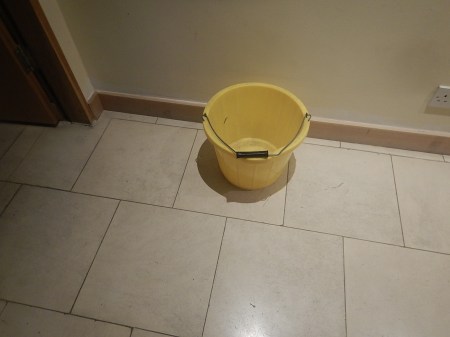
Here’s the bucket, which is an ideal accompaniment to when Trump appears on television.
Note.
- I have seen a number of American presidents and Trump isn’t even worth rating.
- As Putin and Mohammed bin Salman’s friend and apologist he certainly doesn’t deserve any form of Peace Prize.
- And who was the strumpet in the lizard costume?
- I thought Robbie Williams had more sense than to provide entertainment.
- Who’s this black guy in a red hat?
- Rio Ferdinand seems to be doing a good job.
But then everybody has a realistic price.
I actually suspect, I won’t watch much of the World Cup, as I can find better things too do. I certainly won’t watch any matches, where Trump is present.
Exercise ‘Better Than Drugs’ To Stop Colon Cancer Returning
The title of this post, is the same as that of this article in The Times.
This is the sub-heading.
First study of its kind finds that an ‘exercise prescription’ can reduce the chances of colon cancer patients dying from a relapse by a third
These first two paragraphs add more detail.
Exercise can be “better than a drug” for reducing the risk of cancer returning, a study has found.
Patients with advanced colon cancer who received an “exercise prescription” after finishing their cancer treatment were found to be a third less likely to die from the disease.
I find these findings from the The CO21 Challenge trial, partially funded by Cancer Research UK’s Stand Up To Cancer fund, rather remarkable.
The research was led by Christian Booth, of Queen’s University in Canada, which illustrates the international nature of medical research.
On a third reading of the article, I noticed the full implications of this paragraph.
Alongside benefits for colon cancer, Booth said that fewer patients in the active group went on to develop breast cancer, suggesting that there may be an effect on other cancer types too. Of those who received an exercise prescription, only two went on to develop breast cancer, compared with 12 in the control group.
This could be a very significant study, that changes the treatment of cancer.
ENGIE And CDPQ To Invest Up To £1bn In UK Pumped Storage Hydro Assets
The title of this post, is the same as a news item from ENGIE.
These four bullet points act as sub-headings.
- Refurbishment programme to extend life of plants at Dinorwig and Ffestiniog will ensure the UK’s security of supply and support the transition to a low carbon energy future
- ENGIE owns 75% of the plants via First Hydro Company, a 75:25 joint venture with Canadian investment group CDPQ
- The two pumped storage hydro plants are the UK’s leading provider of power storage and flexibility, with 2.1GW of installed capacity
- They represent 5% of the UK’s total installed power generation capacity and 74% of the UK’s pumped storage hydro capacity
These three paragraphs give more details.
The preparation of a 10-year project of refurbishment at *ENGIE’s Dinorwig pumped storage station has begun, following an 8-year refurbishment at Ffestiniog, enabling the delivery of clean energy whenever needed.
These flexible generation assets, based in North Wales, are essential to the UK Government’s accelerated target of achieving a net zero carbon power grid by 2030. Together they help keep the national electricity system balanced, offering instant system flexibility at short notice. The plants are reaching end of life and replanting will ensure clean energy can continue to flow into the next few decades.
Re-planting could see the complete refurbishment of up to all six generating units at Dinorwig – a final investment decision is still to be made on the number of units to replace – while the re-planting at Ffestiniog will be completed at the end of 2025. The program also involves the replacement of main inlet valves – with full drain down of the stations – and detailed inspections of the water shafts.
It also looks like the complete refurbishment at Dinorwig will take ten years, as it seems they want to keep as much of the capacity available as possible.
When the replanting is complete, the two power plants will be good for twenty-five years.
Hopefully, by the time Dinorwig has been replanted, some of the next generation of pumped storage hydroelectric power stations are nearing completion.
The news item says this about Dinorwig.
Dinorwig, the largest and fastest-acting pumped storage station in Europe, followed in 1984 and was regarded as one of the world’s most imaginative engineering and environmental projects.
Dinorwig must be good, if a French company uses those words about British engineering of the 1980s.
The Empires Strike Back
The theme of this post was suggested by this article in The Times by Gerard Baker, which is entitled Karma has come for Mark Carney — and Canada.
This is the sub-heading.
This embodiment of globalism finds himself championing national sovereignty just as Trump eyes a North American union
These are the two introductory paragraphs.
Mark Carney is the very embodiment of the globalist ideal that ruled the world for a quarter-century after the end of the Cold War. Born in the mid-1960s in the far Northwest Territories, he grew up in Alberta in the kind of place previous generations would never have left. But the brilliant kid from a large Catholic family won a scholarship to Harvard and then took a masters and doctorate at Oxford.
Marked out as a member of the intellectual elite of his generation, he followed their well-worn path and joined Goldman Sachs, working in the US, the UK and Japan. As international borders came down, goods and capital flowed around the world like water, and rootless young men and women feasted on the pot of gold at the End of History, Carney jetted from capital to capital, developing bond issuance strategies in post-apartheid South Africa and helping deal with the consequences of the Russian debt crisis of 1998.
Mark Carney has done very well!
I have a few thoughts.
Energy Production In Canada And The UK
I have just looked up how Canada produces its electricity.
- 17.5 % -Fossil fuel
- 14.6 % – Nuclear
- 8 % – Renewables
So how does Canada produce the other sixty percent?
Hydro! Wow!
As I write, the UK is producing electricity as follows.
- 10.7 % – Fossil fuel
- 37.7 % – Low-carbon
- 51.6 % – Renewables
Changes To Energy Use In The Next Ten Years
Three things will happen to energy generation and use in the next ten years.
- Our use of renewable and non-zero carbon sources will converge with Canada’s at about 75 %.
- The use of energy storage will grow dramatically in Canada and the UK.
- Green hydrogen production will increase dramatically to decarbonise difficult and expensive-to-decarbonise industries like aviation, cement, chemicals, glass, heavy transport, refining and steel.
Canada and the UK, together with a few other sun-, water- or wind-blessed countries, like Australia, Denmark, Falkland Islands, Iceland, Japan, Korea, New Zealand and Norway, who share a lot of our values, will be in the prime position to produce all this green hydrogen.
Conclusion
It does look like all the old empires of the Middle Ages are reasserting themselves.
Hence the title of this post!
Mark Carney is now in the right position to use Canada’s and a few other countries hydrogen muscles to power the world to net-zero.
Moment Energy Secures US$15 Million Series A Funding To Build World’s First Second-Life Gigafactory in the U.S
The title of this post is the same as that of this article on Cision.
This is the sub-heading.
Funding co-led by Amazon Climate Pledge Fund and Voyager Ventures to accelerate production of high-performing Battery Energy Storage Systems (BESS) from repurposed EV batteries
Series A brings Moment Energy’s financing in the last three months alone to over US$40 Million with US$52 million raised to date
This introductory paragraph gives more details.
Moment Energy’s battery energy storage systems (BESS) can be deployed in projects ranging from 400 kilowatt hours (kWh) to 10 megawatt hours (MWh), targeting an intermediate market segment that is currently underserved but crucial to the clean energy transition. Designed to serve commercial and industrial sectors, EV charging infrastructure, and renewable energy integration, the company is strategically positioned to capitalize on the convergence of rising EVs and renewable energy sources.
Sounds like a sensible way of handling old lithium-ion batteries.
Moment Energy has a web site.
Are we getting a second-life gigafactory in the UK?
We probably will need one.
As Moment Energy is Canadian, they might supply it.
US DOE Offers US$1.76 billion Loan To Hydrostor For A-CAES California Project
The title of this post, is the same as that of this article on Energy Storage News.
These three paragraphs give more detail.
The US Department of Energy’s (DOE) Loan Programs Office (LPO) has made a conditional commitment for a loan to long-duration energy storage (LDES) developer and operator Hydrostor of up to US$1.76 billion.
If finalised, the loan would be used to help fund the Willow Rock Energy Storage Centre, a 500MW/4,000MWh, 8-hour advanced compressed air energy storage system (A-CAES) in Eastern Kern County, California, led by Hydrostor subsidiary GEM A-CAES.
Compressed air energy storage (CAES) charges by pressurising air and funnelling it into a storage medium, often a salt cavern, and discharges it by releasing the compressed air through a heating system, which expands air before it is sent through a turbine generator.
Note.
- Both the Canadian Hydrostor and the British Highview Power use air in their batteries, with the Canadians using compressed air, often in salt caverns and the British using liquid air in tanks.
- Highview Power’s first large scale battery will be 200MW/2.5GWh, which is about half the size of Hydrostor’s, which will be 500MW/4.0GWh.
- Having mathematically-modeled large tanks full of chemicals in the 1970s for ICI, I wouldn’t be surprised, if the Highview Power battery is more easily scalable.
This could be an interesting technological shootout.
Complicating matters could be Trump’s policies to big batteries.
This article on Utility Dive, which is entitled Potential Trump Policies Pose Risks For US Storage Sector, With Musk Impact Uncertain.
Analysts Say Gives A Reasoned.
Higher battery material tariffs and phased-down IRA tax credits threaten a 15% drop in U.S. storage deployment through 2035 in a “worst-case” scenario,
BNEF analysts said.
Canadian Pension Fund To Consolidate Its Offshore Wind Holdings Into UK-Based Reventus Power
The title of this post, is the same as that of this article on offshoreWIND.biz.
This is the sub-heading.
Canada Pension Plan Investment Board (CPP Investments) will consolidate its existing direct and indirect offshore wind holdings into Reventus Power, its UK-based portfolio company, which will become its dedicated global offshore wind platform.
This first paragraph gives more details.
Subject to customary approvals, the move will see Reventus Power growing its teams in the UK, Germany, Poland and Portugal to form a team of approximately 50 offshore wind specialists, according to CPP Investments, whose current exposure to offshore wind is more than CAD 1 billion (approximately EUR 678 million; USD 737 million).
According to their web site, the Reventus HQ is in London.
There is nothing on the web to indicate a special reason, so it must have been one of the following.
- Canadians like investing in the UK.
- The UK is good for tax reasons.
- London has all the lawyers, accountants and other services they will need.
- I suspect several wind farms, that they will develop will be in UK waters.
- Many of the extra staff, they have said they will recruit will be UK-based or UK-educated.
But overall, it must be a feather in its cap for London.
 The Anonymous Widower