Southeastern Keen On Battery EMUs
The title of this post, is the same as that of a small section in the August 2023 Edition of Modern Railways.
This is said.
Southeastern is to seek pre-qualification interest from manufacturers and leasing companies for a replacement fleet for the Networker Class 465 and 466 inner-suburban stock, now over 30 years old. The company intends to compare the price of new and cascaded stock.
Southeastern MD Steve White told Modern Railways his preference is for a bi-mode EMU, capable of working off both the third rail supply and batteries. Battery EMUs were originally proposed for the Networker replacements so they could work through services to the unelectrified Isle of Grain branch, after Medway Council put forward plans to restore passenger services on the Hoo peninsular to serve new housing there.
Despite the extension of services to Sharnal Street on the Isle of Grain having since been put on hold by Medway Council on cost grounds (p13, May issue).
Southeastern is still pursuing battery EMUs, even though the company’s existing network is all electrified on the third rail system.
Merseyrail is already adopting battery EMU technology, with seven of the new fleet of 53×4-car Class 777 units being equipped with batteries to enable them to serve the unelectrified extension to Headbolt Lane (p82, July 2022 issue).
Mr. White says there are a number of reasons battery EMUs are attractive.
-
- Increasing levels of mental health issues in society have led to trespass being a major issue the railway: battery EMUs would make it feasible to keep trains moving at slow speed when the current supply has to be switched off to protect a trespasser.
- Battery EMUs would be able to keep moving on occasions when the third rail supply fails, due to technical failures or ice on the conductor rail. This would avoid the compounding of problems, as when delayed passengers got out on the track at Lewisham in March 2018 when the third rail iced up, forcing Network Rail to cut the electricity supply and making it more difficult to get trains moving again.
- Battery EMUs would make it feasible to remove third rail from depots, making them safer places in which to work. A train cleaner was electrocuted and died at West Marina depot in St. Leonards in May 2014, and the Office of Road and Rail has well-publicised concerns on safety grounds about any extensions to the third rail system.
- Battery EMUs would be able to cater for service extensions on unelectrified lines, such as the Isle of Grain.
Mt. White says the trespass issue is the major driver, and if the principle of battery EMUs becomes established it might prove feasible to remove the third rail from platform areas at inner-suburban stations with a persistent trespass problem. He points out this approach might unlock extension of third rail to routes such as the Uckfield line, allowing station areas to be left unelectrified. Replacement of DMUs by electric stock on the Uckfield branch would eliminate diesel working at London Bridge, with air-quality and carbon removal benefits for the capital.
There are a 5-star hotel and a major hospital close to the diesel-worked plstform at London Bridge.
I will now look at some of the issues in detail.
Range Of A Battery EMU
I discuss range of battery EMUs in these posts.
- Stadler FLIRT Akku Battery Train Demonstrates 185km Range
- New Merseyrail Train Runs 135km On Battery
Note.
- Both trains are built by Stadler.
- 135 km. is 84 miles.
- A Bombardier engineer told me eight years ago, that the prototype battery-electric Class 379 train had a range of sixty miles.
I feel it is reasonable to assume that a 100 mph battery-electric train, designed to replace Southeastern’s Networkers could have a range of at least sixty miles.
Distances Of Cannon Street Metro Services
These are distances of services from Cannon Street.
- Erith Loop via Greenwich, Woolwich Arsenal and Bexleyheath – 28.5 miles
- Gravesend – 24.5 miles
- Orpington – 12.6 miles
- Grove Park – 7.1 miles
- Slade Green – 14.5 miles
Note.
- The Erith Loop services start and finish at Cannon Street station.
- The Gravesend service terminates in an electrified bay platform.
- The Orpington service terminates in an electrified bay platform.
- Grove Park and Slade Green are depots.
If trains could be fully charged at Cannon Street station, all services out of the station could be worked by a battery EMU with a range of forty miles.
Charging At Cannon Street
Consider.
- All Cannon Street services arrive at the station via London Bridge station.
- All Cannon Street services leave the station via London Bridge station.
- Trains typically take 4-5 minutes between Cannon Street and London Bridge station.
- Trains typically wait at least 7 minutes in Cannon Street station before leaving.
- Typically, a battery EMU takes fifteen minutes to charge.
A train running from London Bridge to London Bridge would probably take a minimum of fifteen minutes, which should be enough to charge the train.
The track between London Bridge and Cannon Street would need a strong level of protection from trespassers.
I suspect that with some slight timetable adjustments, all Cannon Street services could be run using battery EMUs.
Distances Of Charing Cross Metro Services
These are distances of services from Charing Cross.
- Maidstone East – 38.9 miles
- Dartford – 17.1 miles
- Gravesend – 23.8 miles
- Hayes – 14.3 miles
- Sevenoaks – 22.2 miles
- Grove Park – 8 miles
Note.
- The Gravesend service terminates in an electrified bay platform, which could be used to charge the train before return.
- The Maidstone East service terminates in an electrified platform.
- Grove Park is a depot.
If trains could be fully charged at Charing Cross station, all services out of the station could be worked by a battery EMU with a range of fifty miles.
Charging At Charing Cross
Consider.
- All Charing Cross services arrive at the station via London Bridge station.
- All Charing Cross services leave the station via London Bridge station.
- Trains typically take 10 minutes between Charing Cross and London Bridge station.
- Trains typically wait at least 7 minutes in Charing Cross station before leaving.
- Typically, a battery EMU takes fifteen minutes to charge.
A train running from London Bridge to London Bridge would probably take a minimum of twenty minutes, which should be enough to charge the train.
The track between London Bridge and Charing Cross would need a strong level of protection from trespassers.
I suspect that with some slight timetable adjustments, all Charing Cross services could be run using battery EMUs.
Distances Of Victoria Metro Services
These are distances of services from Victoria.
- Gillingham – 37.2 miles
- Orpington – 14.7 miles
- Dartford – 18.9 miles
Note.
- The Orpington service terminates in an electrified bay platform.
- The Gillingham service terminates in an electrified bay platform.
- The Dartford service terminates in an electrified platform.
If trains could be fully charged at Victoria station, all services out of the station could be worked by a battery EMU with a range of fifty miles.
Charging At Victoria
Consider.
- All Victoria services arrive at the station via Shepherds Lane junction.
- All Victoria services leave the station via Shepherds Lane junction.
- Trains typically take five minutes between Victoria and Shepherds Lane junction.
- Trains typically wait at least 7 minutes in Victoria station before leaving.
- Typically, a battery EMU takes fifteen minutes to charge.
A train running from Shepherds Lane junction to Shepherds Lane junction would probably take a minimum of seventeen minutes, which should be enough to charge the train.
The track between Shepherds Lane junction and Victoria would need a strong level of protection from trespassers.
Conclusion
It certainly appears that if the Networker Class 465 and Class 466 trains were replaced by new trains with the following specification.
- 100 mph operating speed.
- Range of fifty miles on battery power.
- Ability to charge batteries in fifteen minutes.
- Third-rail operation
- It might be an idea to add a pantograph, so the trains could use 25 KVAC overhead wires where necessary and charge batteries on a short length of overhead electrification.
Then a substantial part of the Southeastern Metro network could be made safer, by selective removal of third rail at trespassing hot spots.
Moorgate To Charlton Via Cannon Street
I needed to go to Charlton station this morning to take a couple of photographs for a possible blog post.
- I had had my usual breakfast in LEON on Moorgate, so I started from Moorgate station.
- I took the Northern Line one stop to Bank station.
- It was then straight up the double escalators.
- I followed this by a brisk walk along Cannon Street.
The total time between entering Moorgate station and sitting on my train at Cannon Street station was about ten minutes.
One of London’s more difficult stations to access now has a North-South Underground line, to go with its East-West line.
How Many Entrances And Exits Does A Station Need?
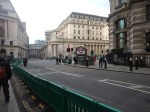
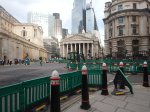
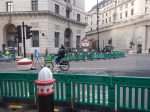
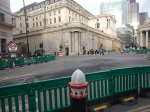
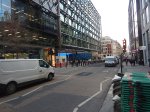
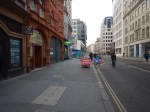
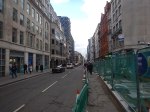
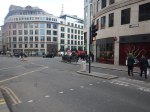
I took a walk round the entrances of the combined Bank and Monument stations, this afternoon.
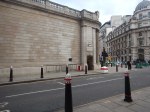
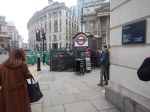
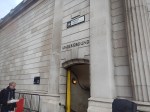


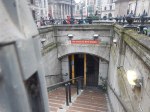
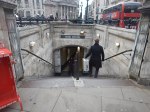
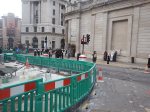
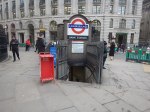
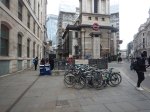



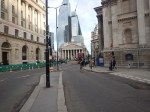
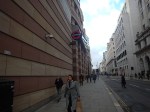
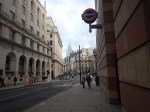
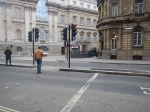
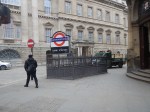
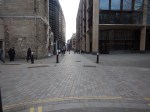
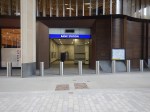

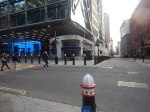
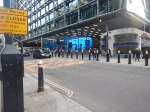
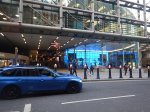
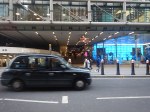
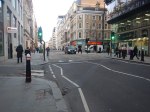

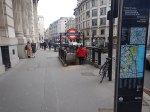

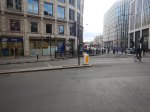
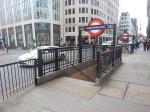
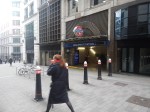
Note.
- There are a total of twenty entrances.
- Five are double entrances, with a pair of stairs leading to a single entrance tunnel.
- Only three are step-free entrances. Two are new; Bloomberg Building and Cannon Street, although the latter is yet to open.
- One entrance is currently closed.
This section of the tube map, that was clipped in January 2023, shows which connections at Bank and Monument are step-free.
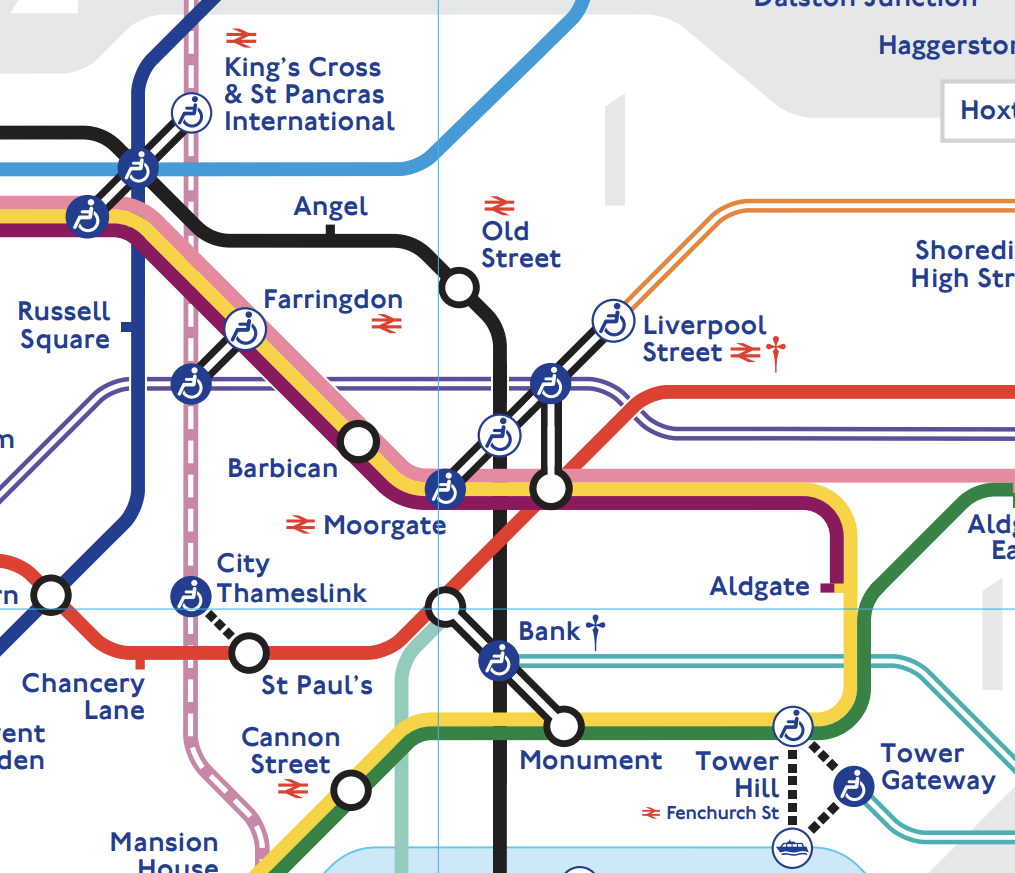
Note.
- At Bank, only the Northern Line and the Docklands Light Railway are fully step-free.
- At Liverpool Street, only the Elizabeth Line is fully step-free.
- At Monument, nothing is shown step free
- At Moorgate, nothing is shown fully step free, although the Elizabeth Line is fully step-free, even if it is a bit tortuous.
Let’s hope some of the gaps are filled, when the Bank Station Upgrade is completed.
There is also no full step-free entrance to the Central Line at the Bank Junction.
Silvertown Tunnel Bus Network Proposals
This web page is the Silvertown Tunnel Bus Network Proposals.
These proposals are made.
- A new high frequency, limited stop service between Grove Park and Canary Wharf referred to in this consultation as route X239
- To extend route 129 (Lewisham – North Greenwich) north across the river to Great Eastern Quay via the Royal Docks development zone
- A minor change to route 108 so that it uses the new Millennium Way slip road to exit the Blackwall Tunnel southbound
- We are also seeking your views on route options for three sections of routes 129 and X239.
It looks like route 108 will continue to use the current stop.
The proposals include this map.
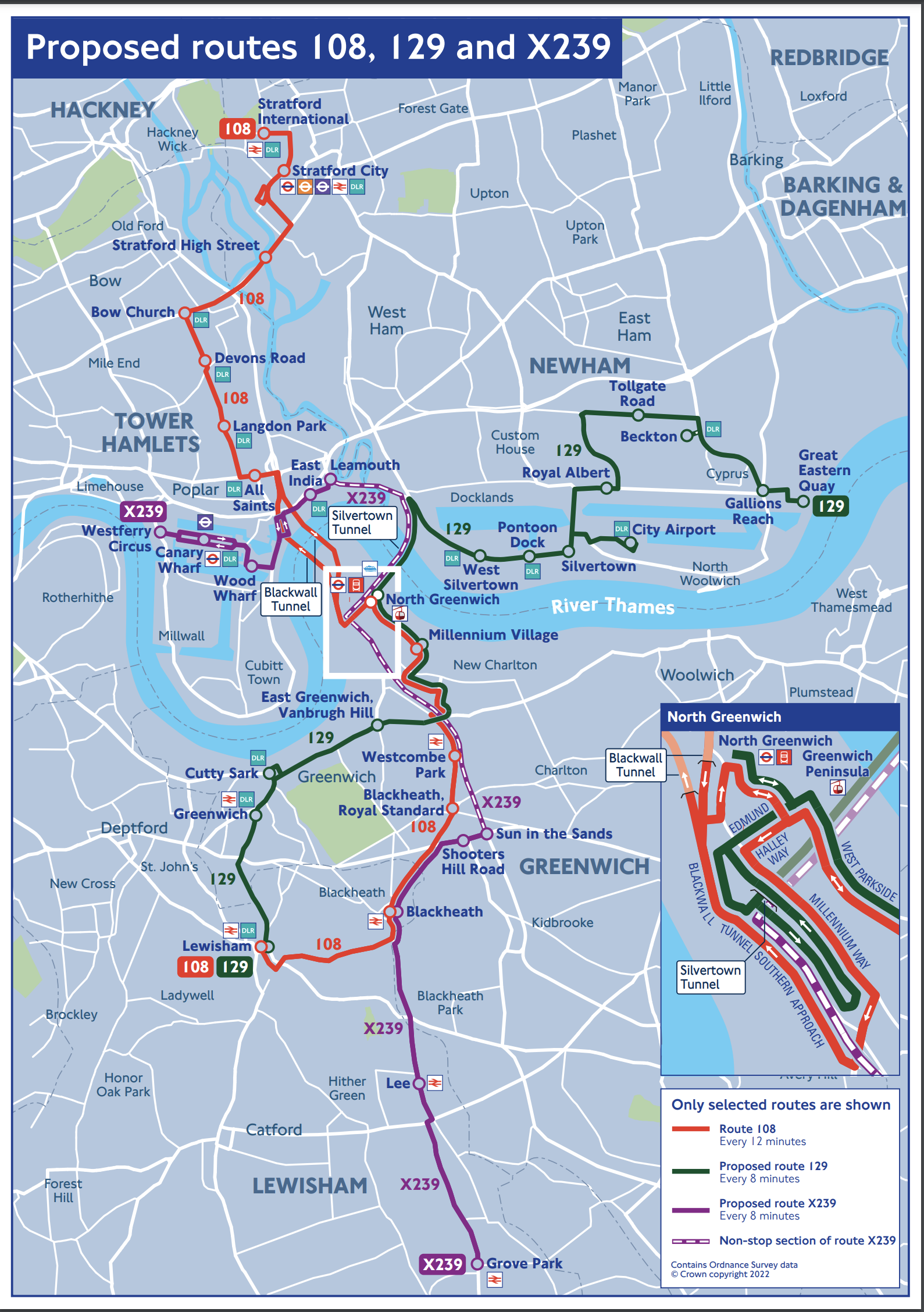
I copied this map from the TfL web site, as they don’t provide one for people who want or need to use it.
These are my observations.
The 108 Bus
The 108 seems to be more or less as now and will be continue to be run by a single-decker bus, as double-decker buses can’t use the Blackwall Tunnel.
North of the Thames, the 108 calls at these stations.
- Stratford International for DLR and National Rail.
- Stratford for DLR, Central, Elizabeth and Jubilee Lines, and National Rail.
- Bow Church for DLR
- Devons Road for DLR
- Langdon Park for the DLR
- Bazely Street (All Saints) for DLR
South of the Thames, the 108 calls at these stations.
- North Greenwich for the Jubilee Line.
- Westcombe Park for National Rail
- Blackheath for National Rail
- Lewisham for DLR and National Rail
Note.
- It is possible to go between Lewisham and Stratford on the DLR with a change at Canary Wharf.
- It is possible to go between North Greenwich and Stratford on the Jubilee Line.
- Westcombe Park station is on the Greenwich Line.
I would wonder, if many people use this bus route for long distances.
The 129 Bus
Note.
- The 129 appears to connect Lewisham and Greenwich to the City Airport and the Becton branch of the DLR.
- Many journeys on the 129 bus, might be easier using the DLR, with a change at Westferry or Poplar, which is probably what travellers do now.
- The 129 bus is shown on the map with a stop at Silvertown. Does that mean that it could connect with a Silvertown station on the Elizabeth Line?
- As the 129 bus will pass through the larger Silvertown Tunnel, it could be a double-decker route, instead of the current single-decker.
North of the Thames, the 129 calls at these stations.
- Gallions Reach for the DLR
- Beckton for the DLR
- Royal Albert for the DLR
- London City Airport for the DLR
- Silvertown
- Pontoon Dock for the DLR
- West Silvertown for the DLR
South of the Thames, the 129 calls at these stations.
- North Greenwich for the Jubilee Line.
- Cutty Sark for DLR
- Greenwich for DLR and National Rail
- Lewisham for DLR and National Rail
Would improvements and a frequency increase to the DLR and the building of Silvertown station, mean that changes to the 129 bus route, would not be so important?
The X329 Bus
Note.
- Canary Wharf must be served and starting at Westferry Circus is probably a good choice.
- But is Grove Park station, the ideal Southern terminal?
- Not stopping the X329 bus at North Greenwich is probably correct, as North Greenwich station is a large Jubilee Line and bus interchange close to the O2.
North of the Thames, the X329 calls at these stations.
- Canary Wharf for DLR and Elizabeth and Jubilee Lines
South of the Thames, the X329 calls at these stations.
- Blackheath for National Rail
- Lee for National Rail
- Grove Park for National Rail
Note.
- Blackheath station is on the Bexleyheath and North Kent Lines.
- Lee station is on the Dartford Loop Line.
- Grove Park station is on the South Eastern Man Line.
- Grove Park has a bus station, where there could be space for a battery charger for electric buses.
The X329 seems to have been partly designed on the premise, that an express bus should be run through the Silvertown Tunnel. But it does connect four of the rail lines going into London terminals to Canary Wharf.
Silvertown Station For London City Airport
Silvertown station would more than double the number of stations with easy routes to the London City Airport.
The Elizabeth Line would enable the direct connection that is needed to Canary Wharf, the City of London, Heathrow, Liverpool Street and Paddington stations and the West End.
- A single change at Abbey Wood, would give access to much of Kent.
- A single change at Farringdon, would give access to Thameslink services and Gatwick and Luton airports.
- Around 2030, a single change at Old Oak Common, would give access to High Speed Two services.
- A single change at Paddington, would give access to Wales and West services.
- A single change at Whitechapel, would give access to the great circle of the London Overground.
I believe the case for a Silvertown station with at least a good walking route to the London City Airport is strong, and the station would be a marvellous asset for Silvertown and the Airport.
Bank Station Upgrade – 28th September 2021
I walked past the works to upgrade Bank station this morning and took these pictures.
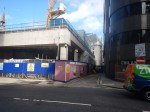
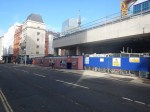
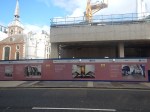
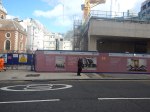
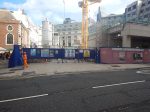
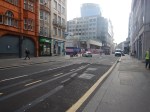
The first two pictures were taken on King William Street and the others were taken as I walked up Cannon Street to Cannon Street station.
This 3D Google Map shows the new section of the station from the South.
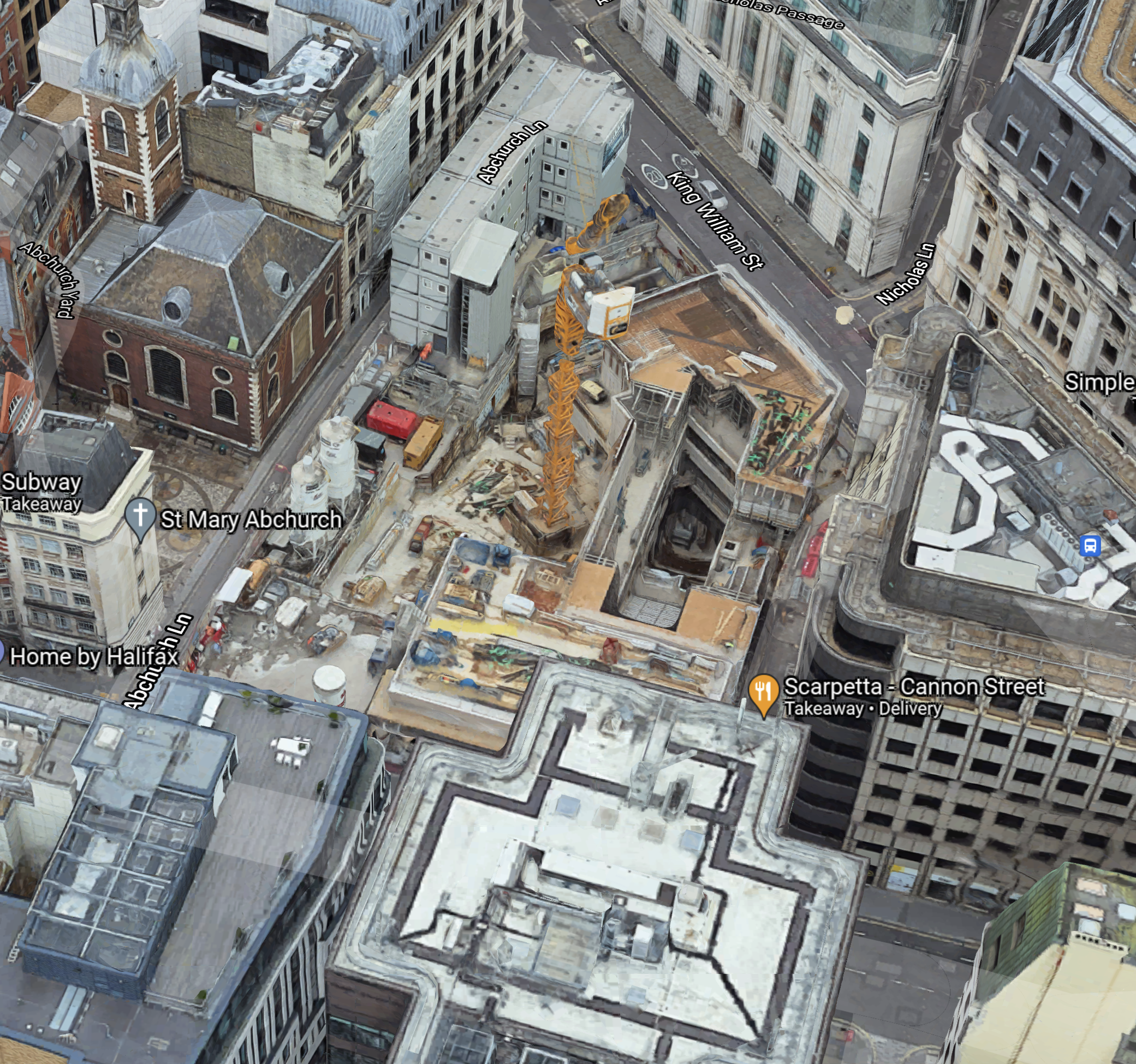
The construction site is surrounded by two roads and a lane.
- Cannon Street runs East-West in front of the construction site.
- King William Street is on the Eastern side of the construction site.
- Abchurch Lane runs Northward between the church of St. Mary Abchurch and the construction site.
There will be a lot more construction on top of the station.
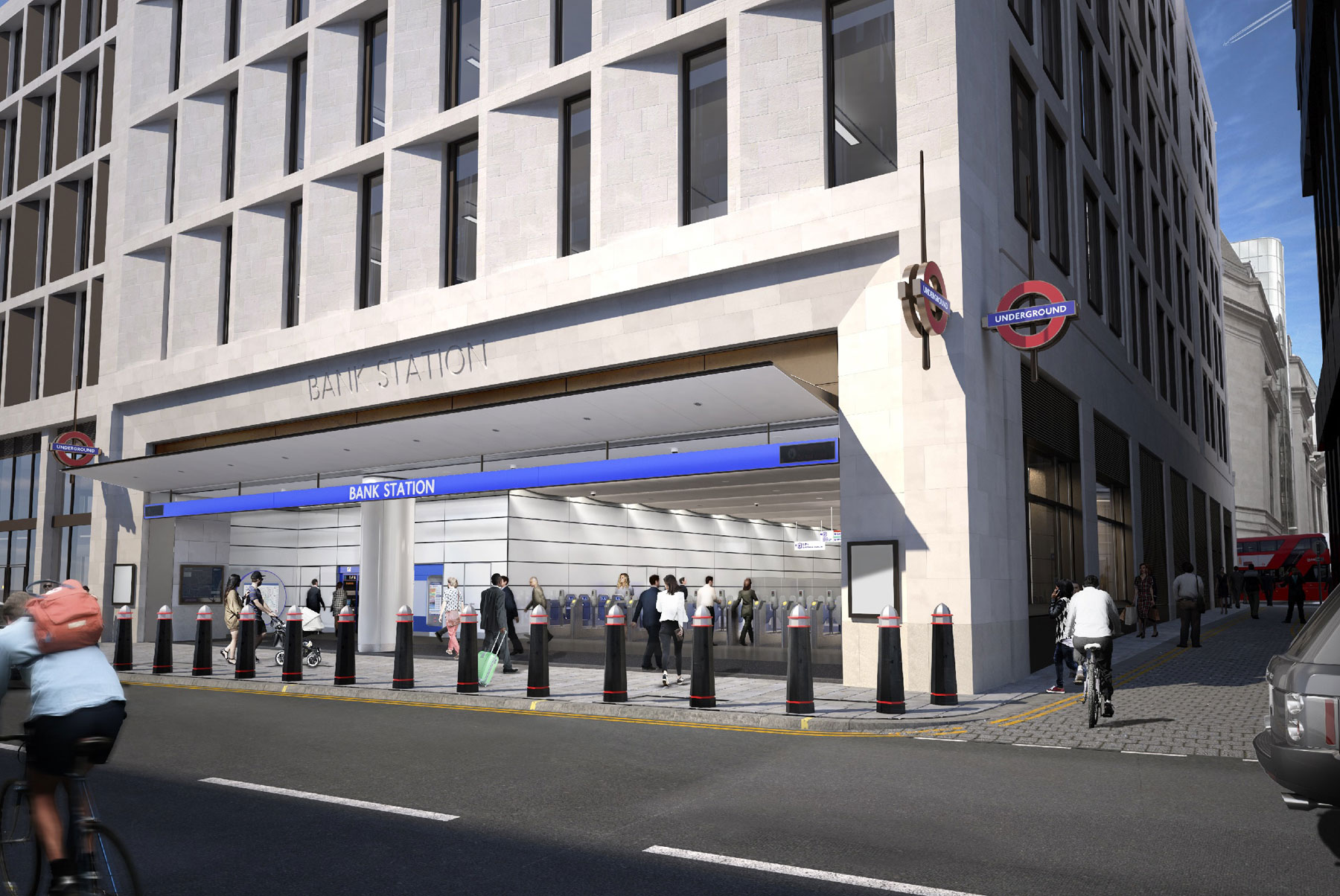
This TfL image shows how it will look in 2022.
A Class 707 Train In Southeastern Livery
The Class 707 trains started running for Southeastern today and I photographed this example at Cannon Street station.
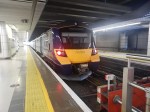
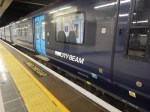
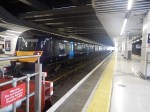
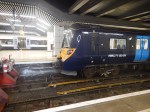
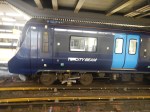
The trains have been branded as City Beam. I’m not sure I like it.
Thoughts On The Closure Of The Northern Line At Bank To Complete The Upgrade To Bank Station
The Bank Station Upgrade is a major project that will increase the capacity of Bank station by forty percent.
This document on the Transport for London web site gives details of the project.
It was originally planned that sometime in late 2021, the Northern Line will be closed through Bank station.
The document says this.
We will need to close part of the Northern line Bank branch in 2021, between Kennington and Moorgate, to connect new and existing sections of tunnel safely. Trains will run less frequently on those sections of the Bank branch that are still open. Check back here for details.
This would mean that Bank, London Bridge, Borough and Elephant & Castle stations will be closed on the Northern Line.
To help passengers, TfL say, they will do the following.
- Run 33% more trains on the Northern line Charing Cross branch
- Review bus use and consider enhancing services where necessary
- Investigate scope for passengers to use alternative National Rail services, such as Waterloo to London Bridge, and London Bridge to Cannon Street
- Review available walking space on the Moorgate to London Bridge pedestrian corridor.
These are my thoughts.
The New Cannon Street Entrance To Bank Station
This visualisation shows the new Cannon Street entrance to Bank station.
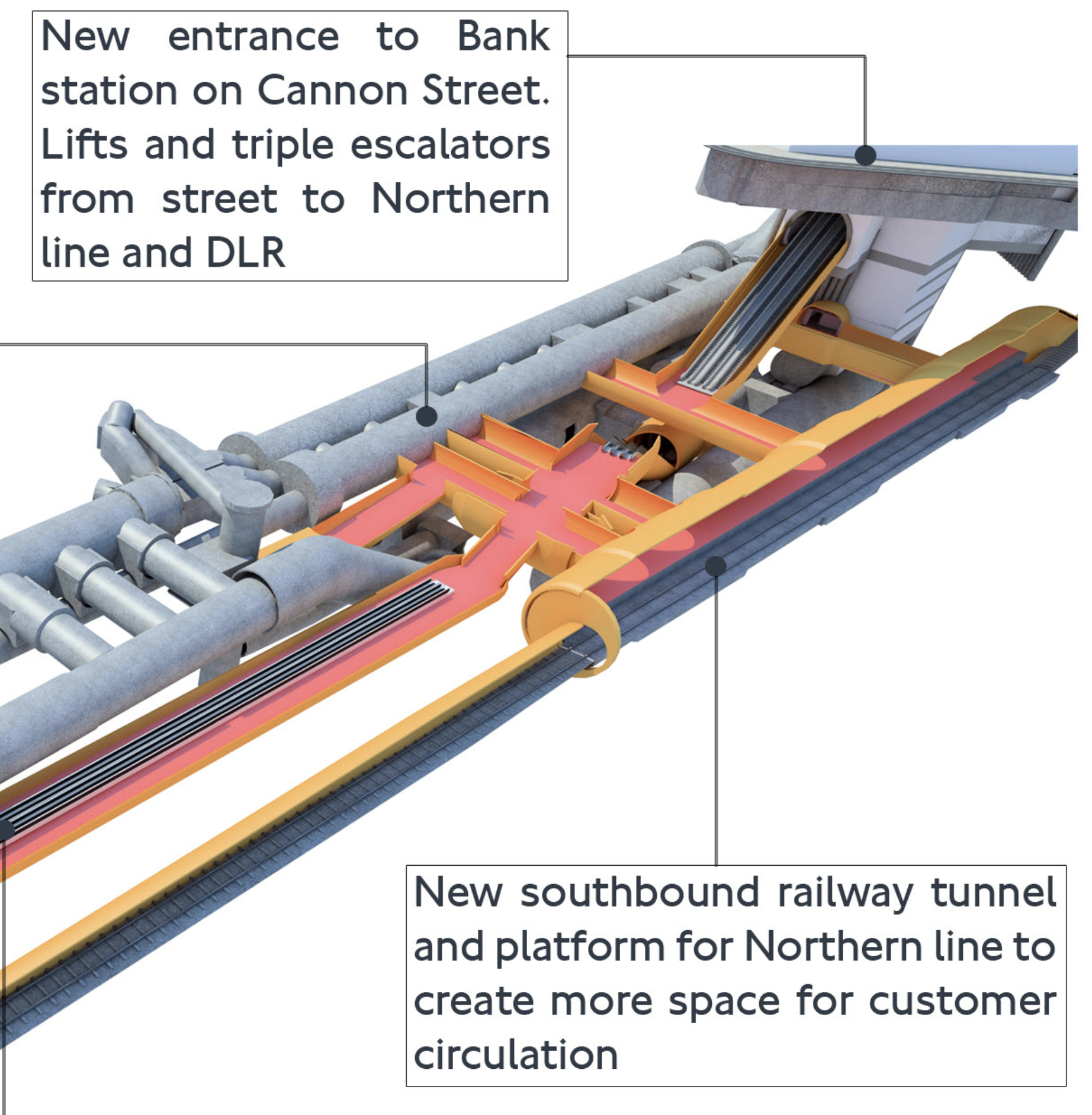
Note.
- South is to the right and we’re looking from roughly the North-West.
- The existing twin bores of the Northern Line on the far side of the visualisation.
- The escalator connection to the District and Circle Lines at Monument station Starts at the Southern end of these two narrow platforms.
- The new single bore of the new Southbound tunnel on the near side of the visualisation.
- The triple escalators descending from the new Cannon Street entrance to one of the four cross-walks between the Northern Line platforms.
- The current Eastern ends of these cross-walks are shown in The Southbound Northern Line Platform At Bank Station.
But where is the Docklands Light Railway (DLR)?
This map from carto.metro.free.fr shows the lines at Bank station.
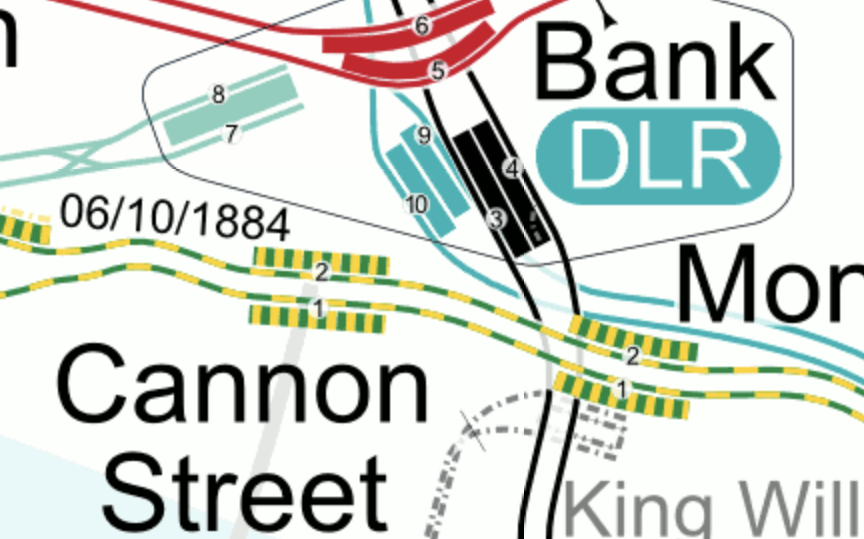
Note.
- The two existing Northern Line Platforms 3 and 4 are shown in black.
- The Central Line is shown in red.
- The DLR is shown in turquoise and sneaks under the Northern Line into Platforms 9 and 10.
- Platforms 7 and 8 are the platforms of the Waterloo and City Line.
- It would appear that the escalator connection between Bank and Monument stations goes between the existing tracks of the Northern Line.
So where is the Docklands Light Railway?
- As Platforms 3 and 9 appear to be close together with Platform 9, the deeper of the two, I suspect we can’t see the Docklands Light Railway in the visualisation, as it is hidden behind and underneath everything else.
- I also suspect that the triple escalators between the new Northern Line cross-walks descend in the space at the Southern ends of Platforms 9 and 10.
This is the Northern end of the visualisation I showed earlier
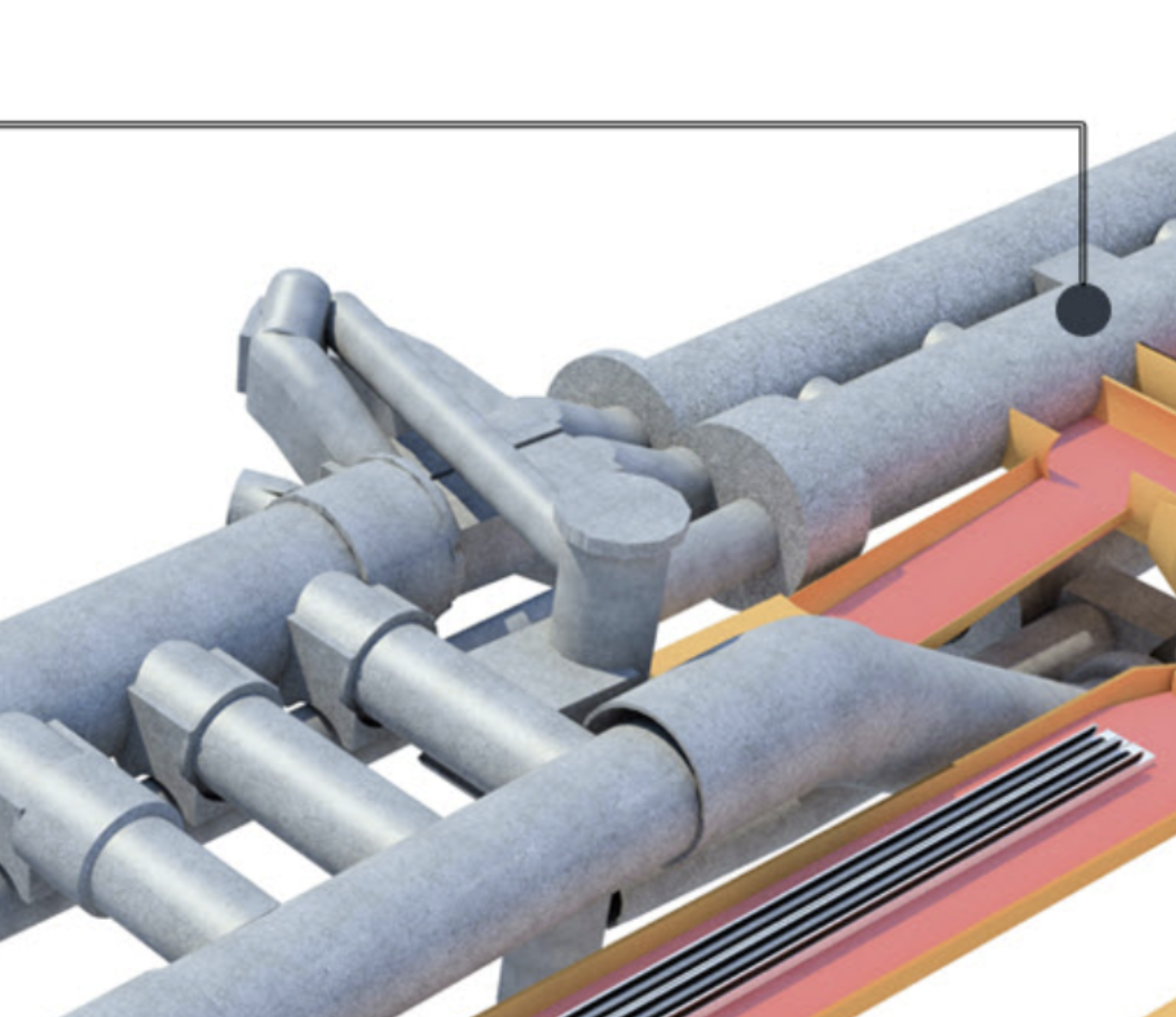
Note.
- North is to the left.
- The two tracks and the narrow island platform of the current Northern Line on the far side of the visualisation.
- The two staircases leading up from Northern Line to a lobby, where passengers can walk North to the Central Line.
- The double escalator barrel going down to the DLR.
- The travelator that will connect the Northern and Central Lines
- The three cross passages linking the DLR escalators to the lobby between the Central and Northern Lines.
- The most Southerly of these cross passages has a lift to the DLR.
The new Southbound platform of the Northern Line, would appear to be to the West of the Docklands Light Railway.
It appears to be a very tight fit.
These pictures show the current status of the new entrance.
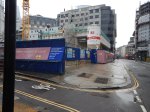
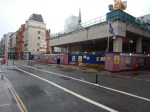
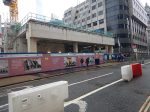
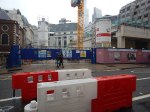
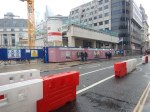
There would appear to be still a lot to be done.
This TfL image shows how it will look in 2022.
Ducking And Diving
No-one ducks and dives like Londoners. So rest assured, that if someone needs to get from A to B and the obvious route is blocked, Londoners will always get through. And if all else fails, a black cab will find a way, usually driven by a Londoner or someone infected with the ducking and diving virus.
Crossrail
As ever Crossrail is the herd of elephants in the London railway system.
The Northern Line is possibly the most important North-South route across Central London with two branches through the centre; Bank and Charing Cross.
But Crossrail connects to these North-South routes.
- Lea Valley Lines at Stratford
- East London Line at Whitechapel
- Lea Valley and West Anglia Lines at Stratford
- Northern Line Bank Branch at Moorgate/Liverpool Street
- Northern and City Line at Moorgate/Liverpool Street
- Thameslink at Farringdon
- Northern Line Charing Cross Branch at Tottenham Court Road
- Jubilee Line at Bond Street
- Bakerloo Line at Paddington
Crossrail will give a lot of opportunities for ducking and diving.
Under original plans Crossrail was supposed to open in 2019, with the Bank station closure for the upgrade in 2021.
This phasing certainly seemed a good idea at the time.
- Crossrail will be able to offer alternative routes during the closure.
- If the Crossrail stations are substantially complete, they can release workers to finish Bank station.
I wonder, if it would be sensible to not upgrade the tracks through Bank station until Crossrail opens through Moorgate/Liverpool Street.
As I wrote in Your First Crossrail Service May Arrive In Time For Christmas, Crossrail could open this year.
So are we being prepared for the mother of all cunning plans?
- Crossrail between Paddington and Abbey Wood opens before Christmas.
- The closure of the Bank branch to allow the Bank station upgrade happens at a convenient time after the opening of Crossrail through Moorgate/Liverpool Street.
- Moorgate continues to have a limited Northern Line service to the North.
- Crossrail continues work on the other branches.
Note.
- There is a crossover to the North of Moorgate station, which might allow Moorgate to work as a two-platform terminal station handling up to 4 or 6 trains per hour (tph).
- If Crossrail is running at Moorgate, the station should be step-free to and from the deep-level platforms.
- Transport for London are looking at walking routes on the Moorgate and London Bridge route.
- During the closure of the Northern Line through Bank, passengers for the City will go to Moorgate and walk or perhaps take a bus.
It is my view, that Crossrail must be open, before the Northern Line through Bank station is closed to allow work to be completed.
A Demonstration of the Northern Line Capacity At Moorgate When Working As A Terminal Station
Yesterday, which was a Sunday, the Northern Line was closed between Moorgate and London Bridge stations.
- After a walk, I returned home from Moorgate station via Angel station, where I got a 38 bus.
- I was surprised to find that trains on the Northern Line were leaving Moorgate station for the North every four to five minutes.
This would seem to indicate that frequencies of between 12 and 15 tph are possible.
Current frequencies through Bank station are 24 tph in the Peak and 20 tph in the Off Peak, so it will be a substantial reduction. But it is better, than my original estimate earlier in this section.
33% More Trains on the Northern Line Charing Cross Branch
Currently, the Charing Cross branch has a capacity of twenty-four tph and handles the following services in the Peak.
- 10 tph between Edgware and Kennington
- 2 tph between Edgware and Morden
- 10 tph between High Barnet and Kennington
- 2 tph between High Barnet and Morden
And these services in the Off Peak.
- 10 tph between Edgware and Kennington
- 10 tph between High Barnet and Kennington
Note.
- Extra trains go between the two Northern branches and Morden via the Bank branch.
- Kennington and Morden can handle 28 tph and regularly does.
- The loop at Kennington turns twenty trains per hour in both the Peak and the Off Peak
If there is an increase of 33 % in the number of trains, this must mean that 32 tph will run through Charing Cross in the Peak and 28 tph in the Off Peak.
- The signalling system on the Northern Line is the same as that on the Jubilee Line, where it handles 30 tph.
- It also can handle up to 30 tph between Kennington and Morden on the Northern Line.
- Perhaps it can be stretched to 32 tph through Charing Cross in the Peak.
If the Charing Cross branch can only be uprated to 30 tph, that is still an increase of 25 % in the number of trains.
The Kennington Loop
I mentioned the Kennington Loop and this beautiful old drawing shows its layout.
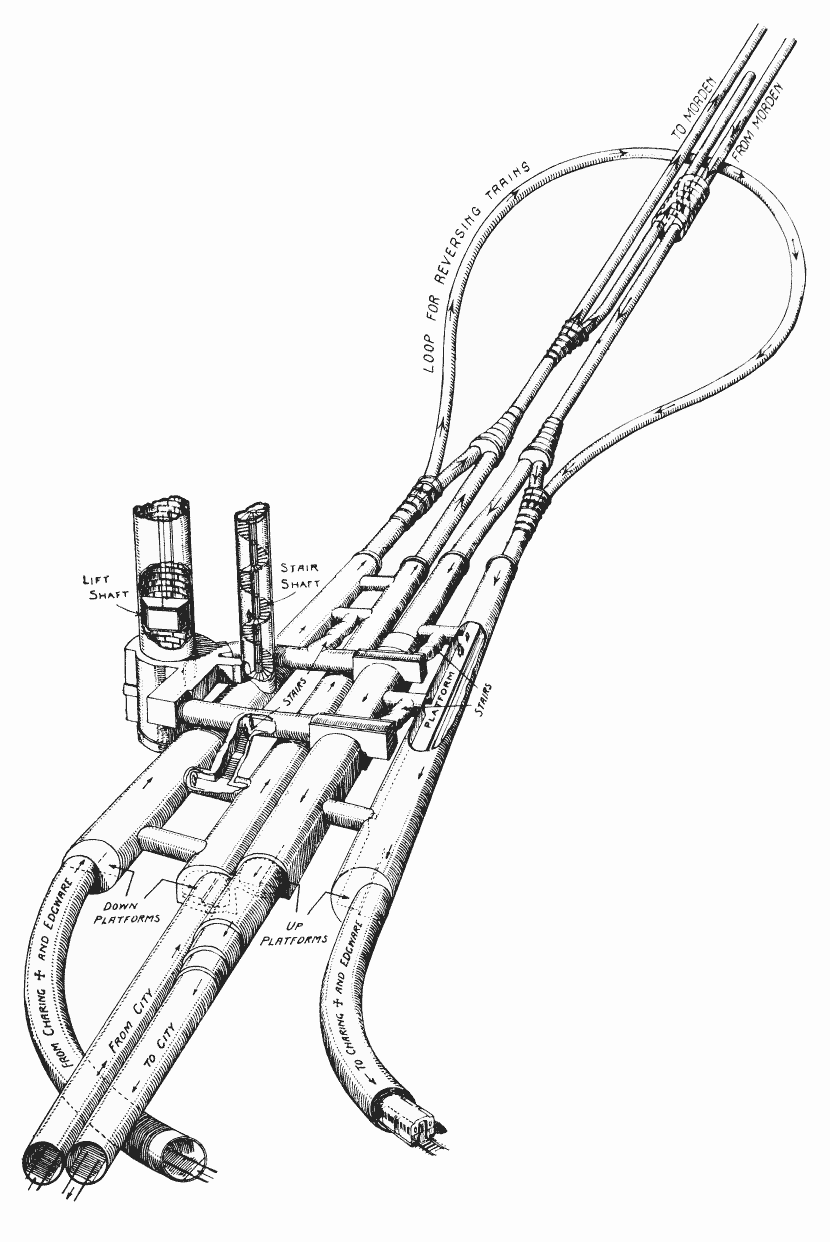
Note.
- South is at the top of the drawing.
- At present, as I said, the loop turns twenty tph all day.
- The extension to Battersea connects to the loop.
This map from carto.metro.free.fr shows a map of the loop.
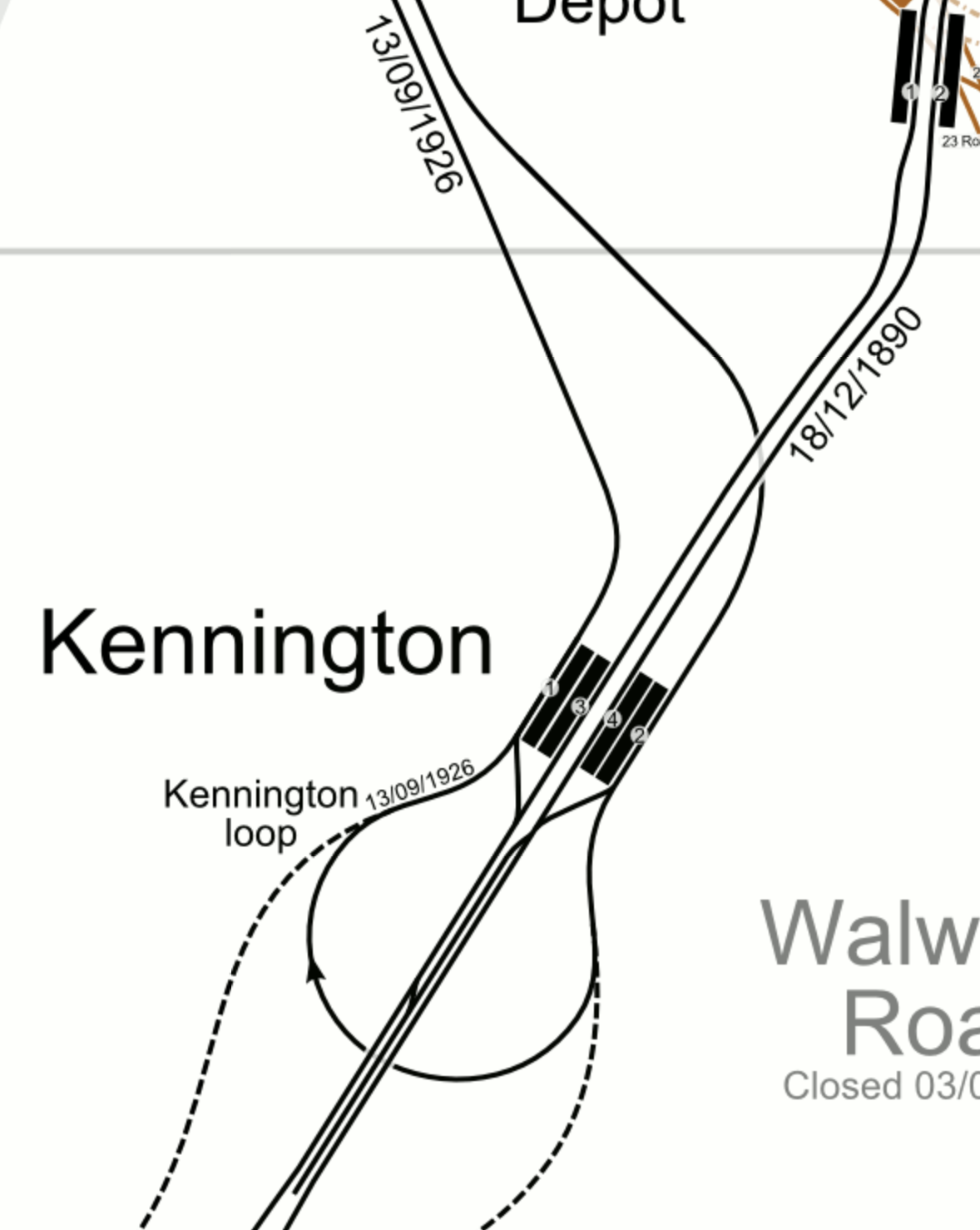
Note.
- The Charing Cross branch goes to the North-West from Kennington.
- The Bank branch goes to the North-East from Kennington.
- ,The lines to Battersea are shown dotted.
- Trains using the extension to Battersea can only use the Charing Cross branch.
I don’t know, but I wouldn’t be surprised, if the line speed to and from Battersea, is faster than it is round the loop.
It’s just that the lines to Battersea are not such a sharp curve and they have been recently designed and built.
As the Modern branch can handle 30 tph, I wouldn’t be surprised to find that the Battersea extension has been designed to handle this frequency.
The Northern Line Extension To Battersea
This document on the Transport for London web site gives details of the Northern Line Extension To Battersea.
This paragraph introduces the project.
The Northern line extension (NLE) between Kennington and Battersea will help regenerate the Vauxhall, Nine Elms and Battersea areas by supporting new jobs and homes. The extension is scheduled to be completed in autumn 2021.
The opening of the extension could offer benefits to the existing Northern Line.
As I said in the previous section, twenty tph are turned at Kennington using the loop.
Will all these trains now use the new Battersea extension, when it opens?
- The Battersea extension is fully double-track.
- Battersea Power Station station has two platforms and a cross-over, so if Brixton and Walthamstow Central stations can handle in excess of 30 tph, I suspect London’s newest terminal station can too!
If the Battersea extension has a design capacity of 30 tph, it would certainly be able to handle 20 tph.
So I wouldn’t be surprised to see all trains that currently turn at Kennington will take the Battersea extension, when it opens.
There must surely be the interesting possibility of before the Battersea extension opens to passengers, using it to turn the trains that would otherwise use the loop at Kennington. It would certainly be a very thorough test, of track and signalling.
I am fairly certain, there would be advantages in having the Battersea extension open before the Bank branch is upgraded.
- Running trains to Battersea could be more efficient than using the Kennington Loop.
- Opening the Battersea extension would need the signalling at Kennington to be upgraded and fully tested, so any changes needed for increased frequencies on the Charing Cross branch could be performed at the same time.
- All the residents of the new housing in Battersea. would have an Underground connection.
Opening the Battersea extension will change passenger patterns on the Northern Line and as the changes will be difficult to predict, it would surely be better to upgrade Bank station, after the opening of the Battersea extension.
Thameslink
Thameslink is not mentioned in any of the Transport for London documents, but surely it has a big part to play.
- Thameslink serves a lot of stations in South and South East London and beyond, including Brighton, East Croydon, Orpington, Sevenoaks and Woolwich Arsenal.
- Thameslink has an interchange with the Circle and District Lines at Blackfriars.
- Thameslink has an interchange with the Metropolitan and Circle Lines at Farringdon.
- Thameslink will have an interchange with Crossrail at Farringdon.
- Blackfriars and City Thameslink stations have good walking routes along the River and to the City.
Thameslink should be appearing on the Tube Map any time soon.
Waterloo And City Line
I am missing the Drain, as it is the easiest way for people in the area, where I live to get to Waterloo station.
I just take a bus to Bank and then walk underground to London’s shortest Underground line.
According to this article on London SE1, it is closed because of the covids, but should reopen in April 2021.
Surely, Transport for London could reopen the line, if they vaccinated all the drivers.
As the Waterloo and City Line has an independent new entrance on Wallbrook, there should be no reason, why it couldn’t reopen before the Northern Line through bank is upgraded.
The Central Line At Bank Station
Nothing has been said, about whether the Central Line will be closed through Bank station, during the upgrade.
I don’t think it will be continuously closed, although access to some parts may be restricted.
There could be partial closures at weekends or in the evenings.
So for commuters and other must-travellers, I suspect the Central Line will get through.
The Circle And District Lines At Monument Station
My thoughts about the Circle and District Line would be similar to the Central Line.
But these lines with their connections at Westminster, Blackfriars, Cannon Street, Tower Hill and Whitechapel could prove important during the works.
The Docklands Light Railway At Bank Station
Again my thoughts about the Docklands Light Railway would be similar to the Central Line.
But there is a lot of work going on to improve access to the Docklands Light Railway, and this could result in a closure to allow completion.
Review Bus Use
When I come into London Bridge station, I usually go to the bus station and get a bus, which stops within fifty metres of my front door. Going to London Bridge isn’t as convenient and I take a variety of routes.
But the corridor between London Bridge and Old Street via Bank and Moorgate has three bus routes; 21, 43 and 141, the last two of which terminate in the bus station at London Bridge. I suspect that the frequency of the last two buses could be increased, if they had a few more buses and drivers, and turned them faster at London Bridge.
I also feel there is scope to run a shuttle between Finsbury Square and London Bridge station.
- It would loop round Finsbury Square at the Northern end.
- It would loop through London Bridge station, as the 43 and 141 buses currently do.
- They would serve Moorgate and Bank.
- As it will be running through a busy part of the City with lots of pedestrians, these buses should be either battery or hydrogen.
- But as they should be high-capacity double-deckers, battery probably wouldn’t have enough power.
What better way would there be, to showcase London’s new hydrogen buses?
And I’m sure Jo Bamford, would make sure that London had enough new Wrightbus hydrogen buses to provide the service.
National Rail Between Charing Cross/Waterloo And London Bridge
I am probably not alone in using this route in preference to the Jubilee Line to travel between Westminster and London Bridge, as where there is an alternative to the deep-level Underground, I will often use it.
In my case coming home from Waterloo, I’ll often hop to London Bridge on National Rail and then get a 141 bus home.
This is classic ducking and diving on my part.
I’m sure others will do the same during the Bank branch closure.
I would also hope, that season tickets would allow passengers to swap terminals without too much trouble and any expense.
National Rail Between Cannon Street And London Bridge
Using Cannon Street instead of London Bridge could be an relatively easy alternative for many passengers.
- It connects to the Circle and District Lines.
- There are East-West buses outside the station.
This Google Map shows the location of the station.
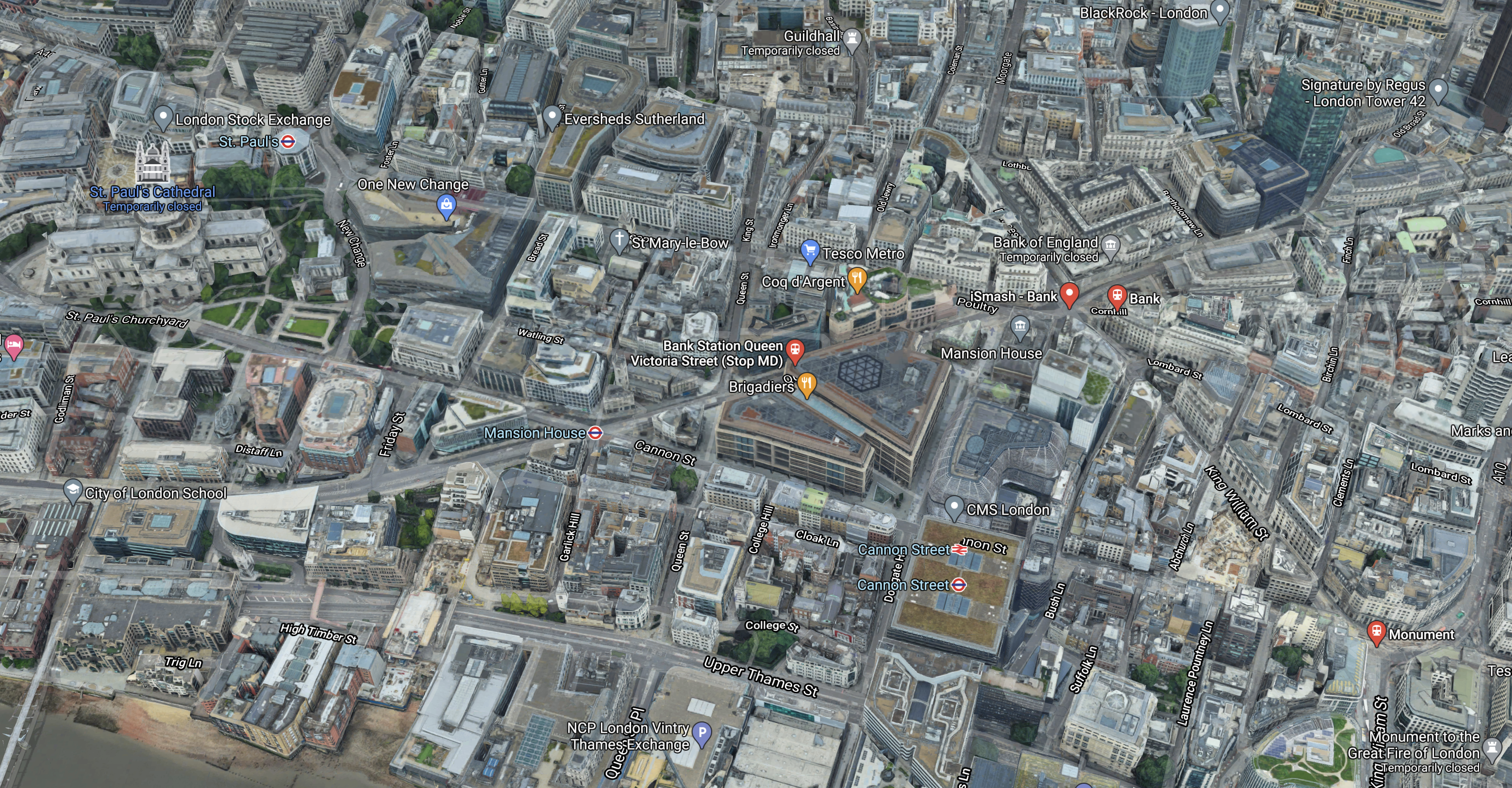
There are a number of useful walking routes from the station, which is towards the bottom of the image slightly towards the right.
- Bank station is about 300 metres and six minutes away.
- The North-South buses between Moorgate and London Bridge on King William Street are 200 metres and three minutes away.
- St. Paul’s is a bit further but it does have the Central Line and lots of buses including the 76 to Moorgate and Old Street stations.
At seventy-three, I can still walk between Cannon Street and Moorgate stations in 15 minutes.
Walking Between London Bridge and Moorgate
Transport for London have said they will review this.
It is not a difficult walk and it has improved since traffic was reduced at Bank.
Conclusion
As originally planned, the timings of the various projects were such that these projects would be more of less completed before the upgrade of the tracks at Bank station was to be performed.
- Crossrail
- The Northern Line Extension to Battersea.
- The new Wallbrook entrance to Bank station.
But no-one had foreseen Covid-19.
So I would plan the date of the Northern Line closure with the utmost care.
Walking Between Cannon Street And Moorgate Stations
I took these pictures as I walked between Cannon Street And Moorgate stations.
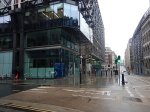
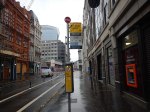
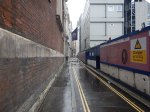
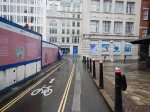
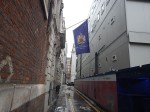
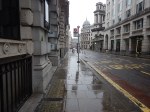
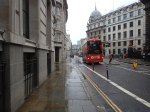
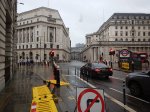
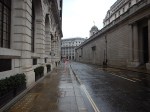
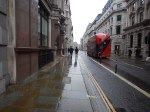
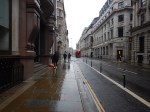


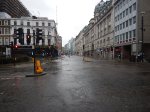
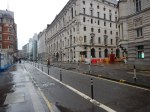

Note.
- It was a Sunday, so there wasn’t much traffic about.
- The bus stop on King William Street is served by buses 21, 43 and 141. wjich all go to Moorgate and Old Street stations.
I needed to find out how long it took for this other post, called Thoughts On The Closure Of The Northern Line At Bank To Complete The Upgrade To Bank Station.
Timings were as follows.
- Cannon Street Station to the Northbound bus stop on King William Street – 3 minutes
- Cannon Street Station to Bank Junction – 6 minutes
- Cannon Street Station to Moorgate Station – 15 minutes
How much faster would I be in better weather?
Stairs And A Lift At Cannon Street Station
These pictures show stairs and a lift at Cannon Street station, that provide access between the National Rail and Underground stations.
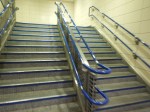
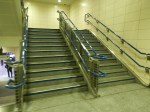
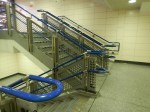
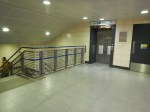
In my view this is one of the best installations, that I’ve seen.
- There is a lift for those who need one.
- The stairs are wide with an additional central hand-rail.
- The hand-rails are double and covered in comfy blue plastic.
This may be impressive, but as yet, there is only a full step-free connection to the Eastbound platform.Underground.
Obviously, all railway stations should be step-free, but to do all stations in the UK in a short time would be expensive and probably disruptive too!
But one thing that can be done at many stations, is to improve the hand-rails.
One of the worst stations near me, is Dalston Kingsland station, which was rebuilt a few years ago with a narrow staircase to each platform.
There has already been an incident at the busy station, where four people were hurt, as reported in this article on City AM.
Were the narrow stairs partly to blame?
The East London Line In 2030
The East London Line was opened in May 2010 using pieces of redundant infrastructure in the East of London.
- The East London Branch of the Metropolitan Line.
- The Thames Tunnel, built by the Brunels.
- The viaduct of the North London Line to its historic terminal at Broad Street station.
Modern additions were added.
- A massive bow-spring bridge over Shoreditch High Street.
- A tunnel under Dalston High Street.
- A flyover North of New Cross Gate station.
- New stations at Dalston Junction, Haggerston, Hoxton and Shoreditch High Street.
- New signalling.
A new fleet of Class 378 trains were purchased and services began between two Northern and four Southern destinations, at a frequency of four trains per hour (tph).
Looking back just over eight years later, the line has been an overwhelming success.
East London Line Capacity
The proof of this success surely is shown in the increasing capacity of the line since 2010.
The Class 378 trains have got longer.
- In 2010, they started at just three cars.
- They were soon extended to four cars.
- In 2016, all trains became five cars.
The trains could go to six cars, but there are platform length issues, that make five cars the current limit.
On the other hand, selective door opening could be used, which works so well with walk-through trains.
Now, Transport for London are going to increase frequencies on the line.
- In 2018, an additional two tph will run between Dalston Junction and Crystal Palace stations.
- In 2019, an additional two tph will run between Dalston Junction and Clapham Junction stations.
This would give twenty tph between Dalston Junction and Surrey Quays stations.
Given that Crossrail and Thameslink will handle twenty-four tph in their central tunnels, I suspect that to have the same frequency on the East London Line would not be impossible.
Developments That Will Happen
These developments will happen, that will affect the East London Line.
Crossrail
The Whitechapel station interchange with Crossrail will become the Jewel in the East, as it will give access to Canary Wharf, the West End, Stratford, Liverpool Street, Paddington and Heathrow to all those (like me!), who live along the East London Line.
As both lines will have train frequencies of at least twenty tph, you should never wait more than a few minutes for your train.
I can see, the number of passengers changing between Crossrail and the East London Line being very high.
- For many travellers it will be their quickest way to Crossrail.
- The Class 378 trains are more passenger-friendly than Thameslink’s Class 700 trains, which are best avoided, by those with sensitive posteriors.
- Whitechapel station gives access to both the Eastern branches of Crossrail.
- All East London Line services call at Whitechapel.
My scheduling experience says that the frequency of trains on Crossrail and the East London Line should be the same, to smooth travellers passage through the station.
So expect Crossrail to eventually push the East London Line to twenty-four tph.
Increased Frequencies On The Underground
The Sub-Surface Lines of the London Underground are being re-signalled, which will mean more capacity, where the District and Metropolitan Lines interchange with the East London Line at Whitechapel station.
There could also be improvements on the Jubilee Line, where it meets the East London Line at Canada Water station.
I doubt we’ll see more improvement to the Victoria Line, as you can only extract blood from a stone for a limited period.
It is also probably true, that Dear Old Vicky needs some relief.
New South Eastern Franchise
The new South Eastern Franchise will be awarded in August 2018, with the new incumbent taking over in December 2018.
The current Southeastern services have little interaction with East London Line services, except at New Cross station, where the following services call.
- Southeastern – Northbound – Eight tph to Cannon Street via London Bridge.
- Southeastern – Southbound – Eight tph to Lewisham via St. John’s.
- Overground – Four tph to and from Dalston Junction.
New Cross is a good interchange for travelling to and from South East London and I suspect the new franchise will only make it more useful.
New Trains On The Northern City Line
The Northern City Line has been ignored for decades and in my view it is a disgrace with elderly Class 313 trains, dirty, dark and dingy stations and unmotivated staff, who seem abandoned by their employers.
If ever there is a line that should join the Overground, it is this one!
At least, the line is getting new Class 717 trains, which will bring the following.
- Modern trains with wi-fi and hopefully comfortable seats.
- Increased capacity.
- Up to twelve tph between Moorgate and Alexandra Palace stations via Highbury & Islington and Finsbury Park stations.
- More passengers to the East London Line at Highbury & Islington station.
- A direct cross-platform and step-free link for the Victoria Line to Crossrail.
Planners do not seem to have realised the effects these new trains will cause in North London and at Highbury & Islington station in particular.
North London Line Improvements
In the next few years, there will be improvements on the North London Line.
- Increased frequencies to Clapham Junction station have already happened.
- West Hampstead station is being rebuilt.
- New Class 710 trains will reinforce the current Class 378 trains.
- Two new stations will be added in the Old Oak Common area; Old Oak Common Lane and Hythe Road
- Old Oak Common Lane station will connect to Crossrail and High Speed 2, when that line opens in 2026.
All these improvements will bring more passengers to the East London Line and put more pressure on Highbury & Islington station.
Property Development Along The East London Line
Only two stations on the East London Line; Dalston Junction and Shoreditch High Street, were designed to have development on top.
Dalston Junction station has now been virtually fully developed and only now are tower blocks starting to grow around and on top of Shoreditch High Street station.
The City of London will also expand to the East, which will mean more offices and housing clustered around stations like Whitechapel, Shadwell and Canada Water.
Property developent will greatly increase the ridership of the East London Line.
Rebuilding Of Highbury & Islington Station
Many travellers in East London, use the Overground to get to Highbury & Islington station for access to the Underground.
The below ground section of this station needs substantial improvement with a second entrance, more escalators and lifts.
Plans get talked about, but nothing happens.
I believe that the new Class 717 trains on the Northern City Line could be the straw that breaks the camel’s back, as they will bring more travellers to the station.
But on the other hand the existing cross-platform interchange with the Victoria Line, might mean that less travellers need to go to and from the surface.
I have this feeling, that a rebuilt Highbury & Islington station will happen before 2030 and would attract more travellers to the East London Line.
Developments That Could Happen
These developments could happen, that will affect the East London Line.
Bakerloo Line Extension To Lewisham
I believe extending the Bakerloo Line to Lewisham station is more likely to happen than Crossrail 2 and if it was built it would connect to the East London Line at New Cross Gate station.
This map shows the extension.
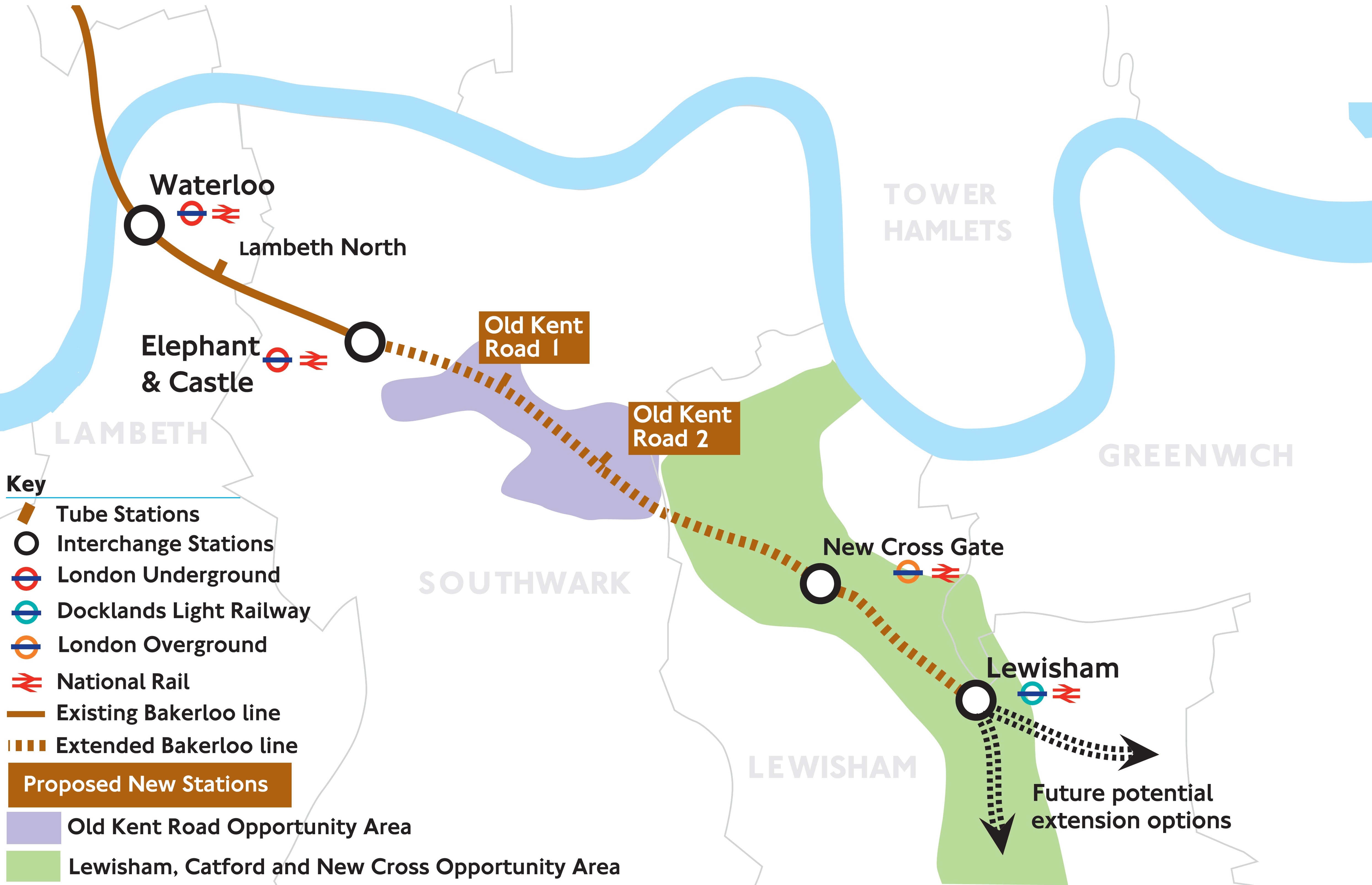
I believe that the East London Line and the extended Bakerloo Line will complement each other.
- The Bakerloo Line will probably have at least twenty tph between Queen’s Park and Lewisham stations via Waterloo, Oxford Circus and Baker Street stations.
- The East London Line will have at least six tph between Highbury & Islington and Crystal Palace stations and four tph between Highbury & Islington and West Croydon stations.
- New Cross Gate is currently a step-free station, so I suspect it will be a very smooth interchange.
Connections between South East and the whole of North London will be substantially improved.
Brockley Interchange
It has been suggested that Brockley station be connected to the line between Nunhead and Lewisham stations, which crosses over the station.
Wikipedia says this about the connection.
At the London end the line is crossed by the Nunhead to Lewisham line. At this location adjacent to Brockley station was sited Brockley Lane station which closed in 1917 with the original London, Chatham and Dover Railway branch to Greenwich Park. The connection of that line to Lewisham is a later development. The possibility of opening platforms on this line with direct access to Victoria Station and the Bexleyheath Line to Dartford has often been suggested but is currently low on TfL’s priorities.
In some ways the Bakerloo Line extension to Lewisham does a similar job in connecting the East London Line to Lewisham, but at a much higher frequency.
Another problem with the Brockley Interchange is that there are only two tph between Victoria and Lewisham, that pass over Brockley station and does the capacity at Lewisham station exist to allow this to be increased to a viable frequency, that would make building Brockley Interchange an interchange worth building?
Crossrail 2
Will Crossrail 2 be built or even started before 2030?
I personally doubt it, unless Brexit is an unqualified success and the project is privately-funded.
There are also other projects that might lower the need for Crossrail 2 and allow it to be delayed to beyond 2030.
Extension Of East London Line Services Along The North London Line
I can remember reports, when the London Overground was created, that suggested that some East London Line services, might be extended to the West, possibly to Willesden Junction station.
I think there are two major problems.
- Trains going West from Highbury & Islington station from the East London Line could stop in Platform 1 or 2 and go straight through on their way to Clendonian Road & Barnsbury station. But those going the other way would probably need to cross tracks on flat junctions!
- Where is the suitable bay platform to turn the trains?
On the other hand, many passengers would find it useful, as it would avoid a change at Highbury & Islington station.
Penge Interchange
I discuss the possible Penge Interchnge station in Penge Interchange.
Note that the Penge Interchange offers four tph to and from Victoria, whereas the Brockley Interchange only offers a measly two tph.
Shoreditch High Street Connection To The Central Line
The Central Line passes directly underneath Shoreditch High Street station, as this map from carto.metro.free.fr shows.
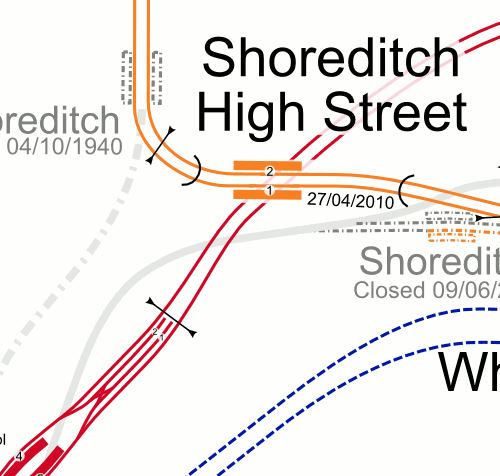
Note the reversing sidings at Liverpool Street station in the South-West corner of the map.
Wikipedia says this about the possibility of creating an interchange.
There have also been discussions of creating an interchange with the Central line between Liverpool Street and Bethnal Green which runs almost underneath the station. However, this would not be able to happen until after the Crossrail 1 project is complete, due to extreme crowding on the Central line during peak hours.
Consider.
- Liverpool Street to Bethnal Green is one of the longest stretches on the Underground without a station.
- There is a lot of residential and housing developments, being proposed for around Shoreditch High Street station.
- Large numbers of passengers use the East London Line to get to Highbury & Islington station for the Underground. Would a Shoreditch High Street connection take the pressure off?
- It could give East London Line travellers, a single-change connection to Liverpool Street, Bank, St. Paul’s, Chancery Lane and Holborn stations.
For construction and operational reasons, the decision to create this connection will not be taken until Crossrail is fully open.
I suspect passenger statistics will play a large part in the decision.
Southeastern Connections
Southeastern has three main terminals in London.
- Cannon Street – Jubilee and Northern Lines
- Charing Cross – Circle and |District Lines
- Victoria – Circle, District and Victoria Lines.
But they also serve other stations in South London with good connections.
- Abbey Wood – Crossrail
- Greenwich -DLR
- Lewisham – DLR and possibly Bakerloo Line
- London Bridge – Jubilee and Northern Lines and Thameslink
- New Cross – East London Line
- Woolwich Arsenal – DLR
The rebuilding of London Bridge station has probably improved connectivity, but are further improvements needed?
Two of the possible improvements to the East London Line; the Brockley and Penge Interchanges will connect current Southeastern services to and from Victoria to the East London Line.
Would the new South Eastern franchise like a connection to the East London Line?
- ,Passengers to and from East London surely have have an easier route, than going to Victoria and then using the Underground!
- Passenger numbers at Victoria might be marginally reduced
- Both new interchanges would give a route to Crossrail at Whitechapel, which is not an easy connection to and from Victoria.
- I have looked at timings and it appears that the Whitechapel route is perhaps five minutes slower to the West End or Paddington, but perhaps a dozen minutes faster to the Northern part of the City of London.
It is my view, that if Penge Interchange is built, then Brockley Interchange could be forgotten.
Thameslink Improvements
With all the money spent on Thameslink, it is likely that Network will want to maximise their investment by running as many trains as possible on the route.
Currently, the plan is for twenty-four trains an hour through the central tunnel, which then split as follows.
- Eight tph via Elephant & Castle
- Sixteen tph via London Bridge of which twelve tph continue to East Croydon.
It would also appear that there are another five tph between London Bridge and East Croydon, but only one tph runs on the fast lines.
So there would appear to be plenty of capacity between London Bridge and East Croydon stations, even if the central tunnel frequency on Thameslink were to be upgraded to thirty tph.
I think we might see a bit of sorting out of Thameslink to minimise some of the problems, that became evident after the May 2018 timetable change.
A problem I have, which I share with the millions in East London, is that it is difficult to get to Gatwick Airport, as there is no common station between the East London Line and Thameslink.
- If the Penge Interchange is built, should Thameslink trains stop at the station?
- When the Bakerloo Line is extended to New Cross Gate station, should Thameslink trains stop at the station?
- Should all slow trains on the line be run by the London Overground?
- Should all fast trains on the line be run by Thameslink?
Thameslink could be so much more useful.
West Croydon Or East Croydon
From a personal point of view, when I go to Croydon, I want to get to East Croydon station, as I’m usually taking a train to the South Coast or Gatwick Airport.
- Inevitably, I end up taking a tram from West Croydon to East Croydon station.
- Ging the other way is more difficult, as I inevitably get lost trying to find West Croydon station.
- Although, there are now some trams at East Croydon only going to West Croydon.
- Trains to the North of Penge West station, never seem to be very full.
- East Croydon station is more important than West Croydon station.
So would it be better if the East London Line trains went to East Croydon?
The problem is that there is no space in East Croydon station.
Perhaps two new platforms could handle both East London and West London Line services.
West London Line services should also be run by the London Overground, as was proposed by Chris Gibb, as I wrote about in Gibb Report – East Croydon – Milton Keynes Route Should Be Transferred To London Overground.
I would do the following.
- Sort out Victoria and Thameslink services at East Croydon station, so that all Northbound and Southbound services used a separate pair of platforms, with one platform face for Thameslink and the other for Victoria services.
- If possible, move services like London Bridge to Uckfield to Thameslink.
- Put a pair of terminal platforms under the Thameslink and Victoria services platforms, connected to these platforms by escalators and lifts.
- Most of the tunneling would be under railway property North of East Croydon station.
- These platforms could probably handle up to six trains per hour (tph) each.
- It would be possible to run six tph between Highbury and Islington and East Croydon stations.
- The West London Line could have a highly desirable four tph to the mega-station at Old Oak Common.
- It might even be possible to use the platforms for service recovery on Thameslink.
- It could release the pressure on the difficult Windmill Bridge Junction, which is a bit of a bottleneck.
It would be costly, but planned properly, I believe it could be created without any major disruption to the existing East Croydon station.
It would create a simple one-change link between Gatwick Airport, Brighton and other South Coast destinations to the following.
- Through services to London Bridge, St. Pancras and Victoria.
- East London Line services to East London and Whitechapel for Crossrail for the City, Central London and Shenfield.
- West London Line services to West London and Old Oak Common for High Speed 2, West Coast Main Line and Crossrail for Heathrow and Reading.
Capacity at East Croydon would probably be increased.
Conclusion
The East London Line will get better and better.
 The Anonymous Widower