Through Settle And Carlisle Service Under Consideration
The title of this post, is the same as that of an article in the June 2021 Edition of Modern Railways.
This is the first paragraph.
Plans for a new Leeds to Glasgow through service via the Settle and Carlisle line are being developed, with CrossCountry and the Department for Transport starting to look at the possible scheme.
It sounds like a sensible idea to me.
The article also suggests the following.
- CrossCountry is a possible operator.
- CrossCountry are keen to improve services between Leeds and Glasgow
- The trains could be InterCity 125s, freed up, by a the arrival of Class 221 trains from Avanti West Coast, when they receive their new Class 805 trains.
- Maintenance of the trains wouldn’t be a problem, as this could be done at Neville Hill in Leeds or Craigentinny in Edinburgh.
- Services could start in December 2023.
I have a few thoughts of my own!
The Route
The route between Leeds and Carlisle is obvious, but there are two routes between Carlisle and Glasgow.
Trains would probably choose a route and call at stations to maximise passenger numbers.
These stations are on the various routes.
- Settle and Carlisle – Shipley, Bingley, Keighley, Skipton, Gargrave, Hellifield, Long Preston, Settle, Horton in Ribblesdale, Ribblehead, Dent, Garsdale, Kirkby Stephen, Appleby, Langwathby, Lazonby & Kirkoswald and Armathwaite
- Glasgow South Western – Dunlop, Stewarton, Kilmaurs, Kilmarnock, Auchinleck, New Cumnock, Kirkconnel, Sanquhar, Dumfries, Annan and Gretna Green
- West Coast Main – Motherwell, Carstairs and Lockerbie
There are certainly a lot of possibilities.
Upgrading The InterCity 125 Trains
CrossCountry appear to have enough InterCity 125 trains to muster five in a two Class 43 power car and seven Mark 3 coach formation.
They may not be fully in-line with the latest regulations and there may be a need for a certain degree of refurbishment.


These pictures show some details of a refurbished Great Western Railway Castle, which has been fitted with sliding doors.
Will The InterCity 125 Trains Be Shortened?
Scotrail’s Inter7City trains and Great Western Railway’s Castle trains have all been shortened to four or five coaches.
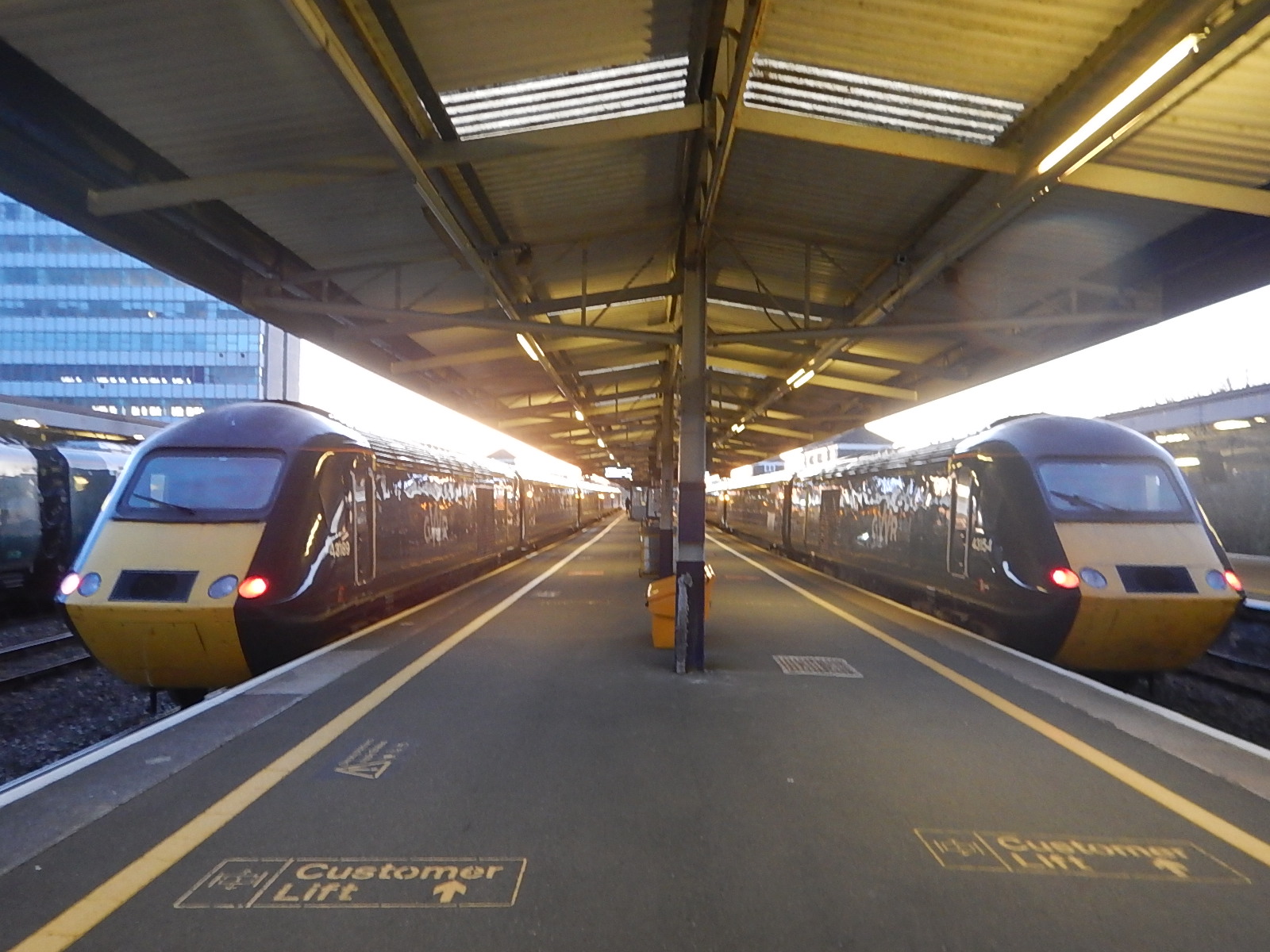
This picture shows a pair of Castles.
Journey Times, Timetable And Frequency
The current journey time between Leeds and Glasgow Central stations via the East Coast Main Line is four hours and eight minutes with nine stops.
The Modern Railways article says this about the current service.
The new service would be targeted at business and leisure travellers, with through journey times competitive with road and faster than the current direct CrossCountry Leeds to Glasgow services via the East Coast main line.
I would expect that CrossCountry are looking for a time of around four hours including the turn round.
- Stops could be removed to achieve the timing.
- The trains could run at 125 mph on the West Coast Main Line.
This could enable a train to have the following diagram.
- 0800 – Depart Leeds
- 1200 – Depart Glasgow Central
- 1600 – Depart Leeds
- 2000 – Depart Glasgow Central
- Before 2400 – Arrive Leeds
Note.
- A second train could start in Glasgow and perform the mirrored timetable.
- Timings would probably be ideal for train catering.
- Trains would leave both termini at 0800, 1200, 1600 and 2000.
- The timetable would need just two trains.
I also think, if a second pair of trains were to be worked into the timetable, there could be one train every two hours on the route, if the demand was there.
I certainly believe there could be a timetable, that would meet the objectives of attracting business and leisure passengers away from the roads.
Tourism And Leisure Potential
The Settle and Carlisle Line is known as one of the most scenic railway lines in England, if not the whole of the UK.
There are important tourist sites all along the route between Leeds and Glasgow
- Leeds – The station is well-connected in the City Centre.
- Saltaire – For the World Heritage Site and Salt’s Mill
- Keighley – For the Keighley and Worth Heritage Railway
- Settle – The town of Settle is worth a visit.
- Ribblehead – For the famous Ribblehead Viaduct
- Appleby – For the Horse Fair.
- Carlisle – The station is well-connected in the City Centre.
- Glasgow – Glasgow Central station is well-connected in the City Centre.
Many of the stations are used by walkers and others interested in country pursuits.
I believe that it is a route that needs a quality rail service.
Travel Between London and Towns Along The Settle And Carlisle Line
In Thoughts On Digital Signalling On The East Coast Main Line, I said this.
I think it is highly likely that in the future, there will be at least one train per hour (tph) between London Kings Cross and Leeds, that does the trip in two hours.
It may seem fast compared to today, but I do believe it is possible.
With a timely connection at Leeds station, will this encourage passengers to places along the Settle and Carlisle line to use the train?
What About the Carbon Emissions?
The one problem with using InterCity 125 trains on this route, is that they are diesel-powered, using a pair of Class 43 locomotives.
But then there are over a hundred of these diesel-electric locomotives in service, nearly all of which are now powered by modern MTU diesel engines, which were fitted in the first decade of this century.
Consider.
- The locomotives and the coaches they haul have an iconic status.
- Great Western Railway and Scotrail have recently developed shorter versions of the trains for important routes.
- There are over a hundred of the locomotives in service.
- Companies like ULEMCo are developing technology to create diesel-powered vehicles that can run on diesel or hydrogen.
- There is plenty of space in the back of the locomotives for extra equipment.
- MTU have a very large number of diesel engines in service. It must be in the company’s interest to find an easy way to cut carbon emissions.
- I believe that the modern MTU diesel engines could run on biodiesel to reduce their carbon footprint.
And we shouldn’t forget JCB’s technology, which I wrote about in JCB Finds Cheap Way To Run Digger Using Hydrogen.
If they could develop a 2 MW hydrogen engine, it could be a shoe-in.
I believe that for these and other reasons, a solution will be found to reduce the carbon emissions of these locomotives to acceptable levels.
Conclusion
In this quick look, it appears to me that a Glasgow and Leeds service using InterCity 125 trains could be a very good idea.
DfT and Arriva CrossCountry Sign Agreement
The title of this post, is the same as that of this article on Railway News.
This is the introductory paragraph.
The franchisee CrossCountry, which is owned by Arriva, has signed a three-year agreement with the Department for Transport to bring the franchise in line with the Emergency Recovery Measures Agreements (ERMAs).
CrossCountry has the following trains in its fleet.
34 x Class 220 trains
24 x Class 221 trains
This gallery shows Class 220 trains and the closely related Class 222 trains, which are in service with East Midlands Railways.


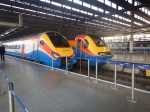
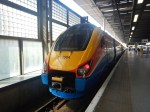
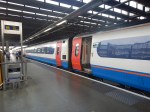
Note that these three fleets of Bombadier Voyager trains are now twenty years old and will probably need a makeover soon.
If they have a problem it is that they are diesel multiple units and create a lot of noise and pollution in stations and depots.
This is said in the Railway News article.
One element of this new contract is a focus on reducing the environmental impact of the operator’s diesel fleet.
, Two separate projects are mentioned.
- Using a separate electrical supply to Turbostars during cleaning.
- Use of on-train batteries on the Voyagers in stations.
In Have Bombardier Got A Cunning Plan For Voyagers?, I gave my thoughts on the second project, when Bombardier proposed it in 2018.
I can see the following scenario happening.
- When the new Class 805 trains are delivered, Avanti West Coast’s Class 220 trains are transferred to Arriva CrossCountry.
- When the new Class 810 trains are delivered, East Midland Railway’s Class 222 trains are transferred to Arriva CrossCountry.
- CrossCountry update their Voyagers with batteries.
- CrossCountry retire their InterCity 125 trains.
CrossCountry may have enough trains to run a mainly Voyager fleet, backed up by a few Turbostars.
Could Bombardier’s Plan Be Revived In A Different Form?
If CrossCountry had all the Voyages, they would have the following fleet.
- 34 x four-car Class 220 trains – Currently with CrossCountry.
- 20 x five-car Class 221 trains – Currently with Avanti West Coast
- 20 x five-car Class 221 trains – Currently with CrossCountry
- 4 x four-car Class 221 trains – Currently with CrossCountry
- 6 x seven-car Class 222 trains – Currently with East Midlands Trains
- 17 x five-car Class 222 trains – Currently with East Midlands Trains
- 4 x four-car Class 222 trains – Currently with East Midlands Trains
This totals to eighty-five trains with a total of 285 intermediate cars, of which 128 were built with tilt for Class 221 trains.
Currently CrossCountry has a total of 58 four- and five-car Voyagers and enough Class 43 power cars for six InterCity 125 trains.
If they rearranged the non-tilting intermediate cars of the Voyagers, 157 intermediate cars is enough for one of the following.
- 78 – four-car trains
- 52 – five-car trains
- 39 – six-car trains
- 26 – eight-car trains
- 22 – nine-car trains
Add in forty five-car Class 221 trains and there is more than enough trains for CrossCountry to run their current services without the retired InterCity 125s.
CrossCountry would also be able to form the trains into the lengths they needed for efficient services.

This formation photographed at Basingstoke could be formed of a single train, if they wished, as they have more than enough coaches.
I suspect in true design engineering fashion, engineers at CrossCountry have got the toy trains or Lego bricks out to shuffle the coaches on a big table to see what are the best train lengths for their network.
If they decided to go the eight-car route, which could give up to twenty-six trains, this would be more than enough to be able to retire the InterCity 125s.
Could one of the Intermediate cars be converted into a pantograph and battery car?
- If the diesel engine and the associated gubbins were to be removed, this would save around two tonnes in weight.
- A two-tonne battery could probably have a capacity of 200 kWh.
- Bombardier probably have ideas about how a car could be converted.
Someone could have a lot of fun playing musical carriages and the following trains could be created.
- A fleet of Voyager bi-mode trains of optimum length for CrossCountry’s route network.
- Most services would be run by single trains, which must give advantages to the operator, their staff and passengers.
- All braking would be regenerative braking to battery to save energy.
- Where electrification exists, the trains could use it.
- All station stops would be performed on battery power.
There might even be some left over driving cars and some intermediate cars to be converted into battery electric trains for another route.
Conclusion
There is a route there for CrossCountry to have a much more environmentally-friendly fleet, better suited to their needs
- The Turbostars would be given a local electricity supply to cut noise and pollution during overnight cleaning.
- The InterCity 125s would be retired.
- CrossCountry acquires as many Voyagers as it needs after Avanti West Coast and East Midlands Railway get their new trains.
- The Voyagers carriages would be shuffled so that they could handle all routes and replace the InterCity 125s.
- The design exists to convert the Voyagers into diesel-electric-battery tri-mode high speed trains.
Note.
- There are enough trains to do a gradual conversion, with CrossCountry having enough trains for a full service at all times.
- All trains will probably have been built this century or nearly so!
I also feel, that the fleet would be a marketing asset, rather than a bit of a discouragement to use CrossCountry’s services again.
Environmentally-Friendly InterCity 125 Trains
InterCity 125 trains are not the most environmentally-friendly of beasts.
- They do not meet the modern emission regulations.
- They still emit a lot of carbon dioxide.
- They is also a deadline of 2040, when UK railways will be net-carbon-free.
There might also be individuals and groups, who feel that these elderly trains with so much history, should be replaced by modern zero-carbon trains.
- Would the same groups accept electrification with all the wires?
- Would the train operating companies, accept battery power with long waits for charging?
- Would hydrogen be viable on the numerous branch lines in Devon and Cornwall, with some difficult access to depots by road. Especially, if the hydrogen had to be brought from say Bristol or Southampton!
But various engineering solutions are emerging.
Biodiesel
This is probably the simplest solution and I suspect most modern engines can run on biodiesel with simple modifications. InterCity 125s have modern engines from German firm and Rolls-Royce subsidiary; MTU, so they probably have a solution in their tool-box.
Computerisation
I have never built a computer control system for anything, but I did work with the first engineers in the world, who computerised a chemical plant.
They always emphasised, if you could nudge the plant into the best area of operation, you’d have a much more efficient plant, that produced more product from the same amount of feedstock.
At about the same time, aircraft engine manufacturers were developing FADEC or Full Authority Digital Engine Control, which effectively let the engine’s control system take over the engine and do what the pilot had requested. The pilot can take back control, but if FADEC fails, the engine is dead.
But judging by the numbers of jet aircraft, that have engine failures, this scenario can’t be very common, as otherwise the tabloids would be screaming as they did recently over the 737 MAX.
Now, I don’t know whether the MTU 16V4000 R41R engines fitted to the InterCity 125, have an intelligent FADEC to improve their performance or whether they are of an older design.
If you worry about FADEC, when you fly, then read or note these points.
- Read the FADEC’s Wikipedia entry.
- Your car is likely to be heavily computerised.
- If you took a modern train or bus to the airport, that certainly will have been heavily computerised.
You could be more likely to meet someone with COVID-19 on a flight, than suffer an air-crash, depending on where you travel.
Rolls-Royce’s Staggering Development
Staggering is not my word, but that of Paul Stein, who is Rolls-Royce’s Chief Technology Officer.
He used the word in a press release, which I discuss in Our Sustainability Journey.
To electrify aviation, Rolls-Royce has developed a 2.5 MW generator, based on a small gas-turbine engine, which Paul Stein describes like this.
Amongst the many great achievements from E-Fan X has been the generator – about the same size as a beer keg – but producing a staggering 2.5 MW. That’s enough power to supply 2,500 homes and fully represents the pioneering spirit on this project.
This generator is designed for flight and the data sheet for the gas-turbine engine is available on the Internet.
- It has a weight of under a couple of tonnes compared to the thirteen tonnes of the diesel engine and generator in a Class 68 locomotive.
- It is also more powerful than the diesel.
- It looks to be as frugal, if not more so!
- Rolls-Royce haven’t said if this gas-turbine can run on aviation biofuel, but as many of Rolls-Royce’s large engines can, I would be very surprised if it couldn’t!
Rolls-Royce’s German subsidiary is a large producer of rail and maritime diesel engines, so the company has the expertise to customise the generator for rail applications.
Conclusion
I think it is possible, that the Class 43 power-cars can be re-engined to make them carbon-neutral.
GWR Buys Vehicles Outright In HST Fleet Expansion
The title of this post is the same as that of this article on Railway Gazette.
This is the introductory paragraph.
Despite concerns over future passenger numbers, the Department for Transport has given permission for Great Western Railway to procure three more shortened HST diesel trainsets, branded as the Castle Class by the franchisee.
These pictures show some of the Castle Class trains.
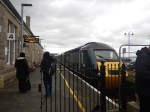
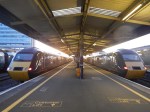

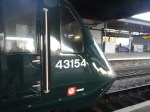
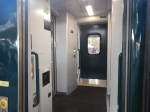
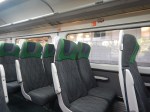
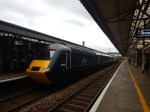
They must be profitable and/or popular with passengers.
If I have a problem with these trains, it is with the Class 43 diesel power cars.
- Each train has two power cars.
- It would appear that there are about 150 of the Class 43 power cars in regular service.
- Each is powered by a modern MTU 16V4000 R41R diesel engine, that is rated at 1678 kW.
- The engines are generally less than a dozen years old.
- They will be emitting a lot of carbon dioxide.
As the trains are now only half as long as they used to be, I would suspect, that the engines won’t be working as hard, as they can.
Hopefully, this will mean less emissions.
The article says this about use of the fleet.
With its fleet now increasing to 14, GWR expects to use 12 each day on services across the west of England. Currently the fleet is deployed on the Cardiff – Bristol – Penzance corridor, but the company is still evaluating how the additional sets will be used.
It also says, that they are acquiring rolling stock from other sources. Some of which will be cannibalised for spares.
Are First Rail Holdings Cutting Carbon Emissions?
First Rail Holdings, who are GWR’s parent, have announced in recent months three innovative and lower-carbon fleets from Hitachi, for their subsidiary companies.
- The Class 807 trains for Avanti West Coast will not have any diesel engines.
- The Class 805 trains for Avanti West Coast will initially have diesel engines, but these may be changedin a few years for battery power packs.
- The Class 803 trains for East Coast Trains will not have any diesel engines.
Hitachi have also announced a collaboration with Hyperdrive Innovation to provide battery packs to replace diesel engines, that could be used on Class 800 and Class 802 trains.
First Rail Holdings have these Class 800/802 fleets.
- GWR – 36 x five-car Class 800 trains
- GWR – 21 x nine-car Class 800 trains
- GWR – 22 x five-car Class 802 trains
- GWR – 14 x nine-car Class 802 trains
- TransPennine Express – 19 x five-car Class 802 trains
- Hull Trains – 5 x five-car Class 802 trains
Note.
- That is a total of 117 trains.
- As five-car trains have three diesel engines and nine-car trains have five diesel engines, that is a total of 357 engines.
- In Could Battery-Electric Hitachi Trains Work Hull Trains’s Services?, I showed that Hull Trains could run their services with a Fast Charging system in Hull station.
- In Could Battery-Electric Hitachi Trains Work TransPennine Express’s Services?, I concluded that Class 802 trains equipped with batteries could handle all their routes without diesel and some strategically-placed charging stations.
In the Wikipedia entry for the Class 800 train, there is a section called Powertrain, where this is said.
According to Modern Railways magazine, the limited space available for the GUs has made them prone to overheating. It claims that, on one day in summer 2018, “half the diagrammed units were out of action as engines shut down through overheating.
So would replacing some diesel engines with battery packs, also reduce this problem, in addition to cutting carbon emissions?
It does appear to me, that First Rail Holdings could be cutting carbon emissions in their large fleet of Hitachi Class 800 and Class 802 trains.
The Class 43 power cars could become a marketing nightmare for the company?
Could Class 43 Power Cars Be Decarbonised?
Consider.
- Class 43 power cars are forty-five years old.
- They have been rebuilt with new MTU engines in the last dozen years or so.
- I suspect MTU and GWR know everything there is to know about the traction system of a Class 43 power car.
- There is bags of space in the rear section of the power car.
- MTU are part of Rolls-Royce, who because of the downturn in aviation aren’t performing very well!
But perhaps more importantly, the power cars are iconic, so anybody, who decarbonises these fabulous beasts, gets the right sort of high-class publicity.
I would also feel, if you could decarbonise these power cars, the hundreds of diesel locomotives around the world powered by similar diesel engines could be a useful market.
What methods could be used?
Biodiesel
Running the trains on biodiesel would be a simple solution.
- It could be used short-term or long-term.
- MTU has probably run the engines on biodiesel to see how they perform.
- Biodiesel could also be used in GWR’s smaller diesel multiple units, like Class 150, 158, 165 and 166 trains.
Some environmentalists think biodiesel is cheating as it isn’t zero-carbon.
But it’s my view, that for a lot of applications it is a good interim solution, especially, as companies like Altalto, will be making biodiesel and aviation biofuel from household and industrial waste, which would otherwise be incinerated or go to landfill.
The Addition Of Batteries
This page on the Hitachi Rail Ltd web site shows this image of the V-Train 2.
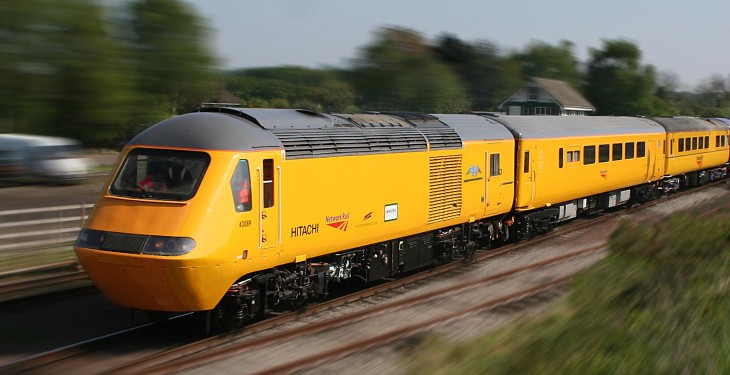
This is the introduction to the research program, which was based on a High Speed Train, fotmed of two Class 43 power cars and four Mark 3 carriages.
The V-Train 2 was a demonstration train designed in order to demonstrate our skills and expertise while bidding for the Intercity Express Programme project.
The page is claiming, that a 20 % fuel saving could be possible.
This paragraph talks about performance.
The V-Train 2 looked to power the train away from the platform using batteries – which would in turn be topped up by regenerative braking when a train slowed down to stop at a station. Acceleration would be quicker and diesel saved for the cruising part of the journey.
A similar arrangement to that Hitachi produced in 2005 could be ideal.
- Technology has moved on significantly in the intervening years.
- The performance would be adequate for a train that just trundles around the West Country at 90 mph.
- The space in the rear of the power car could hold a lot of batteries.
- The power car would be quiet and emission-free in stations.
- There would be nothing to stop the diesel engine running on biodiesel.
This might be the sort of project, that Hitachi’s partner in the Regional Battery Train; Hyperdrive Innovation. would probably be capable of undertaking.
MTU Hybrid PowerPack
I wouldn’t be surprised to find, that MTU have a drop-in solution for the current 6V4000 R41R diesel engine, that includes a significant amount of batteries.
This must be a serious possibility.
Rolls-Royce’s 2.5 MW Generator
In Our Sustainability Journey, I talk about rail applications of Rolls-Royce’s 2.5 MW generator, that has been developed to provide power for electric flight.
In the post, I discuss fitting the generator into a Class 43 power car and running it on aviation biofuel.
I conclude the section with this.
It should also be noted, that more-efficient and less-polluting MTU engines were fitted in Class 43s from 2005, so as MTU is now part of Rolls-Royce, I suspect that Rolls-Royce have access to all the drawings and engineers notes, if not the engineers themselves
But it would be more about publicity for future sales around the world, with headlines like.
Iconic UK Diesel Passenger Trains To Receive Green Roll-Royce Jet Power!
COVID-19 has given Rolls-Royce’s aviation business a real hammering, so perhaps they can open up a new revenue stream by replacing the engines of diesel locomotives,
I find this an intriguing possibility. Especially, if it were to be fitted with a battery pack.
Answering My Original Question
In answering my original question, I feel that there could be several ways to reduce the carbon footprint of a Class 43 power car.
It should also be noted that other operators are users of Class 43 power cars.
- ScotRail – 56
- CrossCountry – 12
- East Midlands Railway – 39
- Network Rail – 3
Note.
- ScotRail’s use of the power cars, is very similar to that of GWR.
- CrossCountry’s routes would need a lot of reorganisation to be run by say Hitachi’s Regional Battery Train.
- East Midlands Railway are replacing their Inter-City 125s with new Class 810 trains.
The picture shows the power car of Network Rail’s New Measurement Train.

These may well be the most difficult to decarbonise, as I suspect they need to run at 125 mph on some routes, which do not have electrification and there are no 125 mph self-powered locomotives. After the Stonehaven crash, there may be more tests to do and a second train may be needed by Network Rail.
Why Are GWR Increasing Their Castle Class Fleet?
These are possible reasons.
GWR Want To Increase Services
This is the obvious explanation, as more services will need more trains.
GWR Want To Update The Fleet
There may be something that they need to do to all the fleet, so having a few extra trains would enable them to update the trains without cutting services.
GWR Want To Partially Or Fully Decarbonise The Power Cars
As with updating the fleet, extra power cars would help, as they could be modified first and then given a thorough testing before entering passenger service.
GWR Have Been Made An Offer They Can’t Refuse
Suppose Rolls-Royce, MTU or another locomotive power plant manufacturer has a novel idea, they want to test.
Over the years, train operating companies have often tested modified trains and locomotives for manufacturers.
So has a manufacturer, asked GWR to test something in main line service?
Are Other Train Operators Thinking Of Using Introducing More Short-Formed InterCity 125 Trains?
This question has to be asked, as I feel there could be routes, that would be suitable for a net-zero carbon version of a train, like a GWR Castle or a ScotRail Inter7City.
Northern Trains
Northern Trains is now run by the Department for Transport and has surely the most suitable route in the UK for a shorted-formed InterCity 125 train – Leeds and Carlisle via the Settle and Carlisle Line.
Northern Trains may have other routes.
Transport for Wales Rail Services
Transport for Wales Rail Services already run services between Cardiff Central and Holyhead using diesel locomotive hauled services and long distance services between South Wales and Manchester using diesel multiple units.
Would an iconic lower-carbon train be a better way of providing some services and attract more visitors to the Principality?
Conclusion
GWR must have a plan, but there are few clues to what it is.
The fact that the trains have been purchased rather than leased could be significant and suggests to me that because there is no leasing company involved to consult, GWR are going to do major experimental modifications to the trains.
They may be being paid, by someone like an established or new locomotive engine manufacturer.
It could also be part of a large government innovation and decarbonisation project.
My hunch says that as First Rail Holdings appear to be going for a lower-carbon fleet, that it is about decarbonising the Class 43 power cars.
The plan would be something like this.
- Update the three new trains to the new specification.
- Give them a good testing, before certifying them for service.
- Check them out in passenger service.
- Update all the trains.
The three extra trains would give flexibility and mean that there would always be enough trains for a full service.
Which Methods Could Be Used To Reduce The Carbon Footprint Of The Class 43 Power Cars?
These must be the front runners.
- A Hitachi/Hyperdrive Innovation specialist battery pack.
- An MTU Hybrid PowerPack.
- A Rolls-Royce MTU solution based on the Rolls-Royce 2.5 MW generator with batteries.
All would appear to be viable solutions.
An Inter7City Class 43 Locomotive At Dundee Station
This Inter7City Class 43 locomotive was waiting at Dundee station, when I protographed it.

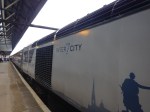

I suspect it was a training run.
 The Anonymous Widower