New Chiltern Railways Trains Set To Unlock 10,000 More Seats A Day
The title of this post is the same as that of this press release from Chiltern Railways.
This picture from Chiltern Railways shows the train at Marylebone.
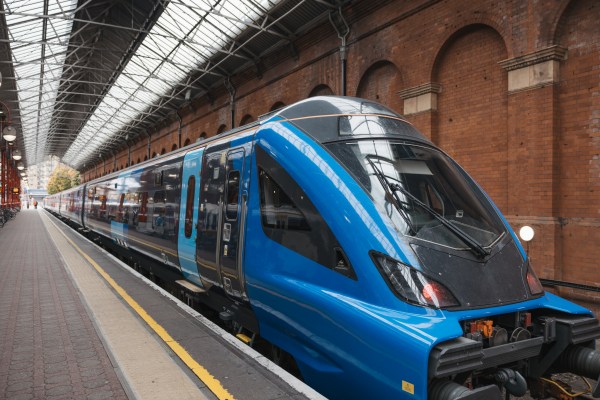
These three paragraphs are from the press release and add more details.
Chiltern Railways today (Tuesday 14 October) showcased for the first time its newest (Mark 5A) trains, set to add 10,000 more seats for customers each weekday from December 2026.
The trains, to be introduced between London to West Midlands from early 2026, will enable Chiltern to deliver more capacity across each of its West Midlands, Aylesbury, and Oxford routes as part of the operator’s efforts to deliver better journeys for customers.
The newest fleet will consist of 13 modern trains set to transform customer journeys during 2026. The trains will replace Chiltern’s oldest carriages, which are nearly 50 years old, with state-of-the-art equivalents, and provide a significant improvement to the on-board experience.
Today, I also received an update from Modern Railways, which was entitled Chiltern Railways Mk 5As To Enter Traffic Early Next Year, and included this delivery schedule.
From December 2026 there will be ten Mk 5A sets in traffic each day, with one ‘hot spare’ and one undergoing maintenance. That leaves one extra set which, CR has suggested, could eventually be pressed into traffic.
I have a few thoughts.
How Do The Trains Compare Physically?
These are basic figures for the two different types of train sets.
- The current Mark 3 are five-car sets of 23 metres coaches, that weigh about 36 tonnes. The driving van trailer is 18.83 metres and 43.7 tonnes
- The future Mark 5A are four-car sets of 22.2 metres coaches, that weigh about 43 tonnes. The driving trailer is 22.37 metres and 43 tonnes.
Lengths and weights of various sets will be as follows.
- Mark 3 – five-car and driving van trailer – 133.83 metres and 223.7 tonnes.
- Mark 5A – four-car and driving trailer – 111.17 metres and 215 tonnes
- Mark 5A – five-car and driving trailer – 155.57 metres and 258 tonnes
Note.
- Chiltern Railways and TransPennine Express use the same Class 68 locomotives.
- The five-car Mark 3 and the four-car Mark 5A sets are quite similar in length and weight
- This could mean that both sets would perform similarly with the same locomotives on the same route.
- I wouldn’t be surprised that the new Platform 4 at Birmingham |Snow Hill station will be able to handle all configurations.
I almost feel that when CAF designed the Mark 5A sets for TransPennine Express, they also had Chiltern in mind as another possible sale.
How Many Trains Would Be Needed To Run Between London Marylebone And Birmingham?
Consider.
- Trains currently run half-hourly on the route between 06:00 to 23:30, which is up to 36 services per day.
- When Platform 4 is operational at Birmingham Snow Hill station, all services could probably stop at both Birmingham Moor Street and Birmingham Snow Hill stations.
- A round trip between London Marylebone and Birmingham Snow Hill stations currently takes about five hours.
I’m fairly certain that to run a half-hourly core service would need ten trains.
Could Chiltern Develop Another Network On The Other Side Of Birmingham?
Consider.
- Trains could run twice an hour from 06:00 to 23:30, which is up to 36 services per day.
- When Platform 4 is operational at Birmingham Snow Hill station, all services could probably stop at both Birmingham Moor Street and Birmingham Snow Hill stations.
- Chiltern Railways already run several services a day to Stourbridge Junction.
- Chiltern Railways have run services to Kidderminster station in the past.
- Wrexham & Shropshire used to run locomotive-hauled Mark 3 four-car sets with driving van trailers, as far as Wrexham via Shrewsbury.
It looks to me, that with the right rolling stock configurations, Chiltern’s network can be developed on the other side of Birmingham.
- Destinations could include Stourbridge Junction, Kidderminster, Shrewsbury, Wolverhampton, Chirk, Ruabon and Wrexham General.
- Some services would need longer trains.
Obviously services would only be run if they were viable.
Would It Help Growth In A Town Or Area, If It Had A Rail Connection To London And/Or The Nearest Major City?
I know Lincoln is on the other side of the country, but I asked Google AI if Lincoln’s rail link to London has brought growth to the city and received this answer.
Yes, Lincoln’s rail link to London has brought significant growth by improving tourism, business travel, and student mobility, and is expected to spur further economic benefits through faster journey times and increased services. The direct link has made Lincoln more accessible for visitors and is a key part of the city’s long-term strategy for economic growth and development.
That was fairly definite.
How would that apply to an extended Chiltern Main Line.
- Politicians are always saying growth is important.
- An extended Chiltern Main Line servicewould improve connections of a lot of places to London and Birmingham.
- Shrewsbury is the easiest connection for West Wales.
- Surely a rail connection to a major city, might tempt someone to open a branch or a new factory.
Would a rail service make people feel more included?
An Interesting Comment From Lord Peter Hendy
This article on Modern Railways is entitled Chiltern FINALLY Signs Mk 5 Deal.
This extract from the article describes the deal.
An agreement for Chiltern Railways to lease the Mk 5A coaches previously operated by TransPennine Express and owned by Beacon Rail Leasing has been signed – and the trains are due to replace the current Mk 3 stock in phases from 2026. A 10-year lease has been agreed for the vehicles.
Chiltern will take on all 13 five-car sets as well as the spare Driving Trailer and the dedicated pool of 14 Class 68 locomotives.
The article also, has this excellent quote from Lord Peter Hendy, who is the Rail Minister at the end.
This government is putting passengers back at the heart of the 21st century railway by investing to make journeys easier, greener, and more comfortable.
“We are continuing to support Chiltern as they develop a plan to introduce additional services into their timetable, giving people more opportunities to work, live, and socialise.
I agree with much of what Lord Peter Hendy says, but could we see some actions to back up the words.
I have a few thoughts.
Lumo To Glasgow
I wrote about this new service in Lumo Will Extend Its King’s Cross And Edinburgh Service To Glasgow.
Given the opposition of the Transport Minister to open access services, I didn’t think this innovative service would be approved.
- But it does add an affordable passenger-friendly service to London and Glasgow routes.
- It will certainly be an easier route to London for some in Scotland.
- It also adds some much-needed direct services between Newcastle and Glasgow.
Did Lord Peter Hendy have words to help Lumo get its approval?
As I wrote in Could London And Central Scotland Air Passengers Be Persuaded To Use The Trains?, I also believe that this new Lumo service could persuade more air passengers to take the train to Scotland.
Lumo To Stirling
I wrote about this service in ORR: Open Access Services Given Green Light Between London And Stirling.
- First Group has taken over Grand Union Trains and the service will now be run by Lumo, who will use diesel Class 222 trains.
- But Lumo will have the option of running their electric Class 803 trains on the route, as it is fully electrified, when their fleet receives more trains.
This was another service, that I didn’t think would be approved, as no other services on the West Coast Main Line were approved, as Network Rail objected.
But it certainly meets the words in Lord Peter Hendy’s statement.
Like Lumo’s service to Glasgow, when the Stirling service gets electric trains, it will surely cut carbon emissions of travellers to Central Scotland.
Chiltern’s Replacement Trains
Chiltern Railways are replacing this fleet of locomotive hauled trains.
- 8 Class 68 locomotives
- 25 Mark 3 coaches
- 6 Driving Van Trailers
As services between London Marylebone and Birmingham Moor Street stations consist of one locomotive, five coaches and one driving van trailer, that means there are two spare locomotives, one spare coach and one spare driving van trailer, if there are five rakes of coaches in service.
The new fleet will be.
- 14 Class 68 locomotives
- 52 Mark 5A coaches
- 14 Driving Van Trailers
If services between London Marylebone and Birmingham Moor Street stations consist of one locomotive, four coaches and one driving van trailer, that means there are one spare locomotive and one spare driving van trailer, which gives a possible thirteen rakes of coaches in service.
There are certainly enough to expand Chiltern’s services. The obvious destination would surely be Oxford. These pictures show the two North-pacing platforms at Oxford station.
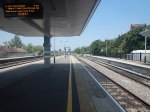
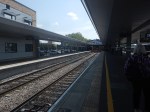
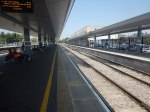

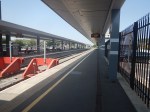
The platforms would be shared with East-West Rail, but they are around 160 metres in length.
The Modern Railways article quote Arriva Group Managing Director UK Trains Amanda Furlong as saying this.
Upgrading our fleet is a vital next step in Chiltern’s modernisation plans and an important part of Arriva’s wider ambition to support the transition to more sustainable rail travel across the UK and Europe.
We are proud to support this important milestone for Chiltern Railways, which is a great example of what can be achieved through strong collaboration with Government to deliver practical improvements for passengers. We look forward to seeing these upgraded trains improve journeys and lower emissions across the network.
She certainly would agree on some issues with Lord Peter Hendy.
So will Chiltern Railways do something to reduce the carbon footprint of their fourteen Class 68 locomotives?
- The Class 68 locomotives don’t have too many miles on the clock.
- Chiltern have already run some their Class 68 locomotives on HVO, so this must be a possibility.
- In total there are thirty-four Class 68 locomotives in service all of which have Caterpillar engines, so a conversion to zero-carbon power could be worthwhile.
I asked Google for an AI Overview on How many diesel locomotives have caterpillar engines worldwide? I got this answer.
While a precise worldwide count of diesel locomotives powered by Caterpillar (CAT) engines is difficult to pinpoint, it’s estimated that hundreds, if not thousands, of locomotives are equipped with CAT engines. Caterpillar has a long history of supplying engines to the rail industry, with engines like the 3500 series powering both mainline and switcher locomotives. Additionally, CAT engines are also used in generator sets for Head End Power (HEP) in passenger locomotives.
Note.
- It appears that, Caterpillar might have given up making truck engines because of emission issues.
- London Marylebone and Oxford is 66.8 miles
- London Marylebone and Birmingham Snow Hill is 112.3 miles.
Perhaps one of the consultants like Ricardo could convert these locomotives to run on hydrogen.
Redundant Coal Wagons To Be Converted For Construction Traffic
The title of this post is the same as that of this article on Railway Gazette.
These three paragraphs describe the project.
WH Davis is to convert coal wagons owned by leasing company Porterbrook for use by Freightliner to transport aggregates.
’This is a fantastic opportunity to demonstrate what can be achieved by giving redundant fleets a purpose for the next 30-plus years’, said WH Davis Managing Director Andy Houghton on December 19. ‘It’s a truly sustainable option that also gives UK manufacturing a boost to enable the creation of UK jobs in the industry. I really can’t wait to see our latest box wagon design in traffic for Freightliner in 2025.’
Mark Wyborn, Head of Freight at Porterbrook, said freight volumes in the construction sector were expected to continue growing, and the deal ’highlights our commitment to investing in the long-term growth of rail freight while providing affordable, innovative and sustainable rolling stock for the UK railway’.
We need more recycling projects like these.
In the article, there is a picture of a Class 66 locomotive like this one.
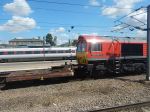
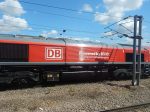
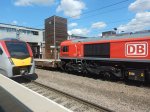
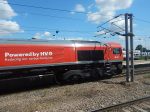
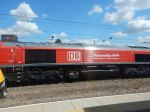
Except this one, which is named after Benjamin Gimbert GC, is different in that it is running on Hydrotreated Vegetable Oil (HVO). which is a more sustainable fuel.
Unfortunately, there is only so much second-hand vegetable oil from the likes of McDonalds and Burger King and it is also a component of Sustainable Aviation Fuel (SAF).
But in the UK, we have engineers at Cummins, JCB, Ricardo and a number of other companies, research organisations and universities, who could create a conversion for the American two-stroke diesels of the Class 66 locomotive so they could run on hydrogen.
These posts detail attempts to create a zero-carbon or dual-fuel locomotive in the UK and some of my thoughts.
- Dual-Fuel Class 37 And 66 Locomotive Concepts Unveiled
- Could Class 66 Locomotives Be Converted Into Battery-Electric Locomotives?
- Freightliner Secures Government Funding For Dual-Fuel Project
- Grants To Support Low-Carbon Technology Demonstrators
- Thoughts On A Battery/Electric Replacement For A Class 66 Locomotive
- A Hydrogen-Powered Locomotive
- Our Sustainability Journey
The Bi-Mode Class 99 locomotive is coming, but we need action now.
I estimate it would probably cost up to £2million to convert a Class 66 locomotive to hydrogen.
So why not have a competition with a prize of perhaps £10million to see who, can produce the best Class 66 or Class 68 locomotive conversion by the end of 2025?
Conclusion
We need urgent action to cut pollution, noise and emissions from heavy freight locomotives and market forces and government grants don’t seem to have produced a solution, so perhaps a competition with a big prize might do it.
It could even be televised,
Innotrans 2024: Rolls-Royce Shows mtu Solutions For On-Track Energy Transition And Celebrates 100 years Of Rail Engine Business
The title of this post, is the same as that of this press release from Rolls-Royce.
These four bullet points, act as sub-headings.
- All mtu engine series for locomotives and railcars approved for sustainable fuels
- DB, RDC Autozug Sylt, Trenitalia and České dráhy use or test HVO
- Rolls-Royce celebrates 100 years of success with mtu rail drives
- More than 250 rail customers worldwide value the performance, compact design and low exhaust emissions of mtu systems
These are the first two paragraphs.
Rolls-Royce will be presenting its mtu-brand propulsion and service solutions at the international rail exhibition Innotrans in Berlin from September 24 to 27, 2024 in Hall 18, Booth 500. The company will be celebrating an anniversary at the same time: for 100 years, mtu products have been powering trains, including mainline and multi-purpose locomotives, high-speed trains and local transport railcars. On display will be sustainable propulsion solutions such as the mtu Series 4000 and 1600 engines for locomotives and the underfloor drive systems mtu PowerPacks for railcars, all of which are now released for sustainable fuels such as HVO. Rolls-Royce will also be presenting its repower and reman solutions.
100 years ago, Karl Maybach laid the foundation for the rail drive systems of today’s mtu brand with the world’s first high-speed diesel engine for railcars, the Maybach G 4a. Maybach also developed the GO 5 engine for the “Fliegender Hamburger” express train.
These are my thoughts.
Chiltern Railways Could Go Carbon-Neutral By Using HVO
In Vegetable Oil Fuelling Chiltern Railways Trains In UK First, I described how Chiltern Railways are running their Class 68 locomotives on HVO.
This move by Rolls-Royce mtu will allow all Chiltern’s Class 168 trains to be run on sustainable HVO, as they have Rolls-Royce mtu diesel engines.
Chiltern Railways Class 168 train fleet is as follows.
- 10 x 4-car
- 9 x 3-car
- 9 x 2-car
This will still leave Chiltern Railways Class 165 train fleet to be converted to sustainable fuel.
- 28 x 2-car
- 11 x 3-car
Note.
- There are 75 of these trains in service with Chiltern Railways and Great Western Railway.
- They are fitted with Perkins engines.
- Perkins engines are now owned by Caterpillar, who built the engines for the Class 68 locomotives.
As Caterpillar have the sustainable diesel technology, could they convert the Class 165 trains to HVO?
Cummins And HVO
Although this post is mainly about Rolls-Royce mtu, it would be convenient to put in this section about Cummins and how their diesel engines run on HVO.
The UK train fleet contains the following trains with Cummins engines.
- 10 x Class 175 train x 2-car
- 16 x Class 175 trains x 3-car
- 14 x Class 180 trains x 5-car
- 34 x Class 220 trains x 4-car
- 23 x Class 221 trains x 5-car
- 4 x Class 221 trains x 4-car
- 4 x Class 222 trains x 7-car
- 23 x Class 222 trains x 5-car
Cummins says this about their engines and HVO.
Cummins approves use of HVO fuel in all high-horsepower engines
(19L-95L), including the QSK19, K19, QSK23, QST30, QSK38, K38, QSK45,
QSK50, K50, QSK60, QSK78, QSK95, V903 and ACE for all industrial
markets. No engine modifications are required; engines currently in the
field can be used with HVO at any percentage.
It would appear that all trains with Cummins engines can be converted to run on HVO.
CAF And HVO
Class 195, 196 and 197 trains all have Rolls-Royce mtu diesel engines, so they will be able to run on HVO.
Hitachi And HVO
Class 800, 1801, 802, 805 and 810 trains all have Rolls-Royce mtu diesel engines, so they will be able to run on HVO.
Conclusion
If all diesel engines are to be converted to HVO, there is going to be a lot of HVO needed in the UK.
But many train fleets will be carbon-neutral.
Chiltern Railways Seeks Fleet Proposals
The title of this post, is the same as that of this article on Rail Business UK.
These are the first two paragraphs.
Chiltern Railways has invited proposals from established rolling stock owners for the lease and maintenance of between 25 and 70 existing vehicles to operate inter-city and regional services on the Chiltern Main Line between London Marylebone and Birmingham.
The operator is seeking either ‘self-powered’ multiple units or locomotive-hauled coaches, which can operate at 160 km/h in fixed formations of five or six passenger vehicles.
It does appear that only existing vehicles will be allowed.
These are my thoughts.
A Very Tight Timescale
The Rail Business UK article, says this about entry into service.
Requests to participate are required by February 2. Driver training is planned for 2024, and entry to passenger service for early 2025.
This requirement probably means that new trains are not allowed, as I doubt any manufacturer could deliver them by early 2025.
Although, I could envisage a proposal, where a couple of trains are delivered early for driver training and the other trains are delivered, as soon as they are refurbished or perhaps even built.
100 mph Trains With At Least Five Cars
The second paragraph from the Rail Business UK article is very definite about speed and the length of trains.
The operator is seeking either ‘self-powered’ multiple units or locomotive-hauled coaches, which can operate at 160 km/h in fixed formations of five or six passenger vehicles.
It does appear, that this paragraph, rules out multiple units, with less than five coaches. Unless it counts a two-car Class 175 train and a three-car Class 175 train working together as a five-car fixed formation. They would though be 100 mph trains.
Noise Restrictions
This noise restriction must be met according to the Rail Business UK article.
The trains must also offer a reduction in ambient noise compared to Chiltern’s existing MkIII coaches hauled by a Class 68 diesel locomotive.
This could be a difficult condition to meet for some trains and probably rules out diesel locomotives.
What Fuels Can Be Used?
This is the only restriction in the Rail Business UK article.
Any diesel-powered trains should be compatible with use of alternative fuels, such as HVO, from the service introduction date.
Chiltern have experience of this fuel.
‘Self-Powered’ Multiple Units Or Locomotive-Hauled Coaches
i am tending towards the former for the following reasons.
- I was told by someone, that between London and Norwich, ‘self-powered’ multiple units are faster than locomotive-hauled coaches.
- Without the locomotive and the driving van trailer, you may get more passengers in a shorter train. This might avoid some platform lengthening.
- The Chiltern route to Birmingham has around a dozen stops and the lighter ‘self-powered’ multiple units may save time.
- Battery-electric ‘self-powered’ multiple units can be very quiet.
- Chiltern have had complaints about noise from diesel locomotives.
The last two points probably clinch it.
The Operating Speed Of The Chiltern Main Line
I have followed the Chiltern Main Line on OpenRailwayMap and virtually all of it is faster than 75 mph, with several sections of 90-100 mph running.
Hence the need for 100 mph trains!
What Distances Are Involved
The route can be split into sections.
- London Marylebone and High Wycombe – 28.1 miles
- High Wycombe and Banbury – 41 miles
- Banbury and Warwick – 21.8 miles
- Warwick and Birmingham Moor Street – 20.8 miles
Note.
- The total distance is 111.7 miles.
- High Wycombe and Warwick are 62.8 miles apart.
No sections are too challenging.
Could A Battery-Electric Train Handle The Route?
In The Data Sheet For Hitachi Battery Electric Trains, these were my conclusions for the performance.
- The battery pack has a capacity of 750 kWh.
- A five-car train needs three battery-packs to travel 100 miles.
- A nine-car train needs five battery-packs to travel 100 miles.
- The maximum range of a five-car train with three batteries is 117 miles.
- The maximum range of a nine-car train with five batteries is 121 miles.
It would appear that a five-car train with three batteries could handle the route, but there would need to be some form of charging at both ends of the route. This might not be too easy to arrange, as all three terminal stations are not the most spacious.
Could A Tri-Mode Train Handle The Route?
LNER have taken the tri-mode route with their new trains, which I wrote about in First Tri-Mode Long Distance Trains For The East Coast Main Line.
These trains could be a possibility, especially if they used battery power in stations where there have been complaints of noise.
I suspect CAF’s tri-mode trains could also be run on HVO, as it is likely they’ll have Rolls-Royce mtu engines, which can use the fuel.
As Hitachi’s Class 802 trains also use Rolls-Royce mtu engines and Hitachi are developing a tri-mode version, these trains are also a possibility.
Although tri-mode trains are a possibility, I doubt that delivery would be easy by the beginning of 2025.
Unless, the Government has tipped off CAF and/or Hitachi and they are already building some trains that can be completed as tri-modes.
After all, CrossCountry, Grand Central, South Western Railway and TransPennine may need tri-mode trains for their routes.
What About Hydrogen?
I don’t think, there is a hydrogen train, that would be suitable and could start driver training this year.
So, unless someone like Stadler says they have a train, hydrogen looks to be a non-starter.
An Unusual Solution
As I said on the previous section about hydrogen, the time-scale is tight and this probably cuts out totally new trains.
But we may have an unusual solution, that surprised everyone.
Consider.
- I have stated that I believe that a five-car Class 802 train with three battery packs has a range of 117 miles.
- The range would be enough to go between London Marylebone and Birmingham.
- So why not put in short lengths of overhead electrification at High Wycombe, Banbury and Warwick, where the train can have a quick splash and dash?
I am certain, that a unusual strategy like this can be made to work.
Conclusion
I suspect we’ll see an innovative solution, that gives ISquared what they want.
TransPennine Express Releases Blueprint For Improving Service And Fleet Upgrade
The title of this post, is the same as that of this article on Rail Technology Magazine.
This is the sub-heading.
TransPennine Express (TPE), which transferred to the government’s owning group (DOHL) earlier this year, has set out its plans to address many of the issues which have caused problems and disruption for rail customers.
These three paragraphs summarize their plans.
Making Journeys Better: A Prospectus gives clear detail of the issues TPE has faced during the past two years as well as outlining how TPE, under DOHL, will work to make things better, having completed an in-depth review of the business.
Part of the plans involve the operators plans for its new fleet. Its New Trains Programme outlines its long term view for decarbonisation. The report states that TPE will look towards new technology on its fleet to overcome the lack of clarity on the full electrification of the line.
This, it states will help with the cascading and removal of diesel trains faster across its network.
It always looked to me, that TPE under First Group, brought rather a dog’s breakfast of trains, when a unified fleet of Class 802 trains, as per Hull Trains, might have been easier to operate.
- They are already retiring the Class 68 locomotives and their Mark 5 coaches, so surely to decarbonise their services, a number of battery electric high speed trains would be an idea.
- They are already testing Class 802 battery-electric trains for Hitachi and Eversholt Rail.
- I also feel that CAF could offer a suitable battery-electric train, based on the Class 397 train.
TPE say in the example, that they expect a decision later in the month.
TransPennine Express Services And Battery Electric Trains
These are their services and how they would be effected by battery-electric trains.
- Liverpool Lime Street And Newcastle – Fully-electrified after TransPennine Upgrade.
- Liverpool Lime Street And Hull – Fully-electrified after TransPennine Upgrade.. – 42 miles unelectrified – Service could be run by a battery-electric train that charged between Leeds and Micklefield.
- Manchester Airport and Saltburn – Fully-electrified between Manchester Airport and Northallerton after TransPennine Upgrade. – 33.6 miles unelectrified – Service could be run by a battery-electric train that charged between Leeds and Northallerton. Would eliminate overnight noise problems at Redcar.
- Manchester Piccadilly and Newcastle – Fully-electrified after TransPennine Upgrade.
- Manchester Piccadilly and Scarborough – Fully-electrified between Manchester Piccadilly and York after TransPennine Upgrade. – 42.1 miles unelectrified – Service could be run by a battery-electric train that charged between Leeds and York.
- York and Scarborough – Electrified at York – 42.1 miles unelectrified – Service could be run by a battery-electric shuttle train that charged at York.
- Manchester Piccadilly and Huddersfield – Electrified at Manchester Piccadilly – 25.5 miles unelectrified – Service could be run by a battery-electric shuttle train that charged at Manchester Piccadilly.
- Leeds and Huddersfield – Electrified at Leeds – 17.2 miles unelectrified – Service could be run by a battery-electric shuttle train that charged at Leeds.
- Liverpool Lime Street and Cleethorpes – 125,6 miles unelectrified – In Electrification Of The Hope Valley Line, I show how this route can be run by battery-electric trains that charged on existing electrification a short new section of electrification at Cleethorpes.
Note.
- If Manchester Victoria and Huddersfield, is not electrified, battery-electric trains would be able to cross the 25.8 miles of unelectrified track on battery power.
- If Leeds and Huddersfield, is not electrified, battery-electric trains would be able to cross the 17.2 miles of unelectrified track on battery power.
- I am assuming that the TransPennine Upgrade between Manchester and Leeds will be completed, so that between Liverpool Lime Street and Leeds is fully-electrified.
- The only new infrastructure needed would be electrification at Cleethorpes to charge the trains.
All services except for Liverpool Lime Street and Cleethorpes could be run using battery-electric trains with a range on a full battery of at least 100 miles and with no additional electrification.
Electrifying Cleethorpes Station
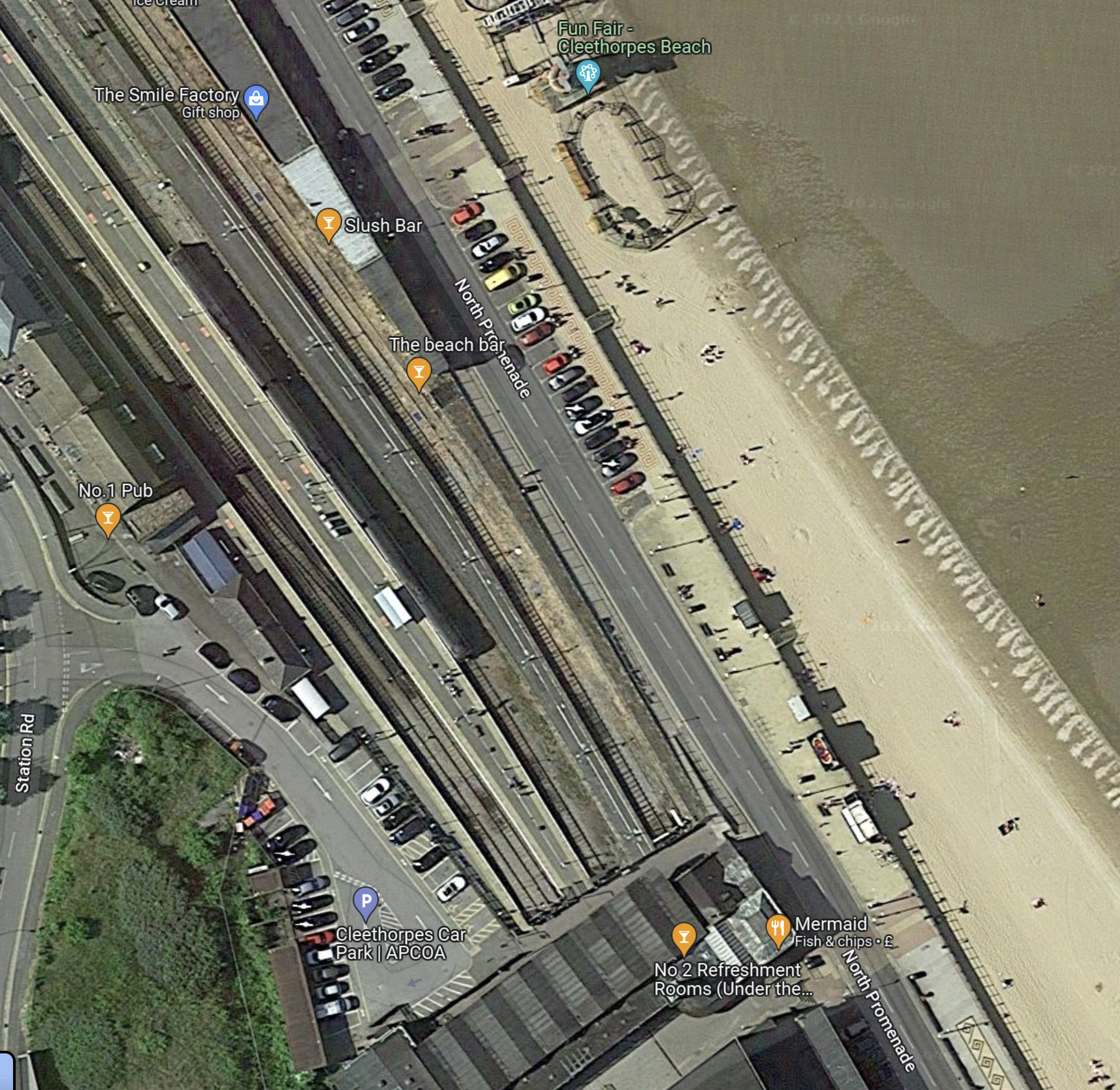
This Google Map shows Cleethorpes station.
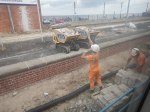
These pictures show the station in June 2023, when it appears to be going through a platform refurbishment.
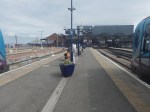
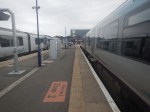
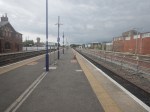
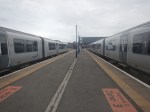
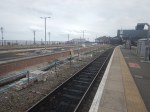
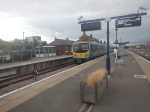
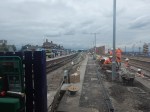
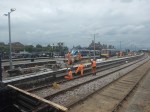
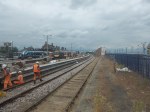
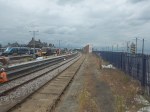
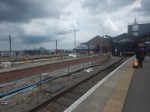
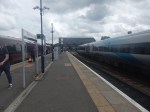
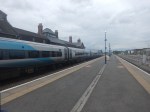
I don’t think it would be the most difficult station to electrify.
- There are four platforms.
- As the station is likely to get more battery-electric services, including one from King’s Cross, I would suspect that at least three out of the four platforms would be electrified.
- Although, the station is Grade II Listed, there doesn’t appear to be any canopies or important architectural details, that would get in the way of electrification.
Once Cleethorpes station had been successfully electrified, similar installations could be applied at other stations like Saltburn, Scarborough and Skegness.
Conclusion
If TransPennine Express were to buy the right number of battery-electric trains with a hundred mile range, they can decarbonise all their routes in a train factory.
TransPennine Express To Stop Using Loco-Hauled Push-Pull Trains In December
The title of this post, is the same as that of this article on Railway Gazette.
This is the sub-heading.
TransPennine Express has confirmed that it will cease using its push-pull sets of Class 68 locomotives and MkVa coaches, previously designated Nova 3 sets, from the December 2023 timetable change.
These are my thoughts.
The Nova 3 Trains
Currently, the Nova 3 trains are made up from the following.
- 14 – Class 68 locomotives
- 52 – Mark 5a coaches
- 14 – Driving Van Trailers
Note.
- There have been complaints about the noise of the Class 68 locomotives at Scarborough and also at Marylebone with Chiltern Railways.
- The Class 68 locomotives could be switched to freight duties.
- The coaches are capable of 125 mph.
- A maximum of thirteen sets can be created.
- I suspect CAF wouldn’t object to being asked to build some more Mark 5a coaches and driving van trailers.
- The current fleet has a spare locomotive and a spare driving van trailer to allow for servicing.
All locomotives and coaches are a maximum of seven years old, so will have plenty of life left.
The Class 93 Locomotive
Rail Operations Group have ordered ten Class 93 locomotives, with twenty options, which have an impressive specification.
- Built by Stadler in Valencia.
- Same family as a Class 68 and 88 locomotive.
- Electric, diesel and battery power
- 110 mph operating speed
- Ability to pull passenger and freight trains.
- Delivery scheduled for 2023.
I believe that if the Class 68 diesel locomotive of a Nova 3 train, were to be replaced with a Class 93 locomotive, a very useful train would be created.
- It would be ten mph faster, than a Nova 3 train.
- It could use the diesel engine and the batteries to bridge gaps in electrification.
- By adding extra carriages it could be tailored to the needs of a route.
- In Vegetable Oil Fuelling Chiltern Railways Trains In UK First, I discuss how it might be possible to run all these locomotives on HVO to cut emissions.
- It could be quieter.
Could it be a simple way to reduce carbon emissions on a route?
The Successor To The Class 93 Locomotive
Stadler keep innovating in their designs for locomotives and are already building hydrogen-powered multiple units.
I can see Stadler coming up with a hydrogen-powered locomotive, with the following specification.
- In the same family as Class 68, 88 and 93 locomotives.
- Ability to do everything that Class 68, 88 and 93 locomotives can do.
- Ability to use 25 KVAC overhead electrification, where it exists.
- Ability to be able to be fitted with third-rail equipment, so it can use 750 VDC third-rail electrification, where it exists.
- At least a 110 mph operating speed.
- Range of at least 200 miles on hydrogen.
Stadler would sell a lot of these locomotives to decarbonise railways all over the world.
Possible Routes
These are possible routes for a rake of Mark 5a coaches hauled by a Class 93 locomotive or its zero-carbon successor.
Hull Trains
Consider.
- Hull Trains is an open access operator.
- Hull Trains currently have a fleet of five Class 802 trains, each of which have five-cars.
- A Class 93 locomotive has a power of 900 kW on diesel, whereas the Class 802 train has 2100 kW.
- The Class 802 train has nearly ten percent more capacity.
- In Ten-Car Hull Trains, I saw two Class 802 trains working as a pair. Does this indicate they have a capacity problem?
- Between Hull and the East Coast Main Line is only 36.1 miles and isn’t very challenging and I suspect could probably be easily handled by a Class 93-hauled rake of Mark 5a coaches.
- Adding extra coaches would not be difficult and would probably be less costly than with the more complex Class 802 trains.
- Hull Trains need to have a plan to decarbonise.
- HVO could be used to cut down emissions.
A Class 93-hauled rake of Mark 5a coaches could be an intermediate step to full decarbonisation with a hydrogen locomotive.
Would other operators of Class 802 trains like to increase their fleets, by adding Hull Trains’s five Class 802 trains?
TransPennine Express
Consider.
- TransPennine Express currently have four different fleets of trains, so it must cause problems with the allocation of drivers.
- The Class 397 trains are confined to the West Coast Main Line.
- So that leaves the bi-mode Class 802 trains and the diesel Class 185 trains to work the TransPennine routes.
The Wikipedia entry for the Class 802 train, gives more details of the plans for the Class 802 trains.
During October 2021, it was announced that TransPennine Express, Hitachi, and Angel Trains had agreed to convert one of the former’s Nova 1 trainsets into a battery hybrid train on a trial basis with the aim of supporting the technology’s further development. If successful, Hitachi and Angel Trains have proposed the retrofitting of the entire fleet. In January 2022, reports emerged that the Nova 1 fleet was operating under diesel power even when operating on entirely electrified sections of the East Coast Main Line on account of the insufficient power supplies present along the line; national railway infrastructure owner Network Rail is reportedly set to complete upgrades to the power supplies within two years.
The fleet is also set to benefit from the rollout of electrification under the Transpennine route upgrade scheme. The company’s management has noted that, in the event of largescale electrification being funded and implemented, the Class 802s could have some of their engines removed to reduce roughly 15% of their weight and thus raise their efficiency. Furthermore, Leo Goodwin, TPE’s managing director, has observed that while the Class 802s have an initial maximum speed of 125 mph (201 km/h), they have the capability of being modified for operating at 140 mph (230 km/h) if infrastructure upgrades were to permit such speeds at a future date.
Could an augmented fleet of battery-electric Class 802 trains handle the bulk of the TransPennine routes, with the shorter and unelectrified ones still being handled by the Class 185 trains?
These shorter routes are.
- Leeds and Huddersfield
- Manchester Piccadilly and Huddersfield
- York and Scarborough
Plans only exist to electrify Leeds and Huddersfield.
I suspect a few more battery-electric Class 802 trains would be needed.
Great Western Railway
Could a Class 93-hauled rake of Mark 5a coaches be used as a replacement for the GWR Castles or short-formation InterCity125s?
- They both have four passenger coaches.
- They are both 125 mph trains.
- A Class 68 locomotive could be used on routes without electrification.
- HVO could be used to cut down emissions.
- The Mark 5a coaches would probably be quieter, as they only have one diesel engine.
A Class 93-hauled rake of Mark 5a coaches could be an intermediate step to full decarbonisation with a hydrogen locomotive.
Alternatively, five-car Class 802 trains could be used as replacements for GWR Castles.
Great Western Railway also have the problem of decarbonising services between Bristol/Gloucester and Weymouth/Southampton/Portsmouth.
Great Western Railway look like they’re needing some innovative thinking.
I also suspect a few more battery-electric Class 802 trains would be needed for other routes.
Transport For Wales Rail
Transport for Wales Rail run a Premier Service between Holyhead and Cardiff using Class 67 locomotives and Mark 4 coaches.
According to the Wikipedia entry for Transport for Wales Rail, they have seven sets of 4/5 coaches to run this service.
If Transport for Wales Rail wanted to decarbonise this route, they would need to replace the locomotives for a zero-carbon unit.
Perhaps, their best solution, would be to wait until a suitable hydrogen-powered locomotive is available and buy seven rakes of new coaches with driving van trailers.
Grand Union
Grand Union has a detailed Wikipedia entry, where this is the first paragraph.
Grand Union is a prospective open access operator who are proposing to operate train services in the United Kingdom from England to Wales and Scotland. Grand Union is headed by Ian Yeowart, who founded previous open access operators Alliance Rail Holdings and Grand Central before selling both to Arriva.
That seems a sound foundation.
- They have permission to run trains between Paddington and Carmarthen starting in December 2024.
- They have also applied to run trains between Euston and Stirling.
- They are now backed by Spanish companies; Serena Industrial Partners and Renfe.
- They are proposing to use nine Mark 4 coaches hauled by Class 93 locomotives.
Consider.
- CAF has a factory in Wales.
- CAF has sold trains to Transport for Wales.
- The Mark 5a coaches will definitely be available by December 2024.
- Mark 5a coaches could easily be arranged as a rake of eight coaches and a driving van trailer.
- Grand Union is backed by Spanish companies.
I wouldn’t be surprised if Grand Union were to use sets of CAF-built Mark 5a coaches for their Carmarthen service. And later for their Stirling service.
A Class 93-hauled rake of Mark 5a coaches could be an intermediate step to full decarbonisation with a hydrogen locomotive.
Grand Central
Consider.
- Grand Central is another open access operator.
- Grand Central has a mixed fleet of twelve five-car diesel trains.
- These trains run under electrification on the East Coast Main Line.
- According to the Wikipedia entry for Grand Central trains, they have plans for expansion across the North and to and from London.
- Grand Central need to have a plan to decarbonise.
- HVO could be used to cut down emissions.
A Class 93-hauled rake of Mark 5a coaches could be an intermediate step to full decarbonisation with a hydrogen locomotive.
South Western Railway
South Western Railway have an excellent fleet of new or nearly new trains, with the exception of the diesel Class 158 and Class 159 trains, that work services between Waterloo and Exeter trains via Basingstoke and Salisbury.
- Waterloo and Exeter is 172 miles.
- Only the 47.7 miles between Waterloo and Basingstoke is electrified with 750 VDC third-rail electrification.
- Train lengths vary between five and eight cars.
- The current trains date from around 1990 and must need replacing soon.
I wouldn’t be surprised that if after a rebranding with new trains, this could be a popular route.
A version of Hitachi’s ubiquitous bi-mode Class 802 could be used.
But.
- They would need to be ordered and built.
- The third-rail gear, would need to be developed and tested.
- Passengers would be travelling for over two and a half hours with underfloor diesel engines.
An alternative could be a Class 68-hauled rake of Mark 5a coaches.
- These trains would be available after release from TransPennine Express.
- They would run in TransPennine Express formation.
- Length could be adjusted by adding or removing coaches, if required.
- The noise is all in the locomotive, which is isolated from the passengers.
At some point in the future, the route could be decarbonised by swapping the locomotive for a hydrogen-electric locomotive with the ability to handle third-rail electrification.
ScotRail
ScotRail have a similar problem to Great Western Railway with their short-formation InterCity125s.
- They have 52 Class 43 locomotives and 120 Mark 3 coaches, which is probably enough for 24 trains.
- Scotland has substantial amounts of electrification.
- I feel that a Class 68-hauled rake of Mark 5a coaches would be a more than adequate replacement.
- Class 93 locomotives could be used where routes are partially electrified.
- Scotland is not going to be short of green hydrogen.
When a suitable hydrogen-electric locomotive is available, these trains can be decarbonised.
CrossCountry
CrossCountry have a fleet consisting of the following trains.
- 5 – 2+7 InterCity125 trains
- 7 – two-car Class 170 trains
- 22 – three-car Class 170 trains
- 34 – four-car Class 220 trains
- 4 – four-car Class 221 trains
- 20 – five-car Class 221 trains
Note.
- The fleet is all diesel.
- I’ll ignore the Class 170 trains in this analysis.
- The Class 220 and 221 trains often work in pairs to provide the required capacity.
So how could these trains be decarbonised?
- The InterCity125s and the Class 220 and 221 trains could be replaced by a locomotive-hauled rake of Mark 5a coaches of an appropriate length.
- Motive power could be provided by an appropriate Class 68 or 93 locomotive.
When a suitable hydrogen-electric locomotive is available, these trains can be fully decarbonised.
Decarbonisation Of UK Main Line Services
It is generally assumed that the railways of the UK will need to fully decarbonise if the UK and the constituent nations are going to meet their decarbonisation targets.
I believe that my analysis shows that decarbonisation of main line passenger services can be achieved by the purchase of two types of trains.
- Five-car bi-mode Class 802 trains or similar.
- Locomotive-hauled rakes of Mark 5a coaches of an appropriate length.
Note.
- The Class 802 trains would be mainly to augment existing Hitachi fleets.
- Some Class 802 trains would be fitted with batteries instead of diesel generators to handle gaps in the electrification.
- The rakes of coaches would be powered by an appropriate locomotive.
- The lengths of the rakes of coaches would be adjusted to meet the demand of each service.
Initially, the following locomotives would be used.
- Class 68 locomotives would be used on unelectrified lines.
- Class 93 locomotives would be used on full or partially electrified lines.
When the hydrogen-electric locomotives become available, these would take over the routes, which couldn’t be decarbonised by full electrification or by using a Class 93 locomotive.
Vegetable Oil Fuelling Chiltern Railways Trains In UK First
The title of this post, is the same as that of this article on the BBC.
This is the sub-heading.
Passenger trains are being fuelled by vegetable oil for the first time in the UK, a train operator has said.
These are the first two paragraphs.
Chiltern Railways began using hydrotreated vegetable oil (HVO) to power some of its fleet on Thursday.
HVO is made mostly of used cooking oils and can reduce greenhouse gas emissions by up to 90%, compared to diesel.
Note.
- There are thirty-four Class 68 locomotives in the UK and they are powered by Caterpillar diesel engines.
- There are also ten Class 88 locomotives in the UK and thirty Class 93 locomotives on order for the UK.
As the Class 88 and Class 93 locomotives , are in the same family as the Class 68 locomotive and all have Caterpillar diesel engines, I feel it is reasonable to assume that all these locomotives can run on HVO.
Chiltern Railways Seeks Proposals For Low-Emission Multiple-Unit Fleet
The title of this post, is the same as that of this article on Railway Gazette.
These are the first three paragraphs.
Chiltern Railways is seeking proposals for the supply of between 20 and 70 new or converted ‘low-emission’ multiple units.
The operator has called for ‘established’ rolling stock manufacturers, owners and modifiers to propose vehicles which would provide a ’meaningful’ reduction in the emissions and external noise compared to its existing diesel multiple-units, particularly in urban areas.
The envisaged five-year framework agreement has an estimated value of up to £400m, including supply and maintenance of the fleet, refuelling infrastructure and any depot modifications.
I have my thoughts.
Chiltern’s Rolling Stock
Chiltern Railways have two different types of rolling stock; diesel multiple units and rakes of coaches haled by diesel locomotives.
Chiltern’s Diesel Multiple Units
Chiltern has these diesel multiple units.
- Class 165 diesel trains – 28 x two-cars – 56 cars
- Class 165 diesel trains – 11 x three-cars – 33 cars
- Class 168 diesel trains – 9 x two-cars – 18 cars
- Class 168 diesel trains – 9 x three-cars – 27 cars
- Class 168 diesel trains – 10 x four-cars – 40 cars
Note.
- The trains were built between 1990 and 2004.
- The Class 165 trains are 75 mph units, whereas the Class 168 trains are 100 mph units.
- These total to 67 trains and 174 cars.
- This is an average train length of 2.6 cars.
Could a fleet of three-car low-emission 100 mph trains fit Chiltern’s requirements?
- They could work in pairs for six-car units for Birmingham Moor Street and Oxford.
- There may be a need for some four-car units.
But how will they be powered?
- Pure diesel will surely give out too many emissions!
- Would an mtu Hybrid PowerPack lower emissions enough?
- Could hydrogen-power be used, either with fuel-cells or a hydrogen internal combustion engine?
In Alstom And Eversholt Rail Sign An Agreement For The UK’s First Ever Brand-New Hydrogen Train Fleet, I wrote about Alstom’s proposed Hydrogen Aventra.
A version of these trains could be ideal, if Children could source the fuel economically.
Chiltern’s Diesel-Hauled Rakes Of Coaches
Chiltern have four rakes of Mark 3 coaches hauled by Class 68 locomotives.
These could be replaced by pairs of three-car low-emission’ multiple units.
Conclusion
A fleet of seventy three-car ‘low-emission’ multiple units, powered by hydrogen could be an innovative solution to the trains to run Chiltern’s services.
A Locomotive Named After A Cat
As I arrived in Cleethorpes station, there was a Class 68 locomotive in Platform 1.
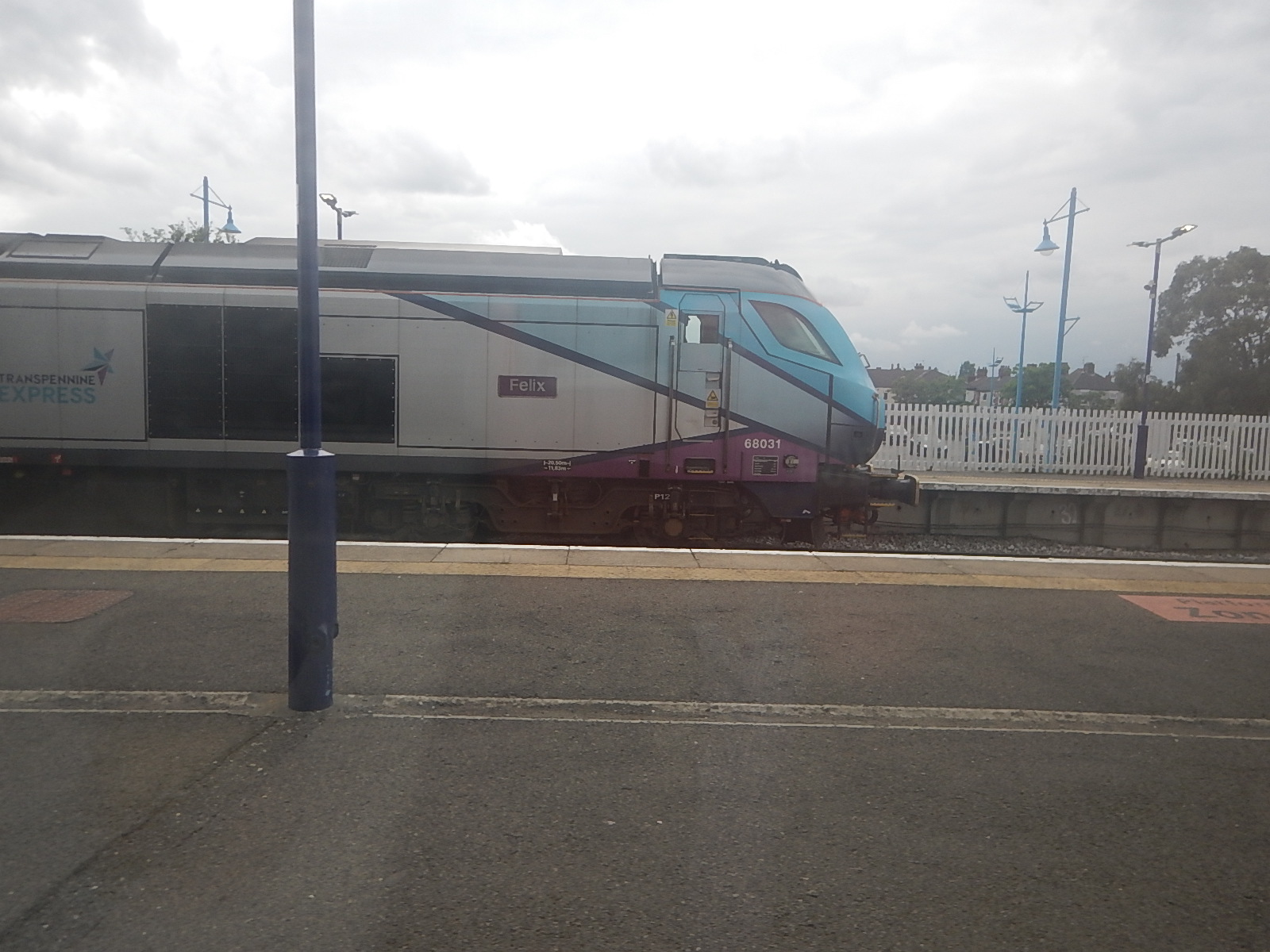
It is named after Felix; the station cat at Huddersfield station.
 The Anonymous Widower