York To Church Fenton – 10th August 2022
These pictures show the new electrification between York and Church Fenton.






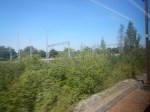
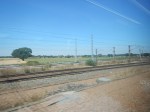
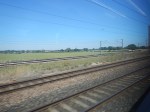
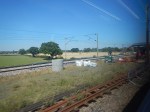
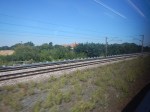
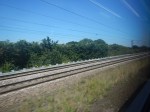
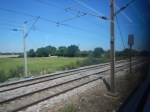
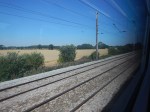

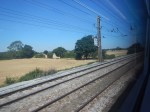
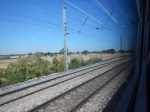
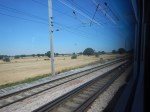
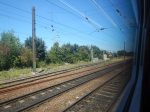
My train was going towards York.
Half-an-hour later, I went to Manchester via Leeds and took the newly-electrified line.
- The Class 802 train was on diesel on this section, but it was cruising at 100 mph.
- One the train had passed Church Fenton station, it appeared to slow noticeably.
- Today, York and Church Fenton took eight and a half minutes.
It will be interesting to see timings, when the wires are switched on.
Werrington Dive Under – 10th August 2022
I passed the Werrington Dive Under today and took these pictures.







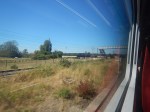
Note, that it is now more or less buried to the East of the East Coast Main Line.
When the weather gets a bit cooler, I’ll have a look from the footbridge.
Extending The Elizabeth Line – High Speed Trains On The Elizabeth Line
This may seem rather fanciful, but could it be the way to maximise the use of the Elizabeth Line?
- I feel that the Elizabeth Line will eventually serve other destinations like Basingstoke, Beaulieu, Oxford, Southend and Swindon.
- The capacity of the Elizabeth Line will grow to over thirty trains per hour (tph) under control of digital signalling.
These are a few thoughts.
The Design Of The Trains
As any train would have to be compatible with the platform-edge doors in the central tunnel of the Elizabeth Line, the trains would have to be dimensionally identical to the current Class 345 trains.
- Nine cars
- Possibility of lengthening to ten cars.
- 204.73 metres long.
- 6 sets of doors per carriage
- Ability to run under full digital signalling.
They would be designed for a higher speed of at least 110 or 125 mph, to enable running on the fast lines of these routes.
- East Coast Main Line
- Great Western Main Line
- Midland Main Line
- West Coast Main Line
They would also be able to run at 100 mph on the Chiltern Main Line, the Great Eastern Main Line and the North Kent Line.
The faster running would ease scheduling of the trains.
Extra facilities could include.
- Toilets
- Tables
- A third-rail capability for running in Kent.
Effectively, it would be a Class 345 train with more features and considerably more grunt.
Note that in A High Speed Train With An IPEMU-Capability, I started the post with the following.
Bombardier were reported by Ian Walmsley in the April 2016 Edition of Modern Railways, to be developing Aventra, with a 125 mph capability.
Bombardier have also told me, that all Aventras will be wired so they could be fitted with on-board energy storage.
Could it be that the design of a Class 345 train could be modified to run at higher speeds? I wouldn’t be surprised.
Oxford To Southend Victoria
This could be a typical route.
- Between Oxford and Paddington, it would follow a route similar to the GWR’s Oxford service with stops at just Reading and Slough.
- At Paddington the train would take the Central Tunnel of the Elizabeth Line and travel under London, at the same speed as the other trains.
- It would emerge at Stratford and move to the Great Eastern Main Line.
- It would probably stop at Stratford, Romford, Shenfield and all stations to Southend Victoria.
Note.
- Digital signalling would enforce the precise timekeeping needed.
- Much of the Oxford and Paddington section would be up to speeds of at least 125 mph.
- Times in the Central Tunnel of the Elizabeth Line would be identical to the current Class 345 trains.
- Much of the Stratford and Southend section would be up to speeds of at least 100 mph.
I estimate that total time would be a few minutes under two hours.
Connecting To The Central Tunnel Of The Elizabeth Line At Royal Oak
I discuss this in Extending The Elizabeth Line – Connecting Great Western Main Line Services To The Central Tunnel.
Connecting To The Central Tunnel Of The Elizabeth Line At Stratford
I discuss this in Extending The Elizabeth Line – Connecting Great Eastern Main Line Services To The Central Tunnel.
Connecting To The Central Tunnel Of The Elizabeth Line At Abbey Wood
This map from cartometro.com shows the track layout at Abbey Wood.
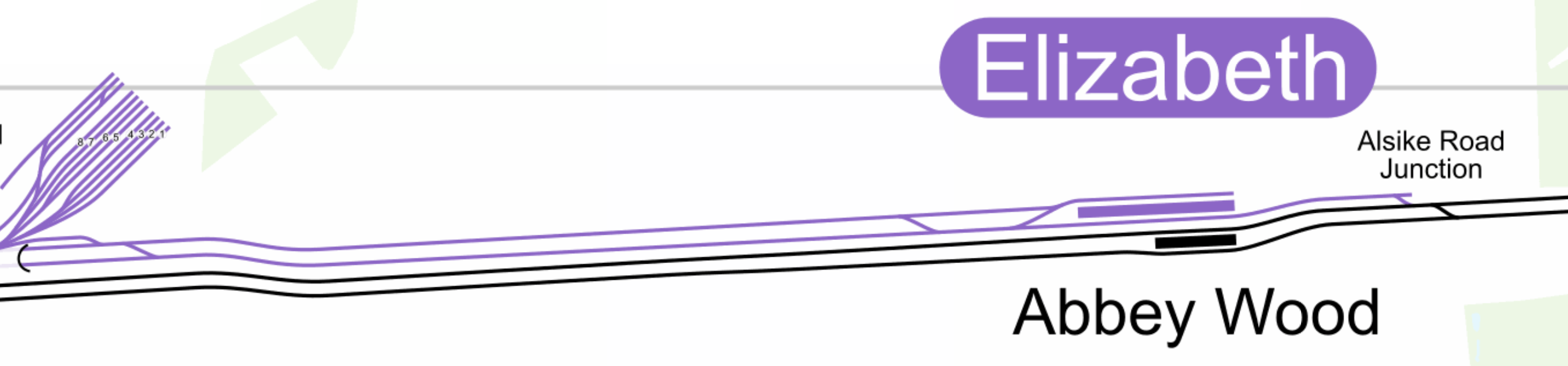
Note.
- The Elizabeth Line is shown in purple.
- The North Kent Line is shown in black.
- The North Kent Line platform to London is the Southernmost platform and is numbered 1.
- The North Kent Line platform from London is the other Southern platform and is numbered 2.
- The Elizabeth Line platforms are numbered 3 and 4.
- Platform 4 is the Northernmost platform.
At present the Elizabeth Line service to Abbey Wood station is twelve tph, with each platform handling six tph.
This picture shows trains in both Platform 3 and 4 looking towards the station buildings.

Note.
- Platform 3 is on the right.
- Platform 4 is on the left.
In Elizabeth Line To Ebbsfleet Extension Could Cost £3.2 Billion, I talk about this proposal as described in this article on Ian Visits.
One of the key features of Crossrail To Ebbsfleet (C2E) project is that instead of all trains terminating at Abbey Wood, trains will terminate as follows.
- Abbey Wood – 4 tph
- Northfleet – 4 tph
- Gravesend – 4 tph
This will mean that 8 tph would pass through Abbey Wood station.
- Platform 4 could certainly handle the four that terminated on the Elizabeth Line.
- Platform 3 would need to handle eight tph in both directions or sixteen tph to fulfil the proposed C2E service.
- This would be one train every 225 seconds.
I believe that digital signalling could handle this easily and safely.
I am fairly sure that the track layout at Abbey Wood allows eight tph to go both ways between the North Kent Line and the Elizabeth Line Central Tunnel.
The Maximum Capacity At Abbey Wood Station
Because of the current track layout at Abbey Wood, I believe that without track modifications, Abbey Wood station will not be able to handle more than 12 tph.
Thameslink
These proposed trains would also be compatible with Thameslink, as this route has no platform edge doors.
No platform extensions would be needed, as the Class 345 trains are shorter than the 12-car Class 700 trains.
If they were 125 mph trains, then this would ease timetabling on the East Coast Main Line, as the trains could mix it with the expresses on the fast lines.
Could These High Speed Trains For The Elizabeth Line Have A Cruising Speed Of 140 mph?
It is likely, when full authority digital ERTMS signalling is installed on main lines out of London, that 140 mph will be possible on some at least these routes.
- East Coast Main Line
- Great Western Main Line
- Midland Main Line
- West Coast Main Line
The extra speed would maximise capacity.
Trains Disrupted After Lorry Crashes Onto Tracks In East Lothian
The title of this post, is the same as that of this article on the BBC.
These are the first two paragraphs.
Train services in and out of Edinburgh have been delayed after a lorry crashed onto the tracks in East Lothian.
The lorry driver was taken to hospital following the crash onto the East Coast Main Line between Wallyford and Prestonpans at about 13:30. His condition is not known.
Note.
- On a day with a rail strike, this was all that was needed.
- The place name is appropriate.
There is no excuse for an accident like this.
DB Cargo UK Successfully Trials The Use Of ‘Combi-Consists’
The title of this post, is the same as that of this press release on DB Cargo UK.
This is the first paragraph.
DB Cargo UK is trialling the use of ‘combi-consists’ to increase capacity, improve customer service and improve its efficiency.
The next four paragraphs describe the trial.
This month the UK’s largest rail freight operator ran a unique jumbo train from Belmont Yard in Doncaster to Barking, East London, carrying a mix of wagons for two altogether different types of customers.
The train consisted of two sets of empty wagons – 21 x MBA wagons for Ward Recycling and 18 x JNA wagons for FCC Environment – with an isolated DIT (dead-in-train) locomotive – in the middle.
The MBA wagons had previously been discharged at Immingham in North Lincolnshire and the JNA wagons discharged at FCC Environment’s new waste transfer facility at Tinsley in South Yorkshire.
Both sets of wagons were then taken to DB Cargo UK’s Belmont Yard depot in Doncaster where the jumbo train was assembled. The train travelled from Belmont Yard to Barking via Lincoln Central, Spalding, The East Coast Mainline, Hertford North and Canonbury Tunnel.
There is also a video embedded in the press release, which shows the formation of the train in detail.
This train is certainly efficient, as it uses less train paths, crew and fuel.
DB Cargo UK now intend to trial the concept on a greater portion of the East Coast Main Line and the Midland Main Line.
I have a few thoughts.
Could The Concept Work With Loaded Trains?
This trial was with empty trains, but would it be possible to use the concept with two shorter loaded trains?
Would there be advantages in terms of efficiency, if the following were done?
- Two container trains leave Felixstowe as a pair, with one going to Plymouth and the other going to Cardiff.
- They split at say Swindon and then proceed independently.
Obviously, all the weights would have to be in order and the locomotive would need to be able to pull the combined train.
Other possibilities might be.
- Stone trains running from the Mendips and the Peak District to London.
- Biomass trains running from import terminals to power stations in the Midlands.
- Trains delivering new cars.
- Trains delivering goods for supermarkets. Tesco are certainly increasing their use of trains.
I would suspect that DB Cargo UK have several ideas.
Could An Electric Locomotive Go In The Middle?
A Class 90 locomotive weighs 84.5 tonnes, as against the 129.6 tonnes of the Class 66 locomotive used in the trial.
So if the electric locomotive can be run dead-in-train, the weight would be slightly less.
But this might give a big advantage, if they ever wanted to run a pair of trains from Felixstowe to Plymouth and Cardiff, as per my earlier example.
- The trains would split anywhere on the electrified section of the Great Western Main Line.
- The lead train would go to Plymouth.
- The second train would go to Cardiff, which is now fully electrified.
There would appear to be possibilities to save carbon emissions.
Could An Electric Locomotive Go On The Front?
Some routes out of Felixstowe are fully-electrified from the Great Eastern Main Line.
It could be possible for the following.
- Two diesel-hauled trains to leave Felixstowe with ubiquitous Class 66 locomotives and form up as a combi-consist train in Ipswich yard.
- The Class 66 locomotive on the front is replaced by an electric locomotive.
- Both Class 90 and Class 92 electric locomotives have twice the power of a Class 66 locomotive, so both should be able to haul the combi-consist train.
The trains would split en-route with the electric locomotive hauling a train to an electrified destination.
This picture shows, what could be an experiment by Freightliner at Shenfield.
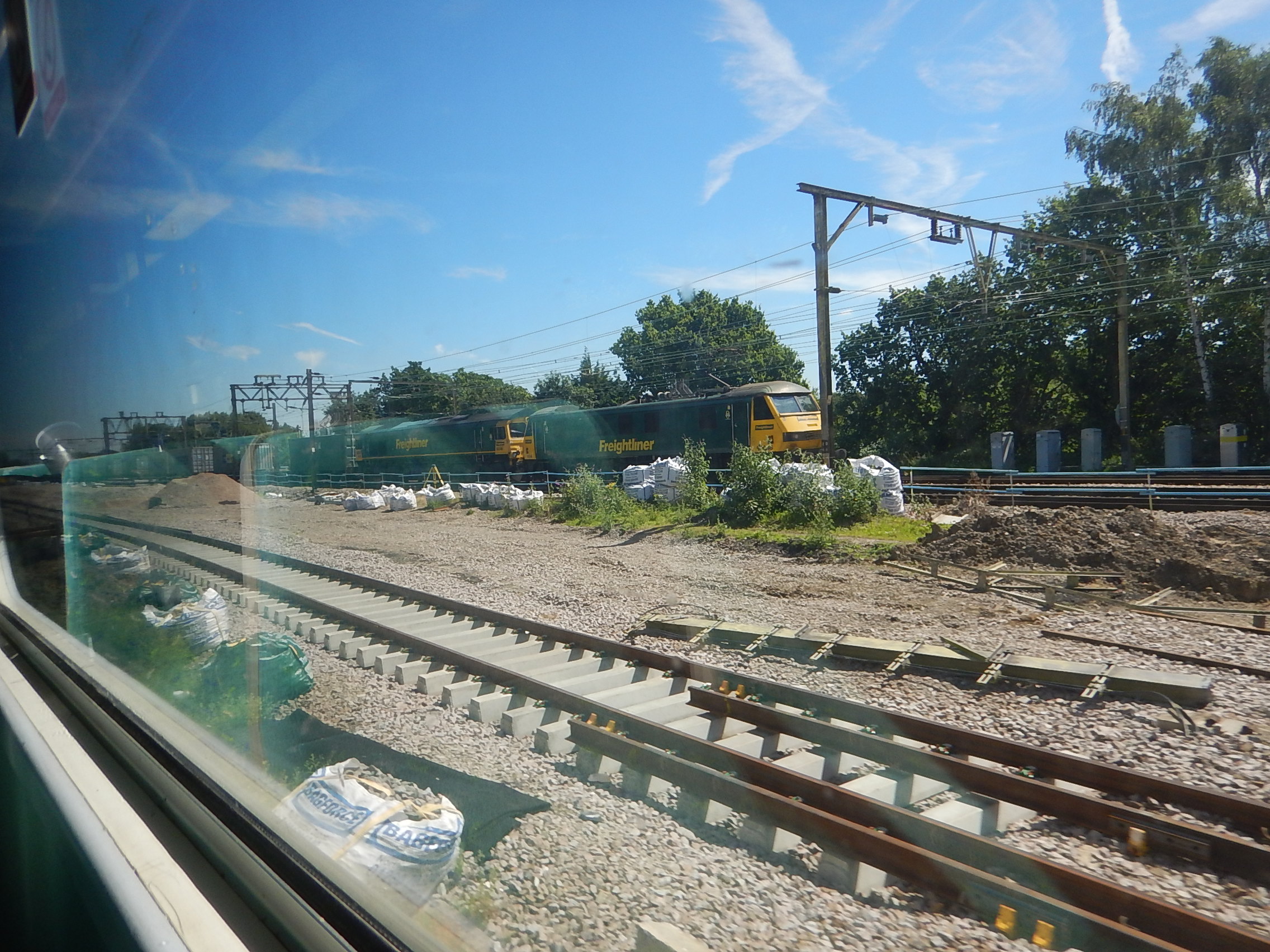
Unfortunately, I didn’t have a chance to ask the driver, if the Class 66 locomotive was running dead-in-train or helping the Class 90 locomotive with a very heavy load.
The picture shows, that the electric and diesel locomotives can work together, at the front of a train.
Since I took this picture, I’ve never seen a similar consist again.
Could A Bi-Mode Locomotive Go On The Front?
In GB Railfreight Plans Order For Future-Proofed Bi-Mode Locomotives, I talked about how GB Railfreight had started negotiations to purchase a fleet of powerful bi-mode locomotives from Stadler.
- Provisionally, they have been called Class 99 locomotives.
- The locomotives will be Co-Co bi-modes.
- The diesel engine will be for heavy main line freight and not just last-mile operations.
- I suspect that on diesel the power will be at least 2.5 MW to match a Class 66 locomotive.
These locomotives could be ideal for hauling combi-consist trains.
Would Combi-Consist Trains Save Energy?
This could be a big driver of the use of combi-consist trains and may push DB Cargo UK to acquire some powerful bi-mode locomotives.
Conclusion
Combi-consist trains seem to be an excellent idea.
‘Upgrade East Coast Main Line Before HS2’ If Leeds And Yorkshire Want Faster Rail Links To London
The title of this post, is the same as that of this letter to the Yorkshire Post.
This is the opening paragraph.
The decision to scrap HS2 running to Leeds is controversial but those who travel to London should not despair.
The writer makes these points.
- High Speed Two will probably charge a premium fare because of the speed.
- The current journey time to the capital is two hours 13 minutes at a cost of £28-60, if purchased in advance.
- Planned improvements on the East Coast Main Line will reduce the journey time to London King’s Cross to one hour 56 minutes.
- High Speed Two will take one hour 22 minutes.
- If the line between Doncaster and Leeds were to be improved, the journey time could be reduced to one hour 45 minutes.
The writer finishes by saying that if the government ‘four tracked’ the entire East Coast route, 140mph LNER’s Azuma trains would match the times of High Speed Two.
In What Will Be The Fastest Times Possible Between London King’s Cross And Leeds?, I came to this conclusion.
It looks like a non-stop service between London and Leeds running at 140 mph, with perhaps some sections at perhaps a bit faster, could be able to match the High Speed Two times.
Running non-stop saves a total of eighteen minutes.
In an hour, I would give Leeds one non-stop and one stopping service to London.
Should The Great Northern And Great Eastern Joint Line Be Electrified?
The Great Northern And Great Eastern Joint Line was created in the Nineteenth Century by the Great Northern Railway and the Great Eastern Railway.
- The main purpose was to move freight like coal, agricultural products and manufactured goods between Yorkshire and Eastern England.
- It originally ran between Doncaster and Huntington via Gainsborough, Lincoln, Sleaford, Spalding and March.
- It had a full length of almost 123 miles.
- There was a large marshalling yard at Whitemoor near March.
Over the years the line has been pruned a bit and now effectively runs between Doncaster and Peterborough.
- Trains between Lincoln and March are now routed via Peterborough.
- It carries upwards of twenty freight trains per day in both directions through Lincoln Central station.
- Many of the freight trains are going to and from the East Coast ports.
- The distance between Doncaster and Peterborough is 93.7 miles, as opposed to the 79.6 miles on the East Coast Main Line.
- The line is not electrified, but it connects to the electrified East Coast Main Line at both ends.
There have been some important developments in recent years.
2015 Freight Upgrade
Wikipedia says this about the major 2015 freight upgrade.
In 2015 a £280 million upgrade of the Joint Line by Network Rail was substantially complete, enabling two freight trains per hour to be diverted from the congested East Coast Main Line; gauge enhancements to enable the passage of 9 ft 6 in (2.90 m) containers were included in the work.
The Sleaford avoiding line had been substantially downgraded since the 1980s and was reinstated to double track as part of the 2015 scheme. Resignalling and modernisation of level crossings was included.
This means that freight trains have an alternative route, that avoids the East Coast Main Line.
Doncaster iPort
Over the last few years the Doncaster iPort has been developed, which is an intermodal rail terminal.
- It has a size of around 800 acres.
- The site opened in early 2018.
- There is a daily train to the Port of Southampton and two daily trains to both Teesport and Felixstowe.
- The Felixstowe trains would appear to use the Joint Line.
I feel that as the site develops, the Doncaster iPort will generate more traffic on the Joint Line.
This Google Map shows the Doncaster iPort.

There would appear to be plenty of space for expansion.
The Werrington Dive Under
The Werrington Dive Under has been built at a cost of £ 200 million, to remove a bottleneck at the Southern end of the Joint Line, where it connects to the East Coast Main Line.
The Werrington Dive Under was built, so that it could be electrified in the future.
LNER To Lincolnshire
LNER appear to have made a success of a one train per two hours (tp2h) service between London King’s Cross and Lincoln station.
- LNER have stated, that they want to serve Grimsby and Cleethorpes in the North of the county.
- North Lincolnshire is becoming important in supporting the wind energy industry in the North Sea.
- Lincoln is becoming an important university city.
- Several towns in Lincolnshire probably need a service to Peterborough and London.
- In 2019, the Port of Grimsby & Immingham was the largest port in the United Kingdom by tonnage.
I can see an expanded Lincolnshire service from LNER.
Full Digital Signalling Of The East Coast Main Line To The South Of Doncaster
This is happening now and it will have a collateral benefits for the Joint Line.
Most passenger and freight trains will also use the East Coast Main Line, if only for a few miles, which will mean they will need to be fitted for the digital signalling.
This could mean that extending full digital signalling to Lincolnshire will not be a challenging project.
Arguments For Electrification
These are possible arguments for electrification.
Electric Freight Trains To And From The North
It would be another stretch of line, that could accommodate electric freight trains.
An Electrified Diversion Route For East Coast Main Line Expresses
Currently, when there is engineering blockades between Doncaster and Peterborough on the East Coast Main Line, the Hitachi Class 800 and Class 802 trains of Hull Trains and LNER are able to divert using their diesel power.
But the electric trains of LNER and Lumo have to be cancelled.
An electrified diversion route would be welcomed by passengers and train companies.
It would also mean that any trains running from King’s Cross to electrified destinations would not to have any diesel engines.
An Electrified Spine Through Lincolnshire
If there was an electrified spine between Doncaster and Peterborough via Gainsborough, Lincoln, Sleaford and Spalding, these stations would be these distances from the spine.
- Boston – 16.8 miles
- Cleethorpes – 47.2 miles
- Grimsby Town – 43.9 miles
- Market Rasen – 14.8 miles
- Skegness – 40.7 miles
Note.
- These distances are all possible with battery-electric trains.
- Charging would be on the electrified spine and at Skegness and Cleethorpes stations.
All of South Lincolnshire and services to Doncaster would use electric trains.
London Services
London services would be via Spalding and join the East Coast Main Line at Werrington.
- Boston and Skegness would be served from Sleaford, where the train would reverse.
- Market Rasen, Grimsby Town and Cleethorpes would be served from Lincoln, where the train would reverse.
This would enable Cleethorpes and Skegness to have at least four trains per day to and from London King’s Cross.
North Lincolnshire Services
There are two train services in North Lincolnshire.
Cleethorpes and Barton-on-Humber.
Cleethorpes and Manchester Airport via Grimsby Town, Scunthorpe, Doncaster, Sheffield and Manchester Piccadilly.
Note.
- Cleethorpes would need to have a charger or a few miles of electrification, to charge a train from London.
- Doncaster, which is fully electrified is 52.1 miles from Cleethorpes.
- Barton-on-Humber is 22.8 miles from Cleethorpes.
Battery-electric trains should be able to handle both services.
Arguments Against Electrification
The only possible arguments against electrification are the disruption that the installation might cause and the unsightly nature of overhead gantries.
Conclusion
The Great Northern and Great Eastern Joint Line should be electrified.
Berwick’s Landmark Bridge Set For Major Repairs
The title of this post, is the same as that as this article on the BBC.
This Google Map shows the Royal Border Bridge.
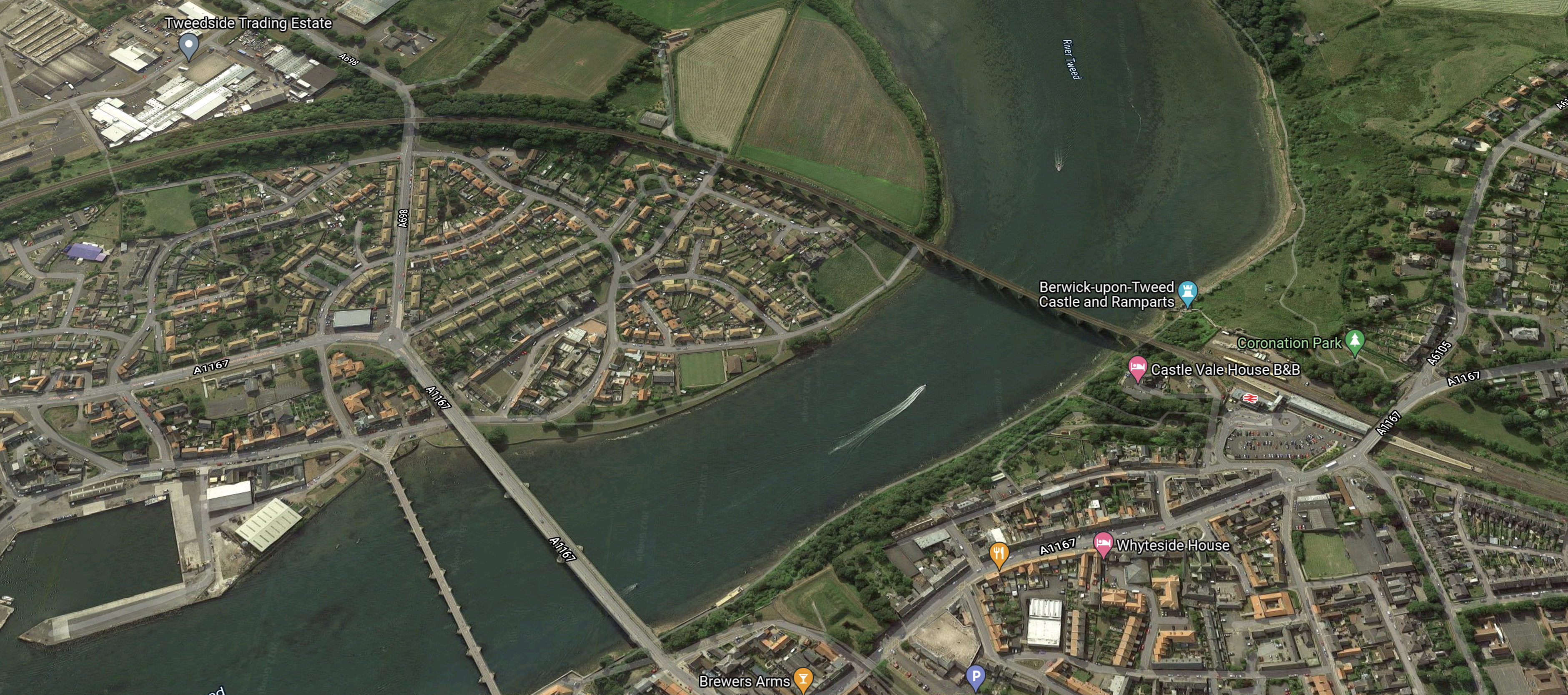
This extract from the article describes the works on the bridge.
During the work, which will last until November, engineers will repair all 28 arches of the Grade I-listed structure.
The East Coast Main Line will stay open and an online event for people to find out more is being held on 27 January.
I suspect that finding anybody to restore historic stone buildings will be difficult in the area, during 2022.
Rail Minister Officially Opens Werrington Tunnel
The title of this post, is the same as that of this article on Rail Technology Magazine.
This is the first two paragraphs.
Werrington Tunnel, an underground freight tunnel running beneath the East Coast Main Line near Peterborough, has been formally opened by Rail Minister Chris Heaton-Harris.
A key step in the £1.2bn East Coast upgrade, the opening of the tunnel allows for freight services to be ran underneath the main rail artery, significantly improving passenger service reliability on the East Coast Main Line.
I also think, that the tunnel will be used creatively by passenger and freight operators.
Electrification
There is a possibility that the Great Northern and Great Eastern Joint Line (GNGE) between Werrington and Doncaster via Lincoln could be electrified.
- It would allow the many freight trains using the route to be hauled by electric locomotives.
- It would create a by-pass for the East Coast Main Line during engineering works, that could be used as a diversion route by electric trains.
- Werrington and Lincoln are just over fifty miles and might be handled by battery-electric trains, if the GNGE were to be partially electrified.
According to one report, the Werrington Tunnel has been readied for electrification, should that be decided.
An Improved Peterborough And Lincoln Service
In the past, I have travelled between London and Lincoln with a change at Peterborough. In one case, I just missed my connection, as it was a long crowded walk between the two platforms.
The Werrington Tunnel will enable trains to and from Lincoln to use platforms on the West side of Peterborough station.
Train times and platform allocations could be arranged to make connections at Peterborough easier.
A London And Lincoln Service Via Spalding And Sleaford
There are two possible routes between London King’s Cross and Lincoln
- The current LNER service leaves the East Coast Main Line at Newark.
- An alternative route would leave the East Coast Main Line at Peterborough and be routed via the Werrington Tunnel, Spalding and Sleaford.
These notes apply to the alternative route.
- The Lincoln service wouldn’t call at Grantham and Newark.
- Some services could also call at other stations.
- The current hourly Peterborough and Lincoln service via Spalding is run by a Class 153 train , which stops four times and takes fourteen minutes longer than LNER’s service via Newark.
- An easy connection to and from Skegness could be arranged at Spalding,
LNER also plans to extend some Lincoln services to Grimsby Town and Cleethorpes. Timings will dictate which will be the better route.
The Werrington Tunnel would add a large degree of flexibility in routing services between London King’s Cross and Lincoln and Lincolnshire.
Splitting And Joining At Peterborough
If the Werrington Tunnel makes Lincoln timings via Spalding and Sleaford viable, I wonder if it would be possible for trains to split and join at Peterborough.
- One train would go to Lincoln via the Werrington Tunnel, Spalding and Sleaford.
- The other might go North to Bradford, Hull, Middlesbrough, Scarborough or York.
The Werrington Tunnel again adds flexibility.
A Round-The-Wash Service Between Doncaster And Ipswich/Norwich
In Is There A Case For A Round-The-Wash Service Between Doncaster And Ipswich/Norwich?, I suggested this service, which would be an hourly Doncaster and Cambridge service via Scunthorpe, Grimsby Town Cleethorpes, Lincoln, Sleaford, Spalding, Werrington Tunnel and Peterborough that would alternatively extend to Ipswich or Norwich.
The Werrington Tunnel again opens up possibilities.
Conclusion
I’m sure that the Werrington Tunnel and the technology that built it will be imitated elsewhere.
Are Short Lengths Of High Speed Line A Good Idea?
In New ‘HS3’ Link To Yorkshire Proposed By Thinktank After Region’s HS2 Axe, I showed that a short length of faster by-pass line could give decent ties savings.
So in this post, I will look at home much time, diversions or by-passes like the Selby Diversion could save.
The diversion runs between Temple Hirst Junction and Colton Junction.
- It is 13.8 miles long.
- A typical train takes 7.5 minutes, which is an average speed of 115 mph.
- But Wikipedia claim that the route was well-designed and British Rail felt it was good for 160 mph.
So what times are possible at various speeds?
- 115 mph – 7.5 minutes
- 120 mph – 6.9 minutes
- 130 mph – 6.4 minutes
- 140 mph – 5.9 minutes
- 150 mph – 5.5 minutes
- 160 mph – 5.2 minutes
- 180 mph – 4.6 minutes
They are not great savings, but if you could increase operating speed on straight sections of thirty miles and raise the average speed from 120 to 180 mph, that would save five minutes. It would all mount up.
If you look at the railway maps of the UK, there are sections of the East Coast Main Line, Great Western Main Line, Midland Main Line and West Coast Main Line, where the track is straight and sometimes as many as four-tracks.
Stevenage Station And Stoke Junction
A simple example in a few years could be between just North of Stevenage station and Stoke junction, which after current works and some others could be four tracks all the way.
- It is 72.2 miles.
- Trains take 39 minutes.
- My timings give an average speed of 111 mph.
- There are a number of level crossings.
- Flat junctions at Hitchin and Werrington have been replaced with grade separated junctions.
Note that it is longer than the Cologne-Aachen high speed railway in Germany, which is only 43 miles long and has an operating speed of 250 kph or 155.3 mph.
Savings on the Stevenage and Stoke stretch could be as follows.
- 140 mph – eight minutes
- 155.3 mph – eleven minutes
- 160 mph – twelve minutes
- 180 mph – fifteen minutes.
- 200 mph – seventeen minutes.
This alone could mean that London Kings Cross and Leeds could be around two hours with trains such as the proposed High Speed Two Classic-Compatible Trains.
It couldn’t be extended to the North very easily as Stoke Tunnel is between Stoke junction and Grantham.
This Google Map shows the tunnel.
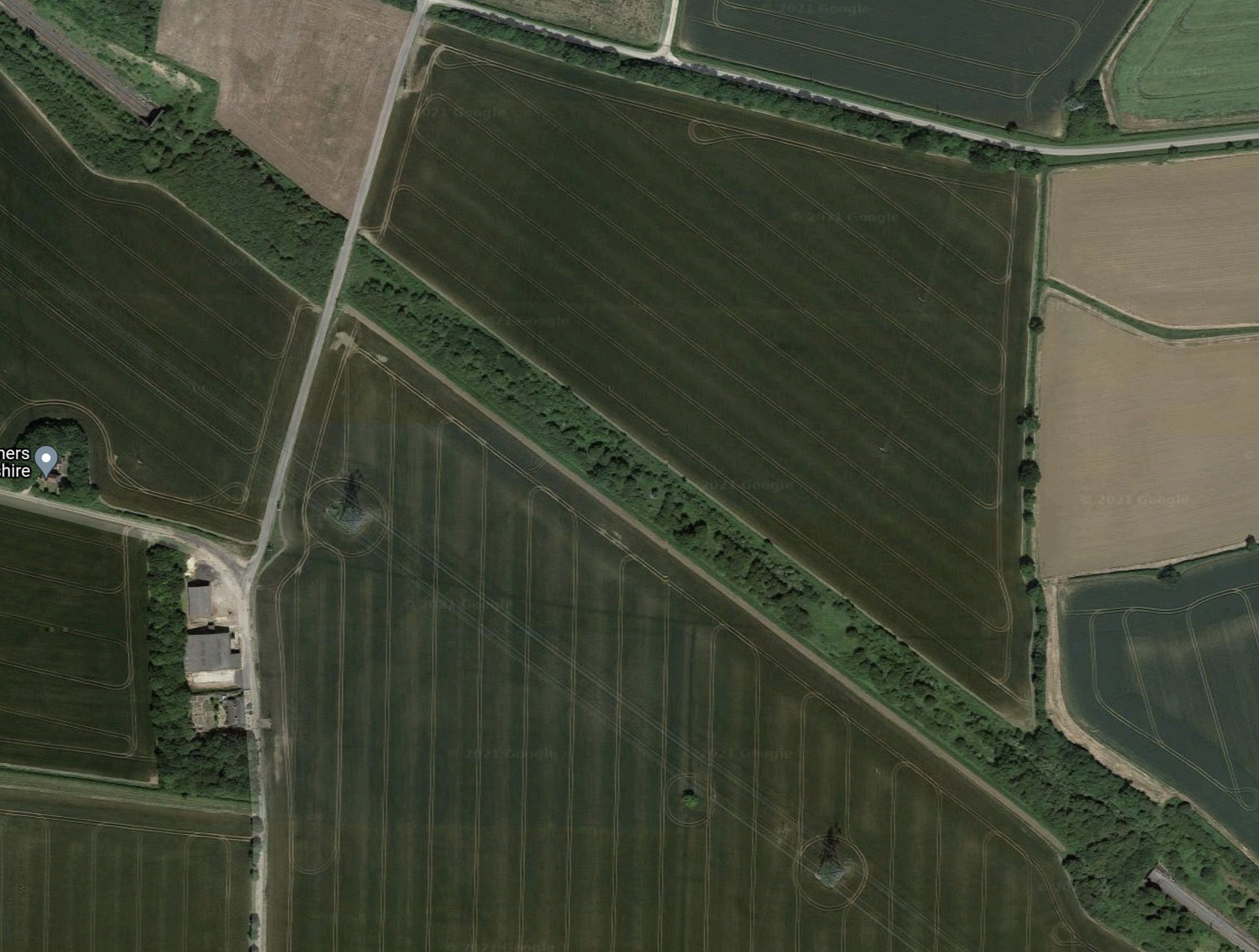
If it could easily be converted into a four-track cutting, this would add nearly six miles to the four-track section with high speed lines in the middle and slow lines on the outside.
A Diversion At York
When improving speeds and times on the East Coast Main Line, a diversion at York is sometimes mentioned.
The Google Map shows the East Coast Main Line, as it goes through York station.
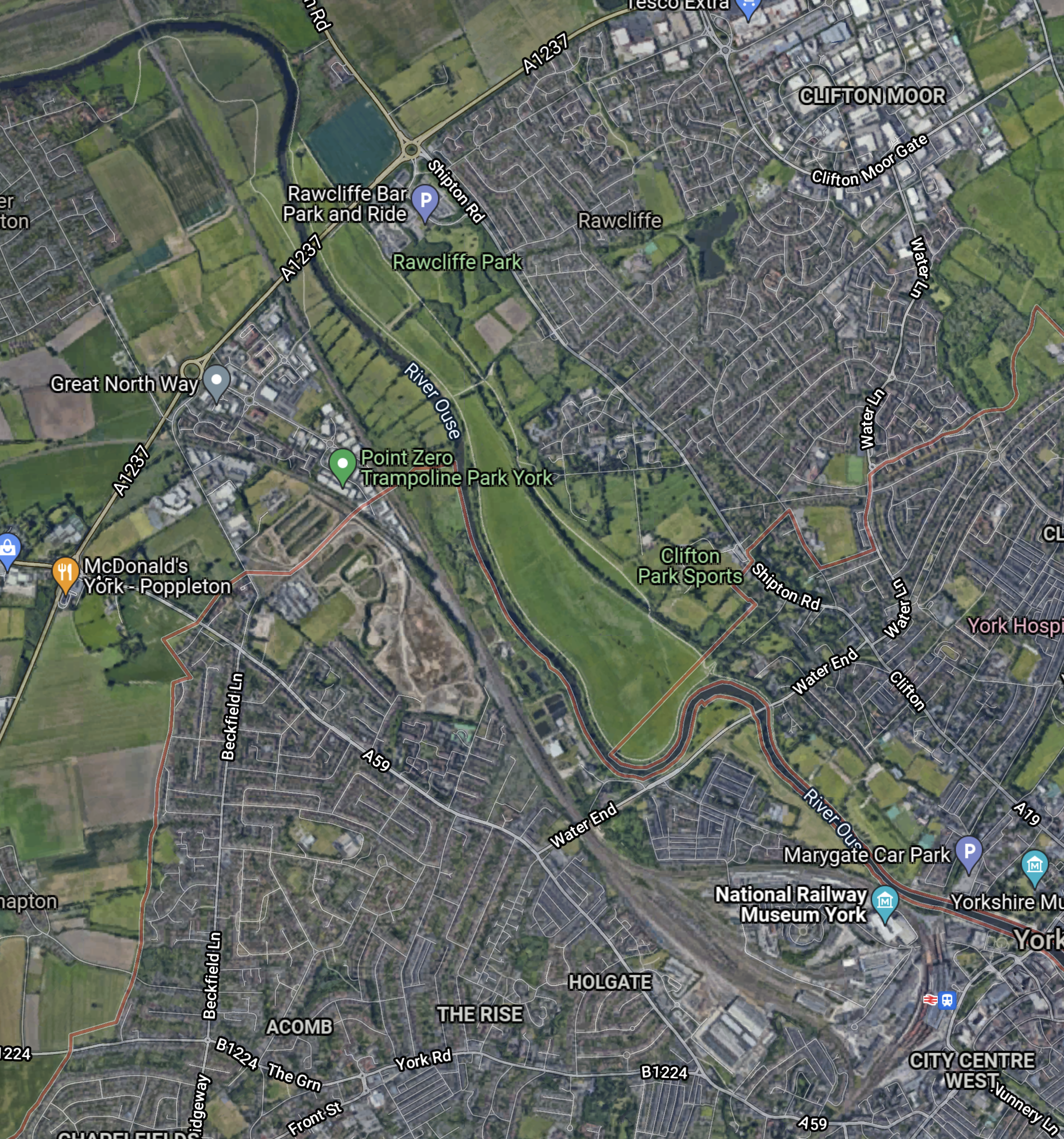
Note.
- York station is in the South East corner of the map.
- The River Ouse meandering North from near the station, before turning West at the top of the map.
- The East Coast Main Line running North from the station to the West of the river.
The railway crosses the river just to the North of Skelton junction.
This Google Map shows the tracks at York in more detail.
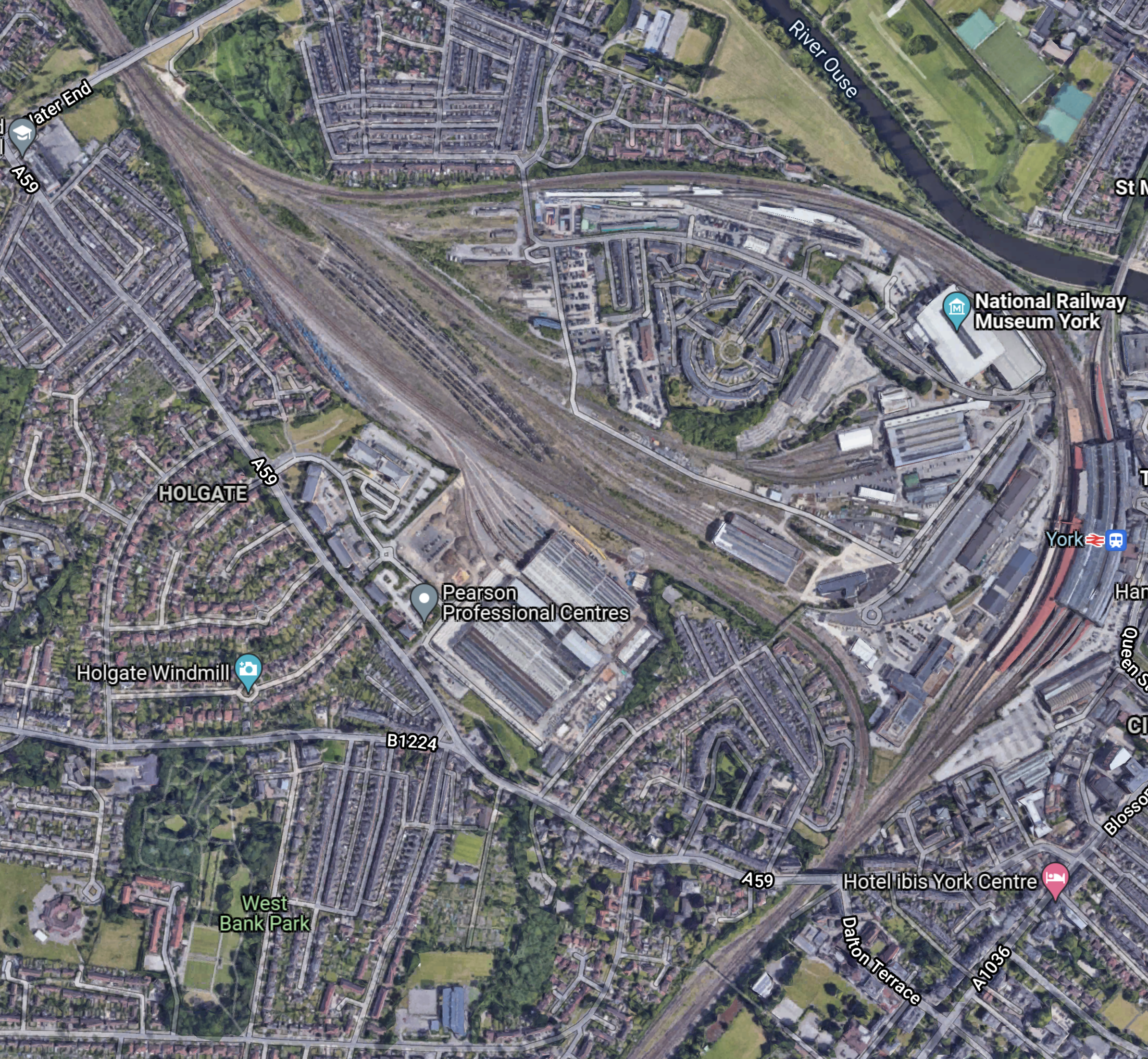
Note.
- The River Ouse in the North-East corner of the map.
- The East Coast Main Line through York station curving round the Railway Museum, before going North.
- A second rail route and sidings to the West of the East Coast Main Line can be seen.
Could a diversion route be created between Holgate and Skelton junctions on railway land?
- It would be about two miles long.
- It could be built to also sort out the bottleneck at Skelton junction.
- It might be possible to extend the fast line to Northallerton station.
This could create up to thirty miles of fast lines between Holgate junction and Northallerton.
A Diversion At Durham
When improving speeds and times on the East Coast Main Line, a diversion at Durham is sometimes mentioned.
The Google Map shows the East Coast Main Line, as it goes through Durham station.
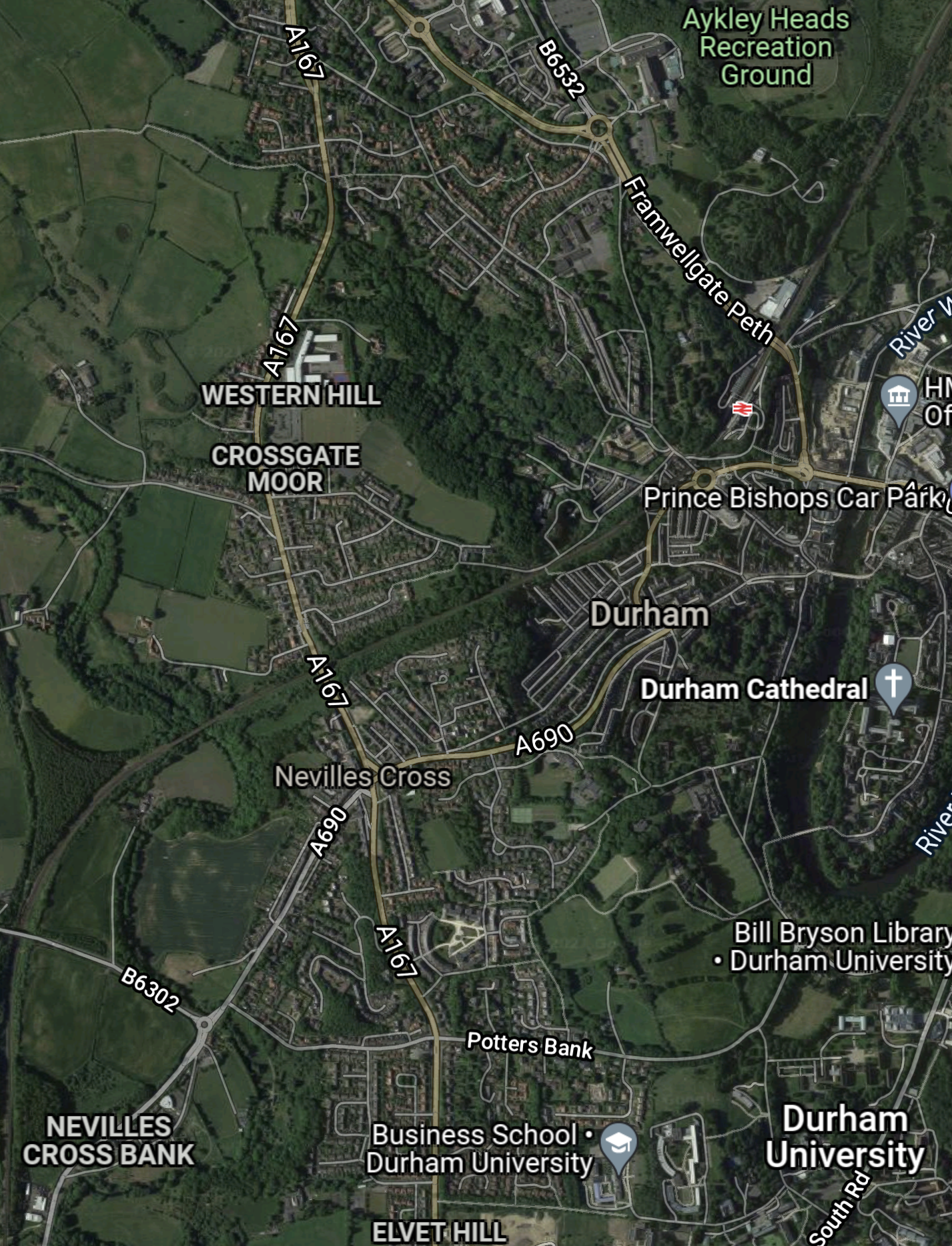
Note.
- I have arranged the map so that the East Coast Main Line goes between the South-West and North-East corners of the map.
- Durham station is clearly visible.
- The railway line curves East towards the station around Nevilles Cross after running North from the South.
This Google Map shows the East Coast Main Line, as it goes through Chester-le-Street station.
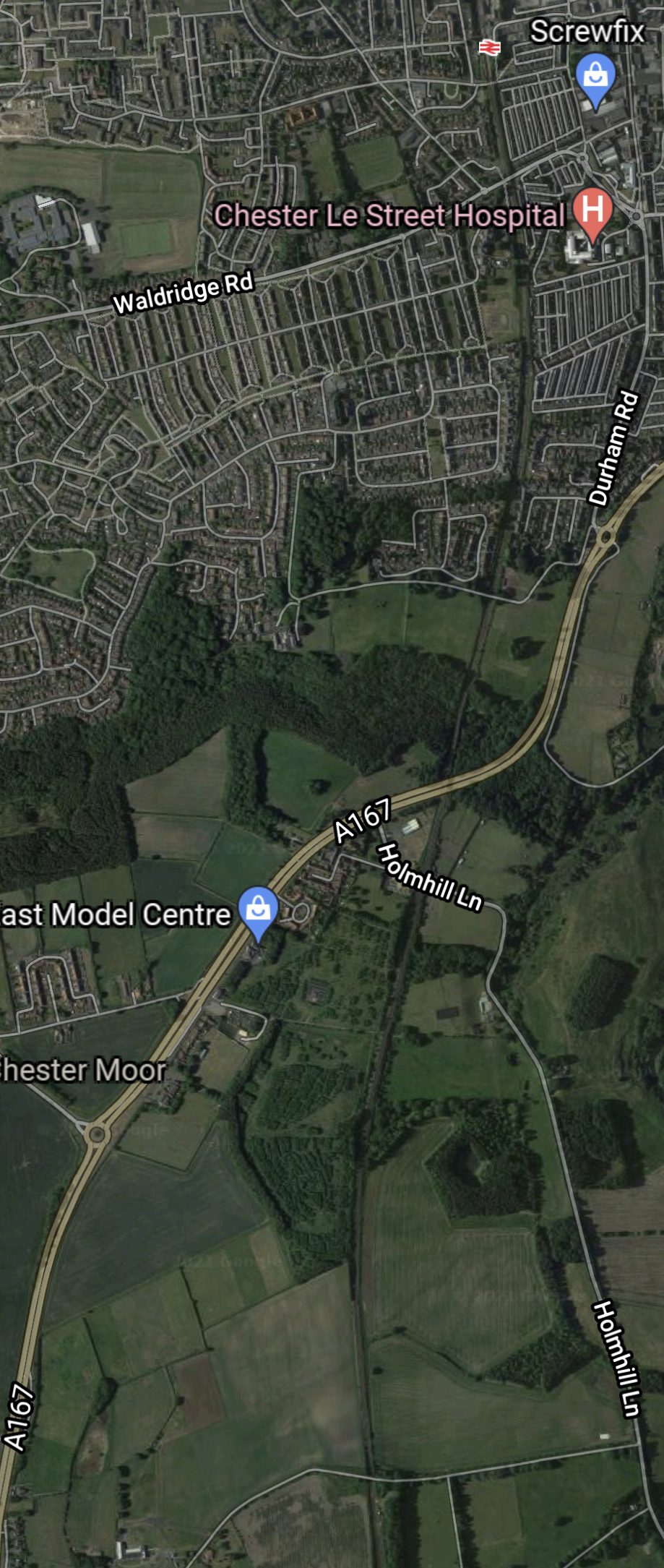
Note.
- Chester-le-Street station is in the North-East corner of the map.
- The East Coast Main Line runs North-South down the middle of the map.
- About halfway down the map, the East Coast Main Line starts to veer to the East.
If you look at the bigger picture of these maps, it appears that to serve Durham, the line took a loop to the East, so would a diversion cut off the corner between Chester-le-Street and Nevilles Cross and put Durham on a loop?
It would be a bit shorter, but it could be built to enable running at a higher speed.
Short German High Speed Lines
I have travelled a lot on German trains and they have some of our problems.
- Infrastructure dating back to the times of Kaiser Bill.
- A high mileage of track without electrification.
- Less high speed railways than France or Spain.
They are creating several high speed railways.
Earlier, I indicated that the Cologne-Aachen high speed railway, which is only 43 miles long, has an operating speed of 250 kph.
Other short high speed railways include.
- Lübeck–Hamburg railway – 39 miles – 200 kph.
- Lübeck–Puttgarden railway – 55.1 miles – 200 kph.
- Mannheim–Stuttgart high-speed railway – 62 miles – 280 kph
- Nuremberg–Erfurt high-speed railway – 66 miles – 300 kph
- Stuttgart–Wendlingen high-speed railway – 9.5 miles – 250 kph
- Wendlingen–Ulm high-speed railway – 37 miles – 250 kph
Note, that the Germans are still upgrading lines to 200 kph or 125 mph.
The Germans would appear to favour some shorter high speed lines, so it must be a worthwhile philosophy.
Conclusion
I very much feel there is scope to create some new high speed sections on the current UK network, with only building very little outside of the current land used by the network.
As with Germany would it be worthwhile to upgrade some lines to 125 mph running?
These could be possibilities.
- Basingstoke and Exeter – Currently 121 miles at 90 mph – Not electrified
- London Liverpool Street and Norwich – Currently 114.5 miles at 100 mph – Electrified
- North Wales Main Line – Currently 84.4 miles at 90 mph – Not electrified
- Reading and Taunton – Currently 107 miles at 110 mph – Not electrified
There are probably others.
 The Anonymous Widower