Decarbonising The Mid-Cornwall Metro
Although the Mid-Cornwall Metro will probably run initially using what diesel multiple units, after a year or so, the route will be converted to zero-carbon operation.
Newquay To Falmouth Docks
This map shows the Mid-Cornwall Metro.

These are current timings.
- By train can take almost three hours with changes at Par and Truro.
- By car should take 45 minutes to drive the 24.4 miles according to Google.
Note.
- The train timings are for a typical British Rail-era Diesel Multiple Unit on the branches and something smarter between Truro and Par.
- A Day Return ticket would cost £8.90 without a Railcard.
- If there was a through train, that meant you didn’t have to change trains, I estimate that the time could be as low as one hour and 35 minutes.
I feel that most travellers, who had access to a car, would use that to travel between Newquay and Truro.
Newquay To Falmouth Docks By Electric Train
I have ridden in three battery-electric trains.
- Class 379 train – Manningtree and Harwich in passenger service.
- Class 230 train – Vivarail demonstration
- Class 777 train- Liverpool Central and Headbolt Lane in passenger service.
Note.
- All were mouse-quiet.
- There was no detectable difference, when running on battery power in the trains.
It is my view that battery-electric trains are no second-class solution.
Consider.
- Newquay and Par is 20.8 miles.
- Falmouth Docks and Par is 30.8 miles.
- Newquay and Falmouth Docks is 51.6 miles.
- The maximum speed between Par and Newquay is around 30 mph
- The maximum speed between Par and Falmouth Docks is around 50-70 mph
- There are twelve intermediate stations.
- There is a reverse at Par station.
- Charging would be easy to install at Falmouth Docks, Newquay and Par.
- In Par Station – 10th February 2024, I suggested that Par station could be fully-electrified, so that expresses could have a Splash-and-Dash on their way to London and Penzance. If all platforms at Par were electrified the Mid-Cornwall Metro trains could charge from the electrification, as they reversed.
There are two main ways that the Mid-Cornwall Metro might operate.
- There would be chargers at Newquay and Falmouth Docks and trains would shuttle the 51.6 miles between the two stations.
- There would only be charging at Par and trains would after charging at Par go alternatively to Newquay and Falmouth Docks.
The first might need smaller batteries and the second would only need one charger.
Newquay To Falmouth Docks By Hydrogen-Powered Train
There is only one hydrogen-powered train in service and that is the Alstom Coradia iLint, which is running in Germany.

I feel it is very much an interim design, as Alstom has taken a diesel-mechanical Lint train and swapped the diesel for a hydrogen-powered electricity generator and an electric motor.
But Alstom are putting together a hydrogen-powered train based on an Aventra.
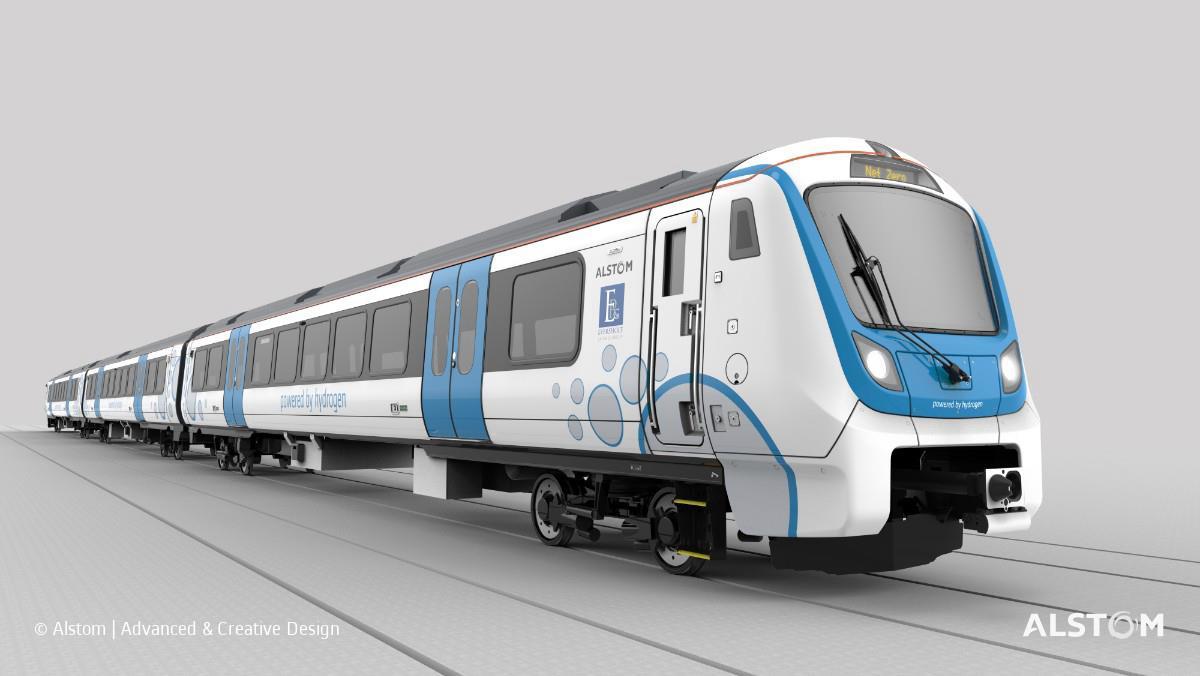
Note.
- The train is three cars.
- I would envisage performance of the hydrogen train would be very similar to that of a similar battery-electric train.
- I wouldn’t be surprised that refuelling of the train would not be a problem, as with all the china clay working nearby, there may well be developments to use hydrogen in the industry to decarbonise the mining.
The Mid-Cornwall Metro and Alstom’s Hydrogen Aventra could be ideal for each other.
Conclusion
I believe, that although the Mid-Cornwall Metro will start operation with diesel multiple units, it will be running in a zero-carbon mode within a few years.
Par Station – 10th February 2024
Par station will see changes because of the Mid-Cornwall Metro.
I took these pictures as I passed through.


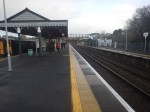
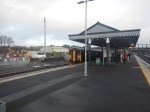
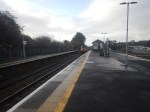
Note.
- The level crossing was busy with cars every time I crossed it.
- The semaphore signalling.
- The arriving GWR Castle in the last picture.
This Google Map shows Par station.
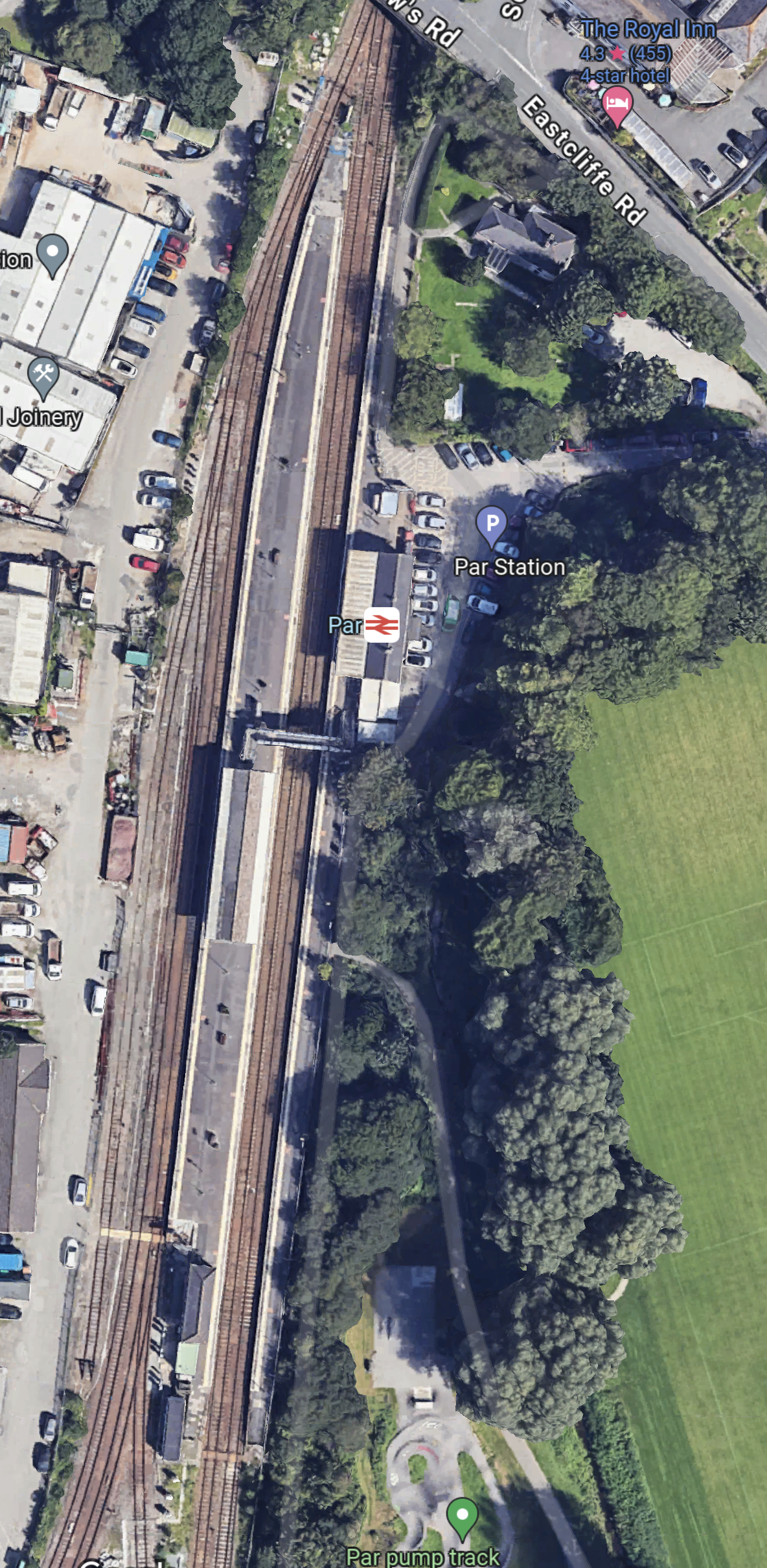
Note.
- There three platforms. Platform 1 is in the East, with Platforms 2 and 3 forming an island platform.
- There is a footbridge connect the platforms together.
- The Atlantic Coast Line leaves the map in the South West Corner.
As one of the modifications for the Mid-Cornwall Metro, the footbridge will be replaced with one that is step-free.
I have a few thoughts.
Will The Mid-Cornwall Metro Reverse At Par Station?
This OpenRailwayMap shows the track layout at Par station.
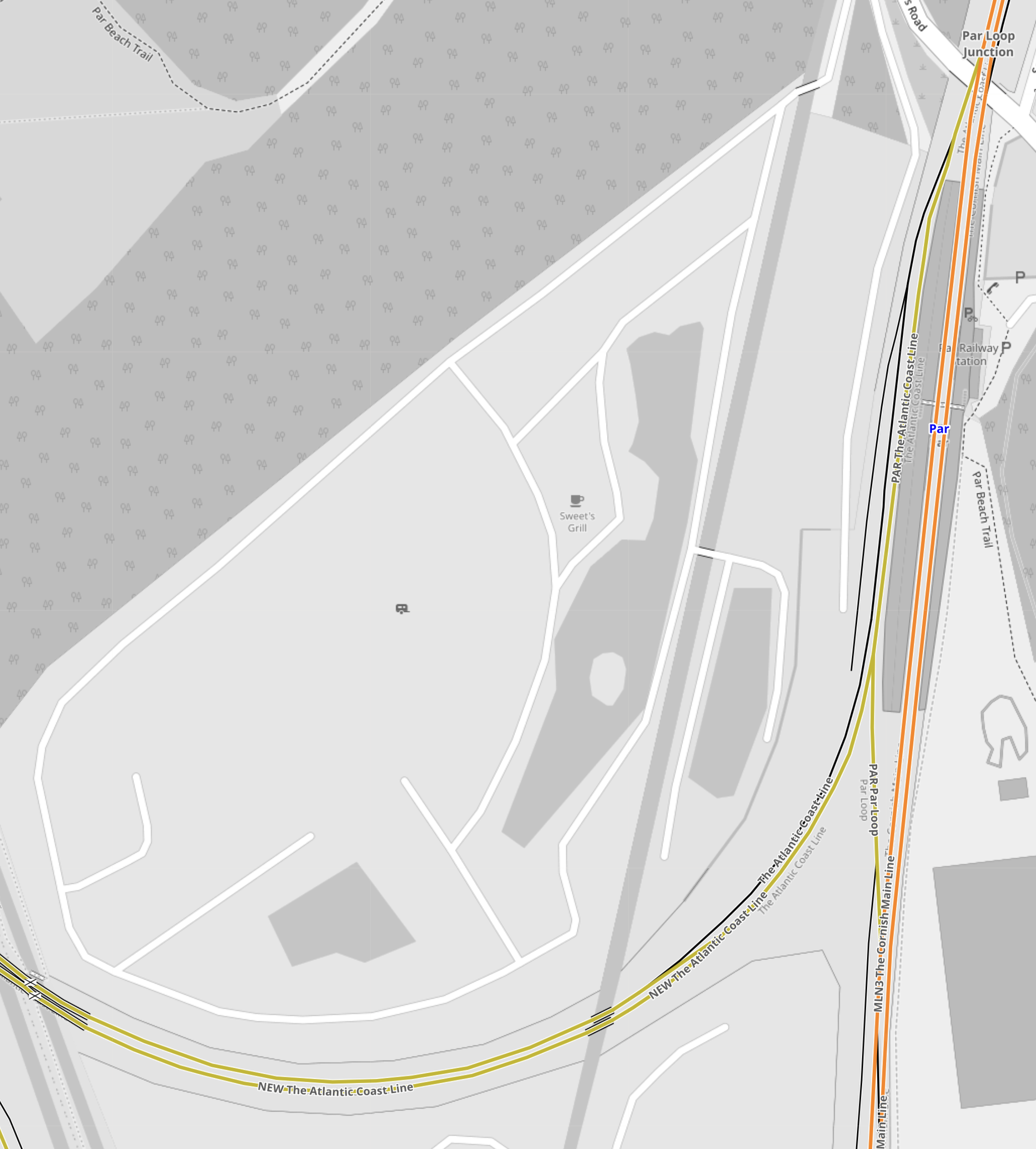
Note.
- The tracks shown in orange form the Cornish Main Line.
- The tracks shown in yellow that curve away to the West are the Atlantic Coast Line.
- The busy level crossing is shown in the South-West corner of the map.
- The Atlantic Coast Line connects to Platform 3 on the West side of the station.
- The track layout allows trains to access Platform 3 from both directions on the Cornish Main Line.
It does look like, Mid-Cornwall Metro trains will have to reverse every time, they call at Par station.
Could The Cornish Main Line Be Electrified At Par Station?
At some point in time, it will be desirable to run zero-carbon trains both on the Mid-Cornwall Metro and the Cornish Main Line.
- Plymouth and Par is a distance of 34.7 miles.
- Truro and Par is a distance of 19 miles.
- Newquay and Par is a distance of 20.8 miles.
- All of these distances would be in range of a typical battery-electric train.
- In The Data Sheet For Hitachi Battery Electric Trains, I said that a Hitachi express train with a battery range of 43.5 miles.
To my untrained eye, it looks like Par station wouldn’t be the most difficult place to electrify.
I believe there are possibilities to put an island of electrification at Par to give the trains a quick Splash-and-Dash before continuing.
Chiltern Railways New Trains For Aylesbury
This page on the Chiltern Railways web site, is entitled Chiltern Railways 2030 Vision.
This is an extract from the page.
It covers how investing in our fleet is:
- The Right Route for people by driving forward improvements in punctuality, level of crowding, frequency and seating capacity.
- The Right Route for connections by making it easier for people to travel by train to the places they need to go, and bring people and businesses closer together through a stronger network.
- The Right Route for our environment by reducing carbon emissions and helping customers to use their cars less across our route.
- The Right Route for innovation by helping create jobs and economic activity across our route and the national supply chain.
- The Right Route for the future of our communities by helping reach communities reach their full potential as more people move to towns, villages and cities across the route.
We plan to work closely with the Department for Transport to agree the scope and funding for new trains between London and Aylesbury soon.
These trains run to Aylesbury and/or Aylesbury Vale Parkway stations.
- London Marylebone and Aylesbury via High Wycombe – 43.5 miles (70 km.) – 17 stops
- London Marylebone and Aylesbury via Amersham – 38.8 miles (62.4 km.) – 10 stops
- London Marylebone and Aylesbury Vale Parkway via Amersham – 41.2 miles (66.3.) – 11 stops
- Princes Risborough and Aylesbury – 7.2 miles (11.6 km.) – 2 stops
Note.
- The longest round trip is under 150 km.
- Trains terminating at Aylesbury Vale Parkway take around twenty minutes to go from Aylesbury to Aylesbury Vale Parkway and back to Aylesbury, which is more than enough time to charge a battery-electric train.
- It is mainly single-track between Aylesbury Vale Parkway and Aylesbury stations.
- Princes Risborough shuttles seem to wait be at Aylesbury station for about ten minutes, which is more than enough time to charge a battery-electric train, for the short route.
- Direct Marylebone services via Amersham 80 miles (appear to be at Aylesbury long enough to charge a battery-electric train.
It looks to me that if Aylesbury and Aylesbury Vale Parkway stations and the track between the two stations were to be electrified, that a battery-electric train with a range in excess of 87 miles (140 km.) can run all services to Aylesbury and Aylesbury Vale Parkway stations.
Is there a battery-electric train with a range of say 150 km?
This page on the Hitachi Rail website is called Battery Commuter Trains.
If you download the fact sheet, it says that their four-car battery-electric train has a range of 150 km.
I suspect that other manufacturers can also produce a four-car battery-electric train has a range of 150 km, that would suit Chiltern’s needs.
Electrification At Aylesbury
I estimate that only about four miles of single-track electrification will be needed at Aylesbury.
The cost of this can surely be bundled in with the cost of the new trains.
Conclusion
It looks to me, that with a few miles of electrification at Aylesbury, Hitachi can deliver trains, that will electrify services to both Aylesbury stations.
Derby Station – 15th December 2023
I took these pictures of Derby station, when I changed trains.
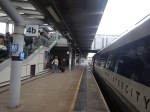
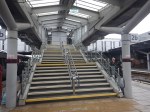
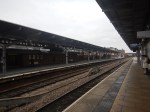
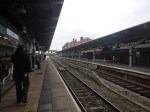
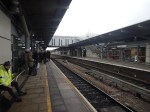


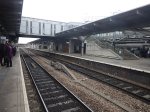
It’s the first time, that I’ve been in the station since it has been extended.
This Google Map shows the current station layout.
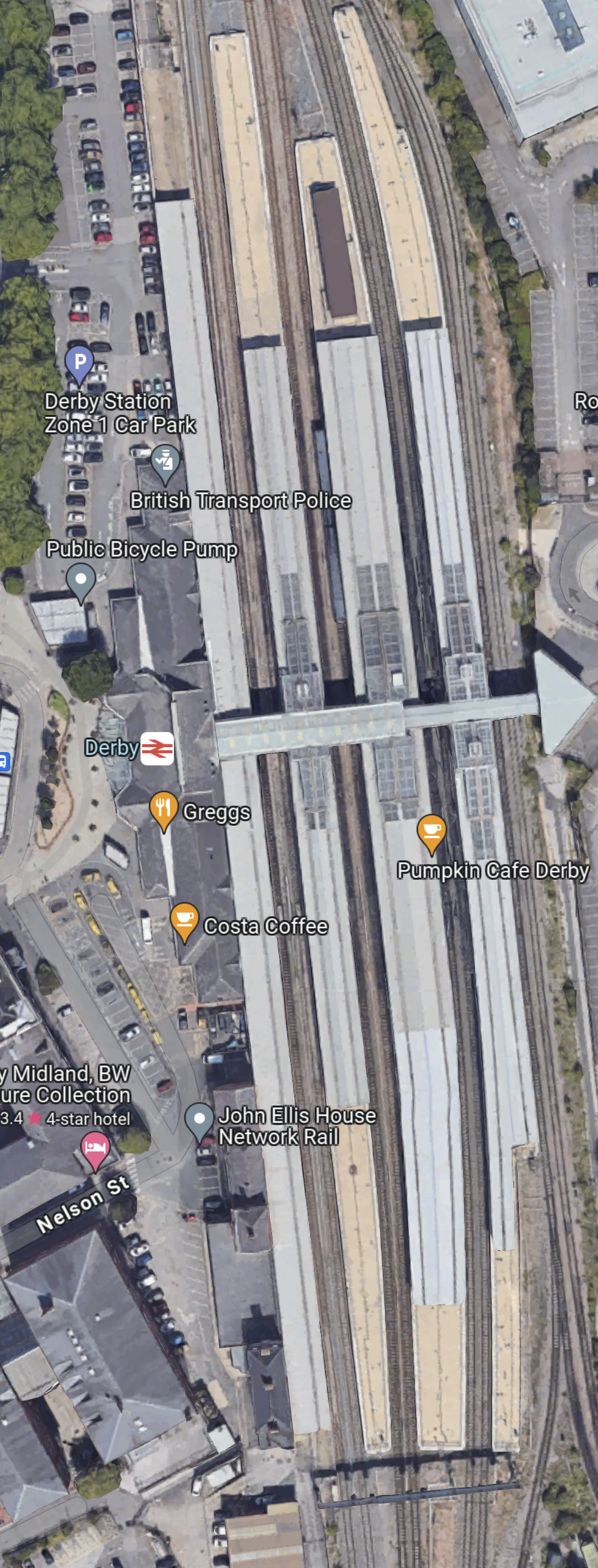
Note.
- There are now seven platforms.
- Platforms are numbered from the West.
- There is a bridge with lifts giving access to all platforms from both sides of the tracks.
Although, the station will be electrified, there is no sign of any pre-electrification works.
Huddersfield Station – 15th December 2023
I took these pictures at Huddersfield station today.
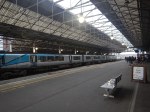
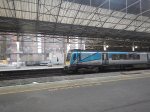

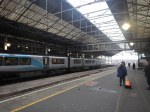
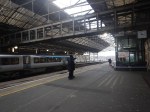









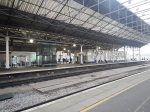
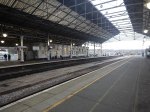
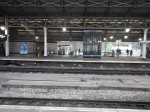
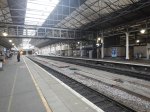
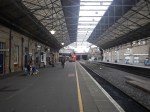
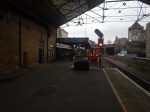
Note.
- The station is a Grade I Listed building.
- The station will be fully-electrified under the TransPennine Upgrade.
- St. George’s Square in front of the station is pedestrianised.
- There is a pub in each wing of the station.
This OpenRailwayMap shows the tracks between Huddersfield and the next station to the East; Deighton.
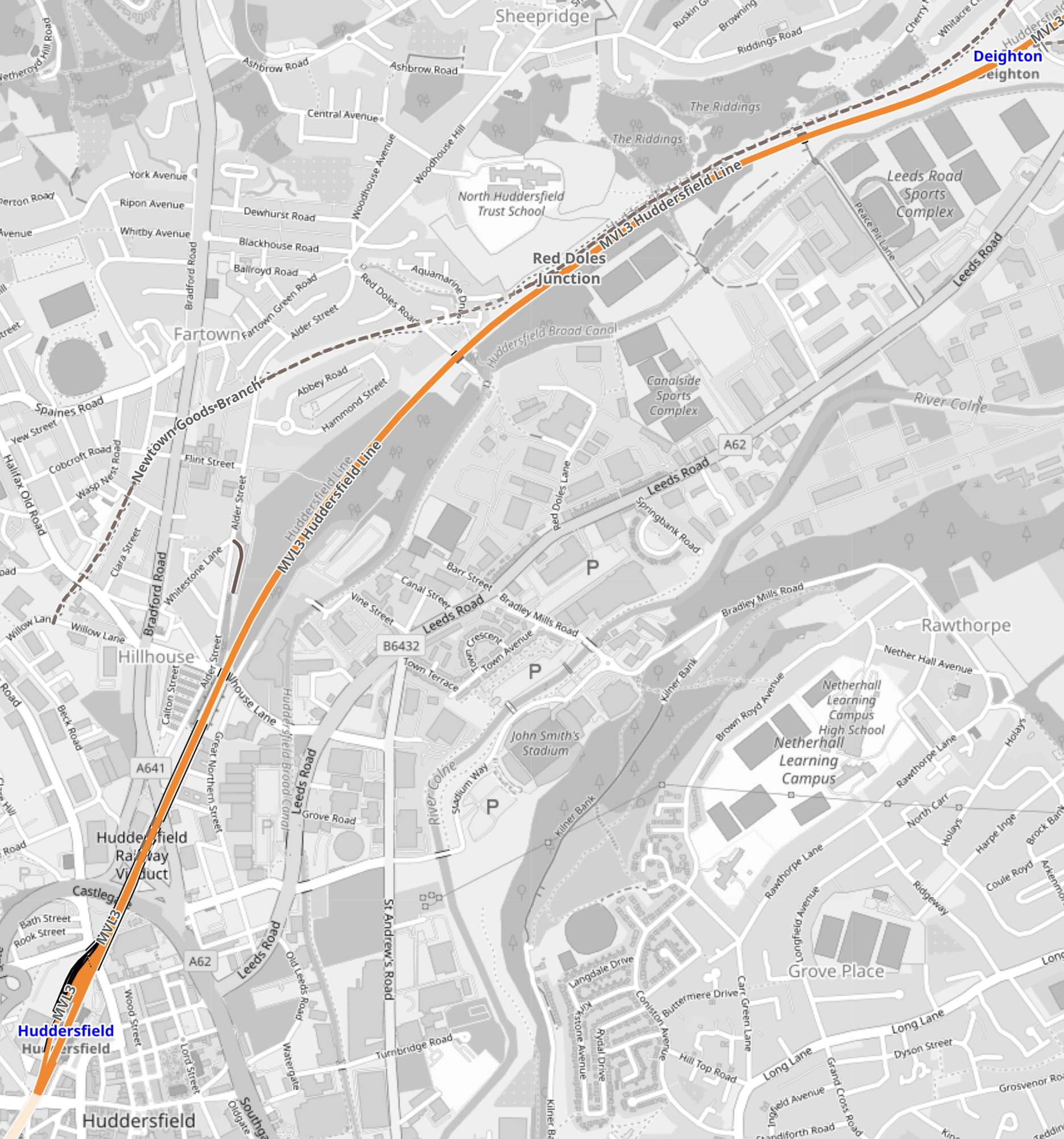
Note.
Huddersfield station is in the South-West corner of the map, where the tracks lead to Manchester.
Deighton station is in the North-East corner of the map, where the tracks lead to Leeds.
The tracks between the two stations will be electrified as part of the TransPennine Upgrade.
This second OpenRailwayMap shows the layout of platforms and tracks in Huddersfield station.
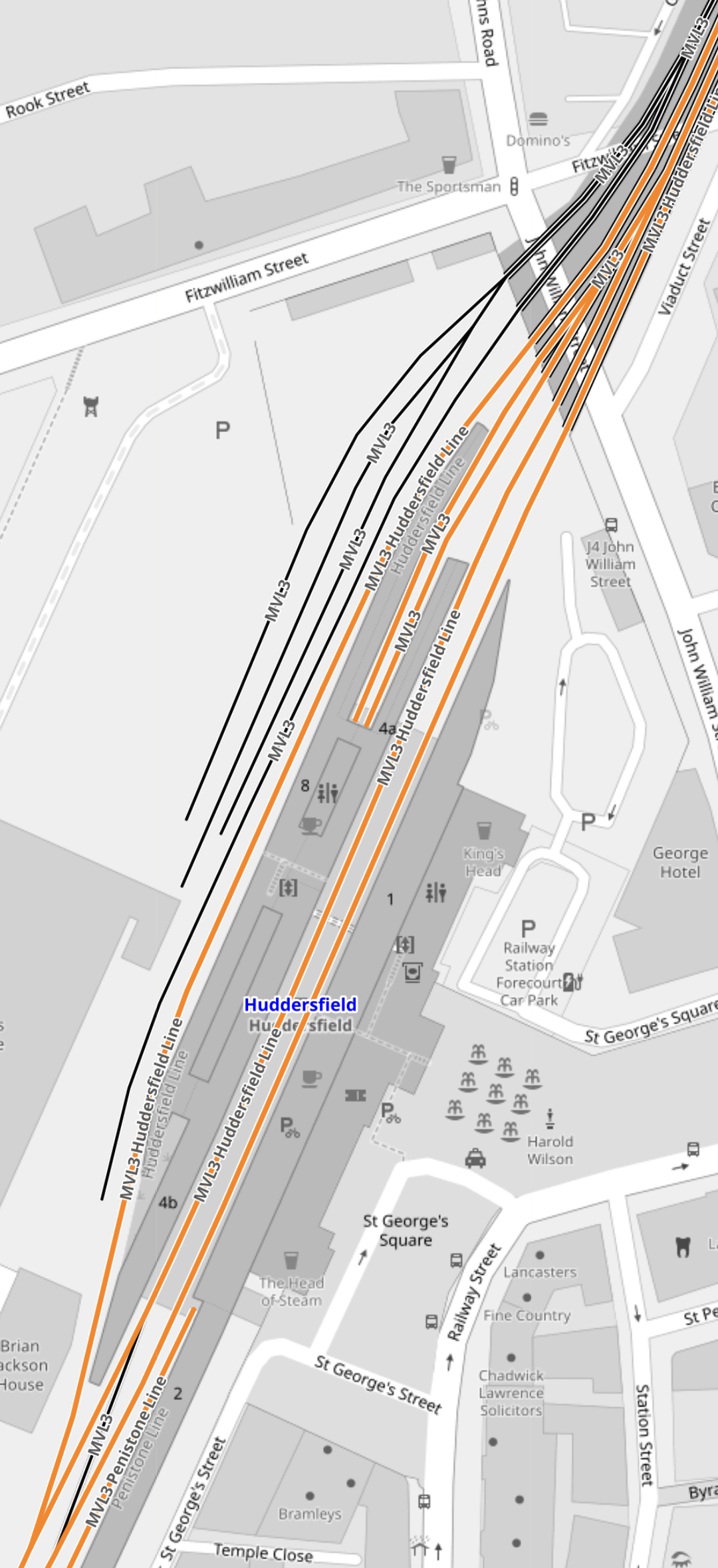
Currently, there are the following platforms.
- Platforms 1, 4 and 8 are through platforms.
- Platform 2 is a bay platform at the Manchester end of the station is used by trains on the Penistone Line to Sheffield.
- Platform 5 and 6 are two bay platforms at the Leeds end of the station, that are used by services to and from Bradford Interchange.
The Wikipedia entry for Huddersfield station says these changes will be made under the TransPennine Upgrade.
Work is underway on Network Rail’s Transpennine Route Upgrade project, which will see electrification of the Huddersfield Line, allowing many of the services through the station to switch to newer, faster electric rolling stock. As part of this project the signal box on platform 4 which was decommissioned previously will be removed, its control area already passed to the York Rail Operating Centre as a part of the Huddersfield Re-signalling project. To match the quadrupling of the line north of Huddersfield, the project will in effect split the existing island platform, extending the existing bay platforms 5 and 6 to form two new through platforms covered by a new roof, and add a new footbridge at the Leeds end. The process will also include relocating the 1880s island platform tea room, and rotating it through 180 degrees.
It looks like the functionality of the station for passengers, staff and operators will be upgraded to the level of style of the station.
Performing The Upgrade
I learned today, that during some parts of the upgrade work, Deighton station will be used as a temporary station for Huddersfield.
Three New Battery-Only Revolution Very Light Rail Vehicles
This title of this post, is the same as that as this press release from Eversholt Rail Group.
These are the three bullet points.
- Eversholt Rail funding three brand-new Revolution Very Light Rail vehicles for passenger trials and ongoing operation.
- Manufactured in the UK by Transport Design International.
- Battery-only propulsion, providing zero-emissions operation.
These three paragraphs fill out the story.
Innovative new lightweight passenger trains that will help decarbonise Britain’s railways are to be trialled after a new deal was announced this week.
The new Revolution Very Light Rail vehicles will run entirely on battery power and could be carrying passengers within three years. A new system of lineside fast charging will mean the whole operation has zero emissions.
Some of Britain’s major rail operators are already showing interest in the RVLR vehicles as they seek to fulfil promises to make rail ‘cleaner’.
This is also said about looking for routes, to trial the new vehicles.
Eversholt Rail and TDI are working with key stakeholders across the UK rail industry to agree routes and services where operators can run passenger-carrying trials using these new vehicles. These trials will generate actual passenger demand data to support business cases for long-term deployment of RVLR vehicles as well as providing further passenger and operator feedback on their design and capabilities.
I have some thoughts and questions.
What Is The Top Speed?
A lot of questions like this are answered by this article on Rail Engineer, which is entitled Very Light Rail – A Revolution.
These can be ascertained from this comprehensive article.
- Top Speed – 65 mph
- Seats – 56
- Wheelchair space
- PRM TSI accessibility compatible
- Tare Weight – 24.8 tonnes
- USB Charging
For comparison these figures relate to a PRM-compliant Class 153 diesel train.
- Top Speed – 75 mph
- Seats – 59
- Tare Weight – 41.2 tonnes
This picture shows one of the Class 153 trains at Matlock Bath station.
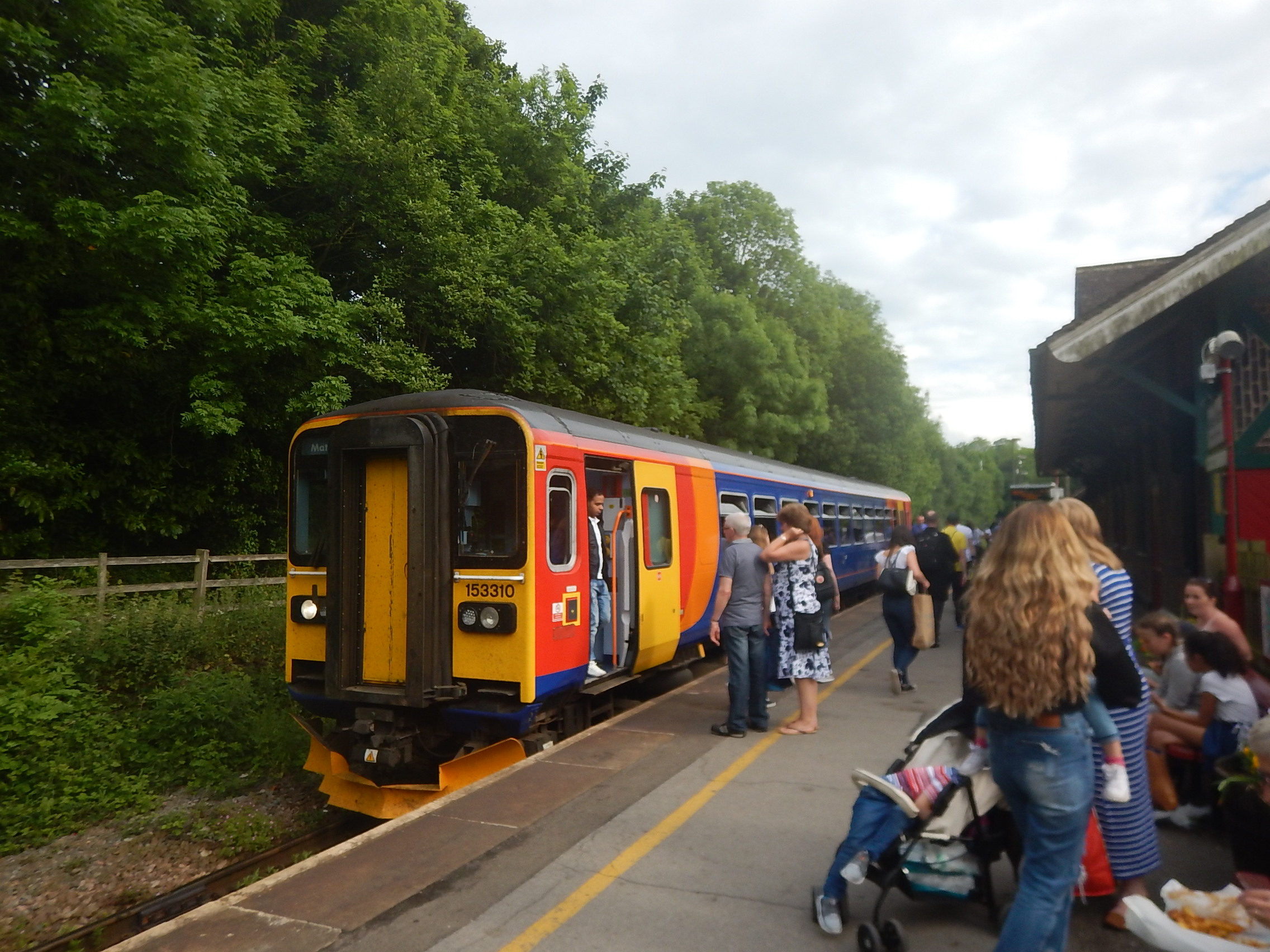
There are still around thirty in service in the UK.
Can Two Revolution VLRs Run As A Two-Car Train?
From the pictures on the web, the trains have buffers and space for a coupler, so until someone says they must always run as single units, I’ll assume they can at least run as a pair.
Can A Revolution VLR Recharge Its Batteries Using Conventional 25 KVAC Overhead Electrification?
One route, that is a possibility for running using Revolution VLR must surely be the Greenford Branch, which connects to the electrified Great Western Main Line at West Ealing station.
In this and at several other places on the network, it could be easier to charge the trains using the existing overhead electrification or an extension of it.
Another possibility; the Marston Vale Line is also electrified at both Bedford and Bletchley.
In New Mobile Rail Charging Facility For Long Marston, I talked about how Siemens are developing a mobile charger, which initially will be deployed at Long Marston.
It could be very useful for efficient operation, if the batteries on a Revolution VLR could be charged in a number of places, which included conventional electrification.
If charging only happened, whilst trains were stationary, a lightweight pantograph and appropriate electrical gubbins might be sufficient.
Can A Revolution VLR Replace A Class 153 Train?
I suspect on some routes this will be possible, but on others, the speed or hill-climbing requirements might be too stiff for the lightweight train.
But, if I was designing a train like the Revolution VLR, I’d make sure it fitted as many markets as possible.
The picture was taken at Matlock Bath station on the Derwent Valley Line, which is a single track with a fifty mph limit and an uphill climb. I suspect that the Revolution VLR would be designed to handle the uphill part of the route, but would the train be able to handle the speed of the Midland Main Line to Derby.
The Revolution VLR would probably attract more passengers, so it might be necessary to double up the service by running a pair.
Can A Pair Of Revolution VLRs Replace A Class 150 Train?
I don’t see why not!
Could The West London Orbital Use Revolution VLRs?
This might be a proposed route that could use Revolution VLRs.
The two routes would be.
- West Hampstead and Hounslow.
- Hendon and Kew Bridge.
Both services would use the Dudding Hill Line and serve Neasden, Harlesden, Old Oak Common and Acton, with a frequency of four trains per hour (tph).
Although this service could be run using conventional multiple units, it might be more affordable to use Revolution VLRs charged on sections of line that are already electrified.
Could the Greenford Branch Use Revolution VLRs?
The Greenford Branch would be a classic application and trains could be charged by fitting a charger in the bay platform at West Ealing station.
In An Automated Shuttle Train On The Greenford Branch Line, I did a rough calculation to see if an automated shuttle could achieve four tph.
Four tph might be too ambitious, but automatic trains shuttling along a branch line might be an affordable way to provide zero-carbon trains with an adequate capacity.
- The driver would drive the train using the sort of remote control used for drones.
- The driver would sit in a convenient place on the train, with CCTV to help them see everything.
- When the train was ready to leave, the driver would push a button to tell the train to move to the next station.
- On arrival at the next station, the doors will open.
- The process would repeat along the line.
If this method of operation sounds vaguely familiar, the Victoria Line has used it since 1067.
Although the Victoria Line drivers always sit in the front.
But on a line with no other trains running at the same time, all they need is a good view of the doors.
Branch lines that could be run in this way could include.
Bodmin Parkway and Bodmin General
Brockenhurst and Lymington Pier
Grove Park and Bromley North
Lancaster and Morecambe
Liskeard and Looe
Lostwithiel and Powey
Maidenhead and Marlow
March and Wisbech
Par and Newquay
Plymouth and Gunnislake
Romford and Upminster
Sittingbourne and Sheerness-on-Sea
Slough and Windsor Central
Southall and Brentford
St. Erth and St. Ives
Truro and Falmouth Docks
Twyford and Henley-on-Thames
Watford Junction and St. Albans Abbey
West Ealing and Greenford
Wickford and Southminster
Wymondham and Dereham
Crafty Electrification On The Rhymney Line
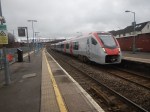
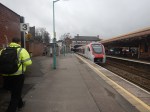
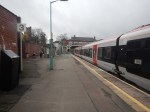
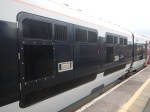
I was puzzled on Wednesday, when I took the Class 231 train to Caerphilly on the Rhymney Line, when I saw no signs of electrification.
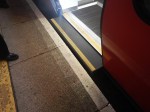
These are pictures I took at Caerphilly station.
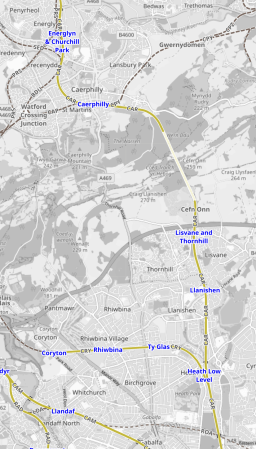
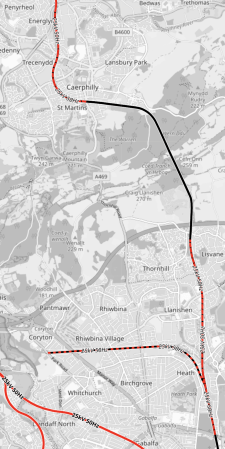
These two OpenRailwayMaps show the tracks through Caerphilly.
Note.
- The map on the left shows infrastructure, with the Rhymney Line shown in yellow.
- Caerphilly station is in the top third of the map.
- The white section of the Rhymney Line is the Caerphilly tunnel.
- The map on the right shows electrification, with the sections of the Rhymney Line that will be electrified are shown in red.
- Black sections will not be electrified.
- North of Caerphilly, the Rhymney Line is electrified, but through the station and the Caerphilly tunnel, there will be no electrification.
Trains will use battery power, where there is no electrification.
This article on Modern Railways gives more information.
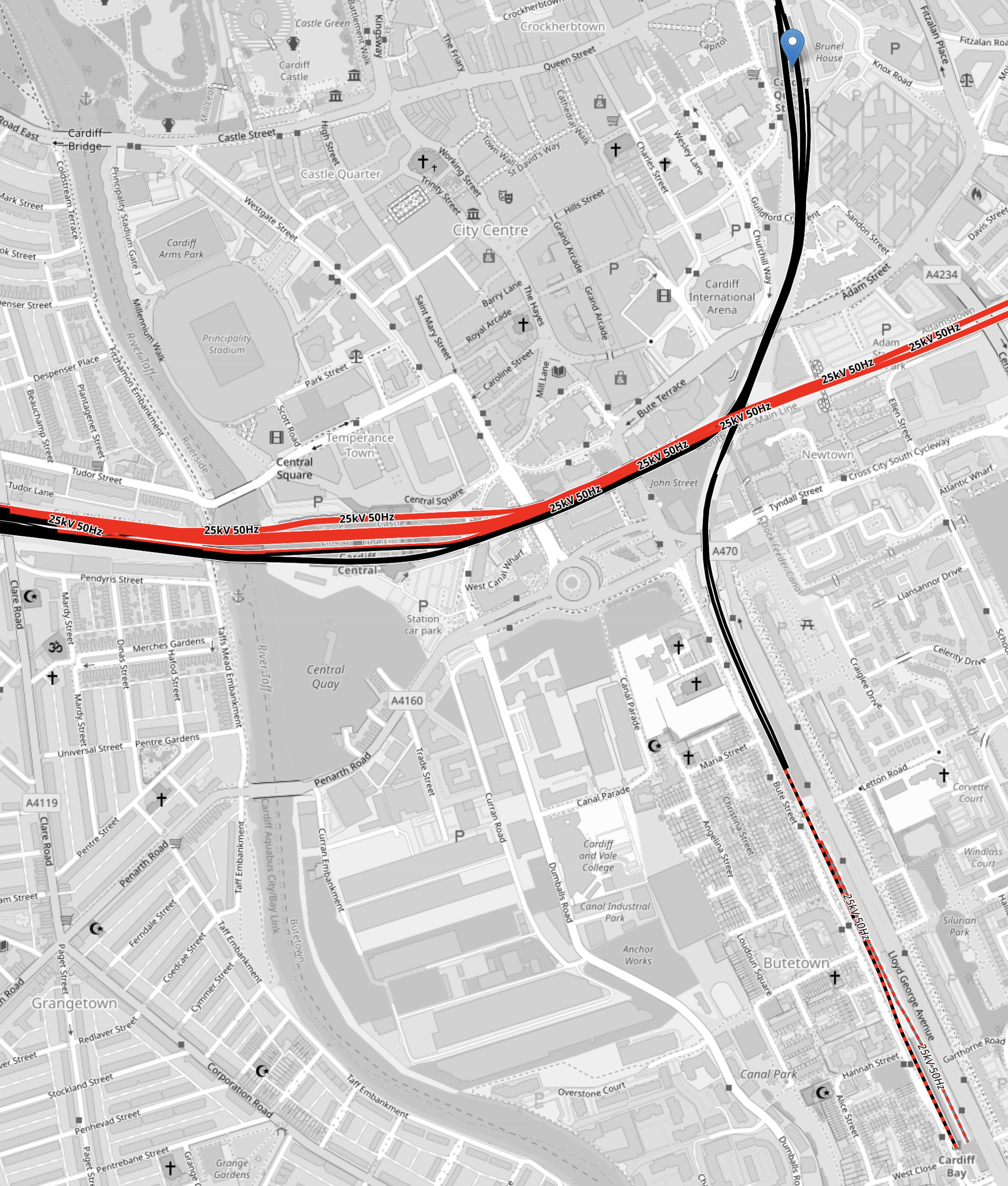
This OpenRailwayMap shows the electrification around Cardiff Central and Queen Street stations.
Note.
- Electrified lines are shown in red.
- Unelectrified lines are shown in black.
- The four-platform Cardiff Queen Street station is marked by the blue arrow in the North-East corner of the map.
- There appears to be no plans for electrification in Cardiff Queen Street station.
- The electrified line across the map is the South Wales Main Line.
- The nine-platform Cardiff Central station sits on the South Wales Main Line.
- The main line platforms at Cardiff Central station are electrified, but it appears that Platforms 6.7 and 8. that will serve the South Wales Metro, will not be electrified.
- The line going to the South-East is the branch to Cardiff Bay station.
- The Southern part of this branch appears to be planned to be electrified. so that it can charge the tram-trains before they return North.
This article on Modern Railways says this about catenary-free sections (CFS) in the electrification of the South Wales Metro.
Catenary-free sections are concentrated on areas where it is disproportionately expensive to erect overhead wires. These include the area around Cardiff Queen Street station and the adjacent junction, which has complicated switches and crossings. North of Queen Street, the Cathays area adjacent to Cardiff University and the hospital would present a significant electromagnetic compatibility challenge, so a CFS avoids this complication. Other catenary-free areas will include Pontypridd, where the station features listed canopies and the track is curved, and around the new depot at Taff’s Well, where there will be a significant number of new switches and crossings as well as challenges around highway bridges.
I am in touch with two major electrification companies and I am sure we’ll be seeing a lot more crafty electrification and the use of battery-electric trains.
Are LNER Going To Take On The Airlines?
Nine years ago, I wrote Edinburgh – Plane Or Train?, after a trip to Scotland, where I took easyJet up and came back in First Class by train.
- Both trips were about five hours door-to-door.
- The flight was about six quid more,
- But I got free food and drink on the train.
- Security on the plane was a pain.
- I had to take my passport for identification at Stansted.
I haven’t flown internally in Great Britain since, although, I have flown to Belfast.
For shorter flights the market is going towards rail, as these posts seem to suggest.
- 2.7M Tonnes Of Co2 Could Be Saved Per Year If UK Domestic Flights Went Electric
- Air Travellers To Be Hit By Carbon Charge On All Tickets
- Climate Change ‘May Curb Growth In UK Flying’
- France Bans Short-Haul Flights To Cut Carbon Emissions
- KLM Replaces Plane With High Speed Train
- Lumo Carbon Data Shows Its Trains Are 22 Times Greener Than Flying
- Next Time I’ll Go By Train
- Ryanair One Of Europe’s Top Polluters, EU Data Suggests
- Stop Taking Internal Flights And Go Green, Says Lib Dem Contender Davey
The climate seems to be turning against flying short-haul.
This is a paragraph, in this press release from LNER, which is entitled First Tri-Mode Long Distance Trains For The East Coast Main Line.
This new fleet of trains will keep LNER on track to reduce its emissions by 67 per cent by 2035 and be net zero by 2045. LNER has already reduced carbon emissions by 50 per cent compared with 2018/19. Per mile, LNER trains produce 15 times less carbon emissions than a domestic flight.
Are LNER building a number of climate-based sticks, with which to beat the airlines on the routes, where they compete?
These are my thoughts on the various routes, where LNER compete with airlines.
Newcastle
Newcastle is an interesting one.
- Newcastle station is in the city centre and is on the Tyne and Wear Metro.
- London King’s Cross is one of London’s major Underground hubs.
- There are lots of buses and local trains within walking distance of both stations.
- There are three trains every two hours and an additional eight trains per day (tpd) between the two London King’s Cross and Newcastle stations.
- Lumo also run five tpd on the route.
- There are generally no security delays at rail stations.
- London King’s Cross is laid out to maximise passenger flows. If it gets busy, everybody just walks out into King’s Cross Square.
- I’ve never had a problem at Newcastle station with overcrowding.
Perhaps, if you live near one of the airports, flying is more convenient.
LNER’s weapons against the airlines between London King’s Cross and Newcastle will be convenience and journey times.
Convenience is all about the location of the stations, their excellent local transport networks and good walking routes around the station.
Journey times will only get better, as the magic of digital in-cab signalling, allows the Azumas, the new CAF tri-mode long distance trains and the few remaining InterCity 225s to show what they were designed to do.
Dalton-on-Tees, where the first phase of the digitally signalling will end, is 39.8 miles South of Newcastle, so once the Newcastle train is passes Dalton-on-Tees on the East Coast Main Line, it will be a digital-signalled electrified railway all the way to Woolmer Green.
- Dalton-on-Tees is 39.8 miles South of Newcastle
- Woolmer Green is 244.8 miles South of Newcastle.
- Dalton-on-Tees and Woolmer Green is 205 miles.
- Newcastle and Dalton-on-Tees takes 37 minutes.
- Woolmer Green and King’s Cross takes 18 minutes
- Trains take typically an average three hours and nine minutes between London and Newcastle.
- A typical train time by LNER between Dalton-on-Tees and Woolmer Green is two hours and 14 minutes.
- This is an average speed of 91.8 mph between Dalton-on-Tees and Woolmer Green.
- Between London King’s Cross and Newcastle is fully-electrified.
I can build a table of timings and savings at various average speeds.
- 120 mph – 103 minutes – two hours and 38 minutes – 31 minutes
- 125 mph – 98 minutes – two hours and 33 minutes – 36 minutes
- 130 mph – 95 minutes – two hours and 30 minutes – 39 minutes
- 135 mph – 91 minutes – two hours and 26 minutes – 43 minutes
- 140 mph – 88 minutes – two hours and 23 minutes – 46 minutes
Note.
- The first field is the average speed between Dalton-on-Tees and Woolmer Green.
- The second field is the time between Dalton-on-Tees and Woolmer Green.
- The third field is the time between London and Newcastle.
- The fourth field is the saving over current timings.
- The London and Newcastle time is calculated by adding the times for the three sections together.
I have regularly timed trains at a very constant 125 mph, so with digital signalling, I suspect an average of 130 mph is possible.
This would mean, times of a few minutes under two hours and thirty minutes could be possible between London and Newcastle.
Edinburgh
Edinburgh builds on the improvements South of Newcastle.
Edinburgh station Waverley is a well-connected station.
- There are lots of buses, local trains and the Edinburgh Tram within walking distance of Edinburgh Waverley station.
- There are three trains every two hours and an additional seven tpd between the London King’s Cross and Edinburgh Waverley stations.
- Lumo also run five tpd on the route.
- Trains take typically an average four hours and thirty minutes between London and Edinburgh Waverley.
- Any savings because of the digital in-cab signalling between London and Newcastle can be applied to London and Edinburgh Waverley services.
As my calculations showed that averaging 130 mph between Dalton-on-Tees and Woolmer Green could save 39 minutes on journey times, I am fairly sure than a sub-four hour journey time will be possible between London and Edinburgh Waverley.
It should also be noted that that the power supply has been improved between Newcastle and Edinburgh Waverley.
- The distance between Newcastle and Edinburgh Waverley is 124.2 miles
- Newcastle and Edinburgh Waverley takes around one hour and 30 minutes.
- This is an average speed of 82.8 mph between Newcastle and Edinburgh Waverley.
- Between London King’s Cross and Edinburgh Waverley is fully-electrified.
As the record time for between London King’s Cross and Edinburgh Waverley was set by an InterCity225 train in 1993 at three hours and twenty-nine minutes, I suspect that with more digital signalling and some track improvements, that there are more journey time improvements to be squeezed out.
I certainly believe that a time of three hours and fifty minutes between London and Edinburgh Waverley will be regularly achieved. This is a journey time saving of around forty minutes.
Dundee
Dundee has an airport and a station on the East Coast Main Line.
Trains between London King’s Cross and Dundee take around five hours and 45 minutes.
LNER run three trains per day to and from London King’s Cross and one tpd to and from Leeds.
CrossCountry also run services.
Loganair has two flights per day to Heathrow.
Aberdeen
Aberdeen builds on the improvements South of Edinburgh.
The four direct tpd between London and Aberdeen take around seven hours and ten minutes.
This should come down to around six hours and thirty minutes with the journey time savings between London King’s Cross and Edinburgh Waverley.
Will this tempt travellers from the airlines?
Battery-Electric Trains To Dundee And Aberdeen
One thing that will help, is that Edinburgh and Aberdeen is to be partially electrified.
InPiling Work To Get Underway To Electrify Line To Fife, I included this Network Rail map of the electrification.
This map has been downloaded from the Network Rail web site.
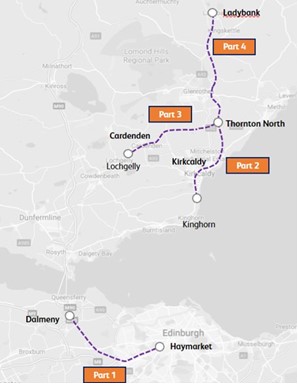
The electrification is split into four phases.
- Haymarket and Dalmeny – 25 km
- Kirkcaldy and Thornton North – 25 km.
- Lochgelly and Thornton North – 20 km.
- Thornton North and Ladybank – 34 km.
Note.
- The last three phases of electrification connect to Thornton North.
- The new rail link to Leven will also be electrified. and connected to Thornton North.
- The Forth Bridge is not to be electrified.
As Ladybank station is just 91.4 miles from Aberdeen, I suspect LNER will use Hitachi Intercity Battery Hybrid Trains to serve Aberdeen.
If these trains haven’t got the range, then I suspect LNER’s new CAF Tri-Mode Trains could handle the route.
Inverness
Inverness has a problem.
Zero-carbon trains will be unlikely to get to the city without full electrification of the Highland Main Line.
- Dunblane is the nearest electrified station to Inverness, but it is 146.2 miles away over a route with lots of steep climbs.
- I doubt that a battery-electric train could handle that route.
One solution would be for LNER to run the new CAF Tri-Mode Trains to Inverness using HVO or biodiesel.
Glasgow
Glasgow is the only other Scottish city with an airport and good rail connections to the South.
I am sure that Avanti West Coast will target airline passengers, if LNER prove it is a successful policy.
Other Factors
These are other factors, that will come into a traveller’s choice.
First Class
Some travellers like a bit more comfort and service.
Ability To Work
Some travellers like to work on a train.
You Don’t Get Tables On a Plane
I like to open a paper or magazine flat, which is difficult on a plane.
Views Tend To Be Better On a Train
Providing you get a window!
Parking Tends To Be Better At An Airport
But it may be more expensive!
Security Is Less Hassle On A Train
At the moment!
You Don’t Need To Prove Your Identity On A Train
Not in the UK! Yet!
Conclusion
It looks like LNER can offer the airlines to four of our major Northern cities serious zero-carbon competition.
High Speed Two To Barrow-in-Furness
There has been a lot of speculation about the Northern end of High Speed Two, so I might as well add sort out a few facts and add a bit of speculation of my own.
Barrow-in-Furness Used To Have A Service To London
Barrow-in-Furness station doesn’t have a direct service to London.
This paragraph from the Wikipedia entry, describes how it used to be.
The present station was formerly known as Barrow Central, and at one time it was a terminus for British Rail long-distance or InterCity services. From October 1947 until May 1983 these included sleeper services to and from London Euston. A sleeper service in the London direction only was briefly reintroduced between May 1987 and May 1990.
Note.
- I find it interesting, that the area had both InterCity and sleeper services.
- There are some big employers like BAe Systems and British Nuclear Fuels in the area.
- Rishi Sunak has announced that the Cumbrian Coast Line will be upgraded.
- A High Speed Two service could improve low-carbon access to the Lake District.
- Grimsby/Cleethorpes in Lincolnshire, which probably has a similar economic profile to Barrow-in-Furness appears to be getting a service from London as I wrote about in Azuma Test Train Takes To The Tracks As LNER Trials Possible New Route. So why shouldn’t Barrow-in-Furness have a similar service?
It is my view that Barrow-in-Furness station could support a sprinkling of services.
The Current Barrow-in-Furness Service
Barrow-in-Furness station’s current services are described in these two paragraphs from the Wikipedia entry.
Services to the north are provided on Monday-Saturday by Northern, with services approximately hourly during the day to Whitehaven and Carlisle. One train per day operates to Sellafield specifically for workers at Sellafield nuclear plant (BNFL). Evening trains run only as far as Millom. There are 19 northbound departures each weekday; 15 of these go to Carlisle, three to Millom and one to Sellafield. There are 20 arrivals from the northern part of the line: 15 from Carlisle, three from Millom, one from Maryport and one from Sellafield. Some of these services continue along the Furness Line to Lancaster and Preston.
To the south, there are a mixture of stopping services to Lancaster and a number of through services to Manchester Airport via Manchester Piccadilly. These operate on a broadly hourly frequency, with a few peak extras throughout the week (including Sundays).
Hard facts on what the improvements to the line will be, have not been reported. But it does seem that a doubling of frequency to two trains per hour (tph) is being proposed.
What Are The Government’s Plans?
This news story from the Government is entitled North West To Benefit From £19.8 billion Transport Investment.
Proposed improvements in Cumbria are contained in this paragraph.
A brand new £2.5 billion fund to transform local transport in 14 rural counties, smaller cities and towns. This new money could pay for new stations, further electrification, bus corridors and new integrated public transport networks. The Energy Coast Line between Carlisle, Workington and Barrow will be upgraded, improving capacity and journey times, enabling trains every 30 minutes between Carlisle, Workington and Whitehaven. The upgrade will also accommodate major new freight demands from the new coal mine and provide regular services for the Westlakes Science Park, Nuclear Academy and Sellafield. This could support the creation of over 18,000 jobs.
I have my thoughts.
Will The Route Be Electrified?
The Cumbrian Coast and the Furness Line effectively form a near 120 mile loop between Carnforth and Carlisle stations on the West Coast Main Line.
- A journey from one end to the other takes about three hours and 18 minutes.
- Main towns and places served include Barrow-in-Furness, Sellafield, Whitehaven and Workington.
- A train between Carnforth and Carlisle can stop at as many as 29 stations.
- The route is not electrified, but it connects to the electrified West Coast Main Line at both ends at Carnforth and Carlisle.
This OpenRailwayMap shows Carnforth.

Note.
- The red line is the West Coast Main Line between Carlisle and Lancaster.
- Carlisle is to the North.
- Lancaster is to the South.
- The black line going North-West is the Furness Line to Barrow-in-Furness.
- The black line going East is the Bentham Line to Settle and Leeds.
This OpenRailwayMap shows Carlisle.

Note.
- The red line is the West Coast Main Line between Scotland and Carnforth.
- Scotland is to the North.
- Carnforth is to the South.
- The black line going South-West is the Cumbrian Coast Line to Workington, Whitehaven and Barrow-in-Furness.
- The black line going East is the Settle and Carlisle Line to Settle and Leeds.
If it were to be fully electrified, it could be a diversion route for electrified trains on the West Coast Main Line.
This document on the Government web site is the Train Technical Specification for High Speed Two Classic-Compatible Trains.
The specification says this about the unit and train formation.
The nominal length of the Unit shall be 200m. It has been determined that all Units should
be the same length, with no requirement for a Unit to be capable of being lengthened or
shortened. This supports the overall HS2 business case.The Unit shall be capable of Normal Operation as a single Unit or as two coupled Units.
On the Wikipedia entry for the Cumbrian Coast Line, there is a picture of a very long steam-hauled train on the line.
Full electrification would have these advantages.
- In the next few years several 21st century electrical multiple units will be looking for new places to operate.
- I am fairly certain, that a fully-electrified Cumbrian Coast Line could act as a diversion for High Speed Two and the West Coast Main Line between Carnforth and Carlisle.
- It would enable occasional High Speed Two services to Carlisle via Barrow-in-Furness, Sellafield, Whitehaven and Workington.
- It would also allow electrified freight trains to the new coal mine at Workington and to Sellafield.
But trains from the coal mine would probably need to have hydrogen-hybrid locomotives to get across the Pennines to Teesside for export.
Partial Electrification Of The Line
Partial electrification would probably need the following.
- Installation of electrification between Carnforth and Barrow-in-Furness, so that High Speed Two services can reach Barrow-in-Furness.
- Installation of electrification from Carlisle for enough miles towards Workington to be able to charge the local trains.
- The local trains would need to be able to run about seventy miles on batteries.
Partial electrification would be more affordable, but it would allow the following.
- Battery-electric trains to work between Carnforth and Carlisle.
- It would enable occasional High Speed Two services to Barrow-in-Furness
- Hydrogen-hybrid locomotive-hauled freight trains to the new coal mine at Workington and to Sellafield.
Rail passengers in, to and from Cumbria would probably see a similar level of improvement to that with full electrification.
What Time Would Be Possible At The Present Time?
Consider.
- According to the Wikipedia entry for High Speed Two, two hours and twenty-five minutes is the fastest time between London Euston and Lancaster.
- Trains are timed to take one hour and four minutes with the nine stops, between Barrow-in-Furness and Lancaster.
- To save time some stops could be cut between Barrow-in-Furness and Lancaster.
This would give a London Euston and Barrow-in-Furness time of three hours and twenty-nine minutes, but by removing perhaps five stops, the time could be around three hours and fifteen minutes.
What Time Would Be Possible When High Speed Two Lite Opens To Handsacre Junction?
Consider.
- According to the Wikipedia entry for High Speed Two, two hours and three minutes will be the fastest time between London Euston and Lancaster, after High Speed Two opens to Handsacre junction.
- Trains are timed to take one hour and four minutes with the nine stops, between Barrow-in-Furness and Lancaster.
- To save time some stops could be cut between Barrow-in-Furness and Lancaster.
This would give a London Euston and Barrow-in-Furness time of three hours and seven minutes, but by removing perhaps five stops, the time could be under three hours.
What Frequency Would Be Needed?
LNER seem to run their secondary services to places like Harrogate and Lincoln using a frequency of one train per two hours (tp2h).
That could be an ideal frequency.
Would There Be A Path For The Train To And From London Euston?
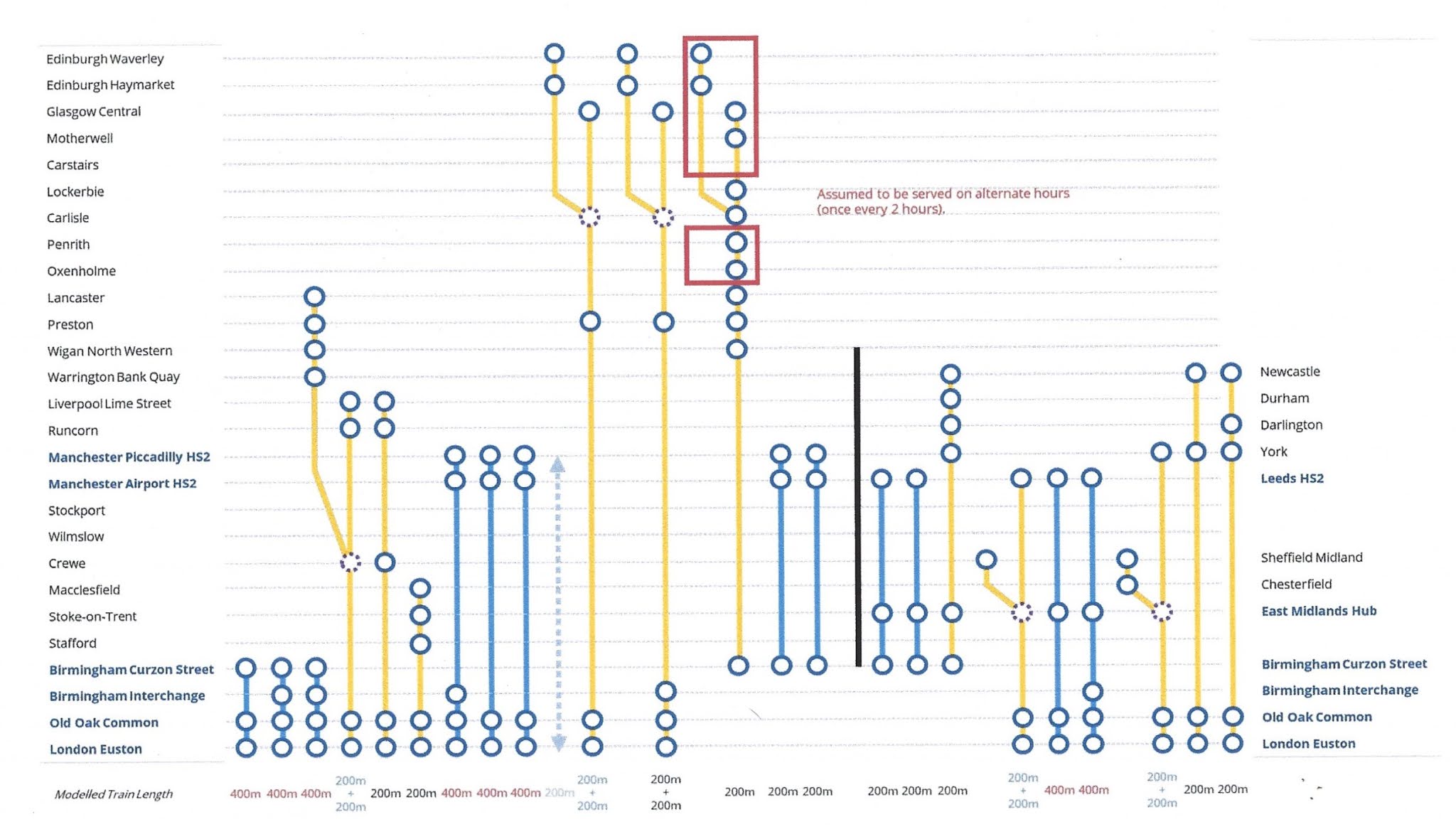
This graphic shows High Speed Two services after Phase 2b is completed.
Note.
- Services shown in blue are run by High Speed Two Full Size trains.
- Services shown in yellow are run by High Speed Two Classic-Compatible trains.
- Each of these trains will have a frequency of one tph.
- The nine paths to the right of the vertical black line will not be needed for some time. If ever!
- It looks like a maximum of only eleven paths will be needed to the South of Birmingham.
- It looks like a maximum of only fourteen paths will be needed to the North of Birmingham.
In Will High Speed Two Lite Make Stafford An Important Station?, I totted up all the services through Stafford after High Speed Two Lite opened to Handsacre junction and got these figures.
- Through Stafford station, there are totals of 11 tpd and 14 tph.
- Along the Trent Valley Line, there are totals of 11 tpd and 12 tph.
- North of Stafford on the West Coast Main Line, there are totals of 9 tpd and 12 tph.
- South of Stafford on the West Coast Main Line, there are totals of 2 tpd and 2 tph.
- Between Stafford and Stoke-on-Trent, there are totals of 2 tph.
I accounted for services moving from the West Coast Main Line to High Speed Two.
Consider.
- A large proportion of the route between Preston and Handsacre junction, where the route would join High Speed Two Light has two dedicated high speed tracks and two tracks for freight and local services.
- Digital signalling on High Speed Two has been designed to handle eighteen trains per hour (tph) at 225 mph.
- Surely, the two dedicated high speed tracks, if fitted with High Speed Two digital signalling could handle say 16 tph at 140 mph.
- Network Rail are good at juggling trains to squeeze in more services.
- Extra paths could be created by splitting and joining trains at Crewe or Preston.
My Control Engineering training and practice tells me that it should be possible to add perhaps two tph between Lancaster and Euston.
Could High Speed Two’s Lancaster Service Be Extended To Barrow-in-Furness?
I don’t see why some services could be extended the 34.8 miles to Barrow-in-Furness.
Would Much Work Be Needed At Barrow-in-Furness?
This Google Map shows Barrow-in-Furness station.

Note.
Trains to and from Carnforth come and go from the South East.
Trains to and from Sellafield, Whitehaven and Workington and Carlisle come and go from the North West.
There are three platforms.
Work needed to be done would include.
- Creation of a 200 metre platform for the High Speed Two trains.
- Electrification.
- Addition of charging facilities to the platform for the local trains, which would probably be standard electrification.
Passengers would walk across between the High Speed Two and local trains.
Conclusion
I believe that High Speed Two Classic-Compatible trains could be under three hours between Barrow-in-Furness and London Euston, when High Speed Two Lite opens from Handsacre junction.
High Speed Two To Holyhead
Rishi Sunak has just announced that the North Wales Main Line will be electrified, along with the cancellation of further phases of High Speed Two.
I have written about this topic before in Could High Speed Two Serve Holyhead?.
In that post, I started with this question and answer.
Why?
It could be a way to create a zero- or low-carbon route between the islands of Great Britain and Ireland.
In Could High Speed Two Finish At Lichfield?, I discussed, what might happen if the Birmingham to Manchester leg of High Speed Two were to be scrapped.
This was my main conclusion.
I strongly believe that an upgraded Trent Valley Line linked to a shortened High Speed Two at Lichfield could improve journey times between London, Birmingham and the North.
As the current Holyhead services will pass this junction between the Trent Valley Line and High Speed Two, there is no reason, why they couldn’t take High Speed Two to and from London, if the service was run by High Speed Two Classic-Compatible Trains.
These are further thoughts.
Timings
These would be the times in hours:minutes.
- Bangor – 2:42
- Chester – 1:28
- Holyhead – 3:10
- Llandudno Junction – 2:24
Currently, Holyhead is three hours and forty-five minutes.
Would the Electrification Be Full Or Partial Between Crewe And Holyhead?
This question will be increasingly asked about electrification.
Consider.
- CAF, Hitachi, Siemens and Stadler are all developing battery-electric technology for trains.
- The UK’s first battery-electric train service goes into service tomorrow between Liverpool and Headbolt Lane station.
- Freight locomotives are increasingly being ordered with both electric and diesel power.
- Some of the castles, countryside and other monuments wouldn’t be enhanced, with lots of overhead electrification.
I think it is likely, that electrification will increasingly have gaps for visual, technical or heritage reasons.
Electrification of the North Wales Coast Line with other small improvements could probably reduce the journey time between London and Holyhead to around three hours.
Would There Be Enough Paths On The Trent Valley Line And High Speed Two?
This graphic shows High Speed Two services after Phase 2b is completed.
Note.
- Services shown in blue are run by High Speed Two Full Size trains.
- Services shown in yellow are run by High Speed Two Classic-Compatible trains.
- There are a total of 23 train paths of which eleven would need to go along the Trent Valley Line.
- The three London-Manchester services and the two Birmingham-Manchester services would have to be run by High Speed Two Classic-Compatible trains.
- The second Liverpool train is only a single train, but it could be a pair, that split at Crewe, with one train going to Liverpool and the other to Chester and North Wales.
- All the Avanti West Coast services, currently using the Trent Valley Line would probably be replaced by High Speed Two services.
There would have to be a bit of reorganising, but I suspect an hourly path could be found for a train between London and Holyhead.
A Fast Green Route To The Emerald Isle
Electrification of the North Wales Coast Line with other small improvements could probably reduce the journey time between London and Holyhead to around three hours.
This service could be paired with a fast zero-carbon ferry to the island of Ireland?
Conclusion
I am fairly sure that an HS2 service to Holyhead could be run, once the North Wales Coast Line is electrified.
See Also
Could High Speed Two Finish At Lichfield?
 The Anonymous Widower