Porterbrook Acquires ‘379s’ For Lease To GTR
The title of this post, is the same as that of a small article in the April 2024 Edition of Modern Railways.
This is the first paragraph.
Porterbrook has successfully bid to acquire the fleet of 30 Class 379 Electrostar EMUs from Akiem and will lease them to Govia Thameslink railway, which will use them on Great Northern services.
Note.
- Will the Class 379 trains replace all or some of the 39 Class 387 trains currently used by Great Northern?
- The Class 379 trains are 25 KVAC overhead only trains, whereas the Class 387 trains are dual-voltage.
- If the Class 379 trains are not modified to run on 750 VDC third rail, they will be restricted to Great Northern routes.
- It may be a problem, that the Class 379 trains are only 100 mph trains, whereas the Class 387 trains are capable of 110 mph, but I suspect that the Class 379 trains can be upgraded to 110 mph.
It looks to me that it is likely that Govia Thameslink Railway will end up with thirty spare Class 387 trains.
The Wikipedia entry for the Class 387 train, says this about the differences between the two classes of Electrostar.
The Class 387 is a variation of the Class 379 with dual-voltage capability which allows units to run on 750 V DC third rail, as well as use 25 kV AC OLE.
This surely has three main ramifications for Govia Thameslink Railway.
- Third rail equipment can probably be fitted to the Class 379 train, if required.
- The Class 379 train can probably be uprated to the 110 mph of the Class 387 train.
- Retraining the drivers to use the new Class 379 trains, will not be a major exercise.
Govia Thameslink Railway will have the luxury of configuring the trains to run, the services their passengers need and want.
But Govia Thameslink Railway may have a collateral benefit.
In 2015, a Class 379 train was modified to do a trial as a battery-electric multiple unit.
This section in the Wikipedia entry for the Class 379 train, describes the trial.
During 2013, the national infrastructure owning company Network Rail announced that unit 379013 would be used as a testbed for a future Battery-Electric Multiple Unit. Following several months of conversion work and non-service testing, the unit was used to carry passengers for the first time on a Manningtree–Harwich Town service on 12 January 2015. Throughout its five-week trial period, data was gathered to assess its performance; it could reportedly operate for up to an hour on battery power alone, while charging via the pantograph took two hours.
Note.
- I feel it would be reasonable to assume, that a Class 387 train could be easily converted to battery electric operation.
- I’ve met commuters, who used the prototype every day between Harwich and Manningtree and it gave a good service.
- In an hour with stops, a typical Southern commuter service does just 35 miles.
Southern have two routes, where Class 171 diesel trains are still used.
- Ashford International and Ore – 25.4 miles
- Hurst Green Junction and Uckfield – 24.7 miles.
A battery-electric train with a range of 30 miles would surely decarbonise these routes.
- Batteries would be charged, where 750 VDC third-rail electrification is installed.
- As the Class 387 trains are dual-voltage, a short length of 25 KVAC overhead electrification, could be used to charge the train at Uckfield, if that was to be needed.
- Alternatively, the Vivarail Fast Charge system could be fitted.
A rough estimate is that ten battery-electric Class 387 trains would be needed to make Govia Thameslink Railway an all-electric railway.
- The now redundant Class 171 trains could be cascaded to someone, who needs them.
- The remaining twenty Class 387 trains could be used to replace twenty Class 377 trains, or converted to battery-electric operation and be cascaded to another operator.
Hopefully though, after all of the musical trains, there will be a reliable procedure to convert late model Electrostars into battery-electric trains.
The Definitive Battery-Electric Electrostar
It could have this specification.
- Based on a Class 377, Class 379 or Class 387 train.
- Three, four or five cars.
- I suspect the batteries would be spread around the cars.
- Dual-voltage or 25 KVAC overhead electrification only.
- Charging by 25 KVAC overhead electrification or Vivarail/GWR Fast Charge system.
Note.
- Battery range appropriate for the route.
- In GTR And Porterbrook Unveil £55 million Fleet Modernisation, I talk about an internal refurbishment of GTR’s trains.
It looks to me, that, whatever route Govia Thameslink Railway takes, there could be another twenty refurbished Class 377 or Class 387 trains, that could be available for conversion to four-car battery-electric trains.
Great Western Routes That Could Be Run By Battery-Electric Electrostars
Great Western Railway have 30 Class 387 trains, which are used on Thames Valley services around the London end of the Great Western Main Line.
Routes that could be suitable for Battery-Electric Electrostars include.
- London Paddington and Didcot Parkway – two trains per hour (tph) – 10 trains
- London Paddington and Oxford – one tph – 5 trains – 10.5 miles x 2
- London Paddington and Newbury – one tph – 5 trains
- Reading and Newbury – one tph – 2 trains
- Newbury and Bedwyn – one tph – 1 train – 13.3 miles x 2
- Reading and Basingstoke – two tph – 2 trains – 13.6 miles x 2
- Reading and Gatwick – two tph – 7 trains – 18.6 miles
Note.
- The number of trains is my rough estimate of the number, that would be needed to run each route.
- The miles is how much running would be needed on batteries.
My estimated total is 32, but there might be savings from more efficient routes. It looks like a range of around thirty miles would be sufficient.
Conclusion
It looks like after decarbonising Govia Thameslink Railway and the Thames Valley Services of Great Western Railway, there will be twenty high quality Electrostars available to decarbonise other routes.
New Mobile Rail Charging Facility For Long Marston
The title of this post, is the same as that of this article from Rail Technology Magazine.
This is the sub-heading.
Porterbrook has signed a £1.7 million deal with Siemens Mobility to purchase an innovative Rail Charging Converter (RCC) for its Long Marston Rail Innovation Centre. The cutting-edge technology will make battery charging and 25kV power supply possible in areas of the UK railway where overhead line equipment is not currently available.
This first paragraph describes the system.
The RCC is a modular and containerised system that uses power electronics to provide a fully compliant, standard connection between the modern three-wire electricity grid and the single-wire railway. It essentially reduces the electrification infrastructure needed by being able to plug into existing power cables and deliver the ideal power supply for trains.
These two paragraphs describe how the RCC was designed and funded, and how it will be used in the future.
The original development of the RCC was supported by the Department for Transport through Innovate UK’s First of a Kind programme. The team will install the novel charging solution at Long Marston, enabling the charging of trains with batteries, fed from existing standard local power supply cables.
Compatible with all overhead line equipment powered trains, the small, low-cost design of the RCC enables the removal of diesel passenger train operation on routes without continuous electrification.
I suspect we’ll see other manufacturers like Hitachi ABB Power Grids and Furrer+Frey launch similar products.
This page gives full details of the award to Siemens Mobility.
Project Title: 25kV Battery Train Charging Station Demonstration
Lead Organisation: Siemens Mobility Ltd.
Project Grant: £59,910
Public Description:
The UK rail industry is committed to decarbonisation, including the removal of diesel trains by 2040.
Replacing diesel trains with electric, hydrogen or battery bi-mode rolling stock provides faster, smoother and more reliable journeys, as well as eliminating local pollution and greatly reducing carbon dioxide.
To enable clean, green electric bi-mode operation without continuous electrification requires enhancement of the power supply to existing electrification and novel charging facilities to support bi-mode trains.
No small, low-cost solution is currently available for charging facilities that are compatible with standard UK trains and locally available power supplies and space.
Siemens Mobility, working with ROSCO, TOCs and Network Rail, will deliver a novel AC charging solution enabling simple installation of small, low-cost rapid charging facilities fed from existing standard local power supply cables.
Compatible with all OLE-powered trains, the novel design enables the removal of diesel passenger train operation on non-electrified routes across the UK, while minimising land requirements and modifications required to existing station structures.
£59,910 seems to be good value for the helping with the design of a universal charging system for 25 KVAC battery-electric trains in the UK.
I have a few thoughts.
Will The Rail Charging Converter (RCC) Charge Third Rail Trains?
As new third-rail systems are effectively systems non grata, I suspect that third-rail trains will be charged by fitting a pantograph and the appropriate electrical gubbins.
Most modern third-rail electrical multiple units have a roof that is ready for a pantograph and can be converted into dual-voltage trains.
What Trains Will Be Able To Be Charged Using An RCC?
I suspect it will be any train with a battery, a pantograph and the appropriate electrical gubbins.
Battery-electric trains that could have a pantograph include.
- Alstom Electrostar and Aventra
- CAF Civity
- Hitachi Class 385 train
- Hitachi Class 800 train
- Siemens Desiro and Mireo
- Stadler Class 777 train
- Stadler Flirt and Akku
- Vivarail Class 230 train
I suspect it could charge all trains in the UK, where batteries have been proposed to be added.
What Is Meant By Mobile?
I suspect transportable and temporary would be a better description.
This gallery show Felixstowe station and a Class 755 train, which can be fitted with batteries.
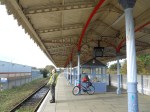
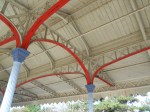
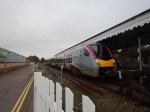

Suppose that testing was to be done at Felixstowe of a battery-electric Class 755 train.
- The containerised electrical system would be placed somewhere convenient.
- A short length of overhead wire would be erected in the platform.
- The system would then be connected together and to the electrical supply.
- After testing, it could be used to charge a train.
It would be very convenient for operation of the railway, if it could be installed and taken out overnight.
Conclusion
It looks a well-designed system.
Govia Thameslink Railway Issues a Prior Information Notice For New Trains
This article on Railway Gazette is entitled UK Railway News Round-Up and contains this section.
Govia Thameslink Railway has issued a prior information notice seeking the provision of between 21 and 30 four-car 25 kV 50 Hz 160 km/h through-gangwayed EMUs with air-conditioning and toilets for use on existing and/or additional Great Northern services from May 2024. Maintenance would be undertaken in-house at Hornsey depot, supported by a Technical Support & Spares Supply Agreement.
I find this all a bit puzzling.
- The trains that need replacing are surely the eighteen Class 313 trains, that run on the West Coastway Line, as they are some of the oldest trains on the UK network.
- If Govia Thameslink Railway were serious about decarbonisation, they would also replace the Class 171 diesel trains, that work the Marshlink Line and the Uckfield branch, with electric trains with a range of thirty miles on batteries.
How many trains would be needed to replace the Class 313 and Class 171 trains?
- The eighteen three-car Class 313 trains could be replaced with an equal number of new four-car trains and this might result in a rise in passenger numbers.
- I would assume the eighteen trains includes allowances for trains in maintenance and spare trains for when a train fails.
- It may be possible to replace the six four-car Class 171 trains used on the Marshfield Line with three new four-car trains, which have a range of thirty miles on batteries.
- The eleven two-car Class 171 trains used on the Uckfield branch could be replaced with three new four-car trains, which have a range of thirty miles on batteries and would run as four-car trains.
- If eight-car trains were needed on the Uckfield branch, there would be a need for six new four-car trains.
- If twelve-car trains were needed on the Uckfield branch, there would be a need for nine new four-car trains.
Note.
- If four-car trains are needed on the Uckfield branch, this means a total of 18+3+3 or 24 trains.
- If eight-car trains are needed on the Uckfield branch, this means a total of 18+3+6 or 27 trains.
- If twelve-car trains are needed on the Uckfield branch, this means a total of 18+3+9 or 30 trains.
Trains on these Southern routes wouldn’t be stabled at Hornsey depot, but could be moved to Hornsey for maintenance using Thameslink.
But the puzzling bit is that the prior information notice says that the trains will be.
Four-car 25 kV 50 Hz 160 km/h through-gangwayed EMUs with air-conditioning and toilets for use on existing and/or additional Great Northern services from May 2024.
Note.
- There is no mention of the trains being able to run on 750 VDC third-rail infrastructure.
- The trains will run on Great Northern services and the Class 313 and Class 171 trains run on Southern routes.
- The only Great Northern services, that have not been moved to Thameslink are Kings Cross and Cambridge, Ely and King’s Lynn and services to Moorgate.
- The Moorgate services have their own dual-voltage Class 717 trains.
- Govia Thameslink Railway have ambitions to double the frequency of trains to King’s Lynn.
- Two eight-car trains per hour (tph) between King’s Cross and King’s Lynn would need sixteen operational four-car trains.
- Two twelve-car trains per hour (tph) between King’s Cross and King’s Lynn would need twenty-four operational four-car trains.
If Govia Thameslink Railway are thinking of thirty new trains, they must have other destinations in mind.
Could we be seeing a double swap?
- An appropriate number of new trains are procured to run Great Northern services between Kings Cross and Cambridge, Ely and King’s Lynn.
- The Class 387 trains released will be moved to the South to replace the Class 313 and Class 171 trains.
- Some or all of the transferred Class 387 trains will be fitted with batteries to give a range of thirty miles without electrification.
Note.
- Could the new trains be Siemens Desiro City trains like the Class 700 and Class 717 trains, which are already maintained at Hornsey depot? It would surely be more efficient and save money.
- Class 387 trains are dual voltage and would need little or no modification to replace the Class 313 trains.
- Uckfield and Hurst Green junction is 24.7 miles.
- Ashford International and Ore is 25.4 miles
- Adding a battery to a Class 387 train has not been done, but Bombardier converted a near-identical Class 379 train to battery-electric operation over eight years ago.
- Converting a Class 387 train gives a dual-voltage battery-electric train.
- I suspect a charger would be needed at Uckfield. Could it be a short length of 25 KVAC overhead electrification?
Could all the Class 387 trains, that will replace the Class 313 and Class 171 trains be identical to ease the problems, when a train develops a fault?
Conclusion
It looks a good plan.
It also opens up the following possibilities.
- Deployment of 750 VDC battery-electric trains on other routes.
- Deployment of 25 KVAC overhead battery-electric trains on other routes.
- Deployment of tri-mode battery-electric trains on other routes.
- Charging of battery-electric trains using a short length of 25 KVAC overhead electrification.
- Fitting of batteries to Class 379 trains to create a 25 KVAC overhead battery-electric train.
It might be possible to convert other Electrostars to battery-electric operation.
Ignoring Class 387 trains on dedicated services like Heathrow and Gatwick Express, these trains are available for conversion.
- Class 379 trains – Stored – 30 trains
- Class 387 trains – Govia Thameslink Railway – 40 trains
- Class 387 trains – Great Western Railway – 33 trains
Note.
- This gives 103 trains.
- They all have good interiors.
- They are all 100/110 mph trains.
- All trains could be updated to 110 mph.
- All trains can use 25 KVAC overhead electrification.
- The Class 387 trains can also use 750 VDC third-rail electrification.
- The Class 379 trains were built in 2010-2011.
- The Class 387 trains were built from 2014.
I believe both classes will make excellent battery-electric trains.
Where will they be deployed?
These are a selection of routes starting in the South-East of England.
- Ashford International and Eastbourne.
- Gravesend and Hoo.
- London Bridge and Uckfield.
- London Paddington and Bedwyn.
- London Paddington and Oxford.
- Reading and Basingstoke.
- Reading and Gatwick.
- Reading and Redhill.
- Slough and Windsor & Eton Central.
- Twyford and Henley-on-Thames
I’ve only added routes which are less than thirty miles.
Wales’ Inaugural Hybrid Train Service Launches On The Borderlands Line
The title of this post, is the same as that of this article on Rail Technology Magazine.
These are the first two paragraphs.
Today marks a historic day for the Welsh rail sector, seeing the introduction of the first battery-hybrid trains used in regular passenger service on the Borderlands Line between Wrexham and Bidston, as announced by Transport for Wales (TfW).
The inaugural service for the Class 230 trains left Wrexham Central at 07:31, following months of testing and crew training.
Unfortunately, it didn’t go very well, as some trains were late and there were several rail replacement buses and cancellations.
I’m afraid, Vivarail’s ambitious project is starting to look like a heroic failure.
Could Stadler Rescue The Borderlands Line?
Perhaps the solution for the Borderlands Line, which is only 27.5 miles each way, is to ask Stadler for an estimate to extend Merseyrail’s Class 777 trains to Wrexham Central station.
- Trains would use battery power between Bidston and Wrexham.
- Passengers would not need to change trains to go between Liverpool and Wrexham.
- Trains would go round the rail loop under Liverpool, where they would charge their batteries.
- There may need to be some form of charging in Wrexham.
I’m sure the good people Merseyside and North Wales wouldn’t object, but the politicians in Cardiff might!
The UK-Wide Need For Self-Powered Trains
Consider.
- The UK needs a substantial number of two-, three- and four-car self-powered trains.
- A proportion of these trains will run on partially-electrified routes.
- 100 mph trains would be preferable.
- Some routes would need trains capable of using third-rail electrification.
They are also needed urgently.
Will Mark 3’s Save The Day?
Consider.
- The only Mark 3 electric multiple units still running or in a state good enough to be converted are the thirty-four three-car Class 320 trains and perhaps fifty four-car Class 321 trains.
- Class 317 and Class 318 trains are probably too old to convert.
- A Class 319 train is a very inferior train from a passengers point of view to the Class 321 Renatus.
As some of these like the thirty Class 321 Renatus have been refurbished and given AC transmissions, it might be a good idea to build a few prototypes and try them out on various routes to assess their quality, reliability and performance.
But this route would only give about eighty three- and four-car trains.
It wouldn’t supply any two-car trains.
Sadly, the twenty-four two-car Class 456 trains, which could have been converted have all been recently scrapped.
Are There Any Other Trains That Can Be Converted?
There are several fleets of modern trains, that might be available.
- Four-car Class 350 trains
- Four-car Class 360 trains
- Four-car Class 379 trains
- Four-car Class 386 trains
There may also be some three- and four-car Bombardier Electrostars.
Again, there is a shortage of two-car trains, except for thirty-nine Class 466 trains.
- They are Networkers.
- They were built in the 1990s.
- They were refurbished ten years ago.
- They are third-rail trains.
- They are not in bad condition.
- Their operating speed is only 75 mph.
But they would probably be a hard train to convert and would only be a stopgap.
Conclusion
I am led to the conclusion, that there is a large gap in the UK rail network for a two-car train with this specification.
- Battery-electric operation.
- 100 mph operation
- Battery range of at least eighty miles.
- Quality interior.
- Ability to run on 25 KVAC overhead and/or 750 VDC third-rail electrification.
- Ability to add a third-car in the middle to create a three-car train.
Effectively, they would be a replacement for the Class 170 diesel trains.
East West Railway Company To Start Second Phase Of Rolling Stock Procurement
The title of this post, is the same as that of this press release from East West Rail.
These are the three introductory paragraphs.
East West Railway Company (EWR Co) is to restart market engagement with potential train suppliers, as its rolling stock procurement process enters a new phase.
The move follows an initial phase of procurement activity, which EWR Co concluded earlier in the year. A new PIN Notice has been published today to restart engagement with potential suppliers, which includes a set of technical specifications taking account of feedback from the market gained during the initial procurement phase.
This procurement aims to secure a short-term, interim solution to leasing a small fleet of self-powered trains for the Western Section of East West Rail.
The press release has a link to the Prior Information Notice or PIN Notice on the EU database.
along with all the usual contact and other details, this is said about the specification.
The East West Railway Company (EWR Co.) is looking to leasing a fleet of 12 or 14 x 3 car self-powered units with modifications including European Train Control System (‘ETCS’) Level 2 and Driver Controlled Operation (‘DCO’) capability, supported by a full maintenance package (under a ‘wet’ lease). These units will ensure timely operation of EWR’s Western Section Phase 2 between Oxford, Milton Keynes, Bedford and Aylesbury. The lease duration would be 4 years, with an option to extend for 2 years.
The date of the notice is the 10th of November 2020, so it has been recently updated.
I commented on these trains in March 2020, when I wrote EWR Targets Short-Term Fleet Ahead Of Possible Electrification.
In the intervening eight months, a lot have things have happened.
Awareness Of Green Issues
The Covid-19 pandemic has arrived, with all its ferocity and seems to be moving people in the direction of thinking about green issues and zero-carbon transport.
Type “build back greener UK” into Google and you get lots of articles. Some feature Boris Johnson, like this article on Business Green, which is entitled Boris Johnson To Pledge To ‘Build Back Greener’.
I don’t think the public, myriad engineers and scientists and a good selection of politicians will find it appropriate for the East West Railway to use any rolling stock, that is not zero-carbon and powered by renewable energy.
Hitachi Have Launched The Regional Battery Train In Conjunction With Hyperdrive Innovation
In July 2020, I wrote Hyperdrive Innovation And Hitachi Rail To Develop Battery Tech For Trains.
Hitachi had been talking for some time, that they were developing battery electric trains for the UK, but this was the first news of a route to their design, manufacture and into service.
Hitachi also published this YouTube video and this infographic of the train’s specification.

They have also called the train, the Hitachi Regional Battery Train.
- It has a range of 90 kilometres or 56 miles.
- It is fitted with a pantograph for running on 25 KVAC overhead electrification.
- It can run at up to 100 mph on batteries.
- Three-car Class 385 trains can be fitted with batteries, as I wrote about in Hitachi Plans To Run ScotRail Class 385 EMUs Beyond The Wires, which was written in April 2019.
My estimate is that Oxford and Bedford are under fifty miles apart, so if Hitachi’s train could be charged at both ends of the route, one of their trains could provide a self-powered service between Oxford and Bedford.
It seems that Hitachi have an off-the-shelf train, that fits the specification for the trains required by East West Railway.
Vivarail Have Launched A Fast Charge System
Battery electric trains, like electric vehicles are not much use, if you can’t charge them when it is needed.
The initial Service Pattern of the East West Railway is given in the Wikipedia entry of the East West Railway.
- Two trains per hour (tph) – Oxford and Milton Keynes Central via Oxford Parkway, Bicester Village, Winslow and Bletchley.
- One tph – Oxford and Milton Keynes via Oxford Parkway, Bicester Village, Winslow, Bletchley, Woburn Sands and Ridgemont.
- One tph – Aylesbury and Milton Keynes Central via Aylesbury Vale Parkway, Winslow and Bletchley.
There are four terminal stations.
- Aylesbury – No electrification
- Bedford – Full Electrification
- Milton Keynes Central – Full Electrification
- Oxford – No electrification
The existing electrification could be used at Bedford and Milton Keynes Central, whereas some type of charging system, would be needed at Aylesbury and Oxford.
It appears that Adrian Shooter of Vivarail has just announced a One-Size-Fits-All Fast Charge system, that has been given interim approval by Network Rail.
I discuss this charger in Vivarail’s Plans For Zero-Emission Trains, which is based on a video on the Modern Railways web site.
There is more about Vivarail’s plans in the November 2020 Print Edition of the magazine, where this is said on page 69.
‘Network Rail has granted interim approval for the fast charge system and wants it to be the UK’s standard battery charging system’ says Mr. Shooter. ‘We believe it could have worldwide implications.’
Vivarail’s Fast Charge system would surely be a front-runner for installation at Aylesbury and Oxford, if battery electric trains were to be run on the East West Railway.
Choosing A Train
East West Rail have said the following about the train specification.
- Three cars
- Self-powered
- European Train Control System (‘ETCS’) Level 2 and Driver Controlled Operation (‘DCO’) capability
- Available on a wet lease, that includes a full maintenance package
The press release from East West Rail and other documents mentions between twelve and fourteen trains will be leased.
In Trains Needed For The East West Railway, I calculated that the proposed services could need around eight or nine trains.
This must mean one of three things.
- There are plans for extra services.
- There are plans for the proposed services to be extended.
- Trains will run some services in pairs.
Because, of the last reason, the trains must have the ability to run in pairs.
As sections of the East West Railway are being built for 100 mph operation, the trains must also have a 100 mph capability.
When I talked briefly about green issues earlier, I said that I felt the trains should be zero-carbon, which would rule out diesel.
That leaves two options for self-powered operation; battery electric or hydrogen.
So what trains fit the specification?
British Rail Era Trains
A large number of British Rail era trains could be suitable for updating for interim use on the East West Railway.
I even suspect, some fantasist will suggest using shortened versions of InterCity 125 trains, as are used in South-West England and Scotland.
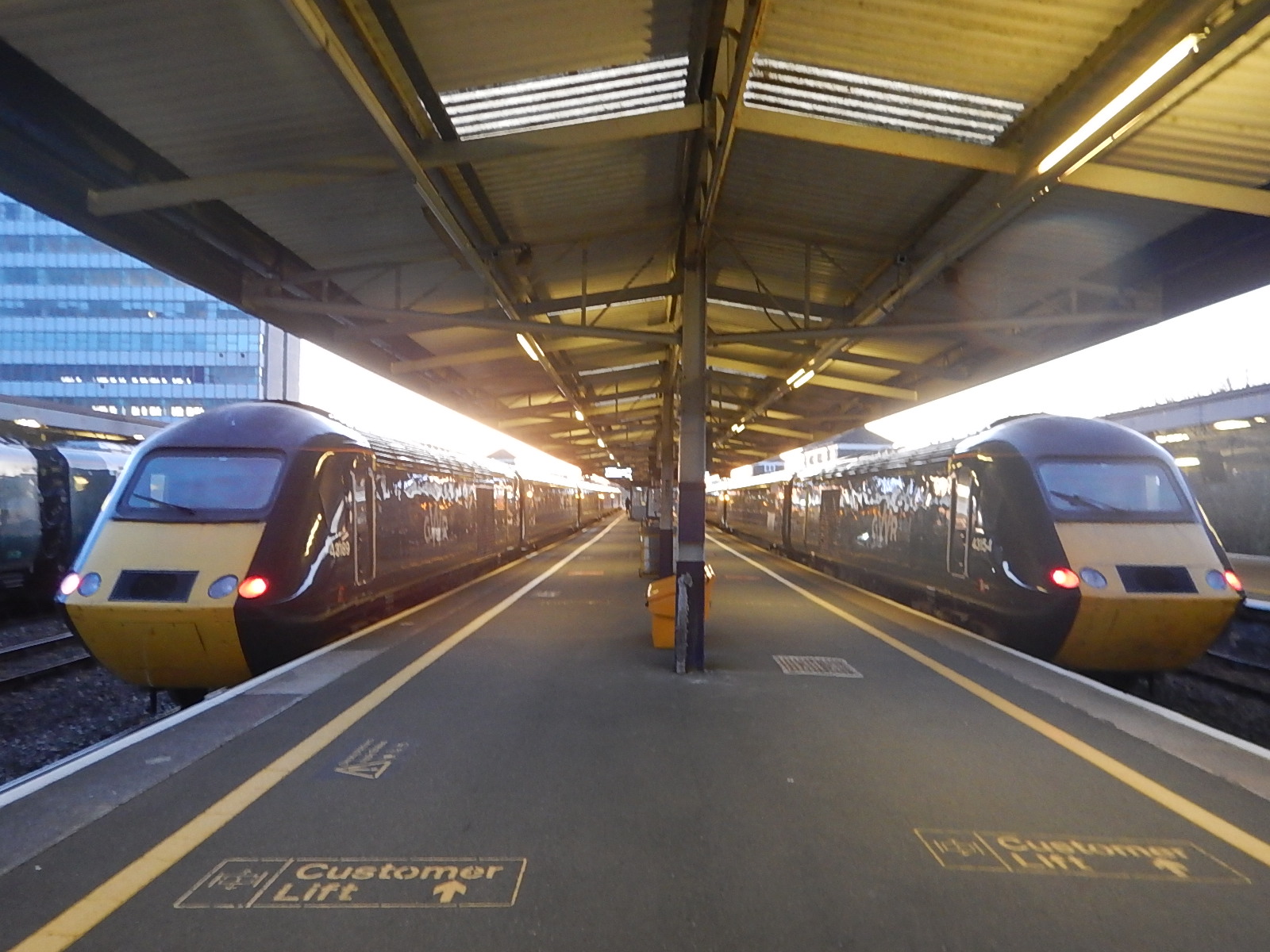
But let’s be serious and not insult the intelligence of the three world-leading universities on the final route of the East West Railway.
A lot of money is also being spent on this railway and tarted-up forty-year-old trains would not encourage people to use the new railway.
Class 170 Trains
There are eighty-seven three-car Class 170 trains with various operators, some of which will be surplus to requirements, as they are being replaced with new trains.
But they are diesel, so surely they don’t fit my perceived need for zero-carbon trains.
That would have been true until a couple of weeks ago, when as I wrote in Vivarail’s Plans For Zero-Emission Trains, Adrian Shooter of Vivarail disclosed an audacious plan to convert, diesel trains into zero-carbon battery electric trains.
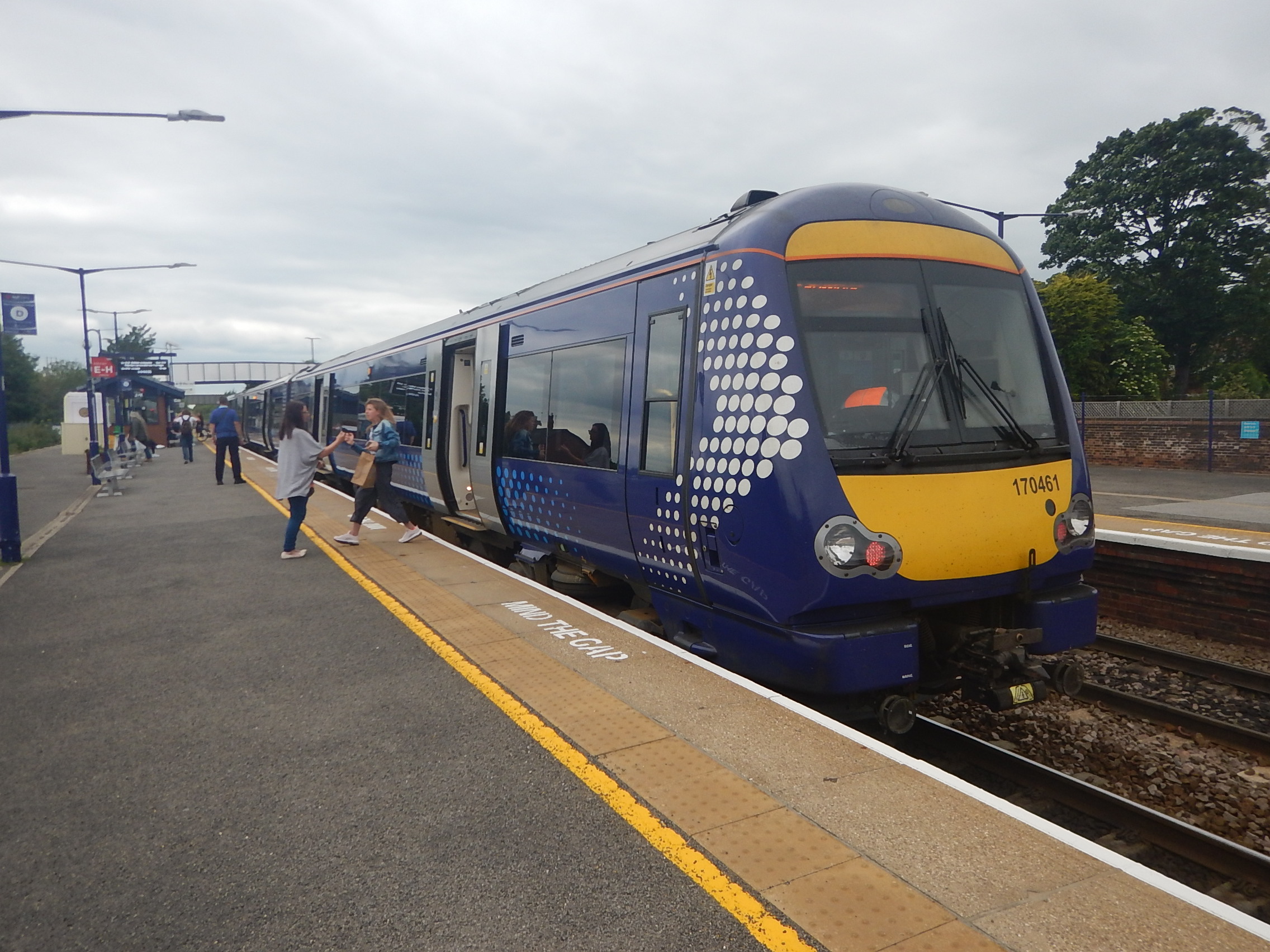
Class 170 trains like this were on the list of possible conversions.
- They 100 mph trains.
- Some are three-cars.
- They meet all the disability regulations.
- They have been used for services much longer than Oxford and Bedford.
They could also start the service as diesel trains and gradually converted to battery electric, if this would be better for operation.
Class 175 Trains
The three-car 100 mph Class 175 trains could be a possibility as there are fifteen trains, but they have two problems.
- They are powered by diesel.
- They probably won’t be available until 2023.
So I think they can be ruled out.
Class 185 Trains
All the fifty-one Class 185 trains are currently in service with TransPennine Express. They are due to release fifteen trains in 2021 and it was thought that these trains were in prime position for becoming the interim trains for East West Railway.
- They 100 mph trains.
- Some are three-cars.
- They meet all the disability regulations.
- They have been used for services much longer than Oxford and Bedford.
- The fleet is the right size.
But then the Department of Transport decided to change their plans for the Liverpool and Norwich service.
I wrote about one journey on the overcrowded section of this service in Mule Trains Between Liverpool And Norwich.
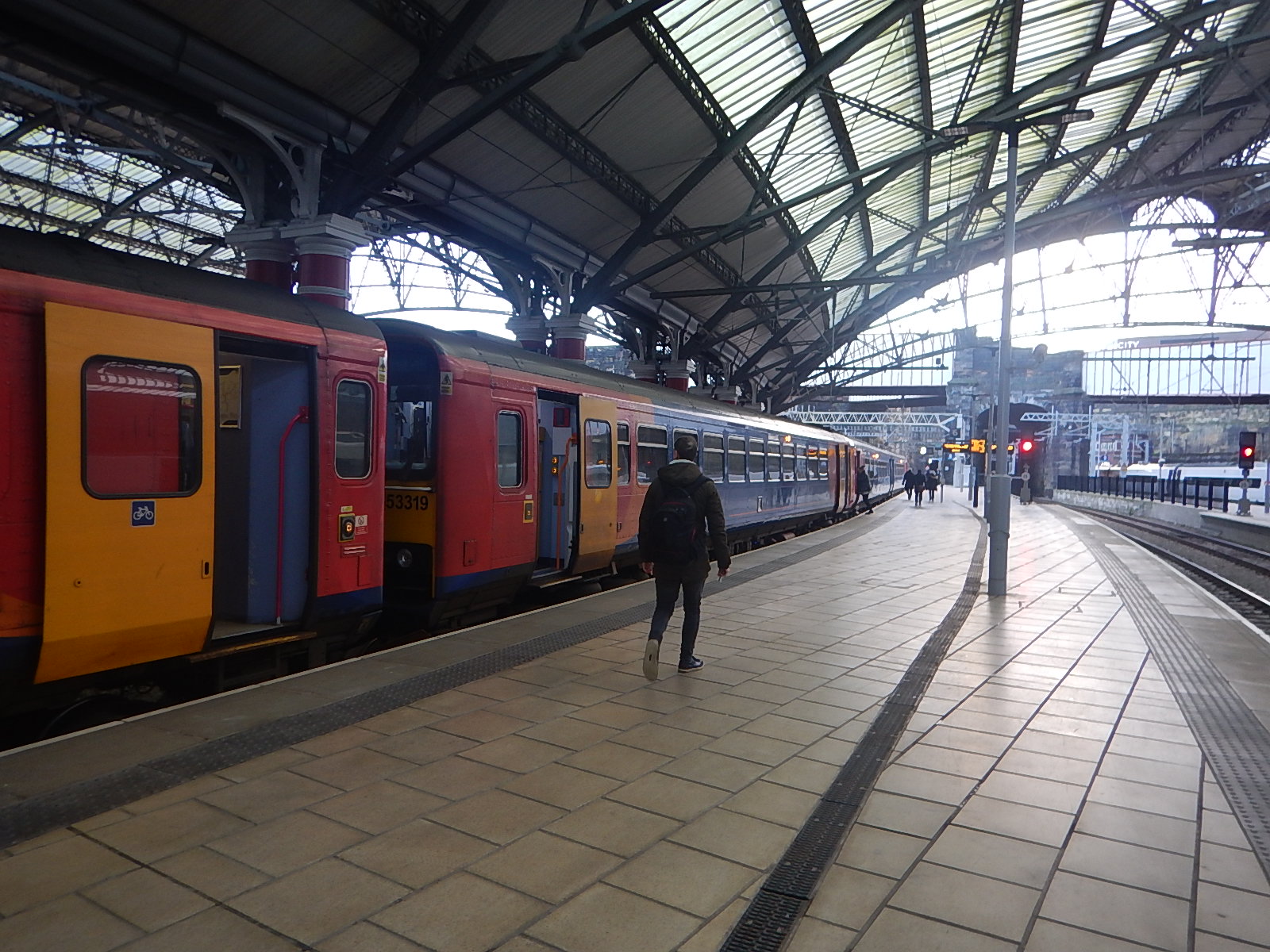
The picture shows the inadequate train formed of an assorted collection of Class 153 trains, I took from Liverpool to Sheffield.
The service is now being split at Nottingham and East Midlands Railway will receive the released Class 185 trains for the Liverpool and Nottingham portion of the service.
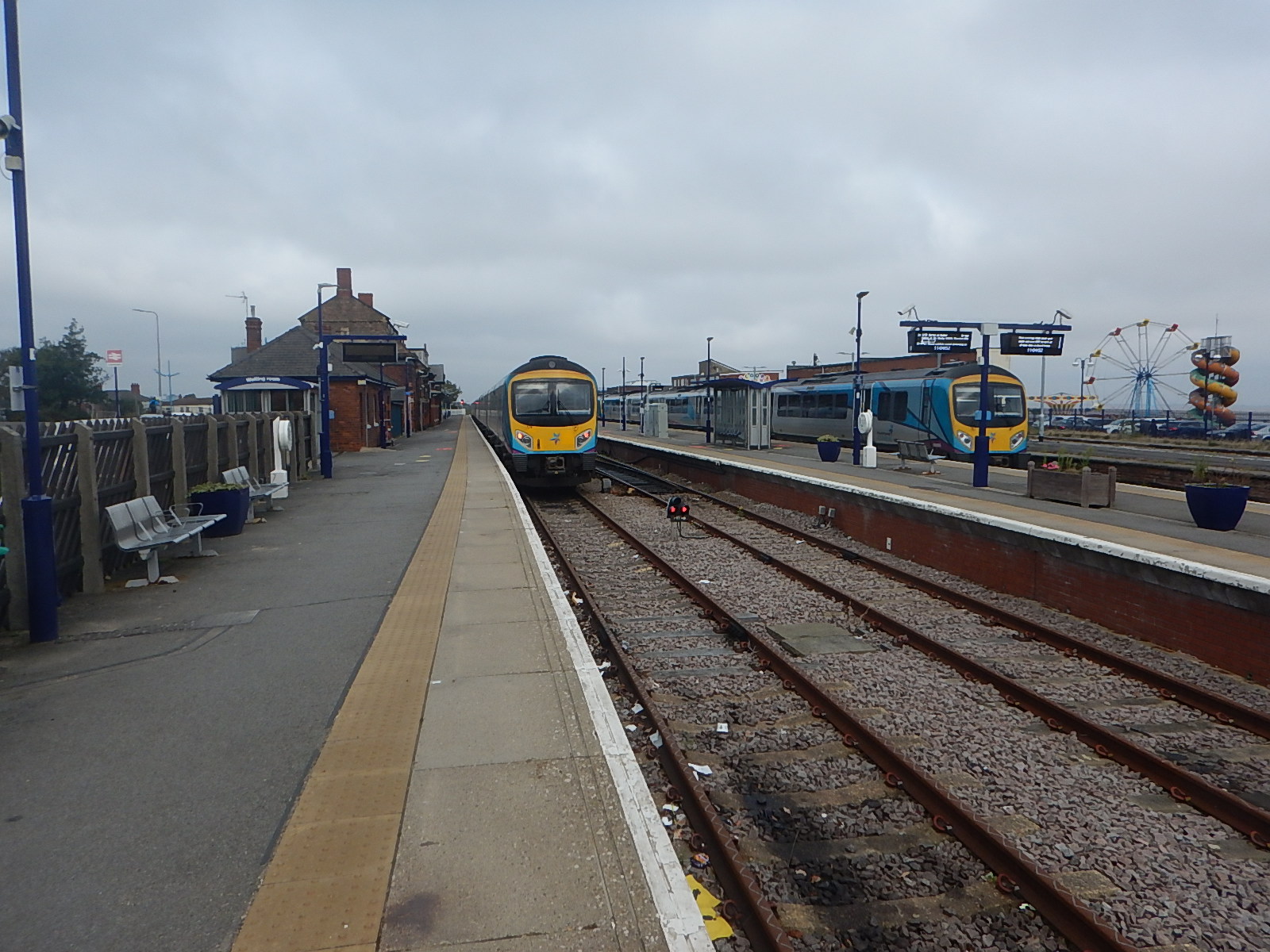
A fleet of these Class 185 trains will surely offer more comfort on a very busy service.
So it is looking unlikely that Class 185 trains will be used on the East West Railway.
Class 220, 221 and 222 Trains
These three fleets of Voyager trains could be a possibility, as they can be shortened to three-car trains.
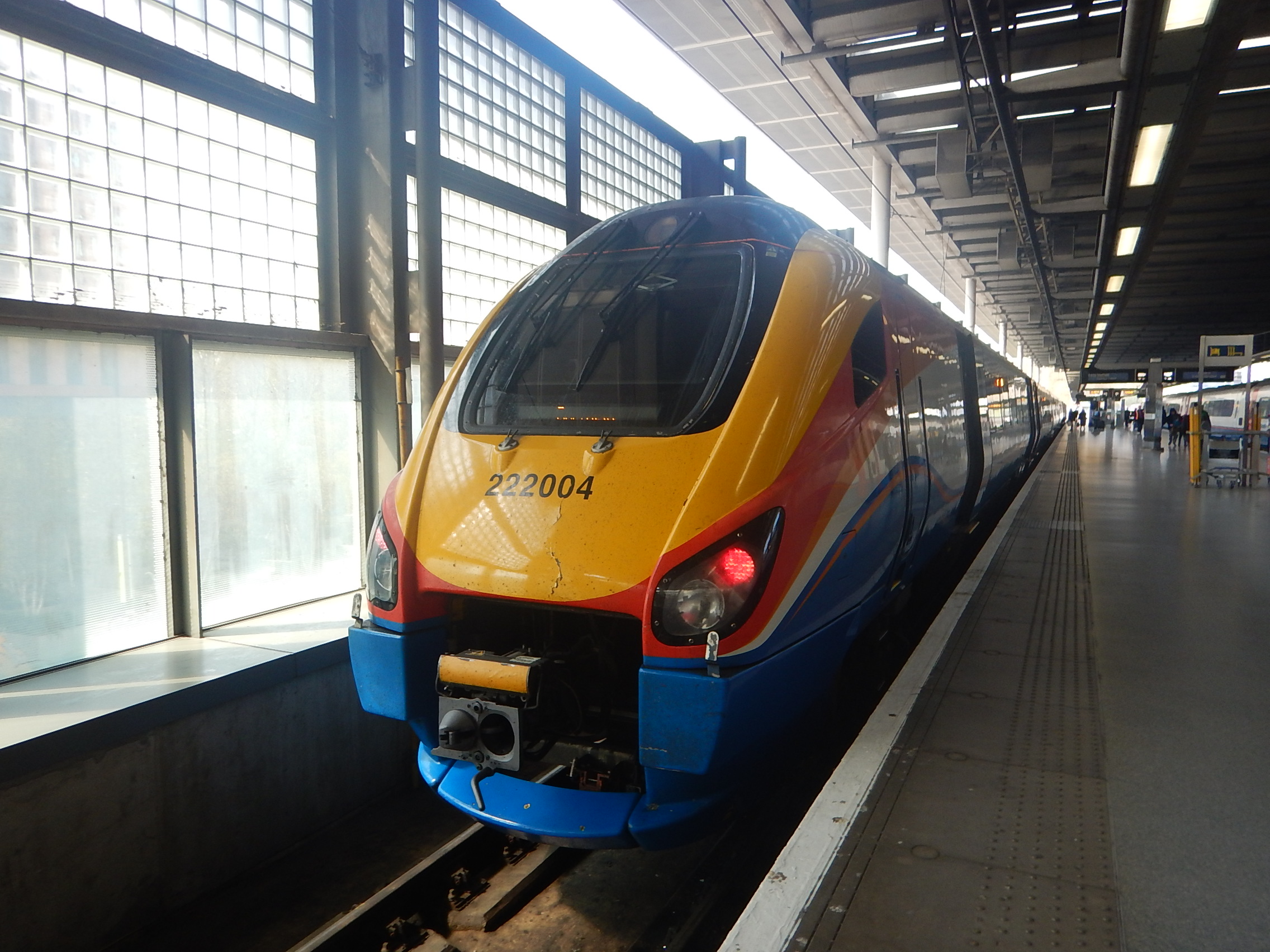
But they have disadvantages.
- They are diesel-powered.
- The diesel engines make a lot of noise for passengers.
- CrossCountry may have an alternative plan for these trains as I wrote about in DfT and Arriva CrossCountry Sign Agreement.
I think it is unlikely, that these trains will be used on the East West Railway.
Class 350 Trains
There are thirty-seven Class 350 trains, that were built only twelve years ago, that have been retired. The owner; Porterbrook are planning to convert them into battery electric versions, which they have called BatteryFLEX trains.
Unfortunately, they are four-cars and unlike other trains, it doesn’t appear that they can be shortened to three cars.
Class 375, 377, 379 and 387 Trains
These four fleets of Electrostar trains could be a possibility for running as battery electric trains.
- Some are three-car trains and four-car trains can be converted to three-car trains, by simply removing a car.
- They are 100 mph trains.
- Bombardier converted a Class 379 train for battery operation and I have heard or seen no adverse reports from either passengers, rail staff or journalists.
- They can work in multiple formations.
- They are all wired for dual-voltage operation.
- Pantographs wells have already been fitted to trains that normally work using 750 VDC third-rail electrification.
The picture shows the Class 379 train, that was converted to battery electric operation.

The Class 379 trains, also have the advantage, that there is a fleet of thirty trains, that are being replaced by Greater Anglia, who are homeless.
If I were the owner of the Class 379 trains, I’d do the following.
- Convert them all into battery electric trains.
- Shuffle cars around to get a mix of three-, four- and five-car trains to match market opportunities.
- Make them compatible with Vivarail’s Fast Charge system.
- Do a licensing deal with Vivarail, so I could supply the chargers.
This plan has some big advantages.
- Battery electric operation of the Class 379 trains has been successfully proven.
- Some Class 379 trains are already available for conversion, as they have been replaced by Greater Anglia.
- The trains could easily be delivered in time for the opening of the East West Railway.
- The trains would not need to be replaced, if the East West Railway was to be fully electrified in the future.
- If I leased out all the Class 379 trains, I’m fairly sure that I could acquire some other Electrostars to convert.
The trains would surely be ideal for the Uckfield Branch and Ashford and Hastings, which are to be run by battery electric trains.
- The order for these services is still to be announced.
- This use would be a trial application of the highest quality.
- I suspect that five-car trains would be ideal for these Southern routes.
- In Battery Electrostars And The Uckfield Branch, I estimated that Southern would need twelve five-car trains for the Uckfield Branch and four trains for the Ashford and Hastings service.
It looks to me, the thirty four-car Class 379 trains could be converted into the following battery electric trains.
- Twelve five-car trains for the Uckfield Branch.
- Four four-car trains for Ashford and Hastings.
- Fourteen three-car trains for the East West Railway.
Using battery electric Class 379 trains for the East West Railway, the Uckfield Branch and Ashford and Hastings. looks from the engineering, numbers and financial points of view to be a very efficient proposition.
Class 385 Trains
As I indicated earlier, Hitachi have the technology to create a Class 385 train with a battery capability.
- They appear to be talking to ScotRail.
- Are they talking to Vivarail about using their Fast Charge system?
- As the trains would be new, East West Railway would get trains to their specification.
Battery electric Class 385 trains must be a serious proposition.
Class 600 Trains
The Class 600 train could be an interesting possibility.
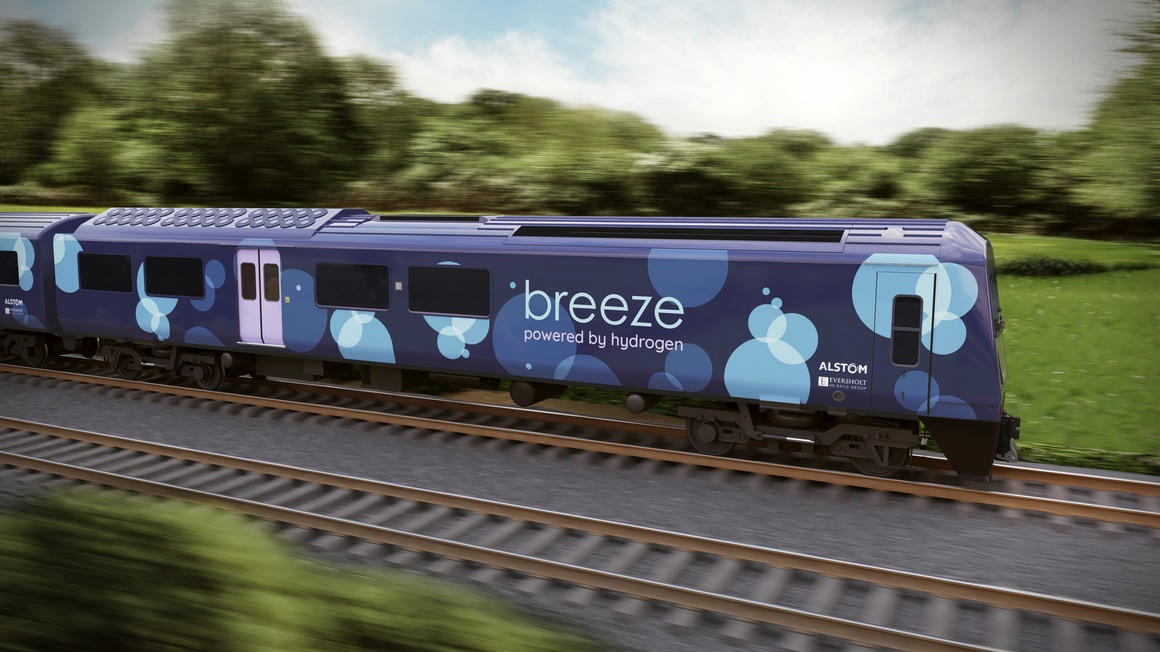
The trains can be powered by both hydrogen and overhead or third-rail electrification.
- The trains are three-cars long.
- They are 100 mph trains.
- First in-service dates are scheduled for 2024, which could be convenient.
- The trains will have a state-of-the-art Renatus interior.
- They will not need charging and could probably be refuelled as infrequently as only once per day.
I am not worried, by the train being powered by hydrogen, but because of the large tanks in the train, the passenger capacity will be lower, than a diesel, electric or battery electric train of a similar length.
I suspect though, that Alstom will be pitching for the order.
Aventras
In this article in Global Rail News from 2011, which is entitled Bombardier’s AVENTRA – A new era in train performance, gives some details of the Aventra’s electrical systems. This is said.
AVENTRA can run on both 25kV AC and 750V DC power – the high-efficiency transformers being another area where a heavier component was chosen because, in the long term, it’s cheaper to run. Pairs of cars will run off a common power bus with a converter on one car powering both. The other car can be fitted with power storage devices such as super-capacitors or Lithium-ion batteries if required. The intention is that every car will be powered although trailer cars will be available.
Unlike today’s commuter trains, AVENTRA will also shut down fully at night. It will be ‘woken up’ by remote control before the driver arrives for the first shift
This was published over nine years ago, so I suspect Bombardier have refined the concept.
Bombardier have not announced that any of their trains have energy storage, but I have my suspicions, that both the Class 345 and Class 710 trains use super-capacitors or Lithium-ion batteries, as part of their traction system design.
I believe that Bombardier, have the ability to build an Aventra to this specification.
- Three-cars
- 100 mph running
- Sixty mile range on battery power.
- Dual voltage.
- Ability to work in pairs.
Like the Hitachi trains, they would be new build.
CAF
CAF have proposed a battery electric train based on the Class 331 train, which I wrote about in Northern’s Battery Plans.
It is a four-car development of the three-car Class 331 trains.
Can it be built as a three-car train to fit the specification?
Conclusion
There are some good candidates sir supplying an interim fleet of trains for the East West Railway.
My money’s on one of the following.
- New Hitachi Class 385 trains
- Converted Class 379 trains.
- New Aventras
All would be battery electric trains.
But there is a change that Alstom’s Class 600 hydrogen trains could be used.
Raw Material For Southern’s Battery Trains
Porterbrook and Southern are proposing to convert a number of Class 377/3 trains to battery operation for the Uckfield Branch and the Marshlink Line, as I wrote about in Electroflex Battery EMU Plan To End Southern Diesel Operation.
This morning I took a ride in a ten-car Class 377 train formed by two three-car Class 377/3 units and one Class 377/4.
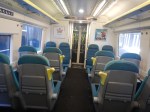
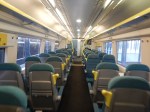
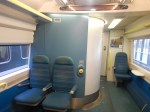
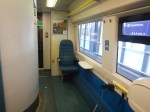
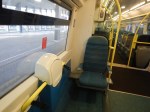
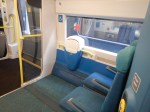
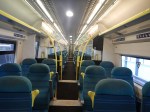
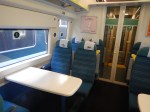
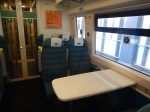
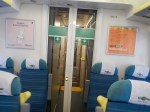
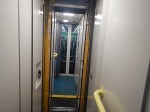
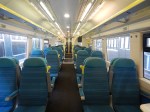
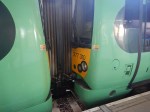
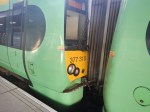
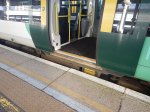
I will split my observations into various sections.
First Class
There is a small First Class section.
Is this really needed in a three-car train, considering that some franchises are going for one-class trains?
Gangways
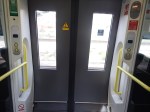
On the Uckfield Branch and the Marshlink Line, I suspect that trains will work in multiple formations, so the gangway will be useful to allow passengers to pass between individual trains.
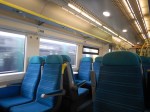
Interior
The interior is reasonably modern, as the trains were originally built in 2001-2002 and they meet all of the persons of reduced mobility legislation.
Multiple Working
The train I rode on consisted of three Class 377 Trains working together, so it would appear that six, nine and twelve car trains may be possible.
Tables And Cup-Holders
I would prefer full-size tables and perhaps these could be fitted, during the conversion, like they are in some Class 377 trains.
If not tables, then how about some cup-holders?
Universal Access Toilet
A universal-access toilet is fitted in the middle car.
Wi-Fi
Wi-fi appears to be fitted.
25 KVAC Operation
Although the trains are currently configured for operation on 750 VDC trird-rail electrification, these trains can be converted to run on 25 KVAC overhead electrification.
This would obviously mean that if the trains were no longer needed in Sussex, they could run anywhere else, where there is electrification.
Conclusion
They are a well-equipped train.
It would appear that very little will need to be done to the interior of the train in the conversion.
First may be downgraded to standard and I would fit full tables.
The operator would do what they wanted.
What Will Happen To Great Western Railway’s Class 387 Trains?
I have been looking at the services that Great Western Railway run using Class 387 trains.
Current services run by these trains are.
London Paddington And Didcot Parkway
This service has the following characteristics.
- The frequency is two trains per hour (tph)
- Services are run by two trains working as a pair.
- Intermediate stops are Ealing Broadway, Southall, Hayes and Harlington, West Drayton, Iver, Langley, Slough, Maidenhead, Twyford, Reading, Tilehurst, Pangbourne, Goring and Streatley and Cholsey.
- Journey time is one hour twenty-three minutes, giving a three hour round trip.
I estimate that twelve trains are needed to run this service.
From the 15th December 2019, this service appears to run to a similar timetable.
London Paddington And Reading
This service has the following characteristics.
- The frequency is two tph.
- Services are run by two trains working as a pair.
- Intermediate stops are Ealing Broadway, Southall, Hayes and Harlington, West Drayton, Slough, Burnham, Maidenhead and Twyford
- Journey time is fifty-seven minutes, giving a two and a half hour round trip.
I estimate that ten trains are needed to run this service.
From the 15th December 2019, this service will be run by TfL Rail using Class 345 trains.
Reading And Newbury
This service has the following characteristics.
- The frequency is one tph.
- Services are run by two trains working as a pair.
- Intermediate stops are Reading West, Theale, Aldermaston, Midgham, Thatcham and Newbury Racecourse.
- Journey time is twenty-nine minutes, giving an hour round trip.
I estimate that two trains are needed to run this service.
From the 15th December 2019, this service appears to run to a similar timetable.
Current Trains Needed
Summarising the trains needed gives the following.
- London Paddington and Didcot Parkway – twelve trains
- London Paddington and Reading – ten trains
- Reading and Newbury – two trains.
This gives a total of twenty-four trains.
Trains Needed After 15th December 2019
Summarising the trains needed gives the following.
- London Paddington and Didcot Parkway – twelve trains
- London Paddington and Reading – no trains
- Reading and Newbury – two trains.
This gives a total of fourteen trains.
Heathrow Express
Heathrow Express will use twelve Class 387 trains in the near future.
Great Western Railway’s Future Need For Class 387 Trains
Summarising the trains needed gives the following.
- London Paddington and Didcot Parkway – twelve trains
- Reading and Newbury – two trains.
- Heathrow Express – twelve trains.
This gives a total of twenty-six trains.
Great Western Railway have a total of forty-five Class 387 trains. Wikipedia is a bit confusing on this point, but I’m fairly certain this is a correct figure.
This means that Great Western Railway have nineteen trains available for expansion of services.
Great Western Railway’s Class 769 Trains
Great Western Railway have also ordered nineteen dual-voltage bi-mode Class 769 trains.
These are for the following routes.
- Reading – Redhill or Gatwick Airport
- London Paddington – Reading and Oxford
As the spare number of Class 387 trains is the same as that of the bi-mode trains, was it originally intended, that these routes could be run by the Class 387 trains, after Network Rail had joined the electrification together.
But the extra electrification never happened.
So Great Western Railway ordered the bi-modes trains.
Great Western Railway’s Dilemma
The Class 769 trains appear to be running late, so Great Western Railway are running the Gatwick and Oxford services with diesel multiple units, that they’d like to send to the West Country.
Bombardier appear to have moved on with their battery technology, that was successfully trialled using a similar Class 379 train in 2015. I wrote about the possibility of battery Electrostars on the Uckfield Branch last month in Battery Electrostars And The Uckfield Branch.
I believe that both routes would be within range of a battery-electric Class 387 train.
Reading – Redhill or Gatwick Airport
The various sections of the route are as follows.
Reading and Wokingham – Electrified with 750 VDC third-rail.
Wokingham and Aldershot South Junction – Not electrified – 12 miles
Aldershot South Junction and Shalford Junction – Electrified with 750 VDC third-rail.
Shalford Junction and Reigate – Not electrified – 17 miles
Reigate and Redhill/Gatwick – Electrified with 750 VDC third-rail.
To my mind, this is a classic route for a battery-electric train, as it is mainly electrified and both gaps are less than twenty miles long.
Some or all of the Class 387 trains are dual-voltage.
London Paddington – Reading and Oxford
The distance between Didcot Parkway and Oxford is under twelve miles, so a return trip should be well within range of a battery-electric Class 387 train.
There are also plans at Oxford station to put a new bay platform on the London-bould side of the station. This could be fitted with a charging station to avoid any range anxiety.
A Gatwick And Oxford Service
Could the Oxford and Gatwick services be joined together to make a direct Oxford and Gatwick service via Reading?
- I estimate that the service would take around two hours.
- Assuming a fifteen minute turnround at both ends, a round trip would be four and a half hours.
Running a half-hourly service would need just nine trains.
Or eighteen, if they were to run as eight-car trains!
Could this explain the order for nineteen trains, as it’s always a good idea to have a spare?
Conclusion
Great Western Railway can dig themselves elegantly out of a hole of Network Rail’s making by converting the spare Class 387 trains to battery-electric trains.
I’m sure Bombardier have the design available and would be happy to oblige after they have finished conversion of the Heathrow Express units.
There might also be an argument for fitting all Class 387 trains with batteries.
- A more unified fleet.
- Train recovery in the event of electrification failure.
- Better safety in depots.
- Direct services between Paddington and Henley and Bourne End.
- Would it allow Class 387 trains to run between Paddington and Bedwyn?
- Reduced electricity consumption.
It’ll be a decision for the accountants.
One collateral benefit of a successful conversion program for the Great Western Railway, is that it would enable Great Northern’s twenty-eight trains and c2c’s six trains to be easily converted to battery-electric versions.
- Great Northern’s coulde be used by sister company; Southern on the Uckfield Branch and the Marshlink Line.
- c2c trains are soon to be replaced by new trains.
I’m sure that quality four-car battery-electric trains won’t wait long for an operator.
The Batteries For Bombardier Electrostars
This article on the Railway Gazette is entitle Bombardier And Leclanché Sign Battery Traction MoU.
This is the second paragraph.
According to Bombardier, Leclanché will deliver ‘imminently’ its first performance demonstrator battery systems, after which it will be in line to supply traction equipment worth in excess of €100m for use in more than 10 rolling stock projects.
In Stadler’s New Tri-Mode Class 93 Locomotive, I investigated who was providing two large suitcase-sized batteries for Stadler’s new Class 93 locomotive.
In the related post, I said this about the batteries in the Class 93 locomotive, which I describe as a hybrid locomotive.
The Class 93 Locomotive Is Described As A Hybrid Locomotive
Much of the article is an interview with Karl Watts, who is Chief Executive Officer of Rail Operations (UK) Ltd, who have ordered ten Class 93 locomotives. He says this.
However, the Swiss manufacturer offered a solution involving involving an uprated diesel alternator set plus Lithium Titanate Oxide (LTO) batteries.
Other information on the batteries includes.
- The batteries are used in regenerative braking.
- Batteries can be charged by the alternator or the pantoraph.
- Each locomotive has two batteries slightly bigger than a large suitcase.
Nothing is said about the capacity of the batteries, but each could be say 200 litres in size.
I have looked up manufacturers of lithium-titanate batteries and there is a Swiss manufacturer of the batteries called Leclanche, which has this data sheet, that describes a LT30 Power cell 30Ah.
- This small cell is 285 mm x 178.5 mm x 12 mm.
- It has a storage capacity of 65 Wh
- It has an expedited lifetime of greater than 15,000 cycles.
- It has an energy density of 60 Wh/Kg or 135 Wh/litre
These cells can be built up into much larger batteries.
- A large suitcase is 150 litres and this volume would hold 20 kWh and weigh 333 Kg.
- A battery of 300 litres would hold 40 kWh. Is this a large Swiss suitcase?
- A box 2.5 metres x 1 metre x 0.3 metres underneath a train would hold 100 kWh and weigh 1.7 tonnes
These batteries with their fast charge and discharge are almost like supercapacitors.
, It would appear that, if the large suitcase batteries are used the Class 93 locomotive will have an energy storage capacity of 80 kWh.
I wonder how many of these batteries can be placed under a Bombardier Eectrostar.
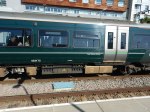
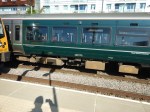
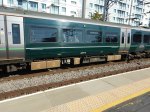
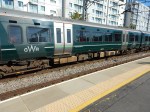
It looks rather cramped under there, but I’m sure Bombardier have the detailed drawings and some ideas for a bit of a shuffle about. For comparison, this is a selection of pictures of the underneath of the driver car of the new Class 710 trains, which are Aventras.

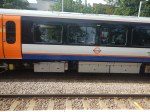
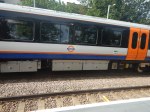
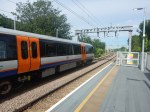
It looks like Bombardier have done a big tidy-up in changing from Electrostars to Aventras.
In Battery Electrostars And The Uckfield Branch, I came to the conclusion that Class 387 trains were the most likely trains to be converted for battery operation.
I also developed Excel spreadsheets that model the operation of battery trains on the Uckfield Branch and the Marshlink Line.
Feel free to download and examine.
Size Of Batteries Needed
My calculations in the two spreadsheets are based on the train needing 3 kWh per vehicle-mile to cruise between stations.
To handle the Uckfield Branch, it appears that 290.3 kWh is needed to go South and 310.3 kWh to go North.
I said this earlier.
A box 2.5 metres x 1 metre x 0.3 metres underneath a train would hold 100 kWh and weigh 1.7 tonnes.
So could we put some of these batteries under the train?
The Effect Of More Efficient Trains
My calculations are based on the train needing 3 kWh per vehicle-mile, but what if the trains are more efficient and use less power?
- 3 – 290.3 – 310.3
- 2.5 – 242.6 – 262.6
- 2 – 194.9 – 214.9
- 1.5 – 147.2 – 167.2
- 1 – 99.4 – 119.4
Note.
- The first figure is Southbound and the second figure is Northbound.
- More power is needed Northbound, as the train has to be accelerated out of Uckfield station on battery power.
The figures clearly show that the more efficient the train, the less battery capacity is needed.
I shall also provide figures for Ashford and Ore.
- 3 – 288
- 2.5 – 239.2
- 2 – 190.4
- 1.5 – 141.5
- 1 – 92.7
Note that Westbound and Eastbound energy needs are the same, as both ends are electrified.
I obviously don’t know Bombardier’s plans, but if the train’s energy consumption could be reduced to around 2 kWh per vehicle-mile, a 250 kWh battery on the train would provide enough energy storage for both routes.
Could this be provided by two of Leclanche’s batteries designed to fit a space under the train?
These would be designed to provide perhaps 250 kWh.
What Would Be The Ultimate Range Of A Class 387 Train On Battery Power?
Suppose you have a four-car Class 387 train with 25 kWh of battery power that leaves an electrified station at 60 mph with a full battery.
How far would it go before it came to a lifeless stop?
The battery energy would be 250 kWh.
There would be 20 kWh of kinetic energy in the train.
Ranges with various average energy consumption in kWh per vehicle-mile are as follows.
- 3 – 22.5 miles
- 2.5 – 27 miles
- 2 – 34 miles
- 1.5 – 45 miles
- 1 – 67.5 miles
Obviously, terrain, other traffic and the quality of the driving will effect the energy consumption.
But I do believe that a well-designed battery-electric train could easily handle a fifty mile electrification gap.
What Would Be The Rescue Range On One Battery?
One of the main reasons for putting batteries on an electrical multiple unit is to move the train to a safe place for passenger evacuation if the electrification should fail.
This week, there have been two electrification failures in London along, one of which was caused by a failing tree in the bad weather.
I’ll assume the following.
- The train is a Class 387 train with one 125 kWh battery.
- The battery is ninety percent charged.
- The train will be moved at 40 mph, which has a kinetic energy around 9 kWh.
- The energy consumption of the train is 3 kWh per vehicle-mile.
The train will use 9 kWh to accelerate the train to line speed, leaving 116 kWh to move the train away from the problem.
With the energy consumption of 3 kWh per vehicle-mile, this would be a very useful 9.5 miles.
Regenerative Braking To Battery On Existing Trains
This has been talked about for the Class 378 trains on the London Overground.
Regenerative braking to batteries on the train, should cut energy use and would the battery help in train recovery from the Thames Tunnel?
What About Aventras?
Comparing the aerodynamics of an Electrostar like a Class 387 train with an Aventra like a Class 710 train, is like comparing a Transit van with a modern streamlined car.
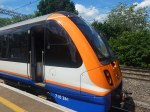
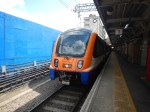
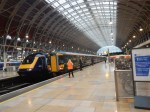
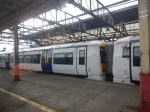
Look at these pictures some of which are full frontal.
It should be noted that in one picture a Class 387 train is shown next to an InterCity 125. Did train designers forget the lessons learned by Terry Miller and his team at Derby.
I wonder how much electricity would be needed to power an Aventra with batteries on the Uckfield branch?
These are various parameters about a Class 387 train.
- Empty Weight – 174.81 tonnes
- Passengers – 283
- Full Weight – 2003 tonnes
- Kinetic Energy at 60 mph – 20.0 kWh
And these are for a Class 710 train.
- Empty Weight – 157.8 tonnes
- Passengers – 700
- Full Weight – 220.8 tonnes
- Kinetic Energy at 60 mph – 22.1 kWh
Note.
- The Aventra is twenty-seven tonnes lighter. But it doesn’t have a toilet and it does have simpler seating with no tables.
- The passenger weight is very significant.
- The full Aventra is heavier, due to the large number of passengers.
- There is very little difference in kinetic energy at a speed of 60 mph.
I have played with the model for some time and the most important factor in determining battery size is the energy consumption in terms of kWh per vehicle-mile. Important factors would include.
- The aerodynamics of the nose of the train.
- The turbulence generated by all the gubbins underneath the train and on the roof.
- The energy requirements for train equipment like air-conditioing, lighting and doors.
- The efficiency of the regenerative braking.
As an example of the improvement included in Aventras look at this picture of the roof of a Class 710 train.
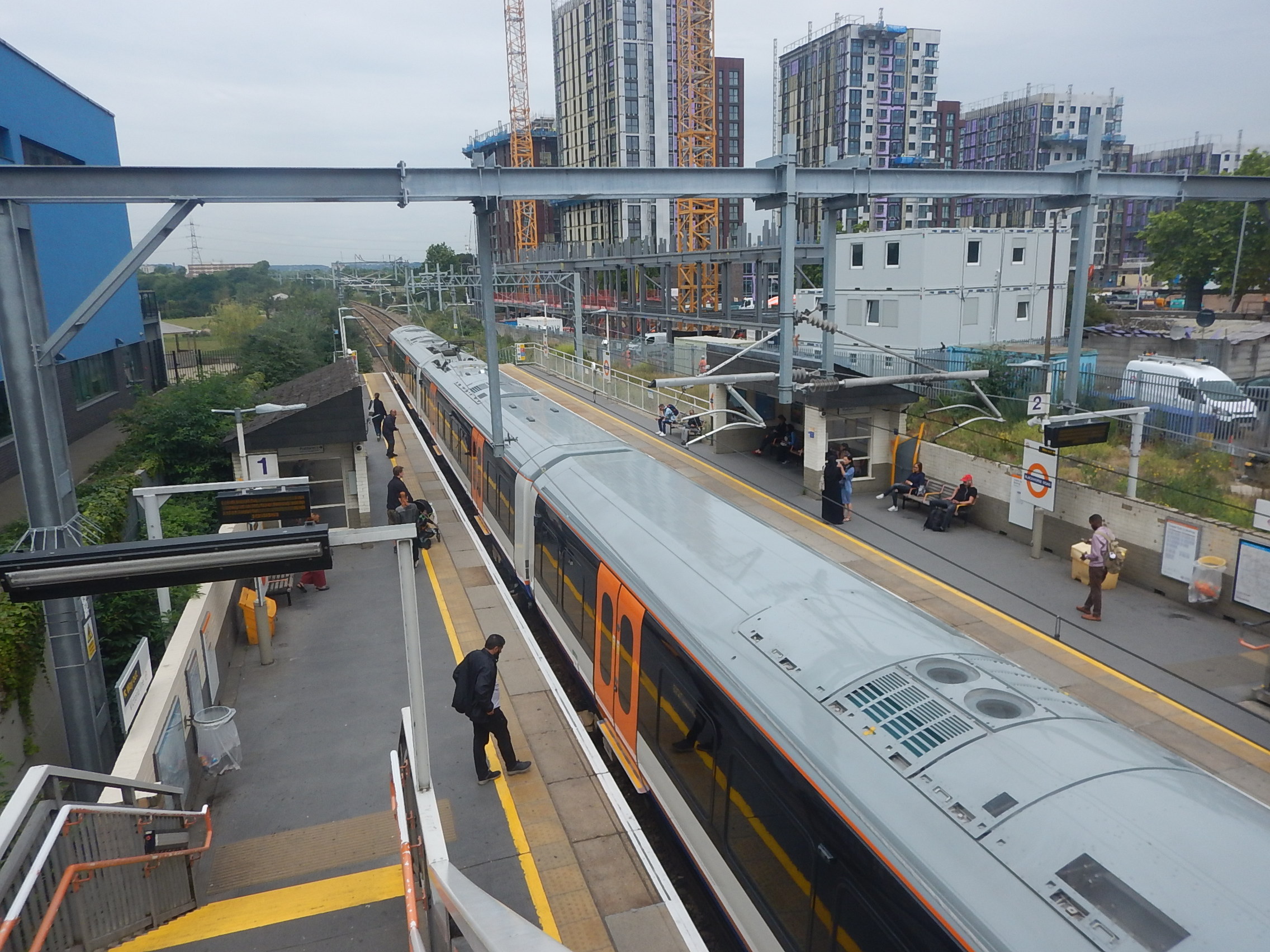
This feature probably can’t be retrofitted, but I suspect many ideas from the Aventra can be applied to Electrostars to reduce their energy consumption.
I wouldn’t be surprised to see Bombardier push the energy consumption of an Electrostar with batteries towards the lower levels that must be possible with Aventras.
 The Anonymous Widower