The Whitechapel Shortcut
Note that this post is unfinished.
When the East London Line of the London Overground opened just over a decade ago, the interchange with the District and Hammersmith and City Lines at Whitechapel station was not one of the best.
- There were no lifts.
- The stairs were too narrow and inadequate for the number of passengers using the interchange.
- Adding extra Overground trains to Clapham Junction station didn’t help.
If the Elizabeth Line had been added without extra work, the station’s passageways and stairs would have jammed solid.
- But improvements were added, when the station was expanded to handle the Elizabeth Line.
- A wide interchange plaza was created between the Eastern ends of the District and Hammersmith and City Line platforms.
- A double-width spiral staircase was installed between the Eastern end of the interchange plaza and the Southbound East London Line of the Overground.
- A convenient lift was installed alongside the spiral staircase.
- The original staircases to and from the Northbound East London Line of the Overground were updated and augmented by a lift.
- Passengers entering or leaving the station, were given alternative routes to avoid the interchange plaza.
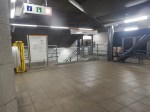
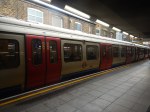
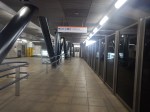
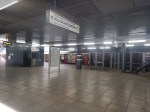
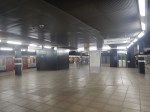
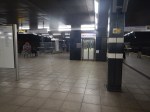
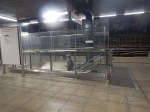
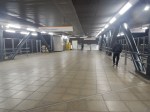
These pictures show the interchange plaza and the various lifts and staircases.
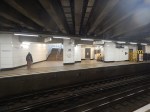
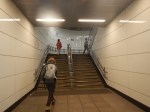
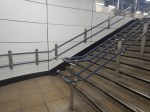
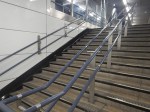


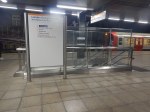
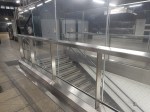
Note.
- The spiral stairs and the lift at the Eastern end of the plaza.
- The Eastern ends of the District and Hammersmith and City Line trains connect directly with the plaza.
It seems to be working well, since the opening of the Elizabeth Line.
Using The Whitechapel Shortcut
There are eight ways to change between the District and Hammersmith and City Lines and the Overground at Whitechapel station.
Southbound Overground To Westbound District And Hammersmith and City Lines
Today, I travelled between Haggerston and Moorgate stations, which I wrote about in From Haggerston To Moorgate.
I could have changed at Whitechapel station for the brand-new Elizabeth Line, but this would have meant a long walk to get to the Moorgate end of Liverpool Street station.
So I did this.
- I got in the front carriage of the Overground train at Haggerston station, which was conveniently by the lift at the station.
- This meant that on exiting the train, I was by the lift to the interchange plaza at Whitechapel station.
- The lift took me up a level to the District and Hammersmith and City Line platforms.
- I got in the rear carriage of a Hammersmith and City Line train to Moorgate station.
- This positioned me by the lift to the exit at Moorgate station.
I would be surprised if I walked much more than sixty metres between the two station entrances, as against the road distance of around two-and-a-half miles.
Southbound Overground To Eastbound District And Hammersmith and City Lines
This is very similar to the previous section except that you take the District And Hammersmith and City Line trains from the opposite platform.
Northbound Overground To Westbound District And Hammersmith and City Lines
There are two staircases and two lifts between the Northbound Overground and the interchange plaza.
Choose your stairs or lift and then take the Westbound District and Hammersmith and City Line.
Northbound Overground To Eastbound District And Hammersmith and City Lines
This is very similar to the previous section except that you take the District And Hammersmith and City Line trains from the opposite platform.
Westbound District And Hammersmith and City Lines To Southbound Overground
Eastbound District And Hammersmith and City Lines To Southbound Overground
Walk to the interchange plaza and choose the spiral stairs or lift.
Westbound District And Hammersmith and City Lines To Northbound Overground
Eastbound District And Hammersmith and City Lines To Northbound Overground
Walk to the interchange plaza and choose your stairs or lift.
Conclusion
It’s all very quick and painless.
From Haggerston To Moorgate
I did this journey this morning and I described it in detail in The Whitechapel Shortcut.
It may seem obvious to take the Overground to Whitechapel and then take the Elizabeth Line to Liverpool Street and come out on Moorgate.
But that route means a long walk at either Whitechapel or Moorgate to get to the right end of the train.
So I took a Hammersmith and City Line train, which was slower, but involved much less walking.
Battersea Power Station – 14th October 2022
I went to Battersea Power Station today and took these pictures.
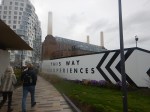
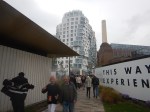


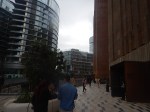
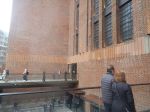
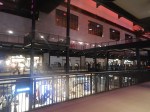

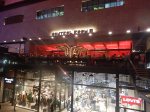

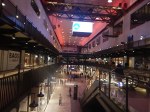




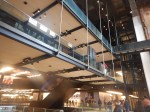

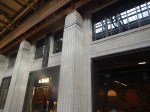

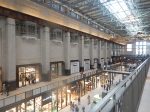
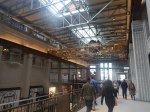
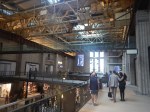

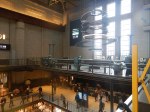




Note.
- The picture of my jacket was taken in the toilet. All male toilets should have a hook for jackets.
- The crane is still in place.
- There are a number of shops still to open.
- There was no food store, although a Marks and Spencer’s food store is coming soon.
- The only place to have a coffee and cake and sit down was Starbucks. But I never eat in an American cafe or eat American food, as I don’t trust their gluten labelling.
One guy I met described it as Dubai without the sand.
I have some thoughts.
Getting There
There are two main routes.
- Northern Line to Battersea Power Station station.
- Thames Clipper to Battersea Power Station pier.
I went by the Northern line, changing both ways at Tottenham Court Road station to and from the Elizabeth Line.
- This interchange is a short walk and step-free, if you use the lift.
- There are no trains to Battersea Power Station on the Bank branch of the Northern Line.
- There are five trains per hour (tph) to Battersea Power Station, with an extra two tph in the Peak.
- There are no Night Tube trains to Battersea Power Station.
I can see this service being improved.
Arriving At Battersea Power Station By Underground
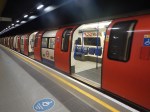
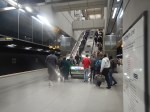
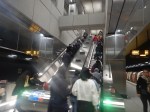
Punters were certainly arriving.
Gluten-Free Food
There was absolutely none, that I could find.
At least though a Gordon Ramsay restaurant is opening soon.
Signage
It wasn’t good. But then I have found several modern shopping centres work on this principle.
Conclusion
Canary Wharf is better.
- Partly because the shops are more useful and to my taste.
- But mainly because it is on the Elizabeth and Jubilee Lines, and the DLR.
- All rail lines go through Canary Wharf rather than terminate there.
Battersea Power Station might be better, when the Northern Line is extended to Clapham Junction station.
The Development of Liverpool Street And Paddington Stations
This article in The Telegraph is entitled Row Over ‘Grotesque’ £1.5bn Liverpool Street Revamp.
There is no doubt that Liverpool Street and Paddington stations will need a higher number of trains per hour and this will probably mean more platforms. But there is no space in either station.
Suppose a long-distance version of the current nine-car Alstom/Bombardier trains were to be built with toilets, a 110 mph top speed, but dimensionally identical to the existing Class 345 trains.
The Central Tunnel of the Elizabeth Line could probably handle more trains, than it currently does, given that Dear Old Vicky handles 36 trains per hour.
So services like Southend and Oxford or Beaulieu and Newbury could be run through the Central Tunnel, replacing the current Greater Anglia and GWR services.
This would relieve platform space in the current terminals and the high-speed Elizabeth Line trains, would just be more trains going through the Central Tunnel at 80 mph.
The important Oxford and Cambridge route would be one change at either Farringdon or Liverpool Street, Or with some track modifications, it might be possible to run direct via the Central Tunnel, Stratford and the West Anglia Main Line.
Sorting out the trains, would ease the development of Liverpool Street and Paddington stations.
Six Good Points Of The Elizabeth Line
The Ride Quality
I wrote about this in The Quality Of The Ride On The Lizzie Line.
The Virtual Extension Of The Elizabeth Line To Epping And South West Essex
I wrote about this in Elizabeth/Central Line Interchange At Stratford – 23rd June 2022.
The Quality Of The Station Staff
They are excellent and I suspect they’ve been very well-trained.
The Bakerloo Line Link At Paddington Station
I wrote about this in Elizabeth Line – Paddington Bakerloo Line Link – 24th May 2022.
The Connection Between The Northern And Lizzie Lines At Tottenham Court Road Station
Iwrote about this in The Connection Between The Northern And Lizzie Lines At Tottenham Court Road Station.
The Underground Link between Liverpool Street and Moorgate Stations
I wrote about this in London’s First Underground Roller Coaster.
I wrote about my first ride in Elizabeth Line – Riding The Underground Roller Coaster At Liverpool Street Station – 24th May 2022.
Elizabeth Line: Bond Street Station Gets Opening Date
The title of this post, is the same as that of this article on the BBC.
These are the first two paragraphs.
The opening date for the Elizabeth line at Bond Street station has been revealed.
The central London station will begin taking passengers from 24 October, subject to final approvals, Transport for London (TfL) said.
The 24th of October is a Monday.
UK Cleantech Consortium Awarded Funding For Energy Storage Technology Integrated With Floating Wind
The title of this post, is the same as that of this page on the UK Government’s Catapult Offshore Renewable Energy Web Site.
This is the introductory paragraph.
STORE, a UK-based cleantech consortium led by RCAM Technologies Limited, has been awarded £150,000 of funding to develop an advanced subsea energy storage technology manufactured using 3D printed concrete that could help offshore wind farms produce a steady and predictable energy output to the electricity grid.
This paragraph talks of the concept of Marine Pumped Hydro.
STORE is assessing the feasibility of integrating Marine Pumped Hydro (MPH) technology, which stores energy using hollow concrete spheres fitted with a hydraulic turbine and pump, with floating offshore wind plants in UK waters. In addition, the project advances the design of MPH systems and plans a prototype demonstration in the UK.
Note.
- The hollow concrete spheres are 3D-printed in concrete using the technology of RCAM Technologies.
- Spheres are structurally very strong.
- 3D printing of concrete is now mainstream technology and has been extensively used on the Elizabeth Line as I wrote about in The Story Behind The Concrete Panels On The Elizabeth Line.
- There is a visualisation on the Catapult web page, which shows several floating turbines, a floating sub station and several concrete hemispheres sitting on the seabed.
- The energy storage medium is sea water and air, which must be environmentally-friendly.
The technology is described in detail on this page of the STORE consortium web site.
- The spheres are fifteen metres across.
- The spheres can be installed at depths between 150 and 2000 metres.
- The system has a round-trip efficiency is up to 70%, which is similar to pumped storage hydro.
- The design life is 50 to 80 years.
I think that this system has possibilities.
This last paragraph in the Catapult web page gives a look into the future.
As well as improving the reliability and predictability of energy to the electricity grid, the project will support the cross sector transfer of UK offshore expertise and port infrastructure for use in renewable energy and create high-value UK jobs in engineering, construction, and operations and maintenance. This energy storage solution is ideally suited to coupling with floating wind plants and for powering offshore oil and gas assets from renewable energy. The 3D printed concrete also facilitates localized manufacturing and enables low cost fabrication of new and complex shapes that were previously not practical.
I also feel that if the concrete sphere energy storage can be made to successfully work, then the technology can surely be fitted to any offshore wind farm, by just adding the right number of spheres and connecting them to the offshore sub station.
The STORE Consortium
The STORE consortium has a web site, which has a heading of Innovative Subsea Energy Storage.
It describes the technology in this paragraph.
STORE is advancing a subsea energy storage technology called Marine Pumped Hydro (MPH). MPH uses large hollow concrete spheres on the seafloor to store mechanical energy in the form of pressure. MPH charges when seawater is pumped out of the spheres and releases energy to the grid when high-pressure water flows back into the spheres through a turbine. MPH features a patent-pending multi-sphere pod to increase the amount of energy stored and uses efficient 3D concrete printing to reduce manufacturing costs.
It sounds like an engineer with children, has been playing with them and their plastic toys in a bath and has had an Archimedes moment.
The project and its funding is described in this paragraph.
STORE was awarded £150,000 from the Department for Business, Energy & Industrial Strategy Longer Duration Energy Storage Demonstration (LODES) competition. Phase 1 will deliver a Feasibility Study focused on the design and analyses for the UK. Phase 2, if awarded, will design, manufacture, and operate a prototype system at TRL 6.
Note that TRL 6 is Technology Readiness Level 6 and is fully defined on this NASA web page, as having a fully functional prototype or representational model.
There is also an interesting link to the ScotWind N3 wind farm. that I wrote about in ScotWind N3 Offshore Wind Farm.
- This is an unusual floating wind farm with a floating substation.
- Technip and Loch Kishorn port are involved in both the wind farm and STORE.
- Loch Kishorn has a history of building immense concrete structures.
I wouldn’t be surprised if this wind farm would be the location of the prototype system.
Conclusion
This is a brilliant concept.
- It is the ideal energy storage system for offshore wind, as it can turn a wind farm with a variable output into one with a much more constant output.
- It can be retrofitted to existing offshore wind farms.
- It will work with both fixed and floating wind farms.
- The concrete storage spheres can be fully assembled with all their electrical gubbins on shore and towed out, before sinking in the required position.
It also looks like the Department for Business, Energy & Industrial Strategy have got involved and helped with the funding. Someone there seems to know a good idea, when they see it!
Extending The Elizabeth Line – Piccadilly Line To Ealing Broadway
Transport for London have proposed a reorganisation of the Piccadilly and District Lines in the Ealing area.
I first wrote about this in Is There Going To Be More Change At Ealing Broadway Station?, but now the Elizabeth Line is on the verge of being connected across London, I feel that this post needs to be replaced.
A Possible Proposal
Ealing Broadway station is being upgraded for Crossrail.
In the November 2017 Edition of Modern Railways, there is a Capital Connection supplement, which discusses London’s railways.
On Page 7 in a section about the sub-surface lines, this is said.
One possibility being discussed is that the Piccadilly should take over the District’s Ealing Broadway service. This would free up space on the South side of the inner-London circle for more City trains off the Wimbledon branch, one of the sub-surface network’s most-crowded routes.
On Page 15 in a section about the Mayor’s plans, this is said.
It is suggested Piccadilly Line services run to Ealing Broadway instead of the District Line, enabling increased frequencies on the latter’s Richmond and Wimbledon branches.
As the plan is mentioned twice, certainly the proposal is being thought about.
The Lines At Ealing Broadway Station
This map from carto.metro.free.fr shows the lines at Ealing Broadway station.
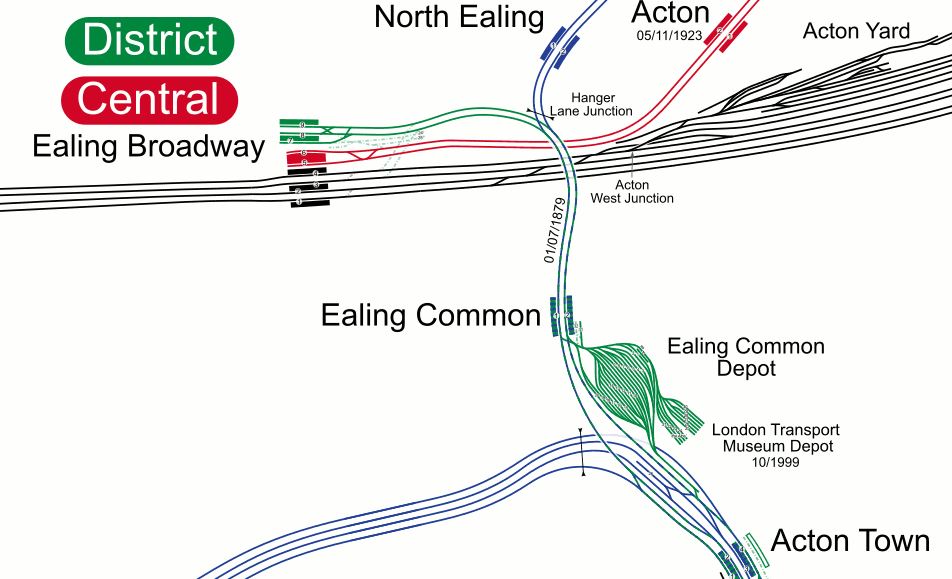
Note how the Piccadilly and District Lines share tracks from Ealing Common station, which then split with District Line trains going to Ealing Broadway station and Piccadilly Line trains going to Rayners Lane and Uxbridge stations.
If the change happened and Ealing Broadway station was only served by the Piccadilly and Central Lines of the Underground, then there might be opportunities to improve the efficiency of the Underground side of the station.
Capacities And Lengths Of London Underground Trains Serving Ealing Broadway Station
I’ll express these as a table.
- Central Line – 1992 Stock – 930 passengers – 130 metres – 7.15 pass/m.
- District Line – S7 Stock – 1209 passengers – 117.45 metres – 10.29 pass/m.
- Piccadilly Line – 1973 Stock – 684 passengers – 106.8 metres – 6.40 pass/m.
- New Tube for London – 1076 passengers – 113.7 metres – 9.46 pass/m.
Note.
- The New Tube for London is the shortest train, with the second highest capacity and the highest passenger density.
- The New Tube for London will be replacing the Piccadilly Line trains first.
- The New Tube for London will be replacing the Central Line trains second.
It looks like there will be no platform-length problems running the New Tube for London to Ealing Broadway station.
The District Line Platforms At Ealing Broadway Station
These pictures show the District Line at Ealing Broadway station.
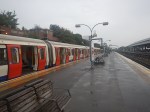
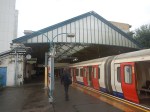
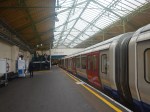

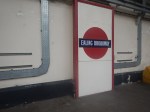
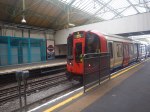
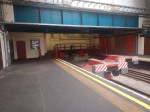
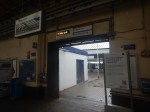
Note.
- There are three platforms for terminating District Line trains, which are numbered 7 to 9.
- The service frequency is six trains per hour (tph).
- The bridge to the far platform 9, is not step-free.
- It appears to be possible to walk between platforms 8 and 9 behind the buffer stops, but it wasn’t signed.
- As a comparison the Central Line runs 9 tph to East London from two platforms, that are numbered 5 and 6.
- There was also a 3 tph Night Tube service before the pandemic, which appears to be running again.
- Platforms 8 and 9 seem to be covered by a building of very little architectural merit.
This map from OpenRailwayMap shows the detailed platform layout.
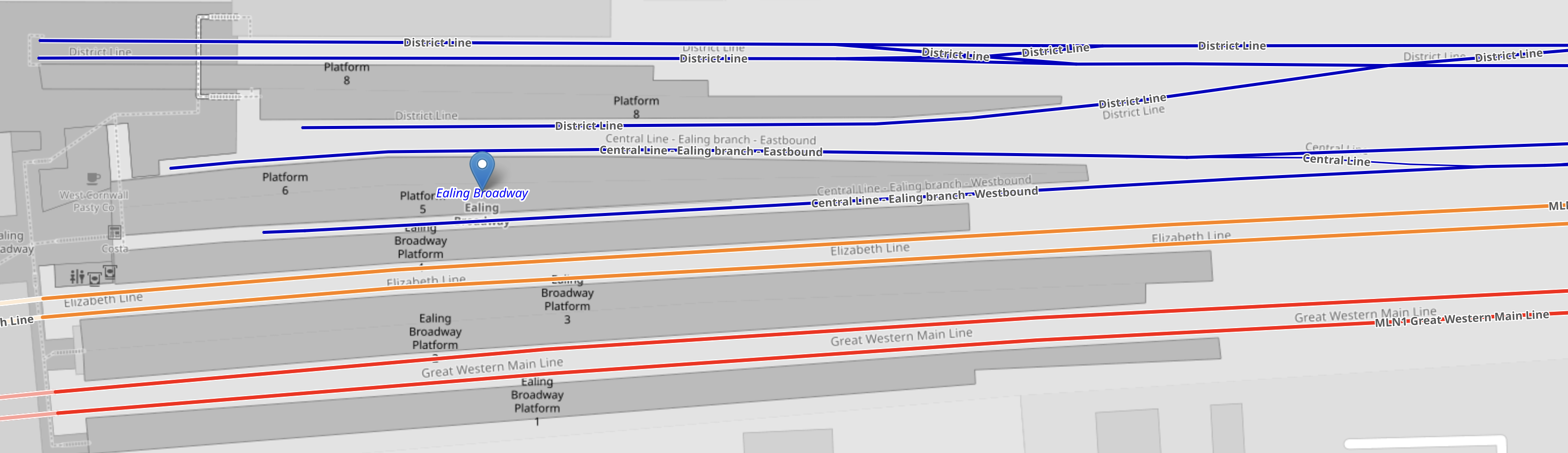
Note.
- Platforms are numbered from 1 to 9 from the South.
- Underground tracks are shown in blue.
- Elizabeth Line tracks are shown in orange.
- Great Western ~Main Line tracks are shown in red.
I believe that the three District Line platforms could be upgraded into an excellent terminus for another branch of the Piccadilly Line.
Consider.
- Two platforms would probably be enough, but a third would be useful for service recovery.
- As the Piccadilly and Central Line trains are the same size, could Platform 7 be a platform be available to both Underground services when needed?
- The New Tubes for London are a few metres shorter than the current District Line trains, so would this help in creating a step-free level walkway between Platforms 8 and 9, behind the buffer stops?
- Platforms 8 and 9 may need to be lengthened.
- Is there any scope for any appropriate oversite development?
I certainly believe that a much better replacement could be created.
Changing Between The Underground Lines And The Elizabeth Line At Ealing Broadway Station
Ealing Broadway station is now step-free and changes between the Eastbound Elizabeth Line and the Underground are a walk on the level.
Only when changing to or from the Westbound Elizabeth Line do you need to use stairs and/or a lift.
Elizabeth Line Effects On Access To Heathrow
The Elizabeth Line will change the way a lot of passengers go to and from Heathrow Airport.
Elizabeth Line To Heathrow
At present, the service will be.
- 4 trains per hour (tph) between Paddington and Heathrow Central and Heathrow Terminal 4 or Heathrow Terminal 5 via Ealing Broadway.
After November 6th, 2022, the service will be.
- 4 tph between Abbey Wood and Heathrow Central and Heathrow Terminal 4
- 2 tph between Abbey Wood and Heathrow Central and Heathrow Terminal 5
In addition these services will serve all station including Canary Wharf, Liverpool Street, Bond Street, Paddington and Ealing Broadway.
Effect On Heathrow Express
It will be difficult to predict what will happen to Heathrow Express, but I suspect several groups of passengers will desert it.
- Passengers wanting to go anywhere East of Paddington without changing trains.
- Passengers wanting any Elizabeth Line station.
- Passengers, who don’t like the prices of Heathrow Express.
- Passengers using Oyster or contactless cards.
- Passengers who want to ride on London’s spectacular new Elizabeth Line.
- After Old Oak Common station is opened for High Speed Two, the numbers could further decrease.
Will Heathrow Express survive?
Effect On Piccadilly Line
The current Piccadilly Line route to the Airport will not be closed, as for many it will still be a convenient route to the Airport
- Passengers who live on the Piccadilly Line and don’t want to change trains. Think Southgate, Knightsbridge, Hammersmith and Osterley!
- Passengers to the West of Acton Town station.
- Passengers, workers and others needing to go to Hatton Cross station.
If the Elizabeth Line connected with the Piccadilly Line at say Holborn, it would be all so different.
Effect On District Line
When Crossrail opens, the District Line will become a loop from Crossrail, between Ealing Broadway and Whitechapel running along the North Bank of the Thames via Earls Court, Victoria, Charing Cross and Monument.
The step-free interchange at Ealing Broadway could become busy with passengers travelling to and from the Airport.
Effect On Piccadilly Line Overcrowding
Heathrow trains on the Piccadilly Line can get very overcrowded with so many passengers with heavy cases.
It must sometimes be very difficult to get on a Piccadilly Line train between Heathrow and South Kensington stations.
The Elizabeth Line should take the pressure from these trains, by allowing passengers to use the District Line with a change at Ealing Broadway.
The New Tube for London will also help to reduce the overcrowding.
Effect On My Personal Route
My personal route to the airport is to take a 141 bus to Manor House station and then get the Piccadilly Line. It takes 94 minutes.
After the Elizabeth Line fully opens, if I take the East London Line from Dalston Junction to Whitechapel and then used Crossrail, I’d take 57 minutes.
Conclusion
The Elizabeth Line will affect the way many get to and from Heathrow Airport.
But there are large areas of London, who still will need to change trains twice to get to the airport. But for many, one of those changes will be a step-free one at Ealing Broadway, Paddington or Whitechapel stations.
Piccadilly Line To Ealing Broadway Effects
Adding Ealing Broadway station as a fourth Western terminus to the Piccadilly Line will have effects, but not as important as the opening of the Elizabeth Line.
Some Improved Journey Times To Heathrow
Some Piccadilly Line stations will see improved journey times to Heathrow.
Hammersmith to Heathrow currently takes 37 minutes by the Piccadilly Line.
Taking a Piccadilly Line train to Ealing Broadway and then using the Elizabeth Line could save a dozen minutes.
The District Line Connection To The Elizabeth Line At Ealing Broadway Is Lost
Passengers along the District Line from Monument to Hammersmith will lose their direct access to the Elizabeth Line at Ealing Broadway.
Cross-platform access to the Piccadilly Line at Hammersmith and other stations will probably be provided or improved, but it will be a second change.
Note that until the Piccadilly Line gets upgraded and new trains arrive around 2023, the District Line with new trains and the soon to be installed new signalling may well be a better passenger experience.
More Trains To Richmond
This will certainly be possible, if some Ealing Broadway trains are diverted to Richmond.
But the Elizabeth Line has another delight in its cupboard for Richmond.
Old Oak Common station is scheduled to open in 2026 and will offer an interchange between the Elizabeth Line and the North London Line.
Richmond will certainly be getting a better train service to Central and East London.
More Trains To Wimbledon
This will certainly be possible, if some Ealing Broadway trains are diverted to Wimbledon.
The Ealing Common Problem
At Ealing Common station, the Piccadilly and District Line share the same tracks and platforms.
Some commentators have suggested that the new trains on the Piccadilly Line will be designed to work with platform-edge doors for improved safety and dwell times.
So if platform-edge doors were to be fitted to all stations on the Piccadilly Line as has been suggested, there would be no way the doors would fit the new S7 Stock of the District Line.
Swapping Ealing Broadway from the District to Piccadilly Lines would solve this problem and give more flexibility, but it might give London Underground other problems with regard to access for District Line trains to Ealing Common depot.
These pictures show Ealing Common station.
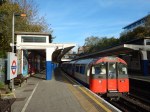
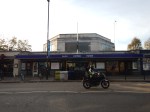
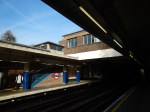

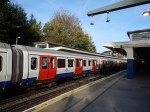
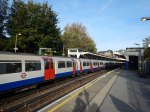
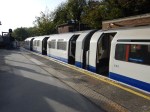
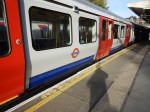
Note the difference in levels between the Piccadilly and District Line trains.
There would be no way to provide level access for both types of train using a Harrington Hump.
So is making a station that serves both deep-level and sub-surface lines, step-free, a problem that is still to be cracked?
This Google Map shows Ealing Common station.
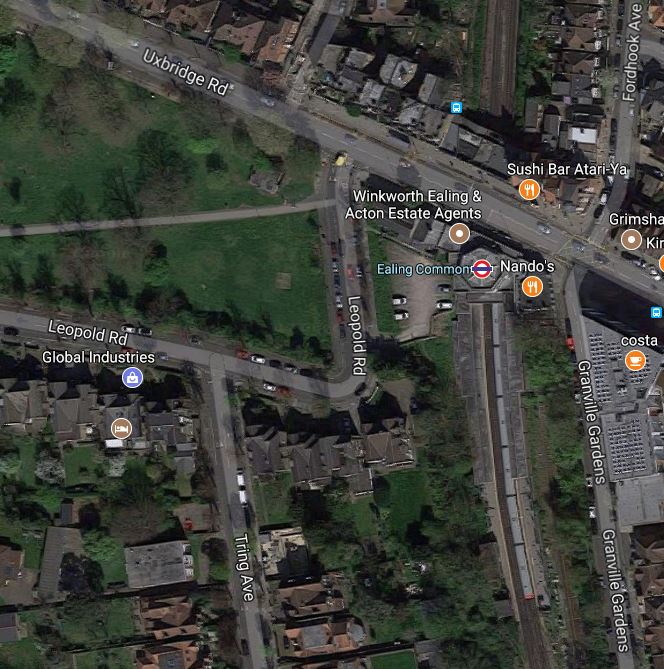
It doesn’t look that it is a station, where two extra platforms could be squeezed in, so both lines could have their own platforms.
Could Ealing Common station be one of the main reasons to serve Ealing Broadway station with the Piccadilly Line?
Acton Town Station
These pictures show Acton Town station.
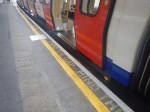
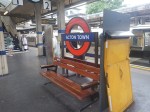
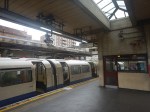
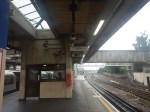
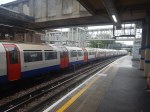
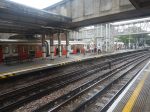

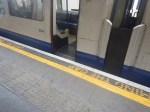
Note.
- The two central tracks appear to be Piccadilly Line trains only.
- The two outer tracks appear to be able to be used by both District and Piccadilly Line trains.
- There is quite a step-down to Piccadilly Line trains on some platforms.
Making Acton Town station, a Piccadilly Line-only station, would ease making the station step-free, as it would only be served by one type of train.
Chiswick Park And Ravenscourt Park
This section is shown in this map from cartmetro.com.
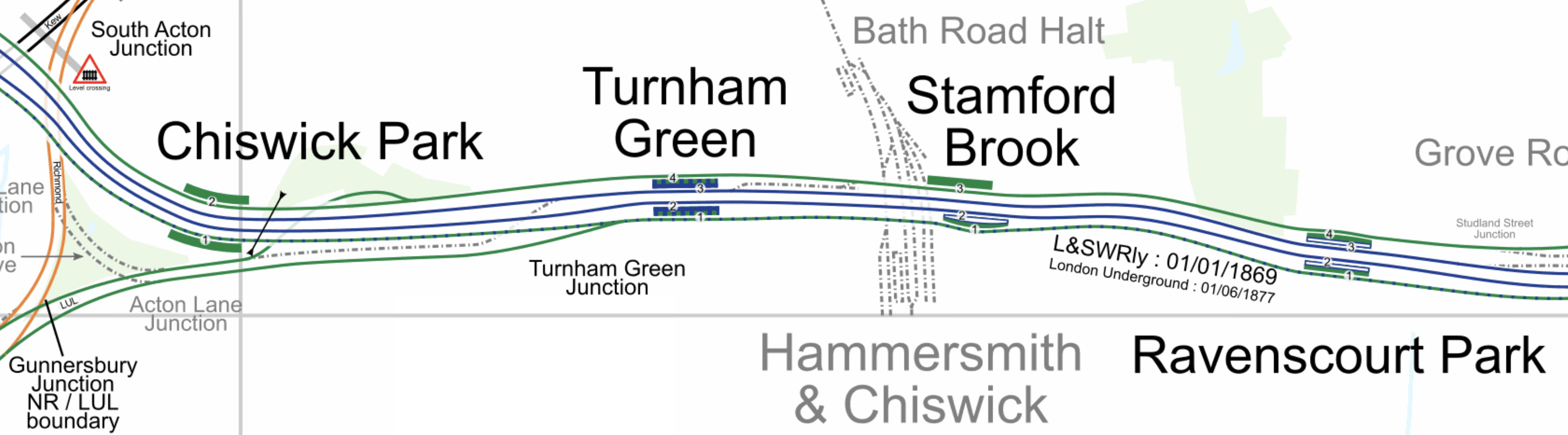
Note.
- The District Line is shown in green.
- The Piccadilly Line is shown in blue.
- The two Piccadilly Line tracks are in the middle and generally trains go straight through the four stations.
- The two District Line tracks are on the outside and trains stop at most stations.
It appears that the tracks have been laid out so that Piccadilly Line trains can get a real shift on between Acton Town and Hammersmith.
This could save a few minutes on some Piccadilly Line journeys.
But there is a problem!
- District Line trains serve all stations.
- Piccadilly Line trains serve none.
- How is Chiswick Park station going to be served, as there are no District Line trains passing?
- Passengers for intermediate stations, would need to get on the District Line trains before entering the Acton Town and Hammersmith section.
- Passengers may want to change between Ealing Broadway and Chiswick Park.
There will also be no trains running on the current District Line tracks between Acton Town and Turnham Green Junction. The only ones that do now, go to Ealing Broadway and they’re being changed to Piccadilly Line trains.
Serving Chiswick Park Station
Chiswick Park station only has platforms on the District Line, which will not see any passing trains if the District Line doesn’t go to Ealing Broadway.
One suggestion I found was to add two new District Line platforms to the Richmond branch.
This Google Map shows the station.
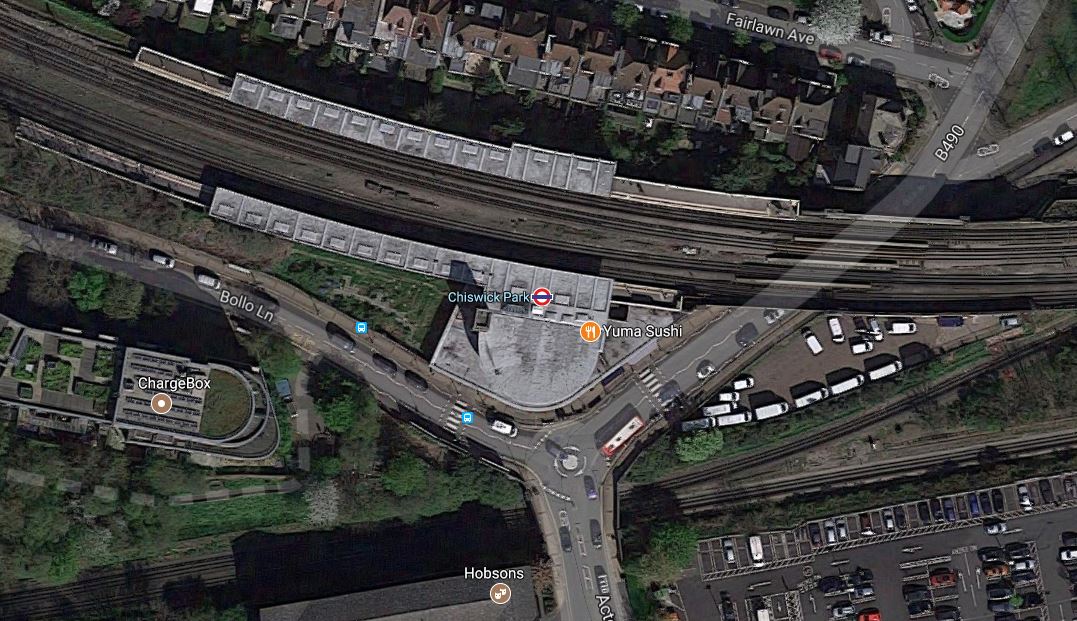
Note the Richmond branch passing South of the station.
This second Google Map shows the tracks between Chiswick Park station and Turnham Green junction.
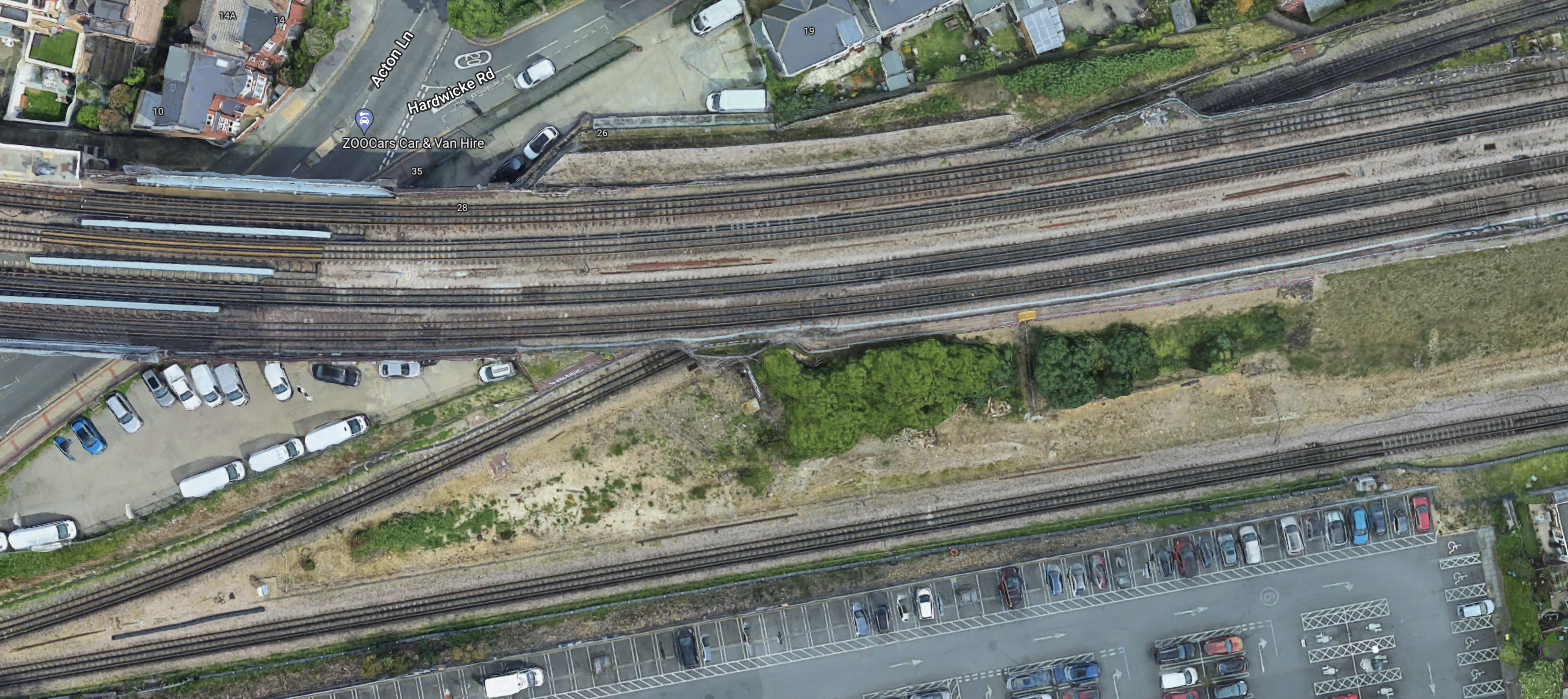
Note.
- The four tracks between Acton Town and Hammersmith stations.
- The current District Line tracks are the outside two of the four tracks.
- The Piccadilly Line tracks are the middle two.
- The two tracks at the South-West corner go to Richmond station.
- The Eastbound track from Richmond goes under the four-track railway, before joining the current Eastbound District Line track.
- The Westbound track to Richmond runs along the South side of the four-track railway, before joining the current Westbound District Line track.
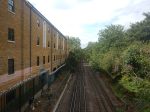
These pictures were taken from a train approaching Chiswick Park station from the East.

Note, that there is enough space for a platform along the single track.
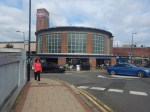
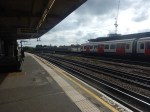
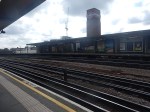
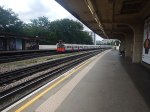
These pictures are of Chiswick Park station.


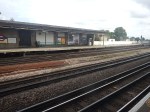


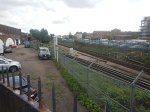
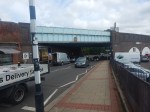
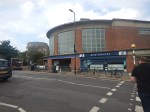
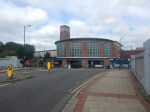

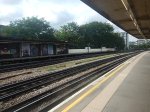
Note.
- The distinctive architecture of London Transport stations of the period.
- The two fast lines in the middle, with Piccadilly Line trains speeding through.
- The two District Line trains on the outside with platforms.
- The Richmond Branch passing to the South of the station and between the station and Sainsburys.
I would suspect that a pair of platforms could be built on the two tracks of the Richmond branch.
- District Line trains to and from Richmond would stop at the new platforms at Chiswick Park stations and Turnham Green, Stamford Brook, Ravenscroft Park, Hammersmith, Baron’s Court and Earl’s Court stations.
- Passengers between Ealing Broadway and Victoria stations would change at Hammersmith, Baron’s Court or Earl’s Court stations.
- The car park at the bottom of the map is for a large Sainsbury’s. Perhaps, they would like a station entrance?
- Chiswick Park station is Grade II Listed.
I’m sure that a good architect can find a more than acceptable solution.
Turnham Green Station
As I passed through Turnham Green station, I got off and took a few pictures, before catching the next train to Ealing Broadway.

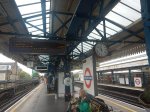
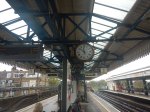

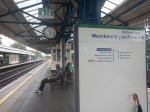
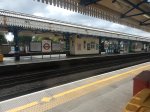
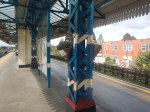
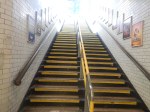

Note.
- Piccadilly Line trains don’t generally stop, although they do at times to provide a service when the District Line is not running.
- The station is not step-free, with stairs to the entrance.
- It has some nice features.
- Herbs are provided for passengers
If required a step-free interchange between District and Piccadilly Lines could be arranged.
Hammersmith Station
I arrived at Hammersmith station on a Piccadilly Line train and left on a District Line train, after taking these pictures.
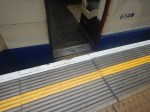
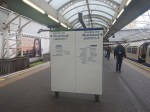

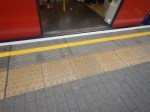
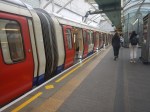
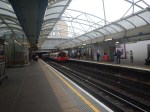
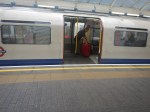
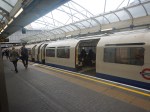
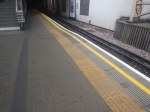
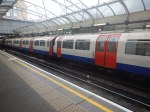
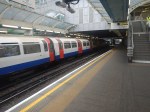

Note.
- The change is on the same island platform.
- There is plenty of space on the platform.
- The District Line trains are level with the platform.
- The Piccadilly Line trains require a step-down from the platform.
- The District Line trains run at a frequency of 12 tph.
- The Piccadilly Line trains run at a frequency of 21 tph.
- Hammersmith is also a big bus interchange and shopping centre.
There should be no problem changing between Piccadilly and District Lines at Hammersmith, with a wait of no more than five minutes.
Baron’s Court Station
In a brief stop at Baron’s Court station, I took these pictures.
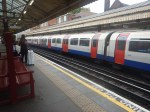
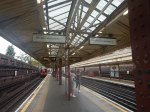
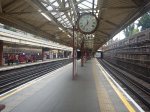
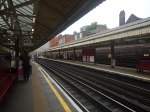
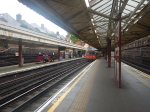
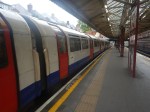
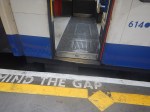
Note.
- The change is on the same island platform.
- There is less space on the platform, than at Hammersmith station.
- The District Line trains are a step-up from the platform.
- The Piccadilly Line trains require a step-up from the platform.
- The District Line trains run at a frequency of 12 tph.
- The Piccadilly Line trains run at a frequency of 21 tph.
There should be no problem changing between Piccadilly and District Lines at Baron’s Court, with a wait of no more than five minutes.
Earl’s Court Station
I arrived at Earl’s Court station on a Piccadilly Line train and left on a District Line train, after taking these pictures.

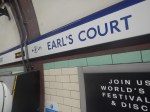
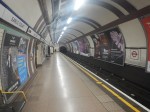

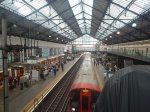
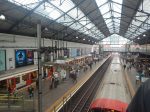
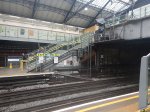
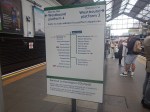
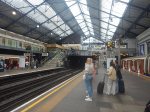
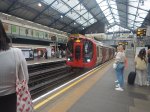
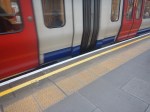
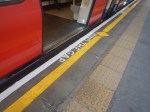
Note.
- The change means that platforms have to be changed
- The District Line trains are a step-up from the platform.
- The Piccadilly Line trains require a step-up from the platform.
- The District Line trains run at a frequency of 12 tph.
- The Piccadilly Line trains run at a frequency of 21 tph.
There should be no problem changing between Piccadilly and District Lines at Earl’s Court, but Hammersmith and Baron’Court don’t need a change of platform.
What Is The Best Station To Change Between Piccadilly And District Lines?
It appears that the best place to change would be Hammersmith, or failing that Baron’s Court.
- Earl’s Court requires a change of platform.
- Turnham Green requires a change of platform and two sets of steps.
- Hammersmith has a shopping centre and a lot of buses.
- I’ve used Hammersmith before to get home from Heathrow, with a change to a 141 bus at Monument station.
I would always for preference use Hammersmith.
Conclusion
It appears to me, there are three opposite forces on either side of a possible proposal to serve Ealing Broadway station with the Piccadilly Line, rather than the District Line.
- The District Line will form a loop South of Crossrail between Ealing Broadway and Whitechapel stations.
- The loop of the District Line serves Victoria, Embankment, Blackfriars, Cannon Street and Tower Hill stations for access to National Rail services.
- Making a station step-free that handles both deep-level and sub-surface lines, is not an easy undertaking.
Running the Piccadilly Line to Ealing Broadway means that a change is required at Hammersmith or Barons Court stations to use the loop described in point 1.
But this change would enable the step-free access to be created in all stations in the area.
I think that the change of terminus will go ahead, with the following additions.
- Improved access to Ealing Common depot.
- Improved cross-platform access at Hammersmith or Barons Court stations.
- Possibly two extra platforms on the District Line at Chiswick Park station.
What started out as a simple change could end up as a substantial project.
But overall, because it sorts out step-free access in the area, I think it is a good proposal.
Extending The Elizabeth Line – Improving The Northern City Line
Some parts of North and North-East London, have less-than-good connections with the Elizabeth Line.
- The Piccadilly Line has no direct connection with the Elizabeth Line.
- The Victoria Line has no direct connection with the Elizabeth Line.
- The Bank branch of the Northern Line has only a poor connection with the Elizabeth Line at Moorgate station.
- The Northern City Line has only a poor connection with the Elizabeth Line at Moorgate station.
- The Charing Cross branch of the Northern Line has a good connection with the Elizabeth Line at Tottenham Court Road station.
- The Lea Valley Lines of the London Overground have good connections with the Elizabeth Line at Liverpool Street station.
- Thameslink has a good connection with the Elizabeth Line at Farringdon station.
It would appear that if you live near one of the Lea Valley Lines or Thameslink stations, you can access the Elizabeth Line fairly easily at Liverpool Street or Farringdon stations, but if you rely on a Northern, Northern City, Piccadilly or Victoria Line local station, you are not so lucky!
Could The Northern City Line Be Improved To Give Better Connections Between North London And The Elizabeth Line?
This map from cartometro.com shows the lines between Finsbury Park and Highbury & Islington stations.
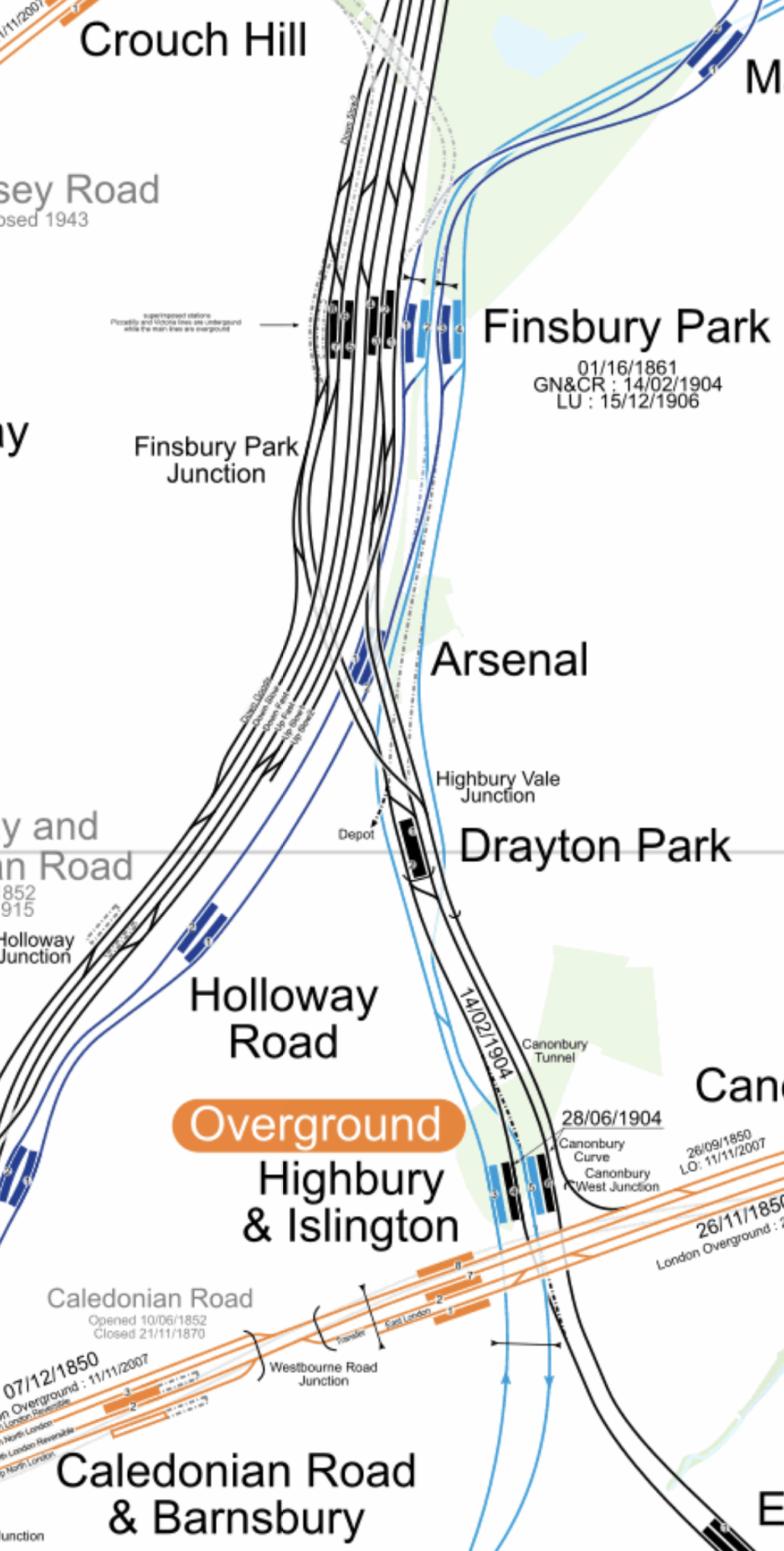
Note.
- The dark blue tracks are the Piccadilly Line, which calls at M (Manor House), Finsbury Park, Arsenal, Holloway Road and Caledonian Road, before going South-West to King’s Cross St. Pancras.
- The lighter blue tracks are the Victoria Line, which calls at Finsbury Park and Highbury & Islington, before going South-West to King’s Cross St. Pancras.
- The black tracks on the Western side of the map are those of the East Coast Main Line into King’s Cross.
- The black tracks going South-East from Finsbury Park are the Northern City Line, which calls at Finsbury Park, Drayton Park, Highbury & Islington, E (Essex Road) and Old Street before terminating at Moorgate.
This second map shows the lines through Finsbury Park station.
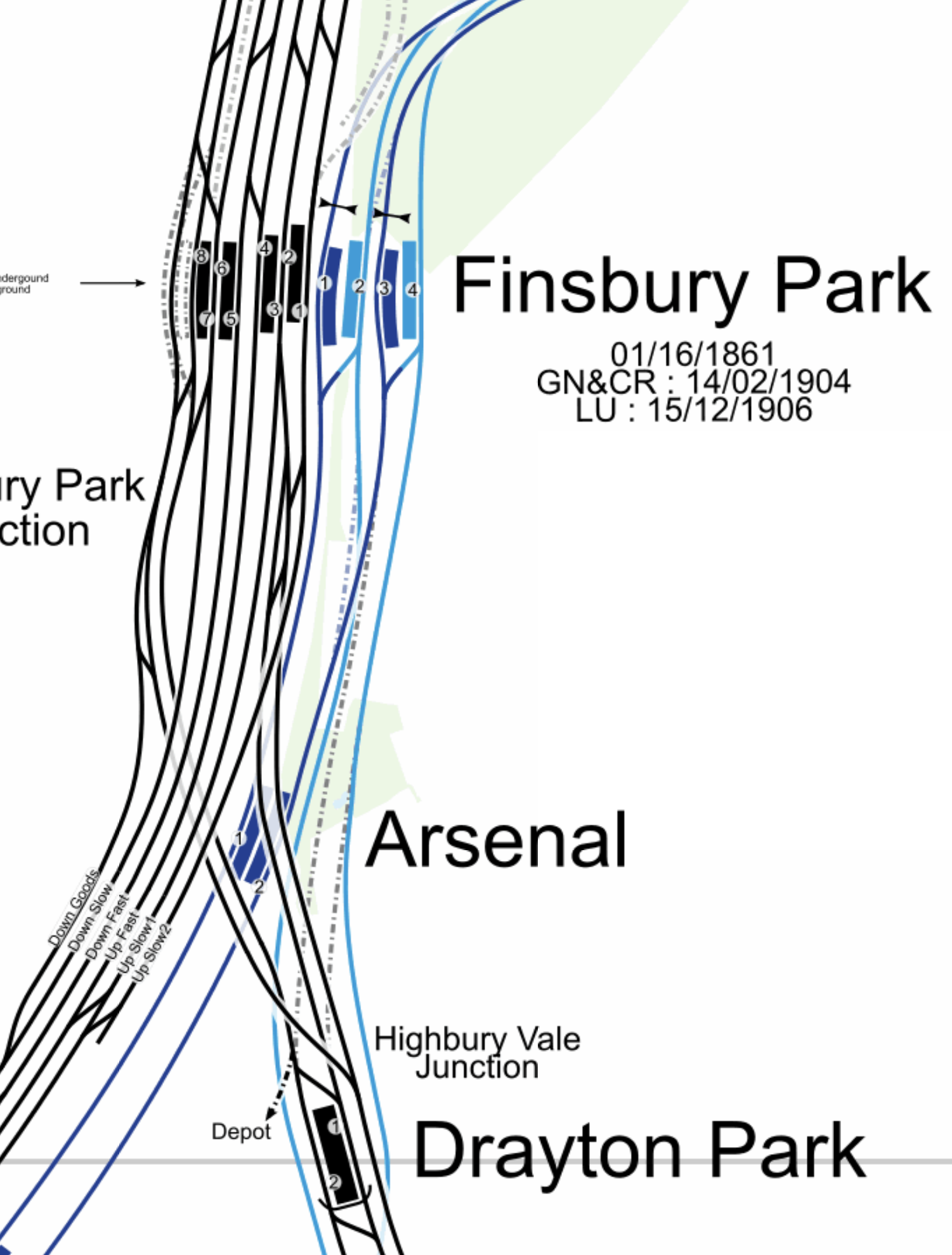
Note.
- The dark blue tracks are the Piccadilly Line.
- The lighter blue tracks are the Victoria Line.
- The black tracks going through Drayton Park station are the Northern City Line.
- The platforms of the Piccadilly and Victoria Lines are paired at Finsbury Park station, so that passengers can change lines with a simple walk-across.
This third map shows the lines through Highbury & Islington station.
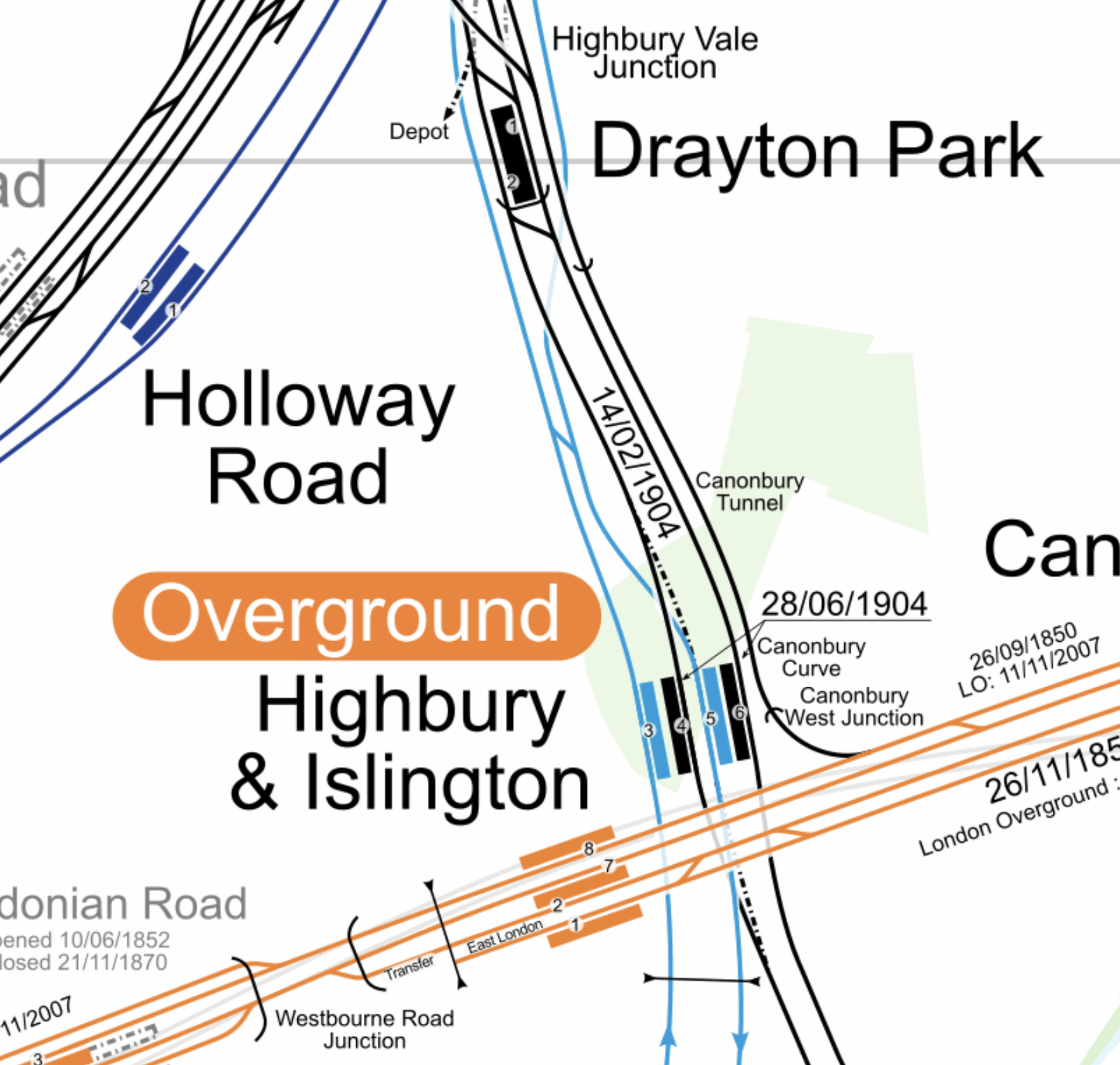
Note.
- The dark blue tracks are the Piccadilly Line.
- The lighter blue tracks are the Victoria Line.
- The orange tracks are the London Overground.
- The black tracks going through Drayton Park and Highbury & Islington stations are the Northern City Line, which terminates at Moorgate station.
- The platforms of the Northern City and Victoria Lines are paired at Highbury & Islington station, so that passengers can change lines with a simple walk-across.
The big problem with Highbury & Islington station is that is not step-free.
A Step-Free Route Between Wood Green And Moorgate Stations
Currently, it is possible to go between Wood Green and Moorgate stations by using three trains.
- Piccadilly Line – Wood Green to Finsbury Park – 6 mins
- Victoria Line – Finsbury Park to Highbury & Islington – 6 mins
- Northern City Line – Highbury & Islington to Moorgate – 10 mins
Note.
- These are actual times measured on my phone.
- The total time is twenty-two minutes.
- I had to wait a couple of minutes at both changes.
- Both changes are walk-across.
- The changes are not as perfect as they could be, although they would be easily managed with a buggy or a heavy case.
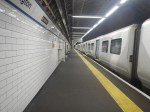
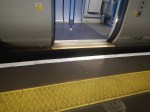
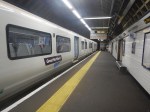
These pictures show the change at Highbury & Islington station.
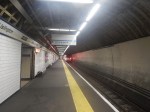
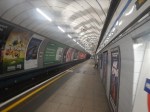
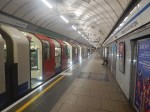
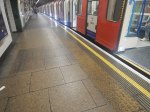
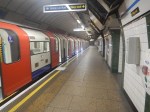
These pictures show the change at Finsbury Park station.

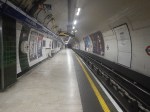
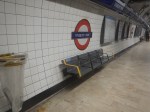
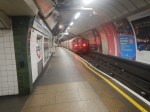
This route works for all stations Between Manor House and Cockfosters.
- Cockfosters – Add 15 minutes
- Oakwood – Add 12 minutes
- Southgate – Add 9 minutes
- Arnos Grove – Add 6 minutes
- Bounds Green – Add 3 minutes
- Turnpike Lane – Subtract 2 minutes
- Manor House – Subtract 5 minutes
But look at the frequencies of the three sections in trains per hour (tph)
- Piccadilly Line – 21 tph
- Victoria Line – 33 tph
- Northern City Line – 4 tph
The Northern City Line frequency is not high enough, as you could have a fifteen minute wait for a train.
Improvements Needed To The Northern City Line
The Northern City Line now has new Class 717 trains, a terminal platform at Stevenage and full digital signalling is being installed.
- The major improvement needed would be to improve frequency to at least 12 tph.
- Six tph on both branches should be possible.
I would also install step-free access at more stations.
Moorgate Station’s Northern City Line Platforms
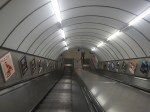
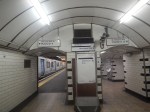
These pictures show the platforms of the Northern City Line at Moorgate station.
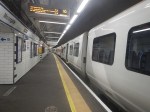
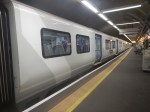
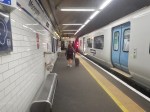

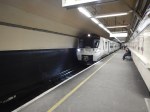
Note.
Improved Connections At Moorgate Station
I talked about the connections between the Northern and Elizabeth Lines at Moorgate station in Elizabeth Line To Northern Line At Moorgate Station.
This was my conclusion.
Routes between the Northern and Elizabeth Lines at Moorgate need to be improved.
I feel that some of the improvements could be fairly minor, but adding step-free access to the Northern City Line could be more difficult.
An Improved Connection Between Bank And Moorgate Stations
Currently, there are three ways between Bank and Moorgate stations.
- Use the Northern Line
- Use a 21, 43 or 141 bus routes
- Walk
I believe that it would also be possible to dig a pedestrian tunnel between the two stations and fit it out with a moving walkway.
This visualisation shows the updated Bank station.
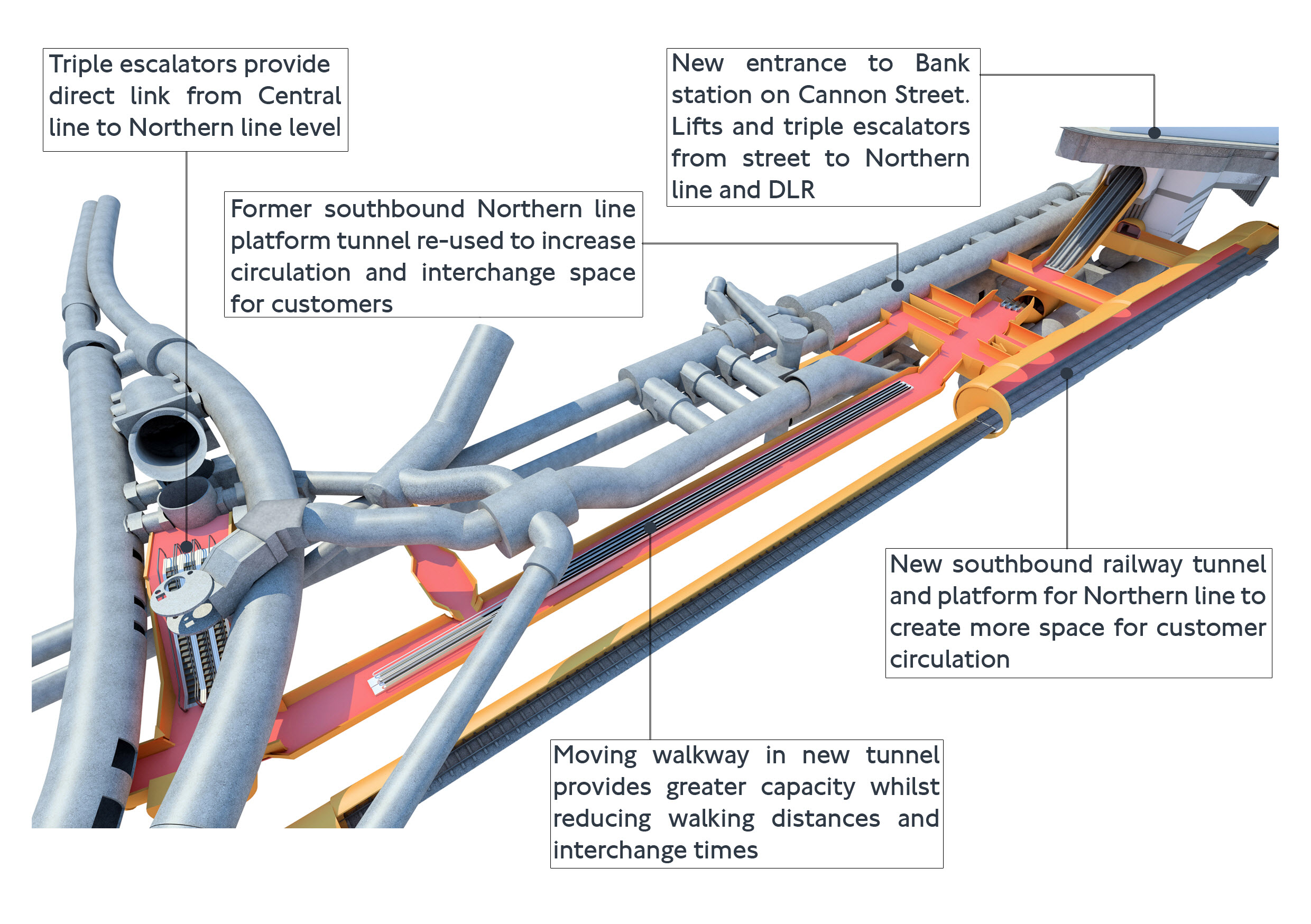
Note.
- Moorgate station is to the left.
- The only more-or-less completed bits are the two Northern Line tunnels and platforms and parallel pedestrian tunnel.
- The four cross tunnels can be picked out towards the far end of the station.
- Three of the cross tunnels can now be used by passengers.
- The moving walkway can be accessed from the two cross tunnels nearest to the Central Line.
- The escalators from the yet-to-open Cannon Street entrance appear to lead directly into a cross tunnel and a parallel tunnel to the moving walkway.
I believe that the moving walkway to Moorgate station could connect with the Bank station complex, at the Moorgate end of the new moving walkway in Bank station.
Extending The Elizabeth Line – London Crosslink
In the Wikipedia entry for the London Crosslink, this is the introduction.
London Crosslink was a passenger train service operated by Anglia Railways between Norwich and Basingstoke, using the North London Line to bypass central London. Class 170 Turbostar diesel multiple units were used, and the service operated between 22 May 2000 and 28 September 2002, supported by funding from the Strategic Rail Authority through its Rail Passenger Partnership fund.
As it was discontinued and it doesn’t seem to be sadly missed, I’m not advocating its reinstatement, but just looking how it might be run after the full opening of the Elizabeth Line.
But surely, there were good reasons, why the service was run in the first place and there might be a need in the future.
These are some characteristics of the service.
- There were about half-a-dozen services in both directions every day.
- At its full length it ran between Norwich and Basingstoke.
- Stops included Diss, Stowmarket, Ipswich, Colchester, Witham, Chelmsford, Ingatestone, Romford, Stratford, Highbury & Islington, Camden Road, West Hampstead, Brentford, Feltham, Staines, Woking and Farnborough (Main).
- Each service seemed to have a different stopping pattern.
- The timetable wasn’t very regular.
- The route wasn’t fully electrified.
It appears that it may have been a difficult service to timetable.
A London Crosslink Based On The Elizabeth Line
Consider.
- The route between Norwich and Stratford is possible and is fully-electrified.
- Trains could use the Central Tunnel of the Elizabeth Line between Stratford and Paddington.
- There is no connection between the Central Tunnel and Brentford, Feltham, Staines, Woking and Farnborough (Main).
I suspect that the service would go to Basingstoke via Reading.
An alternative route might be serve Heathrow Terminal 5 and then connect to the Windsor and Staines Line.
Note.
- In Extending The Elizabeth Line – Connecting Great Eastern Main Line Services To The Central Tunnel, I showed that I thought it was possible for Great Eastern Main Line service to use the Central Tunnel of the Elizabeth Line.
- Reading and Basingstoke is not electrified.
Would it be worthwhile?
 The Anonymous Widower