No Trains Out Of Cornwall Until The Weekend After Lorry Hits Plymouth Bridge
The title of this post, is the same as that of this article on The Times.
A few points from the article.
- It was a Tesco truck.
- It took twenty-four hours to extract.
- The accident happened on Ashford Hill in Plymouth.
I found the bridge on Google Maps.
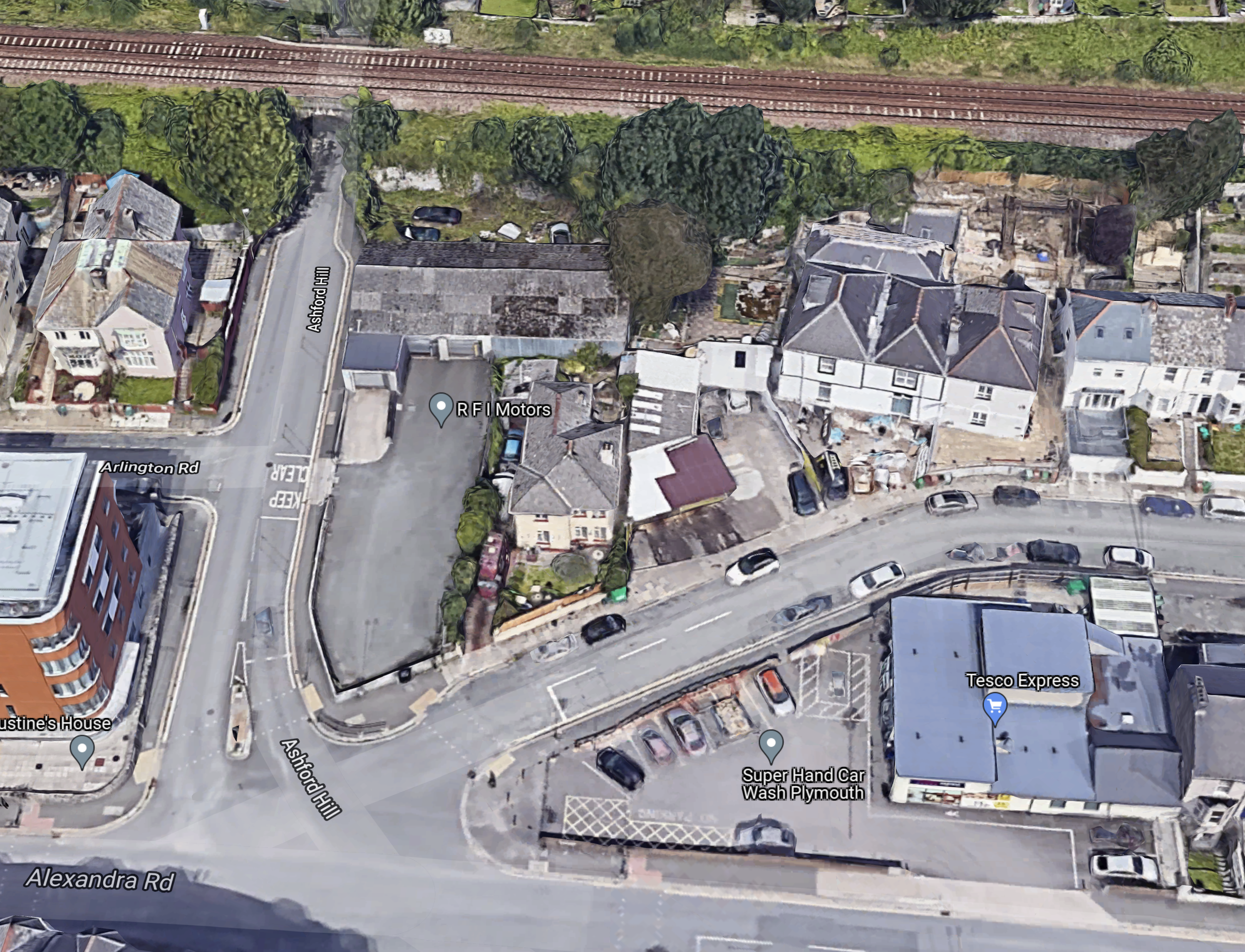
Note.
- The railway and the bridge are at the top of the map.
- My eyesight isn’t good, but I can see the warning signs on the bridge.
- There is a TescoExpress in the bottom right corner of the map.
It can’t be a lot more than a hundred metres between the bridge and the TescoExpress.
To make matters worse for the train operators, the accident site is to the East of Plymouth station, which means trains can’t run to Plymouth.
Will GWR Use Okehampton?
Network Rail have already re-laid the track to Okehampton, prior to opening an hourly service between Exeter and Okehampton later this year.
Okehampton station is close to the A30 and I suspect that GWR would have little difficulty running a five-car Hitachi train to Okehampton from London with a reverse at Exeter. At Okehampton, they could use coaches to serve Cornwall by running to Bodmin Parkway.
If I was the CEO of GWR, I’d see if it could be arranged, as what good publicity they’d get for the new Okehampton service.
Could British Land’s Plans For Finsbury Square Car Park Include A Rail Link To The Northern City Line?
This map from cartometro.com shows the railway lines in the area of Liverpool Street, Moorgate and Old Street stations.
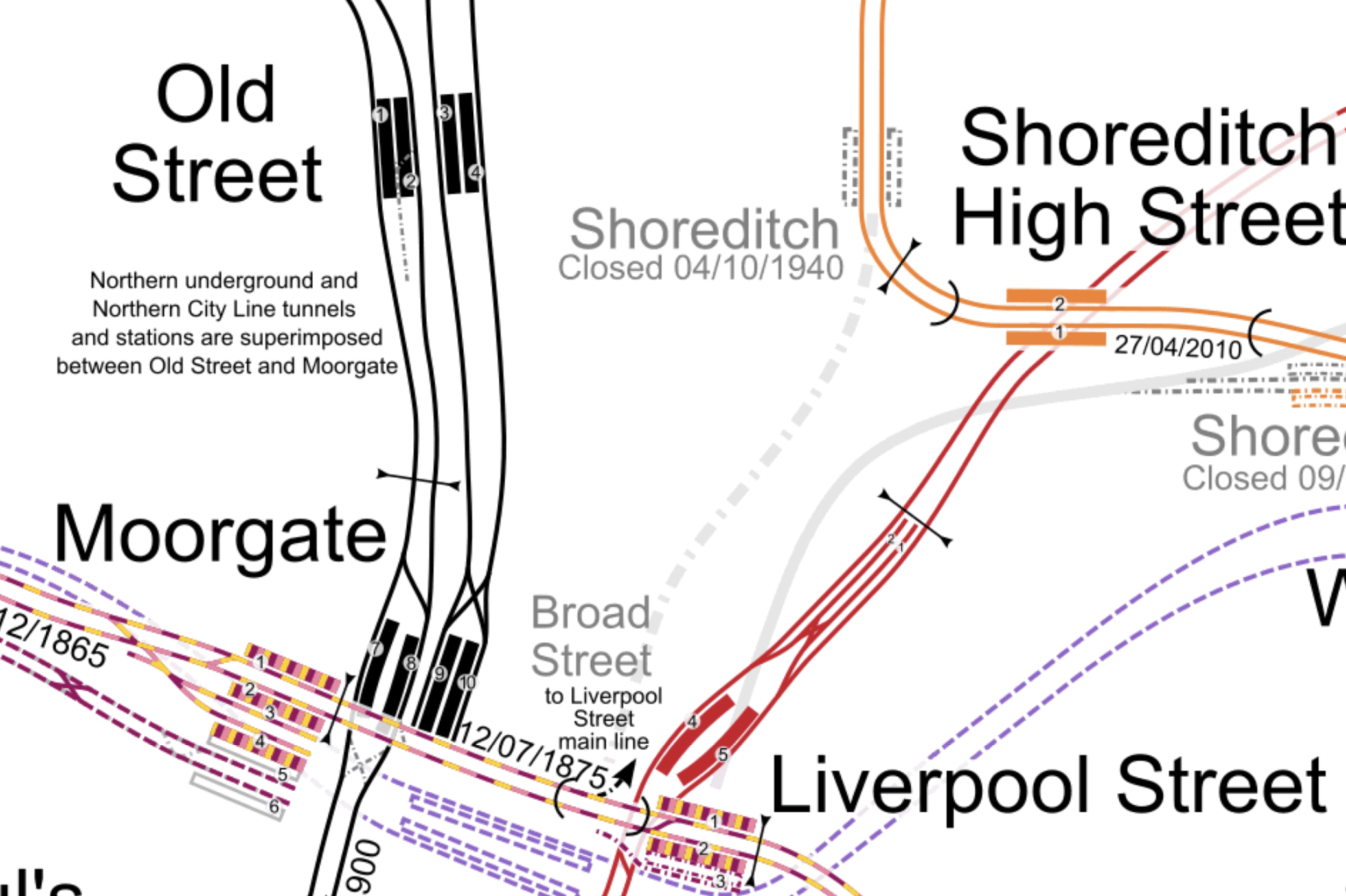
Note.
- The four tracks in black are the Northern and Northern City Lines.
- It is planned to install digital signalling on the Northern City Line to increase capacity.
Finsbury Square is to the East of these lines.
The Northern Line is about fifteen metres deeper and underneath the Northern City Line.
This picture shows the escalator between the two lines at Moorgate station.

I wouldn’t be surprised to find that the Northern City Lines are deep enough to be below the Finsbury Square Car Park.
So would it be possible to run a four-car electric multiple unit into the Finsbury Square Car Park, so that there is no need to shuttle parcels and light freight to Liverpool Street station.
The digital signalling on the Northern City Line will probably allow a few extra trains to travel to a siding in or under the Finsbury Square Car Park, so it wouldn’t effect services into Moorgate.
Finsbury Square Car Park Becomes British Land Hub For Delivery Drivers
The title of this post, is the same as that of this article on The Times.
It is a surprising headline or is it a logical development given some of the projects in the rail freight business.
In A Freight Shuttle For Liverpool Street Station Planned. I talked about Rail Operations Group and their plans to run a freight shuttle between London Gateway and Liverpool Street station.
- Trains will be Class 769 bi-mode trains.
- The trains will be fitted with roller doors, roller cages and strengthened floors.
- Three services will leave Thames Gateway at 0029, 1208 and 1856.
- They will return from Liverpool Street at 0242, 1421 and 2100.
- Services will use Platforms 9 and 10 in Liverpool Street station.
- Goods would be delivered to the customer by e-bikes or electric vans.
This a very detailed plan.
But would it be better, if it had a logistics hub close to or even in the station?
These pictures show the Old Cab Road at Liverpool Street station.


This would probably be the only area in the station, that can be used. But it is not very large. Although it does have an access road at the back of the station.
This Google Map shows the area between Finsbury Square and Liverpool Street station.
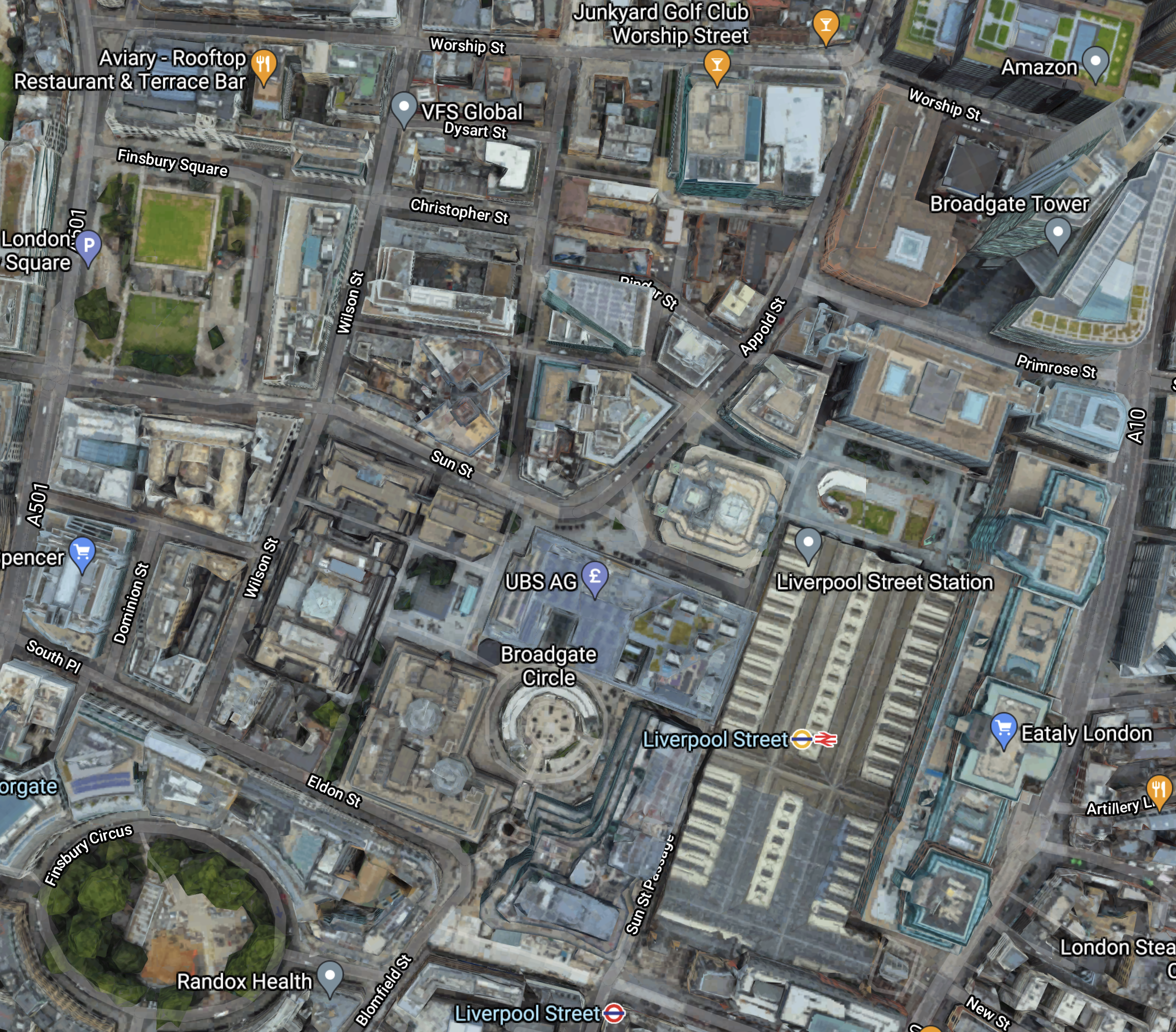
Note.
- Finsbury Square is in the North West corner of the map.
- Liverpool Street station is in the South East corner of the map.
- There is an entrance to the Old Cab Road Liverpool Street station on Primrose Street.
- Amazon UK’s corporate office is in the North East corner of the msp.
Could roller cages be rolled into electric vans and taken to Finsbury Square for sorting and onward distribution?
- The car park has a height limit of 1.98 metres.
- It has 258 parking spaces.
- Could it be expanded downwards?
- How many e-bikes would it hold?
It think that this could be the reason for the purchase.
But I would be very surprised if a siding was dug that connected to the nearby Northern City Line that runs into Moorgate station.
Northern Rail Apologises Over Disruption On Durham Coast Line
The title of this post, is the same as that of this article on the Northern Echo.
These is the first two paragraphs.
Easington MP Grahame Morris has invited Northern Rail executives and the Rail Minister to travel on the Durham Coast Line following “another weekend of rail chaos”.
As the football season kicked off and Seaham Food Festival attracted thousands of people, travellers were left angry and disappointed as they were unable to board overcrowded rail services at Horden and Seaham train stations.
The article then goes on to say that this has been an ongoing problem for several years.
I would have thought that to maximise revenue on any transport service, it is best to provide enough stagecoaches, charabancs, buses, trams or trains.
Could this business naivety be why the original Northern went bust?
What Should The Government Do?
As Northern is now run by the Government’s Operator Of Last Resort, it is up to the Government.
In Boris Johnson Backs Station Opening Which Could See Metro Link To County Durham, I report on an exchange between Boris Johnson and an MP in Prime Minister’s Questions.
These are my two main improvements.
Reopen Ferryhill Station And The Leamside and Stillington Lines To Create A New Route
Boris Johnson talked about reopening Ferryhill station, which could be key to opening up a second route between Teesside and Newcastle and Sunderland.
- Ferryhill station would be on the East Coast Main Line and electrified to handle battery-electric trains.
- Ferryhill terminal would be an ideal Southern terminal for a reopened Leamside Line, which most stakeholders seem in favour of, as it would take the pressure off the East Coast Main Line to the South of Newcastle and connect large areas to the rail network and in particular, the Tyne and Wear Metro.
- Ferryhill station would be at the Northern end of the freight-only Stillington Line, which runs South-Eastwards from the East Coast Main Line at Ferryhill to Stockton and Hartlepool or Middlesbrough.
- A combination of the Leamside and Stillington Lines would open up a second route between the two conurbations.
It might also be possible to run a semi-fast York and Newcastle service via Northallerton, Yarm, Thornaby, Stockton, Ferryhill and the Leamside Line.
- This service would only run on the East Coast Main Line, where there were four tracks to the South of Northallerton.
- It could be run by a battery-electric train.
- A battery-electric train could be charged at York, Ferryhill and Newcastle.
This article on the Northern Echo is entitled ‘Rapid’ Progress On Reopening Leamside Line, Connecting County Durham And Washington.
Things don’t seem to be standing still.
There would appear to be lots of scope for rail development between the Tyne and Wear in the North and the Tees in the South.
If the go-ahead is given by Government to develop the Leamside and Stillington Lines, the great thing is that construction of the new route will not affect anything on the important East Coast Main Line, as Network Rail would just be creating a railway by-pass around one of busiest sections of main line, that will be used by local and freight trains.
Two routes through the area, would certainly double the capacity, if both had an hourly train.
Battery-Electric Trains
I mentioned battery-electric trains as the rolling stock for a possible semi-fast service between York and Newcastle.
We are accumulating a large pile of surplus Class 350, 387 and 379 trains.
- They are being replaced by modern units.
- They were built within the last twenty years.
- They are all high-quality four car trains.
- They can all be modified for a 110 mph operating speed, so could venture on the East Coast Main Line if needed.
These trains have been mentioned several times as possibilities for conversion to battery-electric trains.
With a few strategically-placed charging systems, these would be ideal trains for services in the area.
Conclusion
It would be a great improvement for train services in the North-East.
My first step would be to convert the Hexham and Nunthorpe service via Newcastle, Sunderland, Seaham, Horden and Middlesbrough to battery-electric operation, by adding charging at Hexham and Nunthorpe stations.
Some are keen on hydrogen trains for this route, but these will have a longer gestation period.
I would also suspect that travellers in the North-East would prefer jam today, rather than possibly inferior jam sometime in the future.
Battery-electric trains based on the train classes I named would also be ideal for the Northumberland Line and the Salburn and Bishop Auckland service.
Innovation Funding Awarded
The title of this post, is the same as that of a short article in the August 2021 Edition of Modern Railways.
This is the first paragraph.
Developments in passenger information, cutting carbon emissions and electrification are amongst the 30 winners of the latest round of the Department for Transport/Innovate UK’s First Of A Kind (FOaK) competition.
I particularly liked the first innovation mentioned.
Furrer+Frey is proposing a movable overhead conductor rail system for freight terminals which allows electric locomotives to enter them while providing obstruction-free loading and unloading of freight. It says this will remove the current barrier of end-to-end rail freight electrification and end the reliance on diesel traction.
Some years ago, I sat next to a crane driver from the Port of Felixstowe at a football match. At half-time we talked for a few minutes about the problems of overhead wires in ports and freight terminals. As he said “Accidents do happen!”
Furrer+Frey’s idea might be just what is needed to help decarbonise ports and freight terminals.
There is a good description of the project in this article on Rail Business UK, which is entitled Movable Overhead Electrification Aims To Eliminate The Need For Diesel Shunting Locomotives.
This link shows a picture of a similar Furrer + Frey system in a workshop or train shed.
It appears to be based on proven technology and will be tested at a Tarmac depot in Dunbar.
Furrer+Frey also got a second funding award.
It has also won funding for its innovative composite Mast for Greener Electrification, which could reduce the mass of overhead line electrification masts, as well as the size of foundations, depth of piling and lifting capability of installation machinery.
That sounds like a classic application of Buckminster Fuller’s More With Less Syndrome.
I shall add other awards later.
Is King’s Cross Station Ready For Parcel Trains?
In Is This The Shape Of Freight To Come?, I wrote about the converting of redundant electrical multiple units into 100 mph freight and parcel trains.
A couple of days ago, I was walking through Kings Cross station and took these pictures.
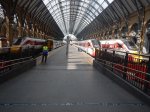
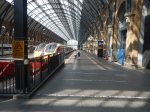
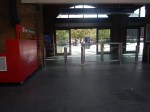
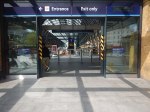
Note.
- The wide platforms.
- The gates in the ticket barriers to allow vehicles through.
- The passenger entrances line up with the gates in the ticket barriers.
It does look like everything is setup to efficiently get cargo between the trains and the road network outside.
A collateral benefit, is that access to the trains for passengers is step-free.
Powered By HVO
I took these pictures yesterday at Peterborough.
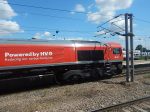
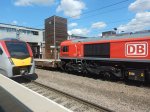
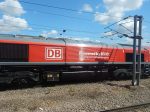
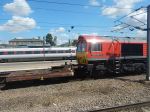
Note the locomotive is named Benjamin Gimbert GC.
DB Cargo have issued a press release on these trials of HVO.
Wikipedia also give more details of HVO.
Whisky Galore!
The Levenmouth Rail Link has carried freight in the past.
Mainly in the past, it was coal to the now-demolished Methil power station.
But it has been known to carry whisky for Diageo.
This Google map shows the area.
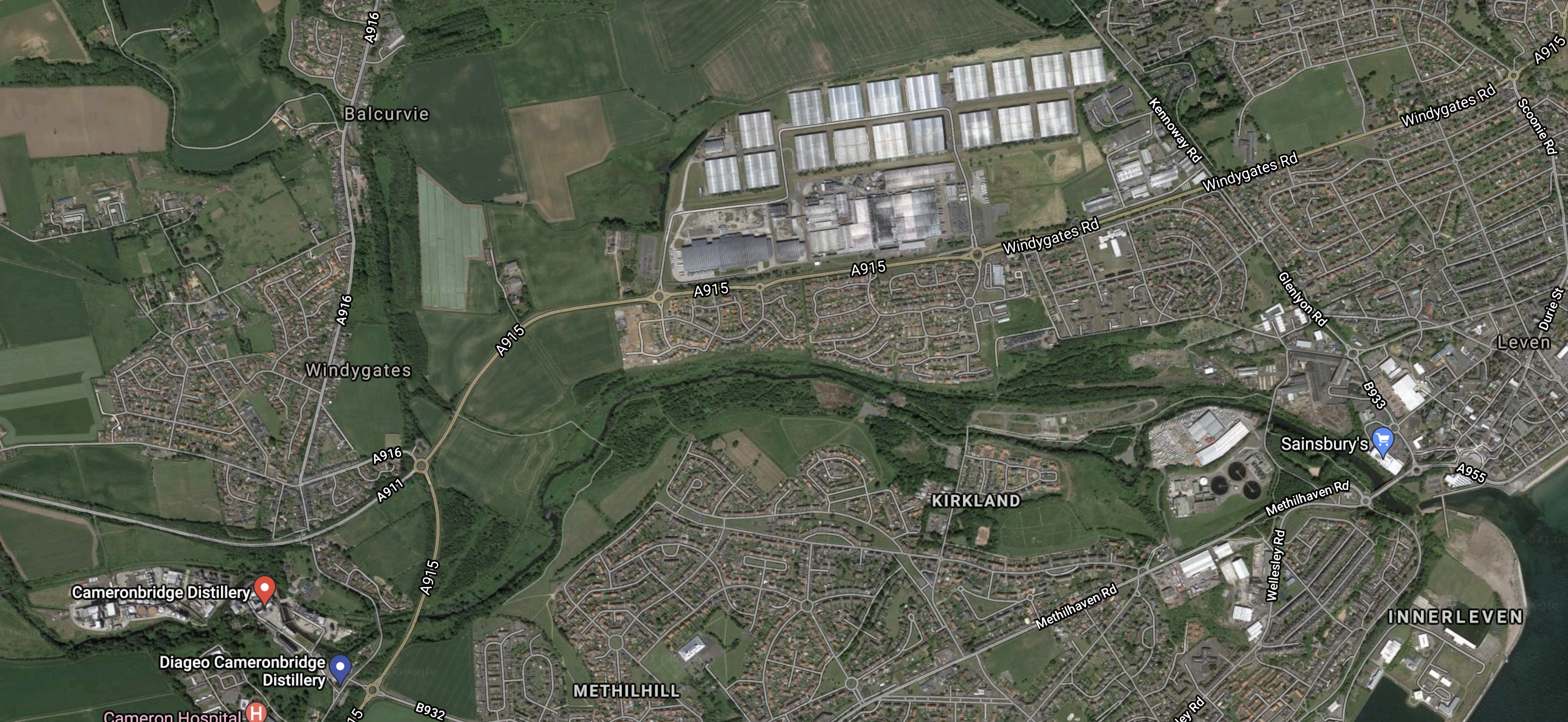
Note.
- The blue dot marking Sainsbury’s by the bew Leven station, by the mouth of the River Leven.
- The railway follows the river with Cameron Bridge station to the East of the A915 and the two Camero Bridge distilleries.
- The silver warehouses at the North side of the map are labelled Diageo Global Supply.
I wonder, if a siding can be provided for the distribution of products stored in the warehouses?
Companies are looking to lower their carbon-footprint and I wouldn’t be surprised, if Diageo were looking at rail distribution.
Modern Rail Freight Distribution
Companies are converting redundant electric multiple units into fast parcel delivery trains to replace diesel trucks.
- Typically, four-car trains are used.
- Trains have a 100 mph capability and can be 240 metres in length.
- Eversholt Rail Group are proposing adding battery power. This would be ideal to reach Cameron Bridge over the Forth Bridge.
These trains would be ideal for the delivery of Scotch Whisky.
They might even be capable of exporting product through the Channel Tunnel.
I don’t think the capacity of the Levenmouth Rail Link would be a problem, as it is a double-track railway, that can probably handle over four trains per hour and there is plenty of capacity for a number of freight trains.
Conclusion
I think freight will play a use in the future of the Levenmouth Rail Link.
Related Posts
The New Leven Station On The Levenmouth Rail Link
The New Cameron Bridge Station On The Levenmouth Rail Link
Was This The Most Significant Statement On Freight Locomotives Last Week?
This press release from Freightliner, is entitled Freightliner Secures Government Funding For Dual-Fuel Project.
The dual-fuel project is important and will cut carbon emissions in the short term.
But it is only a quick fix, made possible by good technology.
It is also not zero-carbon.
This sixth paragraph from the press release is very significant.
This sustainable solution will support a programme to decarbonise freight operating companies’ diesel fleets in a cost-efficient manner that does not require significant short-term investment and facilitates operational learning in support of a longer-term fleet replacement programme, potentially using 100% hydrogen fuel.
I believe the paragraph indicates, that Freightliner and possibly the other companies involved in the building and operation of heavy freight locomotives have concluded, that the technology is now such, that a zero-carbon rail locomotive powered by 100 % hydrogen is now possible.
- Rolls-Royce and possibly other gas-turbine companies have the technology to build small gas-turbine powered generators that can produce several megawatts of reliable electrical zero-carbon power, when fuelled by hydrogen.
- We are seeing companies developing strategies for the safe supply of hydrogen in large industrial quantities.
- Hydrogen has been successfully deployed on buses, trains and other large vehicles.
- The technology has been proven that will allow dual-mode hydrogen-electric locomotives, that can use electrification, where it exists.
- Some big companies like Cummins, JCB and Shell are backing hydrogen.
There are thousands of large diesel-powered locomotives all over the world and locomotive builders that can successfully replace these with hydrogen-powered locomotives will not go financially unrewarded!
Approaching Kings Cross – 5th July 2021
I took these pictures approaching Kings Cross.








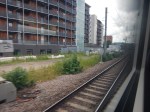





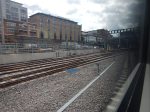
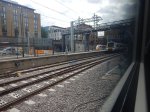
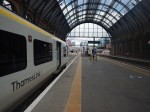
Reports say most of the work of the remodelling is now complete. Although, it did look to me that in places more tracks could be laid.
The Length Of The Long Platforms At Kings Cross
This repeat of the last picture in the gallery shows the length of the nine long platforms.
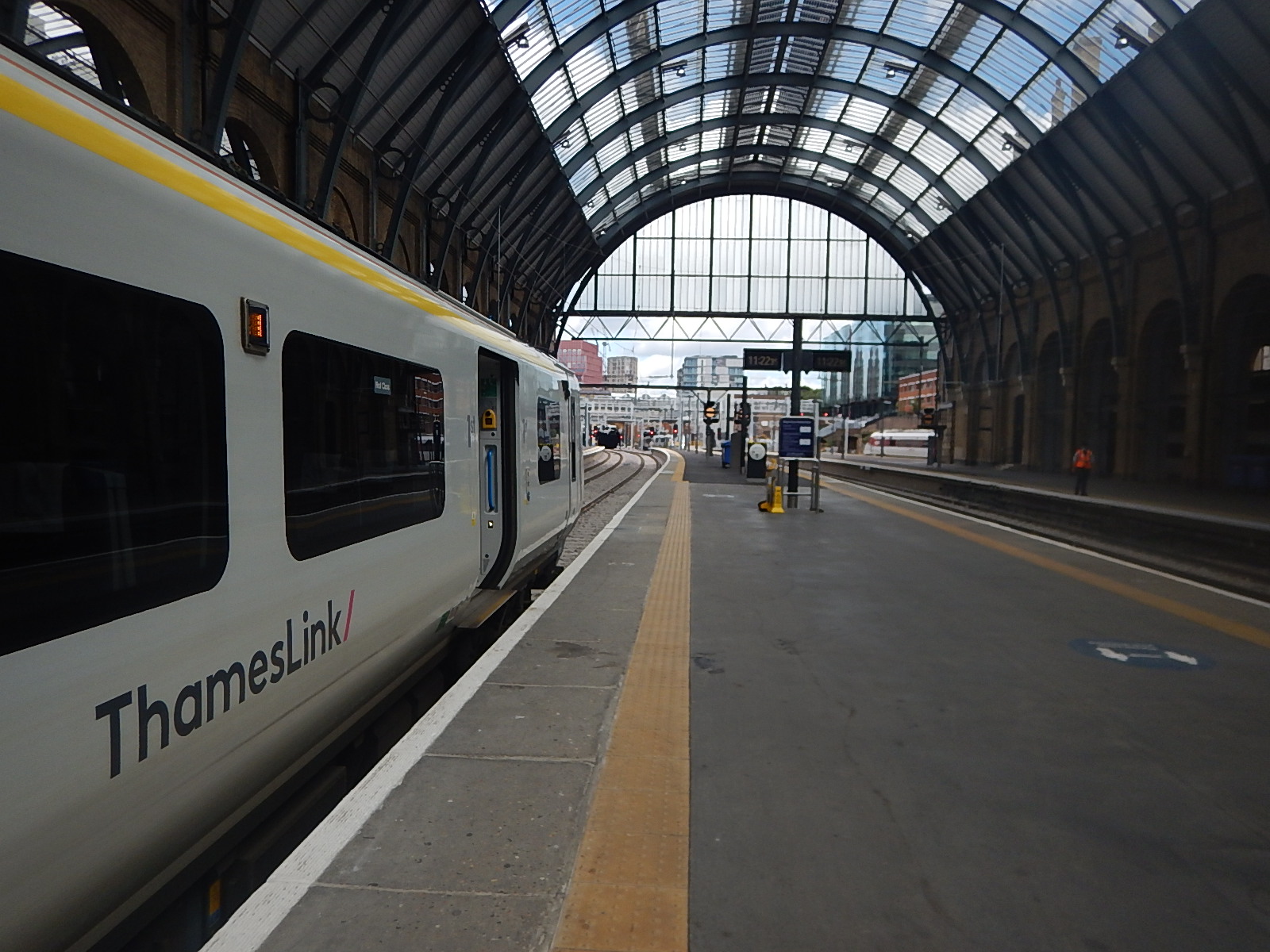
Note.
- The train is in Platform 3.
- The train is an eight-car Class 700 train.
- Eight-car units are 162 metres long.
- Twelve-car units are 242.6 metres long.
Platform 3 is obviously long enough to take the following trains.
- Twelve-car Class 700 train – 242.6 metres
- Two Class 800 trains working as a pair – 260 metres
- A nine-car Class 800 train – 234 metres
- An InterCity 225 train – 245.2 metres
- A twelve-car Class 319 train or Class 321 train – 240 metres.
This Google Map shows the ends of the platforms at Kings Cross.
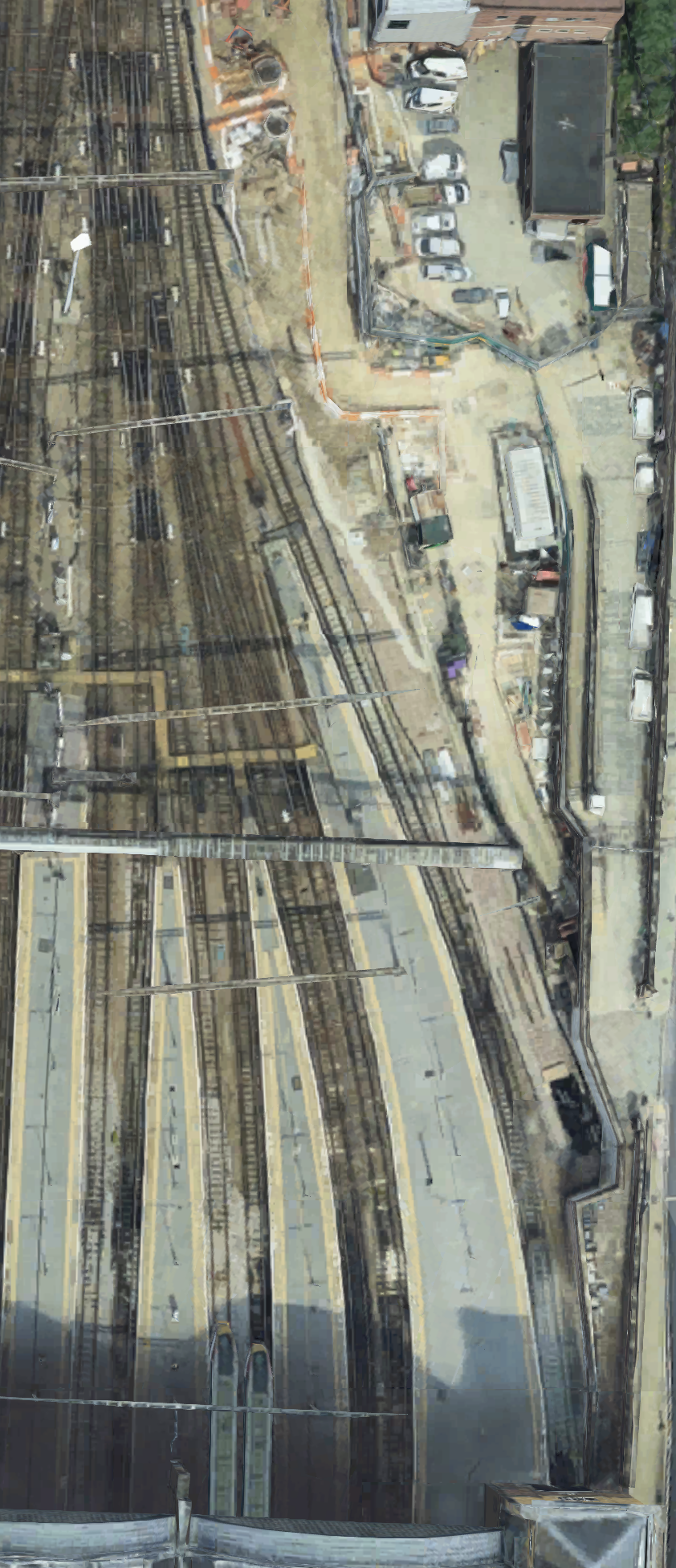
Note.
- The long platforms at the right are 2 and 3.
- Platform 2 and 3 are wide.
- Two LNER Azumas are in Platforms 5 and 6.
It looks to me that whilst all platforms can probably handle the standard British Rail length of 240 metres, those on the right may be able to handle longer trains. But what trains? These are my thoughts.
Longer LNER Azumas
This document on the Hitachi Rail web site is entitled Development of Class 800/801 High-speed Rolling Stock for UK Intercity Express Programme.
The document says that Class 80x trains have a sophisticated Train Control and Management System (TCMS).
The document says that this is one of the functions of the TCMS.
To simplify the rearrangement and management of train configurations, functions are provided for
identifying the train (Class 800/801), for automatically determining the cars in the trainset and its total length,
and for coupling and uncoupling up to 12 cars in normal and 24 cars in rescue or emergency mode.
I would assume that with the purchase of extra cars, that it might be possible to lengthen trains to up to twelve cars.
Lengths would be as follows.
- Ten-car Class 80x train – 260 metres.
- Eleven-car Class 80x train – 276 metres.
- Twelve-car Class 80x train – 312 metres.
To add extra capacity on the routes to Leeds and Edinburgh services, there must be a balance between these factors.
- The cost of extra cars.
- The cost of platform lengthening.
There must of course be space for any platform lengthening.
It would seem to me, that common sense should allow twelve-car trains to be handled at King’s Cross, as this must be one of the best ways of adding capacity to East Coast Main Line services.
Caledonian Sleeper
The Caledonian Sleeper doesn’t normally run into King’s Cross, but during the rebuilding Euston for High Speed Two, it may be necessary to provide an alternative platform.
Unfortunately, the sixteen-car Caledonian sleeper trains are 352 metres long. So it would appear that Kings Cross would not be a temporary alternative.
But given the amount of money being invested in sleeper trains in Europe by the likes of Midnight Trains and NightJet, I can see that the Caledonian Sleeper might have another problem – success and the need for more capacity.
So I wouldn’t rule out an East Coast Main Line sleeper train between London Kings Cross and Edinburgh.
It might call at Stevenage, Newcastle and Berwick to widen its passenger base, just as the current sleeper calls at Watford, Carlisle and Carstairs.
The train could be extended to Aberdeen, to simplify services in Scotland.
Obviously, traffic and finance would decide, but I wouldn’t rule out the Caledonian Sleeper running to and from King’s Cross for a few years yet.
A Night Light Freight Terminal
In Is This The Shape Of Freight To Come?, I wrote about the new generation of fast electric freight trains, based on redundant electric multiple units.
- If you look at Real Time Trains, you will find that few trains use King’s Cross station between two and five in the morning.
- Platforms can take a twelve-car version of these electric freight trains.
- The new platforms are wide and level.
- Local delivery could use electric vehicles and bikes.
I think King’s Cross has possibilities for handling goods like food, parcels and shop supplies.
The Short Platforms At Kings Cross
When I was a child, King’s Cross had four short suburban platforms, where N2 steam tank engines hauled suburban services in and out of the station.
The suburban platforms have now been reduced to two platforms, that fit in with the current uses of the station.
- The two platforms are numbered 9 and 10.
- They can handle an eight-car Class 700 train, which is 162 metres long.
- They can handle a five-car Class 800 train, which is 130 metres long.
- Some five-car services run by the new Hitachi trains use these platforms.
These pictures show the platforms.


Note.
- The platforms are wide.
- The picture of the Azuma in Platform 9 was taken before the centre track was removed recently.
- Today, one LNER Azuma departed from Platform 9 to go to Lincoln, but both platforms were busy with Great Northern services to Cambridge, Ely and Kings Lynn.
I do wonder if the platforms could be used for light freight, during the night.
Conclusion
King’s Cross is not just one of the UK’s finest railway stations, which is recognised by its Grade I Listed status, but it is now moving towards an efficient, high-capacity station that works around the clock!
 The Anonymous Widower