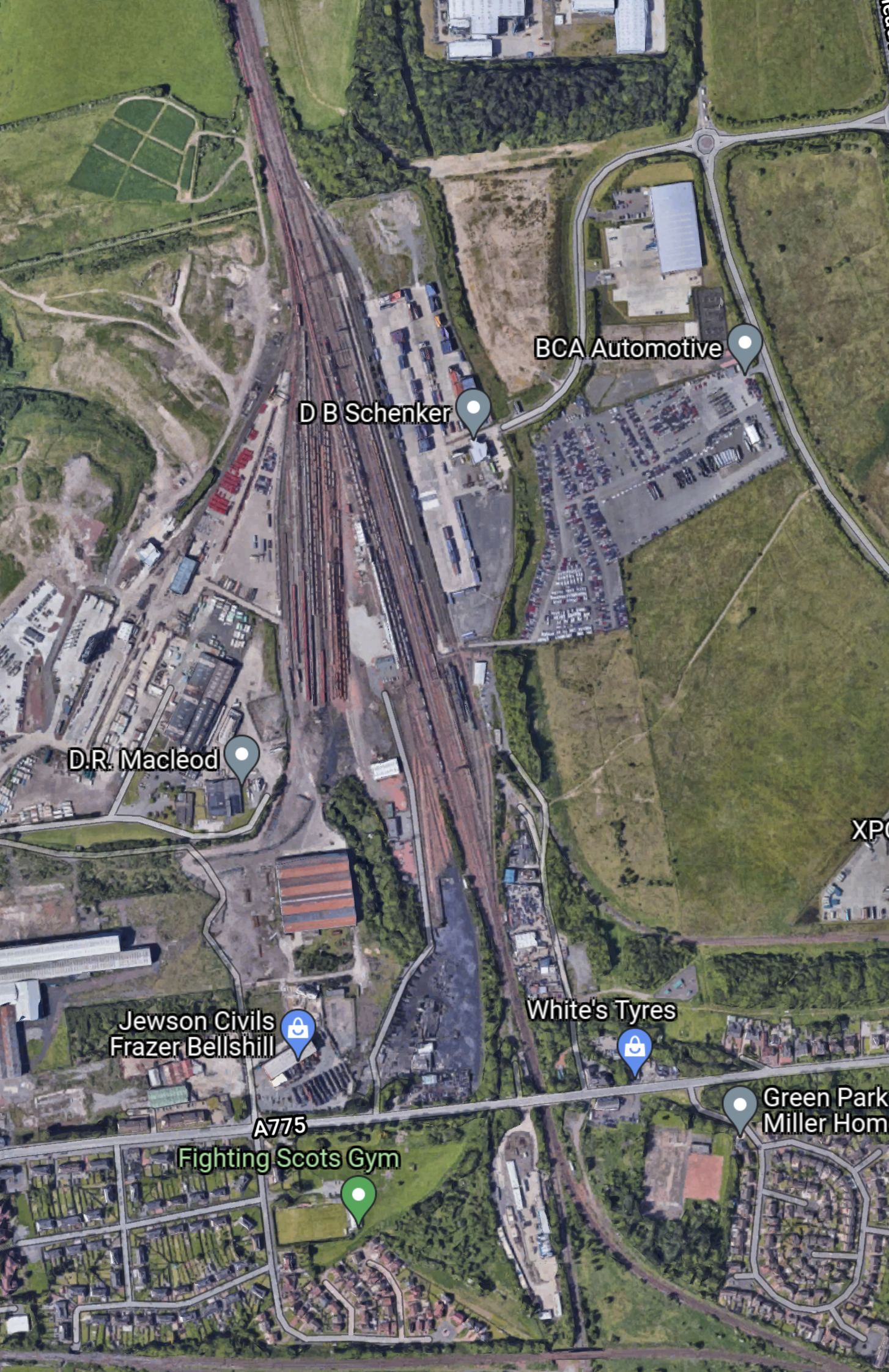
As part of their commitment to carbon reduction Freightliner will conduct operational trials of a new low carbon fuel supplied by Green Biofuels Ltd (GBF).
And this paragraph described the fuel.
GBF are the UK’s leading provider of Hydrogenated Vegetable Oil (HVO) and the new fuel consists of 55% Shell GTL (gas to liquids) Fuel and 45% Gd+ HVO.
It does appear that hydrotreated vegetable oil or HVO, could be becoming an intermediate step on the route to decarbonisation, as I’ve posted about the fuel before in Powered By HVO.
The other promising route to decarbonisation must surely be that of producing fuel from waste, as pioneered by Velocys and others.
But they are only intermediate steps before hydrogen becomes the preferred zero-carbon fuel for rail freight services.
Canadian National’s Bessemer & Lake Erie Railroad has purchased a Wabtec FLXdrive battery-electric freight locomotive, with financial support from the Pennsylvania Department of Environmental Protection’s Marine & Rail Freight Movers grant programme.
The locomotive is intended to work in multiple with diesel locomotives and this cuts fuel consumption, pollution and noise.
The locomotive numbered 3000, which appears in all Wabtec pictures is an example an ES44AC from the GE Evolution Series and was converted from a standard locomotive, that was in the test fleet.
Interestingly, Canadian National own several hundred of these locomotives, so they won’t be short of one to convert.
The diesel version would appear to be a 3.3 MW diesel locomotive.
The locomotive is powered by lithium-ion batteries.
There are around 20,000 battery cells
The batteries have their own air-conditioning
There is a sophisticated battery-management system.
The total battery size is 2.4 MWh
Power output is 4400 HP or 3.24 MW
Locomotive will run for 30-40 minutes at full power.
The locomotive has regenerative braking.
Operating speed is 75 mph
Note that running at 75 mph for 40 minutes would cover fifty miles.
It does look as if, the diesel-electric and the battery-electric conversion have similar power outputs. Could this be, as the traction system on both locomotives are identical? It’s just that one uses a diesel generator and the other uses batteries.
Although there must be differences in the traction systems, as the battery-electric locomotive has regenerative braking.
The battery-electric locomotive is designed to work in conjunction with one or two diesel locomotives, where a sophisticated computer system decides which engines power the train.
Wabtec are claiming a thirty percent reduction in fuel and emissions compared to an all-diesel setup.
Electric power will also be used in depots and sensitive areas.
I do think though, that this is a pragmatic solution to cut the carbon footprint of heavy-freight in North America.
But it could be a half-way solution, as Wabtec have hinted that they are working on hydrogen-powered locomotives.
I also feel it might be possible to convert some of the UK’s Class 66 locomotives into battery-electric locomotives for lighter freight duties or working in a pair with a Class 66 locomotive to reduce fuel consumption and emissions.
Some rail freight operators have abandoned electric traction, at least for now, because the price of electricity has been rising sharply. The electricity tariffs include a 40 per cent renewable energy tax, and following the latest rises diesel traction is now cheaper. The drivers’ union ASLEF is calling for the government to intervene, but Freightliner has already taken action.
This quote from the article is from ASLEF General Secretary; Mick Whelan.
Moving freight by rail rather than road is, inherently, a carbon-efficient mode of transport and an environmentally-friendly way of doing business. Electric-hauled freight services reduce emissions by 99 per cent; even moving goods by diesel traction reduces emissions by 76 per cent.
It looks to me, that a reputable and trusted environmental economist could come up with a compromise price and possibly a solution to improve the situation.
UK operator Freightliner has taken delivery of the first batch of new FFA-G wagons for UK operations. The forty wagons have arrived in the UK from Poland, adding to the intermodal fleet of the operator. The entire order, for 230 wagons will be delivered by the end of November 2021.
The wagons have been designed for efficiency and being able to take a forty foot container anywhere on the UK’s network with a loading gauge of W10.
The freight and logistics sector is one of the largest contributors to carbon emissions. Greater use of rail for freight and logistics provides additional resilience for the business community, while also acting on the need to achieve net zero.
Whilst not part of East West Rail, removing the bottlenecks on the Felixstowe to Midlands corridor remains an immediate strategic priority for three sub-national transport bodies (England’s Economic Heartland, Transport East and Midlands Connect wrote to the Chancellor in this regard in July 2020).
However, the design and operation of the East West Main Line should take into account and contribute to the delivery of the requirements of the national rail freight strategy. In due course Great British Railways will have a statutory duty to consider the needs of rail freight and to take those needs into account in planning the future of the rail network.
It is therefore important that the East West Main Line is designed and delivered with the capability of supporting rail freight services without the need for additional works. In this regard due consideration must be given to ensuring that the impact on local communities of rail freight movements is minimised.
I have my thoughts.
Cutting Carbon Emissions In The Freight Sector
The obvious way to do this, would be to electrify every line in the country and purchase a new fleet of electric freight locomotives.
But the problems with this are the expense, disruption and timescale, it would take to replace all the locomotives and put up electrification on every line that might possibly be used by freight trains and locomotives.
A solution is needed now, not in ten years.
But there are already solutions being demonstrated or developed that will cut carbon emissions from locomotives.
Stadler bi-mode Class 88 locomotives are already hauling freight trains and cutting emissions by using electric power where possible. But there are only ten of these locomotives.
The thirty Stadler tri-mode Class 93 locomotives on order for Rail Operations Group could or well be a game-changer. It is already known, that they will be able to cruise at 100 mph using electrification, so they will be able to mix it with the expresses on the Great Eastern Main Line. I suspect that these locomotives have been designed to be able to haul freight trains out of the Port of Felixstowe, by juggling the power sources.
In Freightliner Secures Government Funding For Dual-Fuel Project, I describe how Clean Air Power are converting a Class 66 locomotive to run on both diesel and hydrogen. This could be a very fruitful route, especially, if the diesel-electric Class 66 locomotives could be fitted with a pantograph to use electrification where it exists.
In Powered By HVO, I talk about DB Cargo’s use of HVO to cut carbon emissions.
I am also sure that there are probably other solutions to decarbonise freight locomotives under development.
I would hope that over the next few years the amount of diesel fuel used in the freight sector will decrease significantly.
Improved Freight Routes
Currently, freight trains to and from Felixstowe take one of these routes.
Via London – Using the Great Eastern Main Line, North London Line or Gospel Oak and Barking Line, and the West Coast Main Line.
Via Nuneaton – Going via Bury St. Edmunds, Ely, Peterborough and Leicester before joining the West Coast Main Line at Nuneaton.
Via Peterborough – Going via Bury St. Edmunds, Ely and Peterborough before taking the East Coast Main Line or the Great Northern and Great Eastern Joint Line via Lincoln.
The first two routes routes have capacity problems, whereas the third route has been improved by the use of the Great Northern and Great Eastern Joint Line.
Problems on the first two routes include
The Great Eastern Main Line is only dual-track.
The Great Eastern Main Line and the routes through London are at full capacity.
The route via Nuneaton does not have much electrification.
The East West Main Line will open up a new route directly across the country for some services, that currently go via the London or Nuneaton routes.
Felixstowe and Birmingham
Felixstowe and Glasgow
Felixstowe and Liverpool
Felixstowe and Manchester
These services could use the East West Main Line to connect with the West Coast Main Line at Bletchley, if the track were to be modified.
In addition services between Felixstowe and South Wales and the West Country could use the East West Main Line to Oxford and then join the Great Western Main Line at Didcot.
The East West Main Line could reduce the number of freight trains on these routes.
Great Eastern Main Line
North London Line
Gospel Oak and Barking Line
Peterborough and Leicester Line
The first three lines are certainly at capacity.
The Newmarket Problem
In Roaming Around East Anglia – Coldhams Common, I talked about previous plans of the East West Rail Consortium, who were the predecessor of the East West Main Line Partnership for the rail line between Chippenham Junction and Cambridge through Newmarket.
Note that doubling of Warren Hill Tunnel at Newmarket and redoubling between Coldham Lane Junction and Chippenham Junction is included in the infrastructure requirements. It is assumed that most freight would operate via Newmarket, with a new north chord at Coldham Lane Junction, rather than pursuing further doubling of the route via Soham.
I have a feeling that if this plan were to be pursued, the Racing Industry in Newmarket wouldn’t be too keen on all the freight trains passing through the town.
Knowing the town and the racing industry and horses, as I do, I suspect that there will need to be serious noise mitigation measures through the town.
One would probably be a noise limit on the trains passing through, which might be very difficult for long freight trains, even if hauled by a much quieter battery-electric or hydrogen-powered locomotive.
Were the East West Main Line Partnership thinking of Newmarket, when they wrote the last sentence of the web page for freight.
In this regard due consideration must be given to ensuring that the impact on local communities of rail freight movements is minimised.
Newmarket is a unique town with a strong character and you shouldn’t take the town on lightly.
DP World have announced that its two deep-water ports at Southampton and London Gateway have become the first in the UK capable of handling Freightliner’s new 775m-long intermodal container trains.
It appears from the article that Birmingham, Manchester and Leeds can also handle these longer trains.
The development of a major new low carbon, multi-modal rail freight facility located in the heart of Scotland has taken a significant step forward with the laying of a private rail track to facilitate construction. Once complete, Mossend International Railfreight Park (MIRP) will provide 2.2 million sq ft of logistics space and Scotland’s first 775-metre electric rail terminal.
This looks to be all good stuff.
But Glasgow has needed the capability to handle 775-metre electric freight trains for some time.
From the WCML routes are electrified most of the way to major freight destinations in England and to the Channel Tunnel.
So what took politicians so long to decide to upgrade the MIRP, as surely the ability to handle the longest electric freight trains will surely encourage the following?
The movement of freight from road to rail.
A reduction in freight traffic on the roads of Scotland and to a lesser extend England.
The ability to run electric freight trains between Glasgow and Continental Europe.
If freight ramps up after the MIRP is completed, there’ll probably be a need for the following.
Eurotunnel and CargoBeamer have signed a partnership which will see the launch of a new, 100% unaccompanied rail freight transport service across the Short Straits, from Calais to Ashford.
The extension of the rolling motorway from Perpignan to Ashford is a logical step in developing a future international intermodal network between the Channel and the Mediterranean. A second route from Domodossola, in the Alps region, to Calais will also be extended to Ashford after its launch in early October.
These are other points from the press release.
Both new railway services will prevent 8,000 tonnes of CO2 emissions.
They will help to partially resolve the shortage of truck drivers in the UK and Europe.
They will relieve traffic congestion on motorways.
It sounds like it could be a worthwhile service with more than the obvious winners.
Who Is CargoBeamer?
This is their web site and it displays an introductory video and this mission statement.
The Road to Rail Sustainable Transport Solutions
CargoBeamer use specially designed rail wagons and this page, which is entitled The Unique CargoBeamer Technology, explains how it works.
This is a claim from the web site.
As soon as the train has arrived, all semi-trailers are transferred automatically and with the simple push of a button. It takes CargoBeamer just 20 minutes to unload 36 semi-trailers from an intermodal train and load the same number at the same time. Both steps simply happen simultaneously. By comparison, a conventional crane terminal needs around three to four hours to handle such a train.
That is certainly not slow.
This video gives a full explanation about how CargoBeamer works.
Note.
They can carry all types of trailers.
The video shows the terminal built on a straight single-track line, where freight trains enter, load and unload and leave.
I must admit I like the design of the terminals, which they describe as Compact2 and Compact3, which gives a clue as to their design.
Their first terminal has opened in Calais and is described in this Press Release, which is entitled CargoBeamer Opens Terminal In Calais.
What Routes Are CargoBeamer Planning?
According to their web site, CargoBeamer have opened or are planning terminals at the following places.
Ashford – UK
Calais – France
Domodossola – Italy
Duisburg – Germany
KaldenKirchen – Germany
Perpignan – France
Poznan – Poland
Routes opened or planned include.
Domodossola – Calais – Ashford
KaldenKirchen – Domodossola
Perpignan – Calais – Ashford
Poznan – Duisburg
You can certainly understand, why Calais is their first terminal.
Serving The UK
This article on Railway Gazette is entitled CargoBeamer Network Extended To The UK.
This is a paragraph.
Eurotunnnel told Railway Gazette International the aim was to build up to operating whole trains through the tunnel as the market develops, and ultimately to run trains to destinations further inland.
That seems a clear statement of intent.
Ashford could be an easy terminal to develop and I suspect it could be between Ashford and Folkestone, where the Channel Tunnel Rail Link and the M20 run close together. The compact size of the terminal would surely help.
The other sensible place for a terminal would be Barking, which can accept trains to the larger European gauge.
But it would be convenient, if trains could be run through the Channel Tunnel to places like Birmingham, Cardiff, Leeds, Liverpool, Manchester and Scotland.
Gauge clearance of routes to the European size would be a challenging, expensive and disruptive process.
But in Gauge Improvements Across London, I indicated that an enhanced gauge of W12 could be possible through London on the Gospel Oak to Barking and North London Lines.
But seeing that CargoBeamer appear to be targeting the UK, perhaps they have an innovative wagon design for services to the UK, which could have a height limit for trucks.
It is a good article about Wabtec’s new FLXdrive battery train and is very positive about it coming from a typical Guardian direction.
The article is a must-read.
I am beginning to feel that what Wabtec has done is to create a practical and affordable solution, that will cut carbon emissions in a difficult area, that produces the figures and also is understandable by diverse groups, like journalists, politicians and environmentalists. And they are backing it with academic research from a good university.
What this blog will eventually be about I do not know.
But it will be about how I’m coping with the loss of my wife and son to cancer in recent years and how I manage with being a coeliac and recovering from a stroke. It will be about travel, sport, engineering, food, art, computers, large projects and London, that are some of the passions that fill my life.
And hopefully, it will get rid of the lonely times, from which I still suffer.