Deutsche Bahn Puts Passengers On Alstom Battery-Electric Trains
The title of this post, is the same as that of this article on electrive.com.
This is the introductory paragraph.
French manufacturer Alstom and Deutsche Bahn are now taking passengers onboard Alstom’s first fully approved electric train since this weekend in Baden-Württemberg. Further testing will start in Bavaria on 5 February and run throughout early May on all routes.
This paragraph describes where the train will be running.
On weekdays the battery-powered train will run in Baden-Württemberg on the Stuttgart – Horb line and Saturdays and Sundays, on the Pleinfeld – Gunzenhausen line in the Franconian Lake District. Alstom said this arrangement would maximise the train’s mileage while testing a variety of route profiles and battery charging scenarios. For example, while in Baden-Württemberg, charging occurs during the ongoing journey via overhead lines, in Bavaria, charging can only take place at stations, as the route in between is not electrified.
The article gives the impression that Alstom have ambitious plans for battery-electric and hydrogen trains in Germany.
This is confirmed by this press release on the Alstom web site, where this is a paragraph.
While Alstom’s hydrogen trains are optimised for longer routes, Alstom’s BEMUs are suitable for shorter routes or lines with non-electrified sections previously operated with diesel vehicles. Direct connections between electrified and non-electrified network sections are now possible and can be operated emission free, without the need of additional electrification – shortening the travel time between city and country.
It appears Alstom will be developing both types of trains.
Alstom And DB To Kick Off Test Operations With Battery Electric Train
The title of this post, is the same as that of this article on RailTech.com.
This is the introductory paragraph.
Alstom and Deutsche Bahn (DB) are set to enter into service Alstom’s Battery Electric Multiple Unit (BEMU) for trial runs. The test operations will commence on January 24 in the state of Baden-Württemberg, followed by passenger services in neighbouring Bavaria from February 5th onwards. The tests will conclude in May 2022.
It does finally appear that battery electric multiple units (BEMUs) are being seen on the railway.
Does Anybody Know Of A Covid Travel Consultancy?
There are a few places in Europe, that I’d like to go for a couple of days.
I can book all the train tickets and hotels myself, but what I would like is someone to review my route for a fee and send me a pack of all the things I need to do and take.
Countries, I would like to visit include France, Germany, Hungary and The Netherlands.
Fortescue’s Forrest Says German Hydrogen Deal Is Just The Start
The title of this post, is the same as that of this article on Reuters.
This is the opening paragraph.
Australian miner Fortescue Metals’ (FMG.AX) newly-announced deal to supply green hydrogen to Germany is just the start as the rest of the world will catch up with Europe’s lead, Fortescue’s chairman told a Berlin industry conference on Monday.
I very much agree with Andrew “Twiggy” Forrest, as if countries are serious about commitments to fight global warming, there will be a big rush for hydrogen, so that countries can decarbonise their chemical, steel and other industries.
Some countries like Australia, Canada, Denmark, Norway, Spain, Sweden, The Netherlands, the UK and the US will be fine, but others will struggle.
Germany seems to be taking action by buying up supplies from everywhere they can.
CargoBeamer Operates Lane Between Kaldenkirchen And Perpignan
The title of this post, is the same as that of this press release from CargoBeamer.
It has this sub-title.
New Route Starting In January 2022
These two paragraphs form the body of the release.
The logistics service provider CargoBeamer is expanding its intermodal network from the beginning of next year. Between Kaldenkirchen in Germany and Perpignan near the French-Spanish border, goods will be transported environmentally friendly by rail from January 10, 2022. The patented CargoBeamer system enables all kinds of semitrailers, containers, P400 trailers, refrigerated and tank trailers, and other types of goods to be transported by train without requiring any additional conversions for forwarders.
At the start in January, initially three trains will run weekly in each direction. From mid-February, the frequency will increase permanently to five round trips per week. CargoBeamer will collaborate with DB Cargo France (formerly Euro Cargo Rail) as its traction partner. The new Franco-German route is the company’s sixth connection overall, with five of the six lines having been added to the network in the past six months.
They certainly seem to be adding routes frequently.
How Do Trailers Get Between Ashford And Calais?
They obviously go through the Channel Tunnel, but what happens on each side of the Channel?
Is the trailer fixed to a tractor unit at the Ashford and Calais terminals and then driven onto the freight shuttle?
This video contains an interview with Nicolas Albrecht from CargoBeamer
‘New Era’ As German Coalition Prioritises Rail Spending Over Road
The title of this post, is the same as that of this article on Railway Gazette.
This is the first paragraph.
The so-called ‘traffic light coalition’ formed by the Social Democratic, Green and Free Democratic parties as the next federal government has committed to launching a ‘Rapid Capacity Expansion’ to enhance railway infrastructure as part of its wider transport strategy.
Other policies would include.
- A national regular interval timetable as a matter of priority.
- Increasing rail’s share of the freight transport market from the current 19% to 25% by 2030.
- Doubling passenger traffic by the end of the decade.
- Electrify 75 % of the network by 2030.
- Road tolls for trucks would be increased to reflect CO2 emissions.
- New commercial and industrial developments would be mandated to examine the potential for incorporating a rail connection.
- A pressure group, whose name translates as Alliance Pro Rail is in favour.
But will the average German voter in their Audi, BMW, Mercedes or Volkswagen cruising down the autobahn be in favour?
It certainly looks like it will be all change on German railways and roads.
The article is also linked to three in depth articles on the future of German railways published by Railway Gazette in the last few months.
- Comment: Climate Goals To Trump Profits
- German Associations Seek More Competition In Second Rail Reform
- Rail Reopenings To Support Climate-Friendly Transport
It certainly is all change.
More ICE Sprinters Offer Alternative To Flying
The title of this post, is the same as that of this article on Railway Gazette.
The first two paragraphs, give an overview of the changes being made.
Deutsche Bahn introduced more limited-stop Sprinter ICE services on long-distance inter-city routes with the timetable change on December 12.
Sprinter-branded ICE services now operate on eight domestic routes, while a daily Frankfurt am Main – Paris service calling at Mannheim and Karlsruhe also carries the branding. Intended to appeal to business travellers, many of the Sprinter services are timed to depart early in the morning with return trips in the evening. This ensures a full day at the destination and offers a viable alternative to domestic flights.
It would appears that these services now have trains that are under the acceptable four hours.
- Cologne and Berlin
- Cologne and Munich
- Hamburg and Frankfurt Airport
If Deutsche Bahn are serious about competing with the airlines, they must surely increase the frequency.
In 2018, I travelled between Berlin and Munich in under four hours and wrote about it in From Berlin To Munich In Four Hours By Train.
This is how I started that post.
The length of the East Coast Main Line between London Kings Cross and Edinburgh is 632 kilometres.
Deutsche Bahn have recently completed an upgraded High Speed Line between Berlin and Munich, which has a length of 623 kilometres.
Both lines are not the very fastest of High Speed Lines, but lines where a consistent two hundred kilometres per hour is possible.
The East Coast Main Line was built in Victorian times and services typically take around twenty minutes over four hours, with nine -car InterCity 225 trains running twice an hour.
The Berlin-Munich route was originally built over two centuries ago, but the Germans have spent twenty-five years and many billions of euros punching a new route between Berlin and Nuremberg, through the difficult countryside of Thuringen Forest.
The route may allow the Germans to travel from Berlin to Munich in three hours fifty-five minutes, but at present you can only do it three times a day in a six-car train.
I took the lunchtime train and sat in First Class for a hundred and fourteen euros.
Deutsche Bahn have increased the trains on this route to five trains per day, but compared to London and Edinburgh on LNER, it is too infrequent, expensive with questionable customer service and not enough seats to give the airlines a run for their money.
A quick look on Rail Europe indicates that these routes have fast services at an hourly frequency or better.
- Madrid and Barcelona
- Milan and Rome
- Paris and Bordeaux
- Paris and Cologne
- Paris and Marseilles
- Venice and Naples
German rail services might be getting better, but not fast enough to take on the airlines.
Germans Turn To Humour In ‘Spritzkrieg’ On Antivaxers
The title of this post, is the same as that of this article on The Times.
A German television show has proposed a plan to persuade far-right antivaxers to get jabbed by offering them free swastika-shaped Bratwursts, dressing staff up as Nazi nurses and calling the vaccination centre Spritzkrieg (Jab War).
Reading the article it sounds like the Germans have asked Mel Brooks for advice.
We should use humour much more against the covids. Or does it have protection under the Virus Rights Act?
The Times says there is a clip on YouTube, but I can’t find it.
Thanks to Robin, here is the video.
If there was an British mockumentary in the same vein perhaps Call The Midwife or Casualty should be given the Blackadder treatment?
Are Short Lengths Of High Speed Line A Good Idea?
In New ‘HS3’ Link To Yorkshire Proposed By Thinktank After Region’s HS2 Axe, I showed that a short length of faster by-pass line could give decent ties savings.
So in this post, I will look at home much time, diversions or by-passes like the Selby Diversion could save.
The diversion runs between Temple Hirst Junction and Colton Junction.
- It is 13.8 miles long.
- A typical train takes 7.5 minutes, which is an average speed of 115 mph.
- But Wikipedia claim that the route was well-designed and British Rail felt it was good for 160 mph.
So what times are possible at various speeds?
- 115 mph – 7.5 minutes
- 120 mph – 6.9 minutes
- 130 mph – 6.4 minutes
- 140 mph – 5.9 minutes
- 150 mph – 5.5 minutes
- 160 mph – 5.2 minutes
- 180 mph – 4.6 minutes
They are not great savings, but if you could increase operating speed on straight sections of thirty miles and raise the average speed from 120 to 180 mph, that would save five minutes. It would all mount up.
If you look at the railway maps of the UK, there are sections of the East Coast Main Line, Great Western Main Line, Midland Main Line and West Coast Main Line, where the track is straight and sometimes as many as four-tracks.
Stevenage Station And Stoke Junction
A simple example in a few years could be between just North of Stevenage station and Stoke junction, which after current works and some others could be four tracks all the way.
- It is 72.2 miles.
- Trains take 39 minutes.
- My timings give an average speed of 111 mph.
- There are a number of level crossings.
- Flat junctions at Hitchin and Werrington have been replaced with grade separated junctions.
Note that it is longer than the Cologne-Aachen high speed railway in Germany, which is only 43 miles long and has an operating speed of 250 kph or 155.3 mph.
Savings on the Stevenage and Stoke stretch could be as follows.
- 140 mph – eight minutes
- 155.3 mph – eleven minutes
- 160 mph – twelve minutes
- 180 mph – fifteen minutes.
- 200 mph – seventeen minutes.
This alone could mean that London Kings Cross and Leeds could be around two hours with trains such as the proposed High Speed Two Classic-Compatible Trains.
It couldn’t be extended to the North very easily as Stoke Tunnel is between Stoke junction and Grantham.
This Google Map shows the tunnel.
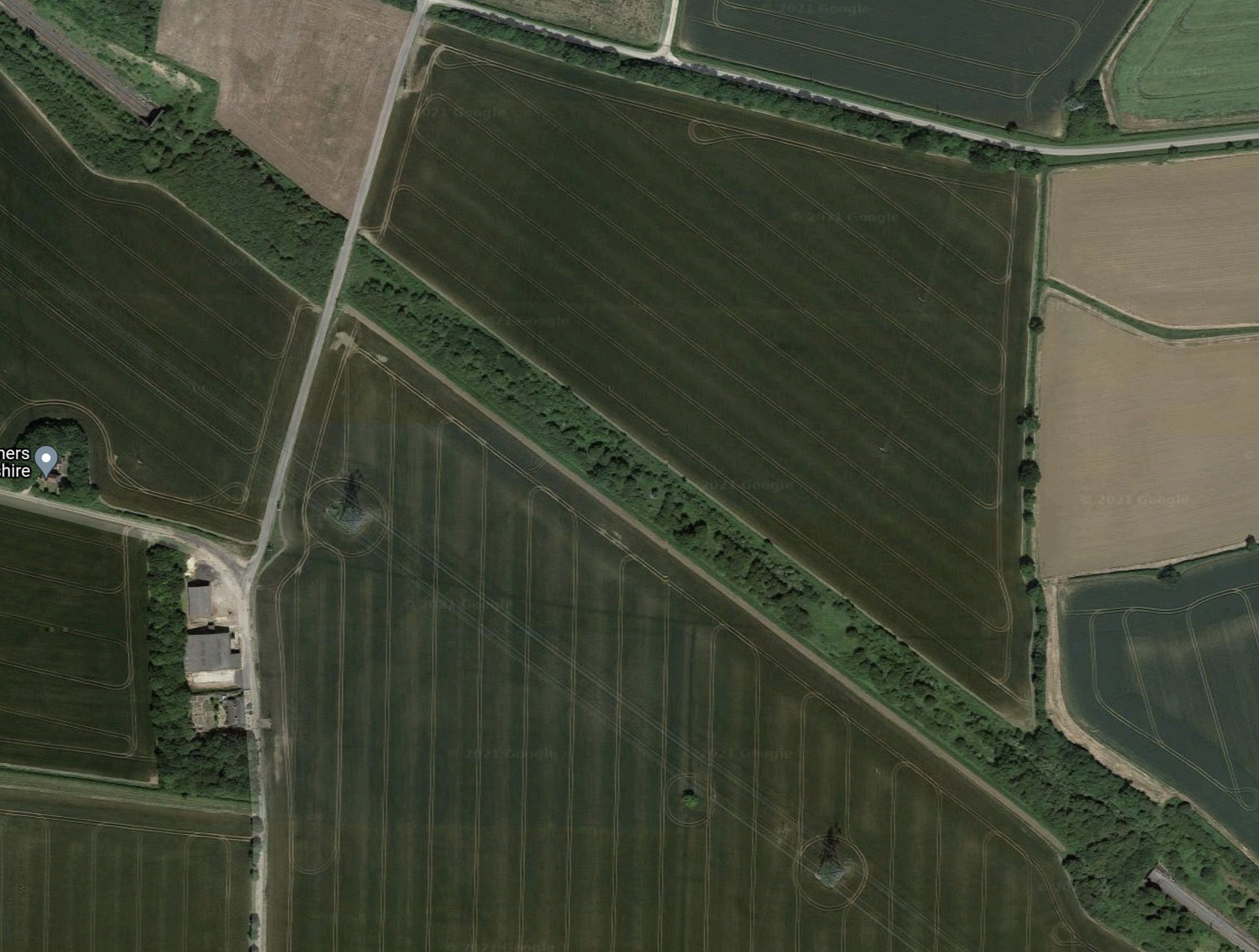
If it could easily be converted into a four-track cutting, this would add nearly six miles to the four-track section with high speed lines in the middle and slow lines on the outside.
A Diversion At York
When improving speeds and times on the East Coast Main Line, a diversion at York is sometimes mentioned.
The Google Map shows the East Coast Main Line, as it goes through York station.
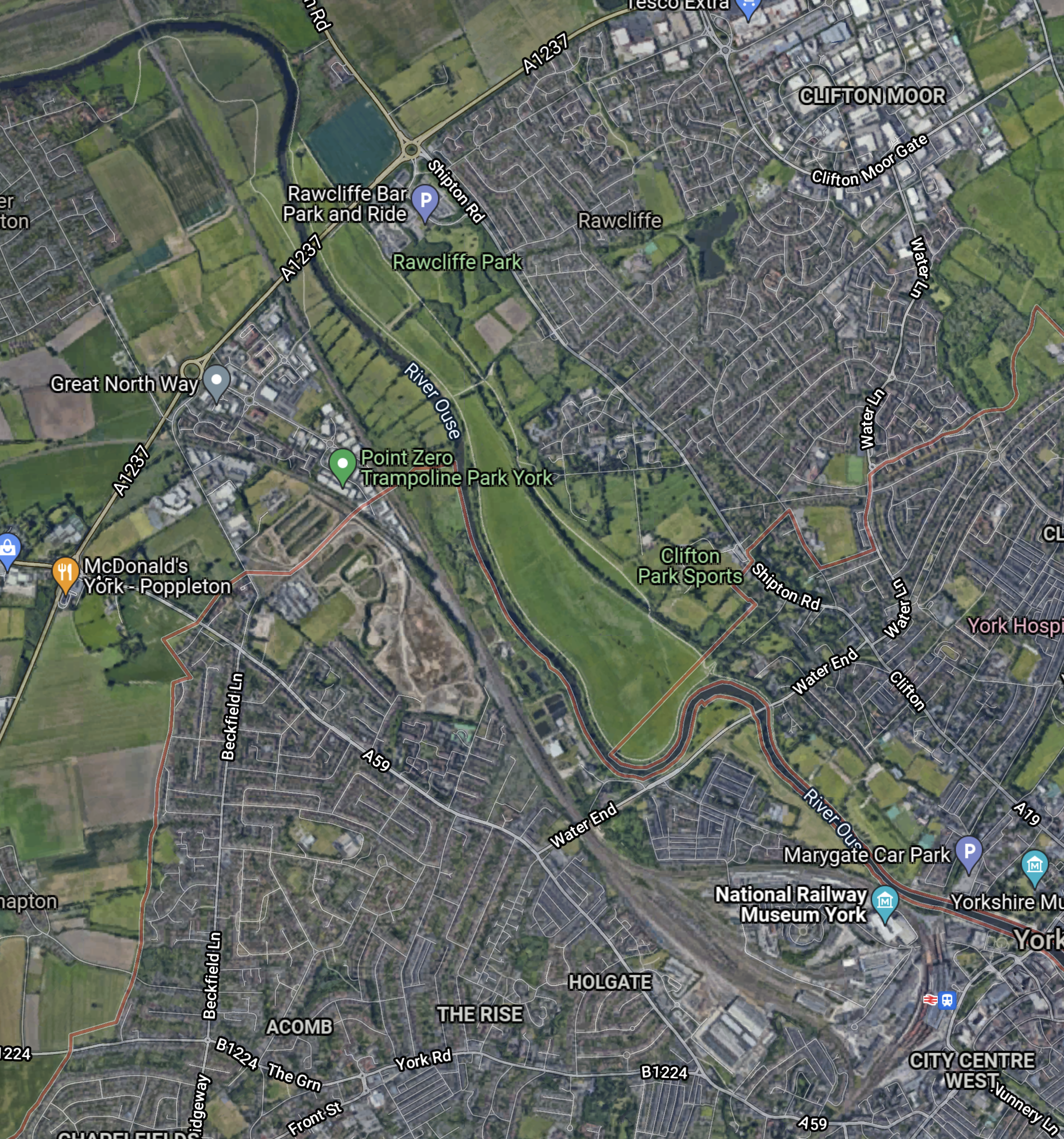
Note.
- York station is in the South East corner of the map.
- The River Ouse meandering North from near the station, before turning West at the top of the map.
- The East Coast Main Line running North from the station to the West of the river.
The railway crosses the river just to the North of Skelton junction.
This Google Map shows the tracks at York in more detail.
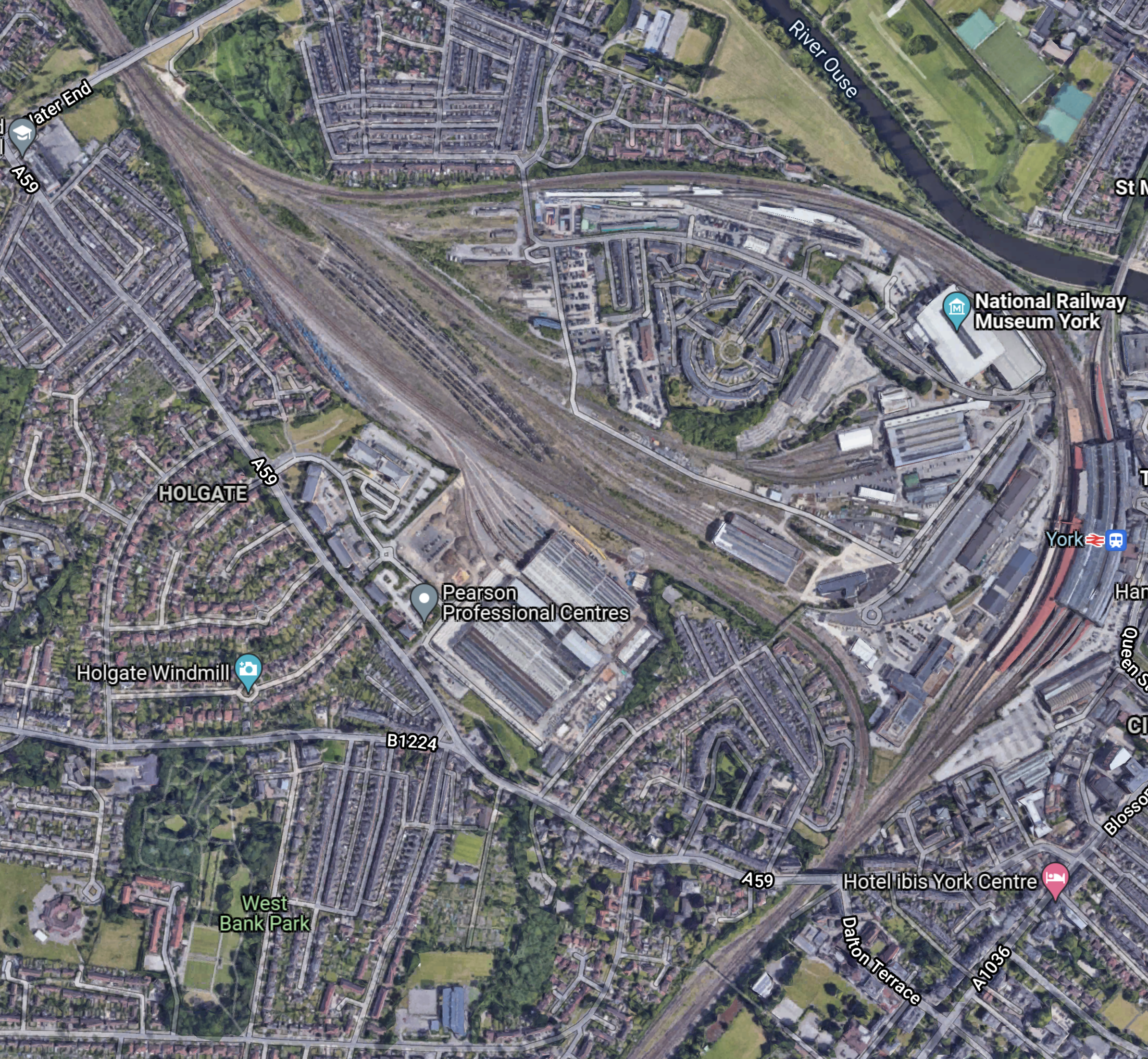
Note.
- The River Ouse in the North-East corner of the map.
- The East Coast Main Line through York station curving round the Railway Museum, before going North.
- A second rail route and sidings to the West of the East Coast Main Line can be seen.
Could a diversion route be created between Holgate and Skelton junctions on railway land?
- It would be about two miles long.
- It could be built to also sort out the bottleneck at Skelton junction.
- It might be possible to extend the fast line to Northallerton station.
This could create up to thirty miles of fast lines between Holgate junction and Northallerton.
A Diversion At Durham
When improving speeds and times on the East Coast Main Line, a diversion at Durham is sometimes mentioned.
The Google Map shows the East Coast Main Line, as it goes through Durham station.
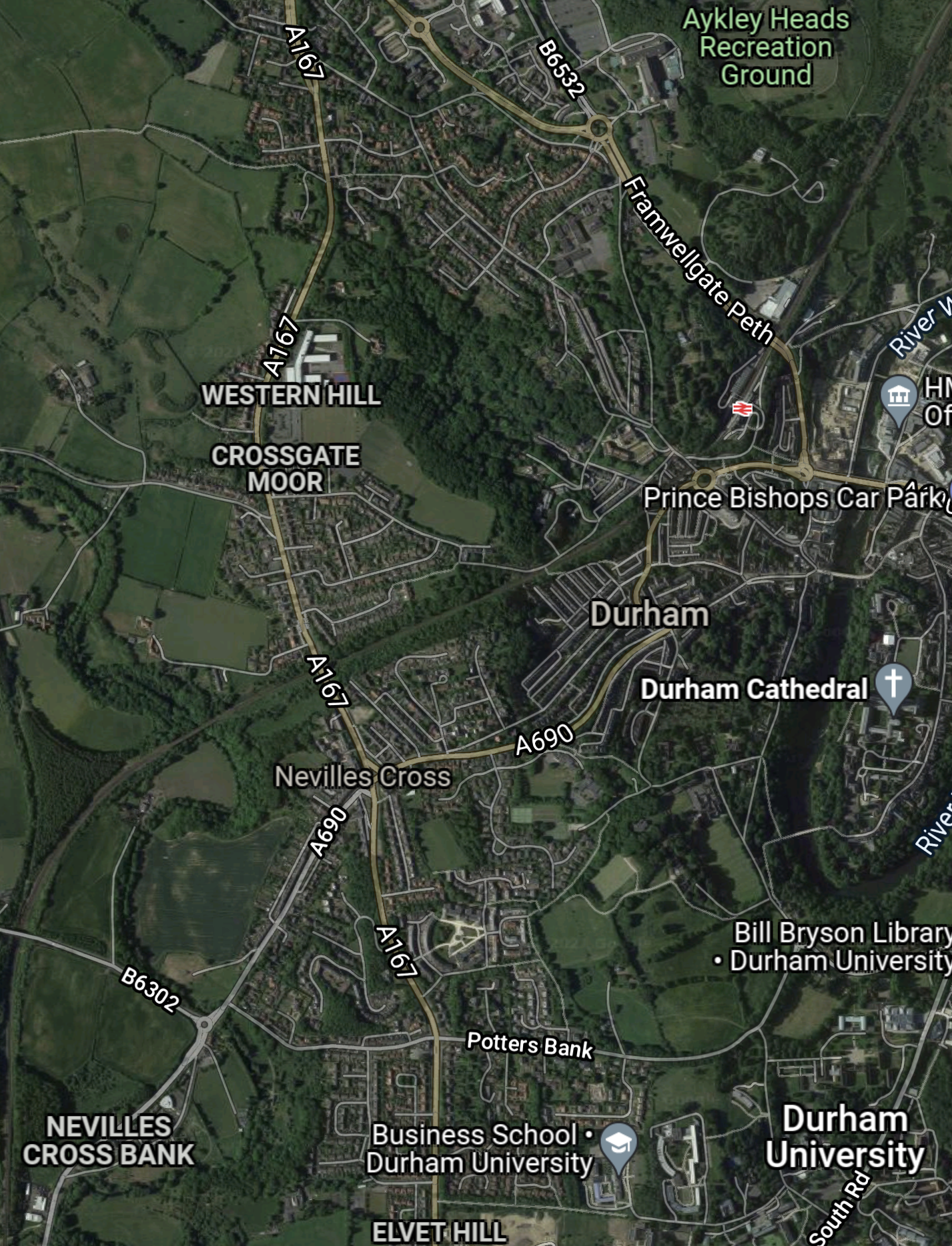
Note.
- I have arranged the map so that the East Coast Main Line goes between the South-West and North-East corners of the map.
- Durham station is clearly visible.
- The railway line curves East towards the station around Nevilles Cross after running North from the South.
This Google Map shows the East Coast Main Line, as it goes through Chester-le-Street station.
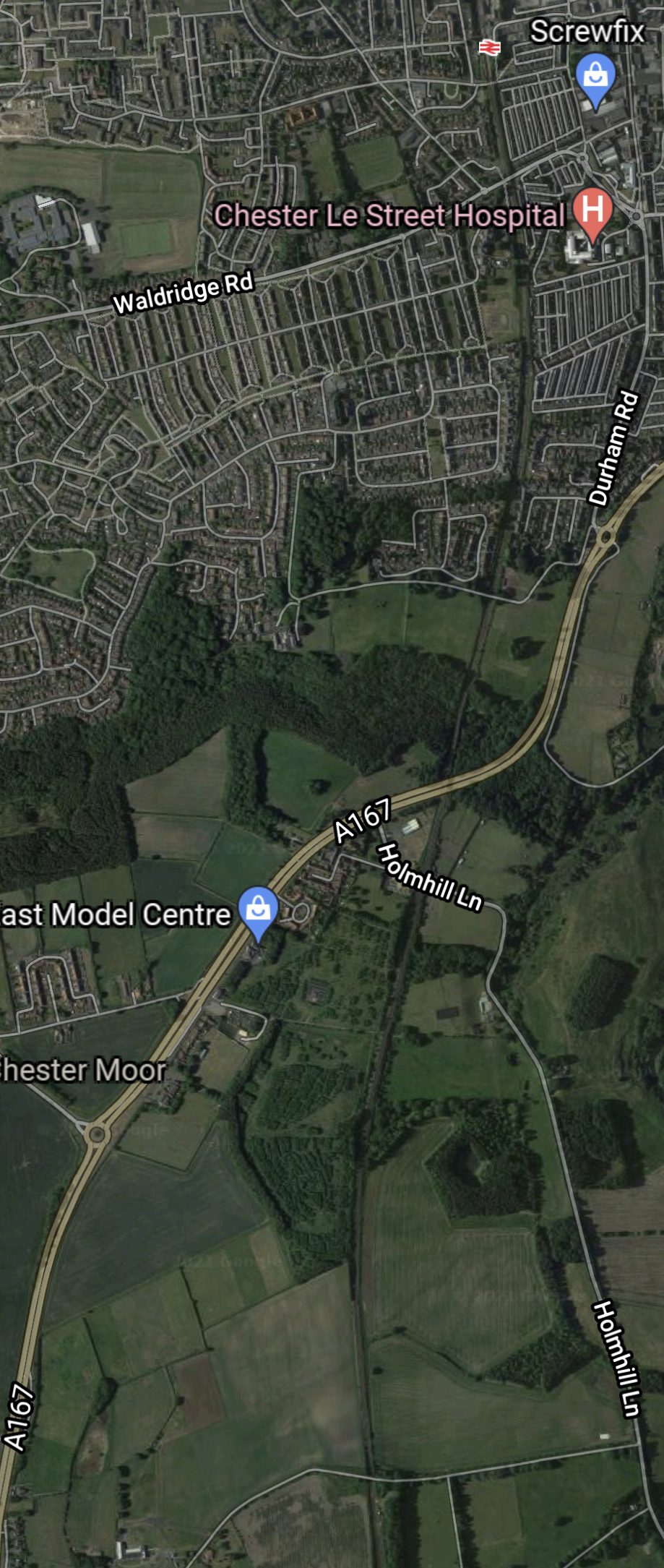
Note.
- Chester-le-Street station is in the North-East corner of the map.
- The East Coast Main Line runs North-South down the middle of the map.
- About halfway down the map, the East Coast Main Line starts to veer to the East.
If you look at the bigger picture of these maps, it appears that to serve Durham, the line took a loop to the East, so would a diversion cut off the corner between Chester-le-Street and Nevilles Cross and put Durham on a loop?
It would be a bit shorter, but it could be built to enable running at a higher speed.
Short German High Speed Lines
I have travelled a lot on German trains and they have some of our problems.
- Infrastructure dating back to the times of Kaiser Bill.
- A high mileage of track without electrification.
- Less high speed railways than France or Spain.
They are creating several high speed railways.
Earlier, I indicated that the Cologne-Aachen high speed railway, which is only 43 miles long, has an operating speed of 250 kph.
Other short high speed railways include.
- Lübeck–Hamburg railway – 39 miles – 200 kph.
- Lübeck–Puttgarden railway – 55.1 miles – 200 kph.
- Mannheim–Stuttgart high-speed railway – 62 miles – 280 kph
- Nuremberg–Erfurt high-speed railway – 66 miles – 300 kph
- Stuttgart–Wendlingen high-speed railway – 9.5 miles – 250 kph
- Wendlingen–Ulm high-speed railway – 37 miles – 250 kph
Note, that the Germans are still upgrading lines to 200 kph or 125 mph.
The Germans would appear to favour some shorter high speed lines, so it must be a worthwhile philosophy.
Conclusion
I very much feel there is scope to create some new high speed sections on the current UK network, with only building very little outside of the current land used by the network.
As with Germany would it be worthwhile to upgrade some lines to 125 mph running?
These could be possibilities.
- Basingstoke and Exeter – Currently 121 miles at 90 mph – Not electrified
- London Liverpool Street and Norwich – Currently 114.5 miles at 100 mph – Electrified
- North Wales Main Line – Currently 84.4 miles at 90 mph – Not electrified
- Reading and Taunton – Currently 107 miles at 110 mph – Not electrified
There are probably others.

