Shapps Wants ‘Earlier Extinction Of Diesel Trains’
The title of this post, is the same as that of this article on the East London and West Essex Guardian.
This is the first two paragraphs of the article.
The phasing out of diesel trains from Britain’s railways could be intensified as part of the Government’s bid to cut carbon emissions.
Transport Secretary Grant Shapps told MPs he is “hugely concerned” that the current policy means diesel trains will continue to operate until 2040.
In some ways the positioning of the article in a newspaper serving East London and West Essex is a bit strange.
- The only diesel trains in the area are freight trains, after the electrification of the Gospel Oak and Barking Line.
- Grant Schapps constituency is Welwyn and Hatfield, which is twenty or so miles North of London.
It looks to me to be a syndicated story picked up by the paper.
But as it reports what he said to the Transport Select Committee, there is a strong chance that it is not fake news.
How Feasible Would It Be To Bring Forward The 2040 Diesel Extinction Date?
Government policy of an extinction date of 2040 was first mentioned by Jo Johnson, when he was Rail Minister in February 2018.
This article on Politics Home is entitled Rail Minister Announces Diesel Trains To Be Phased Out By 2040, gives more details about what Jo said.
Since then several developments have happened in the intervening nearly two years.
Scores Of Class 800 Trains Are In Service
Class 800 trains and their similar siblings can honestly be said to have arrived.
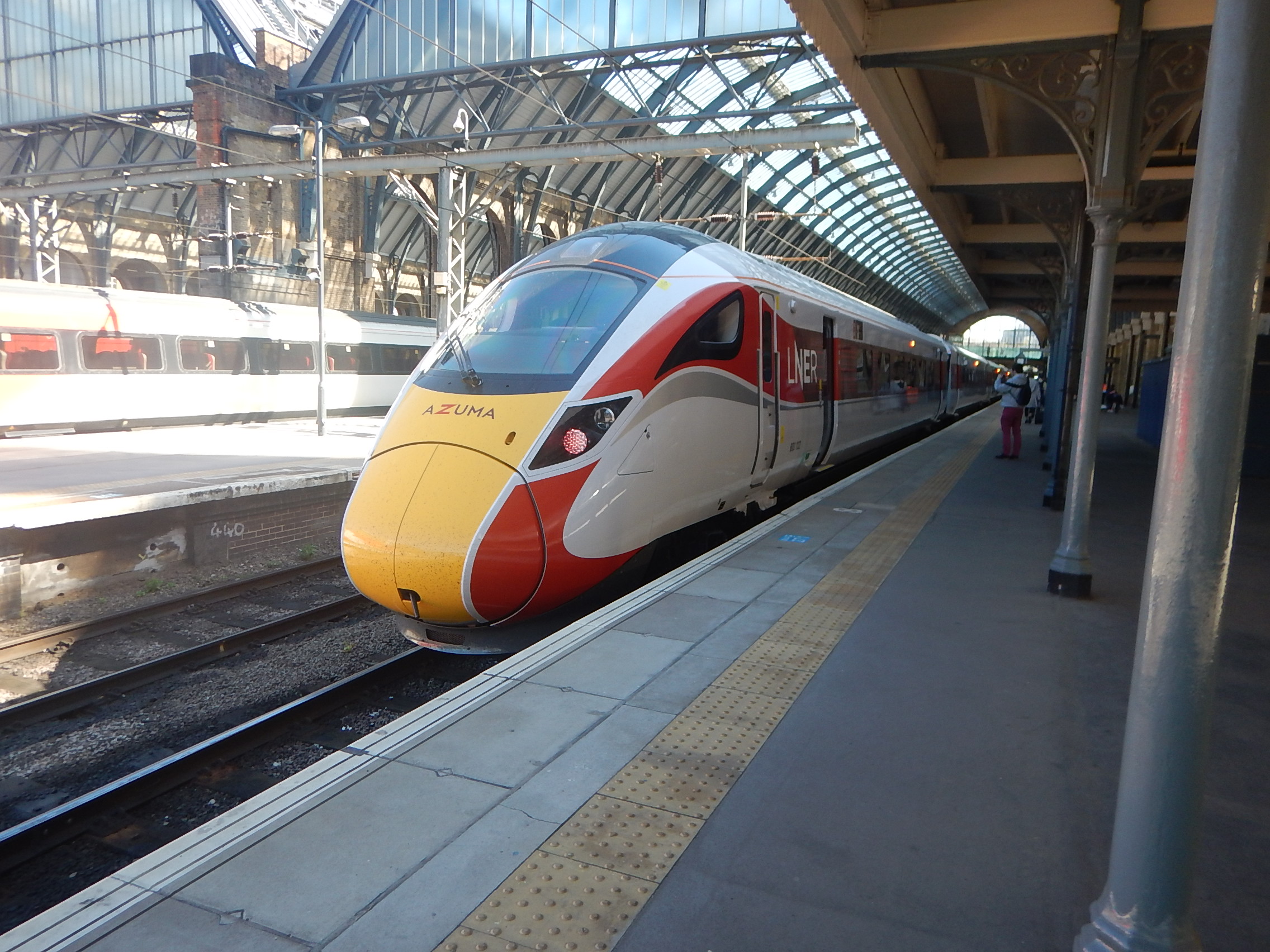
Currently, there appear to be over two hundred of these trains either delivered or on order.
Many have replaced diesel trains on Great Western Railway and LNER and stations like Kings Cross, Paddington and Reading are becoming over ninety percent diesel-free.
It should be noted that over half of these trains have diesel engines, so they can run on lines without electrification.
But the diesel engines are designed to be removed, to convert the trains into pure electric trains, when more electrification is installed.
Midland Main Line Upgrade
This line will be the next to be treated to the Hitachi effect, with thirsty-three of the second generation of Hitachi’s 125 mph trains.
- The Hitachi trains will use electrification South of Melton Mowbray and diesel power to the North.
- The trains will have a redesigned nose and I am sure, this is to make the trains more aerodynamically efficient.
- The introduction of the trains will mean, that, all passenger trains on the Midland Main Line will be electric South of Melton Mowbray.
- St. Pancras will become a diesel-free station.
Whether High Speed Two is built as planned or in a reduced form, I can see electrification creeping up the Midland Main Line to Derby, Nottingham and Sheffield and eventually on to Leeds.
Other Main Line Routes
The Midland Main Line will have joined a group of routes, that are run partly by diesel and partly by electricity.
- London and Aberdeen
- London and Bradford
- London and Cheltenham
- London and Harrogate
- London and Hull
- London and Inverness
- London and Lincoln
- London and Middlesbrough
- London and Penzance via Exeter and Plymouth.
- London and Sunderland
- London and Swansea
- London and Worcester and Hereford
Once the Midland Main Line is upgraded, these main routes will only be these routes that use pure diesel for passenger routes.
- TransPennine Routes
- Chiltern Route
- London and Exeter via Basingstoke
- London and Holyhead
Plans already exist from West Coast Rail to use bi-mode on the Holyhead route and the Basingstoke route could also be a bi-mode route.
TransPennine and Chiltern will need bespoke solutions.
Some Electrification Has Happened
Electrification has continued at a slow pace and these schemes have been completed or progressed.
- Chase Line
- Between Birmingham and Bromsgrove
- North West England
- Between Edinbugh, Glasgow, Alloa, Dunblane and Stirling.
- Gospel Oak to Barking Line
- Between St. Pancras and Corby.
- Crossrail
In addition London and Cardiff will soon be electrified and a lot of electrification designed by the Treasury in the past fifty years has been updated to a modern standard.
Battery Trains Have Been Developed And Orders Have Been Received Or Promised
Stadler bi-mode Class 755 trains have been delivered to Greater Anglia and these will be delivered as electric-diesel-battery trains to South Wales.
Stadler also have orders for battery-electric trains for Germany, which are a version of the Flirt called an Akku.
In the Wikipedia entry for the Stadler Flirt, this is a paragraph.
In July 2019, Schleswig-Holstein rail authority NAH.SH awarded Stadler a €600m order for 55 battery-powered Flirt Akku multiple unit trains along with maintenance for 30 years. The trains will start entering service in 2022 and replace DMUs on non-electrified routes.
55 trains at €600 million is not a small order.
Alstom, Bombardier, CAF, Hitacxhi and Siemens all seem to be involved in the development of battery-electric trains.
I think, if a train operator wanted to buy a fleet of battery trains for delivery in 2023, they wouldn’t have too much difficulty finding a manmufacturer.
Quite A Few Recently-Built Electric Trains Are Being Replaced And Could Be Converted To Battery-Electric Trains
In 2015 Bombardier converted a Class 379 train, into a battery-electric demonstrator.
The project showed a lot more than battery-electric trains were possible.
- Range could be up to fifty miles.
- The trains could be reliable.
- Passengers liked the concept.
Judging by the elapsed time, that Bombardier spent on the demonstrator, I would be very surprised to be told that adding batteries to a reasonably modern electric train, is the most difficult of projects.
The Class 379 trains are being replaced by by brand-new Class 745 trains and at the time of writing, no-one wants the currents fleet of thirty trains, that were only built in 2010-2011.
In addition to the Class 379 trains, the following electric trains are being replaced and could be suitable for conversion to battery-electric trains.
- Thirty Class 707 trains from South Western Railway.
- Thirty-seven Class 350/2 trains from West Miidlands Railway.
- Perhaps twenty Class 387 trains from various sources.
There also may be other trains frm Heathrow Express and Heathrow Connect.
All of these trains are too good for the scrapyard and the leasing companies that own them, will want to find profitable uses for them.
Porterbrook are already looking at converting some Class 350 trains to Battery-electric operation.
Vivarail And Others Are Developing Fast Charging Systems For Trains
Battery trains are not much use, unless they can be reliably charged in a short time.
Vivarail and others are developing various systems to charge trains.
Hydrogen-Powered Trains Have Entered Service In Germany
Hydrogen-powered Alstom Coradia Lint trains are now operating in Germany.
Alstom are developing a Class 321 train powered by hydrogen for the UK.
Stadler’s Bi-Mode Class 755 Train
The Class 755 train is the other successful bi-mode train in service on UK railways.
I would be very surprised if Grant Schapps hasn’t had good reports about these trains.
They may be diesel-electric trains, but Stadler have made no secret of the fact that these trains can be battery electric.
Like the Class 800 train, the Class 755 train must now be an off-the-shelf solution to use on UK railways to avoid the need for full electrification.
Class 93 Locomotives
Stadler’s new Class 93 locomotive is a tri-mode locomotive, that is capable of running on electric, diesel or battery power.
This locomotive could be the best option for hauling freight, with a lighter carbon footprint.
As an example of the usability of this locomotive, London Gateway has around fifty freights trains per day, that use the port.
- That is an average of two tph in and two tph out all day.
- All trains thread their way through London using either the North London or Gospel Oak to Barking Lines.
- Most trains run run substantially on electrified tracks.
- All services seem to go to freight terminals.
With perhaps a few of miles of electrification, at some freight terminals could most, if not all services to and from London Gateway be handled by Class 93 locomotives or similar? Diesel and/or battery power would only be used to move the train into, out of and around the freight terminals.
And then there’s Felixstowe!
How much electrification would be needed on the Felixstowe Branch to enable a Class 93 locomotive to take trains into and out of Felixstowe Port?
I have a feeling that we’ll be seeing a lot of these tri-mode freight locomotives.
Heavy Freight Locomotives
One of the major uses of diesel heavy freight locomotives,, like Class 59 and Class 70 locomotives is to move cargoes like coal, biomass, stone and aggregate. Coal traffic is declining, but the others are increasing.
Other countries also use these heavy freight locomotives and like the UK, would like to see a zero-carbon replacement.
I also believe that the current diesel locomotives will become targets of politicians and environmentalists, which will increase the need for a replacement.
There could be a sizeable world-wide market, if say a company could develop a powerful low-carbon locomotive.
A Class 93 locomotive has the following power outputs.
- 1,300 kW on hybrid power
- 4,055 kW on electric
It also has a very useful operating speed on 110 mph on electric power.
Compare these figures with the power output of a Class 70 locomotive at 2,750 kW on diesel.
I wonder if Stadler have ideas for a locomotive design, that can give 4,000 kW on electric and 3,000 kW on diesel/battery hybrid power.
A few thoughts.
- It might be a two-section locomotive.
- Features and components could be borrowed from UKLight locomotives.
- It would have a similar axle loading to the current UKLight locomotives.
- There are 54 UKLight locomotives in service or on order for the UK.
- Stadler will have details of all routes run by Class 59, Class 66 and Class 70 locomotives, in the UK.
- Stadler will have the experience of certifying locomotives for the UK.
Stadler also have a reputation for innovation and being a bit different.
Conclusion
All pf the developments I have listed mean that a large selection of efficient zero carbon passenger trains are easier to procure,than they were when Jo Johnson set 2040 as the diesel extinction date.
The one area, where zero carbon operation is difficult is the heavy freight sector.
For freight to be zero-carbon, we probably need a lot more electrification and more electric locomotives.
Fracking Hell…Is It The End?
The title of this post, is the same as that of this article in yesterday’s Sunday Times.
The article is an interesting read.
These two paragraphs are key.
Activism by Extinction Rebellion and growing public concern about climate change have weakened the chances of an industry once expected to create 64,500 jobs ever getting off the ground.
Cuadrilla Resources, the fracking company most active in Britain, has in recent days been removing equipment from its sole operating site in Lancashire. Petrochemicals tycoon Sir Jim Ratcliffe has vowed to pursue shale gas exploration overseas because of “archaic” and “unworkable” regulations at home.
But I think it’s more complicated than that!
I sometimes go to lectures at the Geological Society of London and two stand were about fracking.
Two were about fracking.
Fracked or fiction: so what are the risks associated with shale gas exploitation?- Click for more.
This is a video of the lecture.
What Coal Mining Hydrogeology Tells us about the Real Risks of Fracking – Click for more.
This is a video of the lecture.
This is a must-watch video from a good speaker.
I have also written several posts about fracking, with some of the earliest being in 2012-2013.
I have just re-read all of my posts.
- In the posts I have tried to give information and at times, I have said we should start fracking.
- But we should only start if we know what we’re doing.
- In several places I ask for more research.
However, there are some interesting facts and inconvenient truths about fracking and natural gas in general.
- Russia earns about €300billion a year or twenty percent of its GDP from gas exports to Europe. See Should We Nuke Russia?.
- Putin backs the anti-fracking movement. See Russia ‘secretly working with environmentalists to oppose fracking’.
- Fracking techniques is used in the Scottish Highlands to obtain clean water from deep underground. See the second Geological Society of London video.
- About forty per cent of gas usage is to heat housing. See the second video.
- The eighteen percent of the UK population, who don’t have a gas supply are more likely to be in fuel poverty. See the second video.
- Scotland has more need for energy to provide heat. See the second video.
- Natural gas with carbon capture and storage has a similar carbon footprint to solar power. See the second video.
- Cowboy fracking, as practised in the United States, would not be allowed in the UK or the EU. See the second video.
- We have no historic earthquake database of the UK, which would help in regulation and research of fracking. See the second video.
- Fracking has brought down the price of gas in North America.
- In the United States fracked gas is cutting the need to burn coal, which produces more pollution and carbon dioxide to generate the same amount of energy. See A Benefit Of Fracking.
The article in the Sunday Times says pressure against fracking has started the shutdown of the industry in the UK.
But there is another big pressure at work.replacement of natural gas with hydrogen.
- This would reduce carbon emissions.
- It can be used as a chemical feedstock.
- It could be delivered using the existing gas network.
- The gas network could be changed from natural gas to hydrogen on a phased basis, just as the change from town to natural gas was organised around fifty years ago.
But it would mean that all gas users would need to change their boilers and other equipment.
Put yourself in the position of Jim Ratcliffe; the major owner and driving force behind INEOS.
INEOS needs feedstocks for chemical plants all over the world and affordable natural gas is one that is very suitable, as it contains two of the major elements needed in hydrocarbons and many useful chemicals; carbon and hydrogen.
If local sources are not available, then liquefied natural gas can be shipped in.
The Hydrogen Economy
It is possible to replace natural gas in many applications and processes with hydrogen.
- It can be used for heating and cooking.
- Important chemicals like ammonia can be made from hydrogen.
- It can be transported in existing natural gas etworks.
- Hydrogen can also replace diesel in heating and transport applications.
There is also a possibility of measures like carbon taxes being introduced, which using hydrogen would reduce.
There’s more in the Wikipedia entry for Hydrogen economy.
Have Jim Ratcliffe and others done their predicting and decided that the demand for locally sourced natural gas will decline and that the hydrogen economy will take over?
But there will need to be a readily available source of large amounts of hydrogen.
I used to work in a hydrogen factory at Runcorn, which was part of ICI, that created hydrogen and chlorine, by the electrolysis of brine. In some ways, the hydrogen was an unwanted by-product, back in the late 1960s, but similar and more efficient processes can be used to convert electricity into hydrogen.
The latest idea, is to cluster offshore wind farms around gas rigs in the seas around the UK. The electricity produced would be used to electrolyse water to extract the hydrogen, which would then be piped to the shore using existing gas pipelines.
It would be a way of reusing infrastructure associated with gas fields, that have no gas left to extract.
There would be no need to build an expensive electricity cable to the shore.
The Dutch, Danes and the Germans are proposing to build the North Sea Wind Power Hub, which is described like this in Wikipedia.
North Sea Wind Power Hub is a proposed energy island complex to be built in the middle of the North Sea as part of a European system for sustainable electricity. One or more “Power Link” artificial islands will be created at the northeast end of the Dogger Bank, a relatively shallow area in the North Sea, just outside the continental shelf of the United Kingdom and near the point where the borders between the territorial waters of Netherlands, Germany, and Denmark come together. Dutch, German, and Danish electrical grid operators are cooperating in this project to help develop a cluster of offshore wind parks with a capacity of several gigawatts, with interconnections to the North Sea countries. Undersea cables will make international trade in electricity possible.
Later, Wikipedia says that ultimately 110 GW of electricity capacity could be developed.
So could these planned developments create enough hydrogen to replace a sizeable amount of the natural gas used in Western Europe?
I suspect a lot of engineers, company bosses and financiers are working on it.
Conclusion
I have come to the following conclusions.
- Fracking for hydrocarbons is a technique that could be past its sell-by date.
- The use of natural gas will decline.
- INEOS could see hydrogen as a way of reducing their carbon footprint.
- The heating on all new buildings should be zero carbon, which could include using hydrogen from a zero-carbon source.
There are reasons to think, that electricity from wind-farms creating hydrogen by electrolysis could replace some of our natural gas usage.
Travel Industry Confirms Rail ‘Renaissance’ In Europe
The title of this post is the same as that of this article on Railway Gazette.
This is the introductory paragraph.
Assertions that long-distance rail services in Europe are rapidly becoming more popular as passengers eschew flying for environmental reasons were amply confirmed at the Rail Innovation Forum organised by Amadeus at its head office near Nice on October 9-10.
The article also gives these points.
- Swiss Federal Railways are reporting a 26 % year-on-year increase in passengers for the first quarter of 2019 for night trains.
- Sweden is reporting a 12 % increase in rail traffic and a 4 % drop in air traffic.
- Flight bookings across Scandinavia are down by 10 %.
- German long-distance rail travel is rising.
This all seems good news for carbon emissions.
BHP Investor Revolt Over Links To Fossil Fuel Lobby
The title of this post, is the same as that of this article on The Times.
This is the introductory paragraph.
BHP is facing a shareholder revolt after influential investors urged the giant miner to suspend membership of contentious trade groups that lobby for the fossil fuels industry.
So who are these revolting investors?
Greenpeace with a couple of shares and a lot of placards!
No!
They are Standard Life Aberdeen and Aviva, who are two of the biggest financial beasts in the City of London, with support from the Church of England.
It’ll be an interesting Annual General Meeting next week!
Are Extinction Rebellion Counter Productive?
I am coming to the conclusion that Extinction Rebellion are a bunch of climate-change fascists of the left, that mirror, the racist and immigration fascists on the right.
Both have unrealistic ambitions and just like Hitler and Stalin want to control out lives and give themselves and their acolytes absolute power.
In my mind, there is no difference between the extreme left and extreme right. For instance the extreme-right is generally thought to be anti-Semitic and who is being accused of that now? The once respectable Labour Party, which is now more useless than a chocolate teapot.
I am scientifically green and have been so since my I left Liverpool University round fifty years ago.
I have believed in global warming for about thirty years, ever since I was told by a guy on the NASA team, that measured the Earth’s temperature from satellites, that the world was warming up.
No matter what Bolsonaro Trump, Xi Jinping and other leaders say, global warming is a NASA fact!
But large numbers of people don’t believe in good scientific practice and behaviour.
- Some are anti-vaccination.
- Some believe in homeopathy.
- Many believe in religion, some of which are totally bonkers!
- Some think the 9/11 attacks were faked or carried out by the Israelis.
- Some believe the moon landings were faked!
- Some believe in log fires.
- They drive hundreds of miles to work every year.
- They drive their children everywhere.
- They never talk to anybody of a different race or religion.
- Some have a holiday home in Cornwall, North Norfolk, France or Spain.
There is only one way to convince morons like these to change to a more scientifically-green lifestyle.
By nudging them to it, by showing them it can be better and more affordable.
Extinction Rebellion and their ilk just alienate Middle England and they push green issues under the carpet for another day.
Incidentally, we need politicians at both a National and local level to stop playing stupid games about Brexit and get on with the job of improving the lives of all of the residents of the UK.
Thoughts On Last Week’s Major Power Outage
This article on the BBC is entitled Major Power Failure Affects Homes And Transport.
This is the first two paragraphs.
Nearly a million people have been affected by a major power cut across large areas of England and Wales, affecting homes and transport networks.
National Grid said it was caused by issues with two power generators but the problem was now resolved.
This second article on the BBC is entitled UK power cut: Why it caused so much disruption, and gives these details.
It started with a routine blip – the gas-fired power station at Little Barford in Bedfordshire shut down at 16:58 BST due to a technical issue.
Then, a second power station, the new Hornsea offshore wind farm, also “lost load” – meaning the turbines were still moving, but power was not reaching the grid.
These are my thoughts on the incident.
Power Stations Do Fail
Any complex electro-mechanical system like Little Barford gas-fired power station or Hornsea offshore wind farm can fail.
- Little Barford gas-fired power station was built in 1994 and is a 746 MW gas-fired power station.
- Hornsea offshore wind farm obtained planning permission in 2014 and is being built in phases. It will eventually have a maximum capacity of 8 GW or 8,000 MW.
Compare these figures with the iconic coal-fired Battersea power station, which had a maximum output of 503 MW in 1955.
I will not speculate as to what wet wrong except to say that as the Hornsea wind-farm is relatively new, it could be what engineers call an infant mortality problem. Complex systems or even components seem to fail in the first few months of operation.
Why Do We Have Gas-Fired Stations?
According to this page on Wikipedia, there are around forty natural gas fired power stations in England.
Most gas-fired stations are what are known as CCGT (Combined Cycle Gas Turbine), where a Jumbo-sized gas-turbine engine is paired with a steam turbine powered by the heat of the exhaust from the engine.
This form of power generation does produce some carbon dioxide, but to obtain a given amount of electricity, it produces a lot less than using coal or ioil.
By combining the gas turbine with a steam turbine, the power station becomes more efficient and less carbon dioxide is produced.
Power stations of this type have three various advantages.
- They have a very fast start-up time, so are ideal power stations to respond to sudden increases in electricity demand.
- As they are a gas-turbine engine with extra gubbins, they are very controllable, just like their cousins on aircraft.
- They are relatively quick, easy and affordable to build. The Wikipedia entry for a CCGT says this. “The capital costs of combined cycle power is relatively low, at around $1000/kW, making it one of the cheapest types of generation to install.”
- They don’t need a complicated and expensive transport infrastructure to bring in coal or nuclear fuel.
- They can also be powered by biogas from agricultural or forestry waste, although I don’t think that is a comm practice in the UK.
The carbon dioxide produced is the only major problem.
Gas-Fired Power Stations In The Future
If you read the Wikipedia entry for combined cycle power plants, there is a lot of information on CCGTs, much of which is on various ways of improving their efficiency.
I believe that one particular method of increasing efficiency could be very applicable in the UK.
Under Boosting Efficiency in the Wikipedia entry, the following is said.
The efficiency of CCGT and GT can be boosted by pre-cooling combustion air. This is practised in hot climates and also has the effect of increasing power output. This is achieved by evaporative cooling of water using a moist matrix placed in front of the turbine, or by using Ice storage air conditioning. The latter has the advantage of greater improvements due to the lower temperatures available. Furthermore, ice storage can be used as a means of load control or load shifting since ice can be made during periods of low power demand and, potentially in the future the anticipated high availability of other resources such as renewables during certain periods.
The UK is the world’s largest generator of power using offshore wind and as we are surrounded with sea and wind, the UK is only going to produce more of the power it needs in this or other way.
This method could be used to store the wind energy produced when the demand is low and recover it, when it is needed.
Could The UK Develop A Chain Of Carbon-Neutral Gas-Fired Power Stations?
In parts of the UK, there is a unique mix of resources.
- A plentiful supply of natural gas, either from offshore fields or interconnectors to Norway.
- Large amounts of electricity generated by offshore wind, which will only get larger.
- Worked out gas-fields still connected to the shore, through redundant platforms and pipes.
- Closeness to agricultural areas.
Technologies under development or already working include.
- Offshore creation of hydrogen using electricity generated by offshore wind and then using the redundant gas pipes to bring the hydrogen to the shore.
- Using a hydrogen-fired CCGT power station without producing any carbon-dioxide.
- Feeding carbon dioxide to plants like salad and fruit to make them grow better.
- Using excess electricity from renewable sources to cool the air and improve the efficiency of CCGT power stations.
I can see all these technologies and development coming together in the next few years and a chain of carbon-neutral gas-fired power stations will be created
- Hydrogen produced offshore on redundant gas platforms, using electricity from nearby wind farms, will be turned back into electricity, where it is needed by onshore hydrogen-fired power stations.
- Redundant gas platforms will be refurbished and reused, rather than demolished at great expense.
- Some natural gas will still be used for power generation
- I’m not quite sure, but I think there could be dual-furled CCGTs, that could run on either hydrogen or natural gas.
- Any carbon dioxide generated will be stored in the worked out gas fields or fed to the crops.
- Gas storage onshore will ensure that the gas-fired power station can respond quickly.
I also believe that there is no technological and engineering challenges, that are too difficult to solve.
This strategy would have the following advantages.
- It should be carbon-neutral.
- Because there could have as many as two hundred individual power stations, the system would be very reliable and responsive to the loss of say a cluster of five stations, due to a tsunami, a volcanic eruption or a major eathquake.
- If power from renewable sources like offshore wind is low, extra stations can be quickly switched in.
- It is not dependent on fuel from dodgy dictators!
- It would probably be more affordable than developing nuclear power stations.
There is also the possibility of bringing more hydrogen onshore to be used in the decarbonisation of the gas-grid.
Conclusion
A chain of carbon-neutral gas-fired power stations, linked to hydrogen created offshore by wind farms is very feasible.
Last week, after the double failure, extra stations would have immediately been switched in.
Energy Storage
The fastest response system is energy storage, where a giant battery holds several gigawatt-hours of eklectricity.
Electric Mountain
The biggest energy storage facility in the UK is Dinorwig Power Station.
This is the introduction to its Wikipedia entry.
The Dinorwig Power Station , known locally as Electric Mountain, is a pumped-storage hydroelectric scheme, near Dinorwig, Llanberisin Snowdonia national park in Gwynedd, northern Wales. The scheme can supply a maximum power of 1,728-megawatt (2,317,000 hp) and has a storage capacity of around 9.1-gigawatt-hour (33 TJ)
It is large and has a rapid response, when more electricity is needed.
We probably need another three or four Electric Mountains, but our geography means we have few suitable sites for pumped-storage, especially in areas, where large quantities of electricity are needed.
There are one other pumped-storage system in Wales and two in Scotland, all of which are around 350 MW or a fifth the size of Electric Mountain.
In the Wikipedia entry entitled List Of Power Stations In Scotland, this is said.
SSE have proposed building two new pumped storage schemes in the Great Glen; 600 MW at Balmacaan above Loch Ness, and 600 MW at Coire Glas above Loch Lochy, at £800m. Scotland has a potential for around 500 GWh of pumped storage
I’m sure the Scots will find some way to fill this storage.
If all else fails, there’s always Icelink. This is the description from Wikipedia.
Icelink is a proposed electricity interconnector between Iceland and Great Britain. As of 2017, the project is still at the feasibility stage. According to current plans, IceLink may become operational in 2027.
At 1000–1200 km, the 1000 MW HVDC link would be the longest sub-sea power interconnector in the world.
The project partners are National Grid plc in the UK, and Landsvirkjun, the state-owned generator in Iceland, and Landsnet, the Icelandic Transmission System Operator (TSO)
Plugging it in to Scotland, rather than London, probably saves a bit of money!
Conclusion
Increasing our pumped-storage energy capacity is feasible and would help us to survive major power failures.
Batteries In Buildings
Tesla have a product called a Powerwall, which puts energy storage into a home or other building.
This was the first product of its kind and there will be many imitators.
The Powerwall 2 has a capacity of 13.5 kWh, which is puny compared to the 9.1 GWh or 9,100,000 kWh of Electric Mountain.
But only 674,074 batteries would need to be fitted in the UK to be able to store the same amount of electricity as Electric Mountain.
The big benefit of batteries in buildings is that they shift usage from the Peak times to overnight
So they will reduce domestic demand in the Peak.
Conclusion
Government should give incentives for people to add batteries to their houses and other buildings.
Could Hydrogen Work As Energy Storage?
Suppose you had a hydrogen-fired 500 MW hydrogen-fired CCGT with a hydrogen tank that was large enough to run it at full power for an hour.
That would be a 0.5 GWh storage battery with a discharge rate of 500 MW.
In an hour it would supply 500MWh or 500,000 kWh of electricity at full power.
In Hydrogen Economy on Wikipedia, this is said, about producing hydrogen by electroysis of water.
However, current best processes for water electrolysis have an effective electrical efficiency of 70-80%, so that producing 1 kg of hydrogen (which has a specific energy of 143 MJ/kg or about 40 kWh/kg) requires 50–55 kWh of electricity.
If I take the 40 KWh/Kg figure that means that to provide maximum power for an hour needs 12,500 Kg or 12.5 tonnes of hydrogen.
Under a pressure of 700 bar, hydrogen has a density of 42 Kg/cu. m., so 12.5 tonnes of hydrogen will occupy just under 300 cubic metres.
If I’ve got the figures right that could be a manageable amount of hydrogen.
Remember, I used to work in a hydrogen factory and I had the detailed guided tour. Technology may change in fifty years, but the properties of hydrogen haven’t!
Gas-Fired Versus Coal-Fired Power Stations
Consider.
- The problem of the carbon dioxide is easier with a gas-fired power station, than a coal-fired power station of the same generating capacity, as it will generate only about forty percent of carbon dioxide.
- Gas-fired power stations can be started up very quickly, whereas starting a coal-fired power station probably takes all day.
- Coal is much more difficult to handle than gas.
Using hydrogen is even better than using natural gas, as it’s zero-carbpn.
Conclusion
I believe we can use our unique geographic position and proven technology to increase the resilience of our power networks.
We need both more power stations and energy storage.
Drax Secures £500,000 For Innovative Fuel Cell Carbon Capture Study
The title of this post, is the same as that of an article on the Drax web site, that was published in June 2019.
This is the first paragraph.
Drax Group will explore the feasibility of using molten carbonate fuel cells as a technology for capturing carbon dioxide (CO2) having secured £500,000 of funding from the UK Government.
These objectives are listed.
- Fuel cell FEED study to assess the feasibility of building a second carbon capture pilot at Drax Power Station will help position the UK as a world leader in the fight against climate change
- The technology used will produce power at the same time as capturing carbon dioxide from Drax’s flue gases.
- Neighbouring horticultural site will use the CO2 to improve yields and demonstrate how businesses working together in clusters can deliver climate solutions
I am glad to see, that the Government is supporting initiatives like this.
The Drax Paradox
I have seen strawberries in a supermarket, labelled as coming from a farm at Drax in Yorkshire.
Were they grown using carbon dioxide from the power station?
They probably weren’t labelled as organic, but can you grow organic strawberries in a carbon-dioxide-rich atmosphere and label them as Organic?
Conclusion
I don’t think these and other technologies will lead to any massive revival of coal-fired power stations, as mining coal is a very disruptive and dangerous process compared to extracting gas or growing bio-mass.
But I do think that they are needed for application to the following plants, that produce a lot of carbon dioxide.
- Gas-fired power stations.
- Biomass power stations.
- Cement-making
- Steel-making
The two last processes are probably the most important, as improvement in renewable energy generation, should make the first two redundant.
Schroders Unveils Global Energy Transition Fund
The title of this post, is the same as that of this article on Investment Europe.
This is the first paragraph.
Schroders has launched global energy transition fund in order to harness the global shift towards a low carbon energy system and meeting growing client demand for actively-managed exposure to this fast-evolving and ground-breaking sector.
Read the rest of the article about their new fund.
I pick out this paragraph, that defines the strategy.
The strategy will not invest in companies with exposure to nuclear or fossil fuels. It will harness three significant global trends; the decarbonisation of power generation, the electrification of energy use and increased energy efficiency for its investment process.
This is the first sentence in the Wikipedia entry for Shroders.
Schroders plc is a British multinational asset management company, founded in 1804. The company employs over 5,000 people worldwide in 32 different countries around Europe, America, Asia, Africa and the Middle East. Headquartered in the City of London, it is traded on the London Stock Exchange and is a constituent of the FTSE 100 Index.
I think that launch of this global energy transition fund by one of the City of London’s most respected institutions, will eventually be one of many similsr and related funds launched by companies and institutions and that these funds will play a big part in decarbonisation of the planet.
Investment from the big boys is going green.
 The Anonymous Widower