Huddersfield Station – 30th September 2025
This press release on the Network Rail Media Centre is entitled Huddersfield Station Set To Reopen Next Week With New Temporary Layout.
As it is now next week, I went to have a look at the progress today.
I made a mistake and got on a Grand Central Train, which meant, I had to change at York.
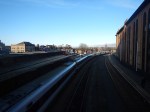
Speeding past Drax power station on the Selby Diversion, I took these pictures.
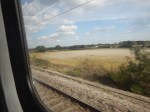
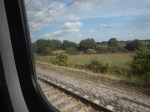
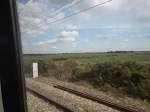
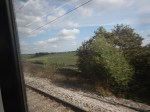
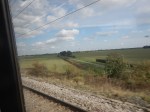
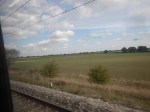
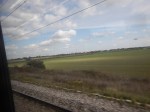
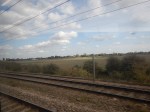
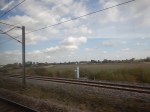
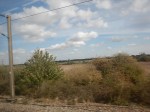
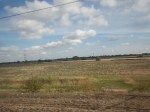
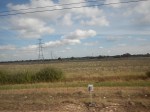
We were only in a 125 mph diesel, so we couldn’t take advantage of the 160 mph running, that the East Coast Main Line’s new signalling might allow on this section. The Wikipedia entry for the Selby Diversion, says this about the possible speeds.
The line was the first purpose-built section of high-speed railway in the UK having a design speed of 125 mph; however, research by British Rail in the 1990s indicated that the route geometry would permit up to 160 mph operation, subject to the necessary overhead line equipment and signalling upgrades. The new line also avoided the speed restriction over the swing bridge at Selby. The former ECML route, the NER’s 1871 York and Doncaster branch line, was closed from Selby northwards.
As the Selby Diversion opened in 1983, I wouldn’t be surprised that the calculations were performed on British Rail Research’s Pace 231-R, which was similar to the one I used at ICI and the pair, that NASA used calculate how to land Apollo on the moon.
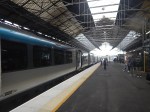
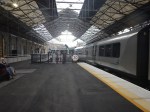
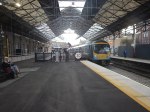
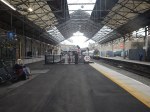
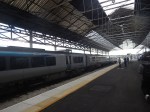
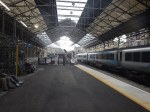
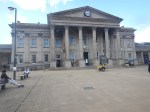
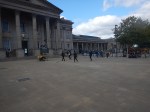
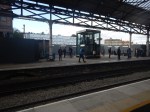
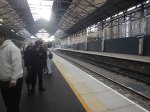
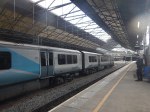
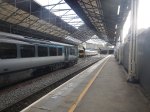
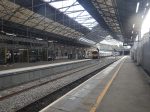
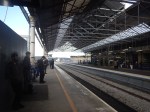
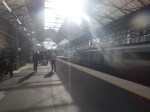
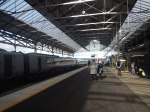
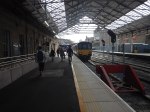
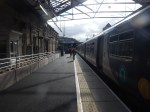
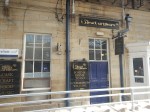
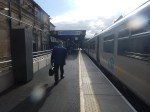
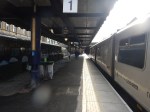
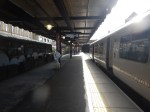
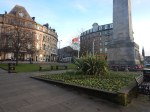
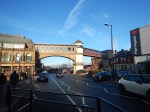
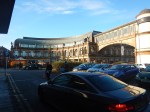
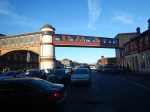
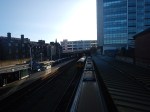
When I eventually got to Huddersfield, I took these pictures.


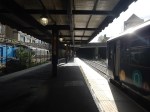
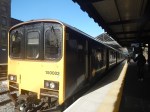
Note.
- In I’ve Just Glimpsed The Future Of Train Travel Across The North Of England And I Like It, there are pictures of Huddersfield station, that were taken on the 21st August, soon after the work started.
- In Huddersfield Station – 15th December 2023, there are pictures of Huddersfield before the work started.
- Much of the work seems to have been done at the Western end of the station to lengthen the platform on the Penistone Line to Sheffield.
- Platform 2 for the Penistone Line has also been renumbered Platform 1.
Work still to be carried out at Huddersfield station, includes refurbishing the roof, installing the electrification and adding a couple of new platforms.
These are my thoughts.
Which Platforms Will Be Electrified?
This OpenRailwayMap shows the proposed electrification in Huddersfield station.
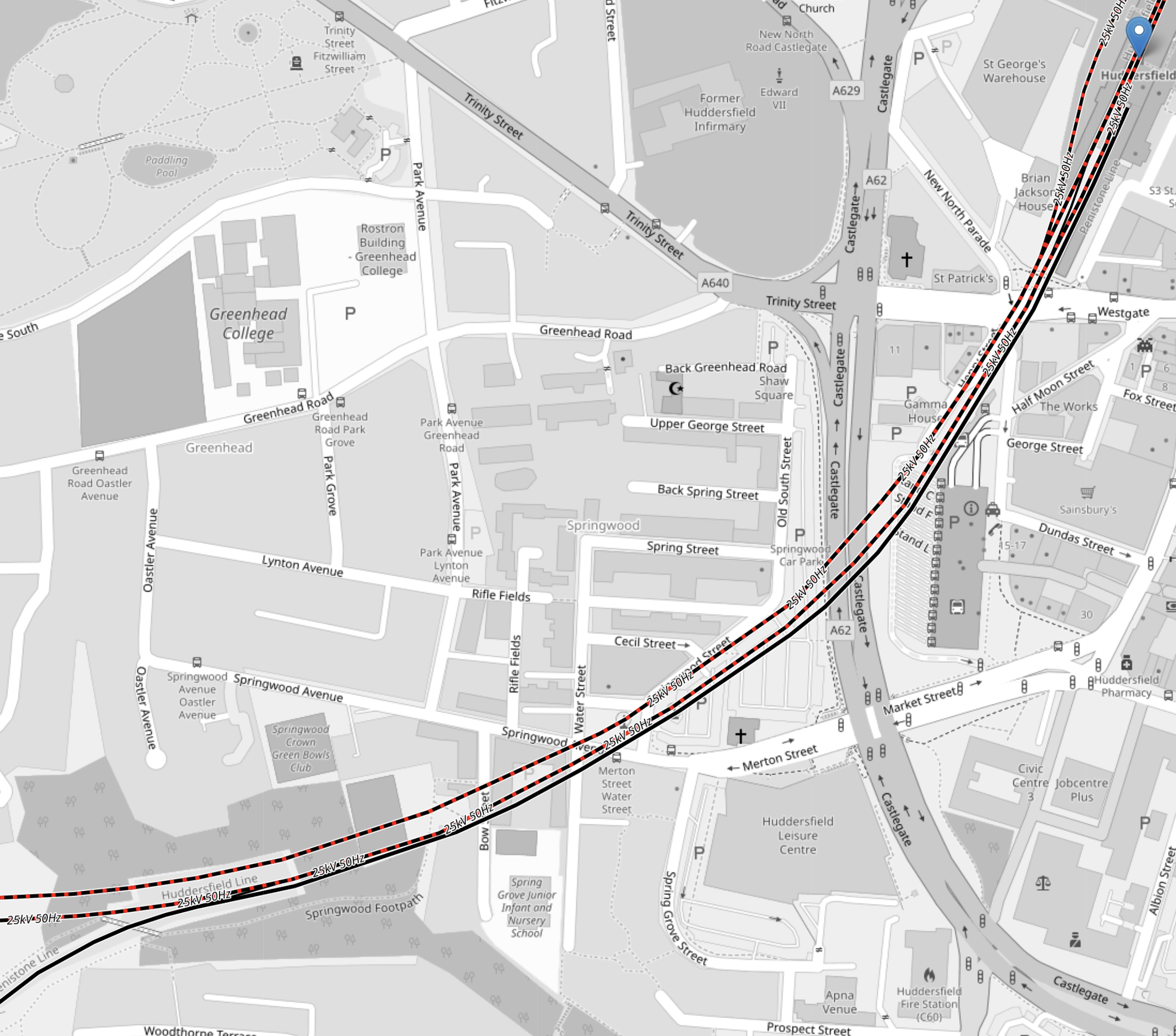
Note.
- The blue arrow in the North-East corner of the map indicates Huddersfield atation.
- The two red-and-black tracks going diagonally across the map are the Hudderfield Line.
- The red-and-black colour, indicates that the two tracks will be electrified.
- South of these two tracks, the Penistone Line sneaks into Platform 1 at Huddersfield station.
- The Penistone Line goes to Sheffield in a South-Westerly direction.
- There appears to be a crossover, so that trains from the Penistone Line can use both Platforms 1 and 2 in Huddersfield station.
- The OpenRailwayMap appears to show planned electrification between Stalybridge and Leeds stations.
- To the East of Leeds planned electrification is shown as far as Micklefield and Church Fenton stations.
Once installed, this electrification will create a complete electrified route across the Pennines from Liverpool Lime Street in the West to the East Coast Main Line in the East.
This OpenRailwayMap shows the planned electrification between Micklefield and Hull stations.
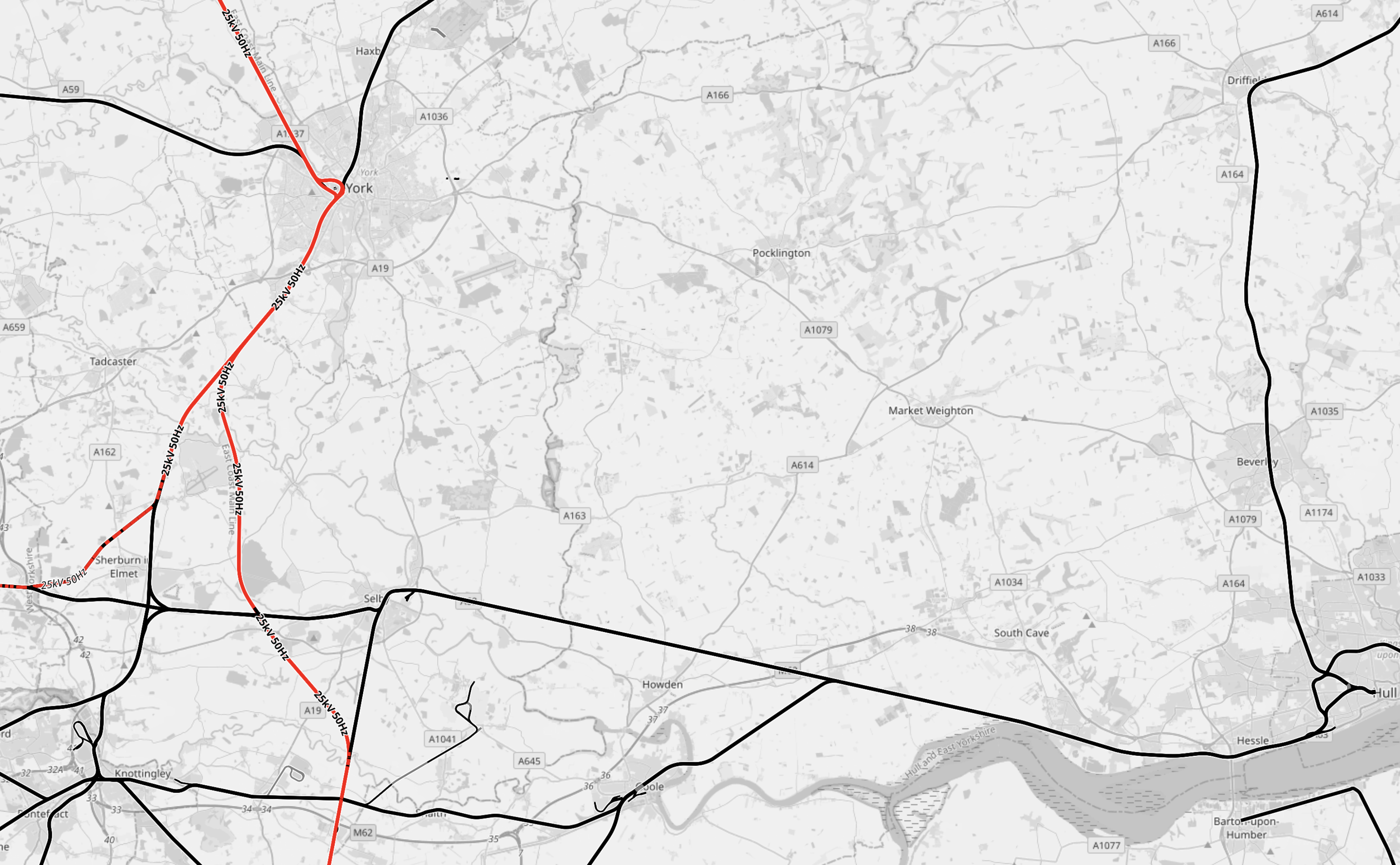
Note.
- Red tracks are electrified.
- Black tracks are not electrified.
- York is in the North-West corner of the map, with the electrified East Coast Main Line going through the station North-South.
- South of York, the East Coast Main Line now splits.
- The Western branch includes an electrified line to Micklefield station, Neville Hill depot and Leeds station.
- The Eastern Branch is the Selby Diversion, which is an electrified 160 mph line, that avoids the Selby coalfield.
- Running West-East across the map is the unlectrified Micklefield and Hull Line, which goes via Selby.
- Hull is in the South-East corner of the map.
- Hull is 42 miles from Micklefield and 36.1 miles from the Temple Hirst junction on the Selby Diversion, so it is within range of battery-electric trains, with charging at Hull station.
- Hitachi’s battery-electric Class 802 trains, used by Hull Trains and TransPennine Express, which are currently on test, should certainly be able to serve Hull.
Hull can become an electrified station, without the expense and disruption of full electrification.
How Long Is Platform 1 At Huddersfield Station?
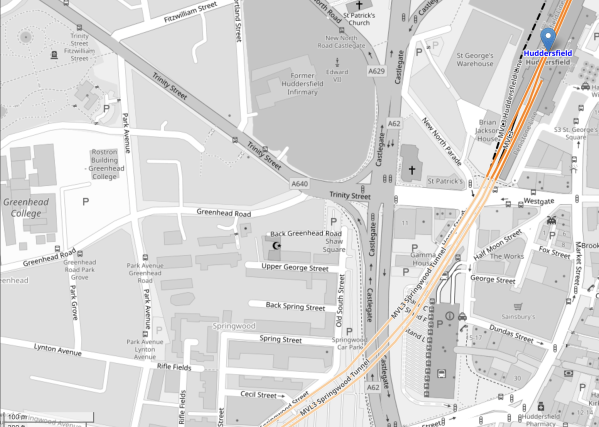
This OpenRailwayMap shows the new Platform 1 at Huddersfield station.
Note.
The blue arrow indicates Huddersfield station.
- The three darker orange lines indicate the two through platforms 2 and 3, and the reconfigured bay platform 1.
- There is a cross-over between platforms 1 and 2, which connects Platform 2 to the Penistone Line.
- In the South-West corner of the map is a hundred metre scale.
- Using the scale, I estimate that the length of the bay platform 1 is around 120 metres.
- In the last two rows of pictures in the gallery of this post, a three car Class 150 train is shown in Platform 1.
- A three car Class 150 train is approximately sixty metres long.
Looking at the pictures, I wouldn’t be surprised if the new platform has been designed to take two three-car Class 150 trains. It would certainly take a pair of two-car Class 150 trains.
Other trains and their lengths that might use the platform include.
- Class 170 – three-car – 70.85 metres
- Class 195 – two-car – 48.05 metres
- Class 195 – three-car – 71.40 metres
- Class 195 – 2 x two-car – 96.10 metres
- Class 810 – five-car – 120 metres
The Class 810 uses 24 metre cars, so that a pair of trains, will fit in St. Pancras. But with perhaps selective door opening could a single Class 810 train run a St. Pancras and Huddersfield service, perhaps with a split and join at Sheffield.
Electrification Across The Pennines
The TransPennine Route will be electrified between Liverpool Lime Street and Micklefield stations, once the current works between Huddersfield and Leeds are complete.
Sections without electrification include.
- Bradford Interchange and Doncaster – 52.1 miles
- Cleethorpes and Doncaster – 52.1 miles
- Harrogate and Leeds – 18.3 miles
- Hazel Grove and Doncaster – 52.6 miles
- Hull and Micklefield – 42 miles
- Hull and Temple Hirst junction – 36.1 miles
- Saltburn and Northallerton – 28.1 miles
- Sunderland and Northallerton – 46.8 miles
- Scarborough and York – 42.1 miles
I expect that Hitachi trains with batteries or CAF’s tri-mode trains will be able to handle these routes in a low-carbon manner.
Electrification Between Stalybridge And Huddersfield
This section is shown as being electrified on OpenRailwayMap.
But as it is only 18 miles and includes the Standedge Tunnels will the route use battery-electric trains?
An Extreme Day Out – Bradford Forster Square Station
It seems to be the fashion to go and visit somewhere far away in a day. So why not?
For my first trip in this vein, I decided on the spur of the moment to go to Bradford Forster Square station.
Why Did I Choose Bradford Forster Square Station?
There are three main reasons.
- A new platform has just opened at the station to handle the longest LNER trains.
- LNER are now running a seven trains per day (tpd) service via Leeds.
- I wanted to see how LNER’s walk-up ticketing performed on the route.
In addition, I wanted to see how the service performed, now that Bradford is this year’s UK City of Culture.
King’s Cross To Bradford Forster Square Station For £43.00 With A Railcard
I just missed the 11:03, so I booked the 13:03 for £43.00 with my Senior Railcard, from one of the numerous ticket machines in King’s Cross.
The train arrived on time in two hours 47 minutes for the 199.4 miles, which was an average speed of 72 mph.
In What Will Be The Fastest Times Possible Between London King’s Cross And Leeds?, I predicted this.
I wouldn’t be surprised to see with full digital signalling and a 125 mph average between London King’s Cross and Leeds.
- 125 mph Base Time – 89 minutes.
- Four Acceleration/Deceleration sections at 6 minutes each – 24 minutes.
- Three Dwell Times at 2 minutes each – 6 minutes
This would mean a total time of one hour and 59 minutes.
As my Bradford service took two hours and 28 minutes between London King’s Cross And Leeds, that would mean, that a time close to two hours and fifteen minutes could be possible between London King’s Cross and Bradford Forster Square stations.
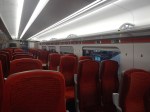
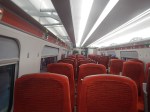
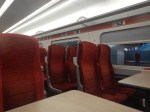
There Weren’t Many Passengers Between Leeds And Bradford Forster Square Stations
These pictures show the nearly empty train and the small numbers, who alighted at Bradford Forster Square station.
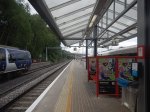
But I don’t think three in the afternoon is a time, when many passengers will need to go between Leeds and Bradford Forster Square stations.
Bradford Forster Square Station
I described that station, with its new Platform 0 in Bradford Forster Square Station – 20th May 2025, where I said the station needed these additions.
The station needs a few additions, like a proper coffee shop, a better shop, ticket machines and toilets.
But it’s not been open very long.
Bradford Forster Square Station To King’s Cross For £25.70 With A Railcard
I bought this ticket from a Yorkshire Lass in the Ticket Office.
There Weren’t Many Passengers Between Bradford Forster Square And King’s Cross Stations
Only about a dozen passengers boarded the train at Bradford Forster Square and some got out at Leeds.
In fact the train wasn’t very busy all the way to London with perhaps twenty passengers in my carriage, when we arrived in King’s Cross.
Will This Service Develop Into A Two-Hourly London King’s Cross And Leeds Or Bradford Forster Square Service With A Trans-Yorkshire Service Tacked On?
Currently, it is the following.
- An express service between King’s Cross and Leeds with stops at Peterborough, Doncaster and Wakefield Westgate.
- An express service between King’s Cross and Bradford Forster Square with stops at Peterborough, Doncaster, Wakefield Westgate and Leeds.
- A local service between Doncaster and Bradford Forster Square with stops at Wakefield Westgate and Leeds.
- Additional calls on some services are at Stevenage, Grantham, Retford and Shipley.
In addition the following would be possible.
- Pairs of trains could split at Leeds, with one train going to Bradford Forster Square and the other train to somewhere like Harrogate, Huddersfield or Skipton.
- Additional stops could be added between Leeds and Bradford Forster Square without slowing services between Leeds and King’s Cross.
But then where does this fit with LNER buying ten CAF tri-mode trains?
Surely they would get better flexibility, if they’d bought more Azumas, which could run on the electrification all the way to Bradford Forster Square, Huddersfield and Skipton. If some had batteries, they could run all the way to Harrogate.
LNER’s Disabled-Unfriendly Refreshments System
I am not disabled, but I only have one fully-working hand, as the school bully broke my left humerus and I have difficulty doing certain things with my left hand, due to the quality of the care I received in Highlands Hospital in Winchmore Hill.
Having a left-sided stroke didn’t help either.
One of the things, I can’t do is take pictures on my mobile phone, so I always carry a proper camera. Because of the injury, I have also never read a QR code with my phone.
On LNER’s trains to get a drink, you either have to order it by reading a QR code or walking to the buffet.
As on the train going North, the buffet was closed, I went thirsty.
In future, if I have a choice of trains, I’ll choose one with a trolly service.
Are The CAF Tri-Mode Trains Part Of A Plan To Drive Open Access Operators Out Of Yorkshire?
This is possibly the only scenario that makes sense.
The ten-car tri-mode trains would be used to take over Grand Central’s services to Bradford Interchange and Sunderland, and Hull Trains services to Hull.
After Monday, LNER are now running more daily services to Bradford Forster Square, than Grand Central are to Bradford Interchange.
If like my return to London on Tuesday, you can buy a walk-up ticket on LNER, then why would you travel on Grand Central.
Conclusion
£68.70 is not a bad price for what is in effect a walk-up day return to Bradford Forster Square.
I’ve just looked how much, I would be charged for an advance ticket on Friday, using the trains I used on Tuesday.
I could get a ticket for £25.70 going North and £28.95 going South or a total of £54.65. All are with my Senior Railcard.
But it does look to me, that LNER and the Government are trying to drive Grand Central off the Bradford route.
If I am right and Hull Trains and Lumo will be next in LNER’s sights, then what was Starmer and other Government ministers doing at the launch of orders for new trains for Grand Central, Hull Trains and Lumo?
LNER’s New Sunday Timetable
LNER’s new Sunday timetable, that starts on the 10th December 2023 is now available to view on this page of the National Rail web site, where this is said.
Sundays are now one of the most popular days to travel on LNER’s network.
To support this increase in demand, LNER is introducing three additional Sunday services into its timetable starting in December 2023 – two (one each way) between Leeds and London Kings Cross and one between Doncaster and London.
There will also be more seats added to some trains with eight existing Sunday services becoming longer trains. The current five carriage services will be replaced with either nine or ten carriage Azuma trains for destinations including Leeds, Harrogate and Lincoln.
This equates to more than 3,000 additional seats on a Sunday and will help reduce overcrowding and increase connectivity for more people between Yorkshire and London.
To provide additional Sunday seating capacity, due to the lengthening of some London Kings Cross to Harrogate services on Sundays, two northbound station calls at Horsforth need to be removed on Sundays only. The impacted services are the 09.05 and 17:05 London Kings Cross to Harrogate trains.
Note.
- Horsforth looks to have short platforms.
- Last Sunday, Harrogate to London services were three nine-car and three five-car trains.
- In September 2023, I wrote Yorkshire To See More LNER Services And Longer Trains.
LNER certainly seem to be fulfilling the last promise.
Additionally, in this article on Modern Railways, which is entitled LNER Orders CAF Tri-mode Sets, this is said.
Modern Railways understands the new fleet will be maintained at Neville Hill depot in Leeds and, like the ‘225’ sets, will be used predominantly on services between London and Yorkshire, although unlike the ‘225s’ the tri-modes, with their self-power capability, will be able to serve destinations away from the electrified network such as Harrogate and Hull.
So are LNER gradually moving towards the new timetable they will use after the CAF tri-mode trains are delivered?
Improving Trains Between London And Bradford
Current Services Between London And Bradford
LNER services run between Kings Cross and Bradford Forster Square stations.
- Two trains per day (tpd) run between Bradford and London in the early morning.
- Two tpd run between London and Bradford in the evening.
- Trains take two and three-quarter hours.
- Stops are at Shipley, Leeds, Wakefield Westgate, Doncaster, Retford Grantham and Stevenage.
- Trains seem to be generally a pair of five-car Class 801 trains.
Note.
- Trains reverse at Leeds.
- The timetable seems a bit lopsided, as there is no early morning train to Bradford or an evening one to London.
- Harrogate gets a one train per two hours (tp2h) service to and from London.
The timetable could do with an improvement.
Grand Central services run between Kings Cross and Bradford Interchange stations.
- Four tpd run between Bradford and London.
- Four tpd run between London and Bradford.
- Trains take three and a quarter hours.
- Stops are at Pontefract Monkhill, Wakefield Kirkgate, Mirfield, Brighouse, Halifax and Low Moor
- Trains are five-car Class 180 trains, which have seen better days.
Note.
- The timetable seems a bit lopsided, as there is no early morning train to Bradford or an evening one to London.
The timetable and the trains could do with an improvement.
LNER’s New Ticketing And Nine-Ten Car Trains
LNER have introduced the selling of Advanced Tickets from machines or the Booking Office as late as five minutes before the train leaves.
- My last three trips from Leeds to London cost me £33.55, £33.75 and £33.55 with my Senior Railcard.
- All were bought less than ten minutes before the train left.
- In two of the journeys, I spread out in two seats
- Trains were either a pair of five-car Class 801 trains or a nine-car InterCity 225.
I took these pictures after my last return from Leeds on Tuesday.
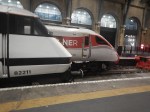

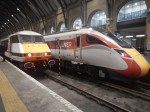
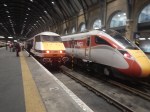
Note.
- Two of the three trains I’ve taken lately have arrived 3-4 minutes early.
- Not a great increase, but I do wonder if LNER are seeing what is possible with the new digital signalling.
- The British Rail era; InterCity 225 seems to hold its own against the new Hitachi train.
I wouldn’t be surprised that LNER intend to both run high-capacity trains between London and Leeds and fill them by competitive pricing.
A Grand Central Train Failure On Tuesday
This was my journey to Bradford on Tuesday,
- I was supposed to take the 1057 Grand Central service to Bradford Interchange, where it was timed to arrive at 1400.
- But the train didn’t run and we were all advised to get on the 1103 to Leeds and change at Doncaster.
- We arrived at Doncaster in Platform 4, a minute late at 1240 and got straight on a Grand Central train in the opposite Platform 6.
- We left Doncaster at 1251, which was sixteen minutes late.
- But we arrived in Bradford Interchange more or less on time at 1401.
Despite leaving six minutes late from Kings Cross and changing trains at Doncaster, we arrived at Bradford on time.
Battery-Electric Trains Between London and Bradford Interchange
I feel that my journey on Tuesday indicated.
- Electric trains between London and Doncaster can easily meet the current timetable.
- The Grand Central train went between Doncaster and Bradford Interchange was sixteen minutes faster than the timetable.
I wouldn’t be surprised that London and Bradford Interchange could be a few minutes under three hours.
Consider.
- It has been said that between Bradford Interchange and Leeds will be electrified.
- Bradford Interchange and Doncaster does not have electrification, but is only 52 miles.
- Electrification of Bradford Interchange station, will allow battery-electric trains to be charged in around 10-12 minutes.
- Most inter-city battery-electric trains have a battery range of at least eighty miles.
- Digital signalling is being installed between London and Doncaster to allow 140 mph running and more trains in the timetable.
I believe that a battery-electric train with sufficient range, charging South of Doncaster and at Bradford Interchange could go between London and Bradford Interchange in 5-10 minutes under three hours.
Bradford Interchange and all the other stations North of Doncaster on the route could probably also have a one tp2h service to and from London and the South.
Splitting And Joining Of Trains
Consider.
- Pairs of the Hitachi Class 801 trains have the ability to split and join en route, during a station stop extended by a few minutes.
- Platforms are long enough to handle splitting and joining at Doncaster, Leeds and York.
- Currently, three services to and from London go past Leeds; Bradford Forster Square, Harrogate and Skipton. All these services reverse in Leeds station, when they pass through.
- The reversing in Leeds station takes about 8-9 minutes.
- The track between Leeds and Bradford Forster Square is electrified.
- Leeds and Harrogate is not electrified and is 19.3 miles.
- The track between Leeds and Skipton is electrified.
- Bradford Forster Square has a service of two tpd.
- Harrogate has a service of one tp2h.
- Skipton has a service of one tpd.
In the Wikipedia entry for LNER, this is said.
From December 2019, LNER introduced a Harrogate to London service six times a day. LNER expected to introduce two-hourly services to Bradford and a daily service to Huddersfield by May 2020 when more Azuma trains had been introduced, however the latter has not yet been introduced.
Note.
- The Huddersfield service would have to reverse in Leeds station, like those to Bradford Forster Square, Harrogate and Skipton.
- Leeds and Huddersfield is not electrified and is 17.1 miles.
- Leeds and Huddersfield is being electrified.
Could LNER’s plan be to give Bradford Forster Square, Harrogate, Huddersfield and Skipton stations a two-hourly service , as the Wikipedia extract indicated, they intend to do for Bradford?
- All trains enter and leave Leeds to and from the West.
- Pairs of five-car trains would split and join at Leeds.
- Bradford Forster Square and Skipton services would be served by electric trains.
- Harrogate and Huddersfield services would be served by bi-mode or battery-electric trains.
- Horsforth, Keighley and Shipley could also get a one tp2h service to London.
It looks like services via Leeds could be much improved.
In a two-hour period the Leeds area will have the following trains to and from London Kings Cross.
- Two trains between London and Leeds via Peterborough, Doncaster and Wakefield Westgate
- One train between London and Bradford Forster Square via Stevenage, Grantham, Retford (Bradford-bound only), Doncaster, Wakefield Westgate, Leeds and Shipley.
- One train between London and Harrogate via Stevenage, Grantham, Doncaster, Wakefield Westgate, Leeds and Horsforth
- One train between London and Huddersfield via Stevenage, Grantham, Doncaster, Wakefield Westgate and Leeds
- One train between London and Skipton via Peterborough, Newark Northgate, Doncaster, Wakefield Westgate, Leeds, Shipley (London-bound only) and Keighley.
Note.
- Stops between London and Leeds would be adjusted to satisfy passenger numbers.
- Currently, there are a total of four trains in a two hour period.
- Six trains will be fitted in by having two London and Leeds trains and two pairs of five-car trains, that joined and split at Leeds.
There is still only four train paths needed in a two hour period between London and Leeds.
Digital Signalling Between London And Doncaster
The East Coast Digital Programme has its own web site, which gives this introduction to the programme.
The East Coast Digital Programme is delivering the next generation of train travel – creating a better performing East Coast Main Line for passengers and everyone else who uses and depends on it.
As part of the programme, traditional lineside signals will be removed and replaced with state-of the art digital signalling to improve the reliability of the train service.
The new technology continuously communicates with each train, providing signalling information directly to a computer screen in the driver’s cab. It boosts reliability, reduces carbon emissions and provides a more punctual service for customers.
In the first stage, digital signalling will be introduced on the Northern City Line, between Finsbury Park and Moorgate. It will then be progressively rolled out on the southern section of the East Coast Main Line (between London King’s Cross and the Stoke Tunnels, near Grantham).
It is expected that the first trains to operate on the East Coast Main Line using digital signalling technology will run in 2025, with all improvements expected to be completed by the end of the decade.
As a result of this programme, the East Coast Main Line will be GB’s first intercity mainline to be upgraded to digital. It lays the foundation for further improvements across the network, creating a more efficient railway fit for the future.
There is also a video.
Benefits of digital signalling will include.
- 140 mph running instead of 125 mph.
- An increase in the number of train paths.
- Trains will be able to be run closer together.
As a Graduate Control Engineer, I also believe that digital signalling will enable better control of trains through bottlenecks.
- Could ERTMS And ETCS Solve The Newark Crossing Problem?
- Is There An ERTMS-based Solution To The Digswell Viaduct?
A computer solution would surely be more affordable than some massive civil engineering.
What Will Be The Fastest Times Possible Between London King’s Cross And Leeds?
I put my thoughts in What Will Be The Fastest Times Possible Between London King’s Cross And Leeds?.
Conclusion
The original High Speed Two specification gave a time of one hour and twenty-one minutes between Euston and Leeds.
I suspect that time will be approached before 2040.
Middlesbrough To London LNER Trains To Run From 13 December
The title of this post, is the same as that of this article on the BBC.
The title is clear and these paragraphs give details of the train service.
The daily weekday service in each direction will also connect nearby Thornaby with London King’s Cross.
The services will depart Middlesbrough at 07:08 and Thornaby at 07:15, arriving at King’s Cross at 10:22.
Northbound from London will leave at 15:25, stopping at York, to Thornaby at 18:08 and Middlesbrough at 18:18.
This is obviously not a complete service.
- It will be impossible to use direct trains to spend a day on Teesside from London, as I have done many times over the years, usually with a change at Darlington station.
- It needs to run seven days a week.
But as the article says, more work needs to be done at Middlesbrough to turn the trains.
Currently, LNER run one train per two hours (1tp2h) to York, which alternates with a service to Lincoln at the same frequency.
LNER have said, that the Middlesbrough service will be an extension of the York service.
- As York trains can be nine-car trains, this could explain the need for works at Middlesbrough station.
- As York and Middlesbrough are 51 miles and an hour apart, it looks to me, that once Middlesbrough station has been updated, LNER can extend services to Middlesbrough according to passenger demand.
I suspect that eventually, the London and Middlesbrough service will have a similar frequency as the Harrogate and Lincoln services of five trains per day (tpd).
What Real Time Trains Says About The Service
Although it’s exactly four months before the service starts, it has already been entered into Real Time Trains.
The following information is given about the services.
- One seven-minute stop at York going South and a five-minute stop going North.
- Changeover between diesel and electric at Longlands junction, where the Teesside trains leave and join the East Coast Main Line.
- Services do not appear to pass through Northallerton station.
Train times are as given by the BBC.
Splitting And Joining At Newark
I think it would be possible to combine the Lincoln, Middlesbrough and York services into one service.
- A pair of five-car Azumas would run between Kings Cross and Newark North Gate, with stops at Stevenage, Peterborough and Grantham.
- They would split at Newark North Gate station.
- The front train would continue Northwards to Middlesbrough, with stops at Retford, Doncaster, York and Thornaby.
- The rear train would continue Eastwards to Lincoln, with a possible extension to Grimsby Town and Cleethorpes.
Returning South the trains would join at Newark North Gate.
Note.
- As TransPennine Express services to and from Middlesbrough, call at Northallerton, LNER services could do the same.
- As with splitting and joining at Newark, only a five-car train runs to and from Middlesbrough, this could be used before the new platform at Middlesbrough is constructed.
- if this service ran at a frequency of 1tp2h, there would be space in the timetable for a new 1tp2h service to perhaps Newcastle and Edinburgh.
There are a lot of possibilities.
Battery-Electric Trains Between London And Middlesbrough
Only the twenty miles between Northallerton and Middlesbrough on the route are without electrification.
Hitachi have announced the Hitachi Intercity Tri-Mode Battery Train, which is described in this Hitachi infographic.

I believe that a version of this train could be given sufficient battery range to be able to achieve a round trip to Middlesbrough station from the electrification of the East Coast Main Line, without any need for charging at Middlesbrough.
It could be one of the first InterCity services in the world, run by battery-electric trains.
Overhauls for LNER’s Remaining Class 91s And Mk 4s
The title of this post, is the same as that of this article on Rail Magazine.
This is the introductory paragraph.
Eversholt Rail, which owns the trains, has confirmed that 12 London North Eastern Railway Class 91s and the remaining Mk 4 coaches will undergo overhauls at Wabtec Rail, Doncaster.
It had been expected, that LNER would purchase more trains, as I wrote about in More New Trains On LNER Wish List.
The article gives more details of the trains to be retained.
- Twelve Class 91 locomotives, seven rakes of Mark 4 coaches and two spare coaches will be retained.
- They will be confined to routes between London Kings Cross and Bradford, Leeds, Skipton and York.
How many trains will be needed to cover these routes?
- Trains take two hours and fifteen minutes between London Kings Cross and Leeds and run at a frequency of two trains per hour (tph)
- Trains take two hours and twenty-one minutes between London Kings Cross and York and run hourly.
- I suspect that a round trip to Leeds or York can be five hours.
So a crude analysis says, that will mean fifteen trains will be needed,
But some of these trains will be extended past Leeds.
These are, electrification status and the times and distances between Leeds and the final destinations.
- Bradford – Electrified – 22 minutes – 13.5 miles
- Harrogate – Not Electrified – 40 minutes – 18 miles
- Huddersfield – Not Electrified – 33 minutes – 17 miles
- Skipton – Electrified – 45 minutes – 26 miles
It appears that the following is true.
- Trains serving Harrogate and Huddersfield must be worked by bi-mode Class 800 trains.
- Trains serving Bradford and Skipton could be worked by InterCity 225 trains or an all-electric nine-car Class 801 train.
Note.
- Some times are those taken by LNER services and some are estimates from TransPennine Express.
- I have assumed 8-10 minutes for the Split-and-Join at Leeds and included it in the times.
- Class 800 trains seem to take around ten minutes to turnround at Harrogate.
- Times between London Kings Cross and Doncaster will decrease by a few minutes, with the addition of digital in-cab signalling on the route, which will allow 140 mph running by InterCity 225s, Class 800 trains and Class 801 trains.
I estimate that it will be possible for an InterCity 225, Class 800 train or Class 801 train to do a round trip between London Kings Cross and Bradford, Harrogate, Huddersfield or Skipton in six hours.
The round trip between London Kings Cross and York will be the five hours, I estimated earlier.
Wikipedia also says this.
LNER expects to introduce two-hourly services to Bradford and a daily service to Huddersfield in May 2020 when more Azuma trains have been introduced.
So would the pattern of trains to Leeds/York be as follows?
- One tph – One pair of five-car Class 800 trains to Leeds, of which some or all split and join at Leeds, with one train going to and from Harrogate and the other going to and from Huddersfield.
- One tph per two hours (tp2h) – An InterCity 225 or nine-car Class 801 train to Leeds, of which some or all are extended to Bradford.
- One tp2h – An InterCity 225 or nine-car Class 801 train to Leeds, of which some or all are extended to Skipton.
- One tph – An InterCity 225 or nine-car Class 801 train to York.
I estimate that it will be possible for an InterCity 225, Class 800 train or Class 801 train to do a round trip between London Kings Cross and Bradford, Harrogate, Huddersfield or Skipton in six hours.
This would need the following trains.
- Six pairs of five-car Class 800 trains for the Harrogate and Huddersfield services.
- Six full size all electric trains, which could be an InterCity 225, a nine-car Class 801 train or a pair of five Class 801 trains, for Bradford and Skipton services.
- Five full size all electric trains, which could be an InterCity 225, a nine-car Class 801 train or a pair of Class 801 trains, for York services.
So why have LNER changed their mind and are retaining the InterCity 225?
Are InterCity 225 Trains Already Certified For 140 mph Running?
I wouldn’t be surprised, if a large part of the certification work for this had been done for 140 mph running and for it to be allowed, it needs digital in-cab signalling to be installed on the East Coast Main Line.
The Wikipedia entry for the InterCity 225 says this about the train’s performance.
The InterCity 225 has a top service speed of 140 mph (225 km/h); during a test run in 1989 on Stoke Bank between Peterborough and Grantham an InterCity 225 reached 162 mph (260.7 km/h). However, except on High Speed 1, which is equipped with cab signalling, British signalling does not allow trains to exceed 125 mph (201 km/h) in regular service, due to the impracticality of correctly observing lineside signals at high speed.
The Wikipedia entry for the East Coast Main Line says this about the future signalling.
A new Rail operating centre (ROC), with training facilities, opened in early 2014 at the “Engineer’s Triangle” in York. The ROC will enable signalling and day-to-day operations of the route to be undertaken in a single location. Signalling control/traffic management using ERTMS is scheduled to be introduced from 2020 on the ECML between London King’s Cross and Doncaster – managed from the York ROC.
A small fleet of InterCity 225 trains could be the ideal test fleet to find all the glitches in the new signalling.
Are InterCity 225 trains Already Certified To Run To Bradford and Skipton?
If they are, then that is another problem already solved.
A Fleet Of Seven Trains Would Cover Bradford And Skipton Services
Six trains are needed to run a one tp2h service to both Bradford and Skipton, so they could fully cover one tp2h to Bradford and occasional trains to Skipton with a spare train and one in maintenance.
Using InterCity 225s To Bradford and Skipton Would Not Require A Split-And-Join At Leeds
The number of trains that would Split-and-Join at Leeds would be only two tph instead of four tph, which would be simpler with less to go wrong.
Not Enough Five-Car Bi-Mode Class 800 Trains
LNER’s full fleet of Azumas will be as follows.
- 13 – Nine-car bi-mode Class 800 trains.
- 10 – Five-car bi-mode Class 800 trains.
- 30 – Nine-car electric Class 801 trains.
- 12 – Five-car electric Class 801 trains.
This would appear to be a major problem, if Harrogate and Huddersfield were to be served hourly by Class 800 trains, existing services are to be maintained or even increased to Hull and Lincoln and extra services are to be added to Middlesbrough and perhaps Nottingham and other destinations.
The InterCity 225s only help indirectly, if they provided the London Kings Cross and Bradford and Skipton services.
Conversion Of Class 800 and Class 801 Trains To Regional Battery Trains
Hitachi have launched the Regional Battery Train, which is described in this Hitachi infographic.

For LNER, they will be useful for any Journey under about 90 kilometres or 56 miles.
The trains should be able to serve these routes.
- Leeds and Harrogate and back – 36 miles
- Leeds and Huddersfield and back – 34 miles
- Newark and Lincoln and back – 33 miles
- Northallerton and Middlesbrough and back – 42 miles
Whilst Class 800 trains and Class 801 trains are converted, the InterCity 225 trains would act as valuable cover on services like London to Leeds and York.
Conclusion
I think it is a good plan.
Could Battery-Electric Hitachi Trains Work LNER’s Services?
Before I answer this question, I will lay out the battery-electric train’s specification.
Hitachi’s Proposed Battery Electric Train
Based on information in an article in Issue 898 of Rail Magazine, which is entitled Sparking A Revolution, the specification of Hitachi’s proposed battery-electric train is given as follows.
- Based on Class 800-802/804 trains or Class 385 trains.
- Range of 55-65 miles.
- Operating speed of 90-100 mph
- Recharge in ten minutes when static.
- A battery life of 8-10 years.
- Battery-only power for stations and urban areas.
- Trains are designed to be created by conversion of existing Class 80x trains
For this post, I will assume that the train is five or nine-cars long. This is the length of LNER‘s Class 800 and 801 trains.
LNER’s Services
These are LNER services that run from London to the North of England and Scotland.
I shall go through all the services and see how they would be affected by Hitachi’s proposed battery-electric Class AT-300 train.
London Kings Cross And Edinburgh
- The service runs at a frequency of two trains per hour (tph)
- Some services extend to Aberdeen, Stirling and Inverness and are discussed in the following sections.
This service can be run totally using the existing electrification.
London Kings Cross And Aberdeen
- The service runs at a frequency of four trains per day (tpd)
- Intermediate stations are York, Darlington, Newcastle, Berwick-upon-Tweed, Edinburgh, Haymarket, Inverkeithing, Kirkaldy, Leuchars, Dundee, Arbroath, Montrose and Stonehaven.
- Currently, the electrification goes 394 miles to Haymarket.
The service is 524 miles long and takes seven hours and four minutes.
To ascertain, if the Hitachi’s proposed battery-electric Class AT-300 train, could run this route, I’ll display the various sections of the route.
- London Kings Cross and Haymarket – 394 miles – Electrified
- Haymarket and Inverkeithing – 12 miles – Not Electrified
- Inverkeithing and Kirkcaldy – 13 miles – Not Electrified
- Kirkaldy and Leuchars – 25 miles – Not Electrified
- Leuchars and Dundee – 8 miles – Not Electrified
- Dundee and Arbroath – 17 miles – Not Electrified
- Arbroath and Montrose – 14 miles – Not Electrified
- Montrose and Stonehaven – 24 miles – Not Electrified
- Stonehaven and Aberdeen – 16 miles – Not Electrified
Note.
- Haymarket and Dundee is a distance of 58 miles
- Dundee and Stonehaven is a distance of 55 miles
So could the service be run with Fast Charge systems at Dundee, Stonehaven and Aberdeen?
I think it could, but the problem would be charging time at Dundee and Stonehaven, as it could add twenty minutes to the journey time and make timetabling difficult on the route.
Perhaps, an alternative would be to electrify a section in the middle of the route to create an electrification island, that could be reached from both Haymarket and Aberdeen.
The obvious section to electrify would be between Dundee and Montrose.
- It is a distance of 31 miles to electrify.
- I have flown my virtual helicopter along the route and it could be already gauge-cleared for electrification,
- Dundee station has been recently rebuilt.
- Haymarket and Dundee is a distance of 58 miles.
- Montrose and Aberdeen is a distance of 40 miles.
- Pantographs could be raised and lowered at Dundee and Montrose stations.
With this electrification and a Fast Charge system at Aberdeen, I believe that Hitachi’s proposed battery-electric Class AT-300 train could run between London Kings Cross and Aberdeen.
As an alternative to the Fast Charge system at Aberdeen, the route of Aberdeen Crossrail between Aberdeen and Inverurie could be electrified.
- This would enable battery-electric Class 385 trains to run between Inverurie and Montrose.
- The route through Aberdeen is newly-built, so should be gauge-cleared and reasonably easy to electrify.
It should also be noted that if battery-electric trains can run between Edinburgh and Aberdeen, then these services are also possible, using the same trains.
- Glasgow and Aberdeen
- Stirling and Aberdeen
All passenger services between Scotland’s Cenreal Belt and Aberdeen appear to be possible using battery-electric trains
London Kings Cross And Stirling
- The service runs at a frequency of one tpd
- Intermediate stations are York, Darlington, Newcastle, Berwick-upon-Tweed, Edinburgh, Haymarket, Falkirk Grahamstown
This service can be run totally using the existing electrification.
London Kings Cross And Inverness
- The service runs at a frequency of one tpd
- Intermediate stations are York, Darlington, Newcastle, Berwick-upon-Tweed, Edinburgh, Haymarket, Falkirk Grahamstown, Stirling, Gleneagles, Perth, Pitlochry, Kingussie and Aviemore.
- Currently, the electrification goes 429 miles to Stirling, but I have read that the Scottish government would like to see it extended to Perth, which is 462 miles from London.
The service is 581 miles long and takes eight hours and six minutes.
To ascertain, if the Hitachi’s proposed battery-electric Class AT-300 train, could run this route, I’ll display the various sections of the route.
- London Kings Cross and Haymarket – 394 miles – Electrified
- Haymarket and Falkirk Grahamsrown – 23 miles – Electrified
- Falkirk Grahamsrown and Stirling – 11 miles – Electrified.
- Stirling and Gleneagles – 17 miles – Not Electrified
- Gleneagles and Perth – 16 miles – Not Electrified
- Perth and Pitlochry – 28 miles – – Not Electrified
- Pitlochry and Kingussie – 44 miles – Not Rlectrified.
- Kingussie and Aviemore – 12 miles – Not Rlectrified.
- Aviemore and Inverness – 34 miles – Not Electrified
Note.
- The distance between Dunblane, where the electrification actually finishes and Perth is only 28 miles, which shouldn’t be too challenging.
- All the sections North of Perth are well within range of a fully charged train.
- Some sections of the route are challenging. Look at the video I published in Edinburgh to Inverness in the Cab of an HST.
- Hitachi run diesel Class 800 trains to Inverness, so they must know the power required and the battery size to run between Perth and Inverness.
I also believe that the Scottish Government, ScotRail, the Highland tourist industry and Hitachi, would all put their endeavours behind a project to get battery-electric trains between Perth and Inverness.
It would send a powerful message, that if battery-electric trains can run on one of the most scenic rail lines in the world without electrification, then nowhere is out of reach of battery trains.
Looking at the figures, I am convinced that a series of Fast Charge systems at stations like Pitlochry, Kingussie and Aviemore could supply enough power to allow a nine-car version of Hitachi’s proposed battery-electric Class AT-300 train to work the route.
This battery-electrification, would also enable battery-electric Class 385 trains to work the route.
If all this sounds a bit fanciful and over ambitious, read the history of the North of Scotland Hydro-Electric Board, which brought electricity to the area in the 1940s and 1950s.
This battery-electrification is a small project compared to what the Hydro-Electric Board achieved.
I can see a time, when similar techniques allow battery-electric trains to run these lines from Inverness.
- Far North Line – 174 miles
- Inverness and Kyle of Lochalsh – 82 miles
- Inverness and Aberdeen – 108 miles
The Far North Line would probably need two or three Fast Charge systems at intermediate stations, but the other lines would probably only need one system, somewhere in the middle.
I think that this analysis for London and Inverness shows that all parts of England, Scotland and Wales can be served by modern battery-electric trains.
It would also appear that the cost of the necessary Fast Charging systems, would be much more affordable than full electrification, North of Perth.
I estimate that less than a dozen Fast Charging systems would be needed, North of Perth.
- Some electrification might be needed in Inverness station.
- Electrification between Inverurie and Aberdeen could help.
- There’s no shortage of zero-carbon electricity from wind and hydro-electric power.
A couple of years ago, I speculated in a post called London To Thurso Direct.
Could it happen on a regular basis in the summer months?
London Kings Cross And Leeds
- The service runs at a frequency of two tph
- Intermediate stations are Stevenage, Peterborough, Grantham, Doncaster and Wakefield Westgate
This service can be run totally using the existing electrification.
London Kings Cross And Harrogate
- The service runs at a frequency of six tpd
- Intermediate stations are Stevenage, Grantham, Doncaster and Wakefield Westgate
- Leeds and Harrogate is a distance of nineteen miles and is not electrified.
- Hitachi’s proposed battery-electric Class AT-300 train should be able to go from Leeds to Harrogate and back, using battery power alone.
- Batteries will be charged using the electrification at and around Leeds.
This service can be run totally using the existing electrification.
London Kings Cross And Bradford Foster Square
- The service runs at a frequency of one tpd
- Intermediate stations are Stevenage, Peterborough, Grantham, Doncaster and Wakefield Westgate
- Leeds and Bradford Forster Square is a distance of fourteen miles and electrified.
This service can be run totally using the existing electrification.
London Kings Cross And Skipton
- The service runs at a frequency of one tpd
- Intermediate stations are Stevenage, Peterborough, Grantham, Doncaster and Wakefield Westgate
- Leeds and Skipton is a distance of twenty-six miles and electrified.
This service can be run totally using the existing electrification.
London Kings Cross And Lincoln
- The service runs at a frequency of one train per two hours (1tp2h)
- Intermediate stations are Stevenage, Peterborough, Grantham and Newark North Gate
- Newark North Gate and Lincoln is a distance of sixteen miles and not electrified.
- Hitachi’s proposed battery-electric Class AT-300 train should be able to go from Newark North Gate to Lincoln and back, using battery power alone.
- Batteries will be charged using the electrification between Newark North Gate and London Kings Cross.
This service can be run totally using the existing electrification.
London Kings Cross And York
- The service runs at a frequency of 1tp2h
- Intermediate stations are Stevenage, Peterborough, Grantham and Newark North Gate, Retford and Doncaster
This service can be run totally using the existing electrification.
London Kings Cross And Hull
- The service runs at a frequency of one tpd
- Intermediate stations are Stevenage, Peterborough, Grantham and Newark North Gate, Retford and Doncaster
- Temple Hirst Junction and Hull is a distance of thirty-six miles and not electrified.
- Hitachi’s proposed battery-electric Class AT-300 train should be able to go from Temple Hirst Junction and Hull and back, using battery power and a Fast Charge system at Hull.
- Batteries will also be charged using the electrification between Temple Hirst Junction and London Kings Cross.
This service can be run totally using the existing electrification.
Consider.
- The train runs seventy-two miles to get to Hull and back on lines without electrification..
- Hitachi state that the trains maximum range on battery power is sixty-five miles.
- Hull Trains and TransPennine Express also run similar trains on this route, that will need charging at Hull.
So rather than installing a Fast Charge system at Hull, would it be better to do one of the following.
- Create a battery-electric AT-300 train with a bigger battery and a longer range. A One-Size-Fits-All could be better.
- However, the larger battery would be an ideal solution for Hull Trains, who also have to reverse and go on to Beverley.
- Electrify the last few miles of track into Hull. I don’t like this as electrifying stations can be tricky and getting power might be difficult!
- Electrify between Temple Hirst Junction and Selby station and whilst this is done, build a solution to the problem of the swing bridge. Power for the electrification can be taken from the East Coast Main Line.
I’m sure a compromise between train battery size and electrification can be found, that creates a solution, that is acceptable to the accountants.
Conclusion
I think it could be possible, that LNER could use a fleet of all-electric and battery-electric AT-300 trains.
Dancing Azumas At Leeds
This picture shows the 1749 arrival at Leeds from London Kings Cross.
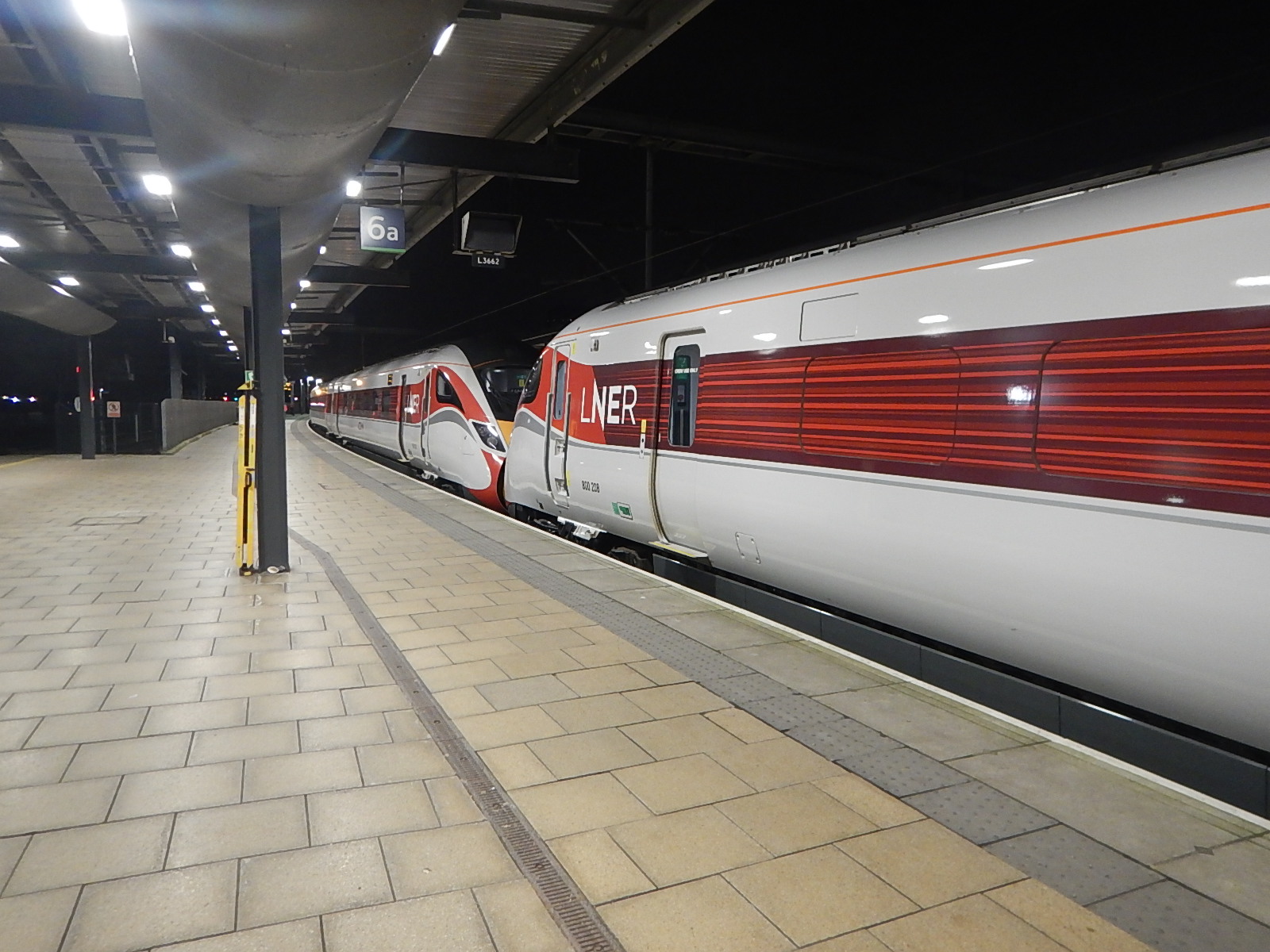
Train details were as follows.
- The train had left Kings Cross at 1533.
- It was formed of two five-car trains working as a pair.
- The train was perhaps a couple of minutes late, arriving in Leeds.
- The train arrives in Platform 6.
- The complete ten-car formation left for Harrogate at 1800.
My train for London, which was another pair of five-car trains arrived in Platform 8 at Leeds at 1806 from Harrogate. The train left on time at 1815.
At present there is no joining and splitting, but if this is used by LNER, the following timings are possible.
- 1533 – Two five-car trains working as a pair leave Kings Cross.
- 1749 – The train arrives in Platform 6 at Leeds and the two trains are uncoupled.
- 1800 – A second driver gets into the rear train and he drives it towards Harrogate.
- 1800 – The front train stays in the platform.
- 1806 – The Harrogate to London service arrives from Harrogate and couples to the train in Platform 6.
- 1815 – The pair of five-car trains leave for London.
I think it is all rather elegant.
- Harrogate gets a five-car Azuma service, which is probably sufficient for the town’s need.
- Five-car trains probably fit all platforms easily on the Harrogate Line, where stops are planned.
- Will platforms at Headingley station be extended, so that London trains can stop during Test matches?
- The inbound and outbound services to and from Harrogate pass each other on the double track.
- The rear train from London reverses and goes to Harrogate..
- The front train just fills up with new passengers and after coupling with the train from Harrogate goes back to London.
- As Class 800 trains are supposed to be able to couple and uncouple in under two minutes, there should be only a small delay.
- LNER are running two trains per hour between London and Leeds, but they could be running four separate services per hour Between London and Yorkshire.
But the biggest advantage is that the front train from London can go somewhere else! Bradford? Huddersfield?
Possible Destinations
These are possible destinations, distances and times.
- Bradford – 13 miles – 25 minutes
- Harrogate – 18 miles – 30 minutes
- Huddersfield – 17 miles – 35 minutes
- Hull – 20 miles – 60 minutes
- Ilkley – 16 miles – 26 minutes
- Middlesbrough – – 76 miles – 84 minutes
- Scarborough – 67 miles – 75 minutes
- Skipton – 26 miles – 43 minutes
- York – 25 miles – 30 minutes
Harrogate would probably pair well with Bradford, Huddersfield, Skipton or York
Note.
- I have added Ilkley although it doesn’t have a service to London.
- Bradford Forster Square and Skipton already have one train per day (tpd) from London via Leeds.
- Routes to Bradford Forster Square, Ilkley and Skipton are electrified.
- Network Rail has plans to electrify the routes to Huddersfield and York.
- There are at least thirty tpd between London and Leeds in both directions run by LNER.
Six tpd, as are now running to Harrogate and Lincoln to all six destinations would need just eighteen tpd to split and join at Leeds.
Stations That Could Be Served
All these stations could be given a direct service to and from London.
- Apperley Bridge – On the route to Bradford Forster Square – This is a new Park-and-Ride station.
- Batley – On the route to Huddersfield
- Ben Rhydding – On the route to Ilkley
- Bingley – On the route to Skipton
- Bradford Forster Square
- Burley-in-Wharfedale – On the route to Ilkley
- Burley Park – On the Harrogate Line
- Church Fenton – On the route to York
- Cononley – On the route to Skipton
- Cottingley – On the route to Huddersfield – Could be replaced by White Rose.
- Crossflats – On the route to Skipton
- Cross Gates – On the route to York
- Deighton– On the route to Huddersfield
- Dewsbury – On the route to Huddersfield
- East Garforth – On the route to York
- Frizinghall On the route to Bradford Forster Square
- Garforth – OLn the route to York
- Guiseley – On the route to Ilkley
- Harrogate – Terminus
- Headingley – On the Harrogate Line
- Hornbeam Park – On the Harrogate Line
- Horsforth – On the Harrogate Line
- Huddersfield – Terminus
- Ilkley – Terminus
- Keithley – On the route to Skipton
- Kirkstall Forge – On the route to Bradford Forster Square – This is a new Park-and-Ride station.
- Menston – On the route to Ilkley
- Micklefield – On the route to York
- Mirfield – On the route to Huddersfield
- Morley – On the route to Huddersfield
- Pannal – On the Harrogate Line
- Ravensthorpe – On the route to Huddersfield
- Saltaire – On the route to Skipton
- Shipley – On the route to Bradford Forster Square
- Skipton – Terminus
- Steeton & Silsden – On the route to Skipton
- Weeton – On The Harrogate Line
- York – Terminus
I have included every station, which the LNER trains pass, in this list.
But why not?
- These modern trains can make a station stop much quicker than older trains.
- They would improve the local service to Leeds.
- Some stations might be too small for five-car Azumas, that are 130 metres long.
- No electrification would be needed, but it could be added.
Leeds could become an even more important rail hub for North Yorkshire.
Gluten-Free Afternoon Tea In Bettys
Bettys of Harrogate is one of the best-known traditional tea rooms in Yorkshire, if not the whole of the North of England.
As today was the first weekday of LNER’s new Harrogate service, with six trains per day in both directions, I emailed an old friend and we agreed to meet up for an early afternoon tea, which is actually served from eleven in the morning.
These pictures show my tea, which was gluten-free.





It was certainly some of the best gluten-free sandwiches, cakes and scones, I’ve ever had.
Sadly,, my friend only had time for a coffee, as she was running late, due to a horse problem. But she did show me around Harrogate.
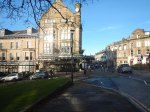
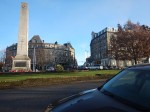
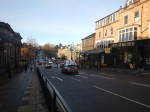




I have been before with C, but I didn’t remember anything except that we had a coffee in Bettys.
The Outward Journey To Harrogate
I took the 09:33 from Kings Cross and we arrived in Harrogate station a minute early at 12:16.
- The journey took two hours and 43 minutes.
- The train reversed direction at Leeds
- The only problem appeared to be that the seat allocation system on the train wasn’t working. Could this be becuae, the service appeared to be timetabled for two five-car trains working as a pair and a nine-car turned up?
- As it was only the second day of the service, I would expect some teething troubles.
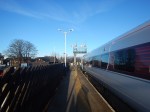
These pictures show the Azuma train at Harrogate station.


On the train, I met a lady who was going to see her son and his family near Thirsk. She was saying that Harrogate has better bus connections than Thirsk, so it is a more convenient station.
Train Length And Horsforth Station
As you can see from the pictures a nine-car train is a tight fit in Harrogate station.
Two trains call at Horsforth station, where a Google Map appesrs to show a platform only long enough for a five-car train.
The Return Journey From Harrogate
My return train was a five-car Azuma train.
- It left Harrogate at 15:36
- It arrived at Kings Cross at 18:32, which was a couple of minutes late.
- The journey time was two hours and 56 minutes.
I was also in Furst, so I got a delicious snack meal.

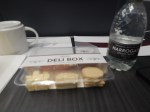

These Deli-Boxes certainly work as a snack for me.
As Adnams now do the 0.5% version of their Ghost Ship in cans, I would love to see trains carrying these beers or something similar.
Splitting And Joining At Leeds
My train didn’t split at Leeds on the way up, but according to one of the staff at Leeds, this is part of the final plan.
Consider.
- Nine-car trains are a tight fit at Harrogate.
- Nine-car trains don’t fit into Horsforth.
- Nine-car trains are needed for capacity reasons to and from Leeds.
So two five-car trains, running as a pair to Leeds, would be ideal. One train would serve Harrogate and the other perhaps Bradford or Huddersfield.
As I was tired and in a hurry, when we arrived in Kings Cross, I forgot to check if we were five- or ten-cars.
Ticket Costs
I have just looked up prices for the 14th of January 2020 for going North on the 0933 and South on the 17:36.
- Outbound in Standard costs £15.50
- Return in Standard costs £12.20
- First Class is £35 both ways.
All prices are with a Railcard.
Conclusion
The new Harrogate service is more than just a second destination in the Leeds Area.
- As the lady told me, Harrogate has good connections to a large part of Yorkshire.
- A difficult change, that can be slow is avoided at Leeds station.
- Another lady told me, that her husband used to commute to London from Harrogate three days a week and often missed the connection at Leeds.
- If you needed to go for say a business meeting in Harrogate or take your mother for lunch at Bettys on her birthday, the train service is ideal.
- The Azumas add style to a route that will also appreciate it.
I am certain that LNER have a winner.
Bettys
I would certainly recommend, their gluten-free afternoon tea.
I wonder how many will come up from London to have lunch or a meeting in Bettys and the other cafes and restaurants in Harrogate?
Note that Bettys and several other cafes and restaurants are an easy walk from Harrogate station.
My friend and I said that we’ll meet up again in the Spring. It will be interesting to see how the service is behaving.
Chaos Between London And Leeds
On Tuesday, I had booked myself between Kings Cross and Leeds on the 11:03 LNER train. My idea was to do a short round trip to Harrogate from Leeds before going across the Pennines to Manchester and sign in to my hotel, before going to see Ipswich play at Rochdale in the evening.
But it all went wrong, as someone decided to commit suicide and was hit by a train at Grantham.
Finally, I got to Leeds at around two, which was too late to carry out my plan.
- I just missed a Harrogate train and it was getting too dark for photographs.
- I eventually got a very crowded TrainsPennine Express to Manchester Victoria.
- My supper was just a gluten-free egg and waterfresh sandwich from Marks and Spencer.
At least, I’d only paid just under thirty pounds for my First Class ticket to Leeds, which was only six pounds more than I paid to cross the Pennines.
Conclusion
This is the second time recently, after Did Someone Try To Steal The Electrification?, when I’ve been seriously delayed by problems on the railways, which are nothing to do with the trains or train companies.
Staff at LNER told me that suicides are common in November, as Christmas approaches.
Short of putting a security guard every hundred metres along the railway, I don’t think there’s a certain way of stopping these incyursions.
 The Anonymous Widower