Riding On Hydrogen-Powered Buses And Trains
These posts describe my trips on hydrogen-powered buses
Note.
- The first bus starts from Birmingham City Centre.
- The second bus runs between Paddington station and John Lewis in Oxford Street in London.
This post describes my first ride in a hydrogen-powered train.
My First Ride In An Alstom Coradia iLint
This was through the German countryside between Hamburg and Cuxhaven.
Hydrogen Train To Be Demonstrated In Québec
The title of this post is the same as that of this article on the Railway Gazette.
These two paragraphs outline the project.
An Alstom Coradia iLint hydrogen fuel cell multiple-unit is to operate demonstration passenger services on the Chemin de fer de Charlevoix from June 17 to September 30.
The return service along the St Lawrence River between Parc de la Chute-Montmorency on the outskirts of Québec City and Baie-St-Paul is being organised by the province, short line operator Chemin de fer Charlevoix, tourist train operator Train de Charlevoix, hydrogen production technology company HTEC and Harnois Énergies, which will produce the green hydrogen at its Québec City site.
The Train de Charlevoix runs along the St. Lawrence River and is described on the web site as a unique experience.
I have felt for some time, that one of the uses of zero-carbon trains is as tourist trains, on quiet lines, where noise is probably not welcome.
It might even change the future of some lightly-used lines.
Hydrogen-Powered Vehicles And Trains In Tunnels
In writing about the Silvertown Tunnel, I started to wonder, if hydrogen vehicles will be allowed in the tunnel.
Consider.
- I don’t think diesel-powered trains are allowed in the Channel Tunnel and the tunnels of the link to London.
- Some tunnels don’t seem to allow hydrogen-powered vehicles.
- In a few years, hydrogen-powered buses, cars, locomotives, trains, trucks and vans will be more common, than they are today.
But help is at hand, with a co-operation between UK and EU agencies called HyTunnel-CS.
It is over fifty years now, since I worked as an instrument engineer in an ICI hydrogen factory at Runcorn. Truckloads of hydrogen were filled and despatched all over the UK. I may be wrong, but in all those intervening years, I can’t remember a hydrogen emergency on the UK’s roads.
I am confident, that we will achieve a safety regime, that allows hydrogen-powered vehicles and trains to be certified to pass through tunnels.
Research And Development Agreement Signed For Hydrogen Combustion Trains In US
The title of this post, is the same as that of this article on H2-View.
This is the opening paragraph.
Hydrogen combustion engine-powered trains are set to be at the centre of a collaborative research and development agreement between Argonne and Oak Ridge National Laboratories and Wabtec in a bid to decarbonise US rail.
The US is certainly calling up the heavy brigade in Argonne National Laboratory, Oak Ridge National Laboratories and Wabtec.
This appears to be the main objective.
It is hoped the team will be able to design train engines that will deliver the same power, range, and cost-effectiveness as current diesel technology.
The article states that there are 25,000 diesel locomotives in the United States, but because of exports to large parts of the world, including the UK, this research could clean up a lot more than just the United States.
The omens are good, in that both Cummins and Rolls-Royce mtu, who are two of the world’s big diesel engine manufacturers have successfully launched hydrogen combustion engines.
Ricardo Partners On Innovative Hydrogen-Electric Train Trial
The title of this post, is the same as that of this press release from Ricardo Rail.
This is the introductory paragraph.
Ricardo, in partnership with Scottish Power, Network Rail Scotland and the University of Leeds, have received next phase energy sector funding to develop their innovative Holistic Hydrogen Approach to Heavy Duty Transport (H2H) project, which aims to be a catalyst that will help the UK remove all diesel trains from the network by 2040.
Of all British companies, one of those with most to lose from world-wide decarbonisation and the phase out of petrol and diesel is Ricardo.
Ricardo plc is an unusual company, which started life as Engine Patents Ltd in 1915.
For over a hundred years, they have been the go-to company, if you have a tricky design problem, with your diesel or petrol engines or the transmission.
Wikipedia has a list of technologies that shaped the company’s first 100 years.
I used to know the grandson of the company’s founder; Sir Harry Ricardo and he told me, that virtually every modern diesel or petrol engine in the world, has been designed with help from one or more of the company’s patents.
So decarbonisation has meant that Ricardo has diversified and their innovative Holistic Hydrogen Approach to Heavy Duty Transport (H2H) project has been one of the results.
Alstom’s Coradia iLint Successfully Travels 1,175 km Without Refueling Its Hydrogen Tank
The title of this post, is the same as that of this press release from Alstom.
This paragraph describes the trip.
Alstom, global leader in smart and sustainable mobility, has demonstrated the effectiveness of its hydrogen powered solutions for long distance transportation. During a long-distance journey, an unmodified serially-produced Coradia iLint train covered 1,175 kilometres without refuelling the hydrogen tank, only emitting water and operating with very low levels of noise. The vehicle used for this journey comes from the fleet belonging to LNVG (Landesnahverkehrsgesellschaft Niedersachsen), the transport authority of Lower Saxony, and has been in regular passenger operation on the network of evb (Eisenbahnen und Verkehrsbetriebe Elbe-Weser GmbH) since mid-August. For the project, Alstom also partnered with the gas and engineering company Linde.
The distance is around 730 miles.
This paragraph describes the detailed route.
Starting in Bremervörde, the route took the Coradia iLint across Germany. From Lower Saxony, where the hydrogen train was built and developed by Alstom, it travelled through Hesse to Bavaria, all the way to Burghausen near the German-Austrian border before coming to a stop in Munich. Following this remarkable journey, the train will now head for the German capital. Several trips through Berlin are on the agenda as part of InnoTrans 2022, the premier International Trade Fair for Transport Technology, to be held from 20 to 23 September.
It looks to be a good test of a hydrogen-powered train.
It looks like Alstom believe that hydrogen trains can replace diesel ones, providing there is a source of hydrogen.
Cummins Fuel Cell Technology Powers Coradia iLint Fleet In Germany
The title of this post, is the same as that of this article on Green Car Congress.
This is the first paragraph.
Cummins is powering the world’s first fleet of hydrogen trains in Bremervörde, Lower Saxony, Germany. The Alstom Coradia iLint trains (earlier post) are outfitted with Cummins fuel cell systems and will run on the world’s first 100%-hydrogen train route in passenger operation. The first zero-emissions passenger trains in the 14-train fleet arrived in mid-summer.
I rode the prototype in March 2019 and wrote My First Ride In An Alstom Coradia iLint.
I took this picture at the time.

Note.
- The new fleet seem to have a slightly different front end with a snow plough, and a new colour scheme.
- According to the article, the Cummins fuel cell systems were assembled in Germany.
I have a few thoughts.
Cummins Fuel Cells
I must admit, I was a bit surprised to see that Cummins fuel cells are being used, as most other companies seem to be using Ballard.
But, having worked with Cummins on diesel engine testing and seen their thoroughness, I’m sure that their fuel cells will do a good job.
Is The Cummins Choice About Marketing?
Consider.
- Alstom has manufactured or assembled trains for the US market at Hornell, New York.
- Cummins is a large United States company.
- United States and Canadian railways are standard gauge, like most of Europe.
- United States and Canadian railways have a lot of track mileage without electrification.
- United States and Canadian railways use right hand running as does Germany.
- The Coradia iLint doesn’t need any electrification.
- The Coradia iLint has a range of 600–800 kilometres (370–500 mi) on a full tank of hydrogen.
I suspect that a German-specification, Coradia iLint might be possible to run in the United States and Canada, with only a different interior and signage.
If you are an Alstom train salesman in the United States, selling a commuter train to American cities and transit authorities, must be easier if the train has a substantial United States content.
I don’t think Cummins will be worried that the smart new train has their fuel cells, as it might help convert truck, van and car drivers to Cummins hydrogen technology.
I wouldn’t be surprised to learn, that Alstom got a premium deal from Cummins.
Are Hydrogen-Powered Trains Suited To North America?
Consider.
- There is a lot of track without electrification.
- Distances are long, which makes electrification expensive.
- Providing hydrogen for trains should be no more difficult than in Europe.
- In my experience hydrogen trains are a better passenger experience than diesel, in terms of noise and vibration.
I suspect that Alstom/Cummins could sell a lot of hydrogen-powered trains in the North America.
A Trip To Skegness
Last Thursday, I took a trip to Skegness to get out of the heat.
I took these pictures on the way.
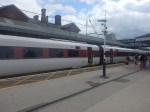
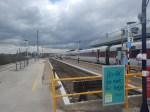
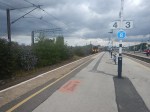




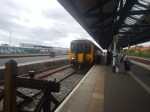









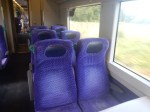













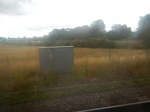




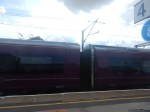
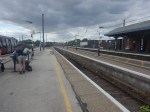
These are my observations and thoughts.
Changing At Grantham
A few minutes after getting off the LNER Azuma, the East Midlands Railway Class 156 train arrived at the opposite face of the wide platform.
Unlike some changes you get on trains in the UK, it was all rather painless and unhurried.
The change coming home was a bit slower, but there is a bar on the London platform, that serves a good selection of good beers.
Grantham To Skegness
The journey to Skegness took around an hour and a half and I arrived at 13:51.
Skegness Station
Skegness station is not the grandest, but it does have six platforms, which is probably a lot for just an hourly service from Nottingham and Grantham.
Skegness
I didn’t stay long, as it was surprisingly too cold and I hadn’t brought a coat.
Skegness To Grantham
The return trip was better, as the train was a more modern Class 170 train.
Surely, when East Midland Railways get their full quota of Class 170 trains, then the Poacher Line between Nottingham and Skegness will be one of the routes, where they will be used.
I also suspect that with 100 mph trains always running the service, as opposed to the Class 156 trains, which are only 75 mph units, there could be speed improvements on the line.
- Grantham and Skegness is 58 miles.
- There are a large number of level crossings.
An hour service between Grantham and Skegness could be possible and might generate more passengers.
Rolls-Royce MTU Hybrid PowerPacks
I wonder if this route could be improved by fitting the Class 170 trains with Rolls-Royce MTU Hybrid PowerPacks?
- The hybrid technology would have a lower fuel consumption and allow electric operation in stations.
- The prototype hybrid is already working on Chiltern Railways in a Class 168 train.
- The Class 168 train is an earlier version of the Class 170 train and they are members of the Turbostar family.
- Rolls-Royce are developing versions of these hybrid transmissions, that will work with sustainable fuels.
- As we have a total of 207 Turbostar trainsets, these could be a convenient way of cutting carbon emissions on long rural lines.
- As Rolls-Royce MTU are also developing the technology, so their diesel engines can run on hydrogen, it is not outrageous to believe that they could be on a route to complete decarbonisation of this type of train.
I believe that we could see hydrogen-hybrid Class 170 trains, with a Rolls-Royce badge on the side.
The Massive Greenhouse
I found that this was owned by Fountain Plants.
Is Lincolnshire going to grow the UK’s greens? Or at least give them a good start in life?
More greenhouses like this will enable the UK to create our carbon dioxide and eat it!
Siemens Bags First Fleet Order For Hydrogen Trains In Berlin-Brandenburg Region
The title of this post, is the same as that of this article on RailTech.com.
This is the first paragraph.
Niederbarnimer Eisenbahn (NEB) has ordered seven Mireo Plus H hydrogen trains from Siemens Mobility. Delivery is set for autumn 2024, with first operations on the Heidekrautbahn (RB27) network planned in December the same year.
It is a detailed article. about the Mireo Plus H.
Success For The Dartmoor Line
This article on Railnews is entitled Railway Braces For Weekend Changes.
The article flags up that rail timetables will change to the summer timetable and uses the Dartmoor Line where services will go hourly, as an example.
The article says this about the changes to the Dartmoor Line and the success of the restored service to Okehampton station.
One of the many changes includes the doubling of service frequencies on the recently-reopened Dartmoor Line between Exeter and Okehampton, where scheduled passenger trains were restored last November. From Sunday trains will be running every hour, and rail minister Wendy Morton visited Okehampton yesterday to celebrate the improvements.
The reopening is part of the government’s promise to ‘Restore your railways’, and the Okehampton line is the first practical example of this in action. The line was upgraded for £10 million less than the £40.5 million budgeted, and Network Rail said the route has proved ‘hugely popular’, because passenger numbers have been more than double than predicted, reaching an average of over 2,500 a week during the first 20 weeks. The number of passengers at nearby Crediton, where the Dartmoor Line joins services on the Tarka Line from Barnstaple, is also 39 per cent higher than it was before the pandemic.
I have some thoughts.
Reopening Of The Line
Network Rail can build projects on time and on budget, if they get the project management right.
Passenger Numbers Between Exeter And Okehampton
If 2,500 passengers per week can use the line in the winter, when there is only one train per two hours (tp2h), how many passengers will use the train, when there is an hourly service?
2,500 passengers per week, throughout the year would be 125,000 passengers per year and as surely the summer will be busier, I don’t think it will be an unreasonable figure.
Okehampton station car park appears to have around 300 spaces, so at 2,500 passengers per week, there might be a not too distant day, when it fills up.
Passenger Numbers At Crediton
I am not surprised that traffic at Crediton is up by 39 percent.
Consider.
- Pre-pandemic, Crediton station had one train per hour (tph) to and from Exeter.
- Post-pandemic, Crediton has three trains per two hours to and from Exeter.
It looks like the train frequency has been increased by 50 % and the number of passengers has increased by 39 %.
That surely is not surprising and passenger numbers might increase further when one tph are running between Exeter and both Barnstaple and Okehampton, if there are more possible passengers to attract.
Car parking at Crediton station may also be a problem, as there appears to be less than a hundred spaces.
Okehampton Parkway Station
Okehampton Parkway Station is likely to be built to the East of Okehampton. Wikipedia says this about the station.
Okehampton Parkway is a proposed railway station in Okehampton on the Dartmoor Line. The station would be part of the Devon Metro and has been described as a priority station. The station is to be sited at the A30 junction at Stockley Hamlet and would be sited at the Business Park at Okehampton as well as serving a further 900 homes close to the site.
Wikipedia, also says that Devon County Council has bought the site.
This must be one of the best sites to build a parkway station in the UK.
- It’s on the dual-carriageway A 30, between London and Cornwall.
- The good people of Devon seem to like to use trains given the passenger numbers at Okehampton and Crediton stations.
- Housing is being built nearby.
This Google Map shows Devon and Cornwall to the West of Okehampton and Barnstaple.
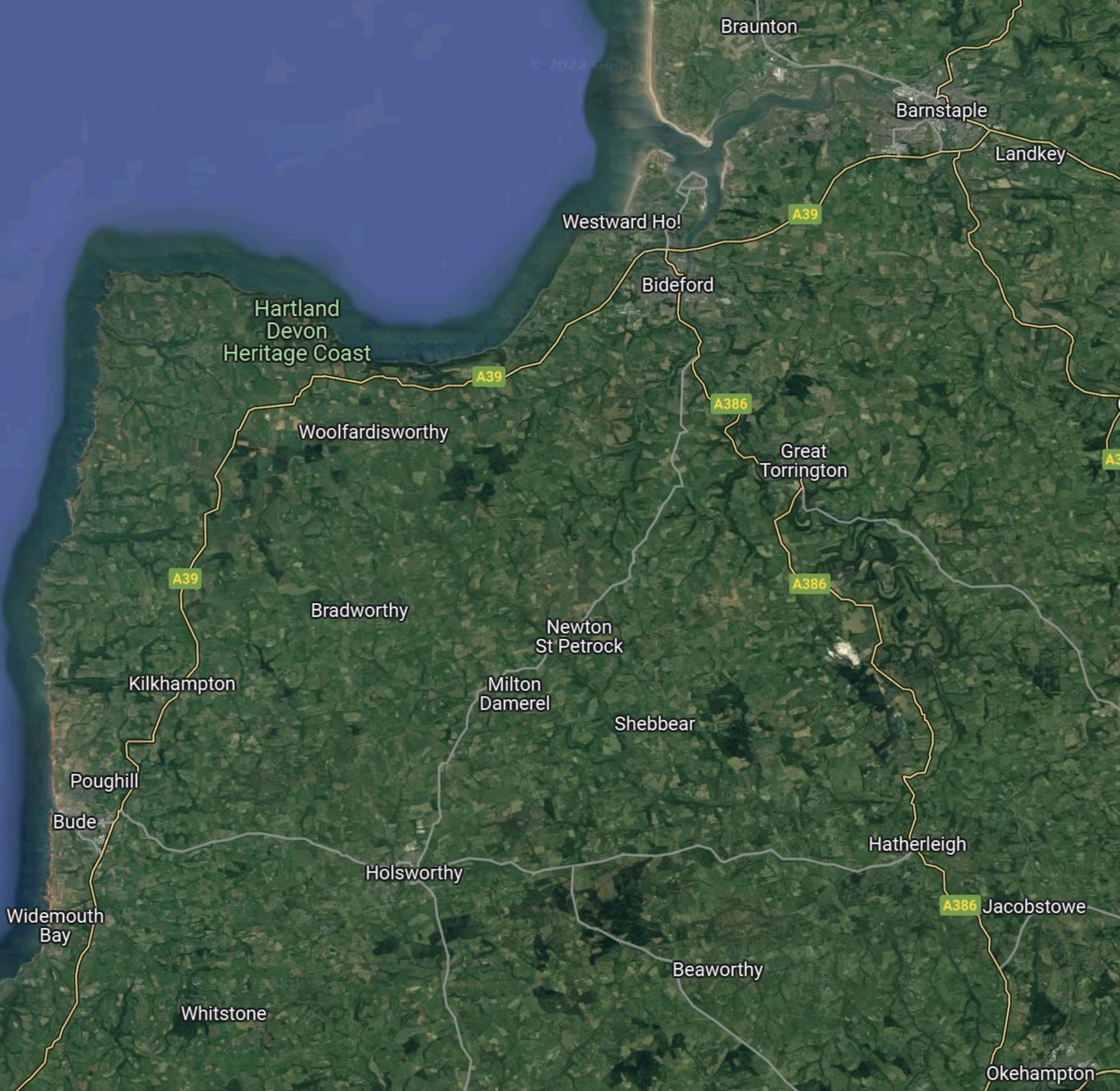
Note.
- Okehampton with two stations is in the South-East corner of the map.
- Barnstaple, which has a station, is in the North-East corner of the map.
- There are well-visited holiday resorts all along the cost including Ilfracombe, Westward Ho! and Bude.
It strikes me that if Devon put together a network of zero-carbon buses, it would be well-used and they could sell the area for zero-carbon holidays.
Rolling Stock
Currently, the Okehampton and Barnstaple services are operated by Class 150 trains.
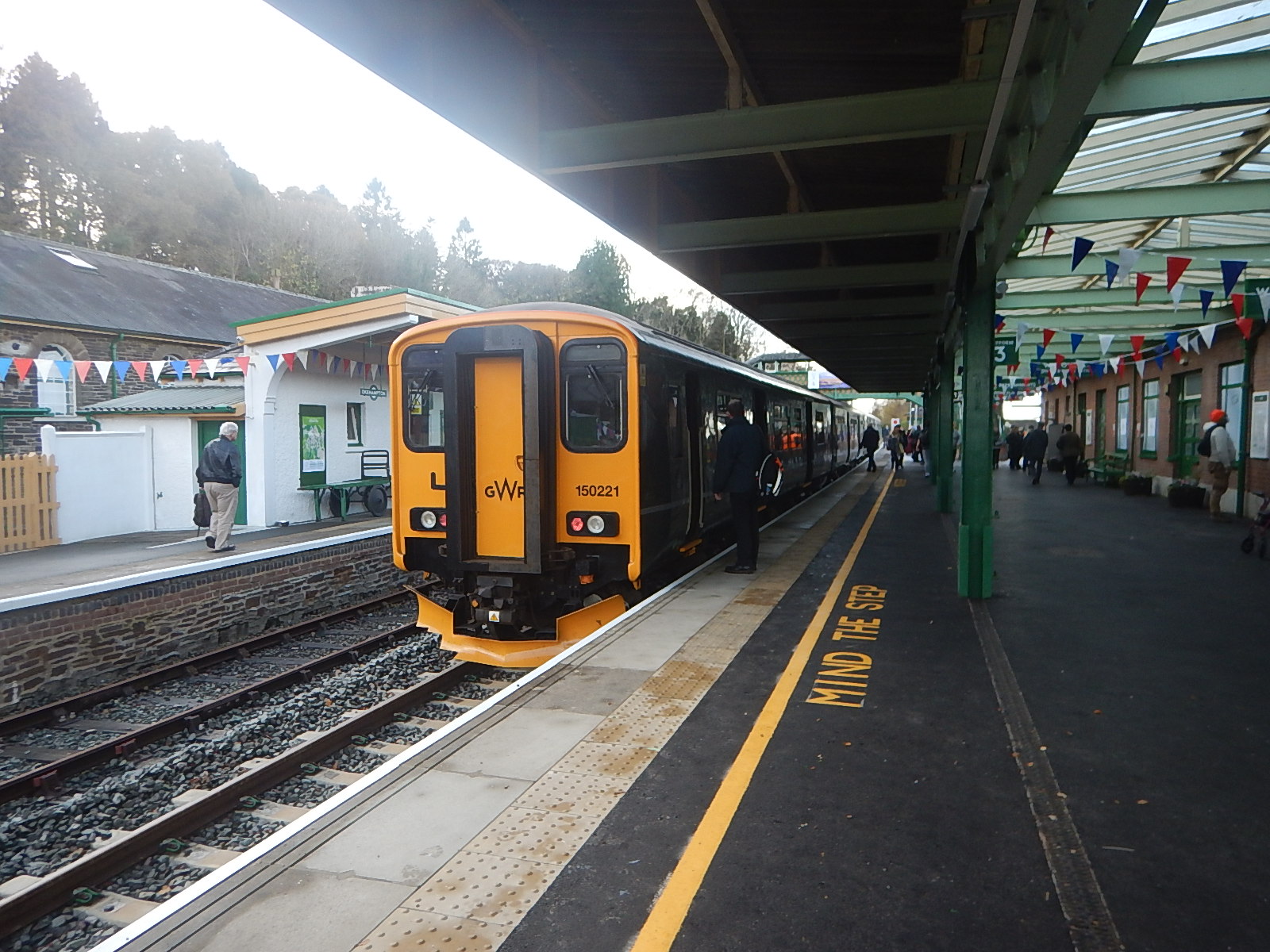
These are definitely not good enough, due to their age and diesel power.
The distances of the two services are as follows.
- Exeter and Barnstable – 39.5 miles
- Exeter and Okehampton – 25.5 miles
I feel that these routes could be handled by a battery-electric train like the Hitachi Regional Battery Train, which is shown in this Hitachi infographic.

Note.
- For these routes, the trains would probably be based on four-car Class 385 trains, with a top speed of 90 mph.
- Charging would be in Exeter.
- Charging may not be needed at Barnstaple and Okehampton as the routes are downhill.
If battery-electric trains can’t handle the routes, I’m sure hydrogen-powered trains could.
 The Anonymous Widower