Fracking Hell…Is It The End?
The title of this post, is the same as that of this article in yesterday’s Sunday Times.
The article is an interesting read.
These two paragraphs are key.
Activism by Extinction Rebellion and growing public concern about climate change have weakened the chances of an industry once expected to create 64,500 jobs ever getting off the ground.
Cuadrilla Resources, the fracking company most active in Britain, has in recent days been removing equipment from its sole operating site in Lancashire. Petrochemicals tycoon Sir Jim Ratcliffe has vowed to pursue shale gas exploration overseas because of “archaic” and “unworkable” regulations at home.
But I think it’s more complicated than that!
I sometimes go to lectures at the Geological Society of London and two stand were about fracking.
Two were about fracking.
Fracked or fiction: so what are the risks associated with shale gas exploitation?- Click for more.
This is a video of the lecture.
What Coal Mining Hydrogeology Tells us about the Real Risks of Fracking – Click for more.
This is a video of the lecture.
This is a must-watch video from a good speaker.
I have also written several posts about fracking, with some of the earliest being in 2012-2013.
I have just re-read all of my posts.
- In the posts I have tried to give information and at times, I have said we should start fracking.
- But we should only start if we know what we’re doing.
- In several places I ask for more research.
However, there are some interesting facts and inconvenient truths about fracking and natural gas in general.
- Russia earns about €300billion a year or twenty percent of its GDP from gas exports to Europe. See Should We Nuke Russia?.
- Putin backs the anti-fracking movement. See Russia ‘secretly working with environmentalists to oppose fracking’.
- Fracking techniques is used in the Scottish Highlands to obtain clean water from deep underground. See the second Geological Society of London video.
- About forty per cent of gas usage is to heat housing. See the second video.
- The eighteen percent of the UK population, who don’t have a gas supply are more likely to be in fuel poverty. See the second video.
- Scotland has more need for energy to provide heat. See the second video.
- Natural gas with carbon capture and storage has a similar carbon footprint to solar power. See the second video.
- Cowboy fracking, as practised in the United States, would not be allowed in the UK or the EU. See the second video.
- We have no historic earthquake database of the UK, which would help in regulation and research of fracking. See the second video.
- Fracking has brought down the price of gas in North America.
- In the United States fracked gas is cutting the need to burn coal, which produces more pollution and carbon dioxide to generate the same amount of energy. See A Benefit Of Fracking.
The article in the Sunday Times says pressure against fracking has started the shutdown of the industry in the UK.
But there is another big pressure at work.replacement of natural gas with hydrogen.
- This would reduce carbon emissions.
- It can be used as a chemical feedstock.
- It could be delivered using the existing gas network.
- The gas network could be changed from natural gas to hydrogen on a phased basis, just as the change from town to natural gas was organised around fifty years ago.
But it would mean that all gas users would need to change their boilers and other equipment.
Put yourself in the position of Jim Ratcliffe; the major owner and driving force behind INEOS.
INEOS needs feedstocks for chemical plants all over the world and affordable natural gas is one that is very suitable, as it contains two of the major elements needed in hydrocarbons and many useful chemicals; carbon and hydrogen.
If local sources are not available, then liquefied natural gas can be shipped in.
The Hydrogen Economy
It is possible to replace natural gas in many applications and processes with hydrogen.
- It can be used for heating and cooking.
- Important chemicals like ammonia can be made from hydrogen.
- It can be transported in existing natural gas etworks.
- Hydrogen can also replace diesel in heating and transport applications.
There is also a possibility of measures like carbon taxes being introduced, which using hydrogen would reduce.
There’s more in the Wikipedia entry for Hydrogen economy.
Have Jim Ratcliffe and others done their predicting and decided that the demand for locally sourced natural gas will decline and that the hydrogen economy will take over?
But there will need to be a readily available source of large amounts of hydrogen.
I used to work in a hydrogen factory at Runcorn, which was part of ICI, that created hydrogen and chlorine, by the electrolysis of brine. In some ways, the hydrogen was an unwanted by-product, back in the late 1960s, but similar and more efficient processes can be used to convert electricity into hydrogen.
The latest idea, is to cluster offshore wind farms around gas rigs in the seas around the UK. The electricity produced would be used to electrolyse water to extract the hydrogen, which would then be piped to the shore using existing gas pipelines.
It would be a way of reusing infrastructure associated with gas fields, that have no gas left to extract.
There would be no need to build an expensive electricity cable to the shore.
The Dutch, Danes and the Germans are proposing to build the North Sea Wind Power Hub, which is described like this in Wikipedia.
North Sea Wind Power Hub is a proposed energy island complex to be built in the middle of the North Sea as part of a European system for sustainable electricity. One or more “Power Link” artificial islands will be created at the northeast end of the Dogger Bank, a relatively shallow area in the North Sea, just outside the continental shelf of the United Kingdom and near the point where the borders between the territorial waters of Netherlands, Germany, and Denmark come together. Dutch, German, and Danish electrical grid operators are cooperating in this project to help develop a cluster of offshore wind parks with a capacity of several gigawatts, with interconnections to the North Sea countries. Undersea cables will make international trade in electricity possible.
Later, Wikipedia says that ultimately 110 GW of electricity capacity could be developed.
So could these planned developments create enough hydrogen to replace a sizeable amount of the natural gas used in Western Europe?
I suspect a lot of engineers, company bosses and financiers are working on it.
Conclusion
I have come to the following conclusions.
- Fracking for hydrocarbons is a technique that could be past its sell-by date.
- The use of natural gas will decline.
- INEOS could see hydrogen as a way of reducing their carbon footprint.
- The heating on all new buildings should be zero carbon, which could include using hydrogen from a zero-carbon source.
There are reasons to think, that electricity from wind-farms creating hydrogen by electrolysis could replace some of our natural gas usage.
Cummins And Hyundai To Collaborate For Fuel Cell Technology
The title of this post is the same as that of this article on Yahoo.
This collaboration between two big beasts could be good for both companies.
But it is just another sign, that those involved in heavy transport like Rolls Royce MTU are planning for a zero-carbon future.
Many pf these companies are finally responding.
Toyota Fuel Cell Buses Expected To Be Big Seller Of Hydrogen At 2020 Tokyo Olympics
The title of this post is the same as that of this article on Hydrogen Fuel News.
This is the first paragraph.
Toyota fuel cell buses are likely to be the clean transportation to take center stage at the upcoming Summer Olympic Games in Tokyo. The Japanese automaker intends to roll out 100 of these buses at the event to shuttle visitors between venues.
It would appear to be an exercise to publicise their technology.
If you read the Wikipedia entry for hydrogen fuel cell buses, no-one has yet built and deployed a fleet as large as Toyota’s for the Olympics.
The UK has two major deployments of hydrogen fuel cell double deck buses, under development, that I wrote about in the following posts.
- London To Have World-First Hydrogen-Powered Double-Decker Buses
- New Facility To Power Liverpool’s Buses With Hydrogen
In 2012, I went to a lecture about the New Routemaster Bus at the Institute of Mechanical Engineers, which I wrote about in The Development of the New Bus for London.
Wrightbus had obviously done their research and I got the impression, that designers can put heavy and bulky components all over the place in a modern double-decker bus.
On the New Routemaster components are placedas follows.
- The single traction motor is under the floor.
- The battery is under the front stairs.
- The Cummins diesel engine is half-way up the back stairs.
As the New Routemaster is based on a specially-designed chassis and not a standard one from Volvo or Mercedes, I wonder if to be successful, a hydrogen-powered bus needs a custom-designed chassis, to properly accommodate the various components.
- Traction motor
- Hydrogen tank
- Hydrogen fuel cell
- Battery
It certainly looks like Toyota have gone down this route. But then they can afford to for the Tokyo Olympics.
Hydrogen Truck Startup Nikola’s Valuation Jumps To $3 Billion With Investment From CNH Industrial
The title of this post is the same as that of this article on Forbes.
This is the first paragraph.
Nikola Motor, an Arizona startup that wants to shake up the trucking world with zero-emission hydrogen and battery-powered semis, is making progress toward a $1 billion fundraising goal to get its technology on the road as CNH Industrial committed to a quarter of that amount.
Note that CNH is the company, that owns Iveco.
If you read the whole article, you will find the following.
- Nikola Motor have a simple model based on hydrogen-powered trucks and a network of zero-carbon hydrogen filling stations.
- They are backed by large well-known companies like Bosch.
- Hydrogen-powered trucks should be lighter in weight than battery-powered ones like the Tesla Semi.
Given the financial backing seems to be flowing to Nikola Motor and the simple business model, I feel the company’s objectives may be attained.
Would Nikola Motor’s Business Model Work In The UK?
Consider.
- UK heavy trucks may be smaller than some American big rigs, but are very similar, if not the same to those used all over Europe, with the driver’s seat on the other side.
- Many large users of heavy trucks, deliver goods from a large distribution centre, seaport or airport.
- The UK’s power network is generally reliable and is increasingly powered by renewable sources.
- Parts of the UK are developing a hydrogen network.
Because of our electrical grid and hydrogen availability, Nikola Motor’s filling station concept in a densely-populated smaller UK, might be a modified version of that used in the wide-open spaces of North America.
I can’t see any reason why if Nikola Motor’s hydrogen-powered trucks are successful in North America, they wouldn’t be successful in the UK.
A Zero-Carbon Distribution System For A Large Retailer
Retailers like Asda, Marks & Spencer, Sainsbury, Tesco and many others distribute product to their stores by heavy truck, usually from a large distribution centre in the middle of the country.
Tesco even make a lot of fuss about creating less CO2, by moving goods up and down the country by rail.
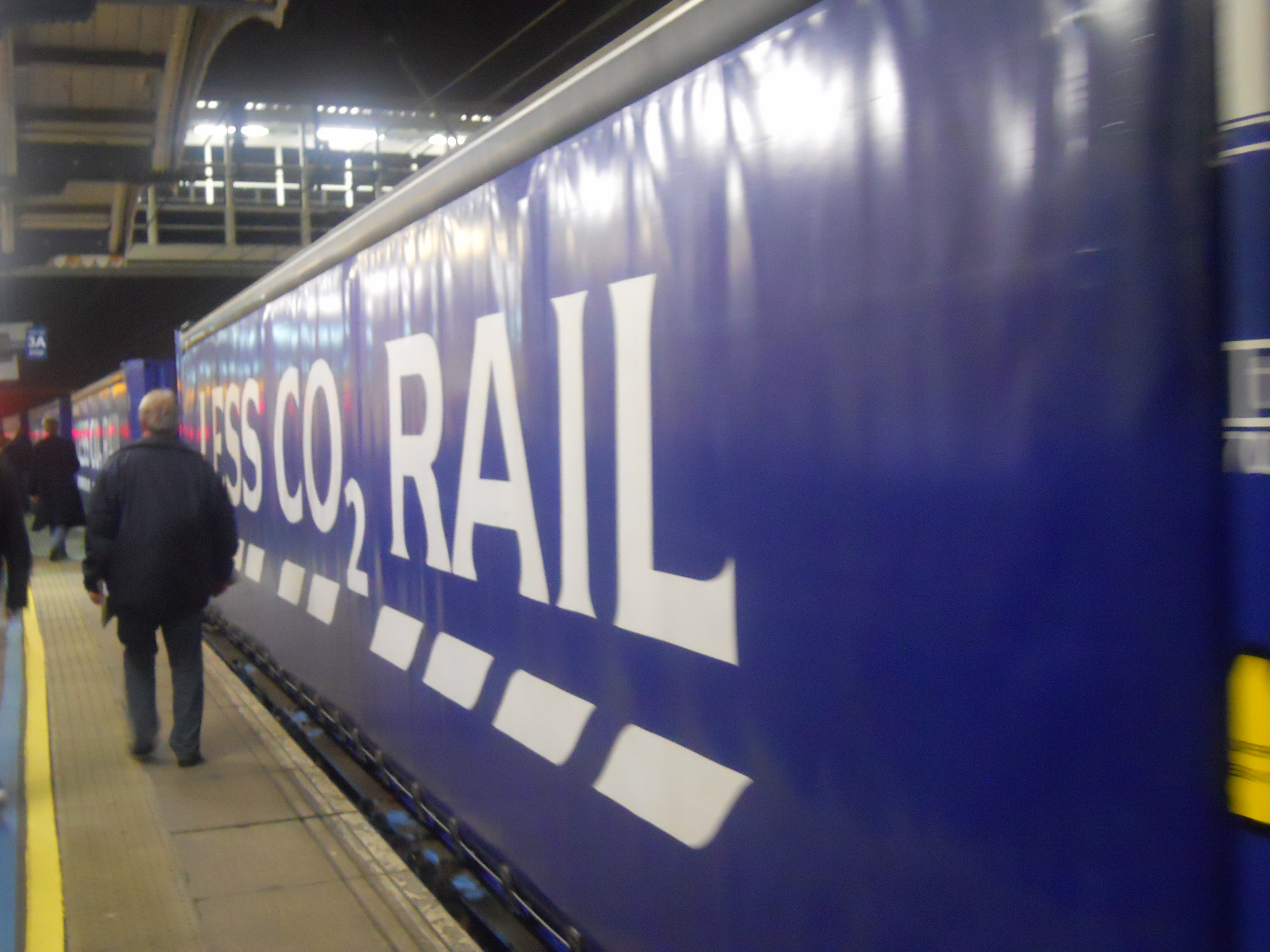
A Tesco-Branded Train
Because of retailers’ centralised model based on trucks from a distribution depot, using hydrogen-powered trucks, would not require a great change in the method or operation.
- Diesel traction would be replaced by hydrogen traction.
- The depot would have a hydrogen filling station, either using locally-created or piped hydrogen.
- Trucks would leave the depot with enough hydrogen to do a full delivery without refuelling and return to base.
But think of the advertising, if all the company’s heavy trucks displayed proudly that they were hydrogen-powered and emitted no CO2.
As supermarkets are like sheep and follow each others’ good ideas, if it worked for the first company, it wouldn’t be long before several others went down the hydrogen-powered route.
Would Hydrogen P{ower Work With Other Vehicle Fleets?
Many vehicles that I see in London and other large cities are members of large fleets based in those cities.
- Buses
- Taxis
- Delivery vans
- Cement trucks.
- Refuse trucks.
If cities are going to effectively ban diesel, there are only two alternatives battery and hydrogen.
Some vehicles will be better suited to battery power, especially if they could be charged overnight at the central depot, but other like double-deck buses and cement trucks may be better suited to hydrogen.
Cement trucks could be a niche market, where Nikola Motor could produce a very attractive package of trucks and a filling station.
Conclusion
If Nikola Motor is successful in the next few years, they could prove that hydrogenpowered vehicles are not a novelty, but a serious zero-carbon alternative, that is affordable.
From Green Gin To Sustainable Steel, Government Fires Up £140m Hydrogen Push
The title of this post, is the same as that of this article on Business Green.
The projects are wide ranging.
Green Gin
This is said about gin production by Orkney Distilling Ltd.
The successful projects feature a number of eye-catching initiatives, including the HySpirits project which has been awarded just under £200,000 to explore how the European Marine Energy Centre could work with local gin producer Orkney Distilling Ltd to convert its distillery from using liquid petroleum gas to hydrogen produced using renewable power.
I have been told that making whisky produces carbon dioxide. Does gin?
My source, also said carbon dioxide frpm Scotch whisky production has been used in the growing of soft fruit.
I found this article on The Courier, which is entitled Time To Cut Back On Whisky’s CO2 Emissions and this article on Scottish Capture and Storage, which is entitled Carbon Capture In The Heart Of The City.
Both are worth reading.
This is a paragraph from the second article.
The carbon capture process at this site is relatively simple, because the off gas from fermentation is already very pure in CO2. The process is not about enhancing CO2 concentration, but more about removing impurities. That involves a number of washing stages to remove water and impurities from the gas given off during fermentation, before it is compressed, stored, and eventually transported by road.
The article also says that the distillery produces four tonnes of carbon dioxide per day, which compared to the emissions of Chinese, Indian and United States coal-fired power stations is small beer, but it does show how in some industrial processes capturing the carbon dioxide can be relatively easy in some industrial processes and of a high quality for perhaps using in food and medical products.
But I can’t find a article connecting carbon dioxide from whisky to food production.
The Dolphyn Project
This is said about the Dolphyn Project.
A further £427,000 has been awarded to the Dolphyn project, which plans to mount electrolysers onto floating wind turbine platforms to produce hydrogen. One wind turbine alone has the potential to produce enough low carbon hydrogen to heat around 2,500 homes, fuel over 120-240 buses, or run eight to 12 trains,” the government said
I can’t find much on the Internet about this project, except this extract from this document on the Institution of Engineering and Technology web site, which is called Transitioning To Hydrogen.
The Deepwater Offshore Local Production of Hydrogen
(Dolphyn) project will consider large-scale retrofit
hydrogen production from offshore floating wind
turbines in deep water locations (Figure 19).This is a partnership project led by ERM with Engie,
Tractebel Engie and ODE. The project looks to
utilise the vast UK offshore wind potential to power
electrolysers to produce hydrogen from the water the
turbines float on. Large 10MW turbines consisting of
desalinisation technology and PEM electrolysers will
feed hydrogen at pressure via a single flexible riser to
a sub-sea manifold with other turbines’ lines. The gas
is then exported back to shore via a single trunkline.
A 20-by-20 array array would have a 4GW capacity,
producing sufficient hydrogen to heat more then 1.5
million homes.This project may include the offshore wind supply
of hydrogen supported with hydrogen from steam
methane reformation with carbon capture technology.
This project is well aligned to work the ACORN75
project at St Fergus.
Note that the project is talking about gigawatts of energy and providing enough hydrogen to heat millions of homes.
I think that the Dolphyn Project is badly named, as Google thinks you’re looking for projects about aquatic animals.
Gigastack
This is said about Gigastack.
Meanwhile, a consortium featuring Ørsted, ITM Power, and Element Energy is celebrating after securing just shy of £500,000 to help move forward with its Gigastack feasibility study, a six-month project to investigate the potential for delivering bulk, low-cost, and zero-carbon hydrogen.
There’s more here on this page on the ITM Power web site, where this is the first paragraph.
Project to demonstrate delivery of bulk, low-cost and zero-carbon hydrogen through gigawatt scale PEM electrolysis, manufactured in the UK.
As you’d expect from the name, they are looking at creating gigawatts of hydrogen.
Steel
This is said about steel.
The funding awards came as the government also launched a new call for evidence seeking views on how the government should structure and manage a planned £250m Clean Steel Fund. The government said the proposed fund would help the industry embrace clean technologies and move on to “a pathway that is consistent with the UK Climate Change Act” and its new net zero emission goal.
So what has hydrogen got to do with steel?
Search for hydrogen steelmaking on Google and you get lots of articles including this article from the Stockholm Environmental Institute, which is entitled Hydrogen Steelmaking For A Low-Carbon Economy.
This is a paragraph.
In the spring of 2016, three Swedish companies – LKAB (iron ore mining), SSAB (steel manufacturer) and Vattenfall (power utility) – announced their ambition to develop and implement a novel process for fossil-free steel production in Sweden. This process would use hydrogen (instead of coal) for the direct reduction of iron oxide/ore (H-DR), combined with an electric arc furnace (EAF). It would be almost completely fossil-free when the hydrogen is produced from electrolysis of water by use of renewable electricity. The concept is called Hydrogen Breakthrough Ironmaking Technology, or HYBRIT for short.
My knowledge of process engineering, tells me, that even if the Swedes don’t succeed, someone will and here in the UK, we’re ideally placed to take advantage, as we have the wind power to produce the hydrogen.
Conclusion
The future’s bright, the future’s green hydrogen!
, The North Sea can provide us with more than enough hydrogen, so long as the wind blows and there’s water to electrolyse..
Could A Battery- Or Hydrogen-Powered Freight Locomotive Borrow A Feature Of A Steam Locomotive?
Look at these pictures of the steam locomotive; Oliver Cromwell at Kings Cross station.




Unlike a diesel or electric locomotive, most powerful steam locomotives have a tender behind, to carry all the coal and water.
The Hydrogen Tank Problem
One of the problems with hydrogen trains for the UK’s small loading gauge is that it is difficult to find a place for the hydrogen tank.
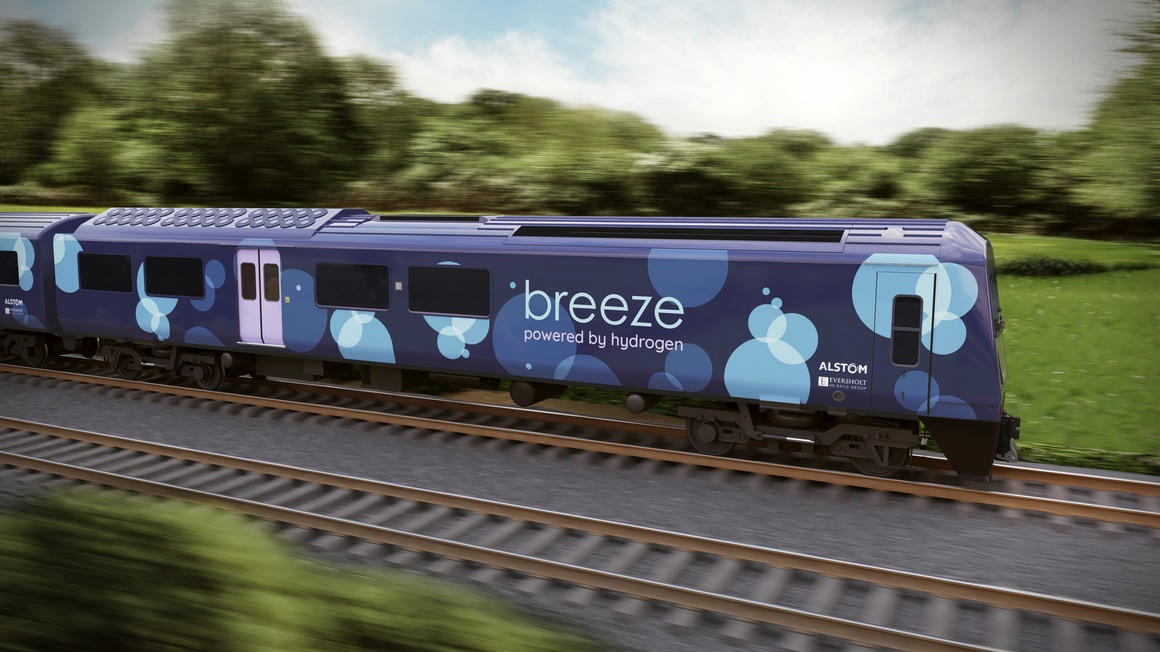
The picture is a visualisation of the proposed Alstom Breeze conversion of a Class 321 train.
- There is a large hydrogen tank between the driving compartment and the passengers.
- The passenger capacity has been substantially reduced.
- The train will have a range of several hundred miles on a full load of hydrogen.
The Alstom Breeze may or may not be a success, but it does illustrate the problem of where to put the large hydrogen tank needed.
In fact the problem is worse than the location and size of the hydrogen tank, as the hydrogen fuel cells and the batteries are also sizeable components.
An Ideal Freight Locomotive
The Class 88 locomotive, which has recently been introduced into the UK, is a successful modern locomotive with these power sources.
- 4 MW using overhead 25 KVAC overhead electrication.
- 0.7 MW using an onboard diesel engine.
Stadler are now developing the Class 93 locomotive, which adds batteries to the power mix.
The ubiquitous Class 66 locomotive has a power of nearly 2.5 MW.
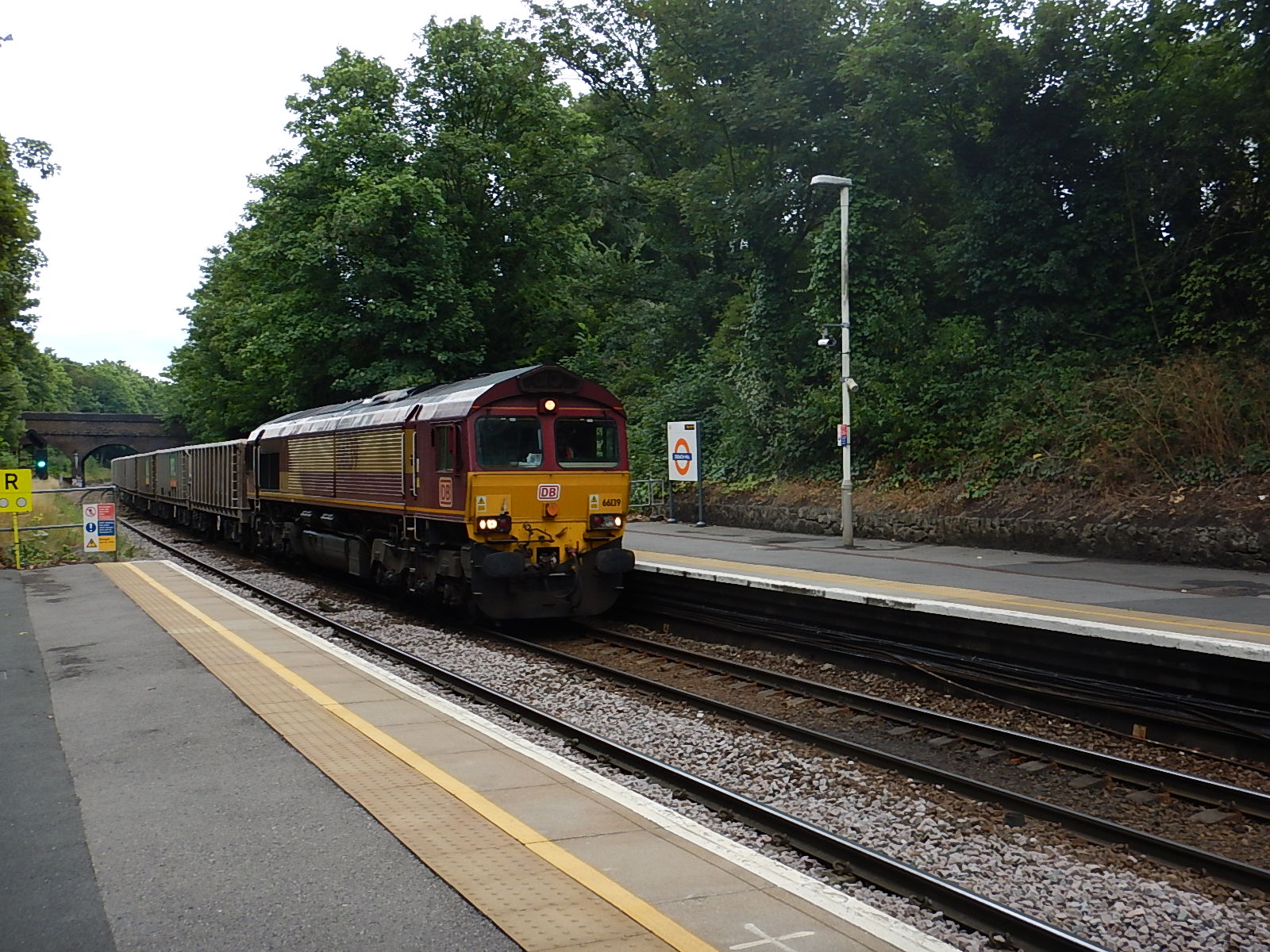
But as everybody knows, Class 66 locomotives come with a lot of noise, pollution, smell and a substantial carbon footprint.
To my mind, an ideal locomotive must be able to handle these freight tasks.
- An intermodal freight train between Felixstowe and Manchester.
- An intermodal freight train between Southampton and Leeds.
- A work train for Network Rail
- A stone train between the Mendips and London.
The latter is probably the most challenging, as West of Newbury, there is no electrification.
I also think, that locomotives must be able to run for two hours or perhaps three, on an independent power source.
- Independent power sources could be battery, diesel, hydrogen, or a hybrid design
- This would enable bridging the many significant electrification gaps on major freight routes.
I feel that an ideal locomotive would need to meet the following.
- 4 MW when running on a line electrified with either 25 KVAC overhead or 750 VDC third-rail.
- 4 MW for two hours, when running on an independent power source.
- Ability to change from electric to independent power source at speed.
- 110 mph operating speed.
This would preferably be without diesel.
Electric-Only Version
Even running without the independent power source, this locomotive should be able to haul a heavy intermodal freight train between London and Glasgow on the fully-electrified West Coast Main Line.
I regularly see freight trains pass along the North London Line, that could be electric-hauled, but there is a polluting Class 66 on the front.
Is this because there is a shortage of quality electric locomotives? Or electric locomotives with a Last Mile capability, that can handle the routes that need it?
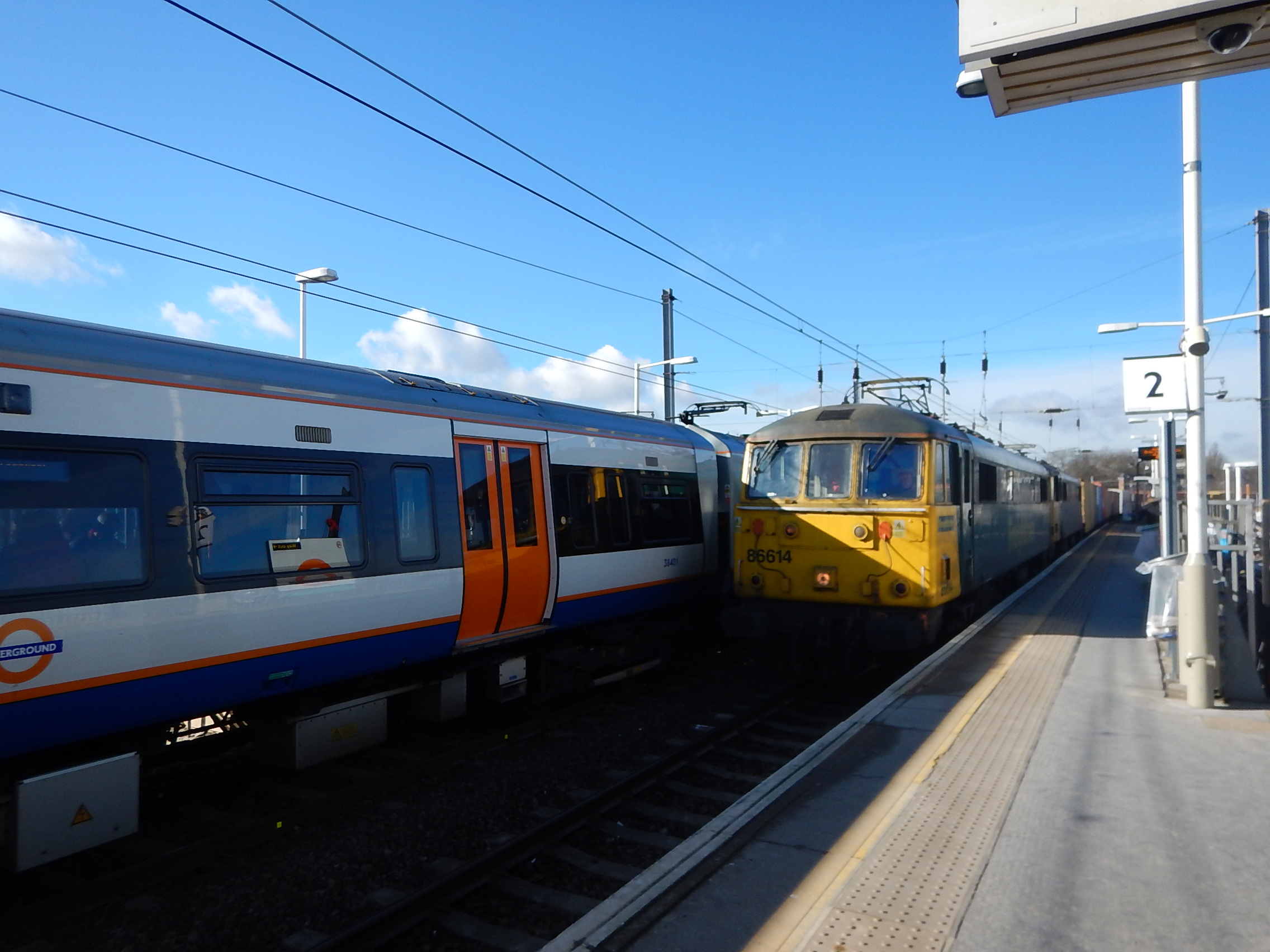
If we have to use pairs of fifty-year-old Class 86 locomotives, then I suspect there are not enough electric freight locomotives.
Batteries For Last Mile Operation
Stadler have shown, in the design of the Class 88 locomotive, that in a 4 MW electric locomotive, there is still space to fit a heavy diesel engine.
I wonder how much battery capacity could be installed in a UK-sized 4 MW electric locomotive, based on Stadler’s UK Light design.
Would it be enough to give the locomotive a useful Last Mile capability?
In Thoughts On A Battery Electric Class 88 Locomotive On TransPennine Routes, I estimated that a Class 88 locomotive could replace the diesel engine with a battery with a battery capacity of between 700 kWh and 1 MWh.
This would give about fifteen minutes at full power.
Would this be a useful range?
Probably not for heavy freight services, if you consider that a freight train leaving the Port of Felixstowe takes half-an-hour to reach the electrification at Ipswich.
But it would certainly be enough power to bring the heaviest freight train out of Felixstowe Port to Trimley.
If the Felixstowe Branch Line were to be at least partially electrified, then I’m sure a Class 88 locomotive with a battery instead of the diesel engine could bring the heaviest train to the Great Eastern Main Line.
- Electrifying between Trimley and the Great Eastern Main Line should be reasonably easy, as much of the route has recently been rebuilt.
- Electrifying Felixstowe Port would be very disruptive to the operation of the port.
- Cranes and overhead wires don’t mix!
I wonder how many services to and from Felixstowe could be handled by an electric locomotive with a Last Five Miles-capability, if the Great Eastern Main Line electrification was extended a few miles along the Felixstowe Branch Line.
As an aside here, how many of the ports and freight interchanges are accessible to within perhaps five miles by electric haulage?
I believe that if we are going to decarbonise UK railways by 2040, then we should create electrified routes to within a few miles of all ports and freight interchanges.
Batteries For Traction
If batteries are to provide 4 MW power for two hours, they will need to have a capacity of 8 MWh.
In Thoughts On A Battery Electric Class 88 Locomotive On TransPennine Routes, I said this.
Traction batteries seem to have an energy/weight ratio of about 0.1kWh/Kg, which is increasing with time, as battery technology improves.
This means that a one tonne battery holds about 100 kWh.
So to hold 8 MWh or 8,000 kWh, there would be a need to be an 80 tonne battery using today’s technology.
A Stadler Class 88 locomotive weighs 86 tonnes and has a 21.5 tonne axle load, so the battery would almost double the weight of the locomotive.
So to carry this amount of battery power, the batteries must be carried in a second vehicle, just like some steam locomotives have a tender.
But suppose Stadler developed another version of their UK Light locomotive, which was a four-axle locomotive that held the largest battery possible in the standard body.
- It would effectively be a large battery locomotive.
- It would share a lot of components with the Class 88 locomotive or preferably the faster Class 93 locomotive, which is capable of 110 mph.
- It would have cabs on both ends.
- It might have a traction power of perhaps 2-2.5 MW on the battery.
- It would have a pantograph for charging the battery if required and running under electrification.
- It might be fitted with third rail equipment.
It could work independently or electrically-connected to the proposed 4 MW electric locomotive.
I obviously don’t know all the practicalities and economics of designing such a pair of locomotives, but I do believe that the mathematics say that a 4 MW electric locomotive can be paired with a locomotive that has a large battery.
- It would have 4 MW, when running on electrified lines.
- It would have up to 4 MW, when running on battery power for at least an hour.
- ,It could use battery-power to bridge the gaps in the UK’s electrification network and for Last Mile operation.
A very formidable zero-carbon locomotive-pair could be possible.
The battery locomotive could also work independently as a 2 MW battery-electric locomotive.
Hydrogen Power
I don’t see why a 4 MW electric locomotive , probably with up to 1,000 kWh of batteries couldn’t be paired with a second vehicle, that contained a hydrogen tank, a hydrogen fuel-cell.and some more batteries.
It’s all a question of design and mathematics.
It should also be noted, that over time the following will happen.
- Hydrogen tanks will be able to store hydrogen at a greater pressure.
- Fuel cells will have a higher power to weight ratio.
- Batteries will have a higher power storage density.
These improvements will all help to make a viable hydrogen-powered generator or locomotive possible.
I also feel that the same hydrogen technology could be used to create a hydrogen-powered locomotive with this specfication.
- Ability to use 25 KVAC overhead or 750 VDC third-rail electrification.
- 2 MW on electrification.
- 1.5 MW on hydrogen/battery power.
- 100 mph capability.
- Regenerative braking to batteries.
- Ability to pull a rake of five or six coaches.
This could be a very useful lower-powered locomotive.
What About The Extra Length?
A Class 66 locomotive is 21.4 metres long and a Class 68 locomotive is 20.3 metres long. Network Rail is moving towards a maximum freight train length of 775 metres, so it would appear that another twenty metre long vehicle wouldn’t be large in the grand scheme of things.
Conclusion
My instinct says to be that it would be possible to design a family of locomotives or an electric locomotive with a second vehicle containing batteries or a hydrogen-powered electricity generator, that could haul freight trains on some of the partially-electrified routes in the UK.
Cadent Launches Report Mapping Out Routes To Hydrogen Fuelled Vehicles On UK Roads
The title of this post is the same as that of this article on Gasworld.
This is the first paragraph.
A roadmap using hydrogen to decarbonise transport, particularly commercial transport, in the North West of the UK, has been unveiled by the country’s leading gas distribution network Cadent.
The article makes some points about hydrogen-powered transport.
- Using Cadent’s network to deliver hydrogen, rather than tube trailers, massively reduces the cost and makes fuel cell electric cars (FCEVs) available to the general public for around the same price as a battery electric vehicle or a conventional diesel car.
- FCEVs can travel further than battery electric vehicles and take the same time to refuel as a conventional petrol car.
- Grid-supplied hydrogen is the most cost-effective way of supplying hydrogen transport fuel at the required volume – up to six times cheaper than if delivered by trailer and 70 per cent cheaper than electrolysis.
Cadent‘s interest in all this, is not about selling gas, as their interest and income is totalling in transporting gas from producers to end users. So they don’t care whether they transport natural gas or hydrogen.
Hydrogen Storage
The article also discloses plans of INOVYN, a wholly owned subsidiary of INEOS, to develop a grid-scale hydrogen storage facility.
It will be in salt caverns in mid-Cheshire.
It will be able to hold 2,000 tonnes of hydrogen.
It is cheaper to store hydrogen in salt caverns, than on the surface.
The salt caverns have been used to store gas for decades.
This is a quote from the INOYN spokesman.
Storage is a vital component of delivering a viable hydrogen energy system in the UK.
I only had an indirect quick glimpse underground, when I worked at ICI in the area around 1970, but ICI’s salt expert, said they had enough salt in Cheshire to last 9,000 years at the current rate of extraction.
Salt in Cheshire, is a unique geological formation, that is very valuable to the UK and it looks like in the future, thar could enable hydrogen power.
Hydrogen Generation
The hydrogen will still need to be produced. Wikipedia has an entry caslled Hydrogran Production, which is fairly dismissive of electrolysis.
But in my view, hydrogen could be produced by electrolysis using wind power, as other methods like steam reforming of methane produce carbon-dioxide.
I particularly like the idea of building wind farms in clusters around offshore gas platforms, that have extracted all the gas from the fields, they were built to serve.
- Instead of running electricity cables to the wind farms, hydrogen is produced by electrolysis on the platform and this is transported to the shore using the same gas infrastructure, that brought the natural gas onshore.
- This could enable wind-farms to be developed much further offshore.
- If carbon capture is ever successfully made to work, the existing gas pipe could also be used to transfer the carbon dioxide offshore for storage in worked-out gas fields.
- The pipe between platform and shore could easily be made reversible, carrying hydrogen one way and carbon dioxide the other.
All of the technology required would also appear to be fully developed.
Conclusion
I am convinced that in the next few years, a hydrogen gas network can be created in parts of the UK.
The North West has advantages in becoming one of the first parts of the UK to have an extensive hydrogen network.
- It has the means to produce hydrogen gas.
- It has large wind farms in Liverpool Bay.
- There are worked-out gas fields, that might in the future be used for carbon storage.
- If INOVYN can store large quantities of hydrogen, this is a big advantage.
The biggest problem would be converting large numbers of houses and commercial premises from natural gas to hydrogen.
But, we’ve been through that process before, when we changed from town gas to natural gas in the 1960s and 1970s.
Should We Remove Gas From Our Houses?
I only use gas for heating.
- I feel that naked flames are not a good idea to have anywhere near people, as they can produce oxides of nitrgen, that causes health problems.
- Gas cookers are also a major cause of household fires.
- Technology is moving against cooking with gas, as more more to electric induction hobs.
- If you are fitting a new gas boiler, make sure it can be connected to hydrogen.
When I buy my next property, it will be all electric.
 The Anonymous Widower