Newcastle Fans Had Few Trains To London
Yesterday, I felt LNER and Lumo would be cashing in, with Newcastle United playing at Wembley.
The finalists were settled on the 6th of February, so that surely gave Network Rail time to reorganise any engineering works so that LNER and Lumo could be running the maximum number of Newcastle United supporters to London.
Lumo didn’t run at all to London on the Sunday and all LNER trains went via the Stadium of Light.
I would have thought, that Network Rail’s inflexibility cost LNER and Lumo a good publicity opportunity.
Now That’s What I Call A Station!
Newsham station on the Northumberland Line opens on Monday and I was alerted to the design of the station, by this page on the Northumberland Chronicle.
I clipped this drone view of the station from the page.
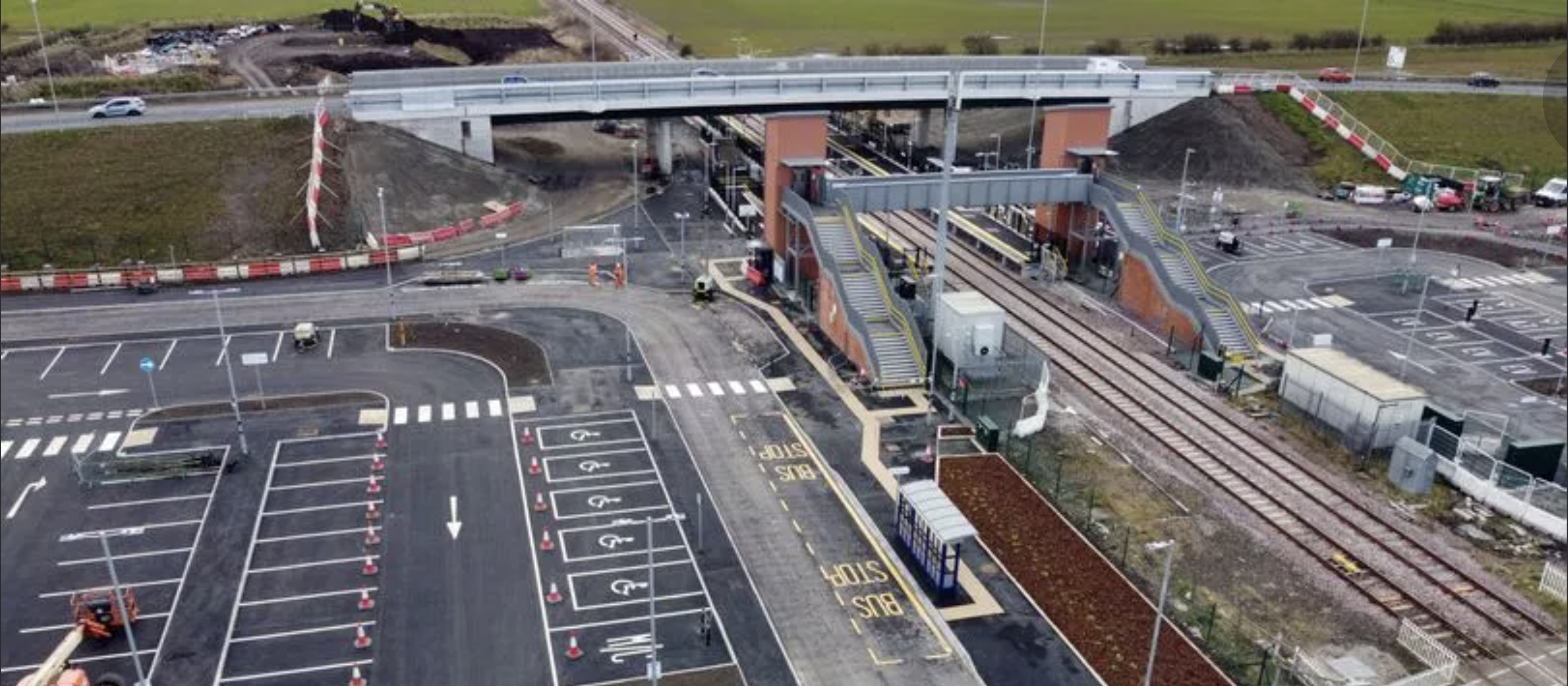
Note.
- It almost looks like two stations, one for the Northbound line and one for the Southbound.
- There appears to be a by-pass for those not wanting to visit the station.
- There is a traditional step-free bridge with lifts.
- Each half-station appears to have bus stops, car parking, disabled car-parking and a drop-off lane.
- There is a well-marked walking route to bring travellers to the station.
This Google map shows the layout of the station.

To say it’s different is an understatement. But I like it and I can’t wait to jump on a Lumo to go and see it, in all its new reality.
I hope all those connected with the design and architecture have got evening wear, as given the awards they’re going to win, they’ll need them.
DfT Objects To Eight Open Access Applications
The title of this post is the same as that of an article in the March 2025 Edition of Modern Railways.
Surprise! Suprise! There are no prizes for innovation and risk, to be given out by Starmer’s Government Of All The Lawyers.
- Alliance Rail – Cardiff and Edinburgh – opposed
- Grand Central – London and York – opposed
- Hull Trains – London and Hull – opposed
- Hull Trains – London and Sheffield – opposed
- Lumo – London and Glasgow – opposed
- Lumo – London and Rochdale – opposed
- Virgin Trains – London and Liverpool – opposed
- Virgin Trains – London and Glasgow – opposed
Wrexham, Shropshire and Midlands Railway – London and Wrexham – supported.
Splitting And Joining Of Trains
Several of the objections, seem to be on grounds of capacity.
So why not pair up some services and split and join at a convenient station?
Hull Trains – A Hull and a Sheffield service could start together in London and split in Retford.
Lumo – A Newcastle and an Edinburgh service could start together in London and split in Newcastle.
Lumo – An Edinburgh and a Glasgow service could start together in London and split in Edinburgh.
Virgin Trains – A Liverpool and a Glasgow service would start together in London and split in Crewe.
A Bad Decision
I believe the Government’s decision is a very bad one.
At the weekend I wrote Sutton Station To Gatwick Airport By Hydrogen-Powered Bus, about my trip in a hydrogen-powered bus to Gatwick-Airport.
- The quality, performance and roadholding of this new zero-carbon bus was superb.
- I can’t wait to try out Wrightbus’s new hydrogen-powered coach in the next twelve months.
- In the future, I can see high speed hydrogen coaches steaming along the motorways of the UK and Ireland.
Hydrogen-powered coaches will do for cheap travel on the roads of these islands, what Ryanair and easyJet for did above our heads.
Sutton Station To Gatwick Airport By Hydrogen-Powered Bus
In Central London and Gatwick Airport For Free On A Freedom Pass, I indicated it was possible to go to Gatwick Airport for nothing, if you had a Freedom Pass, which is also a free bus pass for England.
This morning I took public transport to Gatwick Airport by this route.
- I took a 43 bus to London Bridge station.
- This bus terminates in the bus station in front of the train station, so it was a simple step-free entry into the part of the station, where Southern Trains terminate.
- I took a Southern Train to Sutton station.
- I then took a Metrobus 420 bus from Sutton station to Gatwick Airport.
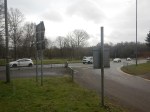
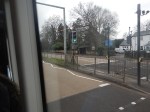
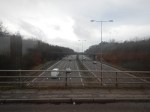
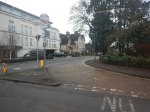
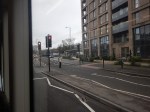
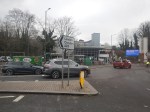
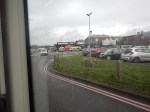
These pictures show the journey.





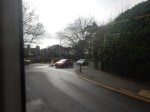
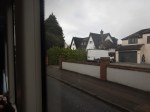
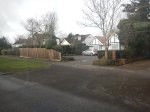
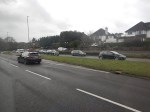
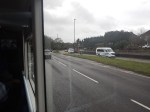


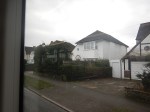
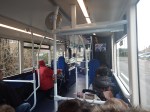

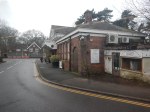












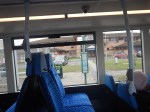

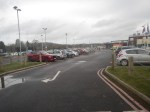
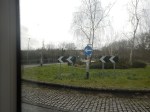


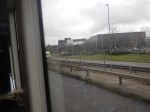
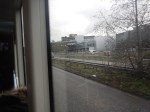
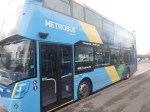
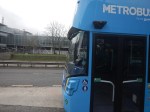
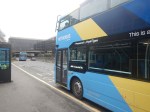

Note.
- The bus stop is directly outside the entrance to Sutton station.
- Sutton station is step-free.
- The information on the Metrobus’s buses at Sutton station is poor.
- The bus had a 74 number plate, so was registered after September 1st, 2024.
- The bus said it was a hydrogen bus.
- The seats were comfortable with leather facings.
- The route was mainly through rural Surrey.
- There were sections of dual-carriageway road with continuous 40 mph running.
- There were a number of steep hills.
- Previously, I have been told by a Bradford Councillor, that the City of Bradford is going for hydrogen-powered buses , as the city has lots of steep hills.
- The unusual Reigate and Redhill War Memorial on the A25.
- The route goes past Hadworth, Reigate and Redhill stations.
- Just before Gatwick Airport, the bus called at East Surrey Hospital.
I have some thoughts.
Does This Hydrogen Bus Have Almost The Quality Passengers Would Expect From A Coach?
Consider.
- I was very impressed with the quality of the bus and its fittings.
- But its biggest assets were the ride and mouse-quiet noise and being vibration-free.
- It was certainly up there, with the best British buses on UK roads.
- Strangely, I never rode in any of London’s Green Line coaches of the 1950s and 1960s.
But as Wrightbus are selling hydrogen-powered single-decker buses to the Germans, the quality must be of a certain standard.
The Performance Of The Bus
I would sum up the bus as follows.
- The bus didn’t hang around and it was well-driven.
- On much of the dual-carriageway, the bus appeared to be at the maximum speed limit of 40 mph
- Ride and seats were comfortable.
- There was virtually no vibration.
- At times, you almost felt you were in a top-of-the-range coach.
- The running gear is from German company ZF, which certainly doesn’t hinder the ride.
- The journey from Sutton to Gatwick Airport is twenty miles and took about ninety minutes.
I would feel that if Wrightbus design their CoachH2 chassis to the same standard of this bus, they’ll have a difficulty to meet sales demand.
Wrightbus Hydrogen Buses For My Local Bus Route 141
Consider.
- The 141 bus route is my local bus, which gets me to Moorgate, Bank, London Bridge and Manor House.
- The length of the full route is twenty miles and it takes about an hour to go from London Bridge station to Palmers Green.
- The route is currently run by older Wrightbus hybrid diesel-electric buses.
- I suspect that modern hydrogen buses could last almost all day on one fill of hydrogen, with perhaps a top-up at lunchtime.
They would have no difficulty handling the route and would greatly increase the customers current rock-bottom satisfaction.
Hydrogen Buses In Leafy Suburbs
- Where I live, is not particularly leafy or a suburb.
- But I seems to remember, when I moved here, that some of my neighbours complained about the noise of the 76 bus route.
- So Transport for London put on some quieter buses.
I would expect, that Metrobus might use the mouse quieter hydrogen buses in post areas, to avoid annoyance.
Hydrogen Buses As Route Extenders
Effectively, the Metrobus route 420 is acting as a route extender for Southern and Thameslink services coming South from London.
As it is a quality bus, that gets a move on, I suspect that some travellers, who previously took a train to Sutton, Tadworth, Reigate, Redhill or other stations and were then picked up, may take a hydrogen bus to a more convenient bus stop.
Because of the long range of a hydrogen bus or coach, zero-carbon performance, should be achieved without any range anxiety for passengers, driver or bus company.
Onward From Oakhampton Parkway Station
Consider.
- In 2014, storms destroyed the railway at Dawlish in Devon.
- As there was no alternative route, the storms cut everything west of Dawlish off from the rest of the UK.
- It is now likely, that a Park-and-Ride station will be built close to Okehanpton, which commuters would use for travel to Exeter.
- The main road to the South-West ; the A 30 will pass nearby.
It would appear, that Okehampton Interchange station could be used, if Nepture decided to show his power again.
Hopefully, the emergency plan will scare Nepture away.
Lumo To The Scottish Borders
Consider.
- Lumo have applied to extend some of their Edinburgh services to Glasgow.
- Talking to a friend in the Scottish Borders, they said, that travelers drive to Newcastle or Morpeth to catch Lumo for London.
- Four or five Lumo services every day stop in each direction at Morpeth station.
- So would it be sensible to run a bus or coach through the Scottish Borders to connect with the Lumo services?
This Google Map shows Morpeth in relation to the Border towns.
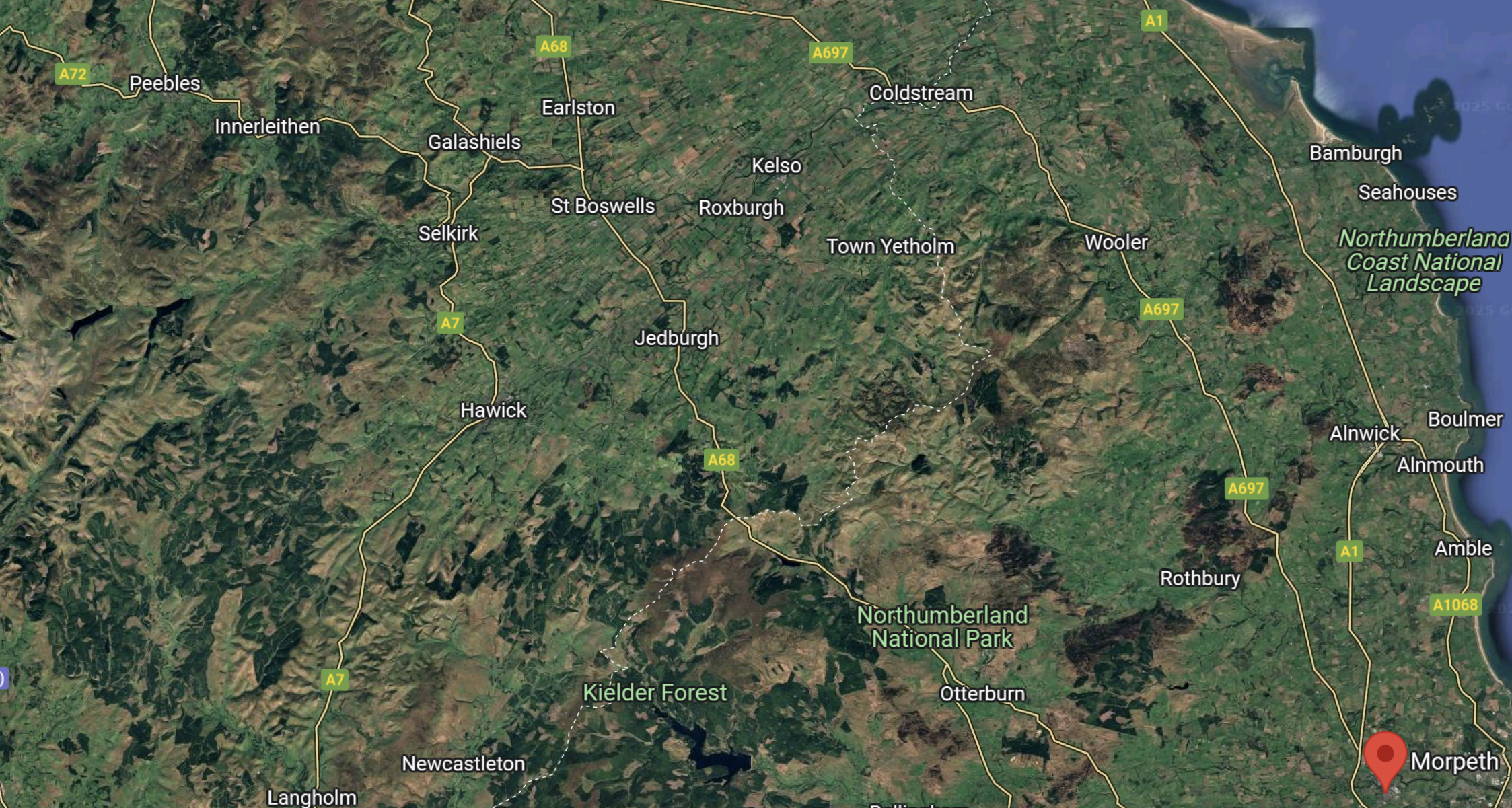
Note.
- Morpeth is marked by the red arrow in the South-East corner of the map.
- Galashiels, Galashiels, Hawick, Jedburgh, Peebles, Saint Boswells and Selkirk can be picked out on the map.
- The coach service would probably terminate at Galashiels, as it has a large bus terminal and and a railway station.
- Click the map to show it to a larger scale.
Morpeth to Galashiels is 69 miles and it should take about an hour and a half.
Hydrogen Buses As Rail Replacement Buses
Consider.
- I have had Rail Replacement Coaches as opposed to buses a few times in the UK.
- Once on the East Coast Main Line but usually on the Great Eastern Main Line to Ipswich or Norwich.
- They are generally more suited to their task. as they are faster and more luxurious.
- Many of our major rail lines run alongside trunk roads or motorways or fast dual carriageways.
So because hydrogen buses and coaches a have superior performance, than their diesel cousins, will hydrogen be the better fuel for a Rail Replacement Bus.
Metrobus’s Hydrogen Buses
This press release on the Metrobus web site is entitled Hydrogen Buses.
This is the sub-heading.
Our commitment to Zero Emissions
As part of our commitment to reducing emissions, twenty new hydrogen fuelled buses will operate on Fastway routes 10 & 20. These new buses demonstrate an ongoing commitment to reducing our local emissions. They deliver against science-based targets set by Metrobus and its parent company, The Go-Ahead Group, of becoming a net zero business by 2045 and decarbonising our bus fleet by 2035.
Conclusion
This bus is the best I’ve ridden in.
Paddington And Minehead By Train
Two projects announced in the last six months may make this a possibility.
- FirstGroup’s Paddington and Paignton Service
- The West Somerset Tidal Lagoon
Neither project has the full permissions it needs, but if Lumo do stop at Taunnton and the West Somerset Tidal Lagoon is built, if could open up an interesting possibility.
In Thoughts On Lumo’s Proposed Paddington And Paignton Service, I stated that a train could take two hours between Paddington and Taunton, if it went for a fast non-stop run to Bath Spar station.
In MP Pushes For Tidal Lagoon In Bristol Channel, I said this.
I believe that for the lagoon project to be complete, the West Somerset Railway needs to be turned into a fully-operational branch line between Minehead and Taunton to improve access for residents, visitors and workers to Minehead and other places in West Somerset.
Surely, with a quick change of train, passengers could be in Minehead thirty minutes after arriving at Taunton.
In recent years several new branch lines have open in the UK and been given time to attract new passengers.
- The Borders Railway to Tweedbank
- Merseyrail to Headbolt Lane
- The Northumberland Line to Ashington
- ScotRail to Leven.
- The Dartmouth Line to Okehampton
None appear to be in any danger of being closed.
I very much feel, that if the West Somerset Railway, ran a full service between Minehead and Taunton, it would follow the same pattern.
Great British Railways And Private Sector To Compete For Ticket Sales
The title of this post, is the same as that of this article on Railway Gazette.
This is the introductory paragraph.
The Department for Transport has announced that the future Great British Railways will sell tickets online, while retaining a ‘thriving’ private sector market where third party ticket retailers can compete in an ‘open and fair’ manner.
I would certainly like to see more innovation in the selling of rail tickets.
A few things I would like to see in ticketing include.
Ticketing Machines At Busy Interchanges
When, I wrote My First Trip On The Northumberland Line – 18th December 2024, I bought my Lumo ticket between Kings Cross and Newcastle at King’s Cross and needed to buy my ticket for Ashington at Newcastle station.
There is no ticket machine on the long walk between where Lumo trains arrive and leave and the Northumberland Line.
This is a common problem and someone needs to design a ticketing machine for interchanges to simplify the changing of trains for passengers.
Stations that need such a machine include.
- Clapham Junction on the bridge.
- Ipswich on the central platform.
- Leeds on the bridge.
- Reading on the bridge.
It should be noted, that in some cases train staff will sell you a ticket, which gets round the problem. But other train companies are getting tough on revenue enforcement.
These ticket machines could be provided by Great British Railways or a private company.
Automatic Freedom Pass Extension
If I don’t want to buy a physical ticket for Gatwick Airport, I can use my Freedom Pass to East Croydon. Then I exit the station and come back in using a credit card or my phone. I then exit at Gatwick, using the method I used to reenter at East Croydon.
But wouldn’t it be so much easier, if I could link a credit card to my Freedom Pass, so that the charge for East Croydon and Gatwick Airport was automatically charged to my credit card.
Collection Of Tickets
In Collecting National Rail Tickets, I had a moan at Transport for London about their unwillingness to provide facilities for passengers to pick up National Rail tickets.
This was their unfriendly notice at Tottenham Court Road station.
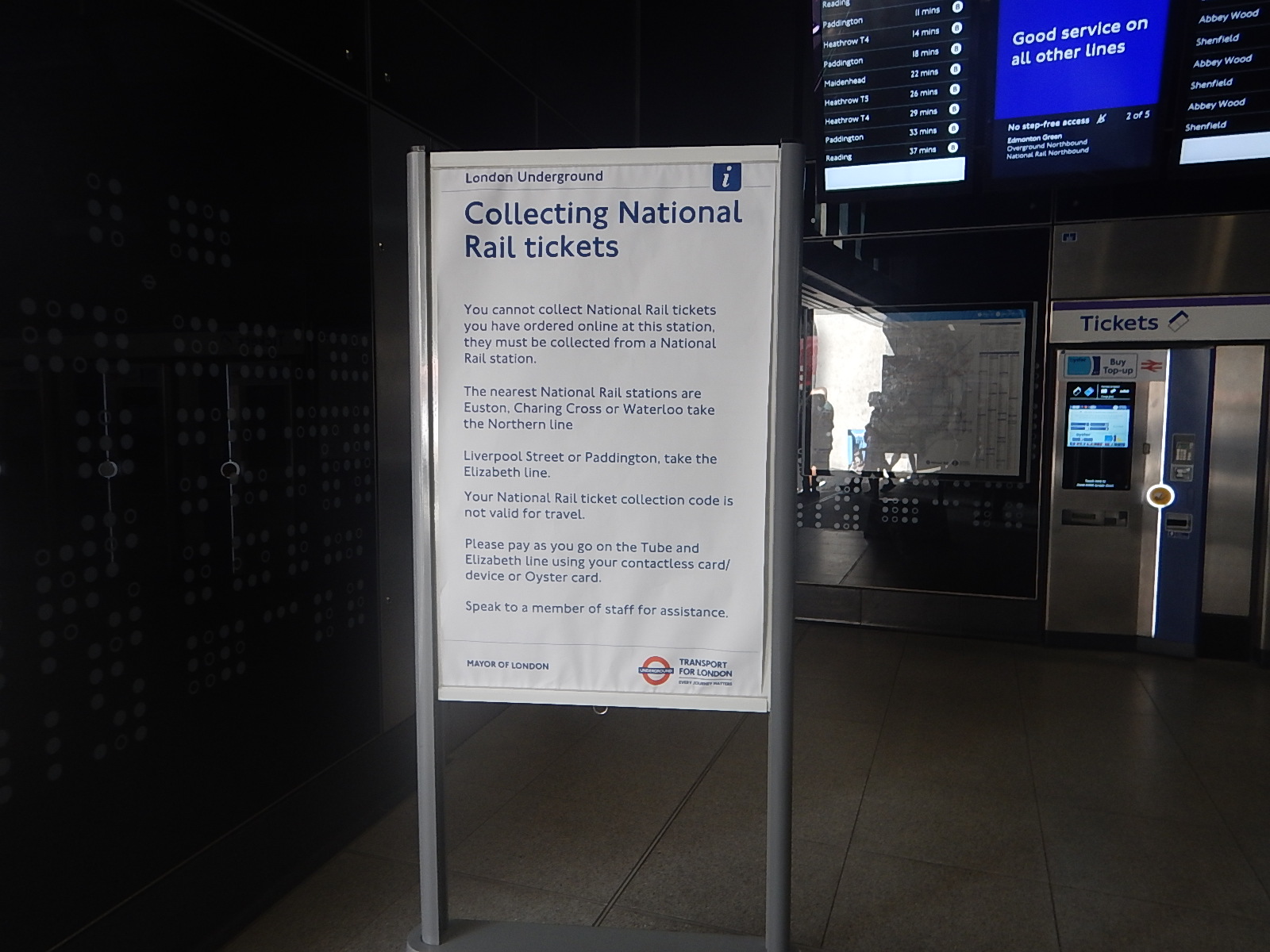
Facilities should be provided in many more places, where passengers can pick up rail tickets bought on-line.
These ticket collection machines could be provided by Great British Railways or a private company.
Is FirstGroup’s Order For Fourteen Trains For Lumo And Hull Trains More Identical Than Is Generally Assumed?
Currently, Hull Trains operate Class 802 trains and Lumo operate Class 803 trains.
Both trains are five-car Hitachi A-Trains and appear to be similar in size, although there are other differences.
- Hull Trains have a two-class layout, whereas on Lumo everybody sits in the same class.
- Hull Trains are a true bi-mode with the 700 kW Rolls-Royce mtu diesel generators.
- Lumo only have a battery for emergency hotel power.
- Hull Trains currently operate a route, where up to a hundred miles in each round trip can be on diesel.
- Lumo’s current route is all electric.
However, the differences in train specification doesn’t stop the two operators using each other’s trains.
This is from an article in the November 2023 Edition of Modern Railways, that is entitled Extra Luggage Racks For Lumo.
The co-operation between sister East Coast mail line open access operators Lumo and Hull Trains continues, with one recent move, being the use of a Hull Trains ‘802’ on Lumo services to cover for a shortage of the dedicated ‘803s’ while one unit was out of action for repairs following a fatality. Although the two types are similar, there are notable differences, most obviously that the Hull Trains units are bi-modes while the Lumo sets are straight EMUs and a training conversion course is required for Lumo drivers on the ‘802s’. There are also challenges from a passenger-facing perspective – The Hull Trains units have around 20 % fewer seats and a First Class area.
A future Chief Executive of FirstGroup might at some future date decide to convert all trains to the same specification.
Drive Systems Of The Five-Car Class 80x Trains
I’m writing them down for all the five-car Class 80x trains to make it easier to understand.
- Class 800 train – DPTS–MS-MS-MC–DPTF – (LNER) 3 x 560 kW or (GWR) 3 x 700 kW diesel generators.
- Class 801 train – DPTS–MS-MS-MC–DPTF – 1 x 560 kW diesel generators
- Class 802 train – DPTS–MS-MS-MC–DPTF – (LNER) 3 x 700 kW diesel generators.
- Class 803 train – DPTS–MS-MS-MS–DPTF
- Class 805 train – DPTS–MS-MS-MC–DPTF – 3 x 700 kW diesel generators.
- Class 810 train – DPTS–MS-MS-MC–DPTF – 4 x 735 kW diesel generators.
Note.
- All these five-car trains have the same drive configuration.
- Traction motors are on cars 2 and 4.
- Trains with one diesel generators have them under car 3.
- Trains with three diesel generators have them under cars 2/3/4.
- Trains with four diesel generators have them under cars 1/2/4/5.
- The traction battery in the Class 802 battery-electric test train was 750 kW, according to The Data Sheet For Hitachi Battery Electric Trains.
It is all a very balanced design.
A Standard Basic Train For Hull Trains And Lumo
This may be possible and could be the following.
- A Class 802 or Class 803 train to the latest specification.
- Five cars.
- Interior to the customers specification.
- Ability to work in pairs.
- A standard size traction battery in car 3.
The battery could be changed according to route.
- Carmarthen – 75.3 miles – See Thoughts On Lumo’s Proposed Paddington And Carmarthen Service.
- Edinburgh – 100 miles – To cover the Lincolnshire Diversion.
- Hull – 100 miles – To cover the Lincolnshire Diversion.
- Paignton – 128.2 miles – See Thoughts On Lumo’s Proposed Paddington And Paignton Service.
- Rochdale – 100 miles to cover reverse at Rochdale.
- Sheffield – 100 miles – To cover Retford and Sheffield both ways.
- Stirling – Possibly no batteries required.
I can see a battery range of 100 miles covering most routes.
There could be two or three batteries close together in cars 2, 3 and 4, driving the traction motors in cars 2 and 4 and being charged by them.
These are my thoughts on individual Hull Trains and Lumo routes.
Beverley And Hull
In Could Hull Station Be Electrified?, I put forward my view that if Hull station were to be electrified, it opens up various possibilities of running battery-electric trains to Hull and Beverley.
Hull Trains services would charge the battery, every time they went through Hull station.
Distances needed on battery power to electrification would be.
- Beverley – 16.7 miles for return trip.
- Bridlington – 31.1 miles
- Doncaster – 40.8 miles
- Scarborough – 53.8 miles
- Temple Hirst – 36.1 miles
Except for Scarborough, a single battery would probably suffice.
Beverley and Hull are handled without a battery at present, but Hull Trains might like to carry sufficient power in batteries to be able to handle the Lincoln Diversion.
Carmarthen
Cardiff and Carmarthen via Gowerton is 75.3 miles, which probably means two batteries would be needed.
See Thoughts On Lumo’s Proposed Paddington And Carmarthen Service, for more details.
Edinburgh
Edinburgh is handled without a battery at present, but Lumo might like to carry sufficient power in batteries to be able to handle the Lincoln Diversion.
Paignton
Paignton is the longest route at 128.2 miles and I doubt, it would be talked about if it wasn’t technically possibly.
See Thoughts On Lumo’s Proposed Paddington And Paignton Service, for more details.
Rochdale
Sheffield
Stirling
Stirling could be handled without a battery, but Lumo might like to carry sufficient power in batteries to be able to handle a small diversion.
Thoughts On Lumo’s Proposed Paddington And Carmarthen Service
Lumo have permission for an open access service between London Paddington and Carmarthen.
- Stops will be Bristol Parkway, Newport, Severn Tunnel Junction, Cardiff Central, Gowerton and Llanelli
- It will be run under the Lumo brand.
- There will be five services per day.
Lumo hope services will start in 2027.
I would suspect that the train would run between London Paddington and Carmarthen like this.
- Run between London London Paddington and Cardiff Central using the 25 KVAC overhead electrification.
- Whilst running between London Paddington and Cardiff Central, the train’s batteries will be fully charged using the overhead electrification.
- Run between Cardiff Central and Carmarthen using the onboard battery power.
- Charge the train as required at Carmarthen.
Note.
- London Paddington and Cardiff Central is 145.2 miles or 233.7 km.
- Cardiff Central and Carmarthen via Gowerton is 75.3 miles or 121.2 km.
- In case of disruption, trains could wait at Cardiff Central, until the batteries had enough charge.
A battery capability of 75.3 miles or 121.2 km will be needed to reach Carmarthen.
A Fast Run Between London Paddington And Bristol Parkway
Consider.
- Currently, the fastest trains to Bristol Parkway take one hour and thirteen minutes between London Paddington and Bristol Parkway.
- The route is fully electrified.
- But the trains do make as many as three stops at Reading, Didcot Parkway and Swindon, before they stop at Bristol Parkway.
- London Paddington and Bristol Parkway are 111.7 miles apart.
This is an average speed of 91.8 mph.
Lumo will be making Bristol Parkway the first stop.
- 60 mins will be 111.7 mph.
- 54 mins will be 125 mph.
It could be a very fast time from London Paddington, if the trains can hold their operating speed of 125 mph for long periods to Bristol Parkway.
I would expect that a fast service between London Paddington and Bristol Parkway could attract passengers, if there were lots of parking.
A Fast Run Between Bristol Parkway And Cardiff Central
Consider.
- Currently, the fastest trains take thirty-five minutes between Bristol Parkway and Cardiff Central.
- The route is fully electrified.
- The speed limit varies between 75 and 90 mph.
- The train makes a single stop at Newport.
- Bristol Parkway and Cardiff Central are 34.2 miles apart
This is an average speed of 58.7 mph.
Lumo will be stopping at Severn Tunnel Junction and Newport.
The time may be a couple of minutes slower.
But I still expect that Cardiff Central will be reached in ninety minutes from London Paddington.
A Battery Run Between Cardiff Central and Carmarthen via Gowerton
Consider.
- Cardiff Central and Carmarthen via Gowerton is 75.3 miles or 121.2 km.
- The route has no electrification
- The train makes stops at Gowerton and Llanelli
- Cardiff Central and Carmarthen via Gowerton has a speed limit of mainly 75 mph, although there are sections up to 90 mph.
Times between Cardiff Central and Carmarthen via Gowerton would be.
At 75 mph the trip would be 60 minutes.
At 80 mph the trip would be 56 minutes.
I would estimate a time between London Paddington and Carmarthen of two hours and 35 minutes, as opposed to an hour longer by Great Western Railway, but that train makes eleven stops, as opposed to the six that Lumo intend to make.
Conclusion
It looks like Lumo will make most of their time savings to Camarthen by cutting stops and high speed running to betweeen London Paddington and Bristol Parkway stations.
Fast Battery-Electric Hitachi Trains Between Paddington And Bristol Temple Mead Stations
It was when I was writing Thoughts On Lumo’s Proposed Paddington And Paignton Service, that I realised how significant Hitachi’s battery-electric high speed trains will be.
This page on the Hitachi web site gives this overview of their Intercity Battery Trains.
A quick and easy application of battery technology is to install it on existing or future Hitachi intercity trains. Hitachi Rail’s modular design means this can be done without the need to re-engineer or rebuild the train and return them to service as quickly as possible for passengers.
Replacing one diesel engine with just one battery reduces emissions by more than 20% and offers cost savings of 20-30%. Our intercity battery powered trains can cover 70km on non-electrified routes, operating at intercity speeds at the same or increased performance.
For the purpose of this exercise, I will assume the following.
- All trains are five-car trains.
- They were all originally manufactured as Class 800, 802 or 805 trains.
- They were all originally manufactured with three 750 kW Rolls-Royce mtu diesel generators.
- One diesel generator in each train has been replaced by a 750 kW battery-pack of the same size, weight and performance.
According to Hitachi’s web page, that I quote above, this gives intercity speeds at the same or increased performance, for 70 km. on non-electrified routes.
I will now look at how a Hitachi battery-electric high speed train would handle the line between London Paddington and Bristol Temple Mead stations.
This OpenRailwayMap shows the electrification between Chippenham and Bath Spa stations.
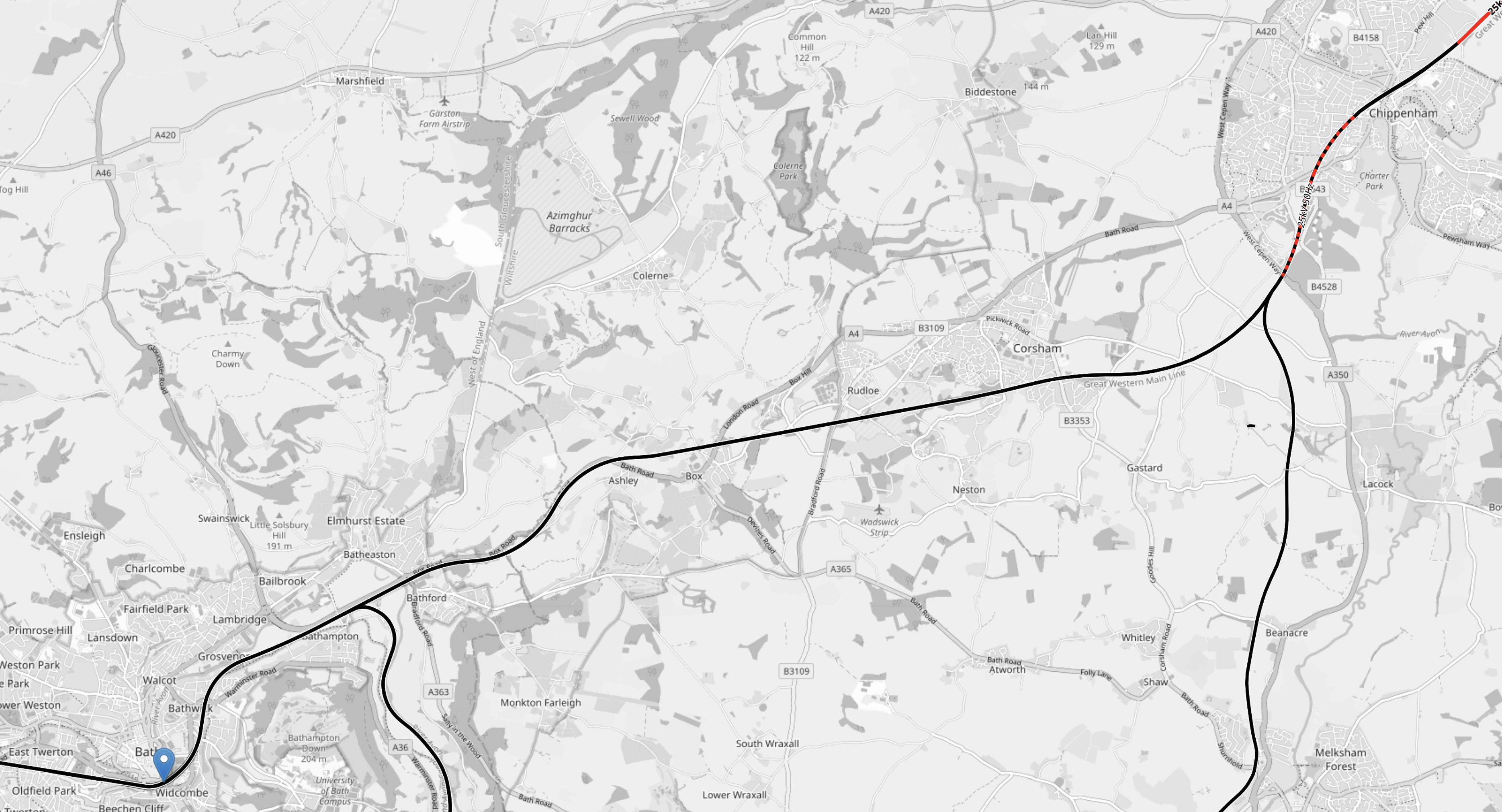
Note.
- London Paddington and Bristol Temple Mead stations are 118.3 miles apart.
- The blue arrow indicates Bath Spa station.
- Bristol Temple Meads station is 11.5 miles to the West of Bath Spa station.
- Chippenham station is in the North East corner of the map.
- Black lines are not electrified.
- Red lines are electrified with 25 KVAC overhead wires.
- The 93.9 miles betweeen London Paddington and Chippenham is fully-electrified.
- Red and black dotted lines are being electrified.
- The 24.4 miles between Chippenham and Bristol Temple Mead stations is not electrified.
- The residents of Bath Spa are not keen for the railway through Bath to be electrified.
The single battery-pack in the train, will have to propel the train between Chippenham and Bristol Temple Mead stations.
- On arrival at Chippenham, the battery will have been fully charged on the 93.9 miles from London Paddington.
- The train will be switched to battery power and proceed through Bath Spa station to Bristol Temple Meads station.
- The 24.4 miles between Chippenham and Bristol Temple Mead stations is only 39.26 km. so it is well within range of a single battery pack.
- The trains will be able to reach Bath, as fast as the track allows, so they could have come much of the way from London Paddington at speeds approaching 125 mph.
Hence my belief that Bath Spa could be reached in around an hour without any stops from London Paddington and Bristol Temple Meads in a very fast time.
There may be a need to top up the battery at Bristol Temple Meads station for London trains to return to the electrification at Chippenham or for other trains to continue their journey through Bristol.
This could be handled by some lengths of electrification in platforms in Bristol Temple Meads station, where the Hitachi trains terminate.
However, I feel Network Rail will be able to avoid the sensitive and possibly very challenging electrification through Bath.
Conclusion
London Paddington and Bristol Temple Meads via Bath Spa trains would be substantially speeded up. Especially, if the first stop out of London Paddington were to be Bath Spa station.
Great Western Railway would only cut out the stops if they wanted to speed up services.
Who’d have thought, that powering services by batteries, would speed up services?
Thoughts On Lumo’s Proposed Paddington And Paignton Service
Modern Railways says this about Lumo’s proposed new service between Paddington and Paignton.
Under the plans for Paignton, announced on 5 December, there would be five return Lumo trains running between Paddington and Paignton, serving Bath Spa, Bristol Temple Meads, Taunton, Exeter St David’s and Torquay. These could start in May 2028. A sixth path is planned between Highbridge & Burnham and London Paddington.
Modern Railways says that currently there are only three direct trains between Torbay and London and that rail has a 29% modal share on that route compared to 71% for road.
Modern Railways tell us that GWR current run three trains per day to Paignton and these call at Reading, Newbury, Hungerford, Pewsey, Westbury, Castle Cary, Taunton, Tiverton Parkway and Exeter St. David’s and Torquay.
Note.
- Lumo will be taking five stops using a longer route.
- GWR currently take ten stops using a shorter route via Westbury.
- GWR currently take ten stops between London Paddington and Bristol Temple Meads.
- The fastest GWR service I can find takes three hours and four minutes between London Paddington and Paignton.
- The fastest GWR service I can find takes one hour and thirty-five minutes between London Paddington and Bristol Temple Meads.
- The fastest service I can find takes one hour and thirty-nine minutes with five stops between Bristol Temple Meads and Paignton.
- Lumo’s trains will probably be fitted with traction batteries rather than diesel engines, so it is likely, that the fewer stops they execute will be done quieter and faster.
I would not be at all surprised to find that Lumo’s journey times would be of this order.
- London Paddington and Bath Spa – One hour
- London Paddington and Bristol Temple Meads – One hour and thirty minutes
- London Paddington and Taunton – Two hours
- London Paddington and Exeter St. David’s – Two hours and thirty minutes
- London Paddington and Torquay – Two hours and fifty minutes
- Paddington and Paignton – Three hours
These sections would not be electrified.
- Chippenham and Bristol Temple Meads – 24.4 miles
- Bristol Temple Meads and Paignton – 103.8 miles
In Fast Battery-Electric Hitachi Trains Between Paddington And Bristol Temple Mead Stations, I discuss how Lumo and Great Western Railway will speed trains to Bristol Temple Meads via Bath Spa and Chippenham.
If 128.2 miles on batteries sounds a tough ask, remember that a similar-sized Stadler Addu ran 139 miles on one charge in 2021. Lumo, Hitachi and their battery makers from Sunderland didn’t enter this contest to come a distant second.
Paignton has a big advantage, as this OpenRailwayMap shows.
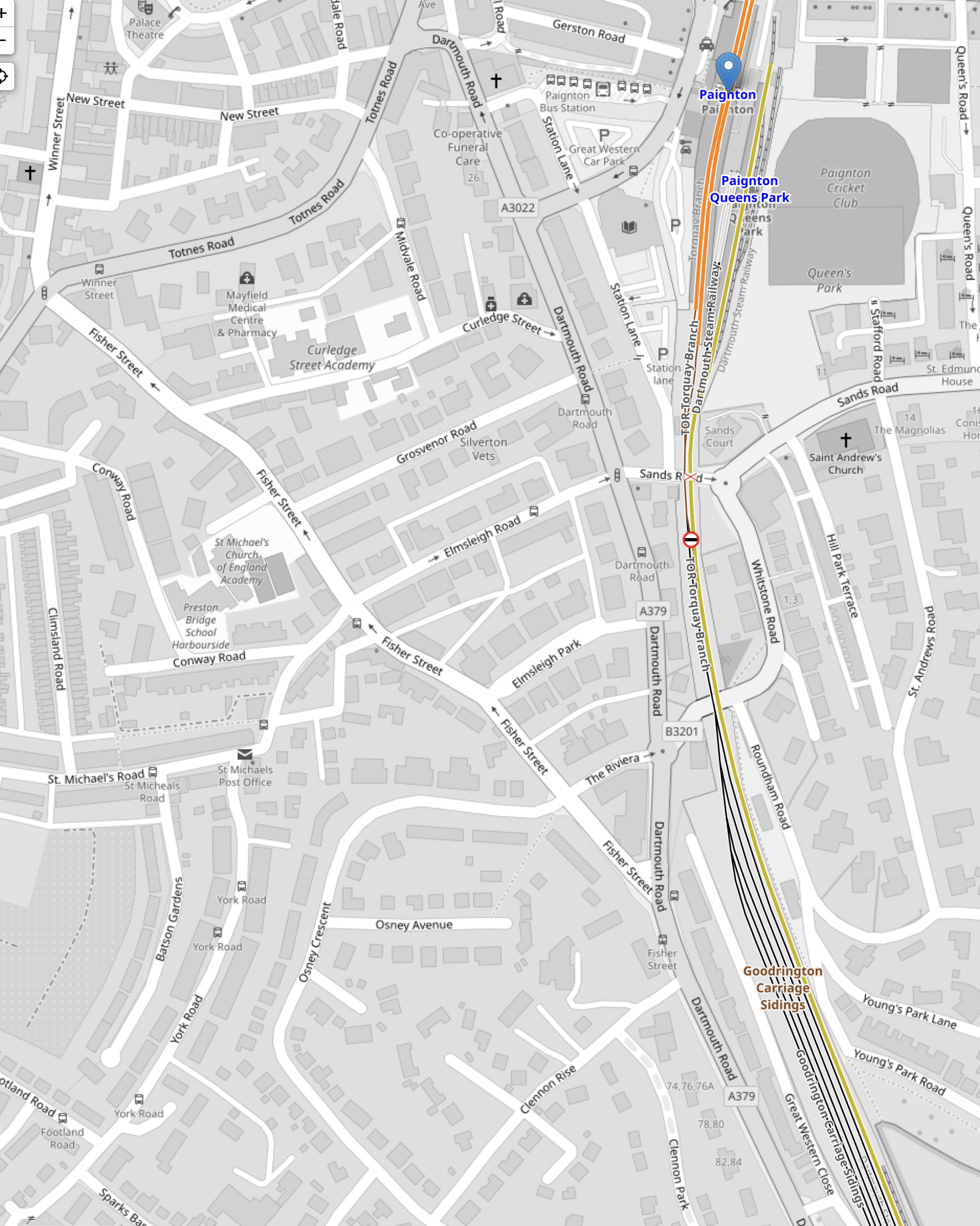
Note.
- Paignton station is marked by the blue arrow and writing at the top of the map.
- There are two platforms, one of which normally handles arrivals and the other departures.
- There are the Goodrington Carriage sidings to the South of the station.
I’m sure Hitachi will electrify some of the sidings, so that Lumo’s trains can leave Paignton with full batteries. But they only need enough charge to cover the 128.2 miles to Chippenham!
I have a few extra thoughts.
The Train’s Batteries Will Get Bigger
Hitachi must have access to the best battery chemistry, that the world and especially Japan can offer.
I feel very strongly, that the performance of Hitachi’s trains will get better, as the years progress.
Pairs Of Trains Could Be Used
I suspect all the stations that will be used by the service ; Paddington, Bath Spa, Bristol Temple Meads, Taunton, Exeter St David’s, Torquay and Paignton can handle a pair of five-car Hitachi trains on a busy day.
The Goodrington Carriage sidings at Paignton station would certainly appear to be long enough.
This could be useful.
An Early Bath
Consider.
- Currently, the fastest trains to Bath Spa take one hour and fourteen minutes from London Paddington.
- But the trains do make as many as three stops at Reading, Swindon and Chippenham, before they stop at Bath Spa.
- London Paddington and Bath Spa are 106.8 miles apart.
- The route is fully electrified between London Paddington and Chippenham.
This is an average speed of 86.6 mph.
Lumo will have two advantages
- They will be making Bath Spa the first stop.
- They will be able to maintain at least 100 mph for a large part of the route between London Paddington and Bath Spa, by the use of traction batteries, where there are no wires.
- To go between London Paddington and Bath Spa in an hour, requires an average speed of 106.8 mph
If they could average 100 mph, the time would be 66 minutes.
Bath Spa may not be an hour from Paddington, but it will be very close to it.
I would expect that a fast service to Bath could fill up with day-trippers.
How Long Will A Round Trip Take?
If I’m right that Lumo’s battery-electric high speed trains will be able to do one-way in three hours, then adding in half-an-hour to turn and charge the train at Paignton would suggest a six-an-a-half hour round trip.
How Many Trains Will Be Needed For A Full Service?
Lumo are talking of five round trips per day to Paignton and one to Highbridge & Burnham, so this would probably need two trains to run the service.
The Wikipedia entry for Highbridge & Burnham station says this.
A loop on the west side of the line south of the station can be used by goods trains in either direction, southbound trains crossing over to run wrong line through the northbound No.2 platform to do so. This crossing also allows terminating passenger trains from the north to reverse here if required.
Perhaps this loop will be used to allow one train to start from here in the morning and at the end of the day stable here overnight.
The loop could be electrified to make sure that the first train of the day gets to Chippenham.
Trains could follow a schedule like this.
- Train 1 – Leaves Highbridge & Burnham – 06:00
- Train 1 – Arrives London Paddington – 08:00
- Train 1 – Leaves London Paddington – 08:30
- Train 1 – Arrives Paignton – 11:30
- Train 1 – Leaves Paignton – 12:00
- Train 1 – Arrives London Paddington – 15:00
- Train 1 – Leaves London Paddington – 15:30
- Train 1 – Arrives Paignton – 18:30
- Train 1 – Leaves Paignton – 19:00
- Train 1 – Arrives London Paddington – 22:00
- Train 2 – Leaves London Paddington – 06:30
- Train 2 – Arrives Paignton – 09:30
- Train 2 – Leaves Paignton – 10:00
- Train 2 – Arrives London Paddington – 13:00
- Train 2 – Leaves London Paddington – 13:30
- Train 2 – Arrives Paignton – 16:30
- Train 2 – Leaves Paignton – 17:00
- Train 2 – Arrives London Paddington – 20:00
- Train 2 – Leaves London Paddington – 20:30
- Train 2 – Arrives Highbridge & Burnham – 22:30
Someone with more experience of writing timetables could make this work.
But it does appear to me, that using Highbridge & Burnham station for an early start and an overnight charge of one of the trains could mae the whole service work.
 The Anonymous Widower