Does The UK Need More Passenger Train Capacity Between London And Scotland?
I went from London Euston to Wigan North Western and Blackpool North stations on Wednesday.
Just after the Bank Holiday, the train to the North, which was going to Glasgow Central, seemed fairly busy, but I suspect that a few more souls could have been squeezed in.
Coming South in the early evening, there was a lot more space, but those that had gone to Scotland for the Bank Holiday weekend had probably returned.
At the moment, I am getting a lot of adverts like this, when I read The Times on-line.

It looks to me, that Avanti West Coast, are ecouraging travellers to use trains to travel to and from Glasgow.
How Many Anglo-Scottish Trains Are There?
- Avanti West Coast – 6 tpd – London Euston to Edinburgh Waverley via Birmingham New Street
- Avanti West Coast – 6 tpd – London Euston to Glasgow Central via Birmingham New Street
- Avanti West Coast – 1 tph – London Euston to Glasgow Central via Trent Valley
- CrossCountry – 1 tph – Plymouth to Edinburgh Waverley
- LNER – 2 tph – London King’s Cross to Edinburgh Waverley
- Lumo – 6 tpd – London King’s Cross to Edinburgh Waverley and Glasgow Queen Street
- Lumo – 4 tpd – London Euston to Stirling
- TransPennine Express – 1 tp2h – Manchester Airport to Glasgow Central
- TransPennine Express – 1 tp2h – Manchester Airport to Edinburgh Waverley
- TransPennine Express – 4 tpd – Liverpool Lime Street to Glasgow Central
Note.
- tpd is trains per day.
- tph is trains per hour.
- tp2h is trains per two hours.
- The two Avanti West Coast services via Birmingham New Street alternate.
- The Avanti West Coast London Euston to Glasgow Central via Trent Valley service runs 15 tpd.
- The two TransPennine Express services from Manchester Airport to Scotland alternate.
My initial estimate is that there are 5 x 15 tph +16 tpd or 91 tpd.
How Many Anglo-Scottish Trains Are There On HS2?
In the original design for HS2, this was the service pattern.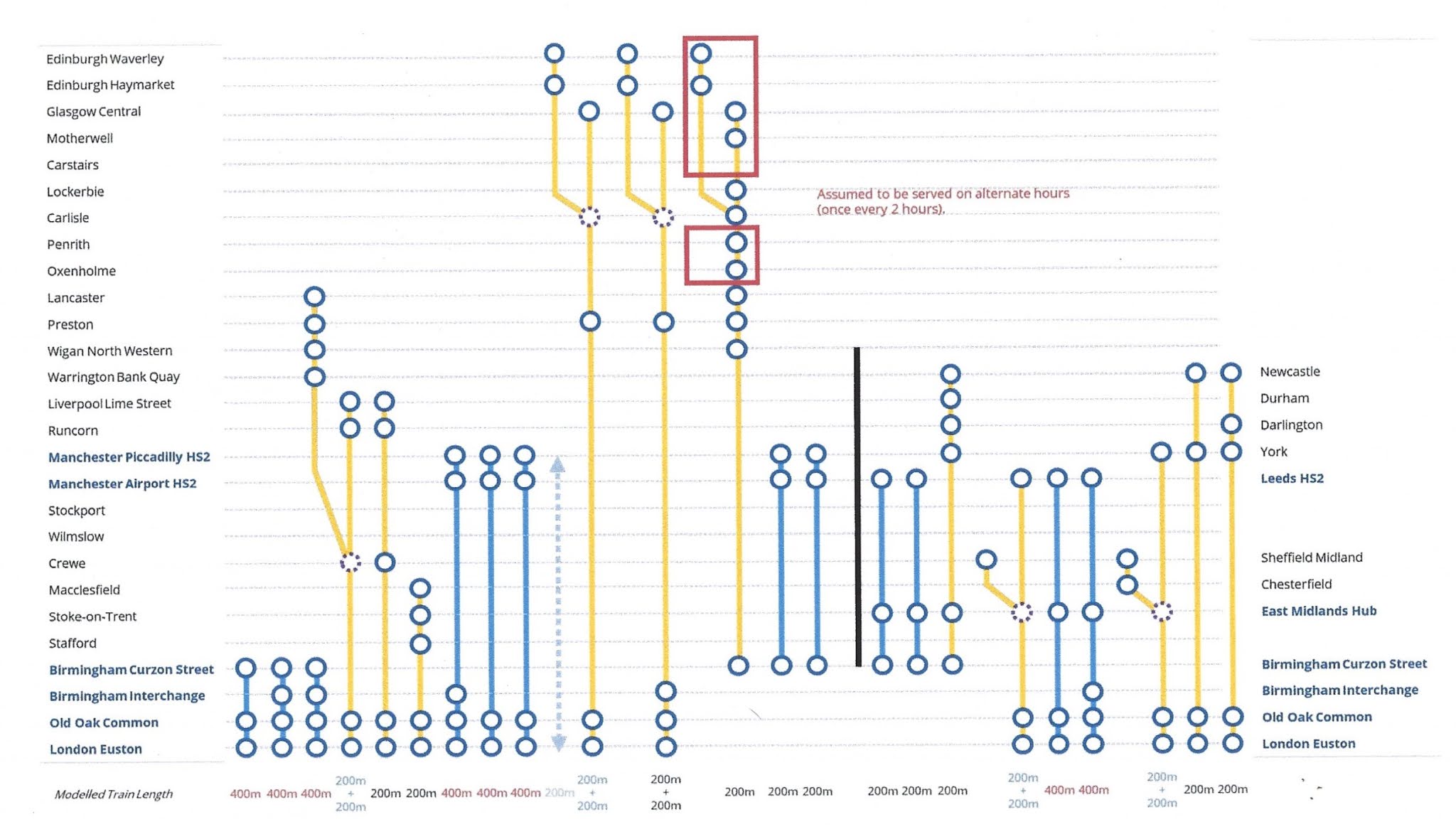
Note.
- Train 10 runs hourly between London and Scotland via Old Oak Common and Preston and splits at Carlisle with one train serving Edinburgh Waverley and the other Glasgow Central.
- Train 11 runs hourly between London and Scotland via Old Oak Common, Birmingham Interchange and Preston and splits at Carlisle with one train serving Edinburgh Waverley and the other Glasgow Central.
- Train 12 runs hourly between Birmingham Curzon Street and Scotland and serves Edinburgh Waverley and Glasgow Central alternatively.
It looks like HS2 contributes 5 tph between England and Scotland or 75 tpd.
But as HS2 is currently configured, these Anglo-Scottish trains will still run.
- CrossCountry – 1 tph – Plymouth to Edinburgh Waverley
- LNER – 2 tph – London King’s Cross to Edinburgh Waverley
- Lumo – 6 tpd – London King’s Cross to Edinburgh Waverley and Glasgow Queen Street
- Lumo – 4 tpd – London Euston to Stirling
- TransPennine Express – 1 tp2h – Manchester Airport to Glasgow Central
- TransPennine Express – 1 tp2h – Manchester Airport to Edinburgh Waverley
- TransPennine Express – 4 tpd – Liverpool Lime Street to Glasgow Central
If these trains continue to run my estimate is that there will be 4 x 15 tph +14 tpd or 74 tpd by classic routes.
This will mean 149 Anglo-Scottish tpd in total.
How Do You Get Between Leeds, Bradford, Sheffield and Hull, and Scotland?
If you look at the diagram, which shows the service pattern for HS2, note the following.
- HS2 does not provide a service between Leeds, York, Durham, Darlington and Newcastle, and Scotland.
- HS2 doesn’t connect to Bradford.
- HS2 doesn’t go past Leeds, but the current LNER services also serve Bradford Forster Square, Harrogate, Shipley and Skipton stations.
There is also no direct trains from the Leeds/Bradford area to Glasgow.
But Consider.
- The Settle and Carlisle Line runs between Skipton and Carlisle and used to host the Thames-Clyde Expresses that were run by the London Midland & Scottish Railway.
- The Wikipedia entry for the Thames-Clyde Express is an interesting read.
- Bradford Forster Square station was recently extended with two platforms , that can handle 10-car trains.
- Bradford Forster Square station has seven trains per day from London via Leeds.
- With a reverse at Bradford Forster Square station trains can call at Leeds, Bradford Forster Square and Skipton stations before taking the Settle and Carlisle Line to Carlisle.
- The Thames-Clyde Express used to take the Glasgow South Western Line to Glasgow Central calling at Dumfries and Kilmarnock.
- LNER’s Class 897 tri-mode trains will probably be able to handle the Settle and Carlisle and the Glasgow South Western Line, without using the diesel engines.
- East Midlands Railway’s Class 810 trains, when fitted with batteries, should probably be able to do the same.
There are a lot of possibilities of how the Settle and Carlisle Line can be used to increase zero-carbon connectivity between Glasgow and London.
The route wouldn’t be the fastest route, but it could be one of the most scenic.
Lumo Targets Drivers With ‘Pump-Primed’ Campaign Showing How To Travel To London For Less
The title of this post, is the same as that of this article on Rail Business Daily.
These three paragraphs outline the story.
Motorists driving to London are being shown how taking the train could save up to half the cost of their journey – as they fill-up at the fuel pumps.
Lumo has launched digital screens at a filling station to display real-time travel information and ticket prices.
Lumo believes the bold new trial, a first-of-its-kind partnership with the Smart Outdoor digital advertising firm, will give motorists a timely reminder of a greener and often more affordable alternative to driving between Scotland and England.
Note.
- Displaying real-time travel information is done regularly all over the transport network, for buses and trains.
- Adding ticket prices would not be difficult.
- All filling stations must have good enough broadband.
- I suspect, it could work best, where the train operator sells good value walk-up tickets. This is done at LNER stations on the East Coast Main Line and in An Affordable Trip To Doncaster, I told how I went to Doncaster for the day for £46.45 with a Senior Railcard, buying the tickets on a walk-up basis.
But who knows, where this technology will lead?
As a non-driver, if anybody sees the system in action, I’d love a comment and a photo.
A Ticket Buying App
I also think, I could specify a ticket buying app for trips someone needs to make.
The app would keep a list of train journeys you want to make.
Every day, it would look up the best prices available and if you wanted to go somewhere, you could buy a ticket.
Does The UK Need More Passenger Rail Capacity Between London And Glasgow?
I asked Google AI this question and received this answer.
Yes, the UK requires more passenger rail capacity between London and Glasgow to meet growing demand and combat overcrowding, with key improvements and new services planned on the East Coast Main Line (ECML) through 2025. Despite previous capacity constraints on main routes, rail has overtaken air as the preferred mode of travel for these journeys, necessitating increased frequency.
Key details:
Capacity Expansion: The Office of Rail and Road (ORR) approved new services for late 2025, including Lumo extending London-Edinburgh services to Glasgow.
Growing Demand: Passenger numbers on West Coast routes showed significant growth, with a 29% increase in Glasgow-London travellers reported between 2013 and 2019.
Infrastructure Constraints: While demand increases, the ORR has rejected some service proposals due to insufficient capacity on the existing, congested lines.
Future Upgrades: HS2 is expected to improve connectivity, targeting reduced journey times to under 3 hours 40 minutes by 2033.
Sustainability Shift: Increased capacity supports shifting travellers from air to rail, reducing environmental impact.
I posed this question out of curiosity, but Google AI gave me, what I think is a well-reasoned answer.
In The Last Three Months, These Two Improved Anglo-Scottish Services Have Started
In Lumo Will Extend Its King’s Cross And Edinburgh Service To Glasgow, I talk about Lumo’s extended service to Glasgow, which started on December 14th, 2025.
In Man In Seat 61: My Nail-Biting Journey To Orkney By Train And Ferry, I describe a trip by the Man In Seat 61 (Mark Smith) in the new Birmingham-Scotland Sleeper.
There Is A Third New Anglo-Scottish Service To Come
In Lumo To Expand Scotland’s Rail Network With New London-Stirling Rail Route From Spring 2026, I describe Lumo’s new Euston and Stirling open access rail route.
Rail Operator Crosses Line For First Time In Years
The title of this post, is the same as that of this article on the BBC.
This is the sub-heading.
An operator’s first passenger train has crossed a historical and scenic route for the first time in more than a decade.
These three paragraphs give more details about the reason for the trip.
Avanti West Coast’s 07:54 GMT from Wigan was the first to run on the Settle to Carlisle route earlier.
The 73-mile line is renowned for its picturesque views across the Yorkshire Dales and the North Pennines via the Ribblehead viaduct.
The route is usually only used by Northern trains operating between Leeds and Carlisle, but Avanti is using it as a diversion while work to replace the Clifton Bridge take place over the M6 near Penrith.
I’ve only ridden the Route once and that was on a day in 2014, when the weather wasn’t at its best.
Afterwards I wrote Long Live The Settle And Carlisle, so the trip couldn’t have been that bad!
These paragraphs give the reason for and details of the diversion.
The Settle to Carlisle line does not have overhead power lines, meaning Avanti is using bi-mode Class 805 Evero trains which operate on diesel.
Several timetable changes have been made during the engineering works, with disruption expected until 15 January.
Until 5 January, the railway will also be blocked south of Preston, meaning on these days the diverted services are running between Wigan North Western and Carlisle.
But if Great British Railways could get their act together and convert a sufficient number of their Hitachi diesel bi-modes to battery-electric bi-modes and do some testing and a few calculations, the problem would be solved.
In 2021, I wrote Through Settle And Carlisle Service Under Consideration, after Modern Railways wrote an article of the same name.
Could Lumo Run A Lincoln And Glasgow Service Via Doncaster, Leeds And Settle?
In South Yorkshire Now Has Better North-South Connections, I calculated that Doncaster station now has 173 express trains per day, that stop at the station.
So why not add five or six express trains per day to Doncaster, Lincoln, Leeds, Settle, Carlisle and Glasgow?
And why not ask Lumo to run it, as they’d know how to run such a service?
FIRST TO THE FUTURE: Lumo Owner Bids To Turbo-Charge UK Rail With New Routes
The title of this post, is the same as that of this press release from First Group.
These first three paragraphs introduce FirstGroup’s application for the first phase of three separate applications to the Office of Rail and Road (ORR) for new and extended open access rail services.
FirstGroup plc plans to expand its open access rail operations through its successful Lumo business, boosting connectivity, improving UK productivity and passenger choice across the UK.
The expansion aims to replicate the success of Lumo’s Edinburgh to London service in driving material growth on the East Coast Main Line. Lumo operates without government subsidy and contributes more per train mile to infrastructure investment than any other long-distance operator – delivering growth on the railway and connectivity to local communities, at a substantial benefit to the taxpayer.
FirstGroup has submitted the first phase of three separate applications to the Office of Rail and Road (ORR) for new and extended open access rail services, which are described in these bullet points.
- A revised application to run new services between Rochdale and London Euston via Manchester Victoria from December 2028;
- An extension to Lumo’s current Stirling to London Euston track access agreement to operate services beyond 2030;
- A new route between Cardiff and York via Birmingham, Derby, and Sheffield from December 2028; and
- Purchase of new trains meaning continued investment in UK manufacturing of c.£300 million, and long-term jobs.
This paragraph from the press release describes the philosophy of the rolling stock.
Should these applications be successful, FirstGroup will make use of its option to commit further investment in new Hitachi trains built in County Durham. This investment will include five battery electric trains for the Stirling route and three battery electric trains for Rochdale, supporting jobs at Hitachi’s Newton Aycliffe plant. For the services between Cardiff and York, it will deploy refurbished Class 222s.
Note.
- The Class 222 trains will run the Euston and Stirling service until the future Hitachi trains are delivered in 2028.
- The Class 222 trains will run the Cardiff and York service from 2028.
- The Class 222 trains have a maximum speed of 125 mph
- Avanti West Coast’s Class 390 trains have a maximum speed of 125 mph.
- Avanti West Coast’s Class 805 trains have a maximum speed of 125 mph on electrification.
- Avanti West Coast’s Class 807 trains have a maximum speed of 125 mph.
- Grand Central Trains’s future Hitachi trains have a maximum speed of 125 mph.
- Hull Trains’s Class 802 trains have a maximum speed of 125 mph.
- Lumo’s current Class 803 trains have a maximum speed of 125 mph.
- LNER’s current Class 800 and 801 trains have a maximum speed of 125 mph.
- LNER’s current InterCity 225 trains have a maximum speed of 125 mph.
- LNER’s future Class 897 trains have a maximum speed of 125 mph.
- All of the trains, with the exception of the Class 222 trains are electric and have been designed for 140 mph running and can do this if there is appropriate 140 mph signalling.
If the Class 222 trains don’t run on the East and West Coast Main Lines, then these lines could introduce 140 mph running in stages to speed up rail travel between London and the North of England and Scotland.
Rochdale And London
These three paragraphs from the press release describe the proposed Rochdale and London service.
The new Lumo service will operate the first direct service since 2000 between Rochdale and London. Services will call at Manchester Victoria, Eccles, Newton-le-Willows and Warrington Bank Quay. Eccles station connects other parts of the city of Salford, including the fast-growing MediaCity area, via the nearby interchange with Metrolink. Services to Newton-le-Willows will deliver greater rail connectivity for St Helens.
There will be three new return services on weekdays and Sundays, and four return services on Saturdays, which will provide 1.6 million people in the north-west with a convenient and competitively priced direct rail service to London, encouraging people to switch from cars to train as well as providing additional rail capacity. It will also deliver material economic benefits for the communities along the route, including regeneration areas such as Atom Valley and the Liverpool City Region Freeport scheme.
The application has been revised to address the ORR’s concerns about network capacity set out in its letter of July 2025 rejecting FirstGroup’s original application. Supported by extensive modelling, the company has identified sufficient space on the network to accommodate the proposed services. Services will also make use of the Government’s recent investment in power supply for the West Coast Mainline (WCML).
In FirstGroup’s Lumo Seeks To Launch Rochdale – London Open Access Service, I gave my thoughts for Lumo’s application last year.
Differences between the two applications include.
- The service will be run by Lumo’s standard battery-electric Hitachi trains.
- The original application was for six return journeys per day, whereas the new application is for three return services on weekdays and Sundays, and four return services on Saturdays.
Note.
- The battery-electric trains will be able bridge the 10.4 mile gap between Manchester Victoria and Rochdale, and return after charging on the West Coast Main Line.
- The battery-electric trains could be useful during engineering works or other disruptions.
- The trains would be ready for 140 mph running on the West Coast Main Line, when the digital signalling is installed.
- Is the extra return service on a Saturday to cater for football and rugby fans?
I still feel, that with Lumo’s battery-electric trains one or more services could extend across the Pennines to Hebden Bridge, Bradford Interchange or Leeds. Trains would be recharged for return at Leeds.
Stirling And London
This paragraph from the press release describes the proposed Stirling and London service.
Stirling has a wide catchment area, with an estimated three million people living within an hour’s drive. Extending the current track access agreement for the Stirling route from May 2030 will support the shift from car to rail, and investment in the city, as well as in the service’s intermediate stations which include Larbert, Greenfaulds and Whifflet, thanks to greater connectivity to London. The four return services weekdays and Saturdays, and three on Sundays, on the new route are expected to start early in the company’s 2027 financial year.
In Lumo To Expand Scotland’s Rail Network With New London-Stirling Rail Route From Spring 2026, I gave my thoughts for Lumo’s application in June 2025.
Differences between the two applications include.
- The service will only be run initially by Class 222 trains.
- The service will be run by Lumo’s standard battery-electric Hitachi trains after 2028.
- The original application was for five return journeys per day, whereas the new application is for four return services on weekdays and Saturdays, and three return services on Sundays.
- In the original application, Lumo’s new route was to link London Euston directly to Stirling, also calling at Milton Keynes, Nuneaton, Crewe, Preston, Carlisle, Lockerbie, Motherwell, Whifflet (serving Coatbridge), Greenfaulds (serving Cumbernauld) and Larbert.
Note.
- The battery-electric trains could be useful during engineering works or other disruptions.
- The trains would be ready for 140 mph running on the West Coast Main Line, when the digital signalling is installed.
- Is the extra return service on a Saturday to cater for football and rugby fans?
It should be noted that there are always more return services per day going to Stirling, than Rochdale.
Could The Rochdale and Stirling Services Share A Path?
Consider.
- The two services use the West Coast Main Line South of Warrington Bank Quay station.
- Pairs of Class 803 trains can split and join.
- A pair of Class 803 trains are shorter than an 11-car Class 390 train.
- An 11-car Class 390 train can call in Warrington Bank Quay or Crewe stations.
I believe that the Rochdale and Stiring services could share a path.
- One Weekday service per day would be a single train.
- Going South, the trains would join at Warrington Bank Quay or Crewe stations.
- Going North, the trains would split at Warrington Bank Quay or Crewe stations.
- The pair of trains would share a platform at Euston station.
Operating like this would increase the connectivity and attractiveness of the services, and probably increase the ridership and profitability.
Cardiff And York via Birmingham, Derby And Sheffield
These four paragraphs from the press release describe the proposed Cardiff and York service.
Lumo’s new route between Cardiff and York will join up the entire Great British Railway network, connecting all four main lines from the Great Western Main Line to the East Coast Main Line. The plans will also deliver more capacity and drive passenger demand on a previously underserved corridor.
The application proposes six return services each weekday – a significant increase from the current single weekly service.
Bringing Lumo’s popular low-cost model to the corridor will support local communities between Cardiff, Birmingham, Derby, Sheffield, and York. These cities alone have a combined population of more than 2.5 million people. The new services will give local communities access to jobs and services along the route, in support of significant investment that has already been committed by the Government and private sector. This investment includes the Cardiff Capital Regional Investment Zone, the £140million proposed refurbishment at Cardiff Central station, the West Midlands Investment Zone which is expected to create £5.5 billion of growth and 30,000 new jobs, as well as investment plans in Derby, Sheffield and York.
The ORR will now carry out a consultation exercise as well as discuss the applications with Network Rail to secure the required approvals.
Note.
- Only minimal details are given of the route.
- The TransPennine Upgrade will create a new electrified route across the Pennines between York and Huddersfield via Church Fenton, Leeds and Dewsbury.
- The Penistone Line is being upgraded, so that it will handle two trains per hour.
- In the 1980s, the Penistone Line took InterCity 125s to Barnsley.
- The connection with the Penistone Line at Huddersfield has been upgraded.
I am reasonably certain, that FirstGroup intend to route the York and Cardiff service over this partially electrified route.
Sections of the route will be as follows.
- Cardiff and Westerleigh junction – 38 miles – Electrified
- Westerleigh junction and Bromsgrove – 65.2 miles – Not Electrified
- Bromsgrove and Proof House junction – 15 miles – Electrified
- Proof House junction and Derby – 40.6 miles – Not Electrified
- Derby and Sheffield – 36.4 miles – Not Electrified
- Sheffield and Huddersfield – 36.4 miles – Not Electrified
- Huddersfield and York – 41.9 miles – Electrified
There are only two sections of track, that is not electrified.
- Westerleigh junction and Bromsgrove – 65.2 miles
- Proof House junction and Huddersfield – 113.4 miles
Out of a total of 273.5 miles, I believe in a few years, with a small amount of extra electrification or more powerful batteries, Hitachi’s battery-electric high-speed trains will have this route cracked and the Class 222 trains can be sent elsewhere to develop another route.
45 schools Benefit From Rail Safety Resources Supported By Lumo And Hull Trains
The title of this post, is the same as that of this article on The Shields Gazette.
This is the sub-heading.
The UK’s leading open access rail operators, Lumo and Hull Trains, are celebrating supporting the delivery of vital rail safety resources to 45 schools across the UK over the past year.
These three paragraphs add more detail.
In association with the Rail Safe Friendly Programme, the operators’ involvement has led to a social value impact of over £724,000, directly educating thousands of young people.
The programme is dedicated to spreading the vital message of rail safety among young people, educators and parents in schools across the UK. Lumo and Hull Trains have supported the important initiative for the past two years, with their support renewed for a third.
As part of the partnership, Lumo took over the Metrocentre’s ‘mini express train’ to highlight the issue of rail safety to families and children visiting the shopping centre during the school holidays in 2024. The project secured industry recognition at the recent Corporate Engagement Awards.
It’s not just in the UK, that this type of excellent engagement is being setup.
This train is the world’s first hydrogen-powered train to enter passenger service, between Hamburg and Cuxhaven in Germany.
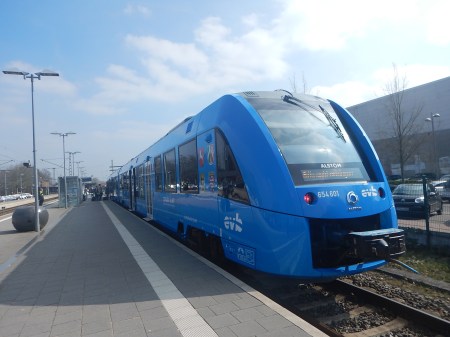
When I rode the train, a German schoolboy told me, that their school had given them safety lessons about hydrogen.
Just Attempted To Book King’s Cross To Glasgow On Lumo
Lumo starts their King’s Cross and Glasgow service on the 14th December 2025, which is the day the timetable changes.
- All the tickets for the first few days have gone.
- But tickets can be booked into February.
- It also appears that most of the offered direct services have sold out already.
- Are Scots showing their frugal side?
This was a typical ticket, I could have booked using my Senior Railcard for the 7th January 2026.
- Leave King’s Cross at 05:45.
- Arrive Glasgow Central at 11:22.
- Journey Time is 5:37.
- Cost £23.10
Note.
- There was a change of train to ScotRail at Edinburgh Waverley.
- The price included a ticket on the shuttle bus between Glasgow Queen Street and Glasgow Central.
- Serving both main Glasgow stations with one ticket is probably what ScotRail offer.
The service looks convenient and well-priced.
Will Trains Be Faster After The Timetable Change On 14th December 2025?
These are times for two early morning trains, between King’s Cross and Edinburgh, where the first is before the timetable change and the second is after.
- 23rd October 2025 – 05:48 – 10:09 – 04:19
- 17th December 2025 – 05:45 – 09:57 – 04:12
Seven minutes is only the first saving of what I believe will be several.
Railway Station Opening Date Announced
The title of this post, is the same as that of this article on the BBC.
This is the sub-heading.
A date has been announced for the latest station to be completed on a new railway line.
These two introductory paragraphs add more details.
Blyth Bebside, on the Northumberland Line, will be opening on 19 October and only two stations remain before the line is fully operational.
The final stations at Bedlington and Northumberland Park are due to open in early 2026.
I shall be going for the opening of the new station, if I can get a Lumo both ways.
An Interesting Comment From Lord Peter Hendy
This article on Modern Railways is entitled Chiltern FINALLY Signs Mk 5 Deal.
This extract from the article describes the deal.
An agreement for Chiltern Railways to lease the Mk 5A coaches previously operated by TransPennine Express and owned by Beacon Rail Leasing has been signed – and the trains are due to replace the current Mk 3 stock in phases from 2026. A 10-year lease has been agreed for the vehicles.
Chiltern will take on all 13 five-car sets as well as the spare Driving Trailer and the dedicated pool of 14 Class 68 locomotives.
The article also, has this excellent quote from Lord Peter Hendy, who is the Rail Minister at the end.
This government is putting passengers back at the heart of the 21st century railway by investing to make journeys easier, greener, and more comfortable.
“We are continuing to support Chiltern as they develop a plan to introduce additional services into their timetable, giving people more opportunities to work, live, and socialise.
I agree with much of what Lord Peter Hendy says, but could we see some actions to back up the words.
I have a few thoughts.
Lumo To Glasgow
I wrote about this new service in Lumo Will Extend Its King’s Cross And Edinburgh Service To Glasgow.
Given the opposition of the Transport Minister to open access services, I didn’t think this innovative service would be approved.
- But it does add an affordable passenger-friendly service to London and Glasgow routes.
- It will certainly be an easier route to London for some in Scotland.
- It also adds some much-needed direct services between Newcastle and Glasgow.
Did Lord Peter Hendy have words to help Lumo get its approval?
As I wrote in Could London And Central Scotland Air Passengers Be Persuaded To Use The Trains?, I also believe that this new Lumo service could persuade more air passengers to take the train to Scotland.
Lumo To Stirling
I wrote about this service in ORR: Open Access Services Given Green Light Between London And Stirling.
- First Group has taken over Grand Union Trains and the service will now be run by Lumo, who will use diesel Class 222 trains.
- But Lumo will have the option of running their electric Class 803 trains on the route, as it is fully electrified, when their fleet receives more trains.
This was another service, that I didn’t think would be approved, as no other services on the West Coast Main Line were approved, as Network Rail objected.
But it certainly meets the words in Lord Peter Hendy’s statement.
Like Lumo’s service to Glasgow, when the Stirling service gets electric trains, it will surely cut carbon emissions of travellers to Central Scotland.
Chiltern’s Replacement Trains
Chiltern Railways are replacing this fleet of locomotive hauled trains.
- 8 Class 68 locomotives
- 25 Mark 3 coaches
- 6 Driving Van Trailers
As services between London Marylebone and Birmingham Moor Street stations consist of one locomotive, five coaches and one driving van trailer, that means there are two spare locomotives, one spare coach and one spare driving van trailer, if there are five rakes of coaches in service.
The new fleet will be.
- 14 Class 68 locomotives
- 52 Mark 5A coaches
- 14 Driving Van Trailers
If services between London Marylebone and Birmingham Moor Street stations consist of one locomotive, four coaches and one driving van trailer, that means there are one spare locomotive and one spare driving van trailer, which gives a possible thirteen rakes of coaches in service.
There are certainly enough to expand Chiltern’s services. The obvious destination would surely be Oxford. These pictures show the two North-pacing platforms at Oxford station.

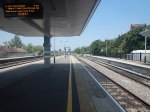
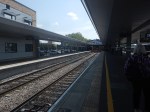
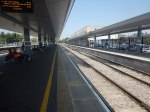

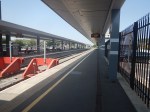
The platforms would be shared with East-West Rail, but they are around 160 metres in length.
The Modern Railways article quote Arriva Group Managing Director UK Trains Amanda Furlong as saying this.
Upgrading our fleet is a vital next step in Chiltern’s modernisation plans and an important part of Arriva’s wider ambition to support the transition to more sustainable rail travel across the UK and Europe.
We are proud to support this important milestone for Chiltern Railways, which is a great example of what can be achieved through strong collaboration with Government to deliver practical improvements for passengers. We look forward to seeing these upgraded trains improve journeys and lower emissions across the network.
She certainly would agree on some issues with Lord Peter Hendy.
So will Chiltern Railways do something to reduce the carbon footprint of their fourteen Class 68 locomotives?
- The Class 68 locomotives don’t have too many miles on the clock.
- Chiltern have already run some their Class 68 locomotives on HVO, so this must be a possibility.
- In total there are thirty-four Class 68 locomotives in service all of which have Caterpillar engines, so a conversion to zero-carbon power could be worthwhile.
I asked Google for an AI Overview on How many diesel locomotives have caterpillar engines worldwide? I got this answer.
While a precise worldwide count of diesel locomotives powered by Caterpillar (CAT) engines is difficult to pinpoint, it’s estimated that hundreds, if not thousands, of locomotives are equipped with CAT engines. Caterpillar has a long history of supplying engines to the rail industry, with engines like the 3500 series powering both mainline and switcher locomotives. Additionally, CAT engines are also used in generator sets for Head End Power (HEP) in passenger locomotives.
Note.
- It appears that, Caterpillar might have given up making truck engines because of emission issues.
- London Marylebone and Oxford is 66.8 miles
- London Marylebone and Birmingham Snow Hill is 112.3 miles.
Perhaps one of the consultants like Ricardo could convert these locomotives to run on hydrogen.
Do Hitachi Battery Electric InterCity Trains Have Problems?
I asked Google the question in the title of this post and got this answer.
While Hitachi’s battery-powered intercity trains have shown promising results in trials, particularly regarding fuel savings and emissions reduction, there are some potential challenges and considerations. These include safety concerns related to lithium battery fires, especially in the event of a crash or derailment, as well as range limitations for longer journeys. However, the technology is continuously evolving, and Hitachi is actively working to address these issues.
That seems fairly positive.
There is also this article on the BBC, which everybody should read, which is entitled Will New Battery-Powered Trains Replace Diesel, And Are They Safe?.
In The Data Sheet For Hitachi Battery Electric Trains, I look at the data sheet, that Hitachi published in late 2023.
These were my conclusions about the data sheet.
These are my conclusions about Hitachi’s battery packs for Class 80x trains, which were written in November 2023.
- The battery pack has a capacity of 750 kWh.
- A five-car train needs three battery-packs to travel 100 miles.
- A nine-car train needs five battery-packs to travel 100 miles.
- The maximum range of a five-car train with three batteries is 117 miles.
- The maximum range of a nine-car train with five batteries is 121 miles.
As battery technology gets better, these distances will increase.
Hitachi have seen my figures.
They also told me, that they were in line with their figures, but new and better batteries would increase range.
125 mph trains with a 120 mile range on batteries, would revolutionise UK train travel.
LNER’s Class 897 Trains
In the Wikipedia entry for LNER, this is said about LNER’s new ten CAF tri-mode trains.
In November 2023, LNER placed an order for 10 ten-car tri-mode (electric, diesel and battery power) Civity trains from CAF. In August 2024, it was announced that the units will be designated Class 897 under TOPS.
According to their Wikipedia entry, it appears the Class 897 trains will be delivered from 2027.
Can I Build A Schedule For The Introduction Of New Trains, Services and Batteries?
I think that I can from the information that is out there.
- East Coast Main Line – December 2025 – Introduction of Lumo between London King’s Cross and Glasgow
- West Coast Main Line – Spring 2026 – Introduction of Lumo between London Euston and Stirling
- Midland Main Line – 2026-2027 – Introduction of EMR Class 810 trains between London St. Pancras and Leicester, Derby, Nottingham and Sheffield.
- East Coast Main Line – From 2027 – Introduction of LNER Class 897 trains between London King’s Cross and Yorkshire.
Note.
- The two Lumo services use trains already in service.
- The Class 810 trains for EMR are being debugged and introduced at the present time.
- The only new trains are the Class 897 trains for LNER.
- The introduction of the Class 897 trains will allow LNER to withdraw some trains for refurbishment and fitting of batteries.
This would mean that before the next general election, almost the full timetable between London and the North of England and Scotland would have been implemented using diesel-electric technology.
Is it a low-risk start to the full electrification of services to the North?
The second-phase would see battery-electric trains introduced.
I believe that Grand Central’s new trains would be brought into service first.
- The new trains are scheduled to be introduced in 2028.
- Grand Central will still have the diesel trains for backup.
- Their new trains would be similar to the other Hitachi trains.
- It looks like they could be doing some splitting and joining.
After the Grand Central trains had been introduced successfully, the trains for the other Hitachi operators would have batteries fitted.
I suspect short routes like Lincoln would be electrified with battery-electric trains first.
There would also need to be short lengths of electrification erected, so that trains could be charged to send them on their way.
Other routes could also be electrified in the same way.
- Basingstoke and Exeter
- Birmingham and Aberystwyth
- Bristol and Penzance
- Cardiff and Swansea
- Crewe and Holyhead
- Edinburgh and Aberdeen
- Edinburgh and Inverness
- Reading and Taunton
- Swindon and Gloucester
If this technique could work for main lines, surely a scaled down version with smaller trains would work for branch lines.
Conclusion
Consider.
- It looks to me, that someone has planned this thoroughly.
- It all fits together extremely well.
It could be the first phase of a cunning plan to use battery-electric trains to electrify the UK’s railways.
Passengers will also see benefits, from when Lumo runs its first train into Glasgow Queen Street station.
I don’t think Hitachi’s trains have any problems, but there is enough float in this plan to make sure, it can be implemented on time and on budget.

