Polanski And Farage Don’t Agree. But They Have More In Common Than You Might Think
The title of this post, is the same as that of this article on the BBC, by Laura Kuenssberg.
It is very much a must read article comparing two of the most controversial party leaders in the UK.
This is the sub-heading.
One is a former stockbroker from the south who, by his own proud admission, loves smoking, drinking and women. The other’s a proud vegan, gay, northern former actor, who told me he’d never drunk a drop.
These first three paragraphs add detail to the story.
But the jubilant Zack Polanski and Nigel Farage have rather a lot in common.
Before you scream, burst out laughing, or think I have lost my marbles, of course, there are very big differences between them.
The Greens talk about a climate emergency. Reform UK calls the government green plans, “net stupid zero”.
This is Laura’s summing up of the Terrible Twins.
Their views on the cause of Britain’s pain vary wildly.
The Greens might point the finger at the super-rich, the “donor billionaires” they often cite. Reform often blames immigration, which they controversially characterise as an “invasion” of people arriving in the UK without permission.
But both parties feed off and stir up sentiment that’s felt by lots of the public: that Britain doesn’t work any more.
Whether it’s the new Green MP saying “working hard used to get you something” in her victory speech, or Nigel Farage repeatedly telling us “Britain is broken”, the same argument flows from both: that the country is in such a dreadful state that only new political saviours can fix it.
And both Reform and the Greens are willing to push the conventions of what traditional UK politicians would find acceptable – or what they believe would make them electable.
That’s not just about their image or the unstuffy ways they court publicity – Nigel Farage willingly going into the I’m A Celebrity jungle, or Zack Polanski being seen on a dance floor in campaign videos – but how they choose to focus on sensitive issues, where others might not choose to tread.
I would disagree that Britain is broken, but that it needs someone with sensible policies that everybody can get behind.
The Greens policies on the super-rich would drive anybody with ambition and money from this country and already countries like Canada are advertising for migrants.
With two immigrant lines, Farage is everything my father thought was bad about Oswald Mosley and his fascists in the 1930s. If a Reform UK Government started rounding up illegal immigrants on the streets, the violence would probable be enormous.
How Much Renewable Energy Will The UK Be Generating By 2030?
I have to admit, that whether you like the Tories or not, they have developed an energy generation policy and an energy relationship with Germany, that appears to be working and is allowing the current Government to do a bit of spending on defence and other needs.
I asked Google AI, the question in the title of this section and received this reply.
The UK government has set an ambitious target to reach 95% low-carbon electricity generation by 2030, aiming for a system driven by 43-50 GW of offshore wind, 27-29 GW of onshore wind, and 45-47 GW of solar power. This plan aims to dramatically reduce fossil fuel reliance, supported by 23-27 GW of battery capacity.
Key 2030 Renewable Energy Projections & Targets:
Total Clean Power Goal: The goal is 95% of electricity from low-carbon sources (renewables and nuclear) by 2030, up from roughly 74% in 2024.
Offshore Wind: Target of 43-50 GW, deemed crucial to powering the grid.
Onshore Wind: Target of 27-29 GW, with recent policy changes lifting bans to accelerate development.
Solar Power: Target of 45-47 GW, aiming to triple current capacity.
Flexibility: 23-27 GW of battery capacity and 4-6 GW of long-duration storage are needed to manage intermittency.
Challenges and Forecasts:
Shortfall Risks: While the government target is high, some projections suggest wind and solar may only account for 44% of generation by 2030, requiring significant acceleration to reach the 95% clean goal.
Investment Needs: Achieving these goals requires an estimated £48 billion in additional investment, on top of planned projects.
Progress: In 2024, renewable sources already hit a record of over 50% in certain quarters, with low-carbon sources overall (including nuclear) providing nearly 70% of generation.
My Thoughts
I will add some of my thoughts.
Electricity Demand: As I write, according to National Grid: Live it is 33.3 GW, which is met by with Production of 27.1 GW and Transfers of 6.2 GW.
Electricity Production: In 2030, I believe that if the UK has long-term battery capacity of something like 4 GW/40 GWh, that total UK electricity production could be upwards of 125 GW.
Hinckley Point C Power Station: This should add 1.6 GW in 2030 and 2031 to further boost UK electricity production.
Pumped Storage Hydro: In How Much Pumped Storage Hydro Will Be Operational In The UK By 2030?, I estimate that the Bank of England standard of energy storage, will add 5 GW of electricity production.
Highview Power: Highview Power are developing long duration liquid-air energy storage and have identified locations for sixteen 300 MW/3.2 GWh monsters.
Excess Electricity Production: This will be exported, either as electricity or after conversion to hydrogen. It will be a Magic Money Forest for the victor of the General Election in 2029.
If Hinckley Point C, the pumped storage hydro and Highview Power’s batteries work as their engineers hope, then the result of the next General Election will be predictable.
It is certainly, Kier Starmer’s to win, by getting the energy right!
Highview Power And The 2029 General Election
Every extra GWh added to energy storage has the following affect.
It will mean that more wind farms will not have to be switched in times of high wind and over production, as the electricity can be stored.
At the present time, there are four ways of storing energy.
- Turn it into hydrogen. But the Hindenberg did a good PR job for not using hydrogen.
- Store it in a pumped storage hydro system, but these have problems with their large land use.
- Store it in a large lithium battery, but these have problems with fire risks and need a large amount of expensive lithium.
- Store it in one of Highview Power’s liquid air batteries.
I believe that Highview Power’s liquid-air long duration batteries, have several advantages.
- They are built from readily available components.
- They can be scaled to the need at the location, where they are installed.
- A small one is 50 MW/300 MWh and a large one is 300 MW/3.2 GWh.
- The batteries come with grid stabilisation and other features.
- The batteries have a lifespan of greater than 50 years
- The energy storage fluid, is captured from the air.
- They are a product, that would be easy to finance in quantity.
- Goldman Sachs is an investor.
- A village with a power problem could fund a Highview Power battery and have a nice little earner, with perhaps a wind turbine on a nearby hill.
- Centrica is an investor.
If a politician were to understand it, it could wind them the next General Election.
Yesterday In Whitehall And The Battle Of Cable Street Compared
I asked Google AI “How many Tommy Robinson supporters were in Whitehall yesterday and received this answer.
London’s Metropolitan Police said the march, organised by anti-immigrant activist Tommy Robinson, drew an estimated 110,000 to 150,000 people, far surpassing expectations.
The Times has a similar figure.
Sky News says this about the counter protest.
An anti-racism counter-protest, attended by about 5,000 campaigners, also took place.
This is backed by other reports.
The Times also said this paragraph about the Police.
More than 1,600 officers were deployed to deal with the demonstrations as well as several football fixtures in the capital. At least 500 police had been drafted in from forces outside London, including the Merseyside, Humberside and Avon & Somerset forces.
So what was it like in the 1930s, when Oswald Mosley and his Blackshirts tried to march through the East End of London?
Google AI gives this account of the numbers.
At the Battle of Cable Street in 1936, there were approximately 3,000-5,000 fascists attempting to march, protected by 6,000-7,000 police officers, who were met by a larger, determined counter-protest of tens of thousands of locals, with estimates for the anti-fascist crowd ranging from over 100,000 to as many as 300,000 people.
My father, who was proud of his part-Jewish heritage and very much an anti-Fascist was there.
It looks like numbers were more the other way yesterday. I don’t think that’s a good thing.
My Family And Lunchtime Naps
Consider.
- My father was a great one for a lunchtime nap of perhaps thirty minutes after his sandwiches and a cup of tea in his print works in Wood Green.
- I can still see him sitting there on a wartime Utility dining-chair fast asleep.
- As my paternal grandfather was a professional alcoholic, I suspect he slept a lot. But whether he took naps, I do not know.
- I’ve always been prone to fall asleep, but as I’ve got older, I seem to do it more often.
- My middle son, also had a nap after Christmas Lunch last year. But was that just coincidence.
These are questions, that I’ve asked Google AI.
Are There Any Medical Benefits Of The Spanish Siesta?
Google AI said.
Yes, there are potential medical benefits associated with the Spanish siesta, which is a short afternoon nap. Studies suggest that siestas can improve cognitive function, mood, and cardiovascular health. A well-timed and appropriately short siesta can help reduce stress, improve memory consolidation, and even lower blood pressure.
That seems fairly positive.
Will A Spanish Siesta Help Atrial Fibrillation?
I ask this question, as I have atrial fibrillation and I was told, it caused my stroke.
Google AI said.
Spanish siesta, or daytime napping, is not a guaranteed or recommended treatment for atrial fibrillation (AFib). While some studies suggest a link between napping and AFib risk, the relationship is complex and depends on nap duration and individual factors. Short naps (15-30 minutes) may be associated with a lower risk, while longer naps could potentially increase the risk, especially in those with hypertension.
As I don’t have hypertension, it could be positive for me!
Does Atrial Fibrilation Run In Families?
Google AI said.
Yes, atrial fibrillation (AFib) can run in families, meaning it can be inherited. While many cases of AFib are linked to lifestyle factors, age, and other medical conditions, a significant portion of individuals with AFib, especially those with no clear cause, have a family history of the condition. Studies suggest that up to 30% of people with AFib of unknown cause have a family history of the condition.
As my father’s medical history seems fairly similar to mine, I wouldn’t be surprised if he had had it.
Is there A Connection Between Atrial Fibrilation And Coeliac Disease?
Google AI said.
Yes, there is an association between atrial fibrillation (AF) and celiac disease (CD), with studies indicating an increased risk of AF in individuals with CD. This connection is thought to be linked to the inflammatory nature of both conditions.
I have both and I suspect my father did too. We both had a serious stroke at around sixty.
My father had a second, which killed him a few years later. Modern pharmaceuticals have probably kept me alive.
I’ve Just Finished My Second Bottle Of Beer Today
And It’s not yet noon!
I felt dehydrated when I got up and started a bottle of Adnams Ghost Ship 0.5 % Beer.
I do find on a hot day, it’s a good thirst-quencher.
Perhaps, hot weather and beer, got my grandfather on the way to being an alcoholic and an early death before forty.
I may already be twice the age at which he died.
I do wonder sometimes, that low and zero-alcohol beer could be used to wean people off the demon drink.
In my case though my father had his own psychological ways, that taught me to be responsible with alcohol.
Appeasement 2.0
The low point of Russia’s war in Ukraine is that Trummkopf, has repeated Chamberlain’s mistake at Munich and presented Putin with Appeasement 2.0.
I wasn’t around in the days of Munich and Chamberlain, but my father was well-informed, as he was in Geneva doing something possibly at the League of Nations and heard a lot of the truth about what was going on in Czechoslovakia and Ukraine at first hand. He believed there was little to choose between Hitler and Stalin on the scale of evil.
In the 1970s, I worked with an Jewish Austrian engineer, who was called Samuels, at the GLC, who had escaped from Austria just before WW2 and then spent the war in the Royal Engineers in bomb disposal. After the war, he was an observer at Nuremberg.
He was one of the most amazing people, I’ve ever met and he taught me a lot about project management.
Aggregation In Artemis
One of the features of Artemis was aggregation, which enabled the project manager to total up the resources they’d need for a project.
I might have programmed the original aggregation for Mr. Samuels, but I can certainly remember discussing it with him. He needed it to check that particular sub-contractors weren’t overstreching themselves.
I lost contact with Mr. Samuels, when his wife died and he moved to CERN in Geneva. But he’s one of several people, who helped frame the design of Artemis.
Soviet War Crimes
This Wikipedia entry is entitled Soviet War Crimes.
This is the first paragraph.
From 1917 to 1991, a multitude of war crimes and crimes against humanity were carried out by the Soviet Union or any of its Soviet republics, including the Russian Soviet Federative Socialist Republic and its armed forces. They include acts which were committed by the Red Army (later called the Soviet Army) as well as acts which were committed by the country’s secret police, NKVD, including its Internal Troops. In many cases, these acts were committed upon the direct orders of Soviet leaders Vladimir Lenin and Joseph Stalin in pursuance of the early Soviet policy of Red Terror as a means to justify executions and political repression. In other instances they were committed without orders by Soviet troops against prisoners of war or civilians of countries that had been in armed conflict with the USSR, or they were committed during partisan warfare.
As a teenager, my father used to tell me stories of atrocities by the Soviet Union and told me, he believed Stalin was on a level with Hitler.
One of the worst atrocities was the Katyn massacre in 1940, which is described in this Wikipedia entry and starts with this paragraph.
The Katyn massacre was a series of mass executions of nearly 22,000 Polish military and police officers, border guards, and intelligentsia prisoners of war carried out by the Soviet Union, specifically the NKVD (the Soviet secret police), at Joseph Stalin’s order in April and May 1940. Though the killings also occurred in the Kalinin and Kharkiv NKVD prisons and elsewhere, the massacre is named after the Katyn forest, where some of the mass graves were first discovered by Nazi German forces in 1943.
I haven’t found out, what my father was doing in 1940, but I am fairly sure he knew of the Katyn and other massacres, as he occasionally commented.
Note.
- The involvement of the NKVD.
- The Katyn massacre is a sub-plot in the film Enigma, which has this Wikipedia entry.
I took this picture of a memorial to Katyn in the centre of Birmingham.
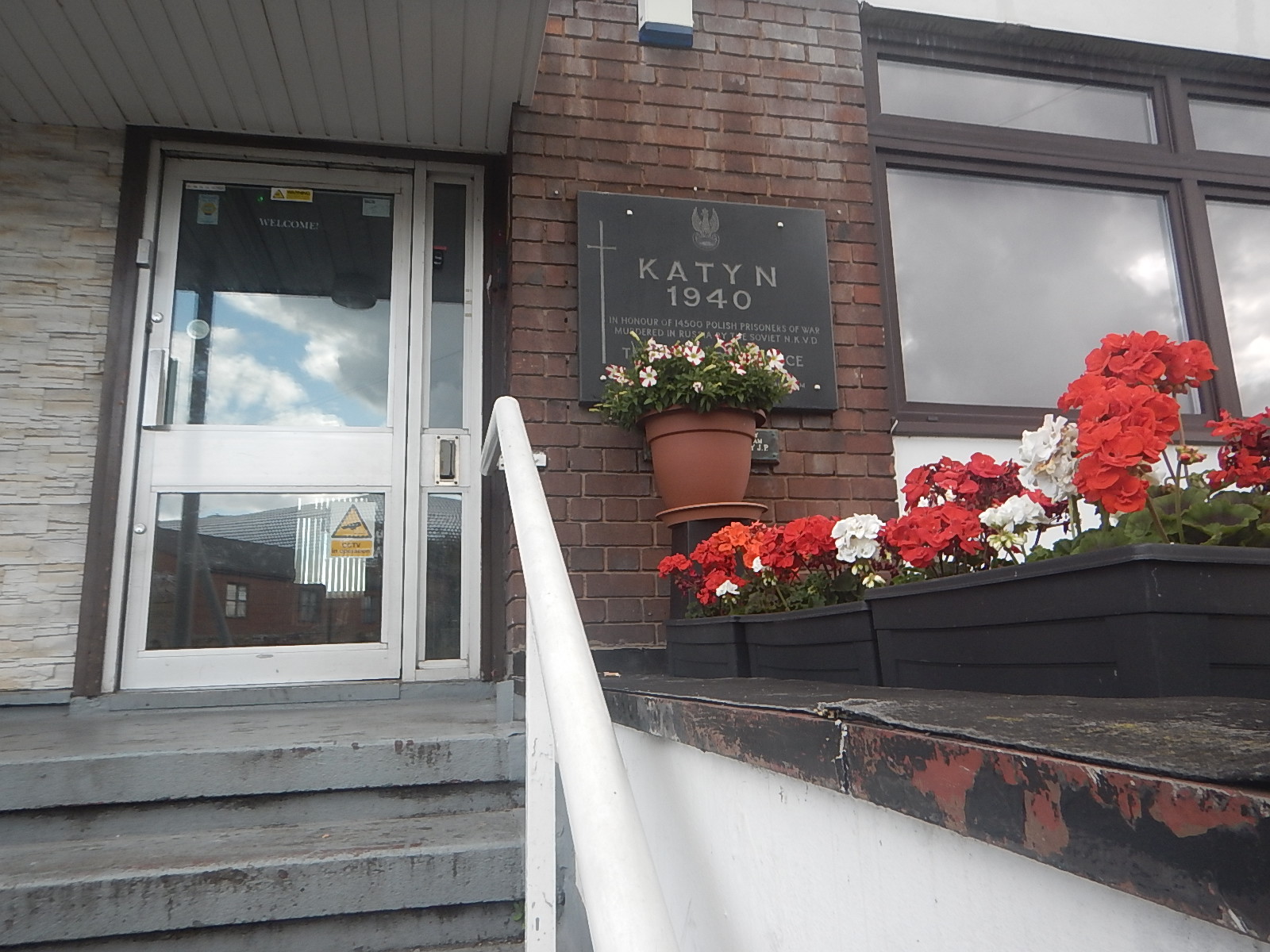
I believe that we ignore the lessons of Soviet behaviour at Katyn, at our peril.
In Vladimir Putin’s Wikipedia entry, there is this paragraph about his parents.
Putin’s mother was a factory worker, and his father was a conscript in the Soviet Navy, serving in the submarine fleet in the early 1930s. During the early stage of the Nazi invasion of the Soviet Union, his father served in the destruction battalion of the NKVD. Later, he was transferred to the regular army and was severely wounded in 1942. Putin’s maternal grandmother was killed by the German occupiers of Tver region in 1941, and his maternal uncles disappeared on the Eastern Front during World War II.
It appears that Putin Senior left the NKVD destruction battalion before 1942. Does that mean he could have been at Katyn?
I do suspect, that Putin Senior told some interesting stories to his son, about the correct ways to deal with your opponents and wage a war.
Conclusion
We are treading a very similar path over eighty years later.
Heat-Related Hospital Admissions And Deaths In London
I never saw my father ride on a deep Underground line, like the Northern or the Piccadilly, as he always said the air was terrible.
That was despite we lived within walking distance of Oakwood station and his print works was just a hundred metres from Wood Green Underground station.
But then he was a man, who always had a car, when I knew him, so I suppose he felt he better use it.
On one occasion, he took me to the Printing Industries Fair at Earl’s Court, which is just seventeen stops on the Piccadilly Line from Wood Green Underground station, as it still is today.
His route was as follows.
He left his MG Magnette outside the print works on Station Road.
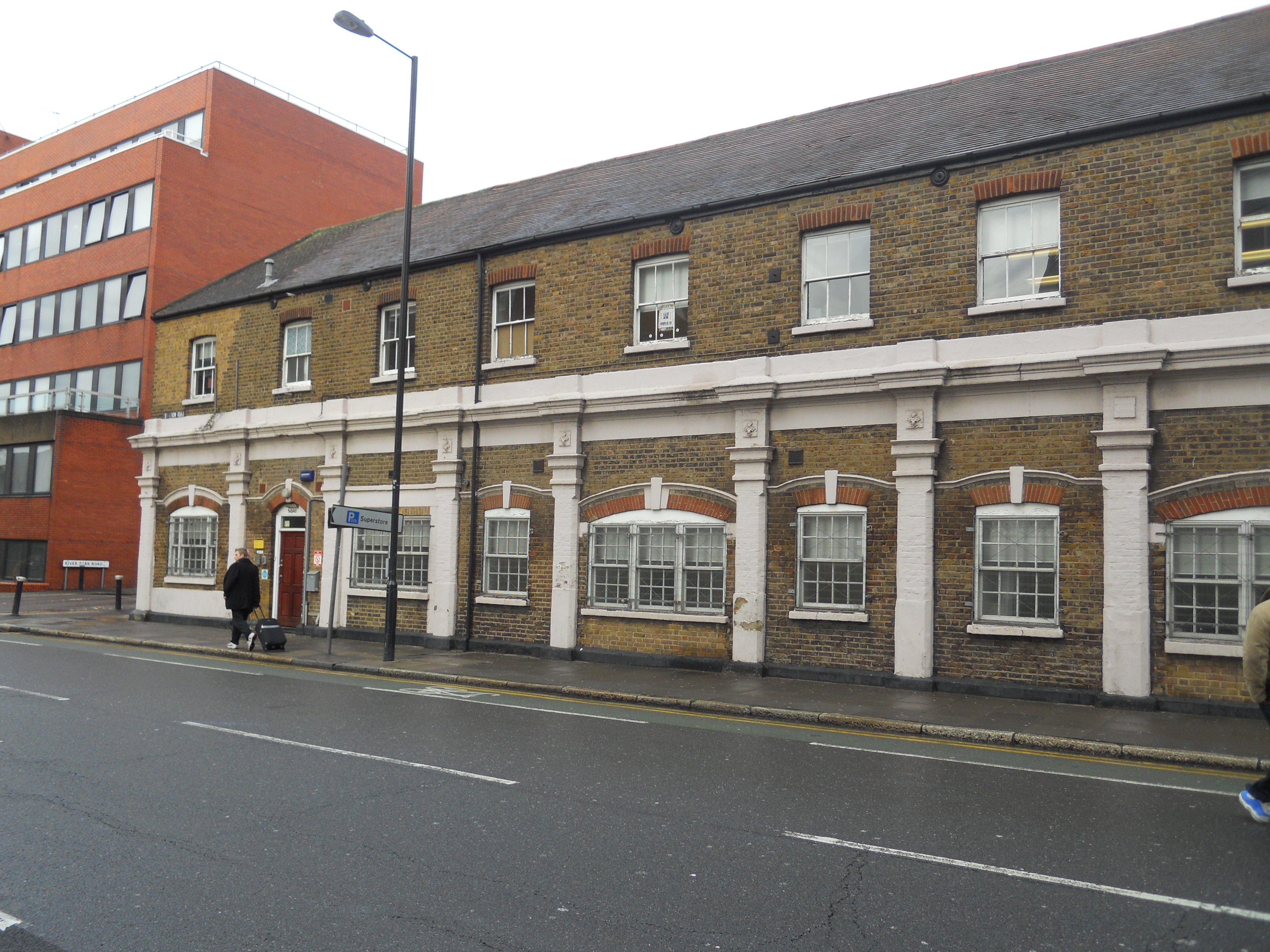
As this picture I took in 2012 shows, parking wasn’t too difficult.
We then walked up the hill to Wood Green station, which is now called Alexandra Palace, from where we took a steam-hauled local train into King’s Cross.
From King’s Cross, we took a Metropolitan Line train to Hammersmith station.
At Hammersmith, we changed stations and then took a train to Baron’s Court station for Earl’s Court Exhibition Centre.
Today, the route between Alexandra Palace and Earl’s Court stations is very different.
- You can change trains at Moorgate, Farringdon or King’s Cross.
- The oldest trains, that you’ll travel on would have been built in 2008.
- All trains will be fully air-conditioned.
I feel, that I could probably get my father to use this route. Although, I doubt it would happen, as he would have turned 120, at the start of this year.
The Growth Of Air Conditioning
Many cars since the 1980s have been airconditioned and now trains are following that route.
In London these are some dates, when trains were air-conditioned.
- Circle, District, Hammersmith & City and Metropolitan from 2008.
- Elisabeth Line from 2017.
- Gospel Oak and Barking from 2019.
- Greater Anglia from 2019/20.
- Lee Valley Lines from 2019.
- London Midland from 2023.
- London Overground from 2009.
- Southern from 2003.
- Southeastern from 2003.
- Thameslink from 2014.
Each year, more and more trains will be air-conditioned.
Conclusion
Has this growth of air-conditioning reduced the number of cases of heatstroke and other heat related admissions to hospitals?
Can I Please Have A Good Night’s Sleep?
In all my seventy-six years, I’ve never had trouble getting to sleep. I can sleep on trains and in planes and like my father, I have no trouble going to sleep in a hard upright chair.
But everything changed two weeks ago. I would go to bed at my usual 23:00 and perhaps drop off for a quarter if an hour and then start to lie there fully awake.
Normally, I now get up at about two-thirty and do the puzzles in The Times.
Welcome to the chewed-string lifestyle.
I’ve tried herbal sleeping tables, but they don’t help!
I went to see my GP and she made no suggestions.
Can I Please Have A Good Night’s Sleep?
Last Night, I Had A Very Bad Night’s Sleep
I usually sleep very well. In fact like my father, if I need a nap, I can even take it on a hard upright chair.
He would have a nap like this every day in his printworks. It also looks like my 53 year old middle son has this ability to take a quick nap.
Last night, I slept very badly and woke about two, with a pain in my hip.
I nearly phoned 111, as I felt so rough. Luckily I didn’t!
I didn’t get much more sleep and eventually had perhaps a nap of an hour or so, before I gave up and got out of bed to do a few puzzles on the Internet.
After a large mug of tea, the pain in my hip receded.
My now-retired GP, reckoned I suffered when the atmospheric pressure was low.
So, did an area of low pressure pass through last night and suck water out of my body?
After a good bath, I certainly feel better now, with no pain in my hip.
In My Strange Skin, I describe an incident, where weather sucked water out of my body!
It’s Now Ten O’Clock
I’ve survived the day and managed to take a train to Reading and back.
I had intended to take pictures in Oxford, but when I got to Reading, it was raining hard and I turned back.
I’ve Often Worked On Christmas Day!
My father was a workaholic and would often go down his print works in Wood Green on Christmas morning.
When I became about seven, I would go with him and I would do small jobs.
In those days of the 1950s, it was a bit of a tradition that Spurs used to play at home on Christmas Day in the morning.
So probably for at least three years, we saw Spurs play and then went home to a late Christmas Lunch.
In the ten years or so, that I was writing and supporting Artemis, I would often use the Christmas holidays to develop the software or fix bugs, as I was unlikely to be phoned up to answer a query.
Today, I’m going to lunch with my son and his partner.
Before that though, I am pleased to see that The Times has published a full set of Monday puzzles. So I’ll be busy.
A Merry Christmas and a Happy New Year to all.
Is Liverpool, England’s Biarritz?
Earlier in the week, I was feeling terrible, with pains in both lower legs.
This has been typical for some months and on Sunday, it was so bad in my right foot, that I tried a new cream called Udrate, that my GP prescribed for me last year.
It seemed to do the trick and I now rub it on twice a day.
On Thursday, I went to Liverpool and in the pouring rain at Euston, as I walked to the train, my legs were feeling terrible.
Throughout the day they improved and at the end of the day, I walked across the City Centre from Liverpool Central to the Albert Dock with no problem at all.
My legs have gradually got worse since I returned.
They are not bad now, but they are certainly worse than when I left Liverpool.
I wrote Would I Go Back To Biarritz Again?, after my one and only visit to the French resort, where I said this.
Of course I would!
Especially, if I could be guaranteed some weather like I had just experienced. The temperature had been about 14 °C with a humidity of over 50%
I do wonder about my father’s health. He suffered from a similar catarrh to that I’ve suffered for the last couple of years and he had lots of skin problems. He always put the latter down to the solvents he used in his printing business. I’m pretty certain he was a coeliac too, as I must have got the genes from somewhere.
I also remember him saying once that he had been to Biarritz. So did he go because he felt healthy there, as I just had?
I don’t know and there’s no-one I can ask who knew him, who’s still alive.
But as I seem to feel better in Biarritz, if I think I need a break in the winter, I think I’ll go.
Liverpool was warm and sunny on Thursday.

The picture shows the new Everton stadium being constructed at Bramley-Moore Dock in Liverpool, was taken as I returned from Headbolt Lane station.
This picture shows Biarritz in early December.
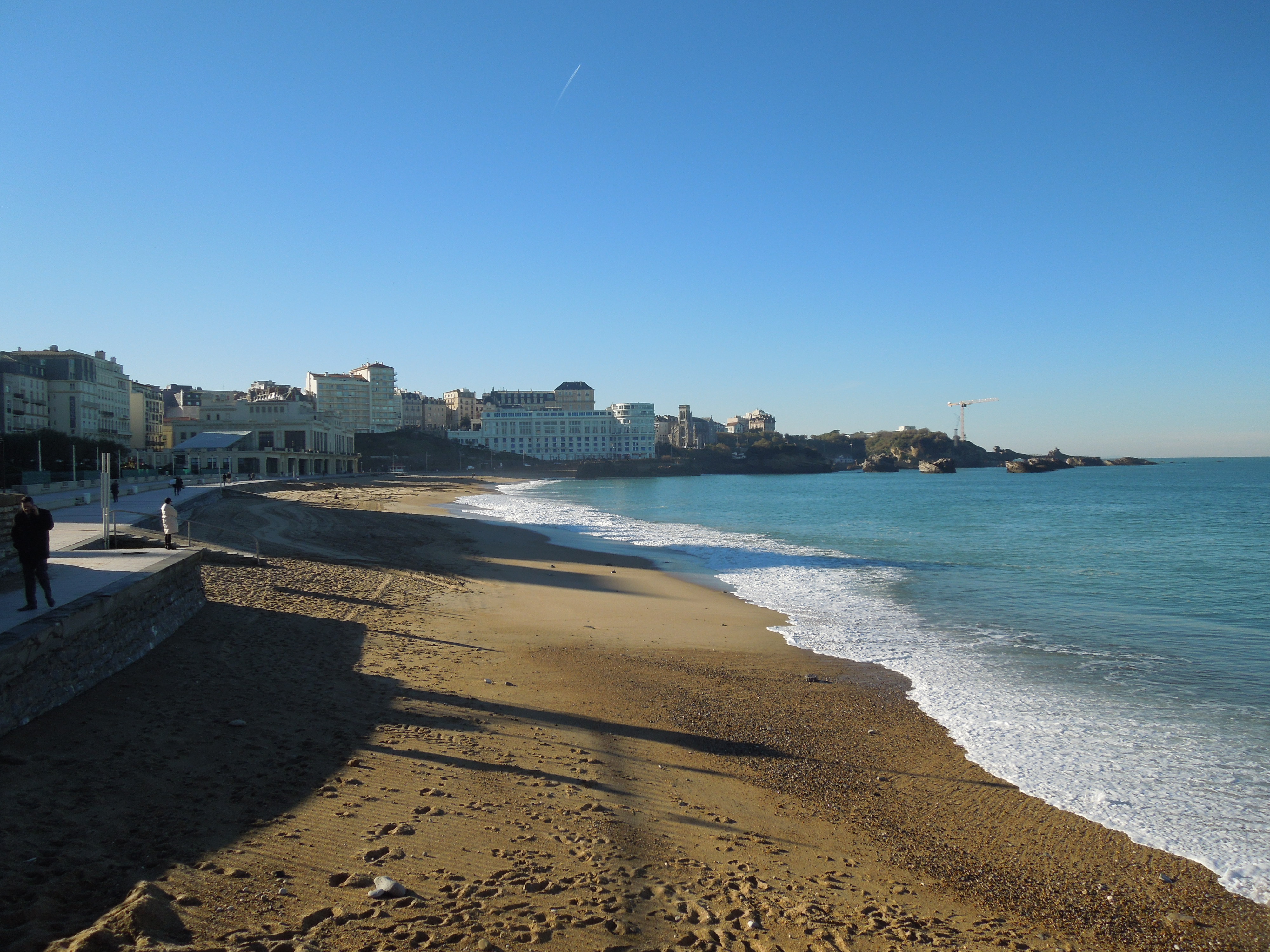
Both cities are bathed in sunshine.
Consider.
- Both cities have seafronts that face West.
- The prevailing winds are from the South-West.
- Both cities have land masses with mountains or hills to their South-West.
Do the hills induce turbulence to the air, which gives both cities, a healthy Autumnal climate that I find acceptable?
 The Anonymous Widower