Northumberland Line Station Contracts Are Signed
The title of this post, is the same as that of this news item from Nexus.
These are the first three paragraphs.
The signs are good for the new Northumberland rail line after the green light was given for construction to get underway on three new stations.
Contracts have been exchanged for principal contractor Morgan Sindall Infrastructure to formally start work on Bedlington, Blyth Bebside and Seaton Delaval stations.
Main construction works are progressing at pace, with station works well underway at Newsham and works approaching completion in Ashington, and 21km of new track is already installed.
It certainly looks like it’s all systems go.
I hope Network Rail have the next reopening ready to go!
London North Eastern Railway Runs Trial Train To Liverpool Street
The title of this post, is the same as that of this article on Rail Advent.
These two paragraphs, describe why this was done.
In an effort to mitigate the effect on passengers during disruption to services, London North Eastern Railway (LNER) ran one of its Azuma trains from Finsbury Park to London Liverpool Street during the early hours of this morning, Friday, 14th July.
The trial run took place to determine the long-term feasibility of diverting services during periods of planned disruption or when significant engineering works were taking place.
There doesn’t seem to have been any problems.
- The route in from Finsbury Park station went through Canonbury, Dalston Kingsland, Hackney Central, Homerton, Hackney Wick, Stratford and Bethnal Green stations, which was a distance of 9.6 miles.
- The route out to Finsbury Park station went through Bethnal Green, Cambridge Heath, London Fields, Dalston Kingsland and Canonbury, what was a distance of 5.8 miles.
Note.
- Two different routes were checked.
- The Class 800 train had five cars.
- Platform 4 at Liverpool Street station was used, which is normally used by London Overground and Cambridge services.
As this comes so soon after the test run to Cleethorpes, that I wrote about in Azuma Test Train Takes To The Tracks As LNER Trials Possible New Route, I wonder if Network Rail and the train operating companies are planning for some worst case scenario, where the two or more of the West Coast Main Line, Midland Main Lone and East Coast Main Line are blocked.
LNER and Network Rail have shown the following.
- Azumas can use Cleethorpes station.
- Azumas can use Liverpool Street station.
We also know that Cleethorpes has a direct TransPennine train service across the North of England to Doncaster, Sheffield, Manchester and Liverpool.
So if say Euston has to be shut for perhaps fourteen days during the construction of High Speed Two, a service between Liverpool Street and Cleethorpes via Colchester, Ipswich, Cambridge, Peterborough and Lincoln could be used to get some passengers to and from the North.
The other big problem is the removal of the problems of the Newark Crossing, which if it results in a long blockade of the East Coast Main Line, might need services to go into an alternative London terminal.
The Powerhouse In The East
Consider.
- The importance of Cambridge to the economy of the UK is growing fast.
- The city suffers from a shortage of commercial premises, housing and staff at all levels.
- I have just looked at the non-passenger traffic on the West Anglia Main Line for all of yesterday and there were just six freight trains through Bishop’s Stortford.
I wonder, if it would be possible to run a Liverpool Street and Cleethorpes service via Cambridge, Ely, Peterborough, Spalding, Sleaford, Lincoln, Market Rasen, Barnetby and Grimsby Town?
- The service avoids the East Coast Main Line, except through Peterborough, where it would use the separate Werrington lines.
- Liverpool Street is in the heart of one of the world’s major financial centres.
- Liverpool Street is on the Elizabeth Line.
- The service could call at Stansted Airport, but a reverse would be needed.
- Peterborough is sometimes promoted in Cambridge as a city, that could be developed, to provide support for Cambridge.
- A reverse would be needed at Lincoln.
- Lincoln is developing as a university city with character.
- Grimsby and Cleethorpes are close to the fast expanding Humberside renewable energy and hydrogen cluster.
The service could be paired with a Liverpool Street and Norwich service, via Ely, Thetford, Attleborough and Wymondham.
The services could alternate every half hour or perhaps leave London as a pair and split and join at Cambridge.
Platform Availability At Kings Cross And Liverpool Street
Consider.
- Digital signalling on the East Coast Main Line will increase the number of possible trains between London and the North.
- LNER have said they want to increase services to the North and have identified a possible service to Cleethorpes.
- Grand Central would like to increase services to Bradford.
- Lumo have started services to Newcastle and Edinburgh from Kings Cross.
- The Elizabeth Line now runs less services into Liverpool Street station.
- The Elizabeth Line connects to Liverpool Street, but doesn’t connect to King’s Cross.
- Liverpool Street is to undergo a major refurbishment, which should increase the overall passenger capacity of the station.
Would it be sensible to move a small number of services from King’s Cross to Liverpool Street?
Surely, the logical service to move to Liverpool Street would be the new Cleethorpes service.
- It would route via Cambridge, Cambridge North, Ely, Peterborough, Spalding, Sleaford, Lincoln, Market Rasen, Barnetby and Grimsby Town.
- It would use the Werrington Lines through Peterborough.
- It would not need a path on the East Coast Main Line.
- The service would provide a much needed direct link between Cambridge and Lincoln via Peterborough.
- The service could also be hourly or two-hourly.
I also believe that a Liverpool Street and Cleethorpes service could be run by a battery-electric Azuma.
- The route is electrified between Liverpool Street and Ely and through Peterborough.
- Ely and Peterborough is 30 miles.
- Peterborough and Lincoln is 56.9 miles.
- Lincoln and Cleethorpes is 47.2 miles.
- There would need to be a charging station or a few miles of electrification at Cleethorpes.
- There may be 134.1 miles of unelectrified track, but there can be a Splash and Dash at Peterborough.
A Stadler Akku would be able to handle this route, so I suspect that a similar-sized battery-electric Azuma should also be able to handle the route.
Cleethorpes Station – 28th June 2023
I took these pictures at Cleethorpes station yesterday.
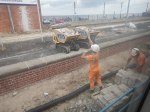
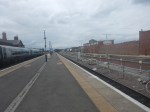
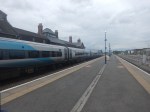
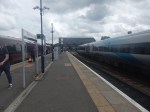
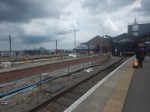
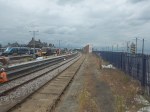
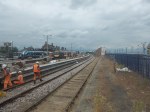
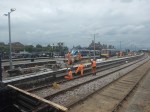
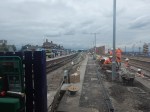
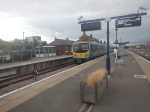
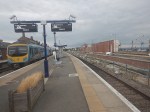
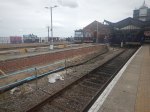
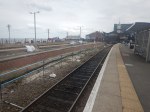
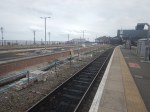
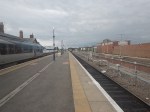
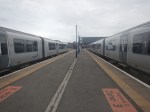
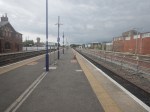
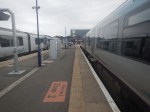
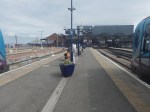
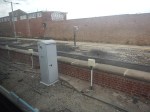
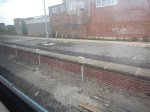
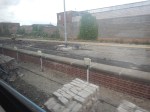
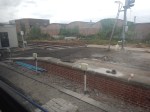
Compare them with this one taken three years ago.
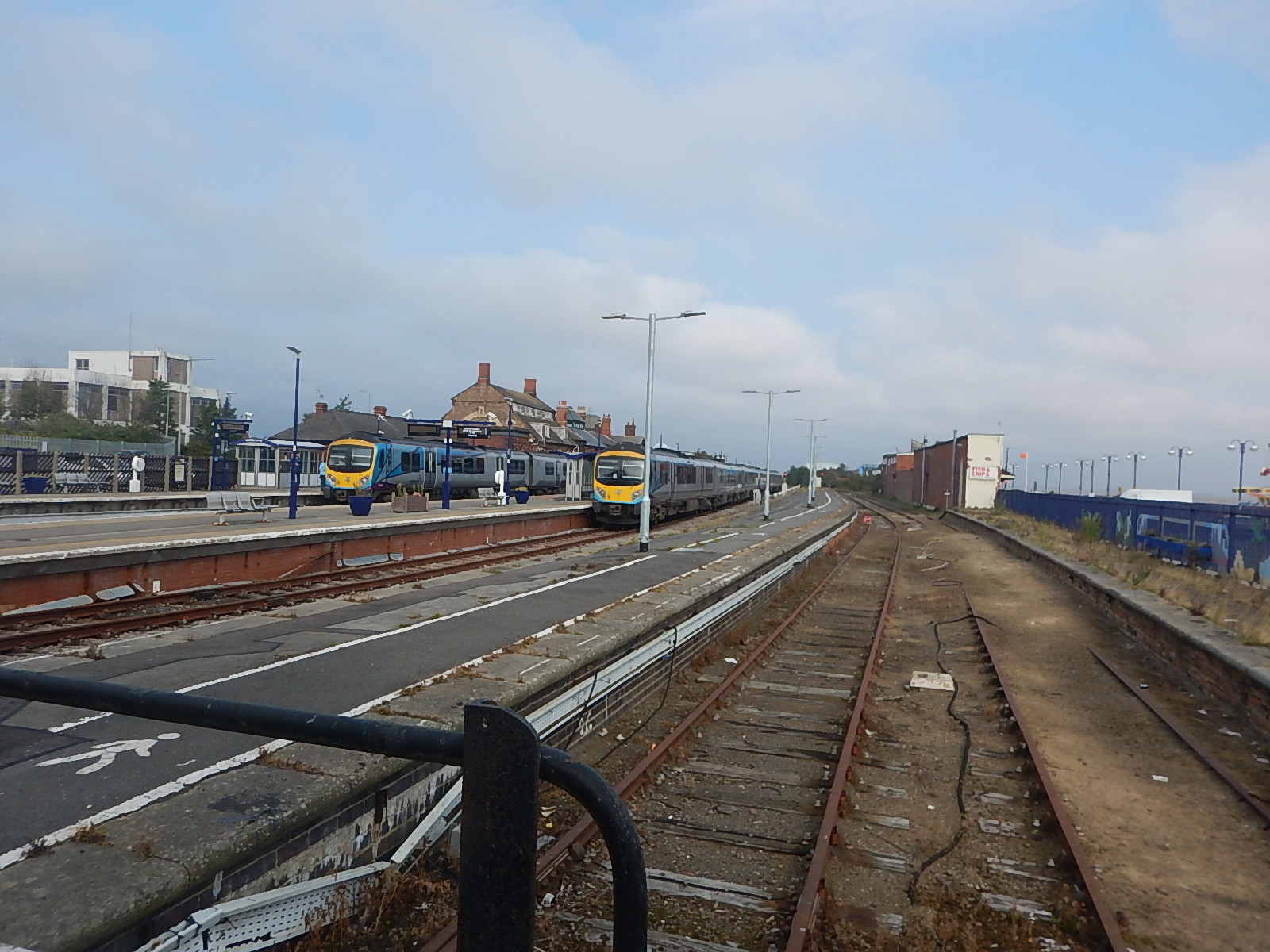
Note.
- It appears a Platform 4 has been created on the seaward side of the station.
- The track in Platform 4 in yesterday’s pictures appears to be newly-ballasted, whereas three years ago it had an air of dereliction.
- There is now a smart blue wooden fence separating the tracks from the station concourse.
- Strangely, the lighting between Platforms 3 and 4 had been installed three years ago.
- There are different types of lighting on the two islands. Could this be because Network Rail are looking for the lights that perform best in a seaside environment?
This Google Map shows Cleethorpes station.
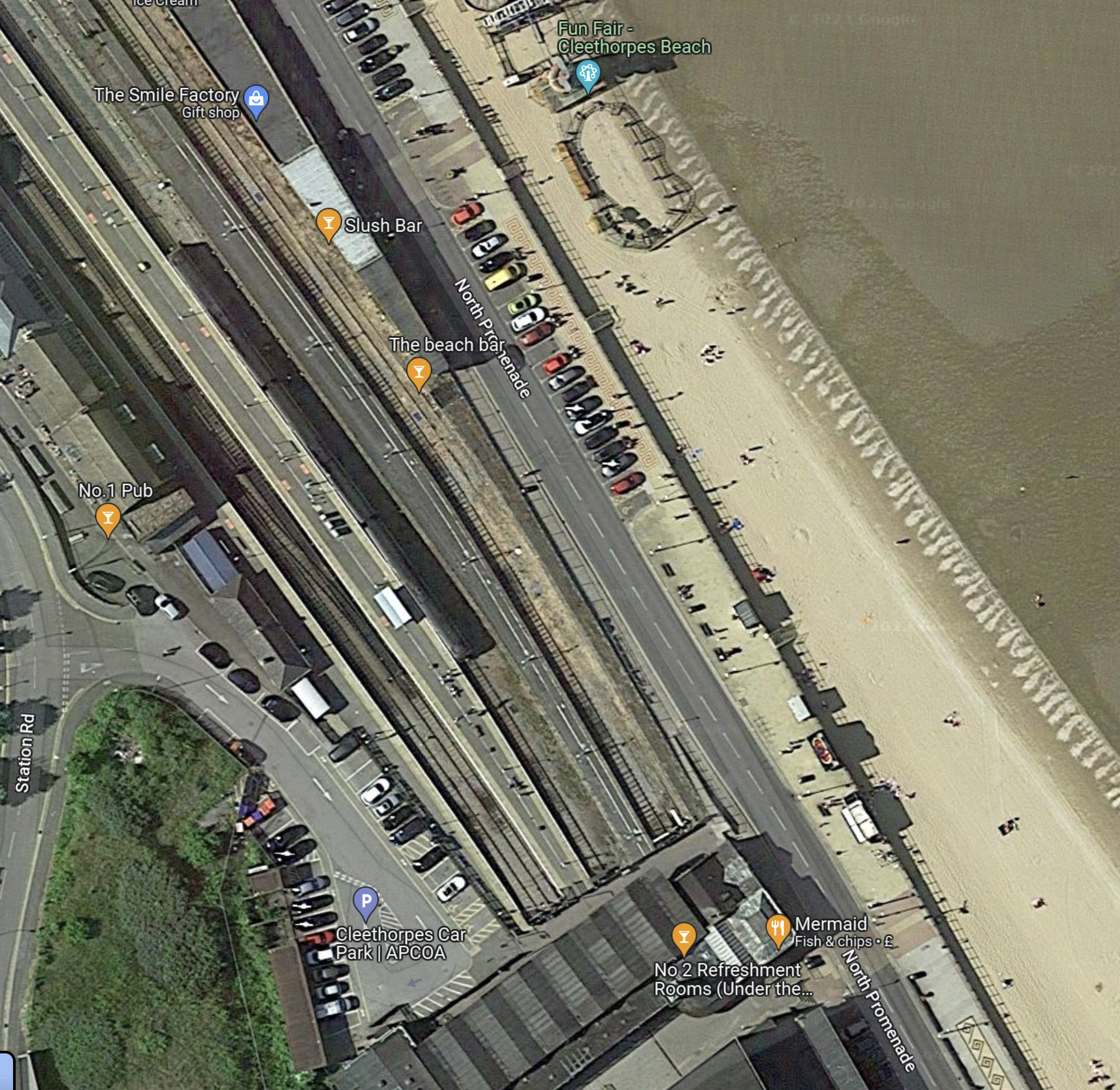
Note.
- The track in Platform 4 appears to be complete.
- The station is very handy for the beach.
In Azuma Test Train Takes To The Tracks As LNER Trials Possible New Route, I said this.
It looks like three platforms 2, 3 and 4 at Cleethorpes station were checked.
I think it is possible to say, that once Network Rail’s brickies and paviours have tidied up, that Cleethorpes station will be LNER-ready and could accept a service from London via Lincoln, Market Rasen, Barnetby and Grimsby Town.
What Will Be The Initial Service Of The London and Cleethorpes Service?
The Wikipedia entry for Cleethorpes station, says this about the London service.
In the 1970s Cleethorpes had a twice daily return service to London King’s Cross, typically hauled by a Class 55 Deltic.
Three people, I spoke to about the possible service, mentioned that two trains per day would be the frequency.
I certainly think, that this frequency, could be a sensible initial frequency.
If it worked in the 1970s, I can see why it might work in the 2020s.
- Kids still like to go to the seaside and the station is close.
- This area of North-East Lincolnshire, is getting increasingly important as an energy and hydrogen powerhouse.
- Cleethorpes station has the space to handle more train services.
- Cleethorpes station has a small depot nearby, which could ease train operations, by stabling a train overnight for an early start in the morning.
But there is one factor that could attract passengers to use the train between King’s Cross and Cleethorpes. I believe that the soon-to-be-announced Hitachi battery-electric Class 800 trains could be able to handle the route without using a drop of fossil fuel.
Running Battery-Electric Class 800 trains Between King’s Cross And Cleethorpes
Consider.
- Cleethorpes and Lincoln is 47.2 miles with three stops.
- Lincoln and Newark Northgate, where the electrification starts is 16.7 files.
- Cleethorpes and Newark Northgate is 63.9 miles, with an out-and-back trip being 127.8 miles.
- Battery-electric trains would do most of their charging between King’s Cross and Newark Northgate.
- Full or partial charging should be possible at both Cleethorpes and Lincoln.
- Battery-electric trains could give help, in cases of catenary failure on the East Coast Main Line.
- In What Will Be The Range Of A Hitachi Class 800 Battery Train?, I said that I believed a Class 800 battery train would eventually have a battery range in excess of the Stadler FLIRT Akku’s 139 miles, as no-one likes being second.
I believe these strategies are possible.
Charge A Round Trip At Cleethorpes
Consider.
- This is a range of just 63.9 miles.
- The service would use Platform 4 at Cleethorpes station.
- Charging at Cleethorpes could be by a short length of overhead electrification in Cleethorpes station or a specialist charger in the small depot.
- Charge time would be around 15 minutes.
- If charging were in the station, there would be no shunting of trains around.
This could be a simple and efficient way to run the service.
A Battery Round Trip To Cleethorpes
- This is a range of 127.8 miles.
- The service would use Platform 4 at Cleethorpes station.
- I believe that this service would need a simple charger at Cleethorpes station, as trains do get delayed and these delays on a battery-electric train, may increase the need for charging.
- Also what would happen in Grimsby Town were at home to a London club in the FA Cup?
This could be a reliable way to run the service, but I believe drivers need a charging facility at Cleethorpes as a fail-safe backup.
Electrification Between Grimsby Town And Cleethorpes
In Between Lincoln And Cleethorpes – 28th June 2023, I said this.
3.3 miles between Grimsby Town and Cleethorpes took just ten minutes.
All trains terminating at Cleethorpes would get at least twenty minutes of charging, every time, they turned round at the station.
Much of the route between Grimsby Town and Cleethorpes is only single-track, so this could be a very affordable option.
I don’t think there would be many objectors to electrifying between Grimsby Town and Cleethorpes.
An hourly train would use twenty minutes in ever hour between Grimsby Town and Cleethorpes, it looks like the limit would be three trains per hour terminating at Cleethorpes.
So could the three trains be the following?
- One train to Liverpool Lime Street.
- One train to Lincoln, with alternate trains continuing to Nottingham, Loughborough and Leicester and some trains to Kings Cross.
- One train to Barton-on-Humber.
Note.
- The Liverpool Lime Street train, would use batteries between Grimsby Town and Hazel Grove, which is 101.4 miles.
- A London King’s Cross train, would use batteries between Grimsby Town and Newark Northgate, which is 60.6 miles.
- A Leicester train, could use batteries between Grimsby Town and Leicester, which is 105.3 miles. Nottingham and Grimsby Town is 77.8 miles.
- Leicester and Nottingham services would need electrification at the Western end.
- King;s Cross, Leicester and Nottingham services would be arranged so Lincoln and Cleethorpes was an hourly service.
- A Barton-on-Humber train, would use batteries between Grimsby Town and Barton-on-Humber , which is 19.6 miles or 39.2 miles for a round trip.
Cleethorpes station could be at the centre of its own battery-electric train network, with all trains powered by just 3.3 miles of single-track electrification.
A Fraught Journey Between Worcester Shrub Hill And Reading Stations
My train home from Worcester Shrub Hill station didn’t make the most impressive of starts to my journey back to Reading.
- The five-car train was supposed to leave at 15:15.
- It was also supposed to arrive in Reading at 16:58.
- But the relief driver was delayed.
Eventually, we left at 15:31.
The train didn’t appear to be running at full speed and around Moreton-in-Marsh, staff started distributing water, which in my view is always a sign that all is not well.
I measured the temperature and humidity at 26.7 °C and 40% respectively, so the water was welcome.
I asked one of the staff what was up and was informed, that two of the engines were overheating because of the heat, so were we effectively running on the remaining cool engine?
Eventually, we were informed that the train would terminate at Charlbury station, where we would all be picked up by the following train, which would have nine cars.
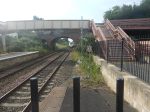
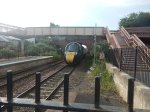
After Charlbury, things didn’t get much better.
- The rescue train eventually left Charlbury at 17:38, which was twenty-six minutes late.
- The train wasn’t full and I had a table to myself, but after Oxford, there wasn’t a seat anywhere.
- We missed out the stop at Didcot Parkway station because of flooding, caused because of a violent thunder storm.
- The rescue train didn’t even make Paddington and it was terminated short in the bi-directional Platform 7 at Reading, because of an unwell passenger.
Eventually, when I arrived in Reading station at 18:55, the rescue train was fifty-five minutes late.
As my original train, should have arrived at 16:58, I was actually, three minutes short of two hours late.
By the time, I got to Platform 14 for the 16:59 Elizabeth Line train to Central London, it had gone, so I had another thirty minute wait.
I finally arrived home at 21:00, after a nearly 5¾ hour journey.
I have a few thoughts.
Changing At Reading
Part of the reason, that I missed my Elizabeth Line train, was that the escalators to Platform 14 were out of action and I had to wait for the lift, as I don’t trust myself going down stairs.
I have said before that if you need a ticket in your change a Reading, there should be a ticket machine on the bridge.
As Reading station is managed by Network Rail, perhaps, they should examine the operation of the station with a good dose of old-fashioned time and motion in more detail.
The Elizabeth Line Frequency To London
The Elizabeth Line only runs two trains per hour (tph) between London and Reading.
This may be fine when everything is going well, but on days like Sunday, when trains aren’t performing well and the weather is not behaving itself, would four tph be better?
Perhaps, the two extra trains would run between Reading and Abbey Wood, and only stop at say Twyford, Maidenhead, Slough, Hayes & Harlington, Southall, Ealing Broadway, Old Oak Common, Paddington, Bond Street, Tottenham Court Road, Farringdon, Liverpool Street, Whitechapel, Canary Wharf, Custom House and Woolwich.
Great Western Railway Trains Between Oxford, Reading and Didcot Parkway and London
The three terminals get the following services to and from London
- Didcot Parkway – 4 tph
- Oxford – 4 tph
- Reading – 11½ tph – 8½ fast and 3 slow
Consider these questions.
- How many travellers between Didcot Parkway, Oxford and Reading and Paddington, now use the Elizabeth Line for onward travel from Paddington?
- How many of the endless visitors to Oxford start their journey on the Elizabeth Line?
- How many visitors to Oxford combine a trip with one to Bicester Village?
- How many travelling by train between Oxford and Cambridge will use part of the Elizabeth Line for the journey?
- Is it fair, that Cambridge is connected to four London rail terminals; King’s Cross, Liverpool Street, London Bridge and St. Pancras and Oxford is connected to just two; Marylebone and Paddington?
I suspect there’s considerable scope to reorganise services between the three stations and London to provide a better service.
GWR’s Paddington and Didcot Parkway service, which has a frequency of two tph, could be moved to the Elizabeth Line and possibly extended to Oxford, once Didcot Parkway and Oxford is electrified.
This would give.
- Didcot Parkway would have two fast tph to Paddington and two stopping tph on the Elizabeth Line with all its connectivity and delights.
- Oxford would have two fast tph to Paddington and two stopping tph on the Elizabeth Line.
- Reading will have a much-needed Elizabeth Line frequency of four tph.
Note.
- Terminating the Elizabeth Line at Oxford, means that there are services connecting Oxford and Cambridge, with a single change at either Farringdon or Liverpool Street.
- Oxford would also get one change connectivity to Gatwick, Heathrow and Stansted Airports.
- The slow lines between Oxford and Maidenhead typically have operating speeds of 90-100 mph. So if the Class 345 trains on the Elizabeth Line and the track were upgraded to 100 mph, this might save a few minutes in the outer reaches of the Elizabeth Line.
- The Elizabeth Line could terminate in one or two South-facing bay platforms on the East side of the station. This position would reduce passenger traffic on the crowded footbridge.
- If all the bay platforms were on the same East side of the station, this would simplify and ease passenger flows.
- Chiltern and East West Railway services could be timed for an easy interchange.
- The proposed Cowley Branch could also use the South-facing bay platforms.
The more I look at it, the more I like the idea of running the Elizabeth Line to Oxford.
The Heat Problem On The Class 800 Trains
The Wikipedia entry for the Class 800 trains has this paragraph on the overheating of the engines or generator units (GUs) on the trains.
The GU is installed on vibration-isolating mountings, and fitted with side-mounted cowls to reduce external noise. Heat management measures include thermal insulation around key areas such as cable ducts. According to Modern Railways magazine, the limited space available for the GUs is responsible for them being prone to overheating. It claimed that, on one day in summer 2018, “half the diagrammed units were out of action as engines shut down through overheating”.
That was in 2018, which was five years ago. But it appears to be still happening.
Would Overheating Happen With Battery Units?
One of the reasons, I went to Worcester was to assess the feasibility of battery-electric trains on the route.
This article from EV-Lectron is entitled Electric Cars in Hot Weather – What You Need To Know, gives a detailed set of answers.
But it probably comes to the conclusion, that cold weather with the extra heating load might be more of the problem.
I suspect, that if you were running battery electric trains on a route of over fifty miles, the best thing would be to have electrification at both ends of the route.
If, as I have calculated in Reading And Oxford – 10th June 2023, that to run battery-electric trains to Hereford needs a length of electrification between Worcester Shrub Hill and Great Malvern stations, then when they leave the electrification, they should have the interiors at the right temperature for staff and passengers.
I also suspect that battery-electric trains need to be well insulated to cope better with cold weather.
Trains Back On Track After Repairs To Unsafe Nuneham Viaduct
The title of this post, is the same as that of this article on the BBC.
This is the sub-heading.
Rail services between Didcot and Oxford have resumed after a two-month line closure caused by an unsafe viaduct.
These are the first two paragraphs.
Services had been expected to resume on Saturday but the first passenger train ran on the line earlier.
Nuneham Viaduct, which crosses the River Thames near Abingdon, was declared unsafe on 3 April.
It looks like it was a job well done.
125 mph Upgrade For MML OLE South Of Bedford
The title of this post, is the same as that of an article in the June 2023 Edition of Modern Railways.
This is the sub-heading.
Targeted Investment Benefits From Project SPEED Approach
The main objective was to upgrade the 1980s electrification between Bedford and St. Pancras, so that it could support 125 mph running by East Midlands Railway’s new Class 810 trains.
Originally, a total replacement was envisaged, but in the end a more selective approach will be carried out.
This paragraph indicates the benefits of the approach.
The proposal for wholesale replacement of the OLE South of Bedford would have cost several hundreds of millions of pounds, whereas the approved scheme comes in at just £84 million, around one-third of the previous cost – testament to the application of SPEED principles.
I have a couple of thoughts.
Network Rail’s Project Management
If I go back to the 1970s and 1980s, when we were developing and selling the project management system; Artemis to the world, we sold very few systems to the UK Government and none to British Rail or the NHS. Later Artemis was used on the Channel Tunnel and the Rail Link to London, the Jubilee Line Extension, sections of the Docklands Light Railway and railways in Australia and Hong Kong.
So it is good to see, Network Rail getting to grips with managing the electrification upgrade of the Midland Main Line with some good project management.
An Encounter With A Group Of Drivers
It might have been five years ago, when I travelled with a group of drivers from East Midlands Trains positioning to St. Pancras.
- One of the observations they had was that the Class 700 trains coming into service were not fast enough as they were only 100 mph trains, whereas their Class 222 trains were capable of 125 mph.
- Since then the Class 360 trains have been introduced on Corby services. These trains have been uprated from 100 to 110 mph.
- We now have the situation, where Class 810 trains capable of running at 125 mph will replace the Class 222 train.
If you look at the traffic at West Hampstead Thameslink station, you can see that Both Thameslink and East Midlands Railway are using the fast lines, through platforms 3 and 4.
The fast lines have a maximum speed of 125 mph North of Luton and generally 100-110 mph between Luton and West Hampstead Thameslink station.
Would it help the timetabling of services on the Midland Main Line, if the Thameslink services were capable of running faster, when they were using the fast lines?
I feel the drivers may have a point.
Devizes Station Would Need To Be Part Of Wider Rail Plan
The title of this post, is the same as that of this article on Railway Gazette.
These two paragraphs outline the current status.
The construction of a Devizes Gateway station at Lydeway is unlikely to represent value for money as a standalone project, but it could be viable as part of a wider rail improvement programme, a study has concluded.
The feasibility study undertaken by Wiltshire Council, Devizes Development Partnership, GWR and Network Rail built on a strategic outline business case submitted to the Department for Transport under the Restoring Your Railway Fund programme in November 2021.
The Department for Transport will now decide what to do next.
I think there are other issues on the route between Reading and Taunton.
The Current Train Service
The only passenger services using the Reading and Taunton route are these three trains, which all have a frequency of one train per two hours (tp2h).
- London Paddington and Exeter St. Davids – Calling at Reading, Newbury, Hungerford, Pewsey, Westbury, Castle Cary, Taunton and Tiverton Parkway
- London Paddington and Plymouth – Calling at Reading, Taunton, Tiverton Parkway and Exeter St Davids
- London Paddington and Penzance – Calling at Reading, Taunton, Tiverton Parkway and Exeter St Davids
Note.
- London Paddington and Exeter St. Davids takes a few minutes over two hours.
- London Paddington and Plymouth takes a few minutes over three hours.
- London Paddington and Penzance takes a few minutes over five hours.
- The Reading and Taunton route is a double-track railway with a 110 mph operating speed.
- London Paddington and Newbury is electrified.
- The last two trains alternate to give Plymouth an hourly service.
- After Exeter St. Davids, trains have a sophisticated stopping pattern to give all stations served a good service.
From several trips along the line, I have the impression, that it’s a route, where drivers can get the best out of the trains.
Electrification
The line would benefit from electrification, in terms of journey times and decarbonisation.
But could this route be run by battery-electric trains?
- It is 89.7 miles between Newbury and Taunton.
- It is 120.4 miles between Newbury and Exeter St. Davids.
- It is 52.1 miles between Exeter St. Davids and Plymouth.
- It is 79.4 miles between Plymouth and Penzance.
- London Paddington and Newbury is electrified.
- Taunton, Exeter St. Davids, Plymouth and Penzance stations could have a charging system of some sort.
This Hitachi infographic shows the specification of the Hitachi Intercity Tri-Mode Battery Train.

Consider.
- Two trains go between Newbury and Taunton without stopping.
- The Exeter St. Davids service stops three times.
- Newbury and Taunton non-stop took 75 minutes at an average speed of 72 mph
- Newbury and Taunton with three stops took 78 minutes.
- All trains currently appear to be nine cars.
I suspect that Hitachi’s Intercity Tri-Mode Battery Train could go between Newbury and Taunton with a great deal of ease.
How many diesel engines and batteries would the train have?
Normally, nine-car Class 800/802 trains have five diesel engines.
So how many will be replaced by batteries?
The infographic says one engine will be replaced, so if that is a five-car train, it looks likely that a nine-car train could have two batteries.
But Hitachi could be playing a long game!
In Stadler FLIRT Akku Battery Train Demonstrates 185km Range, I wrote about how the FLIRT Akku has a range of 115 miles.
If Hitachi can squeeze 125 miles out of a nine-car Class 800 with two or three battery packs, they will outrange the FLIRT Akku and be able to run between London Paddington and Penzance on batteries, with some topping up on the way.
We mustn’t forget the engineers at Hyperdrive Innovation, who are designing and building Hitachi’s battery packs.
They will be ultracompetitive and know the range required to get battery-electric trains to Penzance.
I suspect that when the range of the nine-car battery-electric Class 800/802 is revealed, it will astonish everybody!
Bedwyn Station
Bedwyn station is served by an hourly shuttle train to and from Newbury, run by a diesel train.
The station used to have a direct service from London, but now passengers change at Newbury.
A Station For Marlborough
I investigated this in A Station For Marlborough, where this was my conclusion.
With the next generation of electric train with onboard energy storage or IPEMUs, a Marlborough station on a new Marlborough Branch Line can be used to create a two tph service to and from Paddington to replace the current one tph service from Bedwyn.
So a new Marlborough station would be a win for all those using stations on the Reading to Taunton Line to the East of Pewsey.
I also wonder how many other similar services can be developed by extending a service past a main line terminal to a new or reopened branch line, which is built without electrification and run using trains with onboard energy storage.
In answer to my posed question in the last paragraph, I suspect it is quite a few!
Devizes Gateway Station At Lydeway
I wrote about this proposed Devizes Gateway station in Reinstatement Of Rail Access To Devizes Via A New Station At Lydeway.
After writing Was Baldrick An Essex Man? about the building of an avoiding line at the new Beaulieu Park station North of Chelmsford, I do wonder, if it would be an idea to incorporate one in this proposed station, if there is a need to increase capacity.
This Google Map shows the station site, where the A342 crosses the railway.
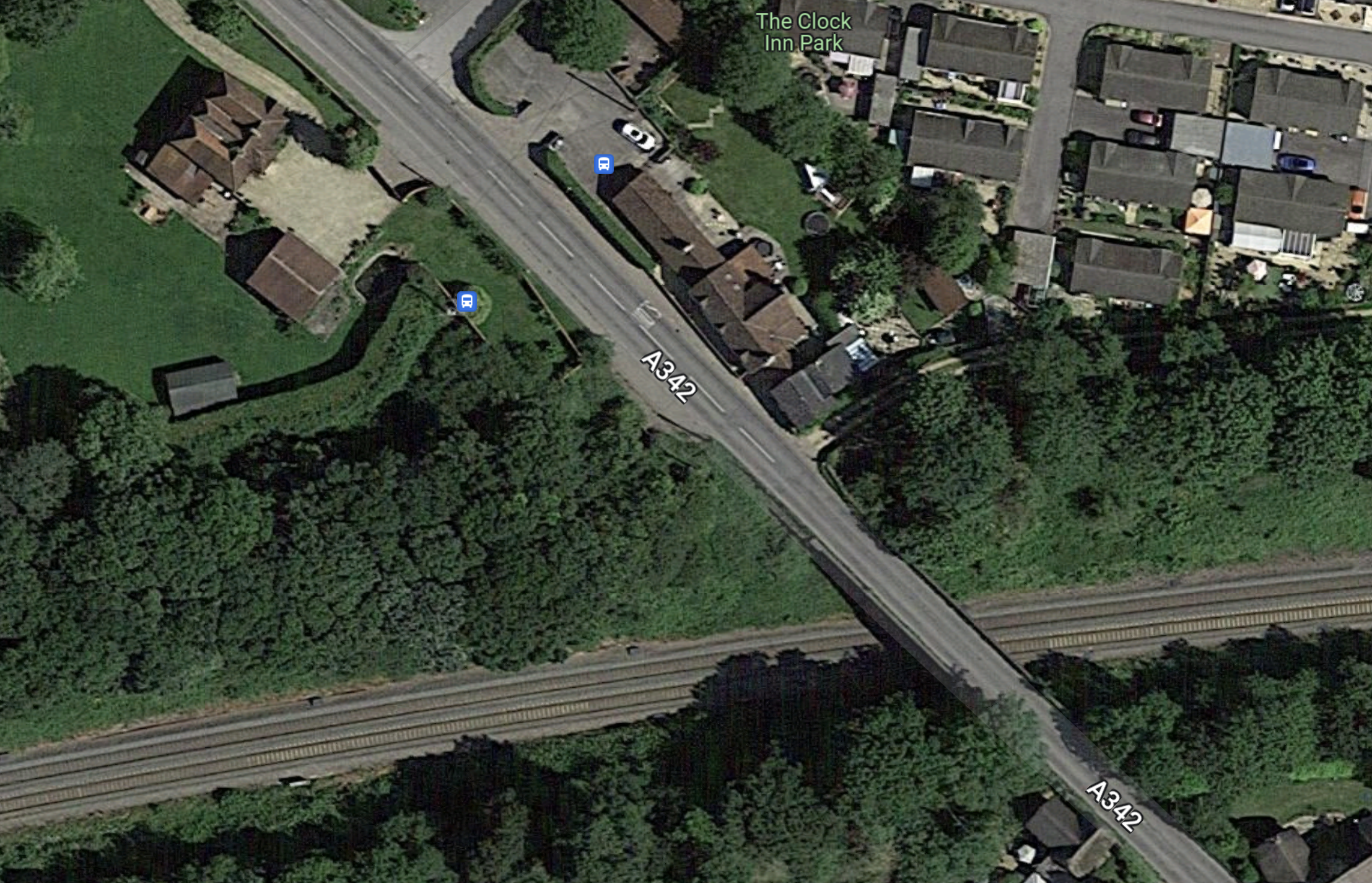
I suspect a third track can be squeezed in.
Westbury Station
Westbury station is a busy station, where the Reading and Taunton Line crosses the Wessex Main Line.
This map from OpenRailwayMap shows the lines in the station.
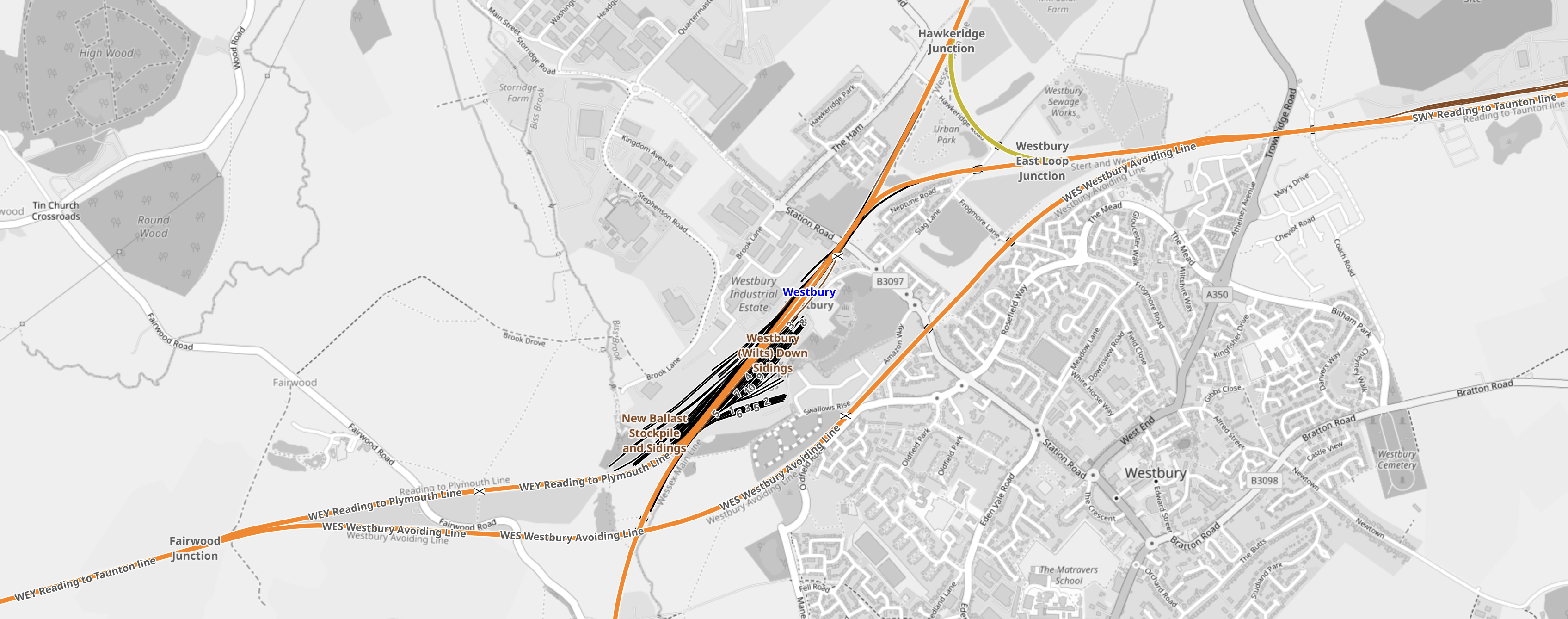
Note.
- The blue lettering indicates Westbury station.
- The two major rail routes are shown in orange.
- The Reading and Taunton Line goes East-West across the map.
- Note the avoiding line South of Westbury station.
- Reading is in the East and Taunton is in the West.
- The Wessex Main Line goes North-South across the map.
- Bristol is in the North.
- Salisbury and Southampton is in the South.
In Westbury Station – 30th July 2020, there are some pictures I took of Westbury station.
This section in Wikipedia says this about the Future of Westbury station.
The line to Westbury is not due to be electrified as part of the 21st-century modernisation of the Great Western Main Line. Although local councillors support it, the extension of electrification beyond Newbury to Westbury was assessed as having a benefit–cost ratio of only 0.31.
On the other hand this document on the Network Rail web site, which is entitled the Devizes Gateway Interim
Feasibility Study, suggests that another platform might be added at Westbury station.
Castle Cary Station
Castle Cary station doesn’t seem to have any well-publicised problems, so please tell me if you know of any.
Frome Station
Frome station is described in its Wikipedia entry as an unusual station and one that is Grade II Listed.
I suspect, it could do with some more services.
Somerton Station
I wrote about a new Somerton station in Somerset: Plans For New Railway Station On Levels.
Track Improvements
I suspect if Network Rail were improving the route between Reading and Taunton, they know of some places, where they could do some work.
Service Improvements
Consider.
- There is probably a need for a stopping train between Newbury and Taunton, which calls at all stations.
- It might terminate at the London end, at either London Paddington or Reading.
- It might be a battery-electric train.
- An hourly frequency would be ideal, if the track and signalling could handle it.
- Charging systems would be positioned as needed.
The train would interface with other Great Western services to Bristol, London Paddington, Gloucester, Salisbury, Southampton and Weymouth.
Oy could also interface with the Transwilts services.
Conclusion
This could be developed into a very useful network for Wessex.
Work Underway At Motspur Park Station In South London
The title of this post, is the same as that of this article on Rail Business Daily.
These two paragraphs outline the project.
Network Rail has announced that £8.9 million is being invested in new lifts and walkways installed among other upgrades at Motspur Park station in south London.
Network Rail is working with South Western Railway and the London Borough of Merton Council to install a step free footbridge as part of the Government’s Access for All programme, funded by the Department for Transport (DfT).
I visited the station this morning and took these pictures.
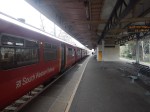
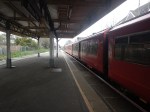

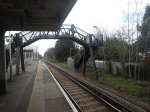
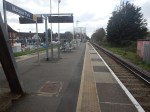
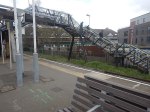
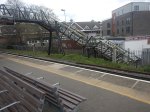
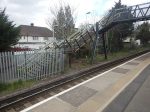
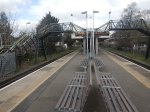
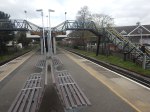
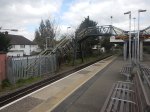
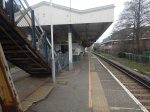
Note.
- When Motspur Park station was built in 1925, I must assume that there were no persons of restricted mobility.
- According to some commentators, it sounds like Network Rail and its partners are going for a complete rebuild.
- Did the Woodworm Preservation Society protest at the new design?
- Some new trains to serve the station would surely help too!
It should open in early 2024.
I shall be interested to see how the new station alters passenger numbers.
Was Baldrick An Essex Man?
I have been looking at Network Rail’s page for Beaulieu Park station.
This is the heading.
Network Rail and Essex County Council are working together to develop proposals for the first railway station to be built on the Great Eastern main line for over 100 years.
These two paragraphs outline the project and where the finance is being obtained.
The new station is part of a wider regeneration of the Beaulieu Park estate in Chelmsford with new road infrastructure and up to 14,000 homes.
Essex County Council, in partnership with Chelmsford City Council, successfully secured £218m of funding from the Government’s Housing and Infrastructure (HIF) fund together with £34m contributions from the South East Local Enterprise Partnership and the developers of Beaulieu, Countryside and L&Q.
These features of Beaulieu Park station are listed on the page.
- Three platforms with a central loop line and new tracks to enable stopping services to call at the station while allowing fast trains to pass through unimpeded
- Step free access to all platforms via 2 lifts
- Accessible toilets, baby change facilities, waiting area and space for retail/catering
- Ticketing facilities, with ticket vending machines and a gate line
- Pedestrian and cycle access routes to the station
- 500 spaces for cycle parking and storage
- A bus interchange including bus stands for local services
- Pick up and drop off area with dedicated taxi bays
- Parking for over 700 cars, 5% of which to be designated Blue Badge bays, and motorcycle spaces, as well as dedicated parking for station staff, emergency services, and a dedicated space for service access.
Note.
- How many other parkway stations, other than Ebbsfleet International station have 700 parking spaces?
- The parking at Whittlesford Parkway can only hold 377 vehicles.
- How many other parkway stations have an overtaking loop for faster trains?
Beaulieu Park is not your average parkway station!
I have a few thoughts.
Which Of The Current Services Will Call?
The Network Rail page says this about services.
It will provide additional access to the railway with regular connections to the capital (only 40 minutes from London Liverpool Street station) and other destinations in the east of England. New tracks will enable stopping services to call at the station while allowing fast trains to pass through unimpeded.
Note.
- Trains between London and Hatfield Peverel station typically take under forty minutes.
- Two fast trains per hour (tph) between Liverpool Street and Norwich via Colchester, Ipswich and Stowmarket pass through.
- Only one of the fast trains stops at Chelmsford.
- Four stopping tph, one to each of Braintree, Clacton-on-Sea, Colchester Town and Ipswich pass through.
If all the stopping trains stopped, Beaulieu Park would have the following services.
- Braintree – 1 tph
- Chelmsford – 4 tph
- Clacton-on-Sea – 1 tph
- Colchester – 3 tph
- Colchester Town – 1 tph
- Hatfield Peverel – 1 tph
- Ingatestone – 2 tph
- Ipswich – 1 tph
- Kelvedon – 2 tph
- London Liverpool Street – 4 tph
- Marks Tey – 2 tph
- Romford – 1 tph
- Shenfield – 3 tph
- Stratford – 4 tph
- Witham – 4 tph
All trains are new Class 720 electric trains.
I also feel, that Network Rail could be being cunning.
Suppose, the Liverpool Street and Norwich express, that doesn’t stop at Chelmsford, stopped instead at Beaulieu Park.
- This would give an hourly express service between Beaulieu Park and Norwich, which stopped at Colchester, Manningtree, Ipswich, Stowmarket and Diss.
- It would also enable two tph between Beaulieu Park and Ipswich.
The 700 parking spaces at Beaulieu Park now start to make sense.
- Both Ipswich and Norwich stations are within walking distance of the town centres and the football grounds.
- Ipswich station has a shuttle bus service to the town centre and the hospital.
- Both stations have several local train services.
Beaulieu Park station appears to have been designed as a Park-and-Ride station for the Great Eastern Main Line and all its branches.
Services To And From Lowestoft
In Making Sense Of The New East Anglia Franchise, I looked in detail at Greater Anglia’s promises.
In a section, which is entitled London – Lowestoft – Yarmouth Services, I said this.
There are going to be four direct services between London and Lowestoft each day. This probably initially means two trains to London in the morning peak and two trains back in the evening one.
When, I first moved back to Suffolk in the 1970s, I regularly caught a diesel-hauled train from Wickham Market to London for the day.
This is all motherhood and apple pie for those in Lowestoft wanting to go to London, but I suspect it isn’t the easiest service for a train operator to schedule efficiently and make money.
Would a train operator really want to start a full train at Lowestoft at say six in the morning and then have it wait around all day in London before returning in the evening?
The service hasn’t started.
Services To And From Cambridge Or Peterborough
At some time in the last decade, one of the predecessors of Greater Anglia, used to run a service to Peterborough via Colchester and Ipswich, so that travellers in Essex could catch trains to the North.
Given too that Cambridge has an employment problem, if a service was run, it might attract passengers.
The Class 755 trains Could Serve Bury St. Edmunds, Cambridge, Lowestoft, Newmarket, Peterborough And Yarmouth
Consider.
- A pair of Class 755 trains would leave Liverpool Street.
- They would use electric power to run to Ipswich.
- The trains would run in one of the paths of the current hourly Ipswich service.
- Like their all electric siblings; the Class 745 trains, they would probably run most of the journey at near 100 mph.
- At Ipswich the trains would split.
- One train would go to on to Lowestoft and Yarmouth and the other would go to Cambridge and Peterborough.
If passenger numbers felt it was a good idea, I’m certain, it could be timetabled.
The Chelmsford Avoiding Line
In Will The Chelmsford Avoiding Line Be Rebuilt?, I described the avoiding line, that used to be between the two tracks at Chelmsford station.
It probably saved a few minutes, by allowing fast expresses to pass stopping trains.
Effectively, a new avoiding line is being built at Beaulieu Park, a few miles from the original position at Chelmsford.
So will the fast expresses save a few minutes?
Could The Elizabeth Line Run To Beaulieu Park?
Consider
- The end sections of the Elizabeth Line seem to be busy, as I wrote in Very Busy Lizzie.
- The City of Chelmsford is between Shenfield and Beaulieu Park.
- Paddington and Reading is 35.9 miles.
- Liverpool Street and Hatfield Peverel is 35.9 miles.
So Beaulieu Park is actually closer to London than Reading.
Perhaps, at some time in a few years, passenger traffic between Beaulieu Park and Shenfield will be such, that the Elizabeth Line will be extended to Beaulieu Park.
The ideal service from Beaulieu Park would surely be two tph to Heathrow, as getting to Heathrow from East Anglia by train needs a change at Liverpool Street.
The only drawback is that to work effectively on the Great Eastern Main Line, a sub-variant of the Class 345 trains will be needed with a 100 mph operating speed. I wrote about these trains in Extending The Elizabeth Line – High Speed Trains On The Elizabeth Line.
But they may have the advantage of being able to take the fast lines between Shenfield and Stratford.
Conclusion
Beaulieu Park may just look like any other station to serve a housing development.
But it’s a lot more than that!
- It’s a Park-and-Ride for the whole Great Eastern Main Line and London.
- It should speed up expresses between London and Colchester, Ipswich or Norwich.
- It should improve local connectivity.
- It could take a lot of traffic off the nearby A12.
- It could give the City of Chelmsford its own local metro.
- It could give Heathrow a direct link to much of Essex.
- How much carbon will be saved by passengers?
We need many more well thought out Park-and-Ride stations.
Platform Canopies To Be Renovated For Passengers At Lancaster Station
The title of this post is the same as that of this press release from Network Rail.
These are the first two paragraphs.
Station platform canopies are being renovated at Lancaster to improve passenger journeys on the West Coast Main Line.
Network Rail is investing £9.5m to restore and upgrade the station building for the future.
This picture from Network Rail shows an aerial view of the station.
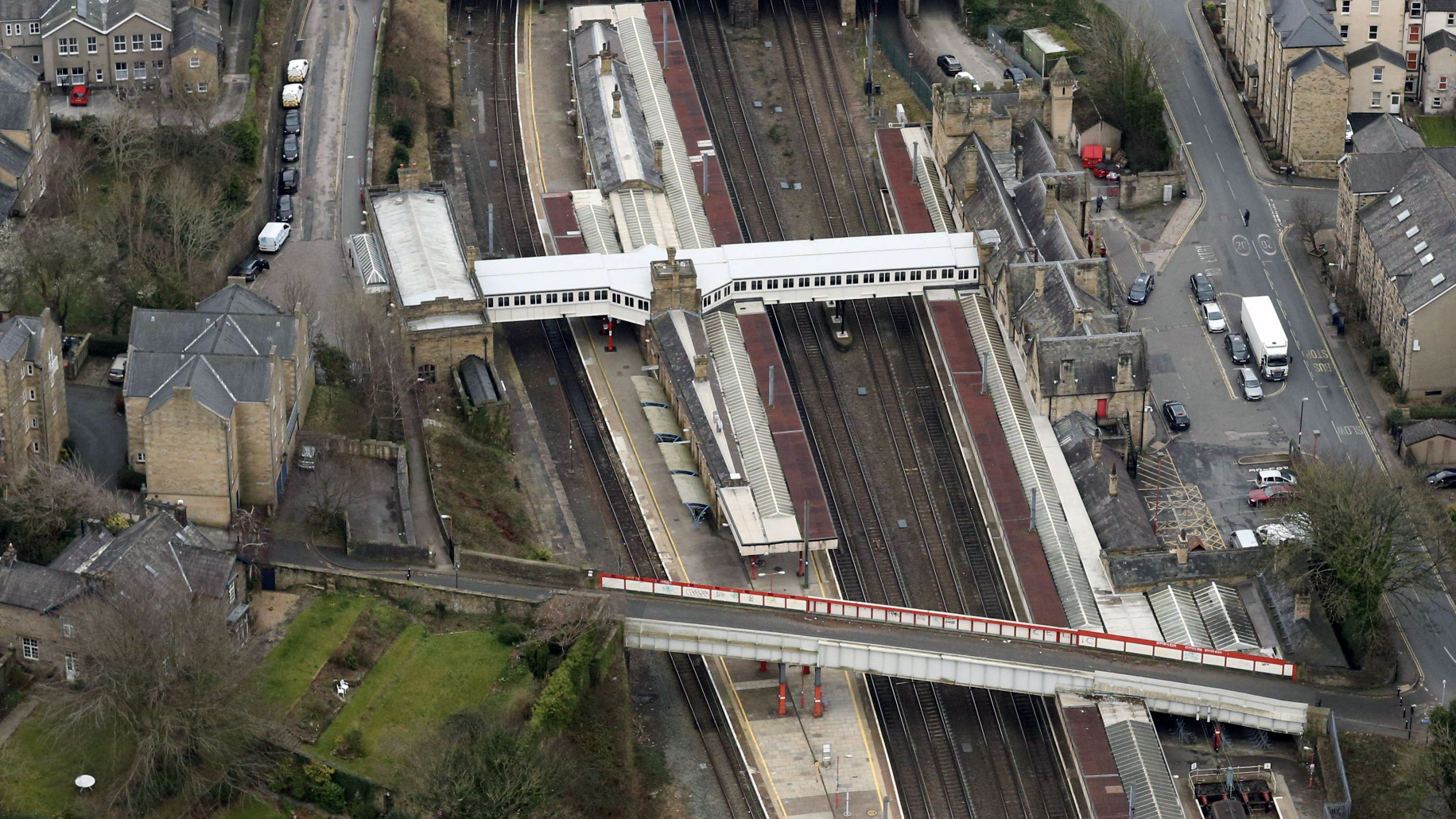
Note that the camera is looking South.
This picture shows the current canopies.
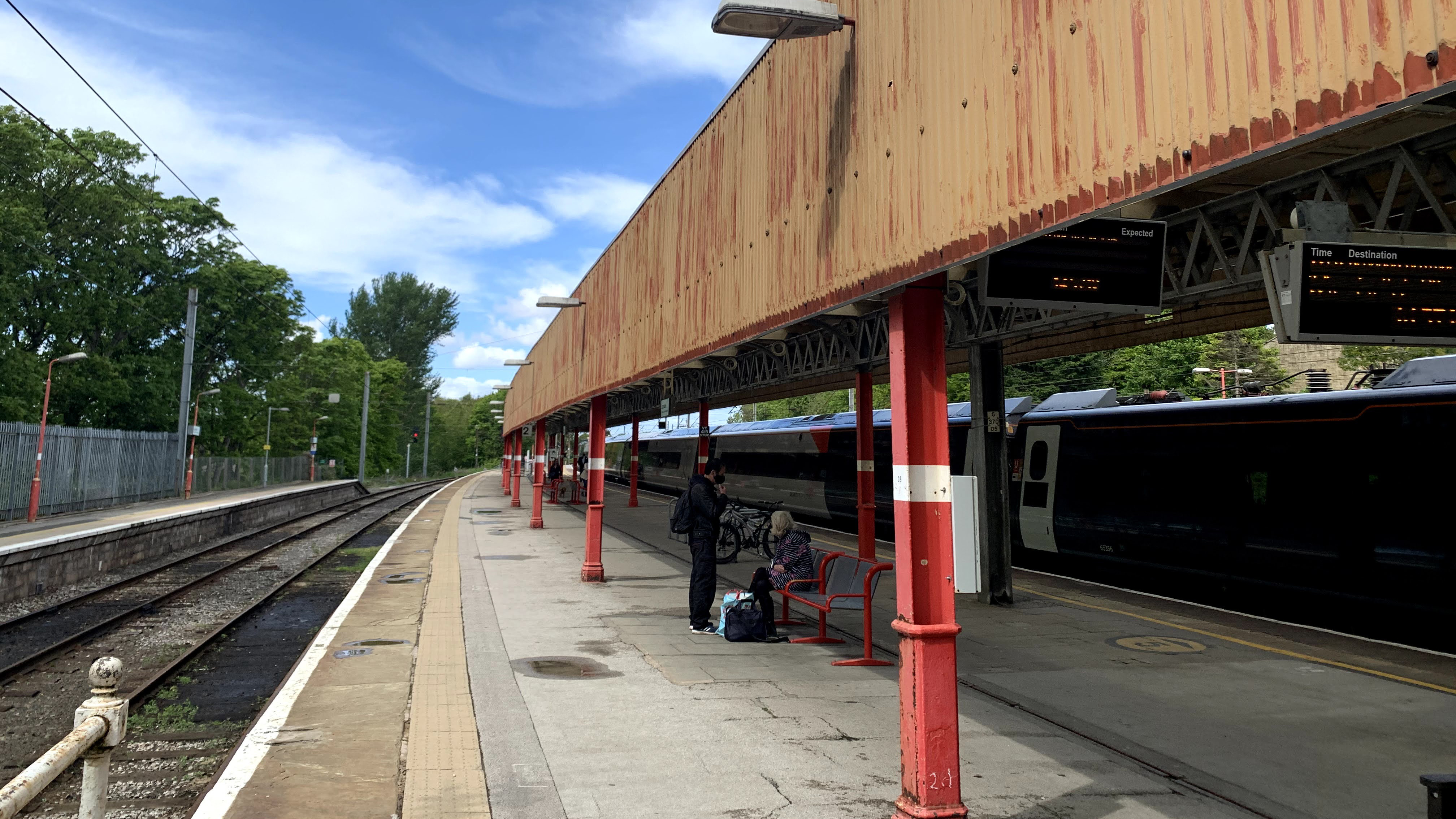
Network Rail can surely do better on a Grade II Listed Building.
The press release lists that this work will be done.
- Replacing all glazing in the platform canopies
- Repairing and strengthening the structure of the canopy structures
- Repainting across the station
The press release says the work won’t affect train services, but will be done when trains aren’t running.
These are my thoughts.
Lancaster Station and High Speed Two
Lancaster station will be a terminus on the High Speed Two Network.
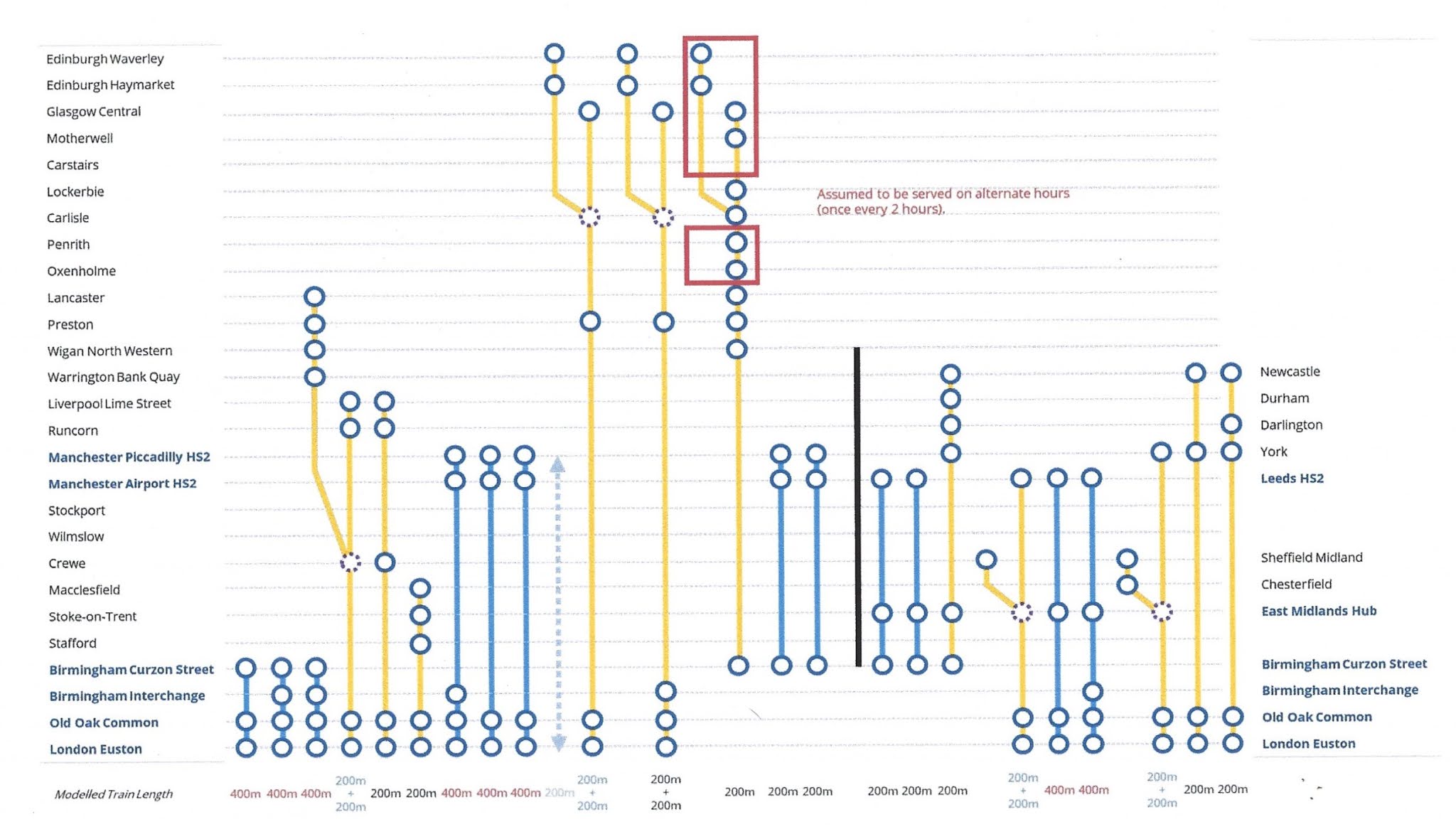
Note.
- Train 4 , which is a pair of 200 metre High Speed Classic Compatible trains, leaves London Euston and splits at Crewe, with one train going to Liverpool Lime Street and the other to Lancaster.
- Train 12, which runs between Birmingham Curzon Street and Scotland, also calls at Lancaster.
Both trains will be single 200 metre High Speed Classic Compatible trains at Lancaster station and platforms 3, 4 and 5 can handle them.
But how will the Lancaster train terminate?
This map from OpenRailwayMap shows the lines through Lancaster station.
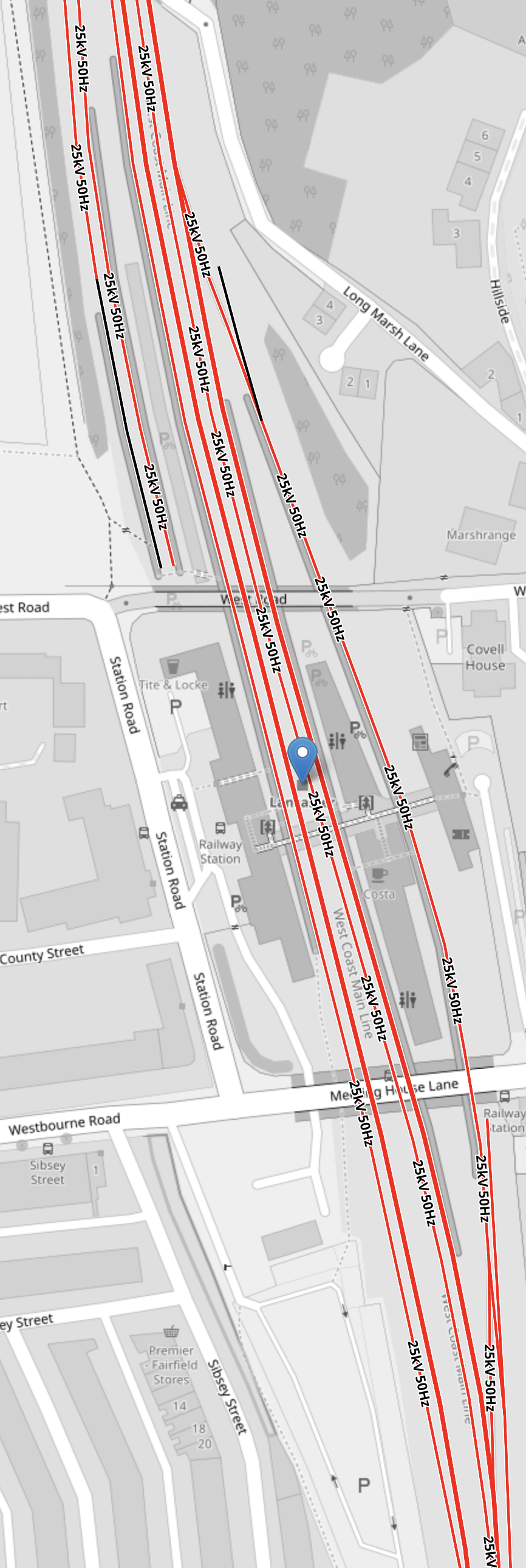
Note.
- The red lines are electrified with 25 KVAC overhead wires.
- In the North-West corner of the station are the bay platforms 1 and 2, which handle Morecambe services.
- West Coast Main Line services between London Euston and Scotland, go through platforms 3 and 4 in the middle of the station.
- On the East side of the station is platform 5 which is on a loop off the West Coast Main Line.
I would expect that the London Euston and Lancaster service will generally terminate in platform 5.
Wikipedia says this about platform 5 and the signalling.
Platform 5, which can be used by both northbound and southbound trains or by terminating services.
All platforms are signalled for arrivals and departures in either direction.
That all sounds very convenient.
There may be some minor changes for the longer High Speed Two trains, but I doubt it would be too challenging.
Onward To Morecambe
The Eden Project North at Morecambe could attract a lot of traffic.
- Lancaster will be just two hours and three minutes from London by High Speed Two.
- There are numerous rail connections from Lancaster to all over the North of England and Scotland.
- Would you drive for two hours to the Eden Project North, if there was a convenient and quicker train?
- Train companies may offer combined tickets for the attraction with rail tickets.
Wikipedia says this about the development and opening of the attraction.
Having been granted planning permission in January 2022 and with £50 million of levelling-up funding granted in January 2023, it is due to open in 2024 and predicted to benefit the North West economy by £200 million per year.
I’ve always wanted to go to the Eden Project in Cornwall, but it’s difficult if you don’t drive.
However, I might manage to get to Eden Project North.
Trains between Morecambe and Lancaster are at least hourly.
- I think they can use any platform at Lancaster.
- Morecambe station has two platforms.
- Morecambe and Lancaster stations are four miles apart, with probably half electrified.
- A battery-electric train could work between Morecambe and Lancaster.
I can envisage two main ways to arrange the connection between Morecambe and Lancaster.
- Trains arrive in Lancaster and passengers for Morecambe catch the next Morecambe train for two stops, that take ten minutes.
- When High Speed Two serves Lancaster from Euston, the shuttle train can wait in the Northern end of Platform 5 and when the High Speed Two train arrives passengers can just walk up the platform to the shuttle.
But if the Eden Project North is as successful as the Cornish original, there is going to be a need for more trains between Morecambe and Lancaster.
This Google Map shows Morecambe station.
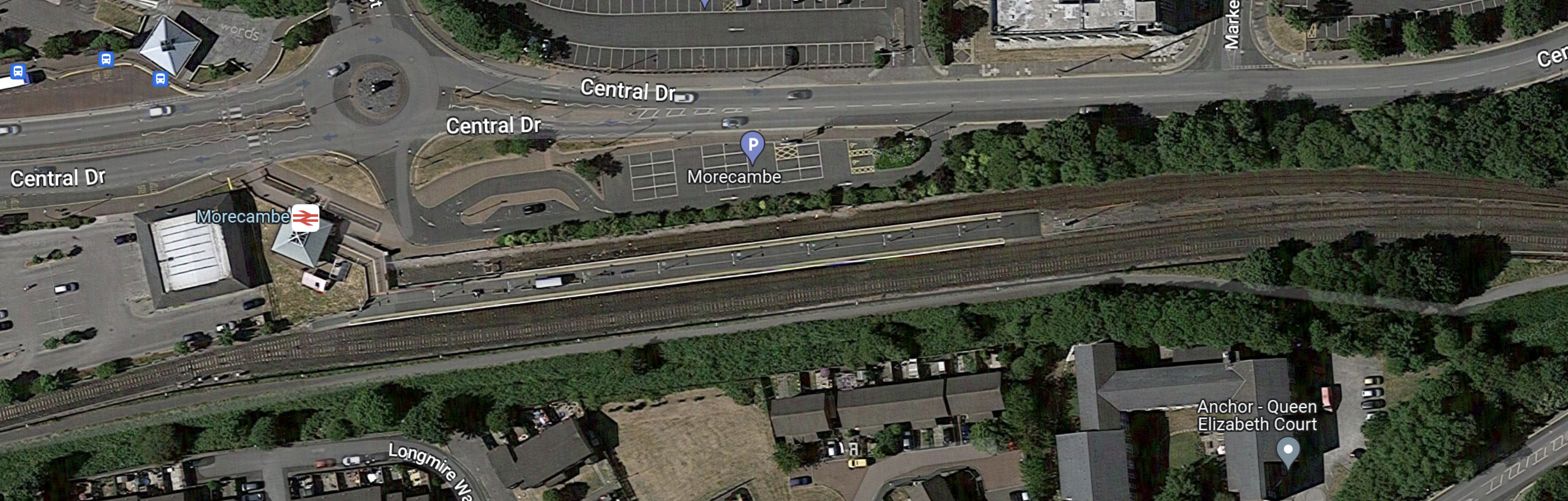
Note that the island platform is probably about 160 metres long.
This would accommodate.
- A five-car Class 802 or Class 805 train.
- A pair of four-car Class 319, Class 321 trains.
- A pair of three-car Class 331 trains.
But why not be bold and lengthen at least one platform to the full two hundred metres, so that it can accommodate a High Speed Classic Compatible train?
This would also accommodate.
- A seven-car Class 807 train.
- A pair of four-car Class 331 trains.
All of these electric trains would need the Morecambe branch line to be electrified to Morecambe station.
But the Eden Project North would get the public transport access it needs.
Electrifying To Morecambe
This map from OpenRailwayMap, shows the Morecambe Branch Line between the West Coast Main Line and Morecambe station.

Note.
- The tracks shown in red on the Eastern side of the map are the West Coast Main Line.
- The black lines are the unelectrified tracks of the Morecambe branch line.
- Morecambe station is marked by the blue arrow.
- Much of the Morecambe branch line is single track, with some sections of double track.
- The distance between the West Coast Main Line and Morecambe station is around 2.1 miles.
I don’t think it would be the most challenging of electrifications.
A Green Route To The Isle Of Man And Ireland
This map from OpenRailwayMap, shows the terminal of the Morecambe Branch Line at Heysham Port.
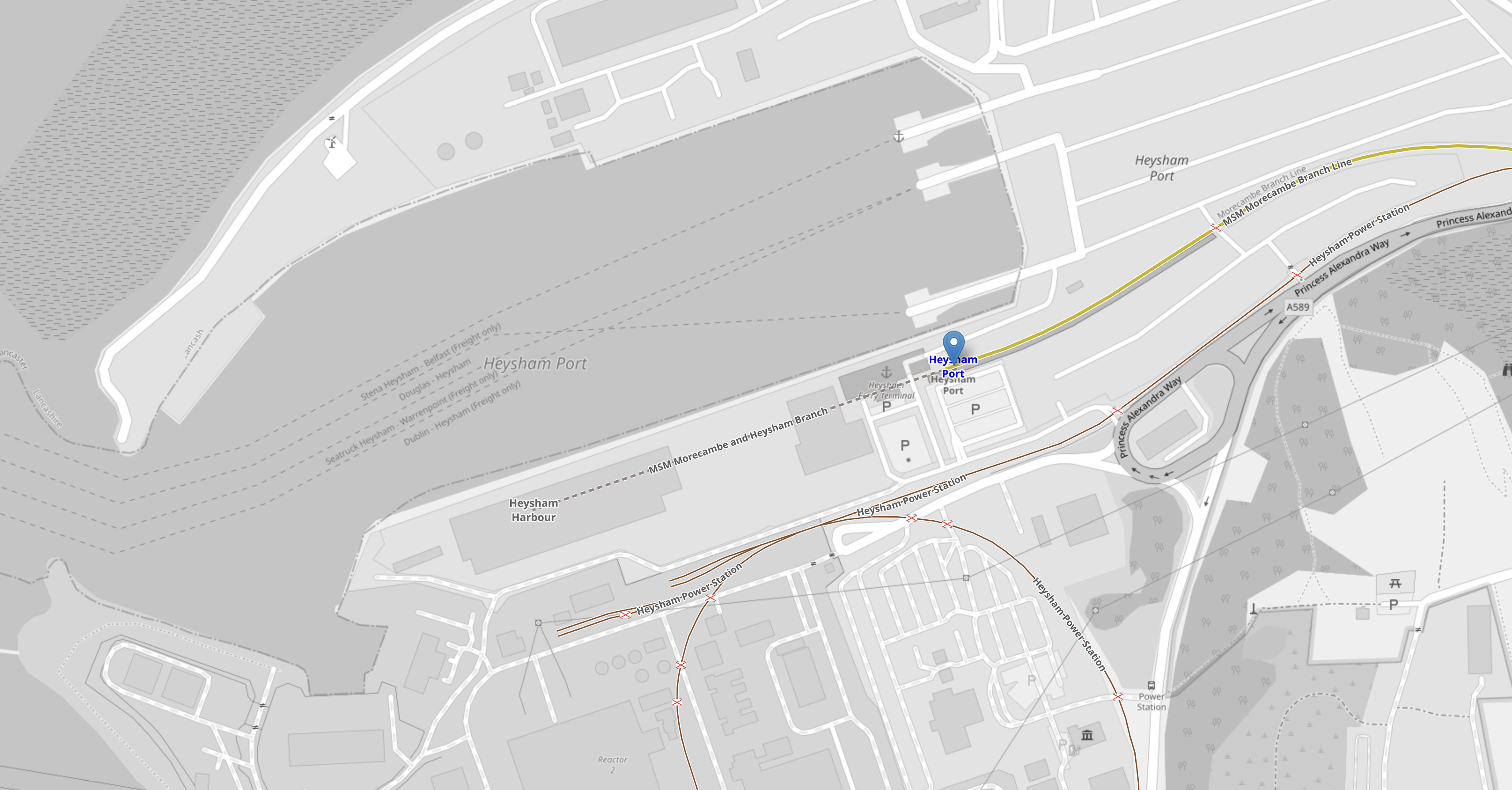
Note.
- There is a rail connection to the West Coast Main Line via Morecambe, which is shown in yellow.
- The port appears to have three berths for ferries.
- There are only a couple of train services per day.
- South of the port is the Heysham nuclear power station, which has a capacity of 2.5 GW.
At a first glance, it would appear, that a rail-served passenger terminal could be built close to the port.
I suspect most passengers using Heysham are travelling with a vehicle.
The problem is also that the ferry crossing to Belfast takes around eight hours and there are faster and more convenient routes.
The ferries could be decarbonised by using ammonia or hydrogen fuel, but I doubt that they would be any faster.
I suspect that getting more passengers to use Heysham for the Isle of Man or Ireland will be a difficult proposition to sell to passengers.
And it is made even more difficult with such an infrequent train service.
Before High Speed Two
Avanti West Coast might like to run a train between Euston and Morecambe for the Eden Project North.
Are National Rail Promoting Theme Parks?
I found this page on the National Rail web site, which is entitled Theme Parks.
It gives a list of most theme parks and their nearest stations.
Does such a page exist for hospitals, cathedrals and other similar groups.
 The Anonymous Widower