Cummins Debuts Integrated HELM Drivetrain At IAA
The title of this post, is the same as that of this article on truckinginfo.com.
This is the sub-heading under a rather informative image.
Cummins’ integrated drivetrain offers fleets three powertrain options: advanced diesel, diesel-hybrid and zero-carbon hydrogen.
These are the first two paragraphs.
Cummins pulled the curtain back on a new integrated drivetrain concept at the IAA Transport Show in Hannover, Germany, on September 17. According to Jennifer Rumsey, Cummins chair and CEO, the newly designed drivetrain is based on the OE’s HELM engine platform. It is also intended to highlight Cummins’ broader product portfolio and continued commitment to providing flexible, sustainable power solutions.
The Cummins HELM engine platform is a fuel-agnostic series of engine versions that are derived from a common base.
The article could be called the Jennifer and Jane Show, after the two people, who provided most of the words.
When I was dealing with large American corporations in the last century, one lady would have been a rarity, but two at the top indicates how Cummins has turned itself into a sustainable company for the twenty-first century.
The Cummins Integrated Drivetrain Concept
The Cummins Integrated Drivetrain Concept is shown in a Cummins image in the trucking.info.com article.
- Up-front is a 15-litre internal combustion engine, which can be diesel, natural-gas or hydrogen-fueled.
- As Cummins manufacture fuel cells, I suspect that the motive power can be one or more hydrogen fuel cells.
- It looks like along each side of the truck are tanks for the hydrogen fuel cells.
- Between the tanks is a powerful electric motor, that drives the rear axle.
- The electric rear axle could incorporate batteries for regenerative braking and traction efficiency.
A vehicle of any size between a Fiat 500 and a 44-tonne articulated truck could use this integrated drivetrain concept, with components sized accordingly.
This is a paragraph from the trucking.info.com article.
Rumsey emphasized that Cummins’ acquisition of Meritor, Siemens Commercial Vehicles and Jacobs Vehicle Systems in recent years means Cummins can now offer full powertrain capability.
Don’t develop your own, if you can buy the best!
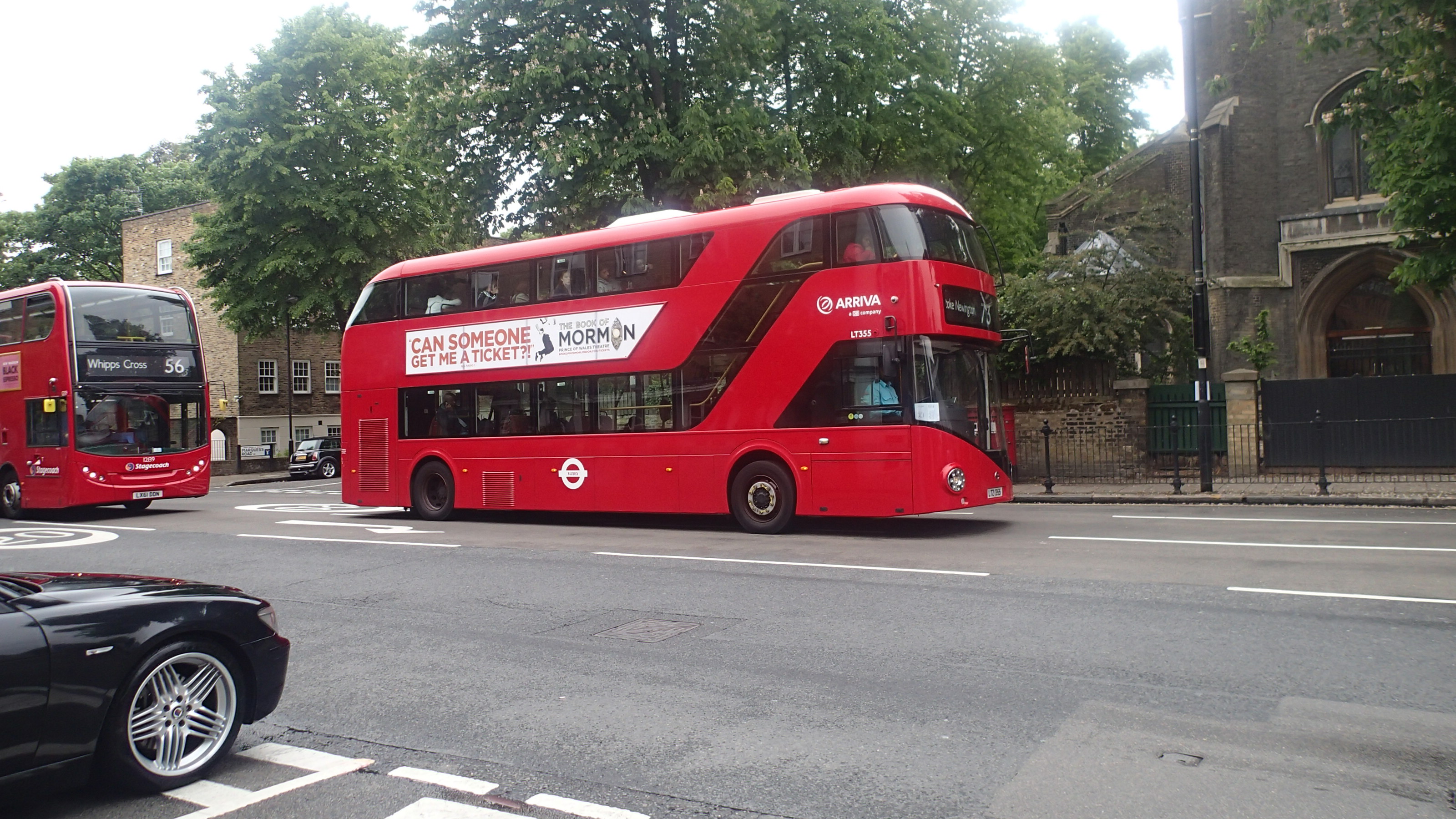
Siemens electric motors and Cummins diesel engines are used in London’s New Routemaster buses.
Could The Cummins Integrated Drivetrain Concept Be Used For A Small Car?
I don’t see why not?
Just watch the Koreans, who are going large on hydrogen.
It’s All Happening In Jamshedpur!
When I read this article on Hydrogen Fuel News, which is entitled Cummins And Tata Motors Ignite Change With H2 Internal Combustion Engines, I couldn’t resist using the jokey headline, which was inspired by the sub-heading.
The manufacturing has started in Jamshedpur, India at a new state-of-the-art facility
These two paragraphs give some more details.
The hydrogen internal combustion engines continuing to be produced at the facility are being integrated into Tata Motors trucks. This technology is being viewed as a promising zero- or low-carbon alternative to diesel power because of its powerful performance and substantial operating range.
Cummins’ B6.7H engines have notable similarities to current natural gas and diesel engines, particularly in terms of the components they contain. Moreover, they can fit in standard engine vehicles and require similar refueling times.
I first wrote about the Cummins B 6.7H engines in Cummins Shows Hydrogen Internal Combustion-Engined Concept Truck At IAA Transportation Exhibition, which I posted in September 2022.
I have these further thoughts.
Cummins B Series Engine
The Wikipedia entry for the Cummins B Series Engine, starts with these two paragraphs.
The Cummins B Series is a family of diesel engines produced by American manufacturer Cummins. In production since 1984, the B series engine family is intended for multiple applications on and off-highway, light-duty, and medium-duty. In the automotive industry, it is best known for its use in school buses, public service buses (most commonly the Dennis Dart and the Alexander Dennis Enviro400) in the United Kingdom, and Dodge/Ram pickup trucks.
Since its introduction, three generations of the B series engine have been produced, offered in both inline-four and inline-six configurations in multiple displacements.
Note.
- Cummins B Series is used in a wide variety of vehicles.
- It is available in both four and six cylinder versions.
But what Wikipedia doesn’t say, is that any Cummins’ customer will get the engine he wants for his application, even if it means creating a special version of the engine. Thirty years ago, I did a small data analysis job for Cummins in Darlington and on a tour of the works, I was given full details on how they treated customers. Cummins are not your average US company.
London’s Routemaster Buses
These buses are powered by a small four-cylinder version of the B-series engine, called a 4.5L ISB, which is described like this in Wikipedia.
The 4.5L ISB is essentially a four-cylinder, two-thirds version of the 6.7L ISB rated at 185 hp (138 kW), used in the New Routemaster, a series hybrid diesel-electric double-decker bus in London.
Note.
- Some diesel Range-Rovers, have more power, than these buses, but then they’re not hybrids.
- The engine also needs to be smaller, as it’s mounted under the back stairs.
Did Cummins’ special engine. allow the unique design of London’s Routemaster Buses?
Could London’s Routemaster Buses Be Converted To Hydrogen?
As an engineer and with my knowledge of Cummins’ design and manufacturing methods, I am fairly certain, if Cummins can manufacture six-cylinder versions of the B-Series engines, then four-cylinder hydrogen-powered engines are not far behind.
If London were to convert the thousand New Routemaster buses to hydrogen, there would be winners all round.
- Cummins would love the publicity and would probably benefit from increased sales of their hydrogen engines in vehicles like refuse trucks and small buses.
- It would surely give a route to convert older vehicles to hydrogen.
- The air in cities will improve.
But London has a problem, It is one of the few large cities in the world without readily-available hydrogen.
As this post illustrates and my Google searches show, India has a more advanced and scientifically-correct view on the usefulness of hydrogen.
Will Jaguar Land Rover Switch To Cummins’ Hydrogen Engines?
If Tata Motors make a success of hydrogen in India, it must make them think about adding hydrogen engines to Jaguar Land Rover products, specially as other manufacturers are getting serious about hydrogen.
Conclusion
Cummins will change the world for the better.
A Cute Refuse Truck
I took these pictures on Moorgate.


Note.
- This truck was built on a DAF LF chassis.
- It normally has a Cummins B-series diesel engine.
- It looks like it was registered in late 2022.
Some DAF LF chassis have a hybrid transmission.
I have a few thoughts.
Cummins B Series Engine
The Wikipedia entry for the Cummins B Series engine starts like this.
The Cummins B Series is a family of diesel engines produced by American manufacturer Cummins. In production since 1984, the B series engine family is intended for multiple applications on and off-highway, light-duty, and medium-duty. In the automotive industry, it is best known for its use in school buses, public service buses (most commonly the Dennis Dart and the Alexander Dennis Enviro400) in the United Kingdom, and Dodge/Ram pickup trucks.
Since its introduction, three generations of the B series engine have been produced, offered in both inline-four and inline-six configurations in multiple displacements.
Note.
- It is a very versatile engine.
- When I did some data analysis work for Cummins about twenty years ago, they told me, that they are happy to create a new configuration of their engines for a new application.
- Engines for the UK are made in Darlington.
- A version of the B series engine is used in London’s New Routemaster buses.
Cummins have made a lot of these engines.
Cummins And Hydrogen
Cummins realise they have a lot to lose, as the world decarbonises and doesn’t need diesel engines anymore.
Cummins have adopted the hydrogen route to zero-carbon with a large degree of enthusiasm.
- In 2019, they took a majority stake in hydrogen company; Hydrogenics.
- In Cummins Fuel Cell Technology Powers Coradia iLint Fleet In Germany, I described how Cummins supply the fuel cells for Alstom’s hydrogen trains in Germany.
- In Electrolyser System To Linde For Green Hydrogen Production In Niagara Falls, New York, I describe how Cummins are providing a 35 MW hydrogen electrolyser .
- In Cummins Shows Hydrogen Internal Combustion-Engined Concept Truck At IAA Transportation Exhibition, I describe how Cummins have developed and released a powerful hydrogen internal combustion engine based on the B series.
I believe that in Ricardo Supports Industry Leaders To Develop Innovative Dedicated Hydrogen Engine, I talk about the most significant development involving Cummins and hydrogen.
This is how I started the post.
The title of this post, is the same as that of this press release from Ricardo.
This is the sub-heading.
Ricardo, a global strategic, environmental, and engineering consulting company, has delivered a hydrogen-fuelled research engine to global engine specialist Cummins and automotive supplier BorgWarner, as part of Project BRUNEL part funded by the Advanced Propulsion Centre (APC)
These four paragraphs outline the project.
Cummins is a global specialist in diesel and alternative fuel engines and generators, and related components and technology. BorgWarner is an automotive tier 1 supplier and specialist in the design and manufacture of systems for electrified and conventional propulsion types, that includes injection equipment for conventional and renewable fuels. BorgWarner recently announced the intention to spin off its Fuel Systems segment. The intended company name is PHINIA Inc. PHINIA is expected to be a product leader in fuel systems, starters, alternators and aftermarket distribution.
The project aims to support internal combustion engine (ICE) sub-system suppliers to increase their use of hydrogen as an alternative zero-emissions fuel solution across the light commercial vehicle market.
The engine is specifically designed to burn only hydrogen – with no supporting fuels that could give rise to any carbonaceous, or excessive air quality emissions.
Experts in hydrogen technology and integration, Ricardo has provided an engine based upon its world-renowned series of single cylinder research units, which can help the research teams evaluate a wide variety of fuels. The engine is designed to help engineers evaluate a variety of injector types and will support increased fuel efficiency, reduced air quality emissions and the move towards carbon-free heavy-duty propulsion.
Reports of the death of the internal combustion engine are greatly exaggerated.
Cummins already have larger sizes of the B series engine that will run on hydrogen, so are BorgWarner, Cummins and Ricardo going to fill the gap in the range?
Are the companies going to develop B series hydrogen engines for the DAF LF trucks, Dodge RAM pickups and the New Routemaster buses?
Ricardo Supports Industry Leaders To Develop Innovative Dedicated Hydrogen Engine
The title of this post, is the same as that of this press release from Ricardo.
This is the sub-heading.
Ricardo, a global strategic, environmental, and engineering consulting company, has delivered a hydrogen-fuelled research engine to global engine specialist Cummins and automotive supplier BorgWarner, as part of Project BRUNEL part funded by the Advanced Propulsion Centre (APC)
These four paragraphs outline the project.
Cummins is a global specialist in diesel and alternative fuel engines and generators, and related components and technology. BorgWarner is an automotive tier 1 supplier and specialist in the design and manufacture of systems for electrified and conventional propulsion types, that includes injection equipment for conventional and renewable fuels. BorgWarner recently announced the intention to spin off its Fuel Systems segment. The intended company name is PHINIA Inc. PHINIA is expected to be a product leader in fuel systems, starters, alternators and aftermarket distribution.
The project aims to support internal combustion engine (ICE) sub-system suppliers to increase their use of hydrogen as an alternative zero-emissions fuel solution across the light commercial vehicle market.
The engine is specifically designed to burn only hydrogen – with no supporting fuels that could give rise to any carbonaceous, or excessive air quality emissions.
Experts in hydrogen technology and integration, Ricardo has provided an engine based upon its world-renowned series of single cylinder research units, which can help the research teams evaluate a wide variety of fuels. The engine is designed to help engineers evaluate a variety of injector types and will support increased fuel efficiency, reduced air quality emissions and the move towards carbon-free heavy-duty propulsion.
Reports of the death of the internal combustion engine are greatly exaggerated.
The Aims Of The Project
This talks about the light commercial market, which for Cummins means, that this engine could be a replacement for their B Series engine, which is described in Wikipedia like this.
In production since 1984, the B series engine family is intended for multiple applications on and off-highway, light-duty, and medium-duty. In the automotive industry, it is best known for its use in school buses, public service buses (most commonly the Dennis Dart and the Alexander Dennis Enviro400) in the United Kingdom, and Dodge/Ram pickup trucks.
A version is also used in London’s New Routemaster buses.
Speculation About A Hydrogen-Powered Dodge Ram Pickup
This article on Mopar Insiders is entitled Next-Gen Ram Heavy Duty Could Feature Cummins Hydrogen Powerplant!
It has this sub-heading.
Fast Refuel Times, Extended Range, & Zero-Emissions…
Sounds great for wide open spaces.
I’ve also read in an interview with a retiring Cummins Executive, who said that Dodge RAM trucks are being converted to hydrogen by enthusiasts.
Could New Routemasters Be Converted To Hydrogen?
In the Wikipedia entry for the Cummins B Series engine, this is said about the engine in a New Routemaster.
The 4.5L ISB is essentially a four-cylinder, two-thirds version of the 6.7L ISB rated at 185 hp (138 kW), used in the New Routemaster, a series hybrid diesel-electric doubledecker bus in London.
Having worked in the Cummins factory at Darlington, I know they are happy to produce specials for a particular application, so I wouldn’t be surprised to see a hydrogen-powered New Routemaster created by an engine and fuel system transplant.
Conclusion
The tie-up between Cummins, BorgWarner and Ricardo could be significant.
American power with a touch of Sussex finesse.
Tevva Starts First Mass Production Of Electric Lorries In UK
The title of this post, is the same as that of this article on Professional Engineering.
These are the first three paragraphs.
Tevva is building its 7.5 tonne vehicles at Tilbury in Essex after it received European Community Whole Vehicle Type Approval (ECWVTA), meaning it can start producing and selling in volume across the UK and Europe.
The start-up has already started delivering its first mass-produced lorries to customers including Travis Perkins and Royal Mail. It expects to sell up to 1,000 in 2023.
Described as “ideal” for last mile and urban delivery fleets, the electric truck offers up to 227km range from its 105kWh battery on a single charge. It will be followed later in 2023 by a 7.5 tonne hydrogen-electric alternative. The hydrogen range extender will reportedly increase the range up to 570km.
That seems like a good start to me; certification, orders for a thousand and generous ranges with or without a hydrogen extender.
In Equipmake Hybrid To Battery Powered LT11, I described Equipmake’s battery-electric New Routemaster bus.
Both the battery-electric Routemaster and the Tevva truck seem to have generous ranges, so has better battery technology been developed.
Equipmake Hybrid To Battery Powered LT11
The bus in this video from Public Transport UK, may look like any of the thousand New Routemasters on the streets of London.
But it’s not, as it’s been given a transmission transplant by Equipmake of Snetterton in Norfolk.
The observant amongst you will notice, it has a refurbished interior, as I wrote about in My First Ride In A Refurbished New Routemaster.
There is also this press release from Equipmake, which is entitled Equipmake Showcases Sector-Leading Repower Technology With Fully-Electric New Routemaster Bus.
Some points from the press release.
- Equipmake’s cutting-edge Zero Emission Drivetrain (ZED), uses a 95% British-built component content.
- With pre-service trials already started in London, operated by Metroline, the electric version of the New Routemaster will continue to be assessed over the next six months.
- The repowered New Routemaster, developed by Equipmake at its base in Snetterton, Norfolk, features a 400kWh battery enabling an expected in-service range of 150 miles – more than enough for a day’s running.
- The development of the all-electric New Routemaster has come about thanks to a programme part funded by the UK Advanced Propulsion Centre (APC).
- Over the coming months, Equipmake will be trialling additional repowered buses with other bus operators across the UK.
- Featuring an advanced water-glycol cooling circuit, the system has the added benefit of providing interior heating during cold conditions with captured thermal energy.
- When the battery is depleted at the end of a complete duty cycle, it can be recharged at the depot overnight via a CSS DC charging point.
But this is the bit I really like.
Under the skin, the New Routemaster also features Equipmake’s HTM 3500 electric motor. Seamlessly integrated into the prop shaft without the need for a separate transmission, the motor is precisely engineered to meet the demanding requirements of a fully-laden double-decker bus by producing 3,500Nm torque at a motor speed of just 1,000rpm and delivering 400kW maximum power.
It sounds a bit like a modern reincarnation of a TASC unit (torque and speed control unit), which was an industrial drive from the 1960s, used to precisely control industrial machines. I never used one, but I worked in a section at Enfield Rolling Mills, that did.
One car manufacturer of the time, was using them as an automatic transmission for a small car. It might have been Hillman.
A Comparison With The Wrightbus Streetdeck Electroliner BEV
The Wrightbus Streetdeck Electroliner BEV is the company’s latest electric double decker bus and a comparison can be made.
Seats
Equipmake LT11 – 87
Electroliner BEV – 96
Battery Size
Equipmake LT11 – 400 kWh
Electroliner BEV – 340 or 454 kWh
Range
Equipmake LT11 – 150 miles
Electroliner BEV – 200 miles with 454 kWh battery.
Conclusion
This New Routemaster, is certainly no ordinary electric bus.
With the batteries on hybrid buses needing to be replaced regularly, Eqipmake’s transmission transplant could also be scheduled, when a bus needs a new battery.
With Lotus just up the road, the engineering is certainly Normal for Norfolk!
My First Ride In A Refurbished New Routemaster
When I went to see the Queen’s flowers, that I wrote about in The Queen’s Flowers In Green Park, the 38 bus, I rode to Green Park, was a refurbished New Routemaster.




Note.
- It appears to have scrubbed up well.
- There is a new fabric and all the gold metal parts have been re-anodised.
- The priority seats for those with limited mobility are now labelled.
- As they are now up to eleven years old, will they now be good for at least another ten?
This article on Key Buses is entitled New Routemaster Refurbishment Underway, where this is said.
Despite coming under threat as a result of Tf L’s funding crisis the first New Routemasters have now returned from refurbishment. These include buses in the Abellio London, Metroline and London United fleets. The latter now carry RATPDev Transit London fleetnames. The first 200 vehicles are expected to be refurbished by March 31, 2023.
With 200 buses, I should get a lot of chances to add some more pictures.
In Could London’s New Routemaster Buses Be Converted To Hydrogen Power?, I came to this conclusion.
I believe from my knowledge of Cummins and the way they work, that they will come up with a hydrogen-based solution, that will replace the Cummins diesel in these buses with a zero-carbon engine.
If Cummins don’t then someone else will.
Whoever solves the problem of converting London’s new Routemasters to hydrogen will have one of the best adverts for their product, there has ever been.
After converting London’s thousand Routemasters, the engineers could move on to anything powered by a Cummins engine.
Since then I’ve written Werner Enterprises Signs Letter Of Intent Planning To Secure 500 X15H Engines From Cummins, which describes the application of Cummins technology to convert heavy trucks to hydrogen power.
Transport Enterprise Leasing To Integrate Cummins X15H Hydrogen Engine Into Heavy Duty Trucks
The title of this post, is the same as that of this article on Fleet Equipment.
This is the first paragraph.
Transport Enterprise Leasing and Cummins Inc. announced recently that TEL has signed a letter of intent planning to purchase Cummins’ 15-liter hydrogen internal combustion engines when available. TEL will integrate the Cummins’ X15H hydrogen engines into their fleet of heavy-duty trucks.
This second paragraph is very significant.
Hydrogen engines can use zero-carbon green hydrogen fuel, produced by Cummins-manufactured electrolyzers. The projected investment in renewable hydrogen production globally will provide a growing opportunity for the deployment of hydrogen-powered fleets utilizing either Cummins fuel cell or engine power.
Cummins would appear to be aiming to be a one-stop shop to decarbonise your fleet of heavy trucks or anything that is powered by a Cummins diesel engine.
I did a small amount of work for Cummins about twenty years ago and one of the companies objectives was to be able to provide a diesel engine to fit anybody’s application.
So if someone wanted a diesel engine with a particular power, that fitted in an unusually-shaped or confined space, they would rearrange the layout of the engine to make it fit.
I suspect that London’s New Routemaster buses have a special version of Cummins B Series engine, designed for its unusual location halfway up the back stairs.
Will Cummins produce a hydrogen internal combustion engine for the New Routemaster?
- The buses could become zero-carbon, at less cost than new buses.
- Passengers would notice no difference in ride comfort and experience.
- Drivers would just need to use the hydrogen systems.
- Maintenance staff would only need to be trained n handling the hydrogen system, as much of the buses would be unchanged.
- Cummins could sell an electrolyser to each garage.
- London would get some good publicity for tourism.
London’s iconic bus would look the same.
Werner Enterprises Signs Letter Of Intent Planning To Secure 500 X15H Engines From Cummins
The title of this post, is the same as that of this press release from Cummins.
This is the first paragraph.
Werner Enterprises, a premier transportation and logistics provider, and Cummins Inc., a global power solutions provider, announced today Werner signed a letter of intent to purchase 500 Cummins’ 15-liter hydrogen internal combustion engines upon availability. The two companies announced earlier this year, Werner Enterprises plans to validate and integrate Cummins’15-liter natural gas and Cummins’ X15H hydrogen engines, both part of Cummins’ fuel agnostic platform, into their fleet.
More details of the X15H engine are given in this earlier press release, which is entitled Cummins Inc. Debuts 15-Litre Hydrogen Engine At ACT Expo, which has this first paragraph.
Today, Cummins Inc. debuted its 15-liter hydrogen engine at ACT Expo in Long Beach, California. This engine is built on Cummins’ new fuel-agnostic platform, where below the head gasket each fuel type’s engine has largely similar components, and above the head gasket, each has different components for different fuel types. This version, with expected full production in 2027, pairs with clean, zero-carbon hydrogen fuel, a key enabler of Cummins’ strategy to go further faster to help customers reduce greenhouse gas (GHG) emissions.
I certainly like the concept of a fuel-agnostic platform, where below the head gasket, everything is similar, and above the head gasket, there are appropriate components.
I wouldn’t be surprised to find that Rolls-Royce mtu and JCB have used a similar concept for their hydrogen internal combustion engines.
Cummins have also developed a 6.7 litre engine.
This is a paragraph from the press release.
Hydrogen internal combustion engines use zero-carbon fuel at a lower initial price of a fuel cell or battery electric vehicle with little modification to today’s vehicles. Accelerated market adoption of hydrogen engine powered vehicles is driven by the technology’s high technology maturity, low initial cost, extended vehicle range, fast fueling, powertrain installation commonality, and end-user familiarity.
I certainly feel it is the way to go technically.
Take London’s New Routemaster buses.
- These buses are powered by a Cummins B-series engine, which has four cylinders and a capacity of 4.5 litres.
- This engine powers large numbers of trucks and pick-ups.
- For the UK, they are manufactured in Darlington.
- It appears that Cummins 6.7 litre engine is a six cylinder B-series engine.
It would certainly be more affordable to change the cylinder heads of these buses and power them by hydrogen, than purchase a new fleet.
Cummins have an excellent tutorial on hydrogen internal combustion engines on their web site.
The Third Route To Zero-Carbon Transport
The two most common routes to zero-carbon transport are.
- Battery-electric vehicles
- Hydrogen fuel-cell vehicles
Note that most hydrogen-fuel cell vehicles also have a battery.
But I believe there’s a third route and that is the use of hydrogen in an internal combustion engine.
Earlier today, I wrote Rolls-Royce And AVK Provide Over 3.5 Gigawatts Of Emergency Power Capacity In The UK, which is based on a Rolls-Royce press release, with the same title.
This is an extract.
And this is said about the use of hydrogen.
Rolls-Royce is also currently developing its mtu gas engine portfolio for power generation so that the engines can run on hydrogen fuel in future, enabling a Net Zero energy supply. The company is also launching complete mtu hydrogen fuel cell solutions, that emit nothing but water vapor from 2025. This will enable CO2-free generation of emergency power for data centers and many other critical applications.
I certainly think, that they are going in the right direction.
Rolls-Royce mtu have a lot to lose, if their diesel engines that power trains, heavy equipment, ships and emergency power generators are replaced by other companies zero-carbon solutions.
- Large investments will need to be made in hydrogen electrolyser and fuel cell production.
- Some traditional factories making diesel engines will be closed and could this mean redundancies?
- A lot of retraining of staff at both manufacturer and customer will need to be made.
But a traditional internal combustion engine, that runs on hydrogen or even both hydrogen and diesel makes the transition to hydrogen a lot less painful.
Other companies going this route include Cummins, Deutz and JCB.
Conversion Of Existing Diesel Engines To Hydrogen
Surely, if an equivalence hydrogen engine exists for all of their diesel engines, a company like Cummins or Rolls-Royce mtu can produce a sound engineering route to decarbonise some of their existing applications.
A classic application would be converting London’s Routemaster buses to hydrogen, which I wrote about in Could London’s New Routemaster Buses Be Converted To Hydrogen Power?
This was my conclusion in that post.
I believe from my knowledge of Cummins and the way they work, that they will come up with a hydrogen-based solution, that will replace the Cummins diesel in these buses with a zero-carbon engine.
If Cummins don’t then someone else will.
Whoever solves the problem of converting London’s new Routemasters to hydrogen will have one of the best adverts for their product, there has ever been.
After converting London’s thousand Routemasters, the engineers could move on to anything powered by a Cummins engine.
As this is a world-wide problem, I believe that the manufacturers of cars, buses, trucks and many other vehicles will offer zero-carbon solutions for their products, as it will be necessary for survival.
If you have just bought a new diesel BMW and your government says that in two years time, diesel will no longer be available, you’re up the creek without a paddle. But if BMW can convert it to hydrogen for a small fraction of the cost of a new electric equivalent, you have a more available way out.
 The Anonymous Widower