10 Exciting New Train Journeys Coming To The UK In 2026
The title of this post, is the same as that of this article in The Telegraph.
The journeys are.
South Wales Metro (The ‘Welsh Tube’)
Effectively, what the Welsh have done is turn the railways radiating from Cardiff into the sort of metro that Birmingham, Glasgow, Liverpool and Tyne-Tees have created over the last few decades.
- They are replacing a large proportion of the rolling stock, with new electric or hybrid-electric trains and tram-trains.
- Some of the lines are notably scenic.
- Some new stations have been added.
- There are attractions to visit.
- A Day Ranger ticket is available.
A few times in the past few years, when I feel I need some fresh air, I’ve taken a train to Cardiff, bought a Day Ranger and climbed a few hills in a train, as in my seventies, I’m too old to walk up.
I wouldn’t be surprised that the forthcoming Leeds Metro borrows heavily from ideas developed on the South Wales Metro.
London To Stirling
Stirling is one of those towns and cities, like Barrow-in-Furness, Blackpool, Shrewsbury and a few others, that Virgin and Avanti West Coast seem reluctant to serve.
I feel by choosing Stirling for a service, Lumo have just done the obvious.
- The route is fully-electrified.
- Stops will be Milton Keynes, Nuneaton, Crewe, Preston, Carlisle, Lockerbie, Motherwell, Whifflet, Greenfaulds, and Larbert.
- There will be four trains per day.
- The initial trains will be Class 222 trains.
- The electric Class 803 trains are on order.
- Hitachi are developing battery-electric trains for Lumo on the East Coast to be able to use the diversion via Lincoln, which would probably reach Perth.
- Car-hire companies will do well in Stirling.
- Stirling has onward train connections to Aberdeen, Dundee, Inverness, Montrose, Perth and Stonehaven.
- I wouldn’t be surprised to see FirstGroup, who are Lumo’s parent or another coach company, creating a hydrogen-powered coach network for the North of Scotland.
- The service will start in May 2026.
That really shows how railways can be used to boost growth. But will the SNP get the message?
I will use this service to have a few days in Stirling and explore the Southern part of the Scottish Highlands by train.
Caledonian Sleeper from Birmingham
This looks to be obvious addition to the Caledonian Sleeper.
The Telegraph says this.
The joys of the Caledonian Sleeper to Scotland, well known to travellers from London, are to be extended for the first time to those wanting to alight at Birmingham International. This change – the biggest in the Caledonian Sleeper schedule for 30 years – will mean that greeting the dawn approaching places as far flung as Fort William, Aberdeen and Inverness will be a far more realistic prospect for fans of this form of travel who live in the Midlands.
Note.
- The Birmingham stop will be at International not New Street.
- The service starts on January 16.
- Only the Highlander will stop at Birmingham International.
It seems to be a well-thought out simple addition to the service.
Newquay And Falmouth
The Telegraph says this.
Exciting news for fans of Cornwall where a new direct service linking the north and south coasts this year will make travelling by train between the key towns of Newquay and Falmouth considerably easier. The improvement to the current journey, frequently involving multiple changes and lasting two and half hours, will start with an increase in services between Newquay and Par in the spring and, by the end of the year, the commencement of the direct link all the way through to Falmouth.
Note.
The project is named the Mid Cornwall Metro.
The project has cost £57 million.
The route will be Newquay and Falmouth Docks via Quintrell Down, St. Columb Road, Roche, Bugle, Luxulyan, Par, St. Austell, Truro, Perranwell, Penryn, Penmere and Falmouth Town.
For more information, see midcornwallmetro.com
The journey time between Newquay and Falmouth will be cut by forty-five minutes.
I am sure that there are other rail systems in the UK, Ireland and in the wider world, that could benefit from a
High Speed Sonnet (Weardale To Stratford-upon-Avon)
The Telegraph says this.
And now for something completely different: a one-off charter train from the dales of County Durham to Stratford-upon-Avon, the heart of Shakespeare country. This journey, dubbed the “High Speed Sonnet”, comes as part of the 50th anniversary celebrations of the introduction of the legendary InterCity 125 high speed trains, one of which will be deployed on the run from Stanhope to the birthplace of the bard.
This train journey, although it is probably very nice is not really my scene.
- I don’t have a partner.
- I don’t live near to Weardale or Stratford-on-Avon.
- As I’m coeliac and low alcohol, I’m not really keen on gourmet dining events.
But the train is an Intercity 125, so some might like to take a ride.
For more details see excursionsbyrail.co.uk
West Highland Line, Scotland
The Telegraph says this.
A journey along the West Highland line, the most scenic stretch of track in Britain, and a visit to the Royal waiting room used by Queen Victoria during visits to Balmoral are two of the highlights of a new tour for 2026, offered by small group Scotland and UK specialists McKinlay Kidd.
Similar comments to the previous journey apply, except that it is West Scotland.
But the train is steam-hauled over the Glenfinnan Viaduct of Harry Potter fame, so some might like to take a ride.
For more details see mckinlaykidd.com
Mid Wales Explorer
The Telegraph says this.
Another new tour for 2026, this one run by The Railway Touring Company, has as its focus the central part of Wales. Highlights include a journey along the Welsh Highland line on the “Harbourmaster”, shorter trips on the celebrated little railways of Llangollen, Bala Lake, Talyllyn, Vale of Rheidol and Welshpool, and a narrowboat ride across world heritage Pontcysyllte Aqueduct located 38 metres above the River Dee. Tidy.
I might go on this one if the date of June 10th fits.
For more details see railwaytouring.net
Newcastle And Brighton
The Telegraph says this.
How about this for a tantalising prospect – a direct service between Newcastle and Brighton calling at York, Sheffield, Birmingham New Street, Oxford, Reading, and Gatwick Airport – with no need to change trains in London? This is the new route proposed by open-access operator Grand Central (part of Arriva UK Trains) and currently awaiting approval from the Office of Rail and Road.
All going well, services – five trains each way daily – should start by the end of the year. A potential game changer and, following the commencement of the direct link between Seaham and London in December 2025, a further example of Grand Central’s drive to connect underserved communities.
For more details see grandcentralrail.com
London And Cleethorpes
The Telegraph says this.
Another Grand Central proposal that whets the appetite is the application to run direct services (for the first time since 1992) between London and the Lincolnshire seaside town of Cleethorpes. While not without its critics, Cleethorpes is an old-school British resort with pier, promenade and the Cleethorpes Coast Light (miniature) Railway service. If approved, four services a day would be up and running by the end of 2026; additional stops would include Doncaster, Scunthorpe, Grimsby, Thorne South, Crowle and Althorpe.
For more details see grandcentralrail.com
Note.
Althorpe is not to be confused with the burial place of Princess Di.
In Lunch On The Pier In Cleethorpes, I wrote about excellent gluten-free fish and chips on the pier.
Champagne Moments On The Northern Belle
The Telegraph says this.
The late Queen Mother famously enjoyed G&Ts while seated in carriages which now form part of the the Northern Belle. This in mind, she would likely have approved of the latest innovation on one of Britain’s plushest trains: the addition of a “Krug class”, which includes one bottle of Krug Grande Cuvée Champagne per couple, to enjoy over a multi-course meal and seating in Duart (formerly a carriage on The Royal Train) or Glamis, named after the Queen Mother’s childhood home.
The train operates a number of day trips on scenic routes to landmark cities such as York, Edinburgh and Bath, and to colourful events such as the RHS Chelsea Flower Show.
For more details see 95pp; northernbelle.co.uk
Great Western Railway’s Battery Train Sets New Distance Record
The title of this post, is the same as that of this press release from Great Western Railway.
This is the sub-heading.
Great Western Railway’s innovative FastCharge battery trial has achieved another significant step – just days after laying claim to a battery train UK distance record without recharging.
These two paragraphs add more detail.
The train demonstrated its capability on Wednesday by travelling a UK record of 86 miles (138km) on battery power alone and without recharging.
Today the Class 230 battery train completed a 70-mile move from Long Marston to Reading Train Care Depot – using just 45 per cent of its battery capacity. GWR’s team of specialist engineers on board the train claim it could have travelled more than 120 miles on a single charge.
There is also this impressive video.
Note.
- In the video, the train is cruising at 36 mph.
- The top speed of the D78 Stock was 45 mph.
- The train looks in excellent condition.
This is a total game-changer for battery-electric trains in the UK.
The train makers, who have demonstrated battery-electric trains; Alstom/Bombardier, CAF, Hitachi, Siemens and Stadler will have to up their distances on battery power to at least 86 miles and possibly 120 miles, as who would want their new product to be outdistanced by second-hand forty-year-old upcycled London Underground trains?
I have some further thoughts.
The Trains Performance In The Real World
Dr. Simon Green, who is GWR’s Engineering Director, said this.
It’s also worth noting that in reaching the 86 miles on Wednesday, the train was operating in a real-world environment, at speeds of up to 60mph, stopping and starting over a hilly route, with elevation changes of up to 200m.
The train exceeded the 84 miles (135km) recorded by a Stadler Class 777 under test conditions in 2022 – believed to have been the greatest distance travelled by a battery train designed for the UK.
Note that the train was running at up to 60 mph.
Timings For The Mid-Cornwall Metro
This map shows the Mid-Cornwall Metro.

I have been looking at the Mid-Cornwall Metro and this service will share the Cornish Main Line with faster services between Par and Truro.
- Expresses and the Mid-Cornwall Metro will both stop at Par, St. Austell and Truro.
- Par and Truro is a distance of 19 miles.
- Expresses between Penzance and Plymouth take around 22-23 minutes to go between Par and Truro.
- This is an average speed of around 50-52 mph.
It looks to me, that there is scope for the Mid-Cornwall Metro and the express trains to run at similar speeds between Par and Truro.
- If the Mid-Cornwall Metro used Class 230 trains running on batteries, these trains should be fast enough to keep out of the way of the expresses.
- Par station has an island platform, where the Mid-Cornwall Metro uses one side (Platform 3) and expresses use the other (Platform 2).
Perhaps, if the timetable was something like this, it would give the best services to passengers.
- All expresses would use Platform 2, if they were stopping at Par station. The current track layout allows this.
- For Westbound passengers the Mid-Cornwall Metro would stop in Platform 3 and the express would stop in Platform 2, so that passengers going to beyond Truro on the Cornish Main Line could to the express on the other platform.
- Between Par and Truro, the Mid-Cornwall Metro would run a couple of minutes behind the express.
- Passengers for the Falmouth Branch could swap trains at Par on wait for the Metro at St. Austell or Truro.
- For Eastbound passengers, between Par and Truro, the Mid-Cornwall Metro would run a couple of minutes behind the express.
- At Par, the Mid-Cornwall Metro would stop in Platform 3 and the express would stop in Platform 2.
- The express would wait at Par for the Mid-Cornwall Metro.
- Passengers for Plymouth and London Paddington would change trains at Par for the express on the other platform.
- Passengers for the Newquay Branch on the express would swap trains at Par or wait for the Metro at St. Austell or Truro.
I suspect there are other patterns, but something like this will combine express services with the Mid-Cornwall Metro.
Simon’s Vision
Simon Green also says this about his vision of how the trains and the related FastCharge technology could be used.
GWR’s FastCharge technology has been designed to solve the problem of delivering reliable, battery-only trains capable of fulfilling timetable services on branch lines, eliminating the use of diesel traction and helping to meet the Government and wider rail industry’s target to reach net-zero carbon emissions by 2050.
The use of batteries for extended operation has typically been constrained by their range and meant widespread implementation has, until now, not been possible. It also negates the need for overhead electric lines which are expensive, time consuming to install and impact the landscape.
He’s judging the system as a whole, which is the only way to do it.
Where Could Class 230 Trains Be Used On The Great Western Railway?
These are a few ideas.
- Slough and Windsor & Eton Central – 2.8 miles – 3 cars – FastCharge at Slough
- Maidenhead and Marlow – 7.1 miles – 2 or possibly 3 cars – FastCharge at Maidenhead
- Twyford and Henley-on-Thames – 4.6 miles – 3 cars – FastCharge at Twyford
- Reading and Basingstoke – 15.4 miles – 3 cars – FastCharge at Basingstoke
- Weston-super-Mare and Severn Beach – 32.5 miles – 3 cars – FastCharge at Severn Beach
- Bristol Temple Meads to Avonmouth 8.9 miles – 2 cars – FastCharge at Avonmouth
Bourne End station, where there is a reverse may restrict the length of the service to Marlow.
Newquay Station – 9/10th February 2024
These pictures show Newquay station.

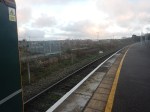


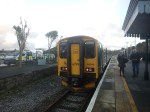





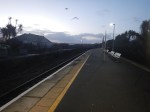

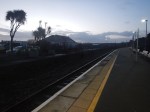

Note.
- It is a small one-platform station.
- It has a few facilities.
- It is located on the main street in the centre of the town.
This Google Map shows Newquay station.

Newquay station appears to have a very long platform.
- This page on Railway Data gives a length of 242 metres.
- It should accommodate a nine-car Class 802 train.
- The station is also close to the beach.
It looks to me that Newquay station is ready for a big surfing festival.
I have a few thoughts.
Adding A Second Platform
These pictures show the space alongside the current single track. At least for a five-car train.

Note.
- I would expect that adding a second platform could be easily done by a competent and experienced construction company.
- There would need to be new track and a set of points, so that a train could use either platform.
- Signalling would be added, so both platforms could be used, either separately or at the same time.
I also expect that the Tregoss Loop would need to be commissioned before the second platform.
Adding Charging For Battery-Electric Trains
Consider.
In GWR Trialling Transformative Ultra-Rapid Charging Train Battery, I talked about the installation of the Vivarail/GWR Fast Charge system at West Ealing station.
In Decarbonising The Mid-Cornwall Metro, I talked about using the Vivarail/GWR Fast Charge system or hydrogen to decarbonise the Mid-Cornwall Metro.
This picture shows the Vivarail/GWR Fast Charge system at West Ealing station.
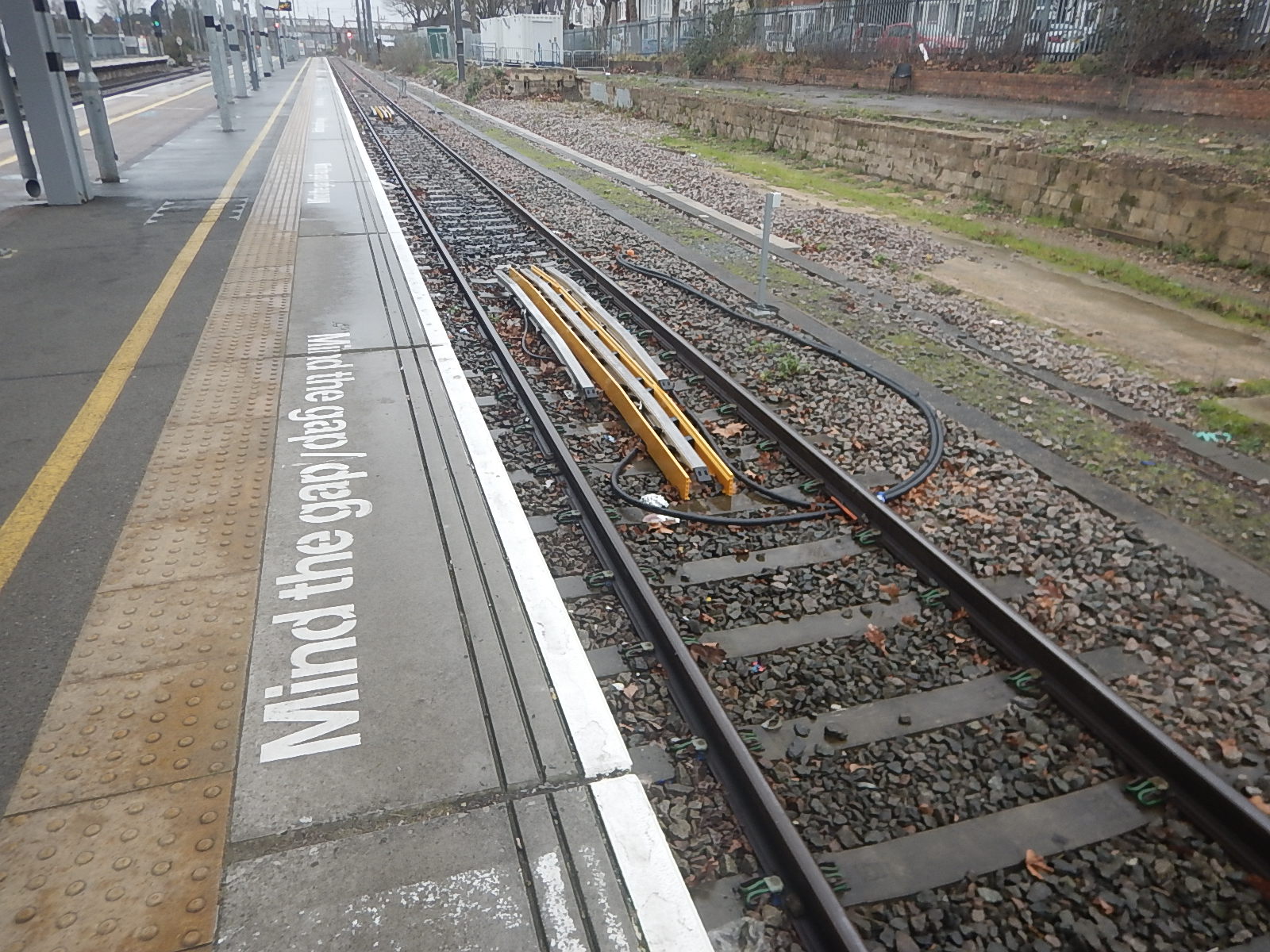
I feel there would be no problem fitting one of these in one or both of the platforms at Newquay.
But I do feel that the best way to decarbonise services to Newquay, would be to fully-electrify Par station with 25 KVAC overhead wires.
- Mid-Cornwall Metro services would charge their batteries using a pantograph, every time that they reversed in the station.
- Long distance battery-electric services through the station would top up their batteries during a stop at the station.
- Locomotives with batteries will be increasingly used on freight services and charging may be needed for the locomotives used from china clay trains.
Note.
- Par and Falmouth Docks is 30.8 miles.
- Par and Newquay is 20.8 miles.
- Par and Penzance is 44.8 miles
- Par and Plymouth is 34.7 miles.
- Par and Truro is 19 miles.
Par would appear to be a station, that could be easy to electrify and is conveniently placed in the heart of services through Cornwall.
Decarbonising The Mid-Cornwall Metro
Although the Mid-Cornwall Metro will probably run initially using what diesel multiple units, after a year or so, the route will be converted to zero-carbon operation.
Newquay To Falmouth Docks
This map shows the Mid-Cornwall Metro.
These are current timings.
- By train can take almost three hours with changes at Par and Truro.
- By car should take 45 minutes to drive the 24.4 miles according to Google.
Note.
- The train timings are for a typical British Rail-era Diesel Multiple Unit on the branches and something smarter between Truro and Par.
- A Day Return ticket would cost £8.90 without a Railcard.
- If there was a through train, that meant you didn’t have to change trains, I estimate that the time could be as low as one hour and 35 minutes.
I feel that most travellers, who had access to a car, would use that to travel between Newquay and Truro.
Newquay To Falmouth Docks By Electric Train
I have ridden in three battery-electric trains.
- Class 379 train – Manningtree and Harwich in passenger service.
- Class 230 train – Vivarail demonstration
- Class 777 train- Liverpool Central and Headbolt Lane in passenger service.
Note.
- All were mouse-quiet.
- There was no detectable difference, when running on battery power in the trains.
It is my view that battery-electric trains are no second-class solution.
Consider.
- Newquay and Par is 20.8 miles.
- Falmouth Docks and Par is 30.8 miles.
- Newquay and Falmouth Docks is 51.6 miles.
- The maximum speed between Par and Newquay is around 30 mph
- The maximum speed between Par and Falmouth Docks is around 50-70 mph
- There are twelve intermediate stations.
- There is a reverse at Par station.
- Charging would be easy to install at Falmouth Docks, Newquay and Par.
- In Par Station – 10th February 2024, I suggested that Par station could be fully-electrified, so that expresses could have a Splash-and-Dash on their way to London and Penzance. If all platforms at Par were electrified the Mid-Cornwall Metro trains could charge from the electrification, as they reversed.
There are two main ways that the Mid-Cornwall Metro might operate.
- There would be chargers at Newquay and Falmouth Docks and trains would shuttle the 51.6 miles between the two stations.
- There would only be charging at Par and trains would after charging at Par go alternatively to Newquay and Falmouth Docks.
The first might need smaller batteries and the second would only need one charger.
Newquay To Falmouth Docks By Hydrogen-Powered Train
There is only one hydrogen-powered train in service and that is the Alstom Coradia iLint, which is running in Germany.

I feel it is very much an interim design, as Alstom has taken a diesel-mechanical Lint train and swapped the diesel for a hydrogen-powered electricity generator and an electric motor.
But Alstom are putting together a hydrogen-powered train based on an Aventra.
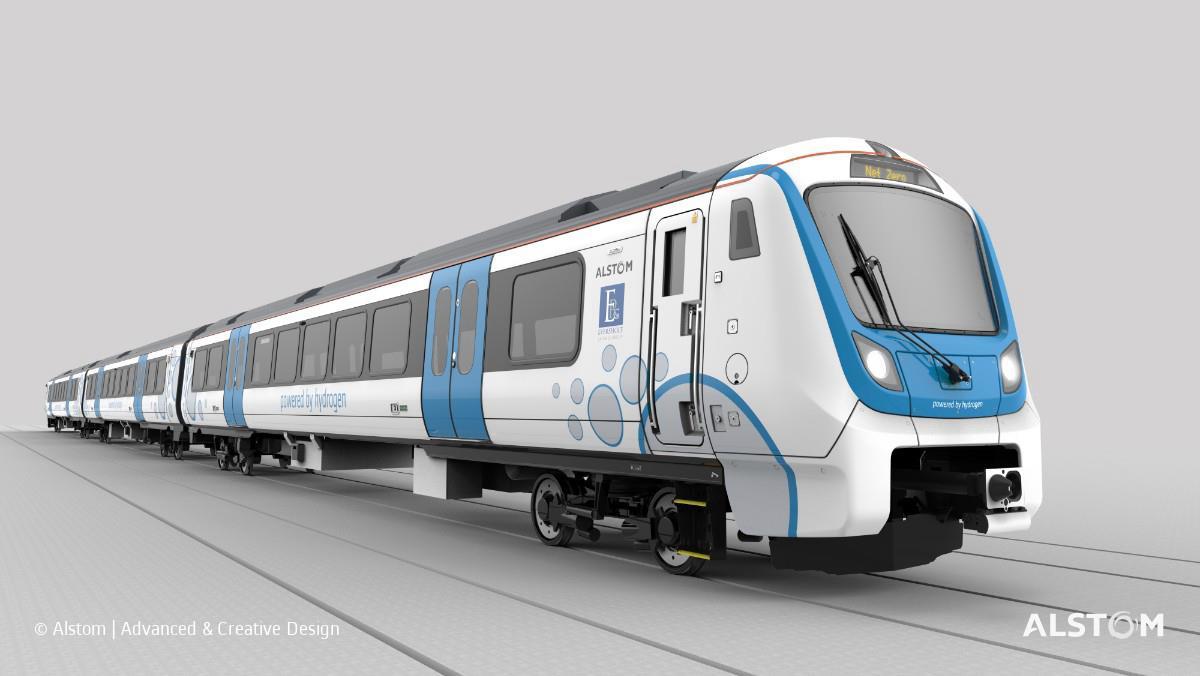
Note.
- The train is three cars.
- I would envisage performance of the hydrogen train would be very similar to that of a similar battery-electric train.
- I wouldn’t be surprised that refuelling of the train would not be a problem, as with all the china clay working nearby, there may well be developments to use hydrogen in the industry to decarbonise the mining.
The Mid-Cornwall Metro and Alstom’s Hydrogen Aventra could be ideal for each other.
Conclusion
I believe, that although the Mid-Cornwall Metro will start operation with diesel multiple units, it will be running in a zero-carbon mode within a few years.
Smart Train Lease Aims ‘To Make Renting Trains As Easy And Simple As Renting A Car’
The title of this post, is the same as that of this article on Railway Gazette International.
These four paragraphs outline the scheme.
Siemens Mobility has established a leasing subsidiary that would enable train operators to use its Mireo Smart battery, hydrogen and electric multiple-units without needing to make long-term investment commitments.
Smart Train Lease GmbH would make available at short notice multiple-units already approved for operation. These could be short or medium-term leases, with services such as maintenance available as part of the package. The aim is to provide operators with an economical way to quickly and flexibly expand their fleets and try out more sustainable traction technologies.
‘We want to make renting trains as easy and simple as renting a car, and thus help accelerate the mobility transition’, the leasing company’s CEO Benjamin Dobernecker explained on February 14.
Smart Train Lease will initially operate in Germany, although it plans to expand throughout Europe in the medium term.
I like this idea and I think it will work.
Metier Management Systems And Artemis
When four of us started Metier Management Systems in 1977 to sell our mini-computer-based project management system; Artemis, we generally rented or leased our systems, although we did sell some as the years progressed.
- For a fixed fee per month, a company got a project management computer and all the software.
- The fixed fee included installation, first line support, training and software updates.
- We could also supply extra training and project management consultancy at appropriate rates.
- The only extra costs to the client were the electricity to power the hardware and the paper to put in the printer.
- We also allowed clients to convert leases into outright sales.
This simple sales model appealed to a lot of our clients.
- The cost of the system was easy to budget.
- Many of our clients were happy with leasing or renting computer equipment.
- As the system was desk-sized, it easily fitted the average office.
But the leasing model was very advantageous to us.
- Most of our clients were large high-value quality organisations like big oil companies, nationalised industries and engineering consultancies.
- Our Finance Director and our Bank Manager at Lloyds Bank devised a plan, whereby we bundled a number of high-quality leases together and sold the bundle to Lloyds Bank’s leasing company.
The money we received gave us a healthy cash flow.
- The cash flow was then used to fund Research and Development and to finance more sales.
- If say someone like BP or Shell should phone up or send a fax, wanting a system immediately, we were generally able to fulfil their request.
I am sure that Siemens Mobility will be using a similar model.
They will aim to have trains in stock to fulfil clients needs.
So if Deutsche Bahn phone up saying have you got a three-car battery-electric train that works with 15 KVAC and has a range of 100 kilometres for next Monday, Siemens Mobility can generally say yes.
What helps is that the modular Mireo Smart multiple unit comes in battery, hydrogen and electric versions.
Extras could include full servicing a driver.
So Siemens Mobility will plug the train together and deliver it.
How Would Siemens Use The Leasing Model In Great Britain?
Consider.
- There are a lot of routes that need to be decarbonised in Great Britain.
- Many of these routes have electrification at one or both ends.
- Often these routes terminate in a bay platform.
- On most of these routes a two-, three-, four- or five-car train will be sufficient capacity.
- In the Desiro City, Siemens have a train, that is acceptable to Great Britain.
- If routes in Great Britain are to be electrified, they must be electrified with 25 KVAC overhead wires.
- Trains would be 100 mph, so they wouldn’t be limited as to routes.
- A Mireo-B has a range of between 80-100 kilometres or 49.7-74.6 miles.
I am sure Siemens Desiro City or its European equivalent; Mireo can be developed into a family of trains suitable for GB!
- The basic train would be two driving cars.
- Length would be increased by coupling trailer cars between the two driving cars.
- Hydrogen power would be in one of the trailers.
- Batteries would be under an appropriate number of cars.
Battery trains would be able to use a simple automatic charger, similar to the one, that I described in GWR Trialling Transformative Ultra-Rapid Charging Train Battery.
An Example – Mid-Cornwall Metro
This map shows the Mid-Cornwall Metro.
Consider.
- Newquay and Par is 20.8 miles.
- Falmouth Docks and Par is 30.8 miles.
- Newquay and Falmouth Docks is 51.6 miles.
- The maximum speed between Par and Newquay is around 30 mph
- The maximum speed between Par and Falmouth Docks is around 50-70 mph
- There are twelve intermediate stations.
- There is a reverse at Par station.
- Charging would be easy to install at Falmouth Docks, Newquay and Par.
- In Par Station – 10th February 2024, I suggested that Par station could be fully-electrified, so that expresses could have a Splash-and-Dash on their way to London and Penzance. If all platforms at Par were electrified the Mid-Cornwall Metro trains could charge from the electrification, as they reversed.
There are two main ways that the Mid-Cornwall Metro might operate.
- There would be chargers at Newquay and Falmouth Docks and trains would shuttle the 51.6 miles between the two stations.
- There would only be charging at Par and trains would after charging at Par go alternatively to Newquay and Falmouth Docks.
The first might need smaller batteries and the second would only need one charger.
An Example – Uckfield Branch
The Uckfield branch is in Southern England.
- It is not electrified between Hurst Green Junction and Uckfield, which is 24.7 miles.
- There are eight intermediate stations.
- The line can accommodate ten-car trains.
There is space at Uckfield station for a charger.

Charging would be at Uckfield station and North of Hurst Green Junction, where it will use the existing electrification.
Conclusions
This leasing/rental model will surely encourage train operators to replace diesels with appropriate zero-carbon alternatives on routes that need to be decarbonised.
How Many Direct Trains Should There Be Between London Paddington And Newquay?
The Mid-Cornwall Metro will see the following improvements on the Atlantic Coast Line between Newquay and Par stations.
- A second platform built at Newquay station.
- There will be a passing loop across Treegoss Moor.
- There will be a step-free bridge at Par station.
This will allow the current service on the line to be increased from two-hourly to hourly.
FirstGroup’s services in the UK, include several services, where a service is extended to a terminus away from the main line.
- Avanti West Coast – two trains per day (tpd) to Blackpool
- Great Western Railway – six tpd to Carmarthen
- Hull Trains – five tpd to Hull.
- Hull Trains – two tpd to Beverley.
- Hull Trains (proposed) – two tpd to Worksop and Sheffield.
Given that there will only be an hourly local service on the Atlantic Coast Line, I suspect that FirstGroup will be able to run up to six tpd to Newquay to satisfy the traffic needs of the London and Newquay service.
How Will Great Western Railway Run A Service To Newquay?
Last weekend, when I went to Ebbw Vale, I wrote My Train To Wales Today Divided At Swansea.
My train, that day was a ten-car train formed of a pair of Class 800 trains.
- The front train was signed as going to Swansea.
- The rear train was signed as going to Carmarthen.
- At Swansea the trains split into two.
- The front train finished its journey.
- The rear train reversed out and continued to Carmarthen.
Returning to London Paddington, trains join at Swansea.
Will Great Western Railway use a similar operation with Newquay services.
The train would be a ten-car train formed of a pair of Class 802 trains.
- One train would be going to Plymouth and the other train to Newquay.
- At Plymouth the trains split into two.
- One train finishes its journey at Plymouth.
- The other train continues to Newquay.
As Bodmin General station, has a second platform, that was recently built with financial help from Great Western Railway, could this be another destination served by splitting a train at Plymouth?
I discuss the implications of the second platform at Bodmin General station in Beeching Reversal – Increased Service Provision Bodmin General-Bodmin Parkway
How Long Would A Round Trip Take Between Plymouth And Newquay?
Current timings are as follows.
- Plymouth to Par – 34.7 miles – 50 minutes
- Par to Newquay – 20.8 miles – 51 minutes
- Turnround at Newquay – 5 minutes
- Newquay to Par – 20.8 miles – 51 minutes
- Par to Plymouth – 34.7 miles – 50 minutes
Note.
- Times are from Class 802 trains between Par to Plymouth.
- Times are for Class 150 trains between Par and Newquay.
Total time is 207 minutes or three hours and twenty-seven minutes.
Mid-Cornwall Metro Presentation – 9th February 2024
On Friday, I went to the Mid-Cornwall Metro presentation in the Victoria Hotel in Newquay.
These pictures give a flavour of the excellent presentation.





One thing that is difficult to put on paper is the overall enthusiasm for the project shown by representatives of Cornwall Council, Great Western Railway and Network Rail.
I believe that if this enthusiasm can be translated into action in the next couple of years, them this project can be delivered on time and on budget.
This link will show all my Mid-Cornwall Metro posts.
Residents Invited For A Bird’s Eye View Of How Mid Cornwall Metro Will Transform Transport Links In Cornwall
The title of this post, is the same as that of this article on RailUK.
This is the first paragraph.
Residents have been encouraged to attend an event at the Hotel Victoria in Newquay on Friday 9 February (10am – 7pm) and Saturday 10 February (10am – 4pm) when they’ll be able to see for themselves how the Mid Cornwall Metro, funded by Cornwall Council and £50 million of government Levelling Up Funding, will create a sustainable transport corridor through central Cornwall.
This is the last paragraph.
Another engagement event will take place at the Stannary on the University campus at Tremough on Friday 1 March from 10am to 5pm, and the Temperance Hall, Lower Market Street, Penryn TR10 8BH on Saturday 2 March from 10am to 4pm.
If the weather looks good, then I might go.
This page, with an excellent graphic, explains the Mid Cornwall Metro.
Rockton To Buy Up To 40 Heart Aerospace ES-30 Electric Aircraft
The title of this post, is the same as that of this article on Aviation Source News.
These are the first two paragraphs.
Swedish investment and aircraft leasing company Rockton has confirmed that it will acquire up to 40 of Heart Aerospace’s regional electric aircraft, the ES-30.
The purchase confirmation converts an earlier letter of intent with the Swedish aircraft manufacturer into firm purchase orders for 20 aircraft with purchase rights for 20 more.
It’s good to see a leasing company getting involved, as it probably means that the finances are viable.
The Wikipedia entry for Heart Aerospace, describes the range of the ES-30 like this.
The ES-30 is planned to have a 108 nautical miles (200 kilometres; 124 miles) fully electric range or a 215 nmi (398 km; 247 mi) range when also using generators powered by aviation biofuel. A range of 430 nmi (800 km; 490 mi) could be possible if only 25 passengers are carried.
These are some UK airport to airport distances.
- Aberdeen – Kirkwall – 124 miles
- Aberdeen – Sumburgh – 188 miles
- Anglesey – Belfast – 109 miles
- Anglesey – Belfast City – 109 miles
- Anglesey – Cork – 192 miles
- Anglesey – Derry – 163 miles
- Anglesey – Dublin – 71 miles
- Anglesey – Ronaldsway – 58 miles
- Anglesey – Shannon – 186 miles
- Anglesey – Waterford – 130 miles
- Birmingham – Belfast – 226 miles
- Birmingham – Dublin – 200 miles
- Birmingham – Edinburgh – 250 miles
- Birmingham – Glasgow – 260 miles
- Birmingham – Inverness – 363 miles
- Birmingham – Kirkwall – 451 miles
- Birmingham – Newcastle – 178 miles
- Birmingham – Newquay – 198 miles
- Birmingham – Schipol – 402 miles
- Birmingham – Sumburgh – 513 miles
Birmingham – Wick – 418 miles - Edinburgh – Schipol – 473 miles
- Gatwick – Edinburgh – 356 miles
- Gatwick – Schipol – 374 miles
- Glasgow – Belfast – 106 miles
- Glasgow – Belfast City – 103 miles
- Glasgow – Derry – 121 miles
- Glasgow – Kirkwall – 221 miles
- Glasgow – Sumburgh – 300 miles
- Glasgow – Stornoway – 177 miles
- Haverfordwest – Waterford – 94 miles
- Haverfordwest – Newquay – 94 miles
- Heathrow – Newquay – 212 miles
- Humberside – Schipol – 333 miles
- Inverness – Kirkwall – 106 miles
- Inverness – Sumburgh – 190 miles
- Leeds – Schipol – 386 miles
- Liverpool – Belfast City – 151 miles
- Liverpool – Cardiff – 135 miles
- Liverpool – Dublin – 140 miles
- Liverpool – Haverfordwest – 127 miles
- Liverpool – Norwich – 180 miles
- Liverpool – Ronaldsway – 89 miles
- London City – Haverfordwest – 167 miles
- London City – Humberside – 145 miles
- London City – Manchester – 161 miles
- London City – Norwich – 100 miles
- Manchester – Schipol 413 miles
- Newcastle – Cardiff – 230 miles
- Newcastle – Belfast City – 168 miles
- Newcastle – Newquay – 346 miles
- Newcastle – Schipol – 395 miles
- Newquay – Brest – 140 miles
- Newquay – Cardiff 98 miles
- Newquay – Cork – 180 miles
- Newquay – Deauville – 241 miles
- Newquay – Dinard – 183 miles
- Newquay – Dublin – 212 miles
- Newquay – Guernsey – 128 miles
- Newquay – Jersey – 152 miles
- Newquay – Nantes – 211 miles
- Newquay – Orly – 351 miles
- Newquay – Rouen – 285 miles
- Newquay – Scillies – 68 miles
- Newquay – Waterford – 150 miles
- Norwich – Schipol – 277 miles
- Ronaldsway – Belfast – 75 miles
- Ronaldsway – Belfast City – 62 miles
- Ronaldsway – Birmingham – 165 miles
- Ronaldsway – Dublin – 80 miles
- Ronaldsway – East Midlands – 161 miles
- Ronaldsway – Glasgow – 123 miles
- Ronaldsway – Leeds – 121 miles
- Ronaldsway – Manchester – 109 miles
- Southend – Schipol – 180 miles
- Stansted – Aberdeen – 379 miles
- Stansted – Edinburgh – 316 miles
- Stansted – Glasgow – 334 miles
- Stansted – Inverness – 426 miles
- Stansted – Schipol – 335 miles
- Stansted – Wick – 472 miles
- Sumburgh – Bergen – 226 miles
- Sumburgh – Kirkwall – 85 miles
Note.
- I have included Schipol, as in certain areas of the UK, passengers sometimes fly long-haul from Schipol.
- I have included Haverfordwest, as it will be close to all the wind farm activity in the Celtic Sea.
- I have included Anglesey, as I think it has possibilities.
- The distances wee calculated using on of the Free Map Tools.
These are some more specific thoughts.
The Basic ES-30 And The UK
With a range of 124 miles, I don’t believe that the range is long enough for the UK.
But saying that there are some established routes, where it should be able to operate.
- Glasgow – Belfast
- Glasgow – Belfast City
- Glasgow – Derry
- Haverfordwest – Waterford
- Haverfordwest – Newquay
- Inverness – Kirkwall
- Liverpool – Haverfordwest
- Liverpool – Ronaldsway
- London City – Norwich
- Newquay – Cardiff
- Newquay – Scillies
- Ronaldsway – Belfast
- Ronaldsway – Belfast City
- Ronaldsway – Dublin
- Ronaldsway – Glasgow
- Ronaldsway – Leeds
- Ronaldsway – Manchester
These routes have the following in common.
- They are mostly between major airports with advanced facilities.
- Most airports served have access to renewable electricity.
- Some of the routes can support hundred seat airliners.
- Fifty percent go to the Isle of Man.
I can see several routes between the UK and the island of Ireland and to and from the Isle of Man using ES 30 aircraft.
The Extended Range ES-30 And The UK
The 247 mile range of the extended range ES-30, brings lots more routes into play.
Key routes could be the following.
- Aberdeen – Kirkwall
- Aberdeen – Sumburgh
- Anglesey – Cork
- Anglesey – Shannon
- Birmingham – Belfast
- Birmingham – Dublin
- Birmingham – Newcastle
- Birmingham – Newquay
- Glasgow – Kirkwall
- Glasgow – Stornoway
- Heathrow – Newquay
- Inverness – Sumburgh
- Liverpool – Belfast City
- Liverpool – Dublin
- Liverpool – Norwich
- London City – Haverfordwest
- London City – Humberside
- London City – Manchester
- Newcastle – Belfast City
- Newcastle – Cardiff
- Newquay – Brest
- Newquay – Cork
- Newquay – Deauville
- Newquay – Dinard
- Newquay – Dublin
- Newquay – Guernsey
- Newquay – Jersey
- Newquay – Nantes
- Newquay – Waterford
- Ronaldsway – Birmingham
- Ronaldsway – East Midlands
There will also be other routes.
The Extended Range With 25 Passengers ES-30 And The UK
The 490 mile range of the extended range ES-30 with only 25 passengers, brings a few more routes into play.
- Birmingham – Edinburgh
- Birmingham – Glasgow
- Birmingham – Inverness
- Birmingham – Kirkwall
- Birmingham – Schipol
- Birmingham – Wick
- Edinburgh – Schipol
- Gatwick – Edinburgh
- Gatwick – Schipol
- Glasgow – Sumburgh
- Humberside – Schipol
- Leeds – Schipol
- Manchester – Schipol
- Newcastle – Newquay
- Newcastle – Schipol
- Newquay – Orly
- Newquay – Rouen
- Norwich – Schipol
- Southend – Schipol
- Stansted – Aberdeen
- Stansted – Edinburgh
- Stansted – Inverness
- Stansted – Glasgow
- Stansted – Schipol
- Stansted – Wick
Note.
- All airports East of Birmingham and Manchester seem to be close enough to Schipol for an Extended Range ES-30 with 25 passengers to serve the route.
- Most major Scottish Airports can be reached from Stansted.
- Flying from Gatwick to Scottish Airports is around forty miles longer than flying from Stansted.
Liverpool Airport
Liverpool Airport could be a major destination for the ES 30, as it could be a key airport for flying between the UK and the island of Ireland.
Liverpool would obviously need the electric infrastructure, but I also believe it needs a better connection to the major railway station at Liverpool South Parkway, which has extensive rail connections.
This Google Map shows the area between Liverpool South Parkway station and the airport.

Note.
- Liverpool South Parkway station is marked by the red arrow in the North-West corner of the map.
- The airport is in the opposite corner, with the terminal to the North of the runway.
- The main railway between the South and Liverpool Lime Street passes to the South of the station.
- The A561 passes across to the South of the railway and to the North of the airport.
I suspect some form of people mover like the Luton DART can be built between the station and the airport.
It should be noted that as Hunts Cross has only one platform for Merseyrail Northern Line trains and this could be a factor in limiting the line’s capacity. So could a second platform be installed at the airport to both act as an airport station and to increase the frequency on the Northern Line?
I believe that in a couple of years, journey times between Euston and Liverpool South Parkway will be under two hours and they will only get shorter with High Speed Two. With a fast connection between the airport and the station, there could be a sub-three-hour zero-carbon route between London and the island of Ireland.
- Avanti West Coast Class 805 train to Liverpool South Parkway.
- People mover to the airport.
- Electric aircraft on the 140 miles to Dublin.
Dublin air traffic are usually efficient in getting planes in quickly.
Glasgow Airport
Glasgow Airport could be a major destination for the ES 30, as it could be a key airport for flying between the UK and the island of Ireland.
As with Liverpool Airport it needs a better connection to the rail network.
If Glasgow Airport is successful running zero-carbon aircraft to Ireland, this could change all previous thinking on a Glasgow Airport Rail Link.
Ronaldsway Airport
Geography and electric airliners could be very kind to Ronaldsway Airport and the Isle of Man.
- Electric airliners can easily reach much of the island of Ireland and the UK mainland between Glasgow and Birmingham, from Ronaldsway Airport with ease.
- The Isle of Man will in a couple of years be surrounded by wind farms.
- With other developments on the island, it could sell itself to the UK and Ireland, as a green holiday destination.
But what would the motorcycle enthusiasts say?
Anglesey Airport
I believe that Anglesey Airport could be brought to life in a big way by electric aircraft like the ES-30 or the Eviation Alice.
These are flight distances from Anglesey Airport.
- Anglesey – Belfast – 109 miles
- Anglesey – Belfast City – 109 miles
- Anglesey – Cork – 192 miles
- Anglesey – Derry – 163 miles
- Anglesey – Dublin – 71 miles
- Anglesey – Ronaldsway – 58 miles
- Anglesey – Shannon – 186 miles
- Anglesey – Waterford – 130 miles
All of these except for Cork, Derry, Shannon and Waterford would be possible in the basic ES-30.
This Google Map shows the airport, which is also labelled as RAF Valley.

Note that the North Wales Coast Line passes the site on the North-East side.
At present, Avanti West Coast trains take nearly four hours between London and Holyhead.
But later this year, new bi-mode Class 805 trains will replace, the current diesel only Class 221 trains.
- The current diesel only trains take two hours and five minutes between Crewe and Holyhead.
- The current diesel only trains take one hour and forty-three minutes between Crewe and London Euston.
- The fastest electric trains take one hour and twenty-nine minutes between Crewe and London Euston.
- High Speed Two trains will take 56 minutes between Crewe and London Euston.
When you consider that a lot of the North Wales Coast Line, is straight and flat, I can see the following times being possible, with some improvement and smart electrification between Crewe and Holyhead and a smaller number of stops.
- Crewe and Anglesey Airport – One hour and twenty minutes
- London Euston and Anglesey Airport – Two hours and fifty minutes
With High Speed Two Classic-Compatible trains, the London Euston and Anglesey Airport time could be below two hours and thirty minutes.
I believe that with a well-designed terminal at Anglesey Airport, this could be the fastest zero-carbon way between London and Ireland.
Haverfordwest Airport
This Google Map shows the location of Haverfordwest Airport in the East of Pembrokeshire.
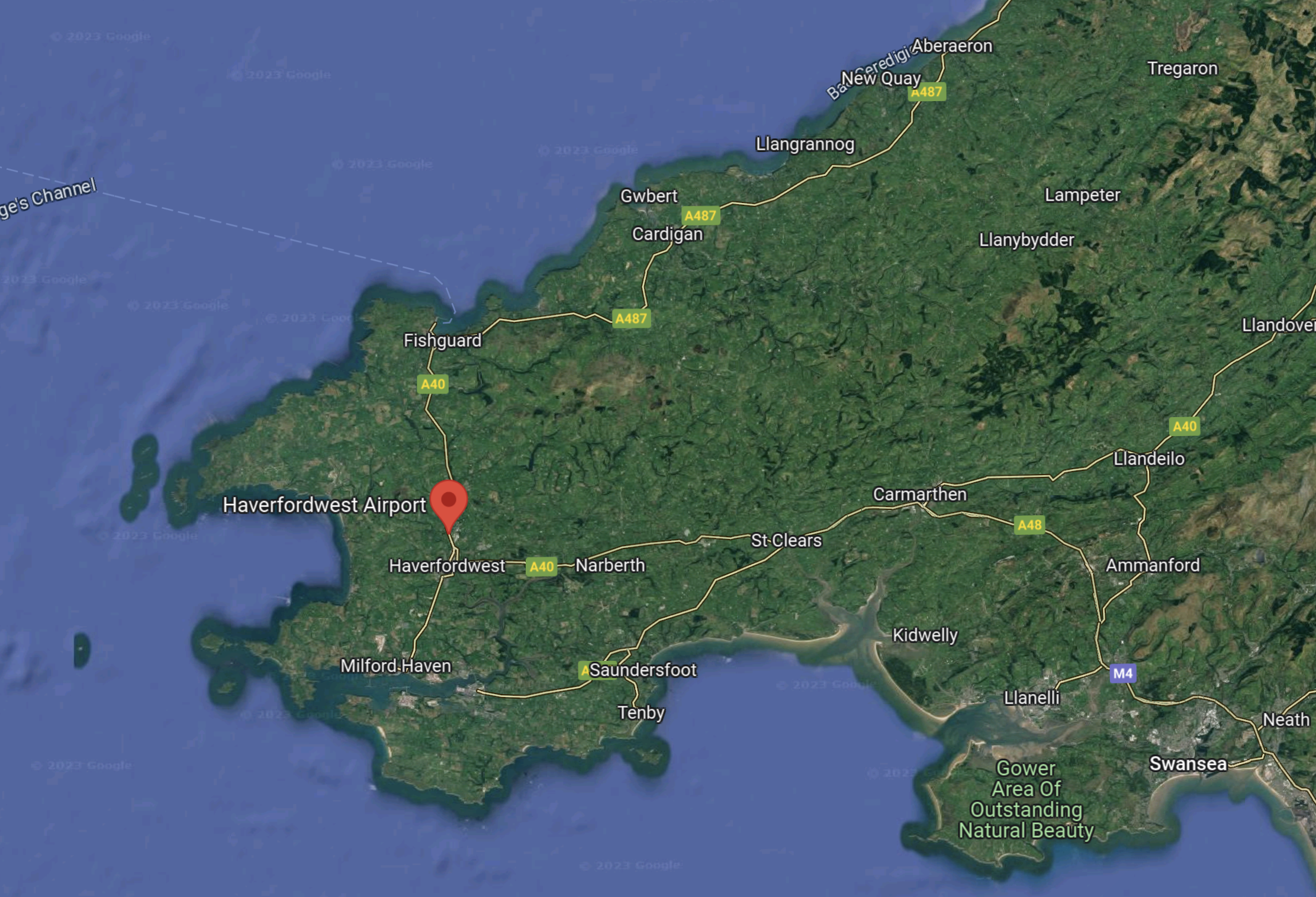
This second Google Map shows a close-up of the airport.

This map from OpenRailwayMap shows the airport and the nearest railway station.
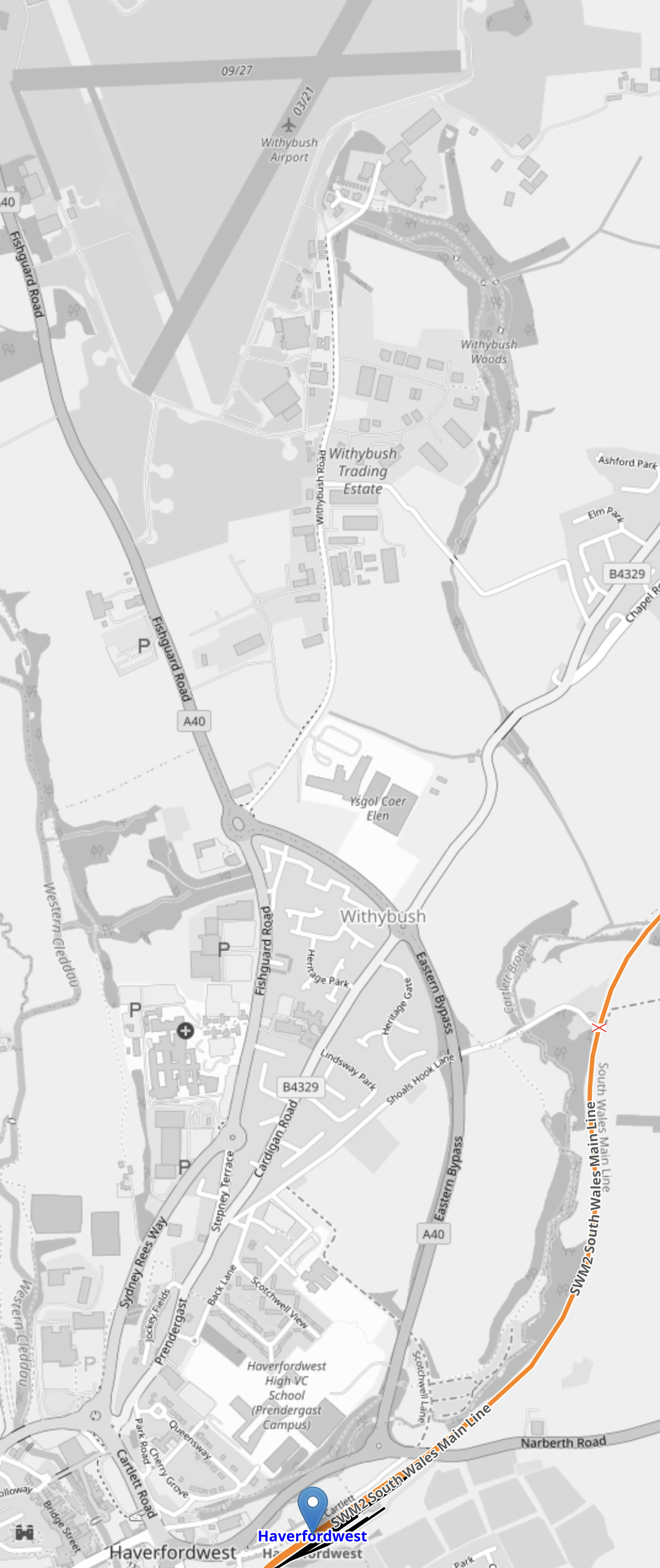
Note.
- Haverfordwest Airport is at the top of the map.
- Haverfordwest station is at the bottom of the map.
- There are rail connections to Cardiff, Fishguard, Milford Haven, Pembroke Dock and Swansea from the the station.
- Rail passengers for London would change at Swansea.
The road looks good between the airport and the station, so would an electric bus to handle transfers be ideal?
Consider.
- I have flown myself into Haverfordwest Airport and there were no navigation or operational problems that I can remember.
- With all the wind farm development planned for the coast of Pembrokeshire and the Celtic Sea, I feel that an airport in the area with regular flights to London and perhaps Waterford in Ireland could be essential.
- London City and Haverfordwest airports are 167 miles apart
- Waterford and Haverfordwest airports are 94 miles apart
- Quiet electric aircraft may ease any planning problems.
- Will a helicopter base be needed for serving wind farms in the Celtic Sea?
I believe, Haverfordwest Airport could be converted into a high-class airport for the Eastern tip of South Wales.
Haverfordwest Airport could also attract other services, given that the Welsh Government have a policy of not building new roads.
I have a feeling that quiet electric airliners will lead to the development of airports like Haverfordwest as feeder airports for the Heathrows and Schipols of this world.
Waterford Airport
Waterford Airport has recently been expanded and it appears from the Wikipedia entry, they are expecting more tourists.
This Google Map shows the position of the airport and the railway station in Waterford.

Note.
- The red arrow at the top of the map indicates Waterford station on the Northern side of the city.
- The airport is indicated by the blue dot in the South-East corner of the map.
- The airport is about ten kilometres from the City Centre.
In the past, Waterford has been quite a busy airport, but Covid-19 seems to have killed most of the traffic.
So could a zero-carbon service between Waterford and Haverfordwest be profitable?
- Those working with the wind energy in the Celtic Sea might find route useful.
- It would give a low-carbon route between Waterford and South Wales, which some might like.
- I also believe that the novelty of flying in an electric plane would attract passengers.
Waterford and Haverfordwest might be one of those routes, where electric planes might be worth trying.
This Google Map shows the Celtic Sea.
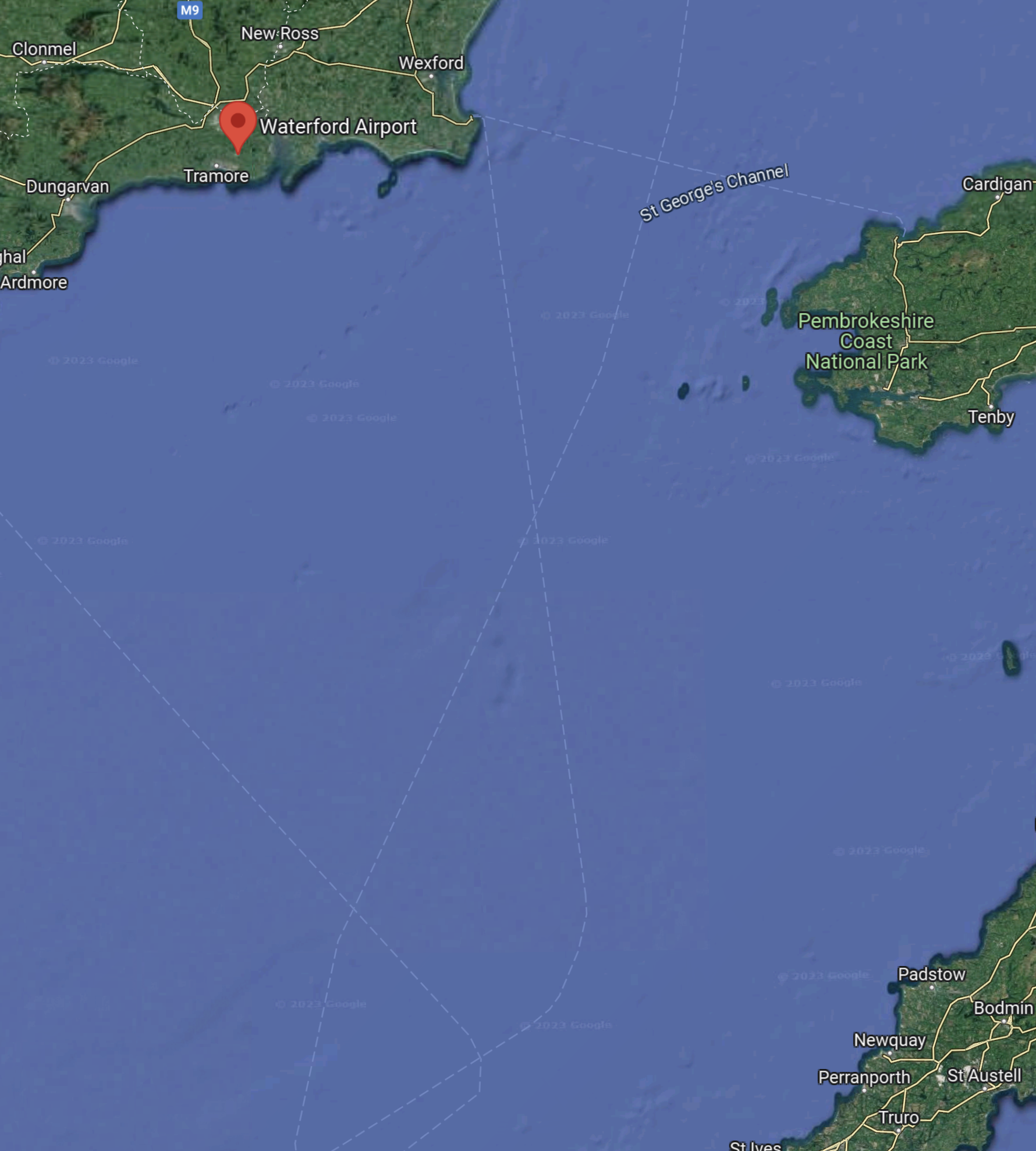
Note.
- Waterford Airport is indicated in red on the South-East corner of Ireland.
- Haverfordwest Airport is on the South-Western tip of Wales.
- Newquay Airport is in the South-East corner of the map on the North coast of Cornwall.
There could be as much as 50 GW of floating wind farms installed in this area.
I feel that there could be a case for a triangular Haverfordwest, Newquay and Waterford service.
Newquay Airport
Newquay Airport has been in the news recently because of the antics of Richard Branson and Virgin Orbit.
This Google Map shows the airport in relation to the town.
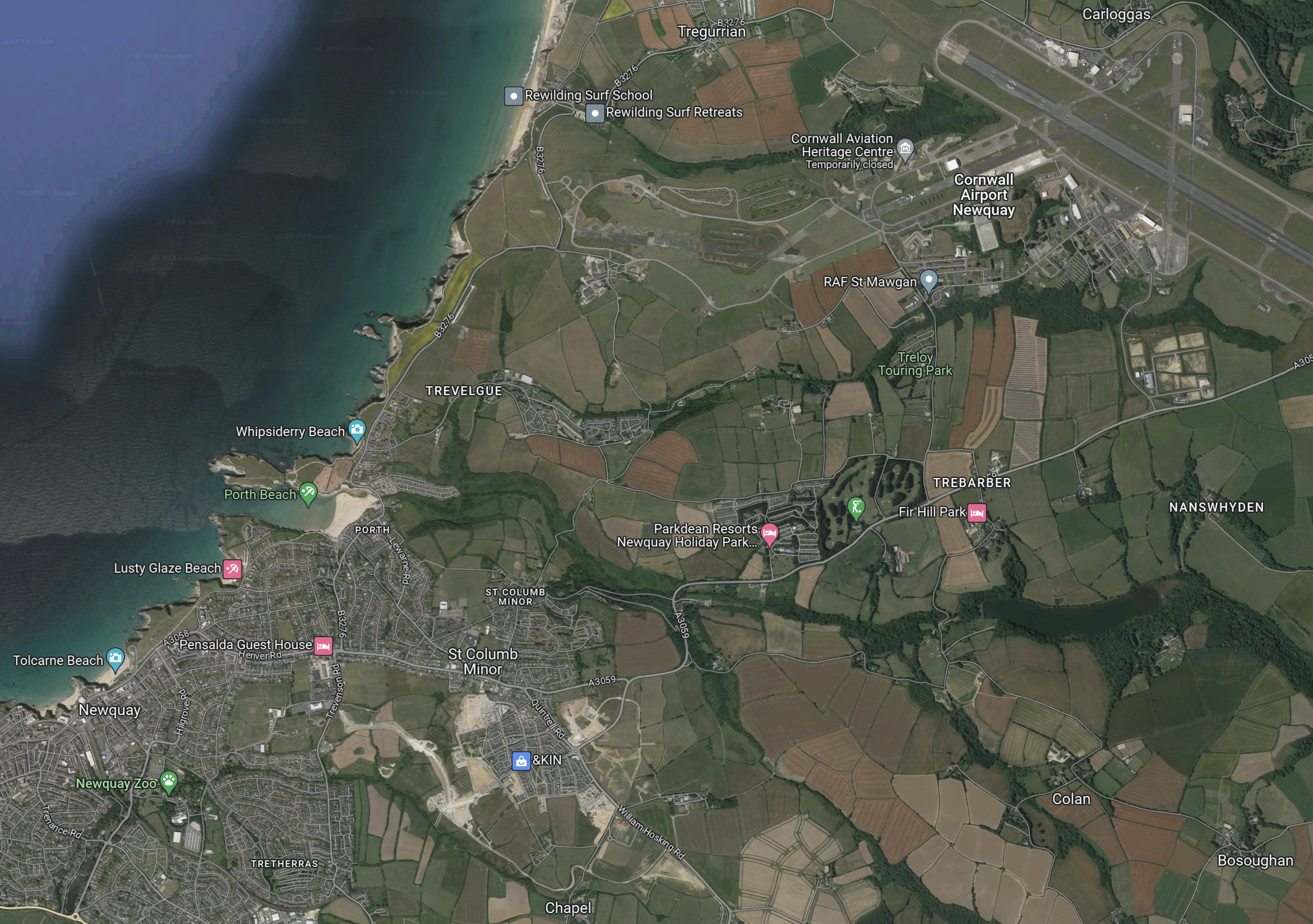
Note.
- The airport is in the North-East corner and boasts a long runway.
- The airport serves well over a dozen destinations.
- The town of Newquay is in the South-West corner of the map.
- Newquay station is by the sea.
All of these places would be suitable destinations for electric aircraft.
- Birmingham
- Brest
- Cardiff
- Cork
- Deauville
- Dinard
- Dublin
- Guernsey
- Heathrow
- Jersey
- Nantes
- Orly
- Rouen
- Scillies
- Waterford
Newquay Airport could get very busy with electric aircraft supporting tourism and the developing wind power industry.
This second Google Map shows the town centre and station.

Surely, having the station by Great Western Beach is good marketing.
In The Proposed Mid-Cornwall Metro, I talked about a plan to run an hourly Metro service between Newquay and Falmouth.
This article on Rail Technology Magazine is dated January 2023 and entitled Mid Cornwall Metro Secures £50m In Levelling Up Funding, where these are the first two paragraphs.
Following yesterday’s major Levelling Up funding announcement, the government has pledged an almost £50m grant to improve the railways linking Newquay, St Austell, Truro and Falmouth in Cornwall.
This financial aid to improve Cornwall Rail links represents the only successful bid out of four that were submitted to the Levelling up funding. The improvement scheme will be helmed by a partnership with Great Western Railway and Network Rail.
Note.
- I believe this means the Mid-Cornwall Metro will be built.
- Especially as looks like it will cost less than £100 million.
- As this Metro will serve Newquay, it shouldn’t be too difficult to link the plane with the train, with perhaps a zero-carbon bus.
- The Metro would then link Newquay Airport to the main population centres of Newquay, St Austell, Truro and Falmouth.
- If the Metro could be run using zero-carbon trains, that would surely put the icing on the cake!
The map from OpenRailwayMap shows the route.
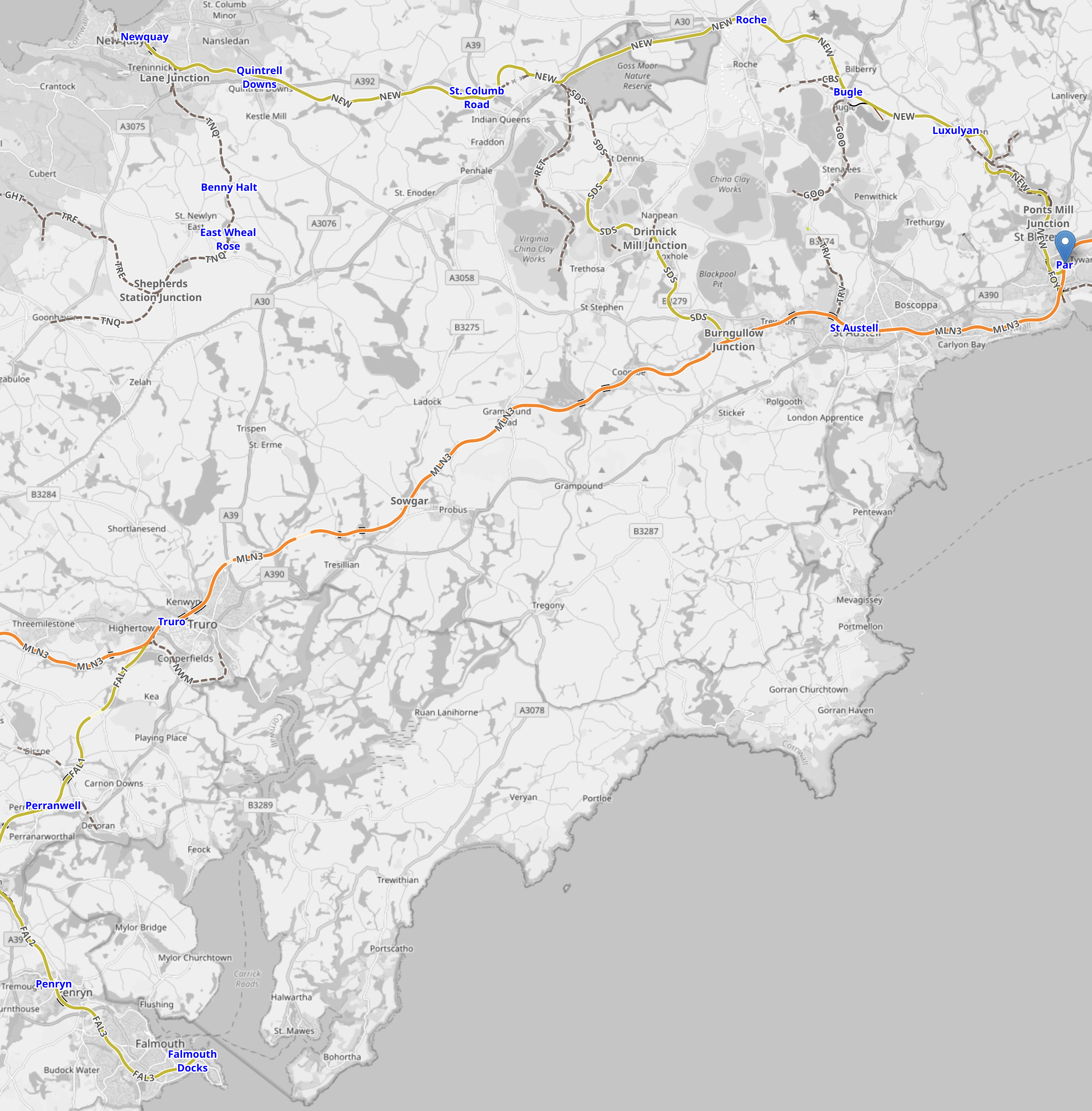
Note.
- Newquay is in the North-West corner of the map.
- Trains spend around 6-7 minutes waiting at Newquay.
- The blue arrow in the North-East corner marks Par station, where a chord will be reinstated to allow trains to go between Newquay and St. Austell.
- Par is the nearest station to the Eden Centre.
- Newquay and Par is 20.6 miles.
- The route, then goes along the Cornish Main Line, through St. Austell and then on to Truro.
- Par and Truro is 18.9 miles.
- At Truro the Metro would take the Falmouth branch.
- Falmouth and Truro is 11.8 miles.
- Trains spend around 7-8 minutes waiting at Falmouth Docks
- The total route is just over fifty miles, which probably means that battery-electric trains could work the route with charging at each end, whilst the train is turned round.
This airport and metro combination could give a big-boost to zero-carbon tourism.
Inverness Airport
Inverness Airport has recently been expanded with a station on the Inverness and Aberdeen Line.
Consider.
- Electric aircraft like the ES-30 will be able to reach both Kirkwall on Orkney and Sumburgh on Shetland from both Inverness and Aberdeen Airports.
- Sumburgh would need an extended range ES-30.
- Flights would be a few miles shorter from Inverness than from Aberdeen.
- Kirkwall and Sumburgh is only 85 miles, so there may be possibilities for serving both Orkney and Shetland with one flight.
- Extended range ES-30s might be able to do return trips to Kirkwall without a major charge at Kirkwall.
- I once flew in my Cessna-340 to Kirkwall to see the original turbine, that was placed on the island. There is a lot of cold forbidding sea in the area. Perhaps the slightly shorter trip from Inverness, might be better for everybody’s nerves?
- Just as the oil and gas industry did in the last century, I can see the offshore wind power industry generating a lot of passenger traffic to the Orkney and Shetland Islands.
Both Inverness and Aberdeen can be reached from Stansted by an ES-30 carrying a reduced passenger load.
Birmingham Airport
Birmingham Airport could become a major base for electric aircraft.
The 247 mile range of the extended range ES-30 would allow it to be able to reach the following places.
- Belfast
- Dublin
- Newcastle
- Newquay
- Ronaldsway
Reduce the passenger load slightly to 25 passengers and the plane would be able to reach.
- Edinburgh
- Glasgow
- Inverness
- Kirkwall
- Wick
But Birmingham Airport is only 65 minutes from Euston and will in the future be served by High Speed Two, in under an hour.
The airport also has a large catchment area of its own, who might be tempted to choose flying zero-carbon.
Spokes From Speke
In the 1980s, I went to a presentation from Royal Mail in Ipswich about guaranteed next day delivery of parcels. It was important to me, as I was writing software that needed to get from Ipswich, where it was created to London, where it would be tested and installed on customers machines. We also needed to get copies to our customers in Edinburgh and Aberdeen.
The Royal Mail’s latest concept of Spokes From Speke was described.
- All urgent parcels and First Class mail would be collected from the local sorting office and taken to the local airport, which in our case would probably have been Stansted.
- These consignments would then be flown to Speke Airport as Liverpool Airport was known in those days at around midnight.
- They would then be sorted and reloaded onto other planes to complete their journey.
- The planes would then return home and the parcels and mail would be delivered by truck to the local sorting office.
Aircraft used included Short Skyvans and piston-engined twins. Some we’re the quietest of aircraft.
I have heard or read somewhere that in some airports, there were complaints about noisy aircraft flying in and out in the middle of the night.
Now fifty years on companies are looking to speed up deliveries.
- In the UK, companies are experimenting with 100 mph overnight parcels trains.
- This article on Railway Gazette is entitled Varamis Rail Launches Regular Express Light Freight Service.
- Eversholt Rail are putting money behind converting redundant electric multiple units into parcel trains.
But DHL in the USA are going another way and have ordered twelve Alice aircraft from Eviation.
It looks like the cargo Alice could have a useful load of just over a tonne and a range of around 290 miles.
I can envisage flights of near-silent silent Alices sneaking into and out of airports in the middle of the night to deliver and collect urgent parcels.
Techniques like Spokes From Speke will come again, but this time with electric aircraft.
How Would The ES-30 Compare With An Eviation Alice?
The Wikipedia entry for the Eviation Alice gives these figures.
- Passengers – 9
- Maximum Speed – 300 mph
- Range – 290 miles
- Take-off distance – 840 metres
- Landing distance – 620 metres
Note.
- These are figures that most pilots would expect from an aircraft of this size.
- My Cessna 340 was about the same and about eight percent slower.
- It also had a much longer range.
If you look at my list of flights, these will not be possible.
- Birmingham – Inverness – 363 miles
- Birmingham – Kirkwall – 451 miles
- Birmingham – Schipol – 402 miles
- Bimingham – Sumburgh – 513 miles
Birmingham – Wick – 418 miles - Edinburgh – Schipol – 473 miles
- Gatwick – Edinburgh – 356 miles
- Gatwick – Schipol – 374 miles
- Glasgow – Sumburgh – 300 miles
- Humberside – Schipol – 333 miles
- Leeds – Schipol – 386 miles
- Manchester – Schipol 413 miles
- Newcastle – Newquay – 346 miles
- Newcastle – Schipol – 395 miles
- Newquay – Orly – 351 miles
- Stansted – Wick – 472 miles
- Sumburgh – Bergen – 226 miles
- Sumburgh – Kirkwall – 85 miles
Note.
- Most routes that are too long are to Schipol or Scotland.
- Anglesey appears to have Ireland extremely well covered.
- Birmingham, Glasgow and Liverpool keep their Irish routes.
- Newquay is still a hub, that would promote tourism in Cornwall and only loses the Orly connection, although it keeps the flight to Heathrow.
- Ronaldsway still looks to be a possible zero-carbon airport.
I would suggest that a range of 290 miles, is an ideal one for an electric aircraft in the UK, as it can handle a large number of routes.
These are routes that I feel would attract a large number of passengers.
- Anglesey – Belfast – 109 miles
- Anglesey – Belfast City – 109 miles
- Anglesey – Derry – 163 miles
- Anglesey – Dublin – 71 miles
- Glasgow – Belfast – 106 miles
- Glasgow – Belfast City – 103 miles
- Glasgow – Derry – 121 miles
- Heathrow – Newquay – 212 miles
- Inverness – Kirkwall – 106 miles
- Inverness – Sumburgh – 190 miles
- Liverpool – Belfast – 153 miles
- Liverpool – Belfast City – 151 miles
- Liverpool – Dublin – 140 miles
- Liverpool – Norwich – 180 miles
- Liverpool – Ronaldsway – 89 miles
- London City – Humberside – 145 miles
- London City – Manchester – 161 miles
- Newcastle – Cardiff – 230 miles
- Newcastle – Belfast City – 168 miles
- Newquay – Brest – 140 miles
- Newquay – Cardiff 98 miles
- Newquay – Cork – 180 miles
- Newquay – Deauville – 241 miles
- Newquay – Scillies – 68 miles
- Newquay – Waterford – 150 miles
- Norwich – Schipol – 277 miles
- Ronaldsway – Belfast City – 62 miles
- Ronaldsway – Dublin – 80 miles
- Ronaldsway – Glasgow – 123 miles
- Southend – Schipol – 180 miles
- Sumburgh – Kirkwall – 85 miles
Alice may not be big enough for some routes.
But it will be a wonderful route-proving aircraft for the larger ES-30 and other zero-carbon aircraft.
Conclusion
There will be a lot of uses for battery-electric aircraft in the UK.
The Proposed Mid-Cornwall Metro
In the January 2022 Edition of Modern Railways, there is this description of the Mid-Cornwall Metro.
This would see an hourly service shuttling between the north and south coasts of the county and linking the main population centres at Newquay, St Austell, Truro and Falmouth. This would become the main service on the Newquay branch, and it would take over one of the twice-hourly services on the Falmouth branch, with the other service being a Truro to Falmouth shuttle as now.
Facilitating the Metro idea will be the latest phase of the modernisation of signalling in Cornwall, which will see the upgrade of a level crossing near Truro. Other infrastructure work required is a new passing loop on the Newquay branch at Tregoss Moor and restoration of a second platform face at the terminus at Newquay.
A business case was due to be submitted to the Department for Transport before Christmas 2021.
These are a few thoughts.
The Current Timings
If you look at the distances and timings of the various sections they are as follows.
- Newquay and Par – Five stops – 20.8 miles – 49-52 minutes
- Par and Truro – One stop – 19 miles – 22 minutes
- Truro and Falmouth Docks – Four stops – 11.8 miles – 24 minutes
Note.
- It appears that the Newquay to Par service is three minutes quicker than the other way.
- There will be a reverse at Par, which could take three minutes.
- The Par and Truro times were either GWR Castles or Class 802 trains.
The total time is 98-101 minutes and the total distance is 51.6 miles
Possible Timing
Consider.
- For the ease of timetabling and operation, it is probably best that a round trip between the two Newquay and Falmouth Docks takes an exact number of hours.
- The operating speed between Par and Truro is 75 mph and it is only 50 mph elsewhere.
- Turnround time at Newquay is five minutes.
- Turnround time at Falmouth Docks is 4-6 minutes
For these reasons, I doubt that much improvement could be made on the fastest time of 98 minutes. Certainly, a round trip of three hours would appear impossible.
But a round trip time of four hours would be very sensible.
However, there would be a turnround time of between 19-22 minutes at each end of the route.
This time might seem overly long, but it would be ideal for charging a battery-electric train.
How Many Trains Would Be Needed?
As the round trip will be four hours and an hourly service is needed, there will be a need for four trains to run the service, with the addition of probably two extra trains to allow for one in maintenance and one covering for any breakdowns.
Could The Mid-Cornwall Metro Use Battery-Electric Trains?
This Hitachi infographic shows the specification of the Hitachi Regional Battery Train.

Note
- The range of ninety kilometres is fifty-six miles and a longer distance than Newquay and Falmouth Docks.
- The operating speed of 90-100 mph is ideal.
- The time needed for a full charge at either end is within the timetable, I calculated earlier.
Hitachi Regional Battery Trains would be ideal for working the Mid-Cornwall Metro with a full charge at both ends of the route.
I have used my virtual helicopter to explore the Cornish Main Line between Par and Truro.
If it was decided to electrify the Cornish Main Line between Truro and Par, this could be an alternative way to charge the trains.
- The Mid-Cornish Metro trains should be able to do a return trip to Newquay and Falmouth Docks from the main line without charging at the two terminal stations.
- The electrification would be able to charge battery-electric Class 802 trains between Plymouth and Penzance.
But the extra infrastructure works to raise nine road bridges and several footbridges might blow the budget.
Where Would The Trains Be Serviced?
Great Western Railway has depots at both Penzance and Plymouth and with perhaps a charger at Truro and/or Par stations, the trains should be able to get to either depot at the end of the day.
Trains To Newquay
Wikipedia says this about the services to Newquay station.
The service is irregular with typically one train around every two hours.
As well as the local service, the station handles a number of long-distance trains in the summer. These services include Great Western Railway trains from London Paddington and CrossCountry trains from the North of England and the Scottish Lowlands, which do not stop at intermediate stations between Par and Newquay. On Sundays, there are some local trains and a small number of intercity services. As well as the weekend through trains, in peak summer months there is also a Monday-Friday through Great Western Railway intercity service to and from London, but local trains continue on these days too. Traditionally, there was no Sunday service in the winter, even in the ‘golden age’ between both of the 20th century’s world wars, but the line has a service of three trains each way on Sundays from 11 December 2011.
The Mid-Cornwall Metro will at least come with an hourly service.
But this will mean, that to run other services to the station with the hourly Metro will mean that a second platform will be needed.
I discuss the improvements needed in Beeching Reversal – Transforming The Newquay Line.
This is a quirky video, which describes an architect’s plans for the station.
It is the sort of simple solution, that I like.
Conclusion
I believe that a small fleet of Hitachi Regional Battery Trains could create an iconic Metro for Cornwall, that would appeal to both visitors and tourists alike.
 The Anonymous Widower