Residents Invited For A Bird’s Eye View Of How Mid Cornwall Metro Will Transform Transport Links In Cornwall
The title of this post, is the same as that of this article on RailUK.
This is the first paragraph.
Residents have been encouraged to attend an event at the Hotel Victoria in Newquay on Friday 9 February (10am – 7pm) and Saturday 10 February (10am – 4pm) when they’ll be able to see for themselves how the Mid Cornwall Metro, funded by Cornwall Council and £50 million of government Levelling Up Funding, will create a sustainable transport corridor through central Cornwall.
This is the last paragraph.
Another engagement event will take place at the Stannary on the University campus at Tremough on Friday 1 March from 10am to 5pm, and the Temperance Hall, Lower Market Street, Penryn TR10 8BH on Saturday 2 March from 10am to 4pm.
If the weather looks good, then I might go.
This page, with an excellent graphic, explains the Mid Cornwall Metro.
Rockton To Buy Up To 40 Heart Aerospace ES-30 Electric Aircraft
The title of this post, is the same as that of this article on Aviation Source News.
These are the first two paragraphs.
Swedish investment and aircraft leasing company Rockton has confirmed that it will acquire up to 40 of Heart Aerospace’s regional electric aircraft, the ES-30.
The purchase confirmation converts an earlier letter of intent with the Swedish aircraft manufacturer into firm purchase orders for 20 aircraft with purchase rights for 20 more.
It’s good to see a leasing company getting involved, as it probably means that the finances are viable.
The Wikipedia entry for Heart Aerospace, describes the range of the ES-30 like this.
The ES-30 is planned to have a 108 nautical miles (200 kilometres; 124 miles) fully electric range or a 215 nmi (398 km; 247 mi) range when also using generators powered by aviation biofuel. A range of 430 nmi (800 km; 490 mi) could be possible if only 25 passengers are carried.
These are some UK airport to airport distances.
- Aberdeen – Kirkwall – 124 miles
- Aberdeen – Sumburgh – 188 miles
- Anglesey – Belfast – 109 miles
- Anglesey – Belfast City – 109 miles
- Anglesey – Cork – 192 miles
- Anglesey – Derry – 163 miles
- Anglesey – Dublin – 71 miles
- Anglesey – Ronaldsway – 58 miles
- Anglesey – Shannon – 186 miles
- Anglesey – Waterford – 130 miles
- Birmingham – Belfast – 226 miles
- Birmingham – Dublin – 200 miles
- Birmingham – Edinburgh – 250 miles
- Birmingham – Glasgow – 260 miles
- Birmingham – Inverness – 363 miles
- Birmingham – Kirkwall – 451 miles
- Birmingham – Newcastle – 178 miles
- Birmingham – Newquay – 198 miles
- Birmingham – Schipol – 402 miles
- Birmingham – Sumburgh – 513 miles
Birmingham – Wick – 418 miles - Edinburgh – Schipol – 473 miles
- Gatwick – Edinburgh – 356 miles
- Gatwick – Schipol – 374 miles
- Glasgow – Belfast – 106 miles
- Glasgow – Belfast City – 103 miles
- Glasgow – Derry – 121 miles
- Glasgow – Kirkwall – 221 miles
- Glasgow – Sumburgh – 300 miles
- Glasgow – Stornoway – 177 miles
- Haverfordwest – Waterford – 94 miles
- Haverfordwest – Newquay – 94 miles
- Heathrow – Newquay – 212 miles
- Humberside – Schipol – 333 miles
- Inverness – Kirkwall – 106 miles
- Inverness – Sumburgh – 190 miles
- Leeds – Schipol – 386 miles
- Liverpool – Belfast City – 151 miles
- Liverpool – Cardiff – 135 miles
- Liverpool – Dublin – 140 miles
- Liverpool – Haverfordwest – 127 miles
- Liverpool – Norwich – 180 miles
- Liverpool – Ronaldsway – 89 miles
- London City – Haverfordwest – 167 miles
- London City – Humberside – 145 miles
- London City – Manchester – 161 miles
- London City – Norwich – 100 miles
- Manchester – Schipol 413 miles
- Newcastle – Cardiff – 230 miles
- Newcastle – Belfast City – 168 miles
- Newcastle – Newquay – 346 miles
- Newcastle – Schipol – 395 miles
- Newquay – Brest – 140 miles
- Newquay – Cardiff 98 miles
- Newquay – Cork – 180 miles
- Newquay – Deauville – 241 miles
- Newquay – Dinard – 183 miles
- Newquay – Dublin – 212 miles
- Newquay – Guernsey – 128 miles
- Newquay – Jersey – 152 miles
- Newquay – Nantes – 211 miles
- Newquay – Orly – 351 miles
- Newquay – Rouen – 285 miles
- Newquay – Scillies – 68 miles
- Newquay – Waterford – 150 miles
- Norwich – Schipol – 277 miles
- Ronaldsway – Belfast – 75 miles
- Ronaldsway – Belfast City – 62 miles
- Ronaldsway – Birmingham – 165 miles
- Ronaldsway – Dublin – 80 miles
- Ronaldsway – East Midlands – 161 miles
- Ronaldsway – Glasgow – 123 miles
- Ronaldsway – Leeds – 121 miles
- Ronaldsway – Manchester – 109 miles
- Southend – Schipol – 180 miles
- Stansted – Aberdeen – 379 miles
- Stansted – Edinburgh – 316 miles
- Stansted – Glasgow – 334 miles
- Stansted – Inverness – 426 miles
- Stansted – Schipol – 335 miles
- Stansted – Wick – 472 miles
- Sumburgh – Bergen – 226 miles
- Sumburgh – Kirkwall – 85 miles
Note.
- I have included Schipol, as in certain areas of the UK, passengers sometimes fly long-haul from Schipol.
- I have included Haverfordwest, as it will be close to all the wind farm activity in the Celtic Sea.
- I have included Anglesey, as I think it has possibilities.
- The distances wee calculated using on of the Free Map Tools.
These are some more specific thoughts.
The Basic ES-30 And The UK
With a range of 124 miles, I don’t believe that the range is long enough for the UK.
But saying that there are some established routes, where it should be able to operate.
- Glasgow – Belfast
- Glasgow – Belfast City
- Glasgow – Derry
- Haverfordwest – Waterford
- Haverfordwest – Newquay
- Inverness – Kirkwall
- Liverpool – Haverfordwest
- Liverpool – Ronaldsway
- London City – Norwich
- Newquay – Cardiff
- Newquay – Scillies
- Ronaldsway – Belfast
- Ronaldsway – Belfast City
- Ronaldsway – Dublin
- Ronaldsway – Glasgow
- Ronaldsway – Leeds
- Ronaldsway – Manchester
These routes have the following in common.
- They are mostly between major airports with advanced facilities.
- Most airports served have access to renewable electricity.
- Some of the routes can support hundred seat airliners.
- Fifty percent go to the Isle of Man.
I can see several routes between the UK and the island of Ireland and to and from the Isle of Man using ES 30 aircraft.
The Extended Range ES-30 And The UK
The 247 mile range of the extended range ES-30, brings lots more routes into play.
Key routes could be the following.
- Aberdeen – Kirkwall
- Aberdeen – Sumburgh
- Anglesey – Cork
- Anglesey – Shannon
- Birmingham – Belfast
- Birmingham – Dublin
- Birmingham – Newcastle
- Birmingham – Newquay
- Glasgow – Kirkwall
- Glasgow – Stornoway
- Heathrow – Newquay
- Inverness – Sumburgh
- Liverpool – Belfast City
- Liverpool – Dublin
- Liverpool – Norwich
- London City – Haverfordwest
- London City – Humberside
- London City – Manchester
- Newcastle – Belfast City
- Newcastle – Cardiff
- Newquay – Brest
- Newquay – Cork
- Newquay – Deauville
- Newquay – Dinard
- Newquay – Dublin
- Newquay – Guernsey
- Newquay – Jersey
- Newquay – Nantes
- Newquay – Waterford
- Ronaldsway – Birmingham
- Ronaldsway – East Midlands
There will also be other routes.
The Extended Range With 25 Passengers ES-30 And The UK
The 490 mile range of the extended range ES-30 with only 25 passengers, brings a few more routes into play.
- Birmingham – Edinburgh
- Birmingham – Glasgow
- Birmingham – Inverness
- Birmingham – Kirkwall
- Birmingham – Schipol
- Birmingham – Wick
- Edinburgh – Schipol
- Gatwick – Edinburgh
- Gatwick – Schipol
- Glasgow – Sumburgh
- Humberside – Schipol
- Leeds – Schipol
- Manchester – Schipol
- Newcastle – Newquay
- Newcastle – Schipol
- Newquay – Orly
- Newquay – Rouen
- Norwich – Schipol
- Southend – Schipol
- Stansted – Aberdeen
- Stansted – Edinburgh
- Stansted – Inverness
- Stansted – Glasgow
- Stansted – Schipol
- Stansted – Wick
Note.
- All airports East of Birmingham and Manchester seem to be close enough to Schipol for an Extended Range ES-30 with 25 passengers to serve the route.
- Most major Scottish Airports can be reached from Stansted.
- Flying from Gatwick to Scottish Airports is around forty miles longer than flying from Stansted.
Liverpool Airport
Liverpool Airport could be a major destination for the ES 30, as it could be a key airport for flying between the UK and the island of Ireland.
Liverpool would obviously need the electric infrastructure, but I also believe it needs a better connection to the major railway station at Liverpool South Parkway, which has extensive rail connections.
This Google Map shows the area between Liverpool South Parkway station and the airport.

Note.
- Liverpool South Parkway station is marked by the red arrow in the North-West corner of the map.
- The airport is in the opposite corner, with the terminal to the North of the runway.
- The main railway between the South and Liverpool Lime Street passes to the South of the station.
- The A561 passes across to the South of the railway and to the North of the airport.
I suspect some form of people mover like the Luton DART can be built between the station and the airport.
It should be noted that as Hunts Cross has only one platform for Merseyrail Northern Line trains and this could be a factor in limiting the line’s capacity. So could a second platform be installed at the airport to both act as an airport station and to increase the frequency on the Northern Line?
I believe that in a couple of years, journey times between Euston and Liverpool South Parkway will be under two hours and they will only get shorter with High Speed Two. With a fast connection between the airport and the station, there could be a sub-three-hour zero-carbon route between London and the island of Ireland.
- Avanti West Coast Class 805 train to Liverpool South Parkway.
- People mover to the airport.
- Electric aircraft on the 140 miles to Dublin.
Dublin air traffic are usually efficient in getting planes in quickly.
Glasgow Airport
Glasgow Airport could be a major destination for the ES 30, as it could be a key airport for flying between the UK and the island of Ireland.
As with Liverpool Airport it needs a better connection to the rail network.
If Glasgow Airport is successful running zero-carbon aircraft to Ireland, this could change all previous thinking on a Glasgow Airport Rail Link.
Ronaldsway Airport
Geography and electric airliners could be very kind to Ronaldsway Airport and the Isle of Man.
- Electric airliners can easily reach much of the island of Ireland and the UK mainland between Glasgow and Birmingham, from Ronaldsway Airport with ease.
- The Isle of Man will in a couple of years be surrounded by wind farms.
- With other developments on the island, it could sell itself to the UK and Ireland, as a green holiday destination.
But what would the motorcycle enthusiasts say?
Anglesey Airport
I believe that Anglesey Airport could be brought to life in a big way by electric aircraft like the ES-30 or the Eviation Alice.
These are flight distances from Anglesey Airport.
- Anglesey – Belfast – 109 miles
- Anglesey – Belfast City – 109 miles
- Anglesey – Cork – 192 miles
- Anglesey – Derry – 163 miles
- Anglesey – Dublin – 71 miles
- Anglesey – Ronaldsway – 58 miles
- Anglesey – Shannon – 186 miles
- Anglesey – Waterford – 130 miles
All of these except for Cork, Derry, Shannon and Waterford would be possible in the basic ES-30.
This Google Map shows the airport, which is also labelled as RAF Valley.

Note that the North Wales Coast Line passes the site on the North-East side.
At present, Avanti West Coast trains take nearly four hours between London and Holyhead.
But later this year, new bi-mode Class 805 trains will replace, the current diesel only Class 221 trains.
- The current diesel only trains take two hours and five minutes between Crewe and Holyhead.
- The current diesel only trains take one hour and forty-three minutes between Crewe and London Euston.
- The fastest electric trains take one hour and twenty-nine minutes between Crewe and London Euston.
- High Speed Two trains will take 56 minutes between Crewe and London Euston.
When you consider that a lot of the North Wales Coast Line, is straight and flat, I can see the following times being possible, with some improvement and smart electrification between Crewe and Holyhead and a smaller number of stops.
- Crewe and Anglesey Airport – One hour and twenty minutes
- London Euston and Anglesey Airport – Two hours and fifty minutes
With High Speed Two Classic-Compatible trains, the London Euston and Anglesey Airport time could be below two hours and thirty minutes.
I believe that with a well-designed terminal at Anglesey Airport, this could be the fastest zero-carbon way between London and Ireland.
Haverfordwest Airport
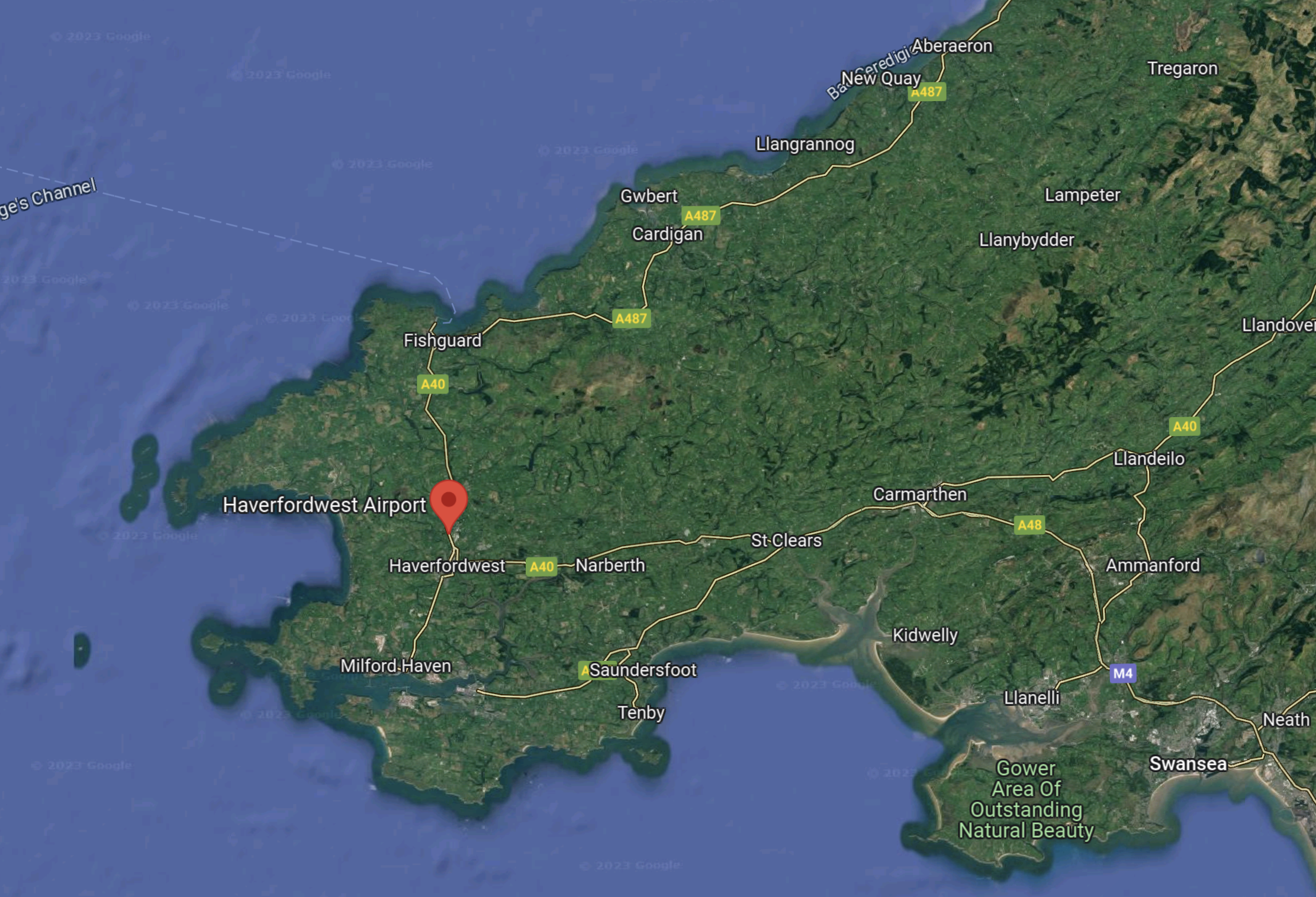
This Google Map shows the location of Haverfordwest Airport in the East of Pembrokeshire.
This second Google Map shows a close-up of the airport.

This map from OpenRailwayMap shows the airport and the nearest railway station.
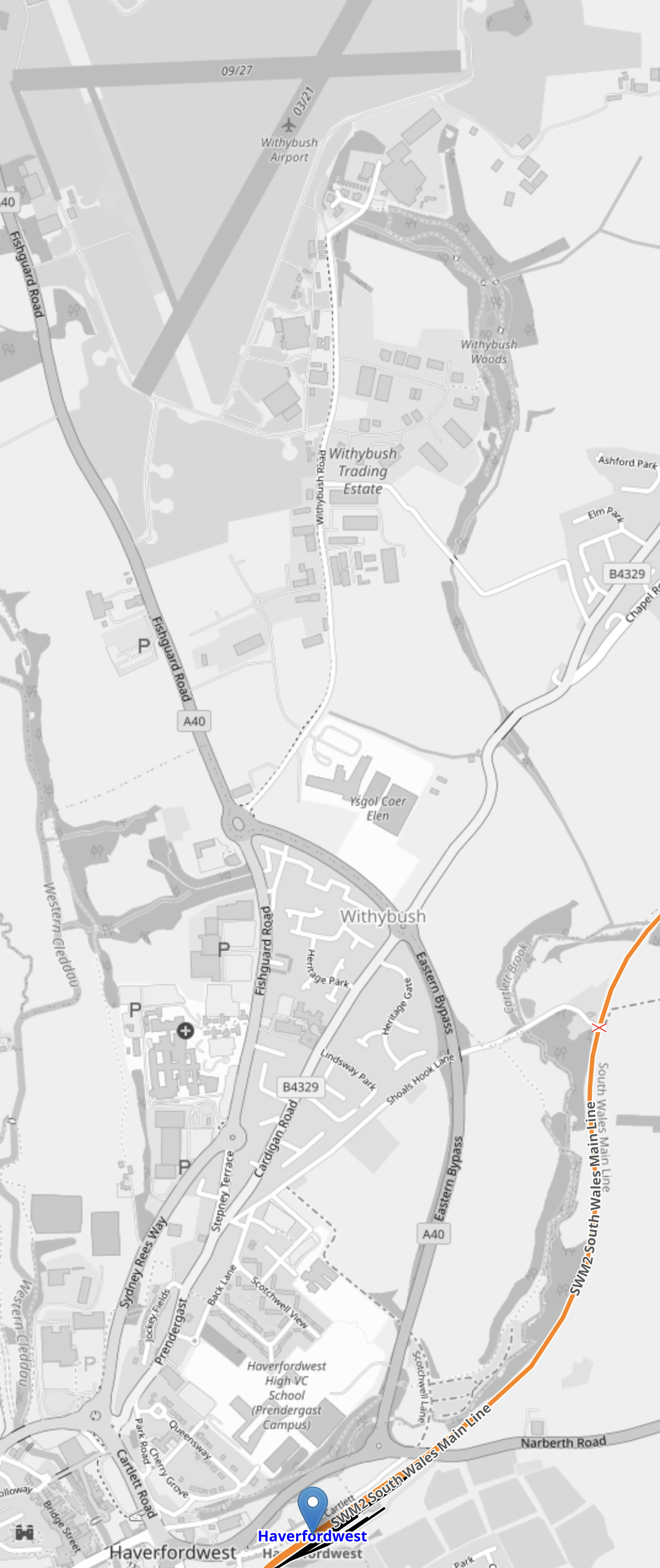
Note.
- Haverfordwest Airport is at the top of the map.
- Haverfordwest station is at the bottom of the map.
- There are rail connections to Cardiff, Fishguard, Milford Haven, Pembroke Dock and Swansea from the the station.
- Rail passengers for London would change at Swansea.
The road looks good between the airport and the station, so would an electric bus to handle transfers be ideal?
Consider.
- I have flown myself into Haverfordwest Airport and there were no navigation or operational problems that I can remember.
- With all the wind farm development planned for the coast of Pembrokeshire and the Celtic Sea, I feel that an airport in the area with regular flights to London and perhaps Waterford in Ireland could be essential.
- London City and Haverfordwest airports are 167 miles apart
- Waterford and Haverfordwest airports are 94 miles apart
- Quiet electric aircraft may ease any planning problems.
- Will a helicopter base be needed for serving wind farms in the Celtic Sea?
I believe, Haverfordwest Airport could be converted into a high-class airport for the Eastern tip of South Wales.
Haverfordwest Airport could also attract other services, given that the Welsh Government have a policy of not building new roads.
I have a feeling that quiet electric airliners will lead to the development of airports like Haverfordwest as feeder airports for the Heathrows and Schipols of this world.
Waterford Airport
Waterford Airport has recently been expanded and it appears from the Wikipedia entry, they are expecting more tourists.
This Google Map shows the position of the airport and the railway station in Waterford.

Note.
- The red arrow at the top of the map indicates Waterford station on the Northern side of the city.
- The airport is indicated by the blue dot in the South-East corner of the map.
- The airport is about ten kilometres from the City Centre.
In the past, Waterford has been quite a busy airport, but Covid-19 seems to have killed most of the traffic.
So could a zero-carbon service between Waterford and Haverfordwest be profitable?
- Those working with the wind energy in the Celtic Sea might find route useful.
- It would give a low-carbon route between Waterford and South Wales, which some might like.
- I also believe that the novelty of flying in an electric plane would attract passengers.
Waterford and Haverfordwest might be one of those routes, where electric planes might be worth trying.
This Google Map shows the Celtic Sea.
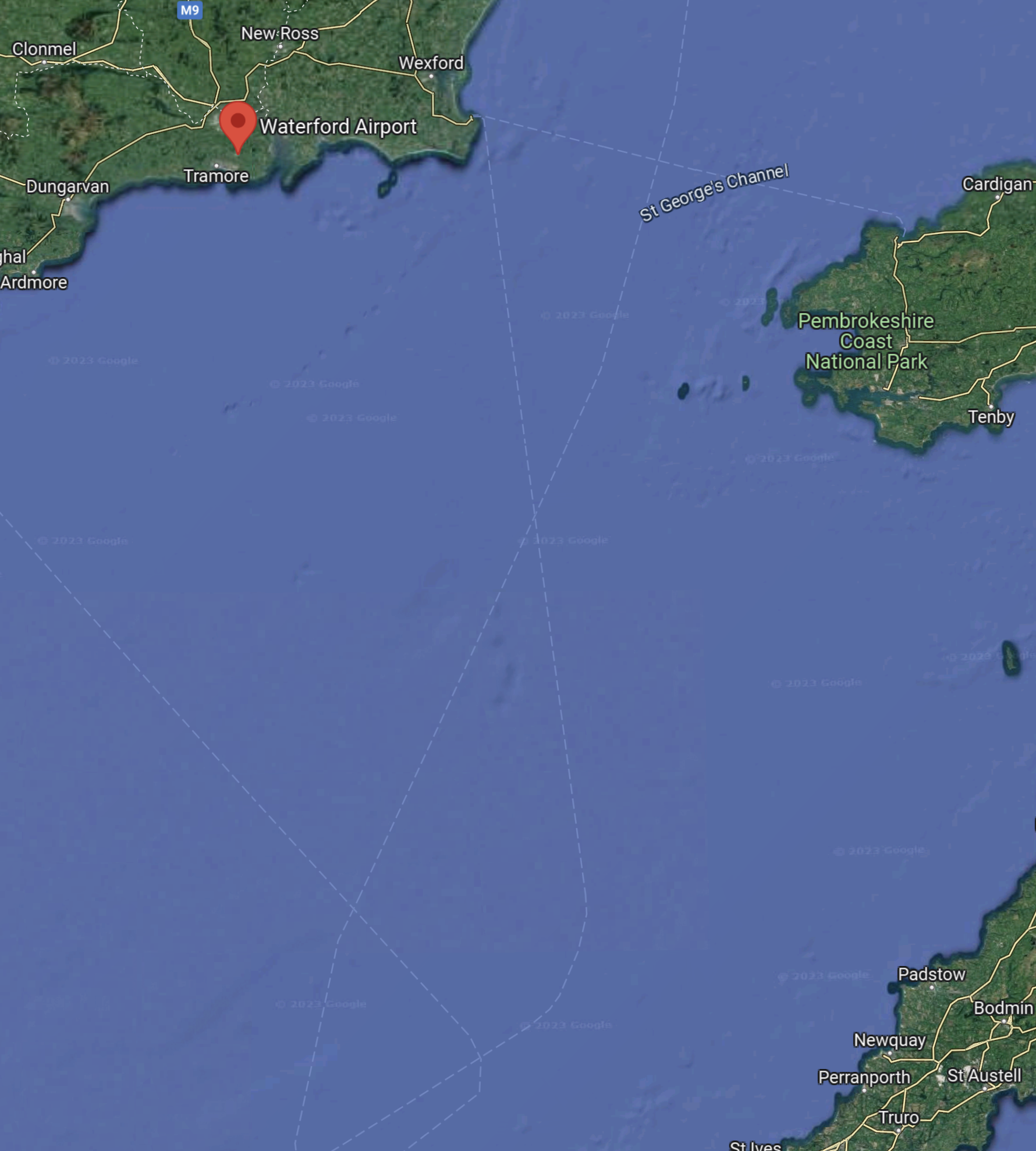
Note.
- Waterford Airport is indicated in red on the South-East corner of Ireland.
- Haverfordwest Airport is on the South-Western tip of Wales.
- Newquay Airport is in the South-East corner of the map on the North coast of Cornwall.
There could be as much as 50 GW of floating wind farms installed in this area.
I feel that there could be a case for a triangular Haverfordwest, Newquay and Waterford service.
Newquay Airport
Newquay Airport has been in the news recently because of the antics of Richard Branson and Virgin Orbit.
This Google Map shows the airport in relation to the town.
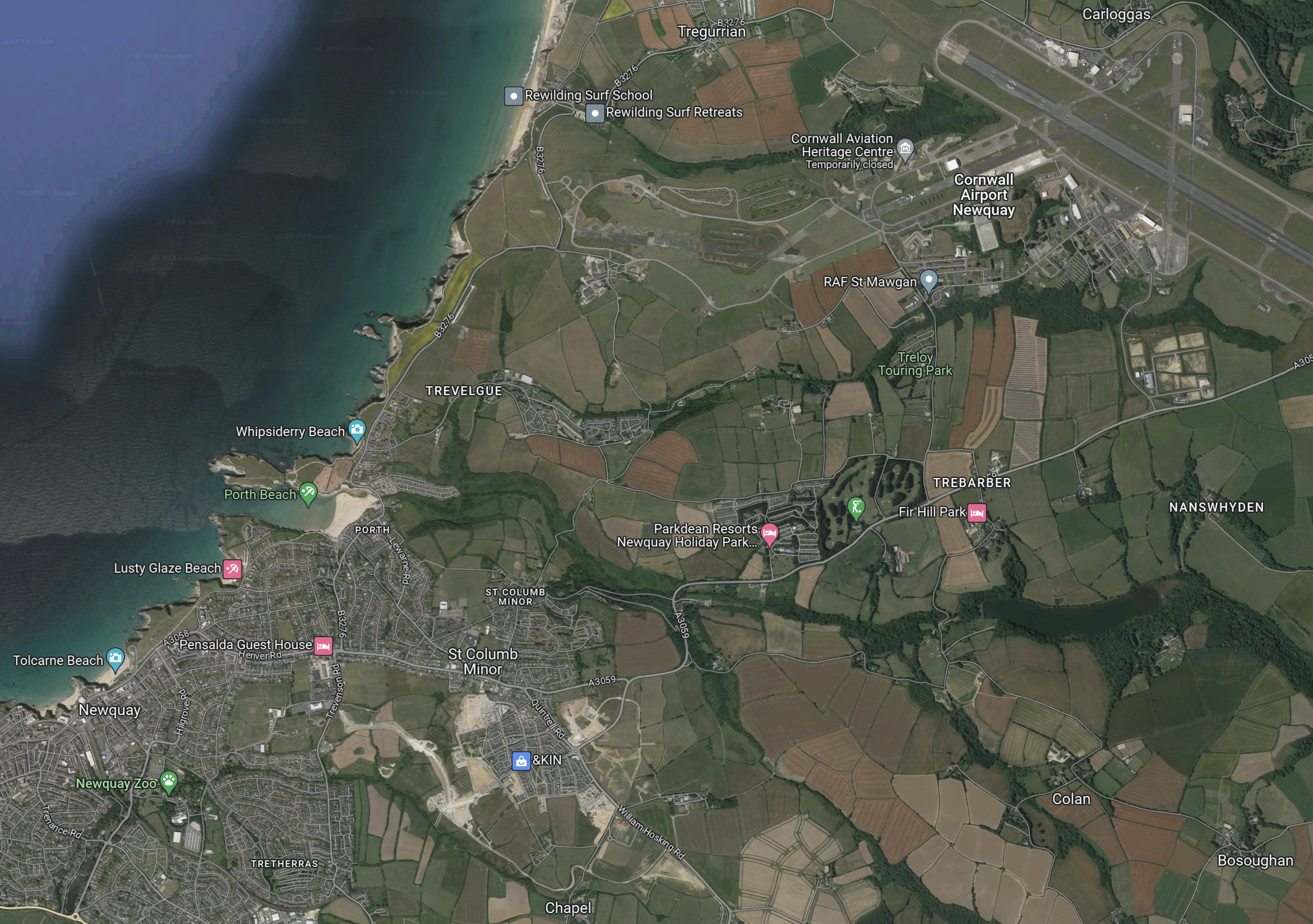
Note.
- The airport is in the North-East corner and boasts a long runway.
- The airport serves well over a dozen destinations.
- The town of Newquay is in the South-West corner of the map.
- Newquay station is by the sea.
All of these places would be suitable destinations for electric aircraft.
- Birmingham
- Brest
- Cardiff
- Cork
- Deauville
- Dinard
- Dublin
- Guernsey
- Heathrow
- Jersey
- Nantes
- Orly
- Rouen
- Scillies
- Waterford
Newquay Airport could get very busy with electric aircraft supporting tourism and the developing wind power industry.
This second Google Map shows the town centre and station.

Surely, having the station by Great Western Beach is good marketing.
In The Proposed Mid-Cornwall Metro, I talked about a plan to run an hourly Metro service between Newquay and Falmouth.
This article on Rail Technology Magazine is dated January 2023 and entitled Mid Cornwall Metro Secures £50m In Levelling Up Funding, where these are the first two paragraphs.
Following yesterday’s major Levelling Up funding announcement, the government has pledged an almost £50m grant to improve the railways linking Newquay, St Austell, Truro and Falmouth in Cornwall.
This financial aid to improve Cornwall Rail links represents the only successful bid out of four that were submitted to the Levelling up funding. The improvement scheme will be helmed by a partnership with Great Western Railway and Network Rail.
Note.
- I believe this means the Mid-Cornwall Metro will be built.
- Especially as looks like it will cost less than £100 million.
- As this Metro will serve Newquay, it shouldn’t be too difficult to link the plane with the train, with perhaps a zero-carbon bus.
- The Metro would then link Newquay Airport to the main population centres of Newquay, St Austell, Truro and Falmouth.
- If the Metro could be run using zero-carbon trains, that would surely put the icing on the cake!
The map from OpenRailwayMap shows the route.
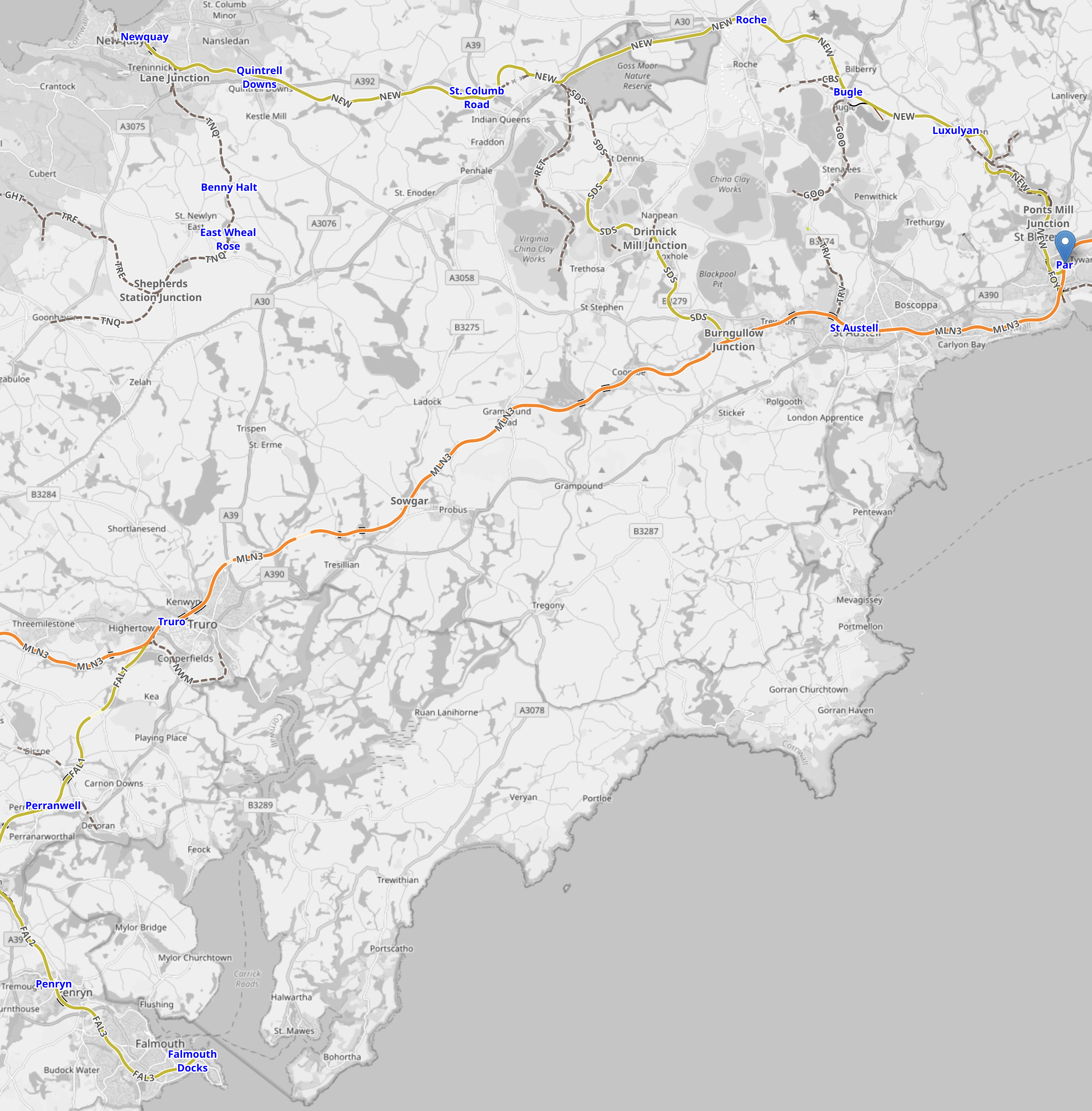
Note.
- Newquay is in the North-West corner of the map.
- Trains spend around 6-7 minutes waiting at Newquay.
- The blue arrow in the North-East corner marks Par station, where a chord will be reinstated to allow trains to go between Newquay and St. Austell.
- Par is the nearest station to the Eden Centre.
- Newquay and Par is 20.6 miles.
- The route, then goes along the Cornish Main Line, through St. Austell and then on to Truro.
- Par and Truro is 18.9 miles.
- At Truro the Metro would take the Falmouth branch.
- Falmouth and Truro is 11.8 miles.
- Trains spend around 7-8 minutes waiting at Falmouth Docks
- The total route is just over fifty miles, which probably means that battery-electric trains could work the route with charging at each end, whilst the train is turned round.
This airport and metro combination could give a big-boost to zero-carbon tourism.
Inverness Airport
Inverness Airport has recently been expanded with a station on the Inverness and Aberdeen Line.
Consider.
- Electric aircraft like the ES-30 will be able to reach both Kirkwall on Orkney and Sumburgh on Shetland from both Inverness and Aberdeen Airports.
- Sumburgh would need an extended range ES-30.
- Flights would be a few miles shorter from Inverness than from Aberdeen.
- Kirkwall and Sumburgh is only 85 miles, so there may be possibilities for serving both Orkney and Shetland with one flight.
- Extended range ES-30s might be able to do return trips to Kirkwall without a major charge at Kirkwall.
- I once flew in my Cessna-340 to Kirkwall to see the original turbine, that was placed on the island. There is a lot of cold forbidding sea in the area. Perhaps the slightly shorter trip from Inverness, might be better for everybody’s nerves?
- Just as the oil and gas industry did in the last century, I can see the offshore wind power industry generating a lot of passenger traffic to the Orkney and Shetland Islands.
Both Inverness and Aberdeen can be reached from Stansted by an ES-30 carrying a reduced passenger load.
Birmingham Airport
Birmingham Airport could become a major base for electric aircraft.
The 247 mile range of the extended range ES-30 would allow it to be able to reach the following places.
- Belfast
- Dublin
- Newcastle
- Newquay
- Ronaldsway
Reduce the passenger load slightly to 25 passengers and the plane would be able to reach.
- Edinburgh
- Glasgow
- Inverness
- Kirkwall
- Wick
But Birmingham Airport is only 65 minutes from Euston and will in the future be served by High Speed Two, in under an hour.
The airport also has a large catchment area of its own, who might be tempted to choose flying zero-carbon.
Spokes From Speke
In the 1980s, I went to a presentation from Royal Mail in Ipswich about guaranteed next day delivery of parcels. It was important to me, as I was writing software that needed to get from Ipswich, where it was created to London, where it would be tested and installed on customers machines. We also needed to get copies to our customers in Edinburgh and Aberdeen.
The Royal Mail’s latest concept of Spokes From Speke was described.
- All urgent parcels and First Class mail would be collected from the local sorting office and taken to the local airport, which in our case would probably have been Stansted.
- These consignments would then be flown to Speke Airport as Liverpool Airport was known in those days at around midnight.
- They would then be sorted and reloaded onto other planes to complete their journey.
- The planes would then return home and the parcels and mail would be delivered by truck to the local sorting office.
Aircraft used included Short Skyvans and piston-engined twins. Some we’re the quietest of aircraft.
I have heard or read somewhere that in some airports, there were complaints about noisy aircraft flying in and out in the middle of the night.
Now fifty years on companies are looking to speed up deliveries.
- In the UK, companies are experimenting with 100 mph overnight parcels trains.
- This article on Railway Gazette is entitled Varamis Rail Launches Regular Express Light Freight Service.
- Eversholt Rail are putting money behind converting redundant electric multiple units into parcel trains.
But DHL in the USA are going another way and have ordered twelve Alice aircraft from Eviation.
It looks like the cargo Alice could have a useful load of just over a tonne and a range of around 290 miles.
I can envisage flights of near-silent silent Alices sneaking into and out of airports in the middle of the night to deliver and collect urgent parcels.
Techniques like Spokes From Speke will come again, but this time with electric aircraft.
How Would The ES-30 Compare With An Eviation Alice?
The Wikipedia entry for the Eviation Alice gives these figures.
- Passengers – 9
- Maximum Speed – 300 mph
- Range – 290 miles
- Take-off distance – 840 metres
- Landing distance – 620 metres
Note.
- These are figures that most pilots would expect from an aircraft of this size.
- My Cessna 340 was about the same and about eight percent slower.
- It also had a much longer range.
If you look at my list of flights, these will not be possible.
- Birmingham – Inverness – 363 miles
- Birmingham – Kirkwall – 451 miles
- Birmingham – Schipol – 402 miles
- Bimingham – Sumburgh – 513 miles
Birmingham – Wick – 418 miles - Edinburgh – Schipol – 473 miles
- Gatwick – Edinburgh – 356 miles
- Gatwick – Schipol – 374 miles
- Glasgow – Sumburgh – 300 miles
- Humberside – Schipol – 333 miles
- Leeds – Schipol – 386 miles
- Manchester – Schipol 413 miles
- Newcastle – Newquay – 346 miles
- Newcastle – Schipol – 395 miles
- Newquay – Orly – 351 miles
- Stansted – Wick – 472 miles
- Sumburgh – Bergen – 226 miles
- Sumburgh – Kirkwall – 85 miles
Note.
- Most routes that are too long are to Schipol or Scotland.
- Anglesey appears to have Ireland extremely well covered.
- Birmingham, Glasgow and Liverpool keep their Irish routes.
- Newquay is still a hub, that would promote tourism in Cornwall and only loses the Orly connection, although it keeps the flight to Heathrow.
- Ronaldsway still looks to be a possible zero-carbon airport.
I would suggest that a range of 290 miles, is an ideal one for an electric aircraft in the UK, as it can handle a large number of routes.
These are routes that I feel would attract a large number of passengers.
- Anglesey – Belfast – 109 miles
- Anglesey – Belfast City – 109 miles
- Anglesey – Derry – 163 miles
- Anglesey – Dublin – 71 miles
- Glasgow – Belfast – 106 miles
- Glasgow – Belfast City – 103 miles
- Glasgow – Derry – 121 miles
- Heathrow – Newquay – 212 miles
- Inverness – Kirkwall – 106 miles
- Inverness – Sumburgh – 190 miles
- Liverpool – Belfast – 153 miles
- Liverpool – Belfast City – 151 miles
- Liverpool – Dublin – 140 miles
- Liverpool – Norwich – 180 miles
- Liverpool – Ronaldsway – 89 miles
- London City – Humberside – 145 miles
- London City – Manchester – 161 miles
- Newcastle – Cardiff – 230 miles
- Newcastle – Belfast City – 168 miles
- Newquay – Brest – 140 miles
- Newquay – Cardiff 98 miles
- Newquay – Cork – 180 miles
- Newquay – Deauville – 241 miles
- Newquay – Scillies – 68 miles
- Newquay – Waterford – 150 miles
- Norwich – Schipol – 277 miles
- Ronaldsway – Belfast City – 62 miles
- Ronaldsway – Dublin – 80 miles
- Ronaldsway – Glasgow – 123 miles
- Southend – Schipol – 180 miles
- Sumburgh – Kirkwall – 85 miles
Alice may not be big enough for some routes.
But it will be a wonderful route-proving aircraft for the larger ES-30 and other zero-carbon aircraft.
Conclusion
There will be a lot of uses for battery-electric aircraft in the UK.
The Proposed Mid-Cornwall Metro
In the January 2022 Edition of Modern Railways, there is this description of the Mid-Cornwall Metro.
This would see an hourly service shuttling between the north and south coasts of the county and linking the main population centres at Newquay, St Austell, Truro and Falmouth. This would become the main service on the Newquay branch, and it would take over one of the twice-hourly services on the Falmouth branch, with the other service being a Truro to Falmouth shuttle as now.
Facilitating the Metro idea will be the latest phase of the modernisation of signalling in Cornwall, which will see the upgrade of a level crossing near Truro. Other infrastructure work required is a new passing loop on the Newquay branch at Tregoss Moor and restoration of a second platform face at the terminus at Newquay.
A business case was due to be submitted to the Department for Transport before Christmas 2021.
These are a few thoughts.
The Current Timings
If you look at the distances and timings of the various sections they are as follows.
- Newquay and Par – Five stops – 20.8 miles – 49-52 minutes
- Par and Truro – One stop – 19 miles – 22 minutes
- Truro and Falmouth Docks – Four stops – 11.8 miles – 24 minutes
Note.
- It appears that the Newquay to Par service is three minutes quicker than the other way.
- There will be a reverse at Par, which could take three minutes.
- The Par and Truro times were either GWR Castles or Class 802 trains.
The total time is 98-101 minutes and the total distance is 51.6 miles
Possible Timing
Consider.
- For the ease of timetabling and operation, it is probably best that a round trip between the two Newquay and Falmouth Docks takes an exact number of hours.
- The operating speed between Par and Truro is 75 mph and it is only 50 mph elsewhere.
- Turnround time at Newquay is five minutes.
- Turnround time at Falmouth Docks is 4-6 minutes
For these reasons, I doubt that much improvement could be made on the fastest time of 98 minutes. Certainly, a round trip of three hours would appear impossible.
But a round trip time of four hours would be very sensible.
However, there would be a turnround time of between 19-22 minutes at each end of the route.
This time might seem overly long, but it would be ideal for charging a battery-electric train.
How Many Trains Would Be Needed?
As the round trip will be four hours and an hourly service is needed, there will be a need for four trains to run the service, with the addition of probably two extra trains to allow for one in maintenance and one covering for any breakdowns.
Could The Mid-Cornwall Metro Use Battery-Electric Trains?
This Hitachi infographic shows the specification of the Hitachi Regional Battery Train.

Note
- The range of ninety kilometres is fifty-six miles and a longer distance than Newquay and Falmouth Docks.
- The operating speed of 90-100 mph is ideal.
- The time needed for a full charge at either end is within the timetable, I calculated earlier.
Hitachi Regional Battery Trains would be ideal for working the Mid-Cornwall Metro with a full charge at both ends of the route.
I have used my virtual helicopter to explore the Cornish Main Line between Par and Truro.
If it was decided to electrify the Cornish Main Line between Truro and Par, this could be an alternative way to charge the trains.
- The Mid-Cornish Metro trains should be able to do a return trip to Newquay and Falmouth Docks from the main line without charging at the two terminal stations.
- The electrification would be able to charge battery-electric Class 802 trains between Plymouth and Penzance.
But the extra infrastructure works to raise nine road bridges and several footbridges might blow the budget.
Where Would The Trains Be Serviced?
Great Western Railway has depots at both Penzance and Plymouth and with perhaps a charger at Truro and/or Par stations, the trains should be able to get to either depot at the end of the day.
Trains To Newquay
Wikipedia says this about the services to Newquay station.
The service is irregular with typically one train around every two hours.
As well as the local service, the station handles a number of long-distance trains in the summer. These services include Great Western Railway trains from London Paddington and CrossCountry trains from the North of England and the Scottish Lowlands, which do not stop at intermediate stations between Par and Newquay. On Sundays, there are some local trains and a small number of intercity services. As well as the weekend through trains, in peak summer months there is also a Monday-Friday through Great Western Railway intercity service to and from London, but local trains continue on these days too. Traditionally, there was no Sunday service in the winter, even in the ‘golden age’ between both of the 20th century’s world wars, but the line has a service of three trains each way on Sundays from 11 December 2011.
The Mid-Cornwall Metro will at least come with an hourly service.
But this will mean, that to run other services to the station with the hourly Metro will mean that a second platform will be needed.
I discuss the improvements needed in Beeching Reversal – Transforming The Newquay Line.
This is a quirky video, which describes an architect’s plans for the station.
It is the sort of simple solution, that I like.
Conclusion
I believe that a small fleet of Hitachi Regional Battery Trains could create an iconic Metro for Cornwall, that would appeal to both visitors and tourists alike.
Beeching Reversal – New Station For Langport And Somerton Area
This is one of the Beeching Reversal projects that the Government and Network Rail are proposing to reverse some of the Beeching cuts.
This Google Map shows the Langport and Somerton area.
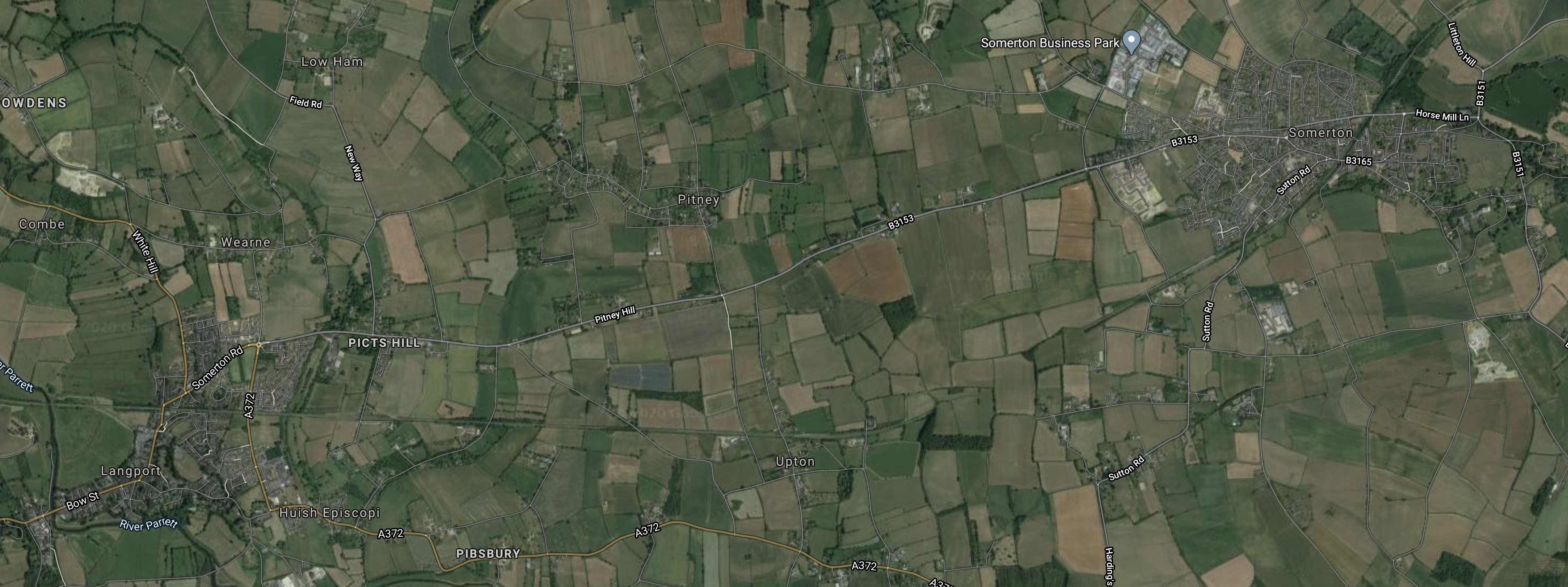
Note.
- This map is probably best clicked to see in a large size.
- Langport is in the South-West corner of the map.
- Somerton is in the North-East corner of the map.
- The Reading-Taunton Line goes through both villages, although both stations are now closed.
- Somerton station was in a cutting in the middle of the village.
The station’s location is shown in this second Google Map.
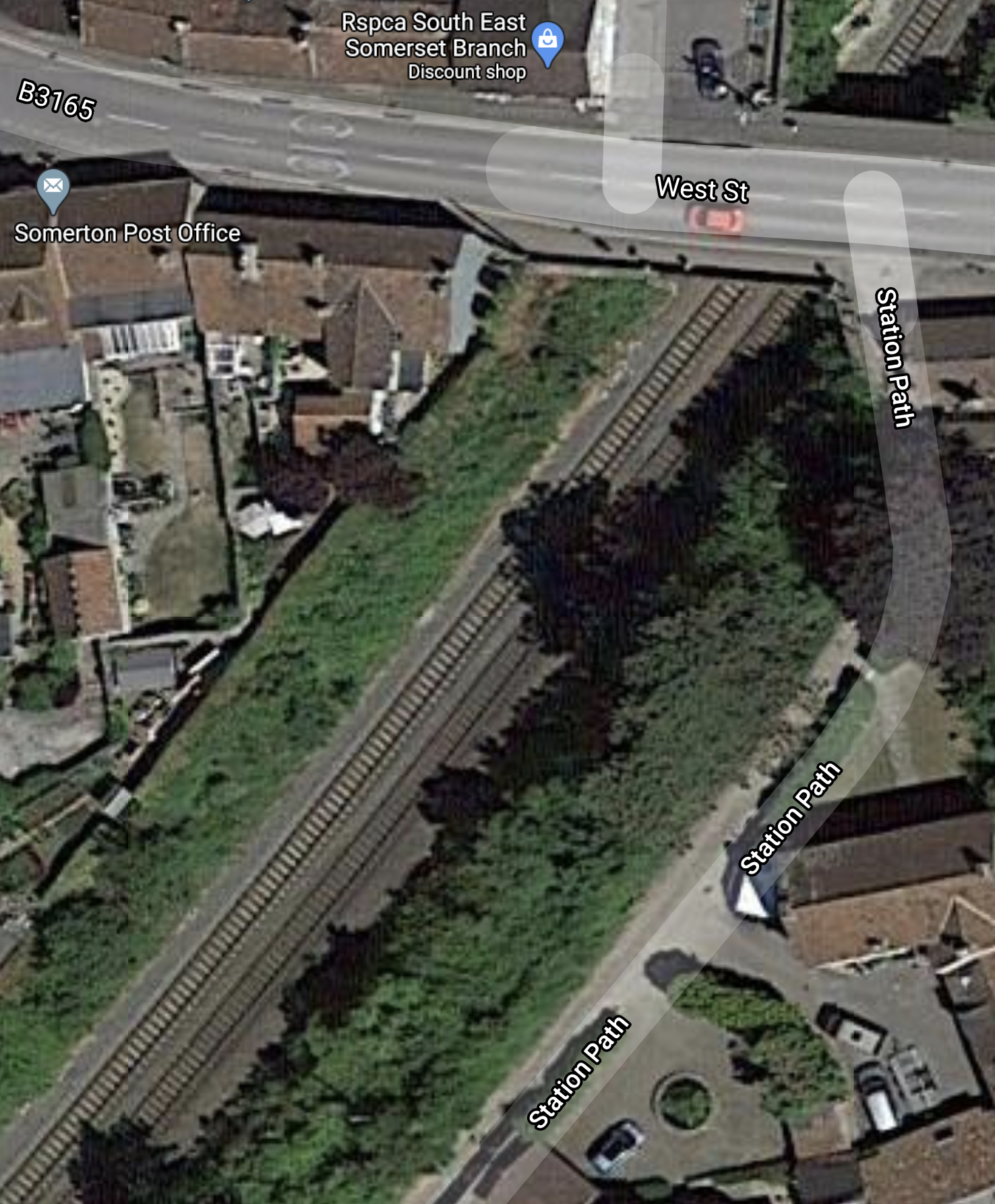
According to the Wikipedia entry for Somerton station, this seems to be the plan.
A May 2018 transport strategy suggested that a station should be opened to serve the Somerton and Langport area.
Judging from the map, there should be space for a two-platform station.
Services Though Somerton Station
Currently, there are three Great Western Railway (GWR) services on this route.
- London Paddington and Exeter St. Davids via Reading, Newbury, Pewsey, Westbury, Castle Cary, Taunton and Tiverton Parkway.
- London Paddington and Plymouth via Reading, Taunton, Tiverton Parkway, Exeter St Davids, Newton Abbot and Totnes.
- London Paddington and Penzance via Reading, Taunton, Tiverton Parkway, Exeter St Davids, Newton Abbot, Totnes, Plymouth, Liskeard, Bodmin Parkway, Lostwithiel, Par, St Austell, Truro, Redruth, Camborne and St Erth.
All services have a frequency of one train per two hours (tp2h)
The frequency of trains between Reading and Taunton on the 24th July was around each hour as follows.
- 7 – 4/1
- 8 – 4/1
- 9 – 5/2
- 10 4/0
- 11 6/2
- 12 5/2
- 13 – 5/1
- 14 – 5/2
- 15 – 4/1
- 16 – 3/0
- 17 – 7/2
- 18 – 3/0
- 19 – 3/0
- 20 – 3/0
- 21 – 3/1
- 22 – 0/0
- 23 – 0/0
- 24 – 1/1
Note.
- The first figure is the total number of trains per hour (tph).
- The second figure is the total number of freight tph.
There is under two tph in both directions and under one freight tph.
As the Reading-Taunton Line is a 110 mph route, my scheduling experience, says that with 125 mph Class 800 trains running all the passenger services, there should be some space for a few more services on the route.
So could this mean a fourth service between London Paddington and the South West?
- The new service could call at the new Somerton station.
- It could terminate at Exeter St. Davids. Penzance, Plymouth or a new destination of Taunton station.
- The Beeching Reversal project of Transforming The Newquay Line, would enable termination at Newquay station.
- The Beeching Reversal project of Increased Service Provision Bodmin General-Bodmin Parkway, would enable termination at Bodmin General station.
- The Restoring Your Railway Fund project of Reopening Of Wellington and Cullompton Stations, will need calling trains at the two stations.
- The Restoring Your Railway Fund project of Reinstatement Of Rail Access To Devizes Via A New Station At Lydeway will also need callers.
Are we seeing the emergence of a stopping service, between London Paddington and Exeter St. Davids?
Hitachi’s Proposed Class 800 Trains With Batteries
Hitachi’s proposed train is described in this infographic.
Note the phrase – Allows Discontinuous Electrification; at the top of the infographic.
Suppose the train ran these legs.
- Newbury – Westbury – 42 miles
- Westbury – Taunton – 48 miles
- Taunton – Exeter St. Davids – 30 miles
- Exeter St. Davids – Plymouth – 52 miles
All would be under the 55 mile limit for battery range.
Conclusion
It looks like GWR are building up to increase services between London Paddington and Exeter St Davids.
Beeching Reversal – Increased Service Provision Bodmin General-Bodmin Parkway
This is one of the Beeching Reversal projects that the Government and Network Rail are proposing to reverse some of the Beeching cuts.
This Google Map shows the relationship of the two Bodmin General and Bodmin Parkway stations.
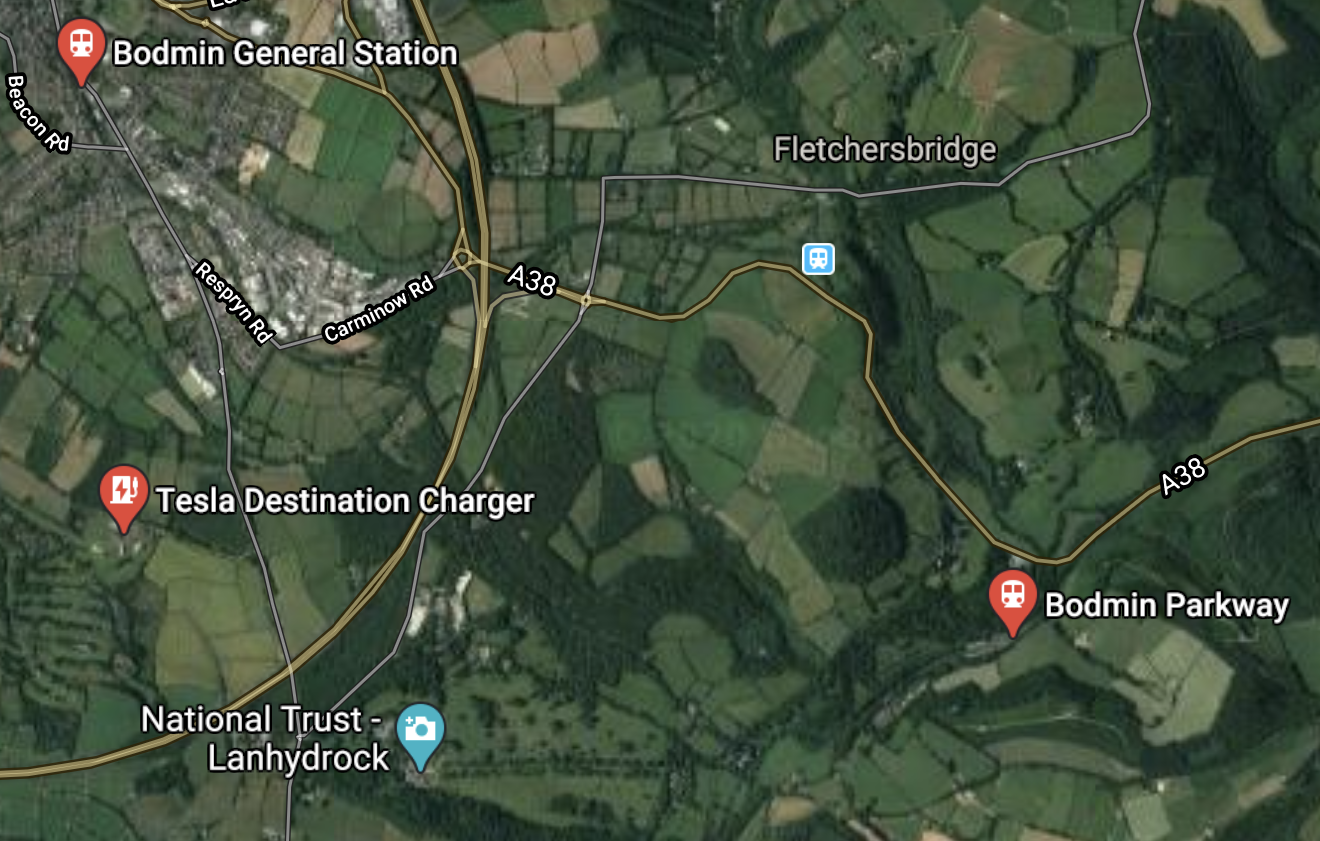
The two stations are clearly visible.
The aim of this Beeching Reversal project would appear to set up a more regular service between Bodmin Parkway station on the Cornish Main Line and Bodmin General station in the town.
This video shows some of the current trains run by the Bodmin and Wenford railway, between the two stations.
This article on Cornwall Live is entitled Plan To Link Heritage Railway At Bodmin To Mainline Train Services, gives a few scant details.
- There will be a second platform at Bodmin General station.
- This will allow extra services.
Looking at the space around Bodmin Parkway station, it should be possible to have a very comprehensive track layout, that connects the Bodmin branch to the main line.
It also appears that the platform is fully-funded from Great Western Railway (GWR) and Cornwall County Council.
Could A Shuttle Be Run Using Vivarail’s Pop-up Metro Concept?
Using Vivarail’s Pop-up Metro between the two stations is surely a possibility, with charging at either station.
What Do GWR Want In Return For Their Funding?
I think that GWR could have a couple of uses for a platform at Bodmin General station.
Reorganising The Services Between London Paddington and the South-West
Currently, there are three services on this route.
- London Paddington and Exeter St. Davids via Reading, Newbury, Pewsey, Westbury, Castle Cary, Taunton, Tiverton Parkway.
- London Paddington and Plymouth via Reading, Taunton, Tiverton Parkway, Exeter St Davids, Newton Abbot, Totnes.
- London Paddington and Penzance via Reading, Taunton, Tiverton Parkway, Exeter St Davids, Newton Abbot, Totnes, Plymouth, Liskeard, Bodmin Parkway, Lostwithiel, Par, St Austell, Truro, Redruth, Camborne, St Erth.
All services have a frequency of one train per two hours (tp2h)
Perhaps by reorganising the train paths, GWR could run another 1 tp2h service between London Paddington and Bodmin or Newquay station after the Transformation Of The Newquay Line.
Joining And Splitting Between London Paddington And The South-West
GWR’s Hitachi Class 80x trains have the ability to run in pairs, that are split and joined at convenient places en route.
This YouTube video, shows them doing it in Plymouth station.
As a means of evening out passenger loadings on pairs of trains running to the South-West, the two large stations of Exeter St. Davids and Plymouth would surely be possibilities for the manoeuvre.
I also think that Bodmin Parkway station could be used to split and join two trains from Cornwall.
- One train would come from Penzance and the West.
- The other could come from either Newquay or Bodmin General stations.
- In the future the second train, might come from a new Wadebridge station.
Bodmin Parkway station might need some small modifications, but it should be remembered that the closely-related Class 395 trains, do the deed and quickly disappear at Ashford International station.
Creating A Bodmin-Wadebridge Railway
There are also plans in the Beeching Reversal projects for the Reinstatement of the Bodmin-Wadebridge Railway
For trains to travel between Bodmin Parkway and Wadebridge stations, trains will need to reverse in the new platform at Bodmin General station.
Local Services From Exeter And Plymouth
From what I have read on the Internet, the Bodmin and Wenford Railway is an important tourist attraction and is one of several around Bodmin including the beaches and the Camel Trail.
So perhaps, a connection between Bodmin and Exeter and/or Plymouth in a vintage InterCity 125 could be a nice little earner for GWR and an appropriate way to arrive at the steam railway.
Steam Local Services From Exeter And Plymouth
Why not?
The new platform at Bodmin General station could probably take a locomotive and four coaches and all the facilities to handle steam engines are in the vicinity of the station.
Could The New Platform Be Used For High Speed Freight Shuttles?
Why not?
Rail Operations Group is looking at the possibility of running Class 769 trains as freight shuttles.
Bodmin could make an ideal Cornish terminal, as it’s the right side of county and has the main A38 close by.
Could The Platform Be Used To Charge Battery Electric Trains?
I feel that First Group are starting to embrace battery trains.
In Hitachi Trains For Avanti, I talked about how a fellow First Group company were reporting, that they might have battery trains.
If Great Western Railway were running extra trains into Cornwall, would a new platform at Bodmin General station, be an ideal place to charge a train?
Conclusion
A second platform at Bodmin General station could open up a lot of possibilities for train operating companies.
Beeching Reversal – Transforming The Newquay Line
This is one of the Beeching Reversal projects that the Government and Network Rail are proposing to reverse some of the Beeching cuts.
This map clipped from Wikipedia shows the Newquay or Atlantic Coast Line.
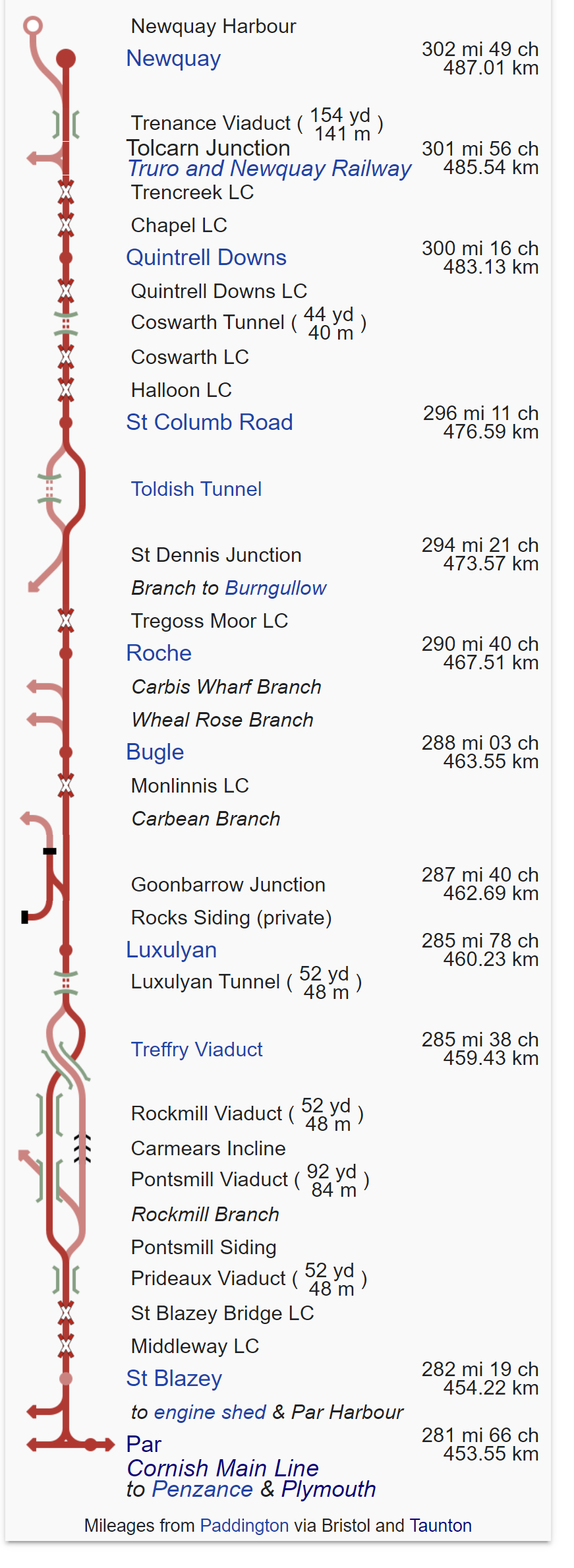
When I first saw this map, my initial thought, was that the various loops and other sections of disused track could and/or might be added to the route.
Searching the Internet, I can’t find much information except from this article on Cornwall Live, which is entitled Cornish Railway lines Axed In Beeching Cuts Could Be Restored, where this is said.
Other projects focused on Cornwall bidding for the funding to develop business cases include one to transform the Newquay to Par railway line as well as a “Mid-Cornwall Metro” proposal.
Nothing more about the Atlantic Coast Line, is said in the article.
This Google Map shows where the Atlantic Coast Line joins the Cornish Main Line at Par.
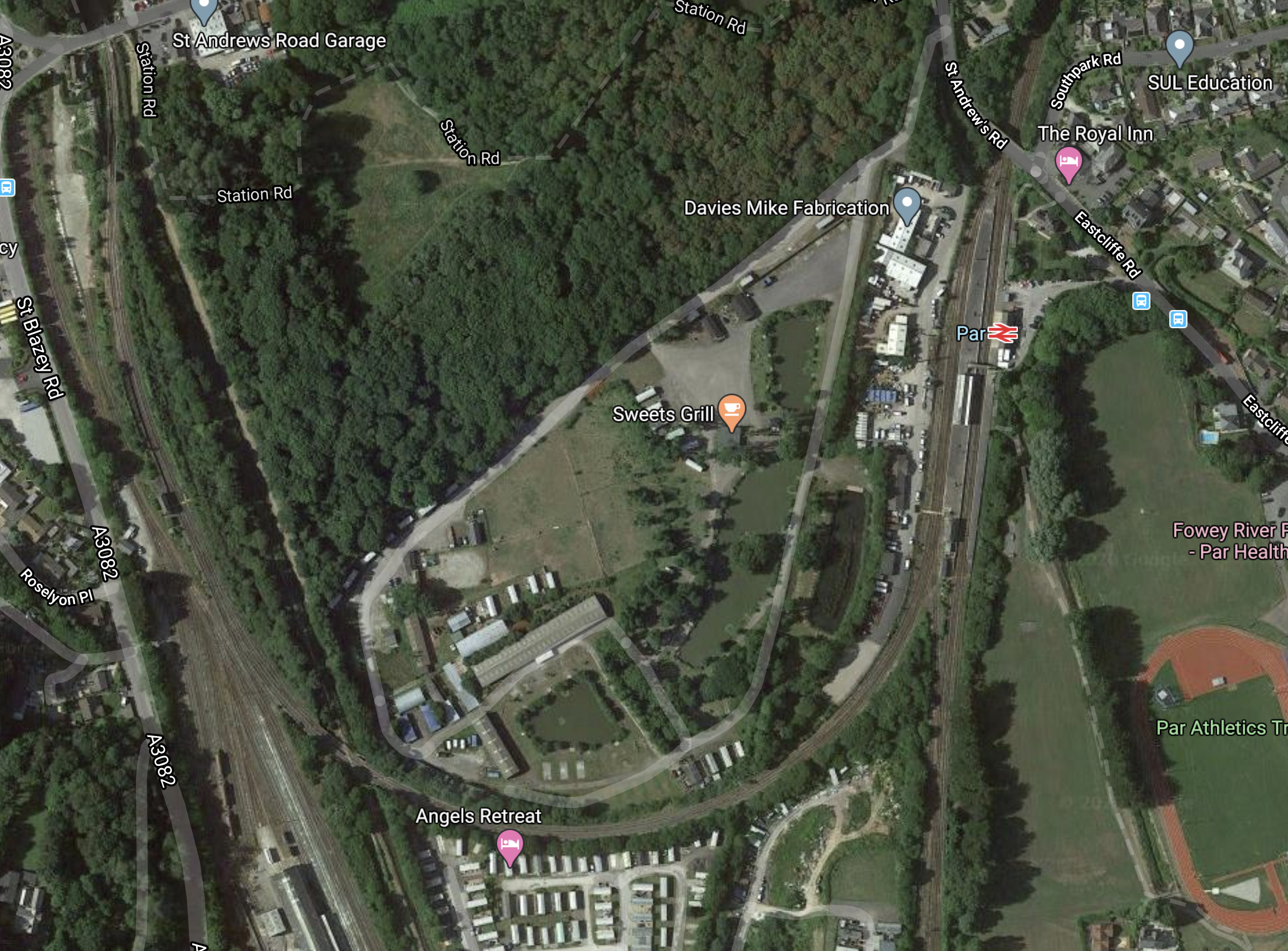
Note.
- The Atlantic Coast Line goes off to the North West.
- Par station is shown towards the North-Western corner on the Cornish Main Line.
- The junction is designed, so that china clay trains can access the branch.
In the summer, Newquay station is also served by long-distance trains from London and Scotland.
This Google Map shows Newquay station in the heart of the town.
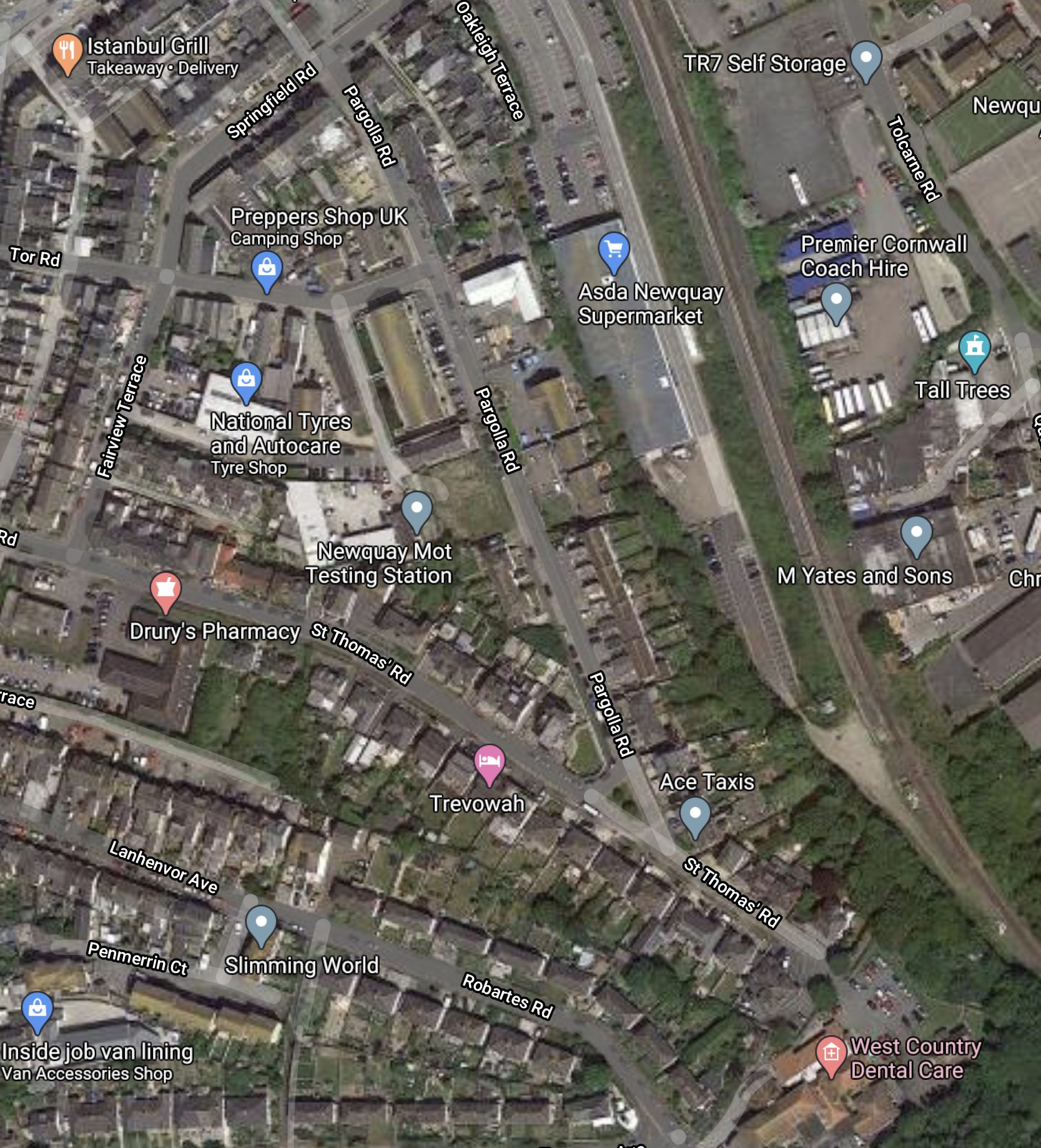
It could probably be called a Beach station, as the sea is just off the map.
Partly, because I lived in the town, from 1963 onwards, I can remember Felixstowe Beach station! Yarmouth Beach station has gone too, but how many others are left?
These are the only ones, I can think of with Beach in their name!
Perhaps, if Felixstowe ever gets the promised tram-train, that I wrote about in Could There Be A Tram-Train Between Ipswich And Felixstowe?, one of the or more of the stops on the way to the Port of Felixstowe will be Felixstowe Beach.
Frequency Improvement
The current frequency on the Atlantic Coast Line is one train every two hours, which is not a family-friendly frequency, as if any child starts playing silly games, you have a two-hour wait for the next train.
I would suspect that an hourly service would create a large increase in ridership on the line.
As the journey takes fifty-one minutes between Par and Newquay, is the frequency defined by the need for one train to work the line, by shuttling from end-to-end?
So is one of the needs, some better track layouts, so that trains can pass and be parked at Par, whilst the crew has a refreshment break?
I also suspect, that if one of Network Rail’s track wizards got the layout spot on, which they seem to do, that this would make things easier for any china clay trains still passing through the area.
Could Newquay Be Used As An Extra Terminal?
I wonder how many people drive to Newquay, if they live in East Cornwall or Devon?
I have just looked at train times today from Plymouth to Newquay.
To be fair to Great Western Railway (GWR), I would only have a few minutes to wait at Par station, but there is only one train every two hours, due to the limitations on the Atlantic Coast Line.
With an improved higher-capacity track, GWR could call up the heavy brigade.
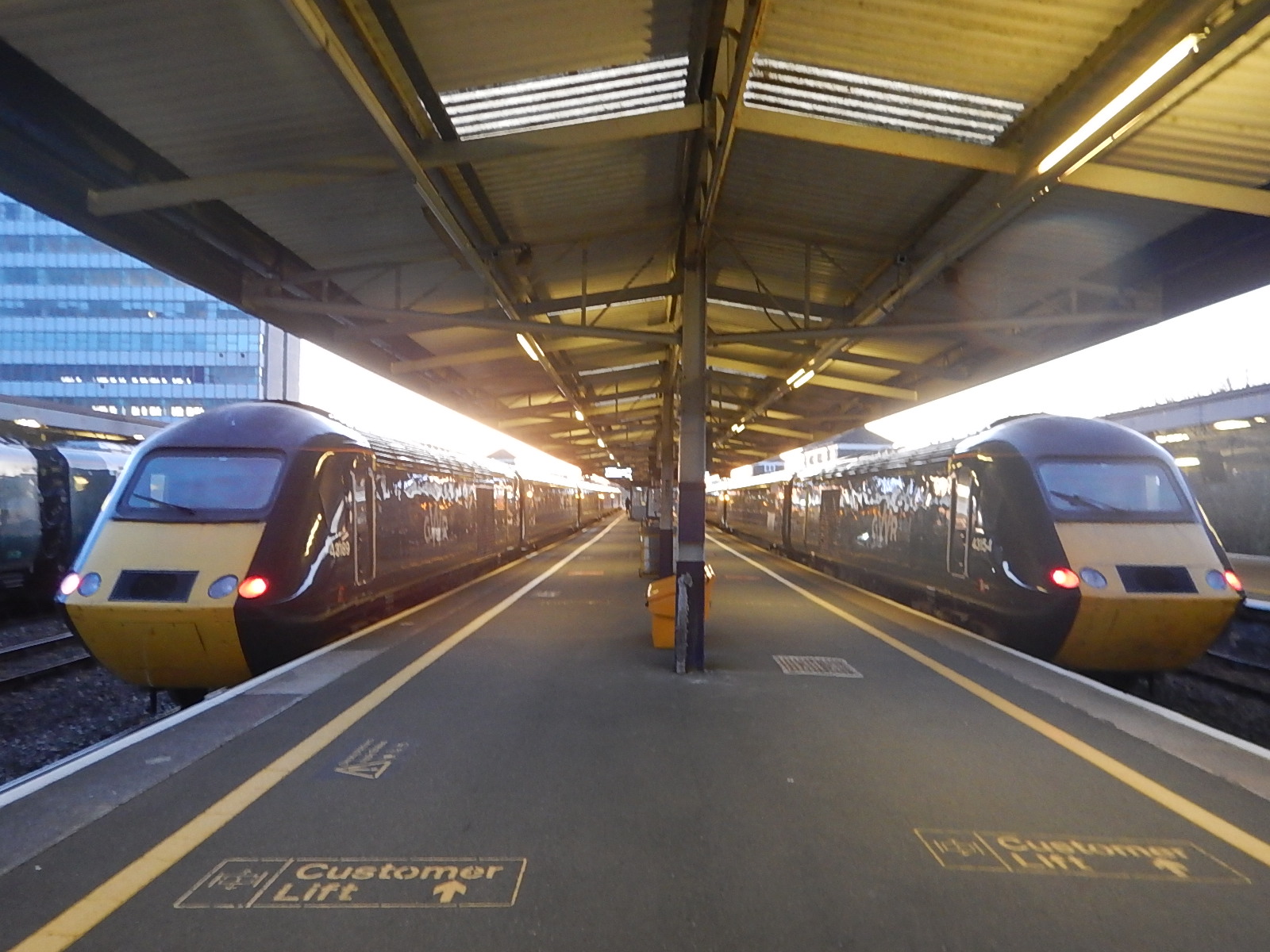
As full-length InterCity125s have served Newquay station for decades, four-car Castles like these, should manage the trip with ease.
Surely, once the Atlantic Coast Line can handle at least hourly trains, that would enable separate one train per two hour schedules.
- Newquay and Par
- Newquay and either Plymouth or Exeter.
This would improve service frequencies on both the Cornish Main Line and the Atlantic Coast Line and enable passengers to go between Exeter, Plymouth and Truro, and Newquay without changing trains.
Hopefully, the Cornish Main Line trains would serve appropriate refreshments at the correct times of the day.
Would Newquay Station Need A Second Platform?
Newquay station used to have more than one platform, but all the others were removed in British Rail’s ruthless quest to save money in the 1960s and 1970s.
I have never been to Newquay station, so I don’t know whether there is space to reinstate another platform.
However, I did find this video, which appears to be some very professional plans for Newquay station.
This video dates from 2008.
The video definitely says, that Newquay station needs an extra platform or two.
- Two platforms would allow two trains to share the station.
- A third platform would allow steam trains to visit.
The video also answers the age old question about why in many towns and cities, the railway station is often the best building, except for the church and the town or city hall.
Conclusion
It does appear to me, that giving the Atlantic Coast Line a modern track layout, will unlock a lot of possibilities that can be tried on the branch, to the benefit of all stakeholders.

