Vivarail Trains And Wrexham Central Station – 6th June 2025
From Chester, I took a train to Wrexham General station. From there I took a Vivarail Class 230 train to Wrexham Central station and then on to Shotton station.
These are some of the pictures I took.
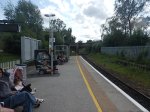
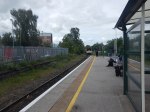
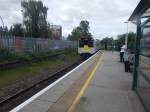
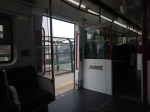
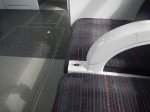
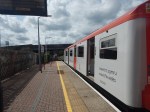
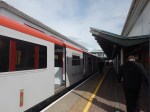
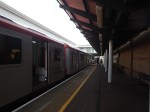





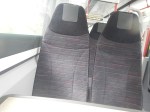
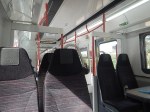
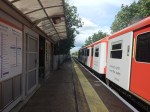
Note.
- Time was tight at Wrexham Central station.
- But Wrexham Central station looked to be a good example of a tidy one-platform station built into a shopping centre.
- The Vivaral Class 230 train appeared to have worn well.
- From what I saw, it would be fairly easy to put up a short length of overhead line to charge battery-electric trains.
I should have given myself more time.
£2.1bn North Wales Rail Overhaul Plans Unveiled
The title of this post is the same as this article on the BBC.
This is the sub-heading.
A £2.1bn plan to overhaul north Wales’ railway network has been unveiled by Welsh Transport Secretary Ken Skates, but with no funding commitment from the UK government so far.
These three introductory paragraphs add more detail.
The proposals include more services, the introduction of pay-as-you-go “tap in tap out” technology, electrification of lines and a Metro-style service linking Wrexham and Liverpool.
Promising the plans would mean “better stations and more trains”, Welsh ministers have committed an initial £13m, with substantial UK government cash needed to realise the proposals.
The UK government has been asked to comment.
Having lived in Liverpool for seven years, I can understand how this upgrade will benefit Wales and also bring the area closer to Liverpool and Merseyside, to the benefit of the wider region.
There is also this press release from the Welsh Government, which is entitled “METRO IS GO” with Network North Wales.
This press release says plans include.
- Commencing work on the line between Wrexham and Liverpool as the crucial first phase of delivering metro services direct between the two cities.
- Doubling train services between Wrexham and Chester next May.
- Bringing forward the introduction of 50% more services across the North Wales mainline from December 2026 to next May – resulting in a new service from Llandudno to Liverpool and extending the Manchester Airport service to Holyhead in place of Llandudno.
- Upon completion of rail line works at Padeswood, increase train services between Wrexham and Bidston to 2 trains per hour within the next three years, ahead of the introduction of 4 trains per hour that will run direct between Wrexham and Liverpool by 2035.
- The existing Borderlands Line will also be renamed the Wrexham – Liverpool line.
- Key stations on the Wrexham – Liverpool line will be improved in the next 12 months.
- Trains operating on the Wrexham – Liverpool line will be wrapped to reflect the communities and football clubs they serve.
- Introducing Pay as You Go tap in tap out technology – covering connections between Gobowen and Rhyl, and along the full length of the Wrexham -Liverpool line
- Working with Network Rail to determine the feasibility of a rapid delivery of a new test railway station at Deeside Industrial Park, to gauge demand for permanent services to the park.
- A new, multi-million pound electrification innovation fund to develop a plan to decarbonise the railway in North Wales and enable more frequent metro services and additional stations
- Match funding for step-free access at Shotton and Ruabon stations.
- Working with local authorities to develop plans for Gateway multi-modal interchanges at Holyhead, Bangor, Caernarfon and Wrexham.
- A new T13 bus service – connecting Rhyl, Ruthin, Denbigh and Wrexham.
- Examining options to re-open stations and build new stations to serve employment growth areas.
- A new bus network specifically designed to link communities with industrial estates in the Flintshire and Wrexham Investment Zone.
It all seems very comprehensive.
The Current Wrexham And Liverpool Route
This OpenRailwayMap shows the railways of North Wales between Chester, Flint and Wrexham Central.
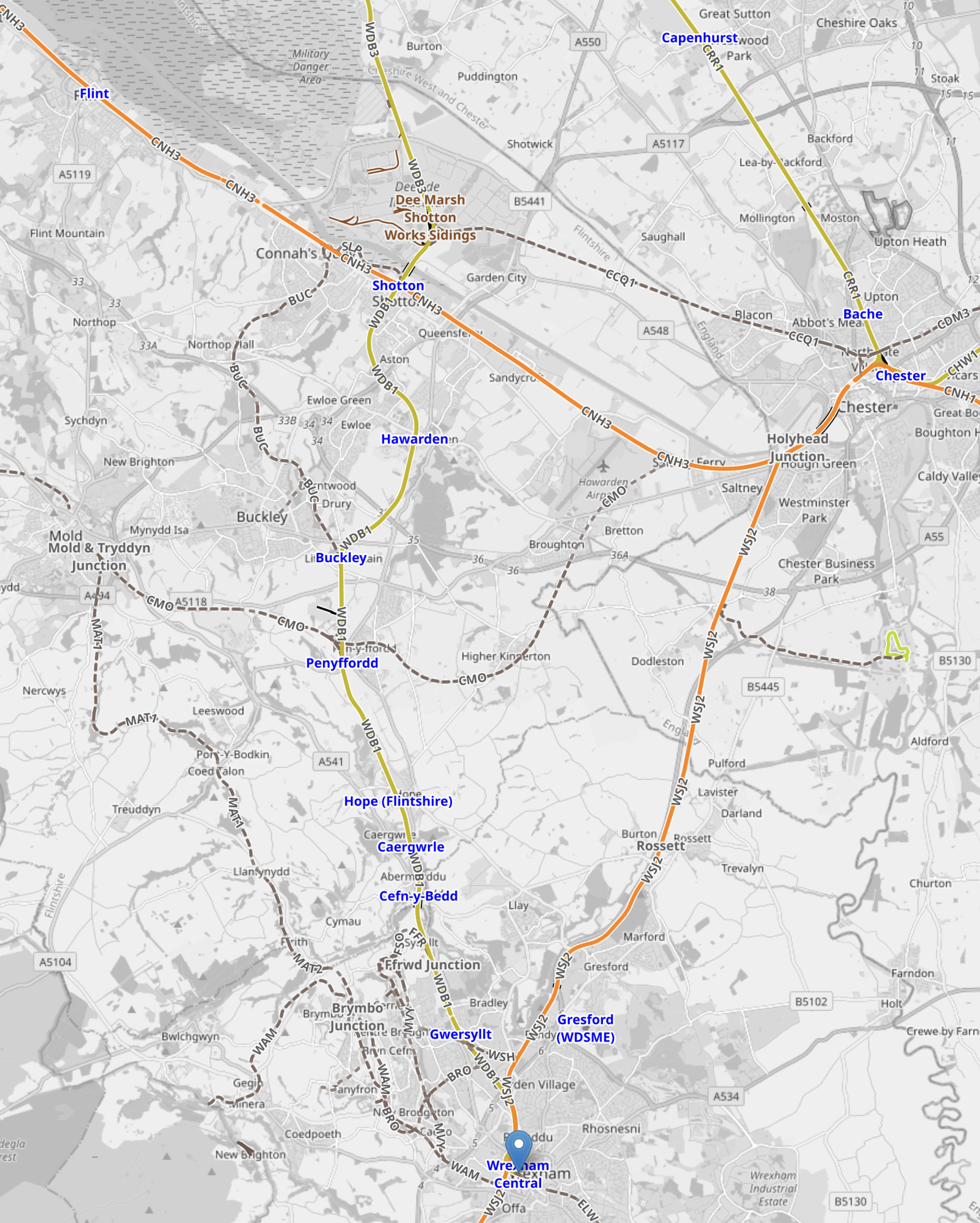
Note.
- Wrexham Central station is at the bottom of the map indicated by the blue arrow.
- Chester is in the North-East corner of the map, where three orange tracks meet.
- The orange track running East from Chester is the North Wales Coast Line to Crewe
- The orange track running West from Chester is the North Wales Coast Line to Shotton, Flint and then on to Llandudno, Bangor and Holyhead.
- The orange track running South from Chester goes to Wrexham.
- The yellow track running North from Chester is Merseyrail to Liverpool.
- Flint station is in the North-West corner of the map, with Shotton station between Chester and Flint stations.
- The yellow track running North from Wrexham Central station to Shotton station is the Borderlands Line to Bidston for Liverpool.
This second OpenRailwayMap shows the two Wrexham stations and the lines to Liverpool and Chester.
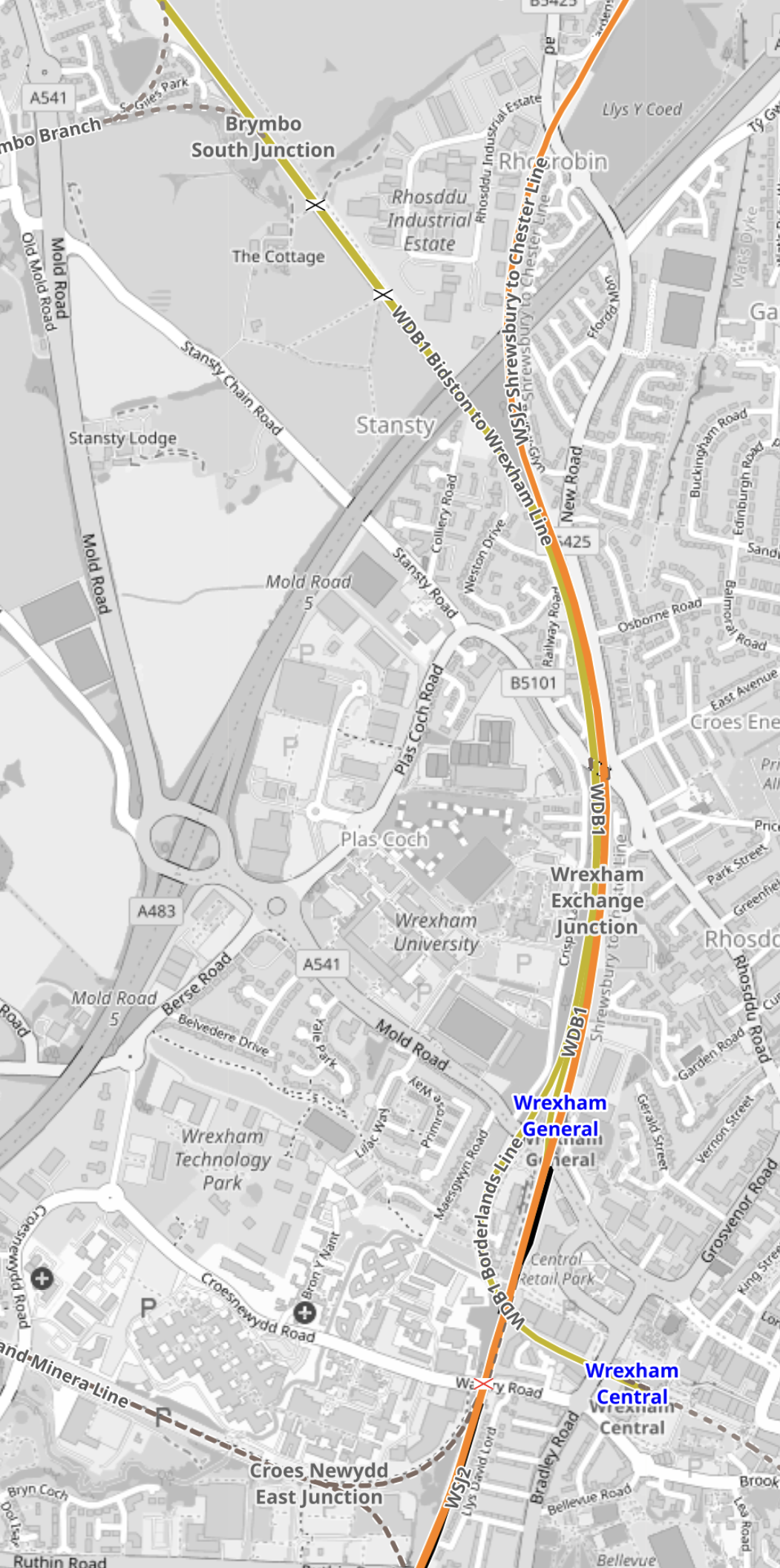
Note.
The orange track running North-South is the Chester and Shrewsbury Line, which runs through Wrexham General station.
The yellow track running North -West is the Borderlands Line to Shotton and Bidston for Liverpool.
Wrexham Central station is on an extension of the Borderlands Line.
This third OpenRailwayMap shows where the Borderlands Line crosses the River Dee on the Hawarden Bridge.
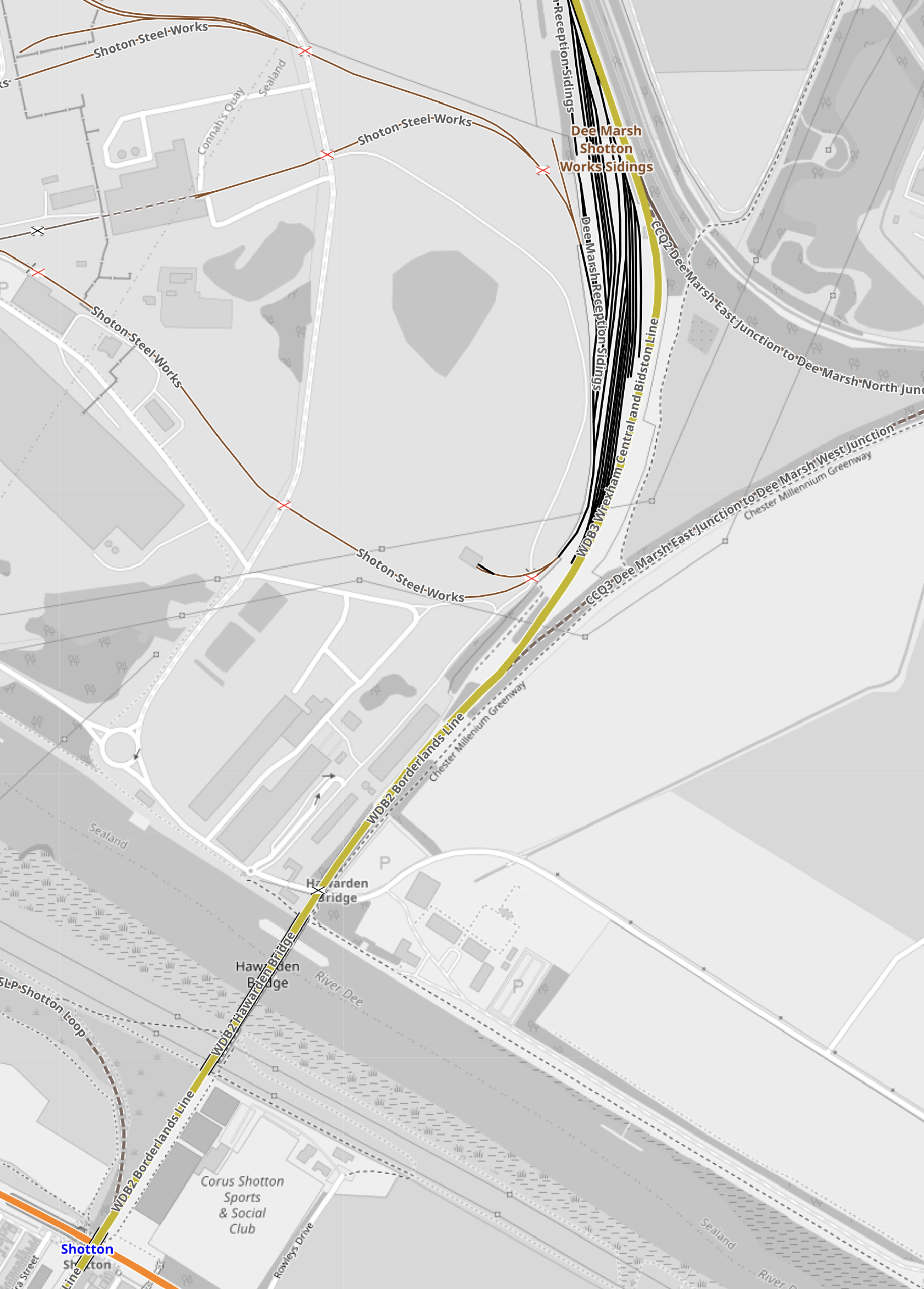
Note.
- Running across the South-West corner of the map is the River Dee.
- The orange track in the South-West corner of the map is the North Wales Coast Line between Chester and Holyhead.
- The yellow track is the Borderlands Line between Wrexham and Bidston for Liverpool.
- The Borderlands Line crosses the River Dee on the Hawarden Bridge.
- Shotton station is a poor interchange between the two lines.
- Hawarden Bridge station is North of the river.
This fourth OpenRailwayMap shows where the Borderlands Line joins Merseyrail’s Wirral Line at Bidston station.
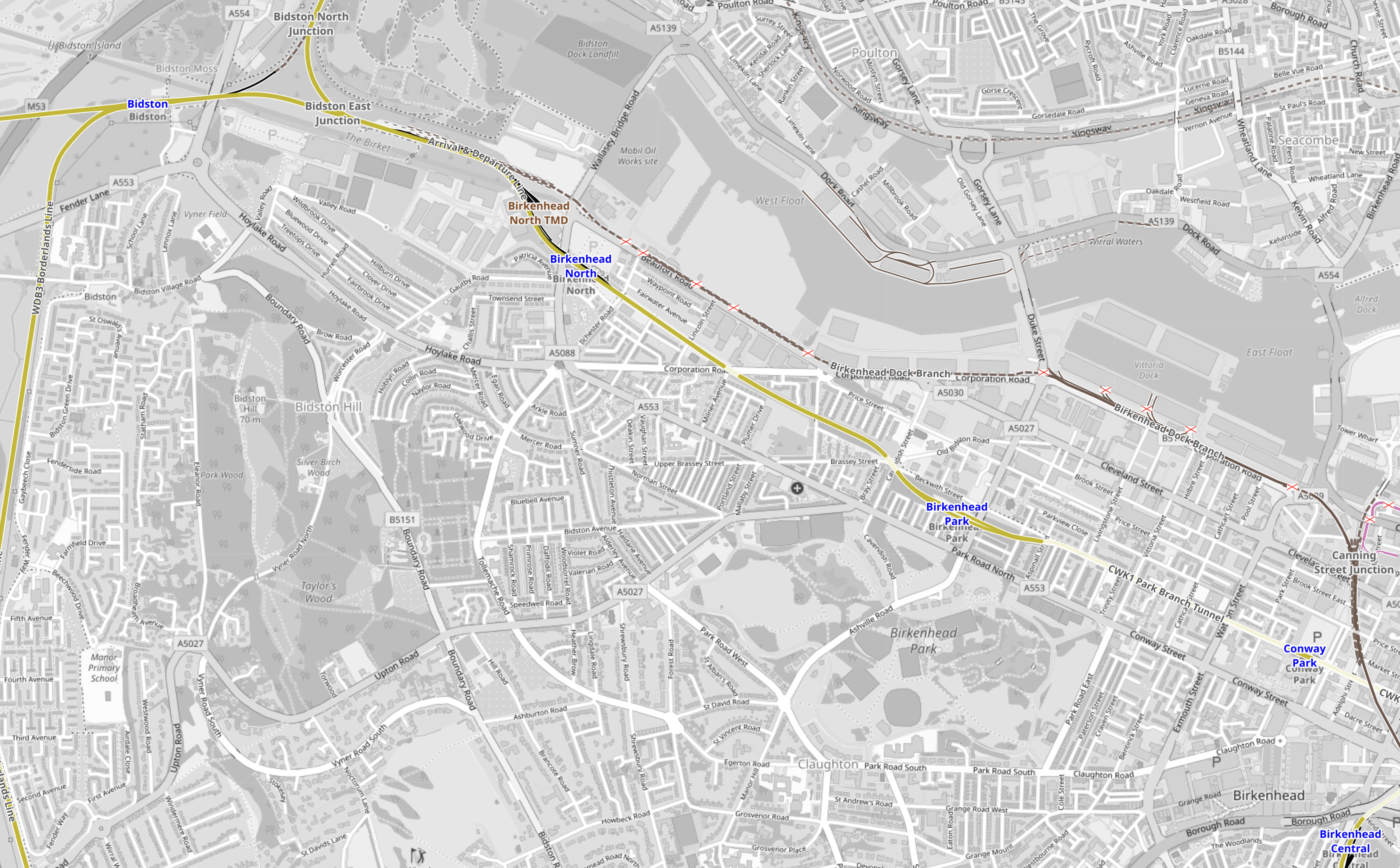
Note.
- Bidston station is in the vNorth-West corner of the map.
- The yellow track running West from Bidston station is Merseyrail to West Kirby.
- The yellow track running South from Bidston station is the Borderlands Line to Wrexham.
- The yellow track running North from the triangular junction to the East of Bidston station is Merseyrail to New Brighton.
- The yellow track running East from the triangular junction to the East of Bidston station is Merseyrail to Liverpool via Birkenhead North, Birkenhead Park, Conway Park and Hamilton Square stations.
- Birkenhead Central station is in the South-Eastern corner of the map and is on Merseyrail’s branches to Chester and Ellesmere Port stations.
Services from Chester, Ellesmere Port, New Brighton and West Kirby all combine at Hamilton Square to go round the stations under the centre of Liverpool; James Street, Moorfields, Lime Street, Central and James Street (again).
Wrexham And Liverpool Improvements
These plans concern the Borderlands Line or the Wrexham and Liverpool Line.
- Commencing work on the line between Wrexham and Liverpool as the crucial first phase of delivering metro services direct between the two cities.
- Upon completion of rail line works at Padeswood, increase train services between Wrexham and Bidston to 2 trains per hour within the next three years, ahead of the introduction of 4 trains per hour that will run direct between Wrexham and Liverpool by 2035.
- The existing Borderlands Line will also be renamed the Wrexham – Liverpool line.
- Key stations on the Wrexham – Liverpool line will be improved in the next 12 months.
- Trains operating on the Wrexham – Liverpool line will be wrapped to reflect the communities and football clubs they serve.
- Introducing Pay as You Go tap in tap out technology – covering connections between Gobowen and Rhyl, and along the full length of the Wrexham -Liverpool line
- Working with Network Rail to determine the feasibility of a rapid delivery of a new test railway station at Deeside Industrial Park, to gauge demand for permanent services to the park.
- A new, multi-million pound electrification innovation fund to develop a plan to decarbonise the railway in North Wales and enable more frequent metro services and additional stations
- Match funding for step-free access at Shotton and Ruabon stations.
- Examining options to re-open stations and build new stations to serve employment growth areas.
There looks a lot to do, but none of the actions would appear to be that large and expensive.
Running Class 777 Trains Between Wrexham Central Station And Liverpool City Centre
Consider.
- There is no way, that the Office of Road and Rail will allow any more third rail electrification.
- Class 777 trains could be fitted with pantographs, if the trains need to be charged on the tracks past Bidston station.
- Siemens Mobility have developed a Rail Charging Converter, that I wrote about in Technology Behind Siemens Mobility’s British Battery Trains Hits The Tracks.
- I suspect Stadler have some similar technology for the Class 777 trains.
- Wrexham Central station is a single platform station.
- Bidston and Wrexham Central stations are 27.5 miles apart or a 55 mile round trip.
- In New Merseyrail Train Runs 135km On Battery, I describe how a Class 777 train ran for over eighty miles on battery power.
In Liverpool City Centre, trains would join services from Chester, Ellesmere Port, New Brighton and West Kirby and go round a loop through James Street, Moorfields, Liverpool Lime Street, Liverpool Central and James Street.
This Google Map shows Wrexham Central station.
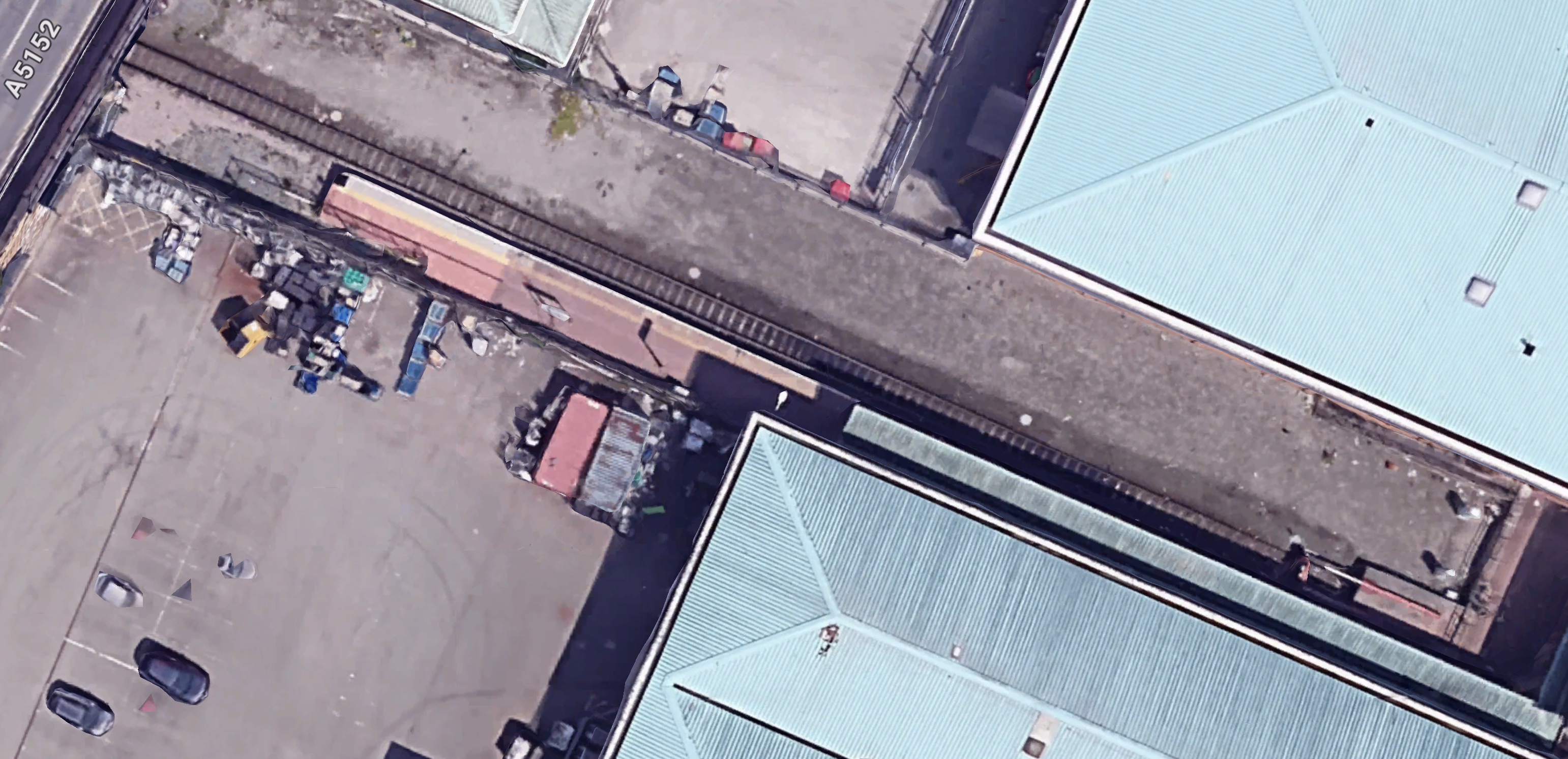
Note.
- The single track, with the platform alongside.
- There would be plenty of space on the North side of the track to put up a short length of overead wire to charge the trains.
- The station appears to be surrounded by a shopping centre.
One platform should be able to handle four trains per hour (tph)
This second Google Map shows Bidston station.
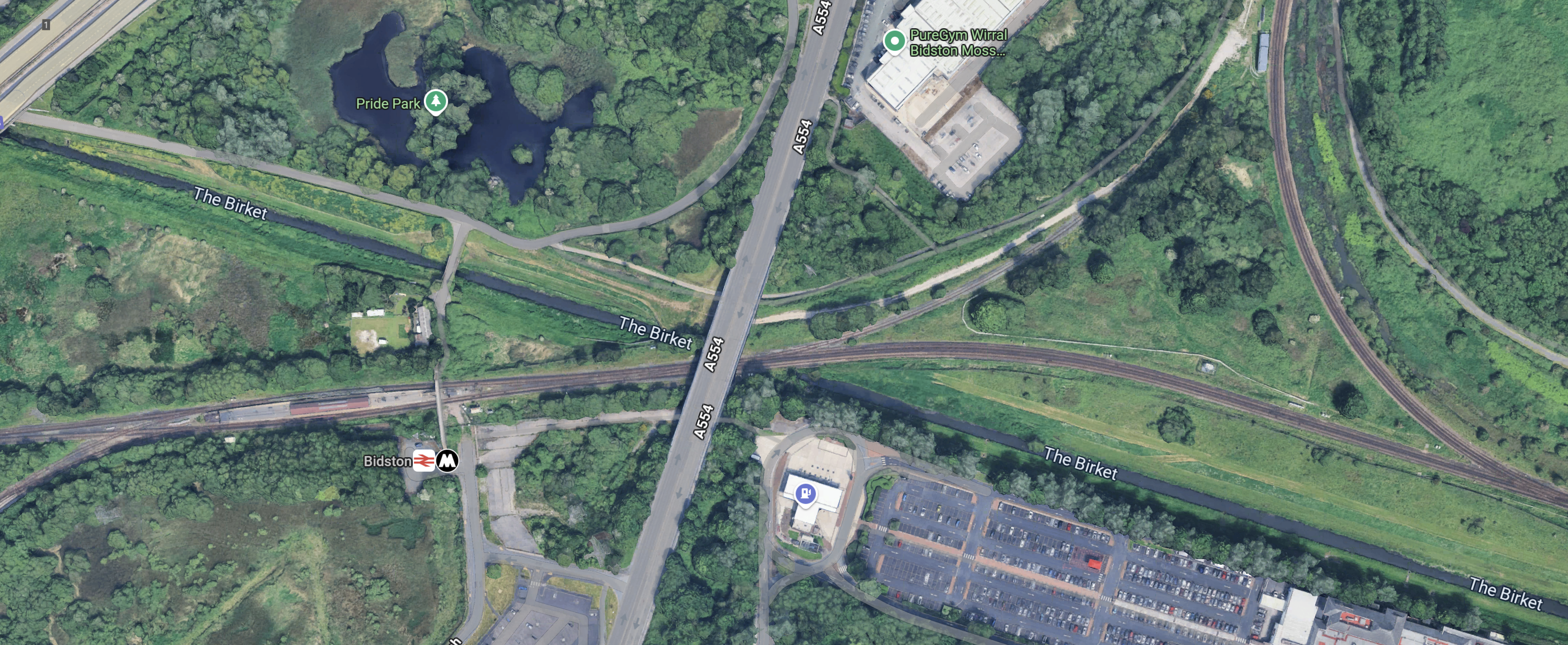
Note.
- Bidston station is indicated by the station symbol.
- Merseyrail’s line between West Kirby and Liverpool runs through the station.
- Trains to Liverpool take the Eastern point of the triangular junction.
- Trains to New Brighton take the Northern point of the triangular junction.
- Trains to West Kirby and Wrexham take the Westerly lines, from Bidston station.
Work will probably need to be done at the junction, where the West Kirby and Wrexham line split.
I discuss the work at Padeswood in Train Frequency Focus In North Wales Transport Commission’s Interim Recommendations.
It doesn’t seem to me, that to be able to run 2 or even 4 tph between Wrexham Central and Liverpool, is going to need a large budget. Although, a few extra Class 777 trains, with a battery-electric capability, will be needed.
But this corner of Wales will have one of the world’s first battery-electric international trains.
New And Improved Services And Stations
These plans concern new and improved services and stations on the Borderlands Line or the Wrexham and Liverpool Line.
- The existing Borderlands Line will also be renamed the Wrexham – Liverpool line.
- Key stations on the Wrexham – Liverpool line will be improved in the next 12 months.
- Trains operating on the Wrexham – Liverpool line will be wrapped to reflect the communities and football clubs they serve.
- Introducing Pay as You Go tap in tap out technology – covering connections between Gobowen and Rhyl, and along the full length of the Wrexham -Liverpool line
- Match funding for step-free access at Shotton station.
- Examining options to re-open stations and build new stations to serve employment growth areas.
Deeside Industrial Park Station
This is planned for Deeside Industrial Park station.
Working with Network Rail to determine the feasibility of a rapid delivery of a new test railway station at Deeside Industrial Park, to gauge demand for permanent services to the park.
This Google Map shows Deeside Industrial Park
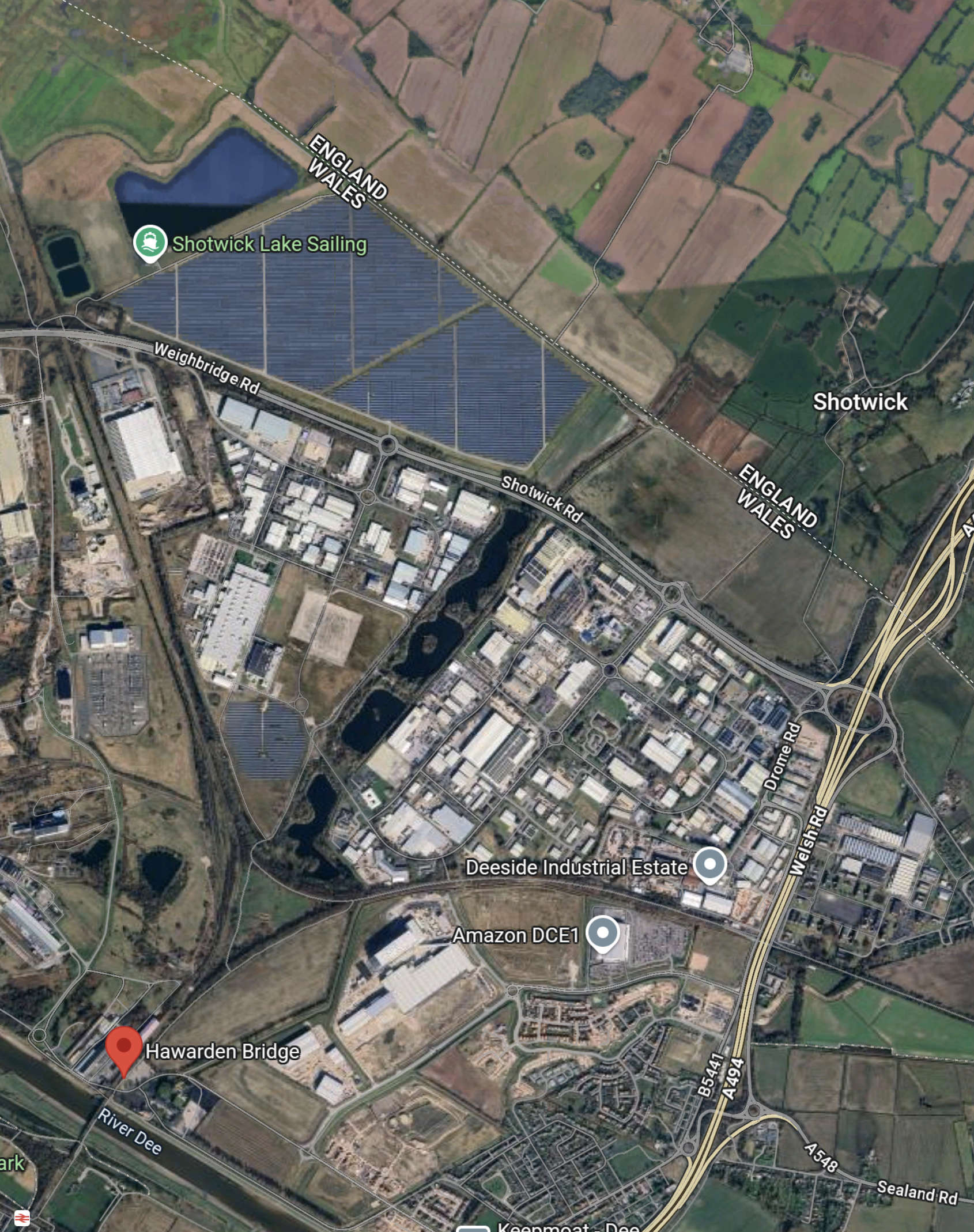
Note.
Shotton station is in the South West corner of the map.
Hawarden Bridge station is indicated by the red arrow.
The double-track Borderlands Line runs between the two stations and then Northwards between the warehouses and factories of the estate.
This second Google Map shows the area to the North of the two stations in greater detail.
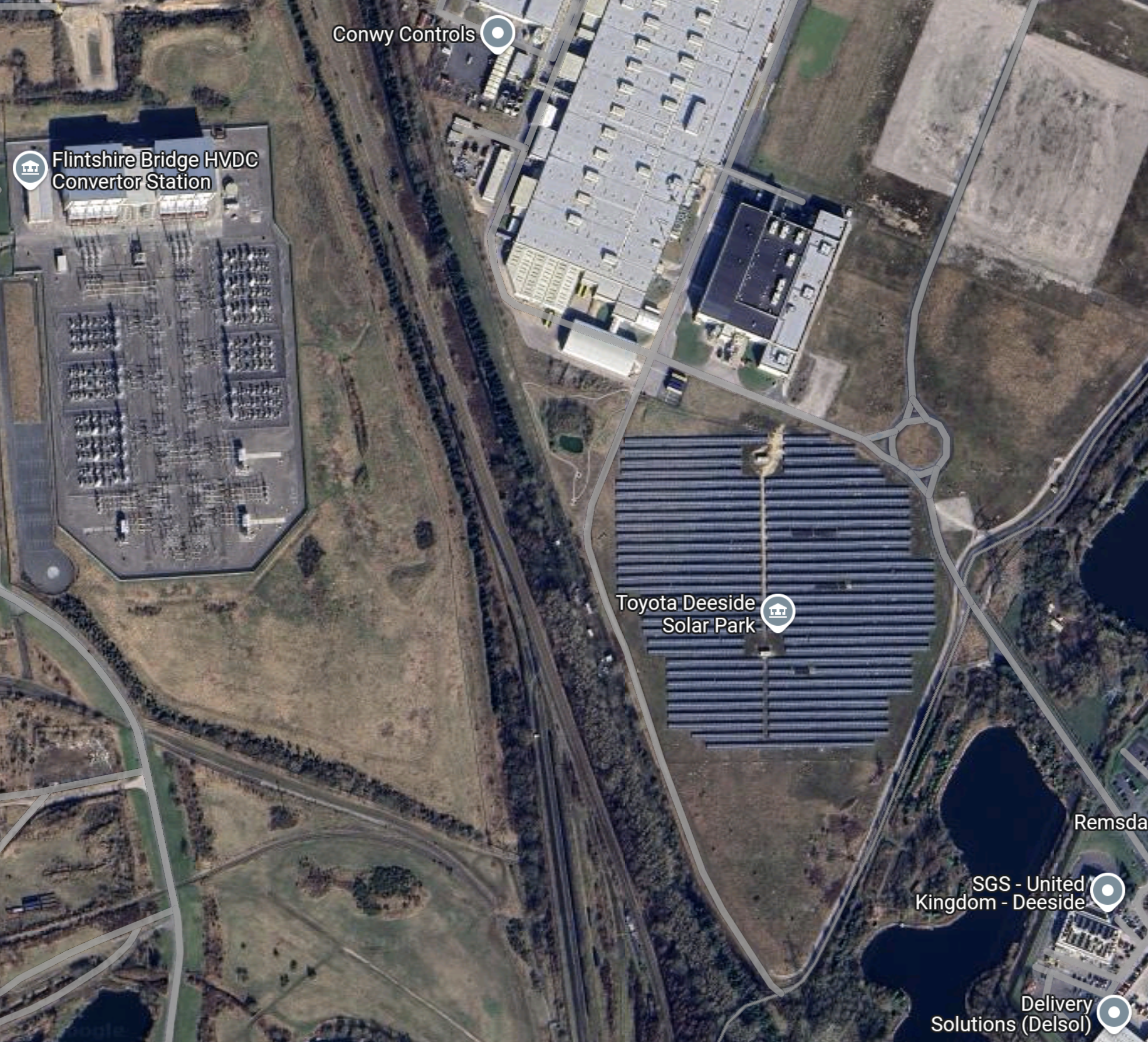
Note.
- Flintshire Bridge Converter Station is the Southern end of the 2.2 GW Western HVDC Link from Scotland.
- Toyota’s Deeside Solar Park.
- The Borderland’s Line running between the substation and the solar park.
It does appear there could be plenty of space for a station.
Network Rail on Merseyside certainly have access to to a temporary station, as these pictures show of one’s use at Liverpool South Parkway station, which I wrote about in Liverpool South Parkway Station Stands In For Lime Street.


Note.
- It was mainly built of scaffolding.
- It was long enough for an eleven-car Class 390 train.
It could certainly be rearranged to make a temporary two-platform station.
But why a temporary station?
- It may turn out, that Bidston and Wrexham Central is too long for battery-electric trains.
- But Deeside Industrial Park station would be about half-way, so an ideal place for a pit-stop.
- It’s also got plenty of electricity.
- Toyota might also want to see how it helps the operation of their engine plant.
Network Rail might want to try out the idea of building a temporary station elsewhere in the future.
ENGIE And CDPQ To Invest Up To £1bn In UK Pumped Storage Hydro Assets
The title of this post, is the same as a news item from ENGIE.
These four bullet points act as sub-headings.
- Refurbishment programme to extend life of plants at Dinorwig and Ffestiniog will ensure the UK’s security of supply and support the transition to a low carbon energy future
- ENGIE owns 75% of the plants via First Hydro Company, a 75:25 joint venture with Canadian investment group CDPQ
- The two pumped storage hydro plants are the UK’s leading provider of power storage and flexibility, with 2.1GW of installed capacity
- They represent 5% of the UK’s total installed power generation capacity and 74% of the UK’s pumped storage hydro capacity
These three paragraphs give more details.
The preparation of a 10-year project of refurbishment at *ENGIE’s Dinorwig pumped storage station has begun, following an 8-year refurbishment at Ffestiniog, enabling the delivery of clean energy whenever needed.
These flexible generation assets, based in North Wales, are essential to the UK Government’s accelerated target of achieving a net zero carbon power grid by 2030. Together they help keep the national electricity system balanced, offering instant system flexibility at short notice. The plants are reaching end of life and replanting will ensure clean energy can continue to flow into the next few decades.
Re-planting could see the complete refurbishment of up to all six generating units at Dinorwig – a final investment decision is still to be made on the number of units to replace – while the re-planting at Ffestiniog will be completed at the end of 2025. The program also involves the replacement of main inlet valves – with full drain down of the stations – and detailed inspections of the water shafts.
It also looks like the complete refurbishment at Dinorwig will take ten years, as it seems they want to keep as much of the capacity available as possible.
When the replanting is complete, the two power plants will be good for twenty-five years.
Hopefully, by the time Dinorwig has been replanted, some of the next generation of pumped storage hydroelectric power stations are nearing completion.
The news item says this about Dinorwig.
Dinorwig, the largest and fastest-acting pumped storage station in Europe, followed in 1984 and was regarded as one of the world’s most imaginative engineering and environmental projects.
Dinorwig must be good, if a French company uses those words about British engineering of the 1980s.
Could High Speed Two Serve Chester And North Wales?
This diagram shows High Speed Two services, as they were originally envisaged before Phase 2 was discontinued.
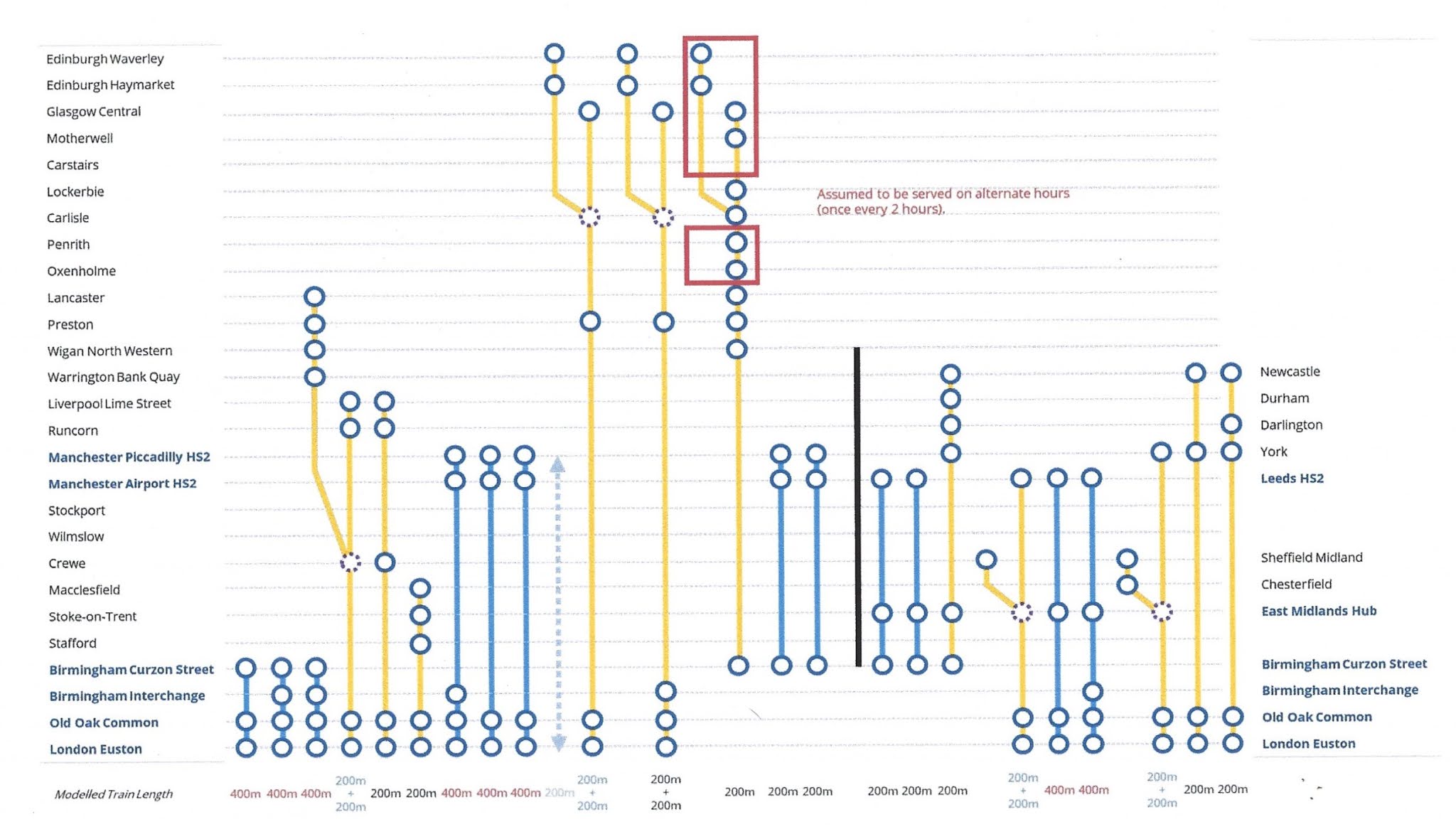
Note.
- Trains to the left of the vertical black line are Phase 1 and those to the right are Phase 2.
- Full-Size trains are shown in blue.
- Classic-Compatible trains are shown in yellow.
- Blue circles are shown, where trains stop.
- The dotted circles are where trains split and join.
- In the red boxes routes alternate every hour.
Click on the diagram to enlarge it.
If I look at the trains counting from the left of the diagram, I see the following.
- Train 4 is a pair of Classic-Compatible trains, that split and join at Crewe, with one train going to Lancaster and the other to Liverpool Lime Street.
- Train 5 is a single Classic-Compatible train going to Liverpool Lime Street.
This gives Liverpool Lime Street two trains per hour (tph) and Lancaster one tph
Could train 5 be a a pair of Classic-Compatible trains, that split and join at Crewe, with one train going to Holyhead via Chester and the other to Liverpool Lime Street?
Consider.
- Yesterday, a pair of Class 805 trains, ran between Euston and Holyhead. Each Class 805 train is 130 metres long, so a pair of Class 805 trains is sixty metres longer than a High Speed Two Classic-Compatible train.
- I am certain, that a single High Speed Two Classic-Compatible train will fit the platforms between Crewe and Holyhead.
- Crewe and Holyhead is 105.5 miles and the route is not electrified.
- Crewe and Holyhead is double-track all the way except for the Britannia Bridge over the Menai Strait.
- With the exception of perhaps 2 to 3 miles, half the route between Crewe and Holyhead has a line speed of 90 mph. with the other half being 75 mph.
- Given the countryside and the number of important historic sites, electrification might be difficult, as the heritage Taliban will say no!
- It was promised by the last government that Crewe and Holyhead would be electrified, but I will assume it won’t be!
- Hitachi, who are part of the consortium building the High Speed Two Classic-Compatible trains have developed battery-electric high speed train technology, which is likely to be applied to the Current Class 805 trains, that work the route.
- Hitachi’s battery-electric high speed train technology can propel the trains at up to 125 mph, provided the track allows it.
I feel that Crewe and Holyhead can be developed into one of the most iconic high speed railways in the world, by using battery-electric high-speed trains. Tourists would come from all over the world, to experience mouse-quiet battery-electric trains.
High Speed Two should go for it!
These are some thoughts.
It Would Be A Green Route To Ireland
Consider.
The fastest direct Avanti service to Holyhead is scheduled to take three hours and forty-two minutes, with one hour and 46 minutes between Euston and Crewe, and one hour and fifty-seven minutes between Crewe and Holyhead.
- High Speed Two will knock thirty-four minutes off the time between Euston and Crewe, when the core route between Euston and Crewe is complete, which will reduce the time to three hours eight minutes, with with one hour and 12 minutes between Euston and Crewe, and one hour and fifty-seven minutes between Crewe and Holyhead.
- The Crewe and Holyhead section of the route would still take one hours and fifty-seven minutes, which is an average speed of just 54 mph, along the North Wales Coast.
- An overall time of three hours between Euston and Holyhead, would require an average speed along the North Wales coast, which would be an average speed of just 62 mph.
- The operating speed is an average of around 80 mph between Crewe and Holyhead, and would run the section of the route in 79 minutes, which would mean a Euston and Holyhead time of two hours and 31 minutes.
- A 100 mph average between Crewe and Holyhead, would run the section of the route in 63 minutes, which would mean a Euston and Holyhead time of of two hours and 15 minutes.
I believe that with track improvements, a more efficient stopping pattern and using Hitachi’s battery technology, that battery-electric High Speed Two Classic-Compatible trains could run between Euston and Holyhead in under two hours.
A fast ferry would complete the route between Holyhead and Dun Laoghaire.
Could More Than One Train Per Hour Be Sent To Chester And North Wales?
Consider.
- Because of the cancellation of Phase 2 of High Speed 2, there are spare paths on High Speed Two between London and the West Midlands.
- If the core section of High Speed Two is extended Northwards to Crewe, as advocated by Dyan Perry of the High Speed Rail Group, that I wrote about in The Future Of HS2 Could Lie In Its Original Vision, this would create extra paths to Crewe.
- If the West Midlands and Crewe section of the High Speed Two route has the same capacity as London Euston and the West Midlands it could handle seventeen tph.
- At present it looks like with the cancellation of Phase 2, the West Midlands and Crewe section will handle just ten tph.
, So there will be seven spare paths between Euston and Crewe!
In fact it will be better than that, as each train could be a pair of Classic-Compatible trains, that split and joined to serve two destinations.
Could A North Wales Service Call At Hawarden Airport?
Hawarden Airport is where Airbus build wings for their aircraft in the UK.This Google Map shows Hawarden Airport.
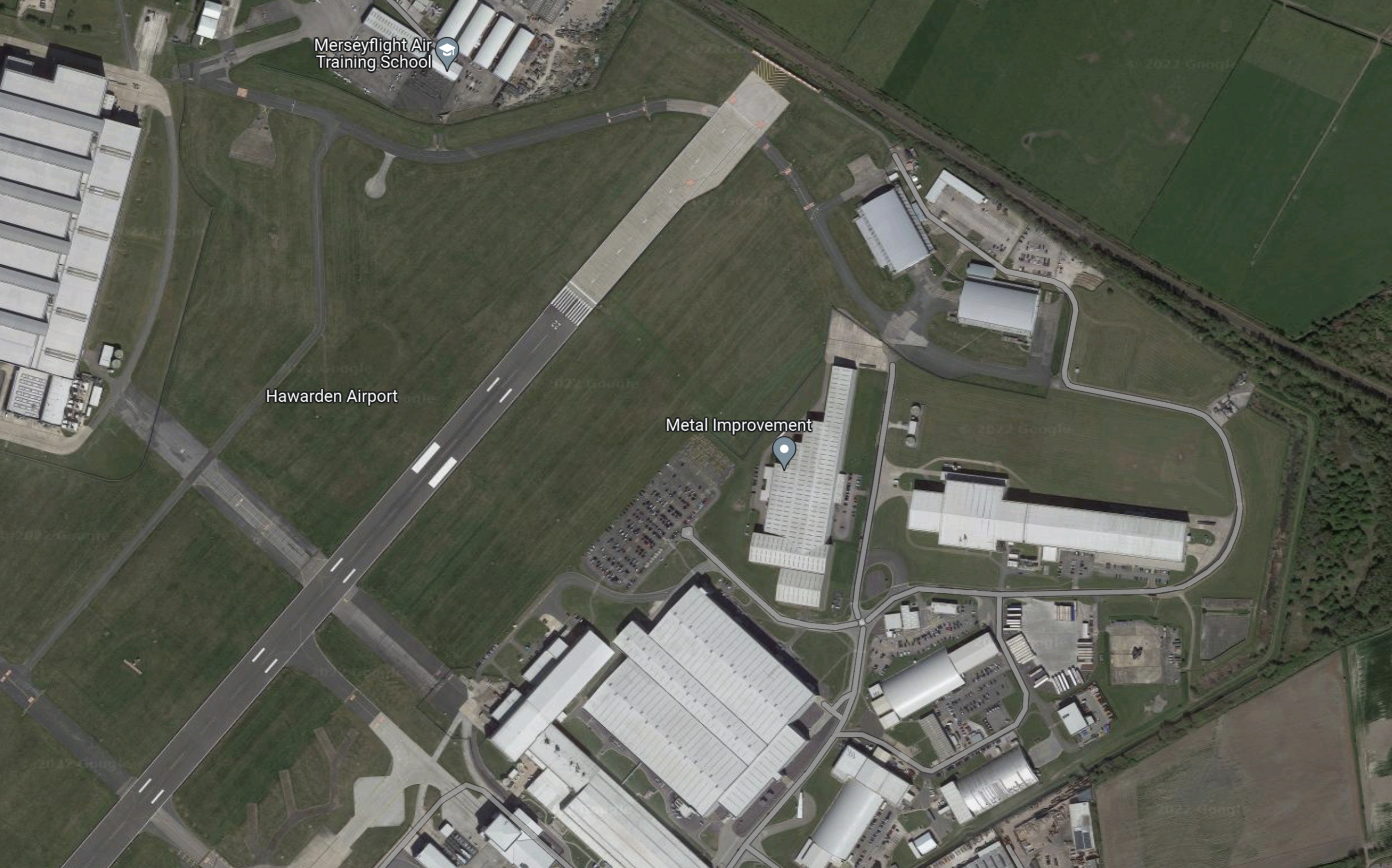
Note.
- The large runway.
- The various factory buildings.
- The North Wales Coast Line between Chester and Holyhead, runs along the North side of the Airport.
I doubt if Airbus wanted a station, it would be difficult to arrange.
Conclusion
Because of the vacant paths, it would appear that extra services to North Wales and North West England can be fitted in.
Wales Puts Another Pumped Storage Hydroelectric Power Station Into Play
This page on World Energy is entitled Fortune Hydro AG and Voith Acquire 450 MW Dorothea Lakes Pump Storage.
This paragraph introduced the article.
Fortune Hydro AG, in collaboration with Voith Small Hydro, has acquired the 450 MW Dorothea Lakes Pump Storage project as part of an £800 million (US$1 billion) strategic investment in renewable energy in the UK.
It looks to me that this was a good buy in July 2023, as after last week, when I wrote Price Framework Paves Way For Vast Electricity Storage Scheme, in response to a UK Government announcement about funding pumped storage hydroelectricity.
These two paragraphs give more details of the project.
Located in Snowdonia, Northern Wales, this green storage facility presents a unique opportunity to integrate wind, solar and hydroelectric power, Fortune Hydro said. The Dorothea Lakes site was one of the largest slate quarries in Europe and the largest in North Wales.
Electricity produced by solar and wind during low demand can be stored until demand is there. This storage allows balancing of the production cycle in the large solar and wind farms in the north against the demand cycle of consumers and businesses in central and southern UK. It will generate up to 600 jobs and bring economic development and new business opportunities to the local community, the company said.
This map shows the location of Dorothea Lakes.
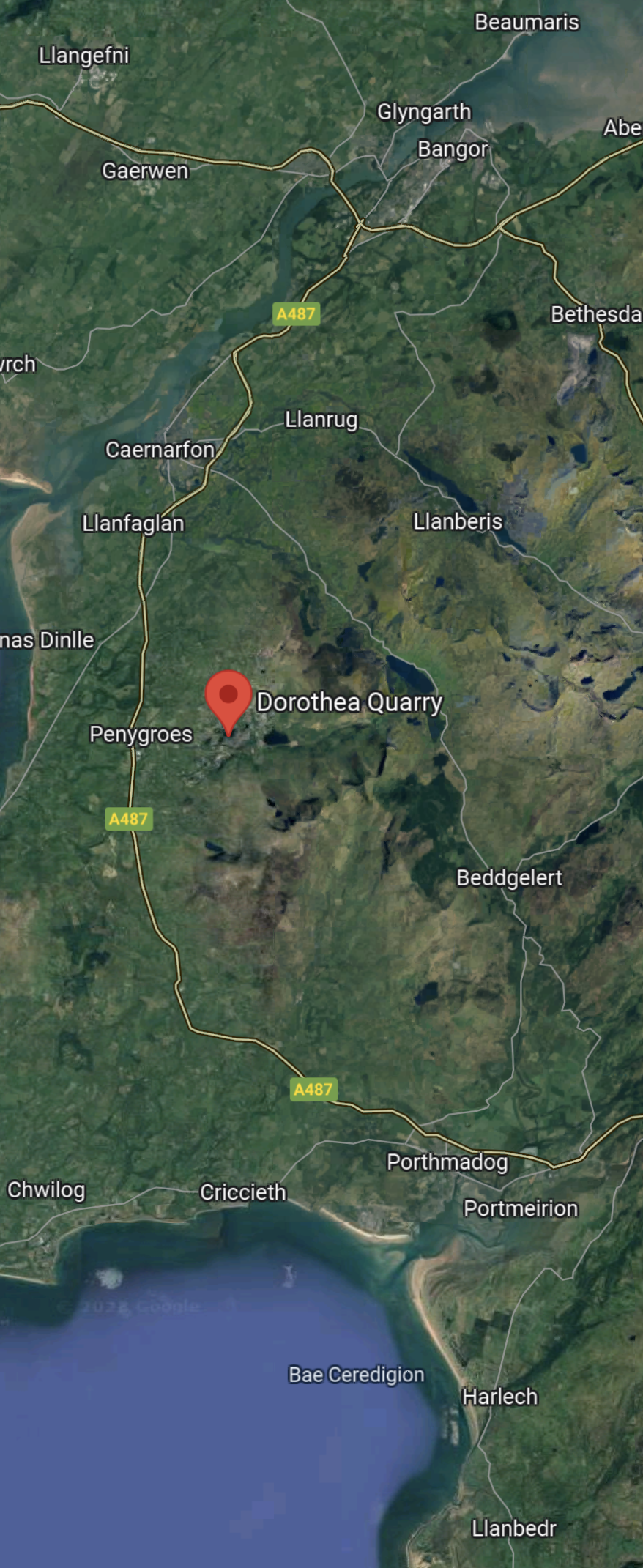
Note.
- Dorothea Lakes is indicated by the red arrow.
- The Menai Strait between Bangor and Caernarfon is at the top of the map.
- It is certainly in a convenient place, with all the wind farms off the North Wales Coast.
At 450 MW, it’s about a third the size of Electric Mountain, so I suspect it could hold about 3 GWh of electricity.
RWE’s Welsh Offshore Wind Project Powers Ahead
The title of this post, is the same as that of this article on offshoreWIND.biz.
This is the sub-heading.
Natural Resources Wales has awarded marine licences for RWE’s Awel y Môr offshore wind project off the North Wales Coast.
These two paragraphs outline the project.
The offshore wind farm, which could power more than half of Wales’ homes, has secured all of its necessary planning approvals with the award of its marine licences from Natural Resources Wales, RWE said.
The marine licences have been awarded on behalf of Welsh Government ministers following the granting of a Development Consent Order in September.
With all the wind action in the East, we tend to forget that the Liverpool Bay area has a lot of wind.
- Awel y Môr – 500 MW – Before 2030
- Barrow – 90 MW – 2006
- Burbo Bank – 90 MW – 2007
- Burbo Bank Extension – 258 MW – 2017
- Gwynt y Môr – 576 MW – 2015
- Mona – 1500 MW – 2029
- Morecambe – 480 MW – 2028
- Morgan – 1500 MW – 2029
- North Hoyle – 60 MW – 2003
- Ormonde – 150 MW – 2012
- Rhyl Flats – 90 MW – 2009
- Walney – 367 MW – 2010
- Walney Extension – 659 MW – 2018
- West Of Duddon Sands – 389 MW – 2014
Note.
- This is a total of 6709 MW to be delivered before 2030.
- All the wind farms have fixed foundations.
- RWE have an interest in three of the Welsh wind farms.
The Times today has this article which is entitled Energy Minnow Sees Pathway To Irish Sea Gasfield Via London IPO, where these are the first three paragraphs.
An energy minnow that is seeking to develop a gasfield in the Irish Sea is planning to list on Aim, the junior London stock exchange, in an attempt to buck the downturn in initial public offerings.
EnergyPathways has announced its intention to float, seeking to raise at least £2 million.
It owns the rights to Marram, a small gasfield discovered in 1993 about 20 miles offshore from Blackpool. It is seeking permission from the government for its plan to develop the field in the Irish Sea quickly by connecting it with existing infrastructure that serves the already-producing gasfields in Morecambe Bay. It aims to be producing gas as soon as 2025.
This gasfield should produce enough gas until the large Liverpool Bay wind farms come on stream at the end of the decade.
High Speed Two To Holyhead
Rishi Sunak has just announced that the North Wales Main Line will be electrified, along with the cancellation of further phases of High Speed Two.
I have written about this topic before in Could High Speed Two Serve Holyhead?.
In that post, I started with this question and answer.
Why?
It could be a way to create a zero- or low-carbon route between the islands of Great Britain and Ireland.
In Could High Speed Two Finish At Lichfield?, I discussed, what might happen if the Birmingham to Manchester leg of High Speed Two were to be scrapped.
This was my main conclusion.
I strongly believe that an upgraded Trent Valley Line linked to a shortened High Speed Two at Lichfield could improve journey times between London, Birmingham and the North.
As the current Holyhead services will pass this junction between the Trent Valley Line and High Speed Two, there is no reason, why they couldn’t take High Speed Two to and from London, if the service was run by High Speed Two Classic-Compatible Trains.
These are further thoughts.
Timings
These would be the times in hours:minutes.
- Bangor – 2:42
- Chester – 1:28
- Holyhead – 3:10
- Llandudno Junction – 2:24
Currently, Holyhead is three hours and forty-five minutes.
Would the Electrification Be Full Or Partial Between Crewe And Holyhead?
This question will be increasingly asked about electrification.
Consider.
- CAF, Hitachi, Siemens and Stadler are all developing battery-electric technology for trains.
- The UK’s first battery-electric train service goes into service tomorrow between Liverpool and Headbolt Lane station.
- Freight locomotives are increasingly being ordered with both electric and diesel power.
- Some of the castles, countryside and other monuments wouldn’t be enhanced, with lots of overhead electrification.
I think it is likely, that electrification will increasingly have gaps for visual, technical or heritage reasons.
Electrification of the North Wales Coast Line with other small improvements could probably reduce the journey time between London and Holyhead to around three hours.
Would There Be Enough Paths On The Trent Valley Line And High Speed Two?
This graphic shows High Speed Two services after Phase 2b is completed.
Note.
- Services shown in blue are run by High Speed Two Full Size trains.
- Services shown in yellow are run by High Speed Two Classic-Compatible trains.
- There are a total of 23 train paths of which eleven would need to go along the Trent Valley Line.
- The three London-Manchester services and the two Birmingham-Manchester services would have to be run by High Speed Two Classic-Compatible trains.
- The second Liverpool train is only a single train, but it could be a pair, that split at Crewe, with one train going to Liverpool and the other to Chester and North Wales.
- All the Avanti West Coast services, currently using the Trent Valley Line would probably be replaced by High Speed Two services.
There would have to be a bit of reorganising, but I suspect an hourly path could be found for a train between London and Holyhead.
A Fast Green Route To The Emerald Isle
Electrification of the North Wales Coast Line with other small improvements could probably reduce the journey time between London and Holyhead to around three hours.
This service could be paired with a fast zero-carbon ferry to the island of Ireland?
Conclusion
I am fairly sure that an HS2 service to Holyhead could be run, once the North Wales Coast Line is electrified.
See Also
Could High Speed Two Finish At Lichfield?
The Diesel Power Of The Class 805 Trains
Avanti West Coast’s new Class 805 trains, will probably start running between London Euston and Chester, Shrewsbury and North Wales before the end of the year.
But will they have the 560 kW engines of the Class 800 trains or the the 700 kW engines of the Class 802 trains?
On this page of Eversholt Rail’s web site, there is a detailed specification for a Class 802 train.
It says these trains have a top speed of 110 mph on diesel.
But it also says this about the design of the trains.
They have been designed to meet the operational requirements of the West of England route and are used on services out of London Paddington to Plymouth and Penzance.
The class 802 is almost identical to the class 800, the differences are that class 802s have a higher rated engine output to tackle the gradients through Devon and Cornwall, and a superior diesel range to provide the IET experience to the wider Greater Western Network, they also have a larger brake resistor which reduces brake pad usage and requires less maintenance.
Wikipedia also says that these are the diesel engine sizes in the three main classes of these Hitachi AT 300 trains.
- Class 800 train – 560 kW – Three engines for five cars
- Class 801 train – 560 kW – One emergency engine for five cars
- Class 802 train – 700 kW – Three engines for five cars
- Class 810 train – 735 kW – Four engines for five cars
All these four trains have similar bodyshells and running gear, so I suspect that to run at similar cruising speeds, similar amounts of power will be needed.
If the Class 802 train has a speed of 110 mph on diesel, then a rough estimate of the cruising speed of a train with the 560 kW engines can be estimated by doing this simple calculation. Note that air resistance is proportional to the square of the speed.
Square root (110*110 *560/700) = 98.4 mph
I have looked on OpenRailwayMap at all the tracks to the West of Wolverhampton, where these trains will run and the highest maximum operating speed I can find is 90 mph.
As the Class 805 trains have a reprofiled nose, which could be more aerodynamic, they may be able to cruise at 90 mph.
I believe that a train with three 560 kW engines will suit Avanti West Coast purposes well.
What Is The Operating Speed Of The Class 810 trains?
I can use a similar calculation to estimate the maximum operating speed of the Class 810 trains, that will operate on the Midland Main Line.
Consider.
- The Class 802 train has a total power of 2100 kW
- The Class 810 train has a total power of 2940 kW
- The Class 810 train with only three working engines has a total power of 2205 kW
I can estimate the cruising speed by doing this simple calculation, which is similar to the one for the Class 805 train.
Square root (110*110 *2940/2100) = 130 mph
I can also do it for a train running on three engines.
Square root (110*110 *2205/2100) = 113 mph
I looks to me, that the following is possible.
- As Class 810 trains can achieve the maximum speed of 125 mph on both diesel and electric power, the timetable is independent of the progress of the electrification.
- If the 125 mph sections are ignored, the fastest sections of line have a maximum speed of 110 mph, which could be possible on three engines.
- North of the electrification, where the maximum speed is only 110 mph, engines could be selectively rested to avoid overheating.
Four engines give a lot of interesting options.
I can’t wait to take a ride.
Could The Class 810 Trains Be Fitted With Batteries?
When, the electrification reaches Market Harborough station, there will be no 125 mph sections on the Midland Main Line, which are not electrified.
This Hitachi infographic shows the Hitachi Intercity Tri-Mode Battery Train.

A Class 810 version of this train would have three diesel engines and one battery pack.
- It would have all the features of the infographic.
- My calculations give it a top speed of 113 mph on a route, where the maximum speed North of the electrification is 110 mph.
- I also suspect, it could bridge any small gaps in the electrification.
It would have the very positive effects of saving fuel and cutting pollution in stations.
Train Frequency Focus In North Wales Transport Commission’s Interim Recommendations
The title of this post, is the same as that of this article on Railway Gazette International.
This is the first paragraph.
The North Wales Transport Commission chaired by Lord Burns has published its interim recommendations for the development and delivery of an integrated multi-modal transport system in the region.
The following sections, outline the recommendations for rail services.
Chester Station Improvements
The North Wales Transport Commission (NWTC) supports proposed improvements at Chester station to enable additional services to operate.
This page on Transport for Wales detailed the improvements at Chester station, where this is said.
Transport for Wales is delivering significant improvements to Chester Station. The project primarily focuses on customer improvements within the station, with work to include new branding and signage, a new passenger assist point, cycle stands, roaming mics and hearing loop systems, a new full station CCTV system, toilet refurbishments on the concourse and platforms 4 and 7, a new changing place toilet, customer waiting room upgrade, water refill unit, platform and concourse seating and waste facilities.
New Customer Information Screens will be installed throughout Chester station increasing the train service information available on the platforms and within the station waiting rooms. We’ll also be installing new screens for onward journeys, including bus, and an interactive screen which will be installed on the concourse.
Improvement works in the concourse also include, repurposing of the ticket office to create a new retail unit for the future, a new rental unit, a new customer service desk with ticket selling facilities, additional ticket vending machines, a repositioned gate line with additional standard and wide aisle gates. A new quiet room will also be introduced as a place for customers who require a safe, isolated space whilst waiting for their train.
TfW is working closely with industry partners to minimise disruption during these works for both customers and the local community. Customers are encouraged to plan in extra time to allow for potential disruption during this work. Signage and hoardings will be erected at the station in advance of and throughout, these significant improvement works, and communications will be provided at the station, onboard services and online, to advise of any temporary changes to accommodate the work on site at the station.
Note.
- It looks a serious level of improvement for customers.
- The Chester and Wrexham Line was improved in 2017, with full double-tracking and higher maximum speeds.
- It looks like completion is some time in 2024.
Nothing is said about extra train services.
North Wales Main Line
The NWTC says this about the North Wales Main Line.
On the North Wales Main Line, it says the priority should be service frequency improvements and supporting infrastructure works between Crewe and Llandudno. Improvements to signalling and line capacity from Llandudno to Bangor and Holyhead would require larger scale works, which should be planned so that they are ready to progress as and when funding is available.
I went to Holyhead earlier in the year and more trains would be welcome.
Borderlands Line
The NWTC says this about the Borderlands Line.
Signalling and line capacity improvements are required along the Borderlands Line, the commission believes. A key constraint is the sidings for the Hanson site at Padeswood, where freight trains block the line for up to an hour, and the commission says this needs to be resolved before other work to improve the line can proceed.
There should be investment to reduce journey times and increase service frequencies between Wrexham and Liverpool to significantly increase the attractiveness of the route.
I talked about the freight problem in New Trains Could Be Operating Through Flintshire From May But No Green Light For Two An Hour Service.
This map from OpenRailwayMap shows the track layout at Padeswood site.
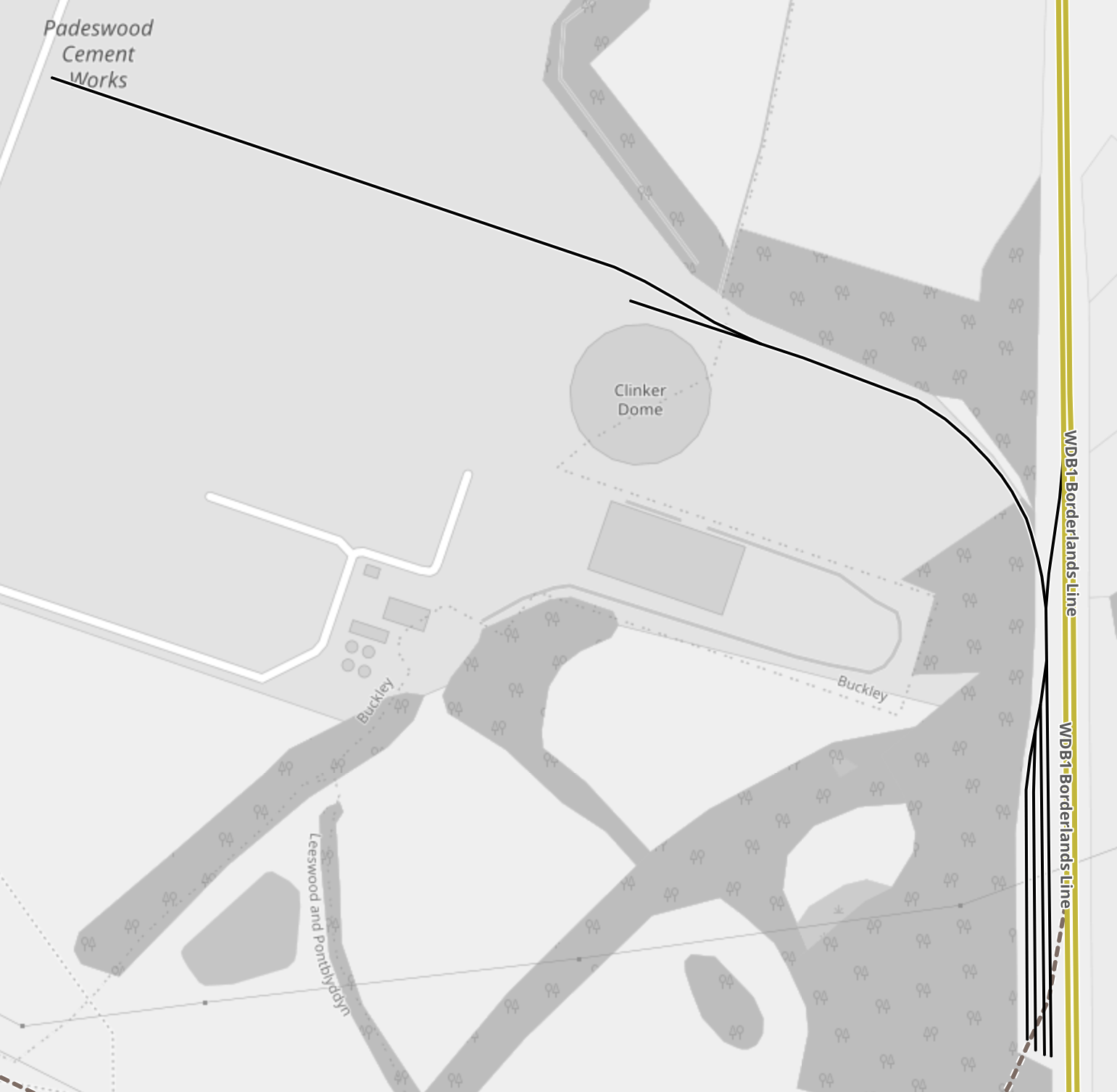
I was able to follow a train on Real Time Trains, as it left Padeswood Cement Works.
- It moved to the sidings alongside the Borderlands Line.
- It then joined the Borderlands Line and went Northwards through Buckley, Hawarden, Shotton and Hawarden Bridge stations before stopping in Dee Marsh Sidings.
- The engine then changed ends and brought the train back down the Borderlands Line to Wrexham.
- The train then continued to its destination via Ruabon, Gobowen and Shrewsbury.
This movement doesn’t seem too bad, so has there been some signalling and track improvements?
Shrewsbury And Chester Line
The NWTC says this about the Shrewsbury and Chester Line.
The commission says it has not seen a pressing case for full electrification of the Shrewsbury to Chester line, and the priority should be signalling improvements at Gobowen.
I thought that Shrewsbury and Chester might have been electrified, as it could be used to charge battery-electric going between England and Wales. But it will be some years before Transport for Wales get a battery-electric train strategy together.
On the other hand the two cities are only 42 miles apart, which is in range of battery-electric trains.
Conwy Valley And Cambrian Coast Lines
The NWTC says this about the Conwy Valley Line and the Cambrian Coast Line.
There could be merit in introducing increased frequencies on the Conwy Valley and Cambrian Coast lines during the peak season. Service enhancements and infrastructure improvements such as passing loops may be beneficial, ‘as has happened to similar lines in Devon and Cornwall’, but ’in the immediate future, those communities served by stations along the route should have access to enhanced bus services to reduce dependence on car use’.
This seems like a sensible and non-disruptive plan.
Anglesey Central Railway
The NWTC says this about the Anglesey Central Railway to Amlwch.
NWTC ‘is not persuaded’ that there is a case for opening the line to Amlwch, and says ’more urgent improvements to existing lines and services should take a higher priority’.
The Anglesey Central Railway reopening would appear to be a fairly simple project as the track is mostly already there, so this might be the sort of project, that finds itself moving up the list, if related housing or commercial developments are proposed.
This Google Map shows Amlwch and the surrounding area.
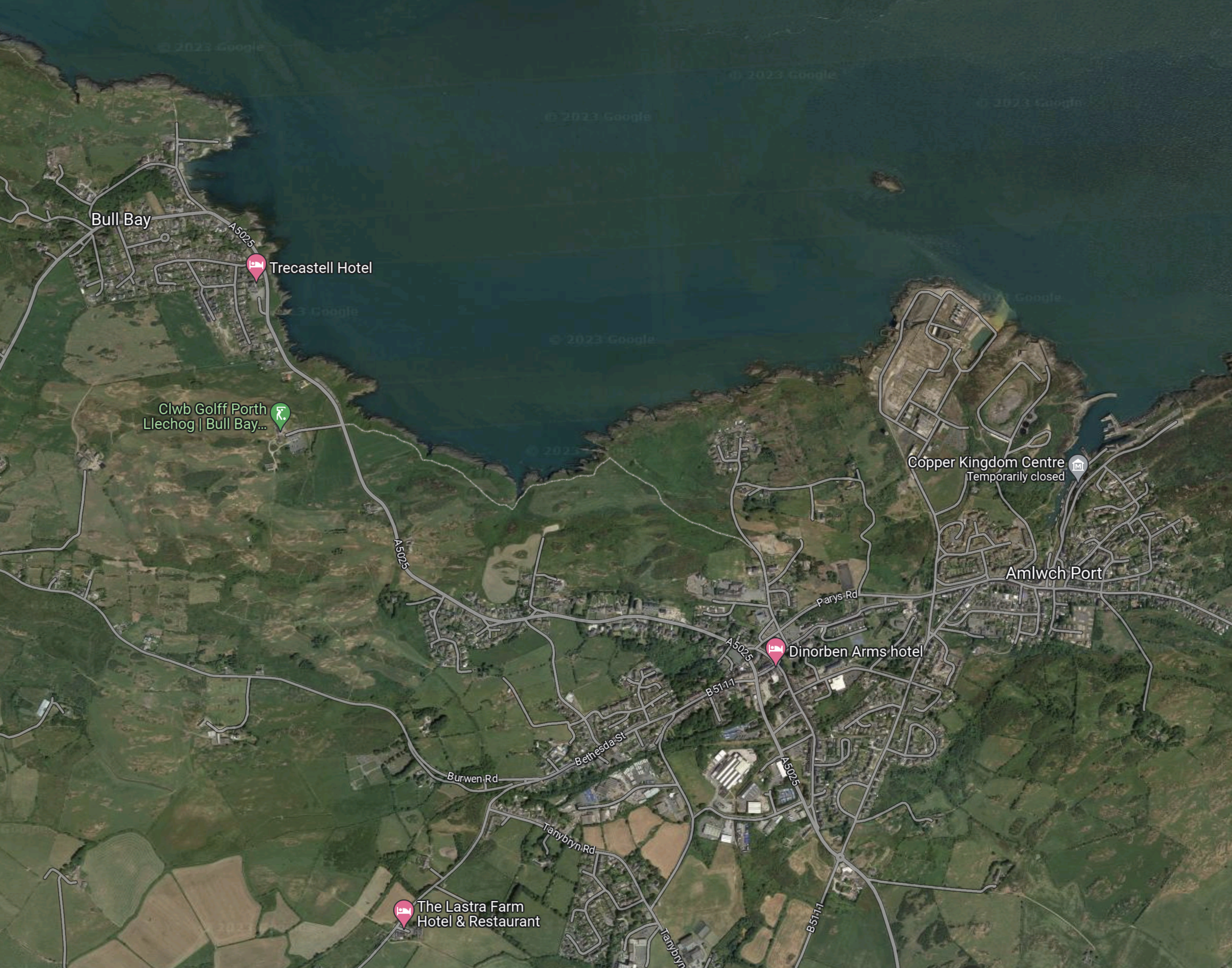
With all the tidal, nuclear and wind energy possibilities in the area, I would never rule out the rail link to Amlwch being restored.
Associated Octel used to have bromine works in Amlwch and more details can be found in this web site.
I’ve worked in chemical works with chlorine, fluorine and bromine and my advice is be very careful with them.
Criccieth And Bangor
NWTC says this about reopening the route between Criccieth and Bangor.
NWTC ‘is not persuaded’ that there is a case for opening the line between Criccieth and Bangor, and says ’more urgent improvements to existing lines and services should take a higher priority’.
This OpenRailwayMap shows the area of the reopening.

Note.
- The orange line going across the top of the map is North Wales Coast Line between Chester in the East and the Port of Holyhead on Anglesey.
- Towards the North-East corner of the map, Bangor station is indicated by the blue lettering.
- The Menai Strait runs between the Welsh mainland and the Island of Anglesey.
- The important town of Caernarfon can be picked out.
- The orange line at the bottom of the map is the Cambrian Line, which connects to Shrewsbury and Aberystwyth.
- This line terminates at Pwllheli on the Lleyn Peninsular in the South-West corner of the map.
A dotted line indicates a disused railway between the Southern coast of the peninsular and Bangor via Caernarfon, which I assume is the railway that has been proposed for reinstatement.
It could be a valuable addition to the railways of North Wales and could help to promote tourism.
Station And Other Improvements On The Borderlands Line
This is said about station and other improvements on the Borderlands Line.
The commission supports a new station at Deeside Industrial Park, and enhancements at Shotton to improve connectivity between the high and low-level platforms.
It says frequency enhancements should be prioritised over new stations, and fleet improvements should facilitate the frequency enhancements. It endorses the proposed use of Merseyrail’s Class 777 battery-electric trainsets on the Borderlands Line.
I feel that the Class 777 trains, which could travel under Liverpool are a shoe-in.
Conclusion
North Wales will be getting the railway it need to promote education, employment, leisure and tourism.
West Coast Main Line Electro-Diesels On Test
The title of this post, is the same as that of this article on Railway Gazette.
This is the first paragraph.
The first two of 13 Hitachi Class 805 electro-diesel trainsets ordered for Avanti West Coast services are undergoing testing on the West Coast Main Line ahead of entry into service later this year.
These Class 805 trains will go to places like Chester, Bangor and Holyhead via Crewe.
It is interesting to look at various Crewe to London Euston services this morning.
- 0740 – Class 390 train – From Liverpool – One Stop – 1 hour 40 minutes
- 0755 – Class 221 train – From Holyhead – One Stop – 1 hour 40 minutes
- 0832 – Class 390 train – From Manchester – One Stop – 1 hour 37 minutes
- 0844 – Class 390 train – From Glasgow – 1 hour 28 minutes
Note.
- The first field is the four-figure time that the train left Crewe.
- The last field is the journey time between Crewe to London Euston.
- The Class 390 and 805 trains will use electricity to run between Crewe and London Euston, whereas the Class 221 train will use diesel.
- Crewe and London Euston is 158 miles.
- The Glasgow train covers the 158 miles at an average speed of 107.7 mph.
I have some thoughts.
What Will Be The Time For A Class 805 Train Between Crewe And London Euston?
Consider.
- From Crewe, the Class 805 train will be using the electrification to London Euston.
- The Class 390 train can tilt, whereas the Class 805 train can’t!
- The Class 805 train is at least three tonnes lighter per car, than the Class 390 train.
- The lighter weight and possibly more power of the Class 805 trains, will give better acceleration.
- There is twenty-one years of difference in the build dates of the two trains. In that time, I also suspect that Network Rail have improved the track between Crewe and London Euston.
- Norton Bridge junction has been improved to avoid conflicts.
- It would be very convenient for Avanti West Coast and Network Rail, if the performance under electrification of the two trains were similar.
For these reasons, I believe that the performance of a non-stop Crewe And London Euston service using a Class 805 train will be such that it can match that of a Class 390 train.
I would also expect that with a similar stopping pattern between Crewe And London Euston, there would be little to choose between the two trains.
I can see with its better acceleration and lighter weight that the time between Crewe and London Euston will be perhaps a dozen minutes faster than the current time.
Using the electrification will also save a lot of diesel fuel with all its emissions.
Along The North Wales Coast Line
Consider.
- Crewe and Holyhead is 105.5 miles and takes two hours and two minutes in a typical service.
- These figures give an average speed of 52 mph.
- There are six stops, which are scheduled to take a total of ten minutes.
- About half the North Wales Coast Line has a maximum operating speed of 90 mph, but through Chester, Llandudno Junction and West of Bangor, the operating speed is 75 mph or less.
I am fairly sure, that with both the current Class 221 trains and the new Class 805 trains, it will be the track, rather than the train that determines the average speed.
It would therefore appear that if the average speed can be raised by track improvements these time savings could be achieved.
- 60 mph – 105.5 mins – 16.5 mins
- 70 mph – 90 mins – 32.5 mins
- 80 mph – 79 mins – 43 mins
- 90 mph – 70 mins – 52 mins
- 100 mph – 63 mins – 59 mins
- 110 mph – 58 mins – 64 mins
- 120 mph – 53 mins – 69 mins
- 130 mph – 49 mins – 73 mins
- 140 mph – 45 mins – 77 mins
Note.
- The first column is the average speed.
- The second column is the time between Holyhead and Crewe.
- The third column is the saving.
- I suspect that 90 or 100 mph would be the highest possible practical average speed.
- Trains average 100 mph on several long sections of the Great Eastern Main Line.
- I put in the higher speeds to show what is possible, if the North Wales Coast Line were to be converted into a 140 mph electrified line with digital signalling.
Even at these relatively slow speeds compared to High Speed Two, there are considerable time savings to be made, just by improving the tracks.
Incidentally, High Speed Two is quoted in Wikipedia as aiming for a Crewe and London Euston time of 56 minutes, so by averaging 100 mph between Crewe and Holyhead, London Euston and Holyhead could be under two hours.
Batteries And Class 805 Trains
I wouldn’t be surprised that soon after the Class 805 trains are delivered, they could be converted to a version of Hitachi’s Intercity Tri-Mode Battery Train, the specification of which is shown in this Hitachi infographic.
Note.
- I suspect that the batteries will be used to handle regenerative braking on lines without electrification, which will save diesel fuel and carbon emissions.
- The trains accelerate faster, than those they replace.
- The claimed fuel and carbon saving is twenty percent.
- It is intended that these trains will be introduced in 2023.
But Hitachi have not given any predictions of the range of these trains on battery power alone.
However, they do claim a battery range of 56 miles for the Hitachi Regional Battery Train, which is based on similar technology.
These trains could help in speeding the stops between Crewe and Holyhead.
- Batteries would be charged at Holyhead and on the electrification to the South of Crewe.
- At each stop, trains would use a proportion of the power in the battery to accelerate faster and save fuel and cut emissions.
- Battery power would be used in stations for train hotel power.
- Westbound trains would arrive in Holyhead and Southbound trains would arrive in Crewe, with not much power in the battery.
I suspect that, whether diesel or battery power is used, will be controlled by a sophisticated computerised control system.
Electrification Along The North Wales Coast Line
I think this will eventually happen to allow High Speed Two Classic-Compatible trains to run to Chester and along the North Wales Coast Line to Llandudno, Bangor and Holyhead.
But there is no benefit to be gained in electrifying until higher speeds are possible, after track improvements.
I believe these times will be possible with track improvements and the opening of High Speed Two.
- Holyhead and Crewe – Class 805 train and 80 mph average – 79 mins
- Holyhead and Crewe – Class 805 train and 90 mph average – 70 mins
- Holyhead and Crewe – High Speed Two Classic-Compatible train, electrification and 100 mph average – 63 mins
- Crewe and London Euston – Class 805 train – 80 mins
- Crewe and London Euston – High Speed Two Classic-Compatible train – 56 mins
Note, electrification will be needed, to run High Speed Two Classic-Compatible trains along the North Wales Coast Line.
I am confident that these times will be possible.
- Holyhead and London Euston – Class 805 train and 90 mph average along the coast – 2 hours 30 mins
- Holyhead and London Euston – High Speed Two Classic-Compatible train and 100 mph average along the coast – 2 hours
The current time between Holyhead and London Euston is over three hours 45 minutes.
Conclusion
These trains will certainly speed up trains to North Wales.
 The Anonymous Widower