Could Doncaster Sheffield Airport Become A Hydrogen Airport?
I asked Google AI, what is the current status of Doncaster Sheffield Airport and received this reply.
Doncaster Sheffield Airport (DSA) is currently in a state of active, public-funded redevelopment after closing in late 2022 due to financial issues, with plans to reopen for passenger flights by late 2027 or 2028, following significant funding (around £160m) secured by the South Yorkshire Mayoral Combined Authority (SYMCA) for the City of Doncaster Council to take over operations and rebuild commercial viability, with freight and general aviation potentially returning sooner.
This Google Map shows the location of the airport.
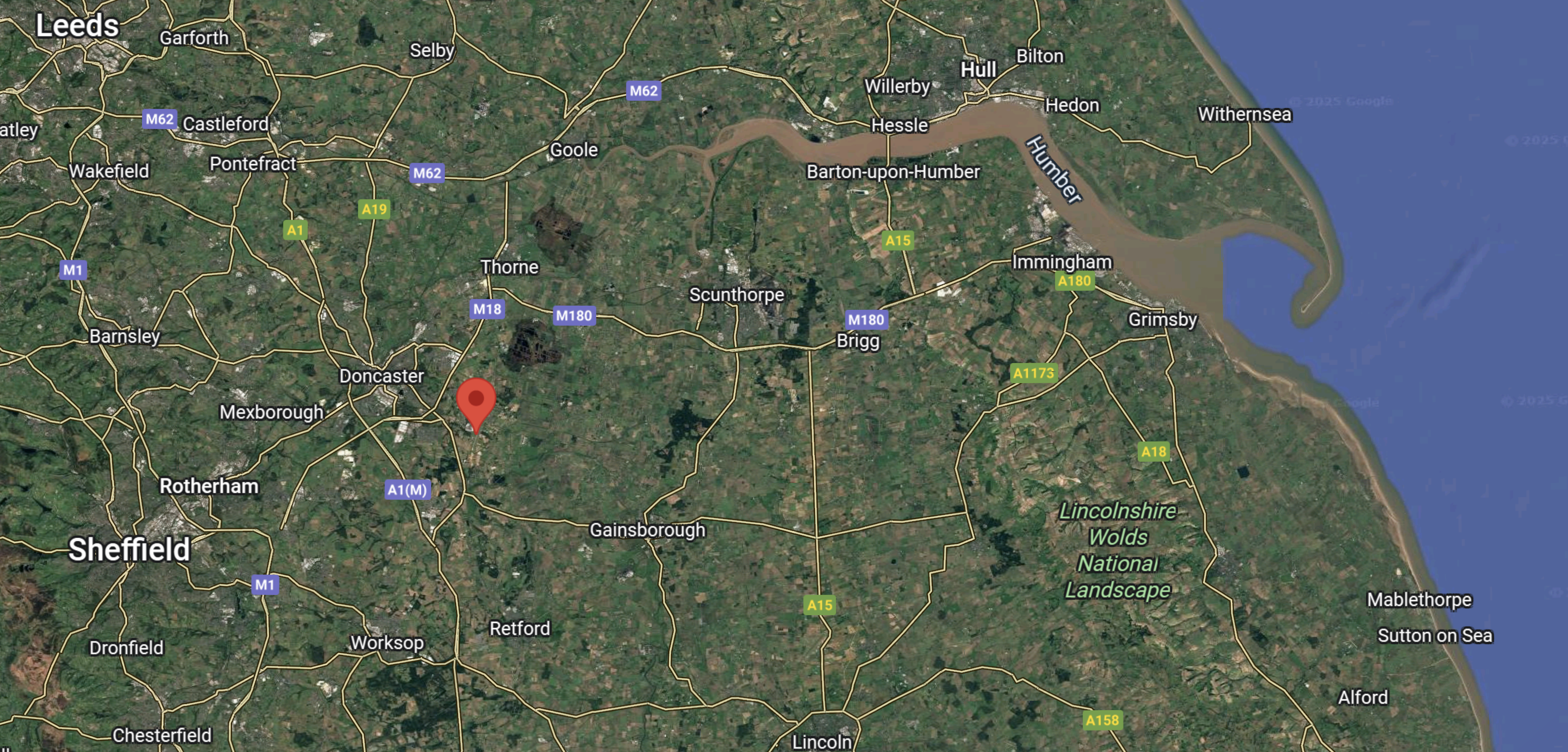
Note.
- The distinctive mouth of the River Humber can be picked out towards the North-East corner of the map.
- Hull and Grimsby sit in the mouth of the Humber.
- The red arrow indicates Doncaster Sheffield Airport.
- Leeds is in the North-West corner of the map.
- The towns and city of Doncaster, Rotherham and Sheffield can be picked out to the West of the airport.
This second Google Map shows a close-up of the airport.

On my visit to NASA in the 1980s, where an Artemis system was used to project manage the turnround of the Space Shuttle, I was asked questions by one of NASA’s support people about RAF Finningley. Nothing too technical, but things like what is Doncaster like.
When I asked why, they said there’s a high chance that a Space Shuttle could land at RAF Finningley, as it has one of the best runways for a very heavy aircraft in Europe.
Looking at the runway, it is a long and wide runway that was built for heavy RAF nuclear bombers like Valiants, Victors and Vulcans.
I believe that we will eventually see hydrogen- and/or nuclear-powered airliners flying very long routes across the globe, just as a nuclear-powered example, attempted to do in the first episode of the TV series Thunderbirds, which was called Trapped in the Sky and has this Wikipedia entry.
Just as the Space Shuttle did, these airliners and their air-cargo siblings will need a large runway.
Doncaster Sheffield Airport already has such a runway.
These hydrogen- and nuclear-powered aircraft will make Airbus A 380s look small and will need runways like the one at Finningley.
But I don’t think we’ll ever see nuclear-powered aircraft in the near future, so the aircraft will likely be hydrogen.
Other things in favour of making Doncaster Sheffield Airport, an airport for long range hydrogen aircraft include.
- The airport is close to the massive hydrogen production and storage facilities being developed on Humberside at Aldbrough and Rough.
- The airport could be connected to the Sheffield Supertram.
- The airport could be connected to the trains at Doncaster station, which has 173 express trains per day to all over the country.
- The airport would fit well with my thoughts on hydrogen-powered coaches, that I wrote about inFirstGroup Adds Leeds-based J&B Travel To Growing Coach Portfolio
- The airport might even be able to accept the next generation of supersonic aircraft.
- The airport could certainly accept the largest hydrogen-powered cargo aircraft.
- The Airport isn’t far from Doncaster iPort railfreight terminal.
Did I read too much science fiction?
I have some further thoughts.
Do Electric Aircraft Have A Future?
I asked Google AI this question and received this answer.
Yes, electric aircraft absolutely have a future, especially for short-haul, regional, and urban air mobility (UAM), promising quieter, zero-emission flights, but battery limitations mean long-haul flights will rely more on hydrogen-electric or Sustainable Aviation Fuels (SAF) for the foreseeable future. Expect to see battery-electric planes for shorter trips by the late 2020s, while hybrid or hydrogen solutions tackle longer distances, with a significant shift towards alternative propulsion by 2050.
That doesn’t seem very promising, so I asked Google AI what range can be elected from electric aircraft by 2035 and received this answer.
By 2035, fully electric aircraft ranges are expected to be around 200-400 km (125-250 miles) for small commuter planes, while hybrid-electric models could reach 800-1,000 km (500-620 miles), focusing on short-haul routes due to battery limitations; larger, long-range electric flight remains decades away, with hydrogen propulsion targeting 1,000-2,000 km ranges for that timeframe.
Note.
- I doubt that many prospective passengers would want to use small commuter planes for up to 250 miles from Doncaster Sheffield airport with hundreds of express trains per day going all over the UK mainland from Doncaster station.
- But Belfast City (212 miles), Dublin (215 miles) and Ostend (227 miles), Ronaldsway on the Isle of Man (154 miles) and Rotterdam(251 miles) and Schipol 340 miles) may be another matter, as there is water to cross.
It looks like it will be after 2035 before zero-carbon aircraft will be travelling further than 620 miles.
My bets would be on these aircraft being hydrogen hybrid aircraft.
What Will The Range Of Hydrogen-Powered Aircraft In 2040?
I asked Google AI this question and received this answer.
By 2040, hydrogen-powered commercial aircraft are projected to have a range that covers short- to medium-haul flights, likely up to 7,000 kilometers (approximately 3,780 nautical miles), with some models potentially achieving longer ranges as technology and infrastructure mature.
The range of these aircraft will vary depending on the specific technology used (hydrogen fuel cells versus hydrogen combustion in modified gas turbines) and aircraft size.
It looks like we’ll be getting there.
This Wikipedia entry is a list of large aircraft and there are some very large aircraft, like the Antonov An-225, which was destroyed in the Ukraine War.
A future long-range hydrogen-powered airline must be able to match the range of current aircraft that will need to be replaced.
I asked Google AI what airliner has the longest range and received this reply.
The longest-range airliner in service is the Airbus A350-900ULR (Ultra Long Range), specifically configured for airlines like Singapore Airlines to fly extremely long distances, reaching around 9,700 nautical miles (18,000 km) for routes like Singapore to New York. While the A350-900ULR holds records for current operations, the upcoming Boeing 777-8X aims to compete, and the Boeing 777-200LR was previously known for its exceptional range.
I believe that based on the technology of current successful aircraft, that an aircraft could be built, that would be able to have the required range and payload to be economic, with the first version probably being a high-capacity cargo version.
What Would An Ultra Long Range Hydrogen-Powered Airliner Look Like?
Whatever the aircraft looks like it will need to be powered. Rolls-Royce, appear to be destining a future turbofan for aircraft called the Ultrafan, which has this Wikipedia entry.
I asked Google AI, if Rolls-Royce will produce an Ultrafan for hydrogen and received this answer.
Rolls-Royce is actively developing the UltraFan architecture to be compatible with hydrogen fuel in the future, but the current UltraFan demonstrator runs on Sustainable Aviation Fuel (SAF). The company has a research program dedicated to developing hydrogen-powered engines for future aircraft, aiming for entry into service in the mid-2030s.
I asked Google AI, if Rolls-Royce have had major difficulties converting engines to hydrogen and received this answer.
Rolls-Royce has not encountered insurmountable difficulties but faces significant engineering and logistical challenges in converting engines to run on hydrogen. The company has made substantial progress in testing both stationary and aero engines using pure hydrogen, confirming its technical feasibility.
Given the company’s success in developing engines in the past, like the R Type, Merlin, RB 211, Pegasus, Trent, mtu 4000 and others, I suspect there’s a high chance of a successful hydrogen-powered Ultrafan.
If you look at a history of large passenger and cargo aircraft over the last sixty years, there has been a lot of the following.
- Conversion of one type of aircraft to a totally different type.
- Fitting new engines to a particular type.
- Fitting new avionics to a particular type.
Examples include.
- Fitting new CFM-56 engines to DC-8s.
- The first two Nimrods were converted from unsold Comet 4Cs.
- Converting Victor bombers to RAF tanker aircraft.
- Converting BA Tristars to RAF tanker aircraft.
- Converting DC-8s to cargo aircraft.
- Airbus converted five Airbus A 300-600 into Belugas, which have this Wikipedia entry.
- Airbus converted six Airbus A 330-200F into BelugaXLs, which have this Wikipedia entry.
- Converting two Boeing-747s to carry Space Shuttles ; one from American Airlines and one from Japan Airlines, which have this Wikipedia entry.
Note.
- Most of these examples have been successful.
- The last three examples have been very successful.
- Most of these applications do not have a human cargo.
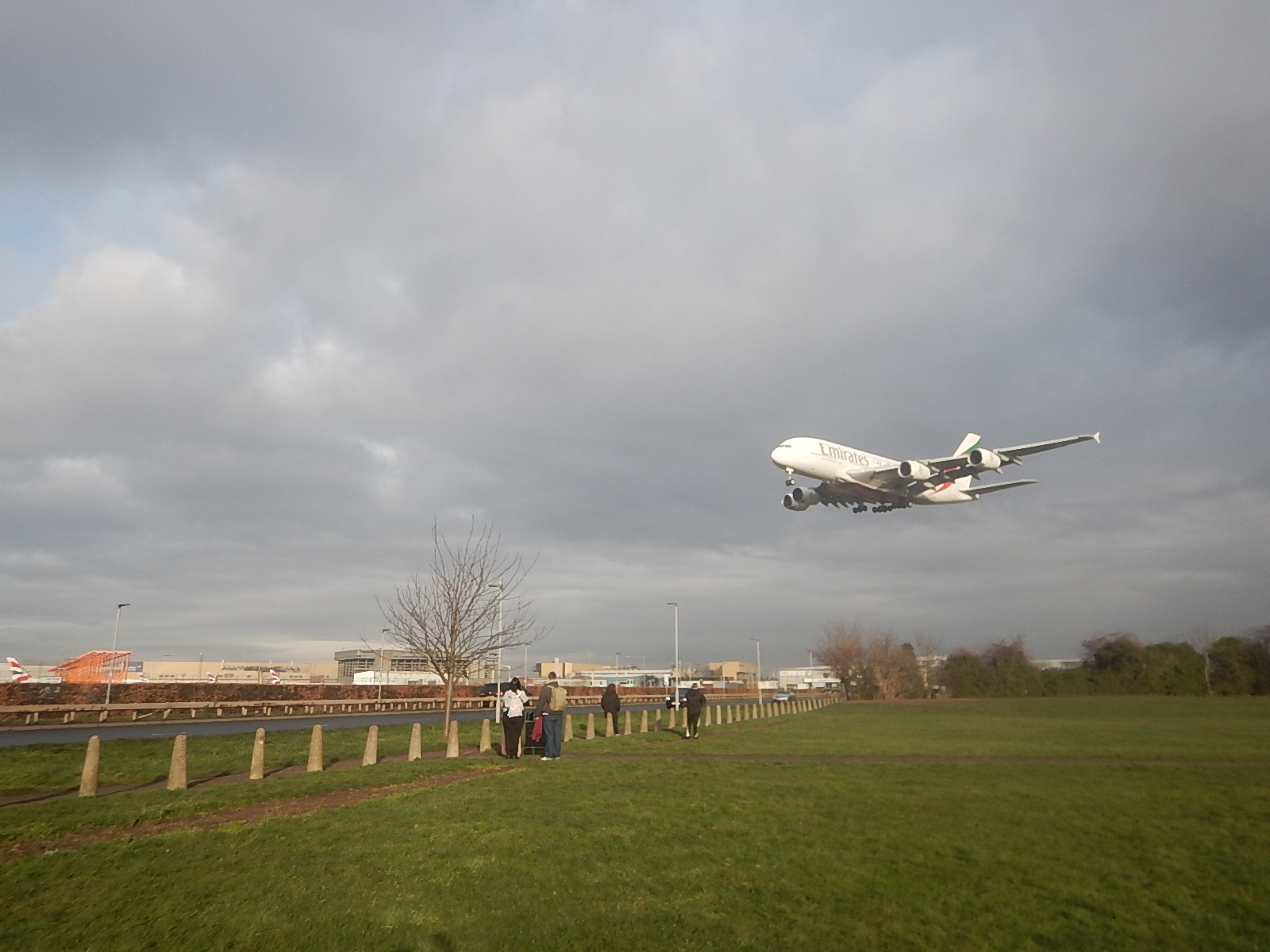
This picture shows an Emirates Air Lines’s Airbus A 380 on finals at Heathrow.
Note.
- The aircraft was landing on Runway 27 L.
- The four engines and the vertical oval cross-section of the fuselage are clearly visible.
- The Wikipedia entry for the Airbus A 380 shows two floors across the fuselage; the upper floor with eight seats in 2-4-2 and the lower floor with ten seats in 3-4-3, and a pair of LD3 cargo containers in the basement.
I’d be interested to know, how much hydrogen could be put in the basement and how far it could take the plane with a full load of passengers!
This link to the Wikipedia entry, shows the cross section in detail.
Note
I wouldn’t be surprised that the first application of large hydrogen aircraft will be for cargo and it could be an Airbus Beluga or perhaps an Airbus A 380 freighter?
Minimum Age To Be A Train Driver Lowered To 18
The title of this post, is the same as that of this article on the BBC.
This is the sub-heading.
Eighteen-year-olds will be allowed to drive trains after the minimum age was lowered from 20 in a bid to tackle driver shortages.
These first three paragraphs add detail.
UK rail services are frequently disrupted due to a lack of drivers being available, and the problem is set to get worse with companies struggling to replace a growing number of people retiring with new recruits, the government said.
Transport Secretary Heidi Alexander announced the change as “bold action to improve train services and unlock thousands of jobs”.
Union Aslef said it would open up opportunities for school or college leavers, while the Rail Safety and Standards Board said its research found “18-year-olds are capable of safely becoming train drivers”.
This paragraph from Google AI, says you only have to be sixteen to join the British Army.
The minimum age to join the UK Army as a Regular Soldier is 16. However, you’ll be a Junior Soldier until you turn 18, at which point you can transition to a regular role. To join the Army Reserve, you need to be at least 18. The upper age limit for joining the Army Reserve as a soldier is the day before your 43rd birthday.
A similar age of sixteen, applies to the Royal Navy and the Royal Air Force, with eighteen applying for the Police.
How Does This Compare With Driving A Bus?
This paragraph from Google AI, gives the driving age for a bus.
The minimum age to become a bus driver in the UK is 18 years old. However, to drive a full-sized bus (Category D), you must be 24 years old, unless you are undergoing the Initial Driver CPC (Certificate of Professional Competence) qualification. For Category D1 (minibus), the minimum age is also 18.
Google AI gives this description of Category D1.
PSV (Public Service Vehicle) Class D1 licence, also known as a PCV (Passenger Carrying Vehicle) licence or a minibus licence, allows you to drive a minibus for hire or reward. This licence category applies to minibuses with up to 16 passenger seats and a maximum length of 8 meters, and can tow trailers up to 750kg. To obtain a D1 licence, you need to pass a medical check, a theory test, and a practical driving test.
I suspect that many eighteen-year-olds are capable enough to hold a PCV licence.
What sort of vehicle will someone with a PCV licence be able to drive?
Wrightbus subsidiary ; Rightech has just released a suitable vehicle.
- It is battery-electric powered.
- It can seat up to twelve passengers.
- It is six metres long.
- It has a range of 112 miles.
It has a high-specification, which includes air-conditioning.
This image is courtesy of Rightech.

I can see bus operating companies, creating a career structure, that starts drivers on a PCV licence and progresses them upwards to the full PSV licence at 24.
Conclusion
I feel this could be a very sensible decision and like the age and competence structure for bus drivers, it creates worthwhile jobs for 18-24 year olds.
Freightliner Partners With Zero To Decarbonise Critical Transport Operations
The title of this post, is the same as that of this news item from Freightliner.
This is the sub-heading.
Today, Freightliner and Zero, a breakthrough energy company that develops and manufactures whole-blend synthetic, non-biological fuels, announced a partnership to achieve a fossil-free locomotive operation by 2040 and overall Net Zero by 2050, representing a major evolution for one of the world’s oldest, safest and most reliable forms of freight transport. To successfully meet these ambitious emissions targets, Freightliner is exploring alternatives to diesel, such as Zero’s carbon-neutral synthetic diesel, which will eliminate fossil-carbon emissions and improve air quality and environmental wellbeing.
These are my thoughts.
Freightliner
Freightliner is a rail-freight company, that you see regularly hauling freight trains all over the UK.

The picture shows two of their Class 90 electric locomotives in their latest livery.
These posts talk about the company and lower or zero carbon operation.
- Clean Air Power Adds Hydrogen To Class 66 Fuel Mix
- Freightliner Continue Trials On New Low Carbon Fuel
- Freightliner Secures Government Funding For Dual-Fuel Project
- The Ultimate Bi-Mode
The current post fits that pattern.
Zero Petroleum
Zero Petroleum is one of those companies that gives Elon Musk nightmares.
But when you have backers like Babcock, Boeing, Intertek, Rolls-Royce and the Royal Air Force, you must be doing something right.
The Wikipedia entry for the company has this first paragraph.
Zero is a manufacturer of non-biological carbon-neutral synthetic fuel (also known as e-fuel) co-founded by former Formula One engineer Paddy Lowe. Its product has been developed as an alternative to fossil-based fuels and a more scalable sustainable alternative to waste and bio-fuels. The Royal Air Force used its fuel in November 2021 to achieve a World Record first flight powered by synthetic fuel. In July 2022, Zero entered a new partnership with the Royal Air Force to move towards mass production of sustainable aviation fuel.
The company is often known as just Zero.
These two and a half paragraphs from the Wikipedia entry describe the technology.
Zero uses Direct FT (a proprietary and specialised version of Fischer-Tropsch) to directly manufacture target fuels (gasoline, kerosene and diesel) at high yield and with no need for refinery upgrading.
When manufactured using renewable energy, synthetic fuel can be used as a carbon neutral or carbon negative direct drop-in replacement for fossil fuels, particularly for operations that require high energy densities – such as air travel, shipping and farming – and to ensure the continued use of legacy vehicles. It can also be used as a raw material to produce various forms of plastic.
It is manufactured using a process known as petrosynthesis, in which carbon dioxide and hydrogen are combined to create hydrocarbons. The process involves direct air capture of carbon dioxide from the atmosphere and the electrolysis of water to obtain hydrogen.
The Fischer-Tropsch process, despite its association in the past with dodgy regimes, seems to be at the heart of things, as it is with Velocys.
I describe the Velocys process and its link to Fischer-Tropsch in Grant Shapps Announcement On Friday.
Surely, the carbon-neutral fuel produced by Zero, are the ideal stop-gap fuel until true full zero-carbon fuels are available.
But Zero’s fuels will always be available for heritage and legacy trains, planes and automobiles and for applications, where older technology must be used.
As an example of older technology still being used on UK’s railways, Network Rail operate, the New Measurement Train to check all tracks in Great Britain.

The train may have been manufactured in the 1970s, but it has modern engines and is the ideal train to carry the wide variety of sophisticated equipment to ensure the safety of Britain’s railways.
Synthetic diesel like that produced by Zero could keep the New Measurement Train running for some years yet.
Freightliner Have Made A Pragmatic Decision
I believe that Freightliner have made a pragmatic decision, that allows them to go carbon neutral without without taking risks or spending millions on new equipment, that is not fully-developed.
As new zero-carbon technology is developed, like say hydrogen-electric hybrid locomotives, these may take over certain tasks, which will reduce some of the need for synthetic diesel.
But synthetic diesel from Zero will always be there as a fuel of last resort.
World’s Tallest Wooden Wind Turbine Starts Turning
The title of this post, is the same as that of this article on the BBC.
This is the sub-heading.
What is made from the same wood as a Christmas tree, held together by glue and manufactured in a Swedish factory for assembly later?
These three paragraphs outline the design of a revolutionary wind turbine tower.
If that calls to mind flat-pack furniture and meatballs, you’re wrong.
If you answered “a wooden wind turbine”, you could be a visionary.
According to Modvion, the Swedish start-up that has just built the world’s tallest wooden turbine tower, using wood for wind power is the future.
I feel that it is not as revolutionary as some people might think.
Forty years ago, I built an extension on my house that included a swimming pool and a barn. The swimming pool roof was based on laminated wood beams and the barn was constructed using traditional wooden beams, that were bolted together.
But surely the most amazing wooden structure of the last century is the DH 98 Mosquito.
This paragraph introduces the Wikipedia entry for this amazing aeroplane.
The de Havilland DH.98 Mosquito is a British twin-engined, multirole combat aircraft, introduced during the Second World War. Unusual in that its airframe was constructed mostly of wood, it was nicknamed the “Wooden Wonder”, or “Mossie”. Lord Beaverbrook, Minister of Aircraft Production, nicknamed it “Freeman’s Folly”, alluding to Air Chief Marshal Sir Wilfrid Freeman, who defended Geoffrey de Havilland and his design concept against orders to scrap the project. In 1941, it was one of the fastest operational aircraft in the world.
One of my friends from the twentieth century, had been an RAF Mosquito pilot in the 1950s and felt it was an unequalled design of aircraft.
The airframe of the Mosquito was built using similar materials and methods as Modvion’s turbine tower.
I have just found out, that the de Havilland Aircraft Museum, where the prototype Mosquito is displayed, is open at least until the 7th of January.
I shall be going by public transport and if anybody would like to accompany me, use the Contact Page to get in touch.
Polish Air Force Memorial – 13th May 2023
I’d heard the Polish Air Force Memorial mentioned many times on traffic reports, but as I had to go to Ealing, I decided to visit.
This is the first paragraph in the Wikipedia entry.
The Polish Air Force Memorial is a war memorial in West London, England in memory of airmen from Poland who served in the Royal Air Force as part of the Polish contribution to World War II. Over 18,000 men and women served in the Polish squadrons of the RAF during the war, and over 2,000 died. The memorial marks the southern extremity of South Ruislip in the London Borough of Hillingdon, near RAF Northolt, where seven Polish-manned fighter squadrons were based at different times in the war.
I took these pictures.





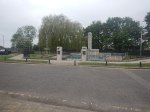






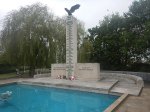





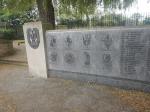








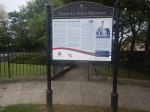


Note.
- As you can see the traffic was bad.
- The small car park only had a couple of cars in it.
- I took an E7 bus from Ruislip Gardens to the memorial and then another E7 after my visit to Ealing Broadway station.
It’s not a difficult place to find by public transport.
It’s certainly a place to be visited. Especially for people like me who grew up in London just after the Second World War. Throughout my schooling, every class had a least one and sometimes as many as three Polish children in it.
Hail The Hercules
The title of this post was used on the front page to indicate an article in the Meccano Magazine about the arrival of the Lockheed Hercules in the mid-1950s.
The Wikipedia entry for the Hercules, starts with this sentence.
The Lockheed C-130 Hercules is an American four-engine turboprop military transport aircraft designed and built by Lockheed (now Lockheed Martin). Capable of using unprepared runways for takeoffs and landings, the C-130 was originally designed as a troop, medevac, and cargo transport aircraft.
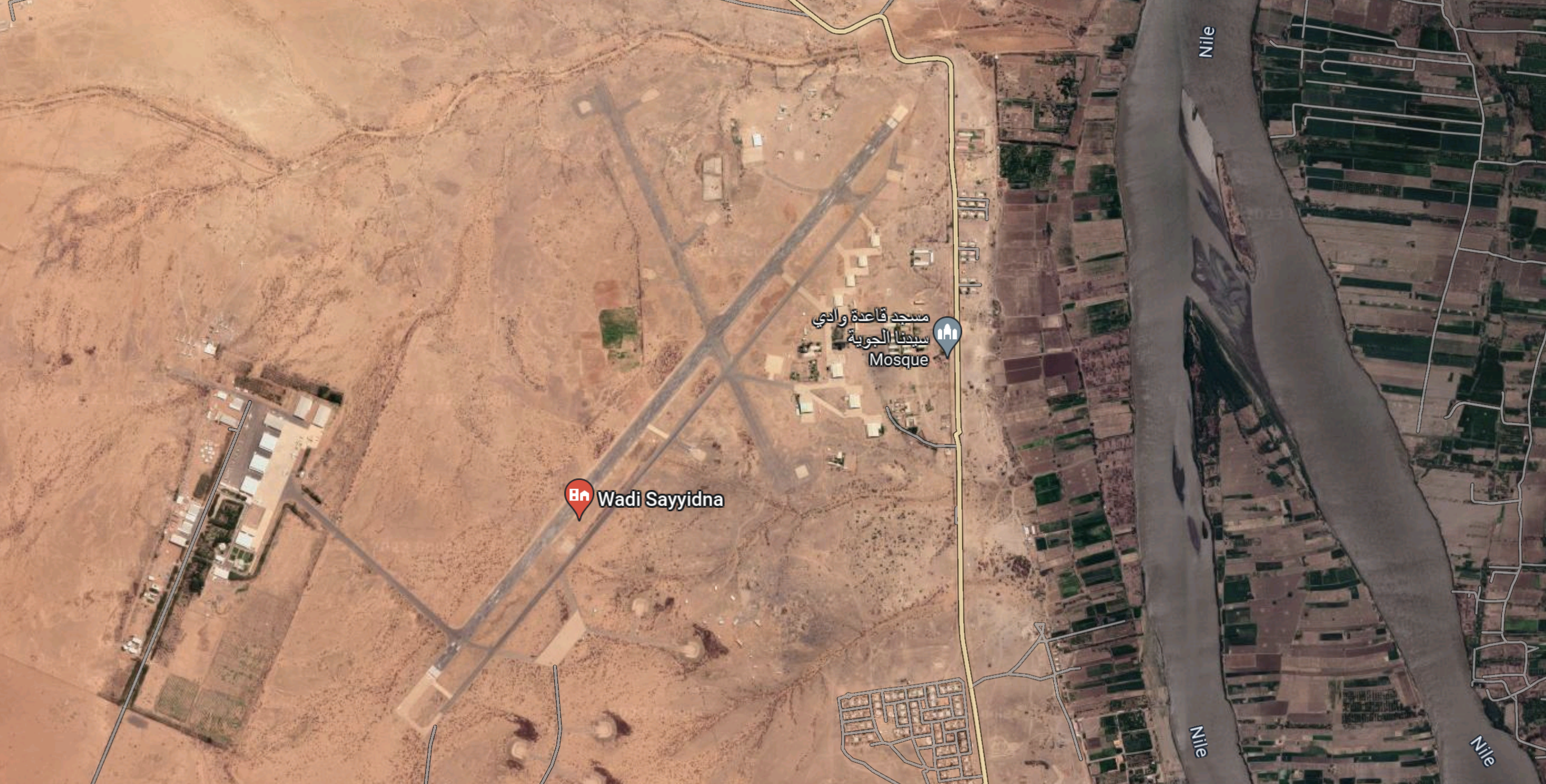
The aircraft first flew in 1954 and nearly seventy years later they are still doing the same operations, they were designed for, with various reports of Hercules flying to the remote Wadi Seidna airstrip in Sudan.
This Google Map shows the airstrip.
Note.
- There appears to be two runways and some form of operational building or terminal.
- The River Nile is at the East of the map.
It looks like an airfield, where Hercules are intended to be used, even in circumstances, where severe damage has been inflicted to the runway.
When Metier Management Systems and Artemis were sold to Lockheed, I had several conversations with senior people and the company was and probably still is rightly proud of its long-lived design.
Shocks Away! RAF To Fly Electric Planes
The title of this post is the same as that of this article on The Times.
The RAF is evaluating the Slovenian-built Pipistrel Velis Electro for use as a training aircraft. I learned to fly in a Cessna 150 and the Pipistrel Velis Electro seems to be a modern reincanation of that and similar classic designs.
- It seats two normal people side-by-side.
- It has a high wing.
- It has a fixed tricycle undercarriage.
- It is built from composites, whereas the Cessna was aluminium.
- It seems to have been carefully designed.
- It has full certification.
I would love to have a flight in one.
As the Danish Air Force are already using the aircraft for pilot training, I suspect that it might suit the RAF.
But then there are quite a lot of battery-electric under development and there may be a better one.
But there is no denying that the Pipistrel Velis Electro is a good aircraft to start the procurement process.
A Flypast Over London
I took these pictures as the Battle of Britain Memorial Flight flew over the City of London today.




The fourth picture shows the area where I was standing on the walkway across the Barbican.
It is a good place to see any flypast that is going over Buckingham Palace, as the pilots use the three distinctive towers to line up for their trip across London. This Google Map shows Central London.
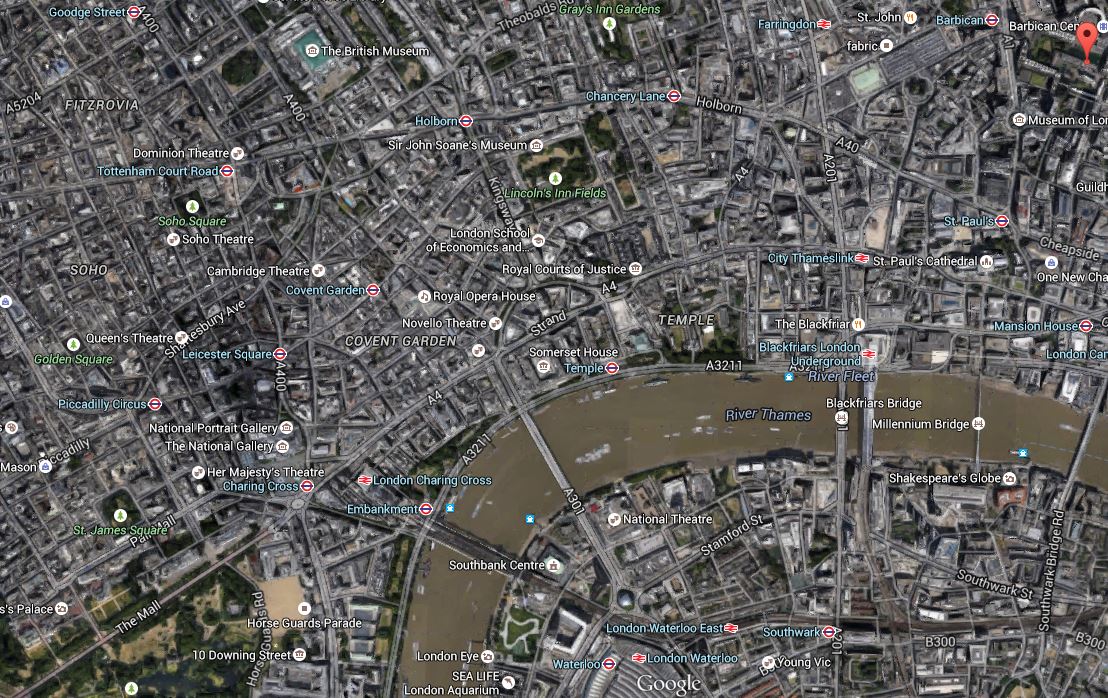
Flypast Route Over London
The Barbican is illustrated by the red arrow and Buckingham Palace is at the bottom left hand corner.
The procedure used by the Battle of Britain Memorial Flight was explained, when one of the pilots was the guest of Test Match Special on BBC Radio.
When asked what you do if there is an engine failure, the pilot stated that there is only the Thames.
A Scot Gives His Reason To Say No!
On BBC Television this morning, a proud Scot said that he enjoyed the ceremony last night. For him, one of the uplifting moments was the Red Arrows.
He stated that if the Scots vote Yes, then there could be no more displays north of the border. See where their displays for 2014 are here. Two and last night’s performance are in Scotland.
 The Anonymous Widower
