John Baxendale’s Thermometer
Over the years, I’ve been involved with lots of innovative ideas.
When I worked at ICI Mond Division in Runcorn, one of the guys, that I worked with was John Baxendale, who was a fairly local lad, with unusually for the late 1960s, a very keen interest in surfing. John would often drive up to the North of Scotland in his green Morris Minor Traveller for a few day’s surfing.
Workwise, I remember John most for an electronic thermometer he built, that measured the temperature of a body by its black-body radiation, which is described in this Wikipedia entry.
He developed the thermometer to measure the temperature of remote objects and used to calibrate it on a handy ear, which is a very convenient black-body at 36.9 degrees C.
Arriving In Liverpool Lime Street Station – 10th May 2025
Liverpool Lime Street station has one of the more spectacular approaches of British railway stations, as these pictures show.
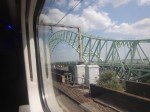



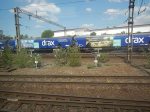
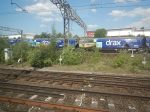



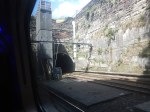



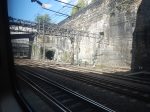
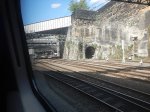
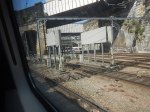
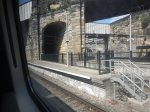











These sections describe the approach.
Crossing The Mersey
You cross the Mersey at Runcorn on the Ethelfreda or Britannia Bridge, which is described in this Wikipedia entry.
It was completed in 1868 and hopefully in a few years, it will be carrying High Speed Two trains between London and Liverpool.
On your right as you cross the Mersey to Liverpool is the Silver Jubilee road bridge, which is a through arch bridge that opened in 1961 to replace a historic transporter bridge. I am just a little bit too young to have seen the transporter bridge.
Further to your right, you can see the Mersey Gateway Bridge, which is a cable-stayed bridge, that opened in 2017 and is described in this Wikipedia entry.
Drax’s Biomass
As you approach Lime Street station, you pass through Edge Hill, where there are the GB Railfreight sidings, where the biomass trains for Drax power station are marshalled for their journey across the Pennines. These Drax trains seem to be one of the few freight trains in the UK, that carry advertising. Tesco trains also do, but their’s is just big letters.
In Do Cummins And Stadler Have a Cunning Plan?, I talked about the possible conversion at some date in the future of GB Railfreight’s new electro-diesel Class 99 locomotives to electro-hydrogen locomotives. These locomotives will surely be ideal for hauling Drax’s biomass trains across the Pennines.
I do believe that these Class 99 locomotives are the future of heavy freight trains in the UK. In Iarnród Éireann Looks At Diesel Loco Replacement Options, I write about speculation, that Stadler may build a version for the Irish.
Through The Edge Hill Cutting
From Edge Hill a deep cutting through the sandstone takes you into Lime Street station.
It looked good in the sun, but the first time I arrived in the city to start my studies at Liverpool University, it was chucking it down and the cutting was very dark and wet.
It was a very different welcome to that, which I got yesterday.
My Train Arrived In Platform 10
Liverpool Lime Street has two cast iron train sheds.
- The Western shed has platform 1 to 5 and generally handles trains from the East.
- The Eastern shed has platform 6 to 10 and generally handles trains from the South.
Note.
- Changing between trains is just a step-free walk across the station concourse.
- Both sections have their own taxi rank and full-size clock.
- The Ticket Office is in the Western train shed.
I just walked from my train to the Ticket Office, bought a Lancashire Day Ranger ticket and then walked fifty metres to my next train.
How many stations have such an easy change of trains?
Is Liverpool Lime Street Station Ready For High Speed Two?
Consider.
- I travelled North in an 11-car Class 390 train, which is 265.3 metres long and can carry 607 passengers.
- As the last pictures show, the train fitted easily into platform 10.
- High Speed Two plans to send 200 metre classic-compatible trains to Liverpool Lime Street, with each having a capacity of up to 528.
It looks to me, that these High Speed Two classic-compatible trains will fit into Liverpool Lime Street station, at any platform that currently accepts an eleven-car Class 390 train.
Looking on Real Time trains over the last few days, I’ve found eleven-car Class 390 trains using platforms 9, 10 and 6.
It seems that Network Rail’s engineers have done a superb job to turn the Grade II Listed station, into one of the best operationally.
Did Hydrogen Lose Labour The Runcorn And Helsby By-Election
I used to work in the Castner-Kellner works at ICI Runcorn, where hydrogen is produced using electrolysis in the Castner-Kellner process.
That process used a lot of mercury and wasn’t good for the health of the workforce. One of my jobs was to develop instruments to detect mercury in air, blood and urine.
I believe the mercury-based process to produce chlorine, with the hydrogen as a by-product has now been replaced with a membrane-based mercury-free process.
Consider.
- The same plant still produces a large proportion of the hydrogen we use in the UK.
- The Runcorn plant is now owned by INEOS, which in turn is owned by tax-exile and Brexiteer ; Jim Ratcliffe.
- I doubt, Mr. Ratcliffe is a supporter of the Labour Party.
- The big promoters of hydrogen are the Bamfords and their companies ; JCB, Ryse and Wrightbus, who are not considered companies that Labour would support.
- Although, Wrightbus seem to have had some political support lately.
- Google AI can’t find any details on Reform UK’s or Nigel Farage’s views on hydrogen.
- Ed Miliband hasn’t shown himself to be very knowledgeable about hydrogen.
- This article on the BBC is entitled Ellesmere Port Hydrogen Heating Trial Scrapped After Protests.
It strikes me, that if one candidate had got a grip on the hydrogen issue, then there would have been a different result in the by-election.
World’s First Offshore Wind Farm Using 16 MW Turbines Enters Construction In China
The title of this post, is the same as that of this article on the offshoreWIND.biz.
This is the sub-heading.
China Three Gorges Corporation (CTG) has started construction of the second phase of its offshore wind farm Zhangpu Liuao. The project will be both China’s and the world’s first wind farm to comprise 16 MW wind turbines.
I hope the Chinese have done all their calculations, research and testing. The dynamics of large wings are tricky and there are a lot of square law factors involved. I’d always be worried that at a particular wind speed a dangerous vibration will be setup.
How many Chinese engineers have seen videos of Galloping Gertie?
As the video says, no one was injured or killed, when the Tacoma Narrows Bridge fell into the river, but we nearly had a very similar disaster in the UK. I used to work at ICI in Runcorn and at the time, I lived in Liverpool, so every day, I went to work I crossed the Silver Jubilee Bridge twice.
One day, after a party in Cheshire, I even got so drunk, I had to stop the car on the bridge and was sick into the Mersey. It was before C and myself were married and she always claimed she nearly called the marriage off, after the incident.
But have you ever wondered, why that bridge is a through arch bridge rather than a suspension bridge as over the Forth, Hmber and Severn, which were all built around the same time?
Wikipedia has a section, which describes the Planning of the bridge.
The new bridge had to allow the passage of shipping along the Manchester Ship Canal. Many ideas were considered, including a new transporter bridge or a swing bridge. These were considered to be impractical and it was decided that the best solution was a high-level bridge upstream from the railway bridge. This would allow the least obstruction to shipping and would also be at the narrowest crossing point. The first plan for a high-level bridge was a truss bridge with three or five spans, giving an 8 yards (7 m) dual carriageway with a cycle track and footpaths. This was abandoned because it was too expensive, and because one of the piers would be too close to the wall of the ship canal. The next idea was for a suspension bridge with a span of 343 yards (314 m) between the main towers with an 8 yards (7 m) single carriageway and a 2-yard (2 m) footpath. However aerodynamic tests on models of the bridge showed that, while the bridge itself would be stable, the presence of the adjacent railway bridge would cause severe oscillation.
The finally accepted design was for a steel through arch bridge with a 10-yard (9 m) single carriageway. The design of the bridge is similar to that of Sydney Harbour Bridge but differs from it in that the side spans are continuous with the main span rather than being separate from them. This design feature was necessary to avoid the problem of oscillation due to the railway bridge. The main span measures 361 yards (330 m) and each side span is 83 yards (76 m).
But that misses out part of the story that I learned about at ICI.
I developed a very simple piece of electronics for ICI Runcorn’s noise and vibration expert. The equipment allowed the signals from two noise meters to be subtracted. This meant that if they were pointed in different directions, the noise generated by an object or piece of equipment could be determined.
The noise and vibration expert had tremendous respect from his fellow engineers, but his involvement in the design of the Runcorn bridge had elevated him to a legend.
The designers of the suspension bridge, that is detailed in the Wikipedia extract, presented their design to the ICI (Merseyside) Scientific Society.
The noise and vibration expert was at the meeting and questioned the design and said it would collapse due to oscillations caused by the presence of the railway bridge. He advised aerodynamic tests should be done on the bridge.
His back of the fag packet calculations were shown by tests to be correct and the bridge was built as a through arch bridge.
These pictures show the bridge.
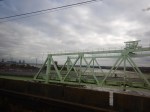
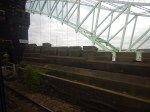
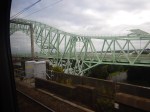
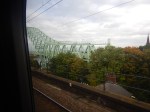

They were taken from a train on the railway bridge.
Ineos In Runcorn Is Key To UK Move To Hydrogen Energy
The title of this post, is the same as that of this article on Runcorn and Widnes World.
These are the first two paragraphs.
Thousands of buses and HGVs in the UK could soon be running on hydrogen – made in Runcorn.
The town, which already produces enough clean hydrogen to fuel 1,000 buses or 2,000 HGVs every day, is ramping up production to help reduce the amount of harmful CO₂ emissions on Britain’s roads.
The INOVYN site used to be owned by ICI in the 1960s and I used to work on the Castner-Kellner plant that electrolysed brine to produce sodium hydroxide, chlorine and hydrogen.
Crossing The Mersey
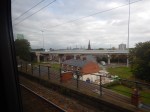
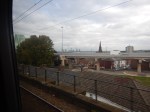
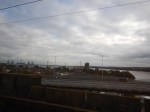
I took these pictures as the train to Liverpool crossed the Mersey yesterday.






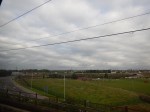
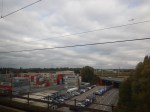
Note.
- The green bridge is now called the Silver Jubilee Bridge, but when I lived in Liverpool and worked at ICI in Runcorn, everybody called it the Runcorn-Widnes Road Bridge.
- The train is on the Ethelfleda, Britannia or Runcorn Railway Bridge depending on your preference. I tend to use Britannia, as the guys I worked with used that name.
- The three towers of the cable stayed Mersey Gateway Bridge can be seen in several pictures.
- Fiddlers Ferry power station is now decommissioned, but was an almost 2GW coal-fired power station.
In January 2011, I took a video as I crossed the Mersey and it is shown in Train Across the Mersey.
The Future Of Fiddlers Ferry Power Station
The Wikipedia entry for the power station, says this about the future use of the site.
Demolition of the station was due to begin in 2020 and will take up to seven years. The land upon which it sits will be redeveloped, with Warrington Council stating it had designated the land as an employment site.
As it obviously has a high-capacity electricity connection and there is a lot of offshore wind power in Liverpool Bay, I would feel it could be an ideal location for a large battery of perhaps 2 GWh.
The Future Of The Britannia Railway Bridge
The bridge was opened in 1868 and is Grade II* Listed.
Did the designer of the bridge; William Baker ever envisage, that in the future his bridge would be carrying trains over 250 metres long, that were capable of 125 mph?
Probably not! But in a few years, the bridge will be carrying High Speed Two Classic Compatible trains between London and Liverpool.
How To Build A Liverpool-Style Optical Bench
When I worked at ICI in Runcorn, one of the guys had developed a very accurate instrument for measuring trace chemicals in a dirty process stream. I remember one of these instruments was used to measure water in parts per million in methyl methaculate, which is the misnomer or base chemical for Perspex.
All the optical components needed to be mounted on a firm base, so a metre length of nine-inch C-section steel beam was chosen. The surface was then machined flat to a high accuracy.
In the end they found that instead of using new beams, old ones decades-old from the depths of a scrap yard gave better accuracy as the steel had all crystallised out. Machined and spray-painted no-one knew their history.
But they were superb instruments and ICI even sold them abroad.
Piney Point: Emergency Crews Try To Plug Florida Toxic Wastewater Leak
The title of this post, is the same as that of this article on the BBC.
This is the introductory paragraph.
Emergency crews in Florida have been working to prevent a “catastrophic” flood after a leak was found in a large reservoir of toxic wastewater.
This Google Map shows the location.
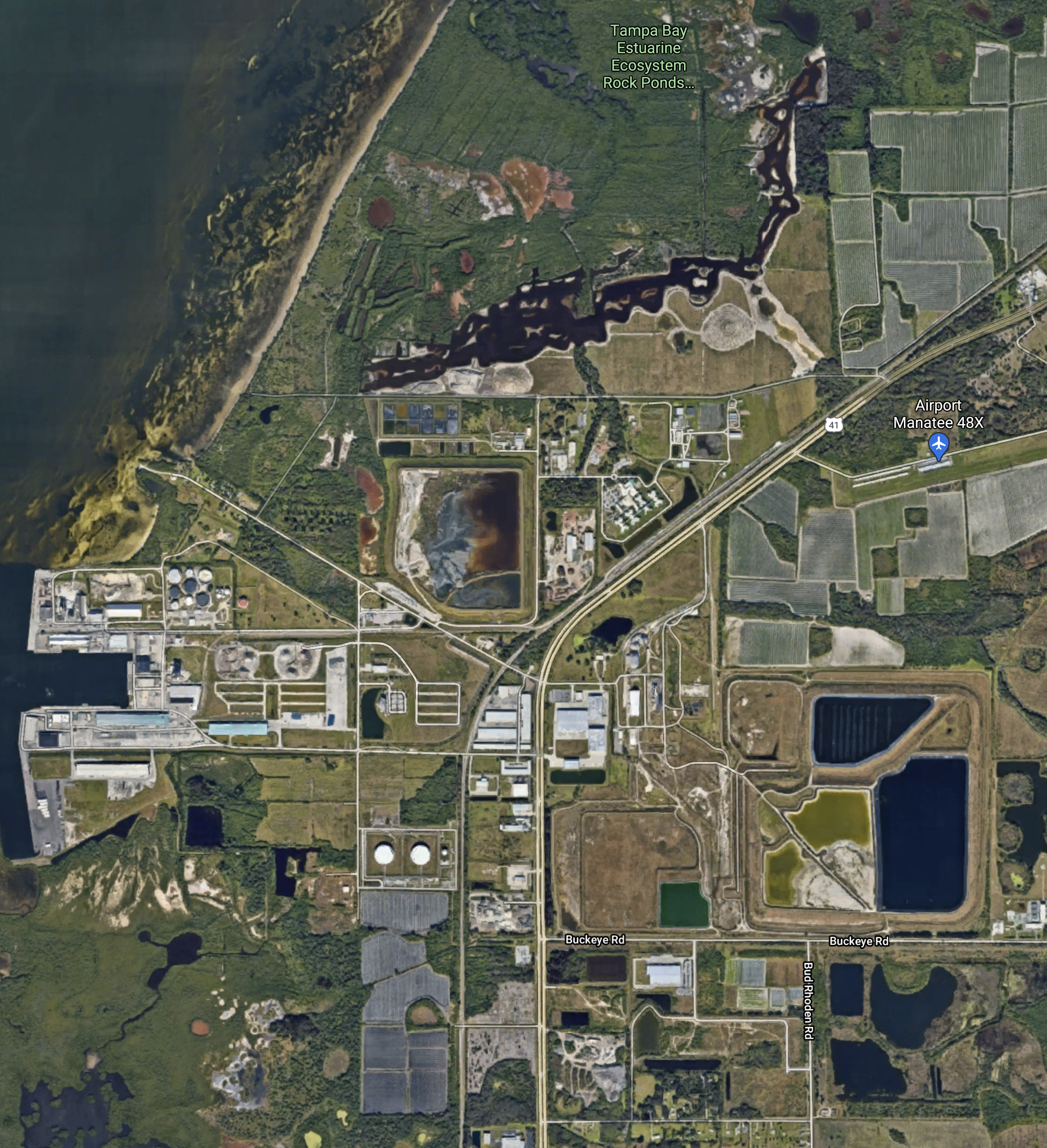
Note.
- At the top of the map is an area called Tampa Bay Estuarine Ecosystem Rock Ponds.
- The reservoir appears to be in the South East corner of the map.
- There appear to be several chemical works to the West of the highway.
This second Google Map shows the reservoir at a larger scale.
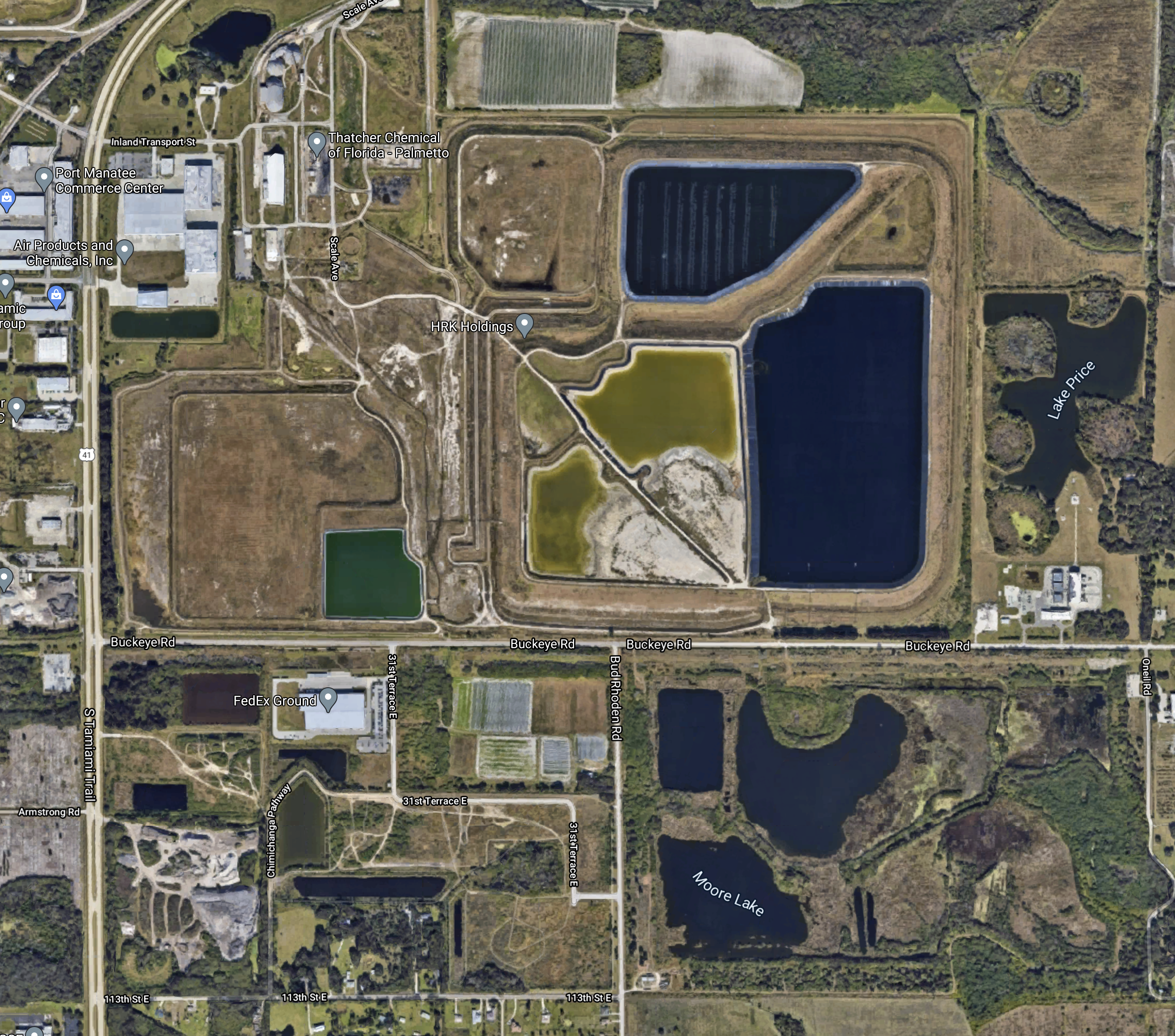
Note.
- The picture in the BBC article was taken from the North West.
- The problem reservoir is right and above of centre.
- To its right is Lake Price, which appears to be the sort of lake to sail a boat and perhaps do a bit of fishing and swimming.
- Moore Lake to the South appears similar to Lake Price.
It looks to me that it is not the place to have an environmental incident.
This article in The Times says this.
Engineers are furiously pumping the phosphate-rich water into the sea to avoid an uncontrolled spill at Piney Point, whose failure could unleash a 20ft-high wall of toxic effluent.
Pumping it into the sea? Surely not?
I suspect there could have been a mixture of sloppy management and loose regulation, with minimal enforcement and I’ll be interested to see what recommendations are put forward by the inevitable investigation.
In my varied past, I was once indirectly involved, in the toxic waste that comes out of chemical plants. At the time, I was working for ICI in Runcorn and my main job was building designing and building instruments for the various chemical plants in and around Runcorn.
As they had hired me because of my programming skills, they asked me if I could do a few small jobs on their Ferranti Argus 500, which could be plugged in to both their Varian NMR machine and their AEI mass spectrometer.
With the former, to get better accuracy in analysis of chemicals, I would take successive scans of a sample and aggregate them together. The accuracy of the results would be proportion to the square root of the number of scans.
The second to my mind was more difficult and much more interesting.
This explanation of mass spectroscopy is from Wikipedia.
Mass spectrometry (MS) is an analytical technique that is used to measure the mass-to-charge ratio of ions. The results are typically presented as a mass spectrum, a plot of intensity as a function of the mass-to-charge ratio. Mass spectrometry is used in many different fields and is applied to pure samples as well as complex mixtures.
ICI at Runcorn had a lot of complex mixtures and the aim of my project, was to take a mass spectrum and automatically decide what chemicals were present in the mixture.
The mass spectra were presented as a long graph on a roll of thermal paper. I noticed that operators would pick out distinctive patterns on the graph, which they told me were distinctive patterns of chlorine ions.
Chlorine has an unusual atomic weight of 35.5 because it is a mixture of two stable isotypes Chlorine-35 and Chlorine-37, which produced these distinctive patterns on the spectra.
I was able to identify these patterns to determine the number of chlorine atoms in a compound. By giving the algorithm a clue in stating how many carbon, oxygen and hydrogen atoms could be involved, it was able to successfully identify what was in a complex mixture.
All this was programmed on computer with just 64K words of memory and a half-megabyte hard disc.
ICI must have been pleased, as I got a bonus.
One of the jobs the software was used for was to identify what chemicals were present in the lagoons alongside the River Weaver, which are shown today in this Google Map.
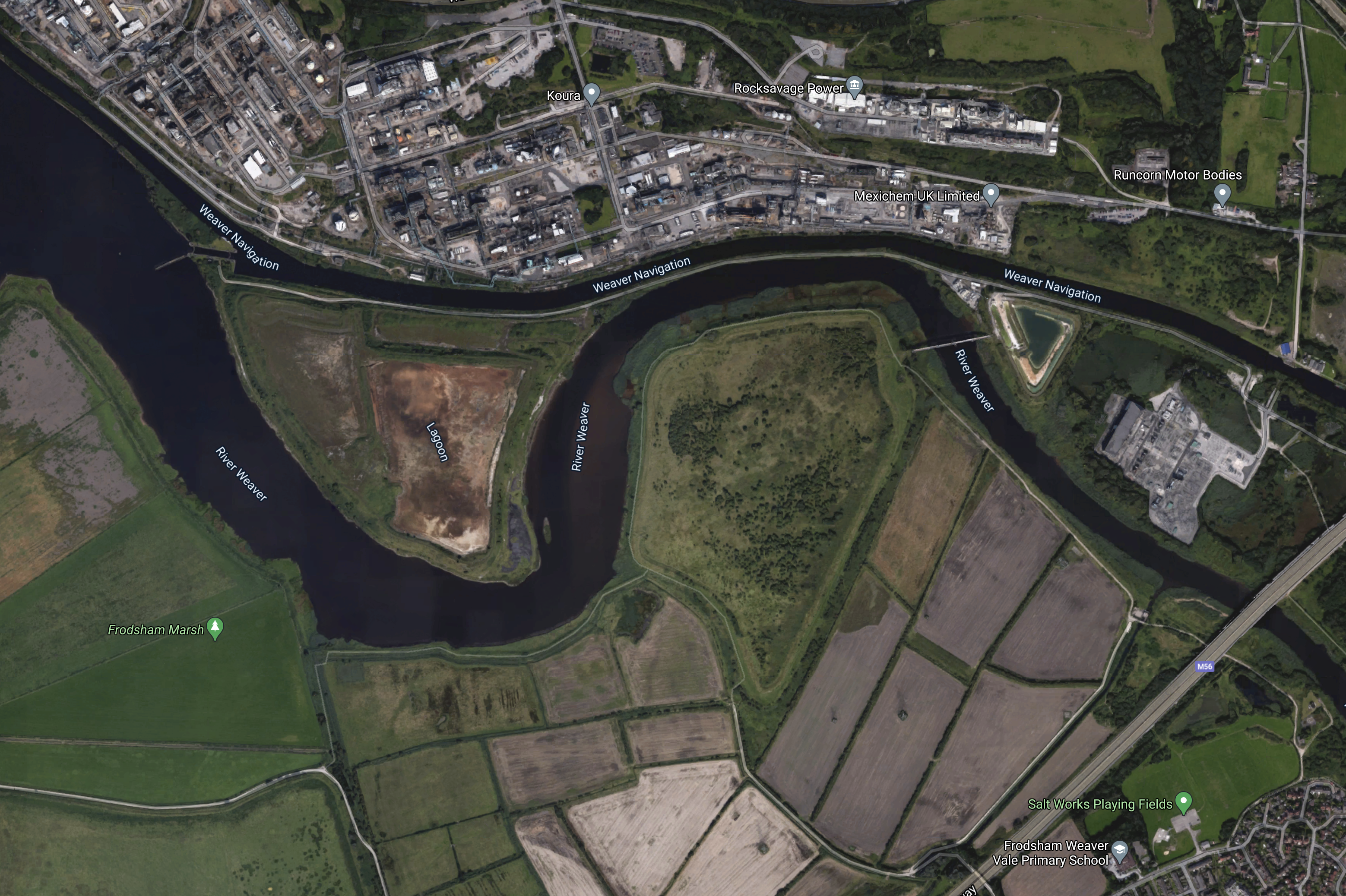
Note.
- The chemical works, which were part of ICI in the 1960s, to the North of the Weaver Navigation Canal.
- The two former lagoons between the canal and the River Weaver, which seem to have been cleaned out and partially restored.
- Was that a third large lagoon to the South of the River Weaver?
- There also appears to be a fourth smaller triangular lagoon between the canal and the river.
There certainly seems to have been a better clear-up in Runcorn, than in Florida.
I moved on from Runcorn soon after, I’d finished that software and have no idea how or if it developed and was used.
But the techniques I used stayed in my brain and were used at least four times in the future.
- In the design of a Space Allocation Program for ICI Plastics Division.
- In the design of two Project Management systems for Time Sharing Ltd.
And of course, they were also used in designing the scheduler in Artemis for Metier.
I
INEOS Launches A New Clean Hydrogen Business To Accelerate The Drive To Net Zero Carbon Emissions
The title of this post, is the same as that of this press release from inovyn, which is an INEOS company.
The press release starts with these points.
- The targets set out by the UN and National Governments around the world requires concrete action. INEOS is aiming not only to contribute by decarbonising energy for its existing operations, but also by providing hydrogen that will help other businesses and sectors to do the same.
- The new business will be based in the UK and will invest in ‘first intent’ Clean Hydrogen production across Europe.
- The production of hydrogen based on electrolysis, powered by zero carbon electricity, will provide flexibility and storage capacity for heat and power, chemicals and transport markets.
- The European Union Hydrogen Strategy, which outlines an infrastructure roadmap for widespread utilisation of hydrogen, across Europe by 2030, present new opportunities for the business.
- Geir Tuft CEO INOVYN said, “INEOS is uniquely placed to play a leading role in developing these new opportunities, driven by emerging demand for affordable, low-carbon energy sources, combined with our existing capabilities in operating large-scale electrolysis.”
With revenue in 2019 of $85 billion in 2019, INEOS has the financial resources to make their ambitions come true.
These are my thoughts on statements in the press release.
Geir Tuft’s Statement
Geir Tuft is reported in the press release as saying.
INEOS is uniquely placed to play a leading role in developing these new opportunities, driven by emerging demand for affordable, low-carbon energy sources, combined with our existing capabilities in operating large-scale electrolysis.
This is the first paragraph of the Wikipedia entry for electrolysis.
In chemistry and manufacturing, electrolysis is a technique that uses direct electric current (DC) to drive an otherwise non-spontaneous chemical reaction. Electrolysis is commercially important as a stage in the separation of elements from naturally occurring sources such as ores using an electrolytic cell. The voltage that is needed for electrolysis to occur is called the decomposition potential.
From my experience of working in ICI’s hydrogen plant at Runcorn in the 1970s and my knowledge of the technology and companies involved in the production of hydrogen, there are two standard routes to produce hydrogen by electrolysis.
- Water can be electrolysed as in the classic school physics experiment to produce hydrogen and oxygen.
- Brine can be electrolysed to produce hydrogen, chlorine, sodium metal and sodium hydroxide.
I worked as an instrument engineer in a plant, where brine was electrolysed using the Caster-Kellner process. As the process uses mercury, it is a process that is not without problems. There is a History section in the Wikipedia entry for the Castner-Kellner process, from where this was extracted.
The mercury cell process continues in use to this day. Current-day mercury cell plant operations are criticized for environmental release of mercury leading in some cases to severe mercury poisoning as occurred in Japan Minamata_disease. Due to these concerns, mercury cell plants are being phased out, and a sustained effort is being made to reduce mercury emissions from existing plants.
My work in the plant, involved developing instruments to measure the mercury in the air inside the plant. I was also developing other instruments and programming a Ferranti Argus 500 computer.
Because of the death of her father, C wasn’t happy in Liverpool and when the chance came of a transfer to ICI Plastics at Welwyn Garden City, I took it.
In his statement Geir Tuft says this.
Combined with our existing capabilities in operating large-scale electrolysis.
Large-scale electrolysis was certainly handled professionally in 1970 and I’m certain that INEOS, which now owns the Runcorn plant, handles the hydrogen just as well, if not better with the help of modern technology.
Hydrogen As A By-Product
In some ways, fifty years ago, the hydrogen was considered a by-product and to some a nuisance, as I don’t think, there was much of a mass market for the gas.
I used to see it being taken away in specialist trailers, but there didn’t seem to be a major use.
300,000 Tonnes Of Clean Hydrogen
This paragraph of the press release, outlines the structure of the business.
INEOS has today launched a new business to develop and build Clean Hydrogen capacity across Europe, in support of the drive towards a zero-carbon future. INEOS currently produces 300,000 tonnes of hydrogen a year mainly as a co-product from its chemical manufacturing operations.
Note that co-product is used, but I suspect in many places they have too much of it, so new markets are welcome.
I have used a figure of 23 MWh, as being needed to obtain ten tonnes of hydrogen, but I can’t find where I obtained it. If it is correct then INEOS will need 690 GWh of electricity.
INEOS, Electrolysis And Hydrogen
This paragraph of the press release, outlines the relationship between INEOS, electrolysis and hydrogen
Through its subsidiary INOVYN, INEOS is Europe’s largest existing operator of electrolysis, the critical technology which uses renewable energy to produce hydrogen for power generation, transportation and industrial use. Its experience in storage and handling of hydrogen combined with its established know-how in electrolysis technology, puts INEOS in a unique position to drive progress towards a carbon-free future based on hydrogen.
All they need is the renewable energy, to add to their expertise in turning it into hydrogen.
INEOS’s Vision
This paragraph of the press release, outlines INEOS vision for hydrogen.
INEOS is already involved in several projects to develop demand for hydrogen, replacing existing carbon-based sources of energy, feedstocks and fuel. It expects to develop further partnerships with leading organisations involved in the development of new applications. INEOS will also work closely with European Governments to ensure the necessary infrastructure is put in place to facilitate hydrogen’s major role in the new Green Economy.
It is certainly a comprehensive vision.
The Conclusion Of The Press Release
Wouter Bleukx, Business Unit Manager Hydrogen has said this.
Hydrogen is an important part of a climate neutral economy that has been discussed for decades. Finally, a hydrogen-fuelled economy is within reach as transportation in the UK, Germany, France and other countries begins to run on this carbon free technology. With extensive experience in electrolysis, INEOS is uniquely placed to support these new opportunities, driven by emerging demand for affordable zero-carbon energy sources.
You can’t say the company lacks ambition.
Conclusion
This looks to me to be ambition and disruptive innovation on a grand scale.
But it is a plan that can only get bigger and more far reaching.
If the company succeeds, I believe, it will bring hydrogen for all.
Frankfurt Starts Building Fuel Station For World’s Biggest Zero-Emissions Train Fleet
The title of this post, is the same as that of this article on Reuters.
These are the two opening paragraphs.
German regional transport group RMV began construction on Monday of a filling station near Frankfurt that will use hydrogen generated as a by-product of chemicals manufacturing to fuel the world’s largest fleet of zero-emissions passenger trains.
France’s Alstom will deliver 27 hydrogen-powered fuel cell trains to the Infraserv Hoechst industrial park in the Rhine-Main region in mid-2022. Starting regular local services by that winter, the fleet will replace diesel engines.
All the investment will be partly funded by fares.
Chlorine Manufacture
I find it interesting, that the article also states that the hydrogen comes as a by-product of chlorine manufacture. When I worked in a ICI’s electrolysis plant around 1970, their plant used the Castner-Kellner process to produce both gases.
The process uses a lot of mercury and Wikipedia says this about the future of the process.
The mercury cell process continues in use to this day. Current-day mercury cell plant operations are criticized for environmental release of mercury leading in some cases to severe mercury poisoning as occurred in Japan Minamata_disease. Due to these concerns, mercury cell plants are being phased out, and a sustained effort is being made to reduce mercury emissions from existing plants.
Are INEOS, who now own the Runcorn plant, and the Germans still using the Castner-Kellner process?
I remember two stories about the theft of mercury from the Runcorn plant.
Mercury was and probably still is very valuable, and it was always being stolen. So ICI put a radioactive trace in the mercury, which didn’t affect the process. The result was that all legitimate metal dealers on Merseyside bough Geiger counters to check any mercury before they bought it.
One guy thought he had found the ideal way to steal mercury, so he filled his bike frame with the metal and wheeled it to the gate. Whilst he clocked out, he propped the bike against the gate-house. Unfortunately, it fell over and because of the weight of the mercury, he was unable to pick it up.
My work in the plant, involved devising a portable instrument that would detect mercury in air and a colleague’s project was to develop a way of detecting mercury in urine samples from the plant operatives.
Those projects say a lot, about why we should be careful around any process involving mercury.
 The Anonymous Widower