New Baltic Sea Interconnector On Horizon As Lithuania, Latvia, and Germany Plan Cross-Border Link
The title of this post, is the same as that of this article on offshoreWIND.biz.
This is the sub-heading.
Lithuania, Latvia, and Germany are planning a joint offshore interconnector that would enable electricity trading between the Baltic countries and Germany and allow for the integration of up to 2 GW of offshore wind capacity in Lithuania and Latvia
These first two paragraphs add more detail to the article.
The energy ministers of the three countries signed a joint declaration of intent on 18 February, paving the way for the development of the Baltic-German PowerLink interconnector, which would, in addition to electricity trading and offshore wind capacity integration, also enable the expansion of onshore renewable energy capacity.
The Lithuanian, Latvian, and German transmission system operators (TSOs) – Litgrid, Augstsprieguma tīkls and 50Hertz – agreed to assess the feasibility of the hybrid electricity interconnection.
As Germany, has the following connections under development in the West.
- AquaVentus to Aberdeen, Humberside, Denmark, Norway and The Netherlands.
- NeuConnect to the Isle of Grain In England.
- GriffinLink, which is an offshore link to England.
The Germans seem to be putting themselves at the centre of an energy distribution system, that has the capability to stabilise European and UK electricity for thousands of years. Especially, if the network grows to include more countries.
This paragraph says this about the Baltic-German PowerLink project.
The Baltic-German PowerLink project concept developed by Litgrid, Augstsprieguma tīkls, and 50Hertz includes a 2 GW, approximately 600 kilometres long hybrid offshore connection, with the connection point in the Baltic States planned to be on the border between Lithuania and Latvia. The exact location is to be determined after technical studies.
Note.
- The interconnectors may be long, but they are not longer than anything built successfully before in European waters.
- The UK and the Island of Ireland are well-linked.
- There would appear to be no need for challenging projects like the Morocco-UK Power Project
I suspect that Germany will get the energy it needs and the British Isles will get a nice little earner.
If Europe is generating large amounts of wind and solar energy with its variable output it will need lots of energy storage.
What Countries Have The Terrain For Pumped Storage Hydro In Europe?
I asked Google AI and received this answer.
Key countries with ideal, high-elevation terrain and significant existing or planned capacity include:
Alpine Region (The Heart of European Pumped Storage):
Switzerland: Extremely high capacity due to steep, mountainous landscapes and significant water sources, hosting the world’s oldest working pumped storage plant.
Austria: Heavily mountainous, it is a major player in PSH expansion and modernization.
France: Home to one of Europe’s largest, the Grand Maison hydroelectric power station.
Italy: Holds high capacity with numerous planned projects.
Germany: Strong existing infrastructure.
Southern Europe:
Spain: Features some of Europe’s largest plants (e.g., La Muela/Cortes-La Muela).
Portugal: Significant recent investment in large-scale projects like the Tâmega complex.
Other Potential Areas:
Norway: High potential due to its mountainous, water-rich terrain.
United Kingdom: High project volume currently under construction.
Balkans & Central Europe:
Countries like Bulgaria, Romania, and the Czech Republic have suitable terrain for further development.
These countries benefit from significant hydraulic head (steep drop) and natural or artificial reservoir potential, making them ideal for storing energy for peak consumption hours.
Note.
- As expected, the Alpine region is Top of the League.
- The UK is holding its own despite its small mountains.
- There is a lot of potential to be developed.
But then Electric Mountain in Snowdonia is certainly at the top table of pumped storage systems despite being built in the 1980s.
What Countries Have The Terrain For Hydrogen Storage In Europe?
I asked Google AI and received this answer.
Key European countries with suitable geological terrain—specifically salt caverns and depleted gas fields—for large-scale, underground hydrogen storage include Germany, the Netherlands, Denmark, the United Kingdom, and France. Other significant regions for storage potential include Spain, Hungary, and Austria, which are developing porous storage facilities.
Key Regions & Terrain Types:
Salt Caverns (North-Western Europe): Germany, the Netherlands, Denmark, France, and the UK have substantial salt deposits suitable for creating caverns, identified as cost-efficient for large-scale storage.
Depleted Gas Fields (Porous Rock): The Netherlands, Germany, and parts of Central/Southern Europe (Spain, Hungary) have significant capacity in existing porous storage, particularly in the North Sea region.
Specific Projects: Germany (Uniper’s Krummhörn project), Netherlands (HyStock), and France (HYPSTER at Etrez) are active, with Spain and Denmark emerging as major hydrogen hubs.
Capacity Potential: The Netherlands, for instance, holds massive potential (35-60 TWh) due to its offshore and onshore depleted fields.
Salt cavern projects, which offer high-deliverability storage, are heavily concentrated in the North-Western European industrial corridor.
I was lucky enough have a tour of ICI’s salt mine in Cheshire, when I worked there in the 1960s and I remember these facts from those days.
- There was enough salt in the ground under Cheshire to last several thousand years.
- Most salt was extracted from boreholes, for making chlorine using electrolysis and the Castner-Kellner process.
- Hydrogen was a by-product and much of it was mixed with coal gas to raise steam for the works.
The same technique used to make boreholes to extract the salt, is used to hollow caverns in the salt to store gases like hydrogen.
Once, when they were digging salt out of the salt mine at Winsford, a worker broke into an unmarked borehole and ICI nearly lost the mine because of the water rushing in.
Two stories stand out from the rescue of the mine.
- There was a need for dry clothes for all the workers, so ICI took a truck to Marks & Spencer in Northwich and emptied it of anything they might need. I was told the story enriched with plagues of locusts.
- A Ford Transit was found to have travelled a few thousand miles underground in axle deep salt slurry. Rather, than scrap it and buy another, it was offered back to Ford, who were delighted to swap it for a new one. I heard that Ford said, that the accelerated corrosion research would have taken many years, if done on the roads.
Always think out of the box.
Backing Up The Wind With The Keadby Power Stations
I went to Cleethorpes from Doncaster by train yesterday. You pass the Keadby site, where there are two large gas–fired power stations of 734 MW and 710 MW. A third one ; Keadby 3 of 910 MW complete with carbon capture and storage should join them by 2027.
So that will be nearly 2.5 GW of reliable electricity.
I find it interesting that one of our first gas-fired power stations with carbon capture will be in Lincolnshire, which is famous for growing plants of all shapes, types and sizes. So will we be seeing lots of greenhouses on the flat lands I saw yesterday, growing plants in an atmosphere they like, so that we can generate our carbon dioxide and eat it.
The next power station at Keadby is called the Keadby Next Generation power station, which is intended to be complete by 2030. It is a bit of a puzzle in that it will run on up to 1800 MW of hydrogen and only produce up to 910 MW of electricity.
Note.
- The hydrogen will come from SSE’s hydrogen store at Aldbrough and Centrica’s store at Rough.
- Surely, the amount of hydrogen and electricity should balance.
When I worked in ICI’s hydrogen plant in the 1960s, ICI had no use for the hydrogen, so they sent it to their power station, blended it with coal gas and used it to make steam for other processes.
Could Keadby Next Generation power station be providing zero-carbon steam for the chemical and other processes on Humberside?
Adding the 910 MW of electricity to Keadby’s gas-fired total of 2.5 GW gives 3.4 GW of electricity from Keadby to back up the wind farms.
3.4 GW at Keadby is what I call backup!
It also should be noted, that one of the reasons for building the Mersey Tidal Barrage is to provide backup for all the wind farms in Liverpool Bay.
Conclusion
I believe that SSE could be supplying zero-carbon steam in addition to electricity from the Keadby Hydrogen power station.
Will INEOS And Rolls-Royce Get Together Over Hydrogen Production?
It has been a busy week for press releases.
8th November 2020 – Rolls-Royce signs MoU With Exelon For Compact Nuclear Power Stations
9th November 2020 – Rolls-Royce signs MoU with CEZ For Compact Nuclear Power Stations
9th November 2020 – INEOS Launches A New Clean Hydrogen Business To Accelerate The Drive To Net Zero Carbon Emissions
Does the timing of these three press releases indicate that there is possible co-operation between the INEOS and Rolls-Royce?
These are my thoughts.
Electricity Needs Of Integrated Chemical Plants
Integrated chemical plants, like those run by INEOS need a lot of electricity.
When I worked for ICI Plastics in the early 1970s, one of the big projects at Wilton works was the updating of the Wilton power station.
- Fifty years later it is still producing electricity.
- It is fired by a variety of fuels including coal, oil, gas and biomass.
- It even burned 110,000 tonnes of cow fat (tallow) from the carcasses of animals slaughtered during the BSE Crisis of 1996.
- It produces 227 MW of electricity.
- It also produces around 4,000,000 tonnes of steam per year for the plants on the complex.
- Wilton 10 is a 2007 addition to the station, that burns 300,000 tonnes of a combination of sustainable wood, sawmill waste and otherwise unusable wood offcuts a year.
- Wilton 11 is a 2016 addition to the station, that burns domestic waste, which arrives by train from Merseyside.
ICI was proud of its power station at Wilton and there were regular rumours about the strange, but legal fuels, that ended up in the boilers.
Integrated chemical plants like those on Teesside can be voracious consumers of electricity and steam.
I can envisage companies like INEOS boosting their electricity and steam capacity, by purchasing one of Rolls-Royce’s small modular reactors.
A Look At Teesside
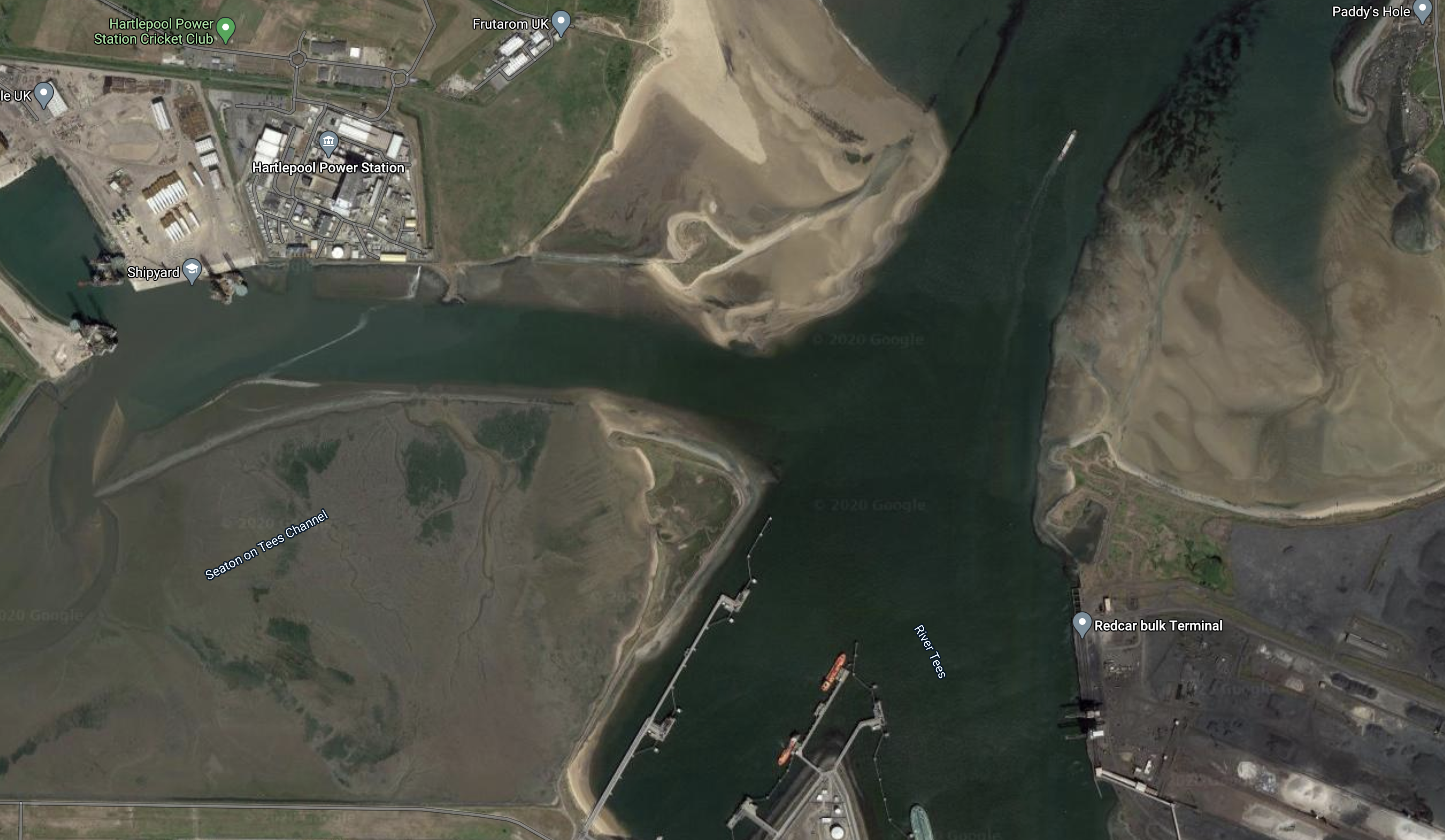
If you look at the maps of the mouth of the Tees, you have the Hartlepool nuclear power station on the North side of the river.
- It was commissioned in 1983.
- It can generate 320 MW of electricity.
- It is expected to close in 2024.
This Google Map shows the mouth of the Tees.
Note.
- Hartlepool power station is in the North-West corner of the map.
- The Hartlepool site is probably about forty acres.
- Wilton power station is on the South side of the Tees in the Wilton International site.
I can see, when Hartlepool power station closes, that more power will be needed on Teesside to feed the various industries in the area.
Some will come from offshore wind, but could a fleet of perhaps four of Rolls-Royce’s small modular reactors be built on a decommissioned Hartlepool power station site to replace the output of the current station?
If built in a planned sequence to correspond to the expected need, there are savings to be made because each unit can be commissioned, when they are completed and used to generate cash flow.
I can even see INEOS building a large electrolyser in the area, that is powered either by wind or nuclear power, according to what power is available and the various costs.
An Integrated Small Modular Nuclear Reactor And Electrolyser
Some countries don’t have good resources to exploit for renewable power.
Will a small modular nuclear reactor, be pared with a large electrolyser to produce hydrogen for feedstock for chemical plants and fuel for transport?
How Much Hydrogen Would A Small Modular Nuclear Reactor Produce?
Consider.
- One of Rolls-Royce’s small modular nuclear reactors has a power output of 440 MW.
- It takes 23 MWh of electricity to create ten tonnes of hydrogen.
This would create 4,600 tonnes of hydrogen in a day.
That is a lot of zero-carbon chemical feedstock to make fertiliser, plastics, pharmaceuticals and other chemicals and fuel for heavy transport.
Conclusion
I will be very surprised if INEOS were not talking to Rolls-Royce about using small modular nuclear reactors to generate the enormous quantities of electrical power and steam, needed to produce chemicals and fulfil their ambition to be a world leader in the supply of hydrogen.
Blaenau Ffestiniog Station
Blaenau Ffestiniog station is the interchange between the Conwy Valley Line and the Ffestiniog Railway.
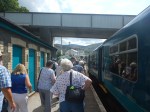
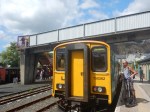

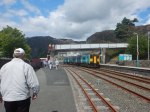

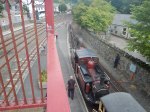
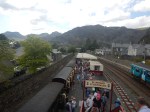
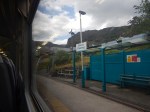
Note that as my train arrived from Llandudno, there was a Ffestiniog Railway train to take travellers to Porthmadog.
This is said in the Wikipedia entry for KeolisAmey Wales under Improvements.
Invest to co-fund new station buildings at Blaenau Ffestiniog
Consider.
- The Conwy Valley Line is scheduled to be run by new Class 230 trains from mid-2019.
- According to Wikipedia, there have been steam workings up the Conwy Valley Line.
- Blaenau Ffestiniog station has a run-around loop to put a locomotive on the other end of a train.
- The Halton Curve will open in December 2018, allowing direct and faster trains between Liverpool and Llandudno.
It would appear Transport for Wales are pulling out all the stops to bring tourists and employment to Blaenau Ffestiniog.
Travelling Along Peak Rail
Whilst at Matlock, I took a trip on Peak Rail to Rowsley South station.














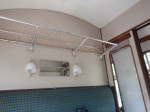









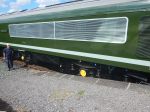
The heritage line has a very professional feeling.
It makes me think that their aim to expand the railway to Bakewell, is feasible on an engineering basis, given enough money.
But it is the politics and other interests.
In Connecting The Powerhouses, I said this.
But there are possible problems.
- The A6 has to be crossed.
- One local landowner didn’t allow consultants access to the line for an inspection.
- Severn Trent Water are digging a large pipe into the track-bed.
It sounds to me that everybody should find a good hostelry and thrash out a comprehensive co-operation agreement on the backs of engineering envelopes, fuelled by some excellent real ale.
The landowner lives between the current end of the line and Bakewell.
After my visit, I still feel optimistic, that the route can be restored.
It was talking to several local people, both on and off the Peak Rail train, who recalled times when they they would use the line for days out in Manchester, Derby and Nottingham. One guy had even used the line to go to Scotland with a change in Manchester.
Tornado At Canonbury Station
Tornado passed along the North London line yesterday, on it’s way from Ipswich to Bath for a shopping excursion. I took these pictures on Canonbury station.

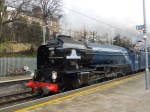

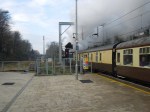
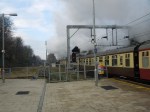
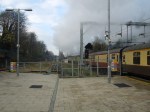

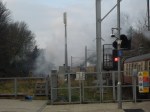



I know it’s only a modern replica, but it was an impressive sight.
It was cold and that probably explains, why so few enthusiasts were on the station to see the train pass. Although there was one kid about sixteen, who said he’d seen the engine before.
Who said train-spotting is dead?
I made a video of Tornado a couple of years ago. It’s here.
Tornado Chasing
I’m going Tornado chasing this morning. Not of the weather variety, but the steam engine, will be passing through North London around ten o’clock this morning, all being well. It’s hauling a Christmas shopping trip from Ipswich to Bath and should pass West Hampstead station at 10:00, where it’s stopping to pick up passengers.
It returns at 21:00 tonight.
Are The Ghosts Of Long-Dead Steam Engines Powering Great Britain On?
As a ten-year-old or so, I used to bunk the engine sheds in East London to collect the numbers of the steam engines stabled there at the motive power depot. It was a massive place, as the number of engines needed to power services into East Anglia and Essex was very large. Many were being scrapped, as electrification of the suburban lines out of Liverpool Street continued.
Much of the site was cleared for HS1, the link to the Channel Tunnel from St. Pancras, but much of the area ended up a derelict site, supporting large numbers of businesses.
But it was here in Stratford, that the Olympic site was created.
So are the ghosts of those long-dead steam engines powering Great Britain on?
Steaming Ahead
It was fascinating to hear that the land speed record for steam powered-cars was set in 1906 at 127 miles an hour. Incidentally, this is just a mile an hour faster than that of the Gresley A4 Pacific, Mallard set in 1936. And Mallard was built for daily service!
They’re having a go at the record soon.
The car was developed by Donald Campbell‘s nephew.
 The Anonymous Widower