Vattenfall: Dolphins Unfazed By Offshore Wind Construction Work
The title of this post, is the same as that of this article on offshoreWIND.biz.
This is the sub-heading.
Concerns have been raised that the installation of the monopiles of the Vesterhav North wind farm offshore Denmark could cause a small pod of dolphins to leave the area. The dolphins have, however, neither left the area nor have they changed their behaviour, Vattenfall, the owner and developer of the wind farm, said.
These are the first two paragraphs.
In 2020, wildlife and underwater photographer Lars Mikkelsen discovered a pod of seven Common Bottlenose dolphins during a sailing trip in the canal between the North Sea and the Limfjord at the Danish coastal town of Thyborøn. Since then, Mikkelsen has been closely following the dolphins that are rare guests in the seas around Denmark.
The small pod of dolphins has for the past three years established residence in the area of the Danish part of the North Sea where Vattenfall is constructing its Vesterhav offshore wind farms.
This Google Map shows the Limfjord, which stretches between the North Sea and the Kattegat.
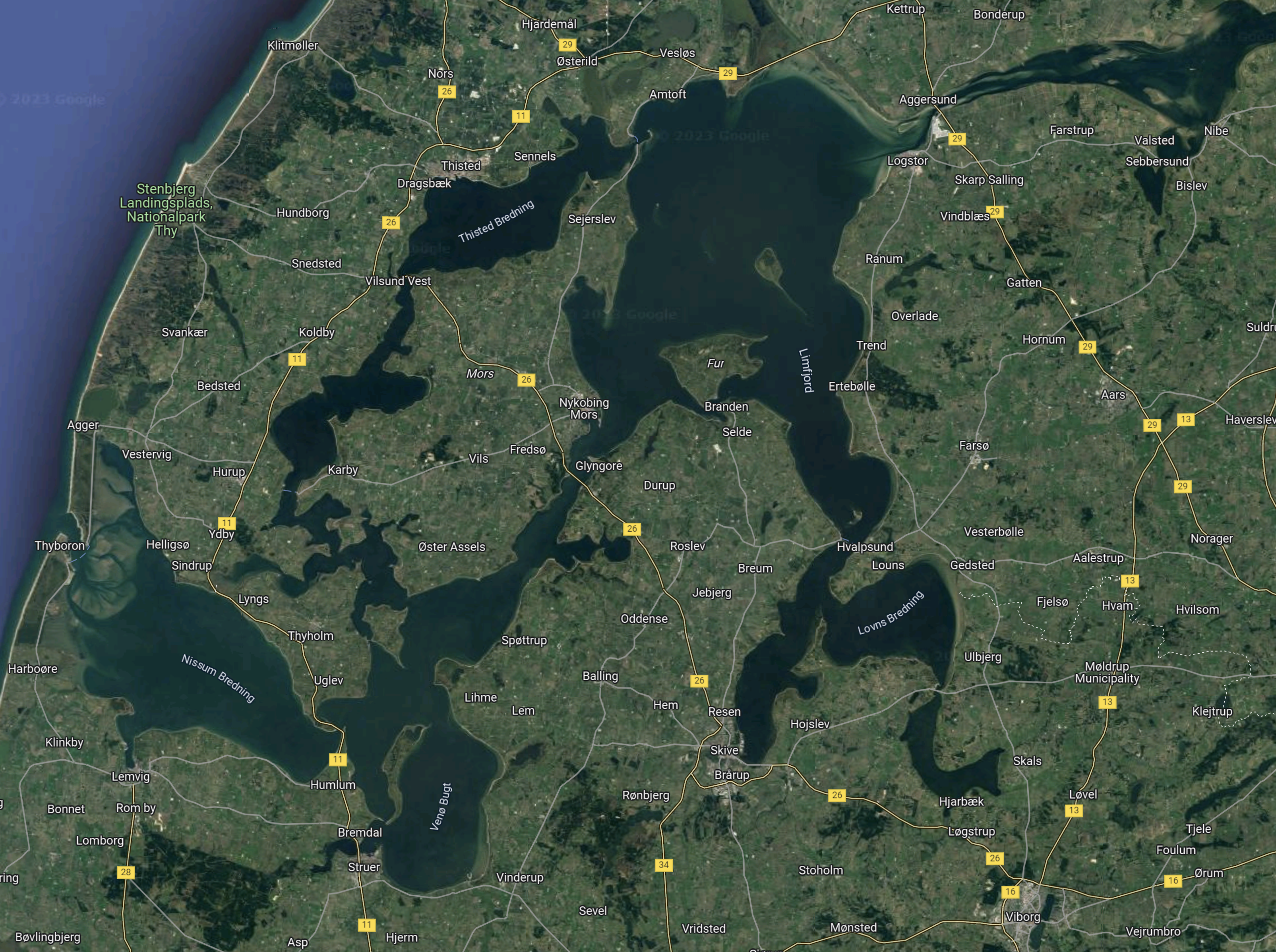
Thyborøn, is at the Western entrance to the Limfjord, which leads into the large area of water in the South-West of the map.
From its Wikipedia entry, the Limfjord seems to be an ecologically-interesting place.
This paragraph sums up how the construction affected the dolphins.
So, when concerns were raised that the installation of the wind farm’s monopiles could cause the dolphins to leave the area, Vattenfall initiated a collaborative monitoring effort. Fortunately, it showed that the dolphins were still present and have not changed behaviour after completion of the monopile installation.
Note.
- Vattenfall did adopt measures to mitigate the noise, as is detailed in the article.
- A university also took a series of measurements.
But the exercise does show it is possible to install offshore wind farms without disturbing the inhabitants.
Vattenfall Selects Norfolk Offshore Wind Zone O&M Base
The title of this post, is the same as that of this article on offshoreWIND.biz.
This is the sub-heading.
Vattenfall has selected Peel Ports as the preferred bidder, and its port at Great Yarmouth as the location for the operations and maintenance base of the Norfolk Offshore Wind Zone in the UK.
This was said about the competition to host the facility.
Vattenfall said that the competition was fierce to secure the agreement with an excellent bid from Lowestoft and Associated British Ports. With both ports offering excellent services it is clear that East Anglia’s potential as a superpower of offshore wind is secure.
I have a few thoughts.
Lowestoft In Suffolk And Great Yarmouth In Norfolk Must Work Together
This Google Map shows the coast between the two ports.
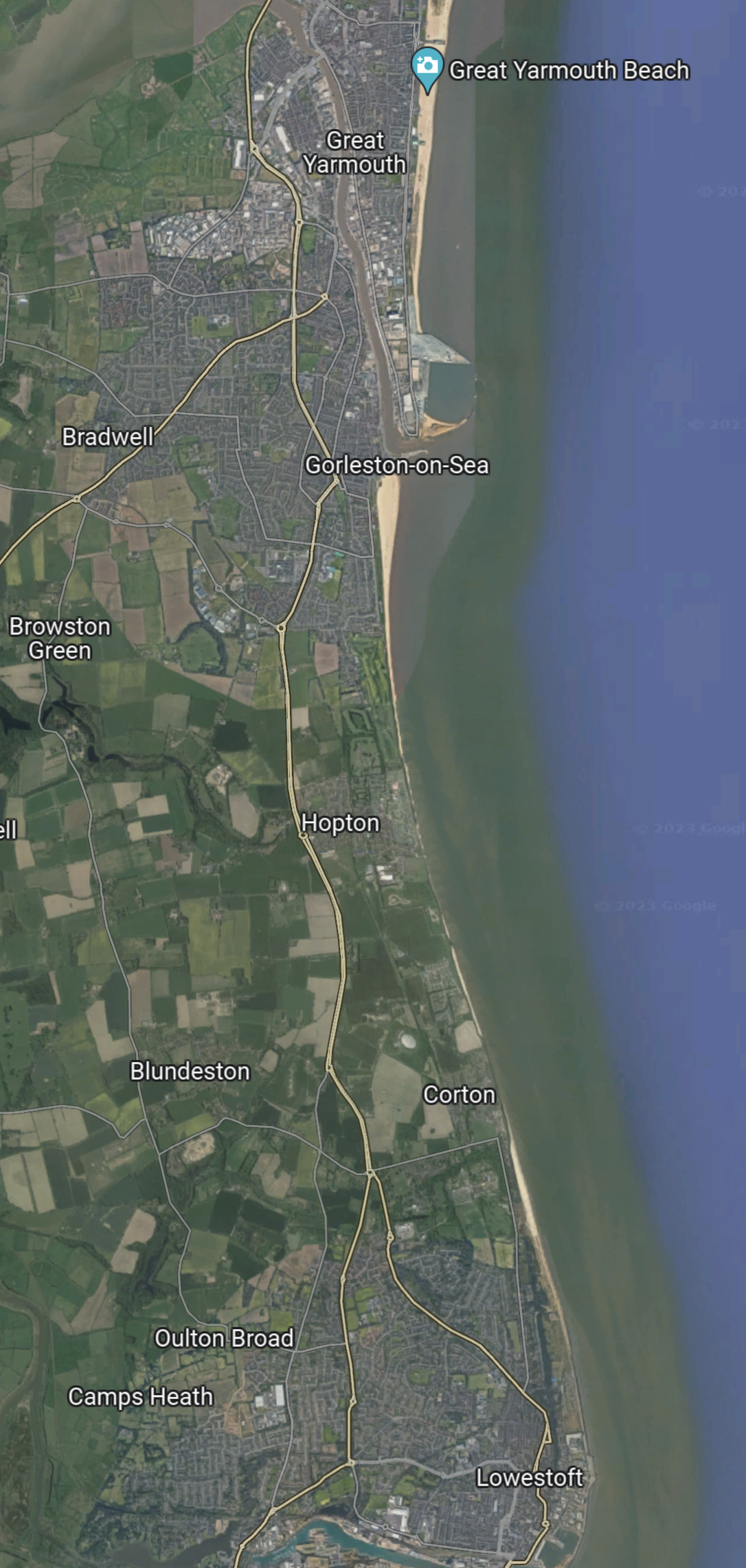
Note.
- Great Yarmouth is at the top of the map.
- Lowestoft is at the bottom of the map.
- The two towns are less than twelve miles apart.
- The Great Yarmouth Outer Harbour, is towards the top of the map.
The Google Map shows the port in more detail.
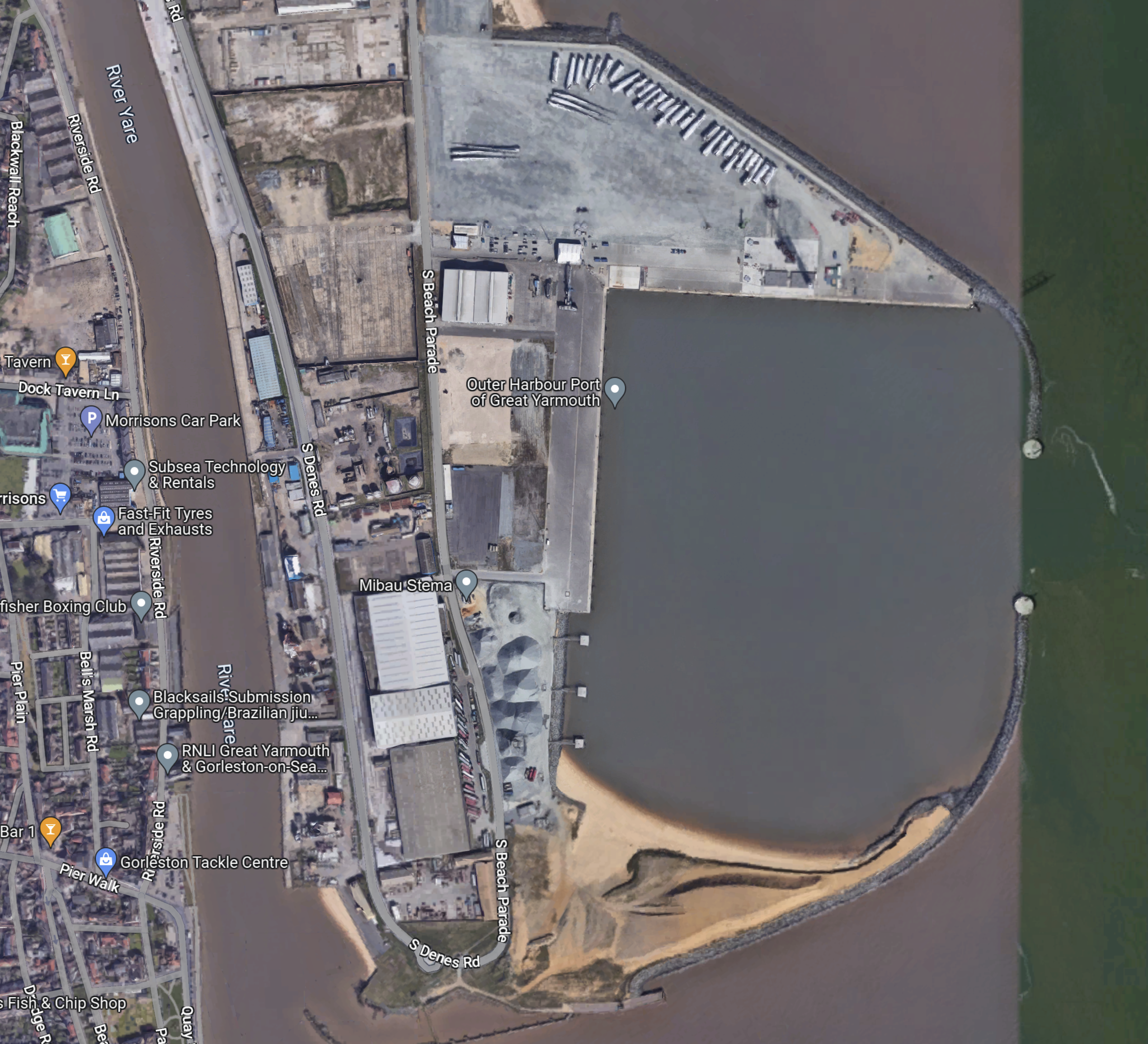
Note.
- Great Yarmouth Outer Harbour only opened in 2009.
- It has an average depth of 10 metres.
- It was planned as a container port, but the ships didn’t materialise.
- Some consider it to be a bit of a white elephant.
Could the Outer Harbour be used to assemble floating wind turbines?
I think it could but at present, there are no plans to use floating wind turbines off the coast of Norfolk.
I suspect though, if someone decided to build floating wind farms to the East of the Vattenfall’s Norfolk Zone fields, that Great Yarmouth Outer Harbour could be used to assemble the floating wind turbines.
This Google Map shows the Port of Lowestoft.
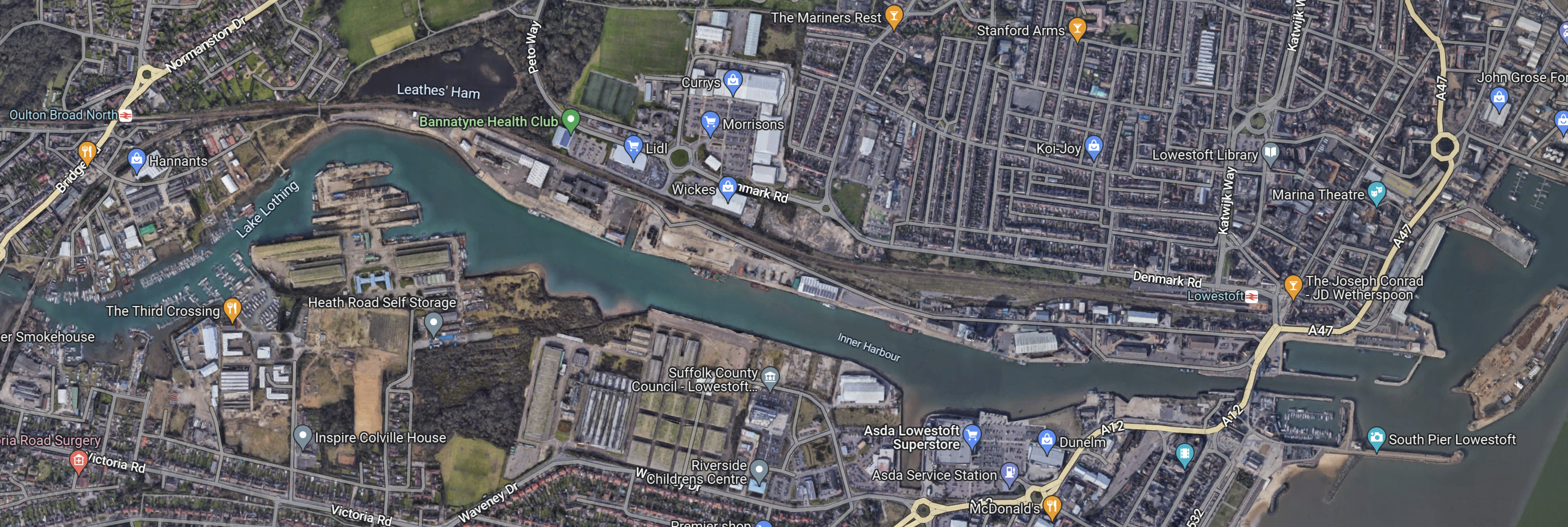
Note.
- There is over a kilometre of quays.
- It doesn’t have the water depth of Great Yarmouth.
- There is a lot of brownfield sites along the River Waveney.
- The East Anglia One wind farm is managed from Lowestoft.
Both harbours have their good and bad points.
- Both have good rail connections to Norwich.
- Lowestoft has a rail connection to Ipswich and has been promised a London service.
- Road connections to Ipswich and Norwich need improvement.
I suspect that it was a close contest, as to the port that got the Vattenfall contract.
A Lowestoft And Great Yarmouth Rail Connection
This map from Open RailwayMap between the two towns.
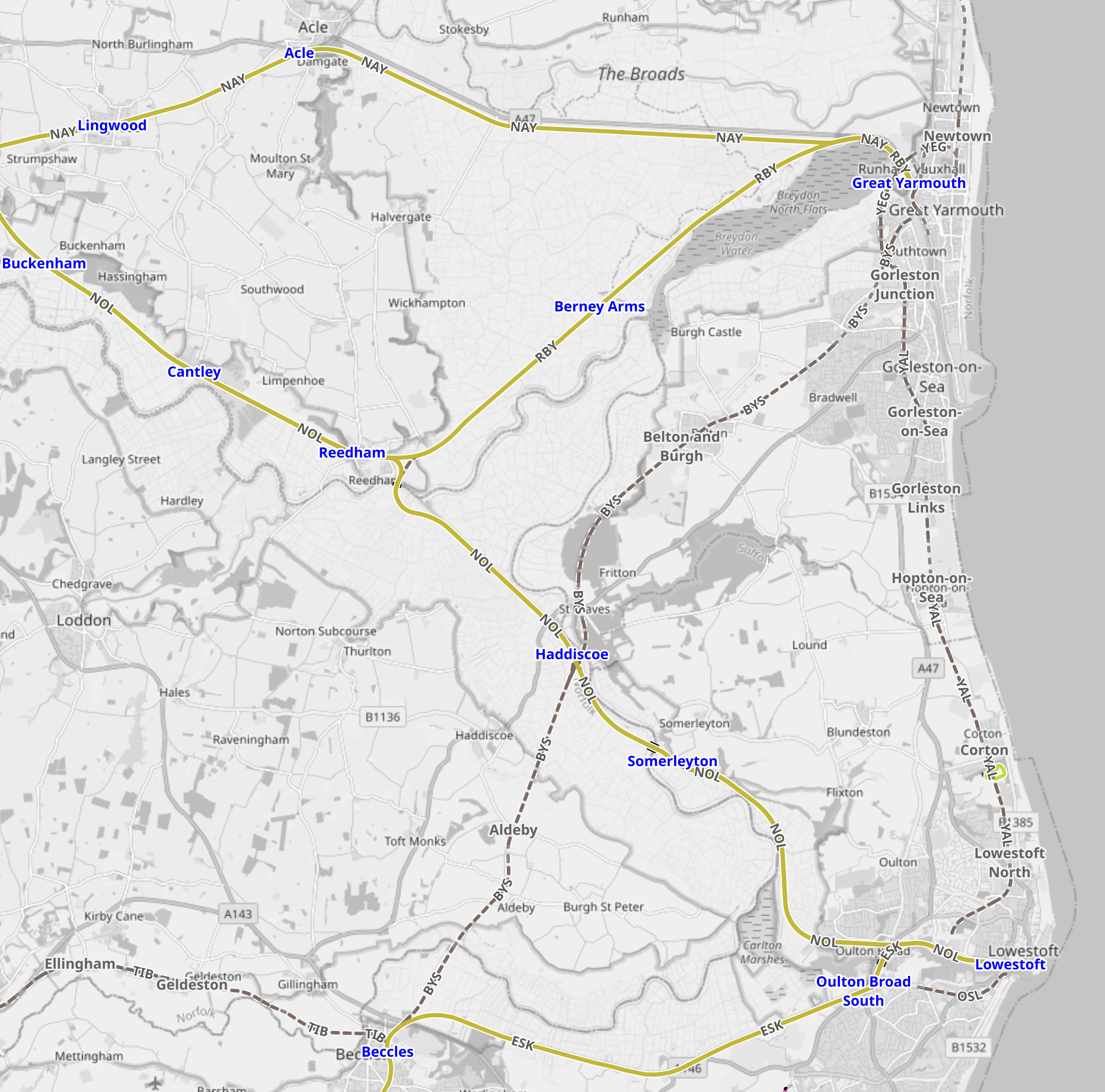
Note.
- The existing railways are shown in yellow.
- Former railways are shown in black dotted lines.
- There was even a railway along the coast.
The only rail connection between the ports is via Reedham, where the track layout is shown on this second OpenRailwayMap.
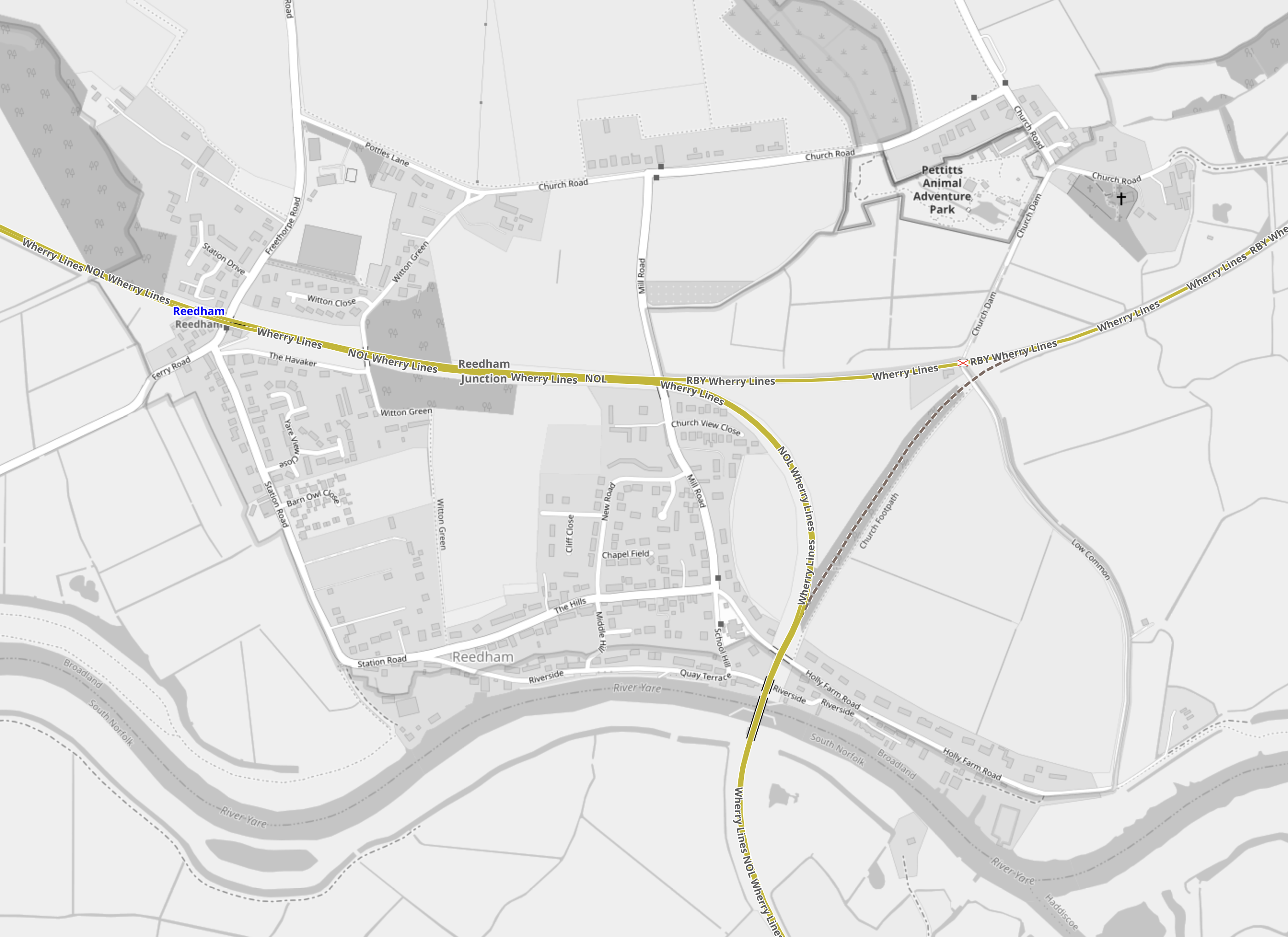
Note.
- Reedham station is in the North West corner on the line to Norwich.
- The line going North-East goes to Great Yarmouth.
- The line going South goes to Lowestoft.
There used to be a chord connecting Great Yarmouth and Lowestoft, but it was cancelled by Beeching’s grandfather.
There is certainly scope to improve the rail connection between the two ports.
- There could be a convenient change at Reedham, if the timetables were adjusted.
- Trains could reverse at Reedham.
- The chord could be reopened to allow direct trains.
It wouldn’t be the most challenging rail project to have an hourly rail service between the two ports.
A Lowestoft And London Rail Service
This was promised with a frequency of something like four trains per day (tpd)
I think it should run between London and Yarmouth with a reverse at Lowestoft.
Project Launches To Pair Offshore Wind With Sustainable Food Production
Note that it’s a little over a fortnight to April Fool’s Day!
The title of this post, is the same as that of this article on offshoreWIND.biz.
This is the sub-heading.
Win@Sea, a new collaboration between Vattenfall and Danish universities and companies, will investigate how to produce offshore wind power and sustainable food – all while improving the marine environment and biodiversity in the same marine area.
This is the first paragraph.
The partners will look into whether an offshore wind farm could simultaneously produce fossil-free electricity and sustainable food while also contributing positively to biodiversity in the same area.
But this report is not alone, in using the sea as a farm.
- Amazon Finances First-Ever Commercial-Scale Seaweed Farm Located Between Offshore Wind Turbines
- Brown Seaweed Could Remove 550 Million Tons Of Carbon
- The Plans For Giant Seaweed Farms In European Waters
- Oysters Get New Home At Eneco Luchterduinen Offshore Wind Farm
It sounds to me like a case of great minds thinking alike.
Vattenfall Invests In 76-Megawatt Agrivoltaic Project
The title of this post, is the same as that of this media report from Vattenfall.
This is the sub-heading.
Agrivoltaics is the combination of sustainable agriculture and solar power generation on the same agricultural land. Vattenfall has now made a final investment decision for a 76-megawatt solar park Tützpatz in Mecklenburg-Western Pomerania. The project is being set up without state support.
These two paragraphs outline the project.
Photovoltaics is now one of the cheapest technologies among renewable energies, and solar power has a high level of acceptance among the population. However, critics of open space photovoltaics fear that expansion could take place at the expense of agricultural land used for food production. The relatively young technology of agrivoltaics, which can reconcile agricultural use and photovoltaics, can help to resolve this competitive situation.
For the first time, Vattenfall will implement this innovative concept of land use on a commercial scale with partners. The aim of the project in Tützpatz is to combine module types on different mounting systems with suitable agricultural uses over an area of 95 ha, and thus gain further practical experience for future commercial projects of this kind. According to current plans, construction at Tützpatz is scheduled to start in early summer 2023.
Note.
- Tützpatz is a few miles North of Lincoln.
- This project is subsidy-free.
- At Tützpatz, 76 MW is to be installed in 95 hectares, which is an energy density of 0.8 MW per hectare.
- Agrivoltaics have an extensive Wikipedia entry.
I would expect we could use agrivoltaics in quite a few places in Southern England.
Unique Study: Birds Avoid Wind Turbine Blades
The title of this post, is the same as that of this media report from Vattenfall.
This is the sub-heading.
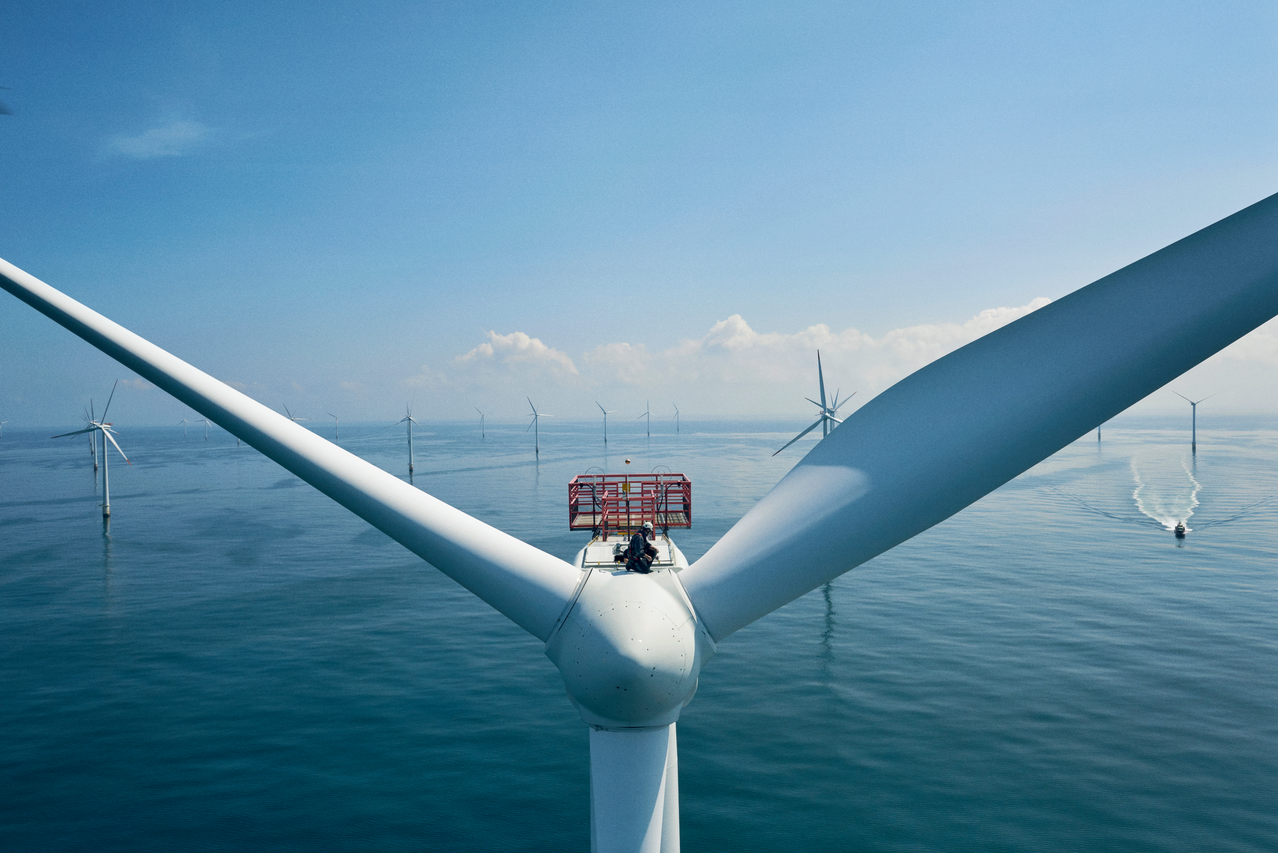
Seabirds deliberately avoid wind turbine rotor blades offshore – that is the main finding of a new study that mapped the flightpaths of thousands of birds around wind turbines in the North Sea. Most importantly, during two years of monitoring using cameras and radar, not a single bird was recorded colliding with a rotor blade.
I must admit I’m not surprised, as I’ve landed a light aircraft many times with birds flying above the runway and I can’t remember ever hitting one. But I have seen several dive out of the way.
The report is a fascinating read.
Vattenfall Hails Uncrewed Vessels
The title of this post, is the same as that of this article on offshoreWIND.biz.
This is the sub-heading.
Swedish energy company Vattenfall conducted large-scale seabed surveys with uncrewed surface vessels at several of its offshore wind farms in Denmark, Sweden, and the UK earlier this year.
The article is a must-read and is describes how automation will be used in the future in the offshore wind industry.
An Update To Will We Run Out Of Power This Winter?
My Methods
Project Timescales For Wind Farms
In How Long Does It Take To Build An Offshore Wind Farm?, I came to these conclusions.
- It will take six years or less from planning consent to commissioning.
- It will take two years or less from the start of construction to commissioning.
I shall use these timescales, as any accelerations by the government, will only reduce them.
Dates
If a date is something like 2024/25, I will use the latest date. i.e. 2025 in this example.
The Update
In Will We Run Out Of Power This Winter?, which I wrote in July this year, I did a calculation of how much renewable energy would come on stream in the next few years.
I summarised the amount of new renewable energy coming on stream like this.
- 2022 – 3200 MW
- 2023 – 1500 MW
- 3024 – 2400 MW
- 2025 – 6576 MW
- 2026 – 1705 MW
- 2027 – 7061 GW
This totals to 22442 MW.
But I had made two omissions.
- Hornsea 3 wind farm will add 2582 MW in 2026/27.
- Hinckley Point C nuclear power station will add 3260 MW in 2027.
Ørsted have also brought forward the completion date of the Sofia wind farm to 2023, which moves 1400 GW from 2024 to 2023.
The new renewables summary figures have now changed to.
- 2022 – 3200 MW
- 2023 – 2925 MW
- 3024 – 1326 MW
- 2025 – 6576 MW
- 2026 – 1705 MW
- 2027 – 13173 MW
This totals to 28554 MW.
Note.
- The early delivery of the Sofia wind farm has increased the amount of wind farms coming onstream next year, which will help the Winter of 2023/2024.
- It will also help the Liz Truss/Kwasi Kwarteng government at the next election, that should take place in early 2025.
- Hornsea 3 and Hinckley Point C make 2027 a big year for new renewable energy commissioning.
By 2027, we have more than doubled our renewable energy generation.
The Growth Plan 2022
In this document from the Treasury, the following groups of wind farms are listed for acceleration.
- Remaining Round 3 Projects
- Round 4 Projects
- Extension Projects
- Scotwind Projects
- INTOG Projects
- Floating Wind Commercialisation Projects
- Celtic Sea Projects
I will look at each in turn.
Remaining Round 3 Projects
In this group are the the 1200 MW Dogger Bank B and Dogger Bank C wind farms, which are due for commissioning in 2024/25.
Suppose that as with the Sofia wind farm in the same area, they were to be able to be brought forward by a year.
The new renewables summary figures would change to.
- 2022 – 3200 MW
- 2023 – 2925 MW
- 3024 – 3726 MW
- 2025 – 5076 MW
- 2026 – 1705 MW
- 2027 – 13173 MW
This totals to 28554 MW.
It looks like if Dogger Bank B and Dogger Bank C can be accelerated by a year, it has four effects.
- The renewables come onstream at a more constant rate.
- SSE and Equinor, who are developing the Dogger Bank wind farms start to get paid earlier.
- The UK gets more electricity earlier, which helps bridge the gap until Hornsea 3 and Hinckley Point C come onstream in 2027.
- The UK Government gets taxes and lease fees from the Dogger Bank wind farms at an earlier date.
Accelerating the remaining Round 3 projects would appear to be a good idea.
Round 4 Projects
According to Wikipedia’s list of proposed wind farms, there are six Round 4 wind farms, which total up to 7026 MW.
Accelerating these projects, is probably a matter of improved government regulations and pressure, and good project management.
But all time savings in delivering the wind farms benefits everybody all round.
This document from the Department of Business, Industry and Industrial Strategy lists all the Contracts for Difference Allocation Round 4 results for the supply of zero-carbon electricity.
Many of these projects are smaller projects and I suspect quite a few are shovel ready.
But as with the big wind farms, there are some projects that can be brought forward to everybody’s benefit.
Norfolk Boreas
Norfolk Boreas wind farm is one of the Round 4 projects.
The wind farm is shown as 1400 MW on Wikipedia.
On the web site, it now says construction will start in 2023, which could mean a completion by 2025, as these projects seem to take about two years from first construction to commissioning, as I showed in How Long Does It Take To Build An Offshore Wind Farm?.
The new renewables summary figures would change to.
- 2022 – 3200 MW
- 2023 – 2925 MW
- 3024 – 3726 MW
- 2025 – 6476 MW
- 2026 – 1705 MW
- 2027 – 11773 MW
This still totals to 28554 MW.
This acceleration of a large field would be beneficial, as the 2025 figure has increased substantially.
I would suspect that Vattenfall are looking hard to accelerate their Norfolk projects.
Extension Projects
I first talked about extension projects in Offshore Wind Extension Projects 2017.
The target was to add 2.85 GW of offshore wind and in the end seven projects were authorised.
- Sheringham Shoal offshore wind farm – 719 MW with Dudgeon
- Dudgeon offshore wind farm – 719 MW with Sheringham Shoal
- Greater Gabbard offshore wind farm
- Galloper offshore wind farm
- Rampion offshore wind farm – 1200 MW
- Gwynt y Môr offshore wind farm – 1100 MW
- Thanet offshore wind farm – 340 MW
These are the best figures I have and they add up to an interim total of 3359 MW.
I suspect that these projects could be easy to accelerate, as the developers have probably been designing these extensions since 2017.
I think it is reasonable to assume that these seven wind farms will add at least 3000 MW, that can be commissioned by 2027.
The new renewables summary figures would change to.
- 2022 – 3200 MW
- 2023 – 2925 MW
- 3024 – 3726 MW
- 2025 – 6476 MW
- 2026 – 1705 MW
- 2027 – 14773 MW
This now totals to 31554 MW.
Accelerating the extension projects would be a good idea, especially, as they were awarded some years ago, so are probably well into the design phase.
ScotWind Projects
I first talked about ScotWind in ScotWind Offshore Wind Leasing Delivers Major Boost To Scotland’s Net Zero Aspirations.
It was planned to do the following.
- Generate 9.7 GW from six wind farms with fixed foundations.
- Generate 14.6 GW from ten floating wind farms.
But since then three more floating wind farms with a total capacity of 2800 MW have been added, as I wrote about in Three Shetland ScotWind Projects Announced.
I suspect that some of these projects are ripe for acceleration and some may well be generating useful electricity by 2030 or even earlier.
INTOG Projects
I wrote about INTOG in What Is INTOG?.
I can see the INTOG Projects contributing significantly to our fleet of offshore wind turbines.
I have already found a 6 GW/£30 billion project to decarbonise oil and gas rigs around our shores, which is proposed by Cerulean Winds and described on this web page.
If the other large INTOG projects are as good as this one, then we’ll be seeing some sensational engineering.
Floating Wind Commercialisation Projects
This page on the Carbon Trust website is entitled Floating Wind Joint Industry Programme (JIP).
They appear to be very much involved in projects like these.
The page has this description.
The Floating Wind Joint Industry Programme is a world leading collaborative research and development (R&D) initiative dedicated to overcoming technological challenges and advancing commercialisation of floating offshore wind.
This graphic shows the partners and advisors.
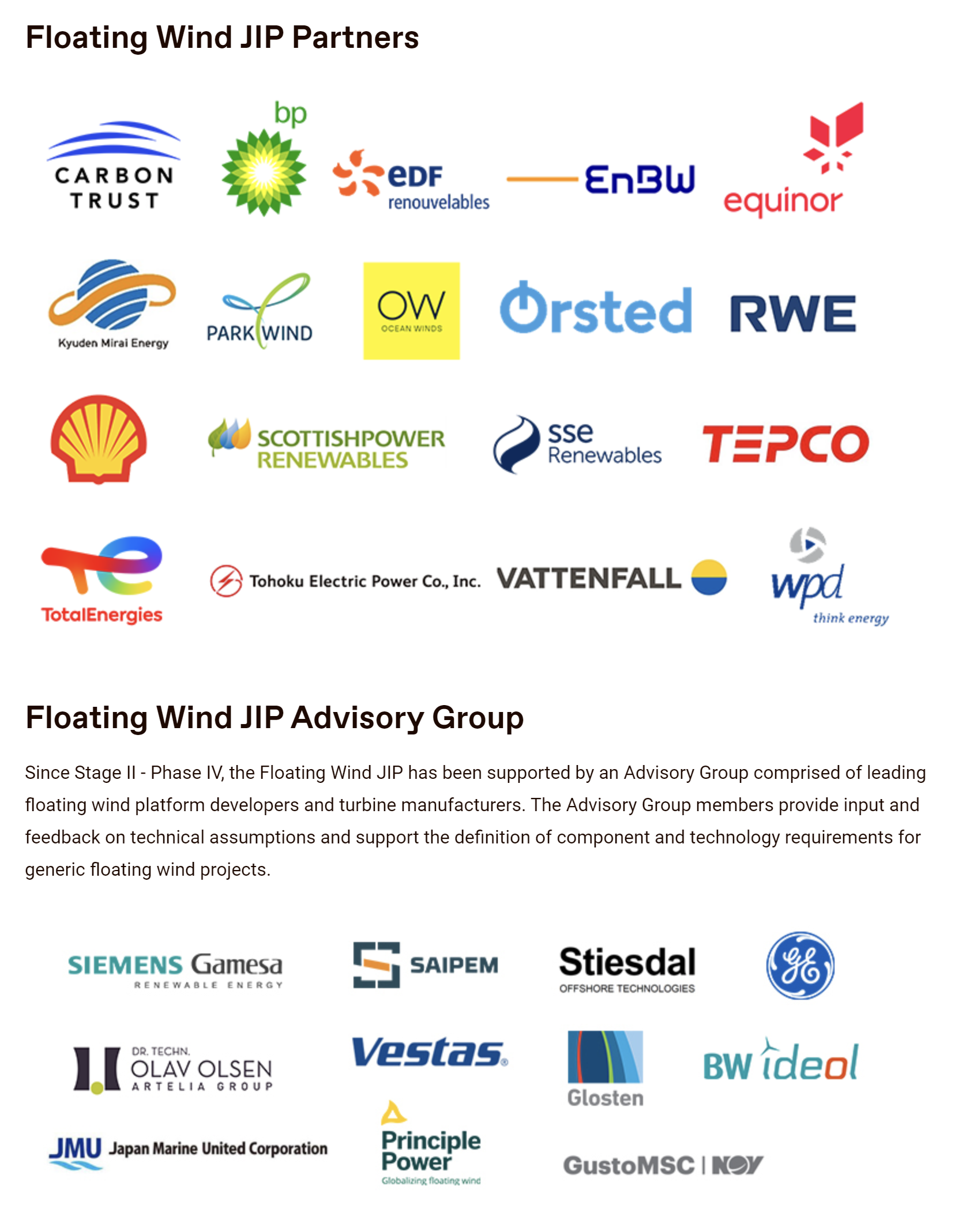
Most of the big wind farm builders and turbine and electrical gubbins manufacturers are represented.
Celtic Sea Projects
The Celtic Sea lies between South-East Ireland, Pembrokeshire and the Devon and Cornwall peninsular.
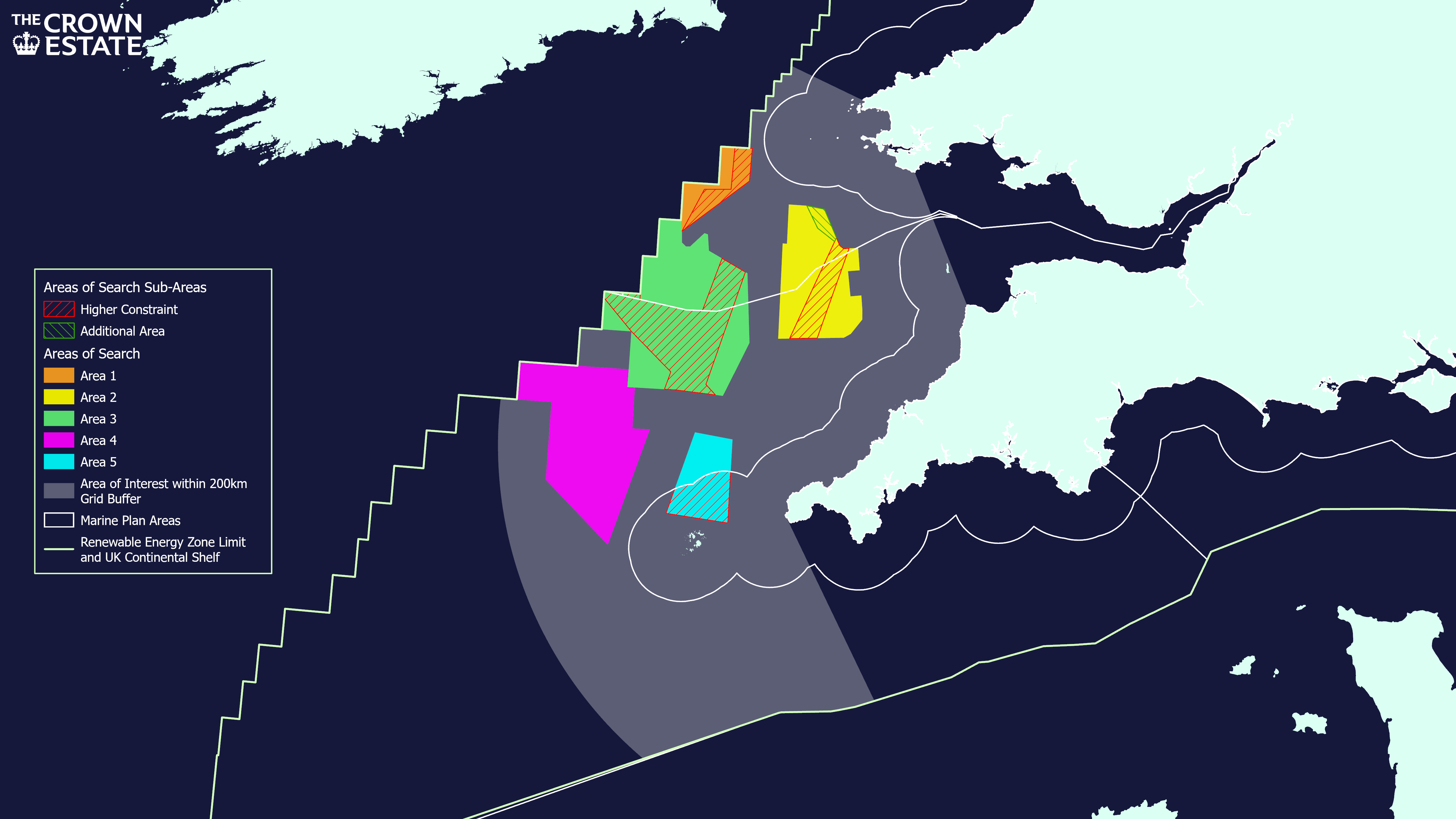
The Crown Estate kicked this off with press release in July 2022, that I wrote about in The Crown Estate Announces Areas Of Search To Support Growth Of Floating Wind In The Celtic Sea.
This map shows the five areas of search.
One Celtic Sea project has already been awarded a Contract for Difference in the Round 4 allocation, which I wrote about in Hexicon Wins UK’s First Ever CfD Auction For Floating Offshore Wind.
Other wind farms have already been proposed for the Celtic Sea.
In DP Energy And Offshore Wind Farms In Ireland, I said this.
They are also developing the Gwynt Glas offshore wind farm in the UK sector of the Celtic Sea.
- In January 2022, EDF Renewables and DP Energy announced a Joint Venture partnership to combine their knowledge and
expertise, in order to participate in the leasing round to secure seabed rights to develop up to 1GW of FLOW in the Celtic Sea. - The wind farm is located between Pembroke and Cornwall.
The addition of Gwynt Glas will increase the total of floating offshore wind in the UK section of the Celtic Sea.
- Blue Gem Wind – Erebus – 100 MW Demonstration project – 27 miles offshore
- Blue Gem Wind – Valorus – 300 MW Early-Commercial project – 31 miles offshore
- Falck Renewables and BlueFloat Energy – Petroc – 300 MW project – 37 miles offshore
- Falck Renewables and BlueFloat Energy – Llywelyn – 300 MW project – 40 miles offshore
- Llŷr Wind – 100 MW Project – 25 miles offshore
- Llŷr Wind – 100 MW Project – 25 miles offshore
- Gwynt Glas – 1000 MW Project – 50 miles offshore
This makes a total of 2.2 GW, with investors from several countries.
It does seem that the Celtic Sea is becoming the next area of offshore wind around the British Isles to be developed.
How do these wind farms fit in with the Crown Estate’s plans for the Celtic Sea?
I certainly, don’t think that the Crown Estate will be short of worthwhile proposals.
Conclusion
More and more wind farms keep rolling in.
Plan To Build £150m Green Hydrogen Plant At Felixstowe Port
The title of this post, is the same as that of this article in The Times.
These two paragraphs introduce the project.
A £150 million green hydrogen plant is to be built at the UK’s busiest container port according to proposals by ScottishPower, it emerged yesterday.
The energy company has devised plans for a 100MW plant at the Port of Felixstowe which will provide fuel to power trains, trucks and ships.
There’s a lot more to this project than it would appear at first.
Where Will The Electrolyser Be Sited?
The Times article says this.
The site will be around the size of a football pitch, on brownfield land within the port.
I have flown my virtual helicopter over the port and there could be a couple of suitable football pitch-sized plots.
Where Will The Electricity Come From?
The East Anglia Array is a proposed massive series of offshore wind farms, which will be about thirty miles off the Suffolk coast.
Wikipedia says this about the size.
Up to six individual projects could be set up in the area with a maximum capacity of up to 7.2 GW.
But the main thing about the East Anglian Array is that it is being developed by a partnership of ScottishPower and Vattenfall.
Negotiations shouldn’t be difficult.
This Google Map shows the town of Felixstowe.
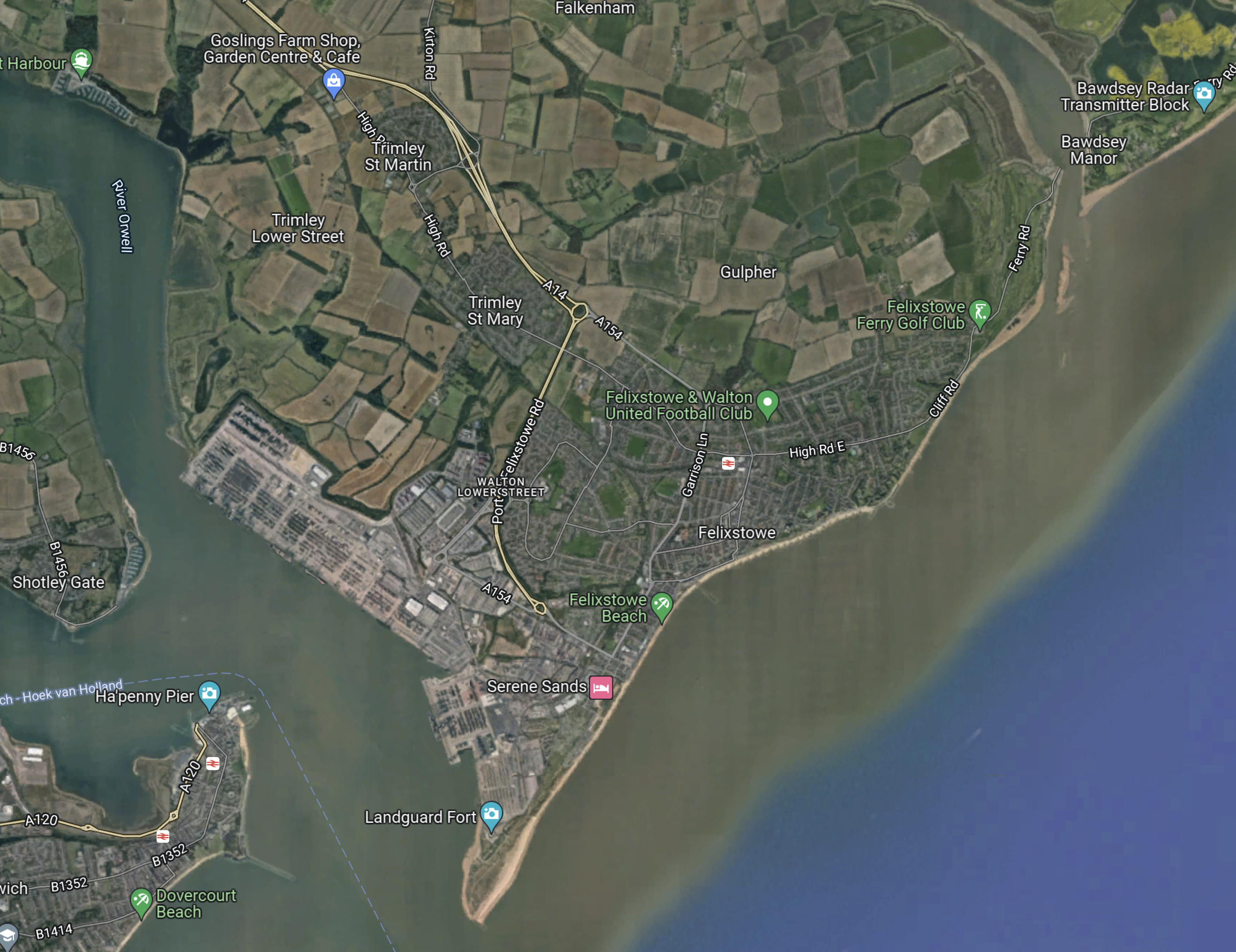
Note.
- The Ports of Felixstowe and Harwich are opposite each other on the two banks of the River Orwell.
- The power cable to the East Anglia Array comes ashore at Bawdsey in the North-East corner of the map.
- The Port of Felixstowe has two rail links, which are not electrified.
I suspect that the electric power to the electrolyser might well be routed underwater to the Port of Felixstowe either from Bawdsey or possibly direct from the wind farm.
A Meeting With A Crane Driver
I used to regularly go to Ipswich Town away matches and at one match, I met a senior crane operator from the Port of Felixstowe. We got talking about electrifying the rail link to the port and decarbonisation of the port in general.
He was adamant that electrification of the rail lines in the port, wouldn’t be a good idea as containers occasionally get dropped or crane drivers aren’t as accurate as they should be.
Hydrogen-Powered Freight Locomotives
When, I told him about the possibilities of hydrogen rail locomotives, he felt this was the way to go, as no rail electrification would be needed in the port.
Hydrogen-electric hybrid locomotives would also be able to take containers cross-country to the main electrified routes to the North and West, where they would raise their pantographs and use electric power.
How many trucks would be removed from the A14, A1 and M6?
Will Greater Anglia Convert Their Class 755 Trains to Hydrogen?
Class 755 trains have a short PowerPack in the middle and are designed for conversion to hydrogen-electric operation.
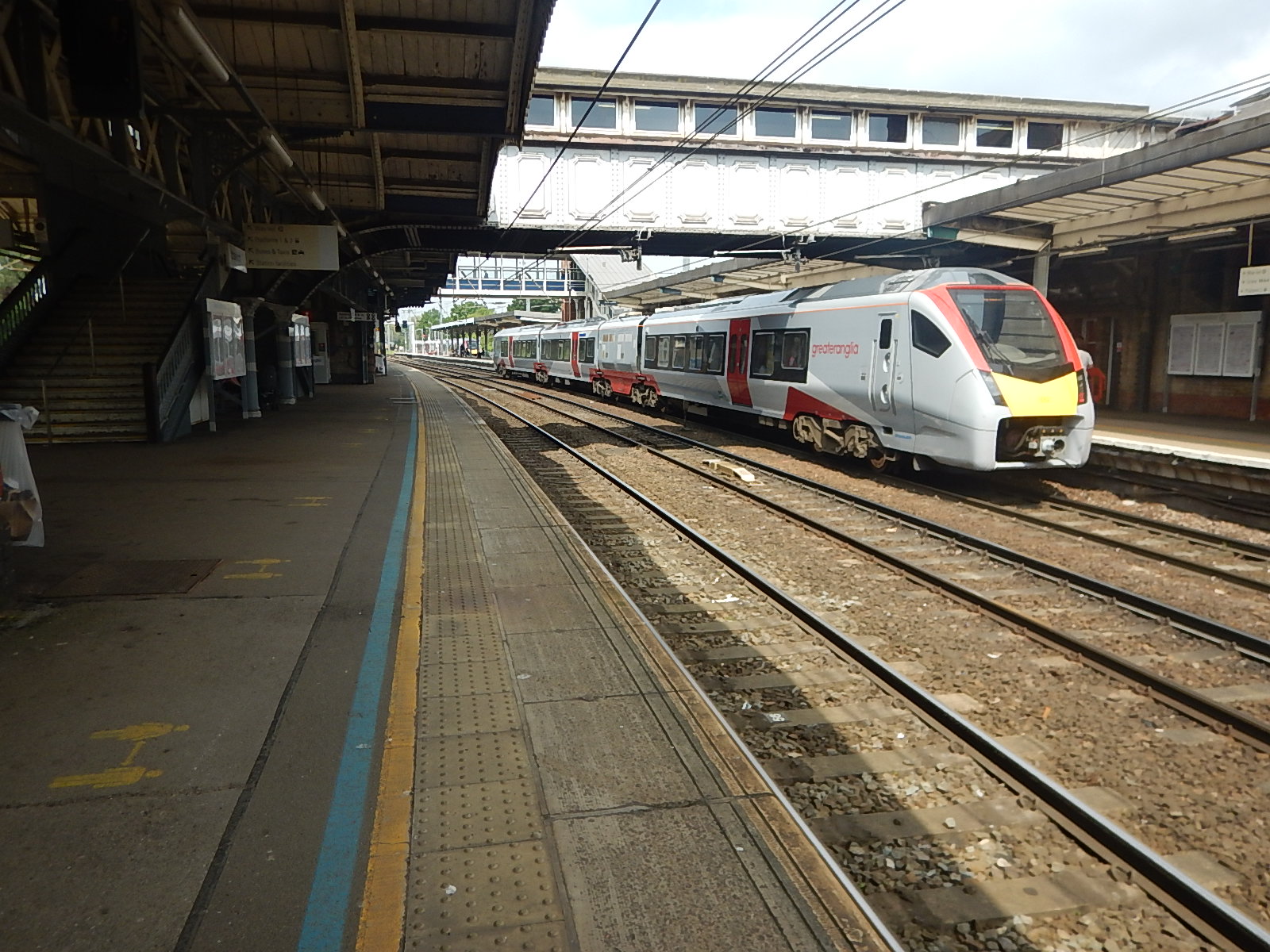
Note the PowerPack has four slots for diesel engines, batteries or hydrogen fuel-cells.
A Better Working Environment
But my fellow supporter felt the biggest gain in the port, would come with replacement or updating of all the vehicles and handling equipment, as if all these machines were hydrogen-powered, this would greatly improve the working conditions for the dock workers.
ScottishPower’s Vision
This press release on ScottishPower’s web site is entitled ScottishPower Vision For Green Hydrogen Fuels Hub At Port Of Felixstowe.
Conclusion
The Port of Felixstowe is doing the planning for this in the right way, as ensuring the hydrogen supply in the port first, is the logical way to transition to hydrogen power.
But then, I’ve watched the Port of Felixstowe grow since the 1960s and they usually get their decisions right.
The press release starts with these bullet points.
- ScottishPower explores green hydrogen at Port of Felixstowe to help decarbonise the UK’s busiest port.
- The project could help kick-start the low carbon transformation of the UK’s heavy transport sector.
- 100MW facility could deliver up to 40 tonnes of green hydrogen per day – enough to power 1300 hydrogen trucks.
- International export also being explored.
And these two paragraphs.
ScottishPower, with Hutchison Ports, is exploring the opportunity to develop, build and operate a multi-hundred MW green hydrogen production facility at the Port of Felixstowe – with the potential to decarbonise industry and transportation in the region.
Both companies have set out their vision to help create a greener port, which could provide clean fuel for customers at Britain’s busiest container port.Plans are being developed to use green hydrogen for onshore purposes, such as road, rail and industrial use, with the potential to create liquid forms, such as green ammonia or e-methanol. This could, in turn, provide clean fuels for shipping and aviation, and create opportunities for cost-effective export to international markets. The project aims to continue engineering and site development works to align with customer demand from 2025 onwards.
It is certainly a very extremely ambitious vision!
But then the county of my conception, has a tremendous determination to succeed. And often against all conventional logic!
Norfolk Wind Farms Offer ‘Significant Benefit’ For Local Economy
The title of this post, is the same as that of this article on the BBC.
This is a comprehensive article, which looks at the benefits of the huge Norfolk Boreas and Norfolk Vanguard wind farms will have to the economy of Norfolk.
The last section is devoted to Norfolk Nimby; Raymond Pearce.
This is the section.
Following the re-approval of the decision by the government, Mr Pearce says he is considering a new appeal over what he calls “a very poor decision”.
He is also sceptical of claims the two new wind farms will bring the economic gains promised by Vattenfall.
“It’s renewable energy at any cost and the cost here is to the environment in Norfolk,” he says.
“I don’t blame them for being positive about it, it’s their industry but they’re not looking at it holistically.”
He says he is not against renewable energy but thinks a better plan is needed to connect the offshore windfarms and minimise the number of cables and substations onshore.
It’s his money if he appeals, but we do need more wind, solar and other zero-carbon energy to combat global warming and its effects like the encroachment of the sea around Norfolk.
I believe, that building wind farms off the coast of Essex, Suffolk and Norfolk is a good move, as in the future, if we have spare electricity, it will be easy to export energy to Europe, through existing interconnectors.
But I do agree with him, that a better plan is needed to connect the offshore windfarms and minimise the number of cables and substations onshore.
A Norfolk Powerhouse
This map from Vattenfall, the developer of the two wind farms, shows the position of the farms and the route of the cable to the shore.
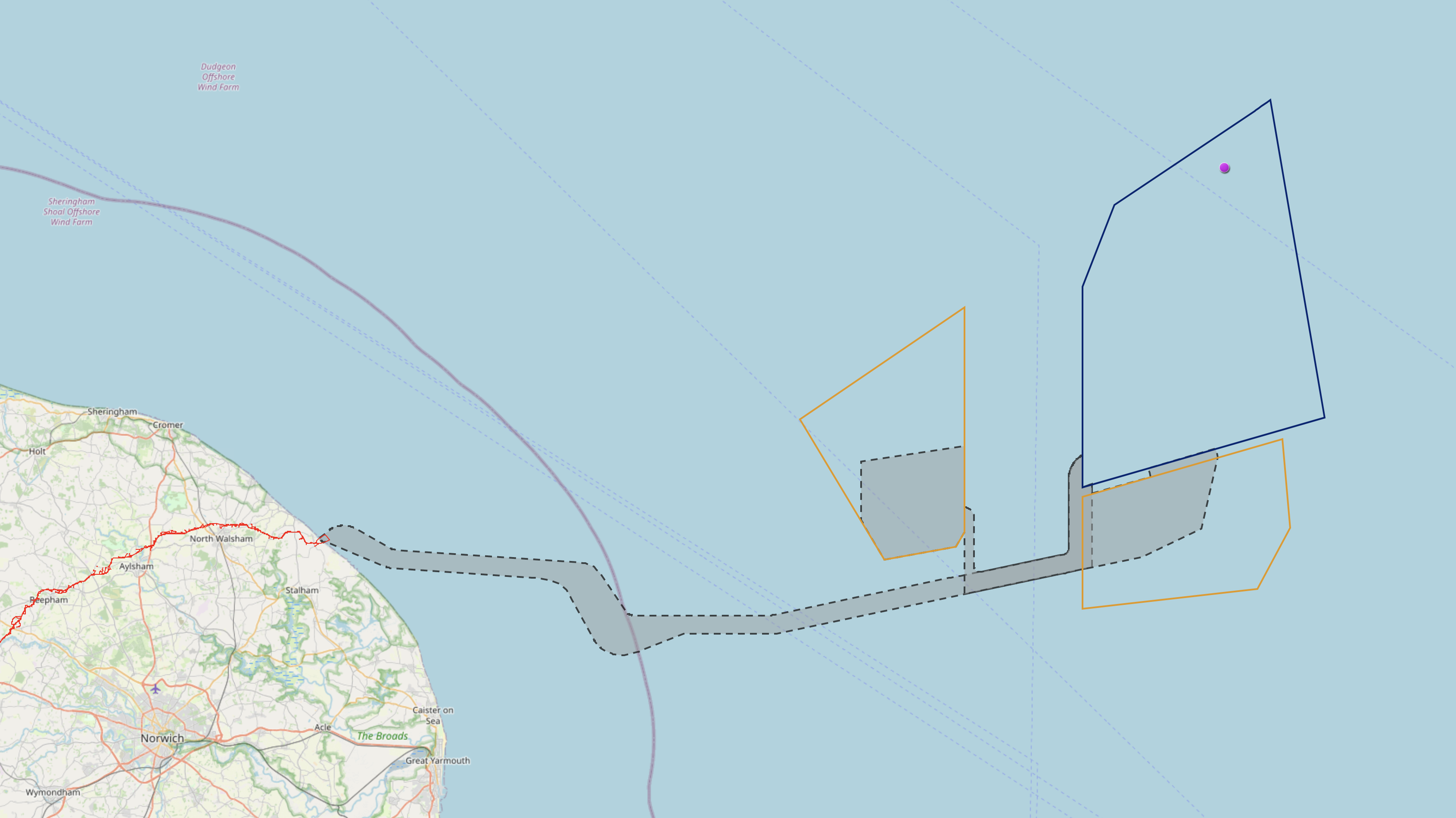
Note.
- The purple line appears to be the UK’s ten mile limit.
- Norfolk Boreas is outlined in blue.
- Norfolk Vanguard is outlined in orange.
- Cables will be run in the grey areas.
- Both wind farms are planned to have a capacity of 1.8 GW
Landfall will be just a few miles to the South of the Bacton gas terminal.
Bacton Gas Terminal
Bacton gas terminal is much more than a simple gas terminal.
- It is a complex of six gas terminals on four sites.
- There is a National Grid terminal, that odourises and blends the gas before distributing it into the National Transmission System via five outgoing 36-inch feeders to much of Southern England.
- There is a gas interconnector to Belgium.
- There is a gas interconnector to The Netherlands.
- There is coastal erosion in the area.
With the need to decarbonise, I can’t help feeling that the Bacton gas terminal is very much on the decline and the site will need to be repurposed in the next few years.
Blending Hydrogen With Natural Gas
If you blend a proportion of hydrogen into natural gas, this has two beneficial effects.
- Gas used in domestic and industrial situations will emit less carbon dioxide.
- In the near future we will be replacing imported natural gas with hydrogen.
The hydrogen could be produced by a giant electrolyser at Bacton powered by the electricity from the two Norfolk wind farms.
At the present time, a research project call HyDeploy is underway, which is investigating the blending of hydrogen into the natural gas supply.
- Partners include Cadent, Northern Gas Networks, the Health and Safety Executive, Keele University and ITM Power and Progessive Energy.
- A first trial at Keele University has been hailed as a success.
- It showed up to twenty percent of hydrogen by volume can be added to the gas network without the need to change any appliances or boilers.
Larger trials are now underway.
A Giant Electrolyser At Bacton
If hydrogen were to be produced at Bacton by a giant electrolyser, it could be used or distributed in one of the following ways.
- Blended with natural gas for gas customers in Southern England.
- Stored in a depleted gas field off the coast at Bacton. Both Baird and Deborah gas fields have been or are being converted to gas storage facilities, connected to Bacton.
- Distributed by truck to hydrogen filling stations and bus and truck garages.
- Greater Anglia might like a hydrogen feed to convert their Class 755 trains to hydrogen power.
- Sent by a short pipeline to the Port of Great Yarmouth and possibly the Port of Lowestoft.
- Exported to Europe, through one of the interconnectors.
Note.
- If the electrolyser were to be able to handle the 3.6 GW of the two wind farms, it would be the largest in the world.
- The size of the electrolyser could be increased over a few years to match the output of the wind farms as more turbines are installed offshore.
- There is no reason, why the electrical connection between Bacton and the landfall of the wind farm cable couldn’t be offshore.
If ITM Power were to supply the electrolyser, it would be built in the largest electrolyser factory in the World, which is in Sheffield in Yorkshire.
A Rail Connection To The Bacton Gas Terminal
This Google Map shows the area between North Walsham and the coast.
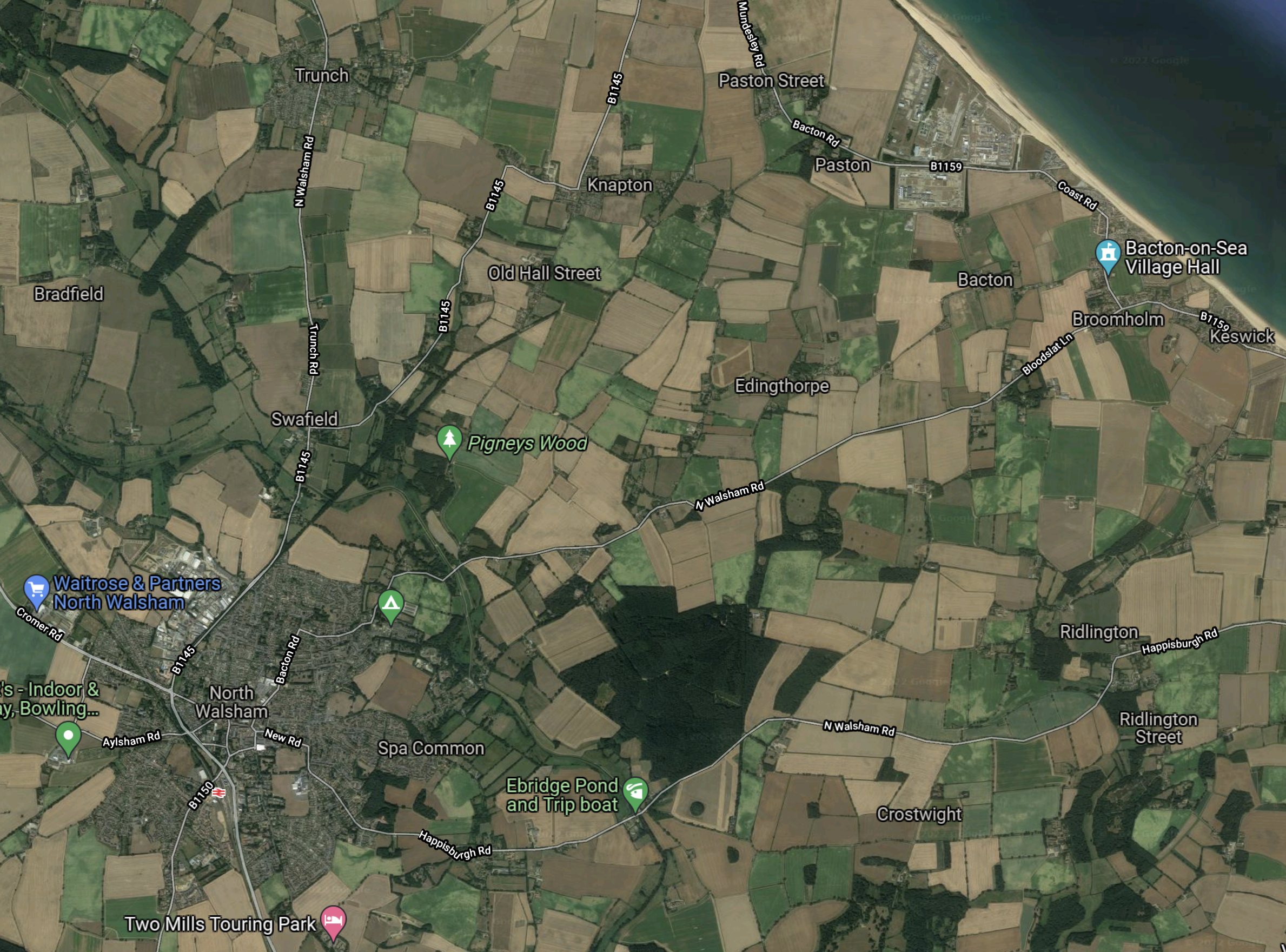
Note.
- North Walsham is in the South-Western corner of the map.
- North Walsham station on the Bittern Line is indicated by the red icon.
- The Bacton gas terminal is the trapezoidal-shaped area on the coast, at the top of the map.
I believe it would be possible to build a small rail terminal in the area with a short pipeline connection to Bacton, so that hydrogen could be distributed by train.
How Much Hydrogen Could Be Created By The Norfolk Wind Farms?
In The Mathematics Of Blending Twenty Percent Of Hydrogen Into The UK Gas Grid, I said the following.
Ryze Hydrogen are building the Herne Bay electrolyser.
- It will consume 23 MW of solar and wind power.
- It will produce ten tonnes of hydrogen per day.
The electrolyser will consume 552 MWh to produce ten tonnes of hydrogen, so creating one tonne of hydrogen needs 55.2 MWh of electricity.
Each of the Norfolk wind farms, if they were working flat out would produce 43.2 GWh of electricity in a day.
Dividing the two figures gives a daily production rate of 782.6 tonnes of hydrogen per day.
But what happens if the wind doesn’t blow?
This is where the gas storage in the Baird, Deborah and other depleted gas fields comes in.In times of maximum wind, hydrogen is stored for use when the wind doesn’t blow.
Conclusion
I believe a plan like this, would be much better for Norfolk, the UK and the whole planet.
Using the existing gas network to carry the energy away from Norfolk, could mean that the electricity connection across Norfolk could be scaled back.
Norfolk Vanguard Offshore Wind Farm Re-approved By Government
The title of this post, is the same as that of this article on the BBC.
These are the two introductory paragraphs.
An offshore wind farm capable of generating electricity for nearly two million homes has been re-approved by government after consent was previously overturned by a High Court judge.
Vattenfall’s 1.8-gigawatt Norfolk Vanguard project had been granted consent by the Department for Business, Energy and Industrial Strategy (BEIS).
Note.
- Norfolk Boreas and Norfolk Vanguard are a pair of 1.8 GW offshore wind farms to be developed 72 and 47 kilometres off the Norfolk coast by Swedish company; Vattenfall.
- Hinckley Point C will have a capacity of 3.25 GW.
This map shows the two fields in relation to the coast.
Note.
- The purple line appears to be the UK’s ten mile limit.
- Norfolk Boreas is outlined in blue.
- Norfolk Vsnguard is outlined in orange.
- Cables will be run in the grey areas.
This second map shows the onshore cable.
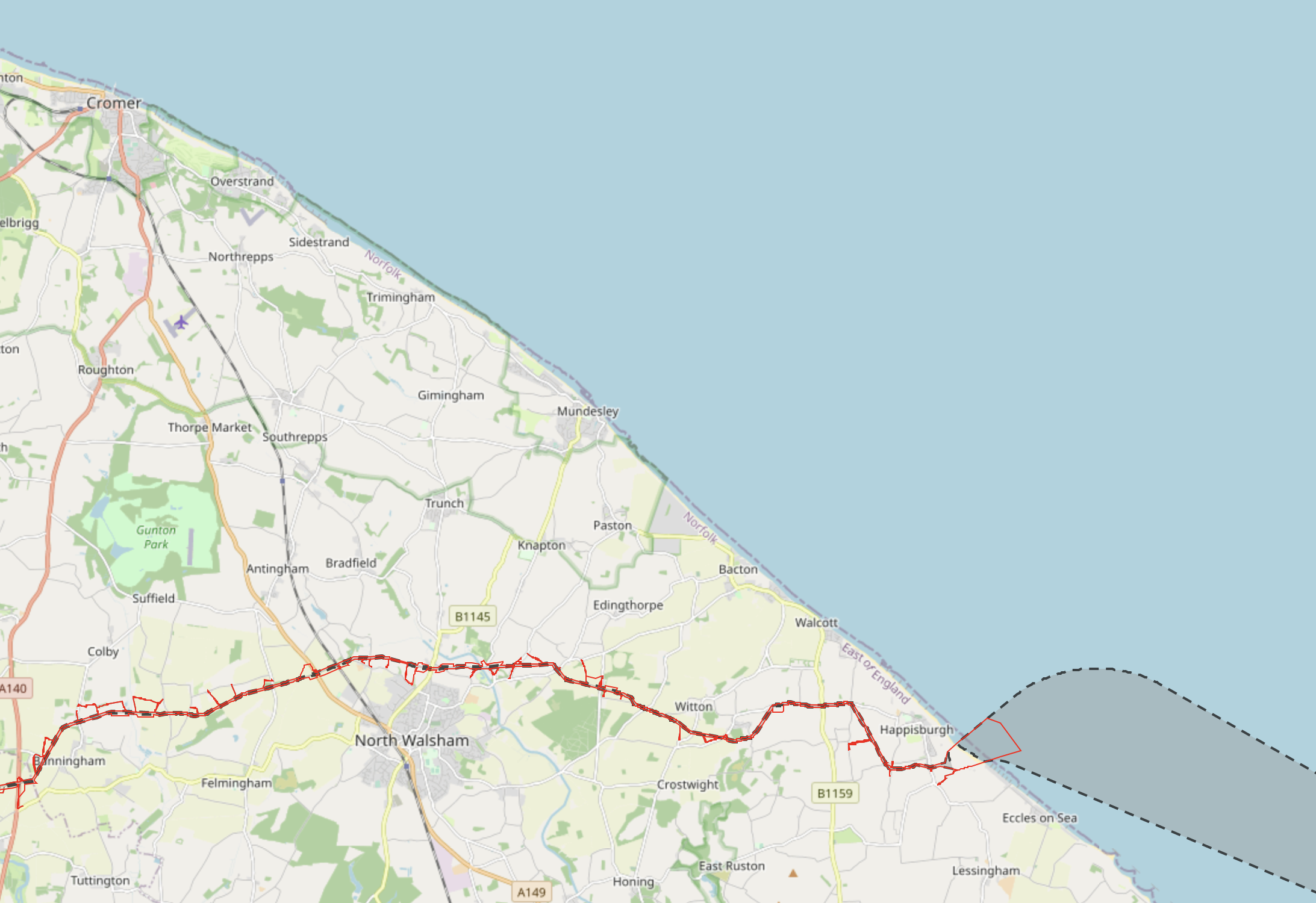
Note.
- The cables are planned to come ashore between Happisburgh and Eccles-on-Sea.
- Bacton is only a short distance up the coast.
- The onshore cable is planned to go from here across Norfolk to the Necton substation.
But the planning permission was overturned by a legal ruling.
This article on the BBC is entitled Norfolk Vanguard: Ministers Wrong Over Wind Farm Go-Ahead, Says Judge.
These are the first four paragraphs.
A High Court judge has quashed permission for one of the world’s largest offshore wind farms to be built off the east coast of England.
The Norfolk Vanguard Offshore Wind Farm was granted development consent in July by the Secretary of State for Business, Energy and Industrial Strategy (BEIS).
But Mr Justice Holgate overturned the decision following legal action from a man living near a planned cable route.
A Department for BEIS spokeswoman said it was “disappointed by the outcome”.
This is a paragraph in today’s BBC article.
Kwasi Kwarteng, Secretary of State at the Department of Business, Energy and Industrial Strategy, granted development consent for the wind farm, having re-determined the application.
So will we be back to the Law Courts?
In Is There A Need For A Norfolk-Suffolk Interconnector?, I said this.
But seriously, is it a good idea to dig an underground cable all the way across Norfolk or in these times build a massive overhead cable either?
Perhaps the solution is to connect the Norfolk Boreas And Norfolk Vanguard wind farms to a giant electrolyser at Bacton, which creates hydrogen.
- The underground electricity cable across Norfolk would not be needed.
- Bacton gas terminal is only a few miles up the coast from the cable’s landfall.
- The UK gets another supply of gas.
- The hydrogen is blended with natural gas for consumption in the UK or Europe.
- A pure hydrogen feed can be used to supply hydrogen buses, trucks and other vehicles, either by tanker or pipeline.
- Excess hydrogen could be stored in depleted gas fields.
Thye main benefit though, would be that it would transform Bacton gas terminal from a declining asset into Norfolk’s Hydrogen Powerhouse.
For more information on blending hydrogen into our natural gas supply see HyDeploy.
 The Anonymous Widower