Green Volt On Track To Power UK Oil & Gas Platforms By Mid-2020s
The title of this post, is the same as that of this article on offshoreWIND.biz.
This is the sub-heading.
Flotation Energy and Vårgrønn have submitted a Marine Licence application for the Green Volt floating offshore wind farm.
These two paragraphs outline the project.
This consent application could allow the project to start generating power in the mid-2020s, making it the most advanced oil and gas decarbonisation project in the UK, the developers said.
Flotation Energy and Vårgrønn are applying for a lease for Green Volt under the Crown Estate Scotland’s Innovation and Targeted Oil and Gas (INTOG) round.
Green Volt wind farm already has a web site, which gives these details of the wind farm.
- It will be 50 miles off Peterhead.
- 300-500 MW
- Operational in 2027.
The offshoreWIND.biz article also says that the project has the potential to generate enough green power to electrify all major oil and gas platforms in the Outer Moray Firth area.
I can’t wait for the successful INTOG bids to be announced in April.
Engineers are creating exciting times.
Scotland And Brittany Discuss Partnership On Floating Wind Turbines
The title of this post, is the same as that of this article on offshoreWIND.biz.
This is the sub-heading.
A delegation of fifteen Scottish companies met in Rennes, France, with companies from the Brittany offshore wind and marine energy sector to discuss the development of partnerships around floating wind turbines.
I can see more partnerships like this.
Wind Power For 1.2m Homes Is Wasted Because Of Lack Of Storage
The title of this post, is the same as that of this article on the Daily Telegraph.
These two paragraphs outline what happened.
Enough wind power to supply 1.2m homes a day was wasted over winter because there is no capacity to store extra energy generated on gusty days, according to new research.
National Grid’s electricity system operator asked wind turbines which were expected to generate about 1.35 terawatt-hours of electricity between October and January to switch off instead because they were not needed to meet demand at the time, according to the consultancy Stonehaven.
The problem has been flagged up by Rupert Pearce of Highview Power, who in my view could have a solution with their CRYOBatteries.
Pearce is quoted as saying this.
Renewable energy storage is essential to powering a cleaner, cheaper, always-on Britain.
By capturing and storing excess renewable energy, which is now the UK’s cheapest, most secure and most abundant form of energy, we can power Britain’s homes and businesses with renewable green energy, taking millions of tonnes of carbon out of the atmosphere and ending a culture of reliance on expensive foreign imports.
He’s too bloody right! And my experience of mathematical modelling large vessels at ICI in the 1970s, says that Highview Power have one of the sensible solutions to large scale energy storage.
Multi-Turbine Windcatcher Secures More Funding
The title of this post, is the same as that of this article on offshoreWIND.biz.
This is the sub-heading.
Norway’s Wind Catching Systems AS, the developer of the Windcatcher floating offshore wind technology, has secured a pre-project grant of NOK 9.3 million (USD 0.9 Million) from ENOVA.
The Windcatcher certainly looks impressive on the home page of the Wind Catching Systems AS web site.
This image is of the over-station development at Moorgate station.
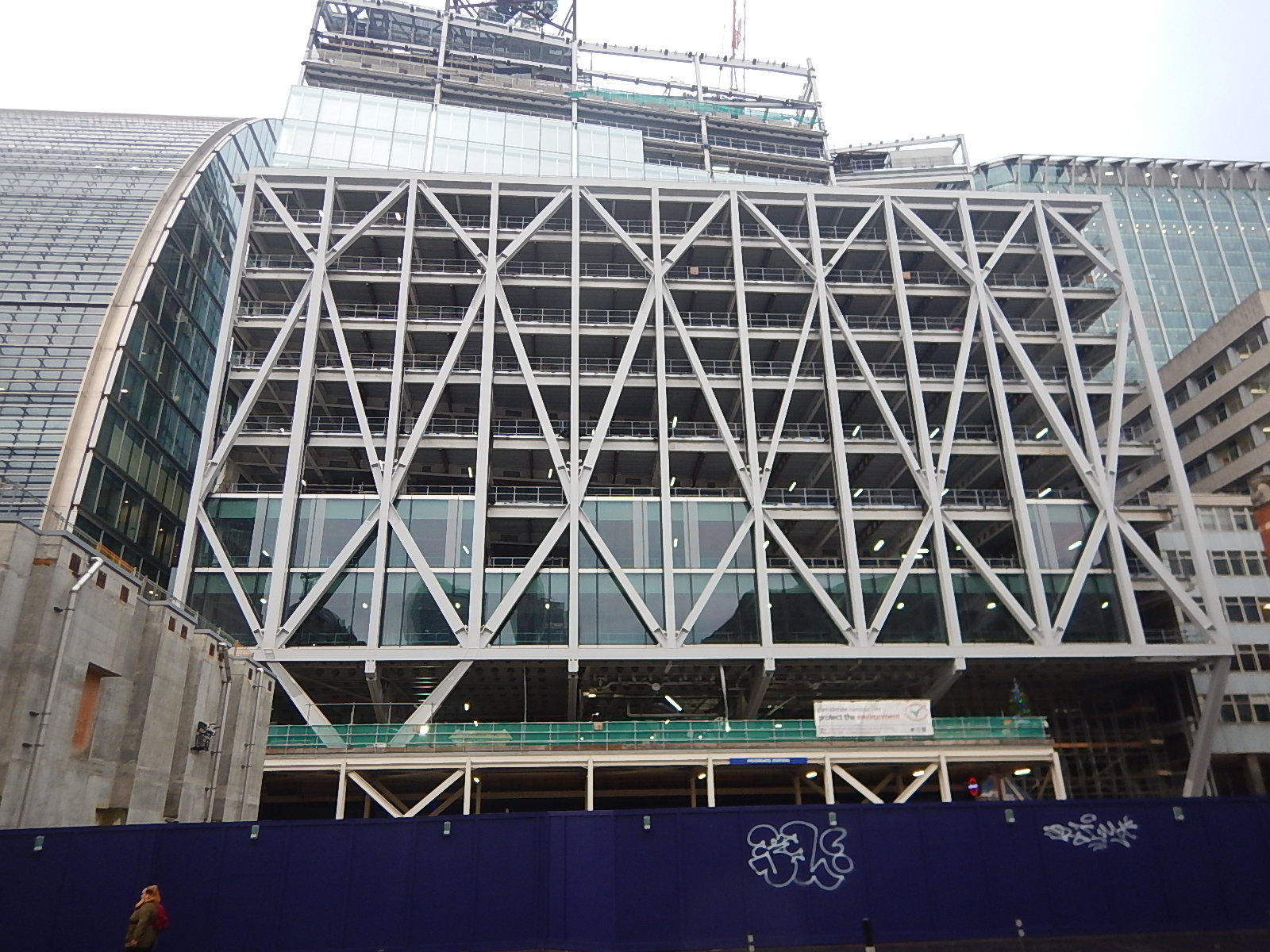
If this structure is strong enough to hold up an eight floor building, surely a system can be designed to hold up a number of small wind turbines.
But will it work well in practice or is it just something that looks good in a visualisation?
Note that aerodynamics and fluid flow are difficult subjects to model on a computer, as I say from experience of getting nowhere, when I tried to mathematically model a plastic extruder at ICI in the early 1970s.
But I did successfully invest in two guys, who went on to develop the Respimat inhaler for Boehringer Ingelheim.
So I have had mixed success in dealing with these tricky subjects.
When I look at the Windcatcher, I think there’s a fifty-percent chance, that it will be a success and a lot depends on the investors.
I do wish the company well and I feel it in my bones, that a couple of weird turbine designs will be runaway successes.
So Many Floating Wind Designs, So Few Test Sites – Norwegian METCentre Sold Out
The title of this post, is the same as that of this article on offshoreWIND.biz.
This is the sub-heading.
There are currently more than 80 floating wind technology concepts and designs worldwide, and testing even a certain number of these could prove to be an endeavour since there are not many test sites dedicated to floating wind technology in Europe.
It strikes me that we need more test centres.
As UK waters will in the next couple of decades be home to a lot more GW of wind farms, perhaps we should develop a test centre.
I wonder, if South Wales would be the place for a test centre.
- There is a lot of sea, which isn’t cluttered with oil and gas rigs, and wind farms.
- There are a lot of wind farms planned in the area.
- There are at least two good technology universities.
- There are some deep water ports.
- Electricity connections and power generation are good.
- There is good train connections to the rest of England and Wales.
- A train testing centre is being built at Nant Helen. Some tests needed to be done could be the same.
Some innovative designs for wind turbines are also being developed in South Wales.
World’s First Offshore Wind Farm Using 16 MW Turbines Enters Construction In China
The title of this post, is the same as that of this article on the offshoreWIND.biz.
This is the sub-heading.
China Three Gorges Corporation (CTG) has started construction of the second phase of its offshore wind farm Zhangpu Liuao. The project will be both China’s and the world’s first wind farm to comprise 16 MW wind turbines.
I hope the Chinese have done all their calculations, research and testing. The dynamics of large wings are tricky and there are a lot of square law factors involved. I’d always be worried that at a particular wind speed a dangerous vibration will be setup.
How many Chinese engineers have seen videos of Galloping Gertie?
As the video says, no one was injured or killed, when the Tacoma Narrows Bridge fell into the river, but we nearly had a very similar disaster in the UK. I used to work at ICI in Runcorn and at the time, I lived in Liverpool, so every day, I went to work I crossed the Silver Jubilee Bridge twice.
One day, after a party in Cheshire, I even got so drunk, I had to stop the car on the bridge and was sick into the Mersey. It was before C and myself were married and she always claimed she nearly called the marriage off, after the incident.
But have you ever wondered, why that bridge is a through arch bridge rather than a suspension bridge as over the Forth, Hmber and Severn, which were all built around the same time?
Wikipedia has a section, which describes the Planning of the bridge.
The new bridge had to allow the passage of shipping along the Manchester Ship Canal. Many ideas were considered, including a new transporter bridge or a swing bridge. These were considered to be impractical and it was decided that the best solution was a high-level bridge upstream from the railway bridge. This would allow the least obstruction to shipping and would also be at the narrowest crossing point. The first plan for a high-level bridge was a truss bridge with three or five spans, giving an 8 yards (7 m) dual carriageway with a cycle track and footpaths. This was abandoned because it was too expensive, and because one of the piers would be too close to the wall of the ship canal. The next idea was for a suspension bridge with a span of 343 yards (314 m) between the main towers with an 8 yards (7 m) single carriageway and a 2-yard (2 m) footpath. However aerodynamic tests on models of the bridge showed that, while the bridge itself would be stable, the presence of the adjacent railway bridge would cause severe oscillation.
The finally accepted design was for a steel through arch bridge with a 10-yard (9 m) single carriageway. The design of the bridge is similar to that of Sydney Harbour Bridge but differs from it in that the side spans are continuous with the main span rather than being separate from them. This design feature was necessary to avoid the problem of oscillation due to the railway bridge. The main span measures 361 yards (330 m) and each side span is 83 yards (76 m).
But that misses out part of the story that I learned about at ICI.
I developed a very simple piece of electronics for ICI Runcorn’s noise and vibration expert. The equipment allowed the signals from two noise meters to be subtracted. This meant that if they were pointed in different directions, the noise generated by an object or piece of equipment could be determined.
The noise and vibration expert had tremendous respect from his fellow engineers, but his involvement in the design of the Runcorn bridge had elevated him to a legend.
The designers of the suspension bridge, that is detailed in the Wikipedia extract, presented their design to the ICI (Merseyside) Scientific Society.
The noise and vibration expert was at the meeting and questioned the design and said it would collapse due to oscillations caused by the presence of the railway bridge. He advised aerodynamic tests should be done on the bridge.
His back of the fag packet calculations were shown by tests to be correct and the bridge was built as a through arch bridge.
These pictures show the bridge.


They were taken from a train on the railway bridge.
Equinor And SSE Eye Green Hydrogen Production For 1.32 GW Dogger Bank D
The title of this post, is the same as that of this article on offshoreWIND.biz.
This is the sub-heading.
SSE Renewables and Equinor, the developers of the Dogger Bank Wind Farm in the UK, are exploring two options for Dogger Bank D, the fourth wind farm the partners are looking to build as part of the development. These include using Dogger Bank D for electricity that would feed into the UK grid and/or for green hydrogen production.
This says to me, that depending on need, electricity from the Dogger Bank Wind Farms and D in particular, can be distributed in the grid or converted into green hydrogen.
- The article says that the electrolyser could become the UK’s largest green hydrogen project
- There will be plenty of hydrogen storage in the salt caverns at Aldbrough, which can currently store the equivalent of 320 GWh of electricity, It is currently being expanded to be one of the largest hydrogen stores in the world according to this page on the SSE web site.
- There are currently two gas-fired power stations at Keadby and they will in a few years be joined by a third, that will be fitted with carbon-capture and a hydrogen-fueled power station.
The various wind farms, power stations and gas storage on Humberside are growing into a very large zero-carbon power cluster, with an output approaching six GW.
Any shortfall in wind output, could be made-up by using the Keadby 3 gas-fired power station with carbon capture or the Keadby hydrogen power station.
Conclusion
Humberside is getting a cluster of power stations and wind farms, that can produce almost twice the electricity of Hinckley Point C nuclear power station.
Kittiwake Compensation
The title of this post, is the same as that of this page of Ørsted’s Hornsea Three web site.
The first section of the page gives the background.
Hornsea 3 Offshore Wind Farm received planning permission in December 2020. As part of our Development Consent Order, a requirement was included for ecological compensation measures for a vulnerable seabird species whose populations could be affected by wind farms – the Black-legged kittiwake (Rissa tridactyla).
Our compensation plan focusses on providing artificial nesting structures for kittiwake along the east coast of England. This project is the first of its kind and we are working on new and innovative designs for the artificial nesting structures. Each structure will be purpose-built, bespoke and specific to the landscape characteristics of each location. The structures also present an educational opportunity, allowing researchers to better understand kittiwake.
Developing effective environmental compensation measures is essential to ensure the UK Government’s targets for offshore wind can be realised, to deliver a net zero-carbon future.
So kittiwakes are not being paid compensation, as I don’t suspect many have bank accounts.
But they are being built a few new nesting structures.
Wikipedia has an entry on kittiwakes.
It notes that all European kittiwakes are of the black-legged variety and this is a picture, I took of some on the Baltic in Newcastle.

I’ve seen several pictures of kittiwakes lined up like these.
The document goes on to describe the work being done for the kittiwakes and this is said about work in East Suffolk.
Lowestoft and Sizewell are the only locations between Kent and Humberside with thriving kittiwake colonies. Kittiwake normally nest on steep cliffs with narrow ledges. East Anglia doesn’t have these natural nesting spaces, so kittiwake have reverted to colonising urban areas, for example on windowsills and ledges of buildings. Kittiwake breeding for the first time are most likely to find artificial structures that are situated close to these urban areas. They are less likely to find structures in places where there are not already kittiwake. Lowestoft and Sizewell are therefore two of the few places in East Anglia where artificial structures could be colonised quickly. These purpose-built nesting sites would improve breeding conditions for kittiwake, whilst successfully achieving our compensation requirements to unlock the world’s biggest offshore wind farm.
I took this picture of kittiwakes at Sizewell.
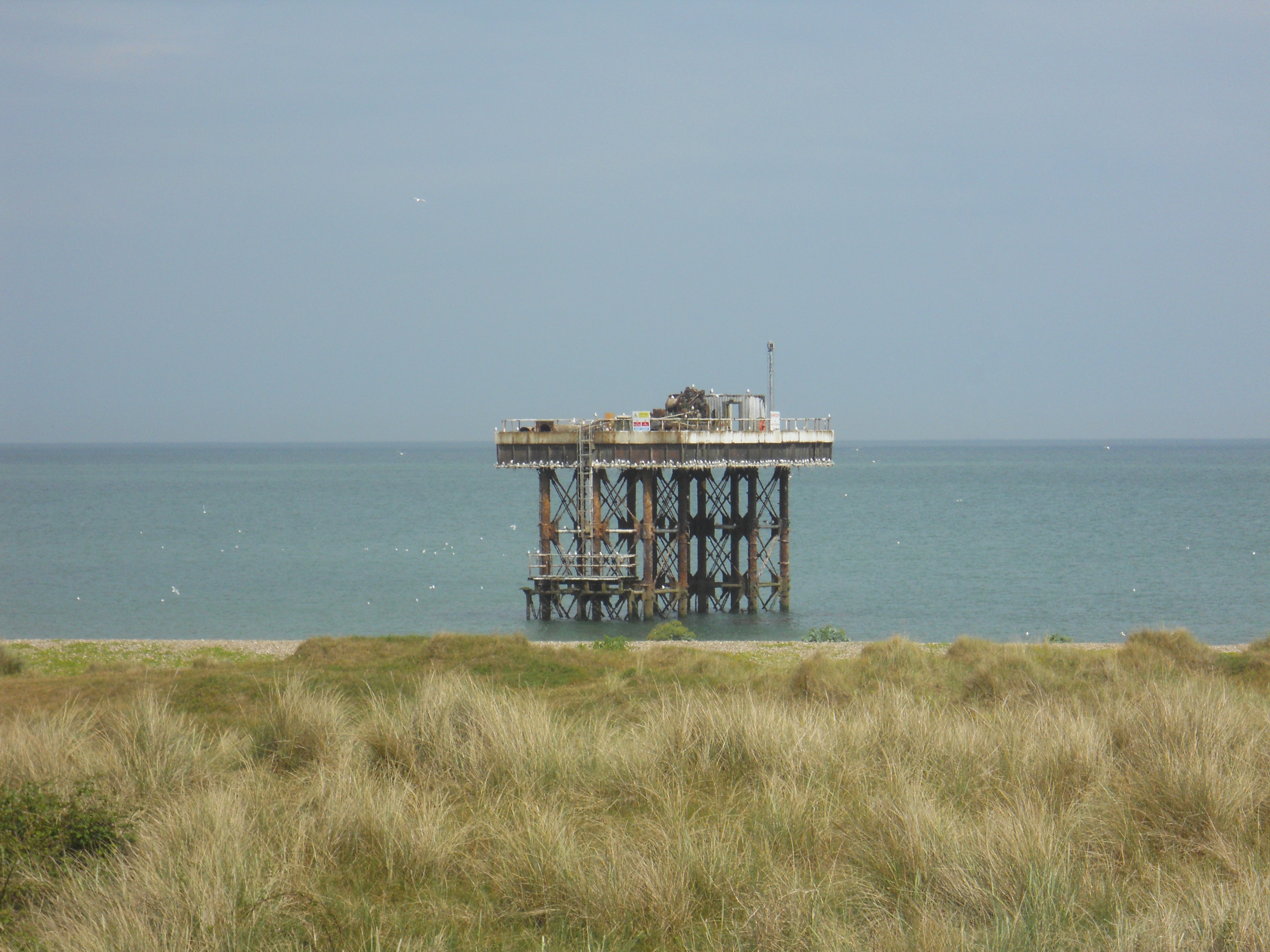
It doesn’t seem too unlike the structure on the Hornsea 3 web site.
An Elegant Solution
There’s an old English expression about couples lying in bed like spoons.
I wonder, if this analogy is used in other languages like Swedish.
Swedish company; Bassoe Technology have certainly used the stacking technique of spoons or bodies in the design of their innovative wind-turbine floats, which they call D-Floaters.
This visualisation shows five D-floaters being transported on a ship.
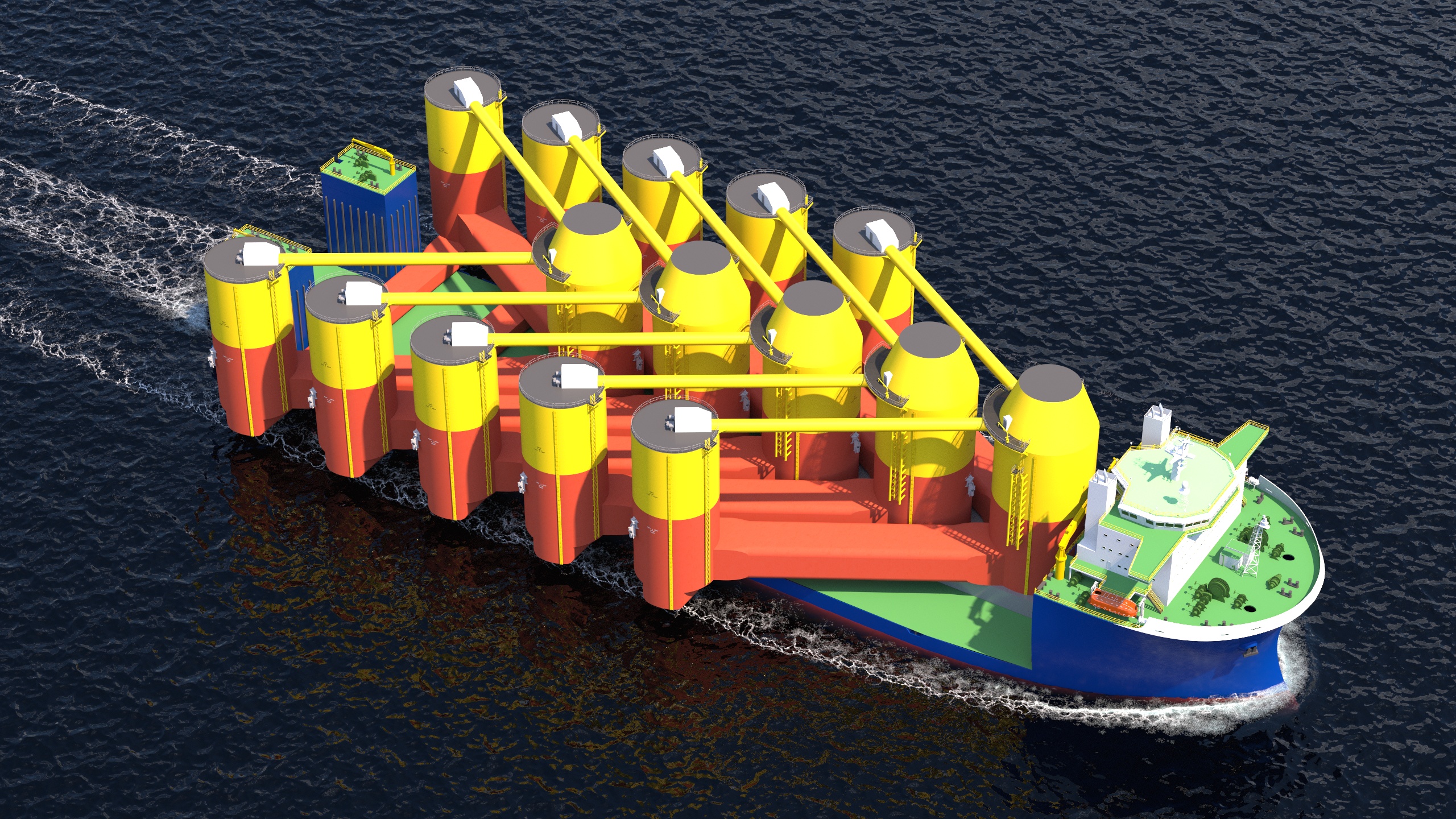
Note.
- The D-Floaters do look strong and sturdy.
- There are several competing floats for wind turbines based on triangles.
- There is probably an optimal cost between transporter ships and D-Floaters.
Given that these structures may be moved thousands of miles before installation, this method of transportation must be economic.
The loaded ship does remind me of one of the bath toys my kids had in the 1970s.
MPS Floating Platform To Feature FibreMax Tendons
The title of this post, is the same as that of this article on offshoreWIND.biz.
This is the sub-heading.
Welsh company Marine Power Systems (MPS) has joined forces with FibreMax to provide integrated floating foundation and tendon solutions to the growing floating offshore wind sector.
And these three paragraphs outline the design.
The tendon solution will be used in the anchoring and moorings of MPS’ tension leg platform (TLP), called PelaFlex, to deliver the highest system stability and zero tilt, the partners said.
It will be the “world’s first” TLP with FibreMax tendons, made with Twaron fiber from Japan-headquartered Teijin.
Compared to traditional steel moorings synthetic cable offers a much better strength-to-weight ratio, longer operational life, and lower levels of maintenance, according to the partners.
Note.
- PelaFlex tension leg platforms are used in the project I wrote about in Simply Blue Group And Marine Power Systems To Pursue INTOG Innovation Project Opportunity.
- Wikipedia is a good source of information on tension leg platforms, where there is a large section on how they could be used for wind turbines.
- Twaron has an informative product page.
- There is more about PelaFlex on the PelaFlex web page including a video.
- The press release for the joint Simply Blue/MPS project talks of six turbines totalling up to 100 MW, which is probably around 17 MW per wind turbine.
It looks to me, that the PelaFlex design is getting better by the simple process of adding lightness and therefore being able to have a higher energy density in a deep area of the sea.
The amount of innovation involved probably makes PelaFlex an ideal component for the upcoming INTOG leasing round.

