East Coast Main Line Northern Power Supply Works Funded
The title of this post, is the same as that of this article on Railway Gazette.
This is the introductory paragraph.
As part of its £1·2bn East Coast Upgrade programme, Network Rail has awarded a £216·2m contract to the Rail Electrification Alliance for the long-awaited strengthening of the 25 kV 50 Hz traction power supplies on the northern section of the East Coast Main Line between Doncaster and Edinburgh.
It is much-needed. if the planned extra electric services are to be run on the route.
These could include.
- East Coast Train‘s new London and Edinburgh service.
- Extra TransPennine Express services and some services converting from diesel traction.
- Extra LNER services to Middlesbrough and other destinations.
- Conversion of Grand Central services to electric or bi-mode traction.
Will Freightliner use some of its new fleet of thirteen Class 90 locomotives on the route?
Will News Of The Upgrade Bring Forth Train And Locomotive Orders?
I wonder if this could happen.
Freight operators need to decarbonise, but surely there’s a bit of a chicken-and-egg situation on the East Coast Main Line, as there’s no point in ordering electric locomotives for the route, until you have a date, from when they can be used.
Conclusion
This upgrade will have some very good xonsequences.
Scunthorpe Steelworks
On my way back from Cleethorpes, I passed Scunthorpe Steelworks.


It did seem rather quiet, although I did pass a train-load of new rails on their way to somewhere.
The Future Of Steel-Making
Steel-Making is on its uppers in the UK and it has a bad carbon footprint.
However, various processes are in development that could make the industry fit for the Twenty-First Century.
HIsarna Steelmaking
In Whitehaven Deep Coal Mine Plan Moves Step Closer, I said this.
In Wikipedia, there is an entry for the HIsarna ironmaking process.
This process is being developed by the Ultra-Low Carbon Dioxide Steelmaking (ULCOS) consortium, which includes Tata Steel and the Rio Tinto Group. Reduction in carbon-dioxide produced by the process compared to traditional steel-making are claimed to be as high as fifty percent.
This figure does not include carbon-capture to reduce the carbon-dioxide still further.
However, looking at descriptions of the process, I feel that applying carbon-capture to the HIsarna steelmaking process might be a lot easier, than with traditional steelmaking.
As Scunthorpe is close to Theddlethorpe Gas Terminal, the captured carbon-dioxide could probably be stored in wells connected to the terminal.
Hydrogen Steelmaking
North-East Lincolnshire is becoming the new Aberdeen, but instead of being based solely on oil and gas, there is a large proportion of wind energy being reaped.
In the future, I believe that a lot of this wind energy will be turned into hydrogen gas both onshore and increasing off-shore scores of miles out in the North Sea. There is talk of upwards of 70 GW of wind turbines being installed and much of it will be turned into hydrogen in North-East Lincolnshire.
In Funding Award to Supply An 8MW Electrolyser, I wrote about hydrogen steelmaking and the HYBRIT process in particular.
Will some of this massive amount of hydrogen be piped to Scunthorpe to make steel?
Conclusion
The future of steelmaking in Scunthorpe, doesn’t have to be all doom and gloom.
Geo-located Advertising
I took this picture on the TransPennine Express service from Cleethorpes to Doncaster.
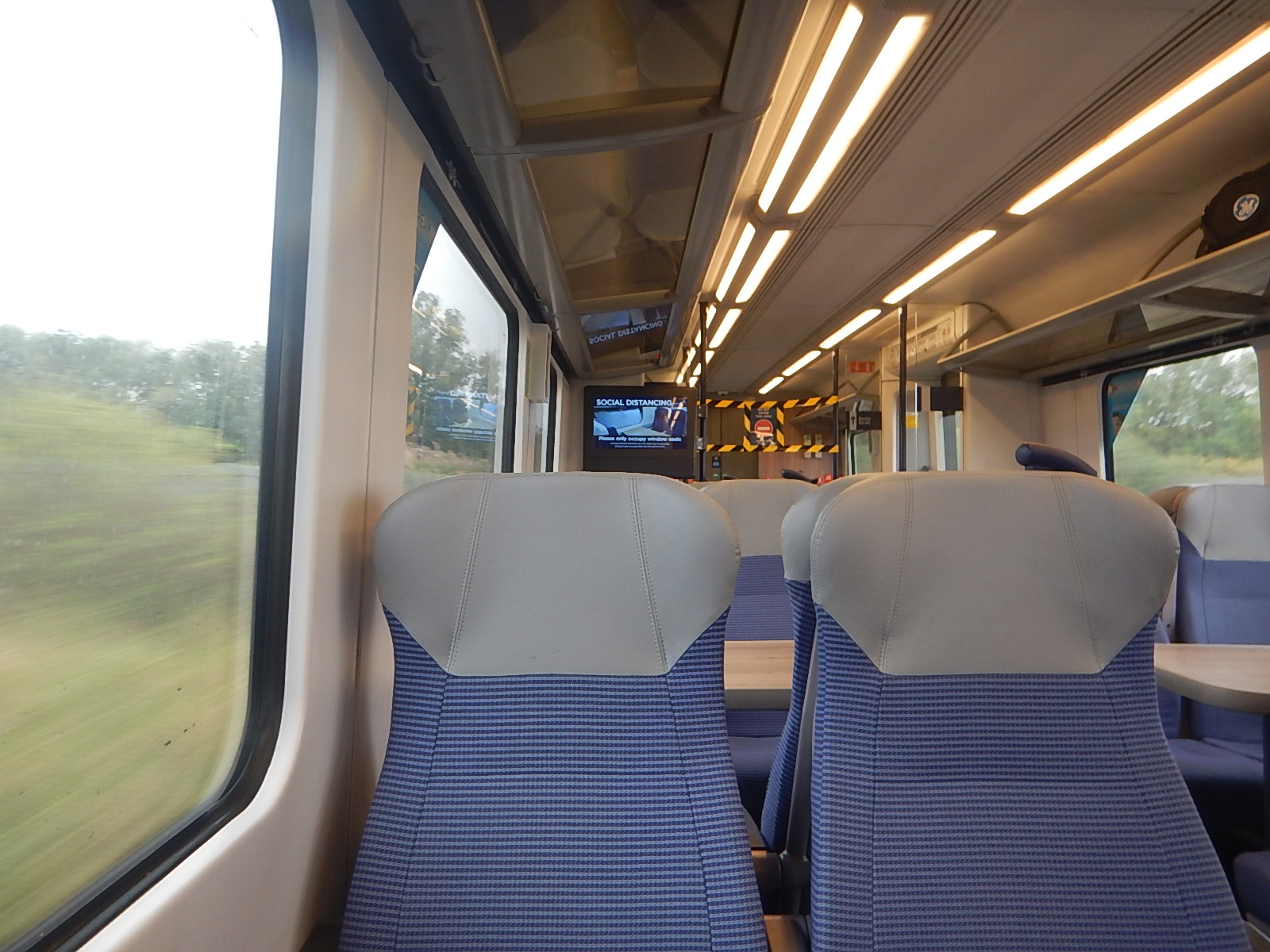
We were approaching Habrough station at the time, and I’d just seen an advert on the screen for Habrough Taxis.
It must have been displayed because of the location of the train. Very useful for everybody!
Suzie’s Cup Of Joy
It must be very difficult for small cafes in this pandemic, but Suzie’s Cup of Joy in Cleethorpes seemed to be managing. They were certainly doing all the right things.





I had a gluten-free breakfast there on Wednesday.
I would have sat outside, but it was rather breezy.
Tory London Mayoral Candidate Wants Sponsorship Deals For Tube Station Names To Raise TfL Cash
The title of this post, is the same as that of this article on the Telegraph.
This is the introductory paragraph.
Underground stations could be renamed under plans put forward by the Conservative London mayoral candidate for a £100 million a year sponsorship deal to bolster investment in the capital’s public transport network.
I think it could be an idea worth pursuing, as due to Sadiq Khan’s bribe of a fare freeze to get elected Transport for London’s finances are in a terrible state.
The article says, that Dubai, Madrid and New York already use similar ideas to raise money.
Remember, London already has one station, where name was changed for a local business; Gillespie Road station was renamed Arsenal in 1932.
Let’s Be Creative!
I also think, if we are creative, we could make the stations much more passenger-friendly, with respect to services nearby.
Imagine a board, with Alight Here For at the top and slots for local shops and businesses below. Each slotted-in advert would be a perhaps a foot wide and four inches high, saying something like. “Boots 100 metres” or “Costa Here!”
Gatwick Rail Service Could Link Far Reaches Of The South East
The title of this post, is the same as that of this article on Surrey Live.
Despite being reported on Surrey Live and the fact that Gatwick is in Sussex, the plan has been proposed by Kent County Council’s Rail Project Manager.
The plan would extend the existing Great Western railway line – which runs from Reading to Gatwick via Redhill – to mid and east Kent.
The article suggests the service could go between Reading and Canterbury West stations.
This table sums up the connectivity.
- Reading – West and South West England, Wales, Oxford, Hereford and Worcester and the West Midlands – Future – East West Rail
- Guildford – Portsmouth Direct Line
- Dorking – Mole Valley Line
- Redhill – Brighton Main Line
- Gatwick Airport – Brighton Main Line
- Tonbridge – South Eastern Main Line
- Ashford International – Amsterdam, Brussels and Paris – Future – Bordeaux, Cologne, Frankfurt and Geneva
I have a few thoughts.
The Terminal Stations
The suitability of the two proposed terminals can be summed up.
- Reading has been designed as a terminal station, with five bay platforms, three of which can be used by Gatwick services.
- Canterbury West has not been designed as a terminal station and has no bay platforms.
Perhaps Ashford International station would be a better Eastern terminal?
- It has Eurostar services.
- Trains can terminate in Platform 1 and go to Tonbridge.
- It has lots of car parking.
Dover Priority and Ramsgate could also be possibilities as they have terminal platforms.
Connecting At Gatwick Airport
It looks like a combined service might get complicated in the Redhill/Gatwick area.
- Trains between Reading and Gatwick go via Redhill station, where they reverse.
- There is no direct route between Tonbridge and Gatwick, so trains will probably have to reverse at Redhill, to go between Tonbridge and Gatwick.
Would a service between Reading and Ashford, that reversed twice at Redhill and once at Gatwick, be rather tricky to operate? Or even unpopular with passengers?
This Google Map shows Redhill station and the lines leading South from the station.
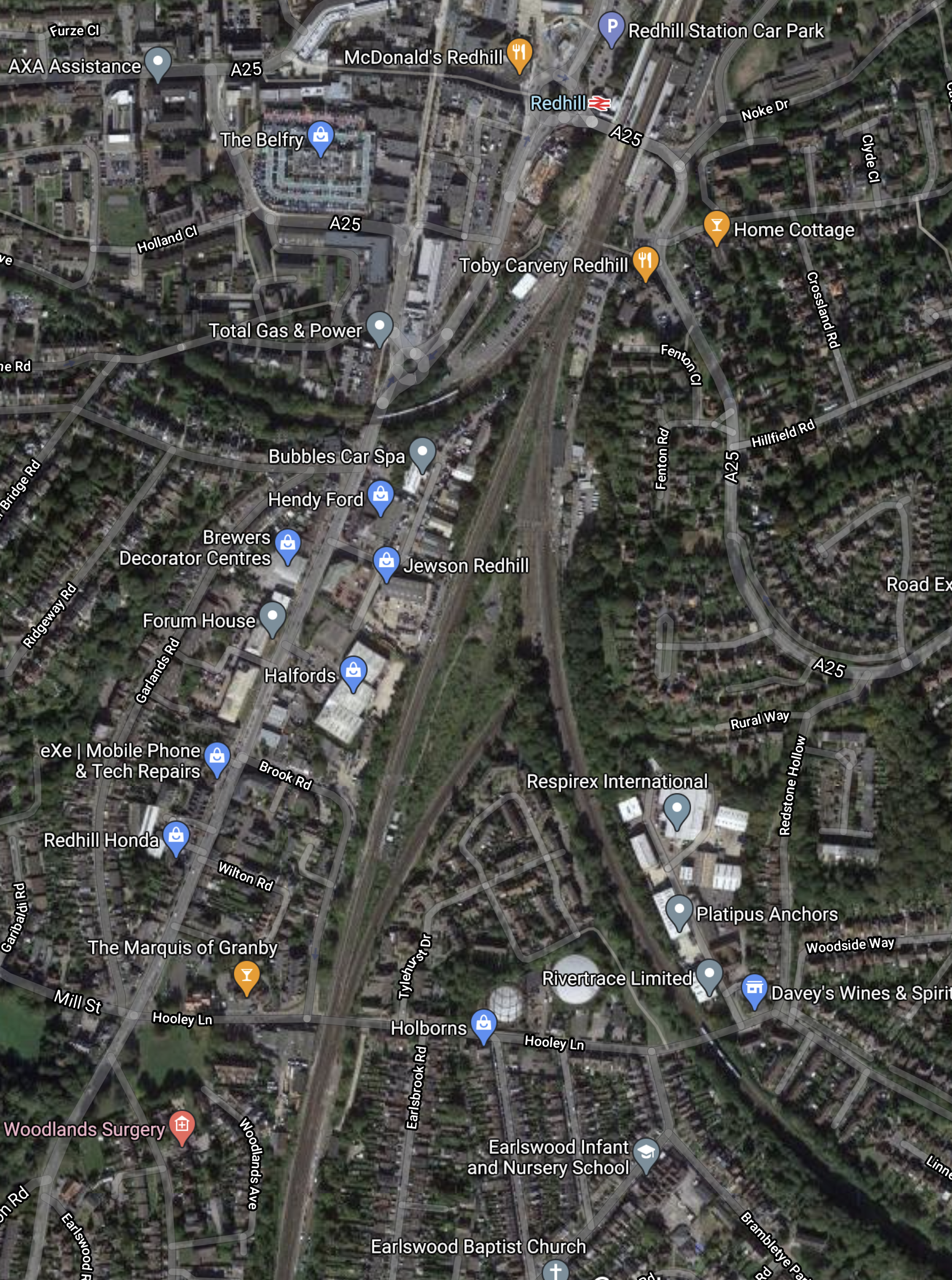
Note.
- Redhill station at the top of the map.
- The Brighton Main Line running North-South in the middle of the map.
- The North Downs Line to Guildford and Reading curving West from the station.
- The Redhill and Tonbridge Line to Tonbridge and Ashford leaving the map in the South-East corner.
I suspect that adding extra tracks in a very crowded area will be very difficult.
What Do The Timings Show?
A quick calculation, which is based on current timings, can give a journey time for between Ashford and Gatwick Airport.
- Ashford and Tonbridge – Southeastern timing – 38 minutes
- Tonbridge and Redhill – Southern timing – 35 minutes
- Reverse at Redhill – GWR timing – 4 minutes
- Redhill and Gatwick – GWR timing – 8 minutes
This gives a total of eighty-five minutes.
- Google says that you can drive it in sixty-three minutes.
- If you took the train today, between Ashford International and Gatwick Airport stations, the fastest rail journey is around 110 minutes with a change at St. Pancras International.
It does look though that a faster train between Kent and Gatwick Airport could be competitive, as going via London certainly isn’t!
Could Simplification And Automation Provide A Solution?
Consider.
- The Ashford International and Tonbridge timing, that I have used includes five stops.
- The Tonbridge and Redhill timing, that I have used includes five stops.
- How much time would be saved by only stopping at Tonbridge between Ashford International and Gatwick?
- Could automation handle a fast reverse at Redhill, where passengers couldn’t board or leave the train?
- Would a driver in each cab, allow the reverses to be done faster?
Trains going between Reading and Ashford International, would call at the following stations between Guildford and Tonbridge.
- Dorking Deepdene
- Reigate
- Redhill
- Gatwick Airport
- Redhill – A quick Touch-And-Go.
- Tonbridge
- Paddock Wood
If two minutes a stop could be saved at each of the nine omitted stops and at each reverse, this would save twenty minutes East of Gatwick, which would give the following timings.
- Gatwick and Tonbridge – 27 minutes
- Gatwick and Ashford International – 65 minutes
Timings would be compatible with driving.
West of Gatwick, the service would be as the current GWR service.
- After arriving at Gatwick from Ashford, the train would reverse.
- En route it would reverse at Redhill, to continue to Reading.
Passengers wanting to go between say Tonbridge and Redhill, would use this reverse at Redhill to join and leave the train.
It would be an unusual way to operate a train service, but I feel it could be made to work, especially with the right automation and/or a second driver.
Trains For The Service
The service can be split into various legs between Ashford and Reading.
- Ashford and Tonbridge – Electrified – 26.5 miles – 38 minutes
- Tonbridge and Redhill – Electrified – 20 miles – 35 minutes
- Redhill and Gatwick – Electrified – 7 miles – 8 minutes
- Gatwick and Redhill – Electrified – 7 miles – 8 minutes
- Redhill and Reigate – Electrified – 2 miles – 4 minutes
- Reigate and Shalford Junction – Not Electrified – 17 miles – 20 minutes
- Shalford Junction and North Camp – Electrified – 9 miles – 11 minutes
- North Camp and Wokingham – Not Electrified – 11 miles – 14 minutes
- Wokingham and Reading – Electrified – 7 miles and 9 minutes
Note.
- Ashford, Tonbridge, Redhill, Gatwick, Guildford, Wokingham and Reading are all fully-electrified main line stations.
- Most of the route and the two ends are electrified.
- All electrification is 750 VDC third rail.
- All sections without electrification are less than twenty miles.
This route would surely be ideal for a battery electric train.
As both the Heathrow and Gatwick Express services are run using Class 387 trains and the Stansted Express has used Class 379 trains for the last few years, similar trains to these might be an ideal choice, if they could be fitted with battery power and the ability to use 750 VDC third-rail electrification.
The facts seem to be on the side of this service.
- There are spare Class 387 trains and some more will be released by c2c in the next few years.
- Greater Anglia will be replacing their Class 379 trains with new Class 745 trains.
- A Class 379 train was used to test the concept of battery electric trains.
- Both class of trains could be fitted with third-rail gear.
Either of these trains could be used for the service.
As they are 100 or 110 mph trains with good acceleration, they might even save a few minutes on the journey.
Infrastructure Changes
I suspect they could be minimal, once it was worked out how to handle the three reverses in the Gatwick and Redhill area.
Conclusion
I think it would be a feasible plan to run an Ashford and Reading service via Gatwick.
I would also decarbonise the route at the same time, as it must be one of the easiest routes in the country to run using battery electric trains.
- There is electrification at both ends and in the middle.
- The longest stretch of track without electrification is just seventeen miles.
- All charging could be done using existing electrification.
- There are platforms at both ends, where trains can get a full charge.
- There are trains available, that are suitable for conversion to battery trains for the route.
- No extra infrastructure would be needed.
- Battery electric trains would allow extension of the route to Oxford in the West.
How many extra passengers would be persuaded to take the train to Gatwick, by the novelty of a battery electric Aurport Express?
Marketing men and women would love the last point!
Warszawa – Vilnius Passenger Service To Launch Next Year
The title of this post, is the same as that of this article on Railway Gazette.
This paragraph describes the proposed service.
The service is expected to start in late 2021, offering a journey time between the two capitals of 8 h including a change of trains at the break-of-gauge in Kaunas. Initial ridership is estimated at 35 000 passengers/year. The need to change trains would be removed once the 1 435 mm gauge tracks are extended to Vilnius as part of the Rail Baltica project.
I intend to ride this train, as soon as it starts.
Go-Ahead For West London 460-Home Build To Rent Scheme
The title of this post, is the same as that of this article on Construction Enquirer.
This is the first paragraph.
The scheme is the first to be brought forward by Connected Living London, a partnership between build to rent specialist Grainger and Transport for London.
This must be the way for London to get best value from all the suitable sites for housing, owned by Transport for London.
Four sites are mentioned in the article.
- Next to Southall station
- Next to Arnos Grove station
- Montford Place in Kennington. which is currently being used as a construction site for the Northern Line Extension.
- Above the new Nine Elms station on the Northern Line Extension.
These are some thoughts on the sites.
Arnos Grove Station
The developers will have to be careful, with the design at Arnos Grove station, as it’s a Grade II* Listed building.
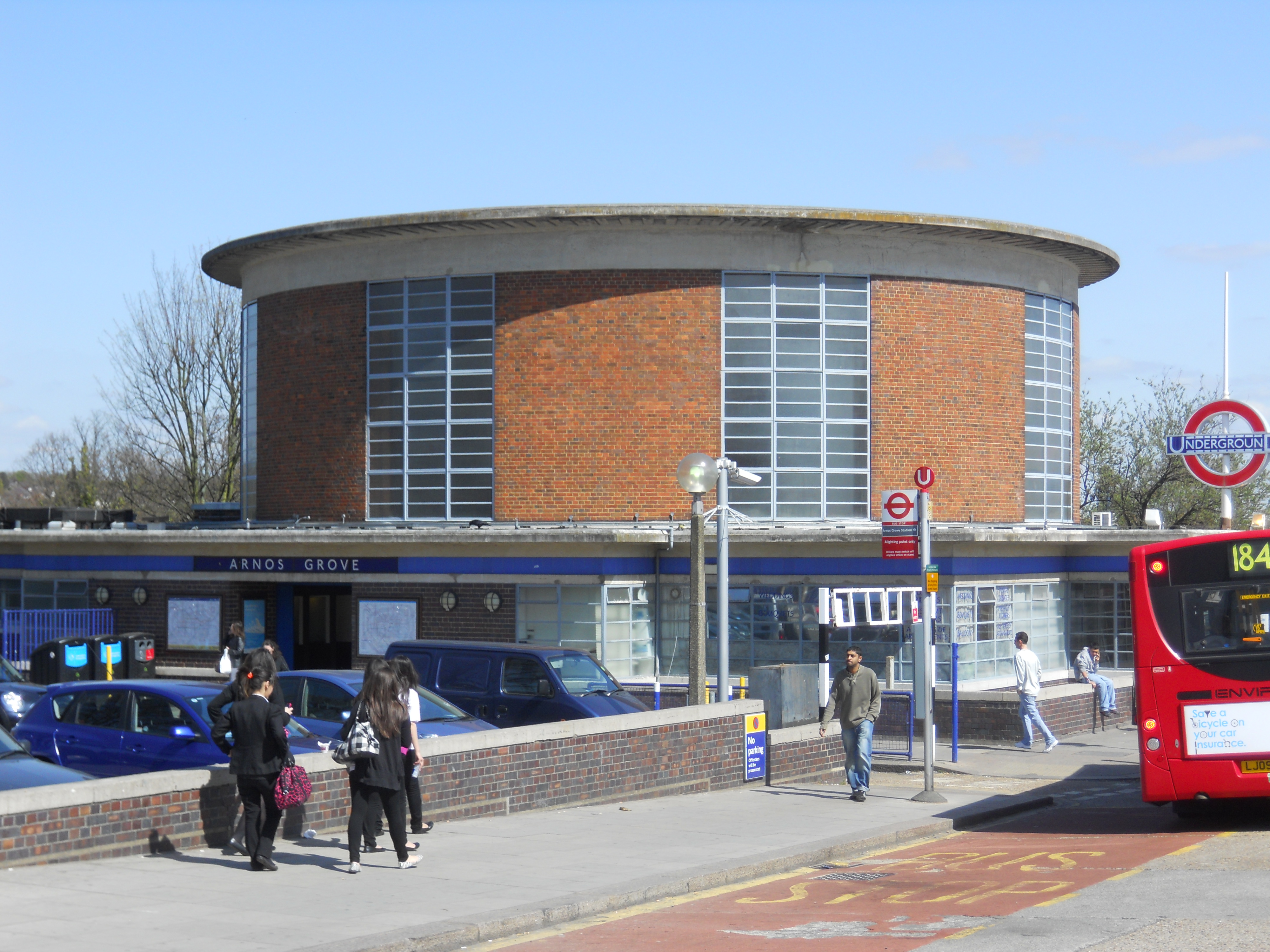
This Google Map shows the station.

I never knew, that the station had so much parking.
Will the development be over some or all of this car parking?
This article on Ian Visits is entitled Plans To Build Flats On Arnos Grove Tube Station Car Park.
Ian says that there will be four blocks, with a total of162 rental homes, of which 40 % will be affordable.
- It doesn’t seem to be high density or high towers.
- A map shows it is not over the railway.
Ian also says this about the loss of car parking.
Unsurprisingly, there are local objections to the plans to remove the car park with nearly 300 parking spaces, although TfL counters that a third of the people who currently drive to the station living within walking distance.
But then many people never drive very far from where they live. For environmental reasons, perhaps fossil fuel vehicles should pay a Movement Tax of say five pounds, every time the vehicle is moved in a built-up area. Zero-emission vehicles would be exempt!
Montford Place
I took these pictures of the Montford Place site in July.




This site could be sensitive too! But surely, the residents don’t want an ugly utilitarian headhouse for the ventilation shaft of the Northern Line Extension.
This Google Map shows the site.

It is not small, judging by the two buses at the side.
There’s also a large hole to cover!
Green Tugboats? ‘Revolutionary’ Hydrogen Ship Engine Unveiled In Belgium
The title of this post, is the same as that of this article on Business Green.
This is the first paragraph.
A “revolutionary” hybrid ship engine powered by green hydrogen and diesel has been unveiled today in Belgium, with developers claiming the innovation could cut CO2 emissions from ships, trains and electricity generators by up to 85 per cent.
The engine has been given the name BeHydro.
The first order has been received by the developers; ABC, for two 2MW dual fuel engines that will be installed on a hydrogen-powered tug for the Port of Antwerp.
Motors up to the size of 10 MW are under development.
This is the last sentence of the article.
In theory, any large diesel engine can be replaced by a BeHydro engine. The hydrogen future starts today.
It is a quote from the CEO of one of the companies involved.
Conclusion
This is a development to follow.
The BeHydro engine, with its dual-fuel approach, is claimed to cut carbon emissions by 85 %.
In the Wikipedia entry for ABC or Anglo Belgian Corporation, there is a section called Products. This is a paragraph.
The engines are found in use on large river barges such as those found on the Rhine, coastal freighters, fishing boats, ferries, tugboats (which typically use 2 engines), and other ships. Other applications include electricity generation, and pumping engines, engines for cranes, and locomotives (including the Belgian Railways Class 77 and Voith Maxima), as well as dual fuel (gas/oil) DZD engines.
I feel that that the BeHydro engine will keep the company busy.
Four Must-Read Articles From H2-View
I have just read these articles on H2-View.
- New partnership aims to convert Dash 8 airliner to hydrogen fuel
- 1,000 new hydrogen-powered buses planned for European roads
- Investing in hydrogen trains will put UK green recovery on the fast track
- Mercedes-Benz GenH2 Truck revealed
They are all worth a read.
The last one includes an informative video about German policy on hydrogen.
 The Anonymous Widower