A Walk Around Woolwich – 15th June 2022
I went to Woolwich station on the Elizabeth Line today and had a walk around.
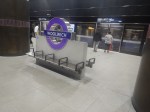

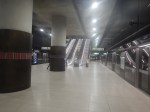


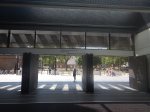

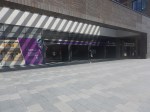













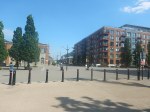
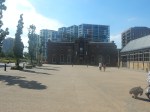
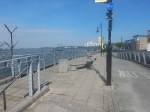



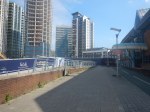


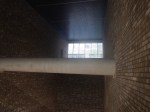
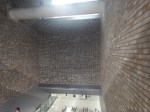
Note.
- Woolwich station is a simple station with only three escalators at one end direct to the platforms, which are in a tunnel.
- Both platforms have platform edge doors and a similar decor to some platforms on the Jubilee Line Extension.
- The escalator shaft and the booking hall are lined in brick.
- Next to the station is a large Marks & Spencer Simply Food store.
- Outside the station is large green with a pub on one side.
- Over the top of the station are a lot of flats.
Is this the way that modern housing developments should be designed? It’s certainly better than some I’ve seen.
It’s certainly come on a lot, since I wrote Exploring The Woolwich Station Box, which has a gallery of what the station looked like in February 2013.
The Woolwich Foot Tunnel
My walk continued under the Thames, through the Woolwich foot tunnel.
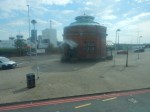
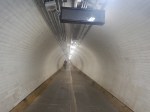


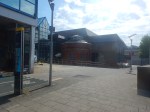
It was the first time I’d used this tunnel.
On the other side, I got a bus to London City Airport, from where I got the Docklands Light Railway back to Woolwich Arsenal and then walked back to the Elizabeth Line station to come home.
I Doubt I’ll Use The Marks & Spencer At Woolwich Much!
The store was not designed in a way I liked.
- Many of the goods, were behind glass doors, which meant I needed three hands to put items in my basket.
- There weren’t many staff in the store.
- It was difficult finding the goods I needed.
- It was all self-service tills of the type I didn’t like.
These may be only personal preferences, but then there must be many like me who have a gammy hand for some reason.
It’s a pity really, as it is such a convenient location for a store. The only other M & S store close to the Elizabeth Line is the one at Paddington, which I use regularly.
Cardiff Northwest Corridor Tram-Train Report Published
The title of this post, is the same as that of this article on Railway Gazette.
This is the introductory paragraph.
Proposals have been published for the development of a tram-train network to serve housing developments on the Northwest Corridor between Cardiff and Llantrisant.
And this paragraph describes the route.
The report looks at a route making use of the existing City Line railway from Cardiff and then following a safeguarded former railway alignment to M4 Junction 33 and Creigiau. Possible extensions could run from Creigiau to Cross Inn and Pontyclun and from Cross Inn to Miskin, Talbot Green, Llantrisant and Beddau.
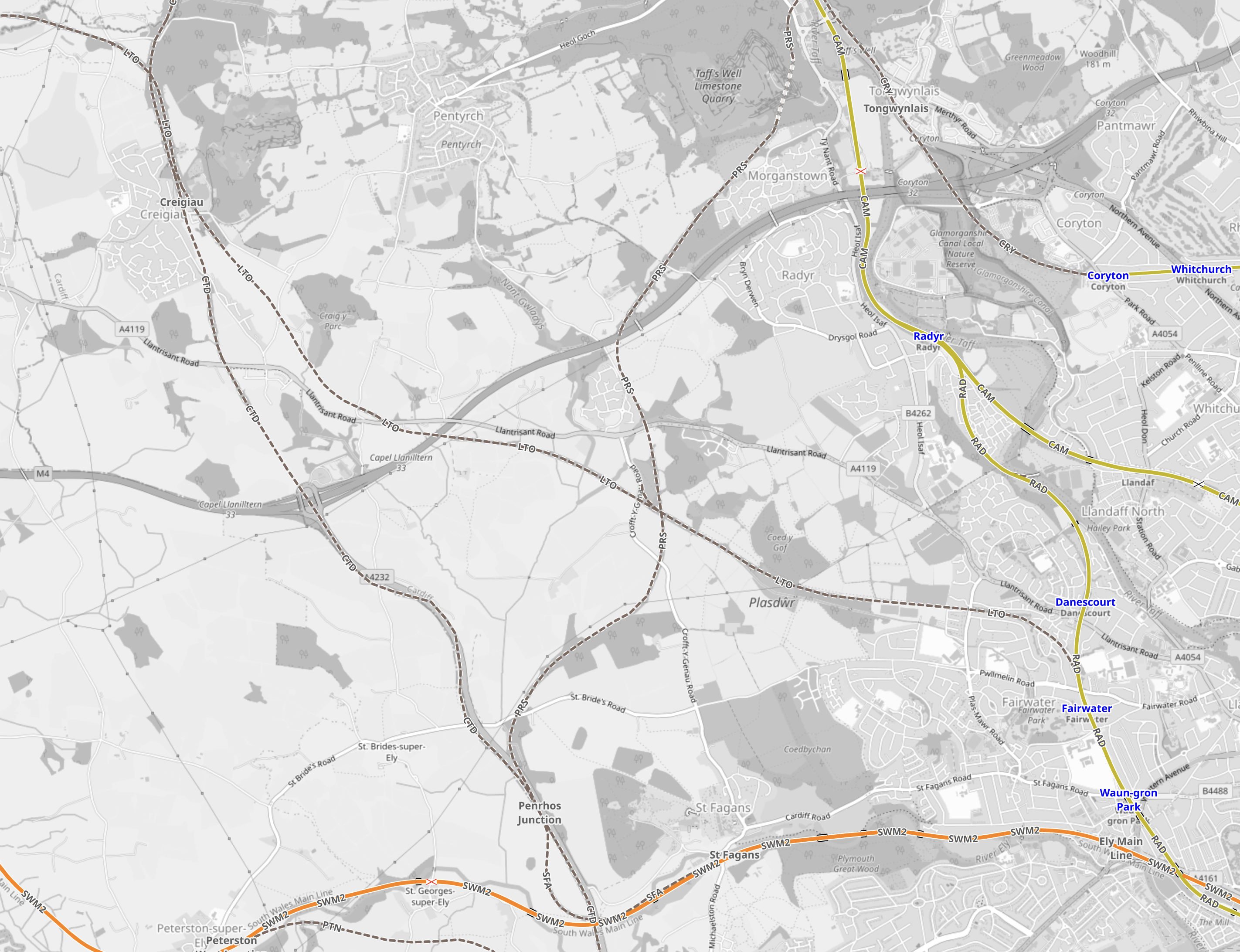
This map shows the route from the City Line to Creigiau.
Note.
- The City Line to Radyr passing through Waun-Gron Park, Fairwater and Danescourt, which is shown in yellow.
- The South Wales Main Line running across the bottom of the map, which is shown in orange.
- The M4 running Westerly from the North-East corner of the map.
- The A4232 runs North-South and meets the M4 at Junction 33.
- Creigiau is in the North-West corner of the map.
The route of the tram-train would follow the route of the disused railway between the City Line and Creigiau, which is shown as a dotted line, identified with the code LTO.
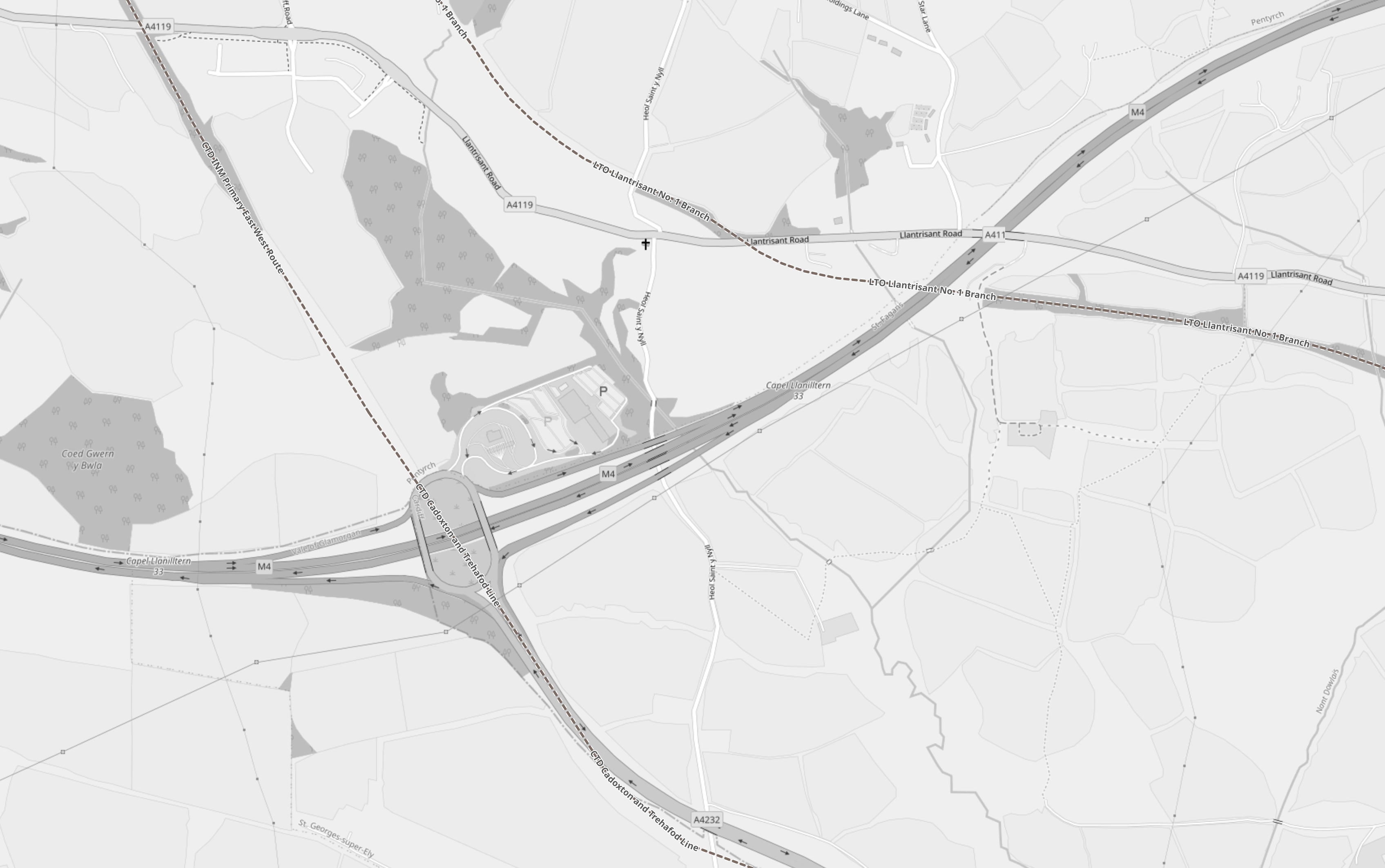
This second map from OpenRailwayMap shows the area around Junction 33 of the M4.
Note.
- The M4 going across the map.
- The A4232 going South from Junction 33.
- The proposed tram-train line passing to the East of Junction 33.
I suspect that as there is a BP petrol station and a Travel Lodge at the junction, there is a lot of scope to create a comprehensive Park-and-Ride hub for Cardiff, that would be served by the new tram-train.
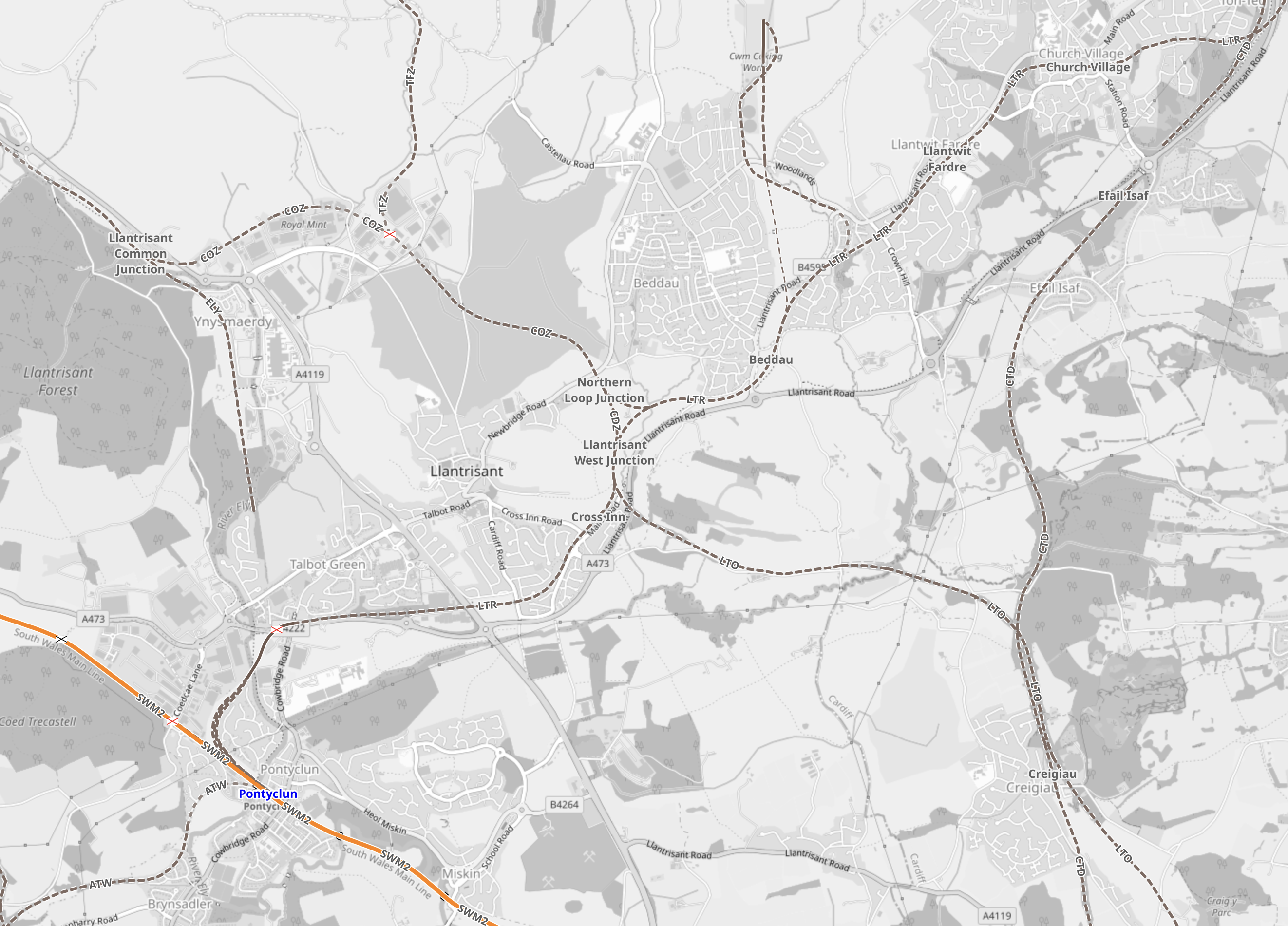
The third OpenRailwayMap shows the various routes from Creigiau.
Note.
- Creigiau is in the South-East corner of the map.
- Cross Inn is in the middle of the map.
- The South Wales Main Line, which is shown in orange, cuts across the the South-West corner of the map.
The ultimate destinations of Miskin, Pontyclun, Talbot Green, Llantrisant and Beddau all have disused railway tracks leading to Cross Inn.
Serving The Royal Mint
The Royal Mint moved to Llantrisant in the late 1960s and it could be served by the tram-train, as it is to the North of the town, close to a disused railway line.
I must admit, I am very surprised, that a company that employs 10,000 people doesn’t have a nearby railway station.
But then the move of the Royal Mail to Wales was planned by Harold Wilson’s government, which was led by a man, who believed that railways were irrelevant and everybody should have their own cars.
Has The NorthConnect Interconnector Been Binned?
If you type “NorthConnect interconnector” into Google and select News, the latest stories are from March 2020.
One story from that date is this article on Energy Live News, which is entitled Norway Postpones Decision On Interconnector To Scotland.
These are the first three paragraphs.
The Norwegian Ministry of Petroleum and Energy (MPE) has postponed a decision on whether to allow the construction of a new subsea power cable between Norway and Scotland.
The 1,400MW Project NorthConnect, which is partly owned by Swedish energy group Vattenfall, has been put on hold pending public consultation and performance and cost reviews of similar projects under construction.
Minister of Petroleum and Energy Tina Bru, said: “The Norwegian and Nordic power system is going through significant changes, at a rapid pace. Two new interconnectors, to the UK and Germany respectively, will be commissioned in the near future.
The NorthConnect web site has some community news from last year.
So has this project been binned?
London Overground’s Barking Riverside Station To Open This Summer
The title of this post, is the same as that of this article on Ian Visits.
This is the first paragraph.
Transport for London (TfL) says that it is bringing forward the launch of London Overground services on the extension to Barking Riverside, following good progress being made in the completion of the station commissioning and testing stages.
Are railway lines like buses? You wait years for one to come along and then several turn up in a rush.
This railway line has been built mainly to serve the new housing at Barking Riverside, but as I showed in A Cruise To Barking – 13th May 2022, the route will have leisure possibilities as well.
I also feel, that if this 4.5 km extension of the Gospel Oak and Barking Line is a success, I can see other extensions of Metros and local trams and railways being created or restored, as this extension will show the economics.
I have some further thoughts.
Rethinking Of c2c Services In South Essex
It could even result in a rethinking of c2c services in South Essex.
Platforms 7 and 8 at Barking station will host the following services.
- 2 tph (trains per hour) – Fenchurch Street and Grays
- 4 tph – Barking Riverside and Gospel Oak
There will certainly be scope for ducking and diving at this station.
A same-platform interchange will give an easy route between Fenchurch Street and Barking Riverside.
The next station on the Gospel Oak and Barking Line is Woodgrange Park, which has an out-of-station interchange with the Elizabeth Line at Manor Park station.
The Gospel Oak and Barking Line offers connections all across North London.
Grays station can probably turn four tph.
There could be a new Beam Park station to serve more housing.
I can certainly see the Fenchurch Street and Grays service increased to four tph, if lots of housing is built in South Essex. Provided that the trains can be squeezed in to the timetable.
A Ferry Across The Thames At Barking
There have been proposals to extend the line from Barking Riverside station across the Thames to Thamesmead and Abbey Wood station.
But a tunnel or a bridge, as I prefer, would be massively expensive and take years to plan, finance and build.
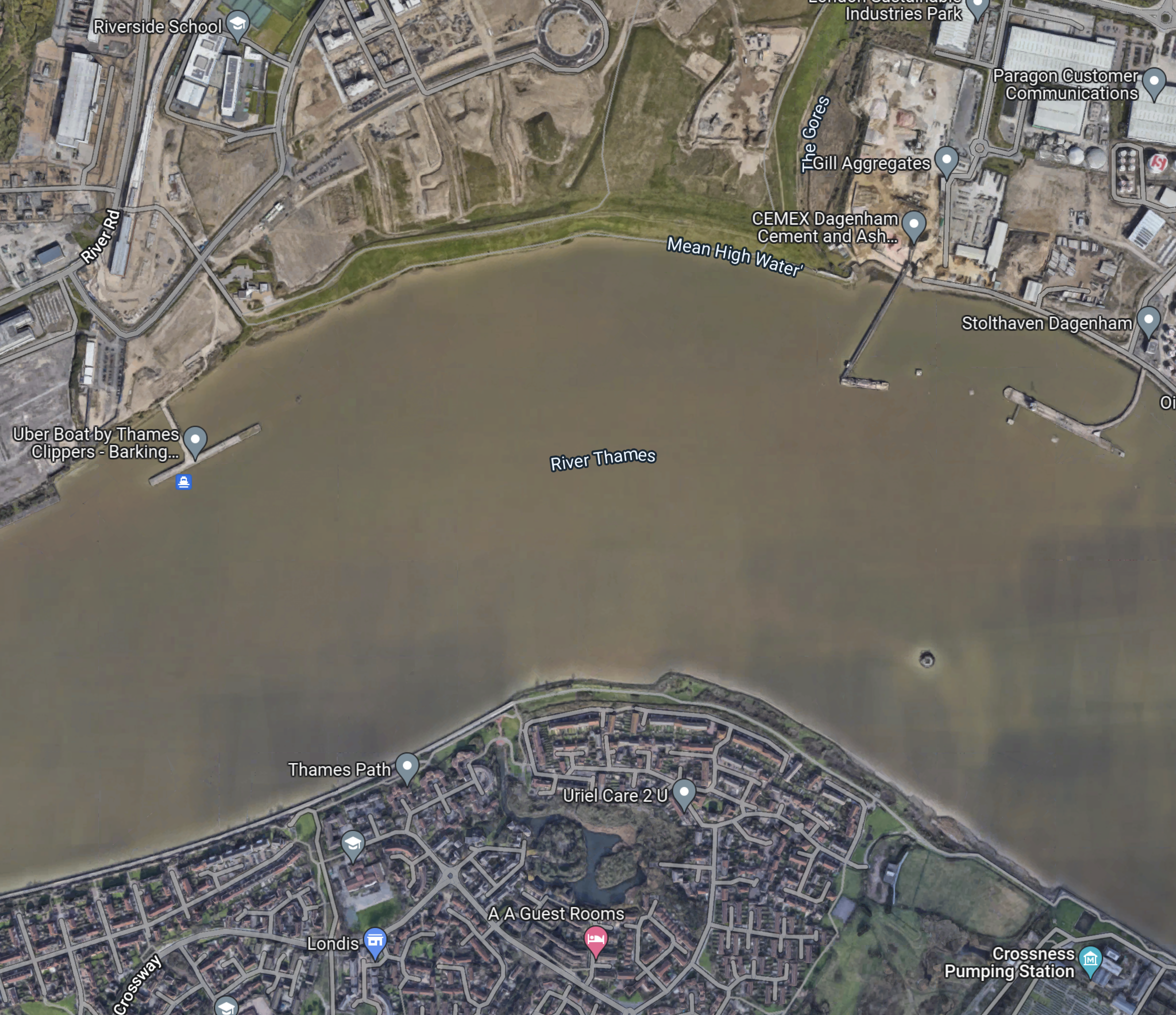
This Google Map shows the Thames at Barking.
Note.
- Barking Riverside station under construction in the North-West corner of the map, with the Thames Clipper terminal on the North bank of the river.
- The sprawling Thamesmead Estate on the South bank of the river.
- In the South-East corner of the map there is the Grade 1 Listed Crossness pumping station, which I wrote about in Open House – Crossness.
An hourly ferry across the river between Barking and Crossness with an intermediate stop at Thamesmead might be the most affordable solution to crossing the river.
Changing Trains At Canary Wharf Station – 13th June 2022
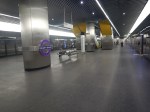
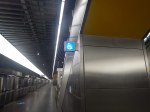
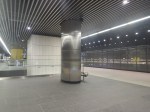
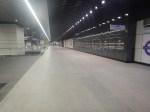
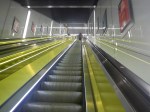
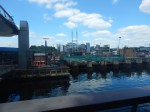
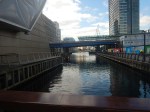
I took these pictures around the new Canary Wharf station on the Elizabeth Line.



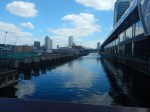





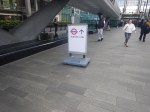
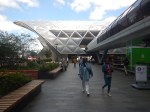
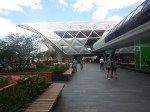

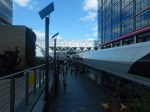
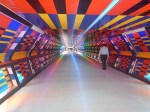

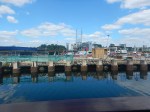


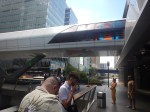

Note.
- The station appears to follow, a very similar design to some of stations on the Jubilee Line.
- Changing to various lines at Canary Wharf would appear to be a bit of a walk, that is very much in line with say a connection between the Jubilee Line and the Docklands Light Railway.
- The connection to the Jubilee Line appears to be a tunnel under the offices.
- For West India Quay DLR station, you walk along the dock.
These are some of the routes that you would use from Canary Wharf.
- Bank – DLR
- Battersea Power Station – DLR – Change at Bank – Northern Line
- Clapham Junction – Elizabeth Line – Change at Whitechapel – East London Line
- Croydon – Elizabeth Line – Change at Whitechapel – East London Line
- Crystal Palace – Elizabeth Line – Change at Whitechapel – East London Line
- Enfield – Elizabeth Line – Change at Liverpool Street – Enfield Town or Cheshunt Line
- Euston – DLR – Change at Bank – Northern Line
- Heathrow Airport – Elizabeth Line
- King’s Cross – DLR – Change at Bank – Northern Line
- Liverpool Street – Elizabeth Line
- London Bridge – Jubilee Line
- London City Airport – Jubilee Line – Change at Canning Town – DLR
- Marylebone – Elizabeth Line – Change at Paddington – Bakerloo Line
- Moorgate – Elizabeth Line
- Paddington – Elizabeth Line
- St. Pancras – DLR – Change at Bank – Northern Line
- Victoria – DLR – Change at Bank – District/Circle Line
- Walthamstow – Elizabeth Line – Change at Liverpool Street – Chingford Line
- Waterloo – Jubilee Line
Note.
- The new escalator connection between the DLR and the Northern Line at Bank station will enable easier journeys to Euston, King’s Cross, St. Pancras and many other Northern Line stations.
- The excellent connection between the Elizabeth Line and the East London Line at Whitechapel station, will get a lot of use.
- The DLR features in several routes, including the important one to London City Airport.
In A Short Cruise At Greenwich, I said this about the DLR.
The Docklands Light Railway is often thought by Londoners, commuters and visitors as a bit of a Cinderella.
However, like Cinderella she works hard all day and provides reliable and efficient transport, where the only alternatives are buses, bicycles, taxis and Shank’s pony.
Just after the 2012 Olympics, I met a big cheese in Transport for London on a DLR train. He felt that the DLR had been the star in getting everybody to the games.
It must be one of the most successful light railways in the world!
And yet, no-one has ever thought to build another running on the same principles.
So why does it work so well?
This article on Intelligent Transport is entitled Celebrating 30 years Of The DLR, where this is said, under a heading of Customer Satisfaction.
One of the biggest successes of the DLR over the last 30 years has been its high levels of reliability, with over 99% of its trains departing on time.
The DLR has also had consistently good feedback and engagement with its customers, with high satisfaction ratings averaging at 89 out of 100.
Do these numbers mean that people trust Cinderella and will trust her to get through even in the most difficult of circumstances?
Conclusion
Canary Wharf station could develop into a very important interchange.
HS2 Starts Work On First Pioneering ‘Green Tunnel’
The title of this post is the same as that of this press release on the High Speed Two web site.
These three paragraphs introduce the work at Chipping Warden.
HS2 today [Friday 10th June] announced the start of construction at the site of its first innovative ‘green tunnel’, designed to blend the high speed railway into the landscape and reduce disruption for communities.
Unlike a normal underground tunnel, the one-and-a-half mile (2.5km) Chipping Warden green tunnel in Northamptonshire is being built on the surface using a pioneering off-site manufacturing approach to speed up construction and improve efficiency.
This approach will see more than five thousand giant concrete tunnel segments made in a factory in Derbyshire before being assembled on site. The completed tunnel will then be covered by earth, with trees, shrubs and hedgerows planted to fit in with the surrounding countryside.
Note.
- High Speed Two are building five of these tunnels between London and Birmingham.
- I know from talking to engineers at Custom House station, which was also built in a factory, that the quality is excellent.
- But is it also cheaper and quicker, as all segments on the five tunnels are identical, no expensive tunnel boring machine is required and conventional equipment can be used?
These are some images from High Speed Two, which show the erection of the first segments of the green tunnel.


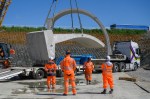
There is also this video, which shows more about the green tunnels.
I suspect we’re going to see a lot more of these tunnels.
Crossrail’s Fans At Canary Wharf Station
I have just watched today’s episode of The Fifteen Billion Pound Railway on the BBC.
In one storyline, they negotiate a giant ventilation fan into Canary Wharf station.
Installing the fans is a fascinating tale, where in the end the last movements are performed using hover-pads and several strong men.
I am reminded of a tale I heard in my youth.
- At the age of 15 and 16, I spent two summers working at a company in North London called Enfield Rolling Mills.
- The boss of the company was John Grimston, who was a friend of my father and ERM were the largest customer of his printing business.
- I got a superb introduction to working in a large factory, where I installed simple valve-based electronic control systems on heavy machinery.
The most important rolling mill in the company, was a mill, that reduced copper wirebars to wire about half a centimetre in diameter.
- The machine had been acquired from Krupp, as war-reparations after the First World War and was still marked with Krupp’s trademark of three interlocked railway tyres.
- Enfield Rolling Mills had a trademark of four rings.
- The hot wire zig-zagged from one side to the other and it was turned by men using tongs.
- The machine was powered by a massive flywheel driven by an electric motor.
At some time in the 1950s, the flywheel needed to be replaced, by a new 96-ton wheel.
The Chief Engineer of the company was an Austrian Jew, known to all as Shimmy, which was a contraction of his surname Shimatovich.
- He had spent some time in a Nazi concentration camp and walked with a distinct stoop.
- He was widely recognised as one of the experts on roll grinding and very much respected by management, staff and workers alike.
- He had supposedly calculated, that if the new flywheel had come off its bearings at full speed, it would have gone a couple of miles through all the housing surrounding the factory.
There was very much a problem of how the new flywheel would be installed until Shimmy announced at a Board Meeting. “We will do it the way, we’d have done it in the concentration camp. We will use men! But our men are fit, well-fed and strong.”
So one Sunday morning, a large force turned up and rolled the flywheel off the low loader and into position using ropes, blocks and tackle and other equipment, that would have been familiar to ancient builders, after which it was duly fixed in place.
The job was completed just before one and the Managing Director of the company then asked if anybody would like a drink and indicated that everybody follow him to the company’s social club.
They arrived just as the steward was cleaning the last of the glasses and getting ready to lock up. On being asked to provide a large number of pints of bitter, he announced he was closed.
On this the Managing Director, by the name of Freddie Pluty, who was a strong man picked up the steward and sat him on the bar.
He then asked the two large workers at the front of the queue. “Are you going to hit him or shall I?”
They got their drinks.
Does Anybody Have Good Contacts At Network Rail?
In the 1980s, I did some business with British Rail, as it then was.
I provided my Daisy software and they used it to analyse signal failures.
It led to a guy called J S Firth, writing a paper called Failure Recording And Analysis On British Rail.
He had the courtesy to send me a copy of the paper, which mentions SigTech, which appears to have been a business unit of the British Railways Board.
All my dealings with Firth and his colleagues were in person at an office block in front of Marylebone station, which is now a posh hotel.
And then, a few months ago, someone contacted me from Network Rail.
Apparently, his father had worked on the signal failure project with me and he was now working in Milton Keynes for Network Rail on a similar project.
He asked if I had a copy of the paper.
At the time, I didn’t, but today I had a small sort out and found a copy.
Unfortunately, I have now lost the piece of paper on which I wrote the guy’s details.
Does anybody have any ideas, how I can find the guy, who contacted me?
Thales Supports Rollout Of UK Digital Railway Programme
The title of this post, is the same as that of this press release from Porterbrook.
The press release starts with these bullet points.
- Thales wins the fitment and supply of European Train Control System (ETCS) onboard units for Class 43 high-speed train retrofit.
- Implementation will benefit passengers and freight operators by delivering additional capacity, improving performance, enhancing safety and reducing the costs of operating the national railway.
Which is followed by this explanation.
As a key player in delivering this digital transformation, Thales has today been awarded the contract for the Class 43 First in Class (FiC) design and fitment project that will use Network Rail’s new measurement train power cars in the Infrastructure Measurement fleet. The FiC project will culminate in a Type approval from the Office of Road and Rail to enable subsequent Class 43 ETCS fleet fitments.
The new Thales onboard system will be integrated as part of the Digital Railway train control system, and will enable rolling stock to operate on ETCS-equipped infrastructure. The onboard equipment is an evolution of Thales’s level 1 ETCS system that has been successfully deployed worldwide.
This could be a smart move.
- Type Approval will mean that the Class 43 power cars of ScotRail’s Inter7Cities, Great Western Railway’s Castles and those of other operators can be retrofitted.
- Will the New Measurement Train also be used to test the digital signalling, as it covers all the tracks in Great Britain in a four-weekly cycle?
- Fitting of these iconic 1970’s designed power cars with the latest modern signalling could be a design exercise, that helps in the fitting of ETCS to other older and unusual locomotives.
I still think, that because of the iconic nature of the InterCity125, that we may see a conversion of Class 43 power cars to more sustainable operation.
- All power cars now have modern MTU diesel engines, which probably could be fuelled by hydrogen.
- The simplest way would be to run them on HVO, as I wrote about in Powered By HVO.
- Some operations like the short format trains in Scotland and South-West England might be more suitable for battery-electric operation.
- Given that there are 167 in operation or in store, it would be a good-sized order for the company converting the power cars.
I also believe that zero-carbon InterCity 125s could be an unusual tourist attraction.
Conclusion
The fitting of digital signalling to Class 43 power cars is a good move, but is it the start of a wider plan to bring these iconic trains up to modern standards.
Westinghouse And Bloom Energy To Team Up For Pink Hydrogen
The title of this post, is the same as that of this article on Hydrogen Fuel News.
This is the introductory paragraph.
Westinghouse Electric Company and Bloom Energy Corporation have announced that they have signed a letter of intent together for the production of pink hydrogen in the commercial nuclear power market.
Note.
- Westinghouse Electric Company is an American builder of nuclear power stations.
- Bloom Energy Corporation make a solid-oxide electrolyser.
- Pink hydrogen is green hydrogen produced using nuclear power.
Figures on the Bloom web site, claim that their electrolysers could be upwards of twelve percent more efficient than PEM electrolysers, as produced by companies like ITM Power.
Bloom Energy Vice President of Hydrogen Business Rick Beuttel, is quoted as saying this.
We are proud Westinghouse has turned to Bloom and our solid oxide technology to supercharge the clean hydrogen economy. Solid oxide technology is well suited for nuclear applications, efficiently harnessing steam to further improve the economics of hydrogen production. High temperature electrolysis is already garnering attention and accolades as a cost-effective and viable solution to create low-cost, clean hydrogen, which is critical to meeting aggressive decarbonization goals.
It sounds that by integrating the nuclear power station and the electrolyser, there are cost savings to be made.
Conclusion
I think this could turn out to be a significant development.
Some countries, like Iceland, Indonesia, New Zealand, Philippines and the United States, who can generate large amounts of electricity and steam from geothermal energy, Bloom’s technology must surely be a way of electrolysing hydrogen.
 The Anonymous Widower