The Rolls-Royce SMR Web Site
Rolls-Royce now have a web site for their proposed small modular reactor (SMR) design.
This page is entitled Why Rolls-Royce SMR?, has this outline of the reactor program.
Rolls-Royce SMR offers a radically different approach to delivering nuclear power, we have drastically reduced the amount of construction activities and transformed the delivery environment, from a large complex infrastructure programme into a factory built commoditised product.
Our design has evolved in response to a definitive set of market driven outcomes, this is not technology for technology’s sake, but innovation, to create a transformational clean energy solution that will deliver clean affordable energy for all.
This would appear to be an approach driven by proven engineering principles and excellence, good low-risk design, backed up by the best project management.
These are all traditions inherent in the Rolls-Royce DNA.
But I also believe that Rolls-Royce have looked at the world market for nuclear reactors and designed a product to fit that market.
This paragraph is in a long section entitled Global & Scalable.
The compact footprint increases site flexibility and maximises potential plant locations, including replacement for existing coal or gas-fired plants.
Many things said on the Rolls-Royce SMR Web Site, appear to be very much market led.
In my view, this is the web site of a product designed to dominate the world market for nuclear energy.
ITOCHU, Taisei Corporation And Mineral Carbonation International Announce Collaboration
This collaboration is reported in this article on Market Screener, which is entitled ITOCHU : Announces Collaboration With Taisei Corporation In Initiative With MCi Testing Uses Of Concrete From Calcium Carbonate With Mineral Carbonation.
This paragraph described MCi’s mineral carbonation technologies.
MCi is a company that has pursued fifteen years of research and development into mineral carbonation and possesses the technology to produce a range of low carbon embodied materials including calcium carbonate by carbonating minerals in slag and other by-products of the steelmaking process (mainly steelmaking slag), coal ash produced by thermal power plants, and other industrial waste materials containing magnesium or calcium (mine tailings: by-products from the collection of metals and ore).
It also appears that ITOCHU invested in MCi last year.
I have read the whole article and I suggest that this collaboration could grow into something very big.
To Abbey Wood For An Ice Cream
Yesterday, I went to Abbey Wood station to see what was there.
If you continue along the Elizabeth Line platforms, you come to a ground level step-free entrance to the platforms. So I used this route and found a rather nice shop, where I had a proper ice cream.










We need more proper ice cream outlets in London.
Crossness
Abbey Wood station is probably the best access point for one of London’s best tourist attractions; Crossness. I visited Crossness during Open House and wrote about it in Open House – Crossness.
These are some pictures I took in 2012.





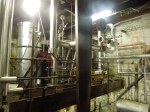

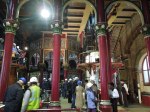
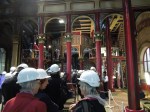

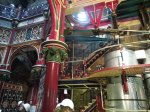






Crossness should be on everyone’s bucket list. The site is now managed by the Crossness Engines Trust.
But getting there by public transport is not easy.
In my view what is needed is either a shuttle bus from Abbey Wood station or perhaps modification to an existing route, so that it calls at Crossness.
The Joining Up Of The Elizabeth Line
I asked a station guy, when the three sections of the Elizabeth Line would be joined up.
He gave me a straight answer – The 6th of November.
This is twelve Sundays from today.
Is This The Slowest Station Rebuilding Project?
I first wrote about the rebuilding of Old Street station and the remodelling of Old Street Roundabout in Is Silicon Roundabout Going To Become Silicon Peninsular?, which I posted on Christmas Day 2014.
I also wrote Silicon Roundabout Goes Two-Way in May 2019.
Today I took these pictures of new buildings around Moorgate station.








All were empty sites in 2019.
I took these pictures of the roundabout.










Progress doesn’t seem to be very fast.
UK In Hydrogen Breakthrough As New £26m Deal With Japan To Help Tackle Energy Crisis
The title of this post, is the same as that of this article on Hydrogen Central.
These two paragraphs explain the deal.
The UK has received a major boost to its hydrogen ambitions as a Japanese energy company is set to sign a £26million deal to develop green hydrogen projects in Wales.
The local council of Bridgend in Wales has signed a memorandum of understanding with Marubeni, a Japanese green energy specialist company. The agreement sets out proposals to develop a new 5MW-class green hydrogen initiative after the company decided to pick Wales as the preferred UK location for a green hydrogen demonstrator project.
These two paragraphs describe how the hydrogen will be used.
Through this deal, the Welsh Government hopes that the project would generate clean fuel for fleet vehicles ranging from council gritters to recycling and refuse collection lorries.
The company is also trying to figure out how hydrogen fuel might be used to heat buildings such as schools, residential homes, and local swimming pools.
We need more projects like these to cut carbon emissions.
When is Sadiq Khan going to produce a hydrogen strategy for London, to help clean up the city’s polluted air?
New Homes For Newts: Industry Leading Licence Protects Species From Vital Rail Upgrades
The title of this post, is the same as that of this press release from Network Rail.
This is the introductory paragraph.
The industry leading initiative will see specialists build new, large-scale habitats for great crested newts to move to when crucial railway upgrades disrupt their existing homes. This balance will allow the amphibians to thrive in a safe environment and in turn reduce any delays to engineering work.
Hopefully, this will lead to the end of delays to engineering work caused by newts on the line.
Would A Joint Development Of Thameslink And The Elizabeth Line Be A Cost-Effective Way To Improve London’s Rail Network?
The operation of Thameslink and The Elizabeth Line are more similar than many people think.
- Both have a central tunnel.
- On the Elizabeth Line, the central tunnel is between Paddington and Whitechapel stations, which always takes thirteen minutes.
- Trains on the Elizabeth Line run five minutes apart.
- On Thameslink, the central tunnel is between St. Pancras International and London Blackfriars stations, which always takes nine minutes.
- Trains on Thameslink run 3-4 minutes apart.
- There are no branches in the central tunnels.
- No other regular train services run through the central tunnels.
- Trains appear to be controlled very accurately to the timetable.
- Each train on both lines seems to take a similar time through their central tunnel.
I am by training a Control Engineer and this is not surprising, as if you want to get the most number of trains down a tunnel, they should all take the same time and be equally spaced.
- As there are twelve trains per hour (tph) on the Elizabeth Line, the five minute interval is to be expected.
- As there are twenty tph on Thameslink, the 3-4 minute interval is to be expected.
It should be noted that the Victoria Line was fully opened in 1971.
- It has a single central tunnel with no branches.
- The line is used exclusively by Victoria Line trains.
But when new faster trains and automatic train control (ATO) were introduced, it enabled the train frequency to be increased from 27 to 33 tph.
By comparison to the Victoria Line, I believe that increased frequencies of trains through Thameslink and The Elizabeth Line should be possible.
The Elizabeth Line Frequency
The Wikipedia entry for the Elizabeth Line gives a central tunnel frequency of 24 tph, consisting of the following services.
- 12 tph – Shenfield and Paddington
- , 6 tph – Abbey Wood and Heathrow
- 6 tph – Abbey Wood and either Reading or Maidenhead
Note, in Extending The Elizabeth Line – High Speed Trains On The Elizabeth Line, I said this.
Because of the current track layout at Abbey Wood, I believe that without track modifications, Abbey Wood station will not be able to handle more than 12 tph.
So will Abbey Wood be restricted to 12 tph for some years?
It does appear to me, that to increase the frequency through the Elizabeth Line’s central tunnel, there will need to be services to new destinations in both the East and the West.
Various destinations have been suggested for the Elizabeth Line.
- Northfleet, Gravesend and possibly Hoo for Chatham.
- Billericay, Southend Airport and Southend Victoria.
- Tring and Milton Keynes
- Staines
I would also add.
- Chelmsford and the new station at Beaulieu.
- Didcot, Oxford and possibly Swindon.
There are a lot of possibilities.
The Thameslink Frequency
The Wikipedia entry for the Thameslink gives a central tunnel frequency of 20 tph, consisting of the following services.
- 2 tph – Cambridge and Brighton
- 2 tph – Cambridge and Maidstone East
- 2 tph – Peterborough and Horsham
- 2 tph – Bedford and Brighton
- 2 tph – Bedford and Gatwick Airport via Redhill
- 2 tph – Luton and Rainham via Greenwich
- 2 tph – St Albans City and Sutton via Wimbledon (loop)
- 2 tph – St Albans City and Sutton via Mitcham (loop)
- 2 tph – Kentish Town and Orpington via Catford
There are few suggestions for extra Thameslink services.
High Speed Trains On The Elizabeth Line
Some suggested destinations for the Elizabeth Line and some existing destinations for Thameslink are on high speed lines, that will be digitally-signalled in the next few years.
These destinations might be better served by an Elizabeth Line or Thameslink train with a better performance.
In Extending The Elizabeth Line – High Speed Trains On The Elizabeth Line, I explained my reasoning in detail.
Conclusion
A comprehensive survey needs to be carried out to identify what destinations should be added to the Elizabeth Line/Thameslink network.
Reasons for a new destination could possibly be employment, housing, leisure, tourism or other factors.
Significant Step Forward For Keadby 3 Carbon Capture Power Station
The title of this post, is the same as that of this press release from SSE.
These three paragraphs outline the project.
A landmark project in the Humber which could become the UK’s first power station equipped with carbon capture technology has taken a major leap forward following an announcement by the UK Government today.
Keadby 3 Carbon Capture Power Station, which is being jointly developed by SSE Thermal and Equinor, has been selected to be taken forward to the due diligence stage by the Department for Business, Energy and Industry Strategy (BEIS) as part of its Cluster Sequencing Process.
This process will give the project the opportunity to receive government support, allowing it to deploy cutting edge carbon capture technology, and to connect to the shared CO2 pipelines being developed through the East Coast Cluster, with its emissions safely stored under the Southern North Sea. The common infrastructure will also supply low-carbon hydrogen to potential users across the region.
The press release also says this about the power station.
- Keadby 3 power station could have a generating capacity of up to 910MW.
- It could be operational by 2027.
- It would capture up to one and a half million tonnes of CO2 a year.
It would provide low-carbon, flexible power to back-up renewable generation.
The H2H Saltend Project
The press release also says this about the H2H Saltend project.
Equinor’s H2H Saltend project, the ‘kick-starter’ for the wider Zero Carbon Humber ambition, has also been taken to the next stage of the process by BEIS. The planned hydrogen production facility could provide a hydrogen supply to Triton Power’s Saltend Power Station as well as other local industrial users. In June, SSE Thermal and Equinor entered into an agreement to acquire the Triton Power portfolio.
I wrote about H2H Saltend and the acquisition of Triton Power in SSE Thermal And Equinor To Acquire Triton Power In Acceleration Of Low-Carbon Ambitions.
In the related post, I added up all the power stations and wind farms, that are owned by SSE Thermal and it came to a massive 9.1 GW, which should all be available by 2027.
Collaboration Between SSE Thermal And Equinor
The press release also says this about collaboration between SSE Thermal and Equinor.
The two companies are also collaborating on major hydrogen projects in the Humber. Keadby Hydrogen Power Station could be one of the world’s first 100% hydrogen-fuelled power stations, while Aldbrough Hydrogen Storage could be one of the world’s largest hydrogen storage facilities. In addition, they are developing Peterhead Carbon Capture Power Station in Aberdeenshire, which would be a major contributor to decarbonising the Scottish Cluster.
This collaboration doesn’t lack ambition.
I also think, that there will expansion of their ambitions.
Horticulture
Lincolnshire is about horticulture and it is a generally flat county, which makes it ideal for greenhouses.
I wouldn’t be surprised to see a large acreage of greenhouses built close to the Humber carbon dioxide system, so that flowers, salad vegetables, soft fruit, tomatoes and other plants can be grown to absorb the carbon dioxide.
It should also be noted that one of the ingredients of Quorn is carbon dioxide from a fertiliser plant, that also feeds a large tomato greenhouse.
We would have our carbon dioxide and eat it.
Other Uses Of Carbon Dioxide
Storing carbon dioxide in depleted gas fields in the North Sea will probably work, but it’s a bit like putting your rubbish in the shed.
Eventually, you run out of space.
The idea I like comes from an Australian company called Mineral Carbonation International.
- I wrote about their success at COP26 in Mineral Carbonation International Win COP26 Clean Energy Pitch Battle.
- The company has developed the technology to convert carbon dioxide into building products like blocks and plasterboard.
- Their mission is to remove a billion tonnes of CO2 by 2040 safely and permanently.
We would have our carbon dioxide and live in it.
I also think other major uses will be developed.
A Large Battery
There is the hydrogen storage at Aldbrough, but that is indirect energy storage.
There needs to be a large battery to smooth everything out.
In Highview Power’s Second Commercial System In Yorkshire, I talk about Highview Power’s proposal for a 200MW/2.5GWh CRYOBattery.
This technology would be ideal, as would several other technologies.
Conclusion
Humberside will get a giant zero-carbon power station.
What Goes Up Must Come Down
This morning, I went for a walk in the City, with the aim of looking at progress on the new Southern entrance to Bank station.
I took these pictures, where they were dismantling the main crane on the Bank station site.








Does this dismantling mean that the main work is coming to an end?
One of the guys, I spoke to said that the station would be finished by the end of the year.
I also took this picture from the Northernmost cross tunnel between the two Northern Line platforms.
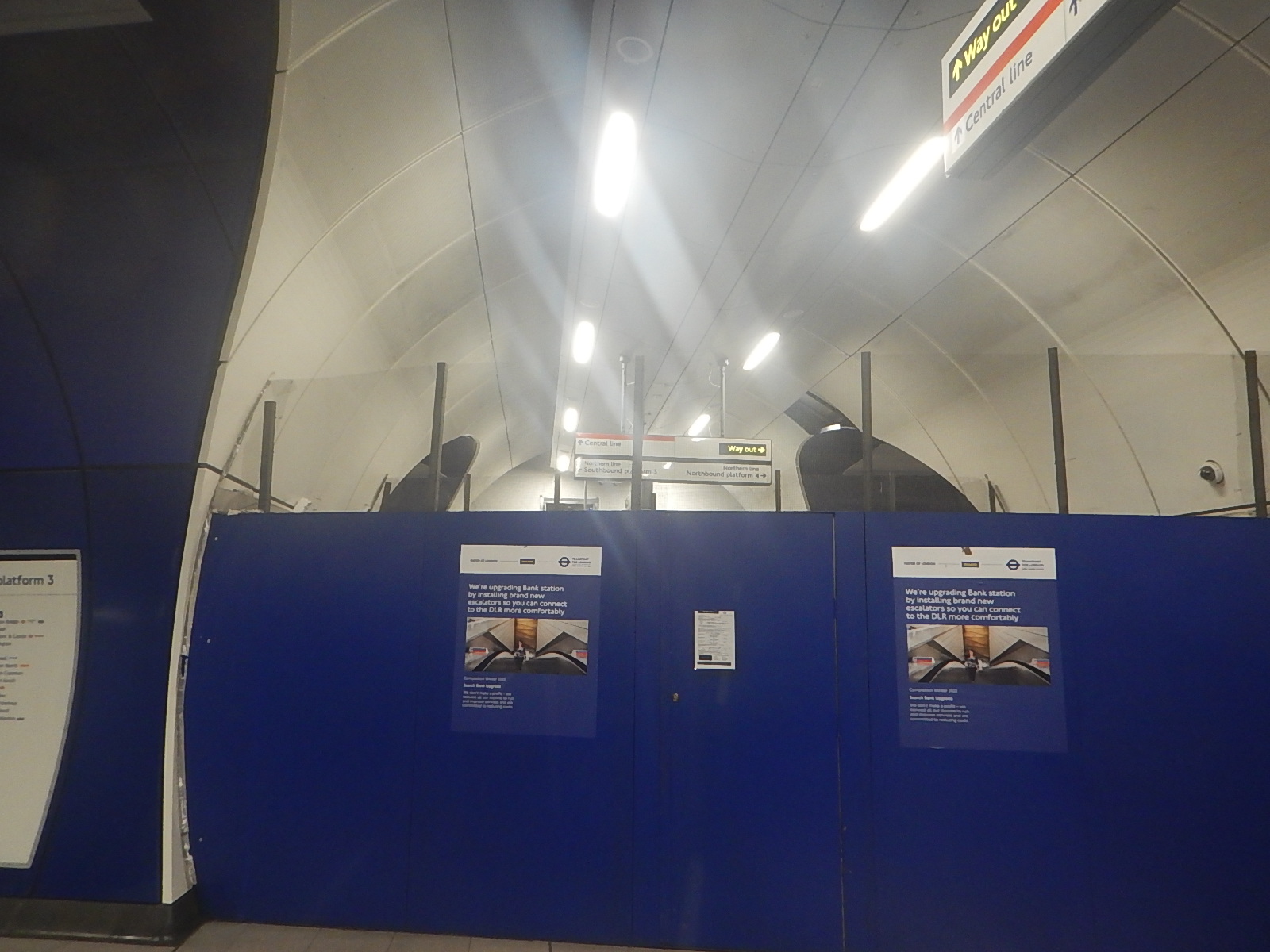
Note the Way Out sign behind the hoarding, which also shows Central Line straight on. This looks like it could be the start of the travelator to the Central Line.
Sizewell C Nuclear Plant Campaigners Challenge Approval
The title of this post, is the same as that of this article on the BBC.
These three paragraphs introduce the article.
Campaigners against the Sizewell C nuclear power station have written to Business Secretary Kwasi Kwarteng to legally challenge his decision to give the scheme the go-ahead.
The £20bn project for the Suffolk coast was given government approval in July.
However, the decision was against the advice of the Planning Inspectorate and those against the scheme said the consent was therefore “unlawful”.
I summed up my attitude to nuclear power in Sizewell C: Nuclear Power Station Plans For Suffolk Submitted, where I said this.
As a well-read and experienced engineer, I am not against the technologies of nuclear power.
But I do think, by the time it is completed , other technologies like wind and energy storage will be much better value. They will also be more flexible and easier to expand, should we get our energy forecasts wrong.
I wrote that in May 2020, which was before Vlad the Mad started his war in Ukraine. So our energy forecasts are totally wrong! Thanks for nothing, Vlad!
In Plan To Build £150m Green Hydrogen Plant At Felixstowe Port, I talked about ScottishPower’s plan to build a large electrolyser at Felixstowe.
The Port of Felixstowe has in the past talked of using electricity from Sizewell C to create hydrogen.
So is the port backing another horse or just playing safe?
 The Anonymous Widower