A Walk Around Barnes Bridge – 28th July 2022
After writing A New Garden Bridge Proposed For London, I had to go and visit.
So I went this afternoon and took these pictures.


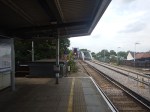






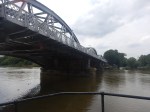


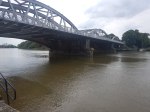
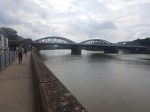


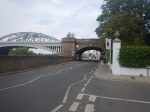




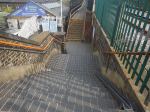


After arrival at Barnes Bridge station, I walked along the river had a drink in a pub before retracing my steps and taking a train back to Waterloo.
These are my observations and thoughts.
Access To The Country-Bound Platform
The access is not good at present, as it is up and down a steep set of steps.
But it does appear that there is space to improve things.
In A New Garden Bridge Proposed For London, I indicated that it might be possible to connect the platform directly to the new garden bridge. That certainly looks possible and I suspect that a lift could be incorporated.
The Walkway On The Downstream Side Of The Bridge
This walkway was being used by walkers and cyclists.
It is connected to the London-bound platform, by means of two sets of stairs.
I Walked Along The Bank Of The River To A Pub
All I needed was a drink and I got one.
If you walk the other way, there is an excellent Rick Stein restaurant.
Access To The London-Bound Platform
The access is better than to the other platform, but it needs improvement.
Conclusion
I believe that a good architect could squeeze in step-free access to both platforms and have good connections to the proposed garden bridge and the existing walkway.
A New Garden Bridge Proposed For London
This article on Ian Visits is entitled Plans Open A Disused Railway Bridge To Pedestrians.
This is the introductory paragraph.
A section of the Thames with few bridges could become a lot easier for pedestrians and cyclists to cross if plans to convert a disused railway bridge for pedestrian use go ahead.
The disused railway bridge to be used is the original 1849 Barnes Railway Bridge, which was closed to trains, when a new stronger bridge was built alongside in 1890.
This Google Map shows the two bridges.
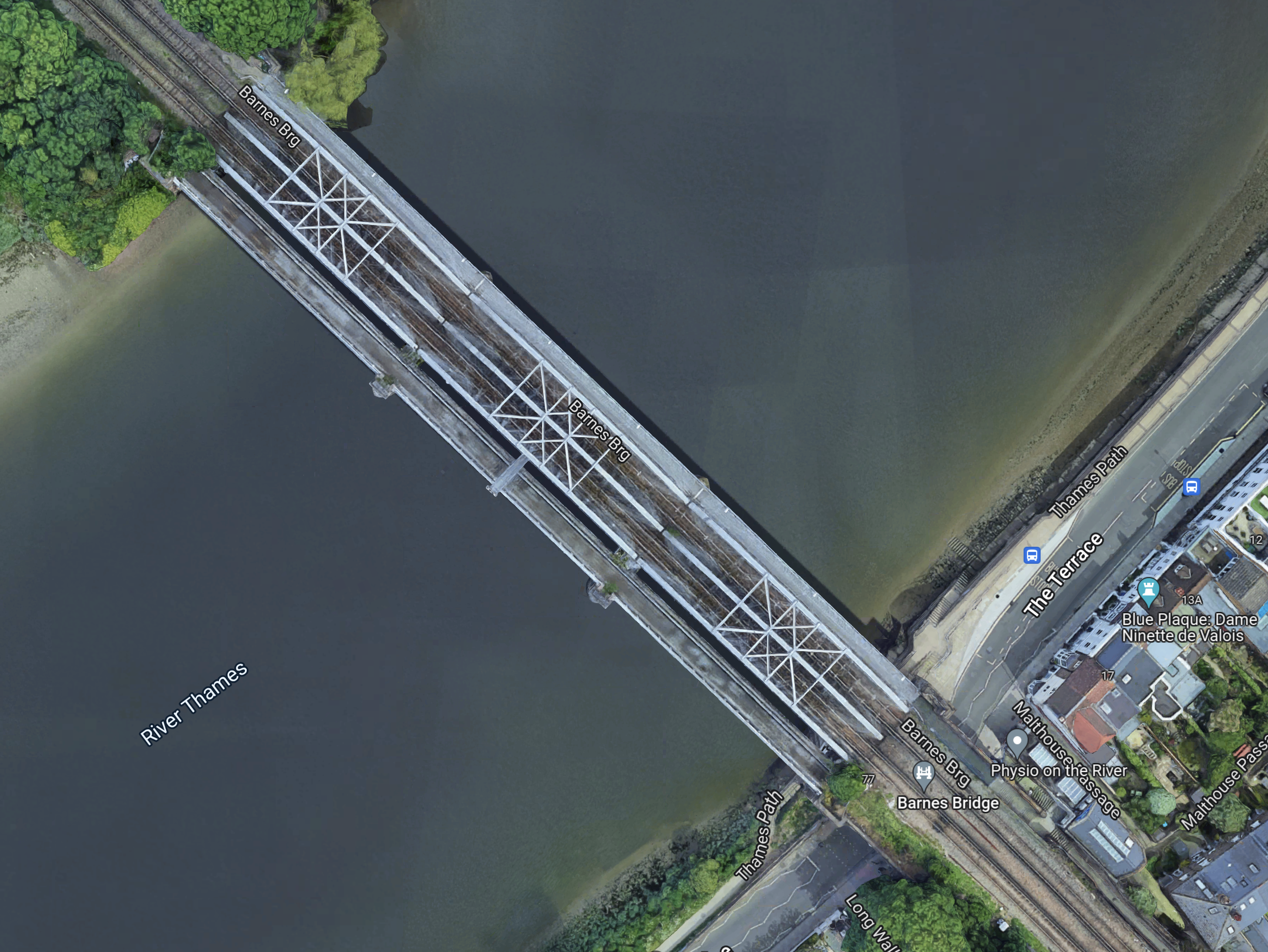
Note.
- The railway tracks in the centre on the 1890 three-arch bridge.
- The Thames flows from South-West to North-East under the bridge.
- A walkway on the North-Eastern side of the is still in use.
- The original 1849 bridge is on the South-Western side of the bridge.
The pedestrian garden bridge will be built on the 1849 bridge, which will be refurbished.
This second Google Map shows the bridge and Barnes Bridge station.
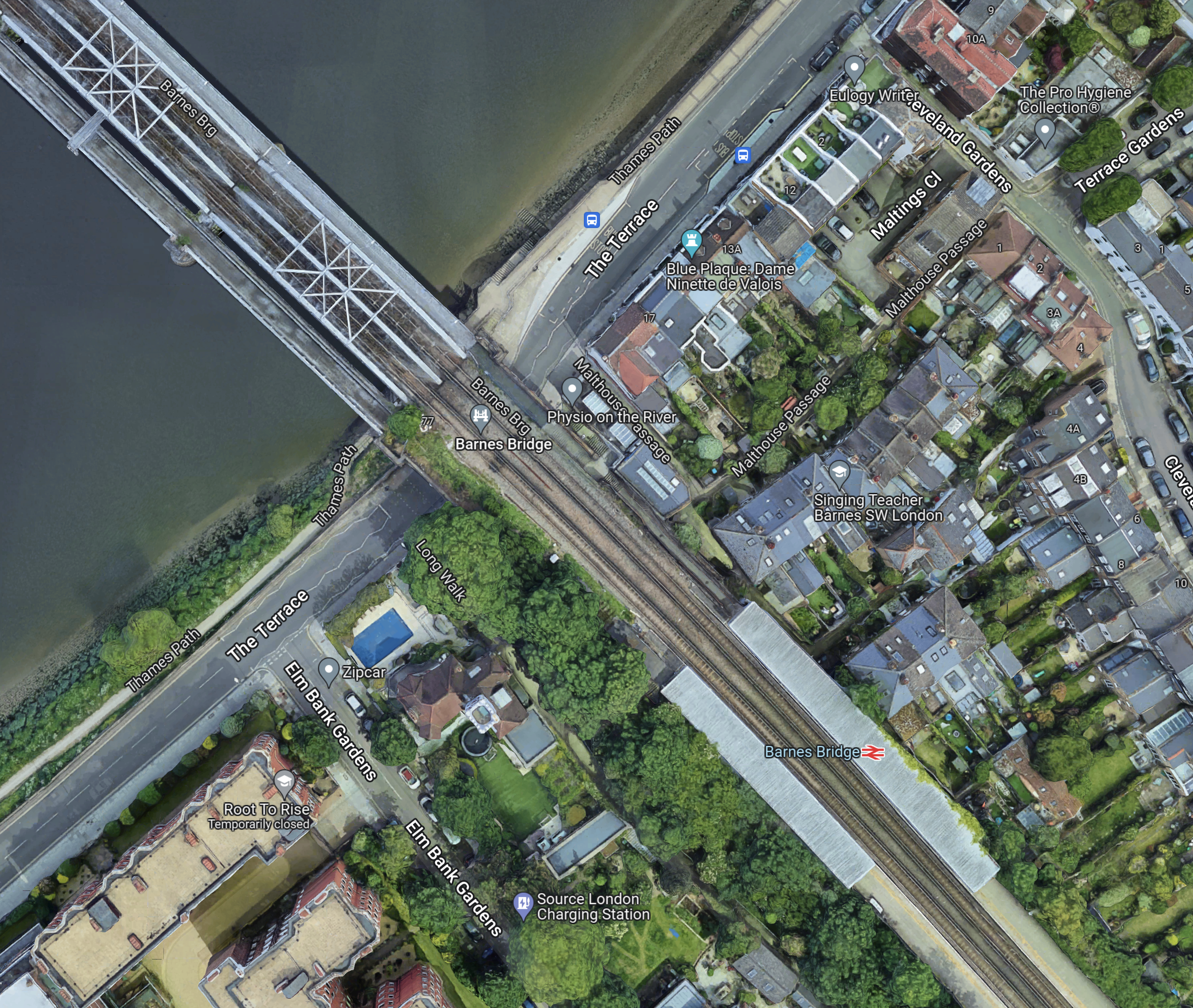
Note.
- Barnes Bridge in the North-West corner of the map.
- Barnes Bridge station in the South-East corner of the map.
Part of the plan envisages connecting the South-Western platform to the pedestrian garden bridge.
It looks a plan with a lot of good possibilities.
The Project
It appears that Network Rail, the London Boroughs of Richmond and Hounslow are all supportive and Moxon Architects have been appointed to the project.
The project now appears to be called The View at Barnes Bridge and it has an impressive web site, with lots of information and pictures.
I have a few thoughts.
I Am Not Surprised That Network Rail Are Supportive
Network Rail must be pleased to be getting a Grade II Listed structure off their hands.
Could Barnes Bridge Station Be Made Step-Free?
I suspect that Moxon will produce designs for this and it will probably be a question of money, if they are implemented.
But as the garden bridge will attract more visitors, this will surely increase the need for full step-free access at Barnes Bridge station.
Could A Refurbished Bridge Carry Utilities?
I suspect that this will be looked at, as it could be a nice little earner.
Could This Project Be An Example Of a Levelling-Up Project?
In my travels around the UK and Europe, I’ve seen several disused railway bridges that could be reused as footbridges to provide walking and cycling.
Many are being converted, but this high-profile bridge could inspire architects to create other worthwhile bridges.
My First Ride On The Midland Metro To Edgaston Village
I went to Birmingham today and took the Midland Metro to its new terminus at Edgbaston Village.

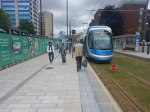







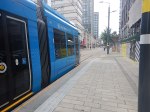







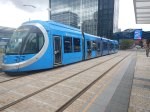


I have a few thoughts.
The Edgbaston Village Tram Stop
The Edgbaston Village tram stop is the new terminus of Line 1 of the West Midlands Metro, which is shown in the first eight pictures.
- The station has two tracks and two platforms, which would obviously allow extension to a new terminus.
- Plans exist for a terminus at Quinton, according to Wikipedia.
- As each platform could probably handle between four and six trams per hour (tph), the current layout could probably handle up to 12 tph.
- The Edgbaston Village tram stop is fully wired.
- I watched three or four trams come and go and both platforms are used.
As the pictures show there is still work to do and it looks like this will create a bus stop on the main road by the side of the main road.
Edgbaston Village Tram Stop To Edgbaston Stadium
This Google Map shows the area between the tram stop and the stadium.
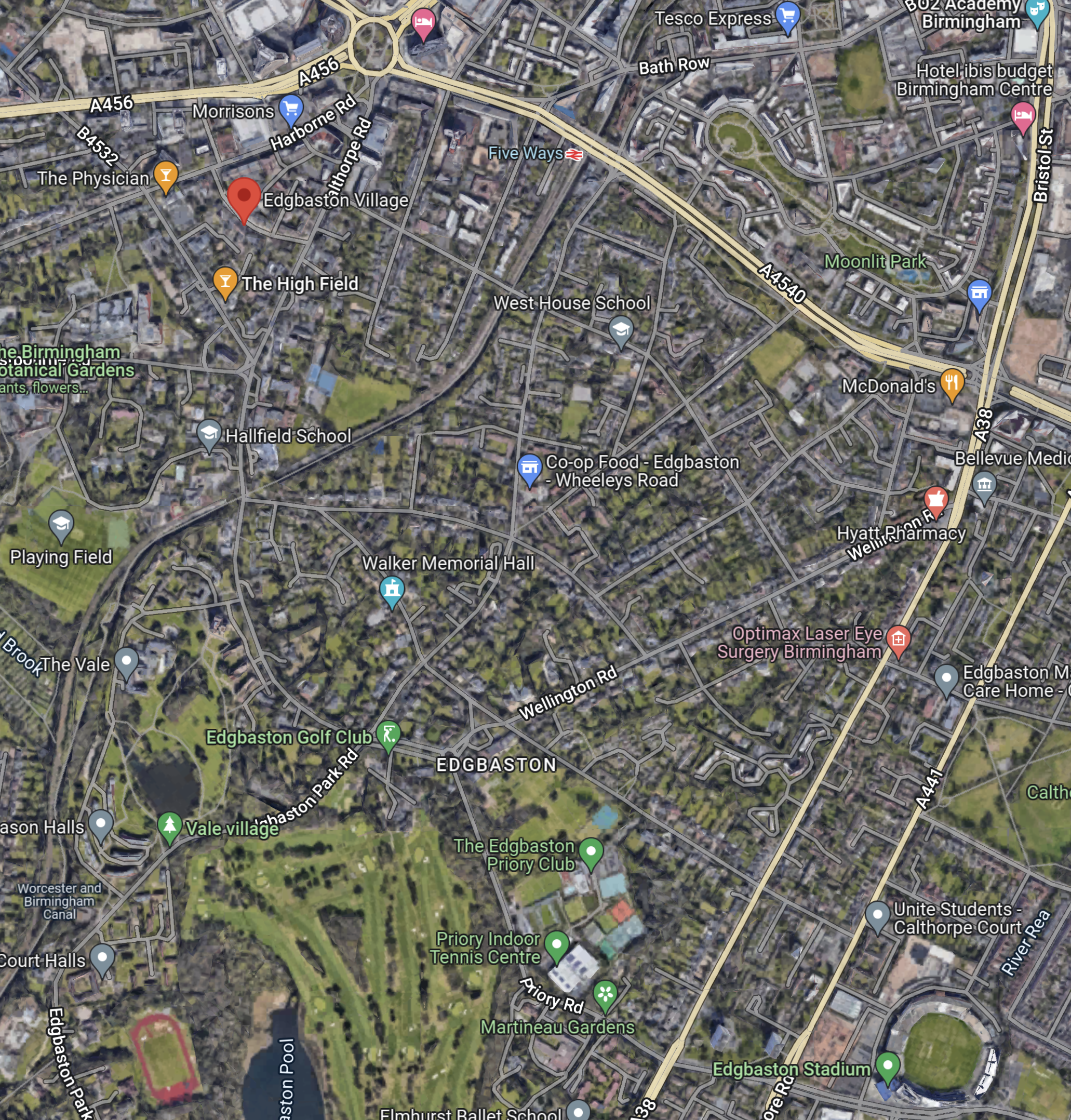
Note.
- The Edgbaston Village tram stop is on the A456 to the North of the of the red arrow marking Edgbaston Village in the North-West corner of the map.
- Edgbaston stadium is in the South-East corner of the map.
- I estimate that the distance between the tram stop and the stadium is a little over two kilometres.
I have a feeling there are more direct routes by bus, but I feel that for many people, who take the tram to Edgbaston Village. the walk wouldn’t be too much, especially with a refreshment stop.
Brindleyplace
The tram now gives access to Brindleyplace, where I had lunch.
Note in the the pictures of this stop, there are overhead wires.
Library Tram Stop
Library tram stop is now a through stop, as the pictures show.
Charging Trams At The Edgbaston Village Tram Stop
Not all trams seem to put their pantograph up, so I would assume a double trip between Grand Central and Edgbaston Village is possible on a full battery, that has been charged on the trip from Wolverhampton, with a bit of assistance on the wires through Brindleyplace tram stop.
The Dreaded Advertising Wrap
One of the trams I rode, had one of those dreaded advertising wraps, that ruin the view from the tram.
When will the dunderheads, who decide these things, that to many travellers on trams, they are a complete no-no.
Whenever, I arrive in a new city, I will often take a city-centre tram to get a feel of the city.
When I see advertising wraps on trams, I don’t.
Ticketing
If you go to Liverpool, which has no trams, the term Liverpool Stations on your train ticket includes the stations on the Wirral Loop, so you can get to any of the stations in the City Centre.
Manchester Stations, on a ticket also allows you to get around the city, when you first arrive.
London allows you add a Travelcard to your ticket, but because of contactless ticketing, you don’t need to.
A common scenario for visitors to Birmingham, is probably to use the tram to get somewhere in Zone 1.
So I had to buy an all-day Zone 1 ticket on the tram, which cost me £2.80
This is not good enough.
My preference would be to create a destination called Zone 1 Birmingham, which would allow unlimited trips in Zone 1 on the trams.
Sort it out Birmingham!
Vitamin B12 For Stroke Recovery: Understanding The Benefits & Safety Tips
The title of this post, is the same as that of this article on the FlintRehab web site.
I have posted the link, as I was talking to a doctor earlier and they might like to look at it.
Consider.
- I am coeliac on a strict gluten-free diet.
- Since the coeliac diagnosis in 1997, I have had a B12 injection every three months.
- I had a serious stroke ten year ago.
- Some doctors feel, I have made an excellent recovery from my stroke.
Could my regular B12 injections have aided my recovery?
Note, that I have cleaned up the Vitamin B12 tag in this blog.
On My Way To Birmingham
I made the mistake of not going on Chiltern to avoid a walk in Brum. No seats at all, so I’m doing a Corbyn and sitting on the floor. Pendolinos aren’t as comfortable as Mark 3’s.
SolarDuck & RWE Will Build A Floating Solar Park In The North Sea
The title of this post, is the same as that of this article on CleanTechnica.
This is the sub-title.
SolarDuck and RWE will work together on an offshore floating solar project in the North Sea that will include battery storage.
These two paragraphs explain the concept.
Offshore wind is poised to provide a significant proportion of Europe’s electrical energy in the near future. But those towers and turbines have to be spaced fairly far apart to avoid interfering with each other. That leaves a lot of open ocean in between them, ocean that has sunlight falling on it all day long.
SolarDuck, a Dutch/Norwegian company, is working on floating solar technology that would float on the surface of the ocean to generate electricity to supplement the output from those offshore wind turbines. They already need to have undersea cables to carry their electricity ashore. Why not leverage that infrastructure to carry electricity from solar panels as well?
I would only worry about the economics.
I very much feel that the structures can be robust enough, given the wealth of experience with offshore oil and gas platforms and the experience in World War 2 with Lily and Clover.
The EuroAfrica Interconnector
The Wikipedia entry for the EuroAfrica Interconnector, introduces the project like this.
EuroAfrica Interconnector is a HVDC interconnector and submarine power cable between the Greek, Cypriot, and Egypt power grids.
The Wikipedia entry has a section called Technical Data, where this is said.
The EuroAfrica Interconnector will link Egypt with the Cypriot and Greek power grids through the island of Crete, with a high-voltage direct current submarine power cable of length around 1,396-kilometre (867 mi). Egypt will be connected with Cyprus with a 498-kilometre (309 mi) long cable. Cyprus will be connected with Crete with a 898-kilometre (558 mi) long cable providing a connection to the pan-European electricity grid.[1] The laying depth of cable will be up to 3,000 metres (9,800 ft) under sea level in some areas between Crete and Cyprus. It will have a capacity to transmit 2,000 megawatts of electricity in either direction. Annual transmission capacity is 17.5 TWh, much more than the annual production of the Aswan Dam.
In The EuroAsia Interconnector, I noted how Israel will be connected to Cyprus, thus when both interconnectors are complete, Cyprus, Egypt, Greece and Israel will be able to share electricity.
The EuroAsia Interconnector
The Wikipedia entry for the EuroAsia Interconnector, introduces the project like this.
The EuroAsia Interconnector is a proposed HVDC interconnector between the Greek, Cypriot, and Israeli power grids via the world’s longest submarine power cable (310 kilometres (190 mi) from Israel to Cyprus and 898 kilometres (558 mi) from Cyprus to Greece, for a total of 1,208 kilometres (751 mi)). Connecting Kofinou, Cyprus to Hadera, Israel and Korakias, Crete, Greece and stated to finish construction in 2023.
When completed it will have a capacity of 2 GW.
From Wikipedia, it appears that at least initially, Israel will export electricity produced in gas-fired power stations from their own more than adequate supplies of natural gas.
In Andrew Forrest’s Fortescue Future Industries Inks Deal With Kingdom of Jordan For Green Hydrogen Study, I published this Google Map of Jordan.
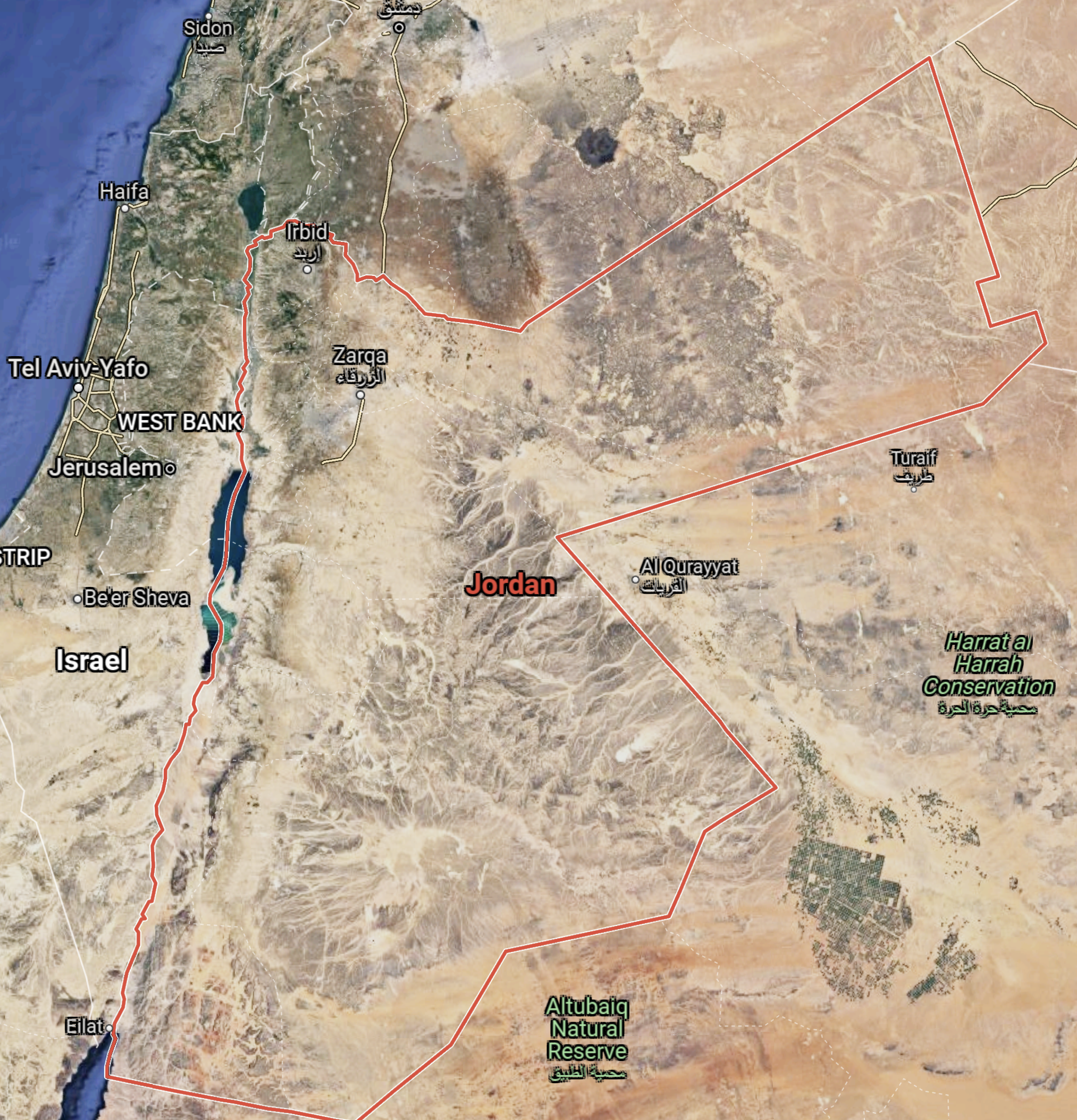
Surely, in the future, the EuroAsia interconnector could be carrying solar generated green electricity from Iraq, Jordan and Saudi Arabia to Cyprus and Greece.
As, according to Reuters, Greece covers about 40% of its annual energy needs with Russian gas, this can’t be good for Vlad the Mad and his bloodstained gas.
Will We See More Multi-Country Renewable Energy Deals?
In this blog, I have talked about various deals, where two or more countries and/or companies are getting together to generate electricity in one country and transfer it to another, either as electricity or as hydrogen
Examples include.
- The Asian Renewable Energy Hub, which I first wrote about in Vast Australian Renewable Energy Site Powers BP’s Ambitions.
- The Australia-Asia PowerLink, which I first wrote about in Sun Cable’s Australia-Asia PowerLink.
- Fortescue Future Industries will convert cattle stations in Western Australia into renewable power stations.
- The EuroAfrica Interconnector is a HVDC interconnector and submarine power cable between the Greek, Cypriot, and Egypt power grids, which I first wrote about in The EuroAfrica Interconnector.
- The EuroAsia Interconnector is a proposed HVDC interconnector between the Greek, Cypriot, and Israeli power grids via the world’s longest submarine power cable, which I first wrote about in The EuroAsia Interconnector.
- Icelink is a proposed electricity interconnector between Iceland and Great Britain, which I first wrote about in Is Iceland Part Of The Solution To The Problem Of Russia?
- The Morocco-UK Power Project, which I first wrote about in Moroccan Solar-Plus-Wind To Be Linked To GB In ‘Ground-Breaking’ Xlinks Project.
- Namibian Green Hydrogen, which I first wrote about in Namibia Is Building A Reputation For The Cheapest Green Hydrogen.
There are also all the hydrogen deals done by Fortescue Future Industries.
Where Are There Possibilities Of More Multi-Country Renewable Energy Deals?
These are a few serious possibilities.
Argentina
This is an extract from this page on Wind Energy International, which is entitled Argentina.
Argentina has an estimated technical wind energy potential of 300 GW. In southern Patagonia (Chubut and Santa Cruz provinces), average wind speeds range between 9.0 and 11.2 m/s, whereas in the north (Neuquén and Río Negro provinces), wind speeds range from 7.2 to 8.4 m/s. The general average capacity factor for Argentina is 35% and in the Patagonia region it ranges between as much as 47% and 59%. Especially in Northwest Patagonia, locally known as the Comahue region, hydro and wind may seasonally complement each other and.benefit both technologies. One other promising region for wind power development is the Atlantic sea coast.
As I wrote in Australia’s FFI Plans $8.4 Billion Green Hydrogen Project In Argentina, it appears that Andrew Forrest and FFI are already on the ground.
Australia
There are already three major schemes based on Australia and I am certain they will be more. Especially, as Japan, Korea, Malaysia and Singapore will need the zero-carbon energy.
It would appear that except for the Australia-Asia PowerLink, the energy will be transferred as liquid hydrogen or liquid ammonia.
Bangladesh
Bangladesh wouldn’t be on the lists of many, where ideal countries for renewable energy are being discussed.
But, this report on Energy Tracker Asia is entitled The Renewable Energy Potential of Bangladesh, where this is said.
A report investigating the renewable energy technical capacity of Bangladesh found that the country could deploy up to 156 GW of utility-scale solar on 6,250 km2 of land and 150 GW of wind. Offshore wind power would account for 134 GW of this total capacity.
I wouldn’t be surprised to see Bangladesh, supplying renewable energy to the East, with international companies and organisations developing the renewable infrastructure.
I think it should be noted that international companies flock to countries, where the investment opportunities are good. That has happened in the UK, with offshore wind, where many wind farms have been developed by companies such as Equinor, Iberola, RWE and Wattenfall.
Chile
Chile has started to develop the 100,000 square kilometres of the Atacama Desert for solar power and I wrote about this in The Power Of Solar With A Large Battery.
This sentence in the Wikipedia entry for Energy In Chile, illustrates the potential of solar power in the Atacama Desert.
In 2013, Total S.A. announced the world’s largest unsubsidised solar farm would be installed with assistance from SunPower Corp into Chile’s Atacama desert.
I also wrote Chile Wants To Export Solar Energy To Asia Via 15,000km Submarine Cable, about Chile’s ambitions to supply Asia with energy.
Ethiopia
Andrew Forrest of Fortescue Future Industries is on the case, as I wrote in Fortescue Future Industries Enters Ethiopia to Produce Green Energy.
North Africa
Consider.
- The major North African countries of Morocco, Algeria, Tunisia, Libya and Egypt, all have and depend on to a certain extent on fossil fuels.
- There are gas pipelines to Spain and Italy.
- Morocco will be the Southern end of the Morocco-UK Power Project, if it gets developed.
- All five countries have some nuclear power stations.
- All five countries have lots of sun for solar power.
- Some Saharan countries to the South of Morocco, Algeria and Libya could also provide energy from the sun.
- Egypt has substantial hydro-electric power on the River Nile.
- Egypt will be connected to Greece through the EuroAfrica Interconnector.
I believe that a well-designed and co-ordinated project could generate a lot of electricity and hydrogen for Europe and bring much-needed income and employment to North Africa.
I feel that if the Morocco-UK Power Project can be successfully built, then this could create a flurry of activity all over North Africa.
Saudi Arabia
Saudi Arabia has a problem. As the rest of the world moves away from fossil fuels in the next few decades, they will see the revenues from oil and natural gas come under pressure.
But as a rich country, with 2.15 million km² of land and lots of sun, they must have some potential to generate solar electricity.
In the Wikipedia entry for Solar Power In Saudi Arabia, this is said.
The Saudi agency in charge of developing the nations renewable energy sector, Ka-care, announced in May 2012 that the nation would install 41 gigawatts (GW) of solar capacity by 2032.[2] It was projected to be composed of 25 GW of solar thermal, and 16 GW of photovoltaics. At the time of this announcement, Saudi Arabia had only 0.003 gigawatts of installed solar energy capacity. A total of 24 GW of renewable energy was expected by 2020, and 54 GW by 2032.
Wikipedia also says that Saudi Arabia also has nuclear ambitions.
I can see that Saudi Arabia will replace some of their oil and gas exports with green hydrogen.
Green Hydrogen Namibia
The title of this post, is the same as that of this web site.
This is the mission statement on the home page.
With its abundant, world-class renewable energy resources and increasing demand for green hydrogen worldwide, Namibia is quickly emerging as an early entrant in this new market and has ambitions of becoming the leading exporter of Green Hydrogen in Africa.
Namibia is serious about green hydrogen.
 The Anonymous Widower