Beeching Reversal – St Anne’s Park Station
This is one of the Beeching Reversal projects that the Government and Network Rail are proposing to reverse some of the Beeching cuts.
This Google Map shows the proposed site of St. Anne’s Park station, between British Temple Meads and Keynsham stations.
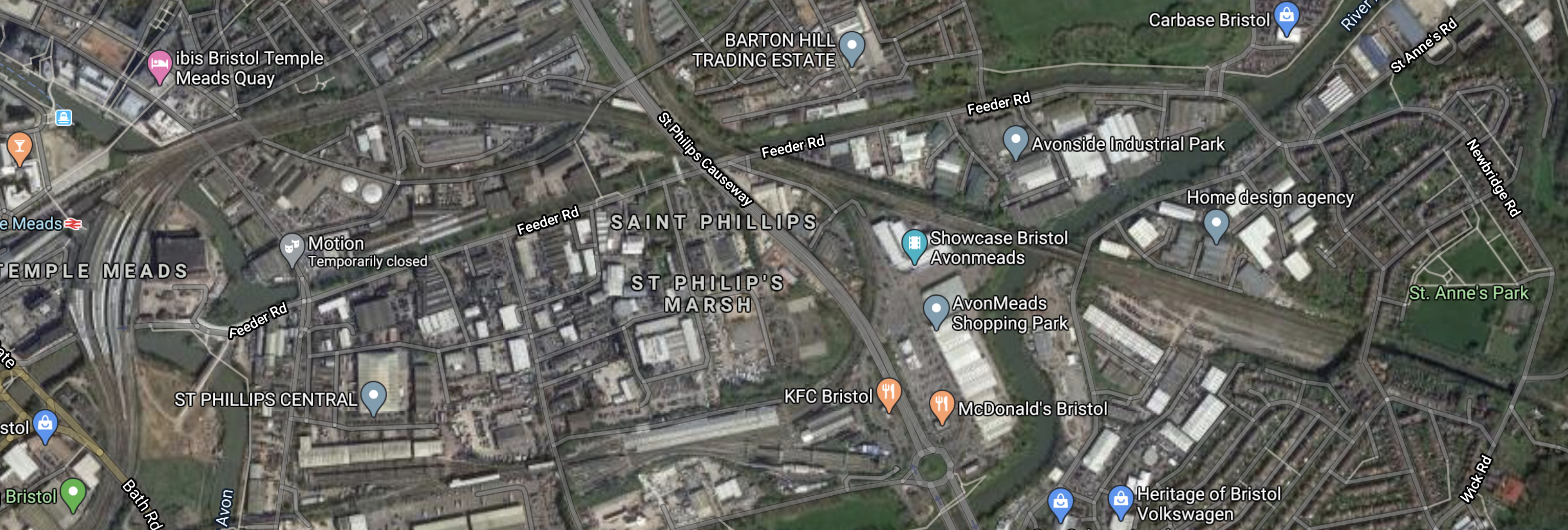
The station is about four-five miles from Bristol Temple Meads station.
- Bristol Temple Meads station is to the West of the map.
- St. Anne’s Park station will be to the East of the map.
- The station has up to two stations per hour.
The Great Western Main Line between Bristol Temple Meads and Bath runs through the site of St. Anne’s station.
Conclusion
There are quite a few stations like this that councils want to reopen.
Beeching Reversal – Primrose Line
This is one of the Beeching Reversal projects that the Government and Network Rail are proposing to reverse some of the Beeching cuts.
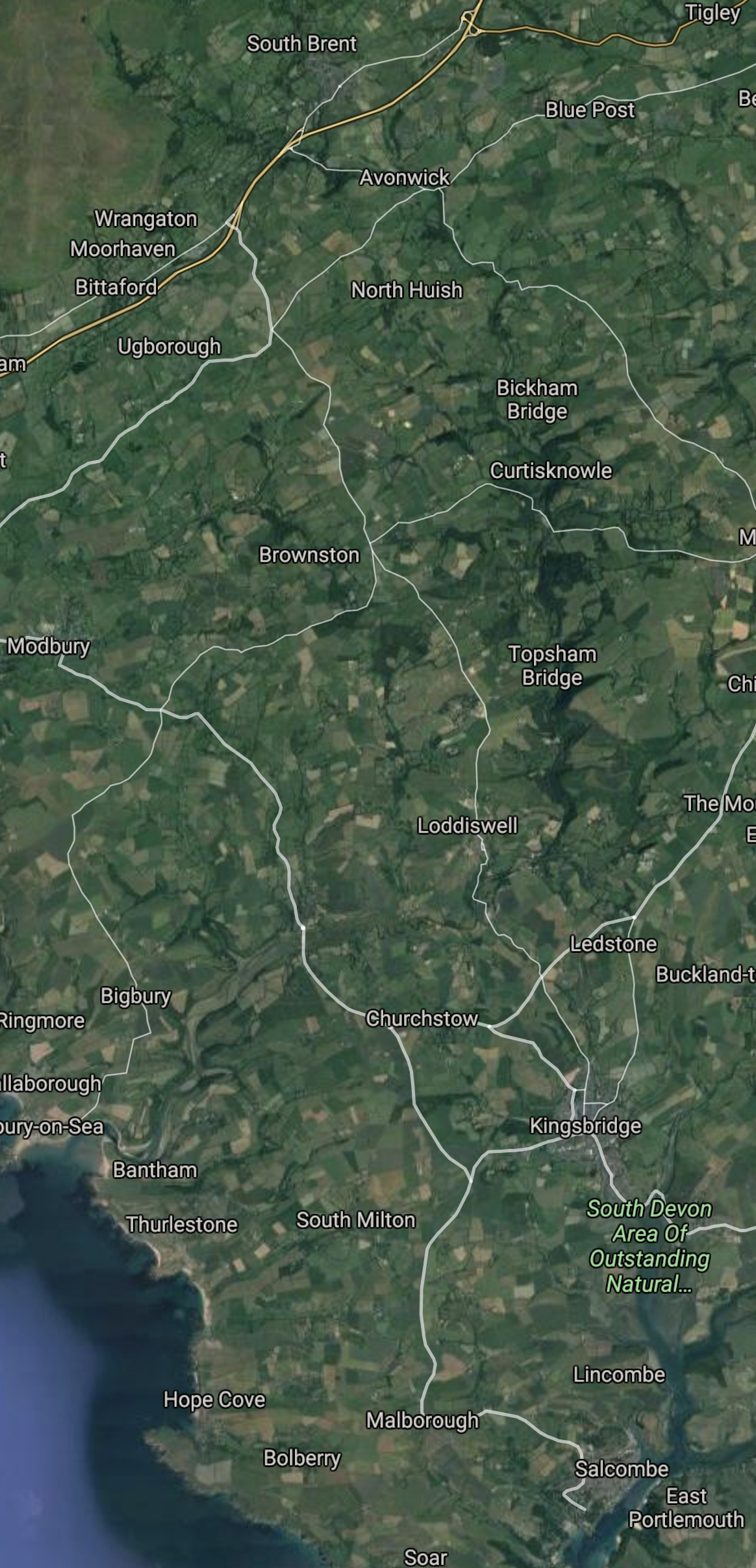
This Google Map shows the area of South Devon, where the railway is proposed to be reopened.
And this diagram from Wikipedia shows the line.
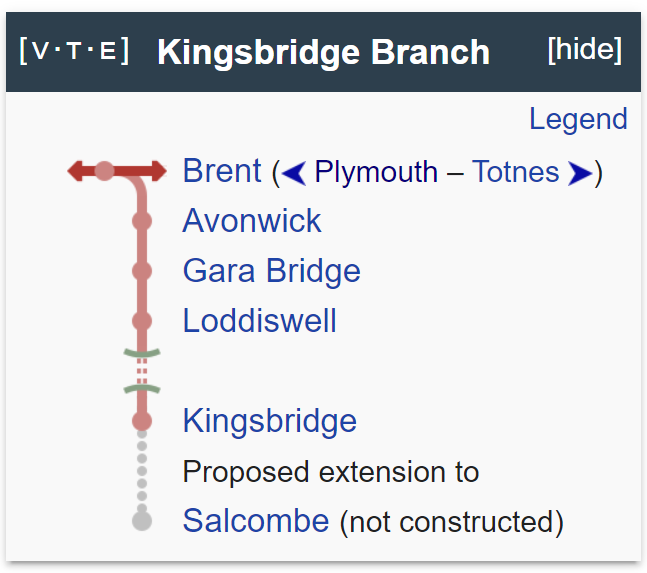
Note.
- The railway runs between South Brent and Kingsbridge stations.
- It connected to the double-track Pymouth and Exeter Line.
- There were originally stations at Avonwick, Gara Bridge and Loddiswell.
- It was single track.
- It was twelve miles long.
- There was also a planned extension to Salcombe, that was never built.
The Connection At Brent Station
This Google Map shows the former position of Brent station.
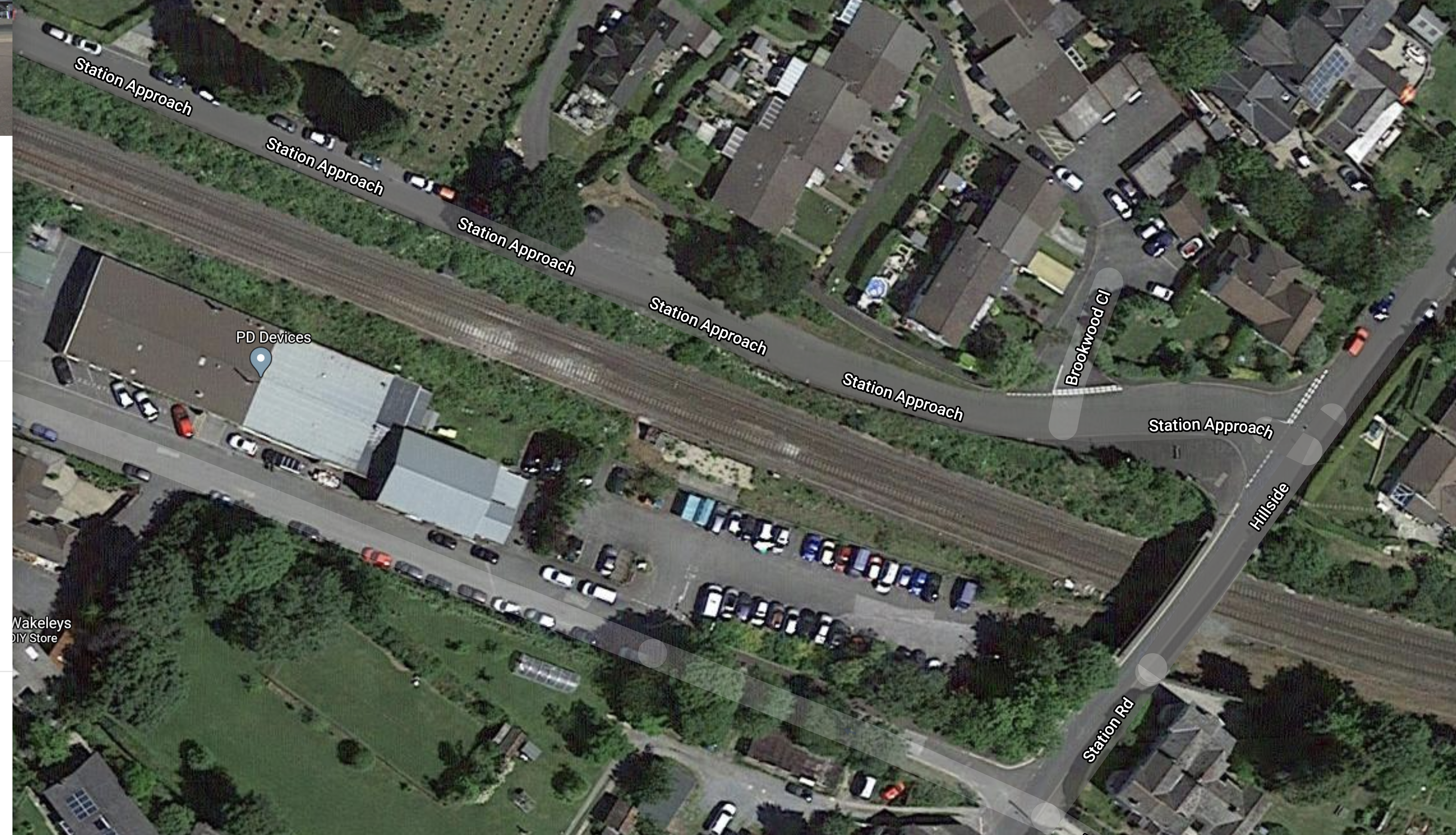
There does appear to be plenty of space for two through platforms and one for the branch line on the South side of the main line.
Trains
I suspect that this route will probably be capable of being run by two or three of Vivarail’s Class 230 trains.
Conclusion
This looks a simple scheme, that could be worthwhile, for commuters residents, shoppers and tourists.
Battery Electric Class 800 Trains Between London Paddington And Bristol Temple Mead Stations
Hitachi have changed the rules on electrification, by the announcement of the development of battery electric trains in collaboration with Hyperdrive Innovation, which I wrote about in Hyperdrive Innovation And Hitachi Rail To Develop Battery Tech For Trains.
The proposed train is described in this Hitachi infographic.

It will have a range on battery power of 90 km or 56 miles.
Currently, services between London Paddington and Bristol Temple Meads stations are as follows.
- The frequency is two trains per hour (tph)
- Services call at Reading, Didcot Parkway (1tph), Swindon, Chippenham and Bath Spa.
- Services use the electrification between London Paddington and Chippenham.
- Services use diesel power between Chippenham and Bristol Temple Meads.
- Chippenham and Bristol Temple Meads are 24.5 miles apart.
It looks to me that a well-driven Class 800 train with Hyperdrive Innovation’s clever batteries replacing some or all of the diesel engines could run between Chippenham and Bristol Temple Meads stations and back without using a drop of diesel.
It might be a bit tight, but it would certainly be possible, if there were more electrification between Bath Spa and Chippenham stations.
- From this article on the BBC, which is entitled Box Tunnel Reopens After Network Rail Electrification Work, it appears that a lot of the pre-electrification work has been completed.
- This would reduce the distance without wires to perhaps 18-20 miles.
As the Class 800 trains have agile pantographs, I’m sure that it will be possible for battery electric Class 800 trains to run between London Paddington and Bristol Temple Meads stations.
Electrification At Bristol Temple Meads Station
This will surely happen and with full electrification, the following will be possible.
- Trains would be able to recharge before returning to Chippenham.
- Trains would be able to extend the service using battery power to Weston-super-Mare, which is only twenty miles away.
- Trains would be able to use the power whilst waiting in the station.
It appears that trains that run between London Paddington and Bristol Temple Meads station, use a selection of platforms in Bristol.
Would it be sensible to reduce the number of platforms used and electrify them first, so that battery electric trains could charge their batteries?
Could A Battery Electric Train Run Between Bristol Temple Means And Taunton Stations?
Consider.
- These two stations are 46 miles apart via Weston-super-Mare, so if there was charging at Taunton, this service might be possible.
- The direct route is a couple of miles shorter.
- A train with full batteries at Taunton, would reach well past Exeter.
Could a battery-electric service be of use in creating Great Western Railway’s timetable, as in the Peak services are extended to Weston-super-Mare and Taunton stations?
It would certainly be lower carbon. than a current journey.
Would The Railway Through Bath Need To Be Electrified?
This would depend on three main factors.
- There is a certain amount of opposition to electrification in the centre of Bath.
- Can all passenger trains through the city be made zero-carbon without electrification?
- Can all freight trains through the city be made zero-carbon without electrification?
I would feel that all passenger trains could be run by appropriate trains, but freight would be a problem under existing technology.
I wouldn’t be surprised, if no electrification was ever erected through Bath!
Eversholt Rail And Alstom Invest A Further £1 Million In Breeze Hydrogen Train Programme
The title of this post, is the same as that of this press release from Alstom.
The major point made is that the train will be called a Class 600 train.
Beeching Reversal – Charfield Station
This is one of the Beeching Reversal projects that the Government and Network Rail are proposing to reverse some of the Beeching cuts.
Wikipedia says this about the Proposed Reopening of Charfield station.
Services between Bristol and Birmingham pass through Charfield. There have been discussions about the viability of reopening the station. The costs would be shared between Gloucestershire and South Gloucestershire councils since, although the station would be in South Gloucestershire, the nearby town of Wotton-under-Edge would be a principal beneficiary.
This Google Map shows the village with the Bristol and Birmingham Line passing through.
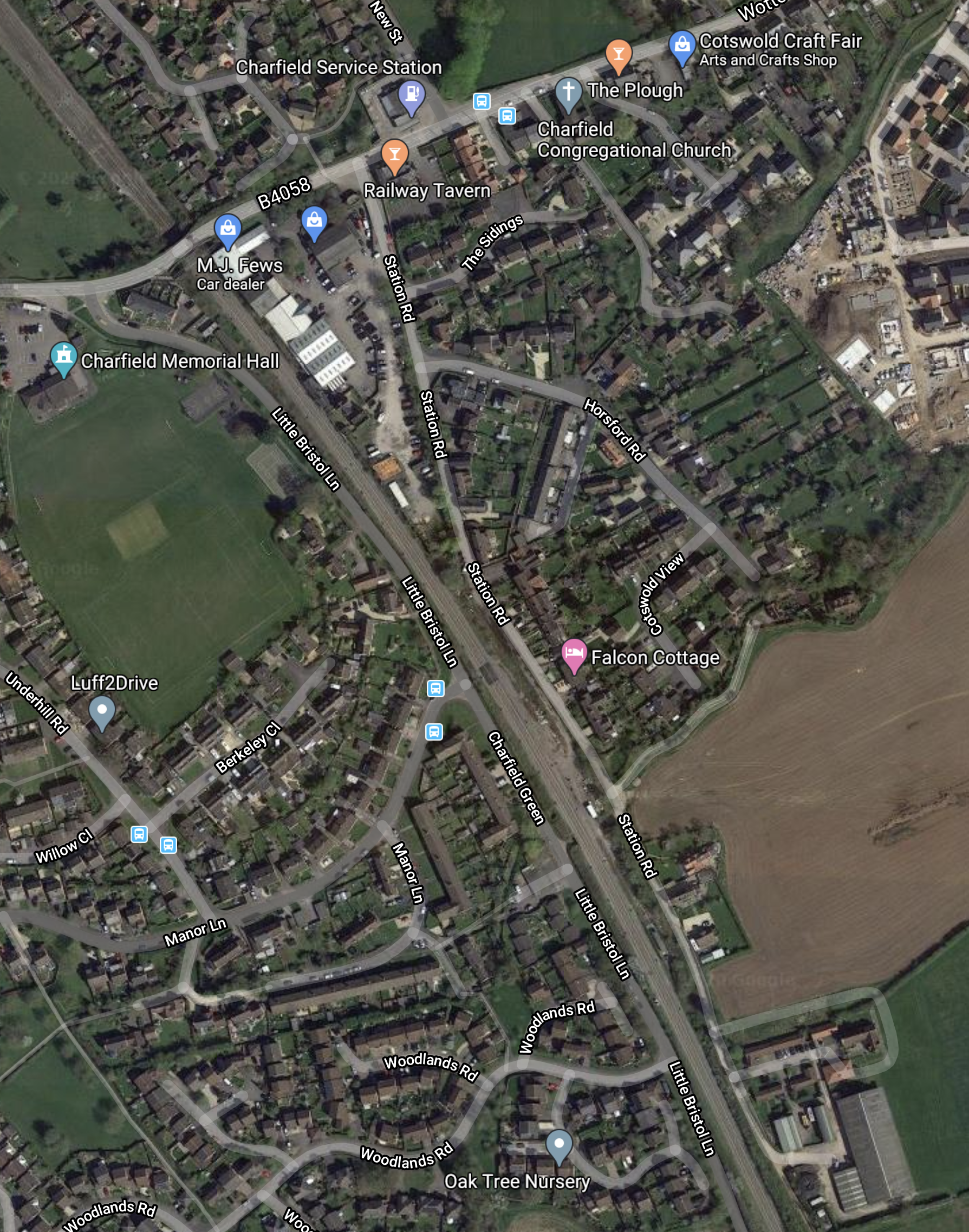
Note, that the road running down the East side of the railway is called Station Road.
There appear to be these services running through the location.
- CrossCountry – Plymouth and Edinburgh/Glasgow via Bristol Temple Meads, Bristol Parkway, Cheltenham Spa and Birmingham New Street
- CrossCountry – Exeter St. Davids and Manchester Piccadilly via Bristol Temple Meads, Bristol Parkway, Cheltenham Spa and Birmingham New Street
- GWR – Great Malvern and Westbury via Bristol Temple Meads, Bristol Parkway, Gloucester and Cheltenham Spa
Note.
All services appear to be hourly.
Bristol Parkway station is thirteen miles away by rail, so is an easy drive, but a very stiff walk or cycle.
Timings by rail from Charfield based on passing GWR trains include.
- Bristol Parkway – 15 minutes
- Bristol Temple Meads – 27 minutes
- Cheltenham Spa – 38 minutes
- Gloucester – 24 minutes
There may be a possibility of improving these times, as the current timetable might have been written for slow trains and a Class 158, Class 165 or Class 166 train can do better.
CrossCountry times include.
- Birmingham New Street – 68 minutes
- Bristol Parkway – 11 minutes
- Bristol Temple Meads – 23 minutes
- Cheltenham Spa – 17 minutes
- Worcestershire Parkway – 32 minutes
I would think, that Charfield station could receive one GWR stopping train and one fast CrossCountry train per hour.
Discontinuous Electrification Between Birmingham And Bristol
Hitachi have changed the rules on electrification, by the announcement of the development of battery electric trains in collaboration with Hyperdrive Innovation, which I wrote about in Hyperdrive Innovation And Hitachi Rail To Develop Battery Tech For Trains.
The proposed train is described in this Hitachi infographic.
It will have a range on battery power of 90 km or 56 miles.
Consider.
- Midlands Connect have ambitions see an extra hourly service between Birmingham and Bristol Temple Meads, with all services running five minutes faster. See Midlands Rail Hub.
- CrossCountry will likely be getting new trains, to replace their exclusively all-diesel fleet. They could be tri-mode trains to make the most of long stretches of electrification on their routes, batteries for short gaps of up to fifty miles and diesel power everywhere else.
- There are electrified stations at Bristol Parkway and possibly Bristol Temple Meads in a few years.
- There is full electrification between Birmingham New Street and Bromsgrove stations.
- Bromsgrove and Bristol Parkway are seventy miles apart.
- There is a possibility, that Cheltenham Spa station will get a charging facility so that London Paddington and Cheltenham Spa services could be run by Class 800 trains converted to battery electric operation.
I don’t think it is an unreasonable prediction to make that Hitachi and other train manufacturers like Stadler with their Class 755 trains, have the technology to run low-carbon services between Bristol Temple Meads and Birmingham New Street stations.
- Trains would leave Bromsgrove and Bristol Parkway with full batteries.
- Quick battery top-ups can be taken at Cheltenham Spa and Worcestershire Parkway stations.
- The fast acceleration of the electric trains will allow extra stops.
I think it would also be possible for GWR to use battery electric Class 387 trains between Great Malvern and Westbury.
Charfield could be an electric train-only station.
Conclusion
The reopening of Charfield station is really a simple station rebuilding and reopening and local passenger forecasts will probably make the decision.
But these forecasts must take into account, the likely partial decarbonisation of the route through the station, which would surely increase ridership.
The new station could also be built with provision for a possible charging facility, in case it might be needed in the future.
Beeching Reversal – Cirencester Community Railway
This is one of the Beeching Reversal projects that the Government and Network Rail are proposing to reverse some of the Beeching cuts.
It is also one of only a few of these projects, that has a very detailed plan.
- The plan has been written to the sort of standards, that would be expected of competent professionals from one of the large international rail consultancies.
- The plan is explained in detail on a comprehensive web site.
- The authors seem to have knowledge of recent developments in rail technology.
After a visit to Cirencester in November 2019, I wrote Could Cirencester Be Reconnected To The Rail Network?, which I started with this paragraph.
In Boris Johnson Vows New Life For High Streets And Axed Rail Lines, I laid out a list of rail lines that could be reopened by a future Conservative government.
Today, I’m going to Cirencester to have lunch with an old friend.
But, Cirencester does not have a rail connection, although there used to be a Cirencester branch line from Kemble station.
This was my conclusion.
With some clever and sympathetic engineering on the branch to handle the crossings, it could be a feasible reopening.
I also felt that a tram-train with batteries, could serve a two trains per hour (tph) service between Swindon and Cirencester via Kemble.
These are some details from the Cirencester Community Railway (CCR) plan.
The Route
In my post, I thought the last part of the route into Cirencester could be a problem.
The authors of the scheme have come up with an elegant solution.
- Between Kemble station and Parklease Farm, the route follows the previous route.
- Between Parklease Farm and the A433 Tetbury Road, the route runs North-South, possible along the route of an existing track.
- The route then follows the A433 into the town.
It is simple and there won’t be much major construction.
- A new bridge over the A429 will be needed.
- The track will need to cross the A433 on the level. It appears that this could be fitted in with major works to provide access to a new housing development.
All of the construction needed is laid out in the CCR report.
Single Or Double Track?
The report says that it will be built single track, which should be sufficient. Although there may be a need for a passing place around halfway to allow a more frequent service.
The Stations
Before detailing the stations, I will show this Google Map, which shows the route of the A433 Tetbury Road into Cirencester.
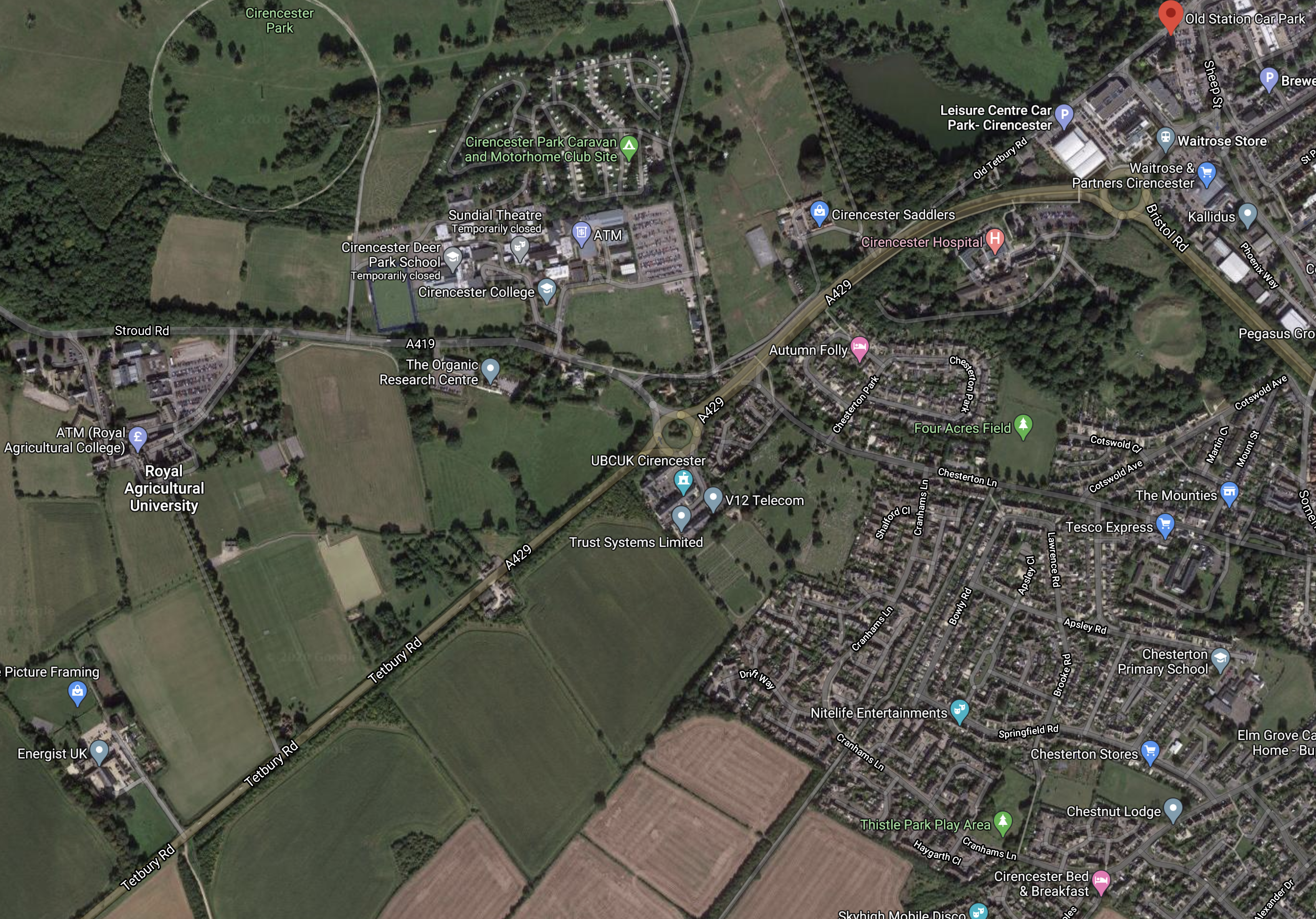
Note.
- The A 433 running SW-NE across the map.
- The Royal Agricultural University towards the West of the map.
- Cirencester College to the North-East of the University.
- The red arrow in the North-East corner of the map, which marks the Old Station Car Park.
The design envisages the following stations.
Parklease Farm
This station could be added, where the track changes direction, when it leaves the old route. It lies to the South of the Royal Agricultural University and off the map above.
It would probably be by request.
The University Station
This would be the main station on the route.
- It would serve the Royal Agricultural University.
- It would act as a Park-and-Ride station, with a large car park.
- Overnight stabling for the trains could be provided here.
If a passing loop is needed it could be added at this station.
The College Halt
This would be to the East of the roundabout on the map and would serve Cirencester College.
The Town Halt
This would be on the edge of the town centre, by the Old Station Car Park.
The Vehicles
The plan envisages using Very Light Rail vehicles.
- If these run on concrete tracks, as the report indicates, then effectively this means the the CCR will be separate from the UK rail network and through running will not be possible.
- In my post, I proposed battery tram-trains as these would allow extra local services between Kemble and Swindon, which might be needed if there was substantial housing development in the area.
- But then I like tram-trains and felt they would be a way to get to the centre of Cirencester. But the CCR’s route avoids the need for tram-trains.
I also wonder, if Very Light Rail would offer enough capacity. But it could probably offer a higher frequency easier than heavy rail.
Service Frequency
Nothing is said in the CCR report about service frequency.
As the University station doubles as a Park-and-Ride for the town, I think the frequency between the University station and the Town halt should be at least four tph.
Would this frequency apply to the whole of the CCR?
Great Western Railway’s Attitude
I can’t speak for Great Western Railway (GWR), but surely they would hope that the CCR would bring them a large number of passengers..
Currently, there is a two tph service between Swindon and Cheltenham through Kemble! Will this provide a good connection with the Cirencester service? Or will passengers find that they waste thirty minutes waiting for trains.
This was one of the reasons, I proposed tram-trains in my original post.
But this would not be a problem unique to the CCR, as the GWR has several branch lines with a similar problem.
So will GWR develop a company-wide solution to feed passengers in from branch lines?
Conclusion
The CCR have produced a well-thought out and detailed plan, but I think it can be improved. Especially, if GWR develop a company-wide solution for branch lines.
Coronavirus: Protein Treatment Trial ‘A Breakthrough’
The title of this post, is the same as that of this article on the BBC.
These are the first three paragraphs of the article.
The preliminary results of a clinical trial suggest a new treatment for Covid-19 reduces the number of patients needing intensive care, according to the UK company that developed it.
The treatment from Southampton-based biotech Synairgen uses a protein called interferon beta which the body produces when it gets a viral infection.
The protein is inhaled directly into the lungs of patients with coronavirus, using a nebuliser, in the hope that it will stimulate an immune response.
I first heard of Synairgen about five months ago, when I read about the company in the Sunday Times. It was only a few words, but it did say, that they were developing an inhaled beta interferon for use by Covid-19 patients or those with lung problems.
I should say, that I know about inhaled pharmaceuticals. Not because, I’ve ever used any, but because I funded the development of a very successful metered-dose inhaler for asthma drugs.
Two inventors; Stephen Dunne and Terry Weston came to me looking for finance to complete the development of an aerosol value, that instead of using CFCs or HCFCs as a propellant, used purified air. In fact it was pure nitrogen, but the average user of a deodorant or fly-spray doesn’t know that nitrogen is a constituent of air and thinks it’s posionous.
We formed a company called Dunne Miller Weston or DMW.
It was a technical success and the company’s MP; John Gummer, took details of the breakthrough to the conference that resulted in the Montreal Protocol.
The device and the associated patents were sold to Johnson & Johnson.
The two inventors had other ideas and one was for a metered dose inhaler for asthma drugs.
I remember that they were able to get a grant from Glaxo to prove the concept of the device.
Because, the full development would need more money, we now had a fourth partner; Mike.
I remember going with Mike to see Glaxo and we were unable to reach agreement on how Glaxo would contribute to the full development. They tended to give out these grants and I got the impression, that ours was one of the first to get a positive result and they didn’t know how to handle it.
But, it didn’t matter, as we were able to raise the funding from elsewhere and develop a successful device.
This was sold to Boehringer Ingelheim for a lot of money and all investors were very satisfied. Their product name is Respimat.
Glaxo carried on using an HCFC device.
I earned a reasonable about of money from my investment, but I also learned a lot about pharmaceuticals.
- At the time, New Zealand had the highest level of asthma inhaler use in the world.
- Pharmaceutical companies are very conservative.
- Doctors tend to give out inhalers like toys.
- Naked flames are a big cause of asthma.
But the most important knowledge I acquired was over a drink with an engineer in a pharmaceutical company, that the fine spray we obtained with our device would have lots of medical applications, including delivery of insulin for diabetics. We’d already had very good feedback, from test users in Germany.
Some other applications are stored in my brain. One could be a very big seller in the modern world!
So when I saw the report in The Sunday Times, I bought a few shares in Synairgen.
I have been well-rewarded today!
Beeching Reversal – Reopening Stratford-upon-Avon And Honeybourne-Worcester/Oxford (SWO) Railway Line
This is one of the Beeching Reversal projects that the Government and Network Rail are proposing to reverse some of the Beeching cuts.
I covered this route in RSC Urges GWR To Provide Stratford Improvements and came to these conclusions.
There are three ways to improve rail access to Stratford-upon-Avon.
-
- The relatively easy and quick, enhancement of the rail services in Warwickshire.
- Provide better one-change routes using Chiltern Railways.
- The more difficult re-connection of Stratford to the Cotswold Line at Honeybourne.
As the last project will take years to implement, I feel, it is important that services to Stratford from Birmingham, Coventry, Leamington Spa and the West Midlands are substantially increased.
I also believe that the responsibility of providing a local service between Leamigton Spa and Stratford should be given to West Midlands Trains.
The Case To Reconnect Stratford-on-Avon and Honeybourne Stations
In Where Is London Midland Going?, I wrote this section in July 2017.
The North Warwickshire Line
The North Warwickshire Line links Birmingham with Stratford-on-Avon and has an alternative name of the Shakespeare Line.
Plans exist to extend this line South to Honeybourne station on the Cotswold Line.
Under Possible Future Development in the Wikipedia entry for the Warwickshire Line, this is said.
The Shakespeare Line Promotion Group is promoting a scheme to reopen the 9 miles (14 km) of line south of Stratford to Honeybourne where it would link to the Cotswold Line. Called the “Avon Rail Link”, the scheme (supported as a freight diversionary route by DB Schenker) would make Stratford-upon-Avon station a through station once again with improved connections to the South, and would open up the possibility of direct services to Oxford and Worcester via Evesham. The scheme faces local opposition. However, there is a good business case for Stratford-Cotswolds link.
I think we’ll see something in the new franchise about developing this line, as there is a lot of potential for a train operator.
-
- Direct services between Stratford-on-Avon and Oxford, where there is a connection to Bicester Village. Tourists would love that!
- Connection of the housing development at Long Marston to Birmingham.
- Could Stratford-on-Avon or Honeybourne become the terminus of a service from Leamington, Coventry and Nuneaton?
It would also give DB Schenker, their freight diversion.
But we didn’t see anything in the new franchise and the project has turned up in the list of Beeching Reversal projects.
The Route Into Stratford-Upon-Avon
This Google Map shows Stratford-upon-Avon station.
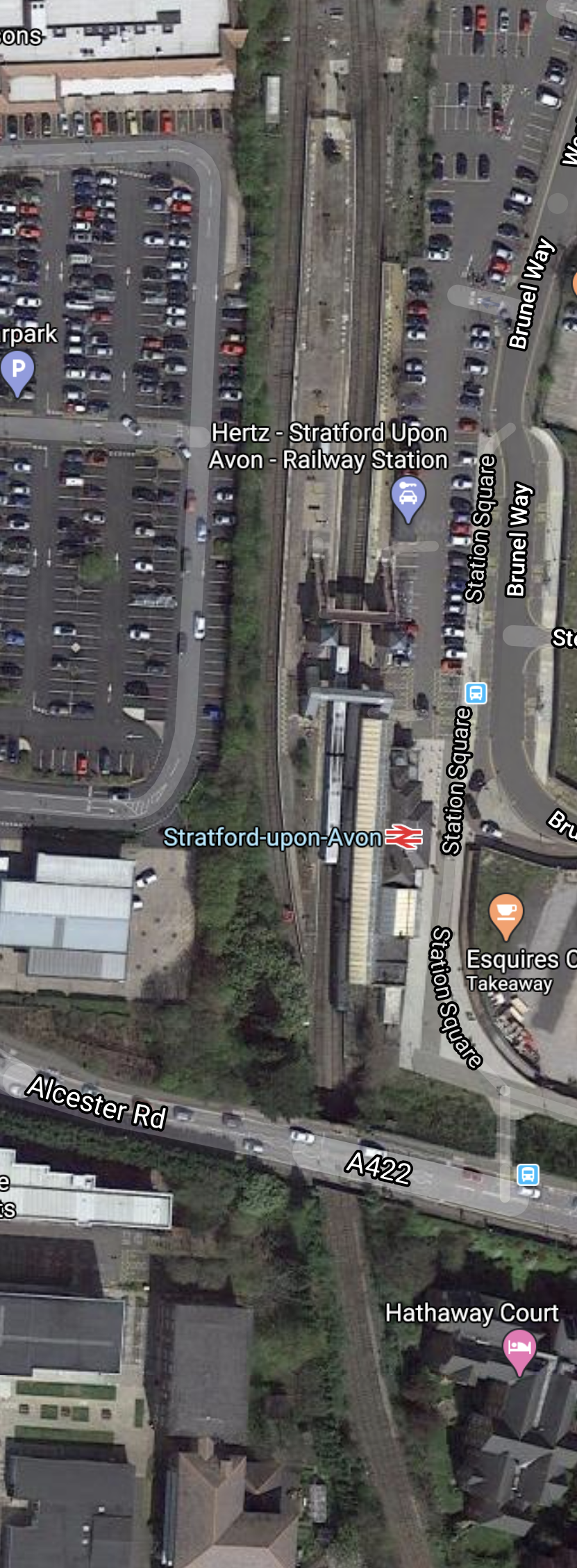
Note.
- The station is well-appointed with step-free access and three platforms.
- The bridge at the Southern end of the station to allow the railway to go South, appears to be intact.
This second Google Map shows the area of the town from the station to the racecourse.
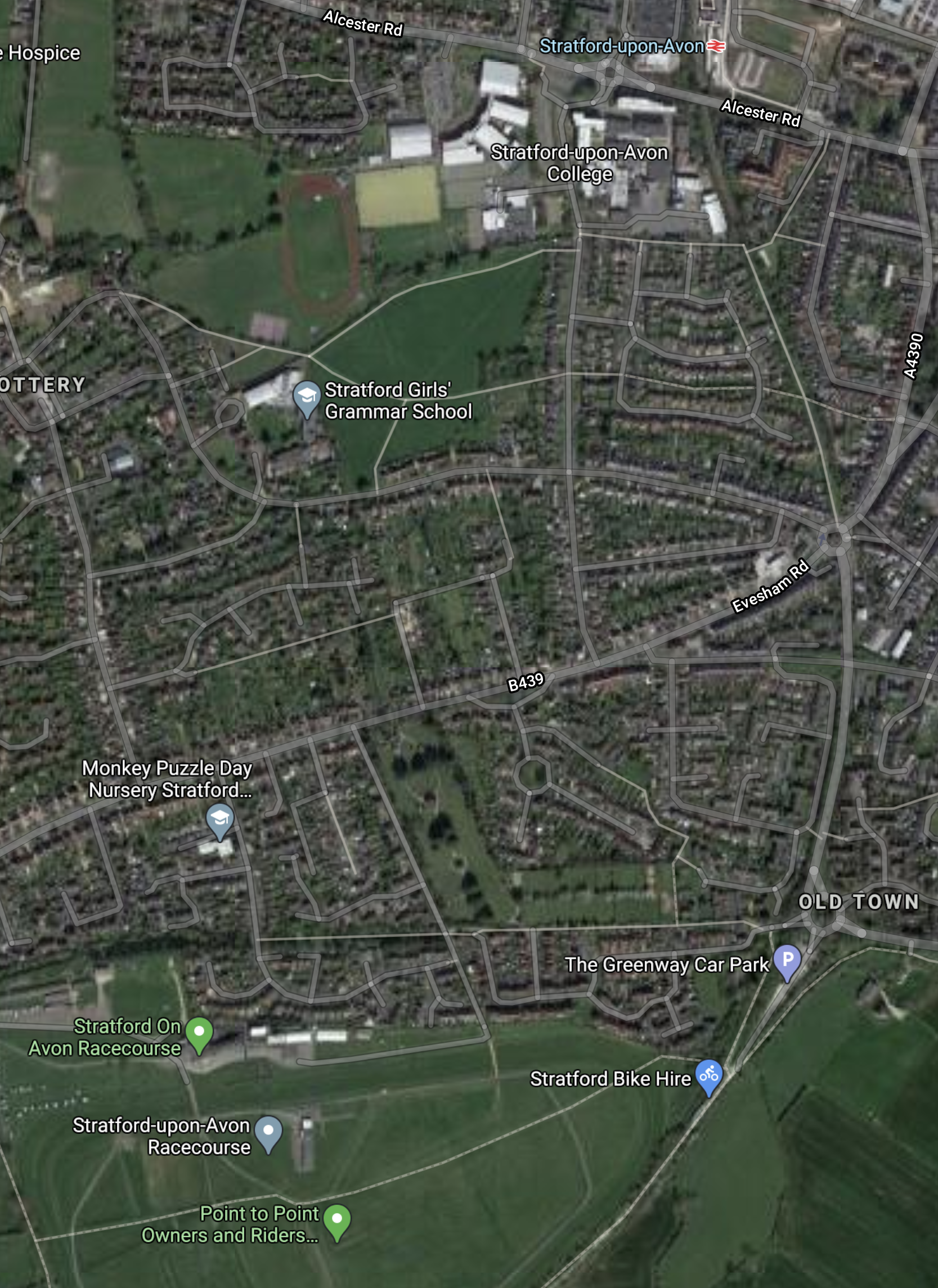
Note.
- Stratford-upon-Avon station at the top of the map.
- Stratford Racecourse at the bottom of the map.
The road curving between the station and the racecourse is the track of the former Stratford to Honeybourne railway.
My first reaction, when I saw this was that those, who want to rebuild this railway can’t be serious.
- Would you want one of DB Schenker’s noisy, smelly and polluting Class 66 locomotives running past your house?
- Would you want the line to be electrified, so they could use electric locomotives on this short stretch of railway? If so would DB Schenker be happy to change locomotives twice?
I have looked at new railways entering towns and cities all over the UK and Europe and feel there is only two possible solutions for Southern access to Stratford-upon-Avon station.
- A single-track passenger-only railway run by battery electric trains.
- A tunnel, which would probably be single-bore for cost reasons.
South of Stratford, the route is easier and it can be picked out on Google Maps until it reaches the Cotswold Line to the East of Honeybourne station.
This Google Map shows Honeybourne station and the junction.
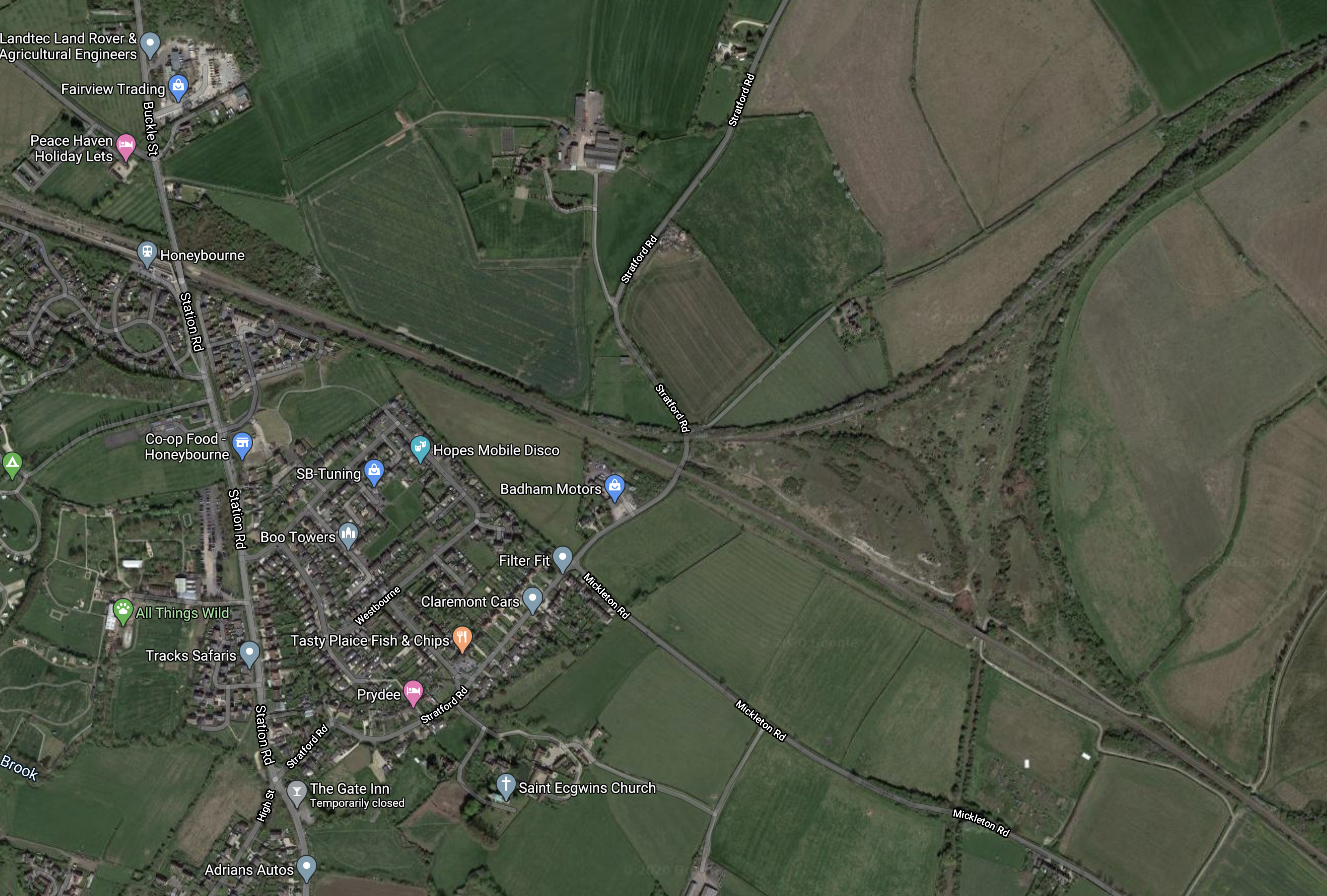
Note.
- The Cotswold Line running NW-SE across the map.
- The large triangular junction that connected the line to Stratford-upon-Avon station, which is to the North-East.
- Another track going South from the junction, can be picked out. This leads to the heritage Gloucestershire Warwickshire Railway at Broadway station, with onward connections to Cheltenham Racecourse.
Honeybourne station could be an important rail hub.
Honeybourne Station And Battery Electric Trains
Consider.
- Hereford and Honeybourne stations are 48 miles apart.
- Didcot East Junction, where trains switch to and from the Great Western Main Line electrification and Honeybourne stations are 48 miles apart.
- Trains to Hereford pass through Great Malvern, Worcestershire Parkway and Worcester Foregate Street.
- Stratford-up-on-Avon and Honeybourne stations would be less than thirty miles apart, if the two stations were to be reconnected by rail.
- Hitachi’s proposed battery electric trains will have a range of 56 miles on battery power.
If the means to charge battery electric trains were provided in the Honeybourne area, the following services could be run by battery electric trains.
- London Paddington and Worcestershire Parkway, Worcester Foregate Street, Great Malvern and Hereford.
- Honeybourne and Stratford-upon-Avon
The charging could be performed, by a ten minute stop at Honeybourne station or a section of electrified line centred on the station.
The two stations either side of Honeybourne are Evesham and Moreton-in-Marsh.
- They are fifteen miles apart.
- Trains take eighteen minutes between the stations.
- This would be enough time to charge the batteries.
- Trains could pan-up and pan-down in the two stations.
I believe modern low-visibility overhead electrification could be used.
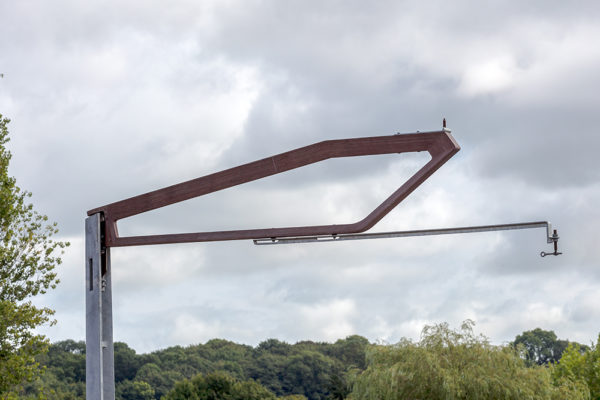
See Prototype Overhead Line Structure Revealed for more details on these gantries.
An Oxford And Stratford-upon-Avon Service
My estimates for the timings of the two sections of the route are as follows.
- Stratford-upon-Avon and Honeybourne – 20 minutes
- Honeybourne and Oxford – 46 minutes
Perhaps not the best for an efficient services, but I’m sure something could be arranged.
Conclusion
This will be a difficult project to get built.
If it is built, I suspect, it will be a passenger-only route using battery trains.
Gore Street Energy Welcomes Green Light For Larger Battery Projects In England And Wales
The title of this post, is the same as that of this article on Proactive Investors.
These are the introductory paragraphs..
Gore Street Energy Fund has welcomed legal changes to allow battery projects larger than 50MW in England and 350MW in Wales.
The new legislation removes energy storage, except pumped hydro, from the Nationally Significant Infrastructure Projects regime in England and Wales, said the fund.
This will allow larger projects to receive planning permission without government approval.
I can see why they are pleased, as it removes a level of bureaucracy.
I suspect companies like Highview Power will also be pleased as 50 MW is at the lower end of their battery range.
The Future Of West Midlands Trains’s Class 350 Trains
Currently, West Midlands Trains have four sub-fleets of Class 350 trains.
- Class 350/1 – 30 trains – Leased from Angel Trains
- Class 350/2 – 37 trains – Leased from Porterbrook
- Class 350/3 – 10 trains – Leased from Angel Trains
- Class 350/4 – 10 trains – Leased from Angel Trains
Note.
- All are 110 mph trains
- The trains are capable of being modified for 750 VDC third-rail electrification.
Under Future the Wikipedia entry for Class 350 trains says this.
West Midlands Trains announced that they would be replacing all 37 of their 350/2 units for Class 350/4 units cascaded from TransPennine Express and brand new Class 730 units which both can travel up to speeds of 110 mph.
In October 2018, Porterbrook announced it was considering converting its fleet of 350/2s to Battery electric multiple units for potential future cascades to non-electrified routes.
As West Midlands Trains have ordered 45 Class 730 trains for express services, it looks like they will be expanding services on the West Coast Main Line and around the West Midlands.
But it does appear that as many as thirty-seven trains will be returned to Porterbrook.
Class 350 Trains With Batteries
I believe that if fitted with batteries, these trains would meet or be very near to Hitachi’s specification, which is given in this infographic from Hitachi.
Note that 90 kilometres is 56 miles.
Could West Midlands Trains Run Any Services With Class 350 Trains With Batteries?
I think there are some possibilities
- Birmingham New Street and Shrewsbury – 30 miles without electrification between Shrewsbury and Wolverhampton – Charging facility needed at Shrewsbury.
- Birmingham New Street and Hereford via Worcester – 41 miles without electrification between Hereford and Bromsgrove – Charging facility needed at Hereford.
- Leamington Spa and Nuneaton via Coventry – 19 miles without electrification – Charging on existing electrification at Coventry and Nuneaton.
- The proposed direct Wolverhampton and Walsall service, that i wrote about in Green Light For Revived West Midlands Passenger Service.
There may also be some services added because of the development of the Midlands Rail Hub and extensions to London services,
Who Has Shown Interest In These Trains?
I can’t remember any reports in the media, about any train operator wanting to lease these trains; either without or with batteries.
Conclusion
It does all seem a bit strange to me.
- As a passenger, I see nothing wrong with these trains.
- They are less than twenty years old.
- They are 110 mph trains.
- They have 2+2 interiors, with lots of tables.
- They could be fitted with batteries if required.
But then, all of those things could be said about Greater Anglia’s Class 379 trains.
 The Anonymous Widower