Reinstatement Of The Bury-Heywood-Rochdale Lines
This is one of the successful bids in the First Round of the Restoring Your Railway Fund.
This article on Rochdale OnLine is entitled Successful First Step To Restore Rochdale-Heywood-Bury Railway Line.
The work can now begin to fill out what is possible, with the award of funding from the Government to go towards a full study.
The funding was welcomed by Tony Lloyd, the MP for Rochdale, who is quoted as saying this.
Metrolink services and the rail service from Rochdale to Manchester provide transport to the city centre, but it does not provide the kind of connections we need to get around the city region, in particular, from Rochdale and Heywood to Bury.
“The current public transport offering between Heywood and Manchester city centre is provided by bus services but during the busiest times of the day this journey can take more than one hour, limiting the borough’s residents’ access to the many jobs located there.
What will the new rail link look like?
In Rossendale Reopening Prospect, I gave my views, based on an article in the February 2019 Edition of Modern Railways, which had the same title.
Summarising the other article, I can say the following.
The Track
I described the track like this.
The plan envisages reinstating the route between Rawtenstall and Castleton Junction on the Calder Valley Line.
The section between Rawtenstall and Heywood stations, via Bury Bolton Street station is the heritage line of the East Lancashire Railway (ELR). It is best described as predominately single-track with passing loops.
The route is about twelve miles long.
The Services
These are given as follows.
- Manchester Victoria and Bury Bolton Street
- Bury Bolton Street and Rochdale
- Bury Bolton Street and Rawtenstall – Peak Hour shuttle.
It is suggested that the third route would be run by the ELR.
The Stations
The following stations will be on the route.
Most will need updating, but Heywood would probably be a new station.
The Trains
The original article suggests Class 230 trains, but several others are possible. The proposed battery-electric Class 331 train is surely a possibility.
Conclusion
This could be a very sensible scheme.
A Train With A Geo-Fence
This article on Rail Advent is entitled New Train For Wrexham to Bidston Line Begins Testing.
The testing of Vivarail‘s Class 230 train for Transport for Wales, is taking place along the Cotswold Line, prior to entering service.
This is the most significant paragraph in the article.
The train is also geo-fenced so that the gensets are never used in stations or sensitive areas, although, the batteries are extremely quiet anyway.
From personal experience of battery trains, including Vivarail’s prototype in Scotland, battery trains are very quiet.
New Zinc-Air Battery Outperforms Lithium-Ion Battery On All Levels
The title of this post, is the same as that of this article on Interesting Engineering.
This is the introductory paragraph.
There’s a new battery in town and it’s a game-changer. The novel battery, is cheaper, safer and significantly longer laster-lasting, than lithium-ion batteries reports Recharge.
It does seem that Zinc8 is getting noticed.
I wonder, if the web-site gets read in Cambridge, where I was once told that use of the word Interesting, is very much to be discouraged.
Reinstatement Of The Ivanhoe Line
This is one of the successful bids in the First Round of the Restoring Your Railway Fund.
The Ivanhoe Line, is a half-completed project left over from the days of British Rail.
- The main objective appears to be to extend the current line between Lincoln and Leicester via Nottingham, East Midlands Parkway and Loughborough stations to Burton-upon-Trent along the freight-only Leicester-Burton-upon-Trent Line.
- Some new stations will be added.
In January 2020, I wrote Silent Hydrogen Trains On The Cards For New Line Linking Burton And Leicester, after reading an article on Derbyshire Live.
I finished that article by listing the possibilities.
There are a lot of possibilities to extend the Ivanhoe Line to Burton and even beyond using the South Staffordshire Line.
- Battery or hydrogen trains can be used.
- Stations can be added as required.
- The route will connect to East Midlands Airport.
- A solution for Knighton Junction can surely be devised.
Amazon are reported to be interested in the project, as they have a big depot at Coalville.
It now looks like it’s all going to be turned into a plan for reality.
I do have some questions.
What Will Be The Solution To The Knighton Junction Problem?
Sadly, when the route was closed to passengers in 1964, British Rail simplified Knighton Junction at the Leicester end of the line. Wikipedia says this.
At the Leicester end of the line, Knighton North Junction has been dismantled and the former course of the line to the junction has been sold and turned into an industrial estate. The line’s remaining connection with the Midland Main Line is Knighton South Junction, which faces southwards, away from Leicester station. Trains between Leicester and the line therefore have to reverse direction at the junction.
This Google Map shows, what’s left of the junction.
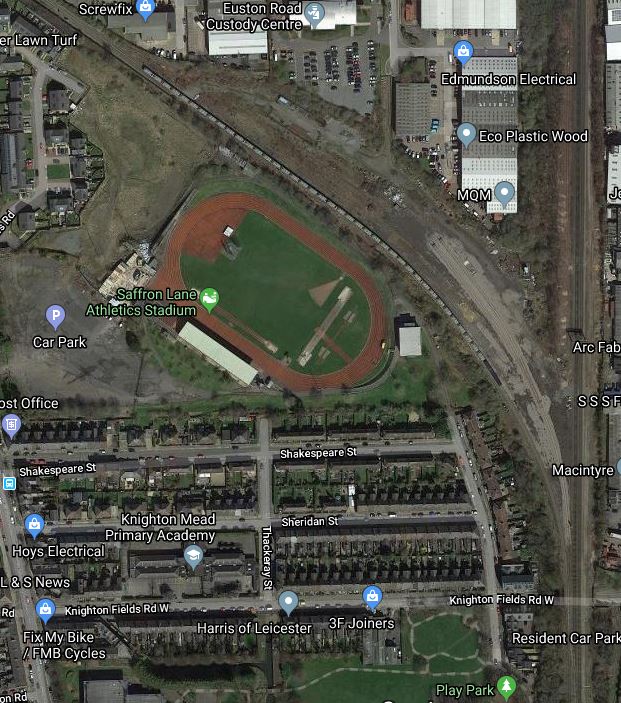
Note.
- Leicester is to the North
- Burton is to the North-West.
- Melton Mowbray and London are to the South.
It looks to me, that someone at British Rail made it absolutely certain, that the rail line could not be reopened to provide a passenger service between Leicester and Burton.
For a train to go between Leicester and Burton, it would either need to reverse as Wikipedia indicated, or the curve would have to be very tight.
It looks like the preferred solution, will be to build a new station to the South of Knighton Junction.
- The station would only need a single platform.
- It could be easily fitted in alongside the Midland Main Line.
Trains will reverse to get around the tight corner.
Will There Be A Station At Leicester City Stadium
This Google Map shows the stadium.
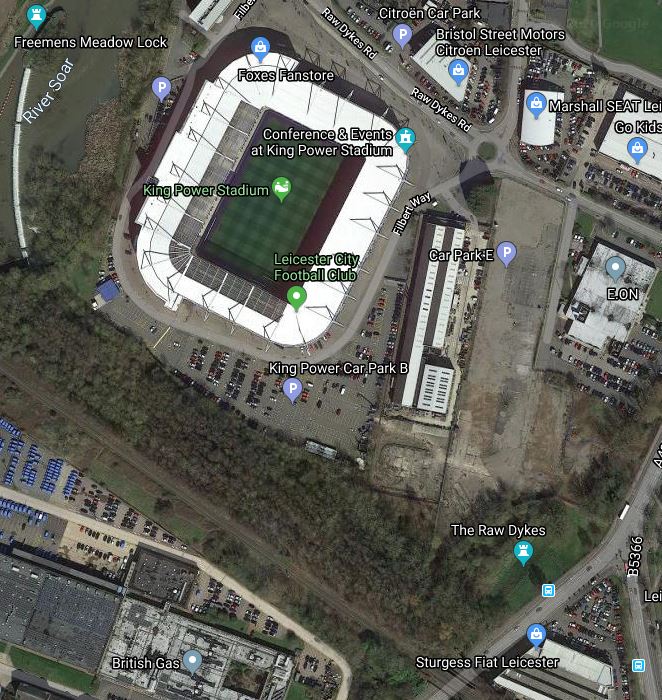
Note the rail line passing to the South of the station.
It would appear that building a new station would not be the most difficult of projects.
But after the experience of Coventry City, who were relegated twice after Coventry Arena station opened, would Leicester City want a station?
Could The Ivanhoe Line Be Connected To High Speed Two At Ashby-de-la-Zouch?
I heard an MP on the radio, who was very much against High Speed Two and that led me to write Could High Speed Two Have A Station At Ashby-de-la-Zouch?.
I think this is a serious possibility in the future.
Could East Midlands Railway Use The Route To Run A London And Burton-on-Trent Service?
Consider.
- East Midlands Railway‘s Class 810 trains could be fitted with a battery, that would give the trains a battery range of between 55 and 65 miles.
- The trains would have a charge time of perhaps 10 minutes.
- The distance between Knighton Junction and Burton-on-Trent is around 35 miles.
- The distance between Knighton Junction and the Northern limit of the electrification at Market Harborough station is fifteen miles.
- The distance between Market Harborough and Burton-on-Trent stations is 50 miles.
I think it would be possible for a battery-electric Class 810 train to run between London and Burton-on-Trent.
- The batteries would need to be charged at Burton-on-Trent.
- Perhaps, the easiest way to provide charging facilities would be to electrify the last ten miles between Ashby-de-la-Zouch and Burton-on-Trent stations
- The service could call at all or selected stations between Knighton Junction and Burton-on-Trent.
I think this could be a very useful service, even if it only ran a couple of times every day.
Could Battery-Electric Trains Run The Whole Ivanhoe Line Between Lincoln And Burton-on-Trent?
The problem is not the trains, but the lack of electrification between Market Harborough and Clay Cross North Junction.
Leicester station is an important station on the MML.
But it would be a difficult station to electrify because of a bridge with limited clearance.
In Discontinuous Electrification Through Leicester Station, I discussed how the following.
- Discontinuous electrification through Leicester station.
- Electrification between Leicester and Derby stations.
- Electrifying the High Speed Two route between Clay Cross Junction and Sheffield.
Would allow Hitachi Class 810 trains, equipped with batteries to run between London and Sheffield on electric power alone.
Consider.
- As I have said East Midland Railway’s new Class 810 trains could be fitted with batteries with a range of 55 to 65 miles.
- The gap between Leicester station and the end of the electrification at Market Harborough is sixteen miles.
- Knighton Junction is less than two miles South of Leicester station.
- Burton-on-Trent is around forty miles from Leicester station.
- All passenger trains passing through Leicester station, stop in the station to set down and pick up passengers.
It would thus appear that the following would be possible.
- A Northbound battery-electric train from St. Pancras to Leicester or further North could reach Leicester on battery power from Market Harborough.
- A Northbound battery-electric train from Burton-on-Trent to Leicester or further North could reach Leicester on battery power from Burton-on-Trent.
- A Southbound train from Leicester or further North to St. Pancras could reach Market Harborough on battery power from Leicester.
- A Southbound train from Leicester or further North to Burton-on-Trent could reach Burton-on-Trent on battery power from Leicester.
Trains leaving Leicester would need to be fully charged.
So how would this be arranged?
I think the simplest method would be to electrify the section of the Midland Main Line between Leicester and Derby stations.
- The route is probably not the most difficult to electrify.
- East Midlands Parkway has good electrical connections, as it is next to Ratcliffe-on-Soar power station.
- Nottingham is just nine miles from East Midlands Parkway.
- Derby is thirty miles from East Midlands Parkway.
- Clay Cross North Junction, where the joint electrified section with High Speed Two commences is twenty-one miles from Derby.
- Lincoln is forty-two miles from East Midlands Parkway.
- Battery-electric trains could use this electrification for both traction power and to charge their batteries.
- As the trains would use battery power between Derby and Clay Cross North Junction, the sensitive issue of electrifying through the World Heritage Site of the Derwent Valley Mills, will have been avoided.
All East Midlands Railway’s InterCity services would be totally carbon-free.
It should also be noted, that as Lincoln is only forty-two miles from East Midlands Parkway, provided there was the ability to recharge the trains at Lincoln, the whole Ivinghoe route between Lincoln and Burton-on-Trent could be run by a suitable battery-electric train.
Could Hydrogen Trains Run The Whole Ivanhoe Line Between Lincoln And Burton-on-Trent?
If the route can be run by a battery-electric train, I can see no reason, why a hydrogen-powered train couldn’t do a good job on the route.
I suspect that the Alstom Breeze and any future trains, that are designed for hydrogen power, will also be able to use electrification, where it exists.
So, if any more electrification was erected on the Midland Main Line, the hydrogen trains would take advantage.
The hydrogen trains would need to be refuelled, but because of their long range, this would probably only be a twice a day operation at most.
There is probably space for a refuelling point, at either end of the route.
Conclusion
This is a good scheme, that should have been completed decades ago.
H2OzBus Project: Deploying Hydrogen Fuel Cell Bus Fleets For Public Transport Across Australia
The title of the this post, is the same as that of this Press Release from ITM Power.
This is the introductory paragraph.
ITM Power, the energy storage and clean fuel company, is pleased to announce the formation of the H2OzBus Project (“the Project”) and the signing of a memorandum of understanding with strategic partners (“the Consortium”). The Consortium comprises Transit Systems, part of the SeaLink Travel Group, Ballard Power Systems, BOC Limited, Palisade Investment Partners and ITM Power. The Consortium partners have signed a memorandum of understanding as a further step in evaluating and demonstrating the concept of hydrogen fuel cell electric buses for use in public bus transport in Australia.
Some further points from the Press Release.
- Initially, a hundred buses will be deployed.
- The buses appear to be being built in Australia.
- Ten locations are being considered for the buses.
It looks to be a very sensible project.
Reinstatement Of The Barrow Hill Line Between Sheffield And Chesterfield
This is one of the successful bids in the First Round of the Restoring Your Railway Fund.
The Route
This Google Map shows where the Barrow Hill Line starts at Tapton Junction near Chesterfield station.
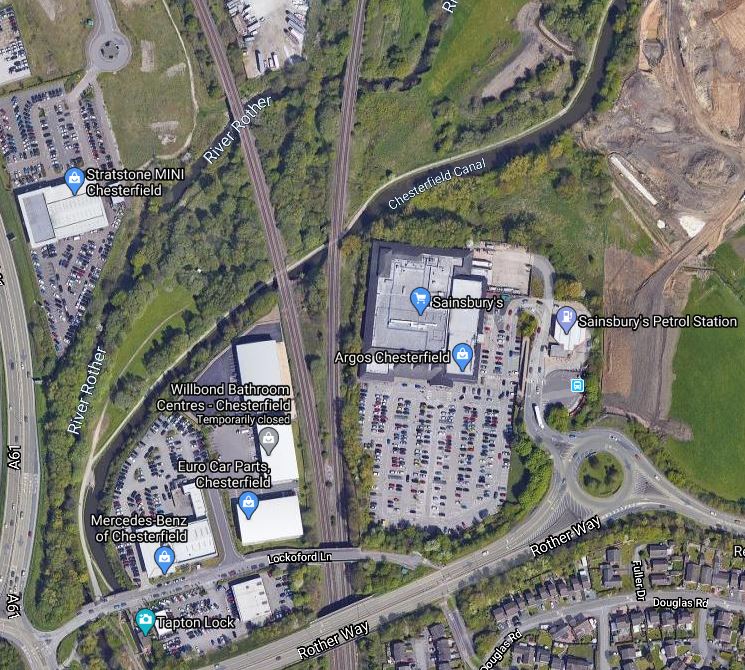
Note.
- Chesterfield station is less than a mile to the South.
- The left railway going North is the Midland Main Line to Sheffield
- The right railway going North is the Barrow Hill Line.
The Barrow Hill Line turns slightly to the East and this Google Map shows it passing through Barrow Hill, which gives the route its name.
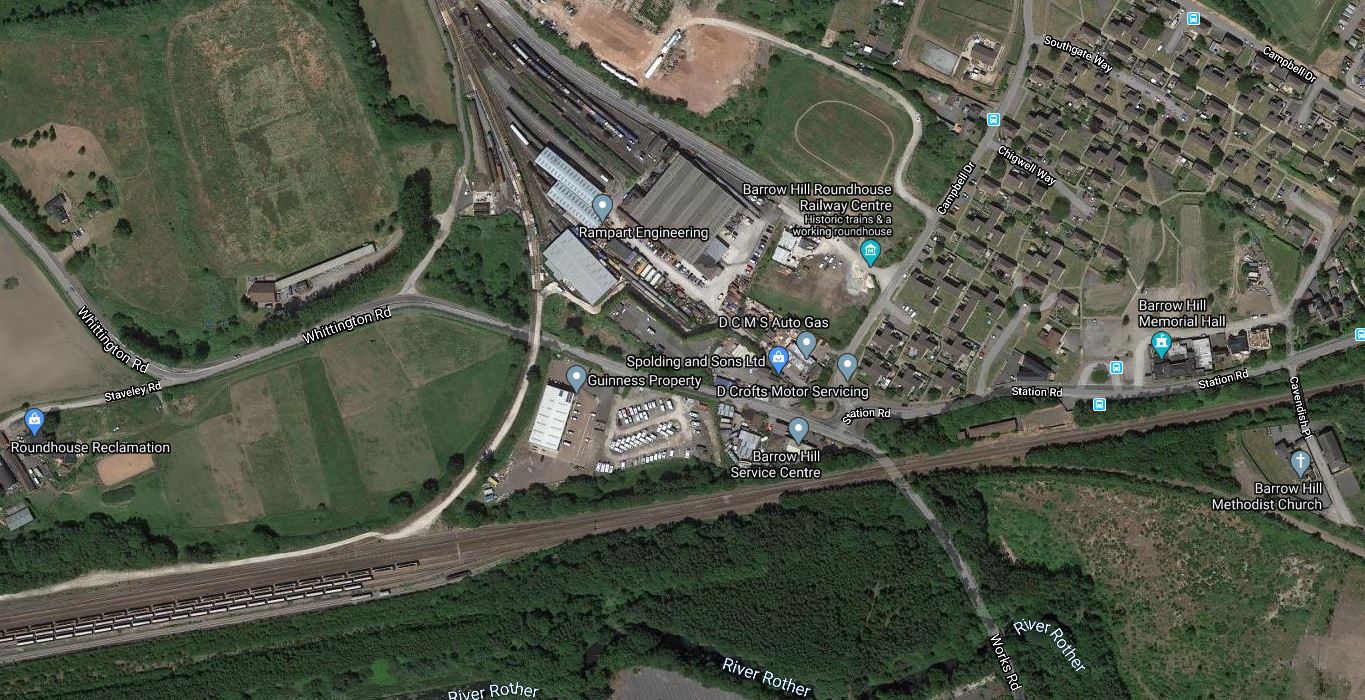
Note.
The historic Barrow Hill Roundhouse and some rail-related businesses to the North of the line.
There used to be a station here called Barrow Hill! What a surprise!
The Wikipedia entry for Barrow Hill station has a section called Modern Traffic, where this is said.
At 22 June 2013 the line is part of the Midland Main Line. It is used predominantly for freight, with a handful of passenger trains going the “long way round” from Chesterfield to Sheffield via the Old Road and Darnall largely to retain staff route knowledge in case of diversions.
The Wikipedia entry for the station also has a section called Possible Future, which is worth a read, as it lists other mothballed rail lines in the area, that could be developed.
Follow the Barrow Hill Line to the North-East and it goes through a mix of agricultural land, industrial dereliction, modern factories and nature reserves before it splits near Beighton.
This Google Map shows the area.
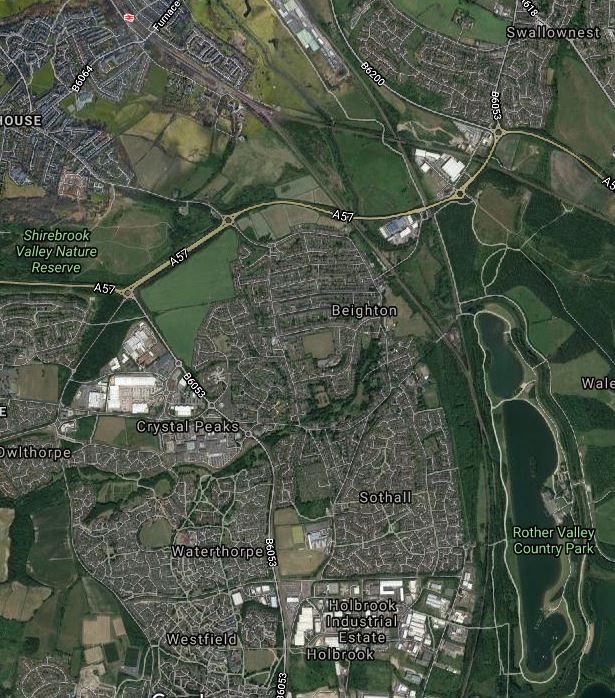
Note.
- The rail lines splitting by the Rother Valley Country Park at Beighton Junction.
- Barrow Hill is to the South.
- There used to be a station at Beighton.
- Woodhouse station is in the North West corner of the map.
- Woodhouse station is on the Sheffield-Lincoln Line, which can be seen crossing the area.
- Trains taking the left fork at Beighton Junction can go to Sheffield via Woodhouse and Darnall stations.
- Trains taking the right fork go under the Sheffield-Lincoln line and have connections to a large number of destinations for both freight and passengers.
It looks to me, that it is proposed to convert this long-way round route, into a second route between Sheffield and Chesterfield.
- Stations exist at Woodhouse and Darnall.
- Stations used to exist at Barrow Hill, Eckington & Renishaw, Killamarsh West and Beighton.
- The route would surely be very useful, when the Midland Main Line route between Sheffield and Chesterfield is updated for High Speed Two.
- The route might also be very useful for East Midlands Railway to develop services to Rotherham and other places to the East of Sheffield.
- I’ve found a train that takes this route between Chesterfield and Sheffield and with no stops it took twenty-five minutes.
- Typically, the direct route takes about eleven minutes.
I can see several possibilities for local, regional and national services using the Barrow Hill Line.
I have a few questions.
Would The Barrow Hill Line Be Electrified?
It has been stated that High Speed Two and the Midland Main Line will share an electrified corridor from Clay Cross North Junction to Sheffield via Chesterfield.
- So as both stations will be electrified, it would not be any problem to rustle up a good electricity supply to power an electrified Barrow Hill Route.
- Electrification might narrow the fourteen minute difference between the routes.
- Electrification would allow East Midlands Railway‘s new Class 810 trains to have a second electrified route into Sheffield.
- Is there a case for a service between London and the South of England and the South and East of Sheffield?
I think electrification of the Barrow Hill Line is more than a possibility.
Would Gauge-Clearance For Electrification Be Difficult?
As the route is already cleared for freight trains with the largest containers, it won’t be as difficult as some routes.
Could Tram-Trains Be Used Between Sheffield And Chesterfield On The Barrow Hill Line?
In Sheffield Region Transport Plan 2019 – A New Tram-Train Route To A New Station At Waverley, I talked about a plan by the Sheffield Region for a new tram-train route between Sheffield station and a new housing district of Waverley on the Sheffield-Lincoln Line.
- Waverley is between Darnall and Woodhouse stations.
- The new Advanced Manufacturing Park would also be served.
- Tram-trains could venture further down the Sheffield-Lincoln Line, if that was so desired.
If tram-trains were used on the Barrow Hill Line, between Sheffield and Chesterfield, both routes would share the track between Sheffield and Darnall stations.
Note that tram-trains would be able to share tracks with all electric trains used around Sheffield, including freight trains and the Class 810 trains.
Note that the stations for tram-trains can be much simpler and even share platforms with full-size trains.
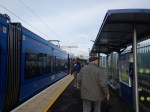
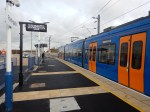
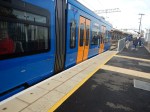
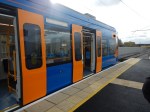
The pictures show Class 399 tram-trains at Rotherham Parkgate and Rotherham Central stations.
- I feel with innovative design, the whole route between Sheffield and Chesterfield could be run using tram-trains.
- The route could be electrified with 25 KVAC overhead wires.
- Instead of taking the Sheffield fork at Beighton Junction, the tram-trains could also take the right fork and link Chesterfield with Barnsley, Doncaster, Rotherham and Swinton.
- These tram-trains also come with batteries, if that is needed.
Barnsley, Chesterfield, Rotherham and Sheffield could be getting a lot of better connectivity and the Barrow Hill Line is key.
Conclusion
This looks to be a very sensible project.
- It could be run with either trains or tram-trams.
- It should be electrified, so it could be zero-carbon.
- Tram-trains could be used to make stations simpler.
- It could give an alternative route for electric trains to Sheffield station.
- The track is already there and regularly used.
But surely the biggest reason to built it, is that it appears to open up a lot of South and South-East Sheffield and North-East Chesterfield for development.
Reinstatement Of The Clitheroe To Hellifield Railway Line
This is one of the successful bids in the First Round of the Restoring Your Railway Fund.
This line is part of the route between Blackburn and Hellifield stations, which I have tried to use a couple of times in the past without success.
Why Blackburn? You may ask!
When I’m in that area, I often stay in the Premier Inn in the town, as it’s only about a hundred metres from the station. There are a couple of reliable gluten-free eateries too by the hotel.
A couple of times, I’ve taken the train up the Ribble Valley Line to Clitheroe and had a look around.
Unfortunately, there aren’t many trains to Hellifield from Blackburn and only on Sundays. Twice, though, I’ve planned trips to get a Sunday morning train from Blackburn to Hellifield and twice the train has been cancelled.
Perhaps, I’ll get to go later this year.
I’ve been to Clitheroe a couple of times and these pictures show the state of the lower section of the line.
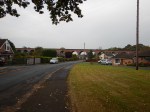
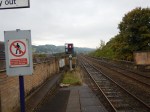

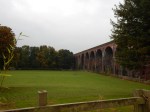
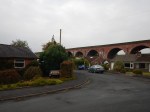
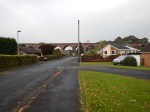
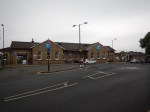
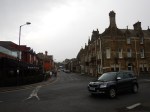
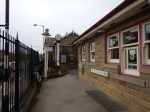
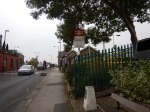
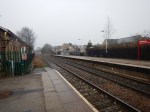

Wikipedia documents a lot of improvements to the line over the last few years and now there are now generally two trains per hour (tph) between Blackburn and Manchester and one tph between Blackburn and Clitheroe on the route.
Clitheroe And Hellifield
I have just flown my virtual helicopter between Clitheroe and Hellifield stations and the route is best characterised as follows.
- A fairly straight double-track railway.
- No current stations, although they used to exist at Chatburn, Rimington, Gisburn and Newsholme.
- Mainly agricultural countryside.
- Lots of businesses flagged up by Google Maps, of which many are visitor related.
Finally, I arrived at Hellifield station.
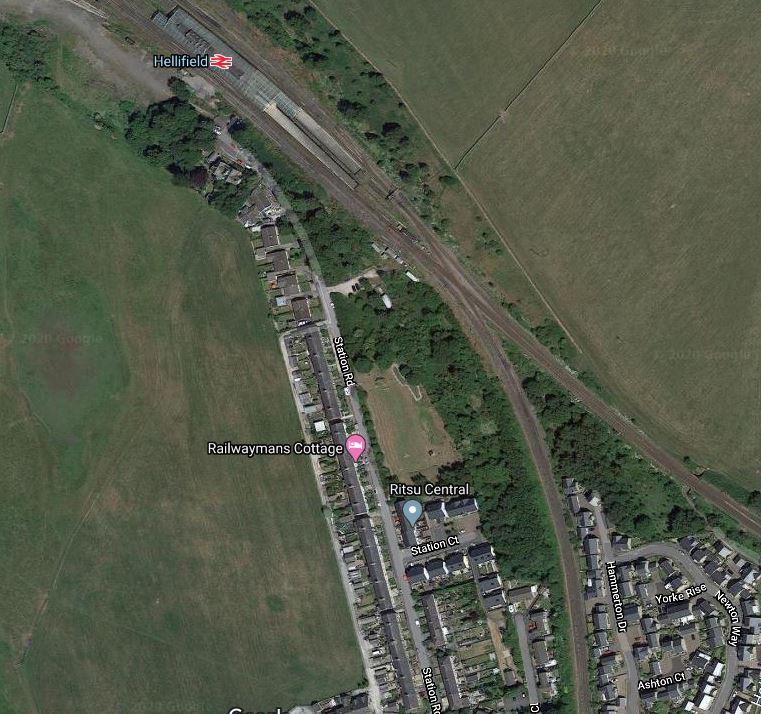
Note.
- The railway line to the South East leads to Skipton and Leeds
- The railway line to the South is the Ribble Valley Line and it leads to Clitheroe, Blackburn and Manchester.
- The line to the North East is the Settle and Carlisle Line.
I think I can see where those that took the trouble to nominate the Ribble Valley Line between Clitheroe and Hellifield are coming from.
- There is a well-maintained double-track railway in good condition between Manchester and Hellifield via Bolton, Darwen, Blackburn and Clitheroe, that links to the countryside above Clitheroe that needs vistors for its businesses and produce.
- Lancashire County Council, the Community Rail Partnerships in the area and local activists have done a good job on Network Rail to persuade them to improve the railway.
- The Settle and Carlisle is waiting for visitors to explore one of the world’s most iconic railways.
All it needs is a train service and possibly a station or two!
Some of my questions.
What Are The Local Aspirations?
I found this article on the Lancashire Telegraph, which is entitled Campaign To Restore Rail Service From Clitheroe To Hellifield.
This is a quote from the Ribble Valley Council leader.
This plan forms part of the council’s approved proposals to drive the Ribble Valley economy to create more jobs, particularly for our young people and further strengthen our strong tourist industry. It will take cars off congested roads and bring more tourists to the Ribble Valley. It will also improve the connectivity for the Ribble Valley community to surrounding urban conurbations for residents.
These are other points from the article.
- An aim is to see the reopening of Chatburn, Gisburn and Newsholme stations.
- Another is better links to Manchester.
- New rolling stock is planned for the line.
- The line is used daily by heavy freight trains.
- It would connect Clitheroe to Bradford, Leeds and Skipton
It does seem to me, that restoring the services between Clitheroe and Hellifield could offer a lot of benefits.
What Frequency Of Trains Is Needed Between Manchester and Hellifield, via Bolton, Blackburn and Clitheroe?
The frequency on the Settle and Carlisle Line is around eight trains per day (tpd), with six on Sundays.
That frequency would probably not be sustainable on the Ribble Valley Line, but the train timetable should be such, that someone can leave Manchester in the morning, have an adventure and return in the evening.
Is Any New Infrastructure Required?
As trains use the line occasionally, I suspect that all the track, signalling and communications needed for perhaps four tpd in both directions between Clitheroe and Hellifield is in place.
So the only thing needed in the fullness of time, might be the extra stations.
But which one do you do first?
I would do the following.
First I would ask passengers, where they would like additional stations on the route.
And then why not build a temporary one using scaffolding and see what happens.

The picture shows a temporary platform at Liverpool South Parkway station, whilst Lime Street was closed for rebuilding.
Conclusion
I have a feeling that it restoring psassenger trains between Clitheroe and Hellifield will be a worthwhile thing to do.
Reinstatement Of The Abbey Line Between St Albans Abbey And Watford Junction
This is one of the successful bids in the First Round of the Restoring Your Railway Fund.
Over the years on this blog, I have written several times about the Abbey Line, which is one of those lines, that despite very few improvements or modernisation has continued to give good and faithful service.
Objectives Of The Upgrade
Any railway upgrade must meet a series of objectives.
I would suggest the following objectives for the Abbey Line.
- A minimum of two trains per hour (tph)
- High quality reliable trains.
- Step-free stations.
- Zero-carbon operation.
- A solution that will last at least until 2050.
It should also have an acceptable benefit-cost ratio.
Last Year’s Consultants Report
Last year, consultants reported on the Abbey Line. In the June 2019 Edition of Modern Railways, there is an article, which is entitled Abbey Line Passing Loop Proposed, which discusses the proposed solution. This paragraph outlines the core idea in the proposal.
A study undertaken by The Railway Consultancy for ABFLY, the Abbey Line Users’ Group, suggests the platform at Bricket Wood be lengthened such that trains stop at different ends of a single platform, similar to the solution adopted at Penryn on the branch line between Truro and Falmouth, which would help to minimise costs. Infrastructure costs of a loop have been estimated at up to £10million, with the additional costs of running more services adding up to a further £1 million.
I did a detailed analysis of the proposals in Abbey Line Passing Loop Proposed.
This was my conclusion.
There are certainly, several affordable ways to improve the Abbey Line.
My preferred solution would be to go for the Penryn solution, using a fleet of Class 319 trains.
So how does this solution fit the objectives, I set down earlier?
A Minimum Of Two Trains Per Hour
This objective will be met.
High-Quality Reliable Trains
The current Class 319 trains on the route are in excellent condition, despite their age!
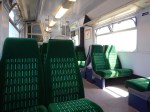
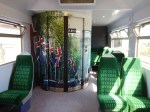
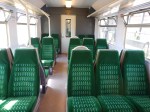
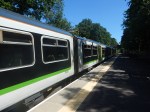
A fleet of three would probably do a good job, but a new electric train built specifically for the route could do better.
Class 710 trains, like those used by the London Overground, would offer advantages over the existing trains.
- They have a higher capacity.
- They have a faster acceleration, so this might help in increasing the frequency of the service.
- There could be a battery version, which might mean that the loop would be without electrification.
- They are walk-through trains, which might offer loading and unloading advantages in short platforms.
But they would cost more!
Step-Free Stations
All stations are fully-accessible and as no modifications are proposed to the stations, they will stay that way.
Zero-Carbon Operation
Provided the electricity for the route and the trains is produced by renewable electricity, the operation will be zero-carbon.
A Solution That Will Last Until 2050
The UK is committed by law, to be carbon-neutral by 2050.
For that reason any solution must last until that date.
This solution should last, as trains, electrification and signalling should be replaceable with new, at any time.
Conclusion
This project could be shovel ready, if Network Rail have done their track and signalling design.
Reopening Of Wellington and Cullompton Stations
This is one of the successful bids in the First Round of the Restoring Your Railway Fund.
Wellington and Collumpton stations were two stations on the Bristol-Exeter Line.
- Both stations were rebuilt in the 1930s with passing loops. Was this to increase the capacity of the route?
- Both were closed under Beeching in 1964.
- Little remains of either station.
Looking back with 20-20 hindsight, this does seem to have been a rather pointless closure of two stations serving towns of around ten thousand people, who might need to commute for work.
The South Devon Metro
Some years ago, Devon County Council put forward a plan to create a South Devon Metro based on the various lines centred on Exeter St. David’s station.
- The Avocet Line to Exmouth
- The Riviera Line to Paignton
- The Tarka Line to Barnstaple
Services were also planned to connect Newton Abbot, Okehampton, Plymouth, Taunton and intermediate stations into the system.
- Some new stations were also added.
- The trains were to be upgraded, which appears to be happening.
But the development seems to have somewhat stalled.
Collumpton Station
The Wikipedia entry for Collumpton station says this about reopening.
As part of the “Devon Metro” plans by Devon County Council there would be a station near the location of the old station and could form part of the route. The station is a ‘possible’ long term proposal.
I should declare an interest in Collumpton, in that my maternal grandmother was an Upcott, who was born in Dalston. Her father was not the first son of the Devon family from Collumpton, that are mentioned in the Wikipedia entry for the town, so he left for London to find fame and fortune. He set up as a wheelwright opposite Dalston Junction station. She was considered posh by my parents.
I would look forward to taking my Upcott genes back to their ancestral home, when the new station opens.
This Google Map shows Collumpton and its transport network.
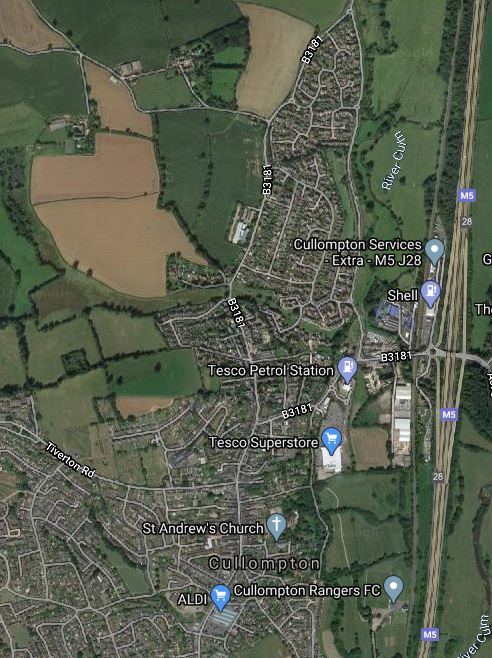
Note.
- The M5 going down the East side of the map.
- The Exeter-Bristol Line follows the M5 on the Western side.
- Collumpton Services were built on the site of the former station.
This Google Map shows the area to the South of Collumpton services at an enlarged scale.

There certainly seems to be space to the West of the roundabout.
- As Tiverton Parkway station is only a few miles to the North, it may be possible to avoid providing hundreds of parking spaces.
- It’s not a long walk to the Town Centre, which could be along the River Culm.
- Plenty of bicycle parking would probably be a good idea.
- Could the road bridge over the railway, be made step-free for travellers, who need to cross the tracks?
I certainly think there are possibilities to integrate the station into the town.
Wellington Station
The site for a new Wellington station is less obvious to locate.
This Google Map shows how the Exeter-Bristol skirts round the Northern side of the town.
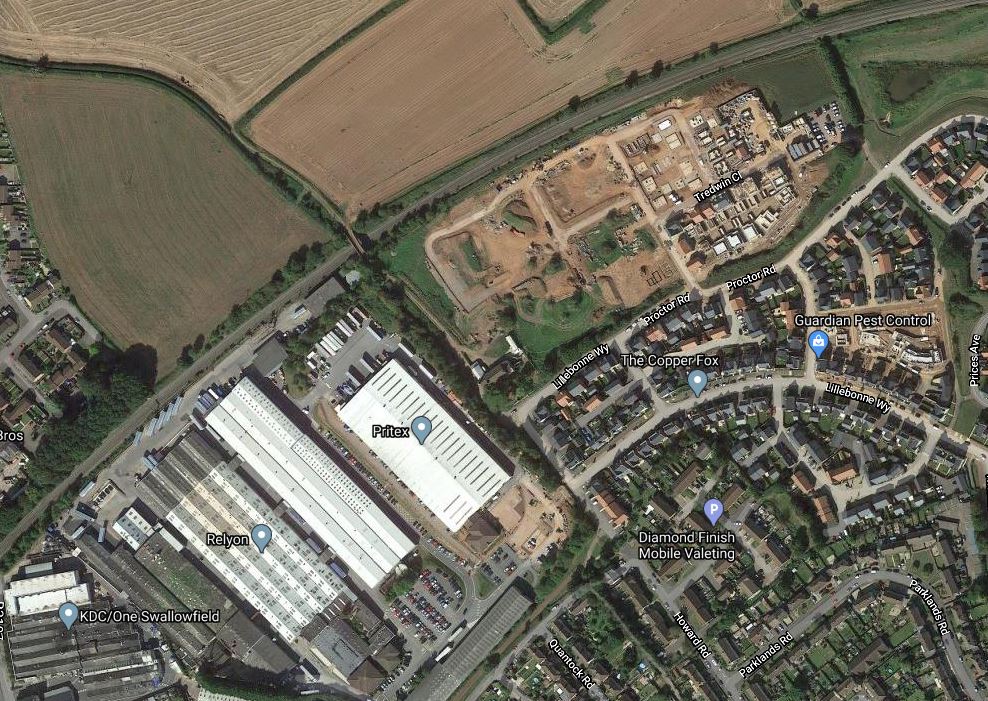
Note.
- The road that runs up the Western side of the block containing the three large buildings, is the B3187.
- It’s also called Station Road. So that must be a clue!
This Google Map shows where the B3187 crosses the railway.
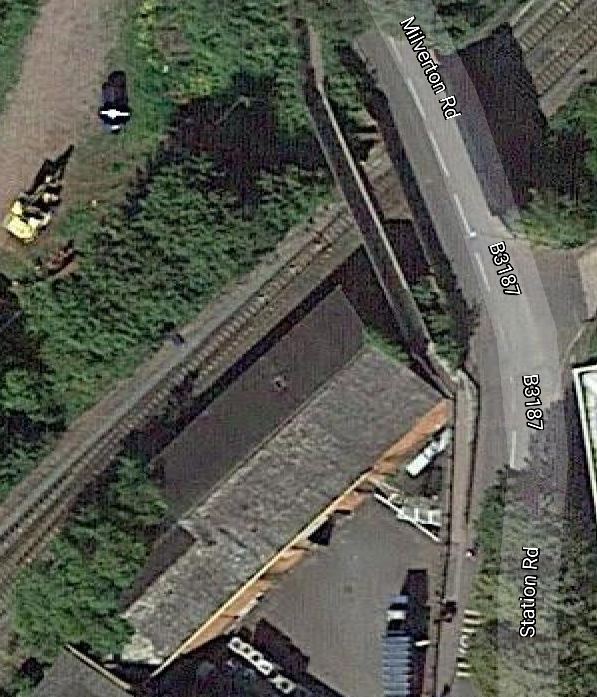
It matches the photo of the goods shed at Wellington station in Wikipedia.
The old station site, must be high on the list of possible sites for the new station.
The Trains
These are a few thoughts on the trains serving Collumpton and Wellington.
Could There Be A Taunton Route In The South Devon Metro?
Consider.
- When Collumpton and Wellington stations are completed, there will be three stations between Exeter and Taunton.
- The third station will be Tiverton Parkway station.
- So if the South Devon Metro were to be created on this route, surely it would be better to go all the way to Taunton station, which has six platforms.
- This extension would also give easy access to the heritage West Somerset Railway, which runs to the coast at Minehead station.
It would certainly seem likely that a local service from Exeter on this route would terminate at Taunton station.
Could Exeter And Taunton Be Run By Battery-Electric Trains?
As it’s only just over thirty miles, the answer must be in the affirmative!
But they would probably need to be charged at both ends of the route.
On the other hand, all routes on the South Devon Metro could probably be run using battery-electric trains.
Could Paddington And Exeter Be Run By Battery-Electric Trains?
It looks a tough ask, but I feel it is possible with discontinuous electrification.
- Paddington and Newbury is already electrified.
- Exeter and Taunton could be electrified.
With a short length of electrification or what I call an electrification island at Westbury, I am fairly sure, that a Hitachi AT-300 train fitted with batteries could handle the 170 miles.
Would A Fast-Slow Strategy Help?
Greater Anglia do their Norwich-in-Ninety services with two trains.
- On the hour, a fast train heads off to Norwich or London, only stopping at Ipswich.
- Ten minutes later, a slow train follows it calling at all stations.
Greater Anglia intends to aim for three trains per hour (tph) between London and Norwich in both directions; two fast and one slow.
Would a philosophy like this work between Paddington and Exeter?
Conclusion
Reopening Collumpton and Wellington stations is a simple and easy-to-implement scheme, that will improve public transport in this area of Devon and Somerset.
 The Anonymous Widower