Old And New At Ipswich
I took these pictures at Ipswich, yesterday.



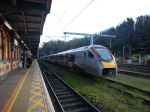


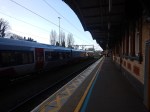


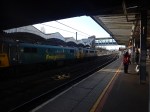
There seemed to be a lot of old Class 86 locomotives and new Class 755 trains around.
First Time On A Saturday
Yesterday, after a dreadful match at Ipswich, I came back to London in a new Class 745 train.
I have a feeling, this was the first time that the trains have been running with passengers on a Saturday.
They really are seriously good trains!
I shall be interested to see how the number of passengers increase between London and Norwich via Chelmsford, Colchester and Ipswich.
Economics Of Very Light Rail Between Cromer And Sheringham
In Very Light Rail Research On Track, I reviewed an article of the same name on Railway Gazzette International.
The article ,mentioned that the route between Cromer and Sheringham stations could be run by very light rail vehicles.
Very Light Rail Vehicles
Very Light Rail vehicles are defined as weighing less than a tonne per linear metre.
- Warwick Manufacturing Group (WMG) found the most efficient propulsion system, was diesel-electric hybrid with battery storage. Was it nicked from an LEVC taxi?
- An eighteen metre long vehicle will hold 56 seating and 60 standing passengers.
- Will turn round times at the end of a shuttle route be reduced to perhaps two minutes as the driver only has to walk eighteen metres?
- The article doesn’t give any speed estimates for very light rail vehicles. But I suspect 50-60 mph would be possible, as this is the operating speed of a Class 399 tram-train and very much the speed of typical single-decker buses.
If seated passengers weigh 90 kilograms with baggage, bikes and buggies and standing passengers perhaps 75 kilograms, this gives a vehicle weight of around 27.5 tonnes.
I estimate that a three-car Class 755 train, with the same passenger load would weigh around 108 tonnes or about 98 tonnes empty, which is about a tonne and a half per linear metre. A single-car Class 153 train is about 1.8 tonnes per linear metre.
Very light rail vehicles appear to be considerably lighter.
Cromer And Sheringham Line
This section of the Bittern Line can be considered a branch of the main section of the line, which links Norwich and Cromer stations.
- It is single-track.
- There is a simple cross-over outside Cromer station
- It is just over 3.5 miles long.
- Sheringham station is a single platform, that has recently been extended to take four-car Class 755 trains.
- The only intermediate station is West Runton, which is a single platform.
- Cromer station has two platforms.
- Trains take eight minutes to go between Sheringham and Cromer stations.
- The average speed of the train between Sheringham and Cromer is just 26 mph.
- The maximum speed of the route is given in Wikipedia as 75 mph. As it is fairly straight it could probably be improved.
As four trains per hour (tph) between Cromer and Sheringham would take a total of 64 minutes, it would seem to be impossible to run such a schedule with current trains, given that the driver would have to change ends eight times in an hour.
Cromer Station
This Google Map shows the two-platform Cromer station.

Note the Northern platform, which is directly connected to the route to Sheringham.
A Split Service
Operation of a split service could be as follows.
- A shuttle using the Northern platform 2 to Sheringham via West Runton.
- A service to Norwich using the Southern platform 1.
I suspect to save signalling costs, that the Sheringham service could be run for most of the time under the principle of one-train on the line.
Could Four tph Run Between Cromer And Sheringham?
I suspect that a driver in running shoes could squeeze four tph out of a three-car Class 755 train.
Consider.
- Three-car trains would save 160 metres of walking over four-car trains.
- The Class 755 trains are designed for quick stops and have fast acceleration.
- Versions of the trains are to be fitted with batteries.
- Two crew working together with some automation might mean that the driver doesn’t have to change ends.
- Three tph would be easier, as it would give more time for the driver to change ends.
- Automation with the crew having an override could surely be used.
I don’t believe it would be impossible for a system of operation for this shuttle to be run using a Class 755 train.
Certainly, three tph is easier, but four tph is much more passenger friendly.
Could Two tph Run Between Cromer And Norwich?
Currently, trains take fifty-seven minutes between Norwich and Sheringham, which means that two tph would be very complicated, but not impossible.
Running the Cromer and Sheringham section independently, would mean that the time between Cromer and Norwich could be as low as forty-six minutes.
For a start, this means that a single train could work an hourly service between Cromer and Norwich.
It probable means that two trains could run a two tph service, provided that they could pass at a suitable place, where there are two tracks, as at North Walsham or to the South of Hoverton & Wroxham station.
Possible Service Patterns
I think the ideal service pattern would be something like this.
- Two tph between Cromer and Norwich.
- Three or four tph between Cromer and Sheringhan.
Currently, there is an hourly service along the whole route, which needs two trains to operate.
Two tph to and from Norwich and a shuttle would only need one extra train.
Savings With Very Light Rail
There are various ways cost savings can be made.
Cost Of The Vehicle
Leasing a single very light rail vehicle will be much less than leasing even an ancient one-car Class 153 train.
Obviously, for a reliable service, a spare will be needed, if a company had several routes that could be developed using very light rail, then the spare could be shared.
It looks like Greater Anglia are also thinking about other routes, so this may be an economic proposition.
One Train On Line Operation
Cromer and Sheringham could be run with a single train shuttling between the two stations and the points set, so that no other train could use the track.
This must surely reduce signalling costs.
Track Access Charges
Lighter trains have lower track access charges.
This could be a substantial saving, especially if there were four tph in both directions.
Cost Of New Infrastructure
Some routes that will be proposed for very light rail operation will need bridges and embankments to be built.
If the maximum weight of the vehicle is lower, this must surely reduce costs, as lighter structures could be used.
Fast Turnround Times
One of the limiting factors in providing frequent services over a short branch line is the time it takes to turn the train at each end of the route.
But in a very light rail vehicle, which is only eighteen metres long, the driver can probably change cabs in under two minutes, which is of the order of the time it takes to load and unload the train with passengers.
The only high frequency shuttle service over a short route in the UK is the one between Stourbridge Junction and Stourbridge Town stations.
- The route is just 0.8 of a mile long.
- It is served by Class 139 trains, which are just 8.7 metres long and can carry 20–25 seated, 30–35 standing passengers.
- Trains run every ten minutes
- The turnround time appears to be about two minutes
It is reputed to be the shortest operational branch line in Europe.
I can’t see why, that in a well-designed very light rail vehicle that is only twice the length of a Class 139 train, that the turnround time could not be the same time of two minutes.
It probably can’t be any shorter, in case several people turn up in wheel-chairs at the same time.
If we look at the Cromer and Sheringham route, I can see the following timing being possible for a well-designed shuttle train on the route.
- Cromer to West Runton – two minutes
- Stop at West Runton – one minute
- West Runton to Sheringham – two minutes
- Turnround at Sheringham – two minutes
- Sherington to West Runton – two minutes
- Stop at West Runton – one minute
- West Runton to Cromer – – two minutes
- Turnround at Cromer – two minutes
Note.
- The round trip would take fourteen minutes.
- I have assumed that the train is running at around 50-60 mph.
- The West Runton stop could be by request.
- There is only one train on the route at all times.
The round trip could be scheduled at four tph.
It must surely be an affordable way to provide a service.
I would also do the following.
- As at Stourbridge have a second train on standby, to guarantee a reliable service, rescue a failed train and perhaps double the capacity at busy times.
- Services between Cromer and Sheringham would be free.
- Cromer, West Runton and Sheringham would be part of a group called Cromer stations, like Birmingham stations and Manchester station. So to book to any of the stations, you’d buy a ticket to Cromer stations.
If the latter ideas didn’t attract passengers then nothing would.
Greater Anglia would get their revenue on the onward services from Cromer.
Could The Cromer And Sheringham Shuttle Be Extended To Holt?
If the train crosses the level crossing at Sheringham station, the track extends all the way to Holt on the North Norfolk Railway.
This Google Map shows the two stations at Sheringham on either side of the level crossing.
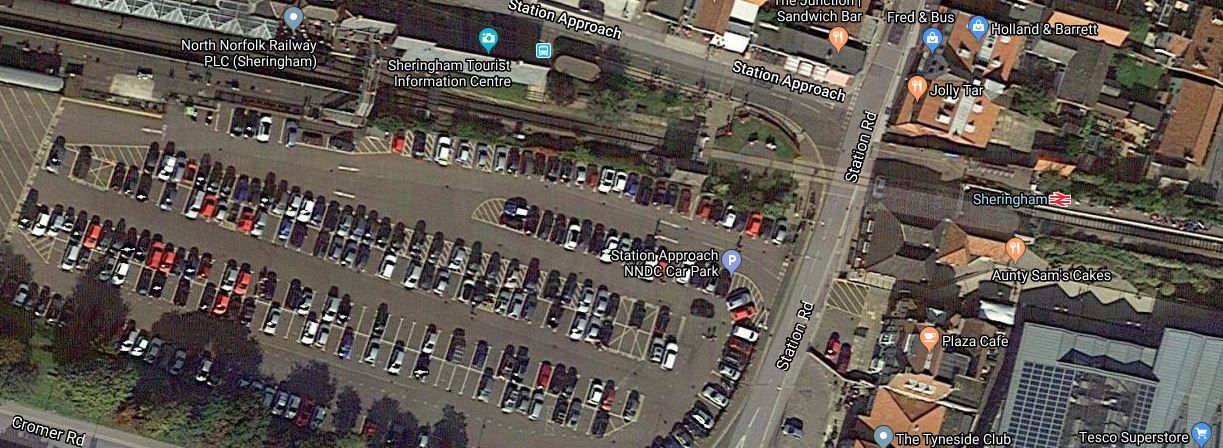
The National Rail station is on the East side, with the heritage railway on the West.
Some heritage railways are certified to be able to run scheduled services to and from the main rail network.
This may even be possible here, to allow a service between Cromer and Holt.
Although the North Norfolk Railway seem to run a frequent timetable, I’m sure if there was the necessary coming together, that a service that was beneficial to all parties could be arranged.
Conclusion
Very light rail could be very exciting!
World’s Largest Green Hydrogen Plant Begins Operation In Austria
The title of this post is the same as that of this article on Recharge.
This is the subtitle, which says it all.
The 6MW facility in Linz, running Siemens electrolysers, will provide clean H2 for steel production.
Steel-making is a large source of carbon-dioxide emissions and this is said about how hydrogen can be used in the process.
In light of global climate targets, Voestalpine is currently investigating the practicality of a hybrid technology to bridge between the existing coke/coal-based blast furnace route and electric arc furnaces powered with green electricity partly generated using green hydrogen,” says Voestalpine. “If economically feasible, from today’s perspective this option would reduce the group’s CO2 emissions by around a third sometime between 2030 and 2035.
I wouldn’t be surprised to see steel-makers beat that target, especially as renewable energy production and hydrogen electrolyser capacity increases.
The article also details two other large green hydrogen production electrolysers.
A 10MW PEM electrolysis plant, REFHYNE, is under construction at Shell’s Rheinland refinery in Wesseling, Germany, and is due to be completed in the second half of 2020, while a 30MW pilot — part of a 700MW project — is expected to be up and running in northwest Germany by 2025.
There’s more about REFHYNE on their web site.
This is the introduction on the web site.
The REFHYNE project is at the forefront of the effort to supply Clean Refinery Hydrogen for Europe. The project is funded by the European Commission’s Fuel Cells and Hydrogen Joint Undertaking (FCH JU) and will install and operate the world’s largest hydrogen electrolyser the Shell Rhineland Refinery in Wesseling, Germany.
The plant will be operated by Shell and manufactured by ITM Power. The electrolyser has a peak capacity of 10 MW (megawatts) and will be able to produce approximately 1,300 tonnes of hydrogen per year. This decarbonised hydrogen can be fully integrated into refinery processes including the desulphurisation of conventional fuels
Hydrogen is coming.
It could be coming in a big way to the UK, as we have the capability to generate gigawatts of off-shore wind power and ITM Power have the world’s largest PEM electrolyser factory in Rotherham.
Very Light Rail Research On Track
The title of this post is the same as that of this article on Railway Gazette International.
It details the progress on very light rail, which is defined as a vehicle with a weight of less than one tonne per linear metre.
It is a thorough article and very much a must-read.
It also details thirty-five rail routes in the UK and several cities, where the technology could be employed.
Some of the routes mentioned include, ones that I’ve covered on this blog, including.
- Cromer – Sheringham – Part of Greater Anglia
- Saxmundham – Aldeburgh – Part of Greater Anglia
- Coventry – Nuneaton – Part of West Midlands
- Liskeard – Looe – Part of Great Western
- Plymouth – Tavistock – Part of Great Western
- St Erth – St Ives – Part of Great Western
- Henley-on-Thames – Twyford – Part of Great Western
- Maidenhead – Marlow – Part of Great Western
- Slough – Windsor & Eton Central – Part of Great Western
- Truro – Falmouth- Part of Great Western
- Watford – St Albans Abbey – Part of London Midland
- Ashington – Blyth
- Fleetwood – Poulton-le-Fylde
Note.
- On reading the full list, I wondered why Greenfood – West Ealing and Southall – Brentford weren’t included, but it’s probably because freight uses the lines.
- I particularly like the inclusion of Saxmundham – Aldeburgh and Watford Junction – St. Albans Abbey.
You can understand why the rail leasing company; Eversholt, has got involved, as they must see quite a few possible sales.
There is more information on the concept call Revolution on this page on the Transport Design International web site.
Some points that can be gleaned from this page.
- One picture shows a coupler on the front of the vehicle. So can they work in multiple?
- Vehicles will have low axle weights (around 4 tonnes),
- Self-powered vehicles, with energy recovery and storage systems as standard,
- Reduced infrastructure costs for installation, operation and maintenance.
The consortium is also aiming for a sub million pound price tag.
Conclusion
It is a bold plan, which is backed by some large companies and organisations with deep pockets.
Digital Displacement Project On Track To Reduce Rail Emissions
The title of this post is the same as that of this article on Rail Technology Magazine.
This is the introduction paragraph.
With challenging targets to radically reduce railway CO2 emissions, Artemis Intelligent Power is looking at the potential of Digital Displacement® hydraulics as a novel route to lower emissions for freight locomotives, shunters and on-track plant.
Artemis Intelligent Power are an Edinburgh-based company, who are owned by Misubishi and claim they are global leaders in digital displacement technology.
The company has a section on their technology on their web site.
Effectively, they have designed a very efficient computer controlled hydraulic pump. When used in an application, there is often a fuel saving of several percent.
Tyne And Wear Metro: Swiss Firm Stadler To Build New Fleet
The title of this post is the same as that of this article on the BBC.
This is the introductory paragraph.
Swiss firm Stadler has won a £362m contract to build a new fleet of trains for the Tyne and Wear Metro.
And this is one of Stadler’s visualisations of the trains for the Tyne and Wear Metro (T & W).
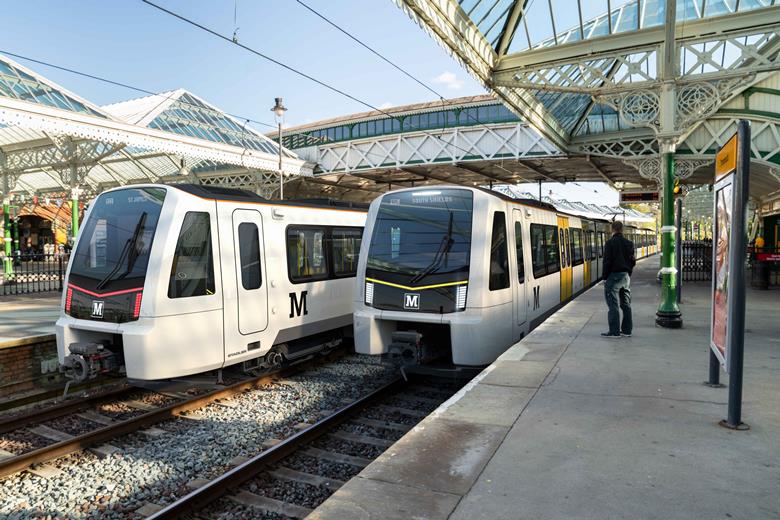
Compare this with a Stadler picture of a Class 777 train, that will soon be appearing on Merseyrail in Liverpool.
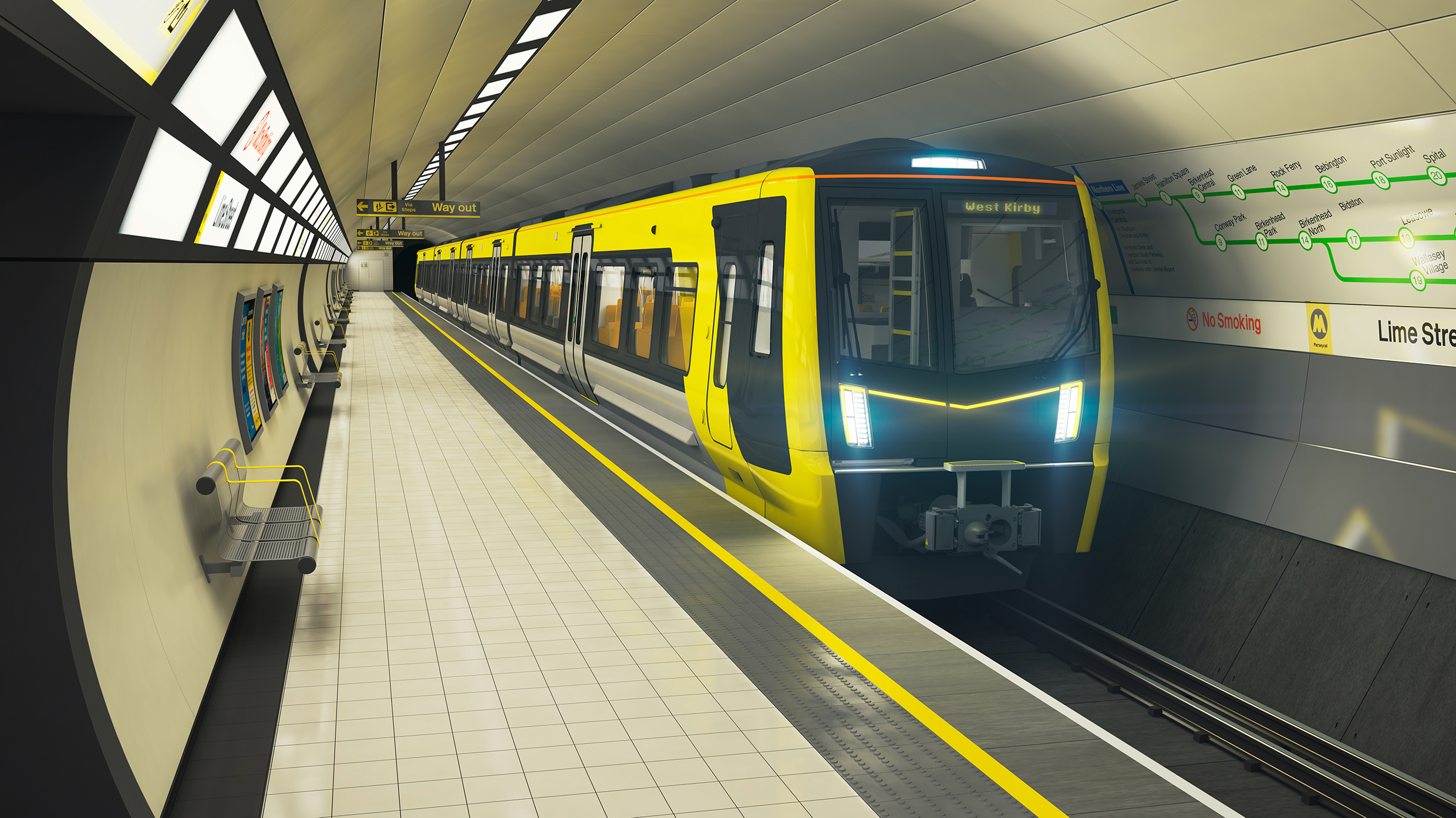
They would appear to be two very similar trains.
- The same headlights and stylised M on the front.
- One pair of double passenger doors in the first car.
- Both new trains are articulated with four sections.
- Train widths are Merseyrail Old – 2.82 metres, T & W Old – 2.65 metres and Merseyrail New – 2.82 metres.
- The Merseyrail trains have a 75 mph operating speed and the T & W trains have one of only 50 mph.
The T & W trains have a pantograph and overhead electrification and the Merseyrail trains use third-rail electrification.
More Details On The Tyne And Wear Trains
This page on the NEXUS web site is entitled Nexus Unveils £362m New Tyne And Wear Metro Trains.
This is two paragraphs.
The new trains will cut Metro’s high voltage power consumption by 30% while providing 15 times better reliability than the current fleet. Metro’s 36 million passengers will benefit from modern features including wifi, charging points, air conditioning and a step-change in accessibility.
Among new features will be an automatic sliding step at every door of the new trains, making travel easier for Metro’s 50,000 wheelchair passengers as well as people with children’s buggies, luggage or bicycles.
The size of the energy saving, indicates that the trains will probably be using regenerative braking.
As it has been disclosed that the new Merseyrail trains will have a small battery for depot movements, will this also be used to handle the regenerative braking.
More details of the trains will be disclosed in the coming months.
Merseyrail And The Tyne And Wear Metro Are Similar
I have ridden Merseyrail many times and the Tyne and Wear Metro perhaps five times and it is surprising how similar the two systems are.
- They are partly in tunnel.
- There are a range of stations, including both ancient and modern, simple and complex.
- Merseyrail is powered by 750 VDC third rail electrification and T & W by 1500 VDC overhead electrification. The power electronics on the two fleets, won’t be that different.
- Both operators have ambitions to use 25 KVAC overhead electrification to extend services.
- Both operators have ambitions to extend services on lines, that currently have no electrification. Merseyrail want to go to Preston, Skelmersdale, Warrington and Wrexham and T & W want to go to Blyth and Ashington along the Northumberland Line.
It is no surprise to me, that Merseyrail and T & W have chosen to use two versions of the same Stadler train.
Expansion Of The Networks
Both networks are ambitious and it appears to me, that they have ordered a train, that could be used to expand their networks.
Merseyrail
Merseyrail have proposed these expansions at various times.
- Extension of the Northern Line from Ormskirk to Preston
- Extension of the Northern Line from Hunts Cross to Warrington
- Incorporation of the Borderlands Line from Bidston to Wrexham into the Wirral Line as a new branch.
- A new branch of the Northern Line to Skelmersdale via the new station at Headbolt Lane.
- Passenger services on the Canada Dock Branch.
Merseyrail now have the trains to handle this expansion.
- They may need to purchase a few extra trains.
- Some charging points or electrification may be needed.
Note that Bidston and Wrexham is less than thirty miles of unelectrified line, so I suspect that the new trains can handle this range.
Other places within a similar range include.
- Preston from Ormskirk
- Wigan Wallgate from Kirkby
- Manchester Oxford Road from Hunts Cross, via Warrington Central.
- Chester from Liverpool Lime Street via Runcorn, Frodsham and Helsby.
The four terminal stations all have existing bay platforms.
Tyne And Wear Metro
The Tyne And Wear Metro have proposed these expansions at various times.
- Sunderland city centre to Doxford Park
- South Shields to Sunderland
- Washington, either via the disused Leamside line or a new route
But as the Government is funding a study into linking Blyth and Ashington to Newcastle, which I wrote about in £500m Fund To Restore Beeching Rail Cuts Goes Ahead Amid Criticism, I wouldn’t be surprised that this route is developed.
A lot of my comments about expanding the Merseyrail network, can be applied to the T & W.
- They may need to purchase a few extra trains.
- Some charging points or electrification may be needed.
None of the proposed extensions seem particularly long and places like Blyth, Ashington and Washington should be able to be reached on battery power.
Tram-Train Operation
The Wikipedia entry for Merseyrail has a section called tram-trains.
Two possible routes are indicated.
- Liverpool Lime Street to John Lennon Airport, using street-running from Liverpool South Parkway.
- Kings Dock to Edge Hill
I have heard others mentioned.
The Wikipedia entry for the Tyne and Wear Metro also mentions street-running.
Stadler have extensive experience of trams and tram-trains and built the Class 399 tram-trains for the Sheffield Supertram.
Stadler also provided the trains for the unique tram-train system in the German town of Zwickau, where diesel multiples units share the tram tracks to access the town centre.
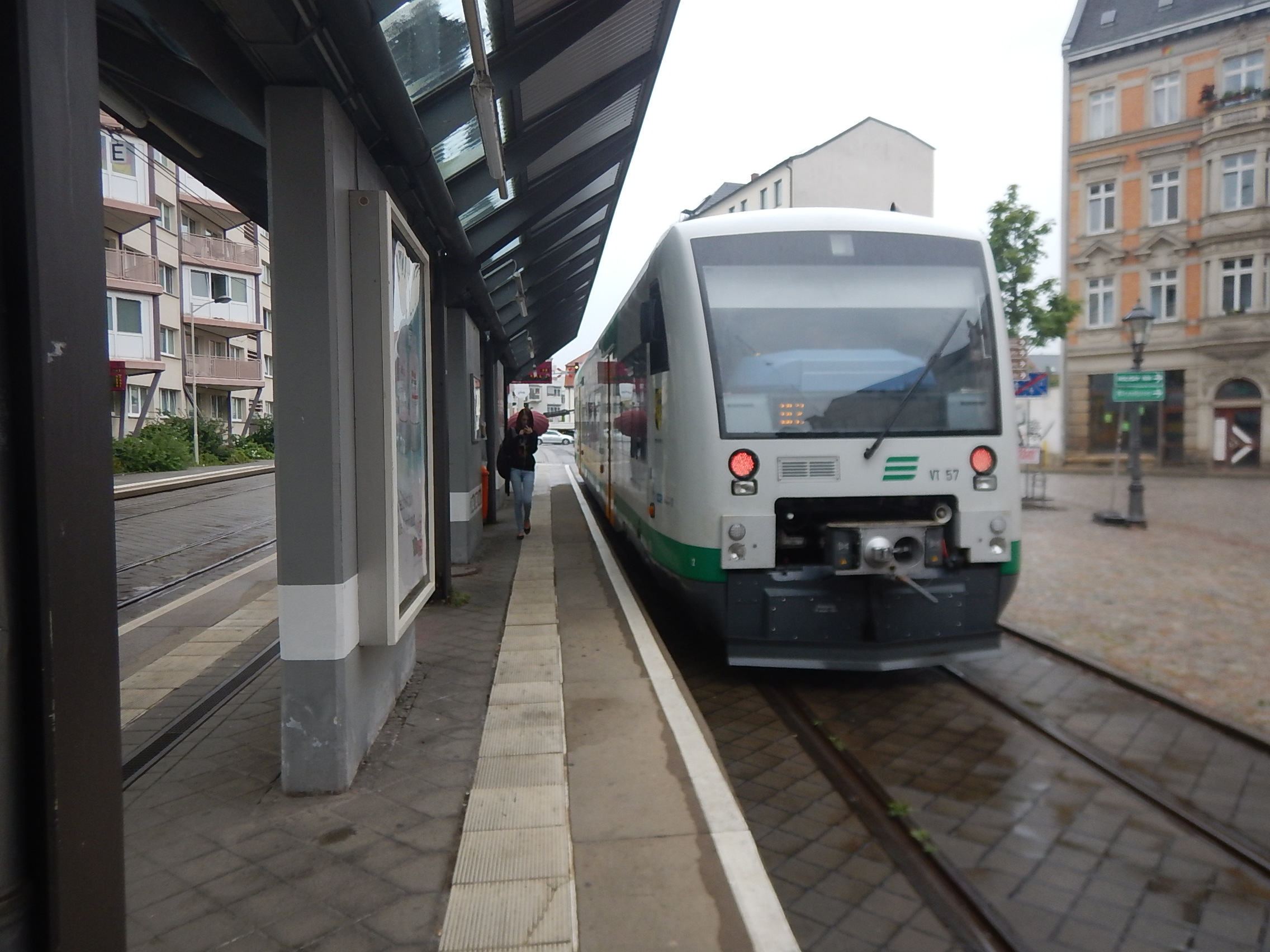
The picture shows the train at its stop in the centre.
I’m sure Stadler know how to enable street-running with the UK’s smaller trains.
Stadler’s trains, trams and tram trains also seem to have a high degree of articulation and seem to be able to take tight corners with ease.
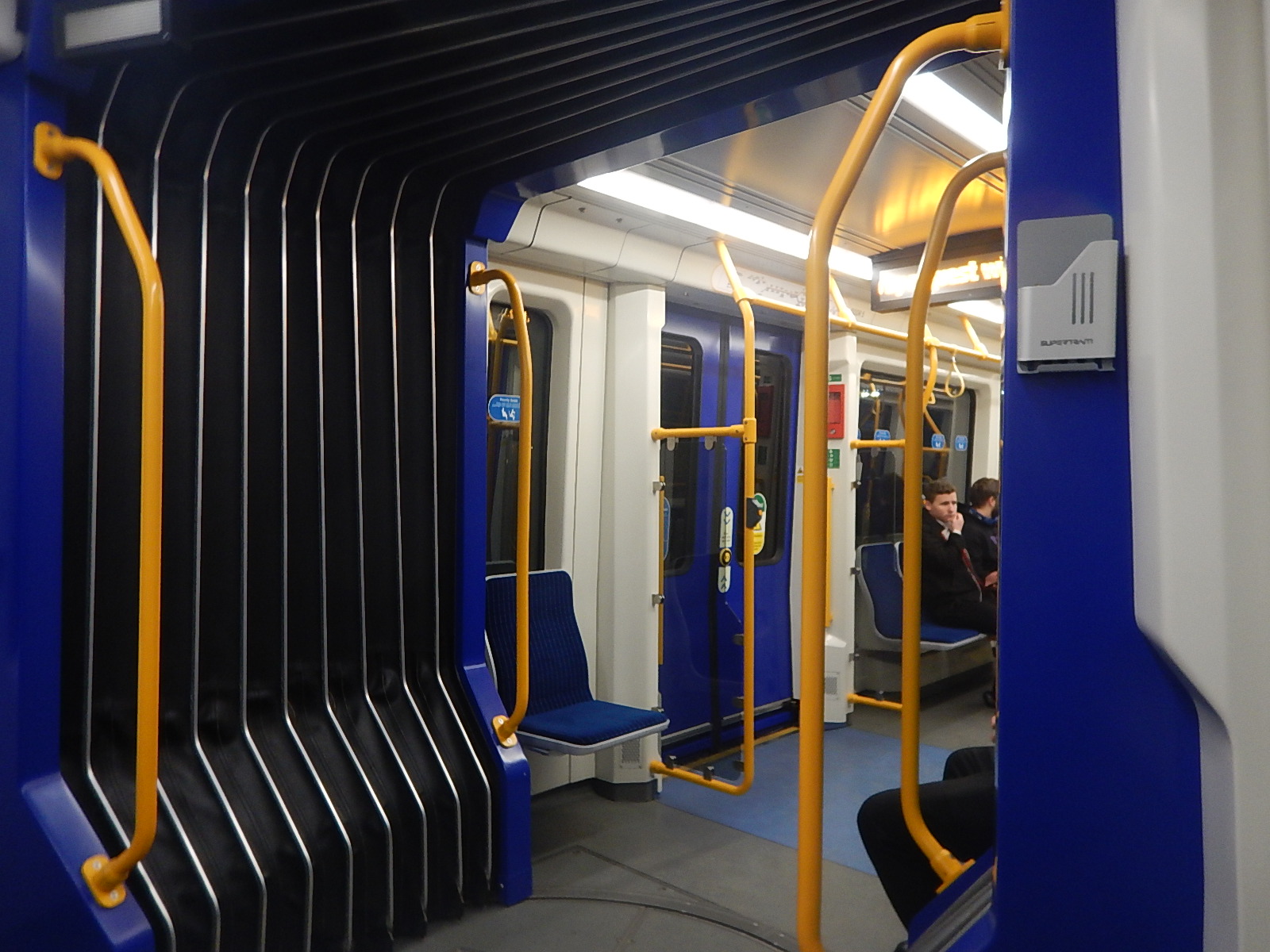
The picture was taken inside a Class 399 tram-train, as it traversed the tight curve under the M1 motorway, where the tram and the train sections of the route to Rotherham join.
Looking at the pictures of the Class 777 trains, I feel they could be able to take tighter curves than most trains.
The Dead Elephant In The Room
Several local services on Merseyside and in the North East are run by Northern, which is now being taken over the Government.
The Department for Transport, hasn’t disclosed any plans yet, but it is likely that some routes could be handed to Merseyrail and the T & W.
There is a loose precedent for this happening. In North-East London the poorly performing Lea Valley Lines from Liverpool Street to Chingford, Cheshunt and Enfield Town were moved from Greater Anglia to London Overground in 2015. No-one feels they should be returned and there are rumours that more services in the area will move to the London Overground.
So what services could be moved?
Merseyrail
These diesel services could surely be moved to Merseyrail.
- Omrskirk and Preston – 16 miles
- Liverpool Lime Street and Manchester Oxford Road via Warrington Central – 27 miles
The distances are the length of track without electrification.
It could also be argued that Greater Manchester would get its share of the Northern routes, but I can envisage Class 777 trains or similar running the following routes.
- Southport and Manchester Victoria – 27 miles
- Kirkby and Manchester Victoria – 28 miles
As before, the distances are the length of track without electrification, but these could be reduced considerably with electrification from Salford Crescent to Wigan Wallgate.
It should be noted that Greater Manchester has ambitions to run tram-trains to Wigan Wallgate via various routes.
The demise of Northern probably allows these routes to be taken over by Greater Manchester.
- Manchester Piccadilly and Buxton – 16 miles
- Manchester Piccadilly and Hadfield/Glossop – Electrified
- Manchester Victoria and Blackburn – 14 miles
- Manchester Victoria and Clitheroe – 24 miles
- Manchester Victoria and Rochdale – 11 miles
- Manchester Victoria and Stalybridge – 8 miles
- Manchester Victoria and Wigan Wallgate – 10 miles
Again, the distances are the length of track without electrification.
Buxton and Clitheroe could be difficult because of the gradients involved, but as in South Wales, bi-modes might be the solution if the routes were run back-to-back.
This simple analysis shows how Northern’s demise will ask questions all over the North.
Tyne And Wear Metro
These diesel services could surely be moved to the T & W.
- Newcastle and Morpeth – Electrified
- Newcastle and Chathill- Electrified
I also think, that these services could be restructured, if the Blyth and Ashington routes are developed for the T & W.
The trains could also reach to Hexham, which is just 22 miles from electrification.
Middlesbrough is probably too far, as the station is thirty five miles from the electrification at Sunderland.
But electrification of the Durham Coast Line would allow the T & W Metro to serve the new station at Howden and reach Middlesbrough and possibly Nunthorpe.
Conclusion
I can see both Merseyrail and the Tyne and Wear Metro significantly extending their networks in the next few years.
The new trains, with their batteries and dual-voltage capability are built for expansion.
Tram-train or street running will help.
Several important new areas are within battery range.
I can also see other cities using similar Stadler technology to create local Metros.
Manchester, Middlesbrough, Preston and Sheffield come to mind.
Using similar technology would surely allow joint services and sharing of knowledge and designs to enable cost savings.
UK Electric Van Maker Arrival Secures £340m Order From UPS
The title of this post is the same as that of this article in the Guardian.
Arrival seem to be doing things differently, so read the Gaurdian article and their entry on Wikipedia.
This is their mission statement from the web site.
Arrival is a technology company, we create Generation 2 Electric Vehicles. Devices on wheels — they outperform legacy technology to deliver an experience like no other, but are priced the same as fossil fuel equivalents.
They must be doing something right, UPS, Hyundai and Kia have all invested in the company.
Here’s a picture from the Arrival web site.
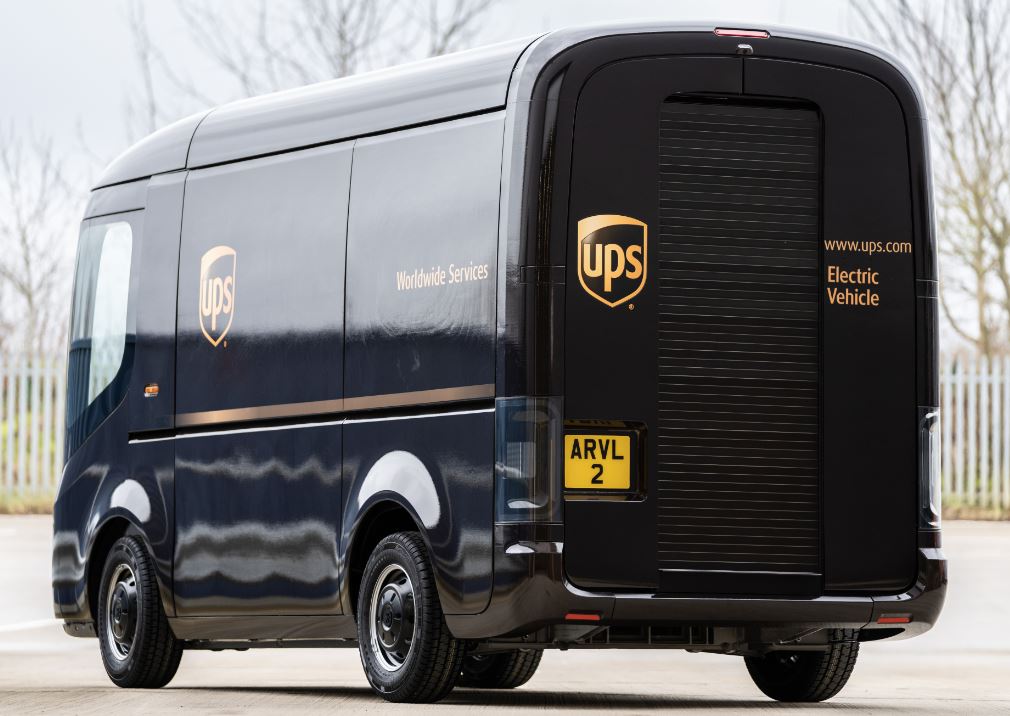
Arrival is one of those companies, that will either make a fortune and annoy a lot of established companies in the field or end up in serious trouble, as the rivals gang up on them.
Mule Trains Between Liverpool And Norwich
I have done two trips to Liverpool in the last week.
On Saturday, I saw this collection of one-car Class 153 trains with a two-car Class 156 train thrown in.
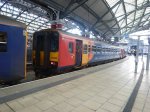

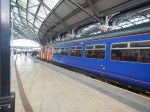
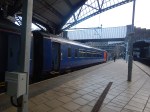
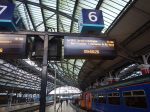
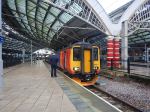


They were forming one of East Midlands Railway‘s Liverpool and Norwich services.
And then yesterday, I had to travel between Liverpool and Sheffield and this was the collection of trains that took me.
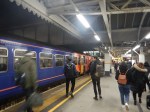
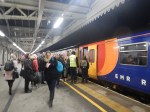


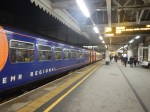
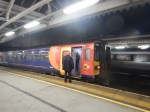
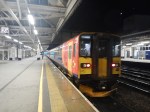
So what was it like?
It started badly, with the driver announcing that because of the late arrival due to an undisclosed problem with the incoming train, that we would be leaving ten minutes after the planned departure time of 1551. He also indicated that our late departure meant that we would be stuck behind one of Northern’s services.
In the end, despite the gloomy faces of passengers we left twelve minutes late at 1603.
It was a bit like one of those classic films, where an ancient train escapes in the nick of time, with a lot of important and assorted passengers.
The asthmatic Cummins diesels under the train could be heard straining.
- But the driver was at the top of his game and the train was running smoothly towards Manchester at close to 75 mph, which is the maximum speed of a Class 153 train.
- At Manchester Piccadilly, the driver had pulled back two minutes.
- There were obviously, no problems on the Dove Valley Line and the driver pulled back another minute before Sheffield, to arrive nine minutes late.
Looking at Real Time Trains, the train ran well until March (The place, not the month!), but there was some form of delay there and sadly it was thirty-four minutes late into Norwich.
The Train Was Clean
I should say there was nothing wrong with the train except for its design and age. It was also as clean as you can get one of these trains. The toilet, that I used was better than many I’ve used on trains and worked as it should.
Customer Service
East Midlands Railway had loaded a trolley and a steward and in the two hours I was on the train, he came through twice. The only problem for me, that he had no card machine, but I did find a fiver in my briefcase.
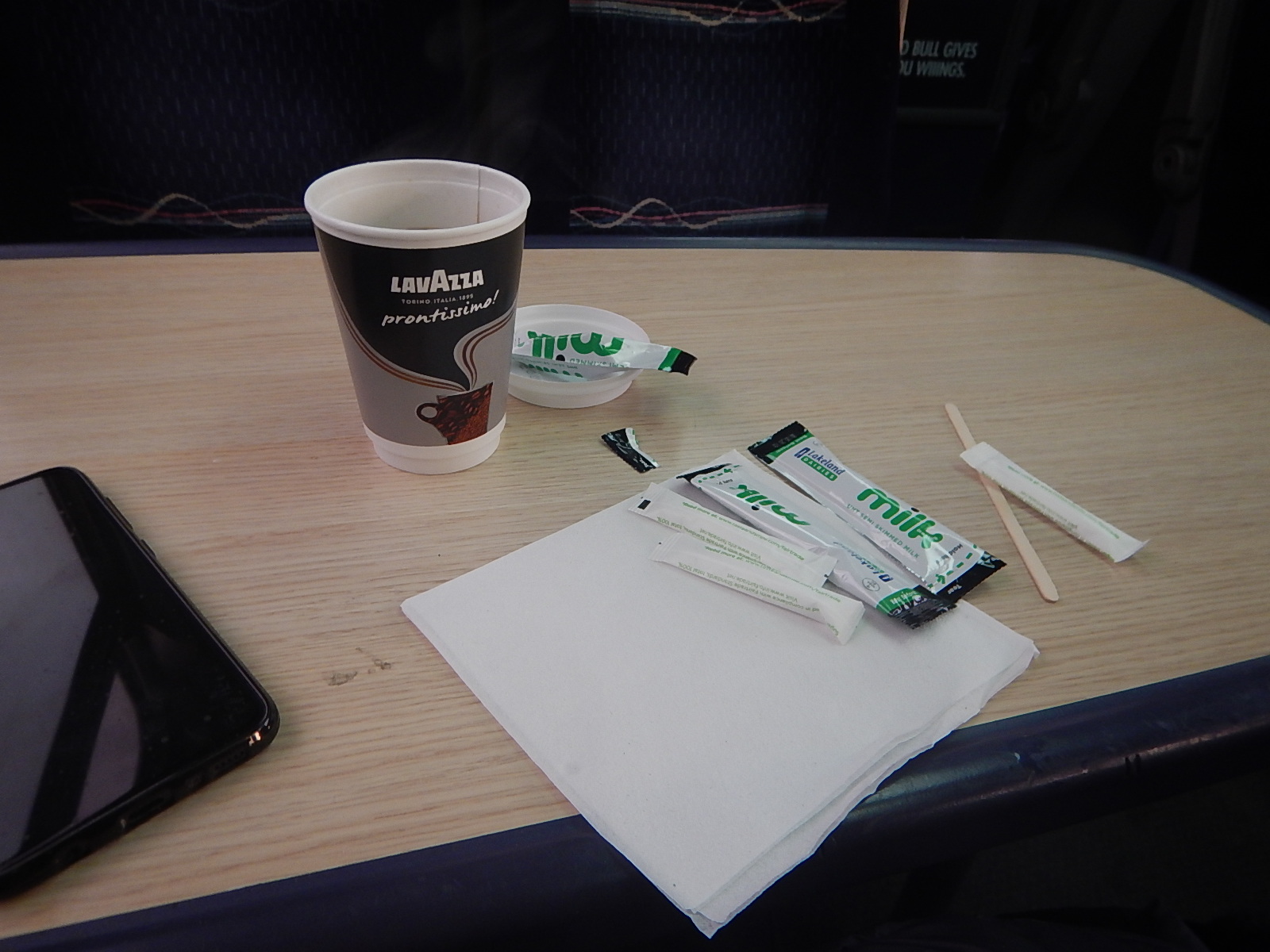
At least it was very drinkable. Even, if I hate those plastic tubs of milk, as they are difficult to open with one good hand.
Where Did Two Cars Go?
I had been fairly certain, that we had started with six cars, but we only arrived in Sheffield with four Class 153 trains.
I suspect that the trouble that delayed the train, concerned two cars and these were left on the naughty step or the end of Platform 6 in Liverpool Lime Street station.
Being Fair To East Midlands Railway
This service used to be run by a four-car formation of two-car Class 158 trains, but these have been causing trouble lately and they will be replaced by Class 170 trains cascaded from other operators.
But because of late arrivals of new trains the much better Class 170 trains haven’t arrived yet.
The driver, steward and other staff did a good job and I feel that the steward enjoyed it. No-one was abusive and stories were just exchanged, as we climbed across the Pennines in what by Sheffield was a very crowded train.
Class 153 trains may have been built as a stop-gap for short branch lines, but you couldn’t fault their performance.
Unless of course, one caused the delay at March, by expiring in a cloud of blue smoke.
Other Observations
These are other observations.
Scheduled Journey Times
On my journey the scheduled times were
- Liverpool and Manchester Oxford Road – forty-seven minutes.
- Liverpool and Sheffield – one hour and forty-eight minutes.
- Liverpool and Nottingham – two hour and forty minutes.
- Liverpool and Norwich – Five hours and twenty-seven minutes
The train considering the configuration, nearly achieved them.
It’s probably the motoring equivalent of doing the journey in a Morris Minor!
The Nine Stops Were Executed Perfectly
There were nine stops on my journey and eight took less than a minute, with Sheffield taking four, as the driver and crew changed.
A modern train like a Class 755 train, with fast acceleration and level boarding could probably save up to three minutes a time on each stop.
The Route Is A Genuine 75 mph Railway In Good Condition
I was checking the speed of the train on parts of the route and the driver had his motley crew at a steady 75 mph for long periods.
- The train was riding well, indicating to me, that both trains and track were in reasonably good condition.
- Note that 75 mph is the maximum speed of a Class 153 train.
- The train recovered three minutes on the late departure from Liverpool.
I can see a faster train and improvements to the route, some of which are underway, could reduce the journey time by a few minutes.
Could Merseyrail’s New Class 777 Trains Work To The Bay Platform At Oxford Road?
Merseyrail’s new Class 777 trains will have the following performance.
- A possible range of perhaps 40-50 miles on battery power.
- An operating speed of 75 mph.
- An acceleration rate of 1.1 m/sec², which is faster than a Class 153 or Class 170 train.
- Fast stops due to regenerative braking, fast acceleration and level boarding.
As Liverpool Lime Street to Oxford Road is thirty four miles of which nine is electrified, I suspect that these new trains could extend Merseyrail’s Northern Line service from Hunts Cross to Manchester Oxford Road.
- Two trains per hour (tph), but I’m sure four tph would transform the area.
- I doubt any track modifications would be needed.
But would Liverpool and Manchester be able to sort out the local politics?
The Future Of The Liverpool And Norwich Service
This service will probably be spilt into two services.
- Liverpool Lime Street and Derby, which could be run by TransPennine Express or Northern Trains.
- Derby and Norwich, which would be run by East Midlands Railway.
As to the trains to be used, consider the following.
The Liverpool and Derby leg would probably need six trains, with the same number needed for Derby and Norwich, or twelve in total.
Currently, eleven or twelve is needed for the longer service.
Sections of the route like through Manchester and between Grantham and Peterborough are electrified.
There are even sections of route, where 125 mph running is possible.
Run reliably to an hourly frequency, I think that this service could attract passengers, especially, as it would serve Derby and extra stops like Ilkeston and Warrington West could be added.
This leads to the following trains being possibilities.
Class 802 trains – 125 mph bi-mode train of which TransPennine Express have 19 trains.
Class 185 trains – 100 mph diesel train of which TransPennine Express have 51 trains.
Class 810 trains – 125 mph bi-mode train of which East Midlands Railway have ordered 33 trains.
Class 755 trains – 100 mph diesel train of which Greater Anglia have 38 trains, which are based at Norwich.
Alstom Breeze hydrogen trains could be ideal for Liverpool and Derby.
Note.
- Greater Anglia and East Midlands Railway are both subsidiaries of Abellio.
- Developments of Class 755 trains could include battery and hydrogen versions.
- I suspect that 125 mph trains may be required for both legs, to maximise capacity on the East Coast Main Line and Midland Main Line.
The trains will certainly get better.
£500m Fund To Restore Beeching Rail Cuts Goes Ahead Amid Criticism
The title of this post is the same as that of this article on the BBC.
This is the introductory paragraph.
A government fund is to be launched later to restore historic railway lines closed more than 50 years ago under the so-called Beeching cuts.
The two initial grants are for studies about reopening the Northumberland Line to Blyth and Ashington in the North East and to Fleetwood to the North of Blackpool.
Blyth And Ashington
Consider.
- The tracks already exist.
- There may still be some freight traffic on the route.
- Connections to the Tyne and Wear Metro appear possible.
- The Tyne and Wear Metro already shares tracks with other freight and passenger services.
- New stations and probably new signalling will be needed.
- The distance between the proposed Northern terminals and the connections with the Tyne and Wear Metro are under twenty miles, which could make battery operation easily possible.
- The Tyne and Wear Metro is currently procuring a new fleet of trains.
I believe that these branches could be integrated into the Tyne and Wear Metro, providing that the new trains have the right specification.
Light rail vehicles like the Class 398 tram-trains being procured for the South Wales Metro should be able to run these services.
But other manufacturers might have better solutions!
Fleetwood Branch
This extension would need the following.
- Restoration of the existing track between Poulton-le-Fylde and Fleetwood.
- One or more new stations.
- Probable resignalling.
In a simple installation, there is probably space to put a bay platform in Poulton-le-Fylde station, so that a shuttle service could be run to Fleetwood.
But services could also be extended to Preston.
Blackpool though has other rail problems like what are they going to do with the Blackpool South Line.
I believe Blackpool could use similar solutions on both the Blackpool South and Fleetwood Lines to create a bigger solution for the whole of the area.
Conclusion
It looks to me that the government has started with two schemes that are possible and where the track still exists.
It is to be hoped that the two studies come up with easy-to-build and fundable schemes, which are the first of many.
 The Anonymous Widower