DCO Decision On 480MW West Burton Solar NSIP Delayed Until 2025
The title of this post, is the same as that of this article on Solar Power Portal.
The article talks about Island Green Power and their plans to develop three large solar farms in Eastern England.
They appear to be a UK-registered company with international connections.
These are the three projects.
The West Burton Project
This is the introductory paragraph for the West Burton Project.
Solar PV developer Island Green Power has seen a development consent order (DCO) decision delayed by the UK government for its 480MW West Burton project located across Lincolnshire and Nottinghamshire.
Note.
- The West Burton Project has a web site.
- It will have a capacity of 480 MW.
- The solar farm will use the grid connection of the former coal-powered West Burton power station.
- The project will cover 788 hectares.
The site is a few miles South-West of Gainsborough in Lincolnshire.
The East Pye Solar Project
These are the two introductory paragraphs for the East Pye Solar Project.
This setback comes days after Island Green Power opened a public consultation on early-stage plans for a 500MW solar PV power plant co-located with a battery energy storage system (BESS) that could have up to 500MW output.
The East Pye Solar project will be situated on 1,100 hectares of land south of Norwich and north of Harleston. Solar PV modules would be installed at two points within this area, approximately 6.5km apart.
Note.
- The East Pye Solar Project has a web site.
- It will have a capacity of 500 MW, with a battery with a 500 MW output. The battery capacity is not stated.
- The project will cover 1100 hectares.
- This article on the BBC is entitled New Proposed Solar Farm Could Power 115,000 Homes, gives more details.
- It appears that the solar farm will have a new grid connection to the grid connection between Norwich and Bramford to the West of Ipswich.
- There is also a web site, which is entitled Block The Development of East Pye Solar Farm.
The site is a few miles East of Long Stratton in South Norfolk.
The Cottam Solar Project
These are the two introductory paragraphs for the Cottam Solar Project.
The non-statutory consultation comes after Island Green revealed plans for the development early in September, just one week after energy secretary Ed Miliband granted the developer a DCO for the 600MW Cottam Solar Project.
The 600MW development will comprise four ground-mounted solar PV generating stations in West Lindsay, Lincolnshire, four on-site substations and a BESS across four separate sites, totalling an area of 1,270 hectares.
Note.
- The Cottam Solar Project has a web site.
- It will have a capacity of 600 MW, with a battery, with a battery with a 600 MW output and a 600 MWh capacity.
- The solar farm will use the grid connection of the former coal-powered Cottam power station.
- The project will cover 1270 hectares.
The site is a few miles East of Retford in Lincolnshire.
Island Green
It does appear that Island Green like large solar farms.
- West Burton – 480 MW – 788 hectares
- East Pye – 500 MW, – 500 MW battery- 1100 hectares
- Cottam – 600 MW, 600 MW/600 MWh battery – 1270 hectares
Whether some of their neighbours will is another matter.
But at least two of them have batteries.
What we will be forced to accept from this unscientifically-green Government, I dread to think.
Solar Farms Could Partly Power London Underground
The title of this post, is the same as that of this article on the BBC.
This is the sub-heading.
Transport for London (TfL) is planning to set up solar farms to help power its Underground network.
These three introductory paragraphs give more details.
The transport body has asked for potential “delivery partners” to apply to provide up to 64 megawatts of zero-carbon electricity from purpose-built solar farms.
This would be about 5% of the power needed to run the Tube and would bypass the National Grid, according to TfL.
It says it is the largest single electricity consumer in London – at a level equivalent to that consumed by about 420,000 homes – and the project would reduce pressure on the central grids.
These are my thoughts.
Solar Panels At Cockfosters
This Google Map shows Cockfosters Depot and the surrounding land.
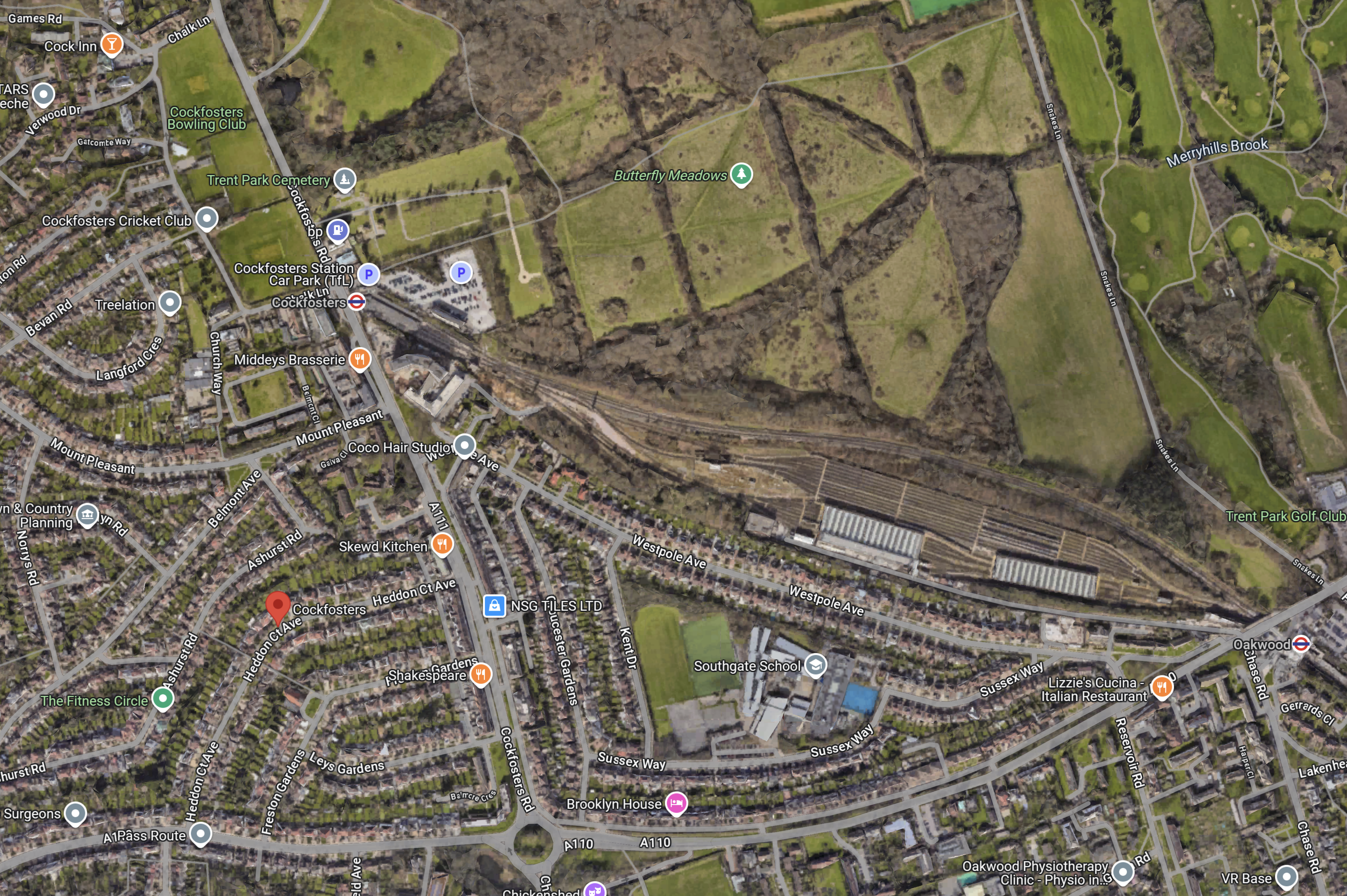
Note.
- The London Underground roundel in the North-West corner of the map indicates Cockfosters station.
- The London Underground roundel in the South-East corner of the map indicates Oakwood station.
- Between the two stations lies the large Cockfosters Train Depot, which is one of the major depots for the Piccadilly Line.
- To the North of the railway is Trent Park, which in its Wikipedia entry is described as a country house in North London.
I know the area well, as I used to live opposite Southgate School, which is towards the bottom of the map, until I was sixteen.
I believe that solar panels could be installed in three places.
- As a solar roof over a rebuilt depot.
- As a solar farm on some of the Trent Park land.
- In Would A Solar Roof With Added Vertical Turbines Work?, I suggested a hybrid installation on top of Oakwood station.
As it is a very windy hill-top, I would look into the possibility of perhaps four large wind turbines between the tracks of the depot.
It is definitely an area, where there are possibilities for renewable power.
But given that the Nimbies are objecting to the building of housing on the car-parks at Cockfosters and Oakwood stations, I suspect they will object.
Solar Roofs Above Depots And Sidings
In the previous sub-section, I suggested what was possible at Cockfosters, by installing a solar roof above Cockfosters Train Depot
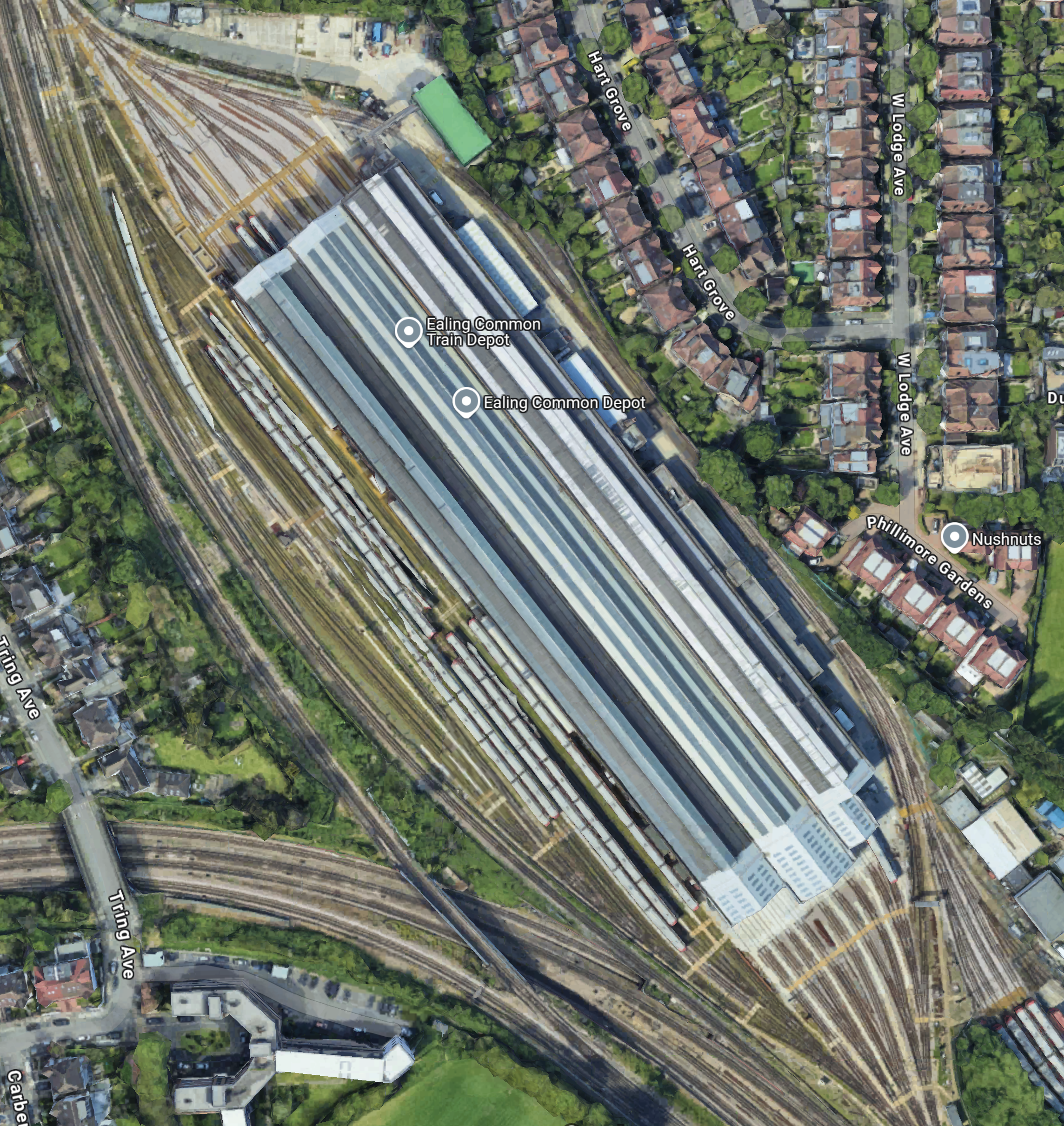
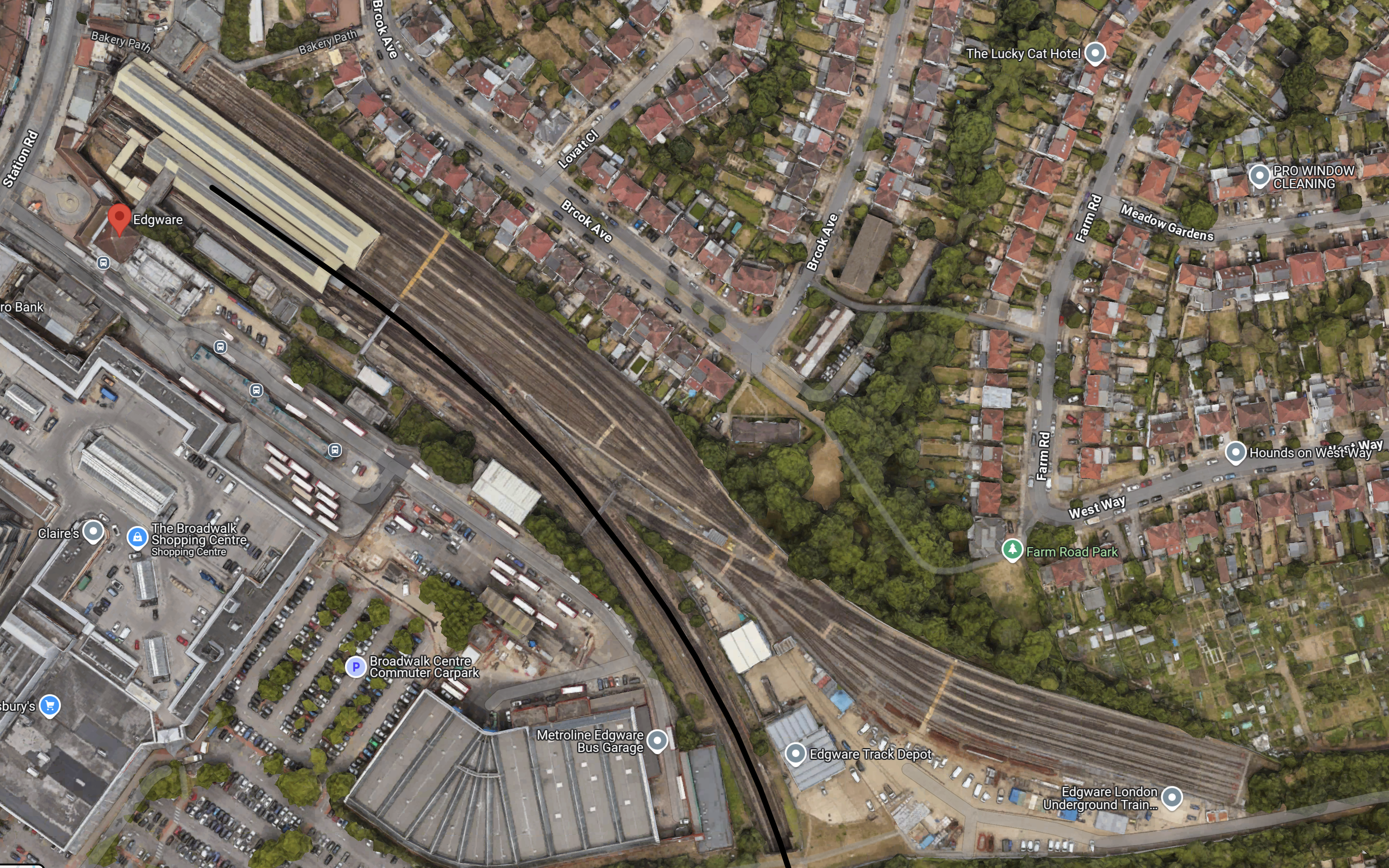
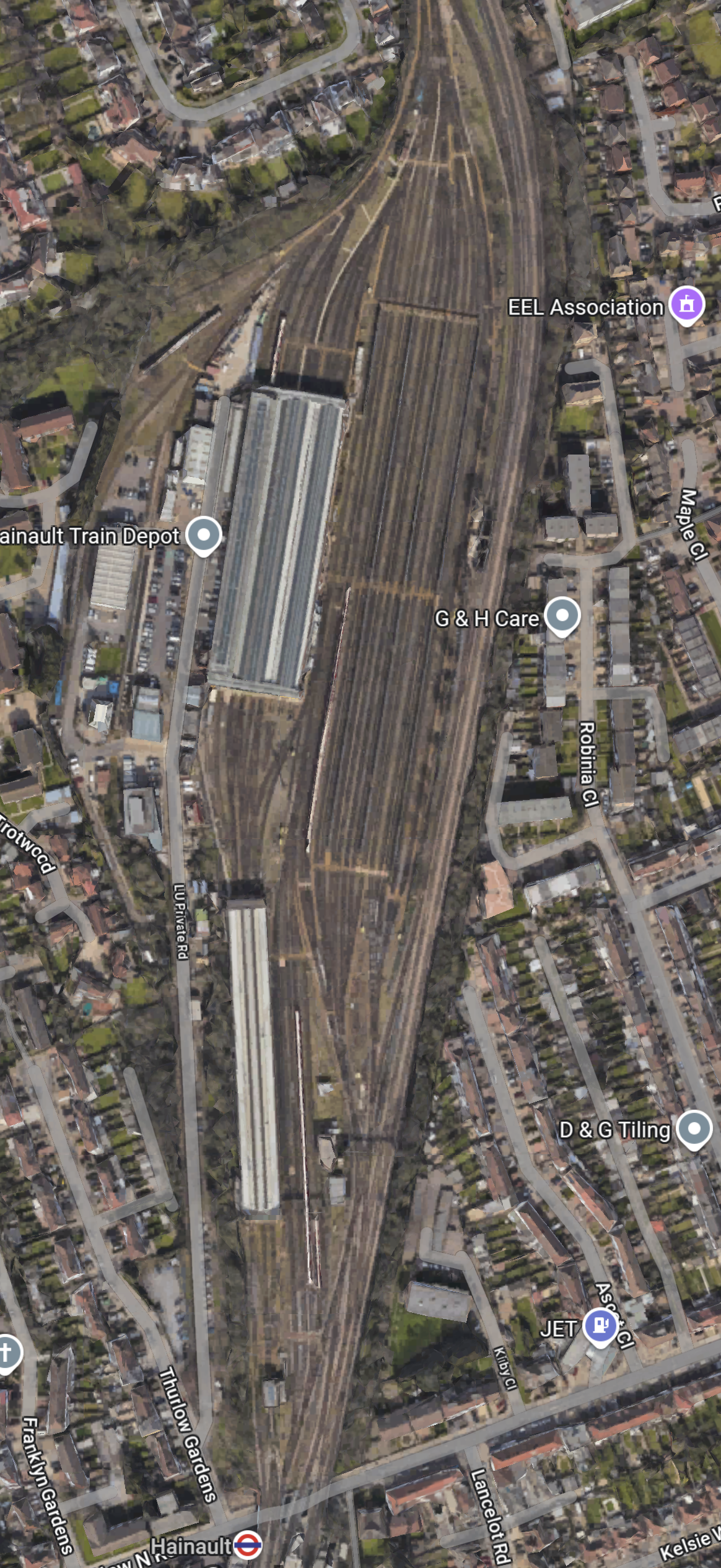
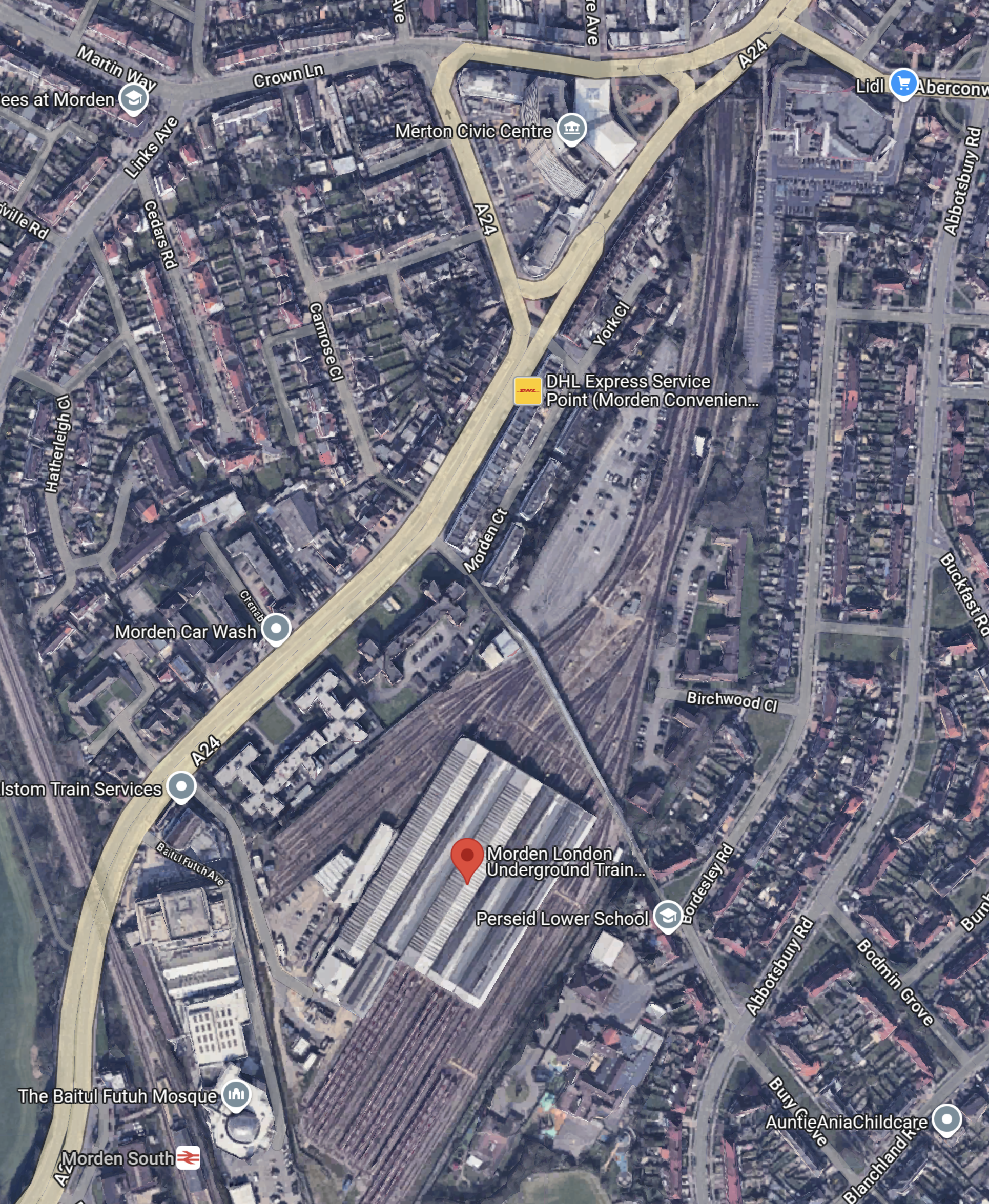
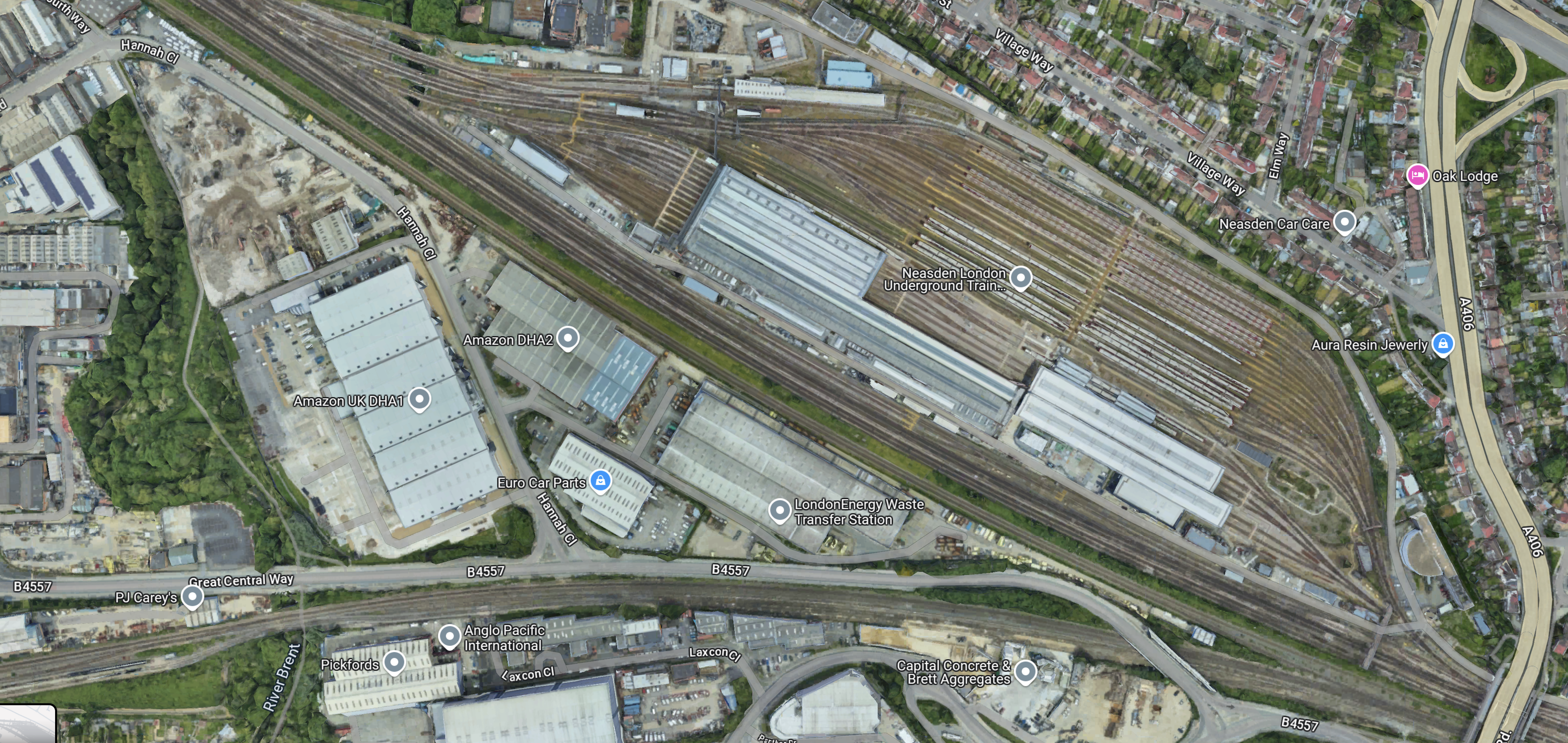
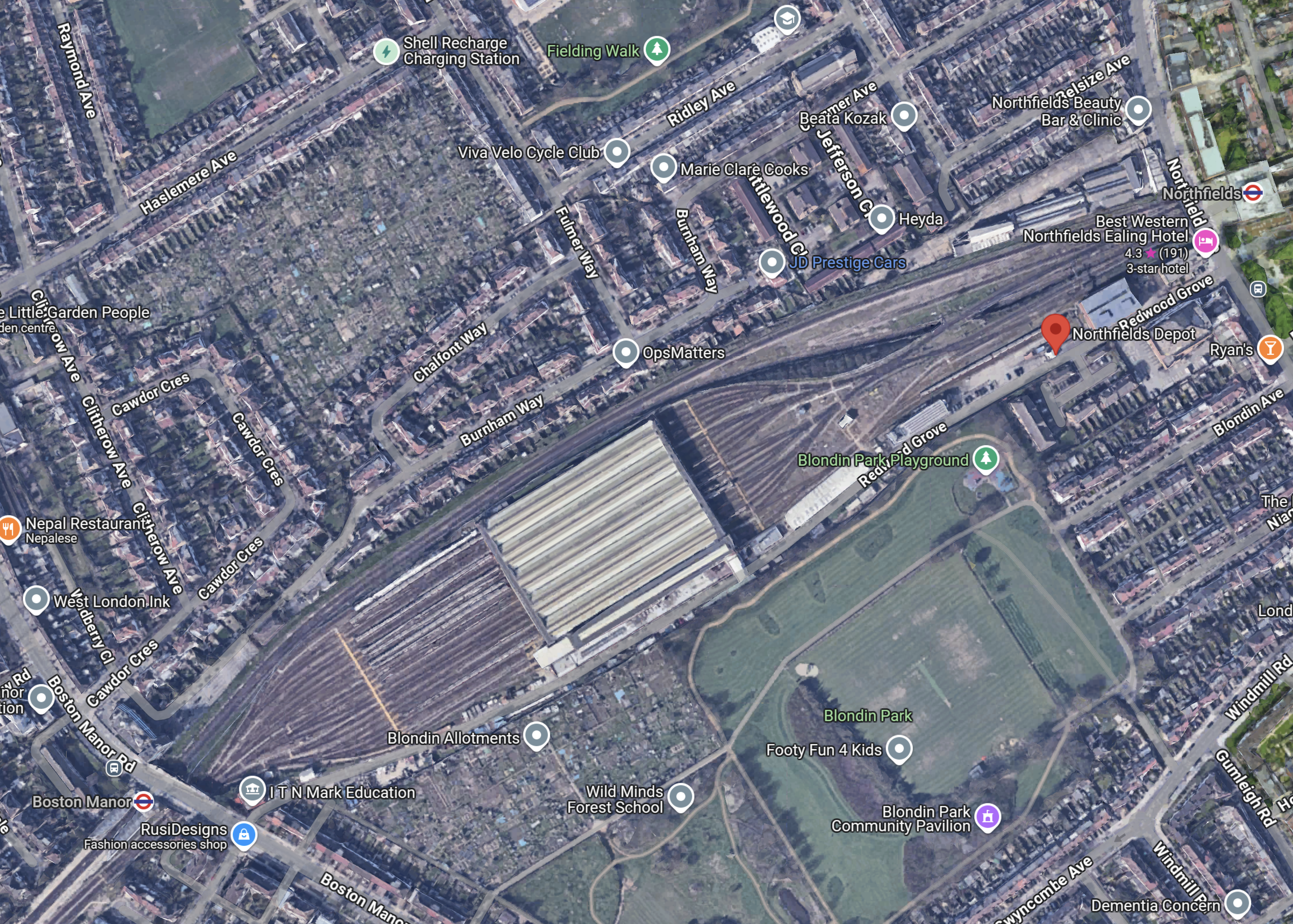
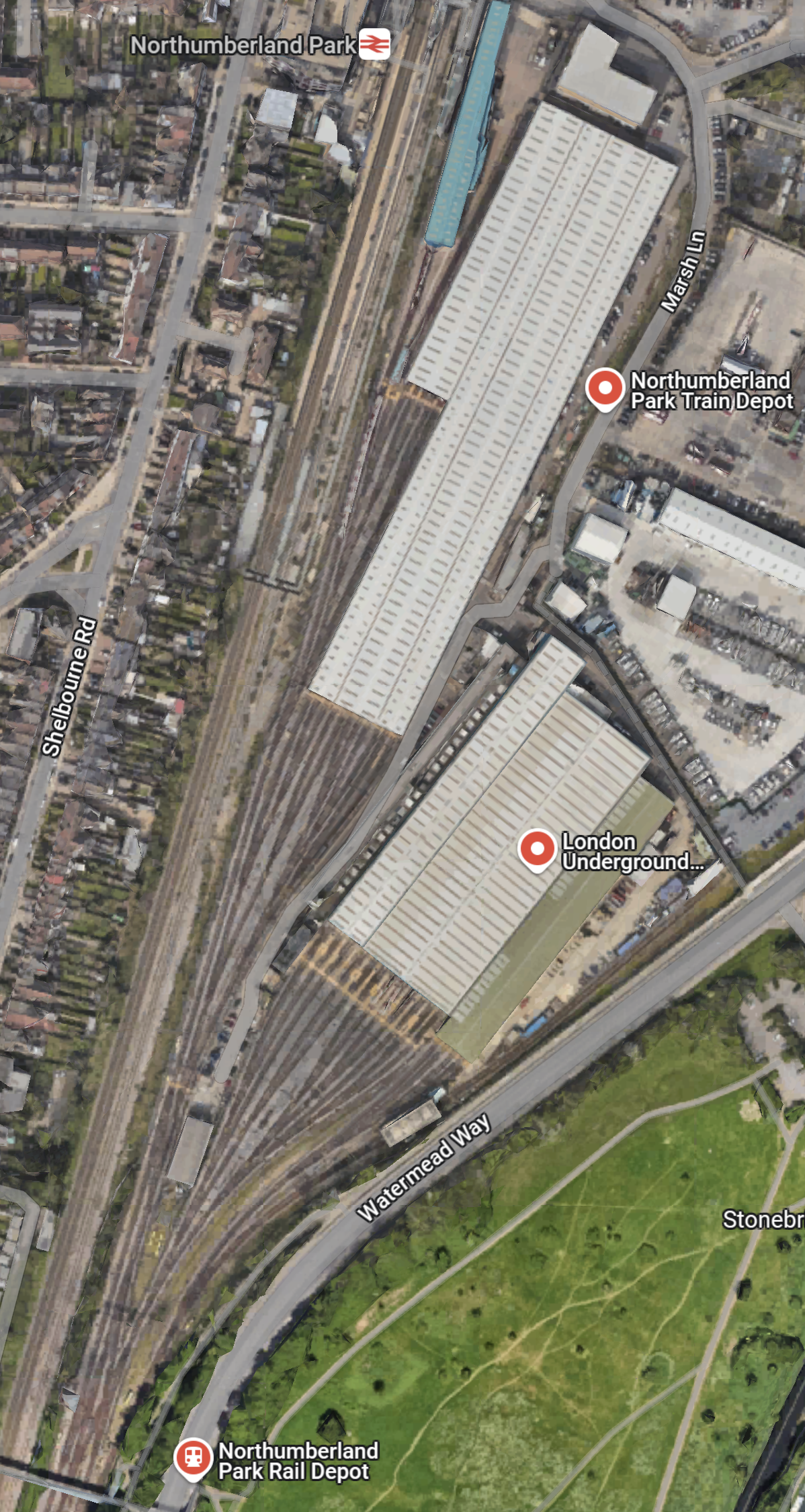
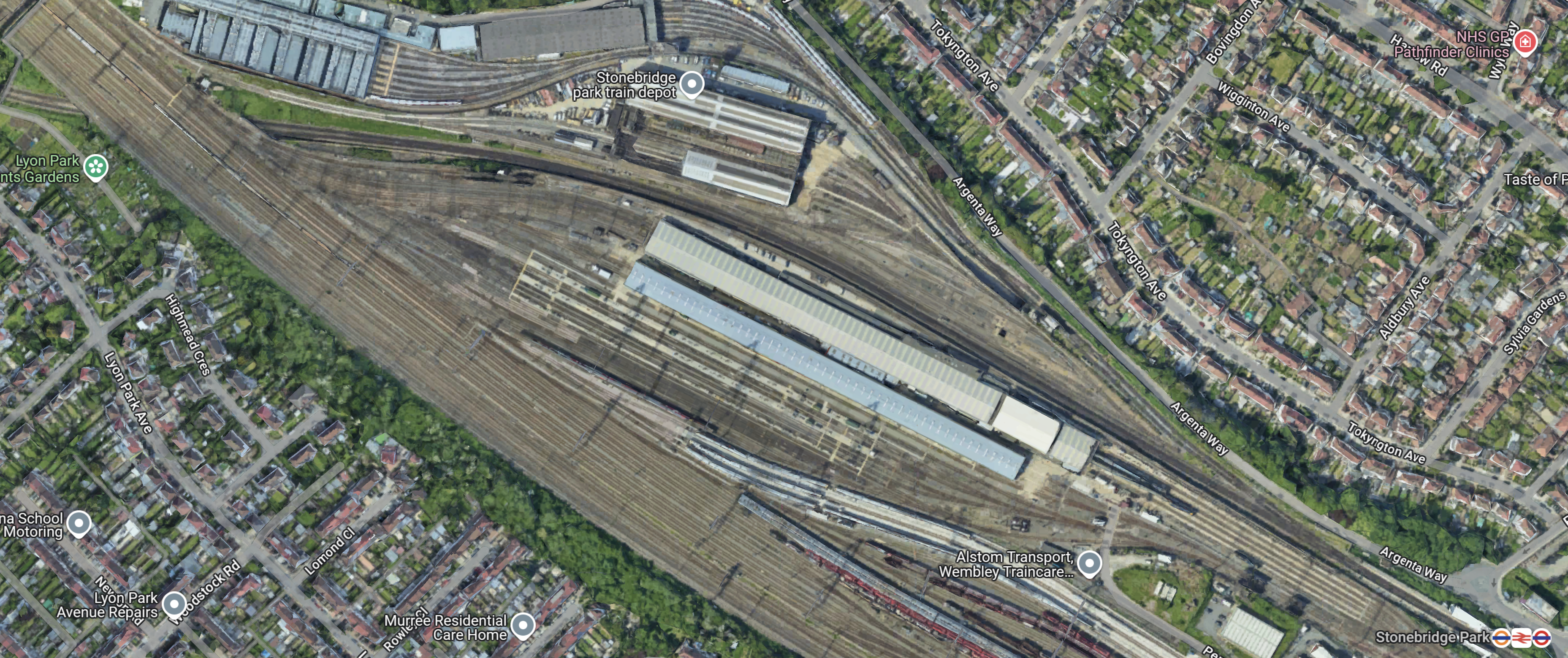
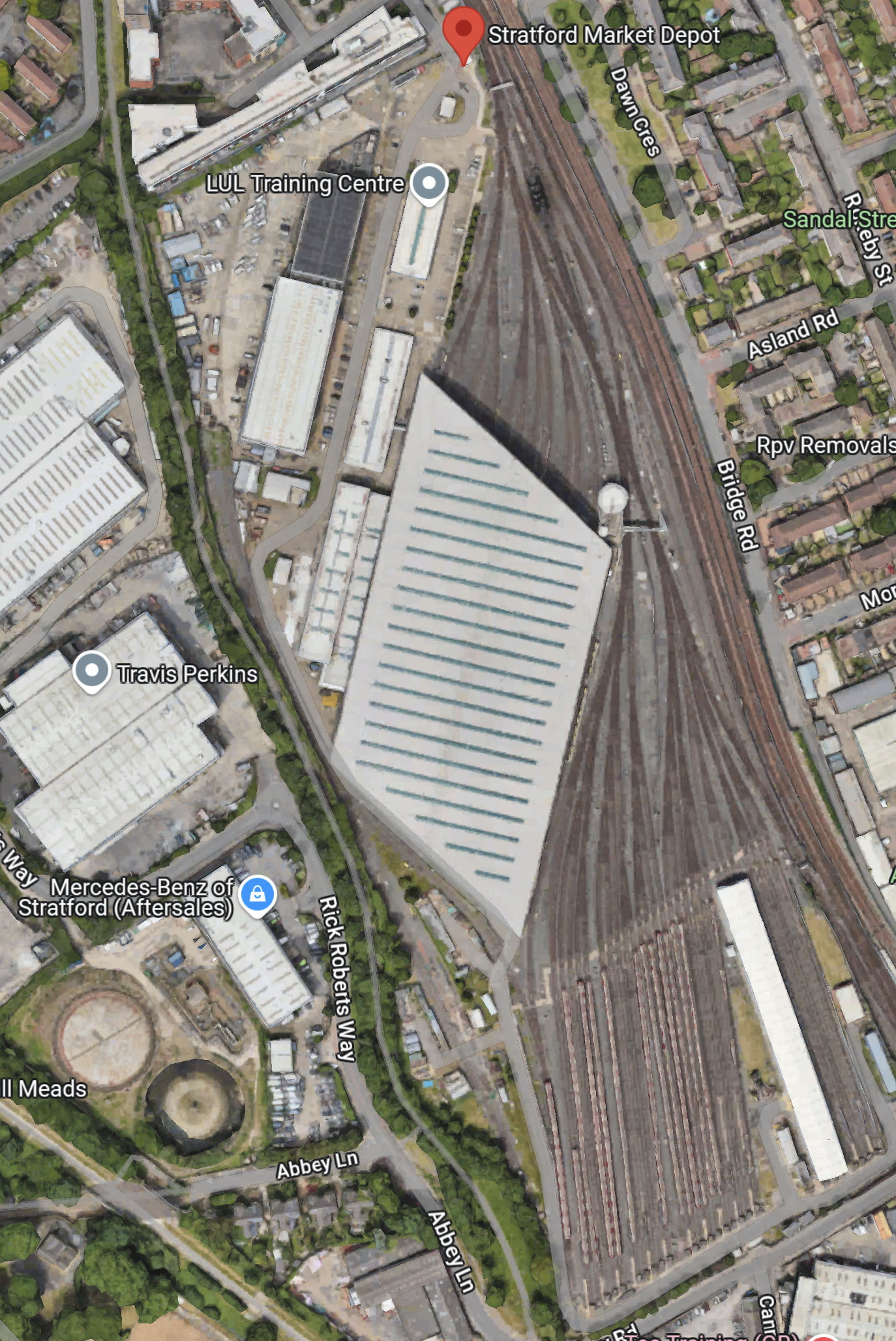
These Google Maps show a number of other depots, that have possibilities for solar roofs.
Ealing Common
Edgware
Golders Green

Hainault
Hammersmith

Morden
Neasden
Northfields
Northumberland Park
Old Oak Common

Ruislip

Stonebridge Park
Stratford Market
Upminster
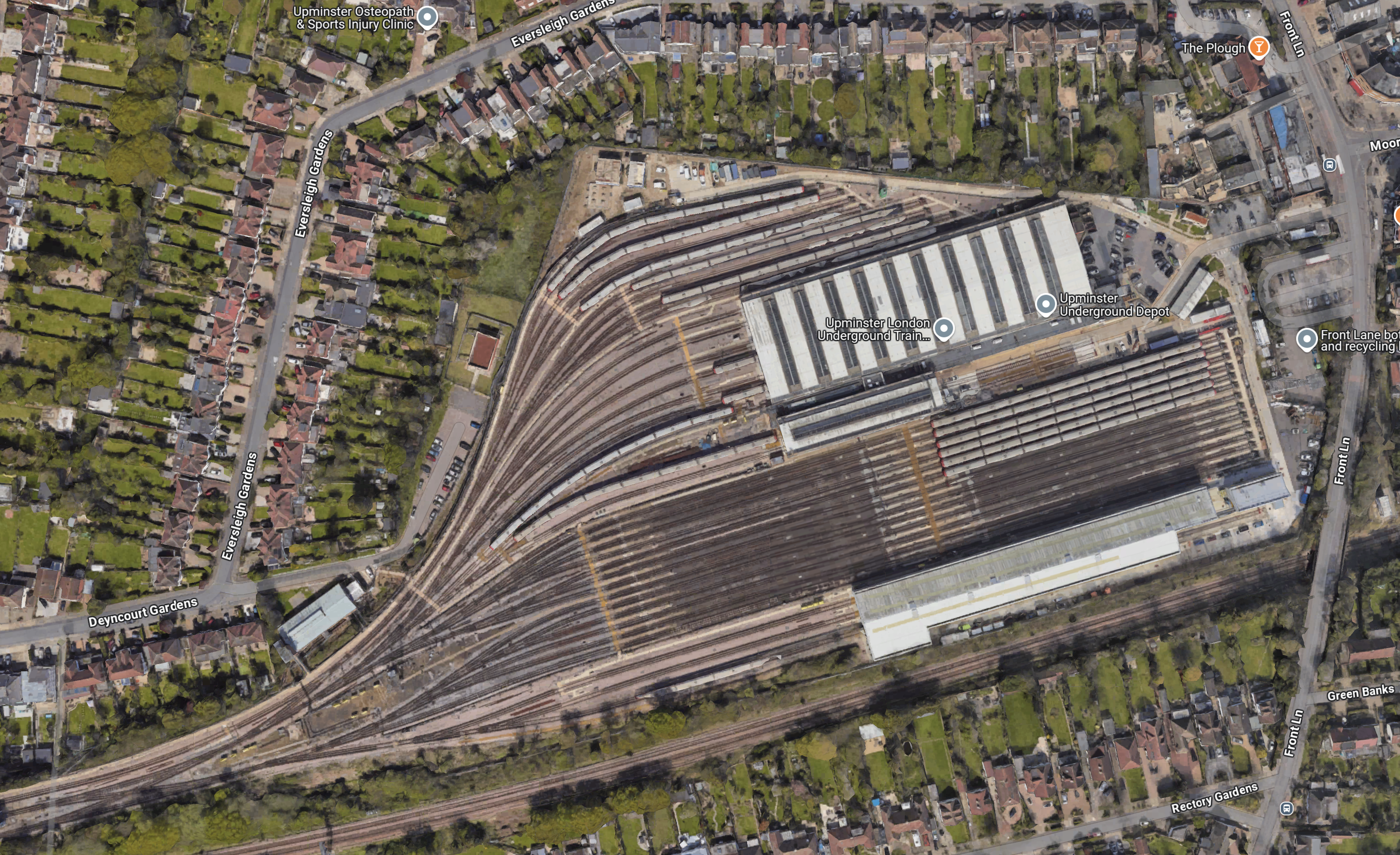
All these depots are different, but I do feel there is scope for solar roofs and panels above the sidings.
Other developments like housing may also be possible over some of the depots.
Trump Will Fix It
I can’t believe that I’ve just seen the title of this post, emblazoned across Trump’s stage.
The phrase doesn’t have the same connotations and odious ring, that it does in the UK, but because of its associations with Jimmy Saville, it is probably better not used.
All the world can now do, is wait for the result.
- It does appear that in the US, female voters have a high turnout.
- According to the Guardian, nearly a third of voters are black.
Certainly, if I were black or female, I wouldn’t feel, I could vote for Trump.
Aberdeen’s Exceed Secures Centrica Rough Contract
The title of this post, is the same as that of this article on Energy Voice.
This is the sub-heading.
Well and reservoir management firm Exceed has secured a contract with Centrica Energy Storage for the redevelopment of the Rough gas storage field.
This is the introductory paragraph.
Exceed said its role in the initial stages of the project, which is exploring converting the Rough field into a hydrogen storage facility, could create more than 30 jobs.
In Wood To Optimise Hydrogen Storage For Centrica’s Rough Field, I talked about changing Rough from a gas to a hydrogen store, so it looks like Centrica are going to create a vast hydrogen storage facility.
This all fits with my belief, that Centrica’s Rough facility and SSE’s nearby Aldbrough storage facility, will at sometime in the future be connected to the Germany hydrogen pipeline; AquaVentus to perform backup to hydrogen produced in the North Sea.
I also feel that the hydrogen trading will be of benefit to Centrica and SSE.
The last section of the Energy Voice article is entitled Rough Hydrogen Storage Concerns.
The following facts are given.
There are currently eight geological gas storage sites across Great Britain, containing approximately 3.1bcm in capacity and maximum deliverability rates of 124mcm/day.
Five of these gas storage sites are in salt caverns while the remaining three are depleted oil and gas fields, with the Centrica’s Rough field in the North Sea the only site located offshore.
The British Geological Survey estimates the UK could store up to 3,000 TWh of hydrogen.
Currently, we use the following energy in a year.
- 263 TWh of electricity
- 705 TWh of natural gas
So we use a total of 968 TWh of energy.
3,000 TWh of hydrogen would keep the UK going for three years. So we should be fine!
Why Artemis Was Fast
Some of you will know, that I wrote Artemis; the project management software system in the 1970s.
It was generally accepted, that Artemis could do project management calculations, quicker than other software and this obviously helped it gain a high market share.
Here’s why!
In the 1950s and 1960s, computers were much smaller and very efficient algorithms were developed to handle large amounts of information in a small amount of memory.
Nowadays, I suspect obvious and very inefficient algorithms are used because programmers are very lazy.
When I was writing Artemis; the project management system in the 1970s, I spent many hours finding these old algorithms in IBM’s library, so consequently the software was faster, than its competitors.
Modern Data Centres
I wouldn’t be surprised to find, that data centres use so much electricity and get so hot, because they use stupid algorithms, that would have been rejected by IBM in the 1950s.
South Korean Firm To Supply Power Equipment For Ørsted’s Hornsea 4 Offshore Wind Farm
The title of this post, is the same as that of this article on offshoreWIND.biz.
This is the sub-heading.
Denmark’s Ørsted has awarded a contract to Hyosung Heavy Industries for the supply of ultra-high voltage power equipment for the Hornsea 4 offshore wind farm in the UK
These two paragraphs add a bit of detail.
Under the contract, the South Korean company will supply 400 kV ultra-high voltage transformers and reactors, essential components for improving power quality for the 2.4 GW Hornsea 4 offshore wind project.
The most recent contract further strengthens the company’s presence in Europe, where it has accumulated over 1 trillion won (about EUR 667 million) in orders this year, as reported by the company.
Hyosung Heavy Industries seem to be doing rather well at supplying electrical gubbins in Europe.
But then Korean companies seem to be doing well in Europe and especially the UK, after the state visit of the Korean President and his wife in November 2023.
In the last century, we did very well dealing with Korean companies with Artemis; the project management computer system, that I wrote.
In Hyundai Heavy Sets Sights On Scottish Floating Offshore Wind, I describe some of our dealings there.
Conclusion
From other posts, I have written, it looks like the UK and Korea are building a strong partnership with offshore wind, and a secondary one with tidal power might be emerging. We also shouldn’t forget the partnership in North London over football.
SSE Launches £10m Hydro Community Benefit Fund
The title of this post, is the same as that of this article on Project Scotland.
This is the sub-heading.
SSE has launched a new £10 million hydro community benefit fund aimed at supporting projects within areas that host its existing hydro power infrastructure across Scotland.
These paragraphs fill in some detail.
The launch comes following the 80th anniversary of the hydro-electric development (Scotland) act of 1943, which enabled the North of Scotland Hydro-Electric Board (NoSHEB) to transform the way people lived and worked through the build of 54 power stations, 78 dams, and over 300km of underground tunnels.
SSE Renewables recently commissioned a report by Biggar Economics which found that the capital investment in hydro over the 80-year period since 1943 is £7.5 billion, supporting over 10,000 jobs annually in Scotland including 5,519 in the Highlands and Islands.
The new hydro community fund will see investment in local communities continue, with SSE Renewables having consulted with community council areas to establish key priorities.
Priorities include improvements to sustainable community transport, affordable housing, growth of small businesses and social enterprises, improvement of community assets and infrastructure, and a focus on community physical and mental well-being through community arts, culture, sports, and recreation.
If the new fund is as successful as the first, I can’t see thee being many complaints.
Centrica And Coterra Energy Announce Natural Gas Sale And Purchase Agreements
The title of this post, is the same as that of this news item from Centrica.
These three bullet points, act as sub-headings.
- Coterra will supply 100,000 MMbtu/d of natural gas for a period of 10 years, commencing in 2028.
- Volume supplied sufficient to heat 400,000 homes per year.
- Agreement expands Centrica’s growing LNG business.
These three paragraphs say more about the deal and add more on its context.
Centrica LNG and Coterra today announced the execution of two natural gas sale and purchase agreements. Under the contracts, Coterra will supply 100,000 MMbtu/d of natural gas linked to European gas prices such as TTF and NBP, for a period of 10 years, commencing in 2028.
This major gas deal will reduce the market risk in Centrica’s LNG portfolio by purchasing US gas on the same price indices under which the LNG is subsequently sold, and help underpin customer energy supplies for a decade. The volume supplied is sufficient to heat 400,000 homes per year, further cementing Centrica’s global role supporting energy security.
The deal follows similar agreements over recent years, demonstrating Centrica Energy’s innovative partnership approach, one of the key pillars of its successful and growing LNG business.
It certainly looks like Centrica are doing their best for UK energy security.
It also looks to me, that it is a low risk deal.
It should also help to keep us all warm in the UK, until renewable electricity and hydrogen come fully on stream.
Scottish Ministers Approve 200MW Battery Storage Project
The title of this post is the same as that as this article on Solar Power Portal.
These three paragraphs add further meat to the story.
Developer Intelligent Land Investments (ILI) Group has received planning consent for a 200MW battery energy storage system (BESS).
The BESS will be adjacent to the Easterhouse substation near Gartcosh, Glasgow, at Whitehill Farm. ILI Group received Section 36 planning consent, meaning that the BESS is classed as a change to the existing consent granted to the generating substation.
Consent from Ministers follows support for the project from both the Glasgow City Council and North Lanarkshire Council.
ILI seem to be doing well, as they regularly appear in my data searches.
The article sums up ILI Group’s portfolio like this.
ILI Group has a portfolio of over 4.7 GW energy storage projects, including 2.5 GW of utility-scale battery storage and 2.5 GW pumped storage hydro.
They must be doing something right.
ILI Group’s biggest success to date would appear to be developing the Red John pumped hydro power station, which they sold to Statkraft, as I reported in Statkraft To Acquire Major Loch Ness Pumped Storage Hydro Project From Intelligent Land Investments Group.
Conclusion
The batteries and the pumped storage keeps coming in Scotland.
It appears Scotland will not only generate the renewable energy, but store it until it is needed.
As a Control Engineer, my nose is telling me, that Scotland is going to need a few more interconnectors to sell the energy to those, who need it.
Alternatively, it will attract industries, that will need a lot of electricity.
RWE Gets Go-Ahead For 100 MW Electrolyzer For Offshore Wind-to-Hydrogen Project
The title of this post, is the same as that of this article on offshoreWIND.biz.
This is the sub-heading.
German energy company RWE has secured construction and environmental permits to build a 100 MW electrolyzer in Eemshaven, the Netherlands. The electrolyzer is part of system integration solutions associated with OranjeWind, an offshore wind project RWE is jointly developing with TotalEnergies in the Dutch North Sea.
These first threee paragraphs gove more information.
RWE described the permits as an important step in developing 100 MW of green hydrogen production at Eemshaven which, if built, will contribute to the onshore energy system integration plans associated with the 795 MW OranjeWind offshore wind project.
To remind, in July this year, TotalEnergies entered into an agreement with RWE to acquire a 50 per cent stake in the OranjeWind and said it would use its share of the electricity from the offshore wind project to power 350 MW electrolyzer projects that will produce about 40,000 tonnes of green hydrogen annually.
With the necessary permits in place, RWE stated it will be able to develop a 100 MW electrolyzer on a plot adjacent to the Magnum Power Station in Eemshaven.
I went to Eemshaven in The Train Station At The Northern End Of The Netherlands. The area looks like it will be the centre of the Dutch hydrogen industry.
This post is called The Dutch Plan For Hydrogen. The Dutch appear to want to be big in hydrogen.
A 100 MW offshore electrolyser is a good start.
 The Anonymous Widower