‘A Rare Opportunity’: Northern Will Run Service Along Heritage Railway Line For The First Time And Tickets Are Now On Sale
The title of this post, is the as that of this news item from Northern Trains.
This is the sub-heading.
Northern will run a service along a heritage railway line for the first time, to raise money for charity.
These four paragraphs add detail to the story.
Tickets are now on sale for the service, which will set off from Darlington station on Sunday, 22 February and complete a return trip along Weardale Railway before heading back to Darlington.
Northern has been working closely with Weardale Railway to organise this event.
The railway, which opened in 1847, is a popular tourist attraction and allows visitors to travel on heritage trains along a picturesque 16-mile route. It runs between Bishop Auckland West and Stanhope in County Durham.
In 2020, it was saved from administration by The Auckland Project, which has since provided significant investment to fund essential repairs and infrastructure improvements.
Note.
- The train will be one of Northern’s Class 158 trains.
- Tickets are being sold for £25 and the proceeds will be donated to two local charities: The Angel Trust, based in Bishop Auckland, and 123help4familys, based in Stanhope.
- The train will leave Darlington at 09:46 and finishes its trips up and down the Weardale Line at Darlington at 17:44.
I won’t be going, as I can’t fit the day together.
Is There Support For An Extended Service From Bishop Auckland?
I asked Google AI, this question, and got this mildly surprising answer.
Yes, there is support for extended services in Bishop Auckland, primarily through NHS GP extended access, which provides appointments outside of normal hours (6 PM – 8 PM weekdays and weekends) at Bishop Auckland Hospital. The Urgent Treatment Centre is available 24/7, and various community-based support services, including care agencies and mental health support, are also available.
If the hospital and the other medical facilities are open, surely in a rural area, if they are needed, transport should be available.
Is There A Need For More Housing In Bishop Auckland?
Yes, there is a significant, documented need for more housing in Bishop Auckland to address a, “chronic shortage of quality bungalows and assisted living” alongside a broader demand for modern, energy-efficient homes. The town is undergoing a regeneration with plans for increased, “affordable housing” and “100% affordable” developments (e.g., in “Westerton Road” and “Holdforth Crescent”) to meet the growing population and “economic needs”.
Note.
- A regular service to Darlington may make building more housing viable.
- Judging by the amount of new houses along the Northumberland Line, the new railway has encouraged their building.
Services and stations could be added as required, as appears to be being done on the Northumberland Line.
National Grid, TenneT Germany Launch GriffinLink, A First Of A Find Project To Maximise Offshore Wind
The title of this post is the sane as that of this press release from National Grid.
These three bullet points serve as sub headings.
-
National Grid and TenneT Germany announce our cooperation on GriffinLink, a planned GB-Germany multi-purpose interconnector (MPI).
-
GriffinLink would support energy security, accelerate the connection of offshore wind and mark a coordinated approach on supply chains and infrastructure.
-
Announced at the North Sea Summit in Hamburg, the project could maximise shared offshore wind resources in the most efficient way.
These two paragraphs add more detail.
National Grid will partner with TenneT Germany to develop GriffinLink, a new multi-purpose interconnector (MPI) project, which could connect British and German offshore wind to both countries. It marks a step towards a more integrated, flexible, and efficient energy system for both Great Britain and Germany which delivers secure, affordable energy for consumers.
GriffinLink could make an important contribution to security of supply and market integration in northwestern Europe. Cross-border hybrid energy systems such as GriffinLink make it possible to feed cleaner electricity into the grid where it can be generated and transport it exactly where it is needed.
Note this integrated approach means.
- Better utilisation of the grids and is a more efficient use of renewable energy across national borders;
- Lowering the costs involved, and the supply chain materials required and;
- A reduced impact on coastal communities and the environment.
As a ‘multi-purpose’ interconnector connecting wind in two countries, GriffinLink would be the first project of its kind in Europe and a milestone for cross-border energy security and stability.
It will also connect the UK’s offshore wind power to someone someone who needs it and will pay good money for it.
I asked Google AI, “How much energy we will be exporting to Europe in 2030” and received this reply.
By 2030, the UK is expected to be exporting significant amounts of electricity to Germany, largely enabled by the NeuConnect interconnector, which is set to become operational around 2028 and will have a capacity of 1.4 GW. While precise, definitive figures for 2030 are subject to market conditions, key data suggests:
NeuConnect Capacity: The 725km subsea link between Kent (UK) and Wilhelmshaven (Germany) will allow 1.4 GW of electricity to flow in either direction.
Net Export Position: The UK is positioned to become a net exporter of electricity to Europe by the 2030s, fueled by a massive expansion in offshore wind capacity, aiming for up to 50GW by 2030.
Grid Interconnection: By 2030, the UK’s total interconnection capacity to Europe is planned to increase to 18GW, up from 8GW.
Hydrogen Focus: In addition to electricity, the UK is exploring the potential to export up to 35 TWh of hydrogen to Germany by 2030.
That will do nicely!
Are Hitachi’s Tri-Mode Trains Exceeding Expectations?
I asked Google AI, the question in the title of this post and received this answer.
Yes, Hitachi’s tri-mode (battery-hybrid) trains are exceeding expectations, particularly following successful trials in the UK in late 2024. Trials of the battery-equipped Class 802/2 demonstrated superior performance to initial forecasts, leading to a £300 million order for a new fleet to be delivered in 2028.
Key findings from trials and operational expectations:
Performance Exceeded: The trial, conducted with TransPennine Express and Angel Trains, showed fuel cost savings of 35%–50%, surpassing initial predictions of up to 30%.
Operational Capability: The battery technology enabled trains to reach speeds greater than 75 mph and provided enough range for zero-emission, silent running in and out of stations, significantly reducing noise and improving air quality.
Energy Efficiency: The battery matched the weight of a diesel engine, meaning no extra track degradation.
Future Impact: The success of the trial led to an order from Arriva Group for a new fleet for Grand Central services, which will increase seating capacity by 20% and are expected to significantly reduce carbon emissions.
These trains, designed to run on electric, battery, or diesel power, are part of a push to modernize rail services, with the technology allowing for the gradual elimination of diesel-only operation on certain routes.
That is certainly good performance and Hitachi received a £300 million order, which I wrote about in Arriva Group Invests In New Battery Hybrid Train Fleet In Boost To UK Rail Industry
But I don’t think it’s all down to Hitachi, as Hitachi linked up with Sunderland-based Hyperdrive Innovation, who are JCB’s battery supplier. Hyperdrive were taken over by Turntide Technologies in 2021.
In Batteries Ordered For Grand Central Inter-City Trains, I said this.
Hitachi Rail has selected Turntide Technologies to supply lithium iron phosphate batteries for use on electric-diesel-battery hybrid inter-city trainsets it is to build for Arriva’s open access operator Grand Central.
I am coming to the conclusion, that Turntide Technologies use and/or make some very special batteries.
I asked Google AI, “Which make of battery cells does Turntide use?” and received this reply.
Based on recent announcements (2023–2025), Turntide Technologies utilizes advanced Lithium Iron Phosphate (LFP) cells for its next-generation battery systems, particularly for its partnership with Hitachi Rail.
Key details regarding Turntide’s battery cell usage include:
Chemistry Shift:
While previously associated with Nickel-Manganese-Cobalt (NMC) in some applications, Turntide has focused its recent rail projects with Hitachi on LFP technology to enhance safety and allow for more compact, powerful, and lighter battery packs.
Application:
These LFP batteries are used in high-performance, rugged, and space-limited environments, such as Hitachi’s UK battery-operated trains.
Modular Design:
Turntide’s Gen 5 battery systems are designed to be flexible for various applications including construction, agriculture, and mining, using modular, high-energy-density cells.
Previous Technology:
Previously, Turntide (which acquired Hyperdrive Innovation) used Lithium-ion NMC cells for its battery packs.
The search results do not explicitly identify a specific, named manufacturer (e.g., CATL, LG, Samsung) for the cells, but focus on the LFP chemistry utilized by Turntide.
I am also coming to the conclusion, that they took over Hyperdrive Innovation to get control of these compact, powerful, and lighter battery packs.
Could Electric Trains Run Between St. Pancras International and Sheffield Stations With No More Electrification?
A reader suggested, that I look at this, so here goes!
- A couple of weeks ago, I took a Class 222 diesel train back from Sheffield to St. Pancras International and it seemed a few minutes quicker.
- Looking at the timetable today, at least one service on the route is now just under two hours and some others are just over.
So the new Class 810 trains may not be fully in service yet, but the trains have already had an effect on the timetable.
How Far North Is The Midland Main Line Being Electrified?
I asked Google AI this question and received this answer.
As of early 2026, the Midland Main Line (MML) is electrified as far north as Wigston, just south of Leicester.
- Northern Limit: The section from Kettering up to Wigston South Junction was energised in July 2024, representing the current northern limit of 25kV overhead line equipment (OLE).
- Pause in Further Electrification: Following a UK government spending review, the further, planned northward extension of electrification to Leicester, Derby, Nottingham, and Sheffield was indefinitely paused in July 2025.
- Current Operations: While electrification has stopped at Wigston, the line is served by new bi-mode (electro-diesel) trains, allowing for electric running from London St Pancras to Wigston before switching to diesel power.
- Previous Work: The line is also fully electrified from London St Pancras to Bedford, including the route to Corby.
Note.
- South Wigston Junction and Sheffield are 69.4 miles apart.
- The Hitachi trains can raise and lower pantographs on the move.
Distances without wires from London St. Pancras International to various destinations are as follows.
- Sheffield – 69.4 miles
- Leicester – 3.7 miles
- Derby – 36.4 miles
- Nottingham – 31.1 miles
As trains will have to go out and back to these destinations distances travelled will be doubled.
- Sheffield – 138.8 miles
- Leicester – 7.4 miles
- Derby – 72.8 miles
- Nottingham – 62.2 miles
It looks to me, that if the new Class 810 trains, can travel 138.8 miles on batteries and diesel engines as a tri-mode train, then the Midland Main Line is electrified.
Could The Sheffield Services Turn Round At Doncaster And Charge Their Batteries There?
Note.
- South Wigston Junction and Doncaster are 79.5 miles apart.
- Doncaster is a fully-electrified station.
- Sheffield and Doncaster would get two extra connecting trains per hour.
- The two services could also call at Meadowhall and/or Rotherham Central.
The Class 810 trains could charge their batteries, whilst passengers to and from Doncaster left and entered the trains.
Could A Simple Cross-Platform Change Be Arranged Between East Coast And Midland Main Line Services?
Doncaster station has two long island platforms, one of which is generally used for Northbound services and one for Southbound services.
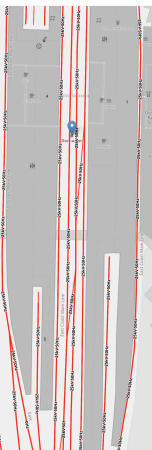
Note.
- All electrified tracks are shown in red.
- The two wide island platforms, with Northbound on the West side and Southbound on the East side.
- Each island platform has an electrified platform face on both sides.
- The four platforms faces on the island platforms can hold pairs of five-car Hitachi trains.
- There are two through tracks or avoiding lines between the two island platforms for trains that aren’t stopping.
- There are bay platforms at the ends of the station for local trains.
- The station is fully step-free with a wide pedestrian underpass.
I know the station well and it looks to me, that East Midland Railway’s five-car services for St. Pancras could charge up in the Southern ends of the four faces of the island platforms and the two South-facing bay platforms.
I also believe that a pair of five-car Class 810 trains could be handled and charged, should it become necessary.
It looks to me, that the engineers updating the East Coast Main Line, know that they were caught out badly by High Speed Two, so the redesign for the next fifty or a hundred years will be completely future-proofed.
Doncaster and London could almost be considered to be twin main lines, with two pairs of high speed lines taking different routes, that serve different towns and cities.
How Many Travellers Go Between East Scotland And The North-East of England And The English Midlands?
It must be quite a few, as in the new East Coast Main Line timetable, more Scottish services stop at places like Doncaster and Newark.
But surely, if you could go between say Perth or Aberdeen and Derby or Nottingham in two battery-electric trains, with a relaxed change at Doncaster, you’d take it?
I certainly would!
East Coast And Midland Main Lines Compared
These are times between London and Doncaster.
- Current times between Doncaster and London are typically between 1 hour and 31-40 minutes going via the East Coast Main Line.
- I estimate times between Doncaster and London will be typically 2 hours and 22-27 minutes going via the Midland Main Line.
Note.
- Doncaster and London King’s Cross is 156 miles
- Doncaster and London St. Pancras International is 183.3 miles
- So the Midland Main Line route would appear to to be about 45 minutes slower.
- I suspect, that for passengers between between London and North of York, it will always be quicker to use an East Coast Main Line service.
These are times between London and Sheffield.
- Current times between Sheffield and London are typically between 2 hours and 4-9 minutes going via the Midland Main Line.
- I estimate times between Sheffield and London will be typically between 2 hours and 2 minutes going via the East Coast Main Line.
Note.
- Sheffield and London King’s Cross is via Retford.
- Sheffield and London King’s Cross is 162.1 miles
- Sheffield and London St. Pancras International is 183.3 miles
- Sheffield and Retford is 23.5 miles
- So the Midland Main Line route would appear to to be a few minutes slower.
I would feel that there is scope that under Great British Railways to optimise services between London and Doncaster and Sheffield.
The Master Cutler
The Master Cutler is a named train, that is described in this Wikipedia entry, that was introduced in 1947.
- Over its life it has run into both King’s Cross and St. Pancras.
- I can remember the train in the 1950s, running into King’s Cross.
- It has also been run to and from Leeds.
- It has been run as a Pullman service.
- There are reports of overcrowding in recent years.
It strikes me that the Master Cutler could do with a revamp.
- As St. Pancras can accept pairs of five-car Class 810 trains, ten-car trains could be run into King’s Cross or St. Pancras.
- An alternative would be to use a nine-car Hitachi Class 800/801 train.
- All trains would be battery electric.
- All trains would use the East Coast Main Line for a faster service.
- Services could terminate in the North at Leeds.
- The service could be run as a Pullman service.
- This article on Ian Visits, writes about East Coast Main Line trains using St. Pancras.
I would create a train service, that would attract passengers from all over the world.
Who knows?
If it was conceived in the right way, it might warrant a second service or similar service on other lines like these possibilities.
London and Blackpool via Crewe, Wigan and Preston.
- London and Aberystwyth via Birmingham and Shrewsbury.
- London and Bristol via Bath
- London and Fishguard via Cardiff and Swansea
- London and Holyhead via Birmingham and Chester
- London and Liverpool
- London and Manchester
- London and Newcastle via York and Durham
- London and Norwich via Colchester and Ipswich
- London and Plymouth via Exeter
Note.
- All routes could be run using electric or battery-electric trains.
- The Fishguard and Holyhead services would be zero-carbon routes to Ireland, connecting to appropriate zero-carbon ferries.
- Could services be arranged so that all parts of the country have at least one service in both directions every day?
- In the days of British Rail, London and Norwich had a very high-class service, that could serve a full English breakfast between Colchester and London, which certainly wasn’t like the regular joke.
Get the offering right and it could level-up the UK.
Cummins To Cease New Electrolyser Activity Amid Worsening Market
The title of this post, is the same as that of this article on Renewables Now.
These are the first three paragraphs.
Cummins Inc has decided to stop new commercial activity in the electrolysers space following a strategic review of the segment launched last year, citing deteriorating market conditions and weakening customer demand.
The decision is linked to USD 458 million (EUR 388.4m) of charges for the full-year 2025 related to the electrolyser business within the company’s zero-emission technologies arm, Accelera, of which USD 415 million were non-cash charges.
The company noted that it will continue to fulfil existing customer commitments before winding down new commercial activity in the segment.
Although, I am in favour of using hydrogen as a fuel, I recognise, that traditional electrolysis is not the most efficient process.
These methods are more efficient.
HiiROC
- HiiROC use a process, that they call Thermal Plasma Electrolysis to split any hydrocarbon gas into hydrogen and carbon black.
- HiiROC originated in the University of Hull.
- Typical gases that can be used are chemical plant off-gas, biomethane and methane.
- I like the ability to use chemical plant off-gas, as some of this is particularly nasty and HiiROC may offer safe disposal.
But the big advantage is that the HiiROC process is five times more energy efficient than traditional electrolysis.
The carbon black is no useless by-product, but has several valuable uses in its own right, which are detailed in its Wikipedia entry.
These two paragraphs from Wikipedia, give a summary of the more common uses of carbon black.
The most common use (70%) of carbon black is as a reinforcing phase in automobile tires. Carbon black also helps conduct heat away from the tread and belt area of the tire, reducing thermal damage and increasing tire life. Its low cost makes it a common addition to cathodes and anodes and is considered a safe replacement to lithium metal in lithium-ion batteries. About 20% of world production goes into belts, hoses, and other non-tire rubber goods. The remaining 10% use of carbon black comes from pigment in inks, coatings, and plastics, as well as being used as a conductive additive in lithium-ion batteries.
Carbon black is added to polypropylene because it absorbs ultraviolet radiation, which otherwise causes the material to degrade. Carbon black particles are also employed in some radar absorbent materials, in photocopier and laser printer toner, and in other inks and paints. The high tinting strength and stability of carbon black has also provided use in coloring of resins and films. Carbon black has been used in various applications for electronics. A good conductor of electricity, carbon black is used as a filler mixed in plastics, elastomer, films, adhesives, and paints. It is used as an antistatic additive agent in automobile fuel caps and pipes.
It can also be used as a soil improver in agriculture.
HiiROC would appear to be five times more energy efficient than traditional electrolysis.
I would also rate the range of their investors as a particular strength.
Google AI lists these companies as investors.
HiiROC, a UK-based developer of plasma torch technology for “turquoise” hydrogen production, is backed by a consortium of industrial and strategic investors. Key investors include Centrica, Melrose Industries, Hyundai Motor Company, Kia, HydrogenOne Capital, CEMEX Ventures, Wintershall Dea, and VNG.
Note.
- CEMEX must be going to decarbonise cement making.
- Melrose describe themselves as an industry-leading aerospace technology provider.
- Will we be seeing hydrogen cars from Korean manufacturers?
- Wintershall Dea is Europe’s leading independent gas and oil company.
HiiROC has an impressive list of investors.
Bloom Energy
I wrote about Bloom Energy’s process in Westinghouse And Bloom Energy To Team Up For Pink Hydrogen.
This method also looks promising.
- Westinghouse Electric Company is an American builder of nuclear power stations.
- Bloom Energy Corporation make a solid-oxide electrolyser.
- Pink hydrogen is green hydrogen produced using nuclear power.
It uses electrolysis at a higher temperature, which speeds it up.
Desert Bloom
This is an Australian process, that I wrote about in 10GW Green Hydrogen Project Aims To Electrolyze Water Drawn From Desert Air.
Conclusion
You can understand, why Cummins are getting jumpy!
But you have to remember that when I worked in a hydrogen plant in the 1960s, the hydrogen was an unwanted by-product and it was mixed with coal gas and sent down the power station to raise steam, so that it could be used to do something useful.
FEV And Daimler Buses Create Hydrogen Coach Demonstrator
The title of this post is the same as that of this article on Automotive World.
This is the sub-heading.
Daimler Buses and engineering firm FEV have developed a hydrogen fuel cell-powered Setra coach, marking the first hydrogen demonstrator vehicle in the coach segment for the Daimler Truck subsidiary. The H₂ Coach technology demonstrator, which was handed over to Daimler Buses in summer 2025 following approximately two years of development and approval by German technical inspection authority TÜV, offers a range of at least 800 kilometres per tank filling and is intended for testing purposes.
The article also has a picture, which shows.
- A typical modern coach design with three axles.
- Setra H2 Coach branding.
- A Slogan of “Travelling Towards a Sustainable Future”
It looks very similar to images of Wrightbus’s three-axle Contour design. But that would mean, they could fit similar infrastructure.
But when I asked Google AI, when the Wrightbus three-axle hydrogen coach would enter passenger service, I received this answer.
Wrightbus’s three-axle hydrogen fuel cell electric coach is planned for launch in 2026. The company, which is developing the vehicle in Ballymena, Northern Ireland, has confirmed the project is aimed at decarbonising long-distance travel, with a projected range of up to 1,000 km.
It would appear that Wrightbus are ahead on range and timescale.
All Five Halted US Offshore Wind Farms Resume Construction
The title of this post, is the same as that of this article on offshoreWIND.biz.
This is the sub-heading.
All five US offshore wind farms under construction that received stop-work orders from the US government have been cleared to continue building, with Ørsted’s Sunrise Wind project the fifth project to be granted a preliminary injunction as part of a lawsuit challenging the order issued by the Director of the Department of the Interior’s Bureau of Ocean Energy Management (BOEM) on 22 December 2025.
I would have loved to have been a fly on the wall of the Oval Office in the White House, as what words could the dumbest United States President of my lifetime possibly use to put any positive spin on such an overwhelming five-round defeat, where he was screwed, glued and tattooed to borrow an expression from Brian, who was one of my favourite accountants.
This table summarises the five wind farms.
- Coastal Virginia Offshore Wind-Commercial – 2600 MW – Operation in 2027.
- Empire Wind 1 – 816 MW – Operation in 2026.
- Revolution Wind – 704 MW – Operation in 2026.
- Sunrise Wind – 924 MW – Operation in 2027.
- Vineyard Wind 1 – 804 MW – Operation in late 2026.
The five farms total nearly 6 GW.
This is what Google AI says about the usefulness of 6 GW to power typical United States houses.
6 gigawatts (GW) of power can supply approximately 5 million US homes, based on recent large-scale energy capacity deals. Depending on energy efficiency and regional usage, this capacity typically translates to around 750,000 homes per 1 GW, meaning 6 GW can cover a range of roughly 4.5 million to 5 million households.
I doubt Trump will give up gracefully.
Centrica Energy And Seneca Resources Company Sign First-of-Its-Kind Long-Term MiQ Methane Emissions Certificates Agreement
The title of this post, is the same as that of this press release from Centrica.
This is the sub-heading.
Centrica Energy and Seneca Resources Company are proud to announce a groundbreaking agreement, marking the first long-term deal of its kind to support independently verified methane emissions from an MiQ-certified US natural gas producer, helping to underpin reductions over time. This ten-year agreement underscores the commitment of Centrica and Seneca to support global efforts to reduce methane emissions.
This first paragraph added more detail.
Centrica Energy sources and delivers gas and LNG globally, including LNG shipped from the US to international markets. Under the terms of the agreement, Centrica will procure 250,000 MMBtu per day of MiQ-certified gas certificates over the next ten years, a strategic move that positions Centrica at the forefront of methane reduction initiatives, aligns with emerging regulatory requirements, and reinforces leadership in sustainable energy practices.
MiQ is new to me, so here is what the press release says about MiQ.
MiQ is a global leader in methane emissions certification and data. Our mission is to accelerate the transition to lower emissions gas by providing a credible and transparent certification system that drives regulatory compliance, incentivizes continuous improvement, and ensures methane accountability in the oil and gas sector throughout the entire supply chain.
It appears to me that MiQ-certified low-emissions gas is almost like an equivalent of FairTrade coffee.
If the UK buys its gas as MiQ-certified low-emissions gas, it could claim, that it has cut its gas emissions.
Google AI On Low-Emission Natural Gas
I asked its view and received this answer.
Low-emission natural gas refers to methane-based energy with significantly reduced greenhouse gas, methane leakage, and particulate emissions, often achieved through enhanced extraction, certification, or blending with cleaner gases. It offers up to 40% less (CO2) than coal and 20-30% less than oil, serving as a critical transition fuel to support renewable energy.
low-emission natural gas would seem to be a sensible way to go.
Is There A Plan To Increase The Capacity Of the Elizabeth Line?
On Sunday, when I came back from West Ealing station to Moorgate station on Sunday after taking the pictures, that I used in West Ealing Station – 1st February 2026, I was at the wrong end of the train for getting out at Moorgate.
So I had to walk from one end to the other of one of the most crowded Elizabeth Line trains, I’ve ever been on.
If it was as crowded as that on a Sunday morning, then it would appear, that the capacity of the line needs to be increased.
So I asked Google AI, the title of this post and received this reply.
Yes, there is a firm plan to increase the capacity of the Elizabeth line, driven by high demand and to support the future opening of the HS2 station at Old Oak Common. Transport for London is producing 10 new Class 345 trains to boost service, with expected delivery in 2026-2028.
But is 2026-2028 going to be early enough?
The Ultimate Recycled Electric Local Train
This morning, I took a ride across London to ride in the first Class 230 train in public service in London.
I took these pictures of the new block of flats going up at West Ealing station, the charging system for the train and the train.
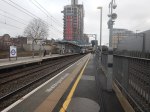

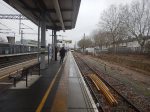

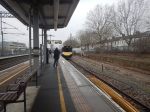
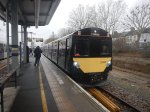
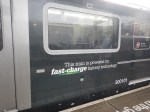
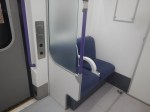
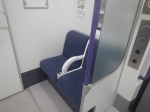
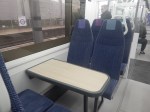

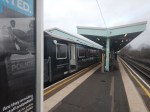


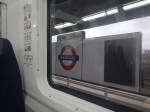



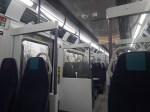
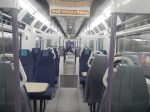
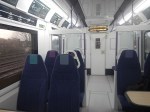

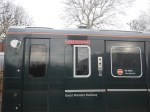
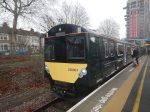
Note.
- The train is three-cars with a toilet to suit everybody, except possibly Donald Trump, who’d want it in gold.
- The single train is shuttling between West Ealing and Greenford stations.
- Each journey 2.5 mile journey takes eleven minutes.
I was surprised at the number of tables and the quality of the seats.
These are some extra thoughts.
The Blocks Of Flats
Google AI gave me this.
Several new developments around West Ealing station feature tall blocks, with major proposals ranging from 4 to 26 storeys. Key projects include a 26-storey tower, proposed 19–22 storey towers on Manor Road/Waitrose site, and 7–21 storey student accommodation blocks. These, along with other 9-storey developments, are transforming the area into a high-density “transport hub” cluster.
I think the 26-storey West 55 Tower is shown in the first two pictures.
Google AI also says some of the natives are not happy about all the towers.
But I like the “high density” transport hub.
Integrating The Railway And The Housing
Note.
- This would appear to be a good example of integrating the railway and the housing.
- The second picture appears to show a walkway between the station and Tower 55.
- I met a property developer on a train once and he told me, that housing on top of stations without car parking, had better numbers all round, with more flats, less cost and good profit.
- I wonder, if Tower 55, is one of his? He was certainly enthusiastic about the concept.
- Would a Fast-Charge system be easier and very much safer to squeeze in than traditional overhead wiring?
If the flats all don’t have garages, there must be space for other uses.
The Charger At Work
Note.
- The third to the sixth pictures, show the train coming into the station and charging ready for a trip to Greenford.
- The train acts as a heavy safety guard during the process.
- Anything electrical or dangerous is underneath the train.
I would expect that a health and safety expert, would rate the train no more dangerous than a normal train.
There Seems To Have Been A Lot Of Innovative Recycling On The Train
This certainly seems to apply to the seats, which in some cases are the originals remodeled.
A Stylish And Well-Built Train
This phrase would sum up my overall view of the train.
I have a Korean son-in-law and I know a bit, how Koreans think about design.
I would think, that he would like this as it is a stylish and practical train, so it wouldn’t embarrass you or your Korean boss, if you told him to use this train in the UK, to get to your offices.
Using my Korean example, I suspect, that this train could be one that endears itself to its passengers, with its quirky and practical feel, just like the original Mini did.
Adrian Shooter Would Be Pleased
Most Certainly!
I wish all the team well, as I believe this technology and a few trains like 230001 will make their mark on the world.
A Practical Hundred Mile Battery-Electric Route
The Sheffield and Scunthorpe Line is a Parliamentary Service.
- It is 71.6 miles over 1 hour and 48 minutes, through seven stations of the Lincolnshire countryside, at an average speed of 40 mph.
- Currently, it runs once per day, which is not very ideal for a job, education, training, shopping or visiting grandchildren.
- A two-car version of 230001 could be ideal to perhaps do four round or five trips a day and level-up some of the poorer parts of the UK, that don’t even have a decent bus service.
- A similar two-car train could also serve the 45-mile round-trip Cleethorpes and Barton-on-Humber service.
I am sure that this train could start the right sort of rural or urban revolution.
 The Anonymous Widower