Carlton Power Secures Planning Consent For World’s Largest Battery Energy Storage Scheme
The title of this post, is the same as that of this news story from Carlton Power.
This is the sub-heading.
£750m 1GW Battery Project To Be Built At Carlton Power’s Trafford Low Carbon Energy Park In Greater Manchester
These three paragraphs outline the project.
Carlton Power, the UK independent energy infrastructure development company, has secured planning permission for the world’s largest battery energy storage scheme (BESS), a 1GW (1040MW / 2080MWh) project located at the Trafford Low Carbon Energy Park in Greater Manchester. The £750m BESS scheme will strengthen the security and resilience of the energy system in the North West of England, and support the energy transition and the growth of renewable power generation in the region.
Planning permission for the BESS was granted by Trafford Council, the local planning authority.
Subject to a final investment decision, construction of the battery storage scheme is expected to begin in the first quarter of next year (2024) with it entering commercial operation in the final quarter of 2025. Carlton Power is in advanced talks with companies to finance, build and operate the Trafford BESS.
I have a few thoughts.
It’s A Monster
This Wikipedia entry, lists the World’s Largest Grid Batteries.
- The current largest is Vistra Moss Landing battery in the United States, which has a capacity of 1600 MWh and an output of 400 MW.
- The Trafford BESS will have a capacity of 2080 MWh and an output of 1040 MW.
By both measures the Trafford BESS is larger.
Where Will It Get The Energy?
Consider.
- In Liverpool and Morecambe Bays there is over 5 GW of offshore wind farms either operational, under construction or planned.
- Carrington gas-fired power station has a capacity of 884 MW.
- The Western HVDC Link is a 2250 MW link between Scotland and Connah’s Quay in North Wales.
- I wrote about the proposed Mersey Barrage in Mersey Tidal Project And Where It Is Up To Now.
I can see enough renewable energy being generated to replace Carrington gas-fired power station.
Who Will Finance, Build And Operate The Trafford BESS?
There are two major Energy Storage Funds in the UK.
- Gore Street with 27 projects totalling 1.17 GW.
- Gresham House with 17 projects totalling 425 MW.
Note.
- There are other smaller funds.
- The figures given are cumulative outputs for the portfolios.
- Sourcing the large number of batteries might be a problem.
- As the maths of these batteries are now well-known, I would expect that finance shouldn’t be too much of a problem.
- Local companies like Liverpool Victoria or Peel Holdings could even take a position.
A large American contractor backed by US money could swallow the whole project.
That happened with North Sea oil and gas in the last century.
Is Highview Power’s CRYOBattery Still Planned?
Carlton Power’s news story says this about Highview Power’s plans.
In addition to Carlton Power’s two projects, Highview Power Storage Inc. is planning to build and operate the world’s first commercial liquid air storage system – a £250m 250MWh long duration, cryogenic energy storage system – on the Trafford Low Carbon Energy Park, which was until 1991 the site of the Carrington coal-fired power station. The Low Carbon Energy Park is located close to Manchester Ship Canal and the £750m Carrington flexible gas-fired power station which entered operation in 2016.
It seems that the CRYOBattery is still planned.
Conclusion
Manchester is getting a powerful zero-carbon hub.
Tesla Megapack Battery Caught Fire At PG & E Substation In California
The title of this post, is the same as that of this article on CNBC, which was published in September 2022.
The article starts with these three key points.
- A Tesla Megapack caught fire at a PG&E energy storage facility in Monterey, California on Tuesday.
- The fire caused road closures and shelter-in-place orders for residents nearby.
- Richard Stedman, an air pollution control officer for the Monterey Bay Air Resources District (MBARD) said in general lithium ion battery fires can emit toxic constituents like hydrochloric and hydrofluoric acid.
The article goes on to say, that there were no power outages and no on-site personnel were injured.
In the late 1960s, I worked for ICI at Runcorn.
One of the instruments, I helped to develop was a detector for water in bromochlorodifluoromethane or BCF, as it is commonly known.
- You may have seen BCF on a fire-extinguisher, as that is the chemical’s main use.
- In those days, ICI made BCF on a plant that also manufactured the anaesthetic; Fluothane.
- The plant was in Rocksavage works by the Mersey.
It should be noted, that Rocksavage works had one of the best safety records in the whole of the company.
When the instrument was ready, I was told to go to the plant and see Charlie Akers, who was the foreman electrician on the plant. He would arrange fitting the instrument to the plant.
- Charlie was a short stout man and the first thing he did was to get a proper mug out of a box of perhaps two dozen new ones and write my name on it.
- He then made us both mugs of fresh tea with fresh milk from a bottle.
- He said something like. “Now you’ve got no excuse to come and see me before you go on the plant or have any questions!”
- He also said that everybody, who worked in Rocksavage was very proud of its safety record and proceeded to give me a tour of the plant pointing out its hazards.
One lesson, I learned that day and still do was to walk up stairs in a hazardous environment using the stanchions of the rails. You never know what has fallen on the handrails. On the BCF plant this could have been hydrochloric and hydrofluoric acid.
- At one point to illustrate the danger of the latter, he took a pair of tweezers and put a spec of hydrofluoric acid (HF) dust on the tip of my finger, which was painful.
- He also said that HBr was a lot more dangerous.
I didn’t disgrace myself on that plant and the lessons, I learned that day have stayed with me all my life. I even think, that they have had positive effects on my stroke recovery, as I was given tips about how to get out of a chemical plant, after a fire or serious spillage.
Thank you Charlie!
One of the key points in the CNBC article, is that lithium-ion battery fires can emit hydrochloric and hydrofluoric acid.
It makes me wonder, if our high levels of usage of these batteries for where there is an alternative is a good idea.
Gore Street Energy Storage Fund’s Portfolio Increases To Over 1GW
The title of this post, is the same as that of this article on the Solar Power Portal.
By any measure a GW is a substantial amount of power and the article gives all the figures for the fund.
One thing, I feel, I can say, is that large grid-connected lithium-ion batteries, as deployed by Gore Street, are more reliable than the similar smaller batteries in e-bikes and e-scooters.
The media and especially the financial pages would have had a field day, if a lithium-ion battery caught fire. Certainly Gore Street and others building large batteries, don’t seem to have any planning permission problems from Nimbys.
Italian Firm To Build Green Hydrogen Platform For CrossWind’s Hollandse Kust Noord
The title of this post, is the same as that of this article on offshoreWIND.biz.
This is the sub-heading.
CrossWind has awarded Rosetti Marino an Engineering, Procurement, Construction, and Installation and Commissioning (EPCIC) contract for an offshore green hydrogen production and storage plant, located within CrossWind’s Hollandse Kust Noord offshore wind farm in the Netherlands.
These paragraphs describe the platform.
Rosetti Marino said that the pilot plant, called the Baseload Power Hub and fully integrated into an offshore wind farm, is a world first.
The plant on a MegaWatt scale will convert excess wind energy to green hydrogen through an electrolyser and store it as green hydrogen that can be converted to electricity when needed via a fuel cell.
It will also include battery storage for shorter-term power storage.
It looks like they’ve got all angles covered.
I suspect that we’ll see more platforms like this, as they should make the output of a wind farm much more controllable.
Centrica To Build Largest Battery Storage Project To Date
The title of this post, is the same as that of this news item from Centrica.
These three paragraphs outline the news.
Centrica Business Solutions has secured the development rights to a 65MW two-hour battery storage plant in Perthshire, Scotland, its largest battery storage acquisition to date.
The site in Abernethy is located near a connection for North Sea offshore wind farms and will help manage grid capacity by charging when demand for power is low, and discharging when demand is at its highest.
Once connected to the grid in 2028, the 65MW two-hour battery will be able to store enough electricity to power 130,000 homes for an hour – the equivalent to a town the size of Aberdeen. The discharge could happen up to four times a day.
This map shows the site of the substation at Abernethy.
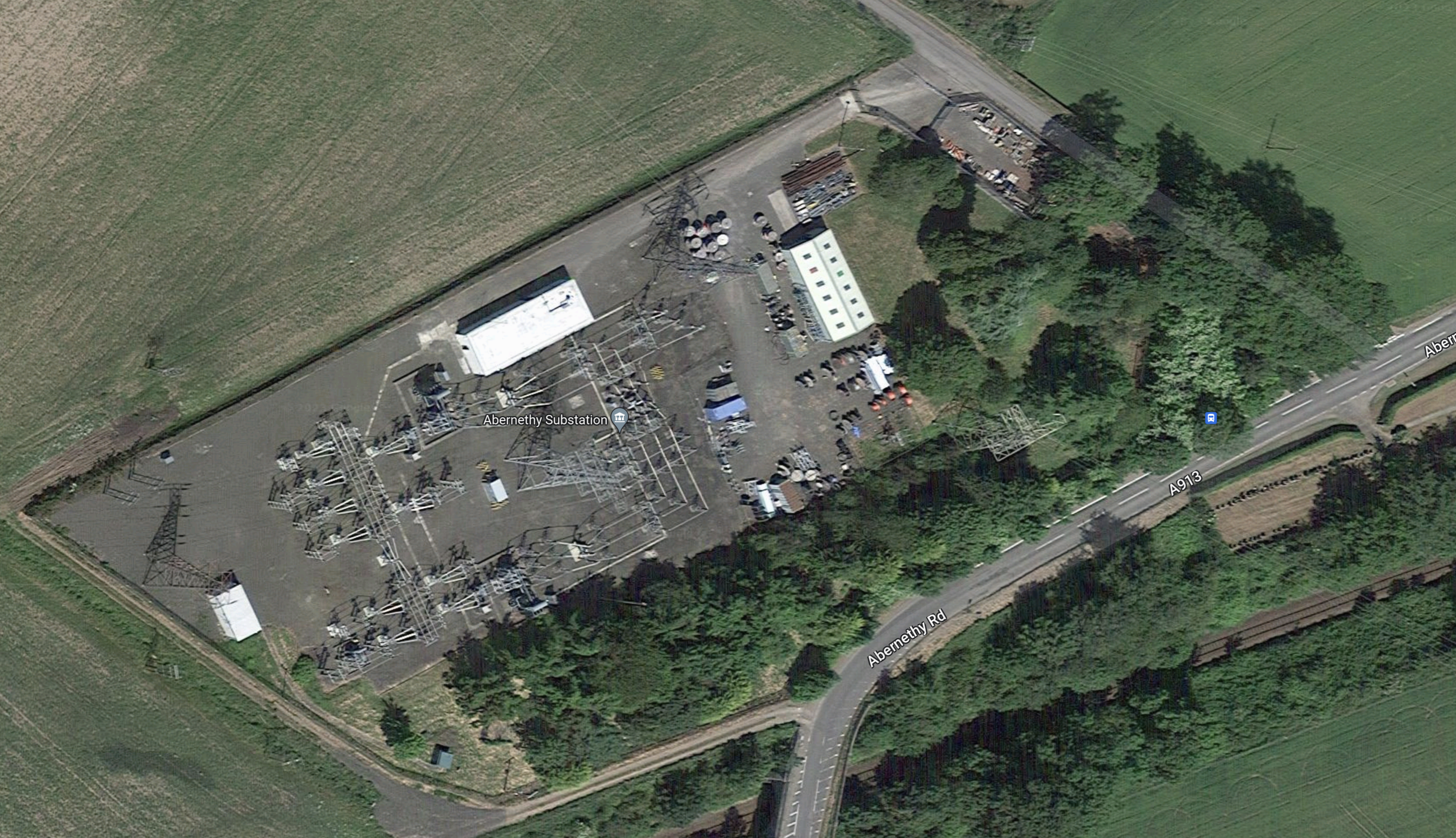
It seems a site with enough space for a 65 MW/130 MWh battery.
But is that a railway running past the site in the South-East corner of the map?
Yes! It is the single-track unelectrified railway that is used by trains to go between Edinburgh and Perth.
- There are stations at both ends of the single-track section at Ladybank and Perth.
- Abernethy substation looks like it is about halfway between the two end stations.
This page on Scotland’s Railway is entitled Fife Electrification and lists these four phases.
- Haymarket and Dalmeny
- Kinghorn and Thornton North
- Thornton and Lochgelly
- Thorton and Ladybank
The page also says that the electrification will support BEMUs (Battery Electric Multiple Units)
I feel that the electrification to Ladybank and Centrica’s battery could be linked.
- If the electrification was extended a few miles to Abernethy substation, this would surely be a reliable way to power the electrification.
- It would also be ideally placed, if Perth and Ladybank were to be electrified.
- The new battery would surely smooth out any deviations in the power supply.
I certainly don’t expect that Centrica will object to a new customer.
Electrification Between Edinburgh And Ladybank
Consider.
- Edinburgh and Ladybank is 39 miles and takes a couple of minutes over an hour.
- Once, the four phases of the electrification are complete, only the 13.6 miles between Dalmeny and Kinghorn, will be without electrification.
- I doubt that Dalmeny and Kinghorn will ever be electrified, as it includes the Forth Rail Bridge.
- Dalmeny and Kinghorn is 13.6 miles and takes around twenty-four minutes.
It looks like the BEMUs will be under wires for 25.4 miles and nearly forty minutes, which will be more than enough to charge the trains.
Edinburgh And Aberdeen
In Thoughts On Batteries On A Hitachi Intercity Tri-Mode Battery Train, I said this about services between Edinburgh and Aberdeen.
Consider.
-
- The gap in the electrification is 130 miles between Edinburgh Haymarket and Aberdeen.
- There could be an intermediate charging station at Dundee.
- Charging would be needed at Aberdeen.
I think Hitachi could design a train for this route.
The 25.4 miles of new Fife electrification between Haymarket and Ladybank will reduce gap in the electrification to 105 miles and ensure trains leaving Ladybank for Aberdeen had a full battery.
Centrica Bolsters UK’s Energy Security By Doubling Rough Storage Capacity
The title of this post, is the same as that of this news item from Centrica.
These are the first three paragraphs.
Following further engineering work and investment, Centrica has announced increased gas storage capacity at Rough, the UK’s largest gas storage facility.
The facility, which is 18 miles off the coast of East Yorkshire, stopped storing gas in 2017 but was re-opened for gas storage in October 2022. Rough now provides half of the UK’s total gas storage.
At the time of reopening Rough for gas storage it was able to store approximately 30 billion cubic feet (bcf) of gas for UK homes and businesses. Further investment in the facility means Rough will now be able to store up to 54 bcf of gas, boosting the UK’s energy resilience for the coming winter – this would provide the equivalent volume of gas to heat 2.4 million homes over winter.
This work and investment has increased the storage capacity by a massive eighty percent.
The news item finishes with this quote from Centrica Group Chief Executive, Chris O’Shea.
We stand ready to invest £2 billion to repurpose the Rough field into the world’s biggest methane and hydrogen storage facility, bolstering the UK’s energy security, delivering a net zero electricity system by 2035, creating 5,000 skilled jobs and decarbonising the UK’s industrial clusters by 2040. But to do this we need the right regulatory support framework. This world class North Sea asset has the potential to help the UK economy return to a position of being a net exporter of energy once again.
As East Yorkshire also boasts the Aldbrough Gas Storage in the salt formations under Hull, the area will have plenty of gas to keep them warm in the winter.
How Britain’s Biggest Natural Battery Can Help Deliver Net Zero
The title of this post, is the same as that of this article in the New Statesman.
This is the sub-heading.
SSE wants to double the nation’s flexible electricity storage capacity.
These two paragraphs introduce the article.
After previous delays and false starts, governments and businesses across the world are pushing towards the common goal of net zero. The energy sector is arguably the area with the biggest responsibility to work towards this target, and there is no time for complacency.
Ensuring clean, renewable energy sources such as hydrogen, wind and solar power become a larger part of the grid will be critical for the sector in its push towards net zero. A key facet of the clean energy drive will be having sufficient storage for each renewable power source kept in reserve, to be used as and when required as a crucial back-up mechanism. In last spring’s energy security review the government outlined its commitment to support long duration storage projects.
It is certainly very comprehensive and a must read.
This sentence illustrates the financial problem with pumped storage.
SSE is calling on the UK government to help it commit to building the Coire Glas storage facility by providing one simple policy decision that will send a clear signal as to how government intends to support the deployment of long duration electricity storage. The project doesn’t need subsidising, SSE states, but it would benefit from revenue stabilisation, and clarity on such support sooner rather than later.
Hopefully, this article will help get the required support.
Coire Glas
Coire Glas will have an output of 1500 MW and a storage capability of 30 GWh.
There is more information at the Coire Glas web site.
The project could be up and running by the early 2030s.
Loch Sloy Pumped Storage
The article also mentions the Loch Sloy Pumped Storage scheme, that has been recently announced by SSE.
I wrote about this 25 GWh scheme in SSE Unveils Redevelopment Plans For Sloy Hydro-Electric Power Station.
SSE haven’t announced much more about this scheme and it is not mentioned on the Sloy/Awe web site.
Grain LNG Launches Market Consultation For Existing Capacity
The title of this post is the same as that of this press release from National Grid.
This is the sub-heading.
Grain LNG, the largest liquefied natural gas (LNG) terminal in Europe, is pleased to announce the launch of a market consultation for the auction of 375 Gwh/d (approx. 9 mtpa) of existing capacity. The initial consultation phase for the Auction of Existing Capacity will commence on 14 June and run until 26 July.
These paragraphs detail what Grain LNG, which is a subsidiary of National Grid are offering.
GLNG has used the positive feedback received from the recent ‘Expression of Interest’ exercise and subsequent market engagement to offer three lots of capacity:
- Each lot will be entitled to 42 berthing slots, 200,000 m3 of storage and 125GWh/d (approx. 3 mtpa) of regasification capacity from as early as January 2029.
- This product is specifically designed for parties who wish to acquire a substantial stake in a major terminal in Northwest Europe, at a reduced cost and with shorter contract lengths when compared to new-build projects.
- As the terminal’s capacity already exists, parties involved will not be subjected to the FID approvals or potential delays that can arise from construction issues commonly associated with new build terminals.
Simon Culkin, Importation Terminal Manager at Grain LNG, said: “We are really pleased with the high level of interest shown by the market at a time of significant geo-political influence on our energy markets. It has allowed us to engage with potential customers and shape our offering to best meet their needs, whilst optimising access to this strategic asset. “
Reading the Wikipedia entry for the Grain LNG Terminal, it looks like it gets used as a handy store for natural gas.
About Phase 1 (2002–05), Wikipedia says this.
The new facilities enabled the Grain terminal to become a base supply to the NTS, with the ability to deliver gas continuously when required. The cost of the Phase 1 project was £130m. A 20-year contract with BP / Sonatrach enabled Grain LNG to import LNG on a long-term basis from July 2005.
About Phase 2 (2005–08), Wikipedia says this.
The development provided an additional five million tonnes of capacity per annum. All this capacity was contracted out from December 2010. Customers included BP, Iberdrola, Sonatrach, Centrica, E.ON and GDF Suez.
Under Current Facilities, Wikipedia says this.
Grain LNG Ltd does not own the LNG or the gas that it handles but charges for gasifying it. Current (2016) users include BP, Centrica (British Gas Trading), Iberdrola (Spain), Sonatrach (Algeria), Engie (France), and Uniper (Germany).
National Grid must be pleased that some customers seem loyal.
I feel that National Grid’s basic plan is to carry on with more of the same.
But will they develop more storage and other facilities on the site.
There are certainly other projects and interconnectors, that make the Isle of Grain and energy hub connecting the UK, Netherlands and Germany.
- In Did I See The UK’s Hydrogen-Powered Future In Hull Today?, I mentioned, that I thought that the Isle of Grain could be a location for an electrolyser and a hydrogen store.
- In EuroLink, Nautilus And Sea Link, I talk about new interconnectors, if which Nautilus might come to the Isle of Grain.
- In UK-German Energy Link Reaches Financial Close, I talk about NeuConnect, which will be an interconnector between the Isle of Grain ans Wilhelmshaven in Germany.
- The Isle of Grain is the landing point for the BritNed undersea power cable between The Netherlands and the UK.
I could also see National Grid building an East Coast interconnector to bring power from the wind farms off the East Coast of England to the Isle of Grain for distribution.
These are major wind farms South of the Humber.
- Dudgeon – 402 MW
- East Anglia 1 – 714 MW
- East Anglia 1 North – 800 MW
- East Anglia 2 – 900 MW
- Galloper – 504 MW – RWE
- Greater Gabbard – 504 MW
- Gunfleet Sands – 174 MW
- Hornsea 1 – 1218 MW
- Hornsea 2 – 1386 MW
- Hornsea 3 – 2852 MW
- Humber Gateway – 219 MW
- Lincs – 270 MW
- London Array – 630 MW
- Lynn and Inner Dowsing – 194 MW
- Race Bank – 580 MW
- Scroby Sands – 60 MW
- Sheringham Shoal – 317 MW
- Triton Knoll – 857 MW – RWE
- Dogger Bank A – 1235 MW
- Dogger Bank B – 1235 MW
- Dogger Bank C – 1218 MW
- Dogger Bank D – 1320 MW
- Dogger Bank South – 3000 MW RWE
- East Anglia 3 – 1372 MW
- Norfolk Boreas – 1396 MW
- Norfolk Vanguard – 1800 MW
- Outer Dowsing – 1500 MW
- North Falls – 504 MW – RWE
- Sheringham Shoal and Dudgeon Extensions – 719 MW
- Five Estuaries – 353 MW – RWE
Note.
- These figures give a total capacity of 28,333 MW.
- Five wind farms marked RWE are owned by that company.
- These five wind farms have a total capacity of 5618 MW.
- Will RWE export, their electricity to Germany through NeuConnect?
I can certainly see National Grid building one of the world’s largest electrolysers and some energy storage on the Isle of Grain, if an East Coast Interconnector is built.
Did I See The UK’s Hydrogen-Powered Future In Hull Today?
I went from London to Hull today on Hull Trains for £50.80 return (with my Senior Railcard) to see SSE’s presentation for their Aldbrough Pathfinder Hydrogen project, which will feature a 35 MW green hydrogen electrolyser and 320 GWh of hydrogen storage in the thick layers of salt under East Yorkshire.
- Green electricity would come mainly from the part-SSE owned 8 GW Dogger Bank wind farm complex.
- According to their web site, Meld Energy are planning a 100 MW electrolyser, which would produce 13,400 tonnes of hydrogen per year.
Every large helps!
- It should be noted that the thick layers of salt stretch all the way to Germany, and as drilling and storage technology improves, the amount of hydrogen storage available will increase.
- I was also impressed by the ambition, competence and enthusiasm, of the SSE engineers that I met.
- As has been pointed out, HiiROC, who have backing from Centrica, Hyundai, Kia and others, are also in Hull!
I believe, that I saw our hydrogen-powered future in Hull today!
We need more hydrogen mega-projects like these! Perhaps in Aberdeen, Clydeside, Freeport East, Isle of Grain, Merseyside, Milford Haven and Teesside?
SSE Unveils Redevelopment Plans For Sloy Hydro-Electric Power Station
The title of this post, is the same as that of this news item from SSE Renewables.
These are the two bullet points of the news item.
- Scotland First Minister Humza Yousaf welcomes plans to convert conventional hydro plant to new, flexible pumped hydro storage facility
- If approved for delivery Sloy could provide firm, flexible renewable energy for up to 160 hours non-stop, enough to power 90,000 homes for one week
This is the introductory paragraph.
SSE Renewables, as part of SSE plc, has unveiled plans to convert its 152.5MW Sloy Power Station, Britain’s largest conventional hydro power plant, into a new pumped hydro storage facility to bolster energy security and help provide the large-scale and flexible renewable energy back-up needed in a future UK net zero power system.
And this describes the output and storage capacity.
Subject to final design, the converted Sloy scheme would be capable of delivering up to 25GWh of long-duration electricity storage capacity. At the flick of a switch, the converted Sloy scheme could provide firm, flexible renewable energy for up to 160 hours non-stop, enough to power around 90,000 homes for up to one week.
The Loch Sloy Scheme
In A Lower-Cost Pumped Hydro Storage System, I described the Loch Sloy scheme, as it currently exists.
Whilst writing some of the posts recently about pumped storage I came across the Loch Sloy Hydro-Electric Scheme.
This is the introductory sentence in Wikipedia.
The Sloy/Awe Hydro-Electric Scheme is a hydro-electric facility situated between Loch Sloy and Inveruglas on the west bank of Loch Lomond in Scotland.
This page on the Greenage web site gives comprehensive details of the power station and is well worth a read.
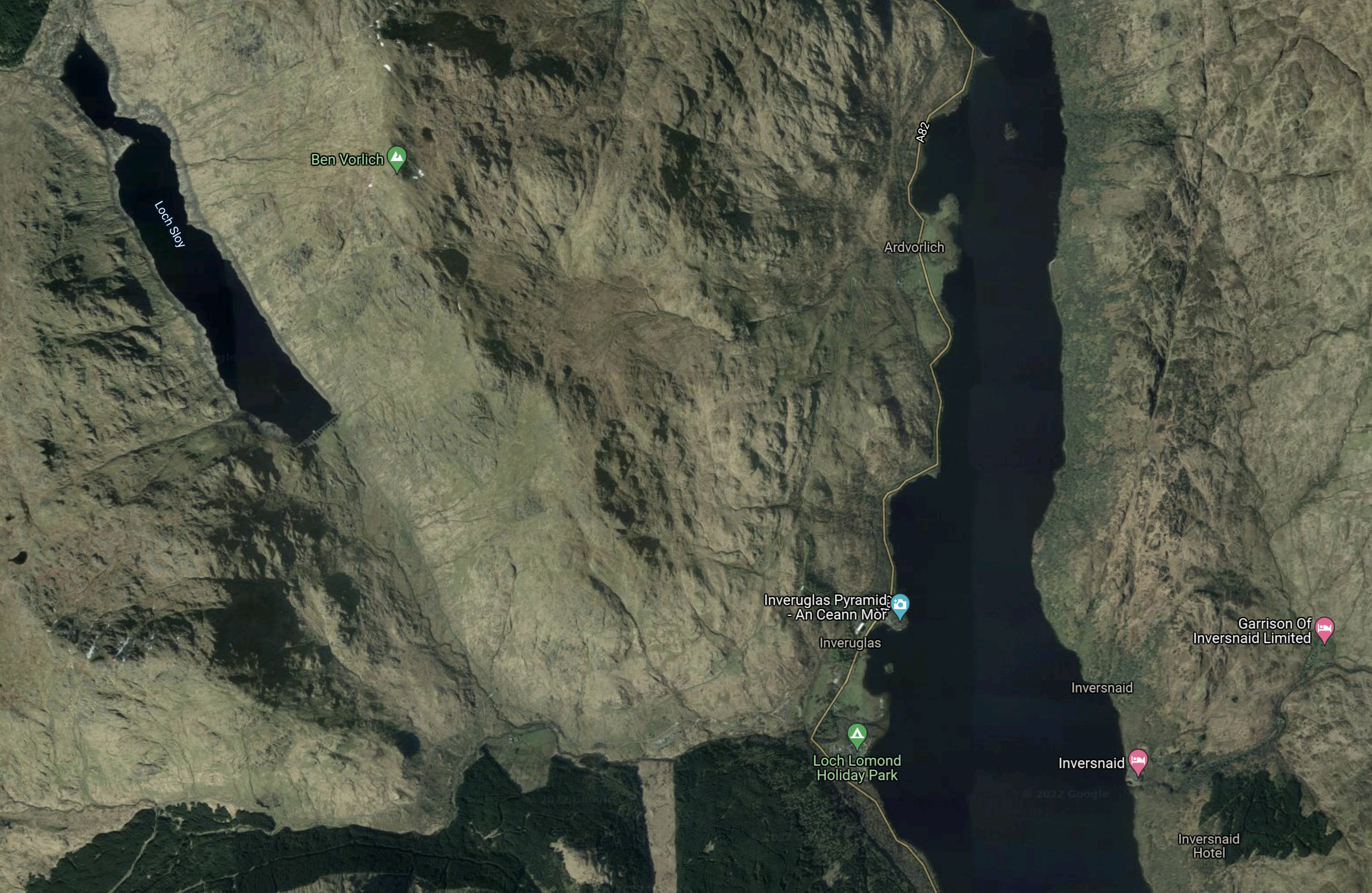
This Google Map shows the Lochs Sloy and Lomond.
Note.
- Loch Sloy is in the North-West corner of the map.
- The page on Greenage says that Loch Sloy can store 14 GWh of electricity
- Loch Lomond is the body of water towards the Eastern side of the map.
- Inverglas is on the West bank of Loch Lomond to the North of the Loch Lomond Holiday Park, which is indicated by the green arrow with a tent.
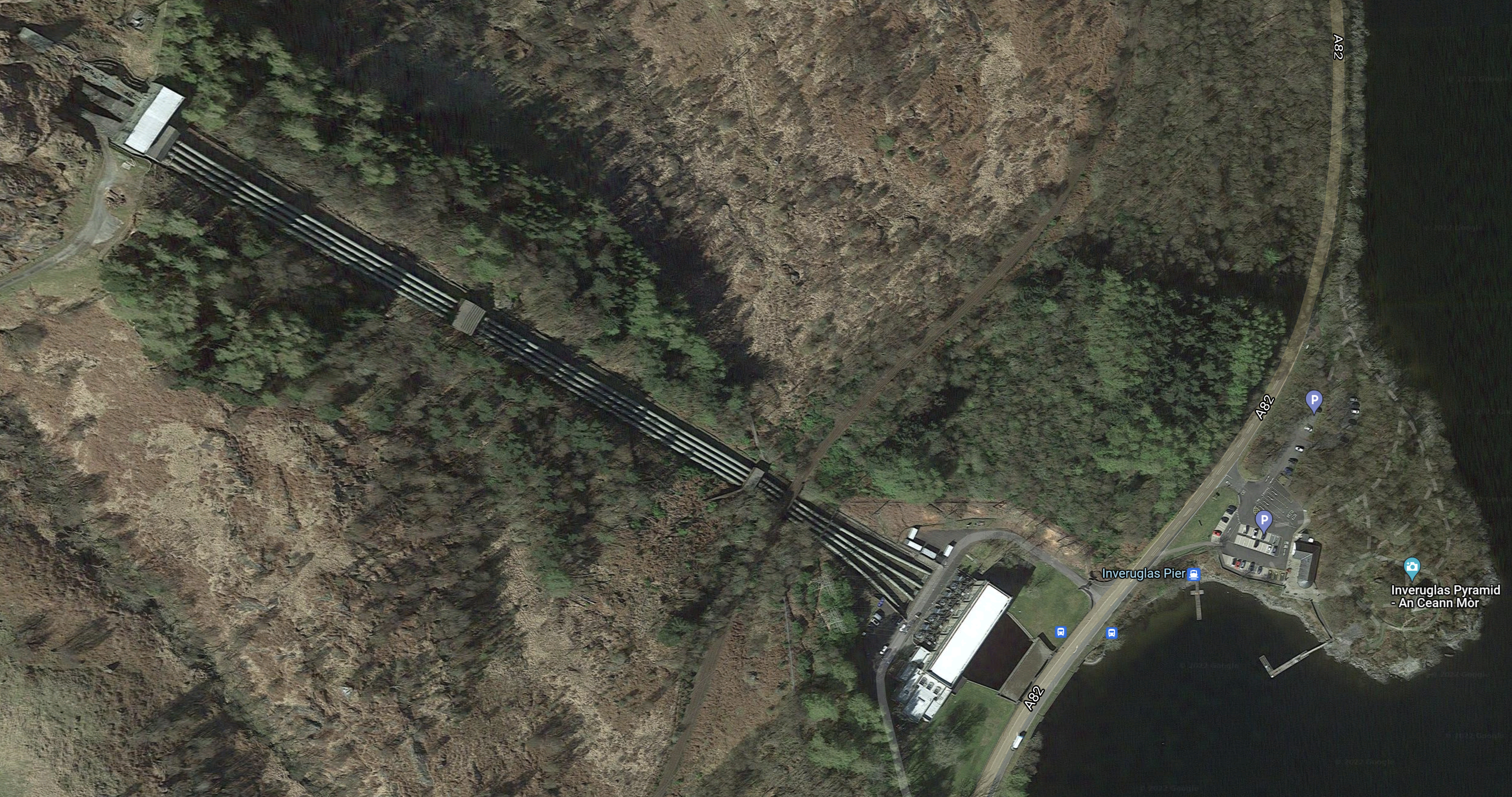
This second Google Map shows the power station and Inverglas.
Note.
- It is a classic layout for a hydro-electric power station.
- In the North West corner of the map is the valve house, which is connected to Loch Sloy by a three kilometre tunnel.
- The valve house controls the water flows to the power station by Loch Lomond.
- There are four two-metre pipes running down the hill, one for each of the four turbines.
- According to the page on Greenage, the power station has three 40 MW turbines and one 32 MW turbine, which gives a total output of 152 MW.
- The water discharges into Loch Lomond after doing its work in the power station.
Loch Sloy is the largest conventional hydroelectric power plant in the UK.
The 2010 Plan To Add Pumped Storage To The Loch Sloy Hydro-Electric Scheme
This page on Hydro Review, which is dated the 10th of November 2010, is entitled SSE Gets Government Consent For Sloy Pumped-Storage Hydropower Project.
These are the first paragraph.
SSE Generation Ltd., the wholly owned generation business of Scottish and Southern Energy, has received consent from the Scottish Government to develop a 60-MW pumped-storage hydro project at its existing Sloy hydropower station at Loch Lomond, SSE reported.
Note.
- Two 30 MW pumps will be added to the power station to pump water up the hill from Loch Lomond to Loch Sloy.
- According to the page on Greenage, if the two pumps worked together for six hours, they would transfer 432,000 m3 of water. Note that a cubic metre of water weighs a tonne.
- Water would be transferred, when there was a surplus of energy being generated over the demand.
It would appear to be a simple scheme, as it is just adding two pumps to pump the water up the hill.
- As pumps rather than pump/turbines as at Foyers are used, there is no corresponding increase in generating capacity.
- Water also appears to be pumped up to the valve house in the existing pipes.
- Loch Sloy and Loch Lomond would not need major works to enable the scheme..
The page on Greenage gives the cost at just £40 million.
Originally, the project was supposed to have started in 2012, but as there are environmental problems with the fish, the work has not started.
These problems are detailed on the page on Greenage.
It looks like this scheme would have had an output of 152.5 MW and a storage capacity of 14 GWh.
Expanding Loch Sloy
Yesterday’s press release says this about the proposed capacity of the proposed Loch Sloy pumped storage scheme.
Subject to final design, the converted Sloy scheme would be capable of delivering up to 25GWh of long-duration electricity storage capacity.
This Google Map shows Loch Sloy.
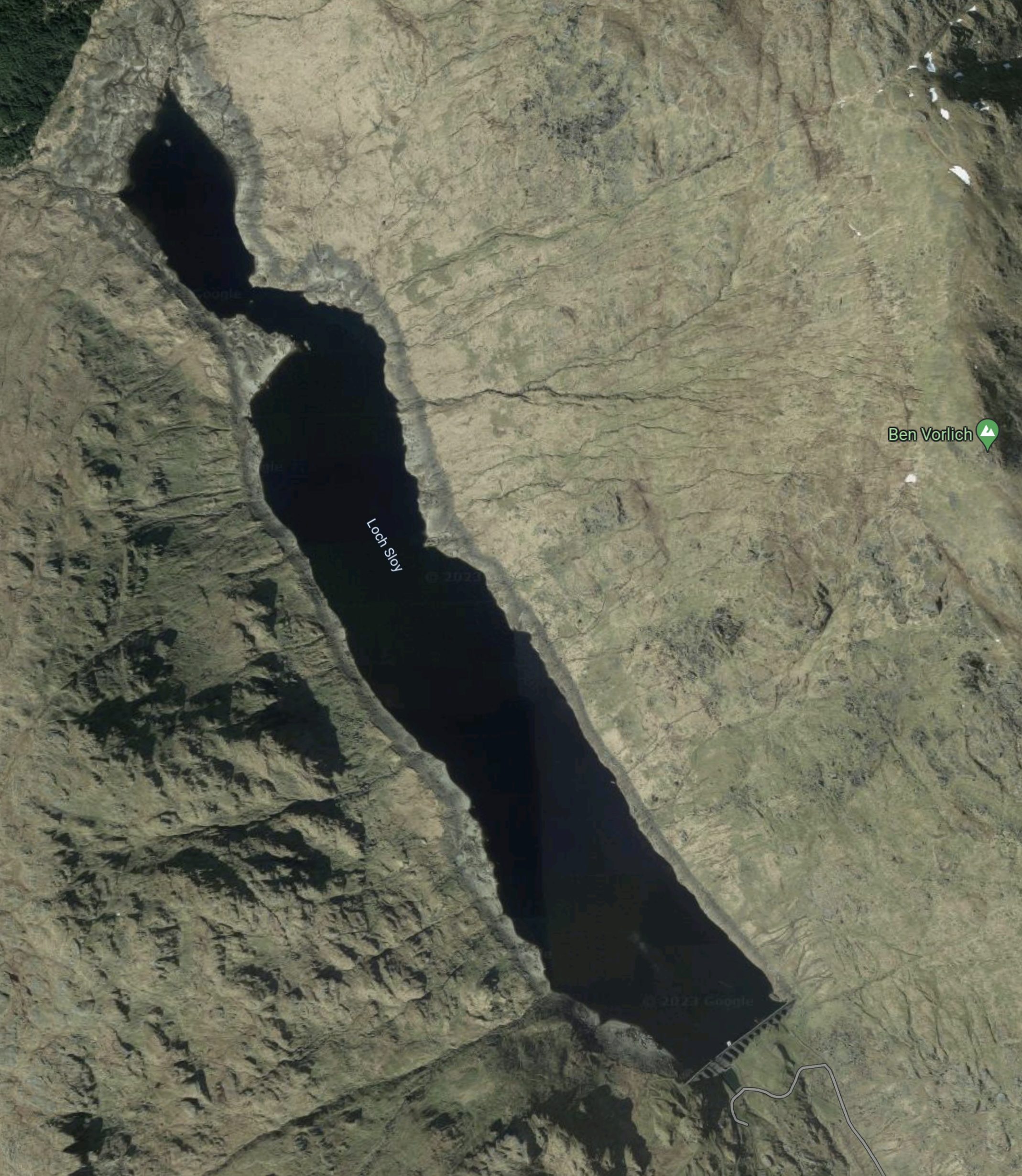
This second Google Map shows the dam at the Southern end.
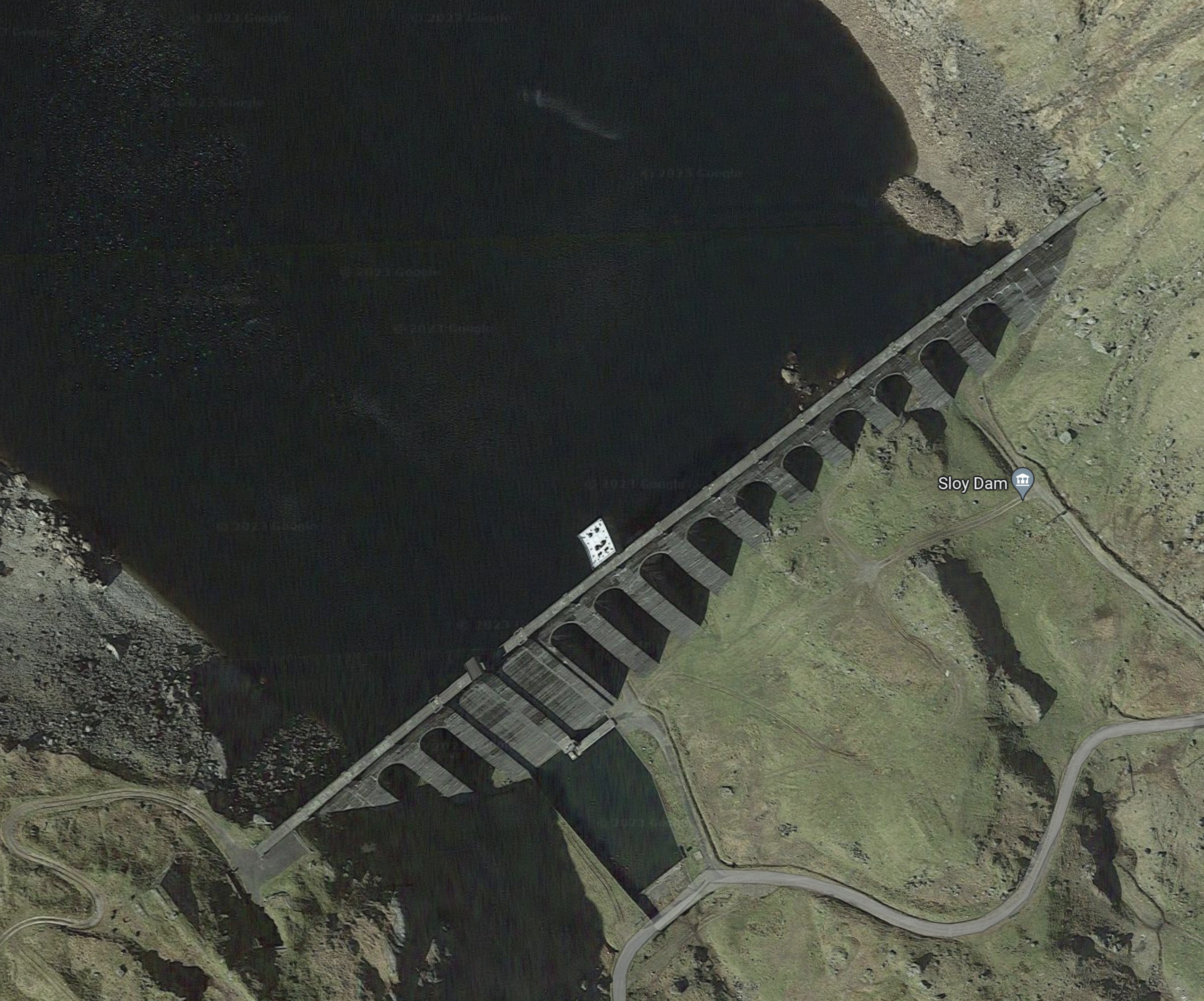
Note.
- Earlier, I said that Loch Sloy can store 14 GWh of electricity.
- To be able to store 25 GWh would need a 78 % increase in capacity.
This could be possible to be obtained by enlarging the dam and perhaps reprofiling the banks of the loch.
Expanding Loch Slow Power Station
This Google Map shows the Loch Sloy dam and the power station.
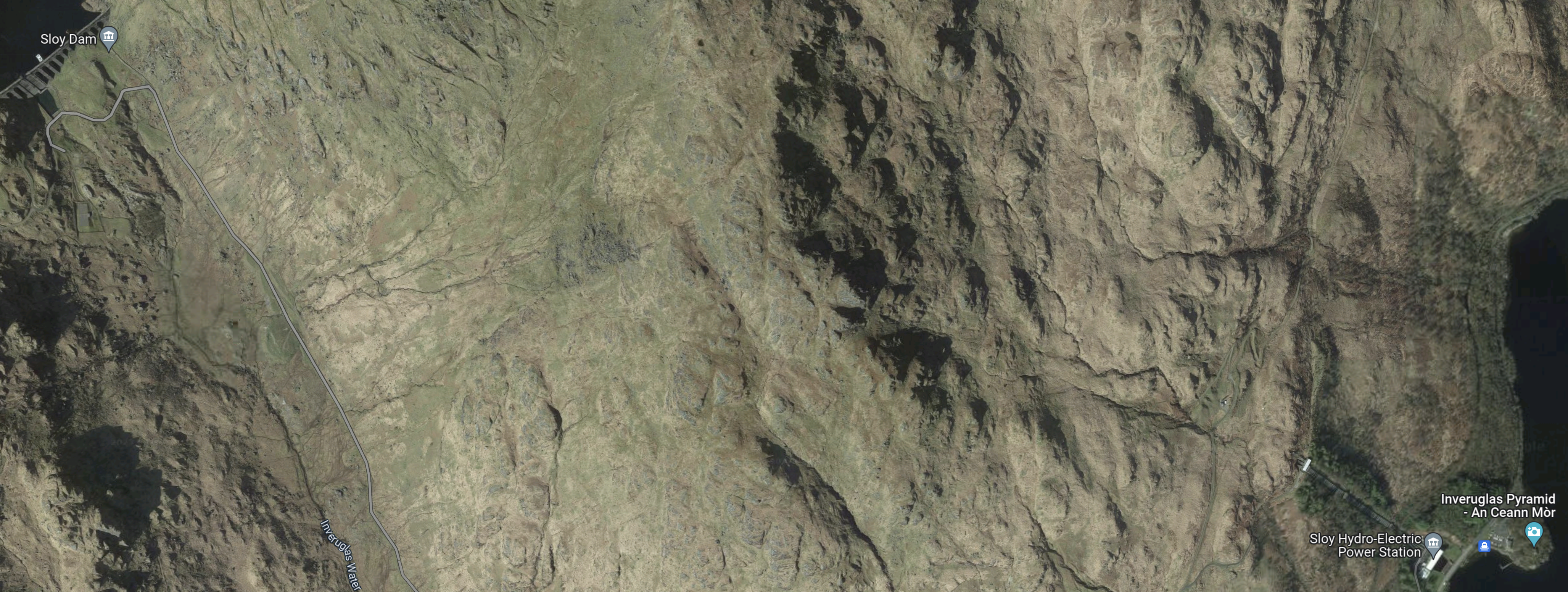
Note.
The dam is in the North-West corner of the map.
The power station is in the South-East corner of the map.
This repeat of the second Google Map shows the power station in more detail.
There appears to be plenty of space for more turbines, pumps and other electrical gubbins.
Building The Scheme
There may be enlarged buildings and extra pipes up the mountain, but hopefully the major problem of digging more tunnels through the rock may be avoided.
For these reasons, it could be a relatively easy construction project costing tens of millions.
The 14 GWh scheme from 2010 was costed at £40 million, so this 25 GWh scheme would probably cost no more than double or £80 million.
Conclusion
This is a sensible and affordable scheme, that provides a lot of energy storage

