Will INEOS And Rolls-Royce Get Together Over Hydrogen Production?
It has been a busy week for press releases.
8th November 2020 – Rolls-Royce signs MoU With Exelon For Compact Nuclear Power Stations
9th November 2020 – Rolls-Royce signs MoU with CEZ For Compact Nuclear Power Stations
9th November 2020 – INEOS Launches A New Clean Hydrogen Business To Accelerate The Drive To Net Zero Carbon Emissions
Does the timing of these three press releases indicate that there is possible co-operation between the INEOS and Rolls-Royce?
These are my thoughts.
Electricity Needs Of Integrated Chemical Plants
Integrated chemical plants, like those run by INEOS need a lot of electricity.
When I worked for ICI Plastics in the early 1970s, one of the big projects at Wilton works was the updating of the Wilton power station.
- Fifty years later it is still producing electricity.
- It is fired by a variety of fuels including coal, oil, gas and biomass.
- It even burned 110,000 tonnes of cow fat (tallow) from the carcasses of animals slaughtered during the BSE Crisis of 1996.
- It produces 227 MW of electricity.
- It also produces around 4,000,000 tonnes of steam per year for the plants on the complex.
- Wilton 10 is a 2007 addition to the station, that burns 300,000 tonnes of a combination of sustainable wood, sawmill waste and otherwise unusable wood offcuts a year.
- Wilton 11 is a 2016 addition to the station, that burns domestic waste, which arrives by train from Merseyside.
ICI was proud of its power station at Wilton and there were regular rumours about the strange, but legal fuels, that ended up in the boilers.
Integrated chemical plants like those on Teesside can be voracious consumers of electricity and steam.
I can envisage companies like INEOS boosting their electricity and steam capacity, by purchasing one of Rolls-Royce’s small modular reactors.
A Look At Teesside
If you look at the maps of the mouth of the Tees, you have the Hartlepool nuclear power station on the North side of the river.
- It was commissioned in 1983.
- It can generate 320 MW of electricity.
- It is expected to close in 2024.
This Google Map shows the mouth of the Tees.
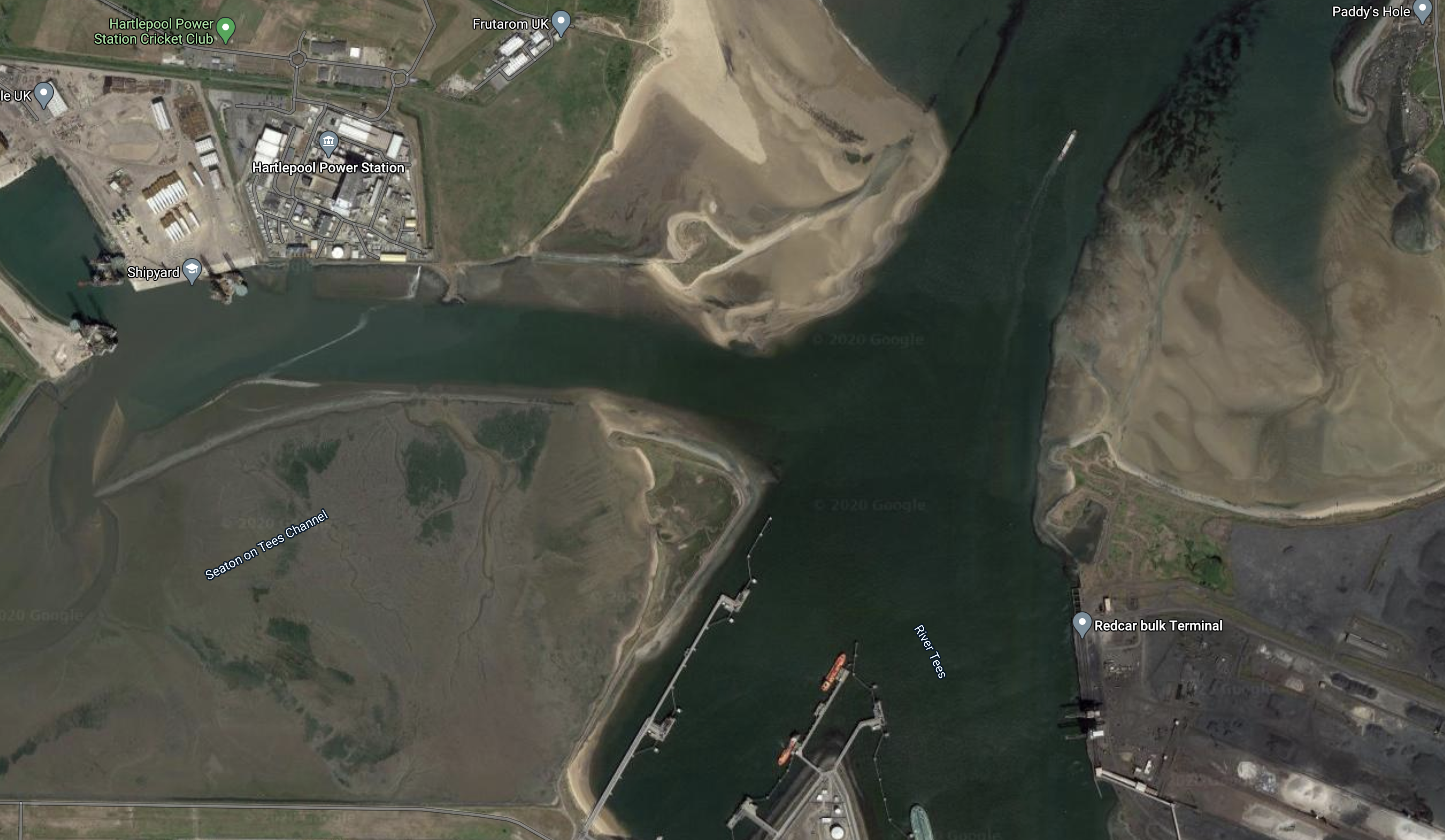
Note.
- Hartlepool power station is in the North-West corner of the map.
- The Hartlepool site is probably about forty acres.
- Wilton power station is on the South side of the Tees in the Wilton International site.
I can see, when Hartlepool power station closes, that more power will be needed on Teesside to feed the various industries in the area.
Some will come from offshore wind, but could a fleet of perhaps four of Rolls-Royce’s small modular reactors be built on a decommissioned Hartlepool power station site to replace the output of the current station?
If built in a planned sequence to correspond to the expected need, there are savings to be made because each unit can be commissioned, when they are completed and used to generate cash flow.
I can even see INEOS building a large electrolyser in the area, that is powered either by wind or nuclear power, according to what power is available and the various costs.
An Integrated Small Modular Nuclear Reactor And Electrolyser
Some countries don’t have good resources to exploit for renewable power.
Will a small modular nuclear reactor, be pared with a large electrolyser to produce hydrogen for feedstock for chemical plants and fuel for transport?
How Much Hydrogen Would A Small Modular Nuclear Reactor Produce?
Consider.
- One of Rolls-Royce’s small modular nuclear reactors has a power output of 440 MW.
- It takes 23 MWh of electricity to create ten tonnes of hydrogen.
This would create 4,600 tonnes of hydrogen in a day.
That is a lot of zero-carbon chemical feedstock to make fertiliser, plastics, pharmaceuticals and other chemicals and fuel for heavy transport.
Conclusion
I will be very surprised if INEOS were not talking to Rolls-Royce about using small modular nuclear reactors to generate the enormous quantities of electrical power and steam, needed to produce chemicals and fulfil their ambition to be a world leader in the supply of hydrogen.
Holy Grail Of Energy Storage Receives Two Grants
The title of this post, is the same as that of this article on Off Grid Energy Independence.
This is the introductory paragraph.
RheEnergise is one of only a select handful of businesses to have been awarded grants under both the Sustainable Innovation Fund & the Small Business Research Initiative.
So what have RheEnergise developed?
The home page of their web site, is surprisingly detailed, unlike those of some other companies with new ideas, and not just energy storage companies!
This is the first paragraph on their home page.
RheEnergise is bringing innovation to pumped hydro storage. We call our new solution High-Density Hydro ™.
I think that is a good start, as although pumped hydro storage is well proven and the UK has the 1,728 MW Dinorwig Power Station, which has a storage capacity of 9.1 GWh, building new large pumped storage systems is fraught with difficulties and the technology has seen only modest innovation in the last few decades.
The next paragraph on their home page describes their innovation.
HD Hydro ™ uses our proprietary HD Fluid R-19 ™, which has 2.5x the density of water. R-19 gives RheEnergise projects 2.5x the power and 2.5x the energy when compared to water.
This means that for the same size of pumped hydro storage power station, you get 2.5 times the amount of energy storage.
Alongside a diagram of the system, the advantages of their systems is stated.
Projects can be installed on hills 2.5x lower than a project using water and still achieve the same power – for example, there are so many more hills at 150m than at 375m.
2.5x smaller, by volume, meaning dramatically lower construction costs, faster build times, easier reinstatement and easier landscaping – projects can be entirely hidden.
A very simple innovation has greatly increased the possibilities of pumped hydro storage.
The home page also gives a typical capacity.
RheEnergise projects provide 10MW to 50MW power and 2 to 10 hours of storage capacity.
These systems are in the same range as those of Highview Power, who are building a 50 MW system, with a five hour capacity at Carrington near Manchester, that I wrote about in Highview Power Breaks Ground on 250MWh CRYOBattery Long Duration Energy Storage Facility.
Both have the advantage, that they are easily scalable.
With RheEnergise’s HD Hydro ™, the size of the upper reservoir would need to be increased and with Highview Power’s CRYOBattery, more tanks for the liquid air would need to be added.
The Technology
I certainly agree with the principle behind ReEnergise, both mathematically and practically.
My interest scientifically, is what is the fluid they use?
- Pure water has a specific gravity of one and everything else is measured with respect to this.
- So aluminium, which has a specific gravity of 2.7, is 2.7 times as heavy as water.
- Many of us will be familiar with mercury, which is a metal, that is liquid at room temperature.
- Mercury has a specific gravity of 13.56.
It puzzles me, how someone has created a liquid, almost as heavy as aluminium, that can be pumped and handled like water, as it would need to be, to make a pumped storage system work.
H2U Eyre Peninsula Gateway Hydrogen Project Begins Largest Green Ammonia Plant
The title of this post, is the same as that of this article on Hydrogen Fuel News.
- South Australia will be creating the largest green ammonia plant in the world.
- It will make 40,000 tonnes of green ammonia every year.
- The plant will be powered totally by renewable energy.
- At its heart will be a 75 MW hydrogen electrolyser.
This paragraph sums up the main objective of the plant.
According to Dr. Attilio Pigneri, H2U CEO, the project will play an important role in the ongoing development of the emerging green hydrogen and green ammonia markets.
It appears a lot of the green ammonia will be exported to Japan.
What Is Green Ammonia?
It is just ammonia produced by renewable energy. This is the first paragraph of the Wikipedia entry for ammonia.
Ammonia is a compound of nitrogen and hydrogen with the formula NH3. A stable binary hydride, and the simplest pnictogen hydride, ammonia is a colourless gas with a characteristic pungent smell. It is a common nitrogenous waste, particularly among aquatic organisms, and it contributes significantly to the nutritional needs of terrestrial organisms by serving as a precursor to food and fertilizers. Ammonia, either directly or indirectly, is also a building block for the synthesis of many pharmaceutical products and is used in many commercial cleaning products. It is mainly collected by downward displacement of both air and water.
It is a very useful chemical compound and it is now being developed as a zero-carbon fuel, as I wrote in The Foul-Smelling Fuel That Could Power Big Ships.
It can also be used as a refrigerant.
One of the most amazing pieces of engineering, I ever saw was a very old barn, where a farmer stored vast tonnages of apples. It was kept cool, by a refrigeration plant certainly built before the Second World War or possibly even the First, which used ammonia as the refrigerant.
Now that’s what I call engineering!
Rolls-Royce signs MoU With Exelon For Compact Nuclear Power Stations
The title of this post, is the same as that of this press release on the Rolls-Royce web site.
These are the first two paragraphs.
Rolls-Royce and Exelon Generation have signed a Memorandum of Understanding to pursue the potential for Exelon Generation to operate compact nuclear power stations both in the UK and internationally. Exelon Generation will be using their operational experience to assist Rolls Royce in the development and deployment of the UKSMR.
Rolls-Royce is leading a consortium that is designing a low-cost factory built nuclear power station, known as a small modular reactor (SMR). Its standardised, factory-made components and advanced manufacturing processes push costs down, while the rapid assembly of the modules and components inside a weatherproof canopy on the power station site itself avoid costly schedule disruptions.
This is the first paragraph of the Wikipedia entry of Exelon.
Exelon Corporation is an American Fortune 100 energy company headquartered in Chicago, Illinois and incorporated in Pennsylvania. It generates revenues of approximately $33.5 billion and employs approximately 33,400 people. Exelon is the largest electric parent company in the United States by revenue, the largest regulated electric utility in the United States with approximately 10 million customers, and also the largest operator of nuclear power plants in the United States and the largest non-governmental operator of nuclear power plants in the world.
These two paragraphs from the press release flesh out more details.
The consortium is working with its partners and UK Government to secure a commitment for a fleet of factory built nuclear power stations, each providing 440MW of electricity, to be operational within a decade, helping the UK meet its net zero obligations. A fleet deployment in the UK will lead to the creation of new factories that will make the components and modules which will help the economy recover from the Covid-19 pandemic and pave the way for significant export opportunities as well.
The consortium members feature the best of nuclear engineering, construction and infrastructure expertise in Assystem, Atkins, BAM Nuttall, Jacobs, Laing O’Rourke, National Nuclear Laboratory, Nuclear Advanced Manufacturing Research Centre, Rolls-Royce and TWI. Exelon will add valuable operational experience to the team.
This is not what you call a small deal.
This is the last section of the press release.
By 2050 a full UK programme of a fleet of factory built nuclear power stations in the UK could create:
- Up to 40,000 jobs
- £52BN of value to the UK economy
- £250BN of exports
The current phase of the programme has been jointly funded by all consortium members and UK Research and Innovation.
But that is not all, as there is also a second press release, which is entitled Rolls-Royce Signs MoU With CEZ For Compact Nuclear Power Stations.
These are the first two paragraphs.
Rolls-Royce and CEZ have signed a Memorandum of Understanding to explore the potential for compact nuclear power stations, known as small modular reactors (SMR), to be built in the Czech Republic.
Rolls-Royce is leading the UK SMR Consortium that is designing this type of low-cost nuclear power station. Its standardised, factory-made components and advanced manufacturing processes push down costs; and the rapid assembly of the modules inside a weatherproof canopy at the power station site itself speeds up schedules.
These are my thoughts.
What Is A Small Modular Reactor or SMR?
This is the first paragraph of the Wikipedia entry for Small Nuclear Reactor.
Small modular reactors (SMRs) are a type of nuclear fission reactor which are smaller than conventional reactors. This allows them to be manufactured at a plant and brought to a site to be assembled. Modular reactors allow for less on-site construction, increased containment efficiency, and enhanced safety due to passive nuclear safety features. SMRs have been proposed as a way to bypass financial and safety barriers that have plagued conventional nuclear reactors.
This section on Wikipedia gives more details of the Rolls-Royce SMR.
Rolls-Royce is preparing a close-coupled three-loop PWR design, sometimes called the UK SMR.] The power output is planned to be 440 MWe, which is above the usual range considered to be a SMR. The design targets a 500 day construction time, on a 10 acres (4 ha) site. The target cost is £1.8 billion for the fifth unit built.
The consortium developing the design is seeking UK government finance to support further development. In 2017 the UK government provided funding of up to £56 million over three years to support SMR research and development. In 2019 the government committed a further £18 million to the development from its Industrial Strategy Challenge Fund.
The construction time, site size and cost make for one of the big advantages of SMRs.
Say you need to create a 3260 MW nuclear power station like Hinckley Point C.
- This would need a fleet of eight 440 MW SMRs.
- These would cost £14.4 billion
- Wikipedia lists Hinkley Point C as costing between £21.5 billion and £ 22.5 billion.
- I suspect there will be an adjustment for the connection to the National Grid, which is probably included in the Hinckley Point C figures.
- Eight SMRs will occupy 80 acres.
- Hinckley Point C will occupy 430 acres.
- Hinckley Point C was planned to be built in seven years.
- Eight SMRs built one after the other would take 11 years. But, they would probably be planned to be built in an optimal way, where reactors came on-line, when their power was needed.
The biggest advantage though, is that as each of the eight SMRs is commissioned, they can start supplying power to the grid and earning money. This means that financing is much easier and the first reactor helps to pay for its siblings.
Could An SMR Replace A Fossil Fuel Power Station?
Suppose you have a coal-fired power station of perhaps 800 MW.
The power station will have a connection to the grid, which will be able to handle 800 MW.
If the power station is closed, there is no reason, why it can’t be replaced by an appropriately-sized fleet of SMRs, provided the site is suitable.
Who Are TWI?
I would assume that TWI is The Welding Institute, who are described like this in their Wikipedia entry.
The Welding Institute (TWI) is a research and technology organisation, with a specialty in welding. With headquarters six miles south of Cambridge, Cambridgeshire, England, since 1946, and with facilities across the UK and around the world. TWI works across all industry sectors and in all aspects of manufacturing, fabrication and whole-life integrity management technologies.
It strikes me, this organisation could be a very important part of the consortium.
Highview Power Breaks Ground on 250MWh CRYOBattery Long Duration Energy Storage Facility
The title of this post, is the same as that of this News page on the Highview web site.
The page shows this picture of diggers doing, what they do.
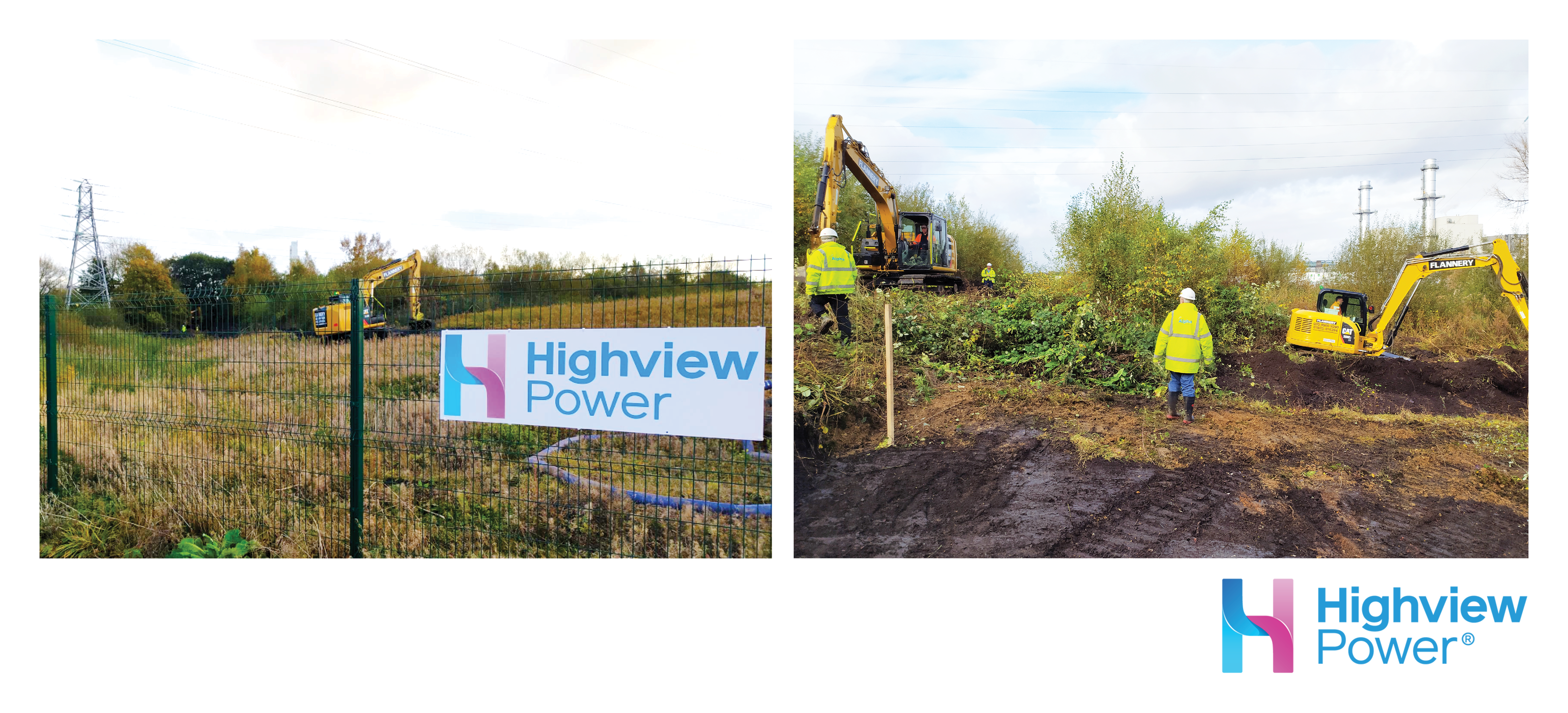
Note the two towers in the background of the image on the right. They look like the towers of Carrington power station, which are shown on this page on the FK Group web site, who built the 884 MW CCGT power station.
This Google Map shows the site of the power station.
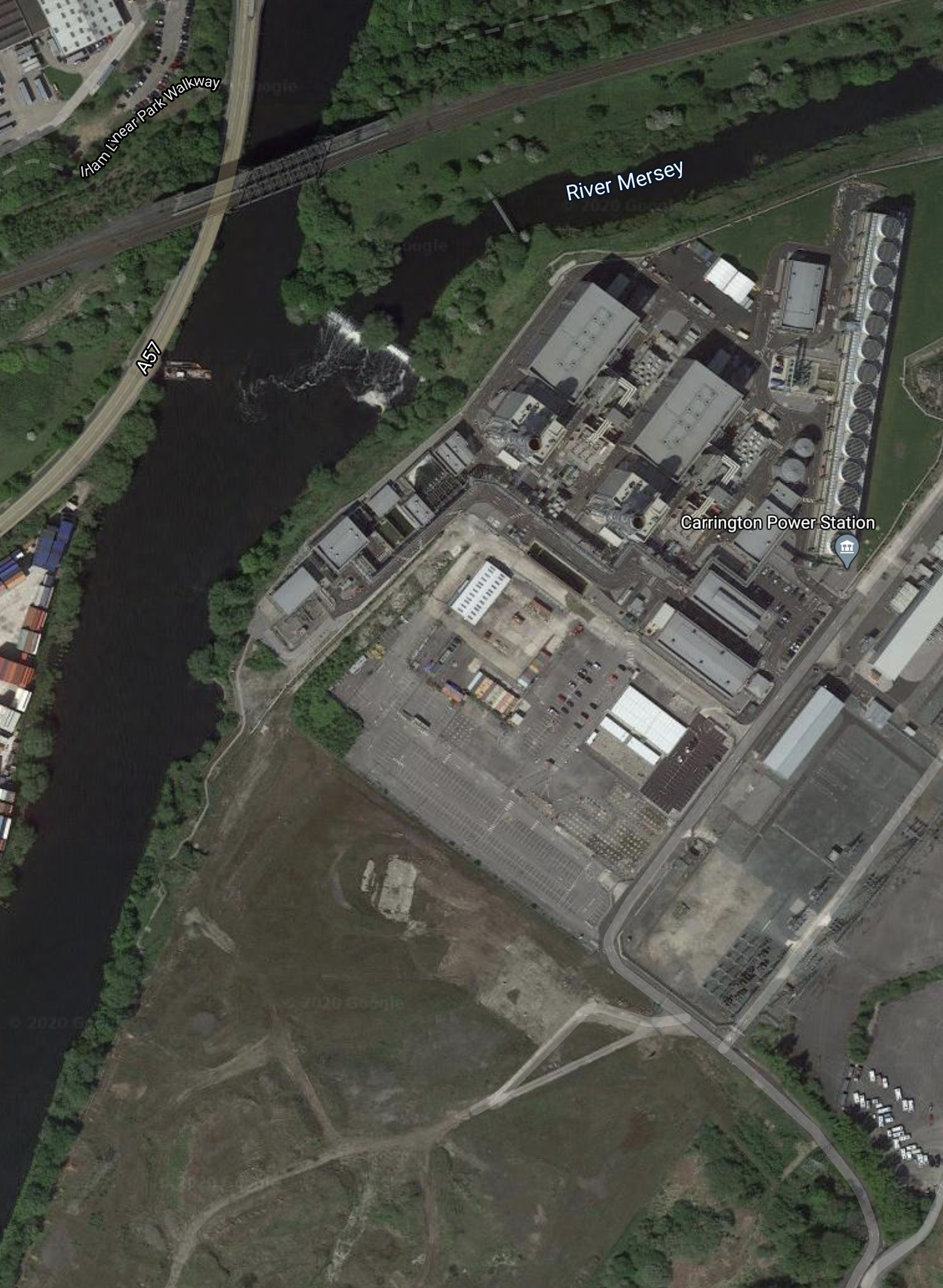
On a larger scale map, you can pick out the towers from their shadows and it looks to me, that Highview’s 250MWh CRYOBattery is being built on the vacant site to the South of the power station.
Consider.
- The vacant site looks large.
- I’ve read somewhere that Highview’s CRYOBatteries are expandable by adding more tanks.
- They certainly have space to add lots of extra tanks and a 884 MW power station on the doorstep to fill them.
- All the heavy equipment and components to build Carrington power station were brought in by barge using the River Mersey and the Manchester Ship Canal. Will this method be used again?
This seems to be a site that would be ideal for a very large battery.
UK Energy Plant To Use Liquid Air
The title of this post, is the same as that of this article on the BBC.
This article about the technique is different, as it details some of the human back-story in these three paragraphs.
The system was devised by Peter Dearman, a self-taught backyard inventor from Hertfordshire, and it has been taken to commercial scale with a £10m grant from the UK government.
“It’s very exciting,” he told BBC News. “We need many different forms of energy storage – and I’m confident liquid air will be one of them.”
Mr Dearman said his invention was 60-70% efficient, depending how it is used.
Mr. Dearman is now a passive shareholder in Highview Power, who are building the plant.
The Most Important News Of The Day
It has nothing to do with that soon-to-be-ex President across the Pond, except that he would brand it a waste of money and a fantasy.
If he did call it a fantasy, he’d at least know something about fantasy.
This article on Recharge is entitled Work Starts To Build World’s First Commercial Liquid-Air Energy Storage Plant.
These are the first two paragraphs.
Work has started to build the world’s first commercial liquid-air energy storage facility near Manchester, northern England, along with a visitor centre that aims to turn the pioneering project into a tourist attraction.
A joint venture between UK-based Highview Power and independent solar/natural-gas plant developer Carlton Power will build and operate the 50MW/250MWh “CRYObattery” — which may later be expanded to add more storage — in the village of Carrington, close to Manchester United’s training ground.
The visitor centre will open in the first quarter of 2021, with the plant planned to start operation in 2023.
- That seems to me to be an ambitious time-scale.
- On the other hand, the plant appears to be composed of well-proven readily-available components, so it will not be too challenging.
Whether Trummkopf likes it or not, construction of the second plant in the Democratic-voting state of Vermont, will surely be starting in the near future.
- He would like the fact that at 50MW400 MWh, the American battery is larger.
- He wouldn’t like the fact, that it is replacing a coal-fired power station.
- It will give eight hours of full-power as opposed to Manchester’s five.
- As both plants are rated at 50 MW, I suspect the two plants are identical on the energy generation side.
- Vermont would just have more tanks to store the liquid air.
It is my view, that these two, will be the first of many.
Ireland’s First Green Hydrogen Project To Come On Stream ‘In Weeks’
The title of this post, is the same as that of this article on the Irish Times.
This is the first two paragraphs.
Belfast is set to receive Ireland’s first hydrogen-powered double-decker buses in coming weeks using fuel coming from wind energy generated in nearby north Antrim.
The initiative is the first “green hydrogen” project on the island of Ireland and the first step to decarbonise Northern Ireland’s public transport by 2040, according to Mark Welsh, energy services manager with Energia, which is generating the hydrogen at its wind farm near Ballymena.
Green hydrogen is produced by an electrolyser powered by renewable electricity.
The article gives a good summary of the use of hydrogen in Ireland in the future.
But isn’t all hydrogen created and used on the island of Ireland green?
Plans For £45m Scottish Green Hydrogen Production Plant Revealed
The title of this post, is the same as that of this article on H2 View.
This is the opening paragraph.
UK-built hydrogen buses powered by Scottish-made green hydrogen, transporting COP26 delegates around Glasgow in 2021: that’s the vision of a new £45m project unveiled today (3rd Nov).
Some details of the plant are also given.
- It will be built at Lesmahagow.
- It will be co-located with wind turbines and solar panels.
- It will have an initial capacity of 9 MW, with a possible increase to 20 MW.
- It will produce 800 tonnes of hydrogen per annum.
- The company behind it, is called Hy2Go
It sounds like the electrolyser is the one mentioned in Green Hydrogen For Scotland, which was announced in a press release from ITM Power.
Although, that electrolyser may be situated at Whitelee Wind Farm, which is a few miles closer to the coast.
Will Scotland Have Two Electrolysers To the South Of Glasgow?
Consider.
- Whitelee is the UK’s largest onshore wind farm with a capacity of 539 MW.
- It is planned to install a large battery at Whitelee. See Super Battery Plan To Boost UK’s Biggest Onshore Windfarm on this page on the Scottish Power web site.
- Lesmahagow’s turbines and solar panels have not been installed yet.
- Much of the wind power in the South of Scotland and the North of England is mainly onshore, rather than onshore.
- The location of the Lesmahagow electrolyser will be close to the M74.
- The location of the Whitelee electrolyser will be close to the M77.
- There is a good motorway network linking the electrolysers’ to the major cities in the South of Scotland and the North of England.
- Newcastle might be a bit difficult to supply, but that may receive hydrogen from Teesside or the Humber.
Perhaps, the economics of onshore wind, with electrolysers nearby, makes for an affordable source of plentiful green hydrogen.
I would expect that if Scotland built two large electrolysers South of Glasgow, they wouldn’t have too much trouble using the hydrogen to reduce the country’s and the North of England’s carbon footprint.
Have These Two Projects Merged?
Consider.
- The Lesmahagow site is stated in the article to possibly have two electrolysers with a total capacity of 20 MW.
- The Lesmahagow site is in an excellent position close to a junction to the M74 motorway, with easy access to Edinburgh, Glasgow and England.
- The Lesmahagow site could probably have a pipeline to a hydrogen filling station for trucks and other vehicles on the M74.
- The Whitelee wind farm is huge.
- Lesmahagow and Whitelee are about twenty miles apart.
- More wind turbines might be possible between the two sites.
- There must also be a high-capacity grid connection at Whitelee.
Combining the two projects could have advantages.
- There could be cost savings on the infrastructure.
- It might be easier to add more wind turbines.
There may be time savings to be made, so that hydrogen is available for COP26.
Conclusion
Scotland is making a bold green statement for COP26.
A network of very large hydrogen electrolysers is stating to emerge.
- Glasgow – Lesmahagow.
- Herne Bay for London and the South East – Planning permission has been obtained.
- Humber – In planning
- Runcorn for North West England – Existing supply
- Teesside – Existing supply
Joe Bamford’s dream of thousands of hydrogen-powered buses, is beginning to become a reality.
Mitsubishi Power Receives Order For First Solid Oxide Fuel Cell In Europe
The title of this post is the same as that of this article on Fuel Cells Works.
A fuel cell converts a fuel like hydrogen or natural gas directly into heat and electricity, so what is a solid state fuel cell?
Wikipedia has an entry for solid state fuel cell, that appears to be professionally written.
The entry sums up their advantages and disadvantages in this sentence.
Advantages of this class of fuel cells include high combined heat and power efficiency, long-term stability, fuel flexibility, low emissions, and relatively low cost. The largest disadvantage is the high operating temperature which results in longer start-up times and mechanical and chemical compatibility issues.
They sound to be a tricky engineering challenge.
 The Anonymous Widower