Government Funding For Lithium Recovery From Geothermal At United Downs Project
The title of this post, is the same as that of this article on Think Geoenergy.
This is the sub heading.
A demonstration project to produce Lithium from geothermal brines at the United Downs Deep Geothermal Project in Cornwall, UK has received government funding.
This is certainly, an idea to watch.
The company behind the project is Cornish Lithium, that I wrote about in How To Go Mining In A Museum.
Velocys Delivers 4 FT Reactors To Red Rock Biofuels In Oregon
The title of this post, is the same as that of this article on Biodiesel Magazine.
This is the introductory paragraph.
Velocys plc has completed manufacturing and delivery of four of its Fischer-Tropsch reactors to Red Rock Biofuels. Red Rock Biofuels plans to convert 136,000 tons of waste woody biomass into more than 15 MMgy of renewable diesel, sustainable aviation fuel and naphtha fuels in Lakeview, Oregon.
It would appear that MMgy is million million (billion) gallons per year, which I assume are US gallons. Why can’t they use litres, tonnes or Olympic swimming pools, like everybody else?
It appears 15 billion US gallons per year is 56.8 million Olympic swimming pools per year!
This page on US Energy Information, which is entitled Diesel Fuel Explained, says this.
In 2019, distillate fuel (essentially diesel fuel) consumption by the U.S. transportation sector was about 47.2 billion gallons (1.1 billion barrels). This amount accounted for 15% of total U.S. petroleum consumption and, on an energy content basis, for about 23% of total energy consumption by the transportation sector.
If I haven’t got my millions and billions mixed up, that is an awful lot of diesel.
Especially, to be produced from woody biomass from reactors designed and built by a company spun out of Oxford University.
Turning Waste Plastic Into Hydrogen – Is This The Future?
The title of this post, is the same as that of this article on H2 View.
This paragraph is a description of the process from Myles Kitcher of Peel L&P Environmental.
At Peel L&P Environmental we’ve been working with PowerHouse Energy who have developed a world first plastic to hydrogen technology. The first plant at Protos, our strategic energy and resource hub in Cheshire, is due to start construction later this year. It will take unrecyclable waste plastic – destined for landfill, or worse export overseas – and use it to create a local source of clean hydrogen to fuel buses, Heavy Goods Vehicles (HGVs) and cars. Not only will this help reduce air pollution and improve air quality on local roads, it’s helping us deal with the pressing problem of plastic waste.
This sounds like an eminently sensible way of dealing with unrecyclable waste plastic.
40GW Of Battery Storage And Longer Durations Could Help Smash UK Net Zero Targets
The title of this post, is the same as that of this article on Energy Storage News.
This is the introductory paragraph.
More electricity storage and longer durations of storage will be needed for the UK to meet net zero targets, according to electricity system operator National Grid ESO’s latest modelling.
The article is very much a must-read.
Germany Builds The World’s First Hydrogen Train Filling Station
The title of this post, is the same as that of this article on electrek.
Hydrogen Trains In Germany
The hydrogen filling station for trains is described under this heading.
This is the introductory paragraph.
The town of Bremervörde in Lower Saxony, Germany, has broken ground on the world’s first hydrogen filling station for passenger trains. Chemical company Linde will construct and operate the hydrogen filling station for the Lower Saxony Regional Transport Company.
It will provide approximately 1600 Kg of hydrogen per day.
The Supergroup Of ‘Green Energy’
This is a second section, which I find an interest sting concept.
These are the introductory paragraphs.
Oil giant Shell and Dutch utility Eneco have won the tender to build a super-hybrid offshore wind farm in the Netherlands. It will consist of two sites located 11.5 miles (18.5 km) off the west coast, near the town of Egmond aan Zee.
The Shell/Eneco consortium, CrossWind, will build the Hollandse Kust (noord) project. They will pair the offshore wind farms with floating solar facilities and short-duration batteries. It will also generate green hydrogen via an electrolyzer, according to GreenTech Media.
It will be operational in 2023 and have an output of 759 MW.
Beeching Reversal – South Fylde Line Passing Loop
This is one of the Beeching Reversal projects that the Government and Network Rail are proposing to reverse some of the Beeching cuts.
The Project
This project is described on this page on the web site of the Fylde MP; Mark Menzies, which is entitled Improving The South Fylde Rail Line.
The page lists that these improvements are needed.
Track And Stations
These improvements are listed for track and stations.
The bid involves laying around three miles of track between Lytham and St Annes stations, the creation of a new rail platform at Ansdell and Fairhaven Station, the installation of signalling along the line, and potential platform changes at Preston Station. There is scope for improvements to St Annes and Lytham Stations, should Network Rail decide it would rather include those stations within the passing loop – but that would be decided further along the process.
Services
The objective is to be able to run two trains per hour (tph) between Preston and Blackpool South stations.
Trains
Better trains are needed.
It certainly looks like the Pacers have already gone.
The Route
I shall describe the current route in this section.
Blackpool South Station
The Google Map shows Blackpool South station.
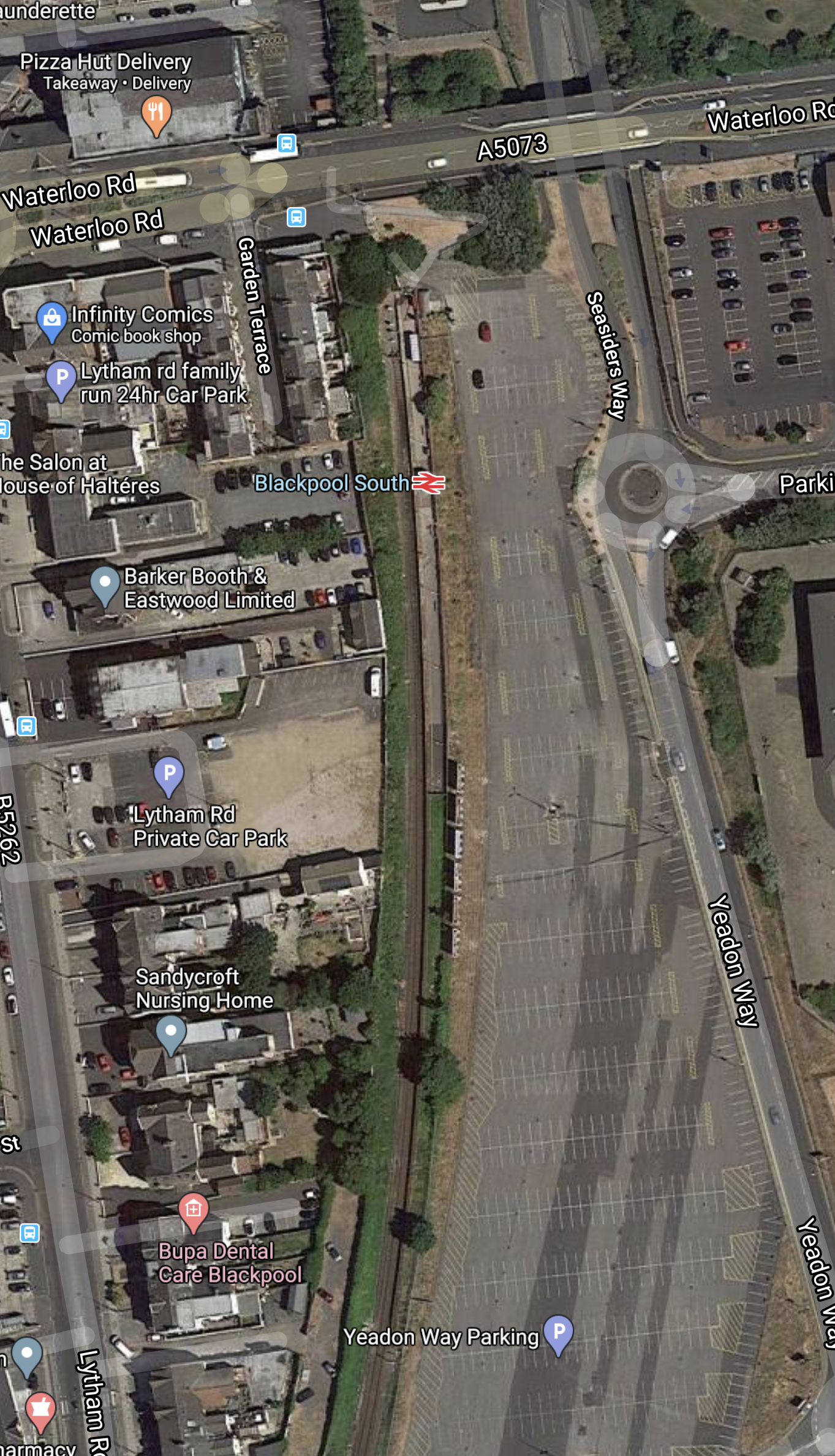
Note.
- Entrance to the station is from Waterloo Road, which runs East-West across the map.
- There are a pair of bus stops by the station entrance.
- There is a lot of car parking close to the station.
- I suspect that the single platform can hold a modern eighty-metre four-car train.
- This seventy-year-old has no difficulty waking to the football ground or the Blackpool trams from the station.
With two tph and some updated facilities, this would be a very useful station.
I suspect there is even space to add a second platform in the future, if that were felt to be necessary.
Blackpool Pleasure Beach Station
This Google Map shows Blackpool Please Beach station and the nearby Pleasure Beach.
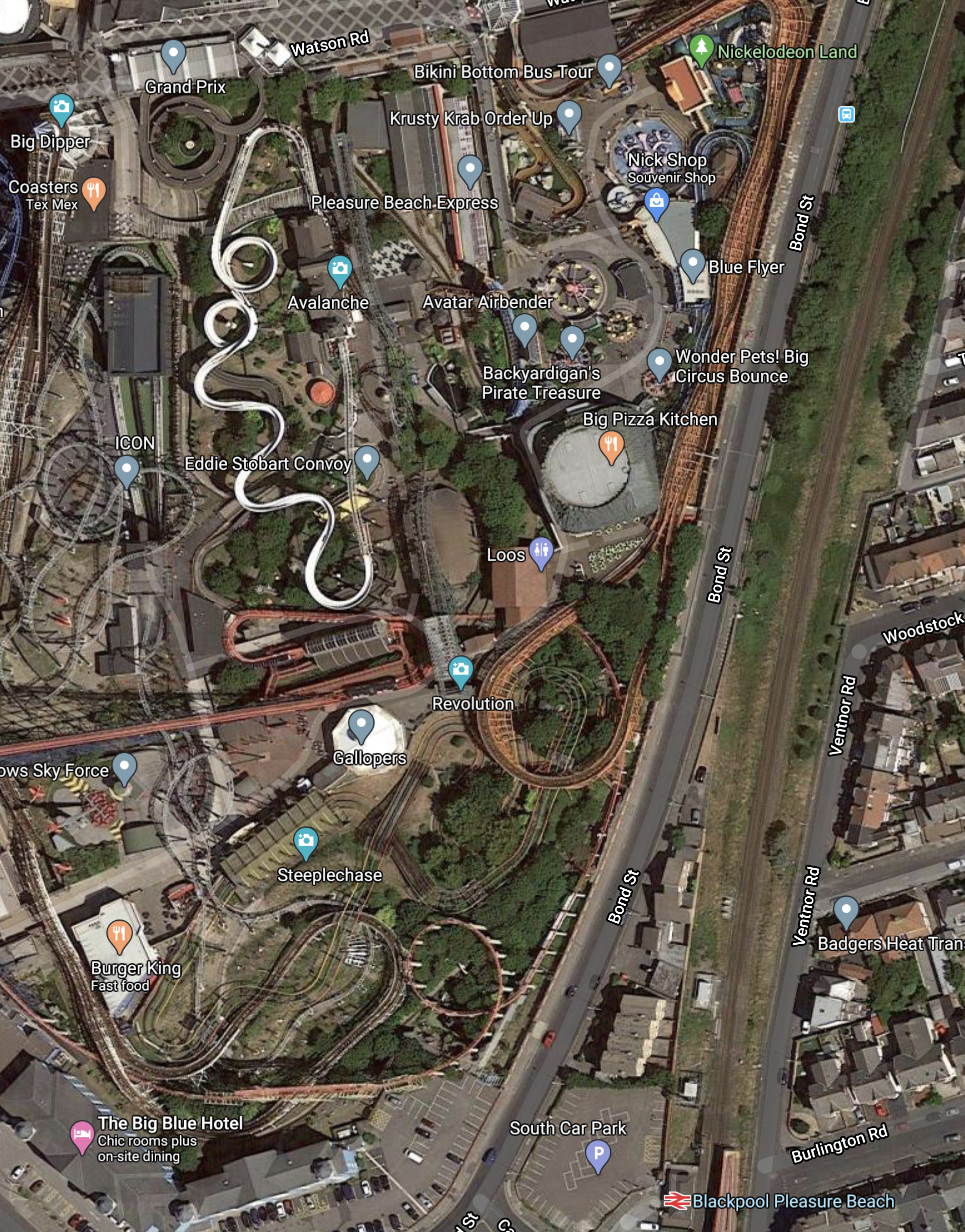
We shouldn’t underestimate the importance of this station. One beautiful late summer Saturday, I was going to see Ipswich play at Blackpool and out of curiosity I had explored the train to Colne station. In those days a decade ago, Colne and Blackpool South was one service and the train from Colne was full of families, by the time it got to Preston. A large proportion, left the train at the Pleasure Beach.
The conductor told me, that the crowds, I had witnessed weren’t untypical.
Squires Gate Station and Blackpool Airport
This Google Map shows Squires Gate station and the nearby Blackpool Airport.
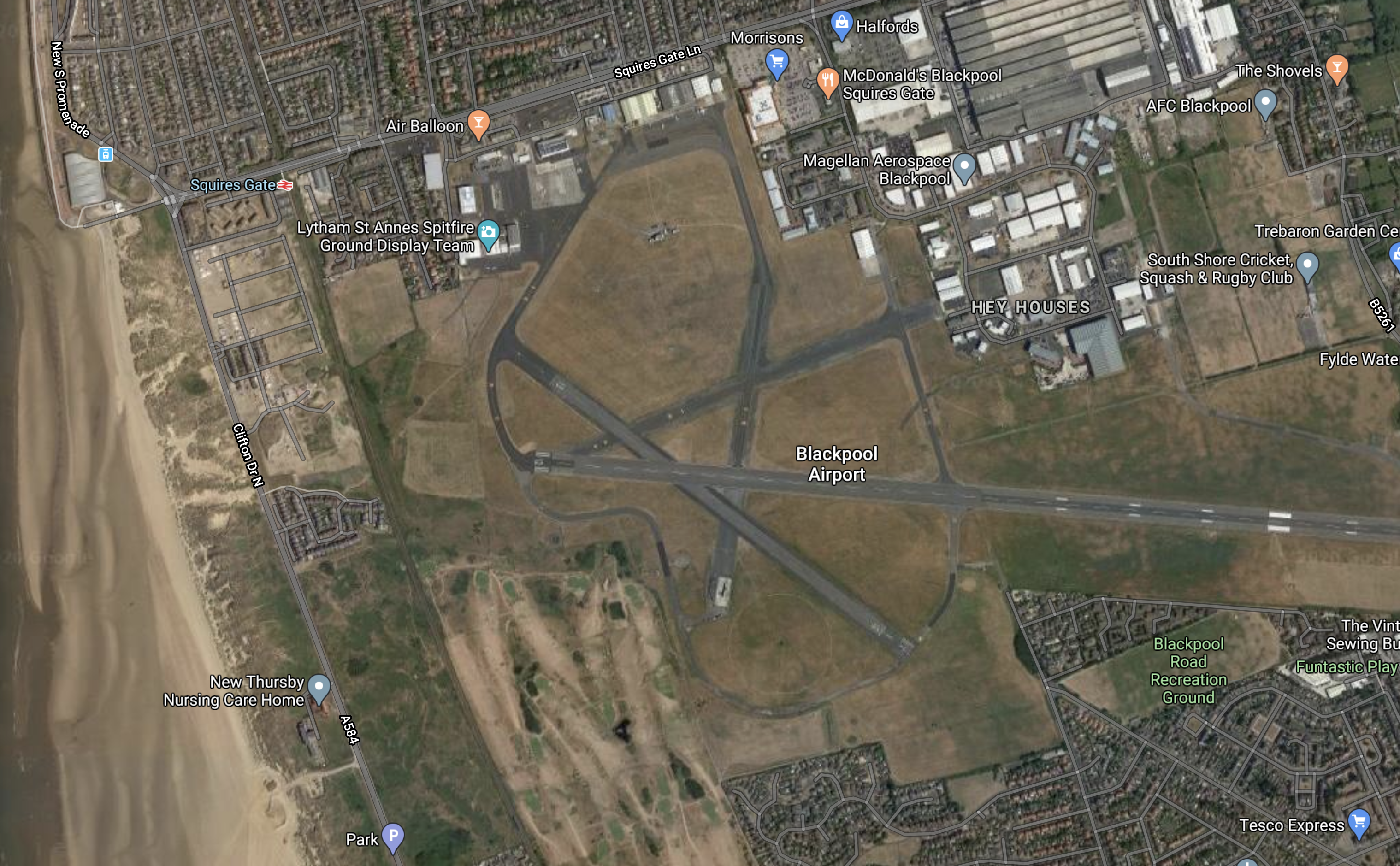
Blackpool Airport after a troubled few years seems to be finding a niche market, with a few business, commercial, offshore and training flights.
But I believe that airports like Blackpool in the future can develop another large niche – electric aviation.
Getting to places like Ireland, Northern Ireland, the Isle of Man and Wales by a nineteen-seat electric airliner will need the following.
- As short a flight as possible.
- Close to the coast would help.
- Good public transport links. Blackpool Airport has both tram and train.
- Space for aircraft to be parked, whilst charging.
- Plentiful supplies of renewable electricity. The over-300 MW Burbo Bank Wind Farm is not far away in Liverpool Bay and it will only be joined by more and larger wind farms.
- Frequent public transport.
Blackpool Airport could tick all these boxes, with a thick green marker.
Some example direct distances from Blackpool include
- Aberdeen – 238 miles
- Amsterdam Schipol – 340 miles
- Belfast City – 128 miles
- Cardiff – 165 miles
- Dublin – 134 miles
- Edinburgh – 150 miles
- Exeter – 211 miles
- Geneva – 661 miles
- Glasgow – 155 miles
- London Gatwick – 220 miles
- London Heathrow – 192 miles
- London Southend – 219 miles
- Newcastle – 89 miles
- Paris Orly – 422 miles
- Isle of Man Ronaldsway – 68 miles
- Southampton – 208 miles
These distances fit nicely with the range of the nine-seater Eviation Alice electric aircraft, which is predicted to be 620 miles.
St. Annes-on-the-Sea Station
This Google Map shows St. Annes-on-the-Sea station.
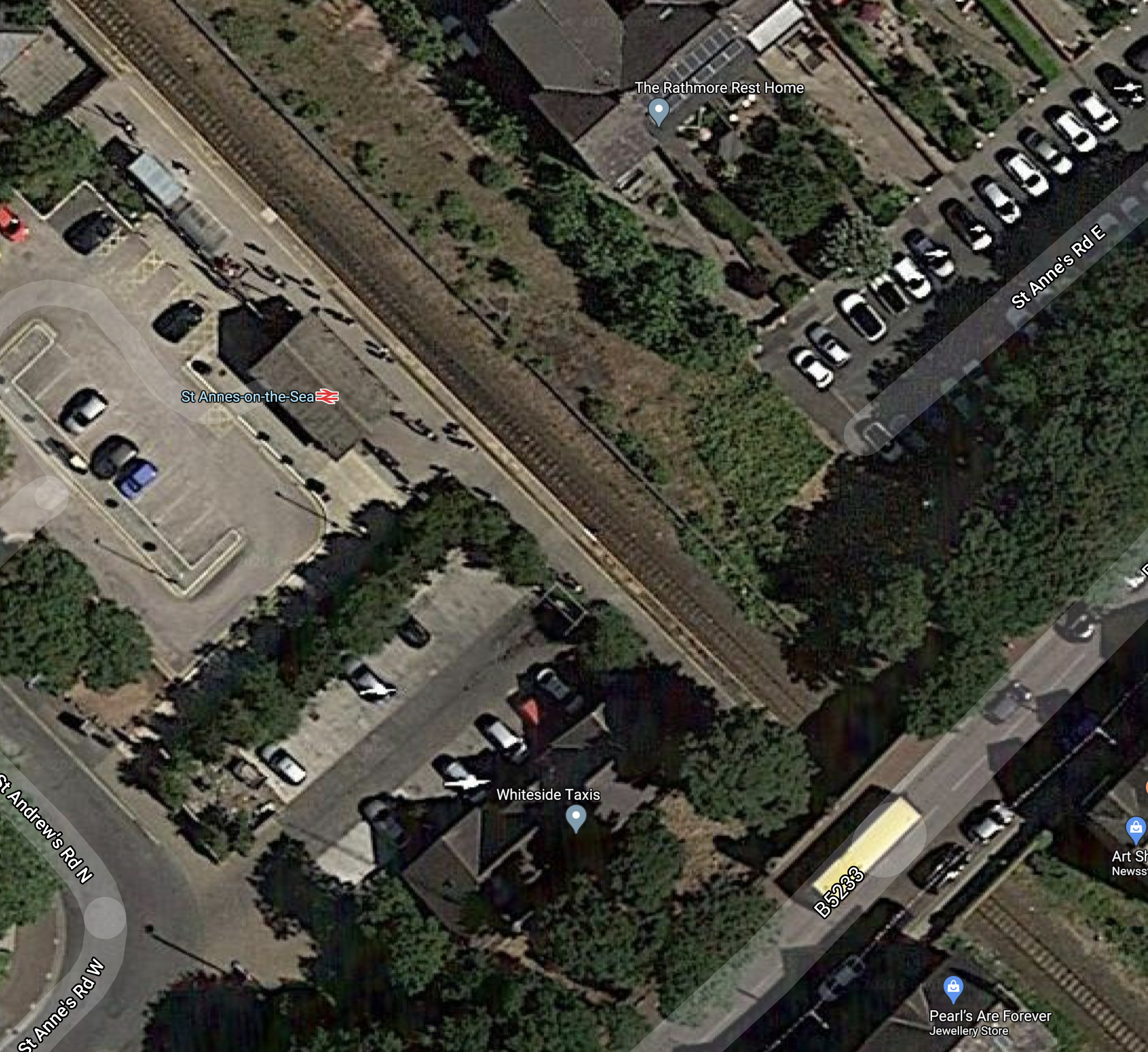
Note.
- Blackpool is to the North-West and Preston is to the South-East
- St. Annes-on-the-Sea is one of those convenient single-platform stations, where you just walk in-and-out on the level.
- The passing loop would start on the Preston side of the bridge.
There would need to be no major infrastructure work at the station, although I would expect the facilities could do with a makeover.
Ansdell And Fairhaven Station
In Should The Blackpool South Branch Be Electrified?, I said this about improvements to Ansdell and Fairhaven station.
Ansdell and Fairhaven station is nearest to the course at Royal Lytham.
-
- The Open Championship is a very important event on the golfing calendar.
- Other important golfing events are also held on the course
- Royal Lytham and St.Annes, last held the Open in 2012 and 2001. So it might come back to Royal Lytham in the mid-2020s.
Ansdell and Fairhaven station used to have two platforms, as described in Wikipedia.
The station was set out as an island platform with tracks on both faces until the singling of the line in the 1980s. Trains now only use the southern face. A disabled access ramp now covers the northern part of the station.
So could a rebuild of the station do the following?
-
- Restore two platforms on an island at the station.
- Put in full disabled access.
- Create a passing loop.
- Longer platforms might be a good idea.
This Google Map shows the station.
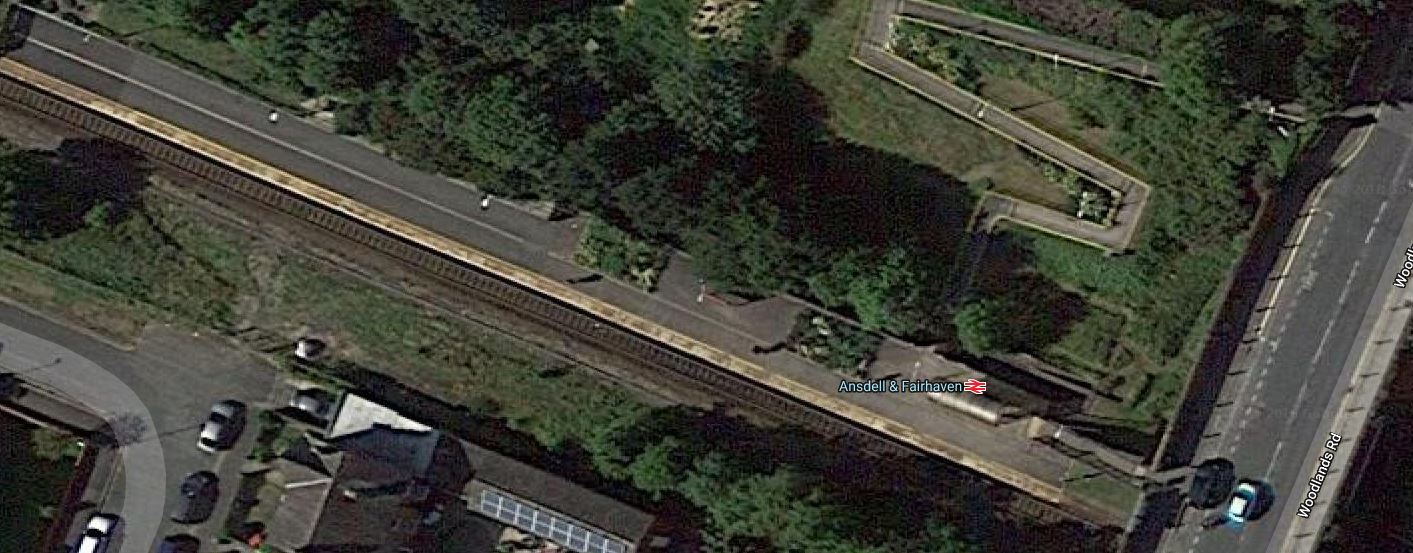
Note.
-
- The disabled ramp winding away.
- The platform is probably about a hundred metres long.
- It would appear that there is space at the far end to extend the platform.
I suspect that an ambitious architect with vision, could design a station that met all objectives.
It could be the best Championship Golf Course railway station in the world.
Lytham Station
This Google Map shows Lytham station.
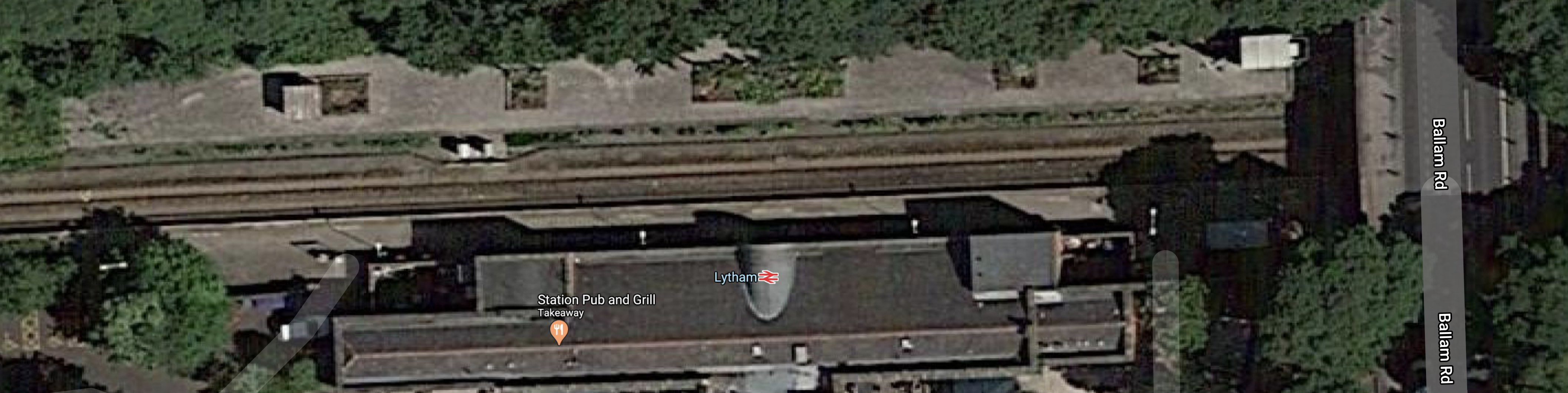
Lytham station will be the Eastern end of the loop and it is likely, that the single-track will change to double at the Western end of the station.
As with St. Annes-on-the-Sea station, I suspect that a good makeover, will be all that will be needed.
Moss Side Station
This Google Map shows Moss Side station.
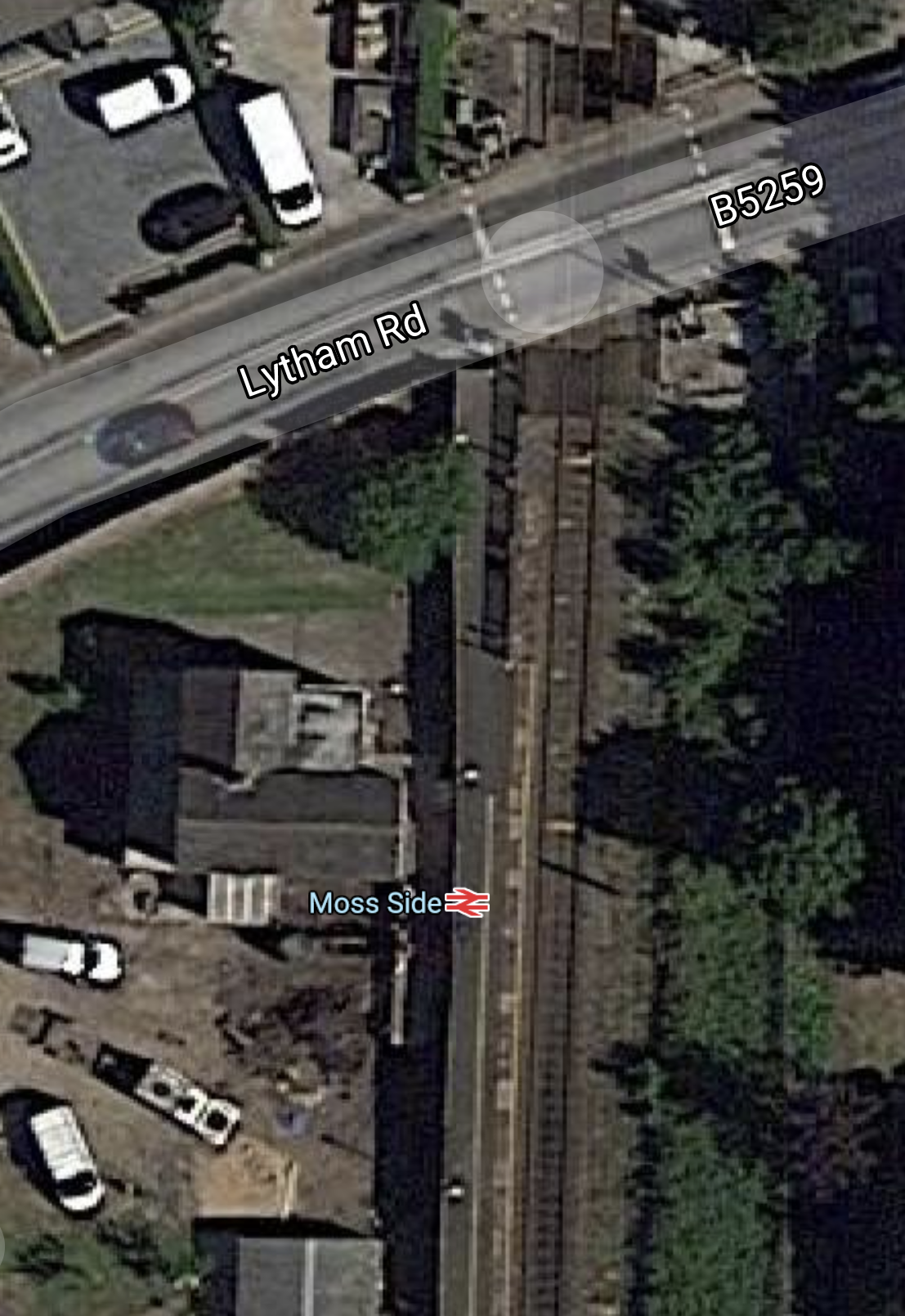
The only problem here is the level crossing, so do Network Rail want to remove it?
Kirkham And Wesham Station
This Google Map shows Kirkham and Wesham station.
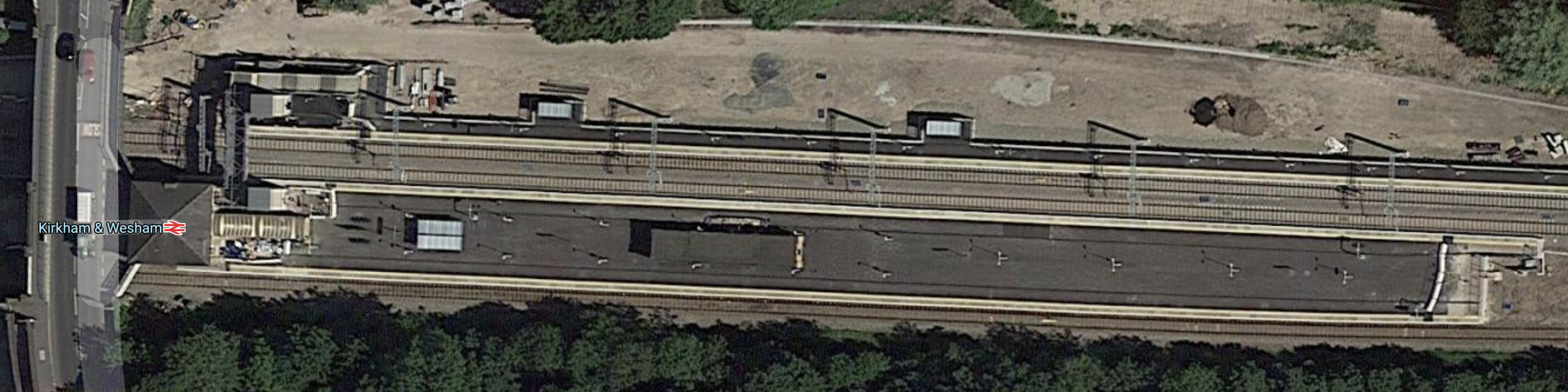
There are three platforms, which from bottom to top on the map are.
- Platform 1 – Trains to Blackpool South
- Platform 2 – Trains to Blackpool North
- Platform 3 – Trains to Preston
All platforms seem to be being electrified in these pictures. that I took during construction.
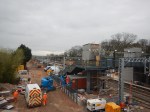
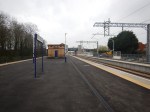


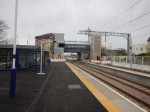


Note.
- It can’t be described as a station, built down to a small budget.
- In the captions to the pictures, I’ve numbered the platforms from left to right.
- The last picture looks down Platform 1 and there is an electrification gantry at the Preston end.
Could this comprehensive electrification be so that trains to Blackpool North can use both Platforms 1 and 2?
- This would allow overtaking of say a local train by a London express.
- Trains could also be turned back in Platform 1, before the end of its journey, if there was a problem.
- The electrification is also substantial enough for the longest Class 390 trains.
- It could even accommodate a classic compatible High Speed Two train.
So does the last point, mean that Blackpool North station is a possible High Speed Two destination? Provided, the platforms at Blackpool North station are long enough, I think it does!
This Google Map shows Kirkham West Junction, where trains to Blackpool North and Blackpool South stations diverge.
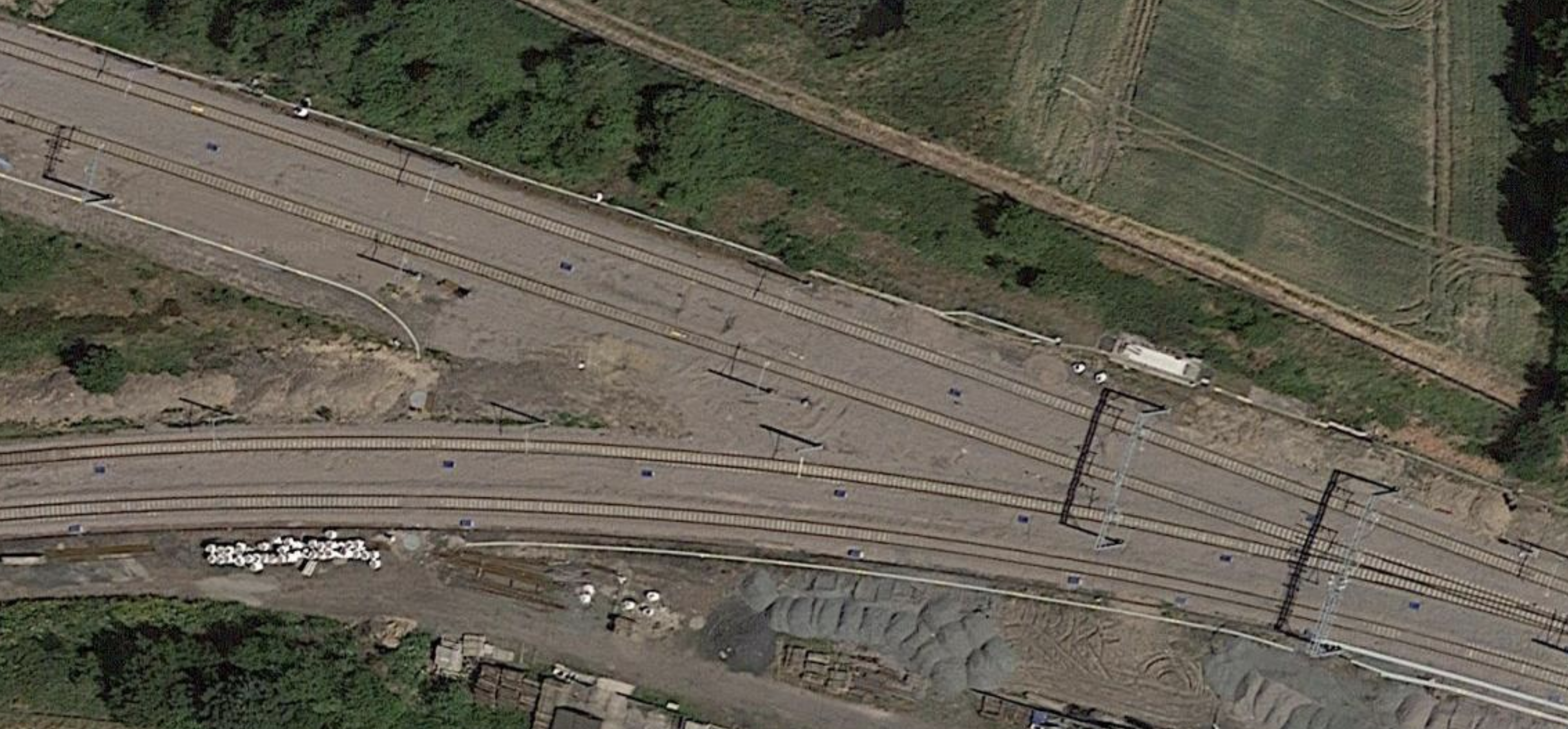
Note.
- The electrification gantries and their shadows can be seen.
- Preston is to the South-East and the route is fully-electrified.
- Blackpool North is to the North-West and the route is fully-electrified.
- Blackpool South is to the West. The double-track becomes single before Moss Side station.
This picture shows the route going off to Blackpool South.
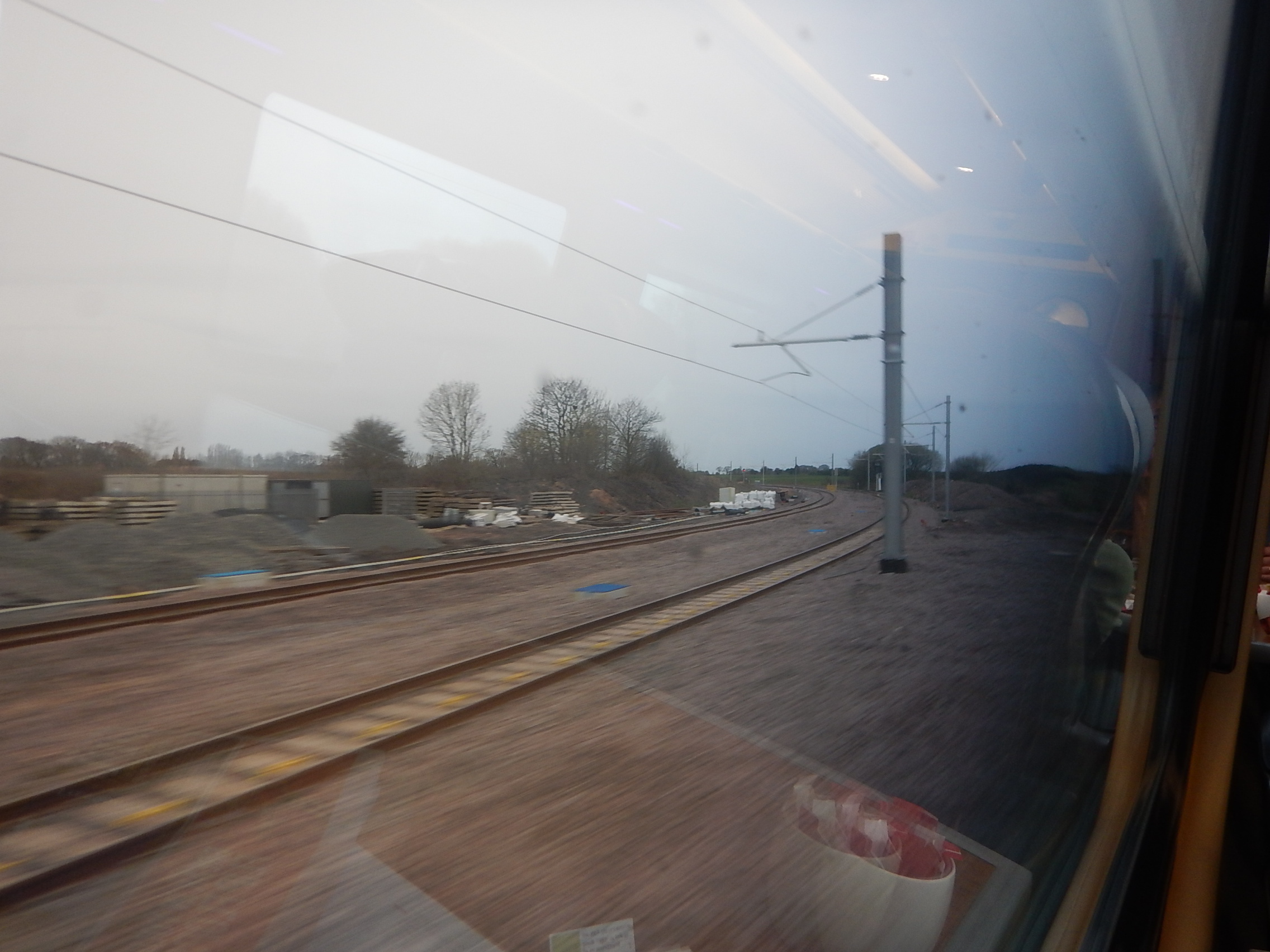
I took the picture from a train going to Blackpool North station.
So why are wires being run along the first few hundred metres of the Blackpool South Branch?
The Timetable
Currently, trains take the following times to do these journey legs.
- Run between Ansdell and Fairhaven and Blackpool South stations – 12 minutes
- Turnback at Blackpool South station – 3 minutes
- Run between Blackpool South and Ansdell and Fairhaven stations – 11 minutes
As the trains will be running every thirty minutes and the three legs total twenty-six minutes, that means there’s four minutes float.
So hopefully, it should be easily stainable, by an experienced rail timetable creator.
The Trains
I have remarked that I find the electrification at Kirkham & Wesham station, both comprehensive and slightly unusual.
Could The Electrification Have Been Designed For Battery Electric Trains To Blackpool South Station?
But there is one very plausible reason for the electrification layout – The Blackpool South Branch has been designed, so that services on the branch can be rum using battery trains.
- The distance between Kirkham & Wesham and Blackpool South stations is just over eleven miles.
- So for a round trip a range of perhaps twenty-five miles on battery power would suffice.
- There would also be a need for a few minutes of hotel power, whilst waiting at Blackpool South station.
These power needs are well within the capabilities of the average battery train.
- Trains could be charged on the nine minute run between Preston and Kirkham & Wesham stations.
- Changeover between electrification and battery power would take place in Kirkham & Wesham station.
An ideal train would surely be CAF’s four-car battery electric version of the Class 331 train, which I wrote about in Northern’s Battery Plans.
- According to an article in the March 2020 Edition of Modern Railways, with the same name, these trains will be working between Manchester Airport and Windermere.
- Class 331 trains without batteries will be running to and from Blackpool North station.
- Four-car trains are probably the right size for the route.
There would also probably be no need for a charging station at Blackpool South station, if trains could leave Kirkham & Wesham station with a full battery.
Where Would The Trains Terminate In The East?
These would be the obvious choices.
- Blackburn – Where there is a convenient bay platform.
- Colne – Where they used to terminate!
- Liverpool – Merseyrail has the trains and Liverpool has lots of punters and the imagination.
- Preston – Where they do now!
- Skipton – If the Skipton-Colne Link is built!
My money would be on Skipton, using a new Skipton-Colne Link, for the following reasons.
- Politicians of all colours and roses are in favour.
- Skipton has an electrified route to Leeds.
- Skipton-Colne would be a valuable by-pass route during the building of Northern Powerhouse Rail.
- Battery-powered trains would be ideal for Skipton-Colne.
Would A Battery Electric Train Be Feasible Between Blackpool South And Liverpool?
Consider.
- An all-stations service would complement the fast service between Liverpool Lime Street and Blackpool North stations via St. Helens, Wigan North Western and Preston.
- The service could either go between Liverpool and Preston via Ormskirk or Southport and a reinstated Burscough Chord.
- The Ormskirk route is 15 miles of unelectrified line and the Southport route is just four miles further.
- A service via Southport would need to reverse at Southport station.
- The service would be run using dual-voltage Class 777 trains fitted with batteries.
- 25 KVAC overhead electrification, is already installed between Preston and Kirkham & Wesham stations,
- Using existing electrification, trains would leave Kirkham & Wesham, Ormskirk, Preston and Southport stations with full batteries.
- A coastal service between Blackpool and Liverpool would surely attract visitors.
- Liverpool and Blackpool are the two biggest urban areas on the coast.
- There are several golf courses on the route, including three courses that have held the Open; Royal Birkdale, Royal Liverpool and Royal Lytham & St. Annes.
It may be a bit fanciful. But.
- Merseyrail will have the trains.
- Liverpool has the potential passengers.
- I believe the route could handle a two tph service.
- In Reopen Midge Hall Station, I showed that it was possible to run a two tph service between Liverpool and Preston, with one tph via each of Ormskirk and Southport.
Liverpool also has bags of ambition and imagination.
Would A Battery Electric Train Handle Preston And Skipton?
I estimate that this route is forty-one miles, with a stiff rise from Rose Grove to Colne station.
So would a battery electric train be able to handle this distance?
Hitachi are talking 56 miles for their Regional Battery Train, so I suspect CAF would want and need to be competitive with a similar specification.
Perhaps the logical service would be to run between Leeds and Blackpool South.
- The service would go via Preston, Blackburn, Burnley Central, Colne and Skipton.
- Leeds and Skipton is electrified.
- Preston and Kirkham & Wesham is electrified.
- No extra chargers for trains would be needed.
The only new infrastructure needed would be the Skipton and Colne Link.
Electrification Between Preston And Blackburn
Consider.
- In Colne – Skipton Reopening Moves Closer, I talked about the proposed Huncoat Rail Fright Terminal, that could be built North of Blackburn on the East Lancashire Line.
- Blackburn is a major hub for passenger services.
- An electrified Blackburn would allow Manchester and Clitheroe to be run by battery electric trains. Clitheroe is ten miles and Bolton is thirteen.
- An electrified Blackburn would allow Blackburn and Manchester Victoria via the Todmorden Curve to be run by battery electric trains. The whole route is 39.5 miles.
- It may be possible for battery electric trains to reach Leeds via Hebden Bridge, as it is only fifty miles away, which is within Hitachi’s range.
- As the Blackburn area grows, there will be more pressure for a daily London service.
- Some think, the Calderdale route should be electrified.
- Preston and Blackburn stations are just twelves miles apart.
- There is a multiple unit depot at Blackburn.
- I also feel that battery electric trains fanning out from Blackburn, wouldn’t do the town’s image any harm.
For all these reasons, I wouldn’t be surprised to see a short stretch of electrification added between Preston and Blackburn.
Conclusion
I like this proposal and it could be a big asset to trains across the Pennines.
Our Sustainability Journey
The title of this post, is the same as that of this press release on the Rolls-Royce web site.
It is sub-titled.
Paul Stein’s Thoughts On Sustainability And Electrification
Paul Stein is Rolls-Royce’s Chief Technology Officer, so what he says is important.
This press release was the source of the information behind Distributed Propulsion ‘Maybe The Only Means’ For Small Electric Flight Progress, which I wrote about Rolls-Royce’s beer keg-sized 2.5 MW generator.
This is the third paragraph.
We’ve taken great steps at Rolls-Royce with our three-pillar sustainability approach of developing the gas turbine to even greater efficiency, supporting the introduction of Sustainable Aviation Fuel and creating new, disruptive technologies such as electrification.
These are definitely, the three pillars of wisdom, when it comes to sustainable aviation.
E-Fan X
This paragraph is Paul Stein’s view of the E-Fan X.
One of the great endeavours in the latter category has been our E-Fan X programme in partnership with Airbus. From our side, this has involved creating a hybrid-electric power generation system at a scale never previously seen in our industry, comprised of an embedded AE2100 gas turbine driving a 2.5MW generator and 3000V power electronics and an electric propulsion unit. What has been particularly encouraging has been the amount of industry interest and support for this programme, and I know everyone at Rolls-Royce and Airbus has been truly grateful for that.
He states that the E-Fan has now concluded, but a several valuable lessons have been learned.
2.5 MW Generator
He describes the generator like this.
Amongst the many great achievements from E-Fan X has been the generator – about the same size as a beer keg – but producing a staggering 2.5 MW. That’s enough power to supply 2,500 homes and fully represents the pioneering spirit on this project.
The press release discloses that the heart of this staggering generator is a Rolls-Royce AE2100 gas turbine, which powers the latest version of the legendary Lockheed Hercules; the C-130J Super Hercules.
Wikipedia gives this data for the AE2100D2 version of the engine.
- Length – three metres
- Diameter – 0.73 metres
- Weight – 783 kilograms
- Maximum Power Output – 3458 kW
- Fuel Consumption – 0.25/kW/h
It looks like in the E-Fan X application, the engine is not at full power.
Use With Aviation Biofuel
Aviation Biofuel is described like this in the first sentences of its Wikipedia entry.
Aviation biofuel is a biofuel used for aircraft. It is considered by some to be the primary means by which the aviation industry can reduce its carbon footprint. After a multi-year technical review from aircraft makers, engine manufacturers and oil companies, biofuels were approved for commercial use in July 2011.
But it doesn’t necessarily mean growing large amounts of crops and converting it to the fuel. Altalto, who are backed by British Airways, Shell, Oxford University and the British Government are building a plant at Immingham to convert household and industrial waste into aviation biofuel.
I would expect that Rolls-Royce have made sure that the generator will work with aviation biofuel.
A Memory Of Emergency Power Generation
About twenty-five years, there was a major power failure after a thunder storm, where I lived in Suffolk and C and myself went to bed in the dark. We awoke to full power in the morning, after a good night’s sleep with no disturbance.
Imagine my surprise, when I let the dogs out to find parked in the field in front of the house, a very large articulated truck.
I was greeted by an engineer, who asked if I minded, his generator in my field. I seem to remember my response was to offer him a cup of tea, which he refused, as he said he had everything he needed in the truck.
It turned out that the main sub-station for the area had received a direct lightning strike and had been destroyed. So to supply power to all the nearby villages, as my farm was at the end of the supply, it was the most convenient place to plug in a transportable gas-turbine generator. The generator was in the field for about ten days and the whole operation impressed me with its professionalism.
But with this new 2.5 MW generator from Rolls-Royce, there would only need to be a small 3.5 tonne four-wheeled truck, to include the generator, fuel and living quarters for the engineer
We have made a lot of progress in twenty-five years.
A Modern Railway Locomotive
The power of this new Class 68 diesel locomotive, that was built in Spain, by Swiss company Stadler is a very healthy 2,800 kW.
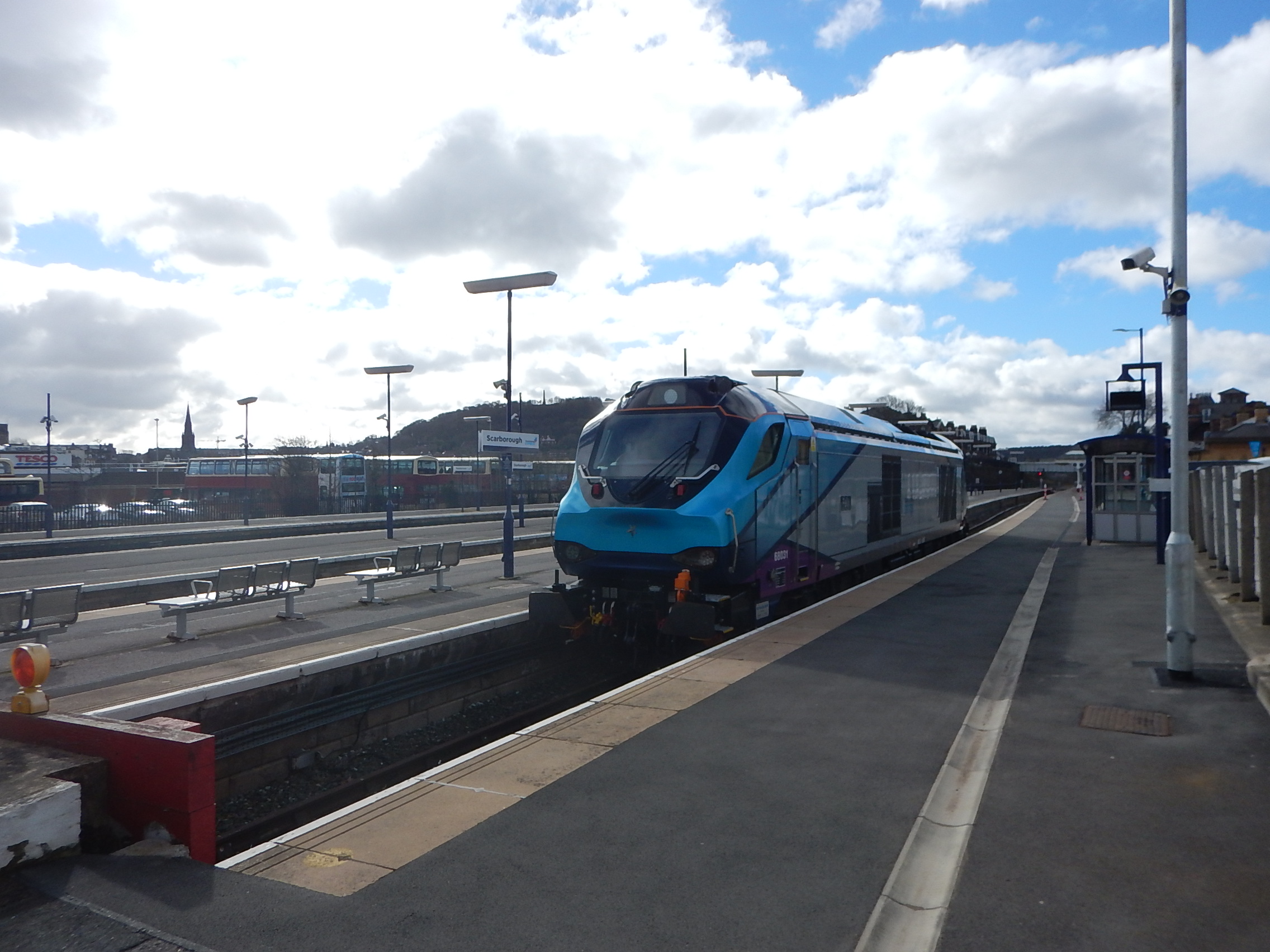
Consider these facts about a Class 68 locomotive.
- Thirty-four of these locomotives have been produced for the UK.
- They are powered by a Caterpillar C175-16 engine, which weighs thirteen tonnes.
- The transmission of these locomotives is electric, which means that the diesel engine drives a generator and the train is driven by electric traction motors.
- The locomotive is equally at home hauling intermodal freight trains and passenger trains for Chiltern Railways or TransPennine Express.
- According to Wikipedia, Class 68 locomotives comply with Stage III A of the European emission standards but not Stage III B. But that is much better than most of our noisy, smelly and polluting diesel locomotives.
Class 68 locomotives are members of the UKLight family of locomotives, which contains, these two other locomotives.
- Already in service is the Class 88 locomotive, which is a bi-mode locomotive, which is capable of running on electrification or the on-board 0.7 MW diesel engine.
- Under development is the Class 93 locomotive, which is a tri-mode 110 mph locomotive, which is capable of running on electrification, the on-board 0.7 MW diesel engine or battery power.
Stadler seem to be able to mix-and-match various power sources to provide versatile and highly-desirable locomotives.
I feel it would be feasible to design a railway locomotive with the following power sources.
- 25 KVAC overhead or 750 VDC third-rail electrification, providing up to perhaps the four MW of a Class 88 locomotive.
- A Rolls-Royce gas-turbine generator running on aviation biofuel, providing up to perhaps three MW.
- Batteries up to a weight of perhaps ten tonnes.
I am sure that it could handle many of the routes still run with diesel locomotives in the UK.
- It would handle all locomotive-hauled passenger services and would be electric-only in stations.
- It certainly solves the problem of hauling long intermodal freight trains between Felixstowe and the Midlands and the North.
- To handle the heaviest stone and aggregate trains, it might need a more powerful generator, but I’m sure Rolls-Royce would oblige.
In Thoughts On A Battery/Electric Replacement For A Class 66 Locomotive, I gave a list of routes, that would need to be handled by a battery electric locomotive.
- Didcot and Birmingham – Around two-and-a-half hours
- Didcot and Coventry – Just under two hours
- Felixstowe and Ipswich – Around an hour
- Haughley Junction and Peterborough – Around two hours
- Southampton and Reading – Around one-and-a-half hours
- Werrington Junction and Doncaster via Lincoln – Around two hours
- Werrington Junction and Nuneaton – Just under two hours
Will Rolls-Royce’s generator be able to supply 2.5 MW for up to four hours?
This would need two-and-a-half tonnes of aviation biofuel, which would be around 3,200 litres, which could be carried in the 5,000 litre tank of a Class 68 locomotive.
It certainly seems feasible to replace diesel locomotives with gas-turbine locomotives running on aviation biofuel, to reduce net carbon emissions and reduce noise and pollution.
But this is not just a UK problem and many countries, who rely on diesel-hauled rail freight, would look seriously at such a locomotive.
Underfloor Mounting In Passenger Trains
These pictures show the space underneath a Hitachi Class 800 train.



The red cap visible in some pictures is the filler for the oil or diesel for the MTU 12V 1600 R 80L diesel engine used to power the trains away from electrification.
This diesel engine has this specification.
- It produces 560 kW of power.
- It weighs around six tonnes.
- Its is about 4 x 2.5 x 1 metres in size.
The diesel engine produces about a fifth of the power as the gas-turbine generator, which is also smaller and very much lighter in weight.
It should also be noted, that a nine-car Class 800 train has five of these MTU diesel engines.
At a first glance, it would appear Hitachi could find one of Rolls-Royce’s gas-turbine generators very useful.
- It might even enable self-powered high speed trains to run on lines without electrification at speeds well in excess of 140 mph.
- I can certainly see, High Speed Two’s classic-compatible trains having one or possibly two of these generators, so they can extend services on lines without electrification.
We shouldn’t forget that one version of British Rail’s Advanced Passenger Train was to be gas-turbine powered.
A Class 43 Diesel Power-Car
Rolls-Royce would need a test-bed for a trial rail application of their 2.5 MW generator and there is probably no better trial vehicle, than one of the numerous Class 43 power-cars waiting to be scrapped. They could probably obtain a complete InterCity 125, if they wanted one for a realistic weight, test equipment and a second power-car for comparison and rescue.
But seriously, if we are going to remove diesel from UK railways by 2040, a solution needs to be found for the GWR Castles, ScotRail’s Inter7Citys and NetworkRail’s New Measurement Train.
One of the great advantages of these staggering (Rolls-Royce’s Chief Technology Officer’s word, not mine!) generators is that they are controlled by Full Authority Digital Engine Control or FADEC.
FADEC will give the pilots in a Hercules or other aircraft, all the precise control they need and I doubt Rolls-Royce will leave FADEC out of their gas turbine generator, as it would give the operator or driver extremely precise control.
A driver of a GWR Castle equipped with two gas-turbine power-cars, would be able to do the following.
- Adjust the power to the load and terrain, with much more accuracy, than at present.
- Shut the engines down and start them quickly, when passing through sensitive areas.
- Cut carbon-dioxide emissions, by simply using a minimum amount of fuel.
I would put a battery in the back of the Class 43, to provide hotel power for the passenger coaches.
Running current MTU engines in the Class 43s, on biodiesel is surely a possibility, but that not an elegant engineering solution. It also doesn’t cut carbon emissions.
As there are still over a hundred Class 43s in service, it could even be a substantial order.
It should also be noted, that more-efficient and less-polluting MTU engines were fitted in Class 43s from 2005, so as MTU is now part of Rolls-Royce, I suspect that Rolls-Royce have access to all the drawings and engineers notes, if not the engineers themselves
But it would be more about publicity for future sales around the world, with headlines like.
Iconic UK Diesel Passenger Trains To Receive Green Roll-Royce Jet Power!
COVID-19 has given Rolls-Royce’s aviation business a real hammering, so perhaps they can open up a new revenue stream by replacing the engines of diesel locomotives,
A Class 55 Locomotive
Why Not?
A Class 55 locomotive is diesel electric and there are thousands of diesel locomotives in the world, built to similar basic designs, that need a more-efficient and more environmentally-friendly replacement for a dirty, smelly, noisy and polluting diesel power-plant.
Marine Applications
The Wikipedia entry for the Cat C175, says this.
The Cat C175 is often used in locomotives and passenger-class ships.
I suspect there will be marine applications for the gas-turbine generator.
Conclusion
I’m very certain that Rolls-Royce’s pocket power station has a big future.
Who said that dynamite comes in small parcels?
Connected Energy Wins First Order for Next-Gen Energy Storage System
The title of this post, is the same as that of this article on Renewable Energy Magazine.
This is the introductory paragraph.
Second life battery pioneer, Connected Energy will be installing the first of its new generation of optimized energy storage systems as part of Suffolk County Council’s latest project, The Hold. The Hold, a flagship heritage facility for Suffolk which is due to open later this year on the University of Suffolk’s Ipswich Campus, will house the council’s archive collection and feature a low carbon energy system of which Connected Energy’s E-STOR energy storage system will be a key part. The E-STOR will help optimize energy use and peak loads across a system including PV, EV chargers and critical HVAC, designed to create a controlled climate for the archived materials.
That certainly sounds like a good plan in a town, that I know well.
A few of my thoughts.
Second Life Renault Kangoo Batteries
This paragraph describes the system.
The new 300kW/360kWh containerized systems, which include 24 second life Renault Kangoo batteries, have benefitted from collaborative support from Renault and ABB to increase efficiencies on both the power and capacity sides of the system.
It is surely a good use of second-hand lithium-ion batteries from an electric Renault Kangoo. These batteries appear to have a capacity of 22 kWh and as only 15 kWh per battery is needed for 360 kWh, there must be a margin for refurbishing the batteries and removing any faulty cells.
Towns And Cities Like Ipswich
Ipswich is a town of around a hundred people, a hospital, a central shopping centre a small university, several office blocks, a railway station and a football team.
There must be many large towns and cities, with similar energy needs to Ipswich in the UK.
In East Anglia and Essex, there are fourteen; Basildon, Billericay, Bury St. Edmunds, Cambridge, Chelmsford, Colchester, Harlow, Harwich, Kings Lynn, Lowestoft, Norwich, Peterborough, Southend and Yarmouth
Connected Energy will have a large market to fill.
Distributed Propulsion ‘Maybe The Only Means’ For Small Electric Flight Progress
The title of this post, is the same as that of this article on the Institute of Mechanical Engineers web site.
If you want to fly again, then this article offers pointers to how you might do it.
The E-Fan X Airliner
It gives this latest information on the E-Fa X airliner being tested by Rolls-Royce and Airbus.
Amid the strain of the Covid-19 pandemic, Rolls-Royce and Airbus cancelled flight tests of their E-Fan X airliner, a promising project that could have provided vital data on issues such as thrust management and electric systems at altitude.
Does that mean cancelled or scrapped?
2.5 MW From A Beer Keg-Sized Generator
This paragraph could be important.
“Among the many great achievements from E-Fan X has been the generator – about the same size as a beer keg – but producing a staggering 2.5MW,” said Vittadini’s Rolls-Royce counterpart Paul Stein. “That’s enough power to supply 2,500 homes and fully represents the pioneering spirit on this project.”
This picture shows a Class 66 locomotive.
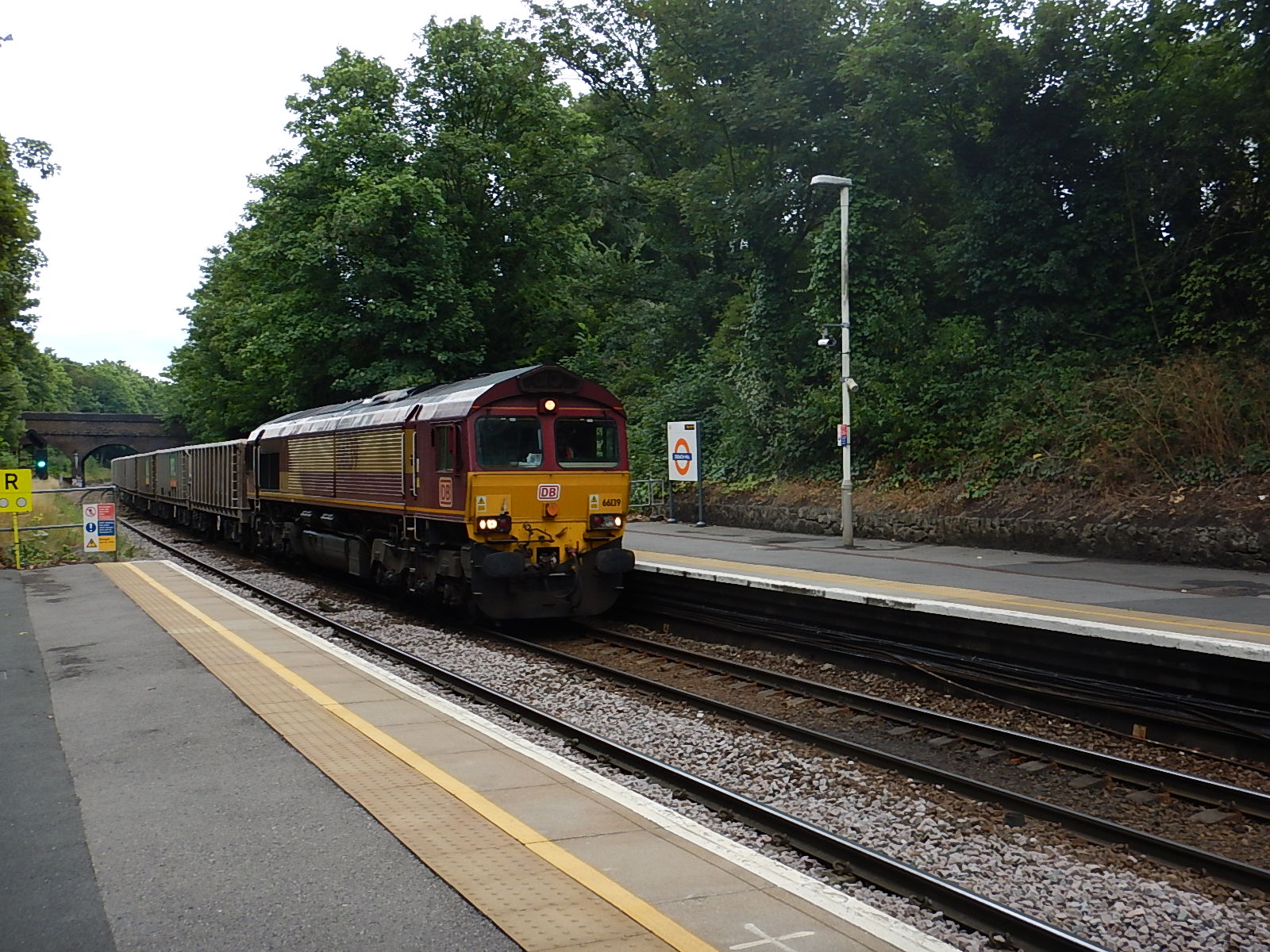
The locomotive has a 2,460 kW diesel engine and an electric transmission.
I just wonder, if Rolls Royce’s high-powered small generator could replace the large, noisy and smelly diesel engines in these locomotives.
- It will be a lot lighter in weight.
- Could some of the saved weight be used for a battery?
- It could run on aviation biofuel, rather than diesel.
- I wrote about aviation biofuel in Grant Shapps Announcement On Friday.
If the technology worked there are 455 of the noisy locomotives.
Snowballing Improvements
The article has a section with this title and it talks about how electric power may lead to other advantages.
Conclusion
Electric aircraft are more promising, than many think!
Waves Are Surging To The Forefront Of Sustainable Energy
The title of this post, is the same as that of this article on Benzinga.
It’s an interesting article, if you can sort it out from all the advertising.
Some of my Scottish friends, feel this could be the way to go!
 The Anonymous Widower