Australia’s FFI Plans $8.4 Billion Green Hydrogen Project In Argentina
The title of this post, is the same as that of this article on S & P Global.
A couple of weeks ago I had not heard of Fortescue Future Industries (FFI), but then they did the deal with JCB, that I wrote about in JCB Signs Green Hydrogen Deal Worth Billions.
This paragraph gives a few more details of the deal with Argentina.
The Australian company, which produces green hydrogen from electrolysis powered by renewable electricity, first plans to test the wind power potential in Rio Negro, a southern province in Patagonia, before building a pilot facility and then shifting into full-scale development.
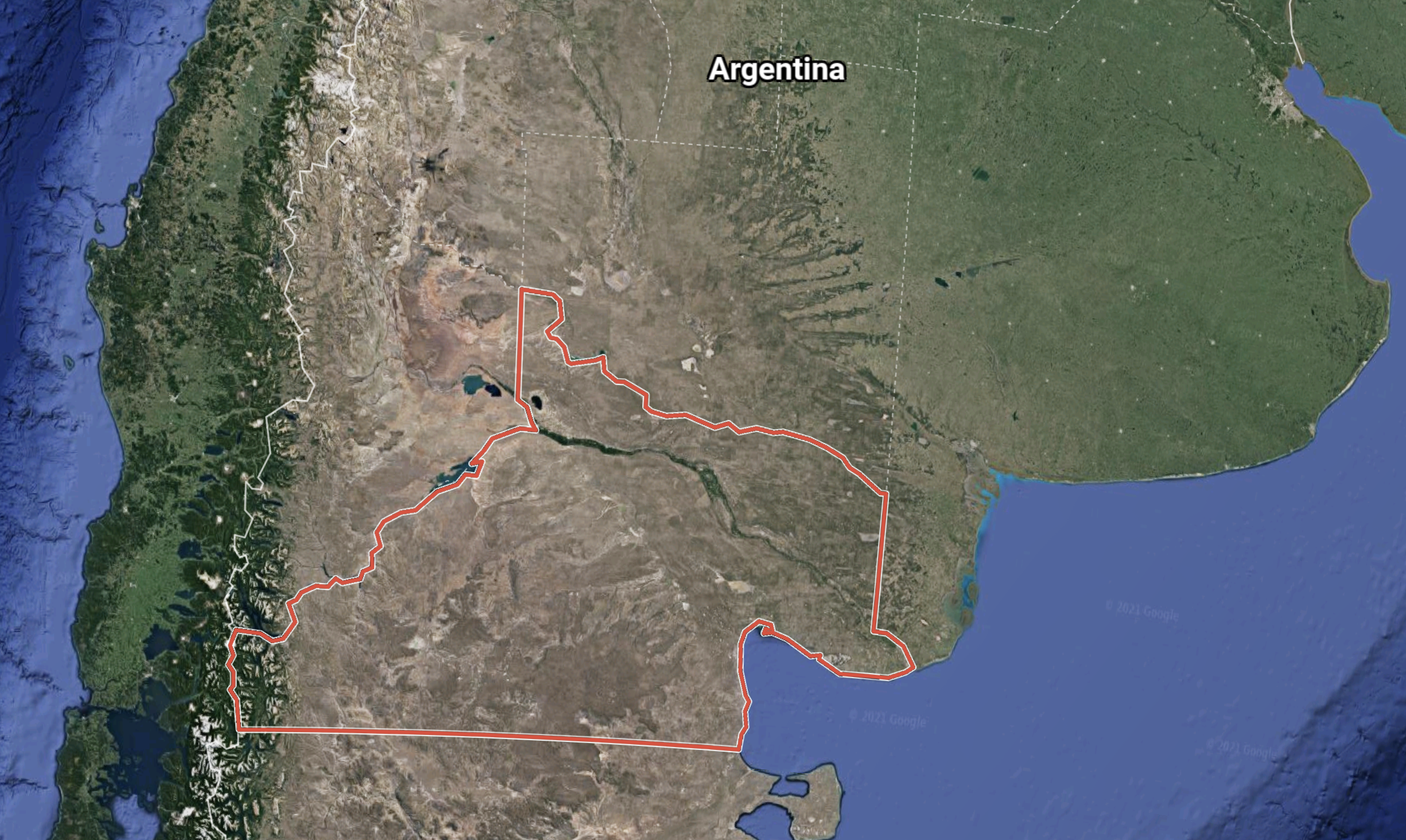
This Google Map shows the Rio Negro province.
Note.
- The province is outlined in red.
- Buenos Aires is on the estuary of the River Plate in the North East corner of the map.
- Puerto Madryn is a convenient port to the South of Rio Negro, which was founded by the Welsh.
According to the article, it looks like much of the hydrogen will be shipped to Germany.
Conclusion
Fortescue Future Industries is extremely serious about hydrogen.
New $1 billion-plus Project In Queensland To Double World’s Green Hydrogen Production Capacity
The title of this post is the same as that of this article on ABC News.
JCB Signs Green Hydrogen Deal Worth Billions
The title of this post, is the same as that of this article on the BBC.
This is the first two paragraphs.
Construction equipment maker JCB has signed a deal to buy billions of pounds of green hydrogen, defined as hydrogen produced using renewable energy.
The deal means JCB will take 10% of the green hydrogen made by the Australian firm Fortescue Future Industries (FFI).
JCB are certainly going into hydrogen in a big way.
- They have demonstrated hydrogen-powered construction equipment.
- They have developed technology, so that internal combustion engines can run on hydrogen.
- Lord Bamford’s son; Jo bought Wrightbus and company supplied London’s hydrogen buses.
- Ryze, which is mentioned in the article was founded by Jo Bamford.
- JCB have made a strategic investment in electrolyser company; ITM Power.
I can see JCB making more investments in hydrogen.
In terms of green hydrogen production from renewable energy, I can see three areas providing substantial amounts of green hydrogen.
- Australia from solar and electrolysers. Australia has space and sun.
- Africa from solar and electrolysers. Africa has space and sun.
- Waters around the UK from wind and electrolysers.
As ITM Power have the world’s largest electrolyser factory in Sheffield and have recently raised money to build a second one, they could be the big winner in green hydrogen production.
But I can see JCB making hydrogen-powered equipment all over the world and supplying the hydrogen to run it.l
It should also be born in mind, that JCB know how to dominate a market.
Commercial Hydrogen Planes Will Be Flying By 2024
The title of this post, is the same as that of this article on Hydrogen Fuel News.
There is also this sub-heading.
ZeroAvia plans to start flying passenger flights between the United Kingdom and the Netherlands.
I am not as sure as the author of this article, but I do feel we’ll see some viable hydrogen aircraft.
- Airbus have gone from first flight to in service in eighteen months, but not with hydrogen.
- Turboprop and turbofans can be modified to run on hydrogen.
- Hydrogen storage is getting better at a fast rate.
Never underestimate engineers with ambition!
Reopening The Darlington – Weardale Line To Passenger Services
On October 27th this Beeching Reversal Project was given £50,000 to build a case for reopening.
The current Weardale Railway is a heritage line, that extends the current National Rail service between Darlington and Bishop Auckland stations further up Weardale.
- It is a single track railway.
- The current operational length is 18 miles between Bishop Auckland West and Stanhope stations.
- The line could be extended a few miles to the site of the former Wearhead station.
- Thre is a station at the village of Stanhope which i has a castle, a community hospital and a population of 1,600.
- There is a station at the village of Frosterley which has a population of 700.
- There is a station at the village of Witton-le-Wear which has a population of 700.
- There seem to be lots of caravan parks along the river.
- From my virtual helicopter, the track looks in reasonable condition.
- There appear to be a couple of passing loops.
- There don’t appear to be any tunnels.
- The Weardale Railway has several bridges over the River Wear.
- I suspect the scenery is not bad.
To my untrained eye, this section of railway would appear to have possibilities for reopening, without any serious engineering problems.
These are a few of my thoughts.
The Connection To National Rail
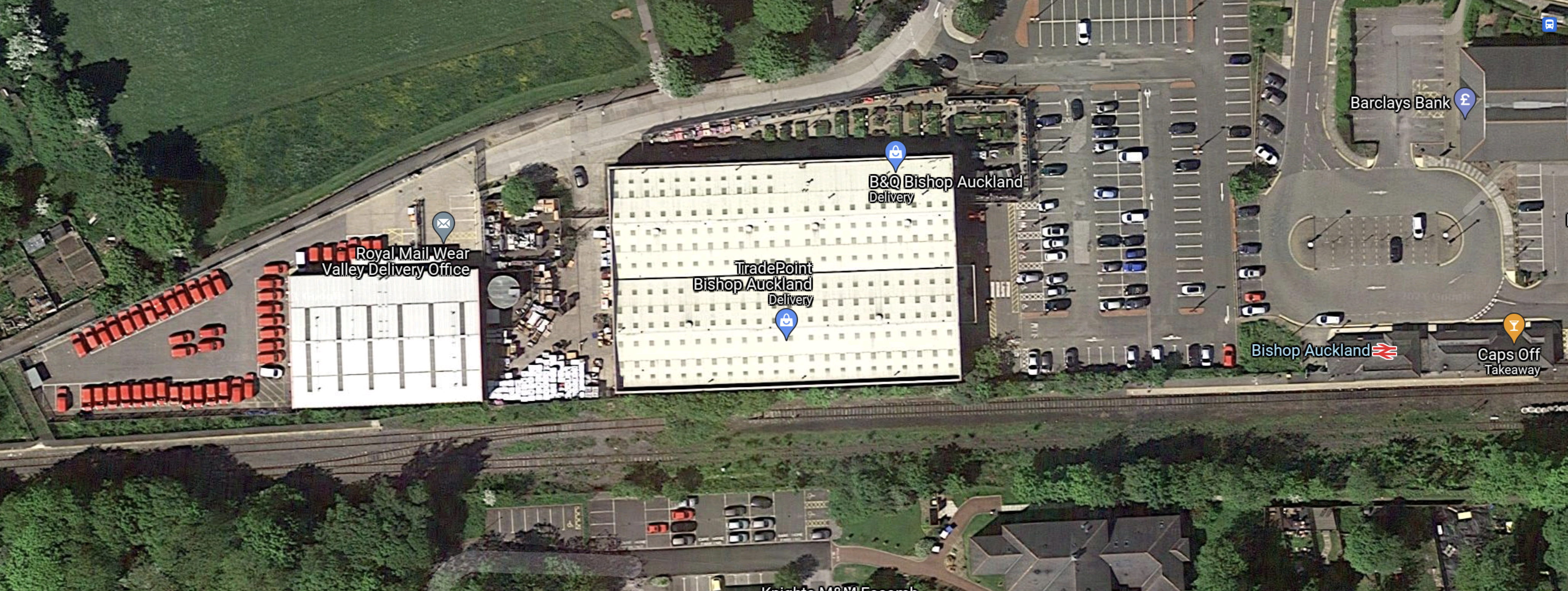
This Google Map shows Bishop Auckland station, where the Weardale Railway connects to the National Rail network.
Note.
- The station appears to be well-placed in the town.
- There is plenty of space for tracks connecting the two systems.
I suspect that building a combined through and terminal station that would satisfy the needs of all stakeholders would not be the most challenging of tasks.
Could The Extended Line Have A Japanese Fairy Godmother?
Consider.
- Hitachi’s train factory at Newton Aycliffe is five miles to the South of Bishop Auckland.
- Hitachi have stated that they are developing battery-electric trains for lines without electrification.
- Developers of modern trains with complicated computer systems seem to go through many software versions.
I have to ask the question, if Hitachi would like to have a twenty-mile test track on their doorstep?
If they were testing trains that were agnostic about their power supply, the Weardale Railway would not need to be electrified, although there could be a couple of charging systems.
Would Access To The Quarries At Wearhead Be Needed?
The original Weardale Railway was built to access the quarries at Wearhead, but they switched to road transport some years ago.
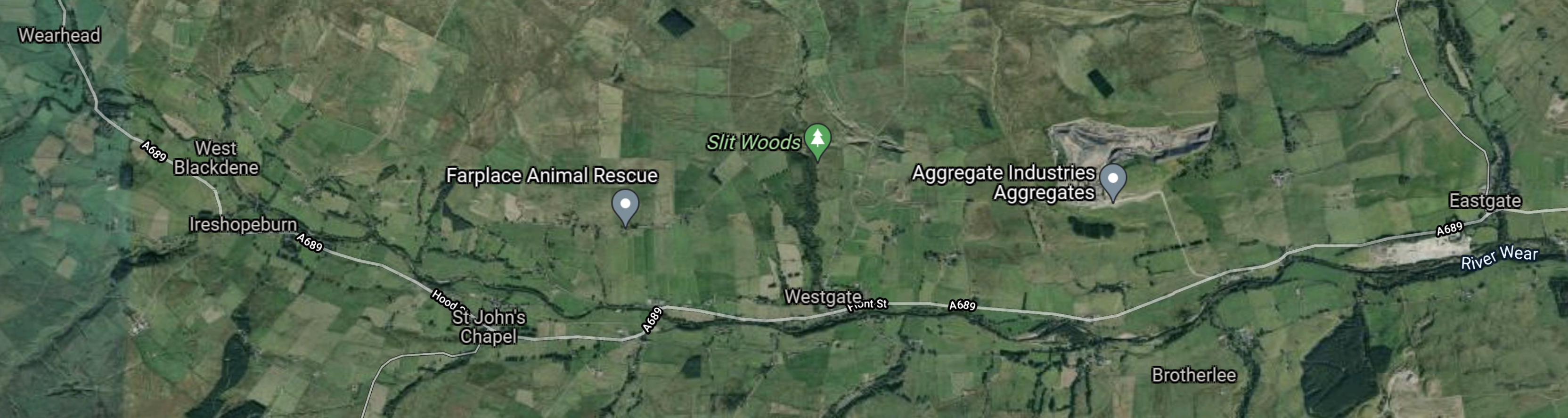
This Google Map shows the Wearhead area.
Note.
- Wearhead is in the North-West corner of the map.
- There is a quarry and there used to be a fluorspar mine.
- The white scar at the East of the map was a cement works.
Is there something, that could possibly be mined in this area, that could be taken out by train.
I think it should be born in mind, that mining and quarrying used to be a very dirty and carbon-intensive industry, but big mining companies are now embracing zero-carbon technology.
Could A Holiday Company Like Center Parcs Develop A Site In The Wear Valley?
I noticed a lot of caravans and chalets, as I examined the line.
Could a big operator like Center Parcs develop one of their holiday centres?
It could even be developed with a station.
Is New Housing Needed?
Does the local authority want to develop housing along the line?
What Rolling Stock Will Be Used?
There is no point in extending the line in these days of global warming without providing zero-carbon trains.
The Tees Valley Combined Authority is keen on hydrogen and there are good reasons.
- There is hydrogen available from chemical plants on Teesside.
- Hydrogen will give the trains a long range.
- The trains would probably only need refuelling once a day.
- In addition, Alstom are looking for an order for their Class 600 train, which is a conversion of a Class 321 train.
But I have my doubts about Alstom’s trains and Hitachi have doubts about hydrogen.
Consider.
- Do you really want to run hydrogen trains on a line where steam trains run?
- Darlington station is fully-electrified and it is also to be remodelled for more capacity and High Speed Two.
- Bishop Auckland and Darlington is just twelve miles.
- Darlington and Saltburn is just thirty miles.
With charging systems at Bishop Auckland, Saltburn and Stanhope, I am fairly sure Hitachi could develop an electric train for Teesside’s railways.
Conclusion
Hitachi could be key to the design of the reopening of the Darlington and Weardale Line.
Railfreight Goes Back To Diesel As Electricity Costs Soar
The title of this post, is the same as that of this article on Railnews.
This is the first paragraph.
Some rail freight operators have abandoned electric traction, at least for now, because the price of electricity has been rising sharply. The electricity tariffs include a 40 per cent renewable energy tax, and following the latest rises diesel traction is now cheaper. The drivers’ union ASLEF is calling for the government to intervene, but Freightliner has already taken action.
This quote from the article is from ASLEF General Secretary; Mick Whelan.
Moving freight by rail rather than road is, inherently, a carbon-efficient mode of transport and an environmentally-friendly way of doing business. Electric-hauled freight services reduce emissions by 99 per cent; even moving goods by diesel traction reduces emissions by 76 per cent.
It looks to me, that a reputable and trusted environmental economist could come up with a compromise price and possibly a solution to improve the situation.
Possible solutions could include.
- Use of Biodiesel or Hydrotreated Vegetable Oil
- More energy storage.
Surely, though, the long term solution is hydrogen-powered locomotives. or dual-fuel locomotives, as I wrote about in Freightliner Secures Government Funding For Dual-Fuel Project.
Battery Rather Than Hydrogen Trains Suggested In Sachsen Study
The title of this post, is the same as that of this article on the Railway Gazette.
This is the first paragraph.
The use of battery rather than hydrogen traction is recommended in a study into options for replacing diesel multiple-units on regional routes around Dresden where electrification is unlikely in the short to medium term.
They give the reason that battery power is a better short term option, where electrification is envisaged in the long-term.
I also think, that in the case of the German hydrogen trains, which are hydrogen-power only, this means that the trains will have to be replaced, as the electrification is installed. Whereas, with battery-electric trains, they just get more efficient as the wires go up and don’t need to be replaced. Although, their batteries might be removed to improve acceleration.
Dresden, Leipzig and that area of Germany also has a lot of electrification already, so charging will not be a problem.
But battery power would also get around the problem at Zwickau, where diesel multiple units run through the streets as trams to a station in the town centre.
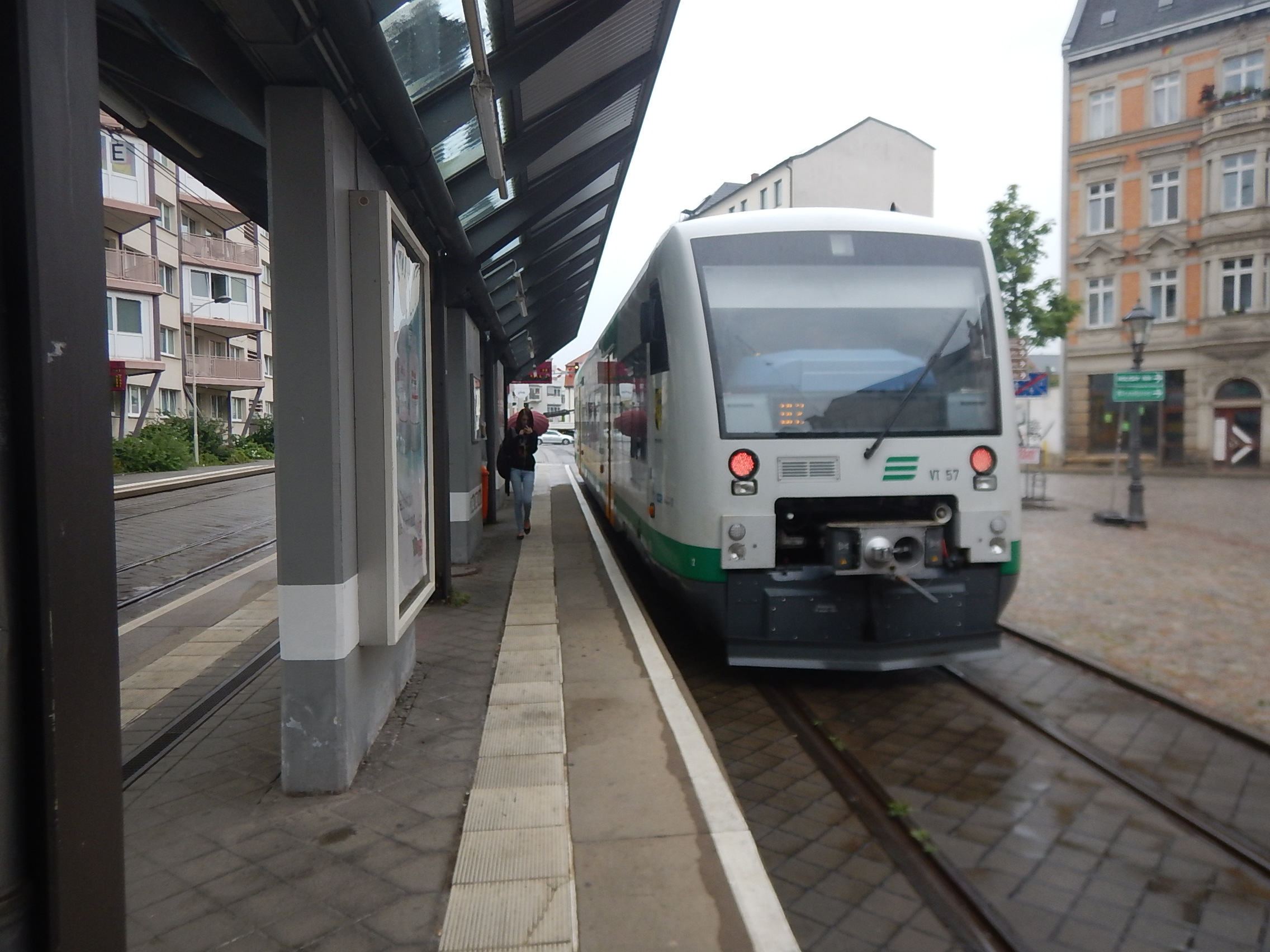
The picture shows a diesel multiple unit playing trams in Zwickau Zentrum station.
- Note the orange lights that flash on the train.
- Trams call at the other side of the platform.
- I wonder, if the Germans felt that battery-electric trains will be safer in Zwickau than hydrogen-powered trains.
It puzzles me, why this simple solution is not used more often to extend railways into town and city centres.
With battery-electric trains, there would be no need for any electrification.
Conclusion
The Germans seem to be going battery-electric train mad!
Perhaps, we should follow their example?
Ineos To Invest €2bn In European Electrolysis Plants
The title of this post is the same as that of this article on Engineering and Technology Magazine.
This is the introductory paragraph.
Chemicals giant Ineos has announced that it will invest more than €2bn in electrolysis plants in the region for the production of green hydrogen, a zero-carbon fuel with applications in transport, heating, and energy.
The article states that plants could be built in Norway, Germany, Belgium, France and the UK.
Conclusion
This is a big endorsement for hydrogen.
ITM Power Raises £250 million
The title of this post, is the same as that of this media release from ITM Power.
There is a also a sub-title.
Manufacturing Expanded To 5GW Per Annum By 2024
ITM Power are certainly going large.
Given the number of plans for electrolysers published around the world, a 5GW annual production is by no means over ambitious.
 The Anonymous Widower