Waste-to-Hydrogen Project Set For California
The title of this post, is the same as that of this article on Power Magazine.
This is the introductory paragraph.
A California company that produces renewable hydrogen has joined with a Louisiana construction group on a project to build a modular waste-to-hydrogen production facility.
These are some further points.
- The Californian company; Ways2H, also has a project in Japan.
- They aim to setup a pipeline of projects in 2021.
- The California Energy Commission has said the state is short of green hydrogen.
- The process can use paper and plastic waste or municipal solid waste.
- They can also handle medicinal waste.
- The systems appear to be transportable.
This paragraph is from the article.
Kindler said his company could produce “white hydrogen,” because the company’s process, which uses very high temperatures to turn waste plastics, wood, rubber and other biomass into gas and a carbon solid, can be used to sequester carbon dioxide and store it underground.
It looks to me, that if they make this system work, they will have found an alternative way to make hydrogen, by a zero-carbon method.
Conclusion
Could we see one of these plants in every local authority in the world to process all their waste into hydrogen?
I suspect in Ways2H’s plan for world domination, this is one of their objectives.
Glasgow To Roll Out ‘World’s Largest’ Fleet Of Hydrogen-Powered Refuse Trucks
The title of this post, is the same as that of this article on Cities Today.
Some points from the article.
- There will be nineteen trucks.
- The project is a joint venture between Scottish Power Renewables, BOC and ITM Power.
I think that refuse trucks could be a large application of hydrogen.
Toyota, Hitachi, JR East To Jointly Develop Hydrogen-Powered Trains
The title of this post, is the same as that of yjis article on The Mainichi.
This is the first two paragraphs.
TOKYO (Kyodo) — Toyota Motor Corp., Hitachi Ltd. and East Japan Railway Co. said Tuesday they will jointly develop hydrogen-powered trains as part of their efforts to reduce carbon emissions.
The three companies have agreed to collaborate on development of test railway vehicles equipped with hybrid systems that use hydrogen-fuel cells and storage batteries as their source of power.
It appears that Toyota will provide the fuel cell technology.
All Aboard The Bamford Hydrogen Bus Revolution
The title of this post, is the same as that of this article on Air Quality News.
This is the introductory paragraph.
Air Quality News editor Jamie Hailstone talks to JCB heir and hydrogen advocate, Jo Bamford, about why it is the fuel of the future for buses.
It is a good read, as Jo Bamford details his vision to change public transport with thousands of hydrogen-powered buses.
He talks in a common-sense manner, about the economics and practicalities of zero emission buses, of which this paragraph is typical.
‘I have a bus manufacturing business,’ he adds. ‘We make a diesel bus, a battery double-decker and a hydrogen double-decker. A battery double-decker will do 60% of the distance of a diesel bus and take 4.5 hours to charge. A hydrogen bus will do the same distance as a diesel bus and take seven minutes to fill up. If you are running a bus for 22 hours a day, you can’t afford to charge them up for 4.5 hours a day.
Jo Bamford finishes with.
I think hydrogen is a sexy, cool thing to be looking at.
I agree with him and we should get started on lots of hydrogen buses and their hydrogen supply network.
As I wrote in Daimler Trucks Presents Technology Strategy For Electrification – World Premiere Of Mercedes-Benz Fuel-Cell Concept Truck, Mercedes are going the hydrogen route with big trucks and these trucks will need a hydrogen supply network to be built in the UK.
So surely, we should look at decarbonisation of buses and heavy trucks in an holistic way, by creating that hydrogen supply network in the UK.
Ryze have now obtained planning permission for their first big electrolyser at Herne Bay and it now has its own web site, which includes this video, explaining Ryze Hydrogen’s philosophy.
Let’s hope that this first electrolyser, grows into the network the country needs.
Dutch Province To Introduce Regular Hydrogen Services
The title of this post, is the same as that of this article on the International Railway Journal.
This is the introductory paragraph.
The regional transport authority in the Dutch province of Groningen has announced plans to introduce hydrogen trains for its regional concession following a successful test earlier this year.
In March 2019, I went to Groningen and explored the railways in the area, where Stadler GTW trains are used for the train services.


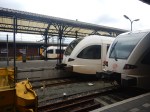

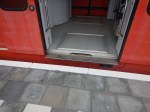
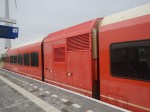

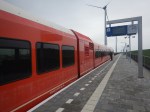
These trains are a smaller version of Greater Anglia’s Class 755 trains.
In The Train Station At The Northern End Of The Netherlands, I describe a visit to Eemshaven station to the North of Groningen.
I said this.
At the turnround at Eemshaven with the driver, he indicated that there had been speculation about battery and hydrogen trains in the North of The Netherlands.
It appears the driver was right.
The Bridge Over The Ems
The article also indicates that the bridge over the River Ems, that I wrote about in From Groningen To Leer By Train, could be opening soon.
This video shows what the new bridge will look like.
And this Google Map shows the current state of the bridge.

I’m not sure of the date of the picture, but there still appears a lot of work to do.
Daimler Trucks Presents Technology Strategy For Electrification – World Premiere Of Mercedes-Benz Fuel-Cell Concept Truck
This title of this post, is the same as that of this article on the Daimler Global Media Site.
These are the opening bullet points.
- Mercedes-Benz GenH2 Truck, a fuel-cell truck with a range of up to 1,000 kilometers and more for flexible and demanding long-haul transport – customer trials in 2023, start of series production in second half of this decade.
- Mercedes-Benz eActros LongHaul, a battery-electric truck with a range of about 500 kilometers for energy-efficient transport on plannable long-haul routes – projected to be ready for series production in 2024.
- Mercedes-Benz eActros, a battery-electric truck with a range of well over 200 kilometers for heavy urban distribution to go into series production in 2021.
- ePowertrain global platform architecture offers synergies and economies of scale.
Judging by the spelling, this media copy, is from the bad spellers of Trumpland.
It looks to be a case of Daimler have called up the heavy brigade.
The best way to learn more is to search for “Mercedes-Benz GenH2 Truck”
There’s some good YouTube videos.
From this video, I ascertained the following.
- The truck has a stainless steel tank for liquid hydrogen on either side between the front and rear wheels.
- There are two 150 kW fuel cells, which appear to be of an inhouse Mercedes design.
- There is a 70 kWh battery between the two liquid hydrogen tanks low down in the middle of the truck.
- The battery can supply 400 kW, if needed.
This screen capture shows a cutaway from the video.
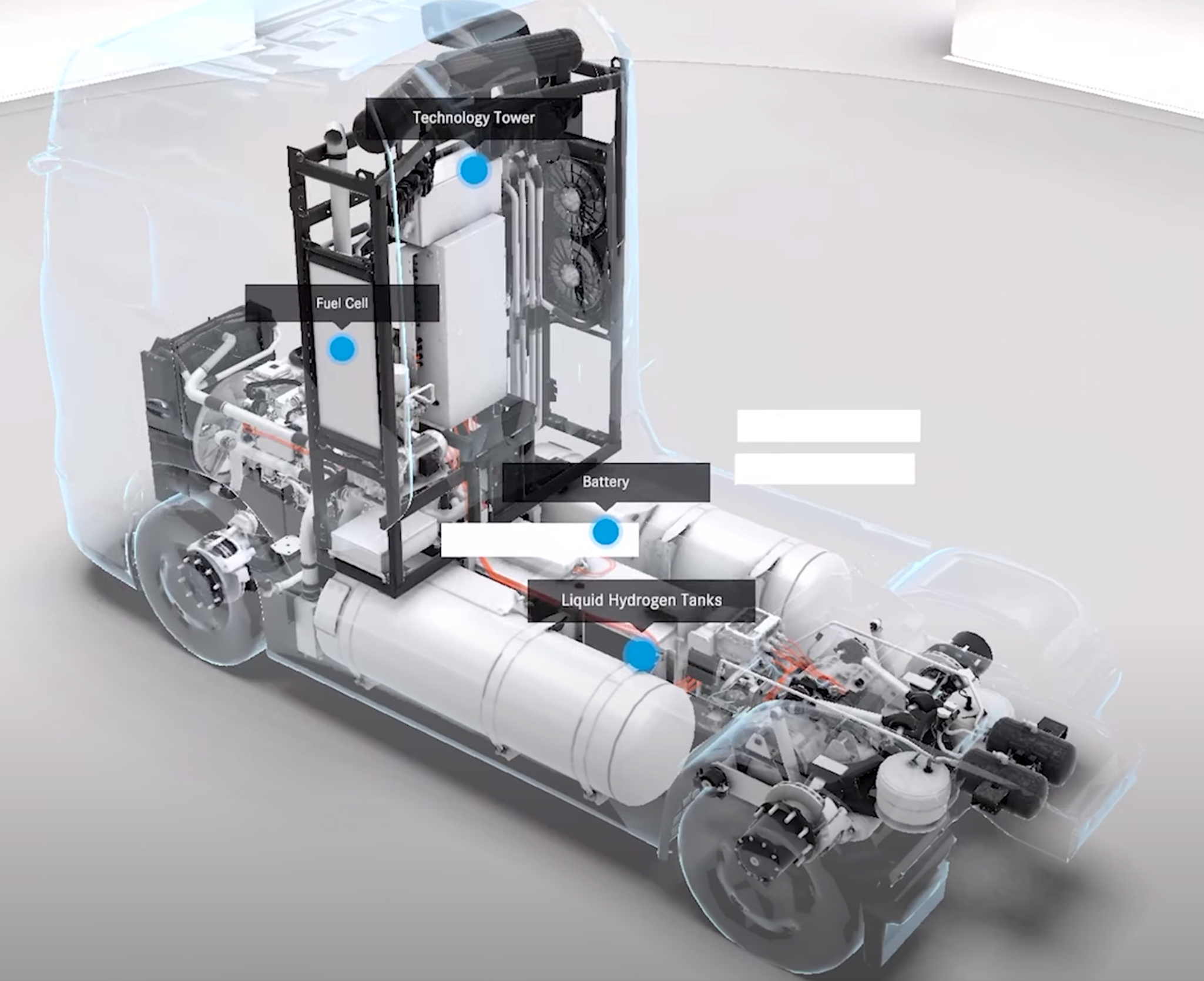
I am impressed by the design.
- Everything is fitted neatly in the small space.
- The design doesn’t seem to intrude into the load space, so I would assume, it would work with all existing trailers and bodies.
- The battery position must help stability and driveability.
- It looks like a design, that would be friendly to cyclists, as the hydrogen tanks act as a round safety barrier.
I shall look at the operation.
Consider.
- The current Actros trucks have engines with a power of up to 500 HP or 400 kW.
- The 70 kWh battery can provide 400 kW for about 10 minutes.
- Regenerative braking to the battery must be possible.
- There’s probably a well-programmed computer between the driver and the electric transmission.
I wouldn’t be surprised that the truck is more of a battery-hydrogen hybrid, than a pure hydrogen truck.
Suppose, it was hauling a heavy load from Felixstowe to Manchester.
- Will the truck charge the battery before it leaves Felixstowe? It could use the fuel cells or be plugged in to a high-performance charger. 70 kWh, is not the biggest of batteries compared to say those on a train.
- Once on the A45 (Sorry! A14), it would accelerate quickly to the cruising speed, probably using mostly battery power.
- It would then cruise mainly using hydrogen and the fuel cells to the destination. The truck would be optimised for an economic cruise.
- During any deceleration, regenerative braking to the battery would be used.
- Battery power might be called upon on any inclines or after a stop.
Intriguingly, a range of 1000 kilometres or 620 miles would allow many out-and-bank journeys in the UK, France, Germany or Italy to be performed without refuelling.
Leeds, Liverpool, Manchester and Newcastle are all under 300 miles from the Suffolk port.
Conclusion
I used to part-own a company, that financed trucks, moving loads into and out of Felixstowe in the 1980s.
From what I learned then of the heavy truck market, hydrogen-powered heavy trucks are going to be a winner, especially, if most journeys are out-and-back from one end.
Hydrogen-Powered Train Makes UK Maiden Journey
The title of this post, is the same as that of this article on the BBC.
This is said in the article.
A hydrogen-powered train has travelled on Britain’s rail network for the first time.
The prototype, called the Hydroflex, made a 25-mile round trip through Warwickshire and Worcestershire, reaching speeds of up to 50 mph.
Its next phase is to move the hydrogen tanks, fuel cell and battery out of a carriage and stash them underneath the train.
The aim is for the train to start carrying paying passengers by the end of 2021.
Note that the article contains a broadcast-quality video.
There are now two hydrogen-powered trains in development in the UK.
- This Class 799 train by Birmingham University and Porterbrook, which has been converted from a Class 319 train.
- The Class 600 train by Alstom, which is being converted from a Class 321 trains.
Both the trains being converted are British Rail trains based on the Mark 3 coach design.
- They were built originally in the 1980s and 1990s.
- They were built for commuting over medium distances.
- They are 100 mph trains.
- They will keep their pantographs, so running using 25 KVAC overhead electrification.
Both trains could be fitted with quality interiors.
But from what has been disclosed the designs will be quite different.
- The Class 799 train will be four cars, as opposed to three cars of the Class 600 train.
- The Class 600 trains will have large hydrogen tanks inside the train, whereas the Class 799 train will have smaller ones underneath the train.
- I would expect the Class 600 train to have a longer range between refuelling.
- The Class 799 train will also be a tri-mode train, with the ability to use 750 VDC third-rail electrification.
As there are nearly over a hundred Class 321 trains and nearly ninety Class 319 trains, if the hydrogen conversion is successful, we could be seeing a lot of hydrogen trains on the UK rail network.
The Mathematics Of A Hydrogen-Powered Freight Locomotive
If we are going to decarbonise the railways in the UK and in many countries of the world, there is a need to replace diesel locomotives with a zero-carbon alternative.
In looking at Airbus’s proposal for hydrogen powered aircraft in ZEROe – Towards The World’s First Zero-Emission Commercial Aircraft, it opened my eyes to the possibilities of powering freight locomotives using gas-turbine engines running on liquid hydrogen.
A Hydrogen-Powered Equivalent Of A Class 68 Locomotive
The Class 68 Locomotive is a modern diesel locomotive used on UK railways.
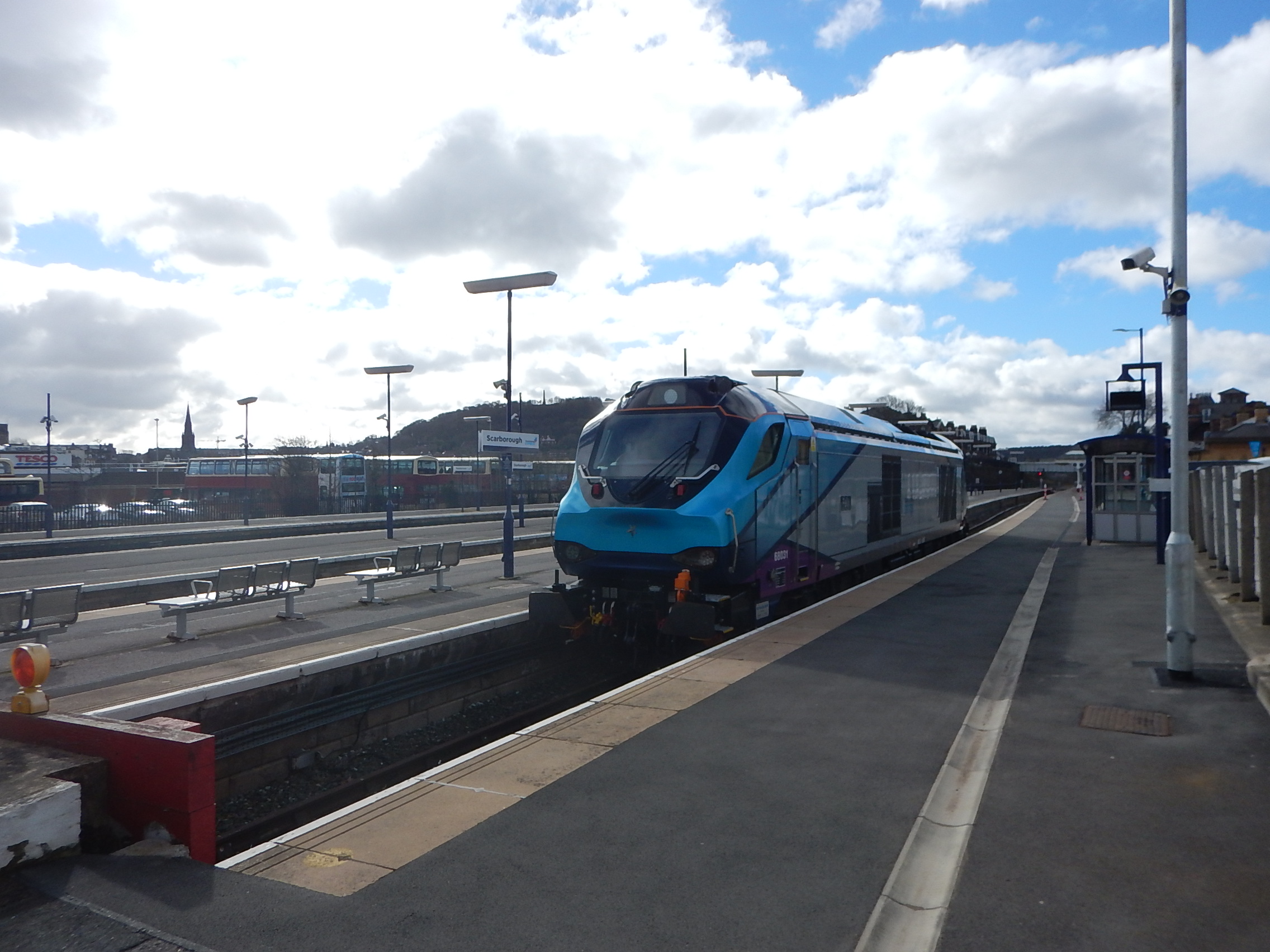
This is a brief specification
- It can pull both passenger and freight trains.
- It has an operating speed of 100 mph.
- The diesel engine is rated at 2.8 MW
- It has an electric transmission.
- It has a 5,000 litre diesel tank.
- It weighs 85 tonnes.
- It is 20.5 metres long.
There are thirty-four of these locomotives in service, where some haul passenger trains for Chiltern Railways and TransPennine Express.
Rolls-Royce’s Staggering Development
Staggering is not my word, but that of Paul Stein, who is Rolls-Royce’s Chief Technology Officer.
He used the word in a press release, which I discuss in Our Sustainability Journey.
To electrify aviation, Rolls-Royce has developed a 2.5 MW generator, based on a small gas-turbine engine, which Paul Stein describes like this.
Amongst the many great achievements from E-Fan X has been the generator – about the same size as a beer keg – but producing a staggering 2.5 MW. That’s enough power to supply 2,500 homes and fully represents the pioneering spirit on this project.
This generator is designed for flight and the data sheet for the gas-turbine engine is available on the Internet.
- It has a weight of under a couple of tonnes compared to the thirteen tonnes of the diesel engine and generator in a Class 68 locomotive.
- It is almost as powerful as the diesel.
- It looks to be as frugal, if not more so!
- Rolls-Royce haven’t said if this gas-turbine can run on aviation biofuel, but as many of Rolls-Royce’s large engines can, I would be very surprised if it couldn’t!
Rolls-Royce’s German subsidiary; MTU is a large producer of rail and maritime diesel engines, so the company has the expertise to customise the generator for rail applications.
Could this generator be modified to run on liquid hydrogen and used to power a Class 68-sized locomotive?
- The size of the generator must be an advantage.
- Most gas-turbine engines can be modified to run on natural gas and hydrogen.
- Its power output is electricity.
- There’s probably space to fit two engines in a Class 68 locomotive.
In addition, a battery could be added to the transmission to enable regenerative braking to battery, which would increase the efficiency of the locomotive.
Storing Enough Hydrogen
I believe that the hydrogen-powered locomotive should carry as much energy as a Class 68 locomotive.
- A Class 68 locomotive has a capacity of 5,000 litres of diesel fuel.
- This will have a mass of 4.19 tonnes.
- Each kilogram of diesel can produce 47 Mega Joules of energy.
- This means that full fuel tanks contain 196,695 Mega Joules of energy.
- Each litre of liquid hydrogen can produce 10.273 Mega Joules of energy
This means that to carry the same amount of energy will need 19,147 litres or 19.15 cubic metres of liquid hydrogen.
- This could be contained in a cylindrical tank with a diameter of 2 metres and a length of 6 metres.
- It would also weigh 1.38 tonnes.
The E-Fan-X aircraft project must have worked out how to store, similar amounts of liquid hydrogen.
Note that I used this Energy And Fuel Data Sheet from Birmingham University.
Running On Electrification
As the locomotive would have an electric transmission, there is no reason, why it could not run using both 25 KVAC overhead and 750 VDC third-rail electrification.
This would enable the locomotive to haul trains efficiently on partially electrified routes like between Felixstowe and Leeds.
Hydrogen-Powered Reciprocating Engines
When it comes to diesel engines to power railway locomotives and big trucks, there are few companies bigger than Cummins, which in 2018, turned over nearly 24 billion dollars.
- A large proportion of this revenue could be at risk, if governments around the world, get serious about decarbonisation.
- Cummins have not let the worst just happen and in 2019, they acquired Hydrogenics, who are a hydrogen power company, that they now own in an 81/19 partnership with Air Liquide.
- Could all this expertise and Cummins research combine to produce powerful hydrogen-powered reciprocating engines?
- Other companies, like ABC and ULEMCo are going this route, to modify existing diesel engines to run on hydrogen or a mixture of hydrogen and diesel.
I believe it is very likely, that Cummins or another company comes up with a solution to decarbonise rail locomotives, based on a conversion of an existing diesel engine.
Refuelling Hydrogen-Powered Rail Locomotives
One of problems with hydrogen-powered trucks and cars, is that there is no nationwide refuelling network providing hydrogen. But railway locomotives and trains usually return to depots at the end of the day for servicing and can be fuelled there.
Conclusion
I feel that there are several routes to a hydrogen-powered railway locomotive and all the components could be fitted into the body of a diesel locomotive the size of a Class 68 locomotive.
Consider.
- Decarbonising railway locomotives and ships could be a large market.
- It offers the opportunities of substantial carbon reductions.
- The small size of the Rolls-Royce 2.5 MW generator must offer advantages.
- Some current diesel-electric locomotives might be convertible to hydrogen power.
I very much feel that companies like Rolls-Royce and Cummins (and Caterpillar!), will move in and attempt to claim this lucrative worldwide market.
What Size Of Hydrogen Tank Will Be Needed On A ZEROe Turbofan?
I believe that Airbus’s proposed ZEROe Turbofan is designed for the same market segment as a A 320 neo.
- This aircraft has a fuel capacity of 26,730 litres of kerosene.
- This will have a mass of 21.38 tonnes.
- Each kilogram of kerosene can produce 46 Mega Joules of energy
- This means that full fuel tanks contain 983, 480 Mega Joules of energy.
- Each litre of liquid hydrogen can produce 10.273 Mega Joules of energy
This means that to carry the same amount of energy will need a 95,734.5 litres or 95.7 cubic metres of liquid hydrogen.
- This could be contained in a cylindrical tank with a diameter of 4 metres and a length of 7.6 metres.
- It would also weigh 6.93 tonnes.
As the range of the A 320 neo is given as 6,300 kilometres and that of the ZEROe Turbofan, as just 3,700 kilometres. the tank could probably be shorter.
Note that I used this Energy And Fuel Data Sheet from Birmingham University.
Conclusion
Carrying as much energy as an A 320 neo will be difficult.
- Range will be reduced.
- A new more efficient airframe will be necessary.
- As volume is probably more of a problem than weight, the fuselage might be lengthened by a few metres.
Designing the hydrogen system will be challenging, but I would be surprised if it were an insurmountable problem.
 The Anonymous Widower