Rossendale Reopening Prospect
The title of this post is the same as that of an article in the February 2019 Edition of Modern Railways.
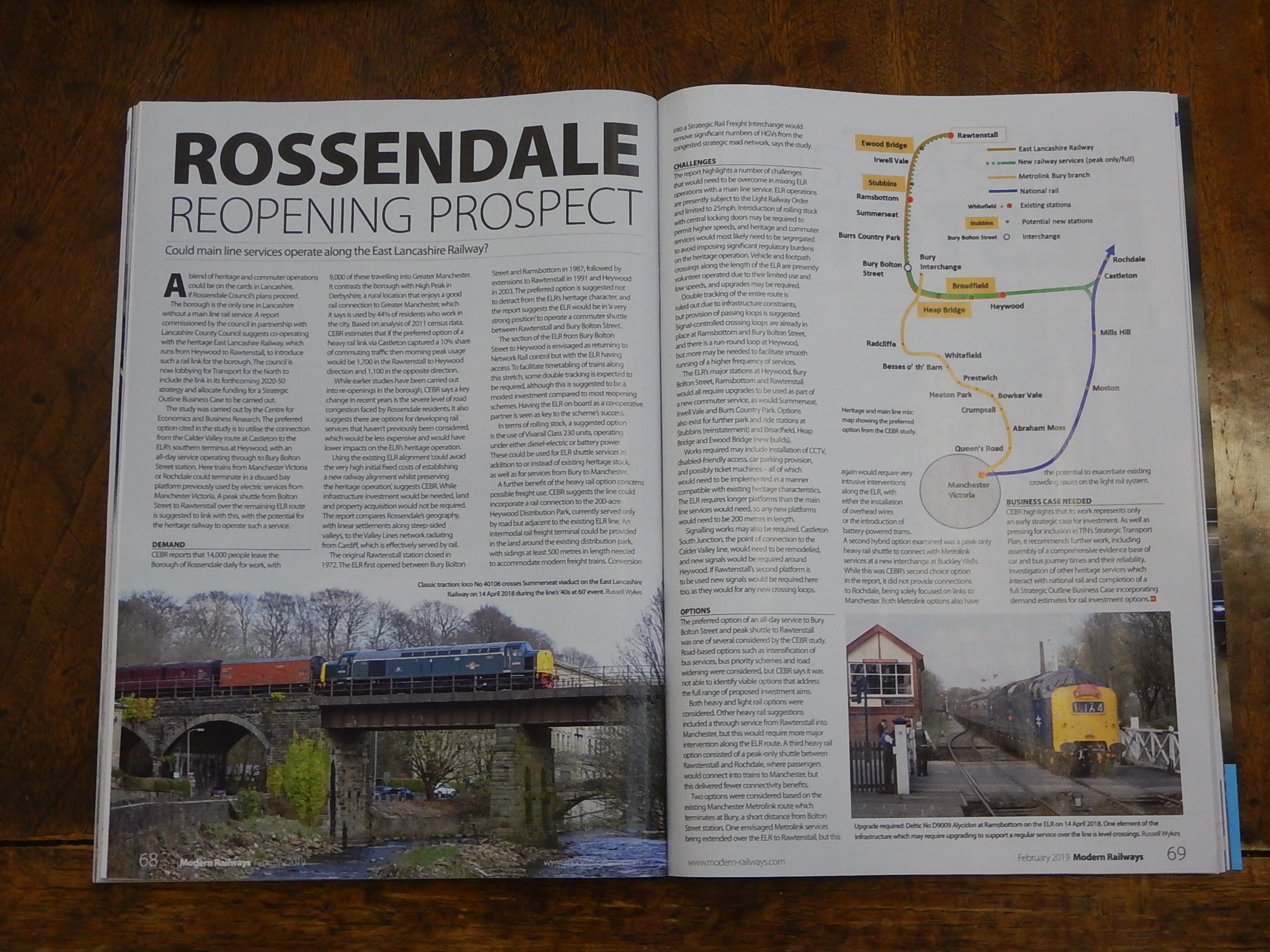
This is the opening two paragraphs.
A blend of heritage and commuter operations could be on the cards in Lancashire, if Rossendale Council’s plans proceed.
The borough is the only one in Lancashire without a main line rail service. A report commissioned by the council in partnership with Lancashire County Council suggests co-operating with the heritage East Lancashire Railway, which runs from Heywood to Rawstenstall, to introduce such a rail link for the borough.
Yesterday, I had a comment read out on the BBC, as I discussed in Wake Up To Money – New Stations.
Wake Up To Money yesterday was broadcast from Darwen, which is only a valley away from Rossendale.
- One of the complaints on the program was about crowded roads and bad transport links to Manchester and Manchester Airport.
- It looks to me, that the proposed Rossendale services will fulfil a similar need.
- The main objective appears to be to create good links to Manchester and Manchester Airport, with a secondary objective of creating a link across the Pennines to Leeds with a change at Rochdale.
The article gives more details of the proposal.
Track
The plan envisages reinstating the route between Rawtenstall and Castleton Junction on the Calder Valley Line.
The section between Rawtenstall and Heywood stations, via Bury Bolton Street station is the heritage line of the East Lancashire Railway (ELR). It is best described as predominately single-track with passing loops.
The article says this about improving the track.
The section of the ELR from Bury Bolton Street to Heywood is envisaged as returning to Network Rail control but with the ELR having access. To facilitate timetabling of trains along the stretch, some double-tracking is expected to be required, although this is suggested to be a modest investment compared to most reopening schemes. Having the ELR on board as a co-operative partner is seen as key to the scheme’s success.
Having flown my virtual helicopter along the line, it looks to me, that it could become another scenic route out of Manchester.
Castleton Junction
This Google Map shows Castleton Junction, where the East Lancashire Line meets the Calder Valley Line.
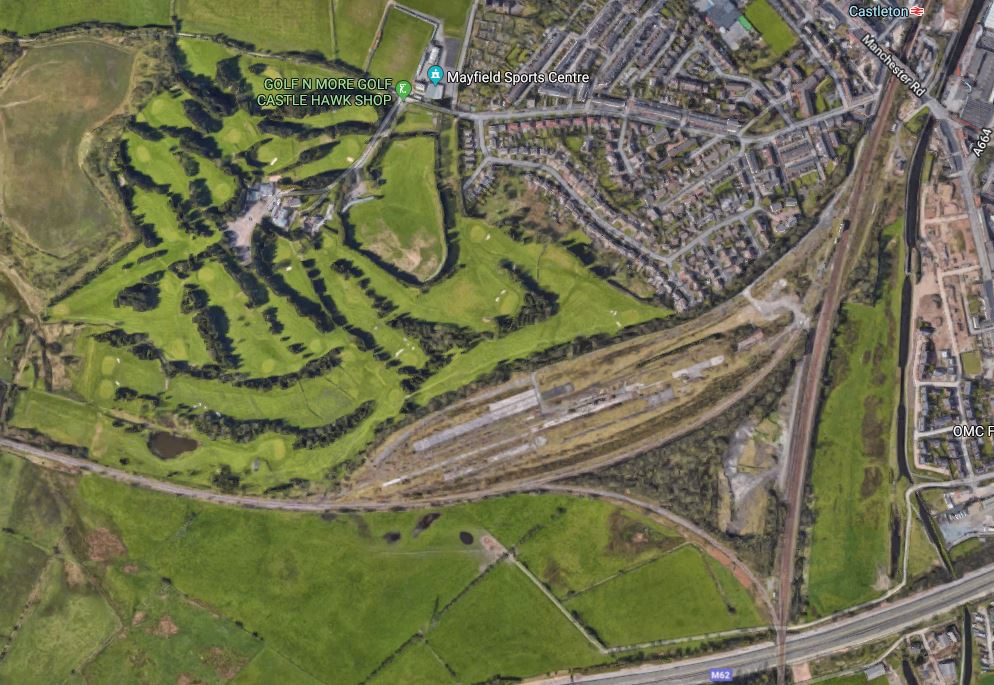
Note.
- The Calder Valley Line runs North-South.
- The ELR goes off to the West.
- Castleton station is in the North-East corner of the map.
What was or is the large site to the North-West of the junction?
The Junction will need to be upgraded and resignalled.
Electrification
It would be very unlikely, that the route will be electrified.
Although, I suppose there is a chance, that the Calder Valley Line might be electrified, to create an electrified route between Leeds and Manchester Victoria.
- If this were to happen, then there would be electrification between Manchester Victoria and Rochdale.
- Castleton Junction, where the new route would join the Calder Valley Line would be electrified.
This would make it easier and more likely for battery-electric trains to work the new route.
Possible Routes
Three routes are suggesting in the article.
- Manchester Victoria and Bury Bolton Street
- Bury Bolton Street and Rochdale
- Bury Bolton Street and Rawtenstall – Peak-Hour shuttle.
It is suggested that the third route would be run by the ELR.
Rolling Stock
The article says this about rolling stock.
In terms of rolling stock, a suggested option is the use of Vivarail Class 230 units, operating under either diesel-electric or battery power. These could be used for ELR shuttle services in addition to or instead of existing heritage stock, as well as for services from Bury to Manchester.
The Class 230 trains are an obvious choice, but I think that other trains could also be suitable.
These are my thoughts.
Class 230 Trains
I described a ride in a Class 230 train in Battery Class 230 Train Demonstration At Bo’ness And Kinneil Railway.
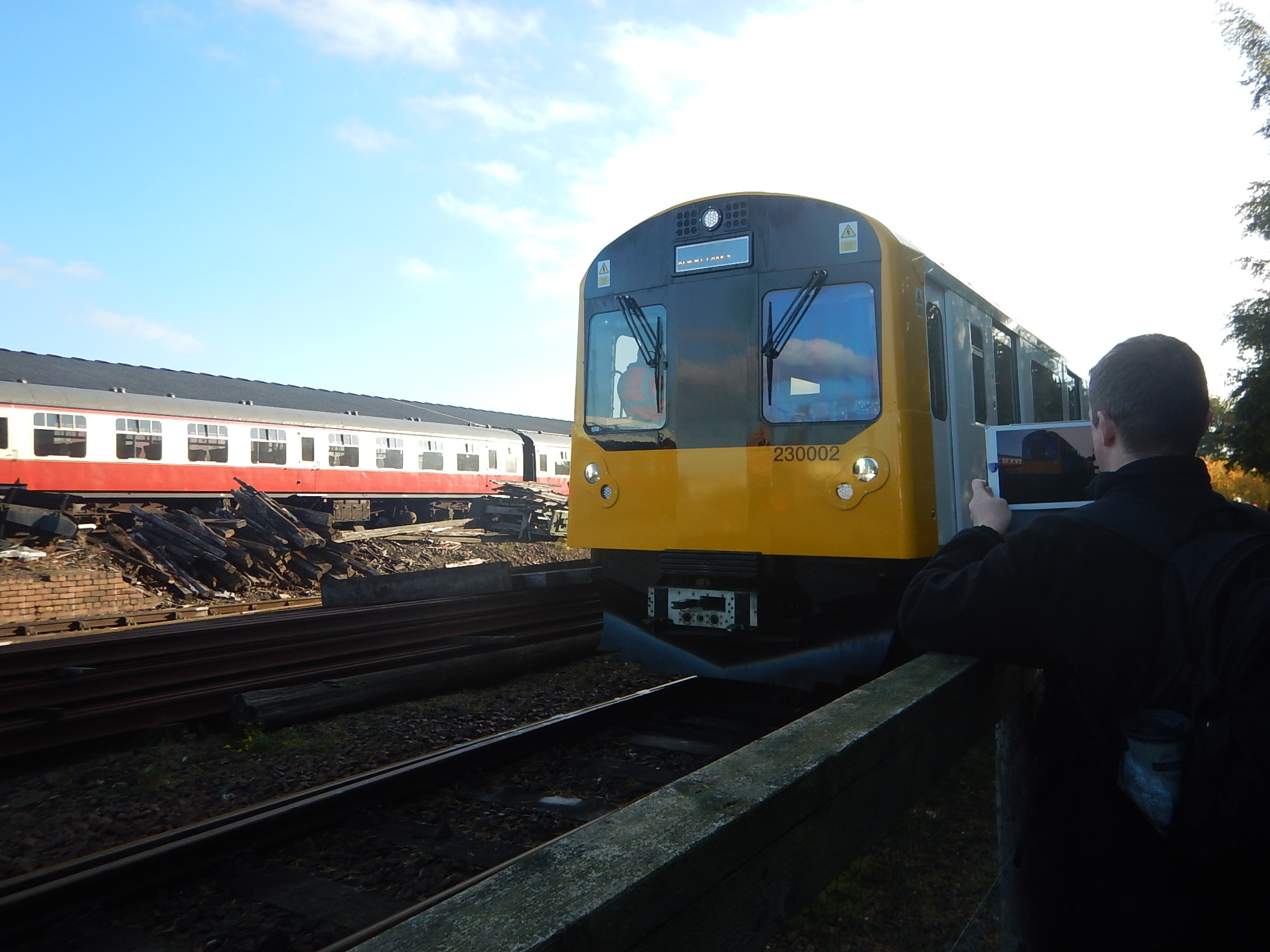
The Class 230 train would have these characteristics.
- The three-car train has a useful capacity of around 300 passengers.
- The range on battery power should enable a service between Bury Bolton Road and Manchester Victoria stations.
- The batteries can be charged in under ten minutes.
- The operating speed is 60 mph.
- The trains have been designed to be easy to service and this can be done on a remote basis.
- The trains are of an age, to fit in well on a heritage railway.
- I suspect the average competent heritage railway could do the servicing.
The trains also have the advantage of large windows for looking at the scenery.
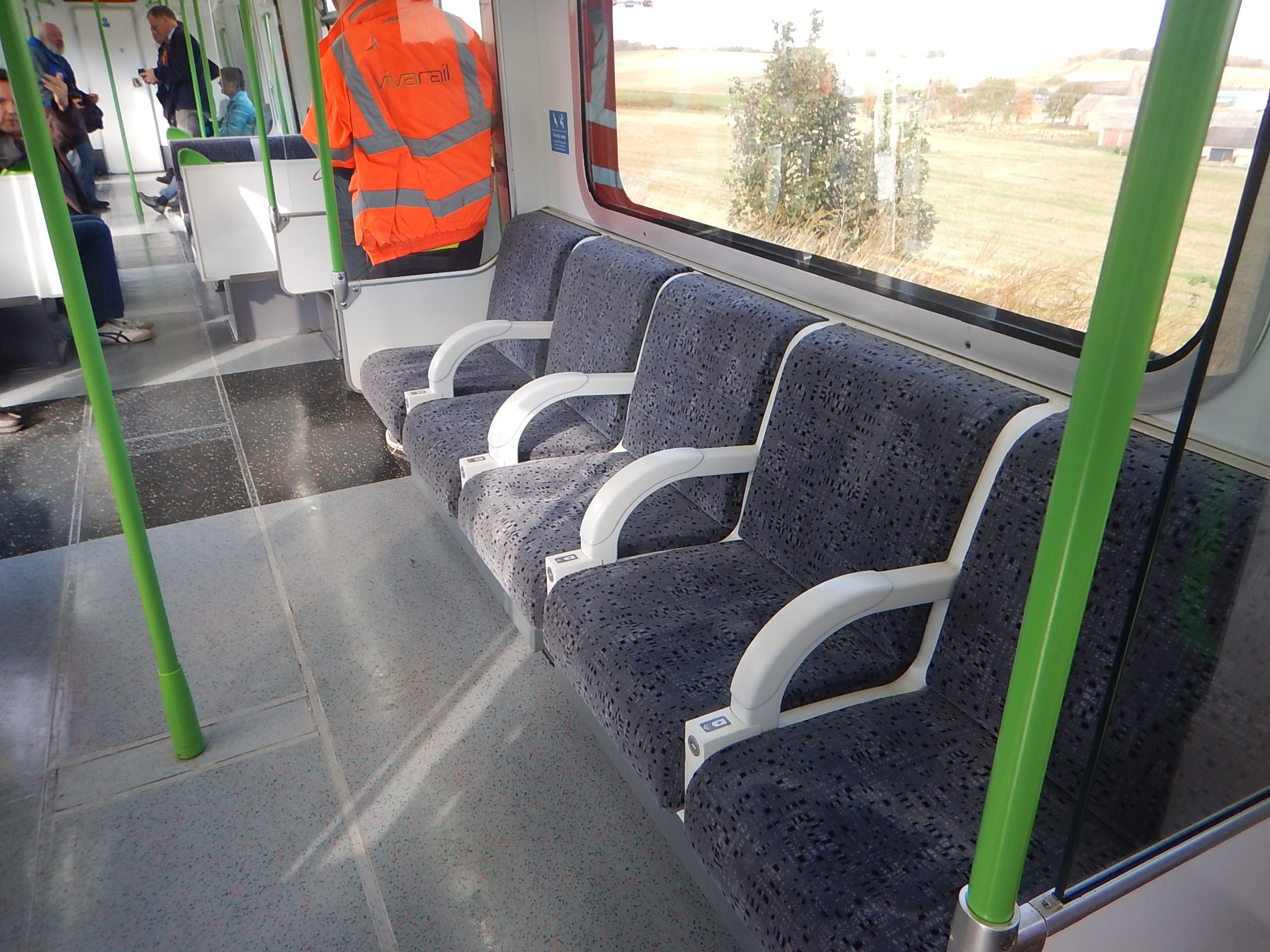
The trains would need to be charged at the end of the route and I suspect that Vivarail’s fast charging system would handle this in the terminal stations.
Class 769 Trains
Class 769 trains are electro-diesel trains, that use their diesel engines, where there is no 25 KVAC overhead electrification.
They are four-car trains with a passenger capacity of over 300 passengers.
They would have a very big advantage for the train operator.
Services across Manchester are often paired to give travellers the chance to do cross-city journeys without changing trains.
Using Class 769 trains would enable more services to be paired up.
Class 399 Tram-Trains
Class 399 tram-trains are under trial in Sheffield and they will also be used on the South Wales Metro.
The terrain in Rossendale involves a hundred metre or so climb from Bury Bolton Street to Rawtenstall. Rochdale is perhaps fifty metres higher than Bury Bolton Street.
Consider a Class 399 tram/train, working between Bury Bolton Street and Rawtenstall stsations.
- Wikipedia gives the weight of the vehicle as 66 tonnes.
- The altitude difference is 120 metres.
- I will assume 200 passengers at 90 Kg. each, which gives a weight of 12 tonnes.
This means that the train has a increase of potential energy of 25 kWh at Rawtenstall station. This would be easily stored in an appropriately-sized traction battery.
It would appear that tram-trains should be able to climb to Rawtenstall, provided they could get to Bury with a full battery.
I look at this in detail in Could A Class 399 Tram-Train With Batteries Go Between Manchester Victoria And Rochdale/Bury Bolton Street/Rawtenstall Stations?
Alstom Breeze Trains
Alston Breeze trains could be a possibility, if hydrogen trains are compatible with steam trains.
The trains would also be able to work across Manchester, as the Class 769 trains will be able to.
Battery-Electric Multiple Units
In Northern’s Battery Plans, I discuss CAF’s proposal to Northern to create battery-electric Class 331 trains.
These could be ideal.
Diesel Multiple Units
Northern have lots of better quality diesel multiple units including Class 156 and Class 170 trains. The company also has around sixty new Class 195 diesel multiple units on order.
These could obviously handle the route, but would it be better to use battery or more capable bi-mode trains on the route?
Diesel Use In Manchester
I suspect too, that train companies, their staff, passengers and all Mancunians would like to see Central Manchester’s railways become a diesel-free zone.
Train Timings
I obviously don’t have accurate figures, but I have a feeling that most of these trains could do a round trip in an hour between Manchester Victoria and Bury Bolton Street stations. The Class 230 trains would probably have time for a fast charge at each end of the route.
My Choice Of Train
It will be Class 230 or Class 769 trains.
Both trains could work the services to Bury Bolton Street station from Manchester Victoria and Rochdale stations.
The Class 769 has two advantages.
- It is the larger train.
- It could use its electric capability to cross Manchester.
Both trains wouldn’t look out of place running a shuttle between Bury Bolton Street and Rawtenstall stations, as they are rebuilt trains from a previous era.
Stations
A few points about the existing stations.
Bury Bolton Street Station
Bury Bolton Street station has four platforms and will be the interchange between the new services and those of the ELR.
The station has a bay platform that faces South East.
With modern signalling, I would expect that it could handle four trains per hour (tph).
Perhaps, these could be two tph from both Manchester Victoria and Rochdale stations.
Heywood Station
This Google Map shows Heywood station.
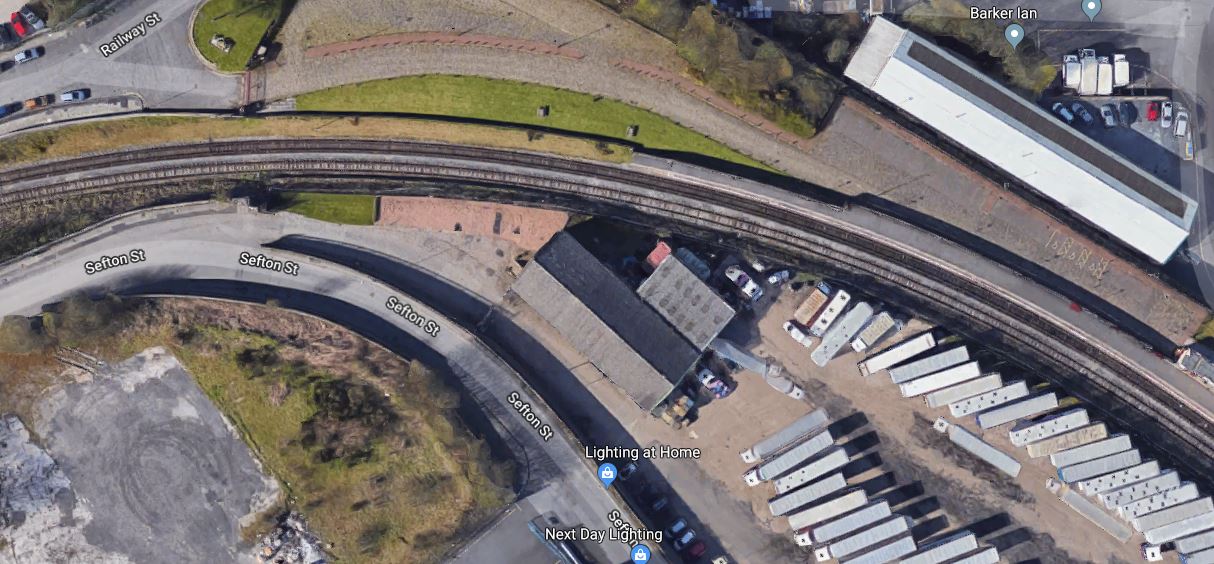
At present it has a long single curved platform.
I suspect to accommodate the new services, which could be four tph in both directions, the station would need a second platform.
Ramsbottom Station
This Google Map shows Ramsbottom station.
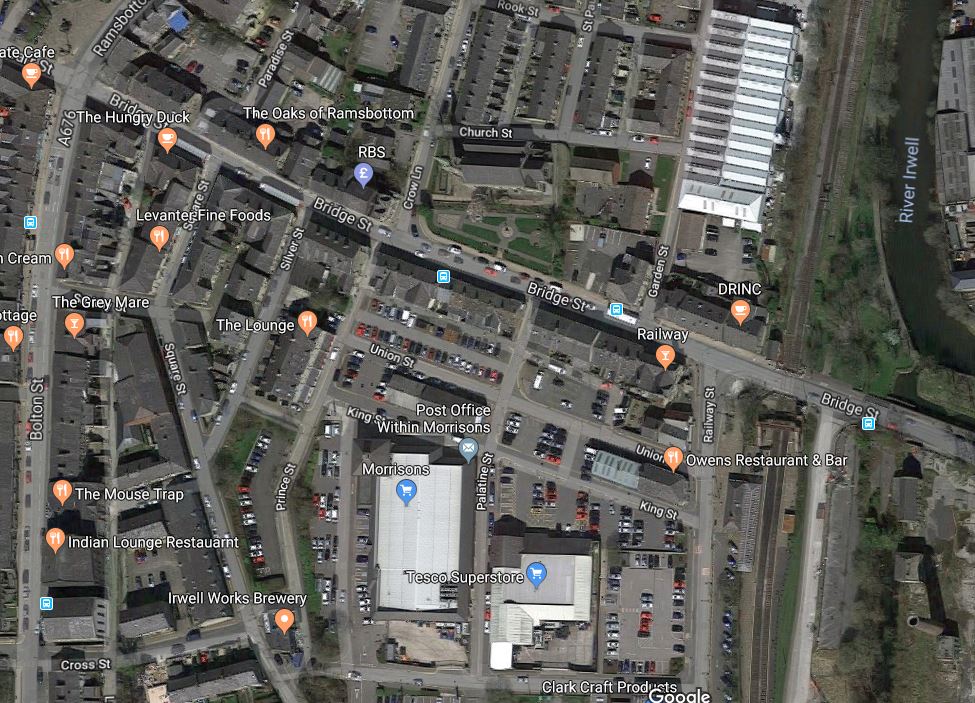
It is a two platform station, which appears to be close to the Town Centre and a Tesco Superstore and a Morrison’s.
Rawtenstall Station
This Google Map shows Rawtenstall station.
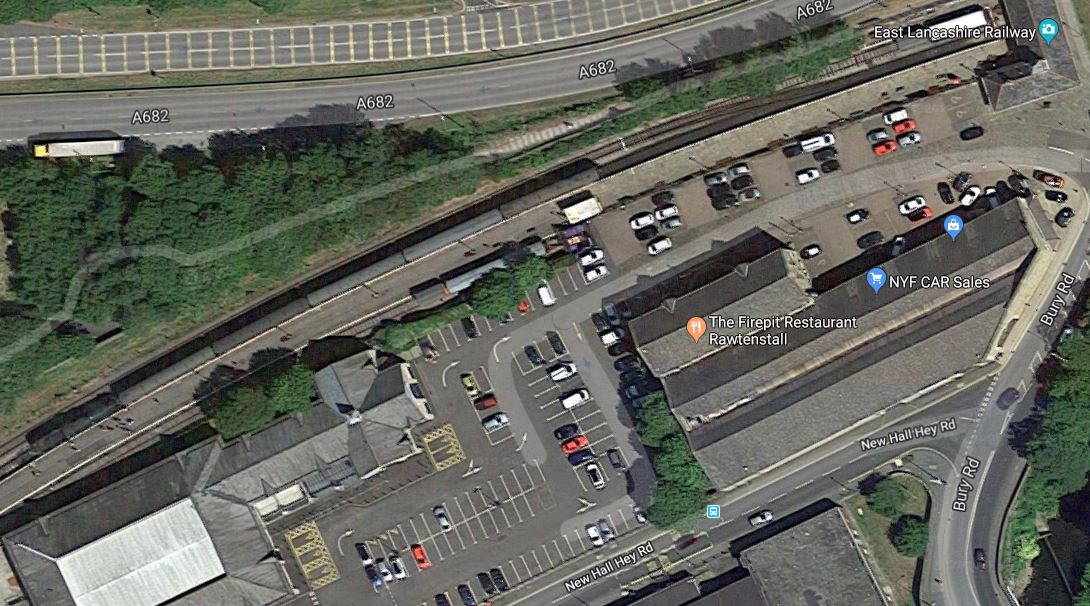
Note, the train in the single platform with a run round loop for a locomotive.
The article says it would be possible to create a second platform at the station.
It would appear that if Class 230 trains were to be used for the proposed.Peak Hour service to Rawtenstall station, then there would be space for installing a fast charger.
Rochdale Station
Rochdale station will be a terminus for services from Bury Bolton Street station.
This paragraph in the Wikipedia entry for Rochdale station describes the new bay platform at the station and how it is used.
In 2015, construction on a fourth railway platform began. It is located at the south end of the main island platform, with the southbound through line having been re-aligned slightly further east to accommodate the new terminating line.
This section of the Calder Valley Line appears to be very busy with a train every four minutes.
I wonder, if by diverting some services to Bury Bolton Street station, this helps ease traffic on the Calder Valley Line.
Could trains do the following triangular route?
- Manchester Victoria
- Heywood
- Bury Bolton Street
- Heywood
- Rochdale
- Manchester Victoria
Train timetablers with much more knowledge than myself, will have fun getting a workable timetable.
New Stations
About half-a-dozen new stations will need to be built.
Most will probably be fairly simple affairs and those North of Bury Bolton Street station could probably by just a single platform.
There is one possibly proposed station, that could be more complicated.
Buckley Wells station could be built where the Bury Line of the Manchester Metrolink and the East Lancashire Line cross by the A56.
Park-and-Ride stations are also suggested in the article at Broadfield, Ewood Bridge, Heap Bridge and Stubbins.
Freight
The article also raises the possibility of running freight trains between the Calder Valley Line and Heywood.
This is said.
,The line could incorporate a rail connection to the 200-acre Heywood Distribution Park, currently served only by road, but adjacent to the existing ELR line. An intermodal rail freight terminal could be provided in the land around the existing distribution park, with sidings at least 500 metres in length needed to accommodate modern freight trains. Conversion into a Strategic Freight Interchange would remove significant numbers of HGVs from the congested strategic road network.
Would the implementation of this plan for freight be popular with the residents of Rossendale?
Conclusion
The proposal is a comprehensive one, which could benefit several groups.
- The residents of Rossendale.
- Vsitors to the area
- Commuters to Manchester
- Travellers across the Pennines
- Travellers to Manchester Airport
- Freight companies.
The proposal needs further investigation to see whether there is a strong business case for implementation.
I also think, that this sort of project model, where a heritage line is integrated with the National Rail network, can be repeated elsewhere in the country.
We have some very well-managed heritage railways in the UK, some of which could be extended to the National Rail network to provide much needed passenger and freight services to new and existing developments and difficult to access towns.
The rules need to be developed, so that these projects can be developed.
Axed Rail Routes May Be Reopened Under New Department for Transport Plans
The title of this post is the same as that on this article on Sky News.
This is the first two paragraphs.
The Department for Transport has confirmed it is actively working with a number of groups to explore the possibility of reopening old rail routes, axed under the so-called Beeching cuts of the 1960s.
It follows a call by Transport Secretary Chris Grayling a year ago, encouraging those in the public and private sector to submit proposals for potential projects to regenerate old lines.
It also quotes a Department of Transport spokesman.
This is on top of exploring reopening the Northumberland Line for passenger use, supporting the reinstatement of stations on the Camp Hill Line, developing new rail links to Heathrow and a new station at Cambridge South
He apparently, didn’t say more because of confidentiality.
The article then talks about the success of the Borders Railway in Scotland.
So is this just a good news story for Christmas or is there a plan to reopen old railway lines?
I feel that a several factors are coming together, that make the reopening of railway lines and the creation of new ones more likely.
Digital Signalling
Signalling is expensive, but where you have rolling stock to a high modern standard, with digital in-cab signalling, does this mean that new or reopened rail lines can be built without conventional signalling?
In addition, installing digital signalling on some routes, would probably make it easier to add a new station. Surely, it must just be a reprogramming of the route!
It could be a problem that, I would expect that on a digitally-signalled line, all trains must be capable of using it. But in many areas of the country, like East Anglia, these routes will be run by new trains.
Digital signalling must also make it easier to design more efficient single-track railways, with perhaps a passing loop to allow higher frequencies.
More Efficient Track Construction
Network Rail and their contractors and suppliers are getting better and more efficient at building track and bridges through difficult terrain and places, judging by some of their construction in recent years, such as the Acton Dive-Under and the Ordsall Chord. They have also overseen some notable successes in the refurbishment of viaducts and tunnels.
It should also be noted that the reopening of the Borders Railway was a successful project in terms of the engineering and was completed on budget and on time.
According to Wikipedia, though there was criticism of the infrastructure.
This is said.
The line’s construction has been described as resembling a “basic railway” built to a tight budget and incorporating a number of cost-saving features, such as using elderly two-carriage diesel trains and running the line as single track.
But looking back on the line from over three years since it opened, it has certainly been judged by many to be an undoubted success.
Would it have had the same level of success, if it had been built as a double-track electrified railway?
Single-Track Lines
The Borders Railway is a good example of an efficient single-track railway, that runs a half-hourly service.
Other routes like the East Suffolk Line and the Felixstowe Branch Line, show how good design can handle more than the most basic levels of traffic, with perhaps selective double track or a well-placed passing loop.
They may be dismissed by rail purists as basic railways, but when well-designed, they are able to provide the service that is needed along the route, for a construction cost that is affordable.
I would though advocate, that if a new single-track railway is built, that provision is made where possible to be able to add the second track. But not at too great an expense or to provide a service level that will never be needed.
I believe that good design of a new railway can cut the construction cost by a fair amount.
Single-Platform Stations
Several of the new stations built in recent years have been stations with only a single-platform.
- Cranbrook – A station in Devon on the West of England Main Line to serve a new housing development.
- Ebbw Vale Parkway – A parkway station in Ebbw Vale.
- Galashiels – A station, that handled 356,000 passengers last year. It is a unique station on a narrow site, that shares facilities with a large bus station on the other side of the road. It is a very functional transport interchange.
- James Cook – A basic but practical station, that serves the hospital in Middlesbrough. – It cost just over £2million in 2014.
- Newcourt – A £4million station handling over 100,000 passengers per year.
- Pye Corner – A basic station in Newport handling nearly 100,000 passengers per year.
The stations have several common characteristics.
- They can all handle at least a four-car train.
- The single-platform is used for services in both directions.
- Disabled access is either level or by a gently-sloping ramp.
Only James Cook station has a footbridge over the track.
These single-platform stations must cost less, as for instance a footbridge with lifts costs upwards of a million pounds.
Note that of the nine stations on the Borders Railway only three have two platforms.
Single-Platform Terminal Stations
There are also several terminal stations in the UK with only one platform.
- Aberdare – Handling over 500,000 passengers per year.
- Aberystwyth – Handling around 300,000 passengers per year.
- Alloa – Handling around 400,000 passengers per year.
- Aylesbury Vale Parkway – Handling over 100,000 passengers per year.
- Blackpool South – Handling over 100,000 passengers per year.
- Exmouth – Handling nearly a million passengers per year.
- Felixstowe – Handling around 200,000 passengers per year.
- Henley-on-Thames – Handling around 800,000 passengers per year.
- Marlow – Handling nearly 300,000 passengers per year.
- Merthyr Tydfil – Handling around 500,000 passengers per year.
- North Berwick – Handling around 600,000 passengers per year.
- Redditch– Handling over a million passengers per year.
- Seaford – Handling over 500,000 passengers per year.
- Shepperton – Handling around 400,000 passengers per year.
- Sheringham – Handling around 200,000 passengers per year.
- Walton-on-the-Naze – Handing around 130,000 passengers per year
- Windsor & Eton Central – Handling nearly two million passengers per year.
Many of these stations have only a single hourly train. whereas Redditch and Windsor & Eton Central stations have three trains per hour (tph).
As a single terminal platform can probably handle four tph, I suspect that most terminals for branch lines could be built with just a single platform.
No Electrification
Chris Grayling has said that the East West Rail Link will be built without electrification.
I wasn’t surprised.
- Network Rail has a very poor performance in installing electrification.
- There have been complaints about the visual intrusion of the overhead gantries.
- Electrification can cause major disruption to road traffic during installation, as bridges over the railway have to be raised.
In addition, I’ve been following alternative forms of low- or zero-carbon forms of train and feel they could offer a viable alternative
Bi-Mode, Hydrogen And Battery-Electric Trains
When the Borders Railway was reopened, unless the line had been electrified, it had to be run using diesel trains.
But in the intervening three years, rolling stock has developed and now a new or reopened railway doesn’t have to be electrified to be substantially served by electric trains.
- Bi-Mode trains are able to run on both diesel and electric power and Hitachi’s Class 800 trains are successfully in service. They will be shortly joined by Porterbrook’s innovative Class 769 trains.
- Hydrogen-powered trains have already entered service in Germany and they are being developed for the UK.
- Battery-electric trains have already been successfully demonstrated in the UK and will enter service in the next few years.
All of these types of train, will be able to run on a new railway line without electrification.
Bi-mode trains are only low-carbon on non-electrified lines, whereas the other trains are zero-carbon.
The trains on the Borders Railway must be prime candidates for replacement with hydrogen-powered or battery-electric trains.
Adding It All Up
Adding up the factors I have covered in this section leads me to conclude that rail developments over the last few years have made it possible to create a new railway line with the following characteristics.
- An efficient mainly single-track layout.
- Single-platform stations.
- A single-platform terminal station capable of handling well upwards of a million passengers per year.
- Service levels of up to four trains per hour.
- Zero-carbon operation without electrification.
- Low levels of visual and noise intrusion.
The new railway will also be delivered at a lower cost and without major disruption to surrounding road and rail routes.
The Need For More Housing And Other Developments
There is a very large demand for new housing and other developments all over the UK.
Several proposed rail projects are about connecting new developments with the rail network.
In London Overground Extension To Barking Riverside Gets Go Ahead, I listed a few developments in London, where developers and their financial backers, were prepared to put up around £20,000 for each house to fund decent rail-based transport links.
Obviously, developments in London are expensive, but with all the new developments, that have been built close to stations in the last few years, I suspect that infrastructure financiers. like Legal and General and Aviva, know how much being by a rail station is worth.
Conclusion
Both public and private infrastructure financiers will take advantage of the good railway and rolling stock engineering, which will mean the necessary rail links to new developments will be more affordable and zero-carbon.
Could Hydrogen Replace Natural Gas In Domestic Properties?
This post was suggested by this article on the Chronicle Live, which is entitled Thousands of Tyneside Homes Could Be Fuelled By Hydrogen Under £22bn Plan.
This is the first three paragraphs.
Thousands of homes across Tyneside and the wider North East could be converted to run on hydrogen in an effort to hit climate change targets.
The H21 North of England report, published today, has called for more than 700,000 homes across Tyneside and Teesside to be converted to run on hydrogen by 2034.
The moves have been proposed by Northern Gas Networks, which supplies gas to the North East, and its North West and Midlands counterpart Cadent, in association with Norwegian energy company Equinor.
It would be feasible to convert houses from natural gas to hydrogen.
In fact, there is a small proportion of hydrogen in natural gas anyway.
But just because it is feasible, it doesn’t mean it is a good idea.
Who Pays?
Consumers would feel, that they shouldn’t pay any more.
Conversion
I remember being converted from town to natural gas in the 1970s.
We only had an ancient gas cooker and conversion was not a problem, but what will happen, if your boiler or cooker is not convertible?
New Technologies
I don’t like gas cookers, so in my current house, I only have a four-year-old modern boiler, so houses like mine wouldn’t be a problem.
Also according to various people, I’ve met, the trend in cookers is to go to induction appliances, which would take a variable out of the conversion equation.
I see lots of new housing and other construction, advertised as low energy, with high insulation levels and solar panels everywhere.
Add in innovative district heating systems and I can see new housing being built without the need of a gas supply.
This must surely be safer, as gas does seem to cause a lot of deaths in homes.
Just Say No!
So what happens, if you say no and your area is being converted to hydrogen?
Do you lose your gas supply?
Creation Of The Hydrogen
This article on the Internet is entitled Northern Gas Networks: One Company’s Ambitious Plan To Cut Carbon Emissions For An Entire Nation.
This is said about the creation of the hydrogen.
The first step is getting access to enough hydrogen. The most widely used method to produce hydrogen is steam-methane reforming, which involves reacting methane (CH4) with high-temperature steam (H2O), which creates carbon dioxide (CO2) and hydrogen (H2). But hydrogen isn’t a clean fuel if that carbon dioxide is put into the atmosphere. So the reactor which produces hydrogen will have to be paired with carbon capture and storage, a process where carbon dioxide is captured before it enters the air, and then pumped underground for safe, permanent storage.
Companies, politicians and academics have been waffling on about carbon capture and storage for decades and I believe at the present time, it is one of those technologies, which is akin to burning large numbers of fifty pound notes.
I do think that at some point in the future, a clever chemist will design a chemical plant, where carbon dioxide goes in one end and sheets, rods or components of carbon fibre, graphene or other carbon form come out the other end.
In my view it is much better to not create the carbon dioxide in the first place.
The obvious way is to use surplus wind power to electrolyse water and produce hydrogen. It is a clean process and the only by-product is oxygen, which no-one has yet flagged up as dangerous.
Conclusion
The objective of this project may be laudable, but there is a lot of development and thinking that needs to be done.
A Tale Of Two Trains
Last week I attempted to have rides in two ground-breaking trains.
- A battery-powered version of Vivarail‘s Class 230 train.
- A hydrogen-powered Alstom Coradia iLint.
Some months ago, I also had an early public run in a Crossrail Class 345 train.
The latter trains have now been introduced more fully into service, although there are still some Class 315 trains in service between Liverpool Street and Shenfield stations.
Transport for London performed the introduction with plenty of well-trained staff about to both handle any problems and ask passengers for feedback.
It was all very professional and despite Crossrail’s well-reported lateness, it is difficult to find bad reports about the performance of the Class 345 trains between Liverpool Street and Shenfield.
Vivarail’s Class 230 Train
I went to the Bo’ness and Kinneil Railway, to see this train last Wednesday and wrote about the train in Battery Class 230 Train Demonstration At Bo’ness And Kinneil Railway.
- This service was not a paid-for public service but a free demonstration open to all, who wanted to turn up.
- Many people did for the first run at 11:00 and they looked to be a mixture of locals, people with transport interests, families and enthusiasts.
- Vivarail came mob-handed with engineers, designers, public relations staff and the Chairman; Adrian Shooter.
- There was no restrictions as to who talked to whom.
Search the Internet and it is very difficult to find negative reaction to the demonstration.
This article with a video in the Scotsman is entitled Video: Battery Trains On Track To Cut Emissions and gives a lot of information.
- Each car weighs thirty tonnes.
- Chassis and body are aluminium.
- Each car has two 100 kWh batteries underneath.
- New batteries in 2019 will enable sixty mph for forty miles and take just four minutes to charge.
- Regenerative brakes recharge the batteries.
The article has a very positive, typified by this paragraph.
Beyond the recycled exterior, Adrian explains how renewable energy and eco-friendliness are at the heart of the train’s design and a sign of things to come.
I haven’t read any reports from bloggers, enthusiasts or the general public about the train, but like myself, I suspect many went home quietly satisfied after watching a very professional demonstration.
My only negative comment about the Vivarail demonstration, is that it could probably have done with a modicum of classic marketing and upsexing.
Alstom’s Coradia iLint
Last week was the second time, that I tried to get a ride on this train.
- But as with my first trip, although I saw a train, none were actually running.
- This time, I heard that there was a shortage of drivers and one train had gone back to the manufacturer.
- These innovative trains are going to attract visitors from all over the world and I think that Alstom are not being at all professional with their handling of the testing.
- There was just no information, let alone staff at any of the stations, that will be served by the hydrogen-powered trains.
The important people were happy enough to turn up for the grand launch, but did not see fit to provide the information for the general public, who are interested in a genuine innovation, that could cut carbon emissions.
Conclusion
We will see a diesel-powered Class 230 train in service this December and it will then be possible to judge this innovative train on a fair basis.
But after the professional demonstration I saw in Scotland, I very much feel that this launch will not be handled in a sloppy way, such that it leaves a lot of disillusioned travellers.
But I am beginning to wonder, if Alstom’s project was launched too early without real planning to gain lots of brownie points about green issues.
It is one thing to get a new train working on a test track, but passengers with their own needs and appointments to keep, add a whole new dimension.
Alstom may well not be alone, as Porterbrook seem to be having troubles with launching their innovative Class 769 train.
Clean Drivers To Sport Green Numberplates
The title of this post is the same as that as an article on page 11 of today’s Sunday Times.
The first paragraph gives a few more details.
Electric and hydrogen-powered cars, vans and taxis may be awarded green numberplates in a public display of virtue.Chris Grayling, the transport secretary, said giving clean vehicles a “green badge of honour” was a “brilliant way of helping increase awareness” ans “might just encourage people to think about” getting one themselves.
I think it’s a good idea and apparently Norway, Canada and China have green plates.
I like it as it would be easier to spot a battery taxi, which are so much nicer than the older models.
Jesse Norman, a junior Government minister is also thinking about tax breaks for e-Bikes and for ecargobikes for “last mile” deliveries.
Thoughts On The Morecambe Bay Eden Project
When the BBC reported this on Friday, they got a generally good reaction from the local residents they interviewed.
Articles in the Guardian and The Times have been positive, with support from local and national politicians and other worthies. The Times too, has extensive positive comments from readers.
For a project like this to be built, let alone be successful, it needs to have this sort of response on the first day.
It is a project that obviously touches a happy nerve, sirs memories or just ticks all the right boxes with lots of people.
So where will the Eden Project be built?
This Google Map shows the town of Morecambe and psart of the coast and bay to the North of the town.
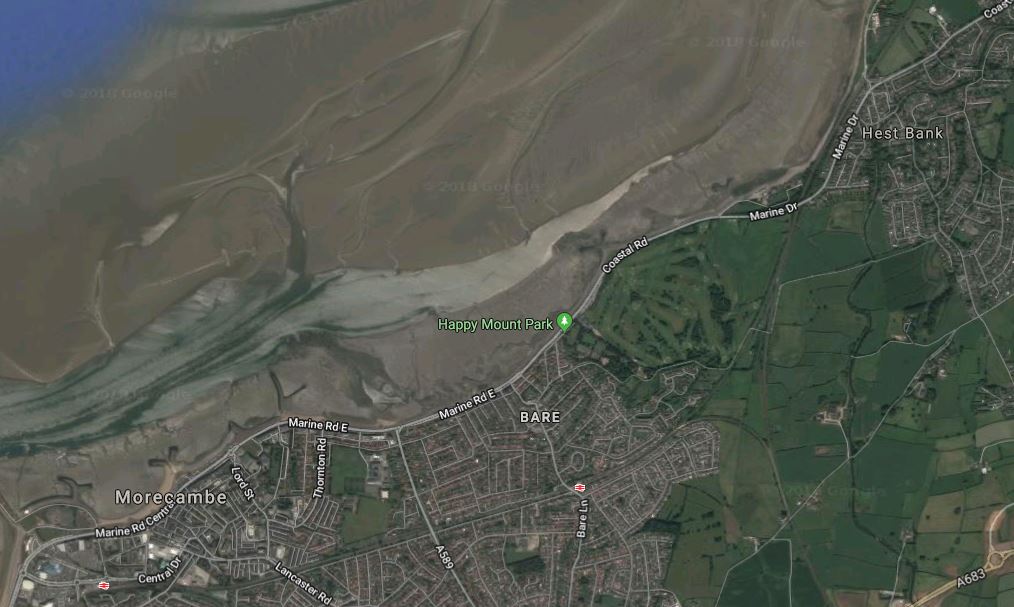
Nothing has been said about the location, but there would appear to be plenty of space.
I’ve only ever been to Morecambe once, when I visited the town on my trek to visit all 92 English football clubs to raise money for pancreatic cancer research at Liverpool University. My brief visit to Morecambe is described in 92 Clubs – Day 21 – Milton Keynes, Morecambe, Newcastle. This was my initial comment on the town.
The town was a bit of a surprise, as I thought it would be like Blackpool only smaller. It is smaller, but it is in much better state than its larger resort down the coast. You wouldn’t see anything as tasteful as this on a roundabout in Blackpool.
My previous visit was very much a quickie, as I had to continue to Newcastle.
The Eden Project By Train
On their web site, the Eden Project, says this about getting to their Cornish attraction by train.
We are just a few miles from St Austell railway station, which is on the main line from London Paddington and is well served by buses to Eden. You could also take the train to Luxulyan, Bugle or Par, for a more scenic journey or to continue your trip on foot or bike.
They also give a discount for visitors that arrive by public transport. As they should!
If I was going, I’d take the Night Riviera to St. Austell and then use a bus to the Eden Project from the bus station at St. Austell station to complete the journey.
The Proposed Morecambe Eden Project By Train
So how would getting to the proposed Eden Project at Morecambe compare?
In Getting To The Proposed Morecambe Eden Project By Train, I laid out how a large zero-carbon rail system could develop around Morecambe.
I also concluded that journeys to and from Birmingham, Edinburgh, Glasgow, Liverpool, London and Manchester, could be made zero-carbon.
How cool is that?
A Railway That Needs Electric Trains But Doesn’t Need Full Electrification
This article on Rail Magazine is entitled ScotRail Targets Further Electrification Schemes.
This is the first paragraph.
The five years from 2019 could feature more wiring in Scotland, with ScotRail Alliance Managing Director Alex Hynes telling RAIL: “I’d love to see more electrification – Stirling to Perth, East Kilbride and the Edinburgh South Suburban.”
In this post, I will look at electrification of the Busby Railway to East Kilbride station.
- The station is 11.5 miles from Glasgow Central station.
- The station has an altitude of 504 feet.
- It is a single platform station.
- The route to Glasgow is double-track, except for the last section from Busby station, which is single track, with a passing loop at Hairmyres station.
- A two trains per hour (tph) service is provided between Glasgow Central and East Kilbride using two two-car diesel Class 156 trains.
This picture shows East Kilbride station.
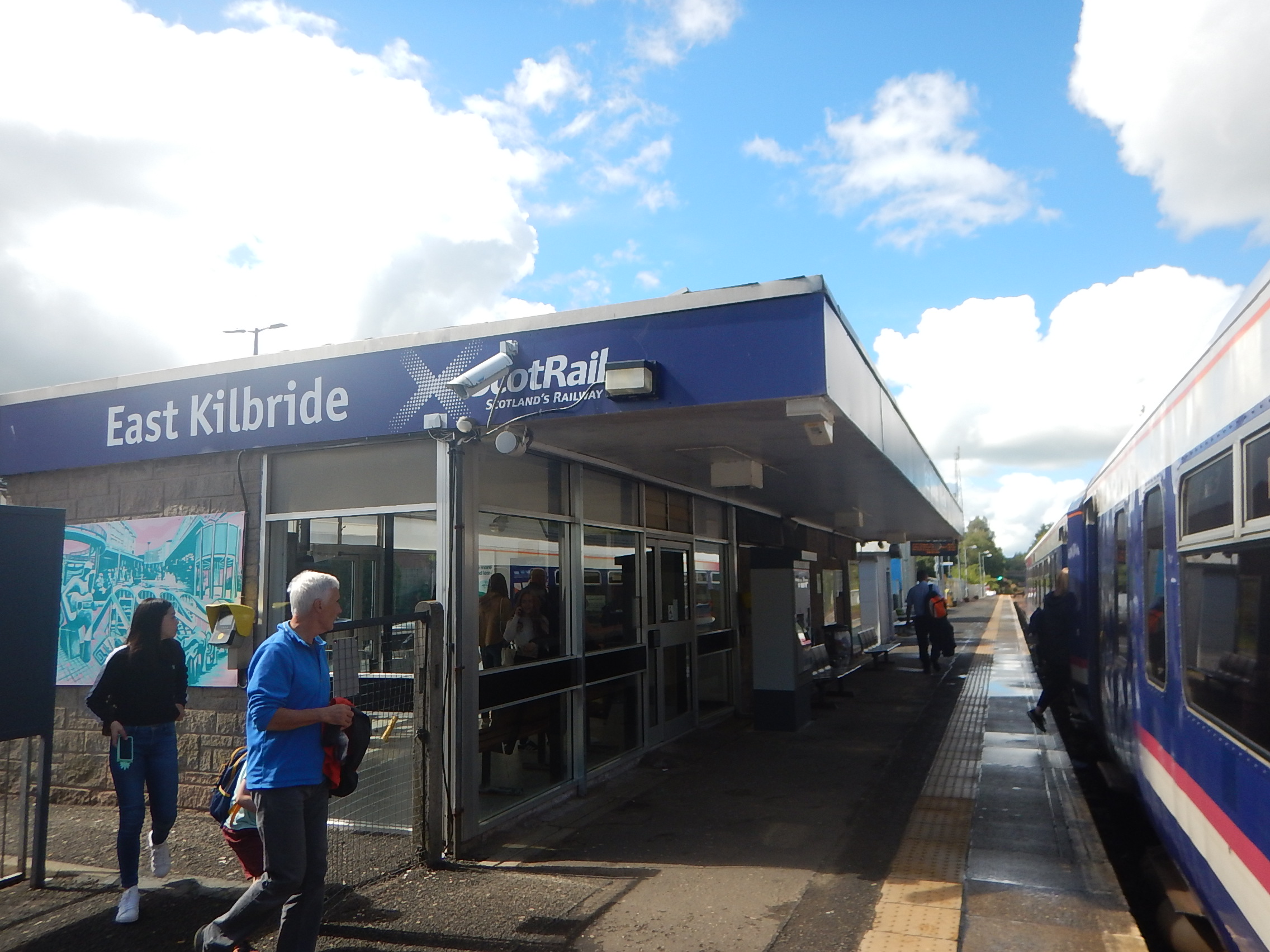
Nothing complicated at this station and it comfortably handles two tph.
In the UK, there are several stations where four tph are handled using a single platform.
- Chester, Kirkby and Ormskirk on Merseyrail.
- Clapham Junction, Dalston Junction, Highbury & Islington, New Cross and West Croydon on the London Overground.
Transport for Wales also intend to run four tph to several single-platform stations including Rhymney, which is high in the valleys.
I suspect that with modern signalling and driver aids, Glasgow’s drivers would be capable of running four tph between Glasgow Central and East Kilbride stations.
Judging by my trip on the route, there is certainly a need for more capacity, as if every seat is taken at two in the afternoon, two-car trains running at a frequency of two tph is just not enough.
So surely running new four-car electric trains to the current timetable, would be the standard solution for this route?
But!
Look at these pictures of the route..
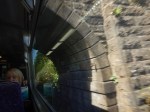
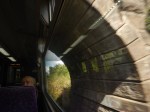

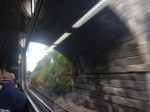
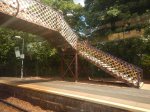
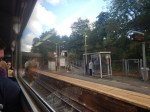
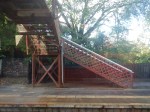
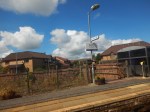
It wouldn’t be a nightmare to electrify, but because of the stone bridges and the steel footbridges, it would be expensive and very disruptive.
The following should also be noted.
- The railway has never gone further than East Kilbride station.
- There is no freight on the line, except for that needed for maintenance.
I am very much drawn to the conclusion, that to electrify the whole route would use money that would probably be better spent on improving step-free access at some of the stations.
Electric Trains To East Kilbride Without Full Electrification
Before I detail the solutions, I shall look at the energy required to raise a train from Glasgow to East Kilbride station.
Consider.
- A four-car electric train like a Class 321 train weighs 138 tonnes.
- This train has 309 seats, so could probably accommodate 400 passengers.
- Assuming each weighs 90 kg with buggies, baggage, bicycles and bagpipes, this gives a train fully-loaded train weight of 174 tonnes.
Using Omni’s Potential Energy Calculator, it would take 73 kWh of energy to raise the train to the 504 feet altitude of East Kilbride station.
It should also be noted that Glasgow Central station and the approaches to the station are fully electrified almost as far as Crossmyloof station.
What solutions are available to have as-new electric trains running between Glasgow Central and East Kilbride station?
The Rhymney Line Solution
The Rhymney Line runs between Cardiff Central and Rhymney stations.
In the design of the new South Wales Metro, the highest section of this line between Ystrad Mynach and Rhymney stations will be run on battery power.
- This section is about eleven miles long.
- It is a mixture of single and double-track.
- The height difference is 410 feet.
This is very similar in severity to the Busby Railway.
Transport for Wales are proposing to use Tri-Mode Stadler Flirt trains on this route.
These trains would be able to handle the East Kilbride route without any modification to the track or electrification.
It would just mean.
- Trains identical to those on the South Wales Metro.
- Building and delivering the trains.
- Training the drivers and other staff.
There would be other advantages.
- Stadler trains seem to be one of the best for step-free access, with automatic gap fillers between platform and train.
- They are 100 mph trains.
- They are ready for modern signalling.
- They can change mode at line speed.
These trains which will be Class 755 trains in Abellio Greater Anglia service, have a central power-pack, that can incorporate diesel or battery power to supplement power from the electrification.
Good engineering design would probably mean.
- The four slots in the power pack, can be fitted with a diesel engine, battery or perhaps even a hydrogen fuel cell to give a power profile tailored to the route.
- The battery would weigh a similar amount to the Deutz diesel engine, which would give a battery capacity of perhaps 100-120 kWh.
- There is an intelligent computer system controlling the power and braking systems.
- The trains come in various lengths from three-cars upwards.
This is a summary of the Stadler multi-mode trains ordered for the UK.
- Abellio Greater Anglia – Electric/Diesel – 14 x three-cars – Two Deutz diesel engines
- Abellio Greater Anglia – Electric/Diesel – 24 x four-cars – Four Deutz diesel engines
- Trains for Wales – Electric/Diesel – 11 x four-cars – Four (?) Deutz diesel engines
- Trains for Wales – Electric/Diesel/Batteries – 7 x three-cars – One Deutz diesel engine and three batteries (?)
- Trains for Wales – Electric/Diesel/Batteries – 17 x four-cars – One Deutz diesel engine and three batteries
I’m sure Abellio Greater Anglia won’t leave Abellio ScotRail, short of operational information.
In addition, they might be ideal for other routes in the Glasgow area.
- The Glasgow South Western Line to Kilmarknock, Dumfries and Carlisle.
- The Ayrshire Coast Line to Ayr and Stranraer.
- The West Highland Line to Oban and Mallaig.
They would use the electrification, when close to Glasgow.
I can’t see any reason, why another version of the Tri-Mode Stadler Flirt won’t be able to run services between Glasgow Central and East Kilbride stations.
The Battery Solution
Transport for Wales intend to run their Tri-Mode Stadler Flirts on battery from Ystrad Mynach to Rhymney. I can’t see any reason why a well-designed battery train can’t do the similar climb to East Kilbride station.
Of the major train manufacturers, only Stadler seem to have declared their hand with the Rhymney Line proposal.
- Bombardier have run prototypes in the UK and Germany, but are very protective with solid information.
- CAF have run battery trams and will introduce them to the UK in the next year or so.
- Hitachi use batteries in their trains and have run battery trains in Japan.
Also, consider that between Glasgow Central and Pollokshields East stations is electrified and extending this electrification to say Busby Junction. where the Busby Railway leaves the Glasgow South Western Line, would have the following benefits.
- The distance to run on batteries would be reduced by about three miles.
- There would be more electrification to ensure that train batteries were full before the climb to East Kilbride.
- If bi-mode trains were to run to Kilmarnock, Dumfries and Carlisle, they would have more electrified line to use.
This short section of electrification would certainly improve the mathematics of running battery trains to East Kilbride.
As Busby Junction to Kilmarnock is around twenty miles, it might even make it possible to run battery trains between Glasgow Central and Kilmarnock stations.
I have no doubts that, a battery train can be built to handle services between Glasgow Central and East Kilbride.
The Hydrogen Solution
I tend to think of trains powered by a hydrogen fuel cell, as battery trains with an environmentally-friendly onboard power source.
The Busby Line route is ideal for battery trains, especially, if there is a few miles of new electrification at the Glasgow Central end of the route.
Alstom’s proposed hydrogen-powered Class 321 train, could also be ideal for this route.
Four-car trains with a decent interior, would certainly solve the overcrowding on the route.
In A Class 321 Renatus, a comment was put, that says that the hydrogen-powered Class 321 trains will share the Renatus interior.
I’d suspected that would be the case, as why would the train’s owners; Eversholt Rail Group, design two different interiors for the same purpose?
The train would be able to leave Glasgow Central station with a full battery and with the help of electricity from the hydogen fuel cell, it would be able to climb to East Kilbride.
Coming down, the train would be partly powered by the battery, but mainly by gravity. Energy generated by the regenerative braking would be stored in the battery.
Alstom will be building a mathematical model of the train and its performance on various routes, so they will know the energy flows, when the train is working.
I said earlier that the following routes would be ideal for Stadler’s bi-mode trains.
- The Glasgow South Western Line to Kilmarknock, Dumfries and Carlisle.
- The Ayrshire Coast Line to Ayr and Stranraer.
- The West Highland Line to Oban and Mallaig.
I feel the same logic applies to Alstom’s hydrogen trains.
Conclusion
All three solutions, I outlined in this post, could be possible.
The solutions have several things in common.
- All will be fully tested elsewhere on the UK rail network.
- None need any electrification between Busby Junction and East Kilbride.
- All would benefit from a few extra miles of electrification between Busby Junction and Glasgow Central station.
- All solutions are backed by respected train building companies.
I think there will be a very keen contest to see who supplies the trains for this and other related routes from Glasgow.
D-Train Order For Marston Vale Confirmed
The title of this post, is the same as the title of an article in the April 2018 Edition of Modern Railways.
It gives a few more details on the order from West Midlands Trains for three Class 230 trains to provide the service on the Marston Vale Line.
- The trains will be in operation in December 2018
- Two trains will operate the daily service.
- The trains will be diesel-powered.
When the trains come into operation, extra early morning and late-night services will be added from Monday to Saturday.
Battery Prototype
The article also gives more details of the battery prototype.
- The train has four battery rafts, each with a capacity of 106 kWh
- Range is up to fifty miles with a ten minute charge at each end of the journey.
- Range will increase as battery technology improves.
- The train is charged using a patented automatic charging point.
- The batteries will have a seven-year lifespan, backed by a full warranty.
- Battery rafts would appear to be interchangeable with the diesel generators.
- Hydrogen power will be used within the next few years.
The specification seems comprehensive and it would appear there is a high degree of innovative automation and well-thought-out electrical engineering.
Train Energy Consumption
The train has the following characteristics.
- Two cars
- 424 kWh of battery capacity.
- 50 mile range
This gives a consumption 4.24 kWh/per car/per mile.
In an article in the October 2017 Edition of Modern Railways, which is entitled Celling England By The Pound, Ian Walmsley says this in relation to trains running on the Uckfield Branch, which is probably not much more taxing than the Marston Vale Line.
A modern EMU needs between 3 and 5 kWh per vehicle mile for this sort of service.
I am surprised that the Class 230 train lies in the 3-5 kWh range, but then I’m not sure of the weights of the two trains.
I estimate two-car units to weigh as follows.
- Class 230 train plus batteries – Around 50 tonnes.
- Electrostar – Around 90 tonnes
- Aventra – Around 80 tonnes
I shall get some better figures, when I actually see the trains, as the weight is on the side.
The Pop-Up Train
The article talks of the concept of a low-cost pop-up train as a solution for a regional or commuter train.
Export To America?
This pop-up train could be designed to be used to demonstrate rail services in America.
Henry Posner, who is promoting the train in America is quoted as saying cities could use the train to test possible services with passengers on board ‘for less than the cost of a consultant’s study into a possible service’.
These demonstrations will be on freight lines, where for reasons of safety, the passengers trains would run during the day and freight trains at night.
Is America ready for an invasion of remanufactured forty-year-old London Underground D78 Stock trains?
How Do Hydrogen-Powered Trains Work?
This promotional video shows how Alstom’s Coradia iLint works.
Note that it’s really a battery train, where the batteries are charged from the electrification or the hydrogen power-pack.
 The Anonymous Widower