The Anonymous Widower

Hyundai’s Hydrogen Truck Wins Award

The title of this post, is the same as that of this article on H2 View.

This is the introductory paragraph.

Hyundai’s hydrogen-powered fuel cell heavy-duty truck HDC-6 Neptune has won a 2020 Future Mobility of the Year (FMOTY) award.

Perhaps only a small step in the grand scheme of decarbonisation, but hydrogen trucks are starting to be noticed.

August 6, 2020 Posted by | Hydrogen, Transport/Travel | , | Leave a comment

Turning Waste Plastic Into Hydrogen – Is This The Future?

The title of this post, is the same as that of this article on H2 View.

This paragraph is a description of the process from Myles Kitcher of Peel L&P Environmental.

At Peel L&P Environmental we’ve been working with PowerHouse Energy who have developed a world first plastic to hydrogen technology. The first plant at Protos, our strategic energy and resource hub in Cheshire, is due to start construction later this year. It will take unrecyclable waste plastic – destined for landfill, or worse export overseas – and use it to create a local source of clean hydrogen to fuel buses, Heavy Goods Vehicles (HGVs) and cars. Not only will this help reduce air pollution and improve air quality on local roads, it’s helping us deal with the pressing problem of plastic waste.

This sounds like an eminently sensible way of dealing with unrecyclable waste plastic.

July 31, 2020 Posted by | Energy, Hydrogen, Transport/Travel | , , , , | 1 Comment

Germany Builds The World’s First Hydrogen Train Filling Station

The title of this post, is the same as that of this article on electrek.

Hydrogen Trains In Germany

The hydrogen filling station for trains is described under this heading.

This is the introductory paragraph.

The town of Bremervörde in Lower Saxony, Germany, has broken ground on the world’s first hydrogen filling station for passenger trains. Chemical company Linde will construct and operate the hydrogen filling station for the Lower Saxony Regional Transport Company.

It will provide approximately 1600 Kg of hydrogen per day.

The Supergroup Of ‘Green Energy’

This is a second section, which I find an interest sting concept.

These are the introductory paragraphs.

Oil giant Shell and Dutch utility Eneco have won the tender to build a super-hybrid offshore wind farm in the Netherlands. It will consist of two sites located 11.5 miles (18.5 km) off the west coast, near the town of Egmond aan Zee.

The Shell/Eneco consortium, CrossWind, will build the Hollandse Kust (noord) project. They will pair the offshore wind farms with floating solar facilities and short-duration batteries. It will also generate green hydrogen via an electrolyzer, according to GreenTech Media.

It will be operational in 2023 and have an output of 759 MW.

July 30, 2020 Posted by | Energy, Energy Storage, Hydrogen, Transport/Travel | , , , , , | Leave a comment

Westbury Station – 30th July 2020

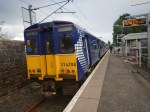
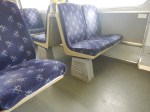
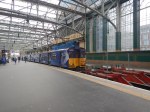
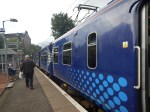
I went to Westbury station today and took these pictures.

I found Westbury station to be a station in extremely good condition.

It also had a buffet, where I was able to purchase a delicious ice cream.

Passenger Services Through Westbury Station

I was at the station for about an hour and several trains passed through.

Great Western Railway services through the station include.

  • One train per two hour (tp2h) – London Paddington and Exeter St. Davids – Stops
  • One tp2h – London Paddington and Penzance – Passes through
  • One tp2h – London Paddington and Plymouth – Passes through
  • One train per hour (tph) – Cardiff Central and Portsmouth Harbour – Stops
  • One tp2h – Great Malvern and Westbury
  • One tp2h – Gloucester and Weymouth – Stops
  • One tp2h – Swindon and Westbury

Train classes included Class 800 trains and Class 166 trains.

South Western Railway services through the station include.

  • Five trains per day – Salisbury and Bristol Temple Meads – Stops

Train classes include Class 159 trains.

Battery Trains Through Westbury

Hitachi’s Class 800 train with a battery electric capability or Regional Battery Train, is described in this infographic from the company.

The proposed 90 km or 56 mile range could even be sufficient take a train between Westbury and Bristol Temple Meads stations on a return trip.

Many of the trains through Westbury go to the same stations.

Distances are as follows.

  • Bristol Temple Meads – 28 miles
  • Newbury – 42 miles
  • Salisbury – 24 miles
  • Swindon – 32.5 miles
  • Taunton – 47 miles

It looks like all of these places should be in range of an electric train with a battery capability, providing there is a charging facility at the other end.

An Electrification Island At Westbury Station

I have been advocating an island of electrification around Westbury station for some time and feel about a dozen miles of electrification through the station would be sufficient for Class 800 trains with a battery capability to bridge the gap.

  • At Newbury, trains would access the current electrification into London Paddington.
  • Between Exeter and Taunton, the rail route runs alongside the M5, so why not electrify this stretch, as the wires will not be so noticeable?

Looking at Westbury, to my untrained eye, it would appear that a short section of electrification around the station, would not be the most challenging of projects.

I believe that discontinuous electrification between Newbury and Exeter would be possible and could gradually be extended across Devon and Cornwall.

It should also be noted that one of Hitachi’s Regional Battery Trains has a range of 56 miles, so that these places from Westbury could be an return trip on batteries, with a well-driven train with excellent energy management.

  • Bath Spa – 17 miles
  • Bradford-on-Avon – 7 miles
  • Bristol Temple Meads – 28 miles
  • Chippenham – 16 miles
  • Frome – 6 miles
  • Salisbury – 24 miles
  • Trowbridge – 4 miles
  • Warminster – 9 miles

Obviously, the number of stops and the terrain will play a part.

Freight Might Drive Full Electrification Through Westbury Station

As the pictures show, there are heavy freight trains going through the area, which bring long and weighty loads of stone from the Mendips to London.

  • There are regularly two or three stone trains in an average hour of the day.
  • Like in the picture, I suspect they are usually hauled by a noisy, smelly, polluting and carbon-dioxide emitting Class 66 Locomotive. Not all of these, are as clean and well-maintained, as the one in the picture.
  • Some trains start at Merehead Quarry, which is about fifteen miles from Westbury station.

I believe that we must decarbonise freight trains.

But freight and electric haulage is not a simple subject.

  • I once had extensive talks with a Senior Crane Driver at the Port of Felixstowe during an Ipswich Town Away match. Ports don’t like overhead wires, as containers do get dropped and fall off rail wagons.
  • Suppose a historic line without electrification, like the Settle and Carlisle has a serious land-slip, which it did a couple of years ago. How do you haul in the materials for repair?
  • Because freight can be of a random and unpredictable nature, to electrify freight, you probably need to electrify the whole rail network.

For these and other reasons, we need independently-powered freight locomotives and I feel that a new freight locomotive will develop, that will be needed by the rail industry all over the world.

There are several solutions.

Biodiesel

Biodiesel is the simplest solution and would mean that the current diesel locomotives could be used.

In Grant Shapps Announcement On Friday, I talked about Government support for an industrial process, that has been developed by Oxford University and their spin-off company; Velocys, from the the Fischer-Tropsch Process, which can produce, the following fuels from household and industrial waste.

  • Aviation biofuel.
  • Biodiesel.

A plant to process 500,000 tonnes per year of Lincolnshire finest waste is now being built at Immingham to create 50,000,000 litres of fuel, by Altalto, which is a partnership between Velocys, British Airways and Shell.

If nothing else, waste-to-fuel is the interim solution to the decarbonisation of tricky sectors like heavy rail freight, rail construction, large diesel-powered machines, ships or long-distance aviation.

This fuel could be ideal to haul the heavy stone trains from the Mendips.

Hydrogen

I did think, it would be hydrogen powered, but I’m not so sure now, as hydrogen trains and locomotives seem to have a slow development cycle.

Although, there is one factor, that might influence the use of hydrogen as a fuel, which I wrote about in Thirsty High-Rollers … Mining’s Heavy Haulers Prime Candidates For Hydrogen Conversion.

Mining and quarrying don’t have a good green image, but converting mines and quarries to hydrogen power, would surely have operational and good public relational advantages.

It would also ensure a plentiful and convenient supply of hydrogen, for any hydrogen-powered locomotives.

Hydrogen-powered locomotives, with their electric transmissions, would probably be able to use electrification for traction power, so they would put pressure on the Government to electrify between Westbury and Newbury stations, so that there was a fully-electrified route between the Mendips and London.

Rolls-Royce’s Staggering Development

Staggering is not my word, but that of Paul Stein, who is Rolls-Royce’s Chief Technology Officer.

He used the word in a press release, which I discuss in Our Sustainability Journey.

To electrify aviation, Rolls-Royce has developed a 2.5 MW generator, based on a small gas-turbine engine, which Paul Stein describes like this.

Amongst the many great achievements from E-Fan X has been the generator – about the same size as a beer keg – but producing a staggering 2.5 MW. That’s enough power to supply 2,500 homes and fully represents the pioneering spirit on this project.

This generator is designed for flight and the data sheet for the gas-turbine engine is available on the Internet.

  • It has a weight of under a couple of tonnes compared to the thirteen tonnes of the diesel engine and generator in a Class 68 locomotive.
  • It is also more powerful than the diesel.
  • It looks to be as frugal, if not more so!
  • Rolls-Royce haven’t said if this gas-turbine can run on aviation biofuel, but as many of Rolls-Royce’s large engines can, I would be very surprised if it couldn’t!

Rolls-Royce’s German subsidiary is a large producer of rail and maritime diesel engines, so the company has the expertise to customise the generator for rail applications.

I can see this generator ending up in a high-powered heavy independently-powered electric locomotive for hauling stone and inter-modal container trains.

As with hydrogen-powered locomotives, this new breed of gas-turbine locomotive with its electric transmission, will be able to use electrification, where it exists.

So would locomotive developments drive the electrification through Westbury and especially between Westbury and Newbury?

I would rate is likely, that in the future, increasingly rail locomotives will have sophisticated electric transmissions, between their prime motive power of diesel, hydrogen, gas-turbine or whatever and their traction system. All of these locomotives will have pantographs and/or third-rail shoes to access electrification, where it exists.

These locomotives will surely add to pressure to electrify between Westbury and Newbury.

Biodiesel is surely the interim freight solution, if one is needed.

Future Zero-Carbon Passenger Services

Passenger services through Westbury can be divided into three groups.

Great Western Railway’s Services Between London Paddington And Devon And Cornwall

From Beeching Reversal projects put forward over the last few months, it looks like these services will increase and stop at several new and refurbished stations.

I can see discontinuous electrification being used to create a series of electrification islands to allow Class 800 trains, with a battery capability reach the Far South West of Cornwall.

Electrification islands could be at places like

  • Around Westbury station.
  • Between Taunton and Exeter St. Davids stations alongside the M5.
  • Between Plymouth station and the Royal Albert bridge.
  • Around Bodmin Parkway station
  • Around Truro station
  • At Newquay station
  • At Penzance station

Obviously, the number and type of the various installations will depend on the methods used and the engineering required.

I do believe that with Hitachi trains, that meet their specification, that trains will be able to travel between Paddington and Penzance without touching a drop of diesel.

Great Western Railway’s Cardiff Central And Portsmouth Harbour Service

The service can be split into the following legs.

  • Cardiff Central and Filton Junction – 33 miles – Electrified
  • Filton Junction and Bristol Temple Meads – 5 miles – Not Electrified
  • Bristol Temple Meads and Westbury – 28 miles – Not Electrified
  • Westbury and Salisbury – 24 miles – Not Electrified
  • Salisbury and Southampton Central – 15 miles – Not Electrified
  • Southampton Central and Portsmouth Harbour – 26 miles – Electrified

It would appear that a train with the performance and range on batteries of Hitachi’s Regional Battery Train should be able to handle the route, provided the following conditions are met.

  • It can leave the Great Western Main Line at Filton Junction with a full battery.
  • It can leave the electrification at Westbury station with a full battery.
  • It can leave Southampton Central station with a full battery.
  • Third-rail shoes are fitted for working between Southampton Central and Portsmouth Harbour stations.

Recharging batteries at Bristol Temple Meads and Salisbury stations, although probably welcome, are not necessary.

I can envisage Hitachi Class 800 and Class 385 trains being able to fulfil this role, along with Bombardier Electrostars and Aventras and Siemens Desiros.

As Great Western Railway have forty-five Class 387 trains, conversion of some of these to battery electric operation must be a possibility.

Great Western Railway’s Gloucester and Weymouth Service

The service can be split into the following legs.

  • Gloucester and Bristol Temple Meads – 39 miles – Not Electrified
  • Bristol Temple Meads and Westbury – 28 miles – Not Electrifield
  • Westbury and Dorchester Junction – 52 miles – Not Electrified
  • Dorchester Junction and Weymouth – 4 miles – Electrified

It would appear that a train with the performance and range on batteries of Hitachi’s Regional Battery Train should be able to handle the route, provided the following conditions are met.

  • It can leave Gloucester station with a full battery.
  • It can leave Bristol Temple Meads with a full battery.
  • It can leave Westbury with a full battery.
  • It can leave the South Western Main Line at Dorchester Junction with a full battery.

It would be a tight trip for a battery electric train and I suspect, that there would be some extra electrification between Westbury and Dorchester Junction or perhaps charging facilities at Frome or Yeovil Pen Mill stations.

The alternative would be to fit larger batteries on the train.

As to the train to be used, a Class 387 train with a battery capability would surely be ideal.

Great Western Railway’s Swindon and Westbury Service

The service can be split into the following legs.

  • Swindon and Chippenham – 16 miles – Electrified
  • Chippenham and Westbury- 16 miles – Not Electrified

It would appear that a train with the performance and range on batteries of Hitachi’s Regional Battery Train should be able to handle the route, provided the following conditions are met.

  • It can leave Chippenham station with a full battery.

This would have sufficient charge to do the thirty-two mile round trip from Chippenham to Westbury and back.

As to the train to be used, a Class 387 train with a battery capability would surely be ideal.

South Western Railway’s Bristol Temple Meads and Salisbury Service

The service can be split into the following legs.

  • Bristol Temple Meads and Westbury – 28 miles – Not Electrified
  • Westbury and Salisbury- 24 miles – Not Electrified

t would appear that a train with the performance and range on batteries of Hitachi’s Regional Battery Train should be able to handle the route, provided the following conditions are met.

  • It can leave Bristol Temple Meads station with a full battery.
  • It can leave Westbury with a full battery.
  • It can leave Salisbury with a full battery.

But, I do wonder, if with a slightly larger battery, a well-driven train could work the route with only charging the battery at Westbury station?

Conclusion

Could Westbury station develop into a zero-carbon rail transport hub for Wiltshire?

  1. It has an hourly train service between London Paddington and Exeter St. Davids.
  2. It has an hourly service between Bristol Temple Meads and Weymouth.
  3. There are hourly services to stations like Bath Spa, Bradford-on-Avon, Bristol Temple Meads, Chippenham, Dorchester, Frome, Swindon, Taunton, Trowbridge and Yeovil

It could be electrified to charge battery electric trains as they pass through.


July 30, 2020 Posted by | Energy Storage, Hydrogen, Transport/Travel | , , , , , , , , , , , , , | 2 Comments

VDE Study Finds Battery Trains 35% Cheaper Than Hydrogen

The title of this post, is the same as that of this article on the International Railway Journal.

This is the introductory paragraph.

A study of the cost-effectiveness of battery electric multiple units (BEMU) and hydrogen electric multiple units (HEMU) as alternatives to diesel found that BEMUs could be up to €59m (35%) less expensive to buy and operate compared with their hydrogen fuel cell equivalents.

It also says that they are more expensive than the diesels they replace over thirty years.

As it is a professional German study, we should take note of what is said.

How Would This Apply To The UK?

There will be differences between the UK and Continental Europe, which will affect costs!

  • Our small loading gauge seems to be making the design of hydrogen-powered trains difficult.
  • Passenger capacity in a UK train, will probably be reduced when compared to the diesel equivalent.
  • Our hydrogen technology is world-class.
  • More affordable batteries would benefit both types of trains.
  • I believe that companies like Vivarail, will come up with very fast and efficient chargers for battery trains using our third-rail technology, which may not be suitable outside the UK.

On balance though, I suspect that the cost difference worldwide, will be similar.

Conclusion

Companies, developers and engineers will fight a keen battle for supremacy.

There will be some suprising winners and some big losers.


July 28, 2020 Posted by | Hydrogen, Transport/Travel | , , , , | 8 Comments

Diesel Buses To Be Phased Out Within 15 Years To Cut Greenhouse Gas Emissions

The title of this post, is the same as that of this article in The Times.

Hallelujah!

Should be heavy trucks, next!

July 27, 2020 Posted by | Hydrogen, Transport/Travel | , , | Leave a comment

Hydrogen Is A Top Contender In The Race To Zero-Carbon

The title of this post, is the same as that of this article on Forbes.

It is written by influential academics at the Gutierrez Energy Management Institute at the University of Houston, who make some strong points about hydrogen.

  • Hydrogen can’t by mined or extracted without a manufacturing process.
  • They are warm on electrolysis. Does the US have an electrolyser factory?
  • Hydrogen is ideal for medium trucks upwards.
  • Research into hydrogen deployment is needed.
  • I don’t think, that they’re impressed with Government response.
  • Although they do say that the European Commission’s plan with $75billion of funds to deploy the technology is ambitious.

But their strongest comments are reserved for a comparison between the heavy trucks of Tesla and Nikola.

July 24, 2020 Posted by | Hydrogen | , | 5 Comments

‘Build Greener’ You Say Boris? Got It. Just Say The Word, We’re Ready Here In North West England

The title of this post, is the same as that of this article on H2 View.

The article is written by Cadent‘s Network Director for the North West and what she says is a must-read.

July 13, 2020 Posted by | Energy, Hydrogen | , , | 1 Comment

Keadby 3 Low-Carbon Power Station

This article on Business Live is entitled Huge Green Power Station Proposed By SSE As It Embraces Hydrogen And Carbon Capture.

SSE Thermal is working on a low-carbon 910 MW gas-fired power station to join Keadby and Keadby 2 power stations in a cluster near Scunthorpe.

A spokesman for SSE is quoted as saying they will not build the plant without a clear route to decarbonisation.

On this page of their web site,  SSE Thermal, say this about Keadby 3.

As part of our commitment to a net zero emissions future, Keadby 3 will only be built with a clear route to decarbonisation, either using hydrogen as a low-carbon fuel, or equipping it with post-combustion carbon capture technology. The project is at the early stages of development and no final investment decision has been made.

It should also be noted that SSE Renewables have also built a wind farm at Keadby. The web site describes it like this.

Keadby Wind Farm is England’s largest onshore wind farm. This 68MW renewable energy generation site can power approximately 57,000 homes.

There are a lot of good intentions here and I think that SSE haven’t disclosed the full picture.

It would seem inefficient to use hydrogen to power a gas-fired power station to achieve zero-carbon power generation.

  • If you are using hydrogen created from steam reforming of methane, this creates a lot of carbon-dioxide.
  • If you are using green hydrogen produced by electrolysis, then, why don’t you store the electricity in a battery?

Perhaps, SSE are trying out a new process?

This Google Map shows the area of Keadby to the West of Scunthorpe.

Note.

  1. The River Trent meandering through the area.
  2. Althorpe station is in the bend of the River,
  3. I’m fairly certain, that I remember an old airfield in the area.
  4. Keadby power station is a bit to the North of the waterway running West from the River and close to where the railway crosses the waterway.

This second Google Map shows a close-up of the power station.

This visualisation from SSE Thermal shows how the site might look in the future.

For me the interesting location is the village of Althorpe, where C and myself had friends.

They were always getting tourists arriving in the village looking for Princess Diana’s grave!

Carbon Capture And Storage At Keadby

If SSE have three large power stations at Keadby, a shared carbon capture and storage system could be worthwhile.

  • There are numerous gas fields in the area and a big gas terminal at Theddlethorpe, to where they all connect.
  • I was surprised to see, that one of thee fields; Saltfleetby is owned by President Putin’s favourite gas company; Gazprom.
  • Some of these fields are actually on-shore.
  • The power stations probably get their gas from the same terminal.

Some of these gas fields that connect to Theddlethorpe could be suitable for storing the carbon dioxide.

As there is masses of space at Keadby, I can see more gas-fired power stations being built at Keadby.

All would feed into the same carbon capture and storage system.

If gas was needed to be imported in a liquified form, there is the Port of Immingham nearby.

Absorption Of Carbon Dioxide By Horticulture

Consider.

  • Increasingly, horticulture is getting more automated and efficient.
  • Automatic harvesters are being developed for crops like tomatoes and strawberries.
  • Instead of storing the carbon-dioxide in worked-out gas fields, it can also be fed directly to fruit and vegetables that are being grown in greenhouses.
  • Keadby is surrounded by the flat lands of Lincolnshire.

How long will it be before we see tomatoes, strawberries, peppers and cucumbers labelled as British zero-carbon products?

Offshore Hydrogen

I’ll repeat what I said in ITM Power and Ørsted: Wind Turbine Electrolyser Integration.

This is from a press release from ITM Power, which has the same title as the linked article.

This is the introductory paragraph.

ITM Power (AIM: ITM), the energy storage and clean fuel company, is pleased to share details of a short project sponsored by the Department for Business, Energy & Industrial Strategy (BEIS), in late 2019, entitled ‘Hydrogen supply competition’, ITM Power and Ørsted proposed the following:  an electrolyser placed at the wind turbine e.g. in the tower or very near it, directly electrically connected to the DC link in the wind turbine, with appropriate power flow control and water supplied to it. This may represent a better design concept for bulk hydrogen production as opposed to, for instance, remotely located electrolysers at a terminal or platform, away from the wind turbine generator, due to reduced costs and energy losses.
Some points from the remainder of the press release.

  • Costs can be saved as hydrogen pipes are more affordable than under-water power cables.
  • The proposed design reduced the need for AC rectification.

After reading the press release, it sounds like the two companies are performing a serious re-think on how wind turbines and their links to get energy on-shore are designed.

  • Will they be using redundant gas pipes to bring the hydrogen ashore?
  • Will the hydrogen come ashore at Theddlethorpe and use the existing gas network to get to Keadby?

It sounds inefficient, but then the steelworks at Scunthorpe will probably want masses of hydrogen for carbon-free steel making and processing.

Boosting Power Station Efficiency

There is also a section in the Wikipedia entry for Combined Cycle Power Plant called Boosting Efficiency, where this is said.

The efficiency of CCGT and GT can be boosted by pre-cooling combustion air. This is practised in hot climates and also has the effect of increasing power output. This is achieved by evaporative cooling of water using a moist matrix placed in front of the turbine, or by using Ice storage air conditioning. The latter has the advantage of greater improvements due to the lower temperatures available. Furthermore, ice storage can be used as a means of load control or load shifting since ice can be made during periods of low power demand and, potentially in the future the anticipated high availability of other resources such as renewables during certain periods.

So is the location of the site by the Trent, important because of all that cold water?

Or will they use surplus power from the wind farm to create ice?

The Proposed North Sea Wind Power Hub

The North Sea Wind Power Hub is a proposed energy island complex on the Eastern part of the Dogger Bank.

  • The Dutch, Germans and Danes are leading the project.
  • Along with the Belgians, we have been asked to join.
  • Some reporting on the Hub has shown, airstrips in the middle of the complex to bring the workforce to the site.
  • A Dutch report, says that as much as 110 GW of wind power could be developed by 2050.
  • We are also looking at installing wind farms on our section of the Dogger Bank.

Geography says, that one of the most convenient locations to bring all this electricity or hydrogen gas ashore is North Lincolnshire

A Very Large Battery

I would also put a very large battery on the site at Keadby.

One of Highview Power‘s proposed 1 GWh CRYOBatteries would be a good start. This will be four times the size of the 250 MWh CRYOBattery, which the company is currently designing and building at Carrington in Greater Manchester.

Conclusion

The three power stations at Keadby are the following sizes

  • Keadby 1 – 734 MW
  • Keadby 2 – 803.7 MW
  • Keadby 3 – 010 MW

This adds up to a total of 2447.7 MW. And if they fit carbon capture and storage it will be zero-carbon.

Note.

  • Hinckley Point C is only 3200 MW and will cost around £20 billion or £6.25 billion per GW.
  • Keadby 2 power station is quoted as costing £350 million. or £0.44 billion per GW.

These figures don’t include the cost of carbon capture and storage, but they do show the relatively high cost of nuclear.

July 11, 2020 Posted by | Energy, Energy Storage, Hydrogen | , , , , , , , | 6 Comments

Yara Launches Green Hydrogen Trial To Reduce Food Production Carbon Emissions

The title of this post, is the same as that of this article on Hydrogen Fuel News.

This is the introductory paragraph.

Norwegian fertilizer manufacturing giant Yara is launching a landmark green hydrogen trial. The purpose is to separate the current connection between producing food and generating carbon emissions.

Read the article and then ask yourself, how much carbon dioxide was created to make the fertiliser you use on your lawn or allotment?


July 9, 2020 Posted by | Hydrogen | , , | Leave a comment