Berwick’s Landmark Bridge Set For Major Repairs
The title of this post, is the same as that as this article on the BBC.
This Google Map shows the Royal Border Bridge.
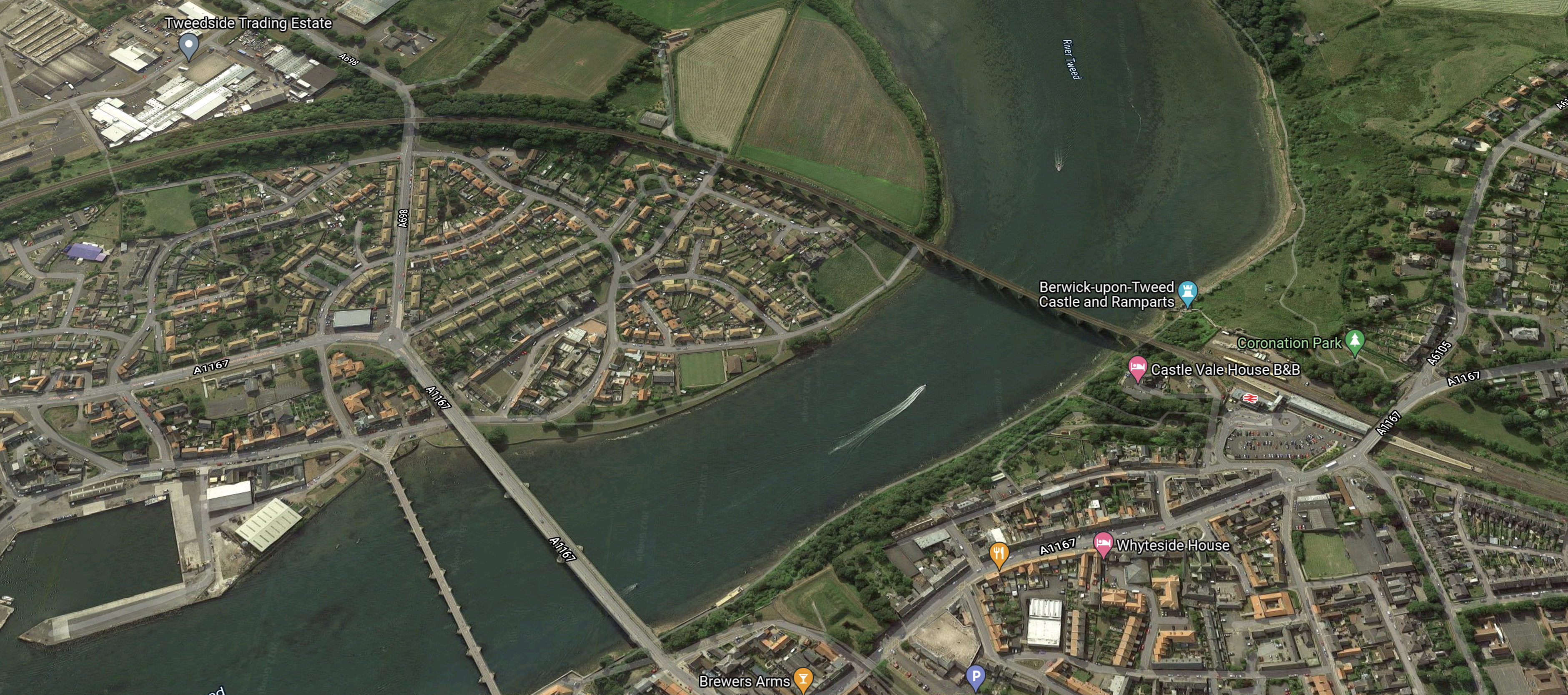
This extract from the article describes the works on the bridge.
During the work, which will last until November, engineers will repair all 28 arches of the Grade I-listed structure.
The East Coast Main Line will stay open and an online event for people to find out more is being held on 27 January.
I suspect that finding anybody to restore historic stone buildings will be difficult in the area, during 2022.
Union Pacific Railroad Makes Largest Investment In Wabtec’s FLXdrive Battery-Electric Locomotive
The title of this post, is the same as that of this press release from Union Pacific.
This is the first three paragraphs.
Union Pacific Railroad (NYSE: UNP) today announced the purchase of 10 FLXdrive battery-electric locomotives from Wabtec Corporation (NYSE: WAB). The order, which marks the largest investment in battery technology by a North American railroad, will upgrade Union Pacific’s rail yard infrastructure and support its commitment to significantly reduce greenhouse gas emissions.
“As an industry leader, Union Pacific is pioneering a major application of battery power in its rail yards,” said Rafael Santana, President and CEO for Wabtec. “Battery power is an ideal solution to reduce the environmental impact and costs of yard operations. Using the FLXdrive in the rail yard can significantly improve local air quality, as well as reduce noise by up to 70% for neighboring communities.”
The approximately 2.5-MWh locomotives are each powered solely by 7,000 battery cells, providing Union Pacific a zero-emission solution for its yard operations. The 10 FLXdrives will enable the railroad to eliminate 4,000 tons of carbon annually from its rail yards, the equivalent of removing 800 cars from the highway. The new locomotives will be manufactured in the United States with the first units being delivered to Union Pacific in late 2023.
It would appear that the major use will be in their rail yards.
There is also this second press release from Union Pacific, which is entitled Union Pacific Railroad To Assemble World’s Largest Carrier-Owned Battery-Electric Locomotive Fleet.
This is the first paragraph.
Union Pacific Railroad (NYSE: UNP) today announced plans to purchase 20 battery-electric locomotives for testing in yard operations. The combined purchases and upgrades to yard infrastructure are expected to exceed $100 million, representing the largest investment in battery-electric technology by a U.S. Class I railroad. The locomotives will be acquired from Progress Rail, a Caterpillar company, and Wabtec Corporation (NYSE:WAB), two companies at the forefront of locomotive innovation, and will be the world’s largest carrier-owned battery-electric locomotive fleet in freight service.
The press release also says that Union Pacific will be netzero by 2050.
Conclusion
All of this action in the United States and Australia with battery-electric locomotives, from two manufacturers; Progress Rail and Wabtec, leads me to the conclusion, that proposals to create battery-electric locomotives from Class 66 or Class 68 locomotives in the UK, will soon be being discussed by the owners of the locomotives and Wabtec and Stadler.
Hydrogen Refuelling Station For Vehicles Lands At Teesside Airport
The title of this post, is the same as that of this article on the Northern Echo.
This is the introductory paragraph.
A refuelling station that will serve hydrogen-powered vehicles based in the Tees Valley is now up and running at Teesside Airport as part of a £2.5million region-wide trial.
A selection of vehicles and equipment is being trialled, including some for the emergency services.
The trial will be overseen by Teesside University.
The University also runs the Tees Valley Hydrogen Innovation Project, which is described on this page on the University web site.
BHP To Trial Battery Locos On Pilbara Iron Ore Network
The title of this post, is the same as that of this article on Railway Gazette.
The article summarised all the battery-electric locomotives ordered to bring the iron ore to the coast by mining companies; BHP, Fortescue, Rio Tinto and Roy Hill.
The article indicates some of the innovative operations that will be tried. This is a sentence from the article.
A key element will be to assess the potential for capturing regenerated braking energy on the loaded downhill runs, and storing it to power empty trains back uphill to the mines.
I would hope that the South Wales Metro, the Buxton branch and the East Kilbride branch will use similar energy conservation techniques.
SWR Says Farewell To ‘456’s
The title of this post, is the same as a section heading in the February 2022 Edition of Modern Railways.
South Western Railways are reducing services because of the pandemic and they are retiring their Class 456 trains, which have been returned to their leasing company; Porterbrook.
- The Class 456 trains are thirty-years old.
- They are two-car third-rail electric trains.
- They have an operating speed of 75 mph.
- They are due to be replaced by new Class 701 trains.
According to the Modern Railways article, they have been put in store by Porterbrook.
But they are not trains in bad condition, as these pictures show.
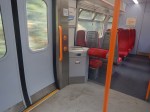
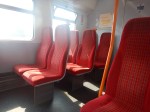
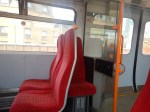
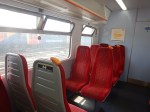
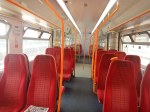
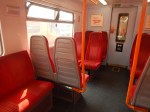
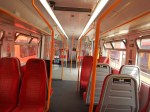
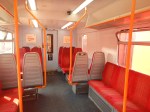
The trains had a high-class refurbishment in 2014.
In Special Train Offers A Strong Case For Reopening Fawley Line, I discussed the reopening of the Fawley Line.
This is an extract from that post about the rolling stock to use on the line.
South Western Railway’s Innovative Train Plan
This is another quote from the original Rail Magazine article.
However, SWR’s Mark Hopwood favours a much bolder plan. “We’d have to take a decision, once we knew the line was going ahead. But my personal belief is that we should be looking for a modern environmentally-friendly train that can use third-rail electricity between Southampton and Totton and maybe operate on batteries down the branch line.”
Pressed on whether that would mean Vivarail-converted former-London Underground stock, Hopwood adds. “It could be. Or it could be a conversion of our own Class 456, which will be replaced by new rolling stock very shortly. But I don’t think this is the time to use old diesels.
Note.
- Mark Hopwood is now Managing Director of Great Western Railway.
- Great Western Railway and South Western Railway are both First Group companies.
- There are twenty-four Class 456 trains.
I wonder, if the plan that Mark Hopwood hinted at a couple of years ago, is being carried out.
Two dozen, two-car zero-carbon battery-electric trains would do nicely for some of the routes of GWR and SWR.
Converting Class 456 Trains Into Two-Car Battery Electric Trains discusses this possible conversion in detail.
Up, Up And Away: Flying AirCar Earns Its Wings
The title of this post, is the same as that of this article on The Times.
This is the first paragraph.
A supercar that comes with wings attached has been given the green light to take to the skies.
It has been given European certification.
I will be very surprised if the Klein Vision AirCar is a success!
London Bus Crash: Children Injured As Double-Decker Hits Shop
The title of this post, is the same as that of this article on the BBC.
These are the first three paragraphs.
Three children and two adults have been taken to hospital after a double-decker bus hit a shop in north-east London.
The crash happened on Selwyn Avenue, Highams Park, at about 08:20 GMT, the Metropolitan Police said.
London Ambulance Service (LAS) said 14 other people were treated at the scene, near Highams Park Overground station, but did not need hospital treatment.
The driver is quoted as saying, that his brakes failed.
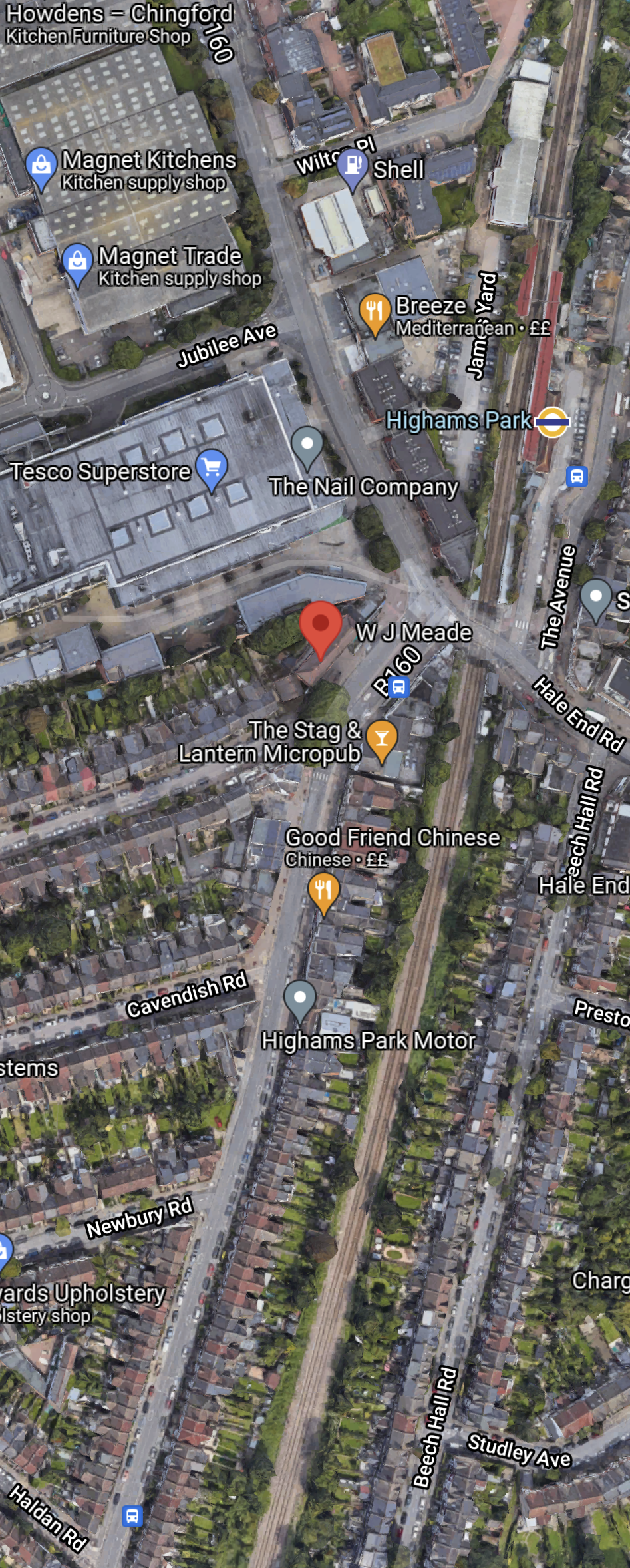
This Google Map shows the route of the 212 bus route through Highams Park.
Note.
- The red arrow in the middle of the map shows the location of the crash.
- The bus route runs North-South on the map to the West of the railway line.
The pictures in the article show that the bus was going to Chingford, which is in the North.
In May las year, I took a ride on a 212 bus,which I described in A Trip On An Electric Double Deck Bus On Route 212 Between Chingford And St. James Street Stations.
This is an extract from that post.
I know someone, who used to manage this route and they called it a basket case.
I can certainly understand that.
- The route is narrow in places with cars parked on both sides of the road. This must delay services.
- I was lucky with the level crossing at Highams Park station, but at busy times it could be a nightmare.
Will the new Class 710 trains on the parallel Chingford Branch Line improve matters, by attracting passengers away from their cars in the area and the buses?
There has also been talk of a new station at Chingford Hatch, which could also be served by the 212 bus.
I can’t help feeling that the level crossing was something to do with the crash. Especially as a train went through just before the crash.
Interestingly, a few months ago, I used a black cab driven by a guy, who lives near Highams Park station. He felt the level crossing could be closed and drivers could use other routes. He also said, that since the new trains had started running, more were using the trains.
Perhaps improving the railway, with a couple of new stations, would also take the pressure of the buses.
Exploring Germany Under The Latest Travel Rules
Because of the lack of travel brought about by the Covids, I’ve built up a list of places that I want to visit in Germany.
- Hamburg to see the Siemens Gamesa ETES energy storage and see how the Alstom Coradia iLint hydrogen train is getting on.
- Karlsruhe to see the newly-opened tram-tunnel in the city.
- Stuttgart to see how the construction work for Stuttgart 21 is faring and Alstom’s new battery trains.
- The Lake Constance Belt Railway.
The latest rules mean that travelling back to the UK is easy, so if I chose a route that allowed me to visit all the places I want from say a hotel in somewhere worth visiting like Stuttgart, would it be possible to book an appropriate stay there as a package?
Would this mean all the paperwork going to Germany would be handled by someone else, so if a mistake was made, it’s not my fault?
Fortescue Buys Williams Engineering In Major Push Into High Performance Batteries
The title of this post, is the same as that of this article on Renew Economy.
This is the opening paragraph.
Fortescue Future Industries has made its first major push into battery storage and high performance batteries with the $A310 million purchase of Williams Advanced Engineering (WAE), the offshoot of the Formula 1 specialists Williams Grand Prix Engineering.
Andrew Forrest certainly has a wide-ranging plan.
This article on Railway Gazette is entitled Formula 1 Technology Company To Support Development Of Battery Train, was published later and gives more details.
This is the first paragraph.
Fortescue Metals Group’s green technology division Fortescue Future Industries is developing what it says is a ‘world leading’ battery electric train concept.
It will be interesting to see what technologies are at the heart of the ‘world leading’ concept.
If you are controlling a complex chemical or nuclear plant, you will often have a model of the plant inside the control system, so that the operating strategy can be consistently optimised.
I wouldn’t be surprised to see techniques like this and other advanced techniques be used to reduce the carbon footprint of rail transportation of iron ore and other minerals.
Perhaps, the ideal power for one of these heavy haul trains would consist of a master battery-electric locomotive up front with the crew, assisted by up to three hydrogen-, diesel- or battery-powered slaves.
- All braking would be regenerative to battery.
- Power would be called for from the slave locomotives as required.
- Modelling would determine, if some sections needed electrification to charge the batteries.
I suspect there are opportunities to optimise round trips, as returning the empties will surely need less power.
Should We Be Given More Discretion Over Mask Wearing?
I am a bad breather and have been so for most of my life.
I suspect, it’s because I grew up in London smogs and that ruined my breathing.
But my father and his father were also bad breathers and my grandfather died before he was forty of pneumonia.
So when I go on public transport, I find the following.
- I have difficulty climbing stairs with my mask on.
- I can’t wait to get out of the station or bus to take off my mask and put it in my pocket.
- Often in London during the day, there is only a few people on the bus or train and we are all sitting there quietly at least three or four metres apart.
- If I explain my breathing to staff, they will let me remove my mask. I have done this a coule of times, when I have to climb stairs to get out of a station.
Sometimes too, I’ll be on a crowded Underground train for part of my journey, but at other times, I’ll be one of perhaps three in an air-conditioned bus.
As of Thursday rules will say, that we don’t need masks in England, but the Mayor has said we must wear them on public transport in London.
I would like to see some personal discretion, so that some like me would feel more comfortable on public transport, when it is less busy.
 The Anonymous Widower