Borders Rail Campaign ‘Vindicated’ By HS2 Report
The title of this post, is the same as that of this article on Railnews.
This is the introductory paragraph.
Campaigners who are calling for the Borders Railway to be completed between Tweedbank, Hawick and Carlisle say they have been ‘vindicated’ by a new report from the High Speed Rail Group for submission to the National Infrastructure Commission, which recommends the completion of the railway on the grounds of ‘economic regeneration, social inclusion, and strategic deployment of network capacity made possible by the construction of HS2’.
I would agree with all that!
I also feel, that the more you put quality rail links between important centres of population, the more passenger traffic it generates, which improves the lives of the many.
When I had my stroke, I was living a couple of miles away from Dullingham station in Suffolk. I could get a lift to the station and it was my route to Cambridge, Ipswich or London.
Trains have improved dramatically on that line over the last ten years and although the passenger numbers have only increased slightly, I can see them increasing further in the future. Especially, as new stations are added to the route.
Gas Network Operators And Energy Suppliers Urge Government To Promote Hydrogen-Fueled Recovery
The title of this post, is the same as that of this article on Business Green.
This is the introductory paragraph.
In a letter to Chancellor Rishi Sunak, Siemens Energy, Engie, National Grid, and Ryze Hydrogen call for the government to emulate its successful approach to offshore wind development and set an official cost reduction target for green hydrogen.
I think they’re right.
There has also been lots of comment in recent days on The Times web site arguing for more hydrogen.
Points from the Business Green article include.
- Develop a policy for carbon capture, usage and storage (CCUS), that was promised in its manifesto.
- Carbon capture and storage would allow the production of zero-carbon blue hydrogen from natural gas.
- The signatories have £900 million ready to invest in a zero-carbon gas grid in the UK.
- Plans will be unveiled before the COP26 conference.
- More emphasis by government on hydrogen buses and HGVs is needed.
The government and the gas industry must work together to deliver an economy, that is as near to zero-carbon as possible.
Pärnu – Latvian Border Rail Baltica Contract Awarded
The title of this post, is the same as that of this article on Railway Gazette.
This is the introductory paragraph.
Rail Baltica project promoter RB Rail has awarded a consortium of Indra subsidiary Protec and Obermeyer Planen + Beraten a €10·8m contract to provide design and construction supervision services for the 93·5 km section of the double-track route between Pärnu and the border with Latvia.
In my view, Rail Baltica is one of the most important rail projects in Europe, if not the World.
It will connect the Baltic States to Poland and Germany, and hopefully will play a large part in reducing road traffic in the area.
The Newly-Decorated White Horse Room In Westbury Is Open For Bookings
The title of this post, is the same as that of this article on the Wiltshire Gazette And Herald.
This is the introductory paragraphs.
A disused room at Westbury Railway Station has been transformed into a office area and community space.
The community rail partnership, TransWilts, has announced the completion of work to refurbish and redecorate the Westbury White Horse room.
It is an interesting concept and I’ll be interested to see how it all works out.
Mid Norfolk Railway Completes Work On ‘First For UK’ Railway Level Crossing
The title of this post, is the same as that of this article on Rail Advent.
These are the introductory paragraphs.
The Mid Norfolk Railway has finished work on the refurbishment of the level crossing on Yaxham Road at Dereham.
The work is a first for the Mid Norfolk Railway as the technology has never been used at such a busy crossing on the entire rail system.
The new level crossing has been completed using a system that has been developed by Edilon Sedra, a Dutch railway infrastructure company.
By all accounts it appears to be a job well done,
It also appears Network Rail and Transport for London are very interested in what has been done.
Could this be, because it looks like the work has a fifty year maintenance-free lifespan?
This Google Map shows the site.
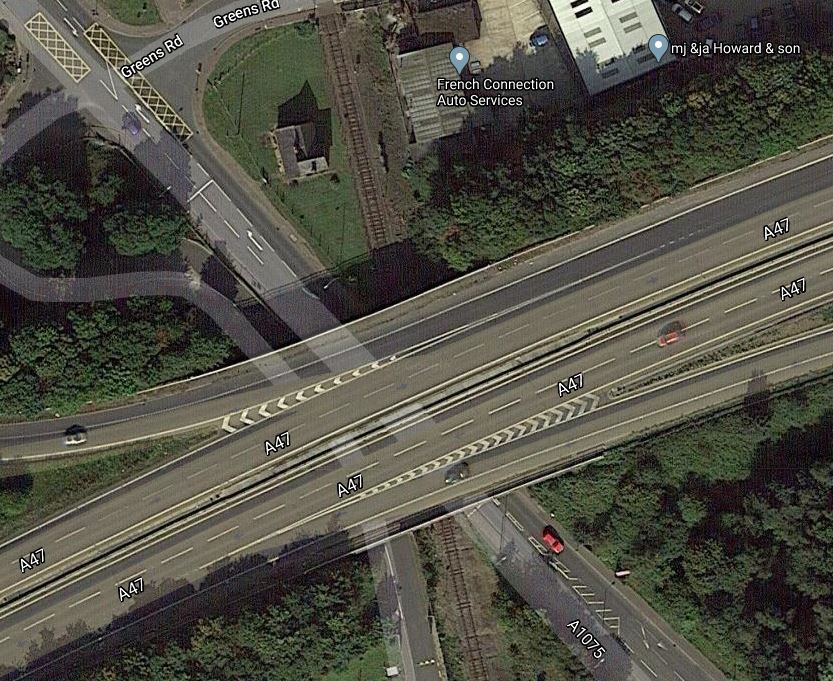
Note the single track railway running North-South under the flyover.
As you can see from some of the pictures in the article, the actual level crossing is under the flyover. Not the easiest place to work!
Conclusion
This appears to be another successful co-operation between a heritage railway, Network Rail and local interests.
Following on from the co-operation between the Mid-Norfolk Railway and Greater Anglia over train storage, that I wrote about in Aerial Pictures Show New Trains Housed In Mid-Norfolk, could the rebuilding of the level crossing be part of a larger scheme to allow Greater Anglia to use Mid-Norfolk rails to run a commuter service to Dereham?
Nikola Badger
The title of this post, is the same as that of this article on Business Insider.
This is the sub-title of the article.
An electric pickup truck with a longer range than Tesla’s Cybertruck will soon be up for pre-order — check out the Nikola Badger.
From the picture in the article, it certainly seems to have the right style.
Could this be the vehicle that promotes the growth of hydrogen as a vehicle fuel in the United States?
But not just in the United States!
I lived in rural Suffolk for forty years and I can think of several people, for whom this truck would be the ideal business pickup, that gave the right image to their customers.
Hydrogen Infrastructure
A hydrogen vehicle is no good without infrastructure.
This is a paragraph from the article.
Nikola also announced that it is planning on opening 700 hydrogen stations in North America.
In Startup Nikola Bets Hydrogen Will Finally Break Through With Big Rigs, I said this.
They will also make their hydrogen filling station network available to car makes.
I think this is the way to go.
£35m Station Transformation Launched By Tees Valley Mayor
The title of this post, is the same as that of this article on Rail Technology Magazine.
This is the introductory paragraph.
Tees Valley Mayor Ben Houchen has announced (June 9th) a £35m transformation of Middlesbrough Station to transport more train services to the town, including the first direct rail link to London in decades.
The Rail Technology Magazine article indicates that Platform 2 at Middlesbrough station will be extended to handle Azuma trains. As the current platform looks to be around 150 metres long and this would be long enough for a five-car train, does this mean that in the future nine-car and ten-car Azumas will be able to run services to Middlesbrough?
Currently, LNER run one train per two hours (tp2h) between London and York. Could some or all of these trains be extended to Middlesbrough?
- TransPennines’ trains between York and Middlesbrough take fifty-eight minutes, but they are timed for slower Class 185 trains.
- I would expect faster Class 800 trains could go between York and Middlesbrough and back to York in under a convenient two hours.
- In addition, the lengthened Platform 2 at Middlesbrough would allow longer trains on the service between London and York to turn back at Middlesbrough.
- As the York service, which has a frequency of 1tp2h shares a path with the Lincoln service of a similar frequency, there must be the possibility to run a 1tp2h between Kings Cross and Middlesbrough.
- The same path is also used to run one train per day (tpd) to and from Hull.
- It should also be noted that all Class 800 trains have the ability to split and join together in under two minutes.
There would appear to be a large amount of scope to develop a comprehensive timetable between Kings Cross and Hull, Lincoln and Middlesbrough.
- If the first train left at 07:06 and the last at 22:06, there could be sixteen trains per day on the Kings Cross and Lincoln, Hull, York and Middlesbrough route.
- Each train could be two five-car trains that split and joined en route, which means there would be a total of 32 tpd.
- If five tpd went to both Lincoln and Middlesbrough and perhaps three tpd to Hull, that would leave nineteen tpd trains for other destinations.
- As many trains as possible would need to call at York.
I can certainly see extra destinations built into a intricate pattern in Lincolnshire, Yorkshire and County Durham.
- Nottingham could be served from Newark.
- Grimsby and Cleethorpes could be served by extending services from Lincoln.
- Sheffield, Hull, Scunthorpe, Grimsby and Cleethorpes could be serves from Doncaster.
- Scarborough could be served from York.
- Washington and Newcastle could be served on an alternative route using a reopened Leamside Line.
- Sunderland could be served by extending services from Middlesbrough along the Durham Coast Line.
- Saltburn and Redcar could be served by extending services from Middlesbrough.
Splitting and joining could occur at the following stations.
- Newark for Nottingham and Lincoln, Grimsby and Cleethorpes
- Doncaster for Sheffield, Hull and Scunthorpe, Grimsby and Cleethorpes.
- York for Scarborough and Middlesbrough.
- Middlesbrough for Sunderland and Redcar and Saltburn
Middlesbrough station would need to be able to take two five-car trains for splitting and joining, so the platform extension is required.
Kings Cross and Middlesbrough Could Be A Zero-Carbon Route
In Could Some of Hitachi’s Existing Trains In The UK Be Converted To Battery-Electric Trains?, I indicated that as Middlesbrough station is only 21 miles and 29 minutes from Northallerton and the East Coast Main Line, that a five-car Azuma train converted to battery-electric operation should be able to run between Middlesbrough and Kings Cross, totally on electric power, which would be zero-carbon, if the electricity were to be renewable.
Lithium Battery Cell Prices To Almost Halve By 2029
The title of this post, is the same as that of this article on Energy Storage News.
This is the introductory paragraph.
Lithium-ion cell prices will fall by around 46% between now and 2029, according to new analysis from Guidehouse Insights, reaching US$66.6 per kWh by that time.
The rest of the article contains a lot more useful predictions.
I will add a prediction of my own.
The drop in prices of lithium-ion batteries will surely result in a lot more applications, in the following areas.
- Battery-electric vehicles
- Battery-electric vans and buses and light-trucks.
- Battery-electric trams and trains
- Battery-electric aircraft.
- Battery-electric ships.
- Battery-electric tractors
- Battety-electric construction plant
Lithium-ion batteries will also be used in hydrogen-powered versions of any of the above.
The cost of lithium-ion batteries, will also lead to more applications in the following areas.
- Grid energy storage or as it sometimes called; front-of-the-meter storage.
- Heavy trucks
- Double-deck buses
- Railway locomotives
These could use a very large number of lithium-ion cells.
Conclusion
Because as yet, there is no alternative to lithium-ion cells for mobile applications, I think we’ll see grid-energy storage going to one of the alternatives like Gravitricity, Highview Power or Zinc8.
A Pair Of Class 230 Trains In The Sun
The picture is from Vivarail and shows a pair of their Class 230 trains in the sun.
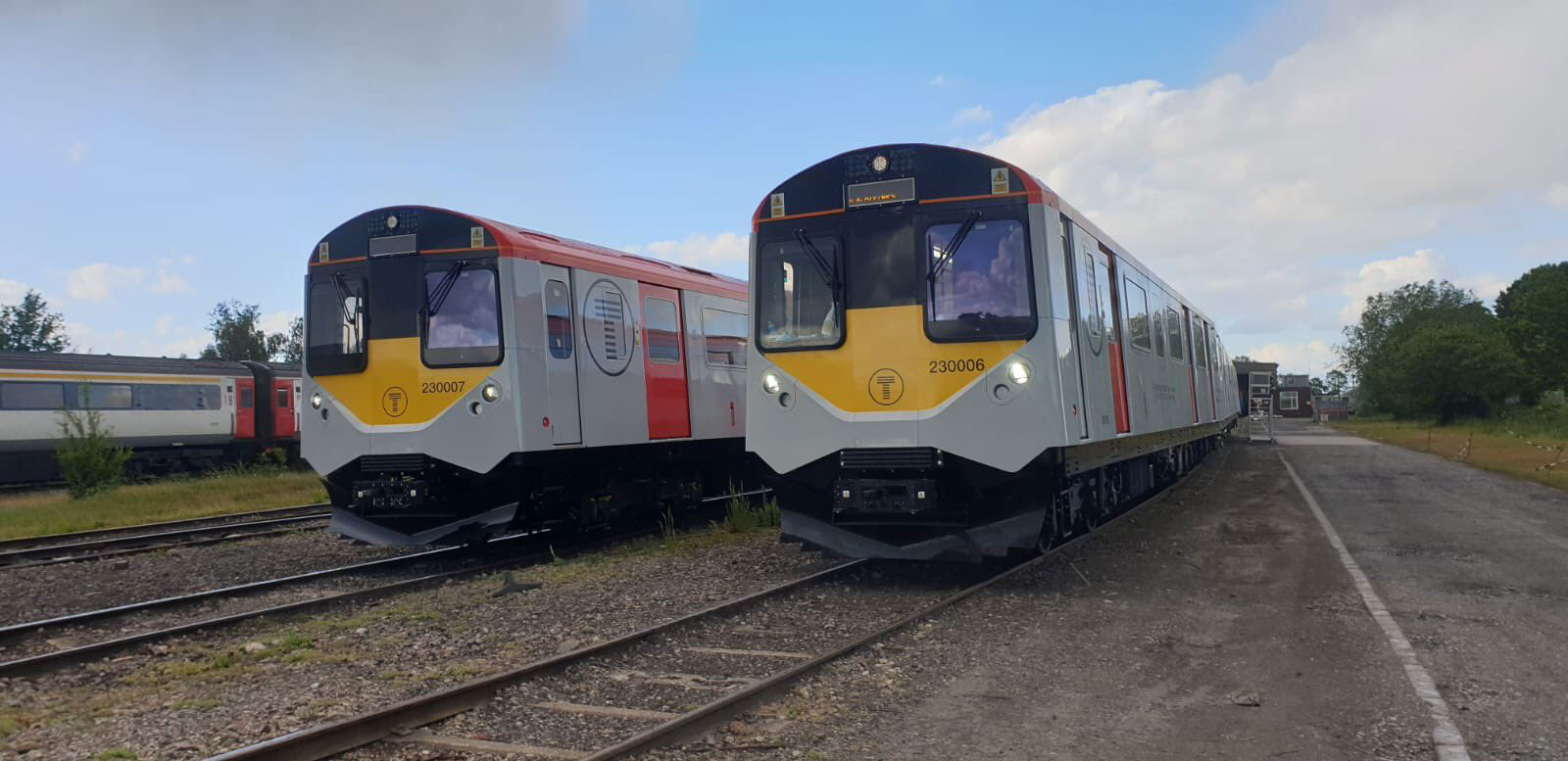
Compare it with this picture I took in 2014 and showed with others in Raw Material For A New Train.
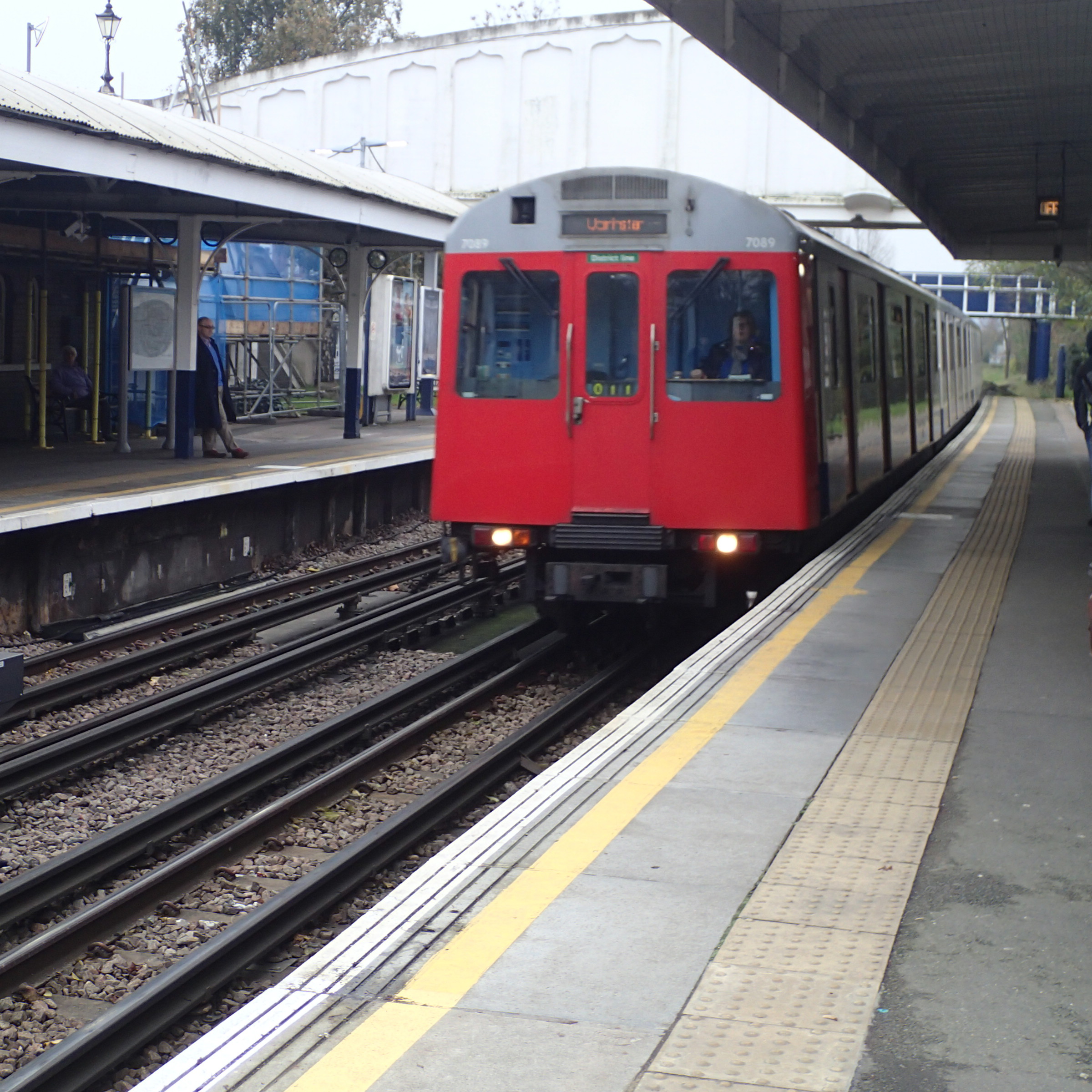
The trains certainly scrub-up well.
The improvement is more than cosmetic, if you read this Press Release from Vivarail, which is entitled First Time Together – 230006 And 230007.
Features of this pair of trains for Transport for Wales include.
- They are the UK’s first battery hybrid trains.
- The trains are geo-fenced, so that the gensets are not used in sensitive areas or stations.
- The batteries allow fast acceleration comparable with other electric trains.
- The gensets charge the batteries.
- They have high-specification interiors.
These trains must be an ultimate example of recycling, when you consider that the London Underground D78 Stock, on which the trains are based, were built around forty years ago.
Conclusion
I’m certainly looking forward to riding in these trains.
BMW: Fuel Cell Electric Drive Trains Could Become Our Fourth Pillar
The title of this post, is the same as that of this article on H2 View.
BMW have released this video.
Could this be a significant moment in the future of motoring?
Since the 1970s, BMW have led motoring with advanced vehicles and this seems to be following that trend.
As they say in the video, hydrogen is well suited for SUVs and longer ranges.
Ihope this vehicle is a success, as it could change the colour of personal motoring in a big way!
 The Anonymous Widower