Does One Of Baldrick’s Descendents Work For Avanti West Coast?
I have been looking at the problems of maximising traffic and reducing journey times on the West Coast Main Line to the North of Crewe.
I think that what Avanti West Coast intend to do has a touch of the Baldricks about it.
Trains that go North from Crewe include the following Avanti West Coast services.
- Blackpool, which branches off at Preston.
- Glasgow, which goes up the West Coast Main Line via Preston, Lancaster, Oxenholme and Carlisle.
- Liverpool, which branches off at Weaver Junction, between Crewe and Warrington.
- Manchester, which branches off at Crewe.
I find it interesting that according to Wikipedia, Avanti West Coast will be running their new Hitachi electric trains to Blackpool and Liverpool, but not Manchester.
Could it be that as these trains will be sharing tracks to the North of Crewe in the future with High Speed Two services to Preston, Carlisle and Scotland, that these trains will be built to have the same operating speed on the West Coast Main Line, as the classic-compatible High Speed Two trains, that will serve the route?
The Manchester Branch is slower, so will remain 125 mph Pendelino territory.
The Number Of Electric Trains Ordered
Doing a rough estimate< I reckon the following.
- One train per hour (tph) to Liverpool needs five 125 mph Pendelinos.
- One tph to Blackpool needs six 125 mph Pendelinos.
- .Two tph to Liverpool needs ten 125 mph Pendelinos.
- If the new Hitachi trains, are capable of 140 mph, I reckon two tph to Liverpool might need eight 140 mph trains.
The order of new Hitachi trains is not large enough to run both Blackpool and Liverpool services.
Will The New Hitachi Trains Be Used On London and Liverpool?
Consider.
- It would probably the best policy to run each route with one class of train.
- A two tph London and Liverpool service is much needed.
- Running the new Hitachi trains on London and Liverpool, would release extra trains for London and Blackpool and London and Birmingham.
- Two tph to Liverpool needs eight 125 mph Pendelinos or eight 140 mph Hitachi trains.
But it would also mean installing ERTMS signalling on the London and Liverpool route to enable 140 mph running.
It does appear that ten new Hitachi trains, able to run at 140 mph could service the London and Liverpool route and release five Pendelinos for other routes.
Could The Pendelinos Run At 140 mph?
They were designed for this speed, as were the InterCity 225 trains and only don’t run at this speed because of the lack of digital signalling on the West Coast Main Line.
The Wikipedia entry for the Class 390 Pendelino train says this about the speed of the train.
The Class 390 Pendolino is one of the fastest domestic electric multiple units operating in Britain, with a design speed of 140 mph (225 km/h); however, limitations to track signalling systems restrict the trains to a maximum speed of 125 mph (200 km/h) in service. In September 2006, the Pendolino set a new speed record, completing the 401 mi (645 km) length of the West Coast Main Line from Glasgow Central to London Euston in 3 hours, 55 minutes.
Perhaps it is time to unleash the Pendelinos?
Could the planned refurbishment of the Pendelinos install the required equipment, allow the trains to run using digital signalling at 140 mph?
What Is The Cunning Plan?
These are the possible objectives of adding the extra ten trains.
- One tph between London and Glasgow in around four hours.
- Two tph between London and Liverpool in around two hours.
Would this be one possible way to achieve these objectives?
- Install digital signalling on the West Coast Main Line to allow 140 mph in places, where the track allows.
- Improve the track of the West Coast Main Line, where necessary.
- Run new Hitachi trains between London and Liverpool.
- Release the current Pendelinos to other routes.
- Upgrade the Pendelinos with digital signalling to allow 140 mph running, where possible.
- Run 140 mph Pendelinos between London and Blackpool, Edinburgh and Glasgow.
The real plan will probably be a lot better and more comprehensive, but it does show how the two objectives can be met.
Conclusion
To improve services between London and Birmingham, Blackpool, Liverpool and Scotland, appears to need the following.
- Ten new Hitachi trains.
- Full digital signalling on the West Coast Main Line.
- Track improvements on the West Coast Main Line
- Upgrading of the Pendelinos to allow 140 mph running.
This should reduce London and Glasgow to around four hours and London and Liverpool to around two hours.
Who Needs Wires?
I went to Birmingham today to look at the recently-opened extension of the West Midlands Metro, which runs from outside Birmingham New Street station to Birmingham Library on battery power.
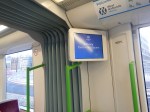
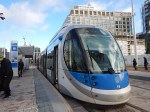
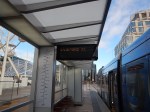
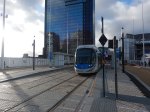


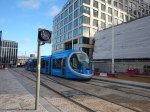
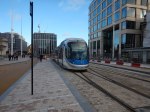


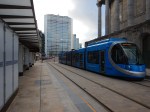

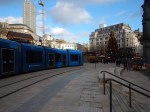
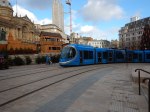





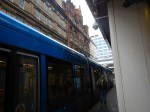
Note.
- Pavements, tram stop furniture and other details need to be finished.
- There no wires between near to New Street station and the Birmingham Library tram stop.
- The route is double-track.
- The stops all have two platforms.
- The route will be extended past Birmingham Library and on to new stops at Brinfleyplace, Five Ways and Edgbaston,
- The last three pictures show the pantograph being lowered outside New Street station.
These are my thoughts on other areas.
Battery Installation
The batteries appear to be on the roof of the two end sections of the trams.
They don’t appear to be very large, so it looks to me that CAF have taken great trouble with the design.
After all, the batteries were fitted to the trams by maintenance staff at West Midlands Metro, after one tram was converted in Spain.
Battery Operation
I observed the following.
- Birmingham Library tram stop doesn’t appear to have a charging station.
- Trams running towards Birmingham Library tram stop, drop the pantopgraph at New Street station.
- Although I didn’t see it, trams going in the other direction, probably raise the pantograh at New Street station.
- I would assume that trams leave New Street station for Birmingham Library, with full batteries, that have been charged on the way from Wolverhampton.
- Trams appear to have no problem climbing from New Street station to the Town Hall tram stop.
- If required trams could coast down the hill to New Street station.
The operation on battery power appears to be very simple.
Note that there are three other tram systems, that use these CAF Urbos 3 trams, that use batteries; Granada, Luxembourg and Seville.
There will surely be others, judging by the quality I saw in Birmingham.
Noise On Battery Power
Like other battery-powered vehicles, that I’ve ridden, they seem to be very quiet, when running on batteries. I suspect, that with the pantograph safely down in its hole, a lot of clanking and screeching doesn’t happen.
The Location Of The Temporary Terminus
The Birmingham Library tram stop makes an excellent temporary terminus.
- It is at the top of the hill, so will surely attract passengers, not wanting to walk all the way up.
- It is not far from the library, conference hall, conference centre and the restaurants on Brindleyplace.
- The tracks can be easily extended to Edgbaston.
- There is a crossover to allow trams to be turned back in either platform.
- There are also no need for wires at the tram stop.
I also think, that if there are no wires on the extension from Birmingham Library tram stop, that the building of the extension could be much simpler.
The New Extension Opened Early
I’m fairly certain, that the newly-opened section of track is completely without wires.
- Did this simplify testing and allow the extension to open a few days early, once staff training had been completed?
- It certainly allows revenue to be collected earlier.
- Have the battery modifications to the trams been designed so that the full extension can be handled on battery power?
- Does this mean that the route can be built and tested in sections, by just laying the track and testing it?
If this is the plan, it is rather elegant and could save construction costs and testing time.
Extending The Edinburgh Tram
Is a similar construction plan to be used on the Edinburgh trams for their extension?
The trams are all built by CAF, which must help..
Conclusion
Birmingham must now have one of the best City Centre tram in the world.
- The batteries are charged on the long run between Birmingham and Wolverhampton.
- The changeover between battery and overhead power happens at a busy stop, so doesn’t delay the tram.
- There is sufficient power to climb the hill from New Street station to Birmingham Library.
It’s a much better system than the MetroCentro in Seville, which was also built by CAF. But that is now twelve years old and is only about as long as Birmingham’s current section without wires.
These pictures show the charging system in Seville from my post called Seville’s Elegant Trams.



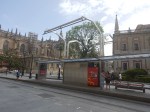
Seville’s trams have to charge the battery at every stop and I suspect the technology could be used in the West Midlands if needed.
Are we also seeing an innovative construction method for a tram system?
- An electrified core is built first.
- Battery trains can be tested on an electrified line with the pantograph down.
- The initial line is then extended, as required at the ends using plain track and battery operation.
- The extension is done gradually in sections to allow full testing.
It should be possible to save construction time and project cost.
Is The Walkway Through The PowerPack On A Class 755 Train Too Narrow?
These pictures show the walkway through the PowerPack on a Class 755 train.
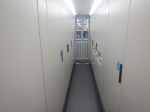
For comparison here’s the walkway between cars on a Class 802 train.
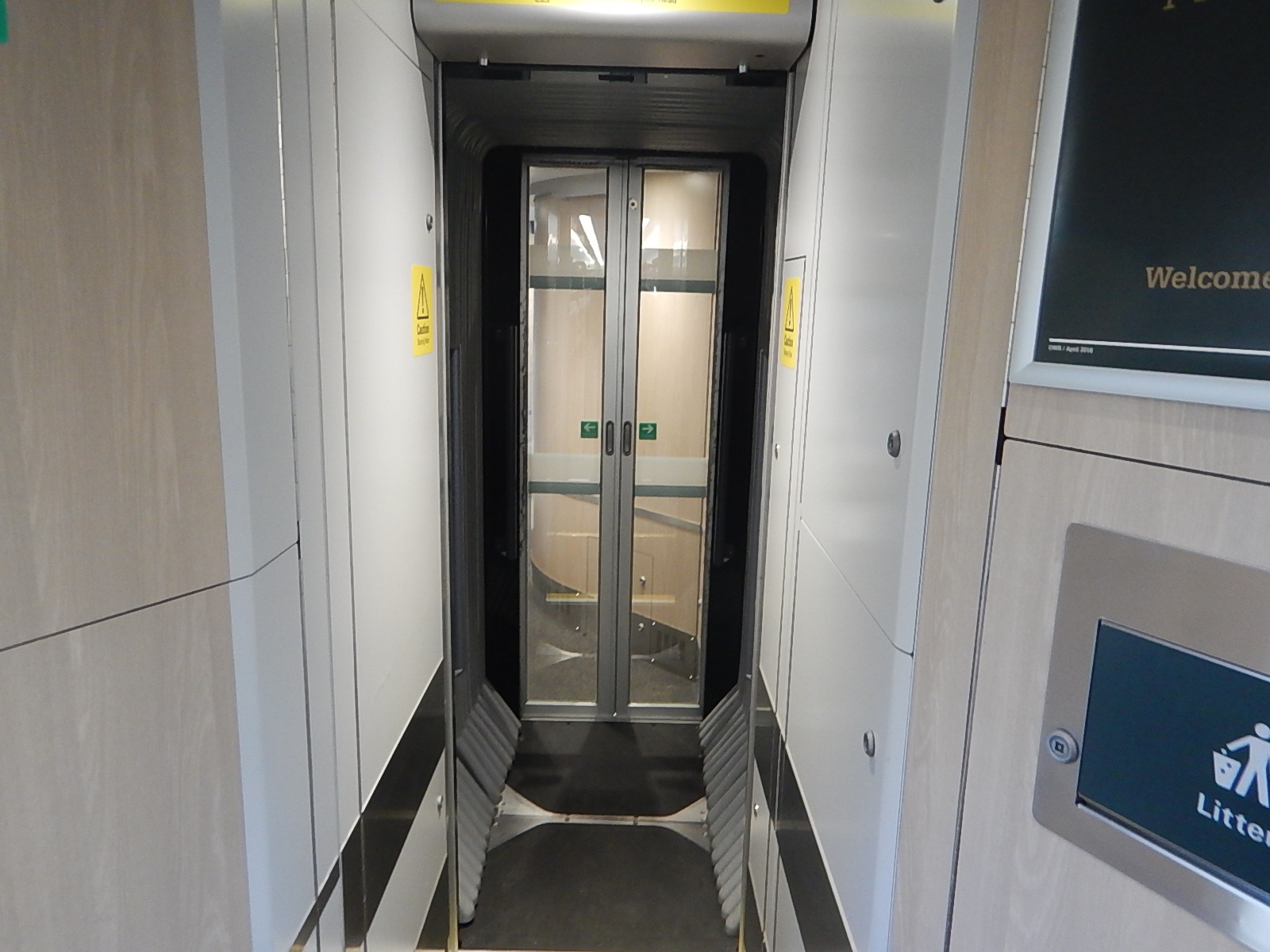
Certainly, this passage takes a trolley.
There is no need at present for a trolley on a Class 755 train, but surely the Lowestoft and London service could have one.
Tories Win Blyth Valley
Wikipedia doesn’t say when Blyth Valley, last elected a Tory MP. But it was before 1950.
The Green Party seemed to have polled more votes than was expected.
It has been suggested that the railways through the area, which were closed in the 1960s, when Harold Wilson was Prime Minister, be reopened.
Did this have an effect?
If I was Boris, I’d make sure the railway lines in the area were reopened.
MSU Research Leads To North America’s First Commercial Hydrogen-Powered Train
The title of this post, is the same as that of this article in Railway Age.
This is the introductory paragraph.
Research from Michigan State University’s Center for Railway Research and Education (CRRE) contributed to the San Bernardino County Transportation Authority’s (SBCTA) decision to order the first commercial hydrogen-powered train for use in North America.
These statements were also made.
- The research was conducted in partnership with the Birmingham CRRE and Mott MacDonald.
- Funding was from the California State Transportation Agency (CalSTA).
- The trains will be built by Stadler, probably in their US factory.
There is also a picture of the hydrogen-powered Flirt in the article, and it is very similar in formation to a Class 755 train, with a PowerPack in the middle.
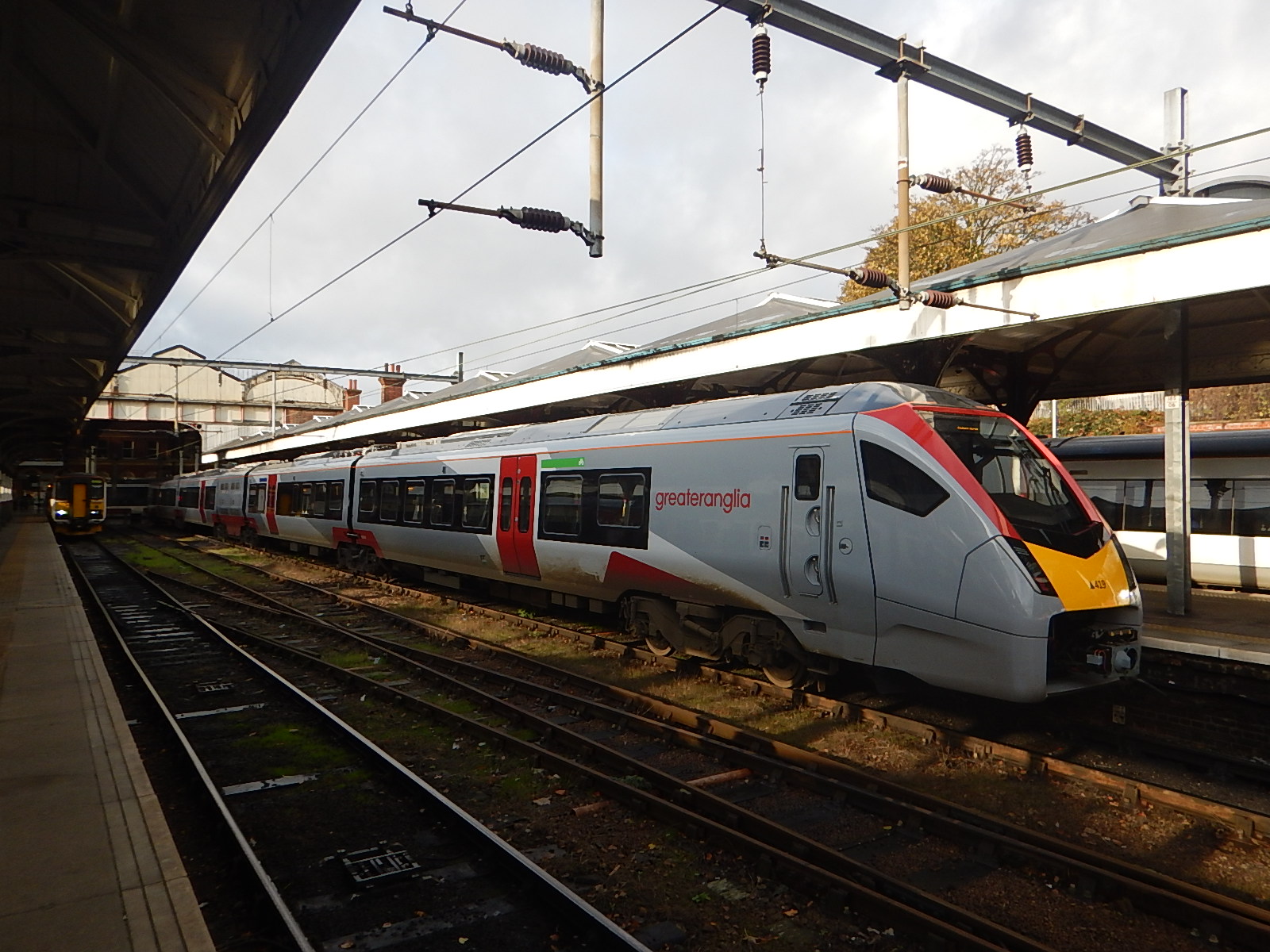
The picture shows a Class 755 train at Norwich station.
The article indicates that hydrogen-power was chosen, as the rail line may be extended by sixty miles to Los Angeles.
Conclusion
After reading the full article, it certainly looks like San Bernardino County Transportation Authority have planned their new railway in a very professional way.
Welcome To The LNER Stadium… Train Operator Sponsors Lincoln City Football Club Stadium
The title of this post, is the same as that of this article on Rail Advent.
Sincil Bank willnow be the LNER Stadium.
In LNER To Put Lincoln On The Rail Map, I detailed LNER’s plans to run five trains per day in each direction and also to increase weekend services.
I also speculated that LNER might extend the service to Grimsby and Cleethorpes.
Conclusion
It does appear that the extra services between London and Lincoln and the sponsorship of the stadium are part of a larger plan.
This might fit in with an extension of the service to Grimsby and Cleethorpes.
Class 755 Train Details
These pictures are a collection of some of the details of Class 755 trains.
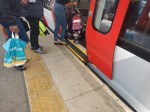
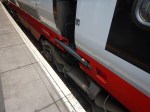
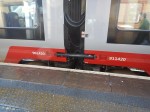
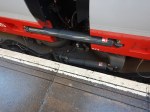
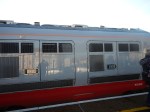
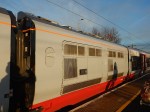
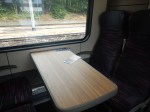
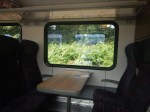
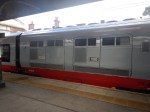
I shall add to this collection of pictures.
If you give me a credit, feel free to use them in anything you write.
An Interloper At West Ealing Station
These pictures show a Chiltern Railway‘s Class 165 train in West Ealing station.

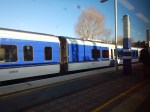
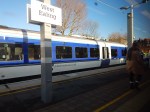
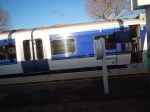
Has the train just been borrowed by Great Western Railway or is there another reason?
It looks like as I passed, that I saw a Parliamentary Train, which uses the Greenford Branch to travel to High Wycombe
 The Anonymous Widower