Chester To Liverpool Via Runcorn
This new service between Chester and Liverpool Lime Street stations via Runcorn station and the Halton Curve, started a couple of weeks ago.
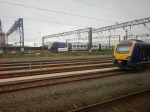
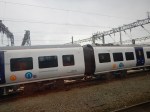
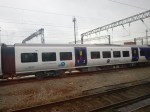
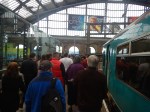
I took these pictures of the journey.
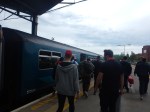







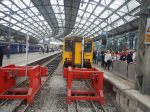
Note.
- The service was busy, as everybody seemed to be going to Liverpool to prepare for the evening’s match.
- The Class 150 train kept up a good speed, which indicates that Network Rail didn’t cut quality on the link.
- Runcorn is about the halfway point of the journey.
- The route is electrified between Runcorn and Liverpool Lime Street stations.
- The Class 150 train was a bit tired.
I wouldn’t be surprised to see a hybrid train working this route.
- Transport for Wales have ordered some electro-diesel Class 769 trains.
- Alstom are converting Class 321 trains into hydrogen-powered Class 321 Breeze trains at nearby Widnes.
- Porterbrook are converting Class 350 trains into Battery/FLEX trains.
- Hitachi are talking to ScotRail about Class 385 trains with batteries.
- I’m also sure Bombardier have a battery-electric Aventra.
Operation would be as follows.
- All these trains work be capable of 100 mph using 25 KVAC overhead electrification between Liverpool Lime Street and Runcorn stations.
- Power changeover would be at Runcorn station.
- Between Runcorn to Chester stations is only about fourteen miles.. This will be well within battery range in a few years.
Transport for Wales will be obtaining trains from a crowded market.
More Halton Curve Services
Under Planned Improvements in the Wikipedia entry for Transport for Wales, this is said.
Introduction of a new hourly Liverpool to Llandudno and Shrewsbury service, and a new two-hourly Liverpool to Cardiff Central service from December 2022.
Adding these to the current hourly service, this would mean that two trains per hour (tph) would normally run between Liverpool Lime Street and Chester stations, with three trains in every alternate hour.
I think that, there would be a marketing advantage in running hybrid trains on these routes. Hydrogen would be ideal, as these would not need recharging like battery trains after a long trip.
To go through the single-track Halton Curve appears to take trains about five minutes, so up to eight tph could probably be feasible, which would mean four tph between Liverpool and Chester via Runcorn in both directions.
If Trains for Wales are going to compete with the Merseyrail electric services, they need a four tph frequency in both directions.
Flexible Ticketing
Currently, if you want to buy a ticket between the Chester and Liverpool Lime Street, you have to buy an appropriate ticket for your chosen route.
Surely, tourists and others might like to do the out and back journeys by a different route.
If London Underground and some train companies can share ticketing, then surely Merseyrail and other train companies can do the same.
Conclusion
This new service will be surprisingly well-used and needs an iconic hybrid train.
- Diesel is not appropriate for the long term, although in Northern Connect Between Chester And Leeds To Start In May, I did report a rumour that Class 769 trains might be running between Chester and Leeds.
- Hydrogen is non-polluting and has a longer range, that could make services between Liverpool and Holyhead possible.
- Battery will probably need a charging infrastructure.
My money is on hydrogen power.
Hillside Station To Go Step-Free
This document on the Government web site is entitled Access for All: 73 Stations Set To Benefit From Additional Funding.
Hillside station in Liverpool, is on the list.
These pictures show the station and the current station building, which is on a bridge.

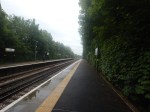
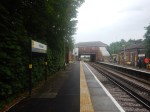
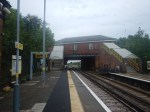
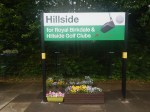
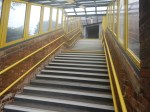

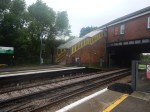
This 3D Google Map shows the station.

Note.
- The station appears to have a large forecourt.
- The stairs to the platforms have thirty-two steps.
- There could be enough space for lifts outside the platforms.
But will a simple solution, be able to cope with major events like the Open Championship at Royal Birkdale?
Perhaps something more radical, but very possible will be done.
One idea, could be to extend the station building at both ends.
- A set of wide safe stairs and a lift could provide direct access from the street to the platform in the extensions.
- Once installed, the original stairs could be removed.
There are certainly possibilities for an architect to develop a solution to cope with the biggest events.
St Michaels Station To Go Step-Free
This document on the Government web site is entitled Access for All: 73 Stations Set To Benefit From Additional Funding.
St. Michaels station is on the list.
These pictures show the current station.
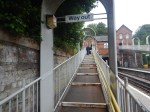
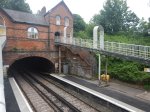
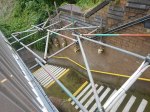
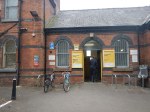
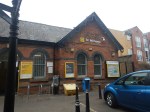
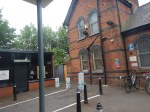

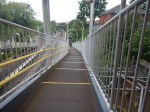
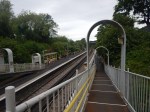
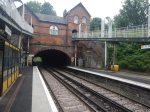
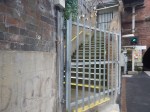
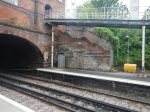
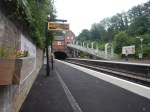
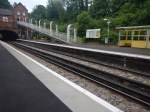
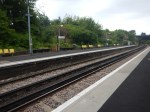
St Michaels station, like Hunts Cross station, has rather unusual long shallow angle ramps, with steps.
This 3D Google Map shows the station.
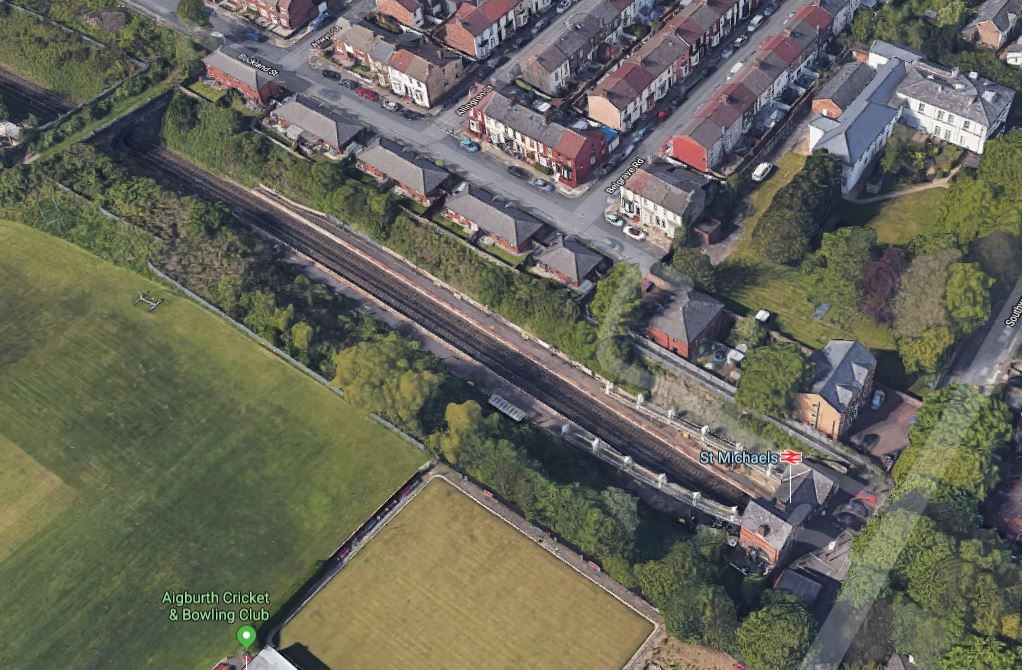
Note.
- It is a well-appointed and well-maintained station with a Ticket Office, a toilet and cycle storage and hire.
- Car parking is very limited.
- But the station is designed for pedestrians, cyclists and visitors
- The station has a rather chequered history, being closed in 1972, only to be reopened six years later.
- I think the design of the ramps is a good example of independent Liverpudlian thinking, which often ignores conventional practice.
The ramps were built for International Garden Festival in 1984, the site of which is shown on this second Google Map.
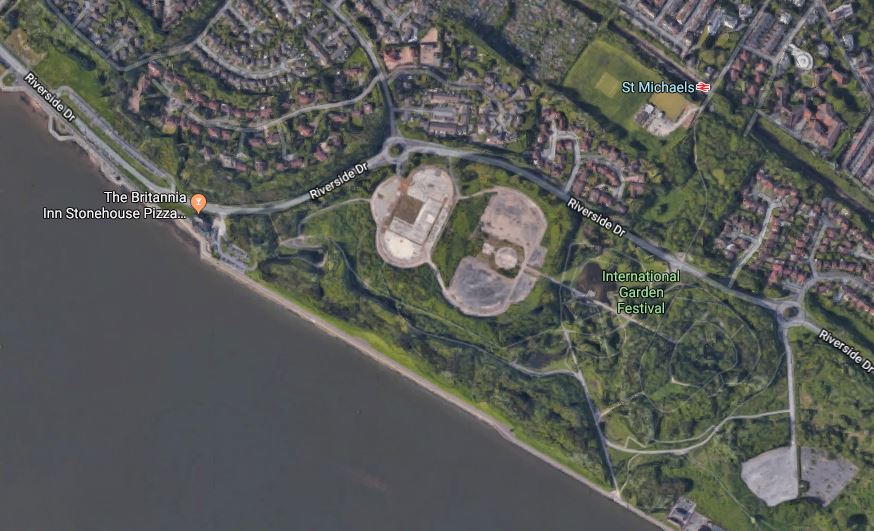
St. Michaels station is in the top-right corner of the map.
The International Garden Festival site has since been updated and 1300 new houses are being built on the site.
Adding step-free access to the station, will surely be a big asset to the area.
Preparation For Class 777 Trains
Note that St. Michaels station has been updated to allow step-free access between the new Class 777 trains and platform.
According to a fellow traveller, it had been done at night with little inconvenience to passengers.
Installing The Lifts
I would suspect, that the two new lifts could be installed in the space currently occupied by the two disused stairways.
Conclusion
This is the type of station that needs step-free access.
- It will make nearby developments more desireable.
- It will facilitate walking with children and for those in wheelchairs.
- It will increase traffic at the station.
I would also suspect the lifts can be added without too much disruption to the travelling public.
I also think there a lesson in the chequered history of St. Michaels station.
Next time a station or even a whole line has to be closed, make sure that it can be reopened, if necessary in the future. To many useful stations like Horden and Maiden Lane have been reduced to rubble. The former is being rebuilt and many believe the latter is needed.
Hunts Cross Station To Go Step-Free
This document on the Government web site is entitled Access for All: 73 Stations Set To Benefit From Additional Funding.
Hunts Cross station is on the list.
These pictures show the station and the current bridge.
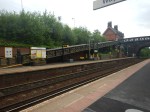
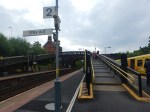
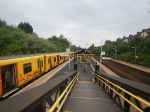
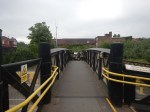
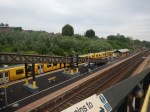
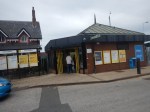
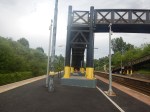
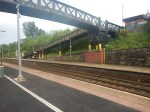
Hunts Cross station, like St. Michaels station, has rather unusual long shallow angle ramps, with steps.
This 3D Google Map shows the station.
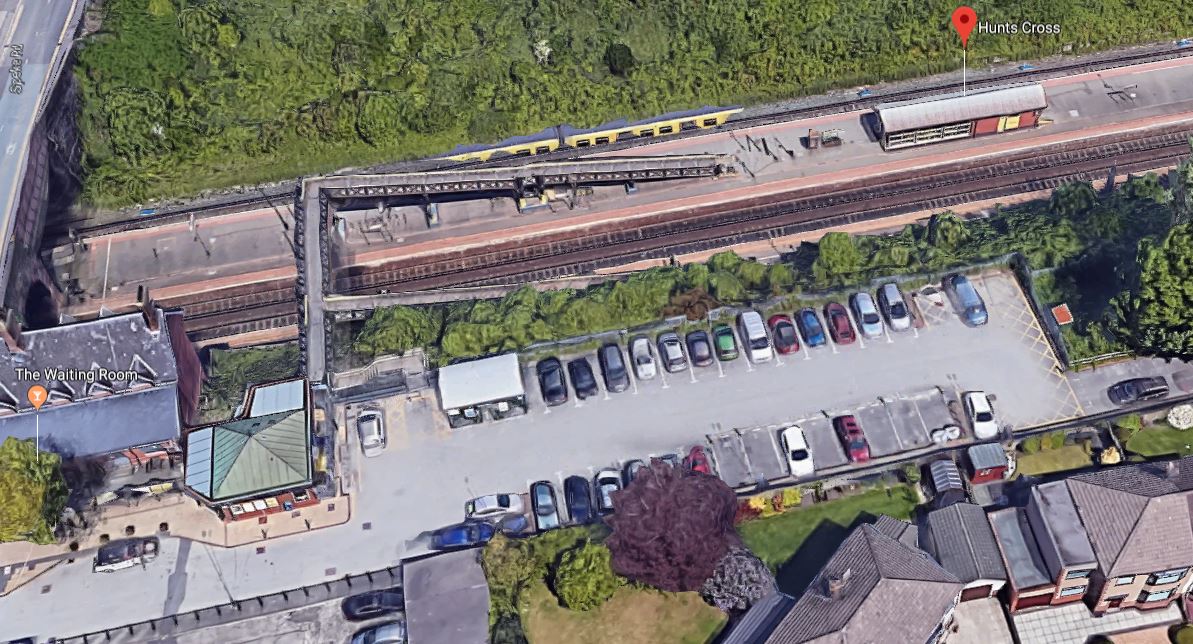
It may be unusual, but I suspect a conventional lift tower on each platform would make the station fully step-free.
Note.
- The station is Grade II Listed and is described as”A good example of the stations built for the Cheshire Lines Committee.”
- The ramps and bridge look to be in excellent condition and could be reasonably recent. Some repainting was actually in progress.
- For those that are in need of a drink, after climbing the ramps, there is a handy pub called the Waiting Room. It was busy, when I went to the station.
- As well as providing step-free entrance and exit to the station, the lifts would provide step-free interchange for passengers from Manchester needing to transfer to Merseyrail.
- Passengers arriving at the station, who need to go to Manchester, would do as they do now and walk across the platform.
- Do the last two pictures in the gallery show that the bridge was built or has been modified for lifts to be added? The bridge seems to have a lower wall, which could be removed.
- There may be some adjustments needed to the path that Links the station entrance to the bridge.
I’m also pretty certain, that the layout of the station, would allow works to be done, whilst the station is in full operation.
Preparation For Class 777 Trains
Unlike most other stations, that I saw on on the Merseyrail network, work appears to be outstanding to create level access between the new Class 777 trains and platform.
Future Electrification
The bridge would appear to be high enough to clear any future 25 KVAC electrification.
Conclusion
This shouldn’t be the most difficult of projects, unless the Heritage Lobby get upset.
The only problem, I can see would be, it might attract more passengers and create a need for a larger car park.
Saddle Up Says Bank, As It Slashes Staff Parking
The title of this post, is the same as that of an article on Page 12 of today’s Sunday Times.
This is the precis.
HSBC is swapping spaces for bike racks to persuade workers to drive less, and to discover why Britons refuse to pedal.
It’s an interesting position to take.
And I agree with it! Especially, if offices have good public transport connections.
Highbury Corner Is Finally Getting There!
I had almost stopped using Highbury & Islington station, due to the construction works at Highbury Corner, which have been going on for several years.
I posted Changes At Highbury Corner in February 2016.
These pictures show it a few days ago!




This map from the linked post shows the intended road layout.
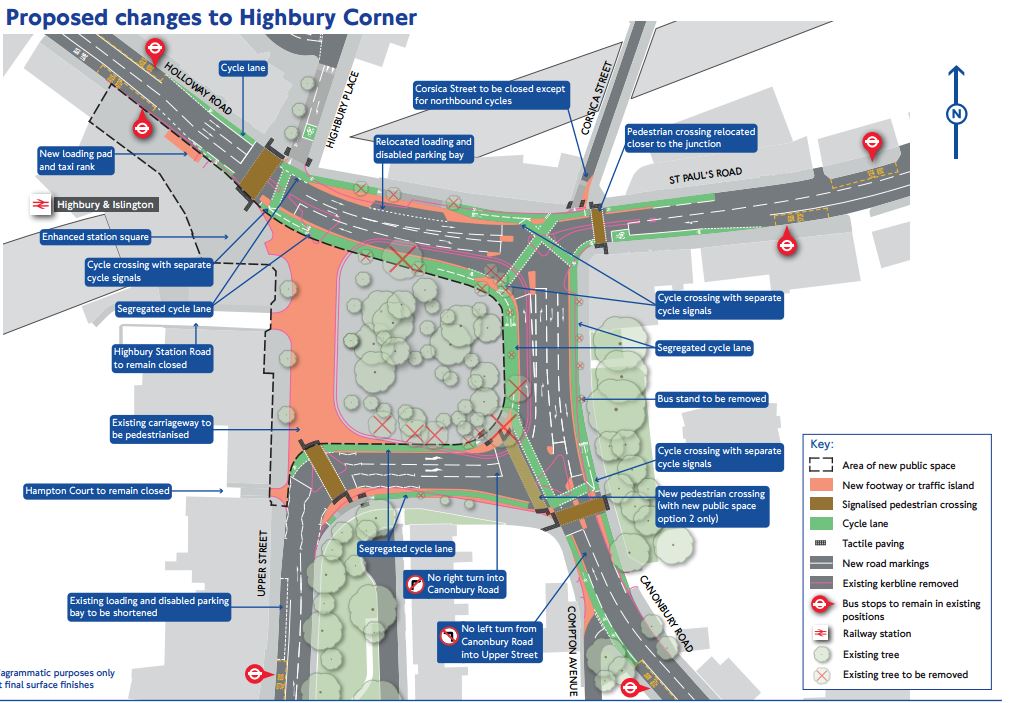
Highbury Corner Changes
The map is a good summary of the proposed changes.
It certainly means that my walk from the bus-top to the station isn’t an obstacle course.
Hauling With Hydrogen: DHL Adding Fuel-Cell Vans To Its Delivery Fleet
The title of this article is the same as that of this article on Forbes.
This is the first paragraph.
Hydrogen is the most abundant element in the universe, but vehicles powered by the clean fuel are somewhat scarce. In the latest sign that that’s changing, DHL is adding hydrogen fuel-cell vans to its fleet to cut carbon emissions with faster refueling time and longer-range than battery-electric vehicles offer.
The whole article is well worth a read.
Conclusion
This initiative by DHL, like the development of hydrogen-powered double-decker buses for London and Liverpool, is another well-thought out project to move the world towards a zero-carbon and low pollution future.
All three projects are multi-vehicle projects, where fuelling can be done on a centralised basis.
Looking at the large cities of the UK, there must be several large fleets, that could be converted to hydrogen.
- City buses
- Royal Mail and other parcel and mail delivery vehicles
- Taxis
- Refuse trucks
I can see a range of solutions for providing zero-carbon and low-pollution transport, which vary dependent on the application and fleet size.
Specialised bicycle systems – Locally, I’ve seen bread deliveries, a nappy service and a plumber. There was also an item on the BBC about a hospital using a bicycle for local deliveries of samples, drugs and blood.
One-vehicle electric vehicle systems – Many small busineses, trademen and house-owners have a vehicle that they keep off the road in their premises or garage. A pathway needs to be developed, so that they can exchange their current vehicle for a battery-electric one, which also plays its part in storing surplus electricity. The technology is there, but it needs to be packaged, so people can afford to take that route.
Multi-vehicle electric vehicle systems – This is obvious for companies with lots of delivery vans, but this could be extended to blocks of flats and office developments, where all parking spaces have charging points and service charges could be set to encourage electric car use.
Multi-vehicle hydrogen systems – I’That’s where this article started and I think, this could expand, as the technology of both the vehicles and the hydrogen fuelling improve.
,There could be lots of niches, which a tailored-solution could solve.
The Cement Truck Example
I would love to know how many miles the average cement truck does in a day. But obviously the companies know and calculations would show the size of hydrogen tank needed for a couple of days work in a city like Leeds.
- Range with a full load wouldn’t be more than perhaps fifteen miles.
- The return trip would be empty and needs less power.
- The depot would have a hydrogen fuelling system, Fuelling a hydrogen truck should be no more difficult than fuelling a diesel one.
- Whilst in the depot, if power is needed to turn the drum and mix the cement, this could be provided by a direct electrical connection.
- The truck could leave the depot with a full battery.
- Hydrogen trucks might be used for local deliveries with perhaps diesel hybrid trucks for longer deliveries
I suspect that looking at the system as a whole entity could produce a very good system.
If say it cut carbon emissions and pollution by upwards of fifty percent, would it give the company a marketing advantage.
Perhaps, each building should be taxed for the amount of carbon dioxide and pollution its construction created?
Vivarail Units Take Over Marston Vale Services
The title of this post is the same asw this article on Railway Gazette.
The article contains an informative video of Adrian Shorter talking about the Class 230 train.
Much of the article and the video is information that has already been well reported.
Adrian Shooter does mention that the diesel-electric-battery versions of the Class 230 train for Transport for Wales will incorporate geo-fencing.
This would mean that in sensitive areas, the diesel engines would be cut out and only battery power would be used.
The process would be controlled automatically using the train’s position from GPS.
This technique has been used on hybrid buses to lower emissions and noise levels in sensitive areas.
InterCity Quality For Rural Routes
The title of this post is a quote from the Managing Director of Greater Anglia; Jamie Burles about the Class 755 trains in this article on Rail Magazine.
This is the complete paragraph.
Burles said of the Class 755s: “These will be the most reliable regional train in the UK by a country mile – they had better be. They will be InterCity quality for rural routes, and will exceed expectations.”
Initially, the Class 755 trains will be deployed between Norwich and Great Yarmouth stations.
- It is 18.4 miles long
- There are four intermediate stations.
- Trains currently take thirty-three minutes.
It is certainly not your traditional InterCity route and it only runs at a maximum frequency of two trains per hour (tph).
Consider.
- Norwich is a City of over 140,000.
- Great Yarmouth is a town of 40,000.
- There are lots of business and leisure reasons to travel between the two.
- The A47 road between the two is totally inadequate.
Greater Anglia are purchasing a fleet of 38 trains with a total of 138 carriages to replace 27 trains with a total of 58 carriages.
- This is a forty percent increase in the number of trains.
- This is nearly two and a half times as many carriages.
- The average number of carriages per train is raised from 2.1 to 3.6.
That is a massive increase in train capacity.
I don’t believe that Greater Anglia will park these trains in a siding, but use them to increase frequencies.
- Will the 100 mph operating speed of the trains allow a round trip between Norwich and Great Yarmouth to be done in after an hour?
- Will the frequency be increased to up to four tph?
If this can be arranged then Greater Anglia could need as few as four trains to run a Turn-Up-and-Go service between Norwich and Great Yarmouth.
How many passengers would that attract to the route?
Comparing Three-Car Class 755 And Class 170 Trains.
Some three-car Class 170 trains were bought some years ago, to run services between London and Great Yarmouth.
In recent years, they have become the mainstay of Greater Anglia’s regional routes.
- Ipswich and Cambridge
- Ipswich and Peterborough
- Norwich and Cambridge
All three routes are currently run at a frequency of one tph.
These trains have the following specification.
- 100 mph operation
- Two-class layout.
- Between 100 and 200 seats.
They have proven to be a capable train for the routes and appear to have been driving increasing traffic levels.
It should also be noted that other operators use these trains on routes including.
- Birmingham and Stansted Airport
- Cleethorpes and Manchester Airport
- Cardiff and Nottingham
I think it is true to say that Class 170 trains are 100 mph trains for running on InterCity routes that can’t justify a full-size train like a bi-mode Class 802 train.
Some operators will also be running five-car Class 802 trains on routes that have been run in the past or still are run by Class 170 trains.
The Class 755 trains are 100 mph trains, which Greater Anglia are using in two sizes.
- Class 755/3 train – three cars with 167 seats
- Class 755/4 train – four cars with 229 seats
The longer trains will probably be used on Greater Anglia’s longer regional routes.
- Ipswich and Cambridge
- Colchester and Peterborough
- Norwich and Stansted Airport via Cambridge
- Liverpool Street ans Lowestoft via Ipswich
Note that the last three routes are electrified for nearly have the route.
Except for the Ipswich and Cambridge route, these routes are longer than those run in the past and these routes will probably need four-car trains with InterCity interiors and service.
The Liverpool Street and Lowestoft service of the 1960s and 1970s had a buffet car and passengers on this route will at least expect a trolley service of drinks and snacks.
I very much feel that the Class 755 trains will in a worse case be better than the Class 170 trains, that have run InterCity services in the past.
Will Class 755/3 And Class 755/4 Trains Have The Same Interiors?
Greater Anglia haven’t said definitely that the interiors in the two classes of train will be the same, but I think it will be likely, with respect to the ease of building and maintaining the trains.
This video shows the train being tested at Diss.
Unfortunately, it doesn’t show the interior.
So I’ll have to wait until the end of June to have a look at a real train.
It should also be noted that Class 755 trains can be lengthened by adding extra trailer cars.
So it would be unlikely that the interiors in the driver and trailer cars were different, as this would mean that shuffling of cars could create a train with a mixed interior.
Conclusion
Consider.
- Some of the Class 755/4 trains will be running InterCity services.
- Both Class 755 variants are capable of 100 mph running.
- Ease of building and maintenance probably requires identical interiors.
It would appear that all services where Class 755 trains are used, will get the same InterCity passenger experience.
Although some services could be slower than InterCity services, due to track limitations.
Will Abellio use a similar philosophy, with the new fleet for East Midlands Railway?
 The Anonymous Widower