My First Ride In A Class 397 Train – 15th November 2023
I took these pictures during my first ride in a Class 397 train, between Wigan North Western and Liverpool Lime Street stations.
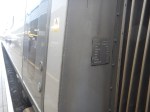
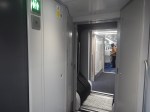
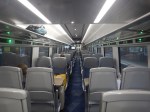
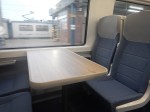
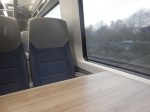


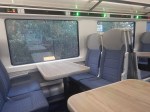
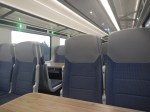
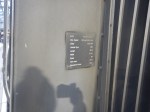
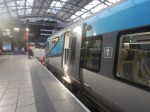
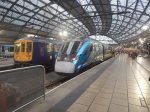
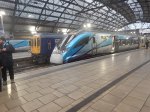
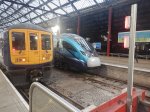
Note.
- Reading the plates, the total weight of the train is 188.4 tonnes.
- There are 268 seats.
- The ride wasn’t bad at all.
- Seats were comfortable.
Build quality was about the same as a Hitachi train.
The Data Sheet For Hitachi Battery Electric Trains
Was I just slow to spot this data sheet or has it only just been released?
You can download a copy from this page on the Hitachi web site.
In a section on the page, which is entitled Intercity Battery Trains, this is said.
A quick and easy application of battery technology is to install it on existing or future Hitachi intercity trains. Adding just one battery reduces emissions by more than 20% and offers cost savings of 20-30%.
Our intercity battery powered trains can cover 70km on non-electrified routes, operating at intercity speeds at the same or increased performance. Hitachi Rail’s modular design means this can be done without the need to re-engineer or rebuild the train and return them to service as quickly as possible for passengers.
These are my initial thoughts.
Plug-and-Play
It looks like the train is plug-and-play.
A diesel engine will be swapped for a battery-pack and the train’s computer controls the power sources accordingly.
Hitachi’s Battery Philosophy Explained
This is said on the data sheet.
Battery technology has the potential to play a significant role in the future of sustainable rail mobility, setting
the rail industry on the path to full intercity decarbonisation by 2050.
Installing batteries on intercity trains can complement electrification and provide a low emission alternative
to domestic air travel.Our retrofit solution for intercity trains offers phased replacement of diesel engines at the time that they would
have been due for their regular heavy maintenance overhaul, replacing each engine in turn until trains are fully battery electric. The solution delivers fuel cost savings and lowers CO2 emissions by at least 20% for every engine replaced, and a 20% reduction in whole life maintenance costs – well within the battery’s life span of 8-10 years.
Performance On Battery Power
The data sheet gives these bullet points.
- 750kW peak power
- Weight neutral.
- At least 20% lower CO2 emissions
- 70km on non-electrified routes
- 20% reduction in whole life maintenance costs
- Up to 30% fuel cost savings
- Zero emissions in and out of stations
- Charge on the move
- 10 year life span
Note.
- 750 kW peak power, is around the power of the diesel-engine, that will be replaced.
- I wouldn’t be surprised that powerwise, the battery pack looks like a diesel engine.
- Weight neutral means that acceleration, performance and handling will be unchanged.
- Batteries are easier to maintain than diesels.
- It is stated that a train can be fully-decarbonised.
I have a feeling these trains are no ordinary battery-electric trains.
Seventy Kilometre Range On Battery
Seventy kilometres is 43.5 miles.
This may not seem much, but the data sheet says this.
Our battery hybrid trains can cover 70km on non-electrified routes, operating at intercity speeds at the same
or increased performance. By identifying the routes with short non-electrified sections of 70km or less, we could
see the replacement of existing diesel trains with fully battery-operated trains on those routes within a year.
And, using battery power to avoid electrifying the hardest and most expensive areas, such as tunnels and bridges,
enables flexibility on electrification, minimising passenger disruption during upgrades.
Note.
- It looks like the trains can operate at 125 mph on battery power, where the track allows it. But then the rolling restistance of steel wheel on steel rail, is much lower, than that of rubber tyres on tarmac.
- Hitachi seem to have developed a philosophy on how the trains will be used.
- Hitachi’s pantographs, go up and down with all the alacrity of a whore’s drawers. They will be ideal for a short length of electrification.
I think these LNER routes could be immediately decarbonised.
- LNER – London and Harrogate , where only 18.3 miles is unelectrified. Trains may not need charging, as a full battery could handle both ways.
- LNER – London and Hull, where 36.1 miles is unelectrified. A short length of electrification to charge trains would be needed at Hull.
- LNER – London and Lincoln, where only 16.7 miles is unelectrified. Trains would not need charging, as a full battery could handle both ways.
- LNER – London and Middlesbrough, where only 20.3 miles is unelectrified. Trains would not need charging, as a full battery could handle both ways.
Note.
- It looks like some services could start fairly soon, once batteries are available.
- Hull Trains could use the 70 km batteries and charging at Hull, as it passed through. This would decarbonise Hull Trains passenger operations.
- Services to Aberdeen, Cleethorpes and Inverness would be out of range of the initial Hitachi trains.
Could the last point, partially explain the purchase of the CAF tri-mode trains, which I wrote about in First Tri-Mode Long Distance Trains For The East Coast Main Line?
We shall see what we shall see.
But having a choice of battery-electric or tri-mode trains will enable route development and decarbonisation.
What Is The Size Of The Battery Pack?
In How Much Power Is Needed To Run A Train At 125 Or 100 mph?, I estimated that to maintain 125 mph, a Class 801 train has a usage figure of 3.42 kWh per vehicle mile.
If a five-car Class 800 can run 70 km or 43.5 miles at 125 mph, as indicated by Hitachi, then the battery size can be calculated.
3.42 * 5 * 43.5 = 743.85 kWh
As the battery pack can supply 750 kW according to the data sheet, this looks like this will run the train for an hour.
Is that coincidence or a design criteria?
What Battery Capacity Would Be Needed For A Hundred Miles?
For a five-car train, this is the energy needed for a hundred miles.
3.42 *5 * 100 = 1710 kWh or three batteries.
For a nine-car train, this is the energy needed for a hundred miles.
3.42 *9 * 100 = 3078 kWh or five batteries.
It looks like all diesel engines will be replaced by batteries.
Will Class 801 Trains Swap Their Single Diesel Engine For a Battery Power Pack?
Consider.
- Class 801 trains have a single diesel engine for emergency power.
- Lumo’s Class 803 trains, are all-electric with a battery-pack for emergency hotel power only.
- Hitachi must have full details on the performance of Lumo’s trains.
- The East Coast Main Line is notorious for the wires to come tumbling down.
- The diesel engine and the battery pack appear to weigh the same.
- Batteries cost less to maintain than diesels.
I can’t see why the single diesel engine can’t be replaced by a standard battery pack, without loosing any functionality.
What Would Be The Range Of A Fully Battery-Electric Train?
This is a paragraph from a data sheet.
Our retrofit solution for intercity trains offers phased replacement of diesel engines at the time that they would
have been due for their regular heavy maintenance overhaul, replacing each engine in turn until trains are fully battery electric. The solution delivers fuel cost savings and lowers CO2 emissions by at least 20% for every engine replaced, and a 20% reduction in whole life maintenance costs – well within the battery’s life span of 8-10 years.
Note.
- It looks like Hitachi are expecting operators to replace engines in turn.
- Replacing engines with batteries saves the operators money.
As a five-car Class 800 train has three diesel engines and a nine-car train has five engines, does this mean that the range of fully-batteried Class 800 train is 70 km or 210 km?
- A fully-batteried Class 800 train will weigh the same as the current diesel.
- One battery can drive the train for 70 km at 125 mph according to Hitachi.
- There are no branches of electrified lines that are 125 mph lines without electrification.
- I would assume that the train can use regenerative braking to recharge the batteries.
- 210 kilometres is 130 miles.
I don’t know much about the electrical systems of Hitachi’s trains, but it is likely that there will be an electrical bus to distribute power from one end of the train to the other.
So a five-car Class 800 train with three fully-charged battery packs could have over 2 MWh of electricity on board, that could be used for traction.
- Applying the usage figure of 3.42 kWh per vehicle mile, gives a range for the five-car train of at least 117 miles.
- The equivalent figure for a nine-car train will be at least 121 miles.
These distances would open up routes like these on the East Coast Main Line.
- LNER – London King’s Cross and Aberdeen – 91.4 miles – Charge before return.
- LNER/Hull Trains – London King’s Cross and Beverley via Temple Hirst junction – 44.3 miles – No Charging needed before return.
- Grand Central – London King’s Cross and Bradford Interchange via Shaftholme junction – 47.8 miles – No Charging needed before return.
- LNER – London King’s Cross and Cleethorpes via Newark and Lincoln – 63.9 miles – Charge before return.
- LNER – London King’s Cross and Harrogate via Leeds – 18.3 miles – No Charging needed before return.
- LNER – London King’s Cross and Inverness– 146.2 miles – Charge before return.
- LNER/Hull Trains – London King’s Cross and Hull via Temple Hirst junction – 36.1 miles – No Charging needed before return.
- LNER – London King’s Cross and Middlesbrough via Northallerton – 20.3 miles – No Charging needed before return.
- LNER – London King’s Cross and Scarborough via York – 42.1 miles – No Charging needed before return.
- LNER/Grand Central – London King’s Cross and Sunderland via Northallerton – 47.4 miles – No Charging needed before return.
Note.
- The miles are the longest continuous distance without electrification.
- Only Aberdeen, Cleethorpes and Inverness would need to charge trains before return.
- Inverness may be too far. But is it in range of LNER’s new CAF tri-mode trains?
The battery range would also allow LNER to use the Lincoln diversion on the Joint Line.
Why Didn’t LNER Buy More Azumas?
This puzzles me and I suspect it puzzles other people too.
Surely, an all Azuma fleet will be easier to manage.
But in this article on Modern Railways, which is entitled LNER Orders CAF Tri-mode Sets, this is said.
Modern Railways understands the new fleet will be maintained at Neville Hill depot in Leeds and, like the ‘225’ sets, will be used predominantly on services between London and Yorkshire, although unlike the ‘225s’ the tri-modes, with their self-power capability, will be able to serve destinations away from the electrified network such as Harrogate and Hull.
Note.
- Hull would possibly need work to provide some form of charging for battery-electric Azumas, but Harrogate is close enough to be served by a one-battery Azuma.
- The CAF Tri-mode sets would certainly handle routes like Cleethorpes, Middlesbrough and Sunderland, but would they really need a ten-car train.
- Ten-car trains would also be busy on the Leeds route.
- The UK is going to need more 125 mph trains for Cross Country, Grand Central, Grand Union, TransPennine Express and possibly other train companies.
- Has Hitachi got the capacity to build the trains in the UK?
So has the Government given the order to CAF to create a level of competition?
Conclusions
These are my conclusions about Hitachi’s battery packs for Class 80x trains, which were written in November 2023.
- The battery pack has a capacity of 750 kWh.
- A five-car train needs three battery-packs to travel 100 miles.
- A nine-car train needs five battery-packs to travel 100 miles.
- The maximum range of a five-car train with three batteries is 117 miles.
- The maximum range of a nine-car train with five batteries is 121 miles.
As battery technology gets better, these distances will increase.
Hitachi have seen my figures.
They also told me, that they were in line with their figures, but new and better batteries would increase range.
In July 2025, I wrote Batteries Ordered For Grand Central Inter-City Trains, which mentions the following.
- Grand Central’s trains will be electric-diesel-battery hybrid inter-city trainsets.
- The trains will have lithium ion phosphate batteries.
- The trains will be delivered in 2028.
- The batteries will be smaller and more powerful, than current batteries.
This is also said about safety, hazards and cybersecurity.
The Safety Integrity Level 2 and IEC 61508 compliant battery management system will detect and mitigate hazards and meet the IEC 62243 cybersecurity standard.
These batteries would appear to give Hitachi and Grand Central Trains everything they want and need.
It looks like the new battery chemistry, will give Hitachi extra range.
Rolls-Royce Announces Successful Run Of UltraFan Technology Demonstrator To Maximum Power
The title of this post, is the same as that of this press release from Rolls-Royce.
This is the sub-heading.
Rolls-Royce today announces it has successfully run its UltraFan® technology demonstrator to maximum power at its facility in Derby, UK. The initial stage of the test was conducted using 100% Sustainable Aviation Fuel (SAF).
These are the first four paragraphs.
This is an important milestone for the UltraFan demonstrator, which was successfully tested for the first time earlier this year. Since then, the UltraFan team has been gradually increasing the power as part of the rigorous testing regime and the demonstrator has performed in line with our expectations. The results of the test will provide us with valuable learning and data, which our teams will now take away and continue to analyse.
This achievement reinforces our confidence in the suite of technologies that has been developed as part of the UltraFan programme. Confirming this capability is a big step towards improving the efficiency of current and future aero-engines as UltraFan delivers a 10% efficiency improvement over our Trent XWB, which is already the world’s most efficient large aero-engine in service. In total that’s a 25% efficiency gain since the launch of the first Trent engine.
UltraFan’s scalable technology from ~25,000-110,000lb thrust also offers the potential to power the new narrowbody and widebody aircraft anticipated in the 2030s.
As part of the UltraFan development programme we have identified a number of technologies that are potentially transferable to our current Trent engines, which will provide our customers with even greater availability, reliability and efficiency.
These are my thoughts.
What Is UltraFan?
UltraFan has a section in the Wikipedia entry for the Rolls-Royce Trent engine, where these are the two opening paragraphs.
After the Advance comes the UltraFan, initially aimed to be ready for service from 2025. A geared turbofan with a variable pitch fan system that promises at least 25% improvement in fuel burn, the UltraFan aims for a 15:1 bypass ratio and 70:1 overall pressure ratio.
The Ultrafan keeps the Advance core, but also contains a geared turbofan architecture with variable-pitch fan blades. As the fan will vary pitch to be optimised for each flight phase, it won’t need a thrust reverser. Rolls-Royce will use carbon composite fan blades instead of its usual hollow titanium blades, and along with new material adoption will save 340 kg (750 lb) per engine.
This is a bit different from previous engines.
Variable-Pitch Fan Blades
Variable Pitch Fan has its own Wikipedia entry, where these are the two opening paragraphs.
A variable pitch fan is similar in concept to that of a variable-pitch propeller and involves progressively reducing the pitch (or blade angle) of the fan on a turbofan as the engine is throttled. Although variable pitch fans are used in some industrial applications, the focus of this article is on their use in turbofan engines. No production engine uses such a feature; however, it will likely be required on at least some of the next generation of high bypass ratio turbofans.
One of the methods used to reduce Thrust-specific fuel consumption is to improve Propulsive Efficiency. This involves reducing the effective jet velocity of the engine by reducing specific thrust. This, in turn, reduces the optimum fan pressure ratio required and consequently the cold nozzle pressure ratio. At cruise flight speeds the nozzle is choked and the fan working line is fairly steep and linear. However, at low flight speeds the ram pressure rise in the air intake is so low the nozzle is well un-choked. Consequently, the fan working line is highly curved and well to the left of the cruise flight speed working line, potentially reducing the fan surge margin to a dangerous level, particularly at lower throttle settings. Readers unfamiliar with surge lines, working lines, etc. should read the Wikipedia article on Compressor map.
The extract says that no production engine uses this feature. So will UltraFan be the first?
Variable pitch fan blades seem to offer two advantages; better efficiency and lower weight. If the reliability is acceptable, then that must be a winner.
No Thrust Reverser
This sentence is also in the Wikipedia entry for Variable Pitch Fan.
One advantage of the variable fan option is that varying the fan pitch offers the possibility of reversing engine thrust without the need for heavy blocker doors, cascades, etc.
It does look like the UltraFan will be a lighter engine, than its predecessor.
Composite Fan Blades
Composite Fan Blades were tried in the 1960s for the Rolls-Royce RB211 engine.
But they failed and were replaced by titanium blades.
At the time, I was at Liverpool University and John Wilkinson was a fellow student.
John’s father was the manager of a Tesco store in Derby.
That Tesco store had a nice line in selling out-of-date chickens and turkeys to Rolls-Royce to test the engines for bird strikes.
Improving The Engine’s Efficiency
This is the second paragraph of the press release.
This achievement reinforces our confidence in the suite of technologies that has been developed as part of the UltraFan programme. Confirming this capability is a big step towards improving the efficiency of current and future aero-engines as UltraFan delivers a 10% efficiency improvement over our Trent XWB, which is already the world’s most efficient large aero-engine in service. In total that’s a 25% efficiency gain since the launch of the first Trent engine.
Note.
- The Trent engine was first run in 1990 and has improved 25 % since.
- The Trent XWB engine was first run in 2010 and has improved 10 % since.
The increase in efficiency appears to be linear.
A Saleable Design
This is the third paragraph of the press release.
UltraFan’s scalable technology from ~25,000-110,000lb thrust also offers the potential to power the new narrowbody and widebody aircraft anticipated in the 2030s.
If that means that an UltraFan can power an aircraft as small as an A320, then that is sensational, as it will give Rolls-Royce access to the A320/Boeing 737 market, where they have virtually no sales.
UltraFan Is About A Suite Of Technologies
This is from the second paragraph of the extract.
This achievement reinforces our confidence in the suite of technologies that has been developed as part of the UltraFan programme.
And this is the fourth paragraph.
As part of the UltraFan development programme we have identified a number of technologies that are potentially transferable to our current Trent engines, which will provide our customers with even greater availability, reliability and efficiency.
As you learn more about your future project, why not apply that knowledge to current projects.
Running On SAF Is Part Of The Testing
I’m reassured that testing of the technology using Sustainable Aviation Fuel has started early in the program.
This is surely going to be the fuel, that aircraft will use until hydrogen becomes available.
Conclusion
It looks like Rolls-Royce are redefining, what a standard aero engine looks like.
- It will give a 10 % fuel saving over their latest engines launched thirteen years ago.
- The UltraFan engines will save weight and hopefully more fuel.
- It will allow Rolls-Royce to compete in the A320/737 market, where they have no engine at present.
I would watch the share price
Rolls-Royce Successfully Completes 100% Sustainable Aviation Fuel Test Programme
The title of this post, is the same as that of this press release from Rolls-Royce.
This is the sub-heading.
Rolls-Royce today announces that it has successfully completed compatibility testing of 100% Sustainable Aviation Fuel (SAF) on all its in-production civil aero engine types.
These are the first three paragraphs.
This fulfils a commitment, made in 2021, to demonstrate there are no engine technology barriers to the use of 100% SAF.
A ground test on a BR710 business jet engine at the company’s facility in Canada, completed the test regime. Other engines tested as part of the programme were: Trent 700, Trent 800, Trent 900, Trent 1000, Trent XWB-84, Trent XWB-97, Trent 7000, BR725, Pearl 700, Pearl 15 and Pearl 10X.
Testing has involved a variety of ground and flight tests to replicate in-service conditions. All the tests confirmed the use of 100% SAF does not affect engine performance.
That would appear to be very comprehensive.
Conclusion
Rolls-Royce look like they are prepared for sustainable aviation fuel!
But are operators, airlines, airports and aircraft manufacturers?
Grand Central Trains And CAF’s Tri-Mode Trains
In First Tri-Mode Long Distance Trains For The East Coast Main Line, I wrote about LNER’s purchase of a new fleet of ten CAF tri-mode trains to work services between London and Yorkshire.
In this press release from LNER, which is entitled First Tri-Mode Long Distance Trains For The East Coast Main Line, this is a paragraph.
This new fleet of trains will keep LNER on track to reduce its emissions by 67 per cent by 2035 and be net zero by 2045. LNER has already reduced carbon emissions by 50 per cent compared with 2018/19. Per mile, LNER trains produce 15 times less carbon emissions than a domestic flight.
I believe that as they compete over similar routes with LNER, that Grand Central Trains will have to implement a similar decarbonisation strategy or their business will suffer.
The new trains for Grand Central Trains, will need to have the following conditions.
Train Length
Consider.
- The train must be able to fit all the platforms it will use.
- Ten-cars may be too long for some of the platforms.
- Train length should also be long enough to capture as much of the market as possible.
But as adjusting the length of trains is an easy process, I suspect all manufacturers will be happy to supply extra carriages.
Distances Without Electrification
These are the distances on Grand Central Trains’s services without electrification.
- Doncaster and Bradford Interchange – 52.1 miles
- Northallerton and Sunderland – 47.4 miles
A battery-electric train with a battery range of 110 miles would probably be able to reach Sunderland and return, after charging on the main line.
But a CAF tri-mode train, which ran on diesel or a suitable sustainable fuel like biodiesel or HVO wouldn’t give the driver, operator or passengers any worries.
Possible Time Savings To Bradford
Digital signalling is being installed on the East Coast Main Line between Woolmer Green and Dalton-on-Tees, which will allow running on the line up to 140 mph.
- Woolmer Green is 132.1 miles South of Doncaster.
- A typical train time by Grand Central Trains is 75 minutes.
- This is an average speed of 110 mph.
- Trains take typically three hours and eight minutes between London and Bradford Interchange.
I can build a table of timings and savings at various average speeds.
- 120 mph – 66 minutes – 9 minutes
- 125 mph – 63 minutes – 12 minutes
- 130 mph – 61 minutes – 14 minutes
- 140 mph – 57 minutes – 18 minutes
Several times, I have timed an Hitachi train running at 125 mph on routes like the East Coast Main Line, Great Western Main Line, Midland Main Line and West Coast Main Line, so I have no doubt, that London and Bradford Interchange services can be less than three hours.
These journey time savings will be available to any train able to use the digital electrified railway to the South of Doncaster.
Possible Time Savings To Sunderland
Dalton-on-Tees, where the first phase of the digitally signalling will end, is North of Northallerton, so once the Sunderland train is on the East Coast Main Line, it will be a digital electrified railway all the way to Woolmer Green.
- Woolmer Green is 194.6 miles South of Northallerton.
- A typical train time by Grand Central Trains is 151 minutes.
- This is an average speed of 77.3 mph.
- Trains take typically three hours and twenty-eight minutes between London and Sunderland.
I can build a table of timings and savings at various average speeds.
- 120 mph – 97 minutes – 54 minutes
- 125 mph – 93 minutes – 58 minutes
- 130 mph – 89 minutes – 62 minutes
- 140 mph – 83 minutes – 68 minutes
It looks like times of two hours and thirty minutes will be possible between between London and Sunderland.
Will The Trains Need A 140 mph Capability?
Trains will need to average 125 mph on the digital electrified East Coast Main Line to get under three hours for Bradford Interchange and 2½ hours for Sunderland, so I feel a 140 mph capability is required between Northallerton and London.
Could The Trains Split And Join At Doncaster?
High speed paths on the digitally signalled and electrified East Coast Main Line might be at a premium, so running pairs of five-car trains to two destinations could be commonplace working.
- It could be a way of increasing frequency to Bradford Interchange and Sunderland, by perhaps running pairs of five-car trains that split at Doncaster.
- Grand Union Trains have proposed in the past to use splitting and joining to run services to Cleethorpes.
As Hitachi trains can split and join, I suspect that the CAF tri-mode trains will be at least able to be retrofitted with the ability.
Conclusion
These are my conclusions.
- The digital signalling certainly gives good time saving to Yorkshire and the North-East
- New trains for Grand Union Trains would give them faster services on their existing routes.
- Trains with a 140 mph capability would be needed.
- CAF tri-mode trains wouldn’t need any new infrastructure, but battery-electric trains may need chargers at the destinations.
- Because of the lower infrastructure requirements, I think the CAF trains will get the nod.
First Tri-Mode Long Distance Trains For The East Coast Main Line
The title of this post, is the same as that of this press release from LNER.
This is the sub-heading.
London North Eastern Railway (LNER) is pleased to confirm that CAF has been named as the successful bidder to deliver a fleet of 10 new tri-mode trains for LNER. Porterbrook has been chosen as the financier of the new fleet. The trains will be able to operate in electric, battery or diesel mode.
These are the first two paragraphs.
Benefits of tri-mode trains range from a reduction in emissions, particulates, noise and vibration pollution, lower maintenance and operating costs and upgradeable technology, with an expected increase in range and performance as technology develops further. Battery power reduces the need to use diesel traction in areas where overhead powerlines are not available.
Complementing the modern Azuma fleet of 65 trains, the new ten-coach trains will help LNER achieve its vision of becoming the most loved, progressive and trusted train operator in the UK, delivering an exceptional service for the customers and communities served along its 956-mile network.
I have a few thoughts.
Will The Trains Have Rolls-Royce mtu Diesel Engines?
Consider.
- CAF’s Class 195, 196 and 197 Civity trains for the UK all have Rolls-Royce mtu diesel engines.
- Porterbrook are headquartered in Derby.
- Rolls-Royce are headquartered in Derby.
- In Rolls-Royce And Porterbrook Agreement Will Drive Rail Decarbonisation, I talked about how the two companies were planning to decarbonise trains using techniques like mtu Hybrid PowerPacks and hydrogen fuel cells.
I would think it very likely that the new trains will have Rolls-Royce mtu engines.
Will The Trains Have Rolls-Royce mtu Hybrid PowerPacks?
It was in 2018, that I first wrote about mtu Hybrid PowerPacks in Rolls-Royce And Porterbrook Launch First Hybrid Rail Project In The UK With MTU Hybrid PowerPacks.
- Examples of these power packs are now running in Germany, Ireland and the UK.
- The mtu Hybrid PowerPack how has its own web site.
- There is also this YouTube video.
- If CAF use off-the-shelf mtu Hybrid PowerPacks in their Civity trains, there is one big massive plus – They don’t have to develop the complicated control software to get a combination of diesel engines and batteries to perform as immaculately as Busby Berkeley’s dancers or a Brigade of Guards.
- The mtu Hybrid PowerPacks also have a big plus for operators – The batteries don’t need separate charging infrastructure.
- In Rolls-Royce Releases mtu Rail Engines For Sustainable Fuels, I talk about how mtu engines can run on sustainable fuels, such as biodiesel or HVO.
I think it is extremely likely that CAF’s new trains for LNER will be powered by mtu Hybrid PowerPacks.
Class 800 And Class 397 Trains Compared
The Class 800 train is LNER’s workhorse to Scotland from London.
The Class 397 train used by TransPennine Express, is a 125 mph Civity train.
Differences include.
- The Class 800 train can run at 140 mph, where the signalling allows, but is the Class 397 train only capable of 125 mph?
- The Class 397 train accelerate at 0.92 m/s², whereas the Class 800 train can only manage 0.7 m/s².
- The Hitachi train has 14 % more seats, 36 First and 290 Standard as opposed to 22 First and 264 Standard in five-car trains.
I will add to this list.
Will The New Trains Be Capable Of 140 mph Running?
As the East Coast Main Line is being fully digitally signalled to allow 140 mph running of the numerous Hitachi expresses on the route, I wouldn’t be surprised to see, that the new CAF trains will be capable of 140 mph.
In this article on Modern Railways, which is entitled LNER Orders CAF Tri-mode Sets, this is said.
The new fleet will be equipped with CAF Signalling’s European Rail Traffic Management System digital signalling. This will align with the East Coast Digital Programme, which aims to introduce European Train Control System (ETCS) on the southern stretch of the East Coast main line from King’s Cross to Stoke Tunnel by 2029.
Later in the article this is said.
LNER has retained 12 ‘91s’ hauling eight rakes of Mk 4s, and the rollout of ETCS is another reason the operator has sought to order the replacement fleet. LNER’s passenger numbers have rebounded more quickly than other operators post-Covid, which has helped make the case for confirming the order.
This does seem sensible.
What Will Be The Range Of The CAF Trains Without Electrification?
The longest LNER route without electrification is the Northern section of the Inverness service between Inverness and Dunblane, which is 146.1 miles. There are also eight stops and some hills.
In Edinburgh to Inverness in the Cab of an HST, there’s a video of the route.
I’m sure that even, if they don’t normally run the new trains to Inverness, being able to do so, could be useful at some point.
It should be noted that the Guinness World Record for battery-electric trains is 139 miles, which is held by a Stadler Akku.
I am left with the conclusion that London and Inverness needs a tri-mode train or lots of electrification. Did this rule out Hitachi?
The Number Of Trains Ordered
The Modern Railways article says this about the number of trains.
The contract includes an eight-year maintenance services agreement with an option to extend; CAF says the order value, including maintenance, exceeds €500 million. When the tender was published the intention was to include an option for five additional sets; LNER confirmed to Modern Railways there is an option to purchase additional sets on top of the base order of 10.
Can we assume this means that other trains will be ordered, if the trains are a success?
Can These New CAF Trains Be Made Net Zero?
This is a paragraph, in the LNER press release.
This new fleet of trains will keep LNER on track to reduce its emissions by 67 per cent by 2035 and be net zero by 2045. LNER has already reduced carbon emissions by 50 per cent compared with 2018/19. Per mile, LNER trains produce 15 times less carbon emissions than a domestic flight.
As the new CAF trains will probably have a service life of at least forty years, there must be some way, that these new trains can be made net zero.
Consider.
- I am absolutely certain, that the new CAF trains will have Rolls-Royce mtu diesel engines.
- LNER’s existing Class 800 and 801 trains have Rolls-Royce mtu diesel engines.
Rolls-Royce mtu according to some of Rolls-Royce’s press releases appear to be developing net zero solutions based on hydrogen or net zero fuels.
This press release from Rolls-Royce is entitled Rolls-Royce Successfully Tests mtu Engines With Pure Hydrogen, suggests that Rolls-Royce mtu are working on a solution.
Routes They Will Serve
The Modern Railways article says this about the routes to be served.
Modern Railways understands the new fleet will be maintained at Neville Hill depot in Leeds and, like the ‘225’ sets, will be used predominantly on services between London and Yorkshire, although unlike the ‘225s’ the tri-modes, with their self-power capability, will be able to serve destinations away from the electrified network such as Harrogate and Hull.
Note.
- This surprised me, as I’d always expected the Yorkshire routes will be served by Hitachi battery-electric trains.
- But it does look that both Harrogate and Hull stations, have long enough platforms to hold a ten-car train.
- With their tri-mode technology, it also looks like the CAF trains won’t be needed to be charged before returning to London.
The last point would enable them to try out new routes.
These are distances from the electrification of the East Coast Main Line of the destinations that LNER served, where there is not full electrification.
- Aberdeen via Ladybank – 91.4 miles
- Carlisle via Skipton – 86.8 miles
- Cleethorpes via Newark and Lincoln – 63.9 miles
- Harrogate via Leeds – 18.3 miles
- Huddersfield via Leeds – 17.2 miles
- Hull via Temple Hirst junction – 36.1 miles
- Inverness via Dunblane – 146.1 miles
- Lincoln via Newark – 16.7 miles
- Middlesbrough via Northallerton – 22.2 miles
- Scarborough via York – 42.1 miles
- Sunderland via Northallerton – 47.4 miles
Note.
- The first place after the ‘via’ is where the electrification ends.
- Carlisle could be a possibility during High Speed Two upgrading of the West Coast Main Line or for an enthusiasts’ special or tourist train.
- Cleethorpes is a possible new service for LNER. I wrote about this in LNER To Serve Cleethorpes.
- Scarborough must be a possible new service for LNER.
- All stations can take ten-car trains, with the possible exception of Middlesbrough, which is currently being upgraded.
- Huddersfield and Leeds is being electrified under the TransPennine Upgrade.
This would appear to show that LNER need enough bi-mode or tri-mode trains to run services to Aberdeen, Cleethorpes, Harrogate, Hull, Inverness, Lincoln, Middlesbrough and Sunderland.
But.
- It would appear that the initial batch of trains, will not be serving the North of Scotland.
- Aberdeen and Inverness could be served, when there is enough electrification at the Southern end.
I am also fairly sure, that no significant infrastructure is required.
Do Hitachi Have A Problem?
I am starting to wonder, if Hitachi are having trouble with the designing and building of their battery packs.
- It’s not like Hitachi to allow someone to run off with a €500 million contract from under their nose.
- Are they short of capacity to build the trains at Newton Aycliffe?
But then they’re probably up to their elbows in work on the High Speed Two Classic-Compatible trains.
Are There Any Other Routes, Where The New CAF Trains Could Be Employed?
The trains would certainly be suitable for these routes.
- Chiltern – InterCity services.
- CrossCountry Trains – Fleet replacement
- Grand Central Trains – Fleet replacement
- Grand Union Trains – For Carmarthen and Stirling open access services.
- Great Western Railway – Replacing Castles in the South West.
- ScotRail – Replacing Inter7City trains.
- South Western Railway – Basingstoke and Exeter St. Davids and other routes.
Note.
- CAF could sell a lot of trains.
- I estimate that fleet replacement for Grand Central Trans would cost around €350 million
- The specification would vary according to the route.
Could CAF have got the LNER order, because they have the capacity in the Newport factory?
Conclusion
It looks like CAF have done a good job in designing the trains.
I’m also fairly sure that CAF are using Rolls-Royce mtu PowerPacks.
Virgin Atlantic Granted Permit For Historic 100% Sustainable Aviation Fuel Flight
The title of this post, is the same as that of this press release from Virgin Atlantic.
These two paragraphs outline the proposed flight.
Virgin Atlantic’s historic 100% sustainable aviation fuel flight has been granted a permit to fly by the Civil Aviation Authority.
Virgin Atlantic plans to fly across the Atlantic from London Heathrow to New York JFK on 28 November 2023 to test and showcase the feasibility of flying on 100% SAF.
Note.
- Strangely, I’ve never flown Virgin, although I did once book then to go to Kenya, but as the flight was cancelled at the last minute, I swapped to Kenya Airways.
- Virgin have seventeen Rolls-Royce-powered Boeing 787s.
As Branson is involved, I do wonder, if this is more about PR than anything else.
This paragraph talks about sustainable aviation fuel (SAF).
SAF is fuel derived from non-petroleum based renewable sources that is capable of being used as a replacement for, or blended with, kerosene. SAF can currently be used in jet engines to a maximum blend of 50% with traditional kerosene without the need for any modifications. There are several processes to produce SAF, including algae, synthesised fuels from hydrogen waste, or from directly capturing carbon dioxide. When fully replacing kerosene, SAF could reduce lifecycle carbon emissions by over 70% compared to conventional fossil jet fuel.
There is nothing specifically said about the fuel, that Virgin Atlantic will use.
I first mentioned this flight in a post in December 2022, which is entitled World’s First Net Zero Transatlantic Flight To Fly From London in 2023, Powered By The Rolls-Royce Trent 1000.
The press release from Rolls-Royce, said that the flight would be this year. So, that appears to be happening.
In fact, it does appear that Rolls-Royce are being thorough with their testing of sustainable aviation fuel, as these posts include both Rolls-Royce and sustainable aviation fuel.
- Rolls-Royce Completes Next Step On Its Journey To Decarbonising Business Aviation
- New Rolls-Royce Small Engine Set To Begin Tests To Advance Hybrid-Electric Flight
- Rolls-Royce And Gulfstream Give Wings To Sustainable Business Aviation
- News Of The Day From Rolls-Royce
- First In-flight 100% Sustainable-Fuels Emissions Study Of Passenger Jet Shows Early Promise
- Rolls-Royce Joins Boeing And World Energy For Successful 100% Sustainable Aviation Fuel Flight
Several are based on Rolls-Royce press releases.
East Midlands Railway To Leeds
This news story from the Department of Transport is entitled Yorkshire And The Humber To Benefit From £19.8 billion Transport Investment.
This is said about Leeds and Sheffield services.
The line between Sheffield and Leeds will be electrified and upgraded, giving passengers a choice of 3 to 4 fast trains an hour, instead of 1, with journey times of 40 minutes. A new mainline station for Rotherham will also be added to the route, which could give the town its first direct service to London since the 1980s, boosting capacity by 300%.
These are my thoughts.
A New Mainline Station For Rotherham
This page on Rotherham Business News, says this about the location of the Rotherham mainline station.
South Yorkshire Mayoral Combined Authority (SYMCA) and Rotherham Council have been developing a scheme to return mainline train services to the borough for the first time since the 1980s. A site at Parkgate is the frontrunner for a regeneration project described by experts as “a relatively straightforward scheme for delivery within three to four years.”
Various posts and comments on the Internet back the councils preference for a new station at Rotherham Parkgate.
- It would be at Rotherham Parkgate shopping centre.
- It connects to the tram-trains, which run half-hourly to Cathedral in Sheffield city centre via Rotherham Central.
- There appears to be plenty of space.
This OpenRailwayMap shows the tracks at the current Rotherham Parkgate tram stop.
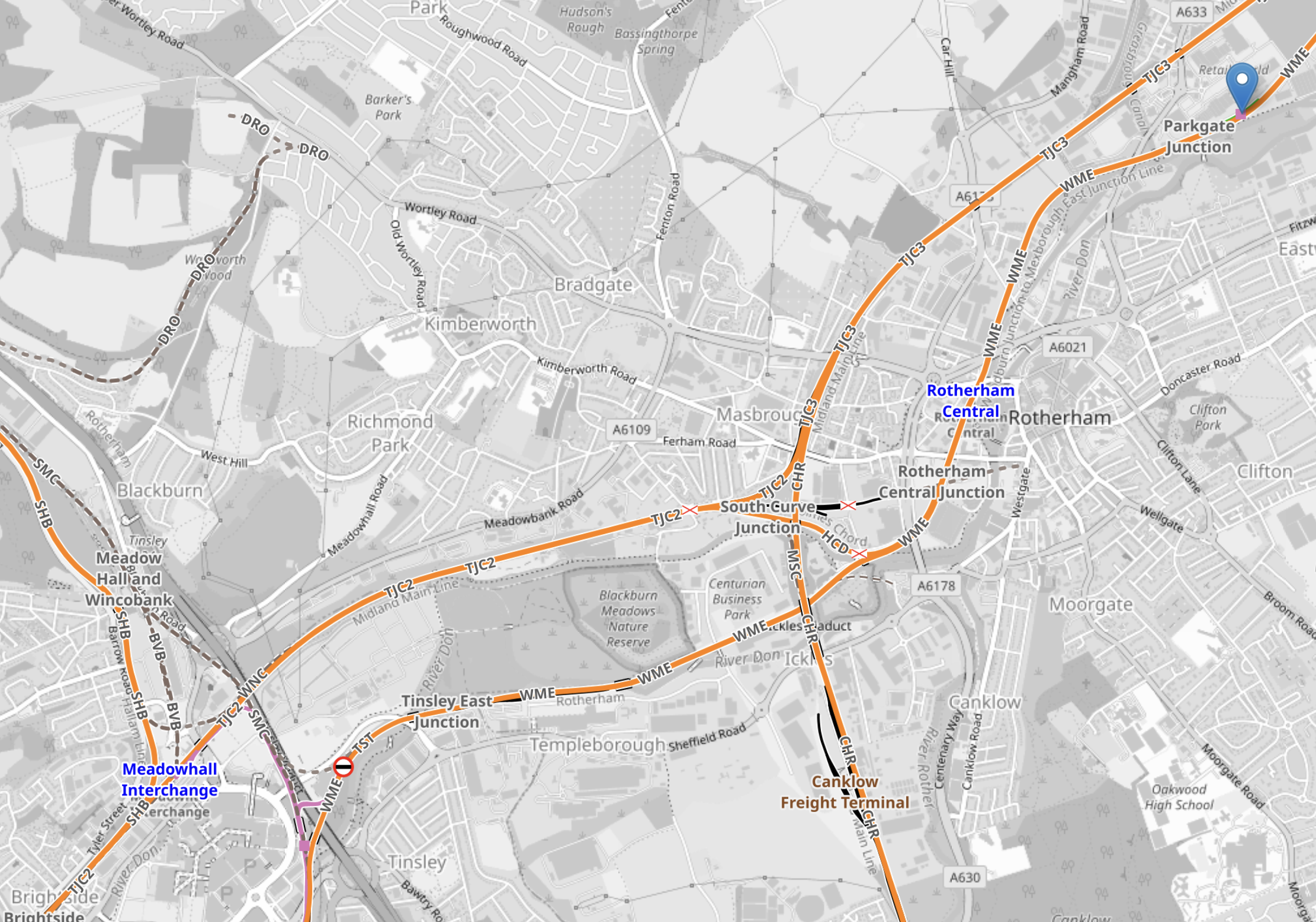
Note.
- The orange lines are the main railway tracks.
- Rotherham Parkgate is indicated by the blue arrow in the North-East corner of the map.
- Trains would run between Sheffield and Rotherham Parkgate via Meadowhall Interchange and Rotherham Central.
- Trains and tram-trains would share tracks through Rotherham Central.
After passing Rotherham Parkgate trains would go to Swinton, and then on to Doncaster or Leeds.
Sheffield And Leeds Via Rotherham Parkgate
Currently, there is an hourly service between Leeds and Sheffield, that goes through the Rotherham Parkgate site.
- It calls at Outwood, Wakefield Westgate, Sandal & Agbrigg, Fitzwilliam, Moorthorpe, Thurnscoe, Goldthorpe, Bolton-upon-Dearne, Swinton, Rotherham Central, Meadowhall.
- The service takes one hour and thirteen minutes, but there are eleven stops.
- As the distance is 38.9 miles, that works out at an average speed of 32 mph.
I suspect this schedule was written for Pacers.
The Department of Transport is aiming for a forty minute journey, which is an average speed of 58.4 mph.
Consider.
- If you look at the maximum speeds of the route from Rotherham Parkgate to Wakefield Westgate, it is 21.8 miles of 100 mph track.
- About twenty miles to the South of Wakefield Westgate is electrified.
- Leeds and Wakefield Westgate is 10.1 miles of 75-85 mph track.
- LNER’s expresses leave Wakefield Westgate, eleven minutes after leaving Leeds.
- I can find a TransPennine Express that takes thirteen minutes to go between Sheffield and Rotherham Parkgate late at night on the way to the depot.
The eleven and thirteen minutes mean that leaves 16 minutes for Rotherham Parkgate to Wakefield Westgate, if Sheffield and Leeds are to be timed at forty minutes, which would be an average speed of 82 mph between Rotherham Parkgate and Wakefield Westgate.
I feel that for a forty minute journey between Leeds and Sheffield, the following conditions would need to be met.
- Very few stops. Perhaps only Meadowhall, Rotherham Parkgate and Wakefield Westgate.
- 100 mph running where possible.
- 100 mph trains
- Electric trains would help, as acceleration is faster. Battery-electric trains would probably be sufficient.
- Some track improvements might help.
But forty minutes would certainly be possible.
At present there are five trains per hour (tph) between Leeds and Sheffield.
- Northern – 2 tph – via Wakefield Kirkgate, Barnsley and Meadowhall – 58 minutes
- Northern – 1 tph – via Outwood, Wakefield Westgate, Sandal & Agbrigg, Fitzwilliam, Moorthorpe, Thurnscoe, Goldthorpe, Bolton-upon-Dearne, Swinton, Rotherham Central and Meadowhall – One hour and 13 minutes
- Northern – 1 tph – via Woodlesford, Castleford, Normanton, Wakefield Kirkgate, Darton, Barnsley, Wombwell, Elsecar, Chapeltown and Meadowhall – One hour and 19 minutes.
- CrossCountry – 1 tph – via Wakefield Westgate – 44 minutes
Note.
- Only the second service will go through Rotherham Parkgate.
- The CrossCountry service takes the more direct route avoiding Rotherham Parkgate.
- All trains go via Meadowhall, although the CrossCountry service doesn’t stop.
- If the CrossCountry service was run by electric trains, it might be able to shave a few minutes as part of the route is electrified.
The CrossCountry service indicates to me, that 40 minutes between Leeds and Sheffield will be possible, but a stop at Meadowhall could be dropped to save time.
Extending East Midlands Railway’s Sheffield Service To Leeds
Consider
- Sheffield station has two tph to London all day.
- The CrossCountry service looks like it could be timed to run between Leeds and Sheffield in forty minutes.
- An East Midlands Railway Class 810 train could probably be timed at 40 minutes between Leeds and Sheffield via Meadowhall, Rotherham Parkgate and Wakefield Westgate.
- The current Northern services could continue to provide connectivity for stations between Leeds and Sheffield.
Extending one tph of East Midlands Railway’s trains to Leeds would probably be sufficient to give two fast trains per hour between Leeds and Sheffield.
- The East Midlands Railway and CrossCountry services could provide a fast service between Leeds and Sheffield in forty minutes.
- If they were electric or battery-electric trains, I suspect that they could call at Meadowhall, Rotherham Parkgate and Wakefield Westgate.
- They could be backed up by the two tph through Barnsley, which could probably be speeded up to around fifty minutes by electrification or using battery-electric trains.
The East Midlands Railway service between London and Leeds would be under three hours.
- Rotherham would get an hourly train to London.
- ,London and Leeds in under three hours, would be slower than Leeds and King’s Cross.
- But the electrification of the Midland Main Line would speed it up a bit.
A fast Leeds and Derby service might compensate for the loss of the Eastern leg of High Speed Two.
Sheffield And Doncaster Via Rotherham Parkgate
At present there are three tph between Sheffield and Doncaster.
- Northern – 1 tph – via Meadowhall, Rotherham Central, Swinton, Mexborough and Conisbrough – 42 minutes
- Northern – 1 tph – via Meadowhall – 28 minutes
- TransPennine Express – 1 tph – via Meadowhall – 27 minutes
Note.
- The first Northern train continues calling at all stations to Adwick.
- The second Northern train continues calling at all stations to Scarborough.
- Both Northern services go through Rotherham Parkgate.
- The TransPennine Express service takes the more direct route avoiding Rotherham Parkgate.
- All trains go via Meadowhall.
These services would give good connectivity for a London train, with a change at Rotherham Parkgate.
Improving Tracks Between Doncaster, Leeds and Sheffield
Consider.
- About 65 % of the main routes between Doncaster, Leeds and Sheffield have a maximum operating speed of 100 mph.
- Doncaster and Leeds is electrified.
- Only 35 miles is without electrification.
- The Midland Main Line is in the process of being electrified to Sheffield.
- There are plans to extend the Sheffield tram-trains to Doncaster Sheffield Airport, that I wrote about in Sheffield Region Transport Plan 2019 – Doncaster Sheffield Airport.
There is also heavyweight electrification infrastructure through Rotherham Central for the Sheffield tram-trains.
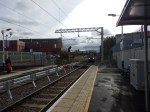

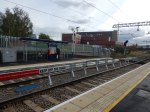

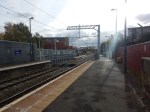
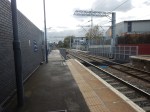
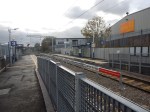



As it is only used by the tram-trains it may be only 750 VDC. But it can probably handle 25 KVAC.
- Could these routes be improved to allow faster running?
- Would it be cost-effective to electrify between Sheffield and the East Coast Main Line and the Doncaster and Leeds Line?
- Alternatively battery-electric trains could be run on the routes between Doncaster, Leeds and Sheffield, charging at all three main stations.
Any form of electric train should be faster, as acceleration and deceleration is faster in any electric train, be it powered by electrification, batteries, hydrogen or a hybrid diesel-battery-electric powertrain.
Conclusion
Passing Brent Cross West Station – 1st November 2023
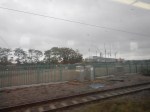
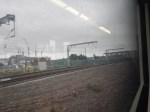
I took these pictures of the Eastern entrance of the station, as my train passed this morning.


Note.
- There doesn’t seem to be much going on.
- There seem to be very few of the Orange Army around.
- None of the staff I talked to at St. Pancras, knew anything about the station’s opening date.
Perhaps, the station is due to open on Timetable Change Day; 10th December, 2023? It certainly looks, that it might be able to.
First Massive ‘Lego Block’ Beams Lifted For HS2’s Pioneering Thame Valley Viaduct
The title of this post, is the same as that of this press release from High Speed Two.
HS2 has begun lifting the first of 72 huge beams that will support the deck of the Thame Valley Viaduct – the first of its kind in the UK to have all major elements manufactured off site.
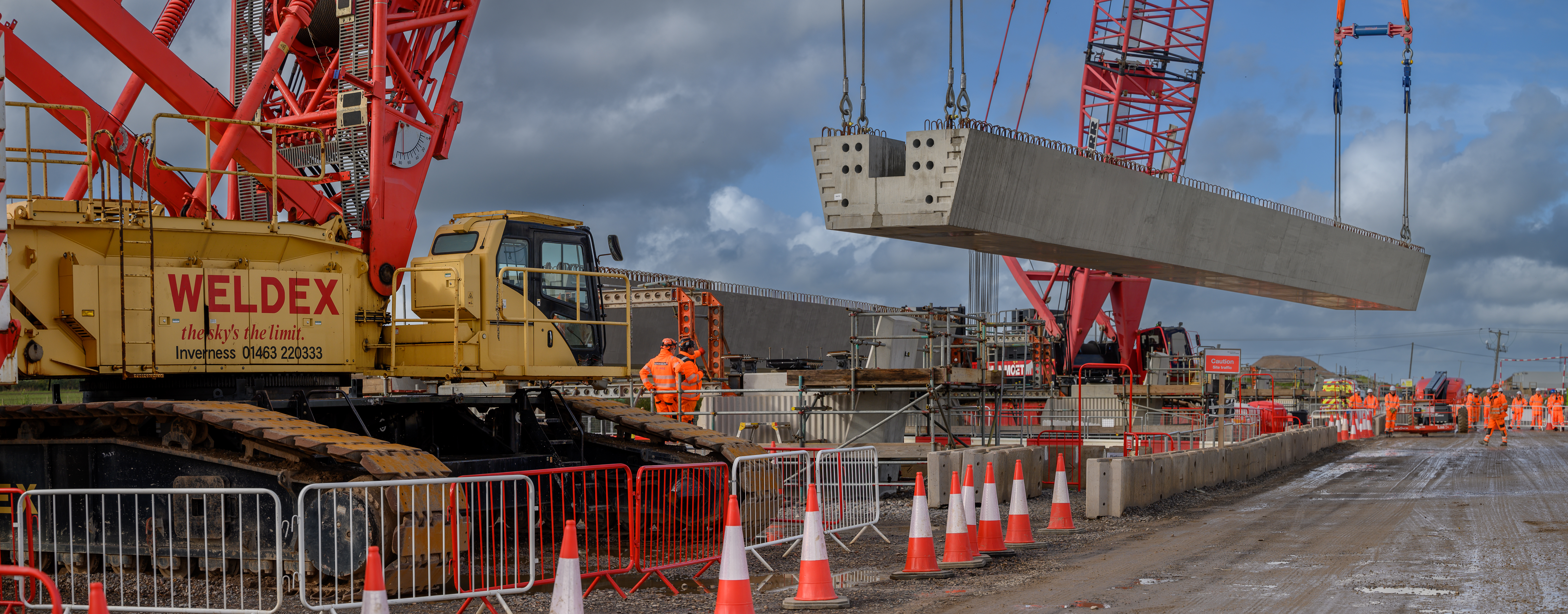
HS2 Bicester viaduct beam placement.
These paragraphs describe the building of the viaduct.
Engineers at the site near Aylesbury used two massive cranes to lift the beams – 25 metres long and weighing 90 tonnes each – into position on top of the viaduct piers, like giant Lego blocks.
Instead of using a more traditional approach, with multiple smaller beams for each span, the design team opted for a simple structural solution with just two larger hollow u-shaped beams per span, which allows for a lighter structure and simpler construction.
The lighter-weight design, inspired by viaducts on the Spanish high speed rail network, also reduces the amount of carbon-intensive concrete and steel in the structure – cutting its carbon footprint by around a third.
It doesn’t say, if they are using low-carbon concrete for the beams, but High Speed Two have used this material before.
 The Anonymous Widower